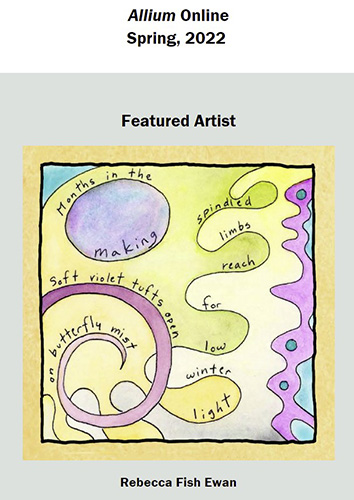
The Spring 2022 issue of Allium, an online journal of poetry and prose from Columbia College Chicago’s Department of English and Creative Writing, features fiction by Babak Movahed, Joshua Beggs, Tinia Montford, Wren Sager, nonfiction, Bethany Jarmul, Poetry, Kitty Donnelly, Kent Leatham, Jen Ashburn, Lee Johnson, Erin Rodoni, and the craft essay, “My Rocky Relationship with An Old Friend,” by Clementina Ojie. Rebecca Fish Ewan, author of Doodling for Writers, is the featured artist. Ewan will be teaching “Visual Hybrid Form” in a five-week online class through Literary Kitchen.
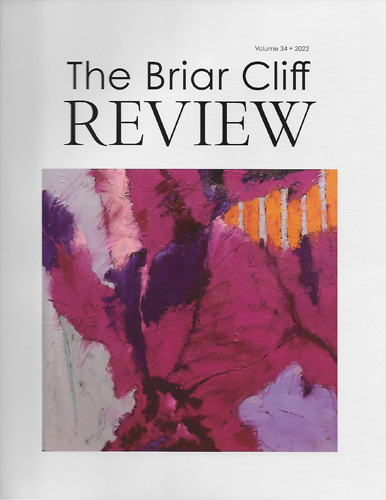
I have always considered The Briar Cliff Review to be one of the most beautifully constructed print literary journals produced, which causes me a heavy heart to include with this post the fact that Briar Cliff University will be jettisoning many of its general education programs, and with it, this decades-long literary tradition. Our condolences to the staff of Briar Cliff Review for this monumental loss to our community. They will fulfill their commitment with their final publication in 2023, so let us celebrate these final contributors to each remaining issue. Featured in this collection are winners of their 26th annual contest: Anna Round, Nancy Fowler, Patridge Boswell, William V. Roebuck, and Christine Stewart-Nuñez. As always, the remainder of the magazine features a plethora of poems, fiction, nonfiction, art, and book reviews in a handsome full-cover, large format. Cover image: Saga of the Secondaries by Dan Howard.
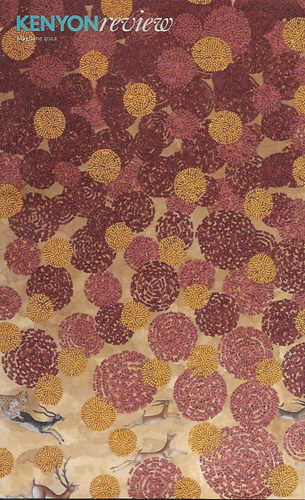
The May/June 2022 issue of Kenyon Review features the annual “Nature’s Nature” poetry portfolio selected by former KR poetry editor David Baker, with work by Elizabeth Arnold, Marilyn Chin, Grant Clauser, Linda Gregerson, Brenda Hillman, Strummer Hoffston, Tricia Knoll, Jesse Nathan, Aimee Nezhukumatathil, Maya C. Popa, Paisley Rekdal, Evie Shockley, D. S. Waldman, Rosanna Warren, Corrie Williamson. Also in this issue is drama by Sherod Santos, fiction by Renée Branum, Nolan Capps, David Crouse, Calvin Gimpelevich, Arinze Ifeakandu, Uche Okonkwo, nonfiction by Melissa Seley, and “We Sang Every Morning After Breakfast: A Cento In Memory Of Nancy Zafris” with contribution from over fifty poets, crafted by Cristina Correa. Cover image: Razi Mohammad (16) by Ambreen Butt.
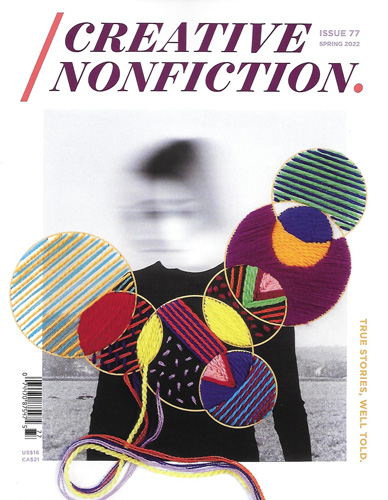
The newest issue of Creative Nonfiction opens with the essay “50 Years of Making Nonfiction Creative” by CNF Founding Editor Lee Gutkind, in which he reflects on the contributions of Thomas Wolfe to the birth of the genre, labeled “The New Journalism.” The issue also includes “CNF’s first examples of ‘pandemic literature’ – essays written since early 2020, stories that incorporate our many individual and collective experience from the past two years.” While many found it a difficult time to record their lives, the editors acknowledge, “Maybe it’s that when everyone’s suffering – though of course we’re not all suffering equally – it seems like there’s almost nothing to say. Our grief feels unexceptional. But there is a lot to say, and isn’t that why we write?” And here to be read are works by Laura Pritchett, Amye Archer, Caroline Hagood, Meg Senuta, Francis Doherty, A. J. Bermudez, Anne Mcgrath, Clare Magneson, Joe Primo, and Amber Taliancich, as well as a selection of “Tiny Truths: 77 Micro-essays of fleeting joys, wistful memories, and passing sadnesses from the past two years” culled from the ongoing #tinytruths posted on Twitter. Cover art by Victoria Villasana.
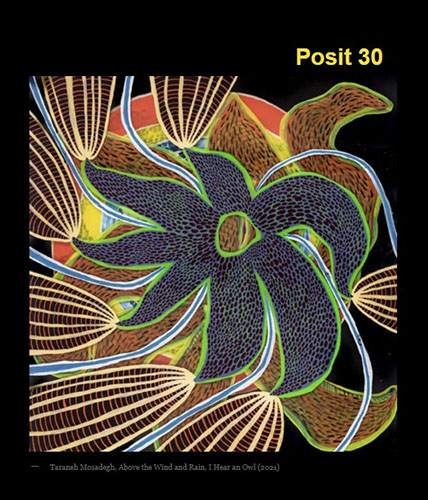
Posit Journal online is celebrating its 30th issue of publishing innovative, aesthetic, accomplished poetry, prose, visual art, and film. As the editors write in the introduction, “Although (to paraphrase David Byrne) we’re not quite sure how we got here, we’re thrilled that we have, thanks to the vivid and continuing engagement of our growing family of contributors and readers.” They invite readers to engage with “poetry and prose by Isaac Akanmu, Tyrone Williams, and Pearl Button that confronts the historical and contemporary poison of racism and colonial appropriation, alongside work by Julie Choffel, Erika Eckart, Vi Khi Nao & Jessica Alexander, Jo O’Lone Hahn, Sam Wein, and Nancy White exploring gender repression and violence – as well as its persistent, sometimes even exuberant defiance “swinging ourselves to wonderment” (Sam Wein, Season of Fanny Packs). The innovative poetics of Kristi Maxwell, Benjamin Landry, and Dennis James Sweeney speak to the state of the planet and even the dubious nature of the future itself, while the visual art of Andrea Burgay, Taraneh Mosadegh and Ana Rendich grapples in a different idiom with the existential challenge of living as moral and emotional beings in a threatened and threatening world.”
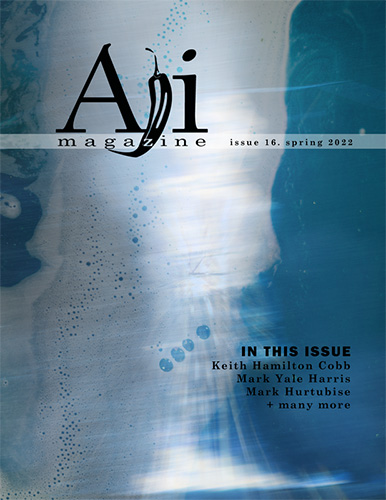
In the Editor’s Welcome to the Spring 2022 issue of Aji Magazine online, Erin O’Neill Armendarez writes, “Among the pages of this issue, you will find writers and artists rushing headlong into what frightens us, diving deep into the mud and the grime to rise again triumphant, if only for a moment. We are honored to be featuring Keith Hamilton Cobb and Mark Hurtubise in this issue, both of whom had the courage to address injustice openly. Likewise, we are honored to be offering readers and viewers an impressive slate of photography, art, poetry, essay, and fiction, exploring the human condition, imagining beyond ourselves into the Other, the unknown.”
Also featured in this issue are works by John Allen , Alan Bern, Oisin Breen, Gaylord Brewer, Patrick Cahill, Melca Castellanos de ArKell, Nancy Christopherson, Geraldine Connolly, Lucia Coppola, William Crawford, Leslie Dianne, David Dixon, Kelly DuMar, Michael Estabrook, Sara Fall , Phyllis Green, Dan Grote, Nels Hanson, Mark Yale Harris, Paul Hostovsky, Edward Lee, Galen Leonhardy, Aenea Little , Christopher Locke, Elaine Vilar Madruga, Joe Milosch, Ivan de Monbrison, Francis Opila, Karly Page, Simon Perchik, Zack Rogow, David Anthony Sam, Sonya Schneider, Claire Scott, Maragarita Serafimova, Edward Supranowicz, Wally Swist, Zhihua Wang, Sean J. White, and David Williams.
Submissions for the fall 2022 issue are open until filled, with no submissions being accepted after November 1.
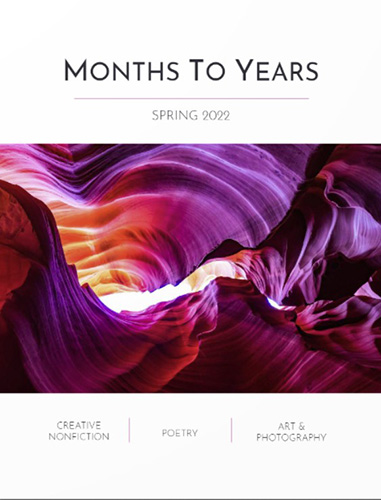
It is the mission of Months to Years to “cultivate a beautifully designed online space to share compelling and original nonfiction, poetry, art, and photography that explores mortality and terminal illness.” As Editor Renata K. Louwers writes in this issue’s introduction, “We think things are going along a certain way with certain predictable events. And they are. Until suddenly, they’re not. What can we do besides surrender to the moment, maybe use the Calm app, and hope for the best? Some of us pray, some of us meditate or exercise, and some of us write. Others take photos or create visual art. Art – via the written word or visually – has served as a crucial coping mechanism for humans through the centuries.” We are no different than our ancestors.
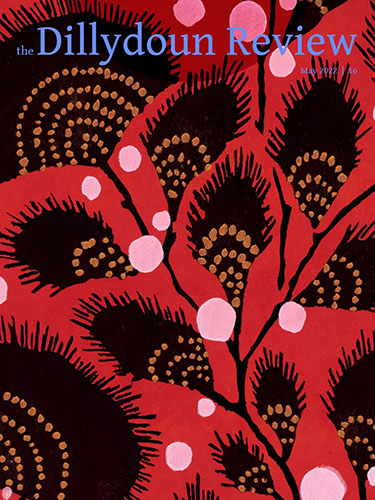
The newest issue of The Dillydoun Review online monthly literary journal features short stories by Haley Glickman, Phoebe Baker Hyde, Byron Spooner; flash fiction by Michael Edwards, Kyle Glover, Kevin Joseph Reigle; poetry by Dale Cottingham, Darren C. Demaree, Jeffrey Dreiblatt, Philip Jason, Jess Levens, Anthony Salandy; prose poetry by John Chambers, Kate Sullivan; nonfiction by Patricia Feinman, Linda Springhorn Gunther; and flash nonfiction by Kyle Ingrid Johnson, Victoria Lewis, Ashley McCurry, Yelizaveta P. Renfro, Sue William Silverman.
The editors also announced that The Dillydoun Review is now a paying market, offering $20 per acceptance to be paid on publication day via PayPal, Venmo, or Zelle, and they “will continue to work on ways to increase the pay rate as soon as possible.”
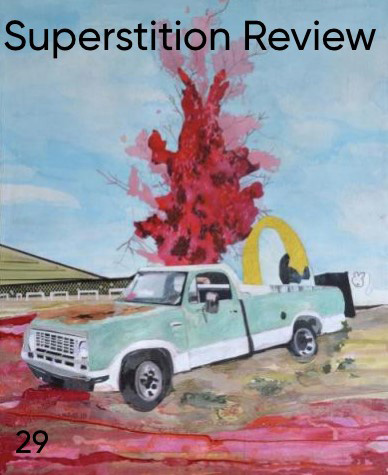
The Spring 2022 issue of Superstition Review is available for readers to access online, with fiction by Abbie Barker, Bradley Sides, Nadine Rodriguez, Ryan Habermeyer, Sahalie Angell Martin, and William J. Cobb; nonfiction by Cindy Lee, Haolun Xu, Laurie Blauner, Marcia Aldrich, and Wendy Gan; poetry by Taylor Byas, Sophia Liu, R.J. Lambert, Nathaniel Rosenthalis, Michael Chang, Meghan McClure, Joshua Gottlieb-Miller, Ja’net Danielo, Hannah Smith, Dorsía Smith Silva, Dorothy Chan, Donte Collins, Donna Vorreyer, Christen Noel Kauffman, Carolyn Oliver, Brett Hanley, and Brandel France de Bravo; interviews with Darrel Alejandro Holnes, Gillian Sze, Kathryn Davis, Melissa Chadburn, Paul Tran, and Yanyi; and art by Delta N.A., Elaine Parks, Emily Rankin, Jenny Day, Michelle McElory, and Oormila Vijayakrishnan Prahlad.
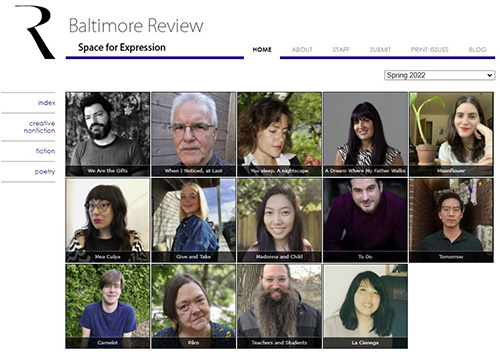
Spring has sprung a new issue of The Baltimore Review with online fiction, creative nonfiction, and poetry by Melissa Faustine Chang, Emily Chase, M. Cynthia Cheung, Justin Hunt, David Kim, Kent Kosack, Andrew Kozma, Lara Longo, Cole Meyer, Devon Miller-Duggan, Yehoshua November, Anzhelina Polonskaya, Nicole Rollender, and Zoe Yohn. The Baltimore Review‘s current submission period ends May 31, as does their Summer 2022 Micro Lit Contest for works under 400 words. For more information, check out their submission guidelines.
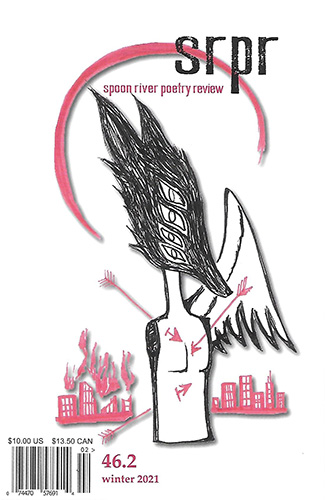
The Winter 2021 Issue of Spoon River Poetry Review (46.2) is filled with so much wonderful content, including the SRPR Illinois Poet Feature with poetry by Daniel Borzutzky, and an interview of the poet by Carlos Soto-Román; Editors’ Prize winning poem “diary of a dead eel boy” by Dean Gessie, selected by Aimee Nezhukumatathil, as well as runners-up poems by Shannon Pulusan and donia salem harhoor, honorable mention poems by Matthew Brailas, Patricia Gao, and Ani Tuzman, Allie Hoback, and Gabriel Jesiolowski; New poetry by Isaac Willis, Emma DePanise, Nathan Manley, Frank Jameson, Kristin Fogdall, Ann E. Michael, Frank Jamison, Antonia Pozzit translated by Amy Newman, and more; the SRPR Review Essay “Seriousness, Humorously” by Andrew Dorkin, who reviews books by Joan Retallack (BOSCH’D), Morgan Parker (Magical Negro), and Fred Moten (all that beauty); and poignantly beautiful cover art by Jessi Reid-Swiech.
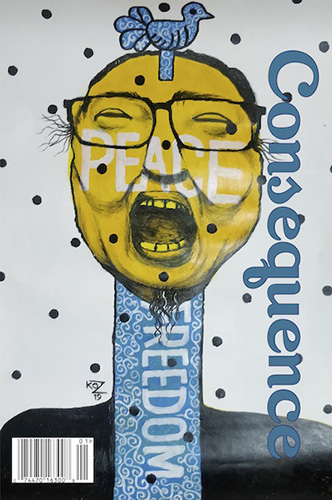
Consequence Forum is a nonprofit organization addressing the human consequences and realities of war and geopolitical violence through literature, art, and community events. Their newest print edition of Consequence (14.1) features poetry by Aaron Brown, Lorelei Bacht, Sam Cheuk, Ryan Harper, Leo Fernandez Almero, Elisabeth Murawski, Gail Peck, Claudia Serea, John Thampi, Maša Torbica, Angela Voras-Hills, Lynn White, Vidhu Aggarwal, Joseph Cermatori, Chloe Martinez, Rajiv Mohabir, Sam Reichman, Priya Sarukkai Chabria; fiction by D.J. Cockburn, Brecht De Poortere, Joshua Nagle, J.B. Polk; translations by Alexander Dumas, J Kates, Marta Lopez Luaces, Charlotte Gartenberg, Anzhelina Polonskaya, Andrew Wachtel; nonfiction by Dianna Cannizzo, Elaine Little, Pamela Hart, Gerald McCarthy, Michael Riordan; and visual art by Ko Z.
Billed as their first “annual” issue, Coastal Shelf #6 (Winter 2022) features “more long prose than ever (over 3k words, with a few even over 5k) which includes a mix of non-fiction and fiction, as well as a novel excerpt, and a really strong selection of poetry.” In addition to its “standard” contributions, Coastal Shelf offers two unique features: “Waterlogged Paper” are reprints of works that appeared in print, not online; “Ones That Got Away” are for pieces Coastal Shelf turned down that got accepted elsewhere with links to those publications. Contributors to this issue include poetry by Esther Ra, Alex Aldred, J.B. Hill, Savannah Williams, Cecil Morris, Justin Lacour, Francine Rubin, Andrew Najberg; flash prose by Sofia Spencer, Véronique Béquin, Thomas Kearnes; long prose, by Adrienne Pine, Rachel Carlson, Mac MacDaniel, Sherri H. Hoffman; “Waterlogged Paper” by Marisa P. Clark, Marisa P. Clark, Danny McLaren.
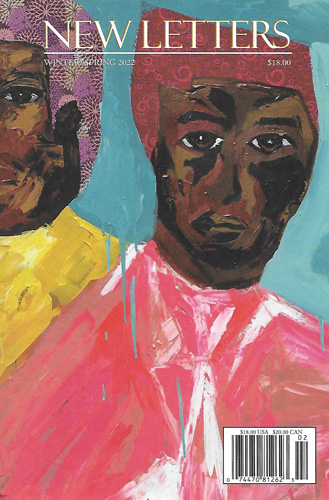
In the Editor’s Note to this double issue (VOL. 88 NOs. 1&2) of New Letters, Christie Hodgen explores a passage from Chekhov’s “The Lady with the Dog” and concludes, “As writers, we are able to put words to what is hidden; as readers, we experience the often humbling privilege of gaining access to others’ hidden lives – a privilege we almost never experience in the real world.” In this issue, readers have the privilege to enjoy the New Letters Award Series of winning works by R.J. Lambert, Patricia Cleary Miller Award for Poetry; Rachel Coonce, Conger Beasley Jr. Award for Nonfiction; Richard Hermes, Robert Day Award for Fiction; Erin McReynolds, Editor’s Choice Award; and Jesse Lee Kercheval, Editor’s Choice Award. In addition, the issue features fiction by Nicole Hazan, Bradley Bazzle, Andrew Peters, Essay, Jillian Barnet, Chelsea B. DesAutels, P.L. Watts; poetry by Christopher Howell, Gaskin, Alicia Ostriker, Wyatt Townley, Maurya Simon, Jeremy Pulmano, John Blair, Vanesha Pravin; reviews and commentaries by Daniel A Rabuzzi, David Newkirk, Natalie Johansen, Robert Stewart; and a full-color portfolio of painting and collages by Harold Smith, whose work is featured on the cover.
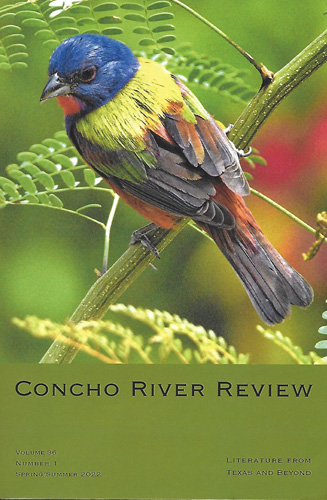
The Spring/Summer 2022 issue of Concho Review Review features fiction by Marco Etheridge, David Harris, Paul Juhasz, Judy Stanigar, Gemini Wahhaj; poetry by Jonathan Bracker, Matthew Brennan, Nick Conrad, William Virgil Davis, Holly Day, David Denny, Lynn Domina, George Drew, Shawna Ervin, William Heath, Ann Howells, Ken Meisel, Gary Mesick, Elizabeth Rees, John Rutherford, Claire Scott, Matthew J. Spireng, Chuck Taylor, Larry D. Thomas, Barbara Tyler, Matthew Ulland, David Vancil, Maryfrances Wagner, Harold Whit Williams, Neal Zirn; and nonfiction by Janice Airhart, Michael Howarth, Kay Long, Gabriel Carlos Lopez. Cover photograph: UntamedPhotography by Tim L. Vasquez.
Named after Court Green, the property in Devon, England, where Sylvia Plath lived and wrote the Ariel poems, Court Green, the magazine editors say, is like that property in England: “a space where all kinds of poems are welcome, especially those you can’t always find elsewhere: long poems, fun poems, pop poems, poems from archives and unpublished notebooks, playful poems, taboo poems, and artifacts we call ‘poems’ even when they defy all our efforts to label them.” Issue #20 is testament, featuring multiple works by each Jack Skelley, Harryette Mullen, Amy Gerstler, James Shea, Patrick Culliton, Sandra Simonds, Sean Cho A., Kelly R. Samuels, Christopher Citro, Yvonne Amey, Grant Quackenbush, Megan Kaminski, Nick Rossi, CM Burroughs, Ron Koertge, Kathleen Rooney, Brandon Menke, Dan Alter, rob mclennan, Catherine Pierce, August Green, Cameron Martin, John Muellner, Vicki Iorio, and Denise Duhamel and Julie Marie Wade, as well as an interview with rob mclennan by Lisa Fishman, and an interview with Tim Dlugos by journalist Terry Gross for her radio program Fresh Air, produced by WHYY-FM in Philadelphia, on March 29, 1985. All works are available to read online at the Court Green website.
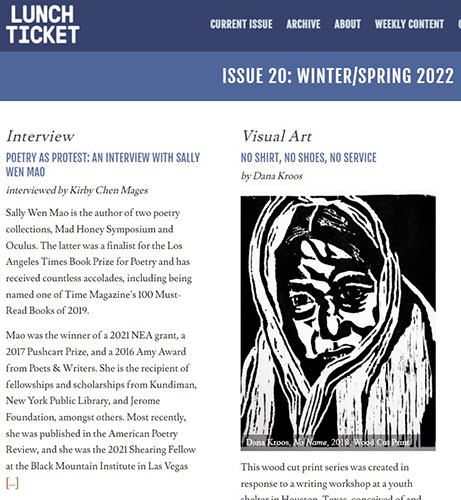
Lunch Ticket Literary and Art Journal Winter/Spring 2022 is online for all to read published by the Antioch MFA in Creative Writing Program and features fiction by J. T. Townley, Poetry, Joanne Durham, Maya Lewis, Abhijit Sarmah, Ellen June Wright; Writing for Young People featuring Dana Blatte; flash prose by Brett Biebel, Jorge Torrente Cabrera, Minna Dubin, Eliot Li, Linda McMullen, Amber Wozniak; interviews with Robin Davidson, Crystal Hana Kim, Locascio Nighthawk, Paisley Rekdal, Sally Wen Mao; creative nonfiction by Julia F. Green, H’Abigail Mlo; the Diana Woods Memorial Award in Creative Nonfiction selections by Diane Forman, JoeAnn Hart, Kristin Marie, Dana Kroos; art by Guilherme Bergamini, Henry Hu, Dana Kroos; and the Gabo Prize for Literature in Translation & Multilingual Texts selections.
Heartwood Literary Magazine is an alumni-run semi-annual online literary publication in association with the low-residency MFA program at West Virginia Wesleyan College in Buckhannon, West Virginia. The newest issue (#13) features poetry by Oisín Breen, Mary Lucille DeBerry, Pamela Hill Epps, Connie Jordan Green, Gabriel Green, David M. Harris, Peter Leight, Megan Wildhood, and Sara Dovre Wudali; creative nonfiction by Celesté Cosme, Molly Katt, Brina Patel, Amber Pierson, Laura Jackson Roberts, and Michelle Spencer; and fiction by Carl Boon, Melissa Feinman, Matt Gillick, Emily Krauser, and Martin Toman. Heartwood is free to read online here. Heartwood also hosts the annual Heartwood Poetry Prize Contest, open this year from May 15 – June 15, and judged by Bill King, the 2021 Heartwood Poetry Prize Winner.
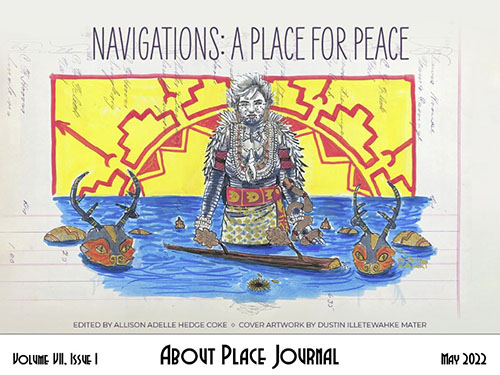
In the Preface to the May 2022 issue of online About Place, Editor Allison Adelle Hedge Coke comments on the theme, “‘Navigations: A Place for Peace,’ the Spring 2022 edition of About Place Journal, and a special extended folio & related blogs encourages space for soulful solace and bold action. In navigating preservation, protection, reclamation and restoration of traditional knowledges for the sake of our planet in peril and all of its living counterparts, we were thrilled to receive works deeply attending to the remarkable nature of living within continual, revived and reclaimed pathways of knowing delivering such careful consideration and indomitable strength – endurance for the long-haul.” The issue features works from some one-hundred contributors in thematic groupings: Flourishing, Pathways, Gratitude, Reckonings, and Factual State / Future State.
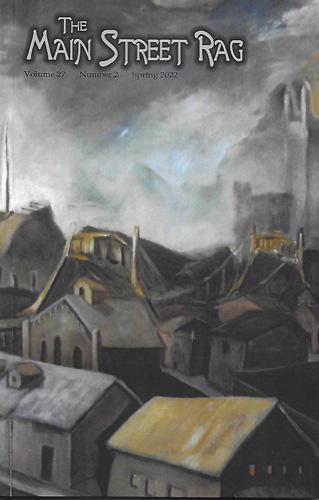
The newest issue of The Main Street Rag (v27 n 2) starts off with “Painting In, Painting Out: An Interview with Michel Tsouris” by Don Bertschman, and is followed up with fiction by Linda Buckmaster, Robert Garner McBrearty, Skyler Nielsen, Richard Risemberg, Terry Sanville, and Frank Scozzari; poetry by Michel Tsouris, Chris Abbate, Frederick W. Bassett, Stephen Benz, C.D. Bailey, Cindy Buchanan, Brian Builta, J.I.B., Jane-Rebecca Cannarella, John J. Ronan, Margaret Diehl, Irene Fick, Regina YC Garcia, Karen L. George, Alison Stone, Cordelia M. Hanemann, Marci Rae Johnson, Genevieve Fitzgerald, Donald Levering, James Lineberger, Christopher Louvet, Kim Malinowski, Richard Merelman, James Miller, Michael Minassian, Daniel Edward Moore, Benjamin Nash, Rikki Santer, David Sapp, Gordon Taylor, Matthew A. Toll, Tom Wayman, Jeffrey Thompson, Riand chard Widerkehr.
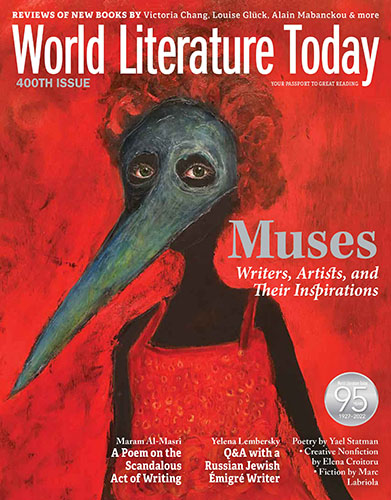
Muses — a special section showcasing writers, artists, and their inspirations, with cover art by Holly Wilson — headlines the May/June 2022 issue of World Literature Today, the 400th issue in the magazine’s 95-year history. Rembrandt, Picasso, Kandinsky, Andrew Wyeth, and David Hockney are among the legends whose visual art inspires the featured writers. Other highlights include poetry, essays, creative nonfiction, and fiction from Canada, England, France, Israel, and Russia, as well as a previously unpublished letter by Boris Pasternak. The book review section also features a wealth of new titles from around the world, including new work by Victoria Chang, Louise Glück, and Alain Mabanckou.
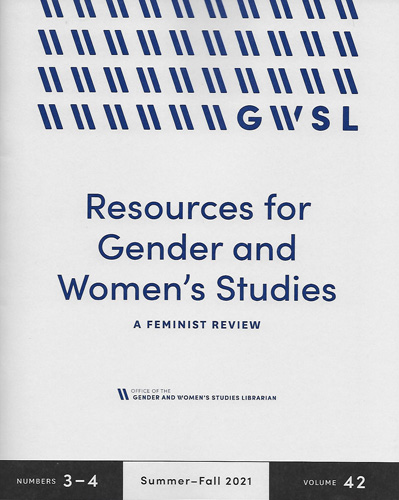
Resources for Gender and Women’s Studies: A Feminist Review (ISSN 2576-0750) reviews the latest print, video, and digital resources for research and teaching in gender and women’s studies. Recent book reviews have explored such topics as rape culture, the meaning of consent in higher education, African American women’s heritage and migration, trans care, the origins of dangerous ideologies about the Black female body, and the cultural and moral morphology of abortion. New, gender-focused special issues of journals are also highlighted, as are other resources and tools for feminist scholarship. To subscribe to the print edition of RGWS, visit their website for more information.
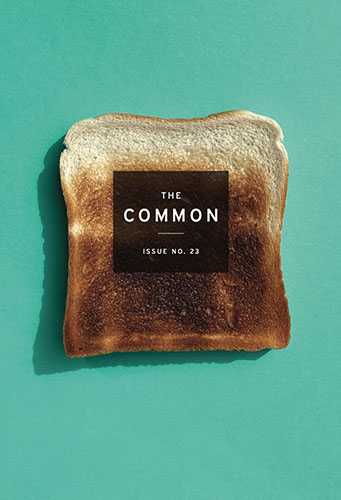
In 2016, THE COMMON began its relationship with the Arabic literary world when Editor in Chief Jennifer Acker and prominent Jordanian writer Hisham Bustani collaborated to publish a special issue devoted to contemporary Arabic fiction. THE COMMON now publishes annual Arabic portfolios of short fiction and visual art each spring. Palestine authors featured in this issue: Mahmoud Shukair, Samira Azzam, Suhail Matar, Abeer Khshiboon, Sheikha Hussein Helawy, Khaled Al-Jebour, Suheir Abu Oksa Daoud, Izzat Al-Ghazzawi, Ziad Khaddash, and Eyad Barghuthy. These stories are translated from Arabic to English by four celebrated translators: Ranya Abdel Rahman, Nashwa Gowanlock, Nariman Youssef, and Amika Fendi.
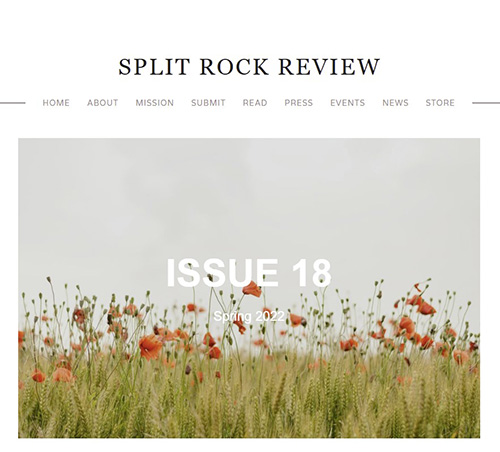
Issue 18 (Spring 2022) of Split Rock Review online literary magazine features Poetry (including audio recordings of authors reading works) by Ray Ball, Terry Belew, David M. Brunson, Christopher Buckley, Sarah Carey, Sarah Carleton, Karissa Carmona, Willa Carroll, Mark Caskie, Satya Dash, Scott Davidson, Angie Dribben, DJ Hills, Emily Kerlin, Charlene Langfur, Jed Myers, Sheree La Puma, George Perreault, Kimberly Ann Priest, Kiyoko Reidy, Dara-Lyn Shrager, Sarah Dickenson Snyder, Mistee St. Clair, James R. Swansbrough, Margo Taft Stever, Heather Truett, Connie Wieneke, Amanada Woodard; Nonfiction by Tim Bascom, Kathleen Melin, Art by Dagny Sellorin; Photography by Evan Fisher and Alexandre Nodopaka.
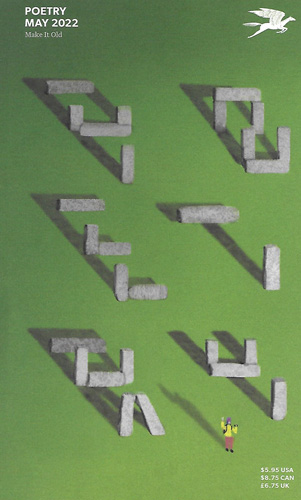
The May 2022 issue of Poetry Magazine begins with Guest Editor Srikanth Eddy’s final Editor’s Note, providing context for the theme “Make It Old,” with “old” being a “comparative measure.” The issue features “old” works in contemporary translations, and this is one time where the online version may rival the print publication. The print issue features English-only versions whereas online, readers can view the original text, the translation, and translators’ notes on their poems. Some works include “an avant-garde Brazilian poem from 1912, a Mayan creation myth, fragments of a pre-Socratic cosmology, the first circle of Dante’s Inferno stripped down to couplets, Medieval rune poems excavated after a fire in the harbor district of Bergen, Norway, a Nahuatl drinking song, a late Tang dynasty love letter, Osage talk, what might e the first Japanese tanka about baby diapers, and many more contributions.”
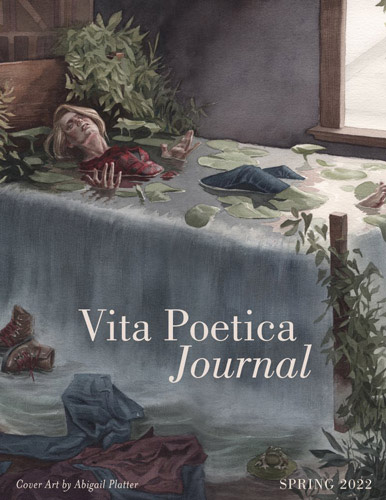
In their introduction to the Spring 2022 Vita Poetica Journal online literary magazine, Co-Editor Caroline Langston writes of the multitude of junctures and gaps of uncertainties in our daily lives and in the world around us. “Many of the writings in this edition of Vita Poetica seem calibrated to just this uncertain moment, and how to navigate the uncertainty seems to be the individual’s artistic task—which is then shared and multiplied with others.” Sharing with readers in this newest issue are works of Poetry by Samir Knego, Devon Balwit, Barbara Sabol, Peter Bankson, Libby Kurz, Ken Hines; Nonfiction by Ethan Ashkin Stanton, Heather Morton; Visual Art by Abigail Platter, Hang H. Lee; an Interview with Poet Libby Kurz in conversation with Emily Chambers Sharpe; and a Contemplative Practice – Zen Meditation, a YouTube video with Grace Phong which offers both instruction, insight, and guided practice. Cover Art: from Ophelia’s Baptism by Abigail Platter.
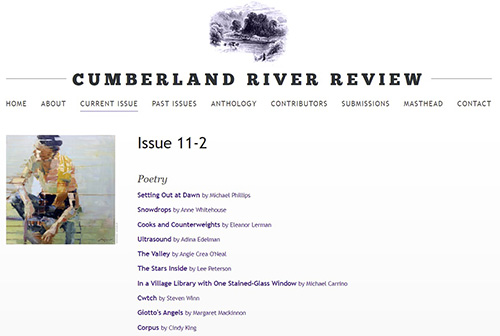
Publishing quarterly poetry, fiction, essays, and art online, the newest issue of Cumberland River Review features poetry by Michael Phillips, Anne Whitehouse, Eleanor Lerman, Adina Edelman, Angie Crea O’Neal, Lee Peterson, Michael Carrino, Steven Winn, Margaret Mackinnon, Cindy King, fiction by Allen Stein, and artwork by Michael Azgour. In her poem, “Cooks and Counterweights,” Eleanor Lerman asks, “So where are the adults who said they / would take over? Who were supposed / to face the future because sacrifices were made?” Visit the CRR website to find the answer.
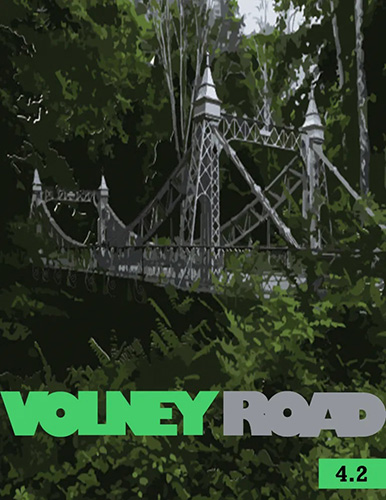
In the online Volney Road Review Spring 2022, N.P. Stokes announces his stepping down from his role as Editor-in-Chief and passing the torch to Mallory Raider for the continuation of the biannual publication. Stokes writes, “Art comes from many places, inspiration, effort, and, not the least of these, love. In many ways, art is the expression of personal growth, it is tangible fragment insight the artist releases to the world. The communication of this flash of purpose that brings author, artist, and audience together in the shared experience of beauty.” Allowing us to share in this experience of beauty in this newest issue are works of Prose by Dianne Lee Blomberg, Dante DelBene, and Harvey James; Poetry by Amanda Hawk, W. Barrett Munn, Cassandra Lawton, and Michael T. Young; and Drama by Rose O’Keefe.
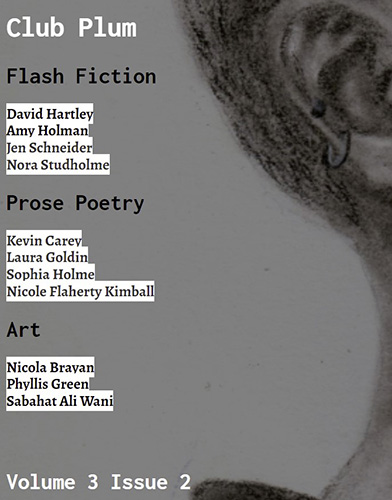
In issue 3.2’s introductory essay, “Claim What is Ours,” Club Plum online literary journal founding editor Thea Swanson writes, “Freedom and democracy are fragile. They are precious, and they shouldn’t be precious. They should be mundane. // Writing and creating, for some of us, is mundane, and for that, we should take pause and treasure our ability to write and to create, to share our words and images, knowing how closely these acts are tied to our freedom, to our democracy.” Sharing in these very acts are the contributors to this issue: flash fiction by David Hartley, Amy Holman, Jen Schneider, and Nora Studholme; prose poetry by Kevin Carey, Larua Goldin, Sophia Holme, and Nicole Flaherty Kimball; and art by Nicola Brayan, Phyllis Green and Sabahat Ali Wani.
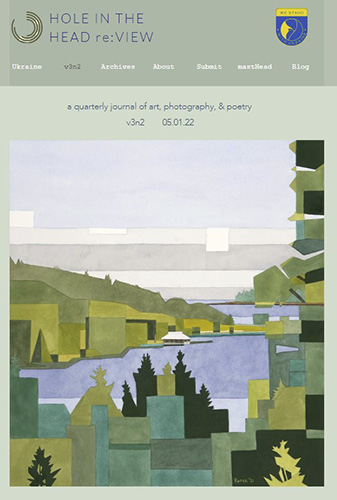
Promoted by the editors as their “May Day Issue,” this newest online issue of Hole in the Head re:View features “Tulips, Saturday Night Fever, fat back, Jack Spicer, utopia, a corpse flower, murmurations of starlings, old New Yorkers, bronze and string, sad boomers, some jackass jacked up on coke, a cadaver, beetles, stray mutts, Hugo & Wright, St. Therese of Lisieux, a blizzard book, tickets to heaven, stardust, a declaration of war…and so much more.” Some of the writers include Charles Simic, Stephen Gibson, Gerald Yelle, Meg Pokrass & Jeff Friedman, Seth Leeper, Richard Matta, Ace Boggess, George Perreault, Anny Jones, Martine van Bijlert, Yvonne Zipter, Hannah Marshall, Christopher Paul Brown, and GTimothy Gordon. Hole in the Head re:View also published a special Ukraine issue with their friends at Nine Mile Magazine. Check that out here.
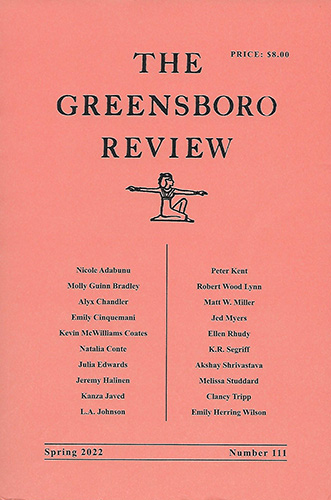
In his introduction to issue 111 of The Greensboro Review, Terry Kennedy writes of how he came to be the editor of this long-standing, esteemed publication under the apprenticeship of former editor Jim Clark. “I believe each great apprenticeship starts with someone believing in a person before that person believes in themselves. . . These days, what I want to do most is read. Discovering that one story, that one poem that really sings is what brings me the most joy, what gives me the most satisfaction. Put another way, I delight in believing in writers who may not yet believe in themselves.” Contributors to this issue in whom Kennedy believes include fiction by Clancy Tripp, Ellen Rhudy, Akshay Shrivastava, Molly Guinn Bradley, Robert Wood Lynn, Kevin McWilliams Coates, Kanza Javed, and poetry by Peter Kent, Nicole Adabunu, Natalia Conte, Emily Cinquemani, Melissa Studdard, Jeremy Halinen, Matt W. Miller, Jed Myers, Julia Edwards, K.R. Segriff, Emily Herring Wilson, L.A. Johnson, and Alyx Chandler.
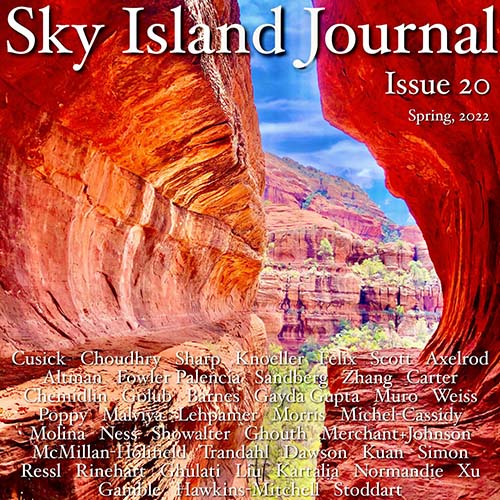
Sky Island Journal’s stunning 20th issue features poetry, flash fiction, and creative nonfiction from contributors around the globe. Accomplished, well-established authors are published—side by side—with fresh, emerging voices from around the globe, including Andrew Cusick, Bracha K. Sharp, Christina H. Felix, David Axelrod, Elaine Fowler, Feiya Zhang, Grant Chemidlin, James Barnes, John Muro, Karen Poppy, Lana Lehpamer, Linda Michel-Cassidy, Lorrie Ness, Maryam Imogen Ghouth, Michelle McMillan-Holifield, Patrick Dawson, R.B. Smith, Robert Rinehart, Samantha Liu, Sarah Normandie, Sera Gamble, William R. Stoddart, and many more. Readers are provided with a powerful, focused literary experience that transports them: one that challenges them intellectually and moves them emotionally. Always free to access, and always free from advertising, discover what over 100,000 readers in 145 countries already know; the finest new writing is here, at your fingertips.
I’m a huge fan of the 9×9 format South Dakota Review and the luxury of poetry that doesn’t have to be font-shrunk to fit the page and the double-column prose. This lovely new installation includes poetry by Brandon Krieg, Hollie Dugas, Laura S. Marshall, Sunni Brown Wilkinson, Samantha Padgett, Lana I. Ghannam, Cynthia Marie Hoffman, Annette C. Boehm, Charlie Clark, and Adam Scheffler, essays by Lee Ann Roripaugh, E. J. Meyers, Oakley Ayden, Lori Horvitz, Margaret Erhart, and short stories by Suzy Eynon, Cassandra Woodard, Jenny McBride, and Katie Schmid.
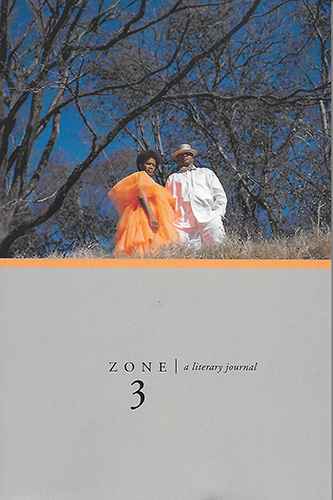
The Fall 2021 issue of Zone 3 just hit the stands, celebrating thirty-five years of continuous publication! Editor Amy Wright opens the volume with a retrospective look at events from the founding year, 1986, and extols, “For our 35th anniversary issue, we are united in our resolve to create a safe space to hear, heed, and uplift BIPOC issues, joys, struggles, and stories. We are invested in equity. As editors, we want the conversations generated by our pages to demonstrate a full range of human experiences and intend to follow this special issue with additional themed issues dedicated to underrepresented voices.” The opening essay, “This is My American Country” by Allen M. Price is intended to “upset assumptions about what America has meant and can mean, because when our concepts, illusions, and projections break down, we see ourselves as we truly are and are becoming.” and can be read on the Zone 3 website.
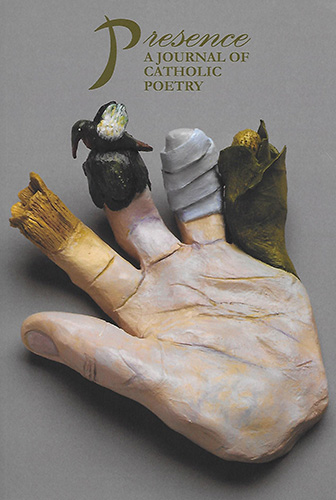
The Editor’s Statement in the newest issue of Presence: A Journal of Catholic Poetry begins, “An explicit goal of Presence is to publish contemporary poetry that continues the Catholic Intellectual Tradition and the Church’s long history of recognizing the value of art as a way of leading us to God through its truth, beauty and goodness.” The featured poet in this annual issue is Julia Alvarez, along with featured translations of Juana Rosa Pita’s work translated by Erin Goodman. Over five dozen poets are included in this issue as well as interviews with poet, psychologist, and publisher John Cusack Handler and poet, teacher Jill Peláez Baumgaertner, two dozen poetry book reviews, and a section called “Life’s Work” with essays that focus on Jane Hirshfield (by Vivian I. Bikulege) and Sally Read (by Pat Destito). Cover art: Transmutation, acrylic on ceramic by Beth Shadur. The next submission period for Presence is August 1 – October 1, 2022.
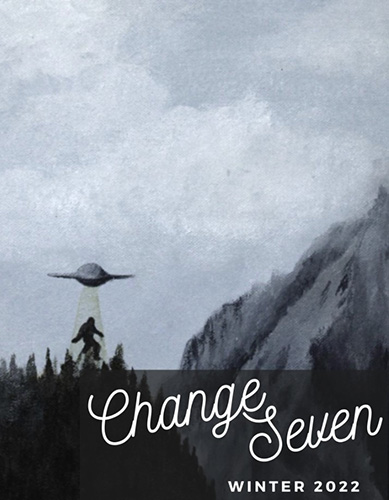
Publishing four issues per year from pieces collected during two open submission periods, the newest issue of Change Seven features fiction by Rebecca Andem, Joseph Ducato, Megan Lucas, Michelle Spencer, and Josh White; poetry by Randy Blythe, James Cochran, Robert Detman, Peter Grieco, Mark Hammershick, William Heath, and Virginia Laurie; non-fiction by Stuart Baker Hawk, Lillian Brion, Saila Kariat, Anna Oberg, and Joshua Thusat; and art by Kailee Bal, Lawrence Bridges, Greg Clary, Rachel Coyne, Mark Rosalbo, Max St-Jacques, and Karah Tull. The next open reading period starts June 1.
“It takes me six months to do a story. I think it out and write it sentence by sentence—no first draft. I can’t write five words but that I can change seven.” ~ Dorothy Parker, The Paris Review, 1956
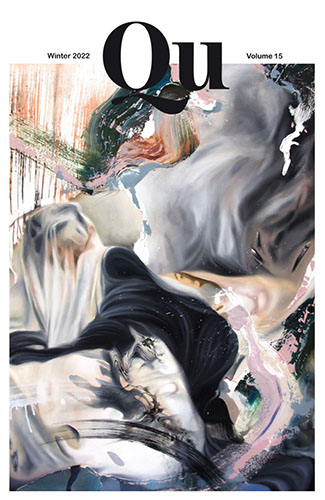
Published by the MFA program at Queens University of Charlotte with an editorial staff comprised of current students Qu Literary Magazine publishes fiction, poetry, essays, and script excerpts. Payment upon publication is $100 per prose piece and $50 per poem. The Winter 2022 contributors include Nathan Alling Long, G.G. Silverman, Naomi Anne Goldner, Mariah Lanzer, Susan Comninos, Alex Dodt, Susan Comninos, Michelle McMillan-Holifield, Brent Ameneyro, Jose Hernandez Diaz, Kate Horowitz, John Leonard, Seif-Eldeine, Lisa Summe, Neal Adelman, Jake Alexander, and Kristin Dombek. Each new issue is free to read online and also available to purchase in print.
Providing an international “platform for works of art that challenge conventions of form and format, of voice and genre,” the newest issue of Anomaly continues to deliver on that challenge. April 2022 issue contributors include Matthew Klane and James Belflower, L. Nichols, Jesse Lee Kercheval, J.I. Kleinberg, Wylde Parsley, Tim Tim Cheng, Stephanie Kaylor, Sihle Ntuli, Roy Wang, Ros Seamark, Prince Bush, Olúwatamílọ́re Ọ̀shọ́, Nicole Callihan, Maija Haavisto, Lisa Creech Bledsoe, Upasana, Stephanie King, Scott Pomfret, Suzanne Martin, Leslie Lindsay, Cassandra Lawton, and many more. Submissions for their next issue open June 1, 2022, and while there is a small fee to cover operational costs, this fee is waived for all Black and Indigenous writers “to support those most targeted by state violence.”
NewPages receives many wonderful literary magazine titles each month to share with our readers. You can read more about some of these titles by clicking on the “New Mag Issues” tag under “Popular Topics.”
4×2, April 2022 Adanna, Issue 11 American Writers Series, Fall 2021 Apple Valley Review, Spring 2022 Arc Poetry Magazine, 97 Bellevue Literary Review, Issue 42 Bennington Review, Issue 10 bioStories, April 2022 Blue Collar Review, Winter 21-22 Brilliant Flash Fiction, March 2022 Carve, Spring 2022 Cleaver, Issue 37 Club Plum, 13.2
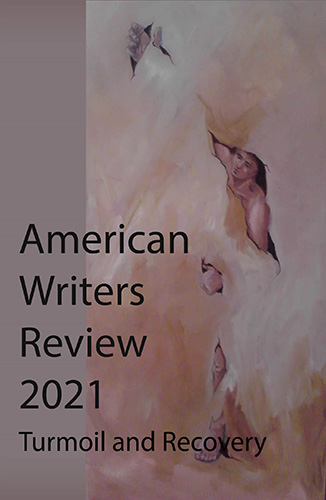
American Writers Review is a multi-genre literary journal published by San Fedele Press welcoming writers, artists, and photographers of all backgrounds, styles, and experience levels who want to explore their art. Their 2021 issue was the first they had themed and was grounded in the turmoil of the past two years and the hope for an eventual recovery. Submissions of fiction, poetry, nonfiction, photography, and other art for their 2022 themed issue “The End or The Beginning” are being accepted until May 31, 2022, and Wayne Benson will be their poetry editor, joining the team of D Ferrara, Pat Florio, and Dale Louise.
Reading submissions and posting works on a rolling basis, CRAFT publishes fiction, creative nonfiction, and various craft articles. CRAFT does not charge fees for writers or readers and is a paying market with “no capacity limits.” They also offer editorial feedback on short and flash fiction and offer a “fast response” category as well. Recent contributors to the site include Pete Stevens, Amina Gautier, Tara Isabel Sambrano, Rosaleen Lynch, Oktavia Brownlow, Zoe Ballering, Jane Marcellus, Bryan Okwesili, “Never Rush a Rabbit: Prey Animals & Choices in Fiction” craft essay by Lee Upton, and “Conversations Between Friends” with Gale Massey and Louise Marburg. CRAFT also provides a page of Resources on Racism in Publishing.
Every two months, Barrow Street Press editors choose four new and emerging poets who have not yet published a chapbook or full-length book of poems and then features one of their poems on the 4×2 website. Current poets include Laura Dixon, Sean Burke, KT Herr, and Kristen Holt-Browning. Past spotlight poets include Susan Kay Anderson, Miranda Beeson, Bryce Berkowitz, Pune Dracker, Pete Follansbee, Henry Goldkamp, Caroline M. Mar, Emily McKay, Pablo Medina, Nicole Melanson, James Funinami Moore, Darren Morris, Heather Newman, Doug Ramspeck, Belinda Rule, Thomas Schwank, Mahtem Shiferraw, Andy Sia, Jordana Solomon, Arthur Solway, Sophia Starmack, Hillery Stone, W.R. Weinstein, and Rachel Willems.
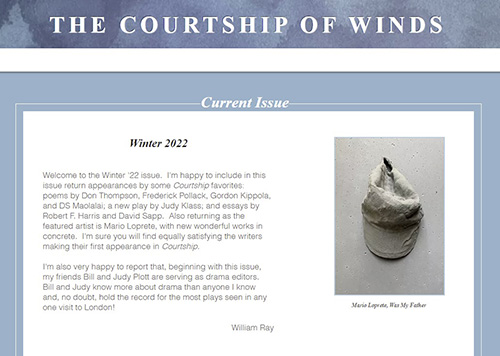
There’s still a little winter left before we turn the corner, plenty of time to catch up on the newest issue of The Courtship of the Winds online literary and art journal. New to the staff with this installment are drama editors Bill and Judy Plott. This issue is packed with poetry by Margaret B. Ingraham, Lowell Jaeger, Ken Poyner, Joseph Hardy, Hannah Jane Weber, Gordon Kippola, J. Tarwood, Sam Ambler, Gail Nielsen, DS Maolalai, Eleanore Lee, Charles Elin, Esme DeVault, Don Thompson, Jay Carson, J. R. Forman, Frederick Pollack, Alise Versella, Stephen Mead, Doug Van Hooser, and Murray Silverstein; essays by Robert F. Harris, Madhurika Sankar, Fabrizia Faustinella, David Sapp; fiction by Christie Cochrell, Benjamin Harnett, Tom Eubanks, Anne Michaud, Alex Clermont, Rin Kelly, William Hayward, David Obuchowski, Catherine Parilla, P. C. Allan, Geoffrey Heptonstall; Drama by David Brendan Hopes and Judy Klass; and artworks in concrete [including cover image] by Mario Loprete.
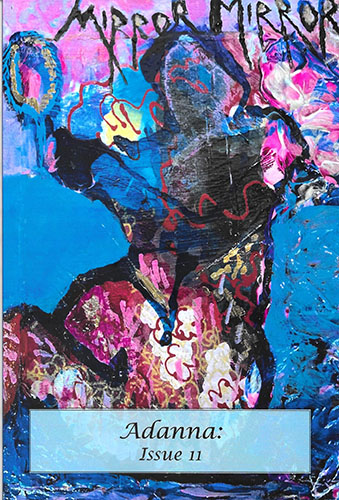
Adanna is a literary journal dedicated to women that welcomes contributions that “reflect and speak to women’s issues or topics, celebrate womanhood, and shout out in passion” The 2021 annual is now available and features poetry by Emmaline Bristow, Carol Casey, Angie Dribben, Lisa English, Ariel Fintushel, Virginia Bach Folger, Deborah Gerrish, June Gould, Maryanne Hannan, Elaine Koplow, Michelle Lerner, Heather Lee Rogers, Kelly R. Samuels, Dipanwita Sen, VA Smith, Thea Swanson, Janet Tracy-Landman, and Kelley Jean White; fiction by Elayne Clift, Diane Lederman, Kelsey McWilliams, Nneamaka Onochie, Terry Sanville, Tanya E. E. E. Schmid, and Ted Shaffrey; essays by Susan Frattini, Nancy Gerber, and Lola Wang, with cover art by Linda Murphy Marshall. Submissions for the 2022 annual print edition are open until May 31, 2022.
Founded by Michelle Tudor and Peter Barnfather in 2015 as an imprint of Platypus Press, wildness is a biannual online literary journal publishing poetry, fiction, and non-fiction works in most styles, forms, or genres. The April 2022 issue includes poetry by Qudsia Akhtar, Lory Bedikian, Aaron Coleman, Patricia Gao, Laboni Islam, Mia Kang, Kimberly Kralowec, Caroline M. Mar, Shalini Rana, Darius Simpson, RaJon Staunton, Ọbáfẹ́mi Thanni, Caitlin Wilson, Shelley Wong, Serrina Zou, and non-fiction by Sharon Lin. All content is freely accessible for online reading, and writers are encouraged to read back issues before submitting.
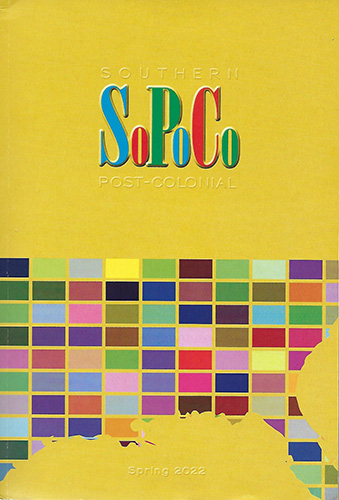
Celebrating 75 years of continuous publishing, The Georgia Review 75.1 issue is titled “SoPoCo” for Southern Post-Colonial and focuses on diasporic writing from or about the U.S. South. Editor Gerald Maa writes in the introduction of this 300+ pages, “This is a big volume, but it’s a crowded world. And we wanted to err on the side of maximalism rather than on giving anyone short shrift, given the groundbreaking nature of this volume.” The authors and artists included in this issue demonstrate that “the vibrancy of current Southern culture is made possible by critical contributions of the immigrant communities therein and exploring the ways that diasporic communities in this region differ from their more recognized sibling communities in the coastal urban centers.”
The editors of Heron Tree began posting poems for Volume 9 in February 2022. Poems are posted weekly on the site and then are collected into a free, downloadable PDF, which means all back issues are also available for free download. These are simple, well-designed publications that mimic features of a print book, making them great for personal or classroom use. Volume 9 includes works by Deborah-Zenha Adams, Karen George, Carol H. Jewell, Basiliké Pappa, K Roberts, Kelly R. Samuels, M. E. Silverman, and Jonathan Yungkans with more on the way! Subscribe – also free – to receive notification of newly published poems.
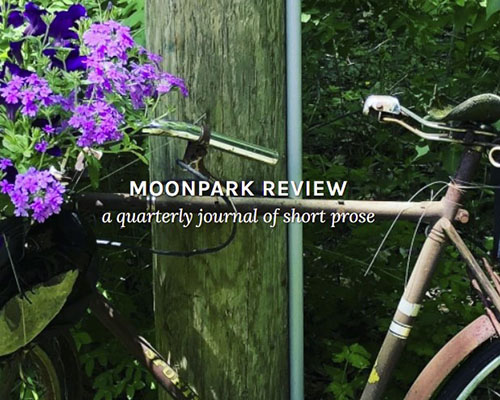
The editors of MoonPark Review: A Quarterly Journal of Short Prose open this nineteenth online issue by commenting, “we were struck by the threads of longing that weave through every story. Longing for those lost, those taken, for a larger meaning, to be special, or understood, to be recognized, simply remembered, or the longing for someone to be other than who they have always been. Perhaps it is this particular moment in time, or perhaps it is a universal truth — that we all long for something, sometime, or someone.” Contributors to this issue include Abbie Barker, Vince Montague, James Mattise, Jonathan Weisberg, Lucinda Trew, Dan Hodgson, Christie Wilson, Sarp Sozdinler, Jill Witty, Kenneth M. Kapp, Rachel Lastra, Kevin Brennan, and Kip Knott. All content is free to read online, so head on over!
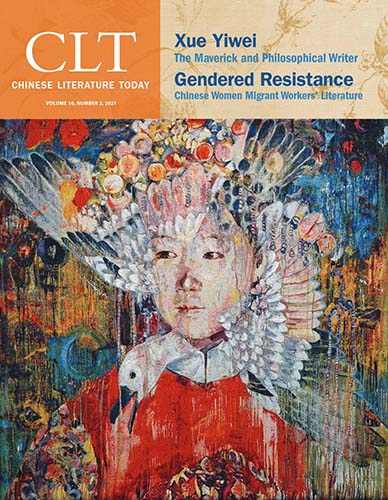
Xue Yiwei is the featured author in the newest issue of Chinese Literature Today, published by the University of Oklahoma, which includes an interview by Lin Gang translated by Stephen Nashef and half a dozen works in translation. Also included in this issue is the special section, “Chinese Women Migrant Worker’s Literature,” with works such as “Caring for the Small: Gendered Resistance and Solidarity through Chinese Domestic Workers’ Writings” by Hui Faye Xiao, “Gender, Class, and Capital: Female Migrant Workers’ Writing in Postsocialist China and Zheng Xiaoqiong’s Poetry” by Haomin Gong, “‘In the Roar of the Machines’: Zheng Xiaoqiong’s Poetry of Witness and Resistance” by Eleanor Goodman and more. “Women Migrant Worker’s Poems: A Collection translated by Tammy Lai-Ming Ho” is also featured in this tremendous volume.
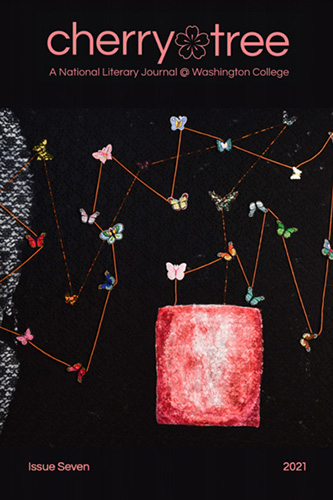
The seventh issue of Cherry Tree annual print journal produced by the Literary House Press features work by Anum Asi, Sandra Beasley, Jan Beatty, Katie Berta, Caleb Braun, Susan Briante, Elijah Burrell, Marci Cancio-Bello Calabretta, Marianne Chan, Jennifer Chang, Victoria Chang, Christopher Citro, Nicole Cooley, Paul H Curtis, Jeff Ewing, Blas Falconer, Andra Emilia Fenton, Tanya Grae, Saúl Hernández, James Hoch, Todd Kaneko, Urvi Kumbhat, Kabel Mishka Ligot, Anthony Thomas Lombardi, Andrea Marcusa, Tom McAllister, Shane McCrae, Rahul Mehta, Philip Metres, John A. Nieves, Sarah Rose Nordgren, Carolyn Oliver, Matthew Olzmann, Donald Quist, Deon Robinson, Adam Scheffler, Charlotte Seley, Paige Sullivan, David Trinidad, Michael Walsh, Jieyan Wang, Adam Webster, John Sibley Williams, and M Jaime Zuckerman, with cover art by Gerardo Villarreal.