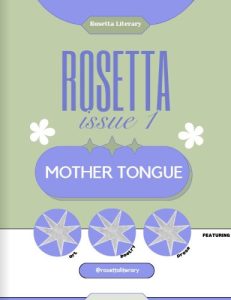
Rosetta Literary is a new online international literary magazine promoting diverse global voices that favors exploring the intersection of culture and language to challenge stigma and bias. This authentic, original, and creative publication connects writers and artists worldwide through inclusive storytelling and especially welcomes submissions from first-generation and low-income creators with a special focus on youth 14-25.
The name of the publication, the editors share, is “inspired by the Rosetta Stone and its global symbolism of diversity, multilingualism, and ‘deciphering’ the inner human spirit. Just like the Stone, we seek to be a beacon of culture through artistic expression.”
A trip to The Lake sounds like a great way to spend a hot summer’s afternoon, so lucky for readers, the July 2026 of this journal of poetry and poetics is now online featuring new work by Gemma Blakeley, Marilyn Cavvichia, Joe Garvey, Eric D. Goodman, Marcia Roberts Gregorio, Harriet Pinklock, J. R. Solonche, Shogo Olalekan Uthman, Ping Yee, and Lee Yongha.
The Lake offers readers reviews of newly published books of poetry. For readers this July 2026, Hannah Stone reviews Life Immediately by Lily Blacksell, Usha Kishore reviews Map of the Self by Mona Dash, Dustin Pickering reviews The Tao According to Calvin Coolidge by Charles Rammelkamp, and Loralee Clark reviews Love Song by Ann Chinnis.
Unique to The Lake are “One Poem Reviews” which share a sample poem from a recently published collections, with this issue spotlighting poems by both Martin Agee and Maggie Mackay. Poets with published books who would like to share a poem with The Lake readers only need to email Editor John Murphy to start the process.
Editor John Murphy has had his own work published in Notes, which can be purchased on The Lake‘s SHOP page. The poems in this book focus on artists and producers in the music industry, covering all major genres: rock, jazz and blues. Some of the artists: Joni Mitchell, John Mayall, Cleo Laine, Chuck Berry, Brian Wilson , Buddy Holly, Jimi Hendrix, and more.
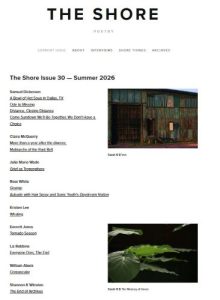
The Shore Issue 30!! has popped just in time for some summer reading! It features hot new poems by Samuel Dickerson, Claire McQuerry, Julie Marie Wade, Ross White, Kristen Lee, Everett Jones, Liz Robbins, William Alexis, Shannon K Winston, Verona Charman, Heather Hamilton, M J Young, Abraham Porschet, John Estes, Leqi (Angela) Xiao, Maggie Rue Hess, Maggie Wang, Emilee Wigglesworth, Alexa Doran, David Moolten, Paul Potts, Dan Albergotti, Matthew Toth, Michelle Turner, Peyton Cole, Daniel DeVaughn, Jennifer Bullis, Christine Light, Jingxuan William Zhuang, Chris Monier, Daniel Amster, Carly Osborne, Grant Clauser, Christy Prahl, Barbara Daniels, Cici Zhang, Peter Leight, Tom Laichas, Svetlana Litvinchuk, Olivia Burgess, Cole Pragides, and Natasha Kochicheril Moni. It also features vivid art by Sarah N B!
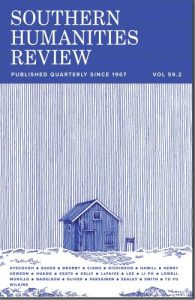
Southern Humanities Review 59.2 is a bird-filled summer issue featuring reprinted poetry from an exhibit titled Radical Naturalism: Lyric Birdscapes, including poems from Mary Oliver and Maggie Smith, selected by Nicole Sealey as Poet-in-Residence at The Jule Collins Smith Museum of Fine Art at Auburn University. The issue also features poetry from David Baker, James Ciano, Emily Dickinson, John Keats, Donika Kelly, Li-Young Lee, Li Po translated by Sam Hamill, John Murillo, Nicole Sealey, Tu Fu translated by Florence Ayscough and Amy Lowell, and Joe Wilkins; nonfiction from Matthew E. Henry and Courtney Ann LaFaive; and fiction by Taylor Brorby, Elissa C. Huang, Scott Nadelson, and Keija Parssinene. The cover art is “Solitude” by Katie Hewson.
Bear Review online journal issue 12.2 welcome a wide variety of poetry, reading submissions year-round to publish in two issues: spring and fall. “We do admire experimentation and blurred genres,” note the editors, who also hope to give readers “a view of the many and varied poetries written presently in English.”
This issue features the 2025 Michelle Boisseau Poetry Prize Winner Isaac Salazar, Runner Up Alexa Doran, and works by each finalist: KT Herr, Ellen Kombiyil, Arlene DeMaris, and Isaac Salazar.
Readers can also enjoy new poems by July Westhale, Jess Yuan, Nico Amador, Sarah Lynn Hurd, Flora Field, Jennifer Moore, Maria Picone, Nichole Turnbloom, Silvia Bonilla, Morgan L. Jenkins, John Fadely, Sarah Brockhaus, Keith Woodruff, Cecelia Hagen, Austin Segrest, Angie Macri, Joannie Stangeland, Emily Adams-Aucoin, Miriam Milena, Catherine Broadwall, Ashley Vogel, Ha Kiet Chau, and Clayton Adam Clark.
Cleaver Magazine showcases innovative literary and visual art by both emerging and established creators, publishing poetry, fiction, essays, flash prose, dramatic monologues, and artwork open access online. The Spring 2026 issue opens with the Visual Poetics Contest Finalists as selected by Judge Kazim Ali and features works by Warren C. Longmire, Amy Beth Sisson, Alison Powell, Jack Brummett, Beth Kephart, Kristen Gallagher, Alan Pelaez Lopez, and G. Dylan Sessoms. The issue also includes fiction by EJ Green, David Driscoll, June Martin, Tracy Morin; flash prose by Jamie Holland, Lauren Woods, Ellen Winn, Karen Laws, Jacqueline Doyle, Christopher Passante, Debbie Weaver, Brooke Middlebrook, Laurie Blauner; and creative nonfiction by Amy Beth Sisson. Clifford Thompson’s visual narrative, “CONNECTICUS DIGGS — Cultural Detective Episode 5: The Path” closes out the issue.
Celebrating seven years of publication, Chestnut Review publishes poetry, short fiction, flash fiction, art, and photography from creators around the globe. A selective, writer-focused publication, Chestnut Review releases quarterly online issues and an annual print edition. The journal compensates contributors and staff and responds to all submissions within 30 days.
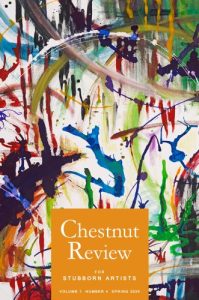
Their newest online issue, Spring 2026, features two interviews: Kate Caraballo interviews Kate Garcia, author of Bartending for a Stamp with my Face on It, and Maria S. Picone interviews Jad Josey, author of Cast Your Longest Shadow. Readers will also enjoy exploring new poetry by Daniel Aôndona, Donna Vorreyer, Hayley Clin, Jad Josey, Kate Garcia, Leonardo Chung, Spencer Jewell, Talan Tee, Wale Ayinla, Zixuan Angel Xin, Zoleikha Baloch; prose by Audrey Coldwell, Chip Houser, Haliru Ali Musa, Sarah Juma, Tina Kapousis; artwork by Adishi Gupta, Barbara Bitondo, Odunayo Abiodun, Ojo Olaniyi, and Shee Gomes. Chestnut Review 7:4 Launch Party – Spring 2026 with select authors reading their works is available on YouTube.
Chestnut Review Spring 2026 cover art is Eight by Emily Rankin: “Using layers of color and tangled shapes, Eight explores the intertwined nature of dreaming and wakefulness, memory and reality, and the confusing network of connections we have with one another.”
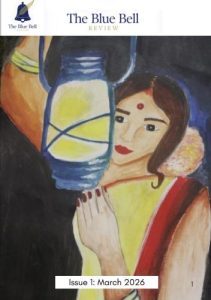
Within its first year, The Blue Bell Review has earned widespread trust within the literary community, leading to numerous collaborations with organizations and youth-led initiatives. Recent partnerships include a Young Writers’ Ekphrastic Contest with Phosphorescent Lit, creative arts and writing workshops for rural students in Hosapete with the Sakhi Trust, and ongoing projects with the Sama Foundation and Beyond the Lines. The platform attracts contributors at all levels, from emerging writers seeking certificates to established authors participating in in-depth interviews. Its international reach is reflected in submissions from India, the United States, Canada, Indonesia, Luxembourg, and South Korea.
The Blue Bell Review publishes quarterly issues with occasional special issues as well as regularly updated content on their website, accepting a wide range of submissions in writing (poetry, prose, essays, reviews, op-eds, travelogues, and articles), art (drawings, paintings, collages, 3D art, digital art, Best-Out-Of-Waste, etc.), and multimedia (animations, audio, video, apps, and music). Each issue is published as an HTML Flipbook, PDF, free download, and open online access.
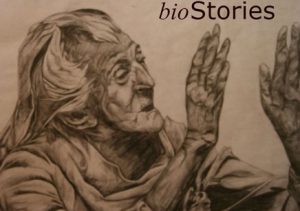
Publishing weekly online, bioStories showcases literary essays that illuminate both ordinary and notable lives, capturing moments of grace through vivid, compassionate storytelling. Recent featured stories include “In the Rumor of Forests” by Jeff Beyl, “The Blue House in the Hemlocks” by Katherine Casey, “Winter Protocol” by Joe Class III, “Veterans” by Pamela Cravez, “Locked” by Natassia Guyton, “A Love Letter to Linens” by Vicki Holder, “The Day the River Spoke” by Nisar Kakar, “Lost Footing” by Katje Lattik, “A Last Custard Cup” by Sydney Lea, “Better at Being Human” by Allysa Raymond, “Frozen in Midair and Soup-hound Tales” by Sharman Ober-Reynolds, “Magnificent Otis” by Brady Rhoades, “V-Cuts” by Matt Rosenberg.
bioStories accepts nonfiction prose submissions between 500 and 7,500 words, with most published essays averaging about 2,500 words. The journal also welcomes artwork that reflects its mission and complements featured essays, as well as cover art for its digital issues and print and digital anthologies. Visit the bioStories website for submission guidelines and additional information.
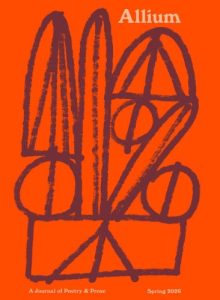
Published by Columbia College Chicago’s Department of English and Creative Writing, Allium: A Journal of Poetry & Prose features evocative, daring poetry, prose, interviews, and reviews in one annual print and one annual online issue, alongside a monthly podcast highlighting contemporary literary voices. The Spring 2026 issue features new poetry, fiction, and nonfiction by Sara Atwater, Hadara Bar-Nadav, Martine Bellen, Ana da Silva, Lucy Doherty, Sean Thomas Dougherty, Mark Fishbein, Zachary Salman Green, Rowan Hartfield, John Levy, Joseph Bardin, Giorgio Fontana, Rachana Pathak, Beth Richards, Derek Anderson, Adeeb Chowdhury, A.M. Gordon, Rebecca Johnesee, Kendall Repins, Andrew Ruhnke, Riley Skinner, Dylan Terry, and many more.
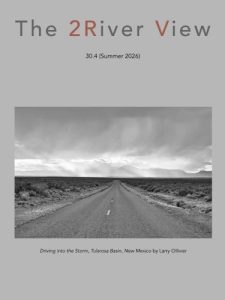
The Summer 2026 issue of The 2River View online journal of poetry features new work by Eileen Gloster, Dmitry Blizniuk, Pam Crow, Dolo Diaz, Erin Evans, Will Falk, Reina Garcia, Emily Light, Madeleine Pool, Forrest Rapier, and Ellen June Wright. 2River is an independent press offering free, innovative, print-ready poetry literary magazines as well as individually authored chapbooks. Authors also provide audio recordings, so readers can download and print the publication, listen to it online and via SoundCloud, and access the publication’s archive of issues and chapbooks. Submissions for the Fall 2026 issue of 2RV close August 30.
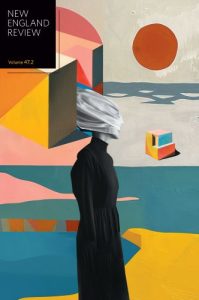
In the Summer 2026 issue of New England Review (47.2), readers can experience excerpts from New England Review’s international folio “Brazilian Badlands: Seven Women Writing the Brazilian Northeast,” guest edited by Bruna Dantas Lobato; rewarding prose by Laurence de Looze, Olaniyi Omiwale, L. F. Khouri, and Douglas Silver; and multifaceted poetry by Jennie Malboeuf, Cynthia Cruz, and Matty Layne Glasgow. Cover art by Gustavo Amaral.
The issue opens with a note from Poetry Editor Jennifer Chang reflecting on a graduate seminar about endings and offering a farewell to her role as poetry editor. Chang explores poetic closure, artistic experience, and the persistence of meaningful conversations. Through literature, music, teaching, and editorial work, Chang argues that the most powerful endings resist resolution, continuing to resonate, transform, and inspire. Indeed, the editors note that while Chang “will conclude her duties as poetry editor shortly after this issue is released from the printer, more of her selections will appear in the next issue. In the spirit of her editor’s note above, this ending is to be continued.”
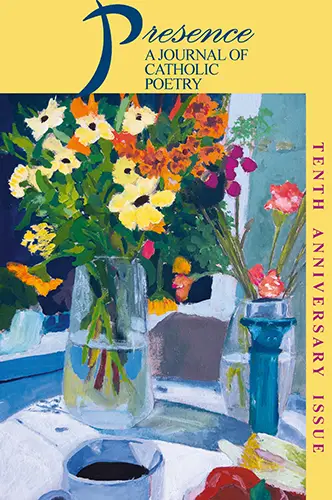
The 2026 annual issue of Presence marks its 10th Anniversary of publishing the best poetry informed by the Catholic faith as well as book reviews, interviews, and “life’s work” essays. This newest issue’s featured poet is Judith Valente, and the Featured Translations section focuses on works by Kutsugen, Mei Sheng, and Rihaku — translated by Ezra Pound, and works by Li Bai — translated by Vayda Pascarella.
Readers will find two interviews in Presence 2026: “’A Way of Saying Yes’: Samuel Hazo on the Communion of Poetry and Faith” by Janine Molinaro and “Evidence of the Divine: Landscape, Dream and Transformation in the Poetry of Linda Nemec Foster” by Anne-Marie Oomen. In addition, there are 26 book reviews, and “Life’s Work” features “Spending Time with Martha Silano” by J. D. Schraffenberger and “Joseph Bathanti: A Life Redeemed Through Poetry” by Ann Ritter.
Sadly, Presence lost three members of their growing community of poets in 2025, offering readers an “In Memoriam” section with works by numerous poets in honor of Martha Silano (1961—2025), Jane Greer (1953—2025), and Jennifer Martelli (1962—2025).
Works by over four dozen poets fill out Presence 2026, including Susanne Paola Antonetta, Bruce Beasley, Seán Carlson, Robert Cording, Alice de Chambrier, CX Dillhunt, Lynn Domina, Ann Fisher-Wirth, Carly T. Flynn, Jana-Lee Germaine , Mia Schilling Grogan, Katie Hartsock, Marci Rae Johnson, Desmond Francis Xavier, Nancy Krygowski, Margaret Mackinnon, Paul Mariani, Steve Myers, Brennan O’Donnell, Kyle Potvin, Dana Ranga, Skip Renker, Eva Skrande, Julie Cadwallader Staub, Carey Taylor, David Thoreen, Cara Valle, Anastasia Vassos, Gail White, James Matthew Wilson, and Carolyne Wright among others.
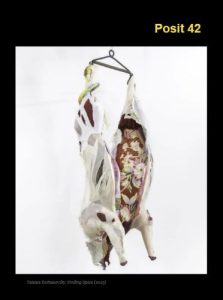
Posit online literary magazine publishes curated poetry, prose, and art, favoring innovative, finely crafted, often experimental work with depth and resonance. The editors invite readers to Issue 42, which features “visual art and literature that integrates innovation with interrelation, challenge with resonance, and discomfort with grace.”
Poetry and prose contributors to this issue include Mike Bagwell, James Butler-Gruett, Valerie Coulton, Elizabeth Dodd, Corwin Ericson, Pearl Kan, David Lehman and David Shapiro, Eléna Rivera, Orchid Tierney, G. C. Waldrep, John Walser, and Evan Williams, plus textiles, sculpture, painting and more by Nancy Cohen, Tamara Kostianovsky, and David Webster.
Cover art: Tamara Kostianovsky, Finding Space (2025)
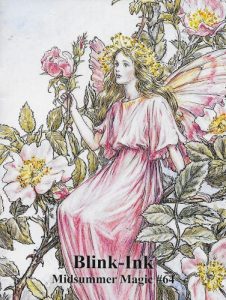
“Midsummer Magic” is the perfectly timed theme for Blink-Ink #64. “Rise with the sun on Midsummer’s Day,” wrote the editors in their call for submissions, “wash your face with dew, fill a bowl from a spring, and you may scry your beloved. At Midsummer, the veil between the worlds is thin and magic is afoot. If you only want to get home without being whisked away to Faerie, carry a bit of iron and hurry past the fairy mounds.” Contributors in this issue include Rachel Friedman, Rachel M. Hollis, Daryl Scroggins, Sally Reno, Marybeth Rua-Larsen, Stephanie M. Wytovich, Scott M. Brents, S.A. Greene, Ruth Heilgeist, Arno Bohlmeijer, K.L. Mill, and many more.
Blink-Ink publishes stories of approximately 50 words in a small-format print quarterly. Blink-Ink #65 is themed “Home” and is open for submissions until July 15. See their website for more information about submissions and subscriptions.
While there is no shortage of the number of literary magazine startups, the distinction with Nerve to Write: A Magazine for Disabled, Chronically Ill, and Neurodivergent Writers is the essential nature of its existence. This isn’t just another lit mag driven by want, but rather Nerve to Write is a magazine our community needs. “Many disabled, chronically ill, and neurodivergent people feel alienated and isolated and are searching for community and connection,” explains Nerve to Write Founder and Editor-in-Chief Sarah Fawn Montgomery. “We hope the literature and art in our magazine can be that community and connection. We hope readers who come across our journal will discover something of themselves reflected in our digital pages, while also learning about other disabled experiences and identities, as we weave together many perspectives into a complex web of acceptance and access.”
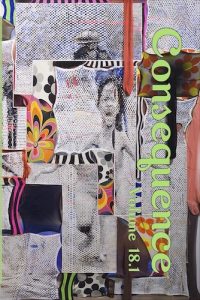
Many of the pieces in Volume 18.1 of Consequence focus on the power of language while addressing the consequences, realities, and experiences of war and geopolitical violence — whether in its written or spoken form. From H.R. Spencer’s poem “The Grammar of War” to Dewaine Farria’s essay “Speaking as a Veteran” to Bänoo Zan’s translation “Silent Language” to Glory Duruem’s short story “Our Unspoken Country,” which emphasizes the potency of things not said.
“As writers ourselves,” Consequence editors comment, “we certainly appreciate pieces that highlight the muscle of words, specifically how they can give shape to an ostensibly indescribable experience or help us discern and engage with convoluted realities. Of the many invaluable capabilities language possesses, its ability to help others glimpse, or even connect to, another person’s elusive experience or tangled world is possibly its greatest. Few other arenas spotlight this ability like those related to the consequences of war and geopolitical violence. . . . language, especially that which is well-crafted, has the ability to help us see the outlines and details of these oversized and often unbelievable realities.”
These details help us become more aware and, ideally, more deeply affected by these experiences. Or as Sayani De writes in “In the Same Tongue”: “Because stories need to be told for the larger collective, for the personal in larger histories, so that they can help to remember, resist, and transform.”
The June 2026 issue of The Lake is now online. This monthly journal of poetry and poetics features new works by Ben Bruges, Clive Donovan, Andy Humphrey, Albert Hwang, Jackson, Paul McDonald, Larry Ollivier, Anya Reeve, Jeff Ryan, and Michael T. Smith.
This issue also includes Charles Rammelkamp’s reviews of Timestamp by David Breskin and every single beat of my heart Pamela Wax and Hannah Stone’s reviews of Lives Outgrown by Susan Darlington and The Professor of Transformation by Elaine Ewart. The Lake’s unique column One Poem Reviews invites poets to share works from recently published collections. This June issue showcases works by J Brooke, Emma Kate Brown, Jasmine Erice Harling, and Richard Stimac.
Founded in February 2022, the centenary month of the publication of Ulysses, L’Esprit Literary Review was born in celebration of the literary revolution of consciousness represented by High Modernism, and seeks to publish work written in the fearless, risk-adept, and revolutionary spirit. The online journal accepts submissions of short fiction, creative non-fiction, novel extracts, literary criticism, book reviews, artwork, and photography.
The April 2026 biannual issue features works by Richard Leise & Lillian Taylor, Jessica Faulkner, Katrin Arefy, Miah Jeffra, Daniel Barbiero, Kent Kosack, Caroline Bock, Chance Freihaut, Maggie Armstrong, Jennifer McMahon, Margaret Dunn, H. L. Onstad, Michal Tallo, Ann Landi, Amanda Michalopoulou, and Andrea Lewis.
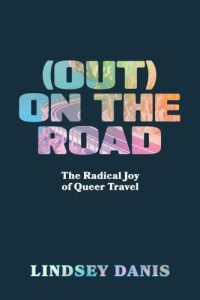
(Out) On the Road: The Radical Joy of Queer Travel by Lindsey Danis Ig Publishing, May 2026
Queer people hold passports at twice the rate of the general population and collectively spend around $100 billion a year on travel—yet remain one of the most underserved groups in the travel industry. A new book aims to change that.
(Out) On the Road by LGBTQ+ travel writer Lindsey Danis is the comprehensive, by-us-for-us guide that queer travelers have been waiting for.
“LGBTQ+ travelers are a growing demographic. They are passionate about travel and willing to spend money on it. Yet time and again, they are ignored or told to stick to a handful of ‘safe’ destinations. This advice fails to build their confidence, validate their identities, or teach them how to advocate for themselves,” says Danis.
(Out) On the Road challenges that conventional wisdom head-on. Drawing on decades of personal travel and eight years as an LGBTQ+ travel writer for publications including AFAR and GayCities, Danis covers everything from navigating safety to funding travel to finding support and connection on the road. Readers will discover how to face their fears, expand their comfort zones, plan affirming adventures — both in the US and internationally — and return home transformed.
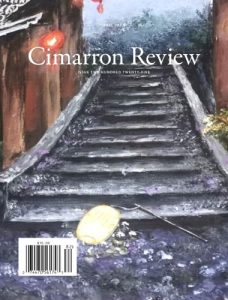
Since 1967, Cimarron Review has published imaginative, truth-driven poetry, fiction, and nonfiction by emerging writers alongside celebrated, award-winning literary voices. The newest issue (225) continues the tradition with poetry by Diana K. Malek, Jenn Blair, Lisa Titus, Sharon Lin, Dorsia Smith Silva, A.E. Stallings, Marisa Lin, Barbara Duffey, Jessica E. Pierce, SM Stubbs, Judith Skillman, Alec Hershman, Ori Fienberg, Danielle Hanson, Luke Hankins, Athena Kildegaard, nonfiction by Andrew Bertaina, Allison Field Bell, and fiction by Nona Caspers, Rebecca Orchard, JP Gritton, and Andrew Malan Milward.
Cimarron Review is a national journal of arts, letters, and opinions, published in the Winter, Spring, Summer, and Fall at Oklahoma State University, Stillwater.
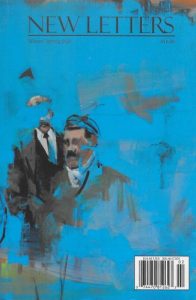
Published by The University of Missouri-Kansas City since 1934, New Letters Winter/Spring 2026 celebrates the New Letters Literary Award winners and Editor’s Choice Award recipients as well as incredible fiction from Andrew Bertaina, Billy O’Callaghan, and Dimitra Rizou — including her graphic story “Let’s Finish Early and Give Everyone 7 Minutes Back” (“Trust us,” the editors say, “you’ll want to spend more than 7 minutes with this one”). This issue also features poetry from David Thoreen, Kelly Gray, and Doug Ramspeck, plus thoughtful essays by Courtney Santo and Elissa E. Minor. A full-color portfolio of artwork by Dean Kube is included inside in addition to the cover image.
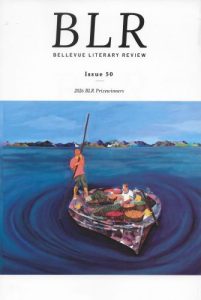
With Issue 50, Bellevue Literary Review celebrates its 25th Anniversary of publication! As Editor-in-Chief Danielle Ofri writes in her foreword, “We certainly weren’t thinking in terms of a silver jubilee back when this all started with a wisp of an idea about creative writing on health, illness, and healing. But these themes are universal, and using the arts to grapple with our shared vulnerabilities turned out to be a prescription that resonates with an ever-growing community.”
Issue 50 includes the winners of the annual BLR Literary Prizes: Shannon Perri for the Goldenberg Prize for Fiction; Won Lee for the Felice Buckvar Prize for Nonfiction; and Dara Laine for the John and Eileen Allman Prize for Poetry. Readers will find a wealth of new fiction, nonfiction, and poetry filling out the issue, with Ofri commenting, “We recognize that BLR writings engage directly with experiences of illness, loss, suicide, and the realities of the body in ways that may be intense or affecting for some readers. We hope you will find meaning and resonance in the stories, essays, and poems contained herein.”
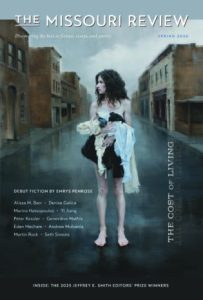
The Missouri Review Issue 49.1 (Spring 2026) is themed “The Cost of Living” and opens with a foreword by Speer Morgan who traces inflation from America’s founding to our contemporary anxieties, reflecting on the roles of scarcity, ambition, literature, and the emotional costs of survival. The issue goes on to highlight The Missouri Reviews 2025 Editors’ Prize winners: Peter Kessler (fiction), Eden Mecham (nonfiction), and Seth Simons (poetry). Readers will also enjoy discovering debut fiction from Emrys Penrose, new fiction from Yi Jiang and Geneviève Mathis, new poetry from Alissa M. Barr and Martin Rock, new nonfiction from Denise Galica and Marina Hatsopoulos, features on Modigliani and Mae West, and a review of three recent poetry collection considered in the context of the legacy of Confessionalism.
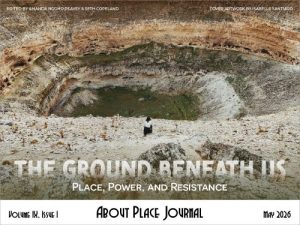
About Place Journal‘s May 2026 issue, The Ground Beneath Us: Place, Power, and Resistance, is a bold and unflinching issue that centers place as a living force shaped by history, marked by power, and sustained through resistance. In a political moment defined by state violence, environmental crisis, and struggles over bodily autonomy, this collection refuses neutrality. Instead, it asks what it means to belong, to remember, and to fight for the ground beneath us.
Bringing together poetry, essays, fiction, hybrid work, and visual art, the issue moves across landscapes both physical and imagined. Here, land is not backdrop but witness: to displacement and diaspora, to gentrification and ecological grief, to sacred memory and communal care. Each piece contributes to a larger tapestry that maps not only geography, but survival, resilience, and transformation.
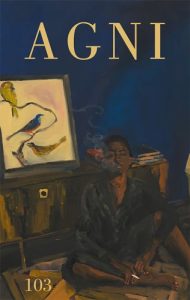
Art takes over in the newest issue of AGNI(103). Paintings by Danielle Mckinney put the thinking self among canvases and books, prefiguring essays by Christie Hodgen, John Cotter, and Mairead Small Staid. In poetry, Victoria Chang and Phillip B. Williams, and in fiction, Jan Carson and Andrew Zornoza speak a self’s truth through art, while poems by Hilda Hilst, (translated by Justin Greene), D. Nurkse, and Hayan Charara counter boggling visitations with the bulwark of language. In this issue’s introductory essay, Senior Editor Shuchi Saraswat resists numbness above all her Editor’s Note, “To Be in a Time Of War.” In nonfiction, May Teng and Ashaki M. Jackson, and in fiction, and Jane Morton and Charu Sinha find an answer in the telling, and the listening.
A full table of contents and several sample works from this print issue are available to read online alongside AGNI‘s unique online-only content, including poetry by Campbell McGrath and Jeff Whitney, “Rewriting the Script of Matrescence Memoir: A Conversation with Erica Stern” by Elizabeth Brogden, “’The Border Moves Through Us’: From Minneapolis, 2026′ blog post by agnimag, and “To Never Have Risked Our Lives: A Portfolio of Central American and Mexican Diaspora Writing” with poetry, fiction, essays, and conversations coedited by Esteban Rodríguez, Jennifer De Leon, and Ben Black.
The Common Issue 31 includes essays about a friendship in Senegal and an injury that won’t heal; stories set in Turkey and India, and in a laboratory, a racetrack, a gym, and a farm; and poems on family, race, faith, Ukraine, and more by Fatimah Asghar, Olena Jennings, Ezza Ahemed, Lauren Delapenha, Aleksandar Hemon, Aimee Nezhukumatathil, and more. Visit The Common website for unique online content in addition to the print issue, such as “Conjuring Home: Talia Lakshmi Kolluri interviews Samina Najmi,” the podcast: A. J. Bermudez on “The Sixteenth Brother,” and the mesmerizing photo essay “On the Farm” by Nina Fuller.
TEACHERS! The Common website offers the section, “Teach The Common” with information about how to obtain classroom copies – with staff available to help select the best issues for the curriculum – and schedule a class visit with Editor-in-Chief Jennifer Acker.
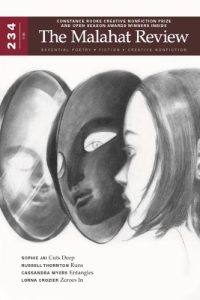
The Malahat Review 234 opens with the 2026 Constance Rooke Creative Nonfiction Prize Winner, “The First Law of Adoptee Physics” by Hayden Park and the 2026 Open Season Awards: Andrea Bishop (fiction), “Show and Tell”; Stephanie Harrington (cnf), “Chimera”; and Cassandra Myers (poetry), “Quantum Entanglement for Honeybees and Other Yellow Collisions.”
The issue is also filled with great poetry by Lorna Crozier, Joe Gorman, Kath Healing, Leigh Kotsilidis, Steve Noyes, José Emilio Pacheco, (translated from the Mexican Spanish by George McWhirter), Ayaz Pirani, Jessica Popeski, Xitlalitl Rodríguez Mendoza (translated from the Mexican Spanish by Daniela Rodríguez Chevalier and Dora Prieto), John Steffler, Christine Walde, and Jordan Williamson; fiction by Diana Dima, Sophie Jai, and Claire Wilmot; and creative nonfiction by Carmen G. Farrell and Russell Thornton, as well as six reviews of new works of poetry, fiction, and nonfiction.
Published out of Mississippi Valley State University, Valley Voices Spring 2026 opens with “A Poetic Duet: An Interview with Tobi Alfier and Jeffrey Alfier” and continues with “Transience” a photo essay by Claudia Brefeld, spotlighting photos on “passing away” and “traces of time that become visible and highlight transience. This transience has a special beauty and melancholy inherent in it. And so, each photo tells its own story.”
Readers will also enjoy fiction and nonfiction by Jacqueline St. Joan, Charlie R. Braxton, Daniel Webre, and Susan Duke, and poetry from Michael Catherwood, V. P. Loggins, Charles Rammelkamp, Philip C. Kolin, Kerri L. Bennett, Caitlyn Burns, Patricia L. Hamilton, Susana H. Case, Susan Weaver, Bradley R. Strahan, Will Limehouse, Kelly Talbot, Bert Molsom and many more.
The Greensboro Review has been publishing the best poetry and fiction from emerging and established voices since 1966, and their Spring 2026 issue (Number 119) continues this tradition, featuring the Robert Watson Literary Prize winners, Mai Mageed’s “Signs of Intelligent Life” for fiction and Anne Shafmaster’s “Love and Beauty” for poetry, as well as new work by Marcie Alexander, Taylor Byas, Michael Chang, Alex Chertok, Kennedy Coyne, Anna Egeland, Desmond Everest Fuller, Lyn Butler Gray, Tammy C. Greenwood, Julia Kolchinsky, Suphil Lee Park, K. A. Polzin, Alison Powell, Rick Rohdenburg, Jordan Roubion, Rob Magnuson Smith, Kate Welsh, Caroline White, Avra Wing, and Corey Zeller.
The Midwest Quarterly Spring 2026 is a special issue on “Dyslexia and Reading Failure” with Guest Editor David P. Hurford. Articles in this issue include “Writing Systems, Reading, Reading Failure, and Structured Literacy” by David P. Hurford, “Red Ink” by Hailey Cavaglieri, “So Much More Than ‘Just A Mom’: The Struggle of a Teacher to Find Support for Her Son, A Struggling Reader with Dyslexia” by Michelle M. Keiper, “Social-Emotional Experiences of Individuals with Reading Difficulties” by Alex C. Fender and Amy Marcoux, “My Story With Dyslexia” by Paisley Plank, “Lessons from a More Enlighted Writer and Teacher” by Casie Hermansson, “Attention-Deficit/Hyperactivity Disorder and Its Contribution to Reading Failure” by Thomas E. Hurford and Michaela R. Ozier, in addition to twelve other articles and several poetry contributions.
The Spring 2026 print issue of Boulevard includes 2024 Nonfiction Contest winner Mohammad Hakima, and 2024 Poetry Contest winner Rachel Stempel. It also features a Boulevard Craft Interview with Aria Aber and a symposium on the question of silence in art.
Readers will also enjoy fiction from David Nikki Crouse, Connor Greer, Amanda DeMatto, Cormac Badger, and Cathy Kisakye; nonfiction from Patrick Blaney, Finn Deerhart, G.H. Plaag, Alison Powell, Molly Rideout, and Emily Weitzman; and poetry from Ayesha Asad, Angela Ball, Bruce Bond, Andy Chen, Ava C. Cipri, Patrick Donnelly, Nathan Erwin, Siobhán Gordon, AT Hincapie, Olga Mexina, Weston Morrow, and Brianna Steidle.
If you are looking for good literary media content, check out Alaska Quarterly Review on YouTube, “Diverse. New, emerging, and established voices. Readings and literary conversations with depth, complexity, and humanity.”
Unplug to enjoy the newest issue of Alaska Quarterly Review, Spring 2026, which opens with new stories by Amy Benson , Catherine Kim, Katherine D. Stutzman, Eion Connolly, Maria Kuznetsova, Courtney Angela Brkic, Wendy BooydeGraaff, Beth Staples, Michael Czyzniejewski, and Jeremy T. Wilson; essays by Joyce Dehli, Heather Sellers, Tom Kizzia, Debbie Urbanski; and poetry by Alison Jarvis , Margaret Mackinnon, Sara Eliza Johnson, John A. Nieves, Rebecca Macijeski, Brandel France de Bravo, Lauren Camp, Emily Skaja, Michael Montlack, Richard Spilman, Michael Waters, Brian Komei Dempster, Vandana Khanna, Lucas Jorgensen, Benjamin Grossberg, Rosebud Ben-Oni, Masin Persina, Jennifer Stewart Miller, Catherine Pierce, and Craig van Rooyen.
Baltimore Review Spring 2026 issue is now online to enjoy, with opening lines that will entice you to keep reading. In creative nonfiction: “All winter we cultivate our manias.” writes Amy Halloran in “Vegetable Kingdom”; Annie Marhefka opens “El Sendero” with “In his dating profile picture, Greg has sun on his face. . . “; “At Pickles Pub in Baltimore” by Caroline Bock starts, “Within the first fifteen minutes, I learn that you haven’t read a book in thirty years…”; and “Searching for the Fifth Sense” by Betty Ruddy – “I used to have a nose.”
In fiction, the titles are enough, with Yuan Jiang’s “PagerDuty Against the End of the World,” Julien Shen’s “Ducks,” and Gordon Brown’s “Death of a Hotel Manager.” Poets featured in this issue include Zach Eaton, Amie Whittemore, Patrick Whitfill, Dana Holley Maloney, Meg McManama, Jane Hilberry, and Emily Kingery.
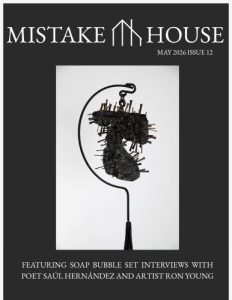
The namesake for the online Mistake House Magazine is Principia’s Mistake House, a small structure on the Principia College campus that showcases the creative process of architect Bernard Maybeck. Built in 1931, this cottage allowed Maybeck to test the materials and methods he would later use throughout campus. Mistake House continues to inspire Mistake House Magazine, whose vision is to create a home for literature and art that values both the creative process and final design.
The new May 2026 issue opens with Soap Bubble Set, showcasing one visual artist and one writer, this month spotlighting writer Saúl Hernández and artist Ron Young. The issue continues with fiction by Nic Hinson, Javier Perez Rizo, Leah Johnson, Genevieve Owens, and Sage Kirkbride; poetry by Sophie Cornwell, Brianna King, Zack Carson, Zack Carson, Wyatt Vaughn, Erica Moore, Milagros Muschella, Madi Raleigh, Gracie Jones, Kate Shipp, and Phoebe Robbins. This issue includes Mistake House‘s sixth annual photography section, featuring five student photographers: Ena Castillo, Maryam Ghasempour siahgaldeh, Fatemeh Fani, Lamiya Terrell (Editor’s Prize for Photography), and Graham Littell.
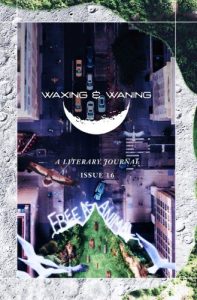
Waxing & Waning Issue 16 is a print issue themed “Free as Animal” and features poetry by M Anne Avera, Kathleen Fields, Kimberly Hall, Pramod Lad, C. Larkin, Bleah Patterson, Danielle Ryle, and John Wojtowicz; fiction by Ian Boisvert, Stacey Gordon, Derek Krause, Adam McOmber, Dalton Miller, and Mark Wolters; creative nonfiction by Annalise C Biesterfeld; drama by Samantha Dols; artwork by K Garcia, Adeline Jackson, Donald Patten, and Zahra Zoghi; and a comic by Cannon Hawley. Readers can order single copies of Waxing & Waning from the publisher’s website.
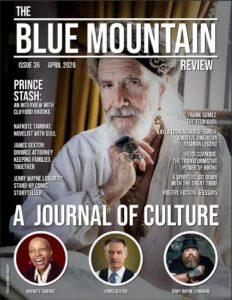
The newest issue of The Blue Mountain Review, an online journal of culture, opens with an introduction by Major Jackson. He shares the kind of chaos and pain that drove him toward poetry, emphasizing how reverence for language and community among writers shaped his growth. Jackson argues seeing poetry not as ego or ambition, but as a lifelong, rigorous, communal practice contributing to a larger human conversation. Prince Stash is the focus of the new European issue of The Blue Mountain Review (April 2026), which can be read online via issuu, and also includes interview, music interviews, artwork, travel and fashion features, as well as fiction, essays, and poetry.
The May 2026 issue of The Lake, an open-access journal of poetry and poetics, is now online featuring new poetry by Mallika Bhaumik, Barbara Daniels, Paul Dickey, Glenn Hubbard, Hana Kelly, MK Kuol, Rebecca O’Hagan, Kristen Park, J. R. Solonche, and Matt Zambito. This issue also includes reviews of contemporary poetry collections, this month spotlighting Laura Kasischke’s I Was Bonnie & Clyde, Tom Kelly’s These Are My Bounds, and Polly Clark’s Afterlife. The Lake also invites poets to send a poem from a recently published book for its unique column “One Poem Review.” The May 2026 issue shares works from M.L. Lyons, Judith Priestman, and Jeannie Mackenzie. Contact The Lake if you’re a poet who would like to share a selection from your own book!
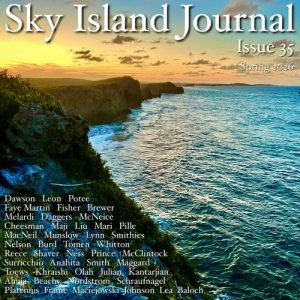
Sky Island Journal Co-Founder and Co-Editor Jason Splichal opens Issue 35 with these chilling words, “You need to know that there are several writers in this issue who are risking their lives publishing with us. They’ve deemed that risk acceptable in order for them to express themselves and for you to have the opportunity to experience and share their art.” This is in keeping with the mission of Sky Island Journal, Splichal explains: writers are risking their lives to publish uncensored truth, and the journal is committed to protecting and amplifying those voices. Sky Island Journal posits itself as a champion of global freedom of expression and has done so while building an independent, supportive literary community connecting readers and writers worldwide.
In this newest issue, readers will find works by Alex Dawson, Alicia Potee, Andrew Fisher, Bella Melardi, Brandon McNeice, Dibyangana Maji, Elli Mari, Erika MacNeil, Grace Lynn, J. Alan Nelson, JH Tomen, Kristen Reece, Lorrie Ness, Madison McClintock, Mariam Anahita Amin, Melanie Maggard, Nabhan Khraishi, Paul Julian, Pratiksha Ahuja, Robert Nordstrom, Sarah Platenius, Sian Maciejowski, Sydney Lea, Zoleikha Baloch and many more.
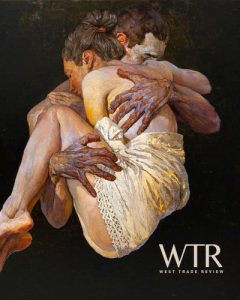
Publishing quarterly, three online issues and one print annual, West Trade Review Spring 2026 (Volume 17) is available to order in print with sample works open-access on their website. This issue includes a themed section “Borders & Border Crossings” as well as new poetry, creative nonfiction, and fiction by Justin Taroli, Rebecca Makkai, Vincent Perrone, Elliott Gish, Madison Ellingsworth, Ericka Russell, Jill Barrie, Paul Hostovsky, Brice Maiurro, Dylan Tran, Lucy Griffith, John Muellner, Alex Vigue, Sean Thomas Dougherty, Christian Paulisich, Sharon Du, J.L. Chen, D Anson Lee, Schyler Butler, John Carmen Harper, Natalia Martinez, Christien Gholson, Cam McGlynn, Eileen Pettycrew, Amanda Turner, and many more. Cover image: Weightless by Denis Sarazhin.
West Trade Review is looking for submissions for their weekly Substack feature Trill: Poems That Resonate — “poems that uniquely explore each month’s theme and perform Olympic feats with language that leave a reader in wonder while still referring back to the basic things that make us human.”
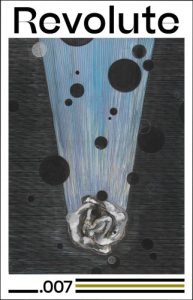
The newest annual issue of Revolute .007 is now available for readers to enjoy online, opening with cover art by Michiko Itatani and an interview with poet Ally Ang, who comments, “As poets, it’s our job to be that call — that continuous call to imagination.”
The issue also features poetry by Gray Davidson Carroll, MICHAEL CHANG, Abigail Cloud, Z.T. Corley, Jose Hernandez Diaz, Theodore Heil, Elane Kim, Hilary King, Anzhelina Polonskaya; fiction by Chris Clemens, Bri Dent, Alec Evan March; nonfiction by Taylor Olsen, E.P. Tuazon; and Microreviews of Oh Oblivion by Robert Krut; The Hollow Half: A Memoir of Bodies and Borders by Sarah Aziza; Velvet by William Fargason; Ekhō : A Poem in Three Parts by Roslyn Orlando: A Study in Repetition; An Image of My Name Enters America: Essays by Lucy Ives; Lesser Ruins by Mark Haber; Good Night, Sleep Tight by Brian Evenson; Something Small of How to See a River by Teresa Dzieglewicz; and The Life of Violet: Three Early Stories by Virginia Woolf, edited by Urmila Seshagiri.
Red Tree Review Issue 6 is available open-access online for readers to enjoy “incredible poems that surprise, harrow, and awe,” featuring new work from Andrew Robin, Anne Moore Odell, Michael Rerick, Kathleen Hellen, James Croal Jackson, Justin Hollis, Greg Field, Jessica Purdy, Phillip Sterling, Hilary Sideris, Andrew Vogel, Colleen Harris, Bart Edelman, and Martha Clarkson. These poems from both new and established writers move from the elegiac to the uneasy, observational and nostalgic to surreal and grief-stricken.
The newest issue of the open-access online journal The Writing Disorder opens with “The Art of Light,” a portfolio by experimental visual artist Jacqueline Hen, who creates innovative work in light and space. The issue is also filled with great works of fiction, nonfiction, and poetry by Sharon L. Dean, Kevin Daniel Scheepers, Ann Levin, Nicholas Godec, Ayoung Kim, Lynn McGee, Annie Powell Stone, Barbara Krasner, Roberto Ontiveros, David Sapp, Rongili Biswas, Kurt Schmidt, John Ronan, Jeanne-Marie Fleming, David Lightfoot, Bernard Martoia, Ken Wuetcher, as well as Danijela Trajković’s book review of On Rapture And Death by Stella Vinitchi Radulescu.
The Spring 2026 issue of the Apple Valley Review is now available to read open-access online and features a short story by Mary Luna; flash fiction by Lisa Beech Hartz, Wendy Elizabeth Wallace, Jon Acheson, and Kimmy Chang; a memoir by John Picard; and poetry by Julia Lisella, Jackson Burgess, Joshua Tilton, John Minczeski, Sambhunath Chattopadhyay (translated from the Bengali by Kingshuk Sarkar), Renee Emerson, and Igor Monsellato. The cover photograph is Peacock Close Up by Tim Mossholder.
Apple Valley Review is a semiannual international literary journal showcasing short fiction, poetry, personal essays, and translations. Founded in 2005, it is edited by Leah Browning.
Writers: If you are looking for that push to get you to write more, Voltamight be just the motivation you seek, especially if you are in search of something out of the ordinary. “We gravitate towards literature that reimagines ordinary experiences and is so beautifully reckless in its pursuit that it becomes irresistible,” claims Editor-in-chief Charlotte Ungar. “Like authenticity, people instinctually search for meaning, but I think it would be fair to say that, at Volta, we stray away from overly logical craft. What is exciting, in a myriad of competent voices? For us it’s the literature that embraces balancing cruelty and truth, a sort of brave bending of what is familiar, to know how much to reveal to reveal more of yourself, and that’s what I know to be style. If we have an aesthetic, it’s highly idiosyncratic.”
Fittingly, then, the word ‘volta’ comes from the Italian meaning “turn,” such as a dramatic shift in tone, argument, or focus or a change in perspective, a resolution, or a thematic pivot, adding complexity (Academy of American Poets). Volta most certainly offers this change and added complexity to the literary community, publishing fiction, nonfiction, poetry, translations, and visual art twice annually, open access online.
The Fiddlehead Issue 307 (Spring 2026) features poetry, fiction, creative nonfiction, and reviews written by some of the best new and established writers. The issue includes Melanie Power’s winning poem of The Fiddlehead‘s 35th annual Ralph Gustafson Prize For Best Poem, new work from Liz Howard and Abhimanyu Acharya, and a new essay co-authored by Summer Schenk Andrus and Nicole Breit. Visit The Fiddlehead website to see a full list of contributors, read excerpts from selected works, and order a copy of Issue 307 or subscribe for home delivery. The cover art is Lilas, 2023 by Raymond Martin.
Marmalade is made from condensing fruits into their core qualities of zest and sugar, while still preserving their flavor palette. In this same way, Marmalade Lit seeks creative work that embodies these characteristics – poignant, but honest. Curating works from youth around the globe, these diverse perspectives join together to embody the modern youth experience. In doing so, Marmalade Lit gives hope to young people that they can one day see their work published. “Of course,” comment founding editors Sierra Elman and Lucile Orr, “marmalade is also a spread, so as writers, we couldn’t resist seeing it as a metaphor for spreading voices as well.”
For over twenty years, Brilliant Flash Fiction has been publishing vibrant stories from around the world, illustrated with dazzling photography. The March 2026 issues continues this legacy, with stories about two academics seeking literary inspiration through a drunken wilderness adventure (“Camp Hemingway” by Robert L. Penick), a sibling rivalries (“A Jarring Point of View” by Steven Whitaker and “Glass Sister” by Christy Hartman), women who desire belonging (“Cracks” by Elodie A. Roy), develop a new sense of self (“DOLLS AND ACTION FIGURES” by Danielle Ellis), and disconnect from their past as their memories fade (“Reunion” by Terrye Turpin), and more works by David Waters, Gareth Vieira, John Francis Istel, and Katrina Megson, with photographic illustrations by Laurie Scavo. Brilliant Flash Fiction is free to read online.
The April 2026 issue of The Lake is now online featuring new poetry by Zhu Xiao Di, Precious Ejim, David I. Hughes, Todd Mercer, Joanne Monte, Howard Osbourne, Amrita Palaparti, Clare Starling, Gopu M. Sunil, Shelley Twitchin. Reviews of newly published collections of poetry include Patrick Lodge’s There You Are reviewed by David Mark Williams, and David Trinidad’s Hollywood Cemetery reviewed by Charles Rammelkamp. One Poem Reviews, which invites authors to send a poem from a recently published collection, spotlights poems from Lorraine Caputo, Jordan Francis, Alan Price, Michael Simms, and J. R. Solonche.
Revving up and shifting into top gear, The MacGuffin takes the first lap of volume 41 (November 2025) with the asemic art of Gregory Stump, whose artwork, Lackman Motor Grader, is featured on the cover. Poet Liz Marlow returns to the pages of The MacGuffin via different terrain with “Rosa Leaves Kyiv on a Riverboat,” and after riding with Andrew Collard’s “Coffee Truck,” readers get out on a hike with Dixie Partridge. Intimated by Tina Tocco’s narrative recipe “Results May Vary,” this issue’s prose selections mix together disparate characters into a rich minestrone served up by head chefs Andrew Nickerson, Angie Curneal Palsak, and Alina Zollfrank, with a hearty slice of the bread of life from Ryan Bender-Murphy.