Imagine finding a prestigious publishing platform that respects authors, pays them well, and treats them like we would want to be treated. According to Founder and Editor Josh Boldt. “Brown Hound Press is well on our way to that goal.” Brown Hound Press favors offbeat mystery, dark humor, southern gothic, and literary fiction, publishing one story every Thursday for readers to enjoy open access online with free subscriptions for email delivery to look forward to each week.
“We’re new,” Boldt says, “but our weekly stories already reach thousands of readers, including best-selling and award-winning authors, editors, publishers, and literary agents.”
The Shore Issue 29 has emerged just in time for spring! It is bursting with poems navigating life’s tangles and finding beauty in the weeds. The issue is popping with new poems from Amorak Huey, Avriel Mejrah, Kelly Grace Thomas, Jacqueline Berger, Thia Bian, Elena Zhang, Bridget Brush, Jenny Chu, Cayla Garman, Patrick Meeds, Brian Czyzyk, Ronda Piszk Broatch, Lea Marshall, Fiona Jin, Catherine Weiss, Morgan Matchuny, Jessica Zhao, Meggie Royer, Janice Northerns, Fez Avery, Aaron Tyler Hand, Morgan Moriarty, Oladejo Abdullah Feranmi, H G Dierdorff, Heidi Seaborn, Becki Hawkes, Tara Ballard, H R Webster, Gareth Adams,Chris Cocca, Nathan Fako, Bridget Kriner, Finaly Worrallo, Özge Lena, Mary Buchinger, Lisa Raatikainen, Nathaniel Julien Brame, Kaitlin Tan, Katie Kemple, Nancy Mitchell, Dennis Hirichsen, Elinor Ann Walker, Daniel Elias Bliss and Nora Sun. It also features an explosion of art by Adam Benedict.
Founded in 1967 at Auburn University, Southern Humanities Review publishes fiction, poetry, essays, earning recognition and consideration for major literary awards. The newest issue (59.1) features nonfiction by Sarah Gorham and Annelise Richardson, fiction by Fernanda Coutinho Teixeira, Reyumeh Ejue, Imogen Osborne, and Don Zancanella, and poetry by Emma Aylor, Zanice Bond, Elizabeth Rose Bruce, Grant Clauser, Cara Dees, Regan Green, Diane K. Martin, Josh Martin, Lana Reeves, Mk Smith Despres, Jayasri Sridhar, Mehrnoosh Torbatnejad, Adam Vines, and Angelica Whitehorne. The cover art is Bird’s Nest and Ferns by Fidelia Bridges (1834-1923).
Bennington Review Issue 15 is themed “The Secret History” issue and invites readers in with the startling, unsettling cover photograph by Jonathan Kline, and goes on to include work by seventy-one poets, seven fiction writers, and eleven nonfiction writers, as well as a conversation poet Camille Guthrie conducts with the poet and translator Donna Stonecipher.
On the theme of “The Secret History,” the editors in their introductory note write that this issue’s, “various poems, short stories, flash fictions, and essays are interested in public and private histories, shared and individual traumas that consume us as we try to bury them, the intersections between the personal and the global, ancient violence and the well-worn path from Babylon and the Old Kingdom of Egypt . . . to the 20th and 21st century Ages of Exhaust and Exhaustion.”
Contributors to this issue include Stephanie Ellis Schlaifer, Chris Stroffolino, Rob Schlegel, Adam Clay, Matthew Gellman, Katharine Whitcomb, Mary Jo Salter, H. M. Cotton, Bob Hicok, Madilyne Igleheart, Elizabeth Robinson, Genevieve Kaplan, Nicholas Montemarano, Gilad Jaffe, John Gallaher, Orlando Ricardo Menes, James Kelly Quigley, Mark Nowak, Jehanne Dubrow, Nikola Champlin, Margaret Yapp, Malachi Black, Michael Chang, Elise Thi Tran, Sean Thomas Dougherty, Donna Stonecipher, Laura Bandy, Julie Hanson, Allan Peterson, Dana Isokawa, Sara Rose Nordgren, Kami Enzie, Stella Wong, Lynn Pedersen, Daniel Bouchard, Phillip B. Williams, Aimee Bender, Amelia Gray, Keith Pilapil Lesmeister, Jin Zhao, Laura Eve Engel, Philip Metres, Germain Lee, Tiffany Troy, Su-Yee Lin, and Carrie Cogan among many more.
Blink-Ink #63 asked writers to send their best stories of approximately 50 words on the topic of “Lost Civilizations / The Silurian Hypothesis.” The editors set the stage: “Extreme geological forces of nature make our Earth something like a gigantic trash compactor. Physical evidence of anything at all doesn’t last long. This and the great age of the planet might imply that civilizations as advanced or even more advanced than our own have come and gone. Civilizations that are completely lost to us today. Or are they?”
Contributors include Alisa Golden, David Galef, Merle Mayes, Scott M. Brents, He.E. Ross, Caryl Scroggins, Janel Cameau, Marla Krauss, Eileen Tynion, and many more, with cover art by IrinaTall Navikova.
The Courtship of Windsonline literary journal’s Winter 2026 issue opens with Editor William Ray’s commentary, which welcome readers to a wide range of content subject and themes: “the tension in individuals’ quests to find a spiritual home, inside or outside the mainstream church; reflections on the conflict between corporate and social values; the nuances and challenges of personal relationships; the damage brought by war; poetic pictures of natural landscapes and of quiet moments; and writing that takes writing and art as subjects.”
Readers can enjoy reading poetry by George Freek, Austin Allen James, Erren Geraud Kelly, Anne Whitehouse, Petra Francesca Bagnardi, Ace Boggess, William Miller, Clyde Kessler, Paul Connolly, Jeffery Allen Tobin, Douglas G. Campbell, Doug Tanoury, Jean Howard, Paul Rabinowitz, Mark J. Mitchell, Allison Carroll, Holly Day, Richard Granvold, Tamar Brooks, Annie Przypyszny, Caroline Maun, Glenn Wright, Frederick Pollack, James Croal Jackson, JS Choi, M. M. Adjarian, Lucien R. Starchild; essays by Gary DeCoker, David Sapp; fiction byTITOXZ, Emma Kohut, Guerguan Tsenov, Angela Tang, Debra Lee; drama by Sarah Daly, and artwork by Nuala McEvoy.
Publishing poetry, prose, and art online, Chestnut Review pledges respect for artists through ethical financial policies, selecting outstanding work and promoting it widely, as well as celebrating contributors’ achievements. Chestnut Review acknowledges that artists must show a stubborn resilience. Just like the chestnut tree, surviving blight by sending out new shoots, artists persistently create despite rejection, hardship, and life’s demands, sustained by stubborn belief in their work.
Those stubborn artists contributing to the Winter 2026 issue include Daniel Abukuri, Hajer Requiq, Jen Feroze, Lauren Saxon, Marvellous Igwe, Michael Okafor, Sam Aureli, Shei Sanchez, Sodïq Oyèkànmí, Chelsea Lebron, Chris Negri, Claudia Owusu, Nicholas Hilbourn, Nora Wagner, Ellen McMahill, Jack Bordnick, Jeff Mann, Joyce Melander, and Lisa Rigge.
New England Review Issue 47.1 offers readers contemporary poetry, fiction, and nonfiction alongside translations translations from the German and Spanish, and “rediscoveries” of previously published work.
Contributors to this newest issue explore themes of grief, identity, technology, family, failure, and memory through poetry by Catherine Goldhammer, Alissa M. Barr, Sandra Lim, Ama Codjoe, Chelsea Christine Hill, Lauren Eggert-Crowe, Randall Mann, Traci Brimhall, Patricia Lockwood, Abdulkareem Abdulkareem, Oscar Oswald; fiction by Emily Lyons Flamm, Lauren Acampora, Kyle Francis Williams, Elizabeth Lee Ayce, David Hansen, José Orduña; nonfiction by Lindsay Starck, Hasanthika Sirisena, Robin Hemley, Ranbir Sidhu, David Staudt.
Translations include work by Mely Kiyak translated by William Pierce, by Liliana Ponce translated by Michael Martin Shea, and by Clementina Suárez translated by J. P. Allen. “Rediscoveries” brings back work by Edmund Burke, “From Thoughts on the Cause of the Present Discontents.”
Still Point Arts Quarterly is a visually striking literary and arts journal published four times a yea with each themed issue featuring historical and contemporary art, fiction, nonfiction, and poetry. The Spring 2026 issue is themed “Crafting a Life” and opens with Editor Christine Brooks Cote’s commentary exploring art, craft, and industry, closely examining the distinction between craft and industry.
“There is nothing certain about life. Every moment of every day involves risk — not knowing how to proceed, trying something to see if it will work, sometimes having to undo past efforts and try another way, hoping it all works out in the end — and possibly suffering the consequences of our actions. By accepting and living with the risks, we craft our lives. […] Just as we improve and progress in our craft as we do it, we learn how to live a better life as we do it, and often the lessons learned are interchangeable: patience, perseverance, problem-solving, a sense of curiosity, the importance of mental and physical stimulation, and so many more. Crafting a well-lived life is not without risk and uncertainty, but if we seek certainty, we miss the point.”‘
Contributing poets and artists who offer readers the opportunity to enjoy their craft include Christopher Wiley-Smith, Gloria Heffernan, Renee Dionne Mies, Sheri Reda, Lilace Mellin Guignard, Fendy Tulodo, Elise Chadwick, Gail Tyson, David Anson Lee, Joyce Lewis-Andrews, Lisa Timpf, Mary E. Berg, Robin Michel, Kathryn DeZur, Katherine Simmons, David M. Stern, Kimberly Beckham, and Sarah Kilch Gaffney.
What becomes of a literary magazine once it ceases publication? One long-standing option has been the University of Wisconsin’s Little Magazine Collection, a non-circulating collection of print publications, along with their Introduction to Little Magazines Learning Module, their work is integral to the preservation of this aspect of literary history.
Another, perhaps more accessible option, is the new and growing Zine Alive Archive at The Fool’s World. Zine Alive Archive is open to house literary works from magazines and blogzines that have ceased publication, for whatever reason.
For those publications, Zine Alive Archive is here to house the published works that are now offline. In this space, Zine Alive shares active links as well as highlights or full issues of those magazines for free.
The Sunlight Press is a nonprofit digital literary journal publishing new and established voices in creative nonfiction, fiction, poetry, reviews, photography, and craft reflections. Focused on light, hope, and human resilience, The Sunlight Press explores moments of insight found in everyday and extraordinary experiences. New work appears Mondays and Wednesdays, with occasional additional features and announcements.
Recent featured works include photography by Russell Nichols, poetry by Thehara S.U. and Claire Lynch, essays by Lee Bernstein, Yiyao Li, and Ron Clinton Smith, and fiction by Kathryn Silver-Hajo.
Currently closed to fiction and poetry, submissions are open for personal essays, reviews, “Artists on Craft Series” (interviews/reflections by artists on their process of the art of choice) and photography.
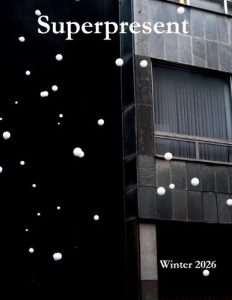
Themed “echo,” the Winter 2026 issue of Superpresentopens with the editors commentary, “This go-round, Superpresent asked contributors to think of echo in their own ways. We didn’t receive the photo of a bat promised by one 14 year old niece when told the theme (‘echo location,’ she smugly nodded). We did, however, receive work that reminded us of Emerson’s letter to Whitman on first reading Leaves of Grass: ‘I greet you at the beginning of a great career, which yet must have had a long foreground somewhere, for such a start.’ Some of the contributors this issue are gifted beginners while others are seasoned (weathered?) makers.”
Publishing quarterly since 2020, Superpresent was created with a few simple goals: to present striking visual art and writing without favoring one over the other; to be available both online and in print; to be free (free to download or view online and free to submit work to); and to produce an affordable, high quality print version for those who still like touching paper and ink.
Formerly known as Crazyhorse, swamp pink publishes fiction, poetry, and nonfiction online twice a month. The journal is dedicated to showcasing exceptional work by writers at all stages of their careers, with a particular interest in voices from writers of color and other marginalized or underrepresented communities. The February 2026 issue (no. 24) features fiction by Brian Ma, Skyler Melnick, Abeje Zora Schnake; poetry by Elisa Luna Ady, Ben Cooper, Sam Dickerson, Leila Farjami, Mckendy Fils-Aimé, John T. Howard, L. S. Klatt, Yunkyo Moon-Kim, samodH Porawagamage, February Spikener, Mary Zhou, Flash Fiction, KJ Nakazawa-Kern, Sarah Therio; and nonfiction by Philip Metres and Amber Flora Thomas.
Cholla Needles is a nonprofit supported by private donations that publishes a monthly literary magazine and books by desert-inspired writers. Cholla Needles hosts literary events, offers mentoring and workshops for writers of all ages, provides free access to its poetry, prose, and art library by appointment, and partners with community organizations to promote the arts.
Their monthly print publication focuses on the work of ten poets as well as accompanying photography and/or artwork. Contributors to the newest issue (111) include James Marvelle, Bonnie Bostrom, Rick Adang, Sarah Marie, Duane Anderson, Arvilla Fee, Patty Prewitt, Francene Kaplan, Barry Kritzberg, and J. Malcolm Garcia, with cover and inside photos by Kim Martin.
Established in 2014, Brilliant Flash Fiction is a nonprofit literary journal dedicated to sharing striking short fiction from writers around the globe. Each story appears alongside vivid photography, creating a visually engaging reading experience. The journal also hosts writing contests and shares craft advice through social media, all without charging any fees. Committed to showcasing distinctive international voices, Brilliant Flash Fiction invites submissions from writers at every stage of their careers. Recent contributors include Dirk Kortz, Alethea Paul, Hannah Wyatt, Tracy Royce, David L. Updike, Samuel Cromwell, Jonathan Worlde, Bethany Bruno, Benjamin Brindise, Pravy Jha, and Mandira Pattnaik.
Terrain.org is a pioneering place-based online journal publishing high-quality literature, art, science, and activism addressing social and environmental issues. Featuring renowned writers like Wendell Berry and Joy Harjo alongside emerging voices, Terrain.org offers multimedia work, interviews, podcasts, and community case studies while fostering an inclusive, advertisement-free literary community. Recent articles include “Built on Dry Ground: The Water Reckoning in the West” by Joe Whitworth, “Why We Tell Stories” by Rob Carney, “Learning Resilience: Writing Washington State Lands” by Lis McLoughlin, “From Birds to Whales to Birthdays” by Rob Carney, “Letter to America: What do we tell the water now?” by Lisbeth White, “Satellites Show, Stories Tell” by Elise Arellano-Thompson, “Also, the Universe Purrs” by Rob Carney, as well as recent episodes in their podcast series, “In the Circle of Ancient Trees” and “The Gift of Animals. Terrain.org also publishes poetry, fiction, interviews, reviews, and visual features “ARTerrain” and “Upsprawl.”
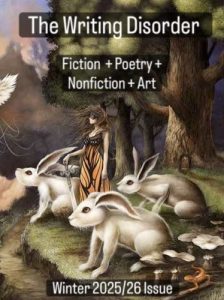
The Writing Disorder is a quarterly Los Angeles–based journal publishing fiction, poetry, nonfiction, art, interviews, and reviews, showcasing emerging and established voices while celebrating storytelling and experimentation. The Winter 2025/26 issue features “The Fantastic Art of Dan May,” each image of which will take viewers on a fantastical imaginary journey. Readers will also enjoy fiction by James Joaquin Brewer, Adrienne Clarke, Danyl A. Doyle, Joceline Eickert, Adrianna Procida, Plamen Vasilev, Bill Vernon; poetry Suzette Bishop, Richard Dinges, Jr., Peycho Kanev, Jennifer Lagier, Jim Murdoch, Michael Penny, Tammy Smith; nonfiction by Kevin Brown, Caitlin Garvey; and an interview with author Diana Josefowicz by Geri Lipschultz as well as a book review by Hugh Blanton of Crush by Ada Calhoun.
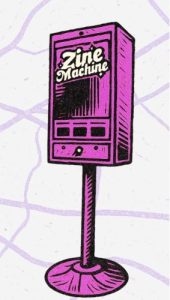
If you hear someone say, “I love when you can just tell that everyone involved is having fun,” chances are pretty good they’re talking about Zine Machine, the magazine named after the original concept: a literal vending machine for zines – but it is also so much more!
Zine Machine is a quarterly publication of writing and visual art formatted as a mini zine which is compatible with its vending machines. (Exact specifications and an example template are available at zinemachine.com/submissions.) New issues are published on the first of January, April, July, and October, and in keeping with the name, these quarterly issues can be purchased via vending machine through partnering retailers. (More information about these locations can be found at zinemachine.com/pop-ups.) These zines are also free to read as digital flipbooks online while individual zines and full issues are available to purchase on the Zine Machine website.
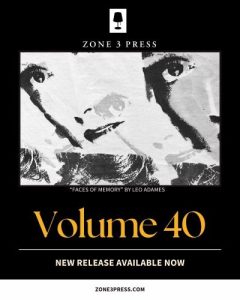
Founded in 1986, Zone 3 is the annual online literary journal of Austin Peay State University’s Center of Excellence for the Creative Arts (CECA, “seek-ah”), publishing poetry, fiction, and creative nonfiction from emerging and established writers in a wide range of aesthetics.
Issue 40.1 has just been released and features Nonfiction by Zehra Habib, Francesca Leader, Matthew Pitt; Poetry by Claire Cella, Dario Cvencek, Aminata Gueye, Don Farrell, Rachel Fan, Kelle Groom, Alana Craib, Jim Daniels, D. Dina Friedman, Shana Graham, Tom Laughlin, Glen Mazis, Michael Montlack, John A. Nieves, Hayden Park, Abigail Xiao, Nicole Yurcaba, Hanyi Zhou, Jane Zwart, Nicole Yurcaba; and Fiction by Barbara Krasner and Jacob Vaus.
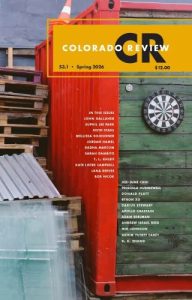
Editor in Chief Stephanie G’Schwind opens the Spring 2026 issue of Colorado Review: “It’s mid-December, as we wrap up production on this issue, and the news cycle, often grim anyway, feels particularly so at the moment, creating an unfortunately familiar sense of disconnect: Adjacent to so much tragedy and sorrow, there is inevitably still joy. Perhaps unsurprisingly, the stories and essays in these pages echo this peculiar crux of our human experience.”
Contributors to this issue include Priscilla Hunnewell, R. X. Zhang, Kate Lister Campbell, Mellissa Sojourner, Darius Stewart, Keith Stahl, T. L. Khleif, Jordan Hamel, John Gallaher, Lana Reeves, Donald Platt, Byron Xu, Radha Marcum, Sarah Gambito, Apollo Chastain, Suphil Lee Park, Adam Edelman, Hee-June Choi, Akhim Yuseff Cabey, Bob Hicok, Andrew Israel Reed, and Mik Johnson.
G’Schwind closes the Editor’s Page: “We hope, of course, that you come to this issue from a space of joy rather than grief, but if you find yourself in that other territory, perhaps Darius Stewart’s experience offers something of a balm: ‘I was trying to write from there, not around it but through it.'”
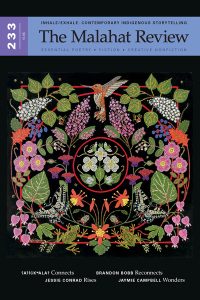
The Malahat Review Issue 233 is a special issue themed “Inhale/Exhale: Contemporary Indigenous Storytelling.” Guest Editor Richard Van Camp welcomes readers to this issue: “When we write, our sprits dance. When we read, our spirits are welcomed into that dance. You’ll feel pretty quick that in ‘Inhale/Exhale’ some of us are already two-steppin’; some of us are jigging; others have joined hands in a round dance. Welcome. Get on in here and join us.”
Van Camp also includes a special acknowledgement: “I’d like to dedicate this special edition of The Malahat Review to the memory and legacy of Dr. Greg Younging, whose 2018 book on editing Indigenous writing, Elements of Indigenous Style, guided all of us in making these selections.”
The selections inlcude Art by Jenn Ashton, Crystal Behn, Kristi Bridgeman, Samantha Erron Gibbon, giiwedinongkwe, Hali Heavy Shield, Michael J. Leeb, Autumn Moosehunter, Heather Rampanen, Syndel Thomas Kozar; Poetry by ʕAʔíCKʷALAʔ, Jennifer Adese, Michelle Poirier Brown, Cathi Charles Wherry, Henry Heavyshield, Mika Lafond, Samantha Martin-Bird, Victor Hugo Mendevil, Autumn Moosehunter, Shantell Powell, Athena Serbourne, Raymond Sewell, Syndel Thomas Kozar, Jenna Timmons-Oikawa, Jayli Wolf; Fiction by Brandon Bobb, Jessie Conrad, Francine Cunningham, Annie MacKillican, Mason Mantla, Jason Pearce, Daly Quintal, Kieran Kalls Rice, Stacie VanEvery; Creative Nonfiction by Lareina Abbott, Odette Auger, Dayne Brelyn, Joely BigEagle-Kequahtooway, Jaymie Campbell, Marion Erickson, and Marshall Hill.
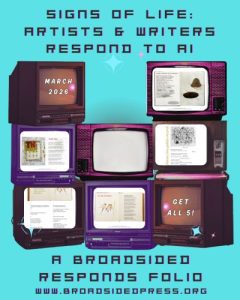
The March 2026 special folio of Broadsided is themed “Signs of Life: Artists and Writers Respond to AI.” Broadsided asked four artists to provide images from their notebooks, then provided four AI-adjacent prompts for writers: What role does AI play in your creative life? Your pragmatic life? How do you, as a human, reckon fully with its presence personally? Ecologically? Ethically?
This final folio offers readers a way to reckon with humanity and inhumanity around us and features collaborations between writer S.D. Dillon and artist Janice Redman, writer Hilish Patel and artist Kevin Morrow, writing by Jacqueline Lyons and art by Amy Meissner, writer Beth Feldman Brandt and artist Antonia Contro, and writer Angie Vorhies and artist Antonia Contro.
Each collaboration is available as a free PDF download that can be printed and posted.
Broadsided Press occasionally offers a special folio of work responding to a current moment. It started in 2011, when Broadsided artist Yuko Adachi reached out about creating work in response to (and raising funds for) the Fukushima disaster. Since then, Broadsided has created responses to Superstorm Sandy, the Ebola crisis, in support of the Water Protectors of the Dakota Access Pipeline, and more.
The March 2026 issue of The Lake, a contemporary poetry webzine, is now online featuring new poetry by Naned Bajevic, Daniel Cartwright-Chaoui, Holly Day, David Anson Lee, Beth Mcdonough, Gordon Scapens, Hannah Stone, J. S. Watts, Jan Wiezorek, Kate Young. The Lake also offers reviews of recently published collections, and this month Charles Rammelkamp reviews Tony Gloeggler’s Here on Earth and Hannah Stone reviews Tomas Venclova’s The Grove of the Eumenides.The Lake has the unique feature, ‘One Poem Reviews’ in which authors can submit a sample poem from a recently published book, this month spotlighting works from Ruth Holzer, Xi Nan, Alan Perry, and Bethany Pope.
If you are a poet with a book/chapbook, One Page Reviews invites you to share a poem with The Lake readers from a collection published in the last twelve months or forthcoming. This is a great way to get more exposure for your book, make some sales, and connect with other poet. Visit The Lake for more details.
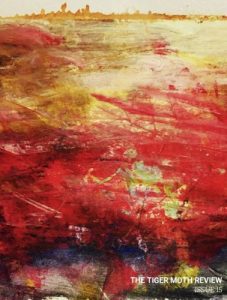
“Dear reader,” writes Esther Vincent Xueming in the Editorial to open The Tiger Moth Review online, “it is my hope that Issue 15 will inspire you in new ways to do your part for our earth. It is my wish that the poems and stories in this issue will speak to you and stay with you, that the words and images from our wonderful contributors will germinate in your hearts and sprout into beautiful saplings, changing the world one mindful breath at a time, one mindful action at a time.”
Those wonderful contributors and their place on the globe include Clarence Eng (Singapore), Brooke Hoppstock-Mattson (Vancouver, Canada), Mary Ann Lim (Singapore), Aryan Kaganof (Gordons Bay, South Africa), Natalie Foo Mei-Yi (Singapore), Vinita Agrawal (Indore, India), L.Y. Rinn (Penang, Malaysia), Deepa Onkar (Chennai, India), Sambhu Ramachandran (Kerala, India), ML Strijdom (Johannesburg, South Africa), Maziar Karim (Tehran, Iran), Akumbu Uche (Nigeria), Gabriella Contratto (Los Angeles, California, USA), Salvador Francis Isaiah Deapera (Metro Manila, The Philippines), Sofia Mariah Ma (Singapore), Ashwani Kumar (Mumbai, India), Maria Fedorova (Fontainebleau, France), Jordan Prochnow (Washington, USA), and Isaiah Alexander (Texas, USA).
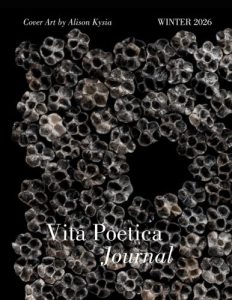
Vita Poetica Journal is an online quarterly publication of creative work explored through a spiritual lens. In the editorial letter to readers opening their Winter 2026 issue, Co-Editor Caroline Langston writes “‘Immobility’ might seem to be a pretty salient concept for many of us right now – amid what is now seemingly everpresent authoritarian political oppression and cultural struggle, we can feel as frozen in our moral senses and in our abilities to act. [. . . ] In a multiplicity of ways, the works of art in this issue show that we are not, in fact, powerless. In so many instances, the narrators and governing souls that guide our selections explode out of their immobilities.”
Contributors to this issue include poetry by Richard Jackson, Dion O’Reilly, Bern Mulvey, Trevor Cunnington, Johanna Caton, O.S.B.; Kelly Sawin, Evan Leslie, Mary B. Moore, Ali Beheler, Temima Weissmann, Daril Bentley, James B. Nicola, Liza Moore; nonfiction by Chris Weigel, K. D. Battle; visual art by Jocelyn Mathewes, Alison Kysia, and Ernest Williamson III. Readers will also enjoy an interview with Poet Jon Bishop, reviews, and “Contemplative Practices.”
Vita Poetica Journal is also available in an audio version with standalone pieces recorded by the contributors, as well as in a podcast format to hear a little behind-the-scenes inspiration from the creators as they introduce their work.
Cover art: Alison Kysia. Al Fatiha: The Opening, 2023. Ceramic. 60 L x 60 W x 5 H inches.
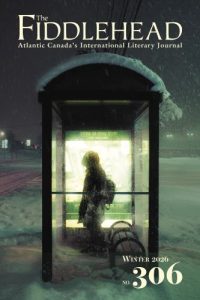
The Fiddlehead Issue 306 (Winter 2026) features poetry, fiction, creative nonfiction, and reviews written by some of the best new and established writers. This issue includes new work from Carl Phillips, José Teodoro, Susan Robertson, and Ariadne Asho, winner of The Fiddlehead 35th annual Fiction Contest as selected by Anuja Varghese, an interview with Mary Dalton, and much more! Visit The Fiddlehead website to see a full list of contributors, read excerpts from selected works, and order your copy of Issue 306. Cover art: Silent Night, 2023, Digital Photography by Kirsten Stackhouse.
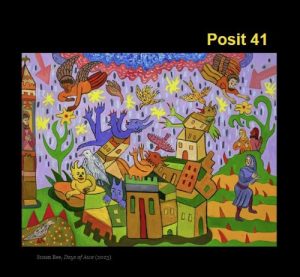
Posit online journal of literature and art Issue 41 opens with this commentary from the Editor’s Note: “In times like these, when innocent people are terrorized and even murdered in the streets by government goons, collective protections are eviscerated, disinformation is forced down our throats, and social contributions in science, education, and journalism are censored and censured, art-making is another act of resistance.”
“Brought to you with love and defiance for times like these,” this issue features “new works of resistance and reflection” by Charles Bernstein, Susan Bee, Joanna Doxey, Heikki Huotari, Bai Juyi, trans. Jaime Robles, Caroline Kanner, Genevieve Kaplan, Elina Kumra, Julia Kunin, Hank Lazer, Alice Letowt, rob mclennan, linn meyers, Laura Mullen, Alexandria Peary, and Anne Waldman.
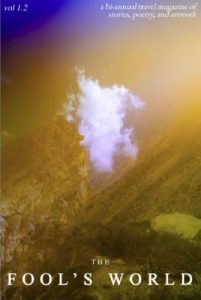
In the land of Tarot, “The Fool” is Card Zero – the first of the Major Arcana in a deck – and symbolizes an adventurous spirit, a willingness to take risks, living life carefree, on the edge, trusting in the journey. In the literary realm, The Fool’s World is a waystation for travelers wanting to be transported to another new yet familiar place. Readers can enjoy two issues per year of fiction, nonfiction, nonfiction travel flash, poetry, and book reviews. Issues are first published online (via Web Flipbook) and then the issue is published in print and ships out with Raleigh Review.
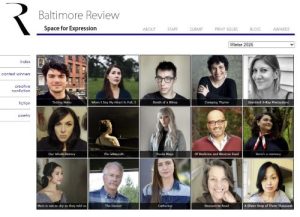
Baltimore Review Winter 2026 is now available to read open-access online, and includes contest winners as selected by Mandy Moe Pwint Tu as the final judge: Flash Creative Nonfiction winner Rebecca Bernard, Flash Fiction winner Nadia Born, and Prose Poem by Jehanne Dubrow. Contest submissions are accepted for two issues per year, and contest themes are announced on the website. The rest of the issue is filled with new creative nonfiction, fiction, and poetry by Cole Alexander, Rebecca Bernard, Emma Bolden, Nadia Born, Grayson Burke, Jehanne Dubrow, Ashley Hutson, L. A. Johnson, Lexi Pelle, Akshay Pendyal, Bianca Alyssa Pérez, Hayden Saunier, Patrick Vala-Haynes, Mizuki Yamamoto, and Ann Yuan.
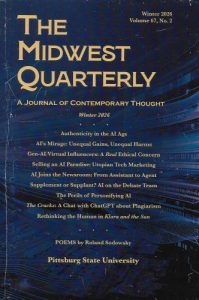
The Midwest Quarterly: A Journal of Contemporary Thought Winter 2026 issue is themed “Authenticity in the AI Age” and features articles such as “AUTHOR or SCRIBE: Authenticity and AI, a minor matter?” by Michael Hogan, “Generative AI and Equity: False Friends” by David Ebenbach, “AI-Generated Virtual Influencers: An Ethical Call to Action” by Heather Walters, “Living in a Technoliberal Paradise?: Utopian and Evangelistic Rhetoric in Tech’s AI Marketing” by Samantha Schubert, “Artificial Intelligence as Agent in Journalism: A Concept Explication” by Chad Owsley, “Artificial Intelligence, Debate, and Education” by Nicholas Lepp and Kavneer Majhail and “The Cracks Are Where the Light Seeps In: An Interview with ChatGPT about Plagiarism” by Nathaniel Lachenmeyer – among still more essays. The issue also includes a portfolio of sixteen new poems by Roland Sodowsky with an introduction by Laura Lee Washburn.
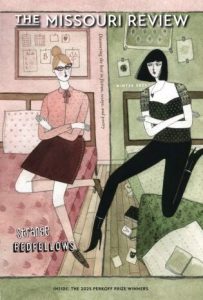
The Winter 2025 issue of The Missouri Review (48.4) is themed “Strange Bedfellows” and includes the winners of the 2025 Perkoff Prize for fiction, nonfiction, and poetry, as well as debut fiction from Jeanne Rogow and Laura Dedmon. Additionally, there is new fiction from Rachel Lastra, new poetry from William Virgil Davis and Sascha Feinstein, essays from Lauren Fath and Askold Melnyczuk, and articles on Jules Chéret and Anna Pavlova. Also inside: an omnibus review of three novels about the future from Luke Dunne, and an interview with the fiction writer Curtis Sittenfield.
The February issue of The Lake, online journal of poetry and poetics, is now available to read open access. Readers can enjoy new works by Clive Donovan, Tom Kelly, Andy Humphrey, Fish Lu, Dana Holley Maloney, Bruach Mhor, Kate Noakes, Fred Pollack, Fiona Sincliar, Rachel Wild. The Lake also offers reviews of recent books, this month spotlights Charles Rammelkamp’s review of Dementia Lyrics by Dennis Hinrichsen. ‘One Poem Reviews,’ a unique feature in which poets allow The Lake to publish a sample poem from a recently published collection, includes works by Laura Daniels, Jeremy Gadd, Lance Mazmanian, J.R. Solonche, and Davie Earl Williams.
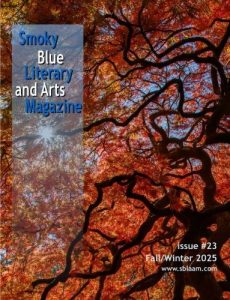
Smoky Blue Literary and Arts Magazine is devoted to publishing quality work that doesn’t merely strike a familiar chord but enriches our experience. The Fall/Winter 2025 issue offers tribute to Peter Solet, poetry staff reader and founding member of SBLAAM who passed away late last year.
The issue invites readers to experience new fiction, non-fiction, poetry, and visual imagery from Marie Manilla, Pamela Schoenewaldt, Megan Trihey, Joe Greco, James Irwin, Marie-Andree Auclair, Carol Booth, Hannah Genevieve Cornell, Mohsen hosseinkhani, Garrett Phelan, Linda Scheller, Enid Cokinos, Donald L Patten, and many more.
Smoky Blue Literary an Arts Magazine (SBLAAM) is a sponsored project of Creative Aging Network-NC, a 501(c)3 nonprofit organization.
Published by Washington & Lee University and supporting poets, fiction writers, nonfiction writers, comic artists, and translators since 1950, the online Fall 2025 issue of Shenandoah introduces a new series called “Catalyst,” profiling people whose craft — defined broadly — advances justice and equality. The first conversation in this series is “’Reading is a subversive act’: Shenandoah interviews Virginia’s Lieutenant Governor – Elect Ghazala Hashmi.”
The issue also features an interview with visual artist Kristen Mills and Hope Prize Winner Isaac Kanyinji’s “A 2019 Survey on How People Imagine Themselves Dying.”
The rest of the issue includes fiction by N.S. Ahmed, leena aboutaleb, Muhammad El-Hajj (trans. Yasmine Zohdi), Ibrahim Babátúndé Ibrahim, Jeneé Skinner, Swati Sudarsan; poetry by Tran Tran, Sayuri Matsuura Ayers, Apollo Chastain, Ali Choudhary, Prosper Ifeanyi, Dabin Jeong, Nicole W. Lee, Kabel Mishka Ligot, Susanna Rich, River, Sarp Sozdinler, Para Vadhahong, Teri Vela, nonfiction by Nancy Bell, Youssef Rakha, Tracy Rothschild Lynch, Christy Tending, Wenyi Xiao; and comics by Mariah Gese, Joel Holub, Parisa Karami, and Audrey Odang.
The Common Issue 30 opens with Editor Jennifer Acker’s celebration of The Common’s 15th Anniversary and closes with an interview with Teju Cole, “The Epiphany in the Ordinary.” There is also a special portfolio of art and poetry from Ukraine; short stories from Morocco, Canada, Maine, Phoenix, and Cape Cod; essays about the body and a ruined city in the Argentine Pampas; and poems on art, dance, family, waiting, and loss from Wyatt Townley, Robert Cording, Lawrence Joseph, Anna Maria Hong, and more.
“Writing is power because it can provide hope. This is why, throughout history, tyrants have always come for the poets first; a populace is much easier to terrorize and subjugate without the flame of hope sustaining them.” ~ Sky IslandJournal Editors
Readers and writers searching for a source of hope and resistance against oppression need only click to join Sky Island Journal’s global, fearless community. In their introduction to Issue 34, the editors affirm their pledge to keep literature freely accessible, independent from political or commercial pressures, and dedicated to empathy, freedom, and hope. “Art creates empathy. Empathy creates kindness. Kindness creates strength. This is our purpose, and we will not stop. This is our mission, and we will not fail.”
Upholding the Sky Island Journal mission in the newest issue are contributors Alina Kalontarov, Allison Mei-Li, Annalise Parady, Anne Ramallo, Athena Serbourne, Bex Hainsworth, Bray McDonald, Carol Lynn Stevenson Grellas, Christian Knoeller, Dara Goodale, Dick Altman, Elda Oreto, Elizabeth Rosen, Filiz Fish, Gabrielle Munslow, Grace Crouthamel, Grace Lynn, Inez Chong, J.M.C. Kane, Jay Udall, Jessica Aure Pratt, Jillian Stacia, Jocelyn Ajami, John Muro, Katy Luxem, Ken Malatesta, Kiana McCrackin, Kristen Keckler, Kristen Reece, Lin Fay, Marisha Kashyap, Michael Brookbank, Michael J. Galko, Morrow Dowdle, Nicole Dalcourt, Olga Khmara, Parineeta Habib, R.H. Booker, Rachel Lauren Myers, Rachel M. Hollis, Rachel Mallalieu, Robin Zastrow, Sheree Stewart Combs, Susmita Mukherjee, Wasima Khan, Yuening Weng, Zoe Culbertson, and Zoleikha Baloch.
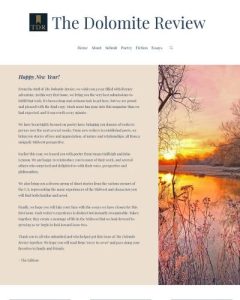
The inaugural issue of The Dolomite Review is now available to read open access online and also offers e-subscriptions so readers will not miss each new quarterly issue of poetry, short stories, and essays. The Dolomite Review welcomes writers of every level of experience, from novice to master. “We seek out writers, primarily from the Midwest,” says Managing Editor Maryann Lawrence, “but welcome writers outside the Midwest as long as the writing has some relation to the region — be that setting, plot, or character.”
“We would love to hear someone say, I just read a random story in The Dolomite Review and was blown away,” Lawrence shares. “And, in fact, we are delighted that someone said exactly that! Considering this is our first issue, we are tickled with the feedback we are receiving. We hope every issue gets this response.”
Representing Readers & The Midwest
That kind of reader response is key to the mission of The Dolomite Review. “We noticed a need for a literary journal that appeals to readers primarily,” says Lawrence. “So many magazines are written for authors, other publishers, editors, and those in the publishing community, bogged down with reviews and how-tos and appeals to writers. We want to bring readers into the fold and provide them a space online that is free of writer-centric content. Additionally, we just feel like there is not enough Midwest representation in publishing. And by Midwest we mean sensibilities and lifestyle.”
Readers first encounter that Midwest sensibility in the name of the publication. Lawrence notes, “We considered the word dolomite might mislead people into thinking we were named after the Dolomite mountain range in Italy.” While Lawrence does have Italian roots, the name actually refers to the limestone rock formations on Michigan’s Drummond Island. “The island is the most easterly point in the U.P.,” she explains, “and, while Canada is just beyond, it’s the views of Lake Huron that really ignite the imagination. We think the atmosphere of those rocks looking over the vast lake, alternately brutally cold and awesomely beautiful, a place that takes your breath away, is what we are trying to achieve with the literary works we publish, reflecting the beauty and the brutality of life in the Midwest.”
Masthead Expertise & Submissions
The masthead of The Dolomite Review includes Managing Editor Maryann Lawrence, who lives in Michigan and is an award-winning journalist and author of two books, Season of the Great Bird and Uneventful. For the past thirty years, her short stories, poetry and essays have been published in journals and magazines throughout the U.S. Joining Lawrence is Lead Technician Sarah Penrose, who keeps the website up and humming while also studying User Experience Research & Design at the University of Michigan. She has experience with web and mobile design, user research, and site development. Rounding out their expertise is Editor Katherine Bird, who has also worked with Mayapple Press [once based in Michigan; currently upstate New York] and Sky & Telescope.
For writers wanting to find a home for their works, submissions can be sent through The Dolomite Review website (no direct email submissions). They first go through the managing editor who decides which will be accepted. Next, they go to the editor for line editing and proofreading. “We wish we could provide feedback, but there are just too many submissions and too few staff to make that happen right now,” says Lawrence. “As for response time, we aim for two weeks.”
Storytelling for Readers
Readers clicking over to The Dolomite Review can expect a welcome mat! “We have purposely created The Dolomite Review with simple, clean lines for a comfortable reading experience,” says Lawrence. “We are ad-free, so no disruptive side bars. We offer subscription, but you don’t have to subscribe to visit. There are no pop-up blockers. Just excellent writing. Storytelling is our niche so narrative form poetry is generally featured. We don’t go for enigmatic poetry or any kind of poem that requires an explanation. The short stories and essays we publish are engaging; we generally do not publish genre-specific work such as horror or romance. Just plain old great storytelling.”
Contributors to the first issue include Diane Scholl, Darcy Hicks, Steve Gardiner, Melissa Crandall, Grace Fabbri, John Lennon, Susan Swartwout, Elisabeth Crago, Brian Cronwall, and JoAnne Tillemans.
Surprises & Goals
Reflecting on the start-up for The Dolomite Review, Lawrence considers what she has learned, which can also include pleasant surprises. “Finding enough people to subscribe to a magazine that isn’t published yet was a lesson I did not expect to learn. Same for contributors. It’s a lot to ask a writer to submit to a magazine that (1) doesn’t pay and (2) hasn’t been published/proven. I am really surprised by how many people did one or the other or both.”
Going forward with The Dolomite Review, Lawrence is hopeful for continued growth and mutual support. “We want to, of course, increase our reach, and draw in more excellent writers. We are hoping to create an anthology every couple of years. We would love to have a homebase – a physical office to call our own so that we might also be able to offer residency programs, readings, writer workshops, maybe bring in guest editors. We are thinking about a podcast or creating audio for each issue. The sky is the limit, really, as far as future goals.”
The mission of Rogue Agent: A Journal for Work that Inhabits the Body is to center the body as a site of truth, risk, and resistance — inviting poetry and artwork that explores pleasure, pain, sensuality, vulnerability, and power. Guest Editor AllisonBlevins introduces Issue 130, who shares, “The poems I chose were a balm to me as I continue to navigate chemo after a breast cancer diagnosis [. . . ] I hope you will all find something in this issue that speaks to the hope you need today.”
Contributors offering hope in this issue include Travis Chi Wing Lau, Justin Lacour, Amie Whittemore, Emily Hockaday, Shae, Chloe Yelena Miller, Scott Ferry, Susan Michele Coronel, Sean Thomas Dougherty, Daniel Edward Moore, and Donna Vorreyer.
By reclaiming sensitivity as courage and confronting how bodies are written over by oppression, Rogue Agent seeks to dismantle those forces and amplify embodied truth through daring, intimate work.
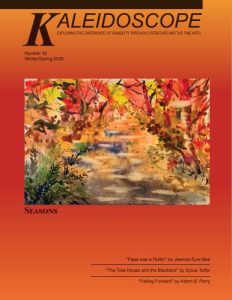
“In this final issue of Kaleidoscope,” the editors share, “we pause to reflect on how far we have come during our journey. We’ve made significant strides to change perceptions of disability and championed the talents of countless writers and artists.”
It seems fitting that a theme unifying these final pieces is movement — specifically, forward motion. While some are obvious from their titles, “We Walk” by Kirk Lawson and “Falling Forward” by Adam B. Perry, others reveal, through more subtle narratives, the need to advance, evolve, and adapt.
“Papa was a Rollin’” is the featured essay and provides a heartfelt glimpse into the life of a child who has only ever known a father who uses a wheelchair. She saw the chair as “boundless” but encountered those who viewed it as a “limitation.” The chair provides access, but the world is often inaccessible. Through the ups and downs, she has been along for the ride, admiring his humor, strength, grit, and determination. All of which have shaped the woman she’s become.
“Seasons are ever-changing throughout life,” the editors close, “and we are grateful to those who have been with us for so many years. While this is the end of our journey, we know you will continue the mission to explore the experience of disability and change perceptions moving forward. Thank you for being an essential part of our story.”
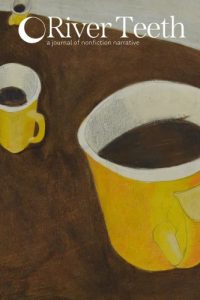
Editor Steven Harvey open River Teeth: A Journal of Nonfiction Narrative 27.1 (Fall 2025):“’The one thing I will not tamper with in this class,’ I tell my students when I teach the art of the personal essay, ‘is your voice.’” Harvey goes on to examine the role and value of voice in writing as sacred and unteachable no matter its form, but also the political vulnerability of voice and the role of literary magazines to safeguard the human voice.
Contributing voices to this newest issue include Jim Daniels, Shannon Cram, Corrie Williamson, Chelsea B. DesAutels, Phong Nguyen, Allison Field Bell, L.C. Killingsworth, Emma Bolden, Jesse Lee Kercheval, Jenny Molberg, Rachel Cline, Lynda Rushing, Gary Fincke, Beth Ann Fennelly, and Asena McKeown.
River Teeth is also home to Beautiful Things, a weekly online magazine of micro-essays of 250 words or fewer. Readers can subscribe for free and “find beauty, curiosity, and meaning in the everyday.” Recent contributors include Andreea Boboc, Lauren Fath, Allison Kirkland, James T. Morrison, H.K. Hummel, Jessica Franken, Allison Field Bell, Natalie Goldberg, Kat Moore, Jeannine Pitas, and many more.
Published by Press 53, Prime Number Magazine celebrates its 16th Anniversary! Prime Number is home to distinctive poetry, short fiction, and flash nonfiction from writers around the world. Each issue of Prime Number features winners of their free, monthly 53-Word Story Contest, regular content selected by guest editors, and information about upcoming guest editors. Their annual September edition features the winners of the Prime Number Magazine Awards for Poetry and Short Fiction that are open for entries January through March each year, and the winners of their two free contests: the monthly 53-Word Story Contest and the “Prime 53 Poem” Summer Challenge.
The newest issue, #281 (Jan-Apr 2026), features selections from guest editors Maura Way (poetry), Gerry Wilson (short fiction), and Shuly Xóchitl Cawood (flash nonfiction), who selected works by Bethany Bruno, Melissa Ostrom, David M. Alper, Dustin P. Brown, Maureen Martinez, Sarah Sorensen, Laura Freudig, B.P. Gallagher, and Steven Schwartz. Readers can also enjoy the publication’s 2026 Pushcart Prize Nominees.
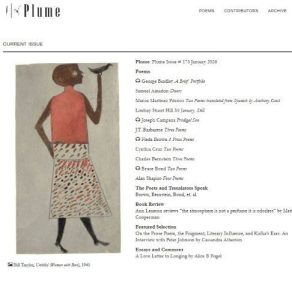
Plume publishes the best contemporary poetry: national and international voices in monthly issues with twelve poets contributing one poem each. Plume Issue #173 (January 2026) includes a portfolio of poems by George Bradley with additional contributions by Samuel Amadon, Marisa Martínez Pérsico, Lindsay Stuart Hill, Joseph Campana, J.T. Barbarese, Fleda Brown, Cynthia Cruz, Charles Bernstein, Bruce Bond, and Alan Shapiro. Readers can also find commentary from authors in the section “The Poets and Translators Speak” as well as “On the Prose Poem, the Fragment, Literary Influence, and Kafka’s Ears: An Interview with Peter Johnson” by Cassandra Atherton, and the essay, “A Love Letter to Longing” by Alice B Fogel. Ann Leamon reviews the atmosphere is not a perfume it is odorless by Matthew Cooperman.
Since 1998, OffCourseis a quarterly journal for poetry, criticism, reviews, stories, and essays edited by Ricardo Nirenberg for readers to enjoy open-access, online. OffCourse December 2025 offers a diverse literary collection exploring surreal imagery, memory, place, identity, and the intersections of the everyday with the mythic and psychological. Contributors inlcude Sarah Carleton, Linda Fischer, Louis Gallo, Lois Greene Stone, Mark Jackley, Miriam Kotzin, Ricardo Nirenberg, Claire Scott, Ian C. Smith, J. R. Solonche, Daniel P. Stokes, R. L. Swihart, and Jim Tilley. Readers will also find the publication’s full archive online.
The Winter 2025 Issue of Humana Obscura features work from 54 contributors from around the globe, including cover art by Brigitte B. Burckhardt, back cover art by Rose-Marie Keller-Flaig, interviews with artist Carol Haynes and poets Abby Harding and Sukriti Patny, and spotlights on the work of poet David Sleeth-Keppler and photographer Brooke Ryan.
Other contributors include Alexandra Karnasopoulos, Anne Kulou, Barbara Hickson, Beverley Sylvester, Caroline Brown, Christen Lee, Cynthia Anderson, D A Angelo, Debbie Strange, Dena Heitfield Smith, Diane Perazzo, Ellen Rowland, Ethan Pines, James Toupin, Jason Dean, Jason Harlow, Jen Lothrigel, Jennifer Gurney, Jil St. Ledger-Roty, Jim Stewart, Karah Snyder, Kiera Obbard, Kristine Amundrud, Lauren Chavez, Lee-Anne Schmidt, Lisa Perkins, Louis Talbot, Luke Levi, Melissa Dennison, Michael J. Kolb, Mike Taylor, Najib Joe Hakim, Nicholas Olah, Robert MacLean, Ron C. Moss, Ruth Sharman, Sarah Banks, Sarah Hewitt, Sarah Lilja, Shutta Crum, Sierra Glassman, Silvia Felizia, Soumya Mukherjee, Talitha May, Thomas Smith, Xenia Tran, and Yana Kane.
Published by Nostalgia Press, HEART literary journal hails from the lowcountry of South Carolina, with a penchant for modern prose poetry, poems that give life and motion to moods, messages from simple moments, and sparkling lines from meditative thought. The newest issue shines a spotlight on HEART Poetry Award winner Melinda Coppola for her work “Rinsing Blueberries.” Other contributors include Amber Rose Crowtree, Jenny Bates, Lexi Deeter, Jane Maria Robbins, Nicole Grace, Carrie Esposito, Julia H. Fonte, Lori Goff, Jacob Friesenhah, Richard Eric Johnson, Matthew Francis Mazzoni, Gib Prettyman, Shanina Carmichael, Nichola Viglietti, J. Anthony Jackson, and Connie Lakey Martin.
HEART also publishes HEARTPosts online, true personal experiences or personal opinions about how you manage to keep heart in your journey: the good, maybe bad, but insightful. Recent contributors include Ronald L. Nester, Sr., Harriette Graham Cannon, and Connie Lakey Martin.
Collateral online journal showcases literary and visual art that reveals the impact of military service and violent conflict beyond the combat zone. Take a moment to appreciate the artistry and humanity expressed by the newest issue’s contributors: Callie S. Blackstone, Anna Bowles, Benjamin Busch, Ryan Calo, Tommy Cheis, Julie Friar, Enrique Gautier, Gloria D. Gonsalves, Romney Grant, Christina Hauck, Wayne Karlin, Jayant Kashyap, Anja Mujić, Christian Paige, Madeleine Schneider, Thomas Short, Rachael Trotter, Bunkong Tuon, and Andy Young. Artwork by Alex Kuno.
Readers can also still catch Collateral‘s 2025 Pushcart Nominations by Anna Bowles, Gloria D. Gonsalves, Ryan McCarty, Wayne Karlin, Francisco Martínezcuello, and Bunkong Tuon.
The reading period for Collateral 10.2 is open until March 1, 2026.
Cleaver Magazine Issue 52 Winter 2025-2026 showcases the Visual Poetics Contest Winners: First Place “Box of Air” by Katrina Roberts; Second Place “MASH (a Cento Game for Poetry Lovers)” by Elizabeth Johnston Ambrose; and Third Place “Untitled Mural, Acrylic on Four Vertical Metal Panels, 6’ x 8’, c. 1979” by Cindy Hill.
The issue also includes poetry by Robyn Schelenz, Simon Parker, David John Rosenheim, Ivy Hoffman, Jim Stewart; fiction by KSM, N.D. Brown, Andrew V. Lorenzen, Marc Kaufman, Terri Lewis; micro fiction and nonfiction by Barbara Westwood Diehl, Louella Lester, Emily Rinkema, Aurora Bonner, Preeti Talwai, Sydney Lea, Bobby Crace, Kevin Spaide, Beth Gilstrap, Claudia Monpere; nonfiction by Vivienne Germain, Sara Quinn Rivara, and the visual narrative “Connecticus Diggs, Cultural Detective Episode 4: Letters” by Clifford Thompson.
Cleaver Magazine is free to read online and offers a full online archive and free subscriptions.
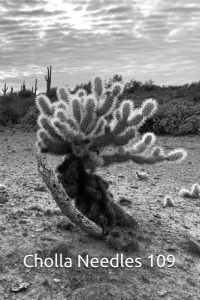
Founded in 2016 in Joshua Tree, Cholla Needles publishes monthly issues showcasing ten writers in depth, including international voices and translations. The magazine focuses on established and emerging writers who have a distinctive voice and communicate well with readers. The January 2026 issue features works by Jason Jones, Arvilla Fee, Marlene M. Tartaglione, Bonnie Bostrom, Duane Anderson, Joseph Hutchison, Christien Gholson, Zita Murányi, Royal Rhodes, Justin Hollis, J. Malcolm Garcia, David Larsen, and Jonathan Ferrini. Cholla Needles is open year-round to submissions of poetry, short stories, creative essays, art and photographs.
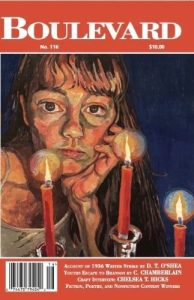
The Winter 2025 issue of Boulevard includes 2023 Fiction Contest winner Mary Elizabeth Dubois, 2023 Nonfiction Contest winner Phillip Barcio, and 2023 Poetry Contest winner Lucinda Trew. It also features a Boulevard Craft Interview with Chelsea T. Hicks by Daniel J. Musgrave and an essay by Devin Thomas O’Shea, along with new fiction from Cole Chamberlain, Emerson Henry, Zehra Nabi, Jude Whiley, and Anthony Yarbrough, new poetry from Claressinka Anderson, Carrie Beyer, Colby Cotton, Tiara Dinevska-McGuire, Kindall Fredricks, Sammy Lê, and Anna Tomlinson, and translations of Luciana Jazmín Coronado by Allison deFreese, another translation of Roxana Crisólogo by Dr. Kim Jensen and Judith Santopietro, and essays by Brandi Ocasio, Riley Rockford, and Damieka Thomas. Cover art by August Lamm.
Publishing essays weekly online, bioStories features literary essays portraying ordinary and influential lives, revealing moments of grace through vivid, empathetic word portraits. Recent essays include “Attempting Fate” by Adam Perry, “The Gymnast” by Mark Lucius, “FedEx: When You Absolutely, Positively Need That Third Job” by Patrick D. Hahn, “Rocket 88” by Sydney Lea, and “The Scottish Play” by Naomi DeMarinis. Readers will also delight in reading bioStories 2025 Pushcart Nominees: Elizabeth Bird for “On Love, War, and Loss: A Life in Three Acts” and Lee Jeffers Brami for “My Grandmother’s Secret.“
bioStories accepts submissions of nonfiction prose submissions only 500–7500 words (their typical piece runs an average of 2500 words). bioStories is also always on the look-out for art that is representative of their mission and that fits well with essays they feature as well as cover art for digital issues and digital/print anthologies. See the bioStories website for more information.