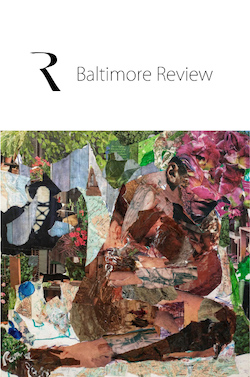
Publishing since 1996, The Baltimore Review is an online and print journal of fiction, creative nonfiction, and poetry, as well as visual and video arts. The newest issue continues to deliver a quality experience with works by Heather Bartos, Garrett Candrea, Elizabeth J. Coleman, Hilal Isler, Garret Keizer, Karis Lee, Joshua Jones Lofflin, Rachael Lyon, Abby E. Murray, Christopher Notarnicola, Jonathan Odell, Jennifer Saunders, Jill Witty, Andy Young, and Alison Zheng. And while the online issues offer greater accessibility, The Baltimore Review still likes to offer readers the tactile print experience with their annual compilation of poems, fiction, and creative nonfiction published in their Summer and Fall 2021 and Winter and Spring 2022 issues. Readers can purchase the print copy through Amazon or on the publication’s website.
Humana Obscura is a gorgeous literary/art publication, available to read digitally online for free (via Issuu) or readers can order single print copies. The Fall/Winter 2022 issue features work by 82 new, emerging, and established contributors from around the globe, as far as New Zealand, The Netherlands, Germany, Malaysia, Scotland, Mexico, Greece, and throughout the United States and Canada. Contributors include Amy Aiken, Subhaga Crystal Bacon, Elizabeth Barlow, Sienna Taggart, Gail Peck, Nick Olah, KB Ballentine, Luke Levi, Jasmin Javon, Najib Joe Hakim, Jolie B. Kates, Tiffany Mackay, Darnia Hobson, Jaqui Somen, Matt Rogers, Danielle Petti, Alan Toltzis, Michelle Ortega, Joon Song, Jean Ayotte, Ellen Rowland, Katie Mollon, Katherine Harnisch, Tiffany Tuchek, Joshua St. Clare, Kerstin Voigt, Robert Fanning, Kateri Kosek, Bonnie Matthews Brock, and so many more.

Publishing two issues of Allegro Poetry Magazine a year, Editor Sally Long hasn’t missed a beat since 2014. Each online issue is free to read and features a fine selection of works that are not longer than 40 lines each. Long introduces Issue 29: “When I set the theme of ‘Freedom’ I had in mind an expression of solidarity with the poets and people of Ukraine and others around the world whose freedom is threatened by war and various forms of oppression. I’m pleased that the theme captured the imagination of so many poets. I’m especially delighted to be welcoming poets from Ukraine whose works are featured in this edition. I hope you enjoy reading the variety of interpretations of freedom represented in Issue 29.”
Authors who made this cut this issue include Dee Allen, Rupa Anand, Byron Beynon, Fiona Cartwright, David Chorlton, Craig Dobson, Philip Dunkerley, Tim Dwyer, Paul Fenn, S.C. Flynn, Cole Henry Forster, Jeff Gallagher, Rebecca Gethin, Marcello Giovanelli, Amlanjyoti Goswami, Robin Helweg-Larsen, Eve Jackson, Vyacheslav Konoval, Steve Lang, Mary Mulholland, Eira Needham, Robert Nisbet, Jon Plunkett, Marc Isaac Potter, Mykyta Ryzhykh, Finola Scott, Louise Warren, and Gareth Writer-Davies.
The next submission window is December 1-January 31 for the March 23 edition, which is a general issue with no set theme.
Fictive Dream is an online magazine for well-crafted and compelling short stories “that give an insight into the human condition.” Publishing several features on a rolling basis monthly, it’s a good idea to sign up for their email notifications so you never miss out on what’s new. Recent additions include “House Porn” by Francesca Leader, “Hangar Straight” by Emily Macdonald, “Now We Are Things” by Joanna Theiss, “The Vocabulary Builder of Utopia Gardens” by Roberta Beary, “Divine Intervention” by Mary Carroll Moore, “Vivana’s Aunt” by Gay Degani, as well as stories by Melissa Llanes Brownlee, Chris Haven, DS Levy, Mary Grimm, Sara Dobbie, Michelle Panik, Kerry Hadley-Pryce, and Gary Fincke. Each story is accompanied by an original artwork or photo.
The newest issue of Jewish Fiction .net is the Rosh Hashana issue, which includes 18 stories originally written in Czech, Yiddish, Hebrew, and English – and in honor of the upcoming holidays, this new issue features no less than 5 stories translated from Hebrew. This brings to 525 the number of works published by Jewish Fiction .net, that were either written in English or translated from 18 languages. Readers can find works by Eli Amir, Shira Gorshman, Jakuba Katalpa, Mayan Rogel, Yishai Sarid, Dorit Shiloh, Steve Stern, and many more. All available to read free online.
With its 46th and newest issue, Wordrunner eChapbooks‘ Summer 2022, The Satisfaction of Longing by Victoria Melekian, the number of fiction collections published in their free, online or epub format is 24. Add to this 5 memoirs, 5 poetry collections, and 12 anthologies, and visitors will find plenty to keep their reading needs satisfied, indeed!
Melekian’s stories are considered “emotionally rich and ethically complicated. . . suffused in longing and loss.” The collection of seven stories opens with the chance encounter of a woman and man who had once endured unbearable tragedy. A fatherless woman with an imprisoned husband has a mysterious benefactor. Two sisters conflict over what to do with their father’s ashes. In the final story, a woman and her son flee her estranged husband, who never wanted children.
This collection may be read free online but can also be purchased as an ebook edition ($2.99) from Amazon or Smashwords with authors receiving 50% of all royalties. ALL Wordrunner Authors are paid, and this also supports an indie press!
Later this year, Wordrunner will be publishing their 25th fiction collection, Death in the Cathedral by Malcolm Dixon. Look for it in December.
The theme for the Spring 2023 issue will be announced by December and submissions open January 1 through February 28, 2023. Guidelines may be found here.
From its founding in 1958, december has remained true to its founders’ declaration, “We are humanists…far more concerned with people than dogmatic critical or aesthetic attitudes.” And showing this by publishing cutting-edge fiction, poetry, non-fiction, and art. Now on the cutting edge in print as well as online, december readers will find much to entertain: twice a year print journal, contests, online extras including contributor interviews, “From the Vault,” and “Poetry With Purpose.”
This newest print edition features Poetry by Sean Cho A., P. Hodges Adams, Jennifer Atkinson, Jessica Barksdale, Brenda Beardsley, John Blair, Evana Bodiker, Lisa Cantwell, Christian J. Collier, Sally Lipton Derringer, Daniel Donaghy, Dagne Forrest, Rebecca Foust, Ariel Friedman, Karen Holman, Romana Iorga, Judy Kaber, Susanna Lang, Jim McGarrah, Melissa McKinstry, Karen McPherson, Linda Michel-Cassidy, Michael Montlack, Kristina Moriconi, Barbara Mossberg, Alicia Rebecca Myers, David Oates, Lizzy Peterson, David Anthony Sam, Sarah Sousa, Paula Stacey, Richard Stimac, Anne Dyer Stuart, Shelly Reed Thieman, Alden Wallace, John Sibley Williams, Ariana Yeatts-Lonske; Fiction by Annelise Hatjakes, Michelle C. McAdams, John Paul Scotto, Timothy Wojcik; Nonfiction by Kierstin Bridger, Jennifer Dupree, Erin Langner, Mark Liebenow, Clancy Tripp; Art by David Humphrey; Robert Lowes Haiku Society: An Interview with Ben Gaa; Cover art by Joan Hall.
Produced four times a year by Shanti Arts, Still Point Arts Quarterly is a truly beautiful and engaging art and literary journal. Each issue focuses on a theme and features historical and contemporary art, fiction, non-fiction, and poetry, “Intended for artists, nature lovers, seekers, and enthusiasts of all types.” The publication is free to download from their website, but this is one journal readers will appreciate having in full-color print. When I look at the online version, it is impressive, but when I hold that copy in my hands, it’s truly immersive. Fitting, because the newest issue is themed “Immersed in Books.” Some featured works include Kathryn DeZure “Turning Fifty with Virgina Woolf,” Megan L. Steusloff “The Books I’ve Read,” Zachary Nelson “A Book is the Fastest Way to Travel,” Terry Barr “Greyhound Seats,” Jane Hertestein “Books as Signposts in Our Life,” Rosalie Sanara Petrouske “The Frangrance of Words,” and Wally Swist “Sam Murry, Bookseller,” as well as many others. Featured art and artists include Helen S. Geld, Susan Kapuscinski Gaylord, and numerous book-related archival artworks and photographs. If you have ANY booklovers in your lives (including yourself), you’re going to want to get a copy of this in their hands (or direct them to the Still Point website for the free download).
Based out of the University of Tulsa, Nimrod International Journal Spring/Summer 2022 is appropriately themed, “What Now? The Future We Make.” Edited by Eilis O’Neal, this volume includes works by Amelia L. Williams, Lorna Crozier, Krystyna Dabrowska, Lauren Camp, Cristina J. Baptista, Tim Raymond, Tennessee Hill, Ginny Threefoot, Susan Azar Porterfield, Kailey Tedesco, Hannah Smith, Oksana Maksymchuk, Scott Lowery, Joel Peckham, Jacqueline Guidry, Kim Garcia, David Troupes, Lucyna Prostko, Suzanne Manizza Roszak, Stephanie Niu, Fatima Jafar, Dante Novario, Geoff Anderson, Katherine Fallon, Charles Grosel, Lauren Coggins, Molly Sutton Kiefer, Sarah Wetzel, N.Y. Ling, Crystal Cox, Amy Wang, Jayden A. McClam, Matthew Olive, Cady Favazzo, Lisa Wartenberg, and Erin Evans.
Dust off the CD player, it’s time for Gargoyle‘s audio issue (#76). “Hunted and gathered” by editor Richard Peabody, the line-up features music and spoken word by Amanda Newell, Barbara Ungar, Blair Ewing, Bob Hate/Chet Hix, Bone People, Carmen Calatayud, The Crooked Angels, Dave Essinger, David Taylor Nielsen, Eugenie Bisulco, Gerry LaFemina and the Downstrokes, Henry Crawford, John King, Knuckleberry Finn, M. Scott Douglass, Maryann Hannan, Nancy Mitchell & The Chris English Band, Randi Ward, Sally Toner, Sarah Browning, Stephen Scott Whitaker, and Tim Wendel.
Readers will love to luxuriate in this generously sized 9″x9″ print South Dakota Review (with beautiful cream-colored pages). Volume 56, Number 3 features poetry by Jeffrey Bean, Claudia Buckholts, Holli Carrell, Mary Cisper, Gillian Cummings, Marlon Hacla (translated by Kristine Ong Muslim), Jacob Griffin Hall, Twyla M. Hansen, Callia Liang, Kevin McLellan, Laurie Saurborn, Tyler Smith, Kevin West, John Sibley Williams, Keith Woodruff, and Adrena Zawinski; short fiction by Joseph Biancalana; nonfiction by Sharon Goldberg; an epistolary essay by John Yohe; and a scholarly experimental essay by Jessica Hudson.
underbelly is a unique online publication with the goal “to bring to the surface what we often strive to make invisible: the joyful, arduous, miraculous, by turns tender and brutal process of shepherding a poem from its primal state to its final state.” Since 2018, Co-founders Maya Marshall and Marty McConnell have been inviting writers to share poems and micro-essays – not just in their final form, but also with the veil lifted “to undo the notion that poems always or even usually arrive perfect and whole from the genius mind of the writer.” Each contributor offers the “backstory” of the work along with one or more drafts side-by-side with the final version.
Again, the founders say, the goal is to satisfy the desire to “know how [the poem] came to be. In workshops and classrooms, we analyze the end product, often hazarding guesses about how a poem began or what forms it may have taken along the way.” Being able to see the writing process – or at least portions of it – is a way “to reassure ourselves and others who seek to improve their craft or understanding that the magic of writing and revision is a practical magic — one that can be taught, practiced, and hopefully maybe possibly even someday mastered.”
Publishing stories “of approximately 50 words” in print since 2009, Blink-Ink has persevered through the pandemic – thanks to continued subscriber support – and plans to forge ahead despite the rising costs of print. The publication offers four “seasonal” issues per year, but also provides bonus joy to subscribers by including publications from their sister imprint, The Mambo Academy of Kitty Wang at least twice a year, as well as other “goodies and surprises.” The newest edition of Blink-Ink is themed “Storm” and features works from thirty contributors in a nifty 4.25″x5.5″ package. “Country Roads” is the newest theme, with submissions open until October 15.
Publishing in an open-access online format since 2019, River Heron Review is true to its namesake in being a sophisticatedly stylish journal. This newest issue features the work of Thomas McGuire, winner of the 2022 River Heron Poetry Prize selected by Deshawn McKinney. Finalists whose works are also included: Sarah Carey, Tresha Faye Haefner, Steve Nolan, and Sal Ragen. Contributors’ works fill out the rest of this installment, including Julie Cooper-Fratrik, Stephanie McConnell, Sylvia Karman, Jennifer Bullis, Grant Clauser, Beth Oast Williams, Michael Young, Eve Rosenbaum, Stephanie Yue Duhem, Suzanne Honda, Grant Chemidlin, Carol Sadtler, Richard Foerster, Amy Beth Sisson, Matt Thomas, Lisa Marie Oliver, Charity Everitt, Andrea McLaughlin, Gloria Monaghan, Devon Balwit, Ken Turner, Daniel Rabuzzi, Cheryl Martone, Ale de Luis, and Frank Paino. General Submissions and The River Heron Editors’ Prize opened on September 1 until November 30. Additional submissions and contest period deadlines can be found on the River Heron Reviewwebsite.
A project of EastOver Press, Cutleaf publishes a new online issue twice each month and one print annual. Readers can subscribe to receive issue updates with an overview of content, making for a nice way to start the week twice a month. For contributors, Cutleaf welcomes unsolicited poetry, short stories, essays, and other nonfiction from established and emerging writers. The editors read and respond to manuscripts on a rolling basis in an effort to respond to every submission in a timely manner. Some recent contributors include Louise Marburg, Dana Wildsmith, Molly Gaudry, Marjorie Tesser, Shawna Kay Rodenberg, Beth Weinstock, Leslie Doyle, David Ishaya Osu, Leona Sevick, Darius Stewart, Carolynn Mireault, Tatiana Schlote-Bonne, Liam O’Brien, Jim Minick, and Anna Nguyen.
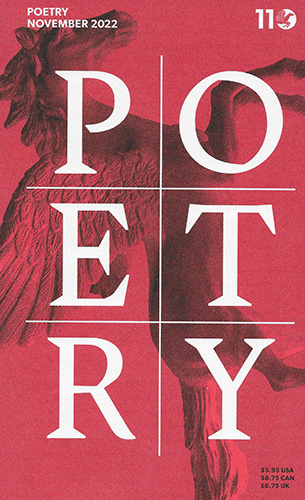
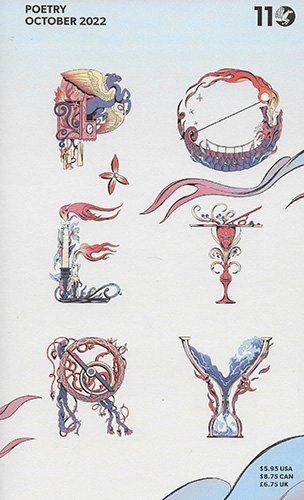
One of my absolute favorite monthly publications, Poetry Magazine never ceases to engage me in the thresholds of change in our literary community. The September 2022 issue, with guest editor Esther Berlin, addresses concerns we have all witnessed and/or been part of transforming. “Dear Reader,” opens: “Honor, celebration, and memory come to mind when I think about the idea of monuments. The process of harnessing collective moments into a physical manifestation, something representational of the essence that surges a person’s core—that’s a monument. All the feels—rage, suffering, release, distrust, comfort, melancholy, ambivalence, ache, compassion, mercy, the urgency to remedy—contribute to constituting and dismantling monuments.” And, addressing both the internal workings at the Poetry Foundation, itself in a process of rebuilding, and those in our surrounding communities, Berlin continues, “This special issue brings attention to the idea of monuments in order to map and reframe contrived or mythical systems of power, to extend narratives through repositioning focal points.” And closes, “In my last issue as guest editor, I invite you to celebrate with me poetry as monuments, as unifying offerings, the revising of history of so many existing monuments, erased and rubbed out, and now redrawn. The unsaid no longer ruminating, no longer a hungry ghost, no longer a missed call.”
Contributors to this issue include Martín Tonalmeyotl, Kierstin Bridger, Lucas Jorgensen, Mansi Dahal, Rena Priest, Janelle Tan, Vance Couperus, Henk Rossouw, Crisosto Apache, Keith S. Wilson, Amber McCrary, Kenzie Allen, Lesley Wheeler, Julia Kolchinsky Dasbach, Krystyna Dąbrowska, Serena Rodriguez, Daniela Ema Aguinsky, Spring Ulmer, Joan Naviyuk Kane, Bes Bajraktarević, Tyler Mitchell, Ajibola Tolase, Christopher Shipman, Joan Wickersham, A. Van Jordan, and Walter Ancarrow.
I always know the newest issue of Gargoyle has arrived when the post office has to send the forklift to drop off this massive tome at my doorstep. Clocking in at nearly 500 pages (see a full list of contributors here), this is an annual that will truly provide a year of great reading – nonfiction, poetry, fiction, and art (Issue 75 cover art by Cynthia Connolly). What readers can expect to find is about as clear as the submission guidelines, “Gargoyle has never had guidelines during its entire history. We don’t believe in them.” Thus – be ready for just about anything, with the underlying principle that it is quality work, “The best work we can obtain. Work we can live with. Work we can read 20 times and still get a kick out of. We’ve never had a theme issue and doubt we ever will. Obviously, we want the best poem or story you will ever write. We’re not fans of the same-old/same-old and tend to publish works that are bent or edgy.” Considering the fact Gargoyle is only open for submissions from July 1 to July 31 – or until they get enough to fill the issue, “whichever comes first,” it’s clear they are well appreciated by writers! Add to this – GaygolyeOnline, which started in May 2022 and has just released its second issue. Readers have plenty to enjoy through every season!
The Fall 2022 issue of Rattle features a Tribute to Translation, with 17 poems spanning two millennia, originally written in a wide variety of languages—from Spanish to Swahili. Featured poets include Frank Báez, Basil of Caesarea, C.P. Cavafy, Nianxi Chen, Tove Ditlevsen, Pietro Federico, Muyaka al-Ghassaniy, Karmelo C. Iribarren, Ting Li, Federico García Lorca, Francesco Petrarca, Alireza Roshan, Endre Ruset, Amira Antoun Salameh, Max Sessner, Dag T. Straumsvåg, Georg Trakl. In the conversation section, editors spoke to Danish translator Michael Favala Goldman about his award-winning work and the incredible life’s journey into it. The open section featured a broad mix of 22 poems by fresh faces and reader-favorites: Darius Atefat-Peckham, Devon Balwit, Bruce Bennett, Richelle Buccilli, e.c. crossman, Cortney Esco, Tony Gloeggler, Chris Huntington, Karan Kapoor, David Kirby, Ron Koertge, Lance Larsen, Jessica Lee, Katy Luxem, January O’Neil, Aaron Poochigian, Cindy Veach, Richard Westheimer, Guinotte Wise. Cover art by Jenny Eickbush.
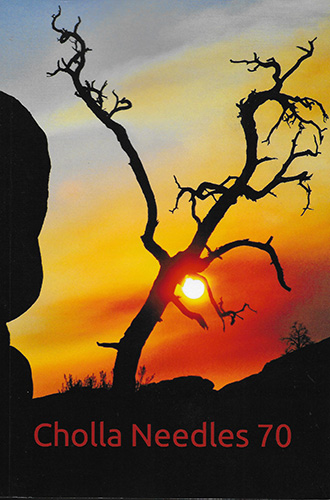
Started in 2017, Cholla Needles is one of those quiet little lit mags that, to see it sitting on a coffee table could not even begin to speak for all it represents. A non-profit located in Joshua Tree, California, Cholla Needles publishes monthly in print using a unique format. Each issue is comprised of ten “chapbooks” divided by “covers” – an author photo as the front and an art photo as the back. They also publish books by writers featured in the journal who do not yet have a publisher. Cholla Needles publishes poetry, short stories, creative essays, art, and photography by local and visiting writers “who love the desert.” Cholla Needles also partners with local bookstores and community organizations (like the Joshua Tree Folk Center) to host monthly literary events, offers mentoring, workshops, and publishing activities for writers of all ages, and maintains a poetry, prose, and art library. They recently participated in their community’s NEA Big Read for the fourth year by handing out free copies of the journal. They also work with young writers, publishing a local-only journal twice a year. If there was a dream world for a lit mag, being part of a vibrant literary community and helping make it all happen, it would be Cholla Needles.
The September 2022 issue ofThe Lakeis now online featuring works by Satya Bosman, Despy Boutris, Xiaoly Li, Todd Mercer, Bert Molsom, Sarath Reddy, Jacquelyn “Jacsun” Shah, Hilary Sideris, Fiona Sinclair, Catherine Webster. Reviews of Fiona Sinclair’s Second Wind, Hélène Demetriades’ the plumb line, and Rachel Abramowitz’s The Birthday of the Dead are also included. One Poem Reviews is a supercool feature that allows poets to share a poem from a newly published collection. This month Ben Banyard shares “Slow: Learner” from Hi-Viz, and Janet Hatherley shares “Trotline” from What Rita Tells Me.
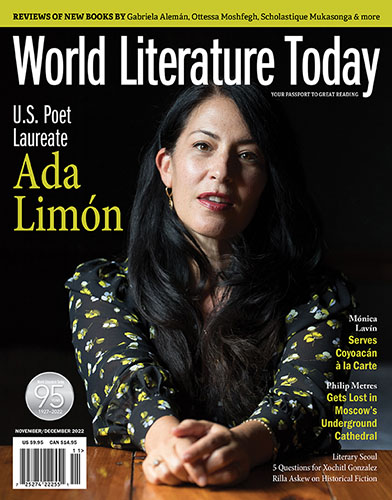
The cover feature of World Literature Today’s September/October 2022 issue assembles more than a dozen writers, artists, photographers, and translators reflecting on the theme Bearing Witness: Confronting Injustice through Art. Additional highlights include creative nonfiction and essays from Argentina, Denmark, Guatemala, and the US; poetry from Venezuela; Chris Arthur’s “What to Read Now” list of his favorite recent essay collections; and visits to Lagos, Nigeria, as well as lower Manhattan’s Yu & Me Books. With more than two dozen book reviews and additional booklists rounding out the lineup, WLT‘s latest issue remains the best passport to travel the world republic of letters.
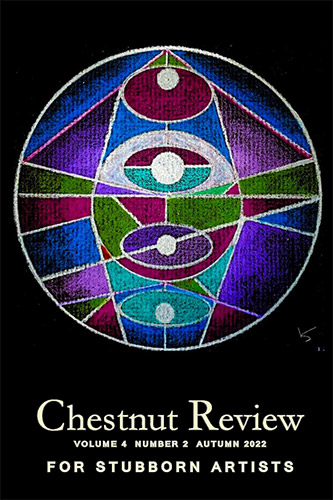
The Summer 2022 issue of Chestnut Review – “for stubborn artists” – includes an excerpt from the winning entry of their 2021 Prose Chapbook contest: Resistance by Sue Mell. Managing Editor Maria S. Picone interviews both Mell and contest finalist, Siddiqui Chansarkar. Other prose contributors to this issue include Carlos Contreras, Renée Jessica Tan, Yasmin Nadiyah Phillip, Joel Worford, Mattea Heller, and poetry from Stephanie Staab, Lynne Schmidt, Kim Ellingson, Remi Recchia, Michelle Hulan, Yvanna Vien Tica, Gabriela Gonzales, Cate McGowan, Sasha Wade, and art from Patrick van Raalten (cover art: Fluidity), William C. Crawford, Carolyn Guinzio, Moses Ojo, Oormila Vijayakrishnan Prahlad, and Phil Temples. Chestnut Review is free to read online or download as a PDF.
Published online annually in the spring by the Institute for Research on Women (IRW) at Rutgers University in partnership with The Feminist Art Project, Rejoinder is an online journal featuring work at the intersection of scholarship and activism that reflects feminist/queer and social justice perspectives. Rejoinder publishes critical essays, fiction, poetry, and art. While some issue submissions are by invitation only or commissioned, other issues will have open calls around a specific theme or concept. Past issue themes include: Marking Time; Borders, Bodies, Homes; The Stranger Within; Me Too; Storytelling for Social Change; Climate in Crisis.
The spring 2022 issue is themed Trauma and features poetry by Okolo Chinua, artwork with artists statements by Kathy Bruce, Celia Vara, and Gail Winbury, and essays such as “A Pandemic Parent’s Story of Sadness and Loneliness” by Jennifer S. Griffiths, “Being Toward Trauma: Theorizing Post-Violence Sexuality” by Mahaliah A. Little, “Translating Body and Trauma” by Emily Irvin, and “From Buried to Living Archives: Illustration as a Vessel to Access Portals of Sound Memory. A Culture of Hope in the Making — the Cambodian Case.” by Ravy Puth.
Publishing new content every two weeks, Topical Poetry is an online journal readers will want to subscribe to (for free) to stay up to date on the newest posts. As the name suggests, contributors offer works in response to current events and news – what a great resource to bring into any classroom. “Poetry on current events can be transformational, thought-provoking, and everlasting.” Recent works include “Asian Solidarity” by Jenn Martin, “Still Here” by Buff Whitman-Bradley, “In New York We say” by Elizabeth Schmermund, “CLIMATES CHANGE” by Joanne Kennedy Frazer, “Man in Flames” by Matthew Murrey, “UVALDE 2022” by Dale Hensarling, and “Not Completely Safe” by Jacqueline Jules. Topical Poetry is free to read online and accepts submissions based on public news/events, preferably from the previous or current week – which means a fast turnaround time on acceptance.
“You need another literary journal like you need a hole in the head. We’re here for you.” That tagline pretty much sums up the playful attitude you’ll find at Hole in the Head re:View, an online quarterly publishing on “Groundhog Day, May Day, the editor’s birthday in August, and the day after Halloween.” Publishing poetry, art, photography, reviews, and interviews, contributors to the newest issue include Kenneth Rosen, Ginny Speirs (incl. cover art), Jeanne Julian, Laura Schaeffer, Sara Wallace, Christopher Paul Brown, Erika Michael, Jenny Doughty, Ellen Stone, Jeff Mann, Diana K. Malek, Mark DeCarteret & Pat Keck, Elizabeth Iannaci, Robin Young, Larkin Warren, Cheryl Slover-Linett, Chloe’ Firetto-Toomey, Roger Camp, Cecil Morris, Joan Mazza, M.S. Rooney, Charter Weeks, Bob Herz, David P. Miller, Annette Sisson, Larissa Monique Hauck, Brett Warren, Howie Faerstein, Jack Bordnick, Mary Beth Hines, Jim Rioux, Geoffrey Aitken, Michael T. Young, Andrew K. Clark, Casey Clark, Miho Kinnas, Bookend – Sebastian Matthews interview, Sebastian Matthews, and Greg Clary.
The online Months to Years Summer 2022 features the creative works of twenty-five writers, poets, photographers, and artists with a range of voices and perspectives. Bev Mondillo Wright remembers her mother’s Italian baking traditions in “Agrodolce, and Other Memories of the Funeral Pan.” Becca Baisch, in “Twin Hearts,” reflects on her husband’s cancer diagnosis soon after the birth of their first child. In “A Story of a Good Mom,” pediatric ICU nurse Hui-wen Sato opens our perspective to the trauma that ICU nurses witness daily. These are just a sample of the compelling works in this issue.
Other contributors include Elizabeth Berman, Harry E. Northup, Greg Turlock, Grace May, Ingrid Blaufarb Hughes, Amanda Julien, Adnan Adam Onart, Janice Lynch Schuster, Ciera Lloyd, Marie Mischel, Gwynn Wills, Michael Salcman, Dara McGarry, Jen Emmerich, John Grey, Victor Larson, Serena Piccoli, Amy Haddad, Vincent J. Tomeo, Beverly Rose Joyce, Carole Geithner, and Cheryl Comeau-Kirschner. A digital version of the Summer 2022 issue is now available on the Months to Years website. The digital flip book, a downloadable PDF, and a web-based experience of each work are available for free. Glossy magazine hard copies can be purchased via Blurb.
The eighth and newest issue of the annual print Cherry Tree: A National Literary Journal @ Washington College features work by Anthony Aguero, Mya Matteo Alexice, Amy M. Alvarez, Jeffrey Bean, Kathryn Bratt-Pfotenhauer, Erica Lee Braverman, Holly Burdoff, Camille Carter, Adam Clay, Caitlin Cowan, Meg Day, Jose Hernandez Diaz, Denise Duhamel, María Esquinca, Sophie Ezzell, Hazem Fahmy, William Fargason, Aidan Forster, Camille Guthrie, Julie Hanson, Kathryn Hargett-Hsu, Clemonce Heard, Su Hwang, Mark Jacobs, Naomi Kanakia, Justin Lacour, Daniel Lassell, Susan L. Leary, Emily Light, Chrissy Martin, Gloriz Muñoz, Catherine Pierce, Helena Rho, C.T. Salazar, Leona Sevick, Harvey Silverman, Donna Vorreyer, Siamak Vossoughi, D.S. Waldman, Nikki Wallschlaeger, Elaine Wang, Ross White, Jeff Whitney, Eileen Winn, Haolun Xu, Nicholas Yingling, and cover art by Hedieh Javanshir Ilchi. Visit the Cherry Tree website for subscription information and single-copy orders.
Publishing since 1967 and still as cutting edge as ever, the newest issue of Southern Humanities Review includes Nonfiction by George Estreich, Kelly Ann Jacobson; Fiction by Alena Graedon, Lucy Zhang, Tanya Žilinskas, Sanjena Sathian; Poetry by Angelica Maria Barraza, Clayton Adam Clark, Todd Davis, Jessica Dionne, alyssa hanna, Constance Hansen, Sara Henning, Maurya Kerr, Daniel Edward Moore, tano rubio, Maureen Sherbondy, and Grace Q. Song. Cover art by MimiPrint. Several works from each issue are available to read online.
Issue 34:1of The Gettysburg Review features paintings by Carrie Moyer, fiction by Leila Mohr, Holly Beth Pratt, Corey Campbell, Allison Field Bell, and Victoria Campbell; essays by Magin LaSov Gregg, Jenny Catlin, E. G. Cunningham, and Christina Pugh; poetry by Laura Read, Michael Pearce, Linda Pastan, Katharine Jager, Danny Duffy, Anne-Marie Thompson, Hannah Craig, David Kutz-Marks, Meghan Maguire Dahn, Michael Homolka, Caroline Crew, Jill Gonet, Keith Leonard, Jacob Sunderlin, Wendy Guerra, Dorothy Chan, Michael Lavers, John Poch, Frank Paino, Cindy King, Caleb Braun, Calgary Martin, and William Olsen.
Based out of Austin Peay State University in Clarksville, Tennessee, the newest issue of Zone 3 offers readers an eclectic mix of writing with the common denominator of stunning opening lines that won’t let go. Eneida P. Alcalde’s poem, “Memory Quilt,” begins: “My baby’s napping when what’s left / of you arrives…” Eddie Vona’s story, “Paragon of Animals,” begins: “It was Christmas Eve, so my mother was killing lobsters in our kitchen sink.” Sarah Carey’s poem, “Space Invaders,” begins: “My body homes itinerant ghosts—” Katie Darby Mullins’ story, “Game Theory,” begins: “The baby should mean something to me.” Delving in rewards the reader with more great lines, like “The world is more than pipelines.” from “Transatlantic Flight” by Megan M. Garr, and “He used to step into the phone box, if it was empty, to talk to her ghost.” from “Chess Wednesday” by Andrew Peters. All this to say, check out the newest issue of Zone 3, which also features works by Morgan Hamill, Shannon Hardwick, Rebecca Lehmann, Angie Macri, Nathan Manley, Sandra Marchetti, Ted McCarthy, L.S. McKee, Sarah Fawn Montgomery, Bo Schwabacher, Carrie Shipers, Audrey Spina, Simone Muench and Jackie K. White, Julia Kooi Talen, Vanessa Tamm, Greg Tebbano, John Walser, Gregory Wolff, Danae Younge, Ahimsa Timoteo Bodhrán, Alyse Bensel, Lisa Compo, Aran Donovan, Jordan Escobar, and Seth Garcia. Cover art by Marc Escalona Gaba.
With Volume 48.1, Feminist Studies scholarly journal celebrates fifty years of publication and commemorates forty years of “two anthologies that heralded major innovations in feminist theory: This Bridge Called My Back: Writings by Radical Women of Color (Persephone Press, 1981; Kitchen Table Press, 1983) and All the Women Are White, All the Blacks Are Men, But Some of Us Are Brave: Black Women’s Studies (The Feminist Press, 1983). The writing in this issue,” continue Judith Gardiner and Matt Richardson in the preface, “reflects the deeply personal impact these books have had on scholars’ intellectual, political, and emotional development since the time of their publication.”
Contributors include Nicole Charles, Paulina Jones-Torregrosa, Analouise Keating, Emek Ergun, Nida Sajid, Keisha-Khan Perry, Sirisha Naidu, Sangeeta Kamat, Richa Nagar, Tala Khanmalek, Heidi Andrea Restrepo Rhodes, Sidra Lawrence, Kelsey Leonard, Chrystos, Max Wolf Valerio, And Jo Carrillo, Reanae Mcneal, Nathalie Lozano Niera, Shoniqua Roach, Kristie Soares, Tamara Lea Spira, Anna Storti, Saraellen Strongman. A full table of contents can be found on the Feminist Studies website.
I enjoy Plume‘s clean and easy-to-navigate online format, with a manageable selection of works that can be fully enjoyed by the time the next monthly issue arrives. There are even a few selections that include audio for a different experience. The August issue (#132) includes poems by Tania Langlais, R.T. Smith, Rebecca Lehmann, Scott Withiam, Sophie Cabot, Tom Sleigh, Martha Collins, Marianne Boruch, James Pollock, Ellen June Wright, Bruce Beasley, Alice Friman; a section called The Poets and Translators Speak in which each contributor offers notes on their work; a Book Review of Headless John the Baptist Hitchhiking by C.T. Salazar; the Featured Selection, “On Muse Found in a Colonized Body, lovemaking, and activism”: Interview with Yesenia Montilla by Mihaela Moscaliuc; and Essays and Comment: “So I Would Move Among These Things: Maya Deren and The Witch’s Cradle” by Fox Henry Frazier.
Celebrating 40 years of publishing with Issue 50, Paterson Literary Review was founded by Maria Mazzoitti Gillan in 1979 as a mimeographed publication, now one of the most well-respected resources for poetry in the country. The journal has published many poets, including Allen Ginsberg, William Stafford, Ruth Stone, Sonia Sanchez, Jan Beatty, Laura Boss, Marge Piercy, Martín Espada, David Ray, and Diane di Prima. Holding the post of editor, Gillan invites readers to this newest issue: “PLR is dedicated to writing that is accessible and powerful, takes emotional risks, and illuminates what it means to be human.” The nearly 400-page tome features over 200 contributors – enough to last you a full year of enjoyment! Among these great works are the winners of their 2021 Allen Ginsberg Poetry Awards: First Place Co-winners Adele Kenny and Marion Paganello, Second Place Winner Arthur Russell, Third Place Winner Charlie W. Brice, and all the honorable mentions and editor’s choice awards. What a phenomenal publication! And you can be a part of it – submissions are open through September 30 and the Ginsberg Award closes February 1, 2023.
Terrain.org is an award-winning, international online journal searching for that interface—the integration—among the built and natural environments, that might be called the soul of place. Over the past 13 weeks, Terrain.org has published the Lookout: Writing + Art About Wildfire series in partnership with the Spring Creek Project for Ideas, Nature, and the Written Word. The series includes works by Carly Lettero, Emily Sheperd, Amy Miller, Elizabeth Spencer Spragins, Suze Woolf, Anne Haven McDonnell, Craig Santos Perez, Bradley David, Claire Thompson, Mary Kwart, Tracy Daugherty, Amiko Matsuo + Brad Monsma, Ben Rutherfurd, and Rachel Richardson.
Terrain.org’s submissions will open again on December 15, but ARTerrain submissions are accepted year-round, and there are currently two contests, including the Sowell Emerging Writers Prize, offering a $1,000 prize and publication by Texas Tech University Press for a nonfiction book. Visit their website for more details.
If you’ve ever wondered about what goes on behind the scenes at NewPages, now might be your only chance to find out. The Main Street Rag Summer 2022 Featured Interview is Casey Hill, Founder and Publisher of NewPages in conversation with TMSR‘s editor M. Scott Douglass as he digs into NewPages history and speculates about the future. Also featured in this issue: Essay by Gail Hosking; Fiction by Melissa Benton Barker, Judith T. Lessler, Anthony Mohr, Elaine Fowler Palencia, Timothy Reilly; Poetry by Alan Berecka, Joan Barasovska, Bonnie Bishop, Brenton Booth, Joanne Fay Brown, Deborrah Corr, Stephen Cramer, Mirana Comstock, Douglas K Currier, David Dragone, Matthew Duffus, Brenda Edgar, Frederick Foote, Jane Ann Fuller, Elton Glaser, E. J. Evans, Carol Hamilton, W. Luther Jett, Robert Lee Kendrick, Ulf Kirchdorfer, George Longenecker, Vikram Masson, Richard L. Matta, Jim McGarrah, Jeff McRae, Cecil Morris, Norman Unrau, Robert Parham, Elizabeth R. McCarthy, David E. Poston, Harriet Shenkman, Kevin Ridgeway, Laura Sobbott Ross, Victoria Royster, Andrew Taylor-Troutman, Rodney Torreson, Richard Weaver, John Walser.
Editor Stephanie G’Schwind welcomes readers to the Summer 2022 issue of Colorado Review with a tribute to summer, “Whether your summer is spent in the company of others or in solitude, sorting your things or tending your garden, in the cloud or on the ground, I hope you discover in these pages something to hang on to, something to keep.” As Poetry Editor Camille T. Dungy expresses what she found, “Something drew me to these poems. . . Something in them called out and slowed me, in the way recognized language perks the ear and makes me stop. What did she say? . . .These poems are points of connection in a divided world. It’s so nice to hear someone else thinks this way too.” Contributors to the collection include Fiction by Angela Sue Winsor, Da-Lin, Joy Guo, Alyson Mosquera Dutemple; Nonfiction by Geoff Wyss, Carolyn Kuebler, Georgia Cloepfil; Poetry by Mirri Glasson-Darling, Chris Ketchum, Laura Donnelly, Martha Silano, Molly Sutton Kiefer, Mary Helen Callier, Emily Koehn, Nicole Callihan, Jennifer Peterson, Emily Adams-Aucoin, Virginia Ottley Craighill, Jodie Hollander, Sage Ravenwood, Meghan Sterling, John Sibley Williams, Luisa Muradyan, Ashley Colley, Landa Wo, Jeffrey Bean, Tyler Kline, Natalie Scenters-Zapico, C. Henry Smith, Jessica Hincapie, Mandy Gutmann-Gonzalez, Andrew Hemmert.
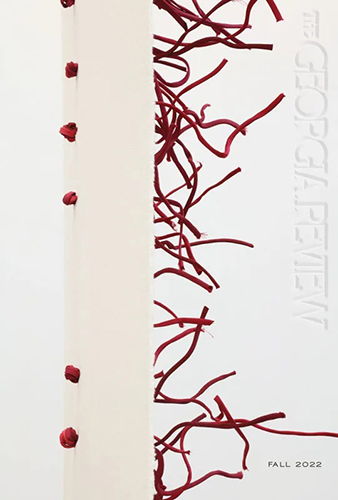
The Georgia Review’s Summer 2022 issue is now available and opens with commentary from Editor Gerald Maa, who writes, “I see a literary journal as a means by which to make public, momentary space for collectives to continue, start, or transform work they have been or want to be doing. Mourning, and celebrating, a life just passed is collective work, when done at its best.” Maa’s comments come after discussing the untimely passing of April Freely whose work is honored in the feature, “Correspondent Life: April Freely (1982-2021) Poems and Annotations” and includes works by Jennifer S. Cheng and Spring Ulmer.
Included in this issue is new writing from Samuel R. Delany, Alejandro Varela, Pamela Mordecai, Marylyn Tan, Bennett Sims, and many more, as well as a new translation of a poem by Bertolt Brecht, a reconsideration of Law & Order: Special Victims Unit, and a portfolio of experimental photography by Daisuke Yokota. Maa also shares that the magazine’s online component, GR2, now features “Questions for Contributors” in which writers offer responses to five questions to “give readers a glimpse of what editorial exchange with our editors can look like.” Melanie P. Moore, Lio Rios, Nishanth Injam, and Aryn Kyle take the first plunge.
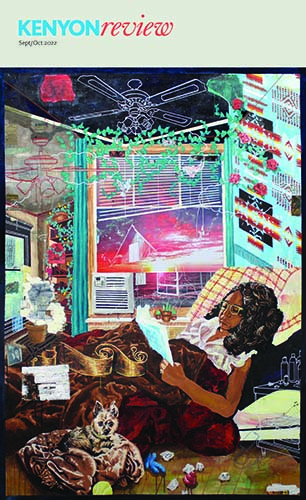
The Climate Issue of the Kenyon Review includes a folio called “Angry Mamas,” guest edited by Emily Raboteau, featuring essays, stories, and poems by mothers discussing the climate crisis and environmental justice. The folio contains contributions from writers around the world, including Humera Afridi, Aliyeh Ataei, Camille T. Dungy, Patricia Engel, Genevieve Guenther, Anya Kamenetz, Debora Kuan, Cleyvis Natera, Deborah Paredez, and Sadia Quraeshi Shepard. In the rest of the issue, readers will find climate-themed work by Samuel Amadon, Mary Kuryla, Diane Mehta, Michael Metivier, Genta Nishku, Jane Wong, and many others.
The newest issue of College of Charleston’s Crazyhorse literary magazine features the winners of their 2022 Crazyhorse Prize in Fiction, Nonfiction, and Poetry as well as Fiction by Louise Barry, Marian Crotty, Katherine Damm, Stephanie Macias, Hugh Sheehy, Kris Willcox; Essays by Grey Wolfe LaJoie, Rhea Ramakrishnan, Kiyoko Reidy, Brenna Womer; Poetry by Christopher Bakka, Ciaran Berry, Paola Bruni, Marianne Chan, Gregory Dunne, Rasheena Fountain, Daniel Garcia, April Gibson, Aiden Heung, L. A. Johnson, Chi Kyu Lee, Nicole W. Lee, Grace Li, Oksana Maksymchuk, Forester McClatchey, Sarah Fathima Mohammed, Shonté Murray-Daniels, Derek N. Otsuji, Isaac Pickell, Ayesha Shibli, Katie Jean Shinkle, Emma Soberano, Pablo Piñero Stillmann, Grace Wagner, Tianru Wang, NaBeela Washington, Sandra M. Yee. This issue’s cover art is by J.Otto Seibold, California (after the fires).
The newest issue of The Iowa Review (Spring 2022) includes a Portfolio on Poetic Black Resiliency. In the Introductory Notes (which can be read in full online here), the editors write to answer the question, Why resiliency?
First, resiliency goes beyond these repeated moments that speak to Black advocacy for justice and reiterates the continued insistence to continue, first (this has not always been a given, unfortunately). Resiliency also persists in making this world better as we are determined to thrive. This selection of poems goes beyond a buttoned-up stoicism and presents a diversity of emotions and approaches to methods of living, resiliency, and resolve. I have been astounded by the breadth of ideas, breath through the lines, and depth of emotion by the poets kind enough to contribute, some of whom are long overdue for their debut in TIR. The introspection and circumspection in this section spans a range of feelings: from the very personal to the sweepingly political reality of African-American lives over the last four hundred years.
A Portfolio on Poetic Black Resiliency features works by Tracie Morris, Joanne V. Gabbin, Lois Elaine Griffith, Yona Harvey, Nathaniel Mackey, Shelagh Wilson Patterson, Douglas Kearney, Steve Cannon, Harryette Mullen, Asiya Wadud, Janice A. Lowe, Yolanda Wisher, Delali Ayivor, Duriel E. Harris, Terrance Hayes, Jo Stewart, and Tracie Morris. Also featured in this issue is Poetry by Maria Zoccola, Brian Simoneau, Sara Elkamel, Susan Leslie Moore, Mariano Zaro, translated by Blas Falconer, Alice Turski, Jared Joseph, Kevin Norwood, Daniel Barnum, and Colin Kostelecky; Nonfiction by Steffan Triplett, Liza Cochran, and Julia LoFaso; Fiction by Dessa, Danica Li, Aleyna Rentz, Marian Crotty, Su Tong, translated by Ting Wang, Daisy Hernández, Kirsten Vail Aguilar, and Jackson Saul; and Artwork by Tim Fielder.
Sky Island Journal’s stunning 21st issue features poetry, flash fiction, and creative nonfiction from contributors around the globe. Accomplished, well-established authors are published—side by side—with fresh, emerging voices. Readers are provided with a powerful, focused literary experience that transports them: one that challenges them intellectually and moves them emotionally. Read works from Amy Marques, Ann Chinnis, Annette Sisson, Arden Stockdell-Giesler, Beth Oast Williams, Carole Greenfield, Cheryl Slover-Linett, Courtney Justus, Cristian Ramirez, Cynthia Singerman, Dan Shields, Deron Eckert, Edilson Afonso Ferreira, Emily Patterson, Erin Henry, Fannie H. Gray, Heather Diamond, Isabel Markowski, John Muro, Julie Benesh, Kathryn De Lancellotti, Katrina Hays, Kiana Mccrackin, Kit Willett, Lisken Van Pelt Dus, Lorrie Ness, Maira Rodriguez, Melody Wilson, Michael Keenan Gutierrez, Michele Lovell, Mizuki Kai, Nancy Beauregard, Olivia Badoi, Philip Cioffari, Robbin Farr, Valerie Nies, Vivian Montgomery, and Wylde J. Parsley,. Always free to access, and always free from advertising, discover what over 100,000 readers in 145 countries already know: the finest new writing is just a click away!
Hippocampus Magazine online issue 114 features a variety of creative nonfiction, including “Pulses” by Kathy Davis, “Bathymetry” by Sally Jonson, “Foreign” by Terri Lewis, “Peephole” by Lotus Mae, “Origin Myths” by Susan V. Meyers, “We Had No Woman” by Ronit Plank, “What I Wrote Was Congratulations What I Meant to Say Was” by Rachel Lincoln Sarnoff, “The Dying Room” by Leanne Pierce Schneider, “There Are Girls Like You in Japan” by Mimi Iimuro Van Ausdall, and “De-escalation” by Lauren Woods. Read it online here. Hippocampus will also be hosting HippoCamp 2022: A Conference for Creative Nonfiction Writers – August 12-14, in Lancaster, PA. Find more information here.
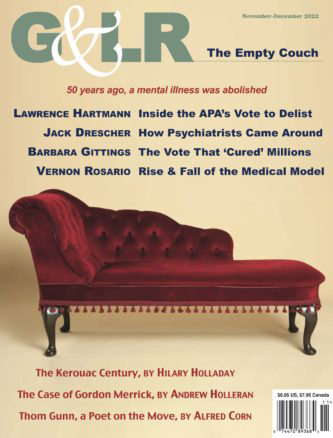
The July/August 2022 issue of Gay & Lesbian Review is focused on “The Lure of the Sea” and includes essays such as “A New England Romance: Harvard Prof F.O. Matthiessen and Artist Russell Cheney in Love,” by Andrew Holleran, “Sex and Gender in Native America” by Vernon Rosario, “Paul Cadmus’ Art of Cruising” by Ignacio Darnaude, “The Sea and Sexual Freedom: From Typee to Bully Budd, Melville Longed for Something Lost at Sea” by Rolando Jorif, “A Dab of Tar on a Sailor’s Posteriors” by William Benemann, and “The Fastest Woman of Her Day: Joe Carstairs Raced Speedboats in the 1920’s – and Often Won” by Martin Duberman. The publication also features reviews of recent publications as well as poetry, guest opinions, and artwork. Most article intros can be read online with subscribers having access to full content.
The Ukrainian cities of Odesa and Kharkiv take the spotlight in World Literature Today’s latest city issue, in which poets, novelists, playwrights, artists, journalists, editors, photographers, translators, and culture workers offer glimpses into their daily lives since the Russian invasion of February 2022. Other highlights include essays and fiction from Austria, Belarus, Chile, Colombia, Nigeria, South Africa, and the US; poetry from Peru, Portugal, and the US; lively interviews with Ben Okri and Maša Kolanović; recommended reading lists; as well as reviews of new books by Isabel Allende, Elena Ferrante, Mohsin Hamid, and dozens more. With the latest issue, WLT remains an indispensable guide to the best in international literature
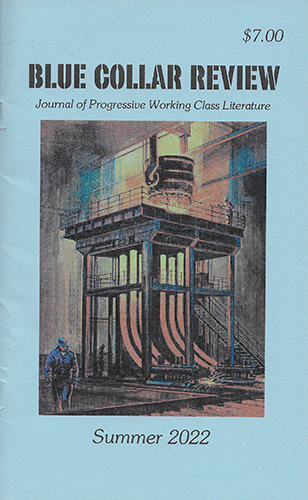
The Blue Collar Review is a quarterly journal of poetry and prose published by Partisan Press with the mission “to expand and promote a progressive working class vision of culture that inspires us and that moves us forward as a class.”
The editors comment: “Poems in this collection focus on poverty, labor struggles, and on the devaluing of, and impact on, children in our corrupt corporate oligarchy. Children suffer inordinately from the criminal irresponsibility of political opportunism and arrogant class disregard. . . Violence driven by bigotry is a continuing foundational American reality. . . The scapegoating and targeting of people based on perceived differences is meant to divide us, diverting the focus of our frustration and rage from those who perpetrate vicious, unrelenting injustice upon us to our class brothers and sisters. Added to the targets of hate are Trans and gender non-binary people. As a class, our struggle demands transcending such prejudices and creating our own justice rooted in our common issues and interests.”
These poems, then, “exists to make us more aware of the commonality or our shared class experience and to strengthen the social solidarity we need to have a voice and to create authentic democracy.” Readers can find sample poems on the Blue Collar Review website along with submission and subscription information.
Reckoning is a nonprofit, annual journal of creative writing on environmental justice, with this newest issue, edited by Aïcha Martine Thiam and Gabriela Santiago, addressing the intersection between social upheaval and environmental change. The publication features poetry, essays, fiction, and art by Zuzanna Kwiecien, Francesca Gabrielle Hurtado, Russell Nichols, Tom Barlow, Nicasio Andres Reed, Nicholas Clute, Cislyn Smith, Nancy Lynée Woo, Tim Fab-Eme, E.G. Condé, Ken Poyner, Daria Kholyavka, Sofia Ezdina, Avra Margariti, Grace Wagner, Sigrid Marianne Gayangos, Kola Heyward-Rotimi, Scott T. Hutchison, Nicole Bade, Susan Tacent, Jessica McDermott, paulo da costa, Ellie Milne-Brown, Amanda Ilozumba Otitochukwu, Charlotte Kim, Rebecca Bratten Weiss, Amirah Al Wassif, Brianna Cunliffe, Jacob Budenz, Miriam Navarro Prieto, Wen-yi Lee, Mari Ness, Takayuki Ino, Rumi Kaneko, Preston Grassmann, Jesse Nee-Vogelman, Al Simmons, Laura Adrienne Brady, Prashanth Srivatsa, Taylor Jones and Luke Elliott.
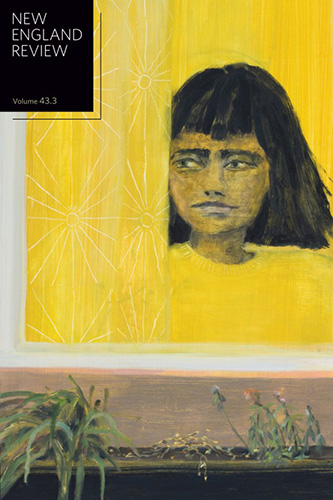
Carolyn Kuebler’s introduction to the newest issue of New England Review (43.2) is a thoughtful reflection on the place of domesticity, travel, and tourism as it is reflected through the eyes of writers and interpreted by readers. The Editor’s Note along with several pieces from this issue are available to read online here. Kuebler also comments on the special feature, “Polyglot And Multinational: Lebanese Writers In Beirut And Beyond”: “The section in fact was born out of guest editor Marilyn Hacker’s desire to go someplace new, to know it more deeply, to feel the heat and rain and to hear voices in cafés. It began with her fascination and curiosity about the Lebanese writers whose works she’d read and translated and culminates here in something altogether uncategorizable.” In addition, this issue includes Poetry by Tomaž Šalamun, Gillian Osborne, Victoria Chang, Analicia Sotelo, Justin Jannise, Corey Van Landingham, Carmen Giménez, Steven Duong, and Tiana Clark; Fiction by Nandini Dhar, David Ryan, A. E. Kulze, Christine Sneed, Roy Kesey, and Kosiso Ugwueze; Nonfiction by Marianne Boruch, Maud Casey, Ben Miller, Sarah Fawn Montgomery, and Richard Harding Davis.
The Louisville Review, Number 91, Spring 2022, after being supported for 45 years by higher educational institutions is now an independent publication. As Editor Sena Jeter Naslund shares in the Editor’s Note, her home has become the new “home” of The Louisville Review – a home “haunted” by the ghost of little-known poet Madison Cawein, who lived there over 100 years ago, and who published a poem that contained the phrase “waste land” – inspiring the more likely known T.S. Eliot’s work, “The Waste Land.” And so, Sena tells readers, “it pays off to read small literary mags, as well as to publish in them. . . And it pays off to SUBSCRIBE to them, for many reasons, but also so that you won’t miss out on some important trigger to your own imagination.” Here! Here!
The newest issue of The Louisville Review features ample imagination starters, with Poetry by Mary Ann Samyn, Adrian Blevins, Adam Tavel, Kyle D. Craig, Diamond Forde, Ann Pedone, Rachel Whalen, Kevin McLellan, Christopher Howell, Roy Bentley, Gabriel Welsch, Clay Cantrell, James Hejna, Rolly Kent, Alamgir Hashmi, Jack Ridl, Don Bogen, and Michael Mark. Fiction – which, get this, is “arranged to spotlight the progressive ages of the various protagonists” – ! – by Jane Ogburn Dorfman, Dennis Hurley, Patricia Dutt, Rebecca Bernard, Edward Jackson, John Sims Jeter, S. A. Griffin, and Marguerite Alley. And my all-time favorite section, “Cornerstone,” featuringing work by writers K-12: Saanvi Mundra, Kay Lee, Jiayi Shao, Haile Espin, Henry Phoel, Bravery Grace Boes, Alexander Miller, Matteo Tremaine Pavlenko, and Emma Catherine Hoff.
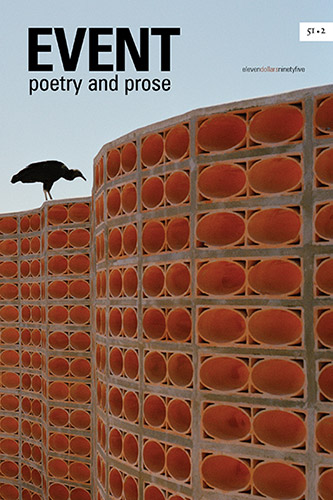
The newest issue of EVENT print publication of poetry and prose features their 2021 Non-Fiction Contest finalists with introductory commentary by Judge David A. Robertson, who writes, “in the end, that’s what writing stories is all about: connecting. You connect with your readers. They connect with something within themselves or to each other.” The winning entries: 1st Place “Penance” by Cayenne Bradley; 2nd Place “All My Love, Alex” by Vicki McLeod; 3rd Place“One Route, Over and Over” by Nicole Boyce. Also included in this issue is Poetry by Matsuki Masutani, Julian Gunn, Russell Thornton, Laurie D. Graham, Vincent McGillivray, Mark O. Goodwin, Zoe Landale, Kate Marshall Flaherty, Dan MacIsaac, J.G. Chayko, and Erin Kirsh; Fiction by Brian Moore, Joel Fishbane, and Adrian Markle; and numerous reviews of poetry, fiction, and nonfiction. The next deadline for EVENT‘s 2022 Non-Fiction Contest is October 15. More details on their website here.
Driftwood Press will be switching to an annual anthology structure, so this is the final “biannual” issue for readers to enjoy. The latest short stories “Winged,” “Sore Vexed,” and “The Great Fall” show off the versatility of Driftwood Press like no other issue: readers are moved from a war-torn country to a Norweigian countryside, then to a global pandemic of missing memories. This issue also includes numerous poems investigating the paranormal, gun violence, familial strife, and more.
Driftwood Press also offers readers interviews with most of their contributors, with this issue featuring Chad Gusler, Caroline Bock, Kate Griffin, Daisuke Shen, Samantha Padgett, Emily DeMaio Newton, Danae Younge, Kindall Fredricks, Roben Gow, Danielle Shorr, Laura Goldin, Adriana Stimola, Kelly Gray, Amanda Hartzell, Austin Sanchez-Moran, Daniel Ferreira, and Amanda Ngo and Kendall Krantz, and additional works by Maxime Cousineau-Pérusse, Triin Paja, and Sofia Sears.