Home » NewPages Blog » Page 81

NewPages Blog

At the NewPages Blog readers and writers can catch up with their favorite literary and alternative magazines, independent and university presses, creative writing programs, and writing and literary events. Find new books, new issue announcements, contest winners, and so much more!

The Gettysburg Review – 33.1

The Gettysburg Review is out and features paintings by Tollef Runquist, fiction by Julialicia Case, Martha Shaffer, Kirsten Vail Aguilar, and Andrea Marcusa; essays by Elizabeth Kaye Cook, Kathy Flann, Don Lago, Christine Schott, Rebecca McClanahan, and Melissa Haley; poetry by Christopher (c3) Crew, Peter Grandbois, Despy Boutris, Douglas Smith & George Looney, John Hazard, Brian Swann, Maura Stanton, Cindy King, John Brehm, and more.

Anomaly – No 31

In the new issue of Anomaly: comics by Tamara Jong, Jennifer Murvin, Chloe Martinez, Andie Frein, Amelia L. Williams, and Alina Viknyanskiy; poetry by Tian-Ai, Stephanie Jean, Shay Alexi, Saddiq Dzukogi, Noor Ibn Najam, Noʻu Revilla, Michal Jones, KL Lyons, Irteqa Khan, Ima Odong, Heather Simon, Eunice Kim, Chavonn Williams Shen, Bailey Cohen-Vera, Asmaa Jama, and Amanda Holiday, fiction by Laurence Klavan, LaToya Jordan, and Carson Faust; and nonfiction by Tasha Raella, Jody Chan, and Anjoli Roy.

Fresh Fiction from Gilbert Allen

Guest Post by Elizabeth Genovise

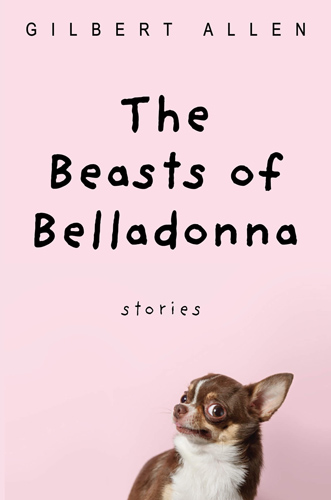
If you’re hunting for some fresh fiction from a small press, check out Gilbert Allen’s newest book, The Beasts of Belladonna. This book features fifteen linked tales of quirky characters in a South Carolina foothills community. Expect the unexpected in these unsettling yet often hilarious stories, in which characters rub up against their own failures, yearnings, and secrets.

A minister nails a bird to a couple’s front door; a woman accidentally kills her cat and finds an unconventional way to grieve its loss; a man’s foxy neighbor goes to outrageous lengths to destroy his marriage. Domestic animals have a hefty influence on these people’s lives, sometimes comical and sometimes tragic; the same could be said about church as we’re introduced to the Mosquito Ministry, the Faster Pastor Challenge, and couples who pass witty notes during sermons. We meet “treenappers,” a Grandfather Against Garbage, and a character known as the Jesus of Malibu, and in these encounters are powerful flashes of raw humanity in all its complexity.


The Beasts of Belladonna by Gilbert Allen. Slant Books, October 2020.

Reviewer bio: Elizabeth Genovise is an MFA graduate from McNeese State University and the author of three short story collections, the most recent being Posing Nude for the Saints from the Texas Review Press. https://www.elizabethgenovisefiction.org/

At Home In The Dark With Carol Morris’s ‘Into The Lucky Dark’

Guest Post by Susan Kay Anderson

Into The Lucky Dark by Carol Morris, who is part of the Diane Wakoski circle, is much like being invited to coffee at a friend’s house where every time you go there you can be yourself and when you leave you feel like more yourself than ever before. Morris believes that life is a struggle but to read her poems and look at her utterly delightful artwork in this book, it would seem that life is also a place that we seem to haunt long before getting to the ghostly stage of things. This takes a bit of getting used to. It takes a while to read Morris’s poems because to languish in their harsh settings of bars and other meetings/gatherings is to feel the freeze, feel the edges of being an outsider even to oneself and then find the self in the touchstones of such leaving: “Houses in which my talents were useless” (from “A June Divorce”) to finding art and abstractions which make concrete sense. Continue reading “At Home In The Dark With Carol Morris’s ‘Into The Lucky Dark’”

Southern Humanities Review – 53.3

Southern Humanities Review has nonfiction by Allison LaSorda and Alexandria Peary; fiction by Marlene Lee, Dennis McFadden, Sean Rose, and Gregory Wolos; and poetry by Ashia Ajani, Jubi Arriola-Headley, Ariana Benson, Nate Duke, Matt Donovan, Bethany Schultz Hurst, Rasaq Malik, Leslie Mcintosh, Mary Morris, Julia Thacker, Marisa Tirado, and Annie Woodford.

Raleigh Review – Fall 2020

This issue’s featured artist is Janice Joy Little. Fiction by Peter D. Gorman, Trina Askin, James Hartman, Melissa Reddish, and Katherine Conner. Poetry by Melissa Kwasny, Nan Becker, Dionissios Kollias, Colin Bailes, Rob Shapiro, Kabel Mishka Ligot, Hussain Ahmed, Johnny Lorenz, Darius Simpson, Camerin McGill, Jai Hamid Bashir, Melanie Tafejian, Maxine Patroni, Alaina Bainbridge, and Gabriella R. Tallmadge. Check it out at the Raleigh Review website.

The Lake – November 2020

The November issue of The Lake features Jean Atkin, Joe Balaz, Carol Casey, Robert G. Cowser, Sarah L. Dixon, Edilson A. Ferreira, Nels Hanson, Dierdre Hines, Beth McDonough, Roger Mitchell, Ronald Moran, Angela Readman, Maggie Reed, David Spicer. Reviews of Natalie Scott’s Rare Birds: Voices of Holloway Prison, Ric Cheyney’s In Praise of Nahum Tate, Terry Tierney’s The Poet’s Garage.

The Wishing Tree

Guest Post by Robert Lamb

It was Union Gen. William Tecumseh Sherman who said, “War is hell.” If you have any doubt that the general was dead right, run and get a copy of The Wishing Tree by Matthew A. Hamilton. You’ll see war up close and personal in his excellent account of the Armenian genocide by the Turks in the early 1900s.

Hamilton, a Richmond, VA writer and former Peace Corps volunteer, shows us through the eyes of a young Christian girl in Armenia how war unleashes unspeakable human savagery in the name of ethnic cleansing.

It is April 1915 and the Turks’ Ottoman Empire, which has lasted for centuries, is on the verge of defeat by the allied forces of Great Britain and the Arabs. In the novel’s first few pages, the heroine, Valia, a teenager, sees her parents, siblings, and neighbors, all Christians, murdered by Turkish “police soldiers,” and flees for her life.

Thus begins an odyssey the reader won’t soon forget. The author’s account of Valia’s struggle to stay alive and hopeful is a hymn to the human spirit, and the story is nothing short of realistic and gripping.

Adding a nice touch of realism, even Lawrence of Arabia and Arab Prince Faisal make cameo appearances near the story’s end.

OK, film producers; you can’t say I didn’t give you a heads up on this novel.


The Wishing Tree by Matthew A. Hamilton. Winter Goose Publishing, September 2020.

Reviewer bio: Robert Lamb is the author of four novels and a book of short stories; he review books for the New York Review of Books; and he has a website at www.robertlamb.net.

Into the Void Magazine – #17

Welcome to a great issue full of vivid, haunting, charming and thought-provoking pieces with a stunning cover image by Jeff Corwin. Fiction by George Choundas, Kathie Giorgio, Rosalind Goldsmith, Alice Ting Liu, Chris Neilan, and Alexander Woods; nonfiction by Audrey Burges, Marie Kilroy, and Ellis Scott; and poetry by Dianna Vagianos Armentrout, Swapnil Dhruv Bose, James Butler, and more.

Hole in the Head Review – November 2020

Issue 4 of Hole in the Head Review celebrates our first year. Featuring works by K. Johnson Bowles, Anna Birch, Bob Herz, Christopher Volpe, Ann Pedone, Richard Foerster, Hannah Tarkinson, James Crenner, Zoo Cain, Brendan Constantine, Norma Greenwood, Douglas Cole, and Stuart Kestenbaum. Special Prose Poem Mini Chapbook edited by Peter Johnson, including annotated correspondence of Russell Edson and works by Cassandra Atherton, Nin Andrews, Denise Duhamel, Gerald Fleming, Jeff Friedman, Holly Iglesias, and Anna McDonald.

Hanging Loose – Issue 111

Our 54th year of continuous publication! Cover art and portfolio by William Linmark. Poems by Sherman Alexie, Indran Amirthanayagam, Jack Anderson, Martine Bellen, Polly Buckingham, Liuyu Ivy Chen, Jiwon Choi, Robert Clinton, John Corley, Sam Cornish, Harley Elliott, Gerald Fleming, Justin Jamail, Daniel Johnson, Faye Kicknosway, David Lehman, Michael Miller, Frank Murphy, and more. Read more at the Hanging Loose website.

A Speaker to Root For

Magazine Review by Katy Haas

During the first few months of the pandemic, I couldn’t read anything. My attention span was gone and anything I did manage to read left my mind immediately. But that ended when I sat in the park and read Dorothy Chan’s Revenge of the Asian Woman (Diode Editions, 2019) from cover to cover. My locked-away ability to read had found its key. Already a fan of Chan’s work, this just helped solidify my love for her poetry even more, and I’m always more than happy to check out any of her newly published poems. The October 2020 issue of Poetry gives the gift of her poem, “Ode to Chinese Superstitions, Haircuts, and Being a Girl.”

The poem flows in a rush, like a held breath finally exhaled. Chan begins with the Chinese superstition “it’s bad luck / to get a haircut when I’m sick” and leads into the role the speaker fulfills as a daughter, as a girl, as someone who “always bring[s] / the party, cause[s] the trouble . . . .” While there are specifics tied to her own self, culture, and family—her brother’s fate, her mother’s thoughts on her future, her father’s opinion on how “good Chinese girls” wear their hair—Chan leaves the reader plenty of room to relate to her words. If we don’t feel like her, we can still root for her and her “short skirt,” her “forehead forever exposed.”

Into The Void Releases We Are Antifa Anthology

Into the Void Antifa Anthology flierAt the beginning of the month, literary magazine Into the Void released it’s We Are Antifa: Expressions Against Fascism, Racism and Police Violence in the United States and Beyond. The anthology features creative nonfiction, fiction, and poetry from diverse writers all over the world, i.e. the US, Canada, Ireland, the UK, Greece, Nigeria, and more.

Into the Void will be donating 100% of proceeds from the anthology’s sales to Black Lives Matter Canada. In order to maximize profits, the book will only be available via Amazon in ebook and paperback formats.

We Are Antifa was edited by Heath Brougher, Jay C. Mims, Amanda Gaines, Andrew Rihn, and Philip Elliot. It features “breathtaking writing condemning fascism, racism and state-sanctioned brutality through powerful expressions of grief, rage, hope and love.”

The title is a response to Donald Trump’s declaration that the US will be designating Antifa as a terrorist organization. The editors encourage readers to check out “A Brief History of Anti-Fascism” in Smithsonian Magazine to better understand why they published this anthology and “how anti-fascism and anti-racism are inextricably linked in the fight against oppression and supremacy.”

A Playful Conglomeration of Experiments

Guest Post by Shamae Budd

Patrick Madden’s third collection of essays is a playful conglomeration of experiments (in form, in collaboration, in thought). Interspersed among more traditional personal essays, you will find a menagerie of borrowed forms. The collection opens with an essay masquerading as an eBay listing for “Writer Michael Martone’s Leftover Water.” (Or is it an eBay listing masquerading as an essay? We can’t be sure, which is half the fun.) You will find blackout poetry (“Insomnia”), an essay written with the help of predictive text algorithms (“Unpredictable Essays”), mixed up proverbs (“The Proverbial ____” ), and a series of “Pangram Haiku.” Continue reading “A Playful Conglomeration of Experiments”

Inside Out & Back Again

Guest Post by Chang Shih Yen

Inside Out and Back Again is a novel in verse by Thanhhà Lai. This book won the National Book Award for Young People’s Literature in 2011 and a Newbery Honor in 2012.

Through a series of poems, 10-year-old Hà takes the readers through one year of her life in 1975. It was a life-changing year, beginning with her life in Saigon, then fleeing South Vietnam on a ship as Saigon fell on April 30, 1975. Hà and her family were in a refugee camp before resettling in Alabama, and the family struggled to start a new life there. Hà struggled with the language and fitting in at school.

Many details of this book were inspired by Thanhhà Lai’s own life. She also fled Vietnam at the age of 10 at the end of the Vietnam War, and moved to Alabama. The poems in this book will make you laugh and they will also make you cry. They will make you want to read this book all in one sitting, and when you get to the end, immediately want to read it again, but slowly this time to savor all the words. This book is powerful, poignant, and moving, worthy of all its awards.


Inside Out and Back Again by Thanhhà Lai. HarperCollins, 2011.

Reviewer bio: Chang Shih Yen is a writer from Malaysia, seeing through the pandemic in New Zealand. She writes a blog at https://shihyenshoes.wordpress.com/.

Buy this book from our affiliate Bookshop.org.

Picking Up the Fragments

Guest Post by Elizabeth Basok

Hildr Fragments, written by Dani L Smith, is a collection of poems covering relationships, notably a lengthy relationship that was both co-dependent and abusive.

Smith is a British expat living in South Korea; she meets a fellow expat, an older Canadian, who proves to be problematic from the start of their relationship. The author is forced to pull herself from the relationship after years of gaslighting (“even when I caught you in a lie you somehow succeeded in making me second-guess myself and making me feel crazy”), cheating, and even physical abuse. The author covers all the heavy aspects of leaving an abusive relationship from losing your household belongings, “11 drunken, psychotic messages within one hour,” and the time that she will never get back.

The word “Hildr” means “battle” in Old Norse, and we see the author battle with the desire to stay in an abusive relationship, her attempts to break from her abuser’s hold over her, her recovering from a miscarriage, and ultimately freeing herself from abuse and looking onward to the future.


Hildr Fragments by Dani L Smith. Independently published, October 2020.

Reviewer bio: Elizabeth Basok is a lecturer at The Ohio State University. Her Instagram is @lizbasok.

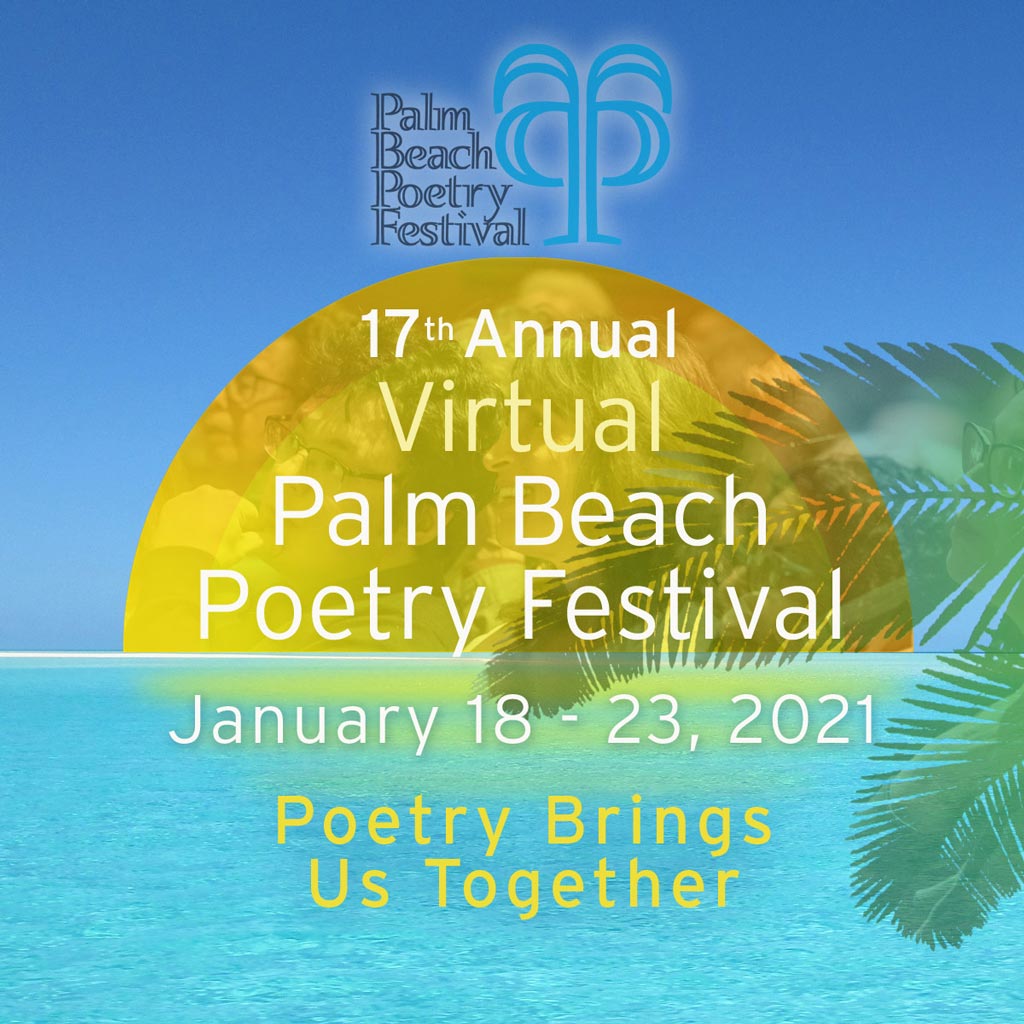
Event :: 17th Annual Palm Beach Poetry Festival will be Virtual

Palm Beach Poetry Festival eLitPak flier
click image to open PDF

Event Dates: January 18-23, 2021 Location: Virtual
Extended Application Deadline: December 1, 2020
The 17th Annual Palm Beach Poetry Festival in Delray Beach, Florida, January 18-23, 2021 will be virtual. Focus on your work with America’s most engaging and award-winning poets. Workshops with David Baker, Laure-Anne Bosselaar, Traci Brimhall, Vievee Francis, Kevin Prufer, Martha Rhodes, and Tim Seibles. Six days of workshops, readings, craft talks, panel discussion, social events, and so much more. One-on-one conference Faculty: Lorna Blake, Sally Bliumis-Dunn, Nickole Brown, Jessica Jacobs, and Angela Narciso-Torres. Special Guest: Gregory Orr and the Parkington Sisters. Poet At Large: Brian Turner. To find out more, visit www.palmbeachpoetryfestival.org. Apply to attend a workshop!

Terrain.org – October 2020

New on Terrain.org this month: poetry by Jane Lovell, Zach Eddy, Ted Kooser, Mary Fitzpatrick, Emily Tuszynska, and Jocelyn Casey-Whiteman; nonfiction and photos by Tyra A. Olstad; fiction by Jessica Bryant Klagmann; and an interview with Aimee Nezhukumatathil by Melissa L. Sevigny.

The Bitter Oleander – Fall 2020

The Autumn 2020 issue of The Bitter Oleander features an interview with the Danish poet Carsten René Nielsen, including a selection of his prose poetry translated by David Keplinger. Also in this issue: fiction by Michael Pearce, Kelly Talbot, and more; essays by Will Stone; and poetry by Dolores Etchecopar, Stephen Tuttle, Madronna Holden, David Cholrton, Matei Vişniec, Silvia Scheibli, Patty Dickson Pieczka, and others.

The Adroit Journal – October 2020

Adroit 34 features Diane Seuss, Aimee Nezhukumatathil, Jos Charles, David Naimon, Dorianne Laux, Yalie Kamara, Alicia Ostriker, Mary Biddinger, Kevin Prufer, the winners of our 2020 Adroit Prizes, Jennifer Tseng, Elle Nash, Hazem Fahmy, Jenny Molberg, Darius Simpson, Zain Murdock, and many more.

Good-byes for the Aurorean

The final issue of the Aurorean made it to NewPages last week, and we’re sad to see it go. Encircle Publications will continue operation, however, publishing full-length poetry and fiction titles, and curating their annual chapbook contest.

Editor Cynthia Brackett-Vincent opens the issue:
Here we are: the final issue of the Aurorean. It has been my honor to steward this journal for twenty-five years. I have said from day one that without the poets who submitted (entrusted) their work to me, the Aurorean would be nothing but a dream of mine and a bunch of blank pages. It has been a labor of love, and it has become a community of poets worldwide.

Stop by the Aurorean’s website for the full editor’s note, and grab a copy of the final issue at their shop.

Life and Death in ‘Light Through a Pane of Glass’

Guest Post by Nora Aronson

There is little between the word and the flesh in Thomas Cook’s daunting and terrifying Light Through a Pane of Glass. “There is perfection in the early dark / the smell of moist figs,” he writes in “Three Meditations,” yet life and death lurks beneath this observation, as it does beneath so many others in this debut collection.

Cook has been the editor and publisher of the longstanding journal Tammy and their chapbook press. His poems have appeared widely, and in several chapbooks, but until this collection there has not been a full understanding of his poetic project, which comes, anachronistically, on the heels of pastoral philosophers such as Lorine Niedecker and James Wright—this book features its own “Journey Westward,” has its own “deep water”—while it also pursues an existential agenda in poems such as “Two Figures”:

Afraid to accept a purer perception,
they busy themselves
with the intelligible world,
leaving much lost;
a thought, persists

Are we dearer in absence, you and I?”

Light Through a Pane of Glass will leave you thirsty in the Mojave Desert and abandon you to the Midwest. It is unflinching in the face of inheritance, addiction, and death. In it, you will smell figs, taste dates, and be grateful for afternoon onions. It will make you real.


Light Through a Pane of Glass by Thomas Cook. Big Table, 2020.

Reviewer bio: Nora Aronson is an MFA candidate at Warren Wilson College. Her first book, Instances of Calamity, was a finalist in the Uninterrupted First Book Contest. Her work has appeared in Bat City Review, Exhume Magazine, and Terra Firma.

Buy this book from our affiliate Bookshop.org.

Let. Goings. Disappear.

Guest Post by Susan Kay Anderson

Let.

Timothy Liu wrote the most beautiful homage/obituary for poet Linda Gregg, published in The New York Times (“Linda Gregg, Poet of Taut, Vivid Verse, Is Dead at 76,” March 27, 2019) and Plume (“My Own Private Parthenon,” Issue #93, May 2019). Look these up if you have not read them. Let your tears flow, but not only for Gregg, who is known for her “chiseled in marble” poems, but for Liu, whose language explores the ruins of these, also a very serious poet; yet different, a very tongue-in-cheek poet. I imagine him exploring various surfaces and various crevices with his tongue, letting it slide and ride and taste all life has to offer. He does this in his latest book of poems, Let It Ride. He takes us to scenes exploring the aftermath of ecstasies of the body in low-brow and high-brow places, in City Mouse and Country Mouse places. Liu is a poet who rides in both places and steps back to let us also see the scene. Continue reading “Let. Goings. Disappear.”

NewPages Book Stand – October 2020

A new Book Stand is here with new and forthcoming books you can order from your local indie bookstore. This month, check out six featured titles, as well as our usual selection of titles in a variety of genres.

In Ken Janjigian’s A Cerebral Offer, Harry Gnostopolos is struggling to keep his indie theater afloat. The solution? Join a subversive cabal of thieves, who have planned a heist that will rewrite history.

Larry Smith’s Mingo Town & Memories is a vivid and revealing portrait of a town and a way of life in Mid-America.

Prompt Book by Barbara Henning includes three parts to help jumpstart your poetry and fiction.

Hafizah Geter’s The Sadness of Spirits provokes strong emotions, leaving the reader with hope and admiration as the characters are awakened to the nuance and possibility melancholy can bring.

In Some of the Times, Gina Myers builds on the same base of social consciousness in previous work, while also pushing in new directions.

“The world(s) of” Vanessa Roveto’s a women “plural, adjacent, playful, shrewd, and constantly unfolding. Roveto makes fluid use of prose form.”

You can learn more about each of these New & Noteworthy books at our websiteClick here to see how to place your book in our New & Noteworthy section.

Cave Wall Offering Fall Subscription Deal with Feedback

cover of Cave Wall's Winter 2019/Spring 2020 issueFall Subscription Deal: The first 20 people who purchase a 2 year (4 issue) subscription OR a set of back issues may receive feedback on one poem from one of the following Cave Wall editors/poets: Rhett Iseman Trull (Editor), Sandra Beasley (Editorial Advisory Board), Sally Rosen Kindred (Contributing Editor), Renee Soto (Contributing Editor),  Lisa Ampleman, Cathy Smith Bowers, Lauren Camp, Julie Funderburk, Jennifer Grotz, Terry Kennedy, Sandy Longhorn, Amelia Martens, Dayna Patterson, Joel Peckham, Jim Peterson, Molly Spencer, Matthew Thorburn, or Lesley Wheeler.

Visit our subscription page here, if you are interested: www.cavewallpress.com/subscribe.html.

Once you make your purchase, we will email you to set up the details of your poem feedback. Some subscribers have taken us up on this offer but we have 12 spots remaining.

Event :: SLS x St. Petersburg Review Virtual Master’s Class in Fiction

typewriter master's class in fictionEvent Dates: November 8–22, 2020; Location: Virtual;
Extended Deadline: October 30, 2020
Limited to: 10 people. Summer Literary Seminars International Retreats, an offshoot of SLS, in conjunction with St. Petersburg Review/Springhouse Journal invites you to a unique two-week master’s class in fiction taught by internationally acclaimed authors, Dawn Raffel and Laurie Stone. In this online course, you will receive one-to-one feedback; meet the editors of the New Yorker, Graywolf Press, Guernica, and St. Petersburg Review; attend events with Mona Awad, Polina Barskova, and Kadija Sesay; receive discounts for future programs including residencies in Georgia and Kenya; read your work in a publicly advertised event; and more. November 8 to November 22. To learn more and submit, visit stpetersburgreview.com/master-class.

A Handshake Between Time Periods

Guest Post by Jack Graham.

It’s incredibly rare that a novel can leave you feeling as ecstatically powerless as Ruth Ozeki’s A Tale For The Time Being, a strikingly well-crafted novel following the tribulations of both Naoko Yasutani, an early 2000’s teenager and of the more contemporary character of Ruth—an uninspired author reading the diary of the aforementioned Japanese teen.

Ozeki’s texts demonstrate a handshake between two separate periods within time, misting and tearing apart any conceptions of what it means to be ‘contemporary.’ The reader is simultaneously inundated with early references to popular and zany Japanese Maid Cafès and Hello Kitty merchandise (a Japanophile’s dream) in the form on Nao’s diary whilst Ruth provides a far more grounded account of modern normality—one of mundane and domesticated living.

When reading from the perspective of Nao, a readership is forcefully delved into an environment mostly motivated by suicidal thoughts. Being a Western reader, it became increasingly intriguing to be given some understanding into a Japanese mindset in regards to the romantic sentiments surrounding self-killing, one very foreign to my own.

On the other side of the coin, however, Ruth is a character who lives a decade or so after Nao’s accounts, the physical embodiment of dramatic irony. As a reader of Nao’s diary, she can locate Nao within time, using the internet as a tool to fixate her somewhere after 2001 but prior to the Fukushima Nuclear Reactor Incident of 2011—she’s a literary archaeologist of sorts. It is through Ruth that I, the reader, was stripped of all control. It is at Ruth’s pace of reading that we unveil the life of Nao, it is only at the will of her determination that I found myself turning the page, heavy with anticipation.


A Tale for the Time Being by Ruth Ozeki. Penguin Random House, 2013.

Reviewer bio: I’m Jack Graham, currently studying my Masters in English Literary Studies at Durham University.

Buy this book from our affiliate Bookshop.org.

Sky Island Journal – Fall 2020

Sky Island Journal’s stunning 14th issue features poetry, flash fiction, and creative nonfiction from contributors around the globe. Accomplished, well-established authors are published—side by side—with fresh, emerging voices. Readers are provided with a powerful, focused literary experience that transports them: one that challenges them intellectually and moves them emotionally. Always free to access, and always free from advertising, discover what over 75,000 readers in 145 countries already know; the finest new writing is here, at your fingertips.

Event :: Reversed Thunder with Brendan Constantine

Event dates: November 5 – December 3, 2020; Location: Virtual
Join award-winning poet Brendan Constantine for an exciting craft and generative workshop presented by The Poetry Lab. Writers will respond/reflect on the principles of poetic conscious and political poetry as they explore valedictions and liberate their post-election feelings. Class includes three two-hour workshop sessions and ends in a live public performance, where all students will be invited to read alongside Brendan. Registration fee is $150 for adults, $125 for students with a valid student ID. Must be 18 or over to enroll. Class begins Thursday, November 5, 2020 at 6pm PST via Zoom. Learn more at thepoetrylab.com/reversed-thunder.

Split Rock Review – Issue 15

The new issue of Split Rock Review features work by Ted Kooser, David Axelrod, Lauren Camp, William Woolfitt, Celia Bland, and many more writers and artists, including fiction by Adrian Markle; nonfiction by Anna Oberg and Wendy Weiger; a comic by Don Swartzentruber; art & photography by Aaron Burden, Leah Dockrill, Natalie Gillis, and more; and poetry by Ellen Rogers, Connie Post, Jenny Wong, Rebecca Yates, Emry Trantham, and more.

Poetry – October 2020

The October 2020 issue of Poetry is out. Work by Maya C. Popa, Ed Roberson, Dorothy Chan, Arvind Krishna Mehrotra, Chester Wilson III, Oli Rodriguez, Tianru Wang, Nathan Sppon, heidi andrea restrepo Rhodes, Cathy Song, Orlando Ricardo Menes, Martin Dyar, Ingrid Wendt, John Lee Clark, Jennifer Jean, Adrienne Su, Tom Pickard, Katie Hartsock, and more.

Parhelion Literary Magazine – Oct 2020

The stories in this issue of Parhelion scream “Halloween.” There are quite a few ghosts for you, from quite funny to disturbingly dark, as well as monsters, myths, and unreliable narrators. Work by N. T. Brown, Jeff Burd, Upasana Datta, Max Dorfman, Kelly Gray, and more.

The Aurorean

The final issue of The Aurorean is out. Featured in this issue are David Jordan and Connie Jordan Green. Also included: Barbara Saunier, Joe Fitschen, Lee Rossi, Patrick Harkins, Thomas E. Schmidt, Dennis Ross, Sam Robertson, Jan Shoemaker, Joanne Stokkink, Holly Day, Anne Meis Knupfer, Robin Smith-Johnson, Thomas Griffin, Andrea Potos, Russell Rowland, Max Roland Ekstrom, James Croal Jackson, James B. Nicola, Mark C. Jensen, Ed Meek, Cynthia Brackett-Vincent, and more. Plus, a selection of haiku.

Apple Valley Review – Fall 2020

Featuring short fiction by Kevin Bray, Morgan Cross, Adam Luebke, Tove Ditlevsen (translated from the Danish by Michael Goldman), and Epiphany Ferrell; an essay by Samantha Steiner; and poetry by Liana Sakelliou (translated from the Greek by Don Schofield), DS Maolalai, Emily Hyland, Antonio Machado (translated from the Spanish by Thomas Feeny), Tiffany Hsieh, and Joseph Zaccardi. Cover artwork by Konstantin Somov. More info at the Apple Valley Review website.

An MFA in the Pandemic

Guest Post by Samantha Tucker

Ohio State University logoWhen I applied to MFA programs, it was with the intention of finding a writing community. During my time at The Ohio State University, I was lucky to foster strong relationships with my classmates through our shared experience and dedication to the written word. To this day, I continue to edit and be generously edited by a group of talented writers, most of whom I met in my very first class, a nonfiction workshop with the writer Lee Martin.

But what is a writing community when the people sharing their art are only able to do so virtually? And when writers find themselves in the middle of so many American catastrophes, where do we find the urge to create at all? I asked Lee Martin, College of Arts and Sciences Distinguished Professor of English at Ohio State, for insight on his teaching and writing life during a pandemic.

How have your workshops/classes adapted to being online?

Lee: We seem to be adapting well. I love my students, and the level of engagement seems to be high. It’s not quite the same, of course, as sitting around a table, but we’re doing fine. I’ve had some students comment on how our Zoom meetings give them a chance to feel a part of our writing community, so that’s a good thing. I just wish we could do the things we used to do—go out for $4 burger night at Brazen Head Pub, have spaghetti dinners at my and Cathy’s house, have bowling parties, etc. Ah well, I hope we’ll be able to do those things and more very soon.

How has your writing changed, if at all?

Lee: I find myself writing steadily as a way of escaping the reality of what’s going on in the world around me. It’s a comfort to me to escape into the worlds of my own making in novels and stories set before the pandemic. I’m only now working on something more current that, of course, will eventually have to face the pandemic head-on.

What are your words of wisdom as to finding the space in this chaos to create art?

Lee: I’ve been thinking a lot about how to stay in the present moment of what delights me rather than thinking about all that depresses me or makes me fear for the future. Silence is a good thing. If we can find those places of silence we can fill them with the efforts of our own choosing rather than the worries and the fears that the current climate places upon us. Today, for instance, Cathy and I went out to Inniswood Metro Gardens and disappeared into the natural world and immediately felt our breath coming more easily. Such places and moments are all around us. All we have to do is look for them.


Reviewer bio: Samantha Tucker is an anti-racist essayist in Columbus, Ohio. Find her words at www.theamericandreamstartshere.com.
Spalding University’s School of Writing Launches Good River Review

Good River Review website screenshot

Spalding University’s School of Creative and Professional Writing, home of the flagship low-residency Spalding MFA in Writing program, is launching a new online literary magazine, Good River Review. The first issue will appear in Winter 2021.

Good River Review resides at Spalding in Louisville, Kentucky, which sits on the Ohio River, providing inspiration for the name: Ohio is a Seneca word for good river. Issues will appear twice a year. Between issues, the website will regularly publish interviews; book reviews; reviews of new plays, television, and films; craft essays; and literary news.

“We intend to publish the best writing in all the genres we teach in our graduate writing programs,” Kathleen Driskell (chair of the School of Writing who will serve as editor-in-chief) said. “We love writing that blurs boundaries, so contributors will find their work published as prose, lyrics, or drama.” The journal will also publish writing for children and young adults, as well as original web, TV, and short film productions.

The journal’s submission period will be ongoing. Good River Review allows for simultaneous submissions and does not charge reading or submission fees. For more information, email [email protected].

Tint Journal Hosts Online Reading Event “Tinted Tales”

tinted tales reading event posterEvent Date: October 27, 2020 at 8PM CET; Location: Virtual
“Tinted Tales. reading across cultures” will take place on October 27, 2020 at 8 PM (CET). The reading will be broadcasted via a livestream on Tint Journal’s YouTube. Seven ‘tinted’ writers from all around the world will perform their short stories, essays and poems. Also, Vienna based singer-songwriter Ulli Grill will join our reading with her latest songs. You can find out more about the event here, and watch their video trailer.

Four Poems from Cimarron Review

Magazine Review by Katy Haas

The Spring 2020 issue of Cimarron Review is a slim one, but here is still plenty in its pages to keep a reader company, including a fine selection of poetry.

This selection includes Ethan Joella’s ruminations on the titular magazines that his “wife’s mother read in the hospital,” and a desire to destroy them to protect his wife in her grief. Joella creates a tender piece that focuses on his wife’s love for her mother, as well as his love for his wife.

Leslie McGrath asks one eight-word question in “Pink Inquiry,” a poem that makes impact with its simplicity. Christopher Brean Murray reflects on his childhood dogs “Duke & Pam,” and the way he has “never been able / to get into a poem the way” he felt about them. What results is a sweet poem about the three finding warmth and comfort in one another.

William Reichard in “Tinnitus (in Four Movements)” describes his relationship with the ringing in his ears, using the sound of cicadas as a way to lead this exploration. I read the fourth movement repeatedly, pulled in. “There was no escape from / the pulse of his own blood,” it reads, the stanza itself feeling as inescapable as the sound.

Take some time to visit the poetry in this issue of Cimarron Review, as well as the five pieces of prose also inside.

October eLitPak :: 2021 Palm Beach Poetry Festival

Palm Beach Poetry Festival eLitPak flier
click image to open PDF

17th Annual Virtual Palm Beach Poetry Festival

17th Annual Virtual Palm Beach Poetry Festival, January 18-23, 2021. Focus on your poems in intimate workshops with extraordinary faculty: David Baker, Laure-Anne Bosselaar, Traci Brimhall, Eduardo C. Corral, Vievee Francis, Kevin Prufer, Martha Rhodes, Tim Seibles. Conferences with: Lorna Blake, Sally Bliumis-Dunn, Nickole Brown, Jessica Jacobs, Angela Narciso-Torres. Special Guest: Gregory Orr & the Parkington Sisters. Apply today! Application deadline: December 1st.

View full October 2020 eLitPak here.

“It’s Not About the Burqa”

Guest Post by Reem Ali

I genuinely don’t think I can recommend Mariam Khan’s It’s Not About the Burqa enough. Wow, just wow. I’m not much of a nonfiction gal, however, this was the exception. As a Muslim woman living in a western country, I’ve accepted that descriptive representation requires decades more of advocacy and activism. However, what I don’t accept is the blatant islamophobia and racism portrayed by the media that’s being fueled by white supremacists (and the like) commanding elected positions. This collection of essays not only expands upon this issue, but many others as well.

The authors are all successful women in their respective careers, breaking down stereotypes of Muslim women ingrained into western society. There have been so many cultural, moral, and systemic issues that I have pondered and struggled with, but these essays articulate and address them in such a succinct and thoughtful manner. I sincerely believe that this is a definite must-read. With the wave of people aiming to educate themselves on BLM issues, I suggest picking this up as well.


It’s Not About the Burqa by Mariam Khan. Pan Macmillan, February 2020.

Reviewer bio: Reem Ali is a third-year law student, and a born-and-raised Texan. She loves spending her free time reading, traveling (pre-coronavirus) and playing backgammon. She enjoys engaging with tough readings and sharing her perspectives. For more book reviews: @reemsreads.

Buy this book from our affiliate Bookshop.org.

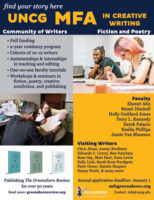
October eLitPak :: MFA in Creative Writing at UNCG

UNCG MFA in Creative Writing August 2020 eLitPak flier
click image to open PDF

Find Your Story Here

Application Deadline: January 1. One of the first creative writing programs in the country, UNC Greensboro’s MFA is a two-year residency program offering fully funded assistantships with stipends and health insurance. Students work closely with faculty in one-on-one tutorials, take courses in poetry, fiction, publishing, and creative nonfiction, and pursue opportunities in college teaching or editorial work for The Greensboro Review. More at mfagreensboro.org.

View full October 2020 eLitPak here.

Event :: The Poetics Course by Fledgling Writing Workshops

picture of fall leavesFall Dates: Wednesdays, Nov 4–25; Winter Dates: Feb 3–24 from 6:30-8:30 pm EST
Location: Virtual
Low on inspiration? Let this gentle, four-week poetry intensive by one of NYC’s top writing schools according to TimeOut NY spark your creativity. Through two highly generative hours of weekly class time, plus limited homework assignments, guided journaling, and a supplemental workbook of readings, you’ll consider different ways to push the boundaries of your language and gain greater control over the poetic side of your voice. You’ll end the month having produced several short works. Join accomplished poet, educator, and visual artist Catie Hannigan for a month of recovering your creativity. $300, Wednesdays in November and February. Learn more at our website.

Rewards & Consequences of Connection

Guest Post by Eric P. Mueller 

Rarely, if ever, is the narrator of a novel so personal that it’s like they’ve invited you for tea. Juliana Delgado Lopera’s Francisca does that and more, balancing colloquialisms and two languages with stage-speaking authority. Readers learn a lot and a little of Francisca—she is at least in her mid-20s while telling her story, but we mostly stay locked in on one special summer.

Fiebre Tropical reminds readers of monotony that can ensue during long breaks in high school. Living in Miami with little freedom and resources to explore her surroundings, Francisca is limited to watching her neighbor play computer games, watching telenovelas with her abuela, and interacting with the faith-based community her mother almost forcefully wants her to join.

Christian communities are ubiquitous and highly accessible for youths. This novel explores what happens to identity when one joins these spaces. Will Francesca the all-black wearing “heathen” be transformed by God and his followers, or will followers of Christ find themselves shadowed in Francisca’s queer darkness?

Lopera alternates languages almost seamlessly, creating an authentic intimacy that makes the novel’s tone fresh and inviting as opposed to alienating. The distinct voice keeps the novel consistent; as the reader traverses through the plot, they learn more about Francisca’s mother’s and grandmother’s histories, explored in a way that’s not far off from a Junot Diaz or Toni Morrison book.

The novel explores the relationship between mother and daughter, generational trauma, immigrant experience, coming of age as queer, and queerness repression. The book is also about heartbreak. With the pandemic quarantine reminding us of what it means to be powerless and stuck at home, Fiebre Tropical is a reminder of the vulnerable yet necessary act of connection, of it’s rewards and consequences.


Fiebre Tropical by Juli Delgado Lopera. Amethyst Editions, March 2020.

Reviewer bio: Eric P. Mueller is an essayist based in Alameda, CA. His work has appeared in Foglifter, Thought Erotic, and elsewhere. He reads for Longleaf Review. Follow him and his two dogs @realericmueller on Twitter or Instagram.

Buy this book from our affiliate Bookshop.org.

Marybeth, Hollister and Jane

Guest Post by Manasi Patil

Marybeth, Hollister and Jane is a fictional story set in the rural area of  Callicoon, New York.  The book has a very realistic vibe to it and all the characters seem believable. It follows the journey of a handful of people trying to locate the Eagle Diamond, stolen in the 1960’s. At the start, most of them are from the same organization, LVAJ, whose job is to locate stolen arts, artifacts, etc. and then pass them to someone else. But as the story unfolds, the head of the organization, Peter Reece, is too weak to manage the organization, and eventually all the members separate and begin the search on their own.

All through the journey of reading this book, I was on a rollercoaster. The scenes are sketched out in a way that makes the words leap off the page. All the characters too, are perfect for their roles. Author Vera Jane Cook has done an exceptional job. I particularly like Brock Stanley with his wise, witty, and caring nature (for Jane).The unexpected twist of The Sisters and Jane was my favorite scene from this novel.

The ending could have been much better, though. It winded up too simple and easy and I felt that the story had promised a different sort of end. Nonetheless, Marybeth, Hollister and Jane is a great read, and I will certainly be reading more from this author.


Marybeth, Hollister and Jane by Vera Jane Cook. Chatter Creek Publishing, September 2020.

Reviewer bio: Manasi Patil is a young author with a passion for writing.

Transport to Another World with Auel

Guest Post by Amy Ballard

Which is more important, the clan or the individual? In Jean Auel’s 500-page series opener, Cro-Magnon Ayla navigates the customs of her adoptive Neanderthal people while pondering what it means that she is “Other.” To assimilate, she must comply with clan rules with which she disagrees. Sometimes she chooses defiance. When her practice of hunting with a sling (a man’s privilege) is discovered, she is placed under a death curse. Ayla isolates in a secret cave, an apt metaphor for the forced solitudes of today’s coronavirus pandemic. As clan political dynamics shift, she must determine whether she can live under the rule of a leader who, despite her valued status as a medicine woman, systematically abuses her.

Since its publication in 1980, the novel and its five sequels in the Earth’s Children series have generated a body of criticism, favorable and unfavorable, around its historicity, feminism, and treatment of race, among other topics. For the quarantined in 2020, though, The Clan of the Cave Bear does what it emphatically must: transport the reader to another world.


The Clan of the Cave Bear by Jean M. Auel. Penguin Random House, June 2002.

Reviewer bio: Amy Ballard writes and teaches in southern Idaho. Her fiction has appeared in Barely South Review and elsewhere. Find Amy at www.amyballard.com.
Buy this book at our affiliate Bookshop.org.

Manifesto on Shared Solitude

Guest Post by Jacqueline Williams

Given to me as a birthday gift, The Friend by Sigrid Nunez is a manifesto on shared solitude and the different ways in which we try to overcome grief. One of the intriguing things about the book is the author’s choice to leave the narrator unnamed along with most of the characters. However, at no point does that choice prove as an obstacle to the reading experience; instead, it renders visible particular details about the personality of the characters thereby allowing the reader to connect more deeply with them.
The book is a fairly easy read about the narrator’s journey of simultaneously losing and gaining someone and the idea of collective grief. As literary fiction, the book is peppered with trivia on various literary writers such as Adrienne Rich, T.S. Eliot, Virginia Woolf, and Franz Kafka among many others. The characters too draw from the similar flavor of what it means to be a writer and the conflicts attached to the profession of writing.

My favorite part of the book is the bond shared between the narrator and Apollo the Great Dane. Nunez’s take on the human-dog relationship is unlike any other. She is spot-on in her representation of the contemporary nature of company that of being alone, together. She writes, “What are we, Apollo and I, if not two solitudes that protect and greet each other?”


The Friend by Sigrid Nunez. Riverhead Books, February 2019.

Reviewer bio: My name is Jacqueline Williams and I’m currently pursuing M.A in English. My field of interests includes Gender Studies, Cultural Studies and Medical Humanities.

Buy this book at our affiliate Bookshop.org.

Brush Up on “The Language of Liberty”

Guest Post by Wilfred M. McClay

For at least the past thirty years, we have done a terrible job in this country of educating the young for the tasks of citizenship in a republic. Despite endless talk about the problem, little is actually done to improve matters. The concept of “civic literacy” is the latest buzzword of educators, and yet no one seems to know what the word signifies, let alone how to achieve it. But help is on the way.

Civic literacy, meaning the body of knowledge that enables a citizen to function actively, intelligently, and effectively, is precisely what is offered us in Edwin Hagenstein’s splendid new book The Language of Liberty. To call it a “citizen’s vocabulary,” as the author does, is true enough; but the book is much more than that. It is not a treatise, but instead a collection of wise, subtle, and reflective essays on the keywords of our political and social discourse, covering everything from “the administrative state” to “the referendum,” with topics as philosophical as “conservatism” and “liberalism” and as down-to-earth as “gerrymander” and “whip.” It is both a handy reference book and a work of philosophy, nicely parceled out into easily digested essays. I’ve never seen anything quite like it.


The Language of Liberty: A Citizen’s Vocabulary by Edwin C. Hagenstein. Rootstock Publishing, October 2020.

Reviewer bio: Wilfred M. McClay is the G.T. and Libby Blankenship Chair in the History of Liberty at the University of Oklahoma.

The Massachusetts Review – Fall 2020

In the Fall 2020 issue of The Massachusetts Review: fiction by Gwen Thompkins, Alanna Schubach, Andrea Maturana, Kathleen Hawes, and more; poetry by Marcela Sulak, Emily Schulten, Lance Larsen, Esther Lin, Brooke Sahni, C. P. Cavafy, and others; and nonfiction by Karen S. Henry, Ammiel Alcalay, Margaret Lloyd, and more. Plus, photography by Paul Should and a novel excerpt by Giacomo Sartori. .