The Spalding University MFA is one of the nation’s first low-residency MFA in Writing programs, and it remains one of the most respected. You’ll write more here and receive more one-on-one faculty feedback than in nearly any other MFA program. Our students thrive with this extra attention in our encouraging, non-competitive environment. Over four mentored independent-study courses and five residencies, you’ll work with our outstanding faculty of actively publishing and producing writers. You’ll hone your craft, explore across genres, learn about the business of writing, and build a lifelong writing community.
We believe artists flourish in a culturally rich environment. We’re located in downtown Louisville, known for its arts, dining, parks, and historic neighborhoods. Friendships form at our “dormitory,” the elegant 1920s-era Brown Hotel, a short walk from campus. Each residency includes an interrelatedness-of-the-arts element, be that a theatre performance, museum visit, or other memorable experience.
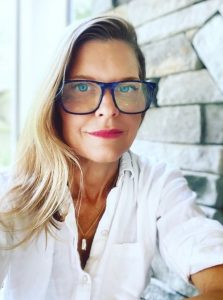
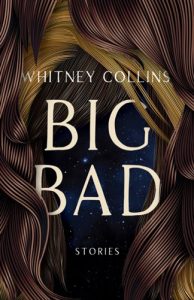
Whitney Collins graduated from Spalding University’s low-residency MFA program in 2018, won her first Pushcart Prize in 2020, and published her first book to universal acclaim the following year. I asked Whitney, author of prize-winning short story collection Big Bad and the forthcoming Ricky & Other Love Stories, how the MFA program at Spalding prepared her for the literary life. According to Whitney, it all came down to volume, community, and craft.
In her own words:
Volume.
“The sheer volume of work we were asked to generate was remarkable, and, yes, a bit intimidating,” Whitney said. “But it’s doable, and you will AMAZE yourself by being able to do it. The Spalding ‘packets’ prove to you that not only can you write, but that you can also write A LOT. I graduated with a newfound confidence surrounding my generative abilities. I also graduated knowing I had no excuses! Priceless.”
Community.
“The community at Spalding is like no other,” she said. “It’s diverse, both culturally and in genre, and delightfully non-competitive. As Sena (Jeter Naslund, Spalding MFA co-founder) always said: ‘Your competition is in the library, not the classroom.’ Your classmates at Spalding will be your cheerleaders not your critics.”
Craft.
“The short craft essays that you write at Spalding will not just teach you how to think critically about how and why a piece of creative work is working, but you will begin to read creative work differently,” she said. “You will start to dissect successful literature and figure out what is contributing to its success. And if you think critically and read critically, you will begin to write with more awareness. You’ll start hiking with a map instead of relying solely on instinct.”
And then there were the memories…
“My favorite Spalding memory? Just one? Probably just hanging in the Brown Hotel’s lobby bar. Eating, drinking, connecting, and laughing with other exhausted and excited writers.”
Whitney graduated from Spalding’s low-residency MFA program in 2018. Her short story collection Big Bad (Sarabande Books, 2021) won the Mary McCarthy Prize in Short Fiction. Her work has received a 2020 Pushcart Prize, a 2020 Pushcart Special Mention, and a Best American Short Stories 2022 Distinguished listing. Her second collection, Ricky & Other Love Stories, is forthcoming next year.
Spalding’s Naslund-Mann Graduate School of Writing is now accepting applications for an early-decision deadline of February 1. Email [email protected] to request an application fee waiver code and save $30 when you apply.
Students can begin their studies with Spring residency (May 27 – June 3 in Louisville) or Summer residency (June 25 – July 3 in Québec City). Or apply by August 1 for the Fall semester (November-April).
Learn more at Spalding’s website, or email if you have any questions.
BIO: Katy Yocom is a Spalding alum, associate director of the Naslund-Mann Graduate School of Writing, and author of a prize-winning debut novel, Three Ways to Disappear.
The MFA in Creative Writing program at George Mason University combines acclaimed faculty with a welcoming community to be the place where you want to create literary art. With the new Watershed Lit: Center for Literary Engagement and Publishing Practice, we are here to develop your artistic and professional careers. Students can receive funding as Graduate Teaching Assistants or Graduate Professional Assistants. Be part of the rich cultural life at Mason, in Northern Virginia, and throughout the Washington, D.C., region. Check out a recording of our recent Online Open House! Just email [email protected] to request access.
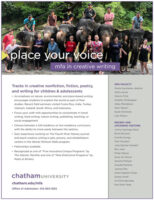
Chatham’s MFA in Creative Writing grows from Rachel Carson ’29, a creative writer known for her social conscience. Our students treat writing as a public act with the power to effect meaningful change. Their ideas, convictions, and writing matters. Our students think deeply about their spaces and identities. They look within then connect to the world with care and intention. Concentrations include travel writing, nature writing, food writing, publishing, social engagement, and pedagogy to complement the MFA degree with genres in poetry, fiction, nonfiction, and children’s writing (low-residency only). Additionally, we offer an on-ground full-residency program and a low-residency program.
Chatham’s MFA in Creative Writing grows from Rachel Carson ’29, a creative writer known for her social conscience. Our students treat writing as a public act with the power to effect meaningful change. Their ideas, convictions, and writing matters. Our students think deeply about their spaces and identities. They look within then connect to the world with care and intention. Concentrations include travel writing, nature writing, food writing, publishing, social engagement, and pedagogy to complement the MFA degree with genres in poetry, fiction, nonfiction, and children’s writing (low-residency only). Additionally, we offer an on-ground full-residency program and a low-residency program.
The MFA in Creative Writing program at George Mason University combines acclaimed faculty with a welcoming community to be the place where you want to create literary art. With the new Watershed Lit: Center for Literary Engagement and Publishing Practice, we are here to develop your artistic and professional careers. Students can receive funding as Graduate Teaching Assistants or Graduate Professional Assistants. Be part of the rich cultural life at Mason, in Northern Virginia, and throughout the Washington, D.C., region. Check out a recording of our Online Open House! Just email [email protected] to request access.
That’s right! On September 1, The Ohio State University will begin accepting applications for their MFA program in creative writing. The deadline to submit applications is December 6 for domestic applicants and November 29 for international applicants.
All admitted students are fully-funded for the entire length of the three-year program and they also receive a graduate teaching associateship, a graduate school fellowship, or a combination of the two. The program also allows students focusing on fiction, nonfiction, or poetry to cross over into other genres.
Besides the workshops and tutorials, there are some other amazing opportunities for students. The program offers an Editors Panel, a public performance showcasing creative work by third-year MFA students called Epilog, two student-faculty readings each semester, Mother Tongue evenings where MFA students get to read their work to their peers, and a Native Craft Reading Series.
Check out all the program has to offer and start getting your application materials ready.
The Michener Center for Writers recently shared some great success stories from graduates of their MFA program.
Nathan Harris’ debut novel The Sweetness of Water was chosen for Oprah’s Book Club. The book was released on June 15 from Little, Brown and Company and it has also been longlisted for the 2021 Booker Prize. It follows two brothers in the waning days of the Civil War as they are hired by homesteaders who have lost their own son in the war.
Plus, fiction alum Rachel Heng had her story “Before the Valley” published in The New Yorker. The story follows a woman in a senior-living facility in Singapore as she discovers something unexpected about the career of a fellow resident. New Yorker editor Deborah Treisman interviews Heng about the story and her inspiration.
This made me consider the various ways in which callousness and cruelty are built into our society, in the name of pragmatism or some other utilitarian goal, and the toll this can take on the vulnerable, the elderly, the forgotten.
The Michener Center for Writers is the “only MFA program in the world that provides full and equal funding to every writer.” The program is three years and fully funded. Writers are admitted in a primary genre and also study a secondary genre. There are no teaching duties so fellows can commit themselves fully to their writing. As of Fall 2020, they are no longer requiring GRE scores to apply.
Not only do students have access to outstanding faculty, but they also become part of a greater writing community and get to produce and promote the college’s Contemporary Writers Series. This series features monthly readings and talks by emerging and renowned writers. All of these readings are free and open to the general public. During the 2020-21 academic year, these were held online.
Recent writers include Layli Long Solider (Chromosomory, Q Avenue Press), Melissa Valentine (The Names of All the Flowers, The Feminist Press at CUNY), mai c. doan (water/tongue, Omnidawn), and Aiden Thomas (Cemetery Boys, Swoon Reads).
January 15 is the priority deadline to apply for the fall semester. After that, they conduct rolling admissions on a space-available basis until July 15. The MFA in creative writing (poetry or prose) does also accept spring enrollment with an October 15 deadline.
Mills College and Northeastern University are currently making progress in making an alliance with one another.
The Litowitz Creative Writing Graduate Program will open to Fall 2022 applications this fall with the deadline date to be announced. They will be accepting applications in Creative Nonfiction and Fiction only. Poetry applications will be automatically rejected.
They will no longer require nor accept GRE scores as part of the application to the MFA+MA program. Besides the online application form, the department also requires supplemental materials including an official transcript from each institution attended, two-three letters of recommendation, a statement of purpose, a creative writing sample, and sample of writing on a literary topic.
The Litowitz Creative Writing Graduate Program MFA+MA in Creative Writing and English offers intimate classes, the opportunity to pursue both critical and creative writing, close mentorship by renowned faculty, and three fully supported years to grow and complete a book-length project.
Current faculty include Chris Abani (graduate director) and Eula Biss (visiting artist).
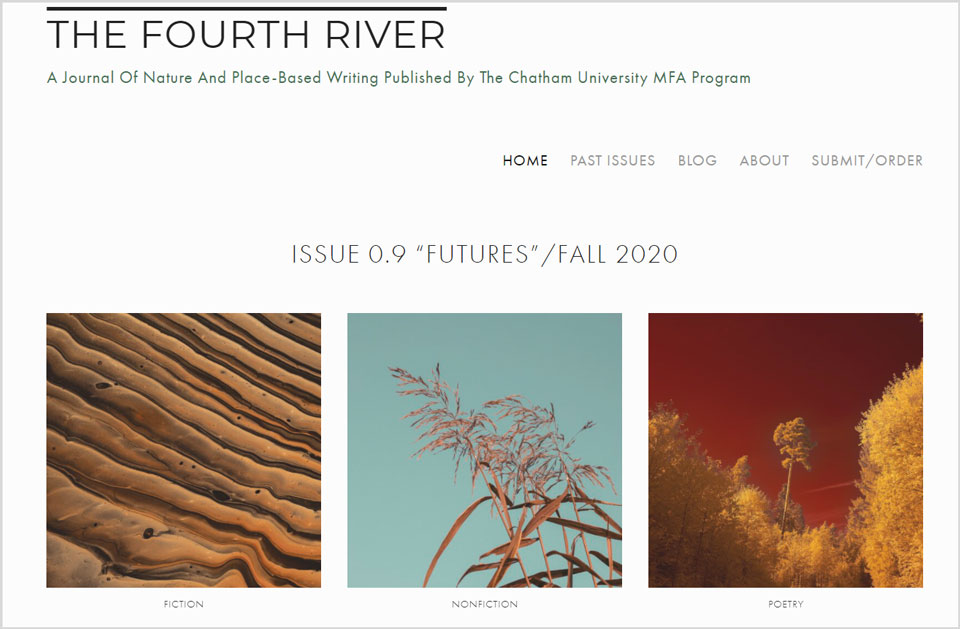
The MFA Program in Creative Writing at Chatham University and literary magazine The Fourth River have announced the creation of the Jeffrey “Boosie” Bolden Series. The first publication will be a special anthology called Black Visions. This anthology was conceived of and will be edited by the MFA Emerging Black Writers in Residence Cedric Rudolph and Caitlyn Hunter along with alums Samantha Edwards and Nicole Lourette.
About this anthology: Are you a black writer, or a writer who is black?
Black artists everywhere are all too familiar with this question and label on their work. Why are Black artists always called upon to write about the Black experience, about Black pain? Where are the discussions about craft, form, and futurisms? This anthology was born out of the need to create more space for Black voices; all Black voices. We want to see how your medium amplifies your voice and who you are as an artist, without the limitations of formality, genre, or subject. We are looking for the musicality, depth, and vibrancy that is Black art.
The anthology is accepting submissions through 11:59 PM on Friday, June 18 with expected publication in fall of this year.
The series is named after Chatham MFA alum and former Fourth River editor Jeffrey “Boosie” Bolden who refused to write prose or poetry restricted by genre and pushed himself to create hybrid flows fusing prose and rap. His mixtape-memoir Wolves was released in November 2020 after his passing in June of 2020.
There is no fee to submit to this anthology and accepted writers will receive a copy of the book and $50 honorarium.
Alma’s MFA in Creative Writing director Sophfronia Scott offers decision-making advice for students approaching the graduate school application season.
There’s a wonderful quote by the Scottish mountaineer William Hutchison Murray about making decisions. Specifically he’s talking about getting to that first step of a climb. The quote goes like this:
Until one is committed, there is hesitancy, the chance to draw back, always ineffectiveness. Concerning all acts of initiative and creation, there is one elementary truth the ignorance of which kills countless ideas and splendid plans: that the moment one definitely commits oneself, then providence moves too.
All sorts of things occur to help one that would never otherwise have occurred. A whole stream of events issues from the decision, raising in one’s favour all manner of unforeseen incidents, meetings and material assistance which no man could have dreamed would have come his way.
Whatever you can do or dream you can, begin it. Boldness has genius, power and magic in it. Begin it now.
Writing for the Screen and Stage: Low-residency MFA At Point Park University
Point Park University’s low-residency MFA in Writing for the Screen & Stage is accepting applications now thru June 15, 2021. Discover your creative voice with a team of professional writers and a program that will prepare you for a multi-faceted writing career. We offer generous artistic scholarships based on your submitted artistic portfolio. Applying is free! Do it today!
The Saint Mary’s Master of Fine Arts in Creative Writing degree program offers a campus environment that feels like a writing retreat within the San Francisco Bay Area. The two-year MFA program at Saint Mary’s offers concentrations in creative nonfiction, fiction, and poetry, combining a studio writing workshop component with an analytical component. SMC MFA faculty are award-winning writers, poets, and committed teachers who offer decades of experience mentoring emerging writers.
Each year the MFA program invites Visiting Writers to work with MFA students. These groundbreaking writers add to the program’s inclusive community with their diversity of experience. Recent visitors include Ingrid Rojas Contreras, Marie Mutsuki Mockett, Marcelo Hernandez Castillo, Ada Limón, and Margaret Wilkerson Sexton. Learn more…
The low-residency MFA in creative writing at St. Francis College offers a lecture series called Write in Brooklyn which features prominent writers from a range of genres. In 2019, they launched their own YouTube channel allowing you to view these discussions online. Participants in this series have included Mahogany Brown, Dominique Morisseau, Jason Reynolds, and Amber Tamblyn.
The low-residency program meets in-person twice a year in January and June. The January residency this year was moved completely online. They offer separate genre tracks in fiction, poetry, and dramatic screenwriting/playwriting. They have a 6-to-1 student to faculty ratio that offers “an intimate, focused environment for aspiring writers to flourish.”
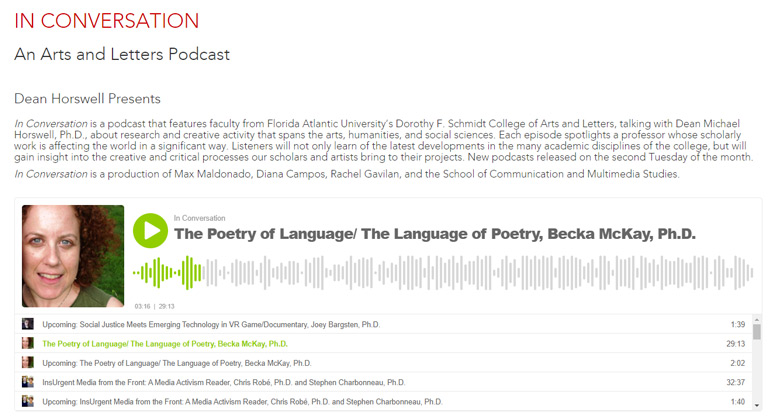
Becka McKay, director of the MFA in Creative Writing at Florida Atlantic University as well as poet and translator, was featured in the podcast series In Conversation: An Arts and Letters Podcast. This podcast features Michael Horswell, dean of FAU’s Dorothy F. Schmidt College of Arts and Letters, talking with various faculty members “about research and creative activity that spans the arts, humanities, and social sciences.” New episodes are released on the second Tuesday of the month.
The podcast episode was recorded from a video call back in December 2020. The first question asked was about Becka’s journey of poetry and translation. Her answer: “I have been writing poetry since I could write.” She talked about running away from poetry for awhile and how she majored in history in college and even had thoughts of going to veterinary school. With all of this she had the idea, though, that she wanted to be an historian who writes poetry.
Check out the full podcast here and don’t forget to learn more about the MFA program here.
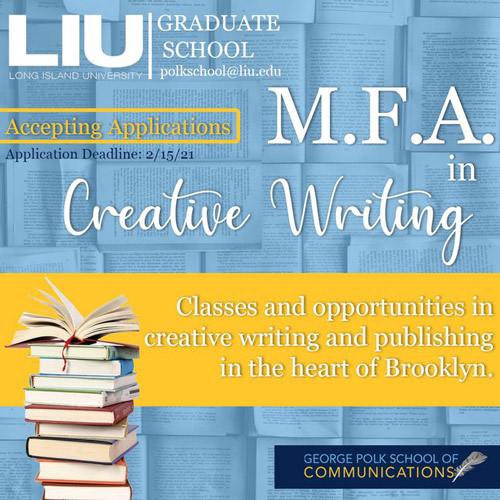
The MFA in Creative Writing at Long Island University is an innovative program centering on world literature, multi-genre education, and publishing. They prepare their students to be “professional writers in the world and visionary literary citizens.”
The LIU Brooklyn MFA is a two-year residency program that also helps prepare its students for careers in creative writing, academia, translation, and publishing. Students have the option of studying poetry, fiction, nonfiction, playwriting, and translation to receive a robust multi-genre education.
Students are able to learn about commercial, independent, and academic publishing during the course of their study while studying directly with professionals at the heart of the publishing industry. Current faculty include Zaina Arafat, Rita Banerjee, and Robin Hemley.
The priority deadline to apply to the program is February 15. Learn more by stopping by their listing on NewPages.
When I applied to MFA programs, it was with the intention of finding a writing community. During my time at The Ohio State University, I was lucky to foster strong relationships with my classmates through our shared experience and dedication to the written word. To this day, I continue to edit and be generously edited by a group of talented writers, most of whom I met in my very first class, a nonfiction workshop with the writer Lee Martin.
But what is a writing community when the people sharing their art are only able to do so virtually? And when writers find themselves in the middle of so many American catastrophes, where do we find the urge to create at all? I asked Lee Martin, College of Arts and Sciences Distinguished Professor of English at Ohio State, for insight on his teaching and writing life during a pandemic.
How have your workshops/classes adapted to being online?
Lee: We seem to be adapting well. I love my students, and the level of engagement seems to be high. It’s not quite the same, of course, as sitting around a table, but we’re doing fine. I’ve had some students comment on how our Zoom meetings give them a chance to feel a part of our writing community, so that’s a good thing. I just wish we could do the things we used to do—go out for $4 burger night at Brazen Head Pub, have spaghetti dinners at my and Cathy’s house, have bowling parties, etc. Ah well, I hope we’ll be able to do those things and more very soon.
How has your writing changed, if at all?
Lee: I find myself writing steadily as a way of escaping the reality of what’s going on in the world around me. It’s a comfort to me to escape into the worlds of my own making in novels and stories set before the pandemic. I’m only now working on something more current that, of course, will eventually have to face the pandemic head-on.
What are your words of wisdom as to finding the space in this chaos to create art?
Lee: I’ve been thinking a lot about how to stay in the present moment of what delights me rather than thinking about all that depresses me or makes me fear for the future. Silence is a good thing. If we can find those places of silence we can fill them with the efforts of our own choosing rather than the worries and the fears that the current climate places upon us. Today, for instance, Cathy and I went out to Inniswood Metro Gardens and disappeared into the natural world and immediately felt our breath coming more easily. Such places and moments are all around us. All we have to do is look for them.
Reviewer bio: Samantha Tucker is an anti-racist essayist in Columbus, Ohio. Find her words at www.theamericandreamstartshere.com.
Spalding University’s School of Creative and Professional Writing, home of the flagship low-residency Spalding MFA in Writing program, is launching a new online literary magazine, Good River Review. The first issue will appear in Winter 2021.
Good River Review resides at Spalding in Louisville, Kentucky, which sits on the Ohio River, providing inspiration for the name: Ohio is a Seneca word for good river. Issues will appear twice a year. Between issues, the website will regularly publish interviews; book reviews; reviews of new plays, television, and films; craft essays; and literary news.
“We intend to publish the best writing in all the genres we teach in our graduate writing programs,” Kathleen Driskell (chair of the School of Writing who will serve as editor-in-chief) said. “We love writing that blurs boundaries, so contributors will find their work published as prose, lyrics, or drama.” The journal will also publish writing for children and young adults, as well as original web, TV, and short film productions.
The journal’s submission period will be ongoing. Good River Review allows for simultaneous submissions and does not charge reading or submission fees. For more information, email [email protected].
The MFA in Creative Writing at Minnesota State University, Mankato seeks to meet the needs of students who want to strike a balance between the development of individual creative talent and close study of literature and language. The program helps to develop work in the genres of fiction, creative nonfiction, and poetry. Students typically spend three years completing coursework, workshops, and book-length theses.
Current faculty includes Robin Becker, Candace Black, Geoff Herbach, Diana Joseph, Chris McCormick, Richard Robbins, and Michael Torres. Recent visiting writers include Juan Felipe Herrera, Marcus Wicker, Leslie Nneka Arimah, Danez Smith, Layli Long Soldier, and Ada Limón.
Students have the opportunity to grow within a rich and active community of writers with the Good Thunder Reading Series, the Writers Bloc Open Reading Series, and working on literary magazine Blue Earth Review.
MFA in Creative Writing at The Ohio State University is designed to help graduate students develop their talents and abilities as writers of poetry, fiction, and creative nonfiction. Graduate teaching assistants teach special topics undergraduate creative writing courses as well as first-year and second-year writing. Students also have the option to work as editors of the prize-winning literary magazine, The Journal, and to serve on the editorial staff of two annual book prizes.
All students are fully funded for three years in a program well known for its sense of community and a faculty that is committed to teach as much as they are to their own writer. Current faculty includes Kathy Fagan Grandinetti, Michelle Herman, Marcus Jackson, Lee Martin, Elissa Washuta, and Nick White. Recent writers who have visited the program include Tarfia Faizullah, Melissa Febos, Garth Greenwell, Dan Kois, Nicole Sealey, and Danez Smith.
The program also offers special topics in addition to the regular workshops so opportunities abound for students to experiment.
The Michener Center for Writers is the only MFA program in the world that provides full and equal funding to every writer, yet it is the extraordinary faculty and sense of community that most distinguishes them. Theirs is a three-year, fully funded residency program with a unique interdisciplinary focus. While writers apply and are admitted in a primary genre—fiction, poetry, playwriting, or screenwriting—they also study a secondary genre during their time in Austin.
Enrolled students have no teaching duties, allowing them to fully commit themselves to their writing. Only 12 writers are admitted to the program each year so that faculty have ample time to devote to every writer. Current faculty includes Joanna Klink, Lisa Olstein, Roger Reeves, Dean Young, Edward Carey, Oscar Casares, Peter LaSalle, Bret Anthony Johnston, Elizabeth McCracken, Deb Olin Unferth, Stuart Kelban, Richard Lewis, Cindy McCreery, Beau Thorne, Annie Baker, Liz Engelman, Branden Jacobs-Jenkins, Kirk Lynn, and KJ Sanchez.
Writers also have the opportunity gain professional editing experience with literary magazine Bat City Review; a collaborative process between the Michener Center for Writers, the New Writers Project, and Studio Art.
There is still a few days left to submit your application to the low-residency MFA in Creative Writing program at Eastern Kentucky University. The Bluegrass Writers Studio offers one of the most affordable and progressive low-residency programs in the nation.
They offer a close-knit and supportive writing community, are devoted to their students creative and professional success, and are supportive of both literary and literary genre writing. The program offers online workshops conducted with live audio, intensive residency workshops, international literary and cultural experiences, and web-based courses in contemporary literature. Students also have the option of working on Jelly Bucket, the annual graduate-student-produced literary journal.
To be considered for their Fall 2020 program, applications need to be received by August 1. To start their program in spring, applications need to be received by December 1.
Mills College is now offering a new kind of MFA in creative writing that enables its students to earn a degree in poetry, fiction, or nonfiction in their own way.
Along with offering more traditional classroom-based workshops and craft classes, Mills College also offers the ability to complete the degree by working one-on-one with a faculty mentor. This allows students to be on campus as much or as little as they desire. They are also expanding the amount of online offerings available during summer and January terms.
The program offers concentrations in education, literary arts administration, PhD preparation, and young adult fiction. Students can also create their own unique concentration with electives in podcasting, performance, and pedagogy. They offer a literary editing and production course that gives students hands on experience in editing their annual graduate journal 580 Split.
This new and distinctive program offers intimate classes; the opportunity to pursue both creative and critical writing; close mentorship by renowned faculty in poetry, fiction, and creative nonfiction; and three fully supported years in which to grow as writers and complete a book-length creative project. Our curriculum gives students time to deepen both their creative writing and their study of literature. Students will receive full financial support for three academic years and two summers. Both degrees—the MFA in Creative Writing and the MA in English—are awarded simultaneously at graduation.
Program faculty include Chris Abani, Eula Biss, Brian Bouldrey, John Bresland, Averill Curdy, Sheila Donohue, Stuart Dybek, Reginald Gibbons, Juan Martinez, Shauna Seliy, Natasha Trethewey, and Rachel Jamison Webster.
The MFA Program at the University of New Hampshire has a clear goal: to help you mold your gifts and passion for the art and to prepare you for the opportunities and demands that all writers will experience in a long career. What happens to you after you leave this program—how you will sustain yourself and your work—is one of our strongest concerns. This supportive community of students and faculty shares a belief that writing matters and that the best books of fiction, poetry, and nonfiction are made out of both the creative imagination and rigorous work.
Focus on fiction, narrative nonfiction or poetry in our graduate M.F.A. program, which has launched the careers of hundreds of poets, novelists, storywriters, essayists and memoirists. What is notable is not just how hard students work on their own creative writing, but how much effort goes into their response to the work of their peers. Writers here care deeply about each other, and the production of honest work that captures life on the page.
Application Deadline: January 1 (annually)
One of the oldest creative writing programs in the country, UNC Greensboro’s MFA Writing Program offers fully funded graduate assistantships with stipends, tuition remission, and subsidized health insurance. The MFA is a two-year residency program with an emphasis on studio time for the writing of poetry or fiction. Students work closely with acclaimed faculty in one-on-one tutorials and small classes, including courses in contemporary publishing and creative nonfiction. Our campus features a Distinguished Visiting Writers Series of authors and editors; other professionalization opportunities include college teaching and hands-on editorial work for The Greensboro Review. More at mfagreensboro.org and greensbororeview.org.
Application Deadline: January 6
For well over sixty years, this highly regarded Hollins MFA has supported lively and determined writers who want to concentrate on craft. Our intensive two-year graduate program helps students find their way in an atmosphere of cooperation and encouragement. Our students work successfully in poetry, short fiction, novels, and creative nonfiction—and in between genres. Our faculty writers take time to work with students in this vibrant, supportive community. Our alums have a remarkably high record of publication. Program provides graduate assistantships, teaching fellowships, travel funding, and generous scholarships. Most of all, a vibrant, supportive community. For information, www.hollins.edu/creative-writing-MFA.
The MFA in Creative Writing program at Florida Atlantic University offers concentrations in fiction, creative nonfiction, and poetry. Core faculty include Ayşe Papatya Bucak, Andrew Furman, Becka Mara McKay, Susan Mitchell, Kate Schmitt, and Jason Schwartz.
Students have the opportunity to work with online literary magazine Swamp Ape Review (which reopens to submissions on April 1). Learn more…
The Cult of Likeability (or Why You Should Kill Your Literary Friendships) Craft essay by Jackson Bliss. TriQuarterly.
I’ve noticed a recurring trend in my fiction workshops recently that troubles me, partially because I was once the defendant in the same court of law during my own MFA program: a creative writing student stands up (metaphorically speaking) and then declares almost joyfully that they don’t like a character in the manuscript we’re workshopping or in the novel we’re reading. After I pause and wait for the student to elaborate, I soon realize that their dislike is the critique. I can’t help but wonder if the either/or fallacy of cancel culture I see routinely on social media has in some way reinforced this notion in workshop that unlikeable characters (like people in real life) don’t deserve our attention, which is why we’re allowed to stop considering them at all, once we decide we don’t like them. Frankly, I find this kind of reader response lazy, problematic, ungenerous, and uninsightful, regardless of whether we’re talking about art or people.
…What if the real problem is that, as readers, we’ve become impatient assholes who no longer want to understand the people we’d like to erase, both in literature and in our lives. What if part of the issue here is that, as readers, we now want to cancel the characters that rub us the wrong way (or even worse, who offend us) precisely because we now live in an era where we want to shut up half of those we share the world with.