

Review by Kevin Brown
Real Americans, Rachel Khong’s second novel, follows three generations, beginning with the middle one. The first section tells of Lily’s life as a second-generation Chinese immigrant, as she tries to make a life in New York. She has an unpaid internship and a stereotypically small apartment until she meets Matthew, a tall, handsome, extremely wealthy, white man, an encounter that changes their lives. They get married, and Lily gives birth to Nico, the focus of the second section of the book.
He grows up on an island off the coast of Washington State with only his mother, going by the name of Nick. While he loves his mother, he also longs to escape the claustrophobic life of the island, ultimately leading him to attend college at Yale, even though he doesn’t feel he fits in there. He also struggles with his identity, as his mother is of Chinese heritage and he can speak Chinese, but he looks as white as his father, including his blue eyes. He reconnects with his father and begins to learn why his mother left, leading him to try to understand who he truly is, so he can craft his own life.
The final section’s focus is on May, Nick’s grandmother, providing the reader with more background on the family, helping to explain the actions and reactions that have led to Nick’s life. Underneath the family dynamics—the core of the novel—there is a larger ethical question that the contemporary world will have to deal with in the coming years, though I don’t want to give that aspect of the novel away.
Even without that issue, Khong clearly explores how parents try to do what is best for their children, how children misunderstand those actions, how parents sometimes make mistakes, and how children sometimes forgive them and sometimes don’t.
Real Americans by Rachel Khong. Alfred A. Knopf, April 2024.
Reviewer bio: Kevin Brown has published three books of poetry: Liturgical Calendar: Poems (Wipf and Stock); A Lexicon of Lost Words (winner of the Violet Reed Haas Prize for Poetry, Snake Nation Press); and Exit Lines (Plain View Press). He also has a memoir, Another Way: Finding Faith, Then Finding It Again, and a book of scholarship, They Love to Tell the Stories: Five Contemporary Novelists Take on the Gospels. Twitter @kevinbrownwrite

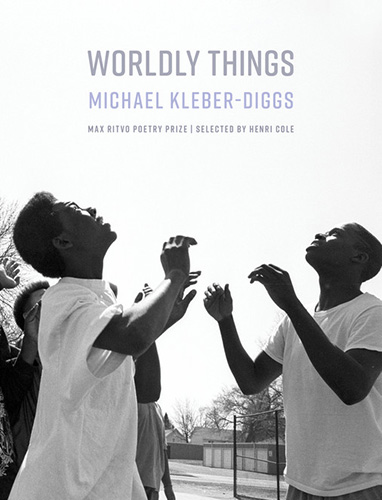
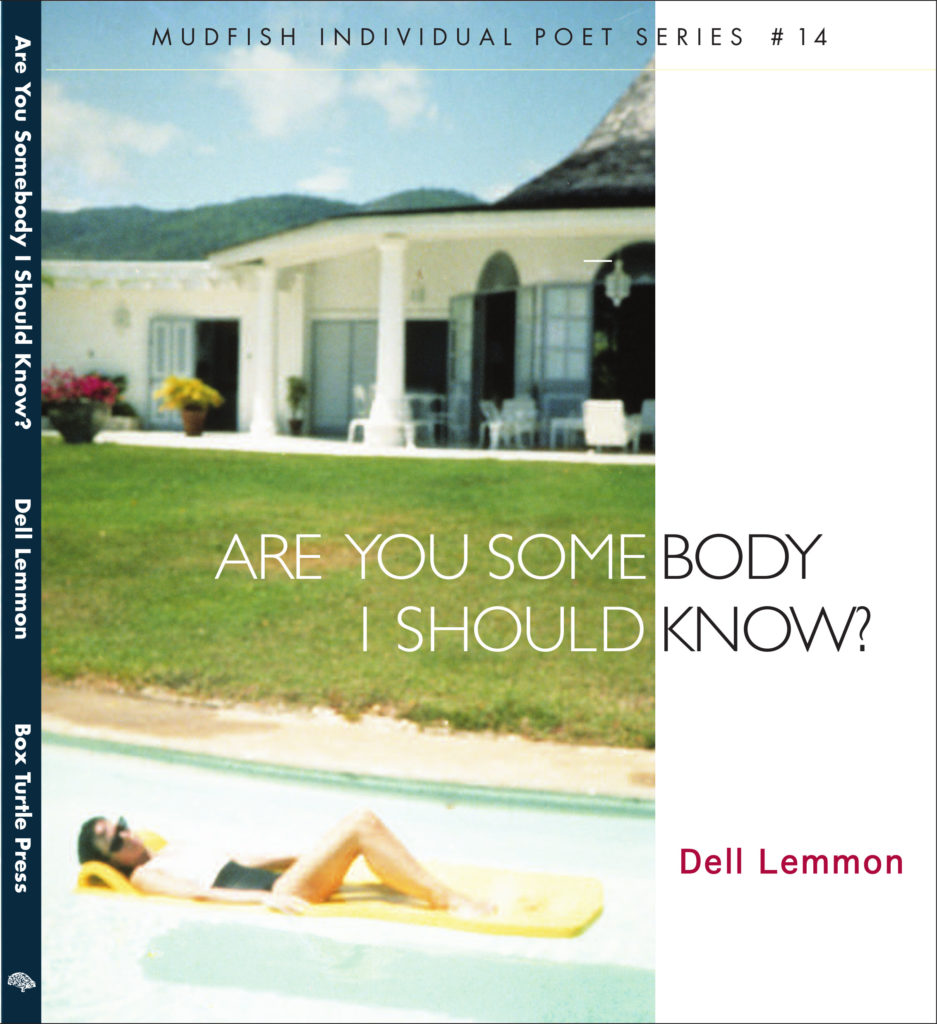
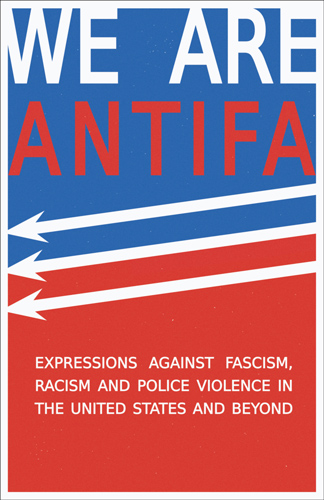

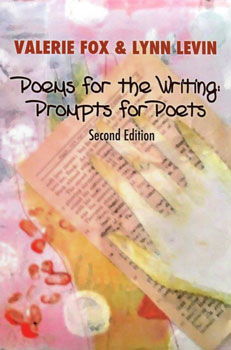 In the second edition of Poems for the Writing: Prompts for Poets (Texture Press, 2019), authors Valerie Fox and Lynn Levin provide 18 entertaining and motivating prompts that range from the light-hearted to the serious and challenging. Drawing on both traditional forms and contemporary experiments, the authors encourage the use of found text, song titles, facts, and quotations. They propose scenarios and invite a poetic response. They even show how to “translate” the text of a poem written in a language you can’t read! Each prompt is followed by suggestions for getting started and sample poems written in response. What distinguishes Poems for the Writing from other poetry-prompt collections is that most of the sample poems are by undergraduates, community workshop participants, and some working poets. The responses are fresh, energetic, and unexpected.
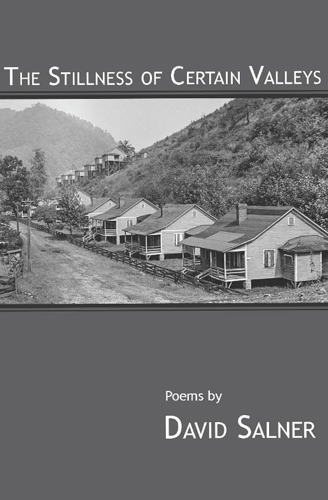 David Salner‘s The Stillness of Certain Valleys is impressively sustained. I could quote memorable lines from every poem. “Beer for Breakfast” is a pitch-perfect opening poem, and the subsequent sequence “A Dream of Quitting Time” is very strong. Then comes the agonizing “Goodbye to My Big Toe.” Salner writes with gritty authority about many kinds of work, including a stint as a cab driver in “Like Silver,” as well as in steel mills and coal mines. Now that world is in a state of collapse, hence “water drips from a tipple / to wild strawberries sprouting from rail beds” in the title poem. I admire the moving way he evokes the dignity of a working man in “Horse Trailer with Beans”: “nothing / but the dirt under his nails / and who he is.” This first section concludes with the understated “Steel Lunch Pail.”
 Although published in 1951, any person serious about literature would do well to read or reread Nabokov’s captivating autobiography, if not for the rapture of his complicated life, then for the beauty of his syntactical architecture. A master of form devoted to meaning, Nabokov relays the truths of a man twice removed from his home country of Russia, once by revolution and again with the rise of the iron curtain. He renders through complex but clear sentence structure the pains of diaspora and the call to home which he can never truly answer. Within this beautiful prose he also provides insight into his master works Lolita, Despair, and The Gift. He dangles before the reader a maze of sentences each providing a decadent feast for those who value—above all—the meaning-making capacity of provoking syntax.
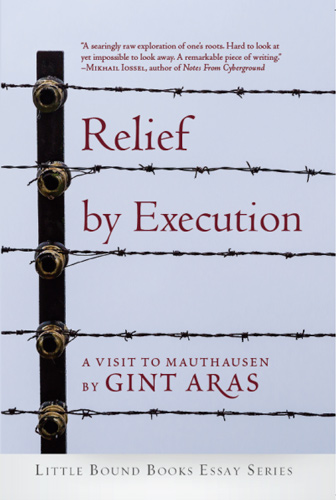 A haunting meditation on the legacy of racism, violence, and abuse, Relief by Execution: A Visit to Mauthausen by Gint Aras is a gut-kick of a memoir in which Aras contemplates the far-reaching tentacles of anger and hate from the normalized cruelty of a boy’s childhood to the genocide of World War II. After a prolonged bout of PTSD following a violent attack, Aras visits the Mauthausen concentration camp in Lithuania and reflects on its horrors, acknowledging that as a descendant of Lithuanians, there exists within himself “the energy of the victim and the perpetrator.”
 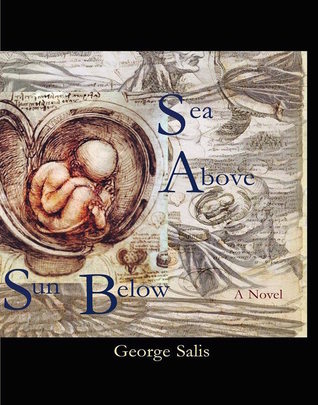 Sea Above, Sun Below by George Salis is a rich and masterful novel. It is a balanced reading experience, told from differing perspectives, chockablock with symbolism and allusion and wordplay.
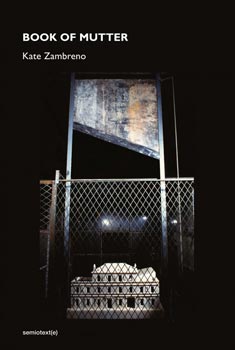 Exploring the complexities and absurdities of grief, Book of Mutter is a lyrical text that will leave readers returning to its textured fragments of memory and meditation again and again. And each time, those moments will reassemble into something new and incisive.
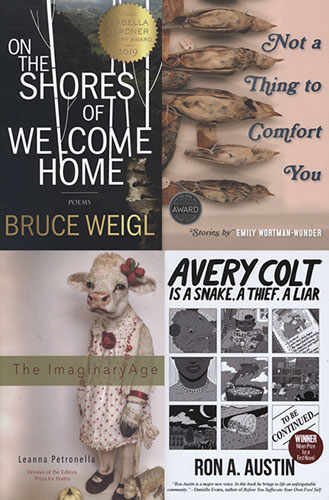 Today we’re bringing you a tall stack of award-winning fiction and poetry books published this past month. Click Read More to find the full list.
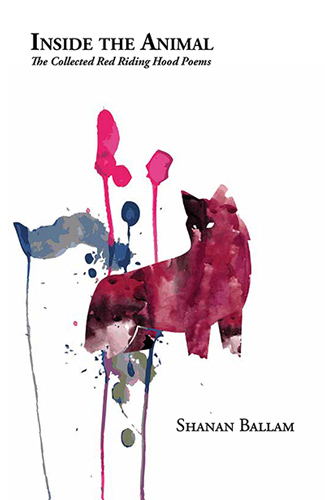 Shanan Ballam’s newest book, Inside the Animal: The Collected Red Riding Hood Papers, published by Main Street Rag Publishing Company in 2019, pushes the persona poem to its most shimmering and starved limit. Blending her voice with the perspectives of a depraved wolf, a blossoming girl, and a wilting grandmother, Ballam continually smashes wide the familiar fairy tale and trades reader comfort for animalistic truth. What empathy can be had for the predator? Is there a love story folded into the sheets of Grandmother’s bed? Would Red Riding Hood slip into the wolf again? Continuing the work begun in her 2010 chapbook The Red Riding Hood Papers and furthered in her 2013 book Pretty Marrow, Ballam writes deeply into new velveteen layers of the aged cautionary tale.
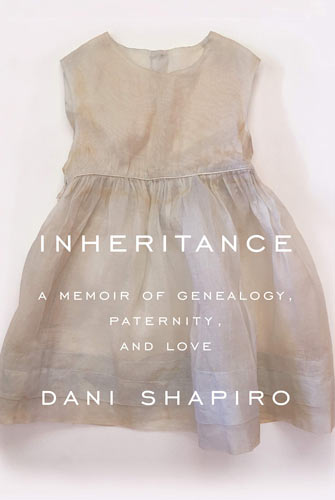 A psychoanalytic spin on the “unthought known” stream of one woman’s stumble upon the narrative of self, reflective of intuitive synchronicity, Inheritance: A Memoir of Genealogy, Paternity, and Love bursts the bubbles of vintage notions of the perfect family, or at least the façade of what the perfect family should have been.
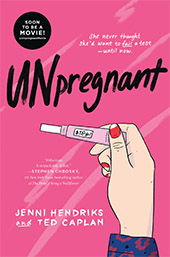 Unpregnant Offers a Radical Normalization of Abortion and Reproductive Health. Currently, we’re in a terrifying moment in history for reproductive health in America, which makes abortion no laughing matter—and that’s exactly why Unpregnant, the debut YA novel by Jenni Hendricks and Ted Caplan, is such a breath of fresh air. Unpregnant tells the tale of an overachieving 17-year-old named Veronica Clarke who discovers that she is pregnant a month before her high-school graduation. Seeing her college education (she’s been accepted to Brown University) and future slipping away, she enlists her former best friend—and current school outcast—Bailey Butler to drive her to an abortion clinic that doesn’t require a parental signature. The only catch? The clinic is more than 900 miles away… Read full review at BitchMedia here.
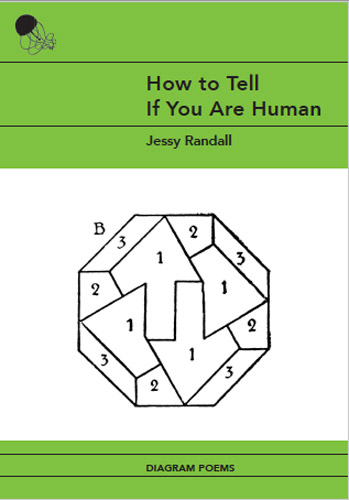 Do you ever find yourself feeling out of sorts, unable to tell if you’re still human? Jessy Randall has considered this feeling and helps readers handle it with an instructional manual of sorts in How to Tell If You Are Human: Diagram Poems, part of the Pleaides Press Visual Poetry Series.
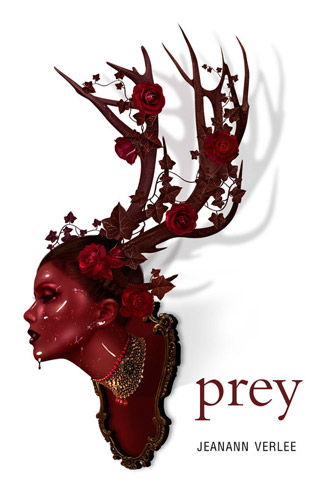 Jeanann Verlee digs into the culture of violence against women in Prey. Published last August, the collection of poems is broken into five parts. The speaker details her own story of an abusive ex-husband and the horrors he put her through, as well as a broader focus: “The New Crucible” speaks on the ways men have used religion to justify their violence against women, and multiple pieces called “His Version” are made of quotes from men like Brock Turner and the men involved in the Steubenville rape trial. The latter set of poems are presented without comment, without words from Verlee, speaking volumes on their own. Verlee writes with unflinching honesty, recording a history of violence that leaves one breathless and bent defensively over the pages.
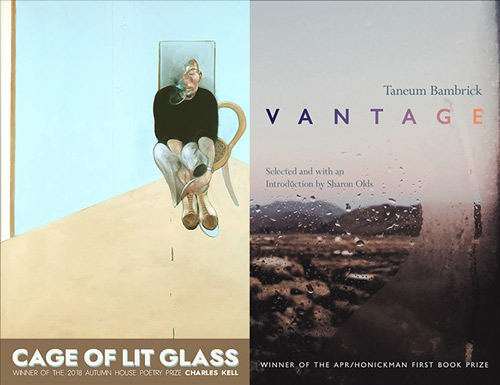 Take some time to check out award-winning books published this September.
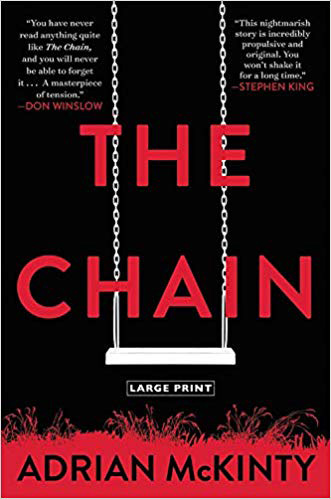 You are now part of The Chain.
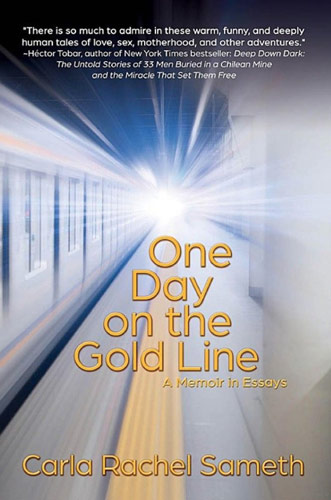 Carla Rachel Sameth’s One Day on the Gold Line offers a gut-wrenching account of Sameth’s life from young adulthood through middle-age, spinning around maternal desire and loss, and probing the critical distinctions between an imaginary motherhood and the lived reality of mothering her son through young-adulthood. Structured through a series of twenty-nine short chapters that refuse easy chronology, the book is both thematically and formally interested in questions of time and identity.
 Jillian Weise’s bio at the back of her latest collection, Cyborg Detective, boasts an impressive professional history, from books published to awards won to disability rights activism to starring in the tongue-in-cheek web series “Tips for Writers by Tipsy Tullivan.” In Cyborg Detective, Weise continues to show off her skills while holding the mirror up to the literary community.
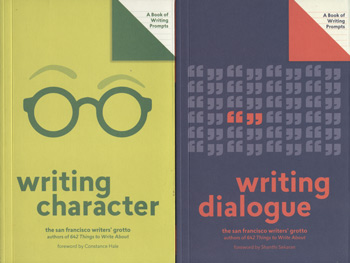 Abrams Noterie, imprint of ABRAMS Books, publishes stationary, artbooks, journals, and activity books, with a four-part collection on writing to be released this September.
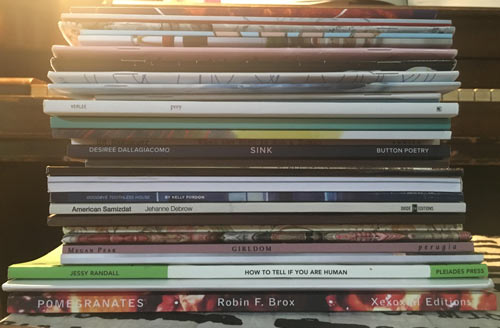 August is here and with it comes the third annual Sealey Challenge. Started by Nicole Sealey in 2017, the challenge is to read a poetry book or chapbook every day for the month of August.
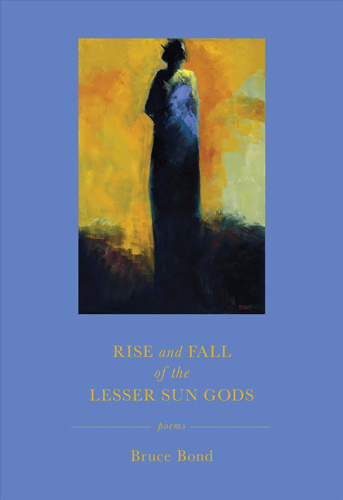 Perhaps it is because this was written in January, and in my part of the world, the temperature was hovering around 0 degrees. Maybe it is the hours I had spent hibernating and devouring hours of classic movies from the 1940s and 50s aired on TCM. Or maybe it’s simply the idea of a ‘radio in the sand’ emitting static and faint music from another place in the universe—Hollywood.
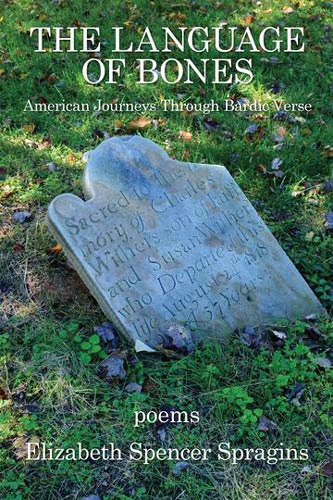 Elizabeth Spencer Spragins’ passion for bardic verse in The Language of the Bones is irresistible. I can’t imagine a writer who, after reading this, wouldn’t try her hand at it or even use this as a class text to inspire students. Though Spragins does not provide ‘guidelines’ for the forms she utilizes – four Welsh (cywydd llosgyrnog, rhupunt, clogyrnach, cyhydedd hir) and one Gaelic (rannaigheacht ghairid) – a Google search offers plenty of resources (including an article by Spragins herself).
 I walked into
 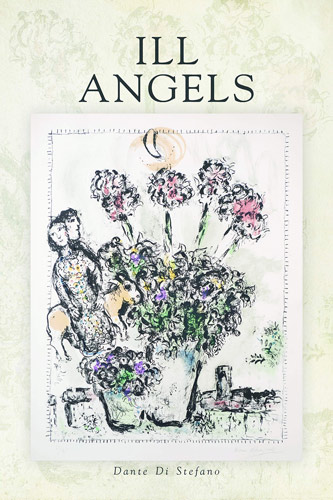 Dante Di Stefano creates a fascinating read of precise opinions and clever phrasing with poetry in his new book, Ill Angels. If I were to divide it roughly into subject chapters, one would be musicians, another would be portraits, then love poems to his wife, verses about America, and poems for his students. Throughout the book, a characteristic worthy of attention is his skill in giving fresh meaning to words.
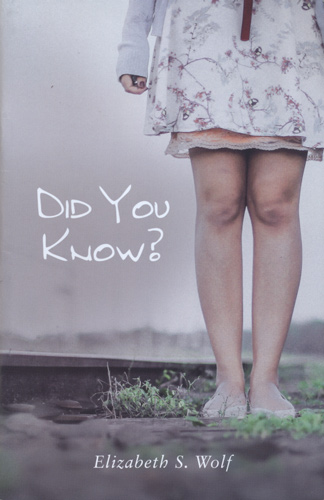 Subscribers to Rattle received a bonus with their Summer 2019 issue: Rattle Chapbook Prize winner Did You Know? by Elizabeth S. Wolf.
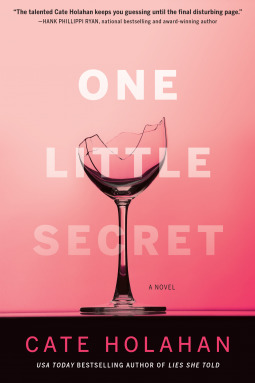 “People in glass houses should not throw stones”
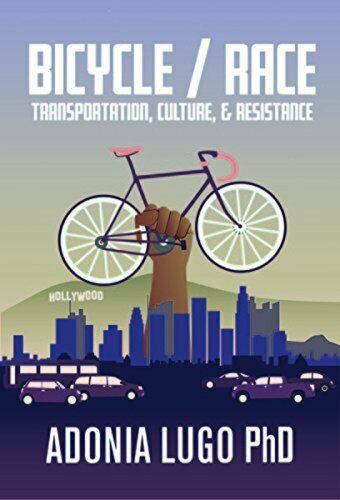 In “Bicycle/ Race: Transportation, Culture and Resistance,” Dr. Adonia Lugo brings her anthropology dissertation research into a readable and accessible book, documenting the intersection of race, transportation inequality and bicycling. As a mixed race Chicanx, having grown up in Orange County, California, Lugo explores resistance against car culture as well as her own place in bike activism. Where does she stand in a majority white-led movement? Lugo’s book forces readers to understand the stakes of cars versus bikes, with particular consideration to history, race, and who gets left behind.
 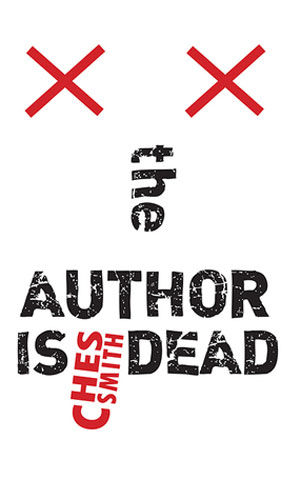 It’s nothing new for a novel’s key character to share his name with the book’s author. Past examples are Stephen King in Song of Savannah, Paul Auster in New York Trilogy, and Philip Roth in Operation Shylock. But Ches Smith’s protagonist, Ches Smith, is something apart and definitely a standout character in Smith’s new book, The Author is Dead. Try not to speculate on any detail in this book that might be drawn from the author’s life, except that it’s about a writer who writes a book titled The Author is Dead.