Home » NewPages Blog » Page 72

NewPages Blog

At the NewPages Blog readers and writers can catch up with their favorite literary and alternative magazines, independent and university presses, creative writing programs, and writing and literary events. Find new books, new issue announcements, contest winners, and so much more!

From the Depths – 2019

The 2019 issue of From the Depths features fiction and poetry by Chad W. Lutz, Emily Fox, Lauran DeRigne, Alejandra Serrano, Mary Hills Kuck, Eddie Fogler, Pat Phillips West, Riley Lynne Fields, Sian.E.Martin, Emily May Portillo, Travis Stephens, Claire Scott, Allen Guest, Stephen Nathan, Gwen Hart, Angela Just, and others. Penny Fiction by Itote Jegede, Erica Soon Olsen, Kimm Brockett Stammen, L.C. Ricardo, Jacek Wilkos, Keith T. Hoerner, Gerardo Lara, Hannah Whiteoak, John Grobmyer, Kendra Cardin, Sharon Kretschmer, and more.

Carve Magazine – Fall 2020

The Fall 2020 issue features the winners of the 2020 Raymond Carver Short Story Contest: Lindsay Kennedy, C. Adán Cabrera, Ella Martinsen Gorham, Anna Prawdzik Hull, and L. Vocem. New poetry by Beth Spencer, Cho A., Anthony Aguero, Andrew Navarro, and Esther Sun. New nonfiction by Sarah Yeazel and Clinton Crockett Peters. Additional features include Christine Heuner in Decline/Accept, Grace Talusan interviewed by Sejal H. Patel in One to Watch, and illustrations by Justin Burks. Read more at the Carve website.

Sponsor Spotlight :: Wordrunner eChapbooks

Have you caught up with Wordrunner eChapbooks lately? Each triannual issue features work by one author in a mini, digital chapbook. The journal also produces annual themed anthologies, and many issues are new dimensions to the online reading experience with the use of hyperlinks to photos, videos, background articles, maps, poetry, and artwork. A great companion for the chapbook fan on the go.

Waking Up Zucked

Guest Post by Kathleen Murphey.

That the 2020 Presidential Election was close depressed me and made me search for higher education jobs in Canada, but then I read the Mother Jones article, “How Facebook Screwed Us All.” If Facebook and other social media platforms are enabling bad actors to undermine democracy across the globe, they could be forced to adhere to better regulation standards.

To learn more, I am reading Zucked: Waking Up to the Facebook Catastrophe by Roger McNamee. McNamee outlines Facebook’s rise and its failure to imagine its persuasion architecture being used for nefarious purposes—even though evidence of bad actors using its platform keeps piling up from Brexit to the 2016 U.S. election to incidents in Sri Lanka and Nigeria.


Zucked: Waking Up to the Facebook Catastrophe by Roger McNamee. Penguin Books, February 2020.

Reviewer bio: Kathleen Murphey is an associate professor of English at Community College of Philadelphia.  She does both academic writing and creative writing (www.kathleenmurphey.com).

Buy this book at our affiliate Bookshop.org.

Ties that Bind in ‘A Place Remote’

Guest Post by Chuck Augello.

In the opening story in Gwen Goodkin’s debut collection A Place Remote, a character references Bruce Springsteen’s “Cadillac Ranch,” but the Springsteen song that best captures the spirit of these stories is “The Ties That Bind.” In “Winnie,” an ambitious scholarship student at an elite college is drawn to a childhood friend, a construction worker chasing jobs across the country and over the Mexican border. Goodkin is a sharp observer of class distinctions; her working-class narrator has a comfortable sense of where he belongs while Winnie struggles for acceptance among her affluent peers. Describing Winnie’s reaction to her classmates’ wealth, the narrator observes, “I could tell she liked it in a way, being around all these people. Maybe she thought their money was going to rub off on her.” The story’s ending is sad yet hopeful, Winnie’s life bringing her to unexpected places.

Goodkin’s dialogue is witty, earthy, and real, and her first-person narrators are unique and memorable.  The tension between staying and leaving is woven throughout the book.  In “A Boy with Sense,” a mother celebrates escaping her rural roots: “‘Best day of my life,’ Mom says with a cigarette between her lips, ‘was the day I left that shithole . . . .'”  Yet her son sees the beauty in what his mother has forced him to leave: “Farming’s what I love. What I’m best at. Mom can think what she wants. I’d stay at the farm for good.”

Over the past five years there’s been a near obsession with the “Red State-Blue State” divide.  A Place Remote is set firmly in the “Red,” but what matters most is the grace and dignity afforded these characters. Fiction allows readers to see into the lives of others and Goodkin makes an excellent tour guide into the remote places where her characters live, love, and dream.


A Place Remote by Gwen Goodkin. West Virginia University Press, 2020.

Reviewer bio: Chuck Augello is the author of the novel The Revolving Heart and the story collection The Inexplicable Grey Space We Call Love.

Buy this book from our affiliate Bookshop.org.

Reevaluate Beliefs with Anita Moorjani

Guest Post by Tiffany Mitchell.

I have always been a reader of philosophy, spirituality and self-improvement books. I really think it is important to have a space in your life to connect directly with yourself in order to make more inspired choices so that the rest of your life is constantly being fed with the best of you. This pandemic has lent the opportunity to do that but in a more deliberate way. It wasn’t just about reading to develop better communication skills or finding new ways to build confidence. It was about reading to stay grounded in faith. When uncertainty became the “norm,” faith became the remedy.  My reading choices mirrored that internal understanding.

When I read Dying to Be Me by Anita Moorjani, I was quickly reminded of the beliefs woven throughout religious and spiritual teachings. This book was the culmination of all those understandings that we know but somehow allow our circumstances to silence. Moorjani’s relocations of her near-death experience and the knowing that she developed made relying on higher power even more purposeful and necessary. It made our current pandemic feel like a shared manifestation of our internal fears and offers still an opportunity to shift and renew our beliefs and values. It is time that we transition into more connected individuals and a unified world. It was an understanding of the power of compassion, acceptance, and self-love and how that directly impacts everyone and everything around us. This is an opportunity to reevaluate beliefs and how they are affecting our lives. This book provokes you to do just that. One thing is for sure, we are changed forever. But how we change is our responsibility.


Dying to Be Me by Anita Moorjani. Hay House, September 2014.

Reviewer bio: Tiffany Mitchell is a Certified Life coach and founder of DearlifeIgetit.com.

Buy this book from our affiliate Bookshop.org.

Britsch’s Brilliant Debut Novel

Guest Post by Kimberly Diaz.

I stumbled upon amazing author Lucie Britsch via “Murder me Nicely,” a witty story in The Sun literary magazine. It charmed and delighted me so much that immediately after consuming it, I went looking for more. I found her on Twitter and great news—she had a novel coming out. I sent her a few highly complimentary tweets, ordered the book, and patiently reread my complete collection of Stephen McCauley novels as I waited for it to arrive.

Sad Janet is about a youngish woman who is depressed yet resisting constant pleas from family and coworkers to go on medication for it. She feels her depression is just the logical result of being aware. Every day she forces herself out of bed, laces up her Doc Martens and heads off to her job in a dog kennel in the woods “like a goddamned hero.” She has mixed feelings about the guy she lives with referring to him only as “the boyfriend” and admits that when he wants sex, sometimes she would really just rather have a sandwich.

With the holidays coming, the pressure to be happy is growing. Big Pharma has come out with a drug trial for a pill that will let you have a happy Christmas and Janet reluctantly signs up. You’ll have to read the book to find out how that goes. The novel is filled with Janet’s thoughts which are dark and hilarious. They’re already playing Christmas tunes in the mall, so Britsch’s brilliant debut novel, Sad Janet, is the perfect choice for gift-giving or your next book club meeting.


Sad Janet by Lucie Britsch. Penguin Random House, June 2020.

Reviewer bio: Kimberly Diaz studied creative writing at Eckerd College. Her work appears or is forthcoming in Entropy, Montana Mouthful, Eckerd Review, Another Chicago Magazine, and elsewhere. She’s currently working on a collection of creative nonfiction. Read her most recent publication: https://entropymag.org/the-fish/
Magical and Practical Inspiration

Guest Post by Renée Cohen.

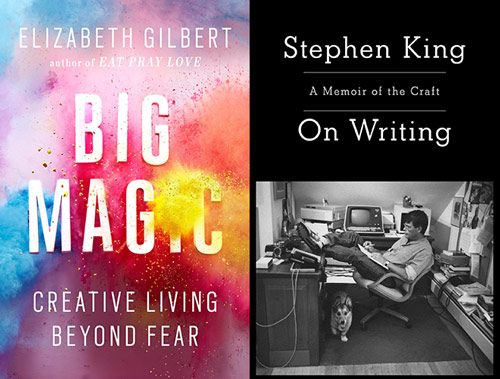
Throughout the quarantine, I took to rereading old favorites. Most notably, Elizabeth Gilbert’s Big Magic: Creative Living Beyond Fear and Stephen King’s On Writing: A Memoir of the Craft—two books on the craft of writing that I recommend, particularly to aspiring writers.

Oddly enough, I was never a huge fan of either author’s prior works of fiction. (Although, admittedly, I have enjoyed movies based on some of their oeuvres.) In 2015, I purchased Big Magic prior to boarding a long-haul flight. Some fluff to pass the time, I reasoned at the time. By pure luck, On Writing was given to me at a holiday party during a random gift exchange. Continue reading “Magical and Practical Inspiration”

The Adroit Journal Celebrates Ten Years

Online literary magazine The Adroit Journal is celebrating 10 years of publication! They are inviting you to join them for a special free virtual reading to help them celebrate on November 21 at 7PM EST on Zoom. The reading will be hosted by Heidi Seaborn, executive editor of The Adroit Journal.

Readers include K-Ming Chang, Victoria Chang, Chen Chen, Tiana Clark, Megan Giddings, Laura Kasischke, Dorianne Laux, Ben Loory, LaTanya McQueen, José Olivarez, Justin Phillip Reed, and Arthur Sze.

A Lesson in Leadership

Guest Post by Jennifer Brown Banks.

It goes without saying that effective leadership is not exactly a dinner table topic, a trending news item, or a subject matter that most of us consider on a daily basis. Yet, good leadership is firmly ingrained in many roles and rites of passage in our daily lives.

Consider this. Good leadership is needed to be an effective parent, a supervisor, a mentor, and even an American president. Which is why so many people have a definite opinion on Donald Trump—be it good or bad.

In the book, Leadersh!t by former CEO and leadership development coach, Rande Somma, many aspects and attributes of an effective leader are explored; as he addresses the need for accountability, transparency, and integrity to fix what he considers a “broken system” in corporate America.

This compelling read includes chapters on the dumbing down of values, the price of incompetence, the enormous ROI (return on investment) of character, and more.

Leadersh!t provides a paradigm shift for tomorrow’s leaders and reflection for stake holders in current business affairs.


Leadersh!t by Rande Somma. Booklocker.com, November 2016.

Reviewer bio: Jennifer Brown Banks is a veteran freelance writer, award-winning blogger and avid reader, residing in Illinois. Follow her on Twitter: https://twitter.com/Jenpens2.

Hippocampus 2020 Contest Winner Announced

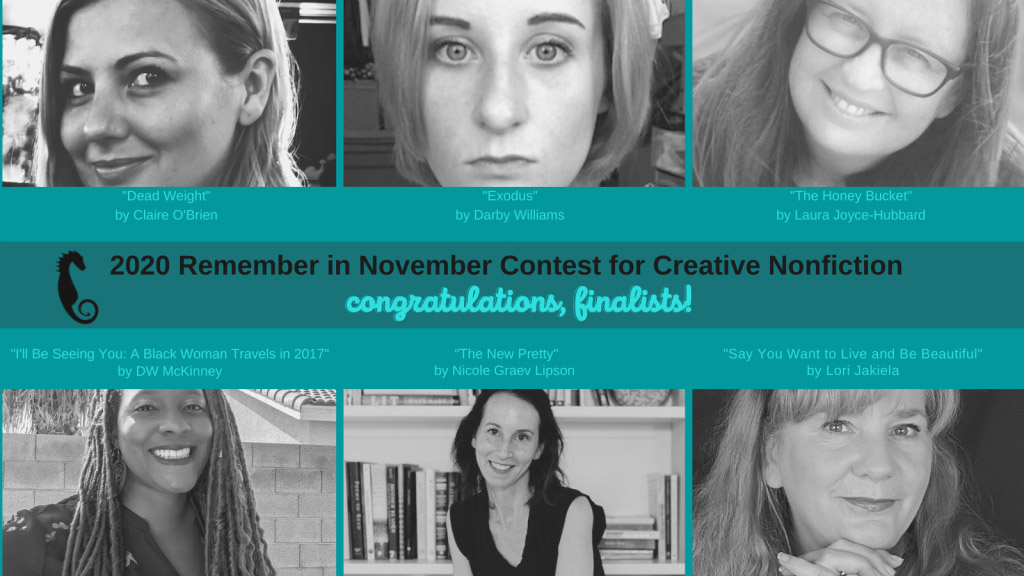
Hippocampus, the online literary magazine devoted to memorable creative nonfiction, has announced the winner of its 2020 Remember in November Contest for Creative Nonfiction.

photographs of 2020 Remember in November contest winners

Claire O’Brien’s essay “Dead Weight” was selected by guest judge Janna Marlies Maron as the grand prize winner.

The runner-up an finalists are:

  • “The New Pretty” by Nicole Graev Lipson (runner-up)
  • “Exodus” by Darby Shea Williams
  • “The Honey Bucket” by Laura Joyce-Hubbard
  • “I’ll Be Seeing You: A Black Women Travels in 2017” by DW McKinney
  • Say You Want to Live and Be Beautiful” by Lori Jakiela

You can read the winning piece, runner-up, and finalists in the November 2020 issue online now.

The Meadow – 2020

This year’s issue of The Meadow is here with nonfiction by Brandon Hansen, Kayla Maxwell, and Jessica Murrillo; fiction by Soramimi Hanarejima, James Hartman, Jemiscoe Chambers-Black, Jeff Gard, and more; and poetry by Ron Reikki, Ace Boggess, Adam Tavel, Emily Light, Sarah Alcaide-Escue, David Axelrod, Kiana Bohm, and more.

Hippocampus Magazine November 2020

We’re thrilled to announce the winner of our 2020 contest (Claire O’Brien’s essay “Dead Weight”), as well as to share all six finalist stories—and more great CNF content—with you in our November issue. Our runner-up and finalists: Nicole Graev Lipson (runner-up), Shea Williams, Laura Joyce-Hubbard, DW McKinney, and Lori Jakiela. See more contributors at the Mag Stand.

Gold Man Review – No. 10

Issue 10 of Gold Man Review is the cumulation of a decade of publishing West Coast writers. From tragic first encounters to family trauma, this celebratory issue has ten poems, ten short stories, and ten nonfiction essays that continue Gold Man’s mission to represent the West Coast literary vibe.

The Baltimore Review – Fall 2020

Welcome to the fall issue of The Baltimore Review! This issue features poems, fiction, and creative nonfiction by: Emily Rose Cole, Rebecca Cross, Monica Joy Fara, Elliott Gish, Vernita Hall, Joshua Jones, Meg Kearney, Cindy King, Adrian S. Potter, Amy Small-McKinney, J. C. Todd, Travis Truax, Jeanette Tryon, Nicholas A. White, Susan Wyssen, and Maria Zoccola. Ghosts. A head on a stretcher. The virus. A flood. Voices of dead people in a wardrobe.

2020 Frontier Industry Prize Winners

The 2020 Frontier Industry Prize winners have been announced.

Winner
“The Long Afterlife” by Michelle Phương Ting
To be published on December 2, 2020

2nd Place
“while i walk, my brother assures my nephew there are wildflowers growing in minneapolis” by Chaun Ballard
To be published on November 25, 2020

3rd Place
“Bad Dream With My Grandmother’s Stroke” by Adedayo Agarau
To be published on November 18, 2020

Michelle Phương Ting’s piece was selected by Daniel Slager, Peter LaBerge, and Carmen Giménez Smith, and she took home a $3000 prize.

Visit Frontier Poetry‘s website for author bios, as well as a list of finalists and poets on the longlist.

Freedom-Granting Poetry by Bethany Bowman

Magazine Review by Katy Haas

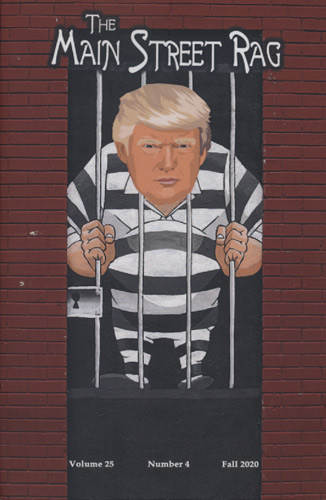
The Main Street Rag forwent their usual beautiful photographic cover art for a cartoon version of Donald Trump behind bars with the Fall 2020 issue. It seemed pretty appropriate, then, that I ended up opening the issue at random to find Bethany Bowman’s “Sometimes After Getting Off the Phone,” which begins with the speaker getting off the phone with their father “who confesses to voting for / Donald Trump to reverse Roe v. Wade” and observing a friend being confronted about her right to choose with her abortion in the 70’s.
The poem begins in a tense spot but we’re given relief, along with the speaker, in the form of animal facts given by the speaker’s son. These facts lead to biblical lessons and connections being “fed to the dogs” as the speaker realizes “you’ve always been filled with the spirit— / no external male force, no deity can grant it / or take it away.” There is power in this realization, a freedom granted from the sins stacked on women’s shoulders from the beginning of time.

While Trump may be behind bars on this issue’s cover, there is freedom to be found in the writing which Bowman graciously reminds us of.

Event :: Affordable, Virtual Monthly Workshops & Literary Coaching: Caesura Poetry Workshop

Caesura Poetry Workshop logo open book with red bookmarkRegistration Deadline: Year-round
Event dates: Monthly workshops
Event location: Zoom
Caesura Poetry Workshop aims to support, inspire, educate, and energize poets of all backgrounds through affordable monthly Zoom workshops hosted by award-winning poet, editor, and writing coach John Sibley Williams. Workshops include poem analysis, active group discussion, writing prompts, and plenty of writing time. Upcoming classes include Mastering Ekphrastic Poetry ($45; November 18 & Friday, November 20, 1-4pm PT), Poetry of Place ($40; December 16, 1:30-4pm PT), and Writing Evocative Love Poems ($40; January 27, 1:30-4pm PT). 1-1 personalized workshops, manuscript critiques, and regular coaching to keep you writing and inspired also available. More information: www.johnsibleywilliams.com/upcoming-classes. To register, email [email protected].

Twists and Turns, Taut and Beautiful: Melanie Finn’s ‘The Hare’

Guest Post by Samantha Kolber.

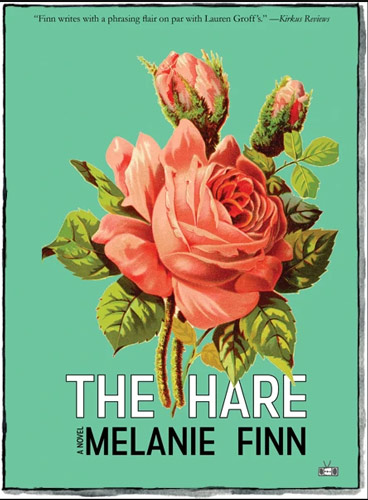
This is the second novel I have read by Melanie Finn, and I am simply in love with her writing! It is smart and atmospheric, with the pull of a literary thriller but with meat and heart.

In her new novel The Hare (available now for pre-order), Rosie is an amazingly complex character, and Finn captures her porous self so well. In the beginning, we are coming-of-age with Rosie as she struggles to find her voice, her artistic vision, and her Self in a world dominated by men—men’s desires and needs have always come first, and Rosie is no stranger to that sublimation. But as the book moves through time, we see Rosie gaining strength, getting strong in the woods where she hunts and forages to keep herself and her infant daughter alive after they are left by the wealthy castaway boyfriend, Bennett.

The book takes some twists and turns, and Rosie grows older, hardened, yet still a loving soul, just like Finn writes of the trees on the barbed wire fence line in the forest: “The trees absorbed the cruel wire, grew straight and tall, regardless.” What an apt metaphor for women in this world: we absorb the traumas, the violence, the sleights to our sex, and grow strong, regardless.

I felt so close to the setting, too, I could often hear the fallen leaves crunching underfoot, or smell the woodstove smoke on a crisp winter evening. The complicated relationship between mother and daughter, cocooned together in a life of survival and secrets in a cabin in Vermont, is also captured well here.

Finn is a master of complication made visible through taut and beautiful words. I highly recommend this book.


The Hare by Melanie Finn. Two Dollar Radio, January 2021.

Reviewer bio: Samantha Kolber of Montpelier, Vermont, is a poet, editor, and author of a poetry chapbook, Birth of a Daughter (Kelsay Books, 2020). Learn more at www.samanthakolber.com.

2020 Coniston Prize Winner & Finalists Announced

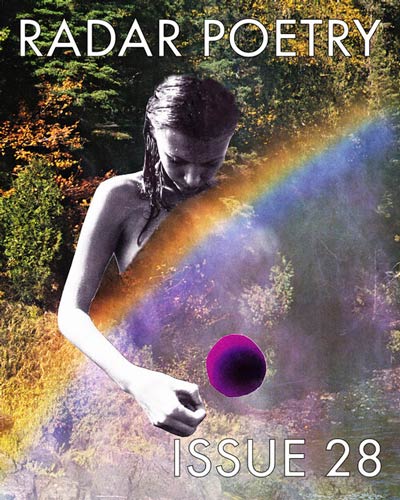
Laura Villareal is the winner of Radar Poetry‘s 2020 Coniston Prize. Her suite of poems will appear in Issue 28. Judge Ada Limón said of Villareal’s poems, “With language that is alive and piercing with rich sound work and haunting images, these poems are both confident and aching.”

Finalists of this year’s prize were Hillary Berg, Mary Craig, Shannon Elizabeth Hardwick, Jessica Hincapie, Amy Miller, Meredith Stricker, and Sarah Wolfson. You can read their poems in Issue 28 as well.

Steinke’s ‘Flash Count Diary’

Guest Post by Joe Taylor.

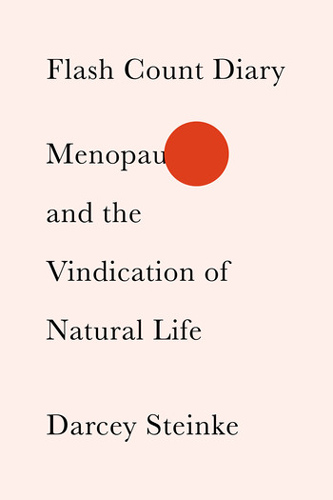
For sure, this book is about menopause and all the related inconveniences, silly jokes, and notions—but it’s also about sexuality, patriarchy, mortality, acceptance, spirituality, wisdom, and whales. Yes whales, for it seems those creatures that can live well over a century elect matriarchs who have experienced menopause to lead their packs in something of a crone’s position. And why not? Experience matters. Lack of distraction matters. It’s called wisdom. And this, Steinke tells us, is precisely why women should not pursue hormone treatment, why men should not pursue Viagra. Acceptance of life’s stages and the accompanying wisdom, not denial and infantile retreat.

This book presents Darcey Steinke par excellence, perhaps a bit angrier than her usual when discussing the mostly male-dominated medical and pharmaceutical fields, but then, as she would no doubt insist, she has earned that anger. As have we all.


Flash Count Diary: Menopause and the Vindication of Natural Life by Darcey Steinke. Farrar, Straus and Giroux, June 2019.

Reviewer bio: Joe Taylor has published five novels and three story collections. He is the director of Livingston Press: https://livingstonpress.uwa.edu.

Buy this book from our affiliate Bookshop.org.

Mudfish Writing Workshop Goes Virtual

Mudfish founding editor Jill Hoffman leads a combined workshop of poetry and fiction in Tribeca, New York. These workshops are open to writers of all levels and are now being conducted virtually via ZOOM. Writers get to read aloud each week and give and receive honest and constructive criticism. Editors for Mudfish are also recruited from these workshops.

Sessions are being offered Monday or Wednesday nights from 7:30 to 11:00 PM. Visit their website to learn more.

CRAFT 2nd Annual All-Flash November

For the second year in a row, literary magazine CRAFT will be focusing on flash pieces in November. This was kicked off with new flash fiction from Kim Magowan on November 6.

Follow their site for the latest flash pieces from Despy Boutris, Lori Sambol Brody, Lindsey Harding, and Paul Crenshaw. Plus, you’ll also find Amy Barnes tackling Nancy Stohlman’s Going Short and Kristin Tenor’s hybrid interview with Tara Isabel Zambrano on Death, Desire, and Other Destinations.

An Action Adventure Sports Novel

Guest Post by Lorraine “Lorrie” Morales

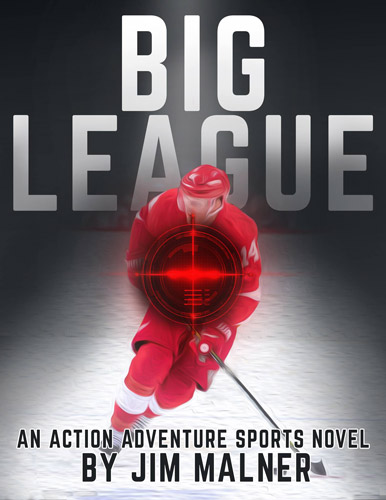
If you’re looking for a great story from a self-published author, check our Jim Malner’s Big League. The book is an action adventure sports novel and a great read for anyone who loves hockey and mystery.

David Stone, an undrafted walk-on player, dreams of playing in the NHL. Riley Sawyer, the league’s number one draft pick, is Detroit Red Wings favorite to lead the team to the Stanley Cup. Their meeting at the summer training camp is a battle, not only on the ice, but against Russian mobsters and professional assassins. The boys will discover what real team work is in professional sports and the world of organized crime.


Big League by Jim Malner. Self-published, 2019.

Reviewer bio: Lorraine “Lorrie” Morales is a published author from Alberta, Canada
Press: https://www.lorriemorales.com.

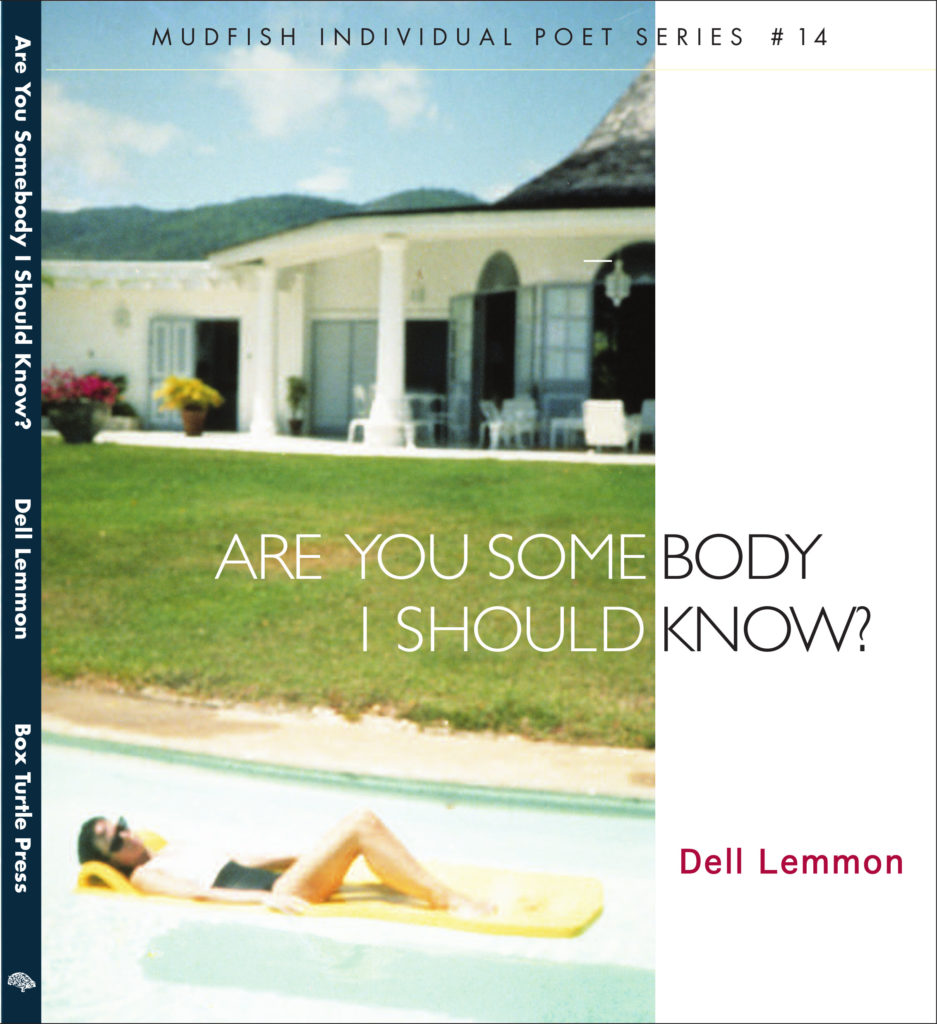
Are You Somebody I Should Know? Mudfish Individual Poet Series #14

Girl floating in book outside a white house

Mudfish has released the 14th installment in their Individual Poet Series. Are You Somebody I Should Know? by Dell Lemmon. Art critic and poet John Yau says that Lemmon’s “memoir poems, as she calls them, are strong rivers pulling you into their currents. Her poems are pared down and direct and move at a rapid clip without ever tripping over themselves.” Jason Koo, Founder and Executive Director of Brooklyn Poets, says Lemmon’s book will convince you that you have missed so “much of your life, haven’t truly seen it, haven’t treasured nearly enough of all your friends, your loves, your family, let alone all the people you thought were not important enough to know.”

Are You Somebody I Should Know is available via SPD, Amazon, and Mudfish‘s website.

The Main Street Rag – Fall 2020

This issue’s featured interview is with Doralee Brooks, whose poetry is also included. Also in this issue: creative nonfiction by Frederick W. Bassett; fiction by Nathan V. Baker, Mari Carlson, Linda Griffin, Alan Nelson, and Eudora Watson; and poetry by Joan Barasovska, Rachel Barton, Ranney Campbell, Maria Ceferatti, Sally Dunn, Caroline Goodwin, Cleo Griffith, Dorinda Hale, Dennis Herrell, Zebulon Huset, Craig Kittner, Mike Jurkovic, and more.

The Gettysburg Review – 33.1

The Gettysburg Review is out and features paintings by Tollef Runquist, fiction by Julialicia Case, Martha Shaffer, Kirsten Vail Aguilar, and Andrea Marcusa; essays by Elizabeth Kaye Cook, Kathy Flann, Don Lago, Christine Schott, Rebecca McClanahan, and Melissa Haley; poetry by Christopher (c3) Crew, Peter Grandbois, Despy Boutris, Douglas Smith & George Looney, John Hazard, Brian Swann, Maura Stanton, Cindy King, John Brehm, and more.

Anomaly – No 31

In the new issue of Anomaly: comics by Tamara Jong, Jennifer Murvin, Chloe Martinez, Andie Frein, Amelia L. Williams, and Alina Viknyanskiy; poetry by Tian-Ai, Stephanie Jean, Shay Alexi, Saddiq Dzukogi, Noor Ibn Najam, Noʻu Revilla, Michal Jones, KL Lyons, Irteqa Khan, Ima Odong, Heather Simon, Eunice Kim, Chavonn Williams Shen, Bailey Cohen-Vera, Asmaa Jama, and Amanda Holiday, fiction by Laurence Klavan, LaToya Jordan, and Carson Faust; and nonfiction by Tasha Raella, Jody Chan, and Anjoli Roy.

Fresh Fiction from Gilbert Allen

Guest Post by Elizabeth Genovise

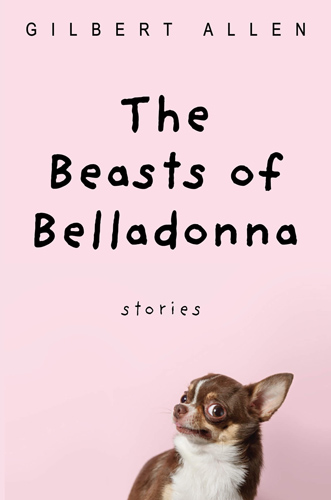
If you’re hunting for some fresh fiction from a small press, check out Gilbert Allen’s newest book, The Beasts of Belladonna. This book features fifteen linked tales of quirky characters in a South Carolina foothills community. Expect the unexpected in these unsettling yet often hilarious stories, in which characters rub up against their own failures, yearnings, and secrets.

A minister nails a bird to a couple’s front door; a woman accidentally kills her cat and finds an unconventional way to grieve its loss; a man’s foxy neighbor goes to outrageous lengths to destroy his marriage. Domestic animals have a hefty influence on these people’s lives, sometimes comical and sometimes tragic; the same could be said about church as we’re introduced to the Mosquito Ministry, the Faster Pastor Challenge, and couples who pass witty notes during sermons. We meet “treenappers,” a Grandfather Against Garbage, and a character known as the Jesus of Malibu, and in these encounters are powerful flashes of raw humanity in all its complexity.


The Beasts of Belladonna by Gilbert Allen. Slant Books, October 2020.

Reviewer bio: Elizabeth Genovise is an MFA graduate from McNeese State University and the author of three short story collections, the most recent being Posing Nude for the Saints from the Texas Review Press. https://www.elizabethgenovisefiction.org/

At Home In The Dark With Carol Morris’s ‘Into The Lucky Dark’

Guest Post by Susan Kay Anderson

Into The Lucky Dark by Carol Morris, who is part of the Diane Wakoski circle, is much like being invited to coffee at a friend’s house where every time you go there you can be yourself and when you leave you feel like more yourself than ever before. Morris believes that life is a struggle but to read her poems and look at her utterly delightful artwork in this book, it would seem that life is also a place that we seem to haunt long before getting to the ghostly stage of things. This takes a bit of getting used to. It takes a while to read Morris’s poems because to languish in their harsh settings of bars and other meetings/gatherings is to feel the freeze, feel the edges of being an outsider even to oneself and then find the self in the touchstones of such leaving: “Houses in which my talents were useless” (from “A June Divorce”) to finding art and abstractions which make concrete sense. Continue reading “At Home In The Dark With Carol Morris’s ‘Into The Lucky Dark’”

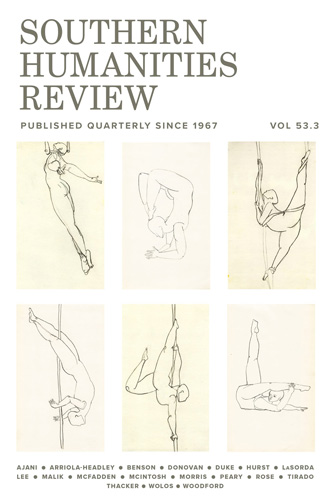
Southern Humanities Review – 53.3

Southern Humanities Review has nonfiction by Allison LaSorda and Alexandria Peary; fiction by Marlene Lee, Dennis McFadden, Sean Rose, and Gregory Wolos; and poetry by Ashia Ajani, Jubi Arriola-Headley, Ariana Benson, Nate Duke, Matt Donovan, Bethany Schultz Hurst, Rasaq Malik, Leslie Mcintosh, Mary Morris, Julia Thacker, Marisa Tirado, and Annie Woodford.

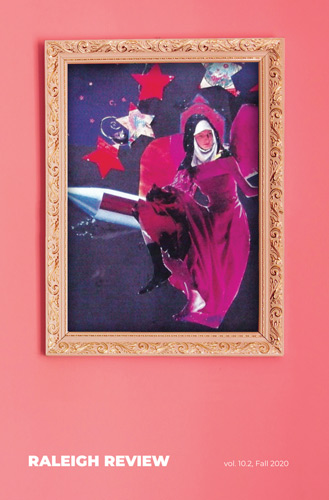
Raleigh Review – Fall 2020

This issue’s featured artist is Janice Joy Little. Fiction by Peter D. Gorman, Trina Askin, James Hartman, Melissa Reddish, and Katherine Conner. Poetry by Melissa Kwasny, Nan Becker, Dionissios Kollias, Colin Bailes, Rob Shapiro, Kabel Mishka Ligot, Hussain Ahmed, Johnny Lorenz, Darius Simpson, Camerin McGill, Jai Hamid Bashir, Melanie Tafejian, Maxine Patroni, Alaina Bainbridge, and Gabriella R. Tallmadge. Check it out at the Raleigh Review website.

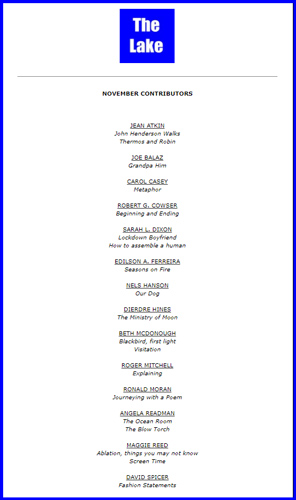
The Lake – November 2020

The November issue of The Lake features Jean Atkin, Joe Balaz, Carol Casey, Robert G. Cowser, Sarah L. Dixon, Edilson A. Ferreira, Nels Hanson, Dierdre Hines, Beth McDonough, Roger Mitchell, Ronald Moran, Angela Readman, Maggie Reed, David Spicer. Reviews of Natalie Scott’s Rare Birds: Voices of Holloway Prison, Ric Cheyney’s In Praise of Nahum Tate, Terry Tierney’s The Poet’s Garage.

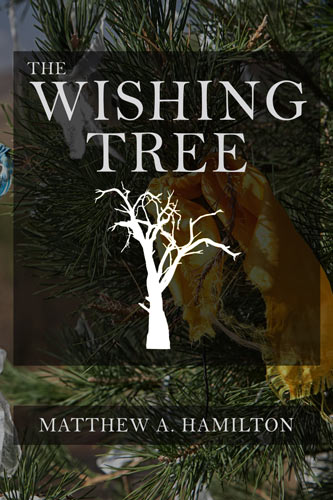
The Wishing Tree

Guest Post by Robert Lamb

It was Union Gen. William Tecumseh Sherman who said, “War is hell.” If you have any doubt that the general was dead right, run and get a copy of The Wishing Tree by Matthew A. Hamilton. You’ll see war up close and personal in his excellent account of the Armenian genocide by the Turks in the early 1900s.

Hamilton, a Richmond, VA writer and former Peace Corps volunteer, shows us through the eyes of a young Christian girl in Armenia how war unleashes unspeakable human savagery in the name of ethnic cleansing.

It is April 1915 and the Turks’ Ottoman Empire, which has lasted for centuries, is on the verge of defeat by the allied forces of Great Britain and the Arabs. In the novel’s first few pages, the heroine, Valia, a teenager, sees her parents, siblings, and neighbors, all Christians, murdered by Turkish “police soldiers,” and flees for her life.

Thus begins an odyssey the reader won’t soon forget. The author’s account of Valia’s struggle to stay alive and hopeful is a hymn to the human spirit, and the story is nothing short of realistic and gripping.

Adding a nice touch of realism, even Lawrence of Arabia and Arab Prince Faisal make cameo appearances near the story’s end.

OK, film producers; you can’t say I didn’t give you a heads up on this novel.


The Wishing Tree by Matthew A. Hamilton. Winter Goose Publishing, September 2020.

Reviewer bio: Robert Lamb is the author of four novels and a book of short stories; he review books for the New York Review of Books; and he has a website at www.robertlamb.net.

Into the Void Magazine – #17

Welcome to a great issue full of vivid, haunting, charming and thought-provoking pieces with a stunning cover image by Jeff Corwin. Fiction by George Choundas, Kathie Giorgio, Rosalind Goldsmith, Alice Ting Liu, Chris Neilan, and Alexander Woods; nonfiction by Audrey Burges, Marie Kilroy, and Ellis Scott; and poetry by Dianna Vagianos Armentrout, Swapnil Dhruv Bose, James Butler, and more.

Hole in the Head Review – November 2020

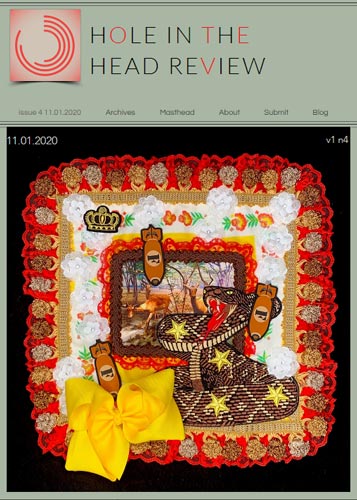
Issue 4 of Hole in the Head Review celebrates our first year. Featuring works by K. Johnson Bowles, Anna Birch, Bob Herz, Christopher Volpe, Ann Pedone, Richard Foerster, Hannah Tarkinson, James Crenner, Zoo Cain, Brendan Constantine, Norma Greenwood, Douglas Cole, and Stuart Kestenbaum. Special Prose Poem Mini Chapbook edited by Peter Johnson, including annotated correspondence of Russell Edson and works by Cassandra Atherton, Nin Andrews, Denise Duhamel, Gerald Fleming, Jeff Friedman, Holly Iglesias, and Anna McDonald.

Hanging Loose – Issue 111

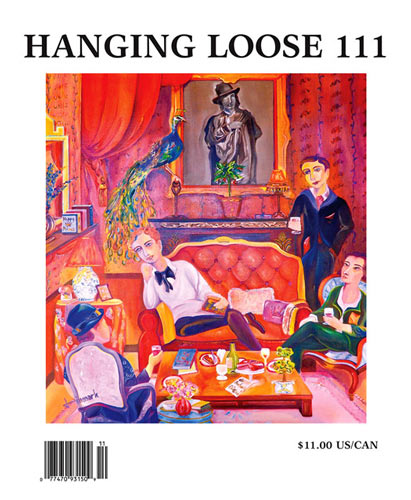
Our 54th year of continuous publication! Cover art and portfolio by William Linmark. Poems by Sherman Alexie, Indran Amirthanayagam, Jack Anderson, Martine Bellen, Polly Buckingham, Liuyu Ivy Chen, Jiwon Choi, Robert Clinton, John Corley, Sam Cornish, Harley Elliott, Gerald Fleming, Justin Jamail, Daniel Johnson, Faye Kicknosway, David Lehman, Michael Miller, Frank Murphy, and more. Read more at the Hanging Loose website.

A Speaker to Root For

Magazine Review by Katy Haas

During the first few months of the pandemic, I couldn’t read anything. My attention span was gone and anything I did manage to read left my mind immediately. But that ended when I sat in the park and read Dorothy Chan’s Revenge of the Asian Woman (Diode Editions, 2019) from cover to cover. My locked-away ability to read had found its key. Already a fan of Chan’s work, this just helped solidify my love for her poetry even more, and I’m always more than happy to check out any of her newly published poems. The October 2020 issue of Poetry gives the gift of her poem, “Ode to Chinese Superstitions, Haircuts, and Being a Girl.”

The poem flows in a rush, like a held breath finally exhaled. Chan begins with the Chinese superstition “it’s bad luck / to get a haircut when I’m sick” and leads into the role the speaker fulfills as a daughter, as a girl, as someone who “always bring[s] / the party, cause[s] the trouble . . . .” While there are specifics tied to her own self, culture, and family—her brother’s fate, her mother’s thoughts on her future, her father’s opinion on how “good Chinese girls” wear their hair—Chan leaves the reader plenty of room to relate to her words. If we don’t feel like her, we can still root for her and her “short skirt,” her “forehead forever exposed.”

Into The Void Releases We Are Antifa Anthology

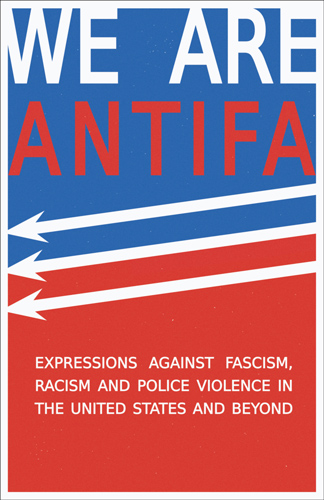
Into the Void Antifa Anthology flierAt the beginning of the month, literary magazine Into the Void released it’s We Are Antifa: Expressions Against Fascism, Racism and Police Violence in the United States and Beyond. The anthology features creative nonfiction, fiction, and poetry from diverse writers all over the world, i.e. the US, Canada, Ireland, the UK, Greece, Nigeria, and more.

Into the Void will be donating 100% of proceeds from the anthology’s sales to Black Lives Matter Canada. In order to maximize profits, the book will only be available via Amazon in ebook and paperback formats.

We Are Antifa was edited by Heath Brougher, Jay C. Mims, Amanda Gaines, Andrew Rihn, and Philip Elliot. It features “breathtaking writing condemning fascism, racism and state-sanctioned brutality through powerful expressions of grief, rage, hope and love.”

The title is a response to Donald Trump’s declaration that the US will be designating Antifa as a terrorist organization. The editors encourage readers to check out “A Brief History of Anti-Fascism” in Smithsonian Magazine to better understand why they published this anthology and “how anti-fascism and anti-racism are inextricably linked in the fight against oppression and supremacy.”

A Playful Conglomeration of Experiments

Guest Post by Shamae Budd

Patrick Madden’s third collection of essays is a playful conglomeration of experiments (in form, in collaboration, in thought). Interspersed among more traditional personal essays, you will find a menagerie of borrowed forms. The collection opens with an essay masquerading as an eBay listing for “Writer Michael Martone’s Leftover Water.” (Or is it an eBay listing masquerading as an essay? We can’t be sure, which is half the fun.) You will find blackout poetry (“Insomnia”), an essay written with the help of predictive text algorithms (“Unpredictable Essays”), mixed up proverbs (“The Proverbial ____” ), and a series of “Pangram Haiku.” Continue reading “A Playful Conglomeration of Experiments”

Inside Out & Back Again

Guest Post by Chang Shih Yen

Inside Out and Back Again is a novel in verse by Thanhhà Lai. This book won the National Book Award for Young People’s Literature in 2011 and a Newbery Honor in 2012.

Through a series of poems, 10-year-old Hà takes the readers through one year of her life in 1975. It was a life-changing year, beginning with her life in Saigon, then fleeing South Vietnam on a ship as Saigon fell on April 30, 1975. Hà and her family were in a refugee camp before resettling in Alabama, and the family struggled to start a new life there. Hà struggled with the language and fitting in at school.

Many details of this book were inspired by Thanhhà Lai’s own life. She also fled Vietnam at the age of 10 at the end of the Vietnam War, and moved to Alabama. The poems in this book will make you laugh and they will also make you cry. They will make you want to read this book all in one sitting, and when you get to the end, immediately want to read it again, but slowly this time to savor all the words. This book is powerful, poignant, and moving, worthy of all its awards.


Inside Out and Back Again by Thanhhà Lai. HarperCollins, 2011.

Reviewer bio: Chang Shih Yen is a writer from Malaysia, seeing through the pandemic in New Zealand. She writes a blog at https://shihyenshoes.wordpress.com/.

Buy this book from our affiliate Bookshop.org.

Picking Up the Fragments

Guest Post by Elizabeth Basok

Hildr Fragments, written by Dani L Smith, is a collection of poems covering relationships, notably a lengthy relationship that was both co-dependent and abusive.

Smith is a British expat living in South Korea; she meets a fellow expat, an older Canadian, who proves to be problematic from the start of their relationship. The author is forced to pull herself from the relationship after years of gaslighting (“even when I caught you in a lie you somehow succeeded in making me second-guess myself and making me feel crazy”), cheating, and even physical abuse. The author covers all the heavy aspects of leaving an abusive relationship from losing your household belongings, “11 drunken, psychotic messages within one hour,” and the time that she will never get back.

The word “Hildr” means “battle” in Old Norse, and we see the author battle with the desire to stay in an abusive relationship, her attempts to break from her abuser’s hold over her, her recovering from a miscarriage, and ultimately freeing herself from abuse and looking onward to the future.


Hildr Fragments by Dani L Smith. Independently published, October 2020.

Reviewer bio: Elizabeth Basok is a lecturer at The Ohio State University. Her Instagram is @lizbasok.

Event :: 17th Annual Palm Beach Poetry Festival will be Virtual

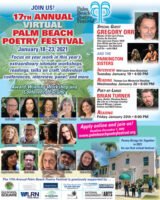
Palm Beach Poetry Festival eLitPak flier
click image to open PDF

Event Dates: January 18-23, 2021 Location: Virtual
Extended Application Deadline: December 1, 2020
The 17th Annual Palm Beach Poetry Festival in Delray Beach, Florida, January 18-23, 2021 will be virtual. Focus on your work with America’s most engaging and award-winning poets. Workshops with David Baker, Laure-Anne Bosselaar, Traci Brimhall, Vievee Francis, Kevin Prufer, Martha Rhodes, and Tim Seibles. Six days of workshops, readings, craft talks, panel discussion, social events, and so much more. One-on-one conference Faculty: Lorna Blake, Sally Bliumis-Dunn, Nickole Brown, Jessica Jacobs, and Angela Narciso-Torres. Special Guest: Gregory Orr and the Parkington Sisters. Poet At Large: Brian Turner. To find out more, visit www.palmbeachpoetryfestival.org. Apply to attend a workshop!

Terrain.org – October 2020

New on Terrain.org this month: poetry by Jane Lovell, Zach Eddy, Ted Kooser, Mary Fitzpatrick, Emily Tuszynska, and Jocelyn Casey-Whiteman; nonfiction and photos by Tyra A. Olstad; fiction by Jessica Bryant Klagmann; and an interview with Aimee Nezhukumatathil by Melissa L. Sevigny.

The Bitter Oleander – Fall 2020

The Autumn 2020 issue of The Bitter Oleander features an interview with the Danish poet Carsten René Nielsen, including a selection of his prose poetry translated by David Keplinger. Also in this issue: fiction by Michael Pearce, Kelly Talbot, and more; essays by Will Stone; and poetry by Dolores Etchecopar, Stephen Tuttle, Madronna Holden, David Cholrton, Matei Vişniec, Silvia Scheibli, Patty Dickson Pieczka, and others.