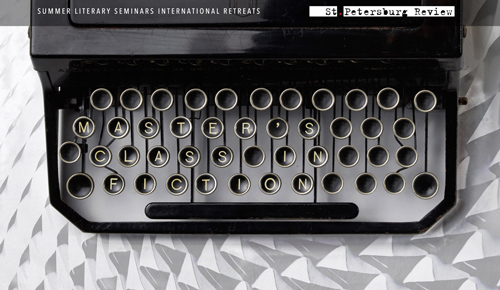
 Event Dates: November 8–22, 2020; Location: Virtual;
Extended Deadline: October 30, 2020
Limited to: 10 people. Summer Literary Seminars International Retreats, an offshoot of SLS, in conjunction with St. Petersburg Review/Springhouse Journal invites you to a unique two-week master’s class in fiction taught by internationally acclaimed authors, Dawn Raffel and Laurie Stone. In this online course, you will receive one-to-one feedback; meet the editors of the New Yorker, Graywolf Press, Guernica, and St. Petersburg Review; attend events with Mona Awad, Polina Barskova, and Kadija Sesay; receive discounts for future programs including residencies in Georgia and Kenya; read your work in a publicly advertised event; and more. November 8 to November 22. To learn more and submit, visit stpetersburgreview.com/master-class.

NewPages Blog
At the NewPages Blog readers and writers can catch up with their favorite literary and alternative magazines, independent and university presses, creative writing programs, and writing and literary events. Find new books, new issue announcements, contest winners, and so much more!
A Handshake Between Time Periods
 Guest Post by Jack Graham.
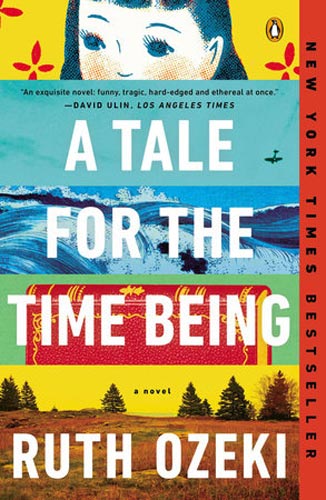
It’s incredibly rare that a novel can leave you feeling as ecstatically powerless as Ruth Ozeki’s A Tale For The Time Being, a strikingly well-crafted novel following the tribulations of both Naoko Yasutani, an early 2000’s teenager and of the more contemporary character of Ruth—an uninspired author reading the diary of the aforementioned Japanese teen.
Ozeki’s texts demonstrate a handshake between two separate periods within time, misting and tearing apart any conceptions of what it means to be ‘contemporary.’ The reader is simultaneously inundated with early references to popular and zany Japanese Maid Cafès and Hello Kitty merchandise (a Japanophile’s dream) in the form on Nao’s diary whilst Ruth provides a far more grounded account of modern normality—one of mundane and domesticated living.
When reading from the perspective of Nao, a readership is forcefully delved into an environment mostly motivated by suicidal thoughts. Being a Western reader, it became increasingly intriguing to be given some understanding into a Japanese mindset in regards to the romantic sentiments surrounding self-killing, one very foreign to my own.
On the other side of the coin, however, Ruth is a character who lives a decade or so after Nao’s accounts, the physical embodiment of dramatic irony. As a reader of Nao’s diary, she can locate Nao within time, using the internet as a tool to fixate her somewhere after 2001 but prior to the Fukushima Nuclear Reactor Incident of 2011—she’s a literary archaeologist of sorts. It is through Ruth that I, the reader, was stripped of all control. It is at Ruth’s pace of reading that we unveil the life of Nao, it is only at the will of her determination that I found myself turning the page, heavy with anticipation.
A Tale for the Time Being by Ruth Ozeki. Penguin Random House, 2013.
Reviewer bio: I’m Jack Graham, currently studying my Masters in English Literary Studies at Durham University.
Buy this book from our affiliate Bookshop.org.
Spread the word!
Sky Island Journal – Fall 2020

Sky Island Journal’s stunning 14th issue features poetry, flash fiction, and creative nonfiction from contributors around the globe. Accomplished, well-established authors are published—side by side—with fresh, emerging voices. Readers are provided with a powerful, focused literary experience that transports them: one that challenges them intellectually and moves them emotionally. Always free to access, and always free from advertising, discover what over 75,000 readers in 145 countries already know; the finest new writing is here, at your fingertips.
Spread the word!
Event :: Reversed Thunder with Brendan Constantine
Event dates: November 5 – December 3, 2020; Location: Virtual
Join award-winning poet Brendan Constantine for an exciting craft and generative workshop presented by The Poetry Lab. Writers will respond/reflect on the principles of poetic conscious and political poetry as they explore valedictions and liberate their post-election feelings. Class includes three two-hour workshop sessions and ends in a live public performance, where all students will be invited to read alongside Brendan. Registration fee is $150 for adults, $125 for students with a valid student ID. Must be 18 or over to enroll. Class begins Thursday, November 5, 2020 at 6pm PST via Zoom. Learn more at thepoetrylab.com/reversed-thunder.
Spread the word!
Ruminate – Issue 56
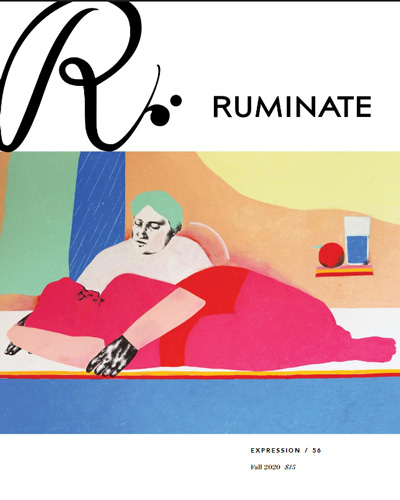
Ruminate Issue 56 celebrates Expression. Featuring the William Van Dyke Short Story prizewinning stories “Little to Do with Rain” by Leigh Claire Schmidli and “Occupation Rock and Roll” by Etan Nechin as well as Alberto Daniels’s short story “La Bruja.”
Spread the word!
Split Rock Review – Issue 15
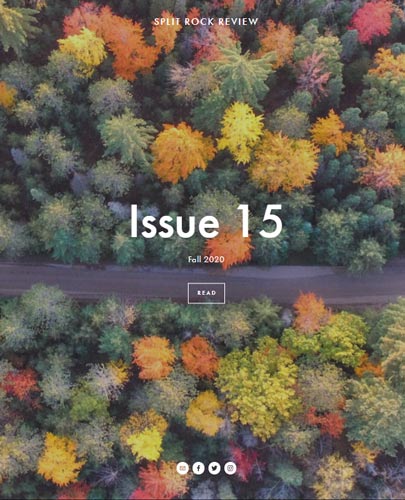
The new issue of Split Rock Review features work by Ted Kooser, David Axelrod, Lauren Camp, William Woolfitt, Celia Bland, and many more writers and artists, including fiction by Adrian Markle; nonfiction by Anna Oberg and Wendy Weiger; a comic by Don Swartzentruber; art & photography by Aaron Burden, Leah Dockrill, Natalie Gillis, and more; and poetry by Ellen Rogers, Connie Post, Jenny Wong, Rebecca Yates, Emry Trantham, and more.
Spread the word!
Poetry – October 2020

The October 2020 issue of Poetry is out. Work by Maya C. Popa, Ed Roberson, Dorothy Chan, Arvind Krishna Mehrotra, Chester Wilson III, Oli Rodriguez, Tianru Wang, Nathan Sppon, heidi andrea restrepo Rhodes, Cathy Song, Orlando Ricardo Menes, Martin Dyar, Ingrid Wendt, John Lee Clark, Jennifer Jean, Adrienne Su, Tom Pickard, Katie Hartsock, and more.
Spread the word!
Parhelion Literary Magazine – Oct 2020
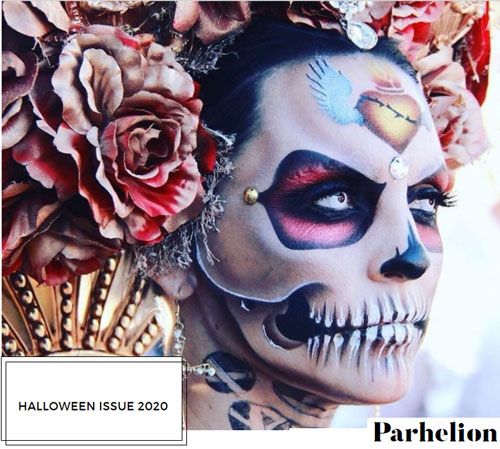
The stories in this issue of Parhelion scream “Halloween.” There are quite a few ghosts for you, from quite funny to disturbingly dark, as well as monsters, myths, and unreliable narrators. Work by N. T. Brown, Jeff Burd, Upasana Datta, Max Dorfman, Kelly Gray, and more.
Spread the word!
The Aurorean
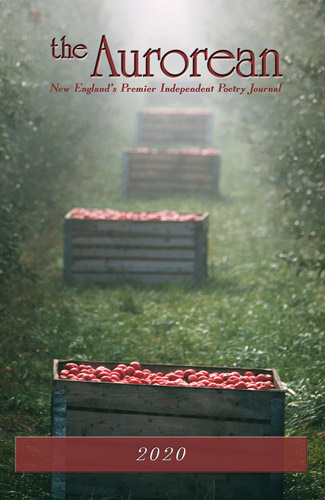
The final issue of The Aurorean is out. Featured in this issue are David Jordan and Connie Jordan Green. Also included: Barbara Saunier, Joe Fitschen, Lee Rossi, Patrick Harkins, Thomas E. Schmidt, Dennis Ross, Sam Robertson, Jan Shoemaker, Joanne Stokkink, Holly Day, Anne Meis Knupfer, Robin Smith-Johnson, Thomas Griffin, Andrea Potos, Russell Rowland, Max Roland Ekstrom, James Croal Jackson, James B. Nicola, Mark C. Jensen, Ed Meek, Cynthia Brackett-Vincent, and more. Plus, a selection of haiku.
Spread the word!
Apple Valley Review – Fall 2020
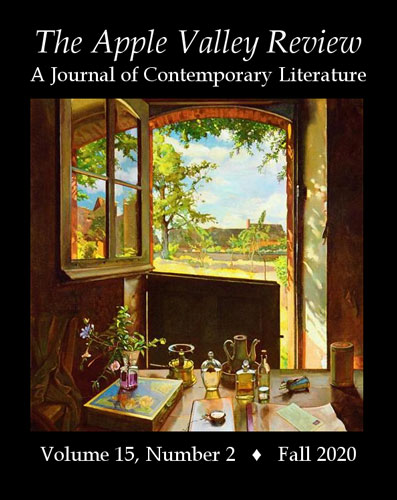
Featuring short fiction by Kevin Bray, Morgan Cross, Adam Luebke, Tove Ditlevsen (translated from the Danish by Michael Goldman), and Epiphany Ferrell; an essay by Samantha Steiner; and poetry by Liana Sakelliou (translated from the Greek by Don Schofield), DS Maolalai, Emily Hyland, Antonio Machado (translated from the Spanish by Thomas Feeny), Tiffany Hsieh, and Joseph Zaccardi. Cover artwork by Konstantin Somov. More info at the Apple Valley Review website.
Spread the word!
An MFA in the Pandemic
Guest Post by Samantha Tucker
 When I applied to MFA programs, it was with the intention of finding a writing community. During my time at The Ohio State University, I was lucky to foster strong relationships with my classmates through our shared experience and dedication to the written word. To this day, I continue to edit and be generously edited by a group of talented writers, most of whom I met in my very first class, a nonfiction workshop with the writer Lee Martin.
But what is a writing community when the people sharing their art are only able to do so virtually? And when writers find themselves in the middle of so many American catastrophes, where do we find the urge to create at all? I asked Lee Martin, College of Arts and Sciences Distinguished Professor of English at Ohio State, for insight on his teaching and writing life during a pandemic.
How have your workshops/classes adapted to being online?
Lee: We seem to be adapting well. I love my students, and the level of engagement seems to be high. It’s not quite the same, of course, as sitting around a table, but we’re doing fine. I’ve had some students comment on how our Zoom meetings give them a chance to feel a part of our writing community, so that’s a good thing. I just wish we could do the things we used to do—go out for $4 burger night at Brazen Head Pub, have spaghetti dinners at my and Cathy’s house, have bowling parties, etc. Ah well, I hope we’ll be able to do those things and more very soon.
How has your writing changed, if at all?
Lee: I find myself writing steadily as a way of escaping the reality of what’s going on in the world around me. It’s a comfort to me to escape into the worlds of my own making in novels and stories set before the pandemic. I’m only now working on something more current that, of course, will eventually have to face the pandemic head-on.
What are your words of wisdom as to finding the space in this chaos to create art?
Lee: I’ve been thinking a lot about how to stay in the present moment of what delights me rather than thinking about all that depresses me or makes me fear for the future. Silence is a good thing. If we can find those places of silence we can fill them with the efforts of our own choosing rather than the worries and the fears that the current climate places upon us. Today, for instance, Cathy and I went out to Inniswood Metro Gardens and disappeared into the natural world and immediately felt our breath coming more easily. Such places and moments are all around us. All we have to do is look for them.
Reviewer bio: Samantha Tucker is an anti-racist essayist in Columbus, Ohio. Find her words at www.theamericandreamstartshere.com.
Spread the word!
Spalding University’s School of Writing Launches Good River Review
Spalding University’s School of Creative and Professional Writing, home of the flagship low-residency Spalding MFA in Writing program, is launching a new online literary magazine, Good River Review. The first issue will appear in Winter 2021.
Good River Review resides at Spalding in Louisville, Kentucky, which sits on the Ohio River, providing inspiration for the name: Ohio is a Seneca word for good river. Issues will appear twice a year. Between issues, the website will regularly publish interviews; book reviews; reviews of new plays, television, and films; craft essays; and literary news.
“We intend to publish the best writing in all the genres we teach in our graduate writing programs,” Kathleen Driskell (chair of the School of Writing who will serve as editor-in-chief) said. “We love writing that blurs boundaries, so contributors will find their work published as prose, lyrics, or drama.” The journal will also publish writing for children and young adults, as well as original web, TV, and short film productions.
The journal’s submission period will be ongoing. Good River Review allows for simultaneous submissions and does not charge reading or submission fees. For more information, email [email protected].
Spread the word!
Tint Journal Hosts Online Reading Event “Tinted Tales”
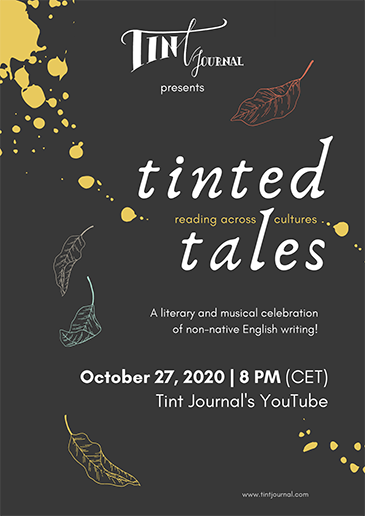 Event Date: October 27, 2020 at 8PM CET; Location: Virtual
“Tinted Tales. reading across cultures” will take place on October 27, 2020 at 8 PM (CET). The reading will be broadcasted via a livestream on Tint Journal’s YouTube. Seven ‘tinted’ writers from all around the world will perform their short stories, essays and poems. Also, Vienna based singer-songwriter Ulli Grill will join our reading with her latest songs. You can find out more about the event here, and watch their video trailer.
Spread the word!
Four Poems from Cimarron Review
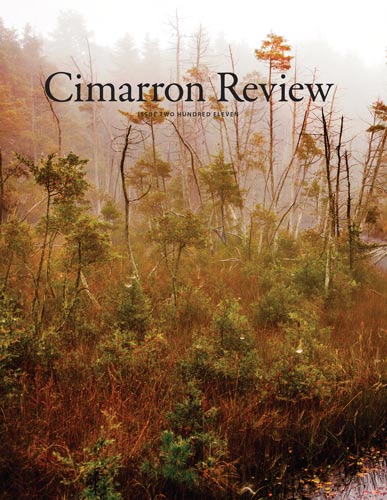 Magazine Review by Katy Haas
The Spring 2020 issue of Cimarron Review is a slim one, but here is still plenty in its pages to keep a reader company, including a fine selection of poetry.
This selection includes Ethan Joella’s ruminations on the titular magazines that his “wife’s mother read in the hospital,” and a desire to destroy them to protect his wife in her grief. Joella creates a tender piece that focuses on his wife’s love for her mother, as well as his love for his wife.
Leslie McGrath asks one eight-word question in “Pink Inquiry,” a poem that makes impact with its simplicity. Christopher Brean Murray reflects on his childhood dogs “Duke & Pam,” and the way he has “never been able / to get into a poem the way” he felt about them. What results is a sweet poem about the three finding warmth and comfort in one another.
William Reichard in “Tinnitus (in Four Movements)” describes his relationship with the ringing in his ears, using the sound of cicadas as a way to lead this exploration. I read the fourth movement repeatedly, pulled in. “There was no escape from / the pulse of his own blood,” it reads, the stanza itself feeling as inescapable as the sound.
Take some time to visit the poetry in this issue of Cimarron Review, as well as the five pieces of prose also inside.
Spread the word!
“It’s Not About the Burqa”
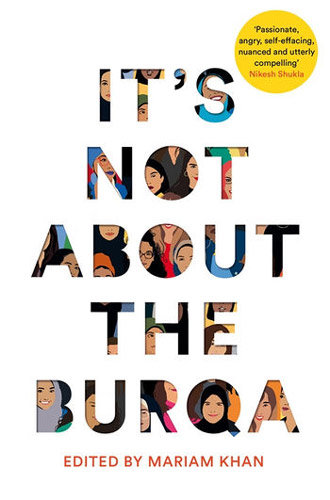 Guest Post by Reem Ali
I genuinely don’t think I can recommend Mariam Khan’s It’s Not About the Burqa enough. Wow, just wow. I’m not much of a nonfiction gal, however, this was the exception. As a Muslim woman living in a western country, I’ve accepted that descriptive representation requires decades more of advocacy and activism. However, what I don’t accept is the blatant islamophobia and racism portrayed by the media that’s being fueled by white supremacists (and the like) commanding elected positions. This collection of essays not only expands upon this issue, but many others as well.
The authors are all successful women in their respective careers, breaking down stereotypes of Muslim women ingrained into western society. There have been so many cultural, moral, and systemic issues that I have pondered and struggled with, but these essays articulate and address them in such a succinct and thoughtful manner. I sincerely believe that this is a definite must-read. With the wave of people aiming to educate themselves on BLM issues, I suggest picking this up as well.
It’s Not About the Burqa by Mariam Khan. Pan Macmillan, February 2020.
Reviewer bio: Reem Ali is a third-year law student, and a born-and-raised Texan. She loves spending her free time reading, traveling (pre-coronavirus) and playing backgammon. She enjoys engaging with tough readings and sharing her perspectives. For more book reviews: @reemsreads.
Buy this book from our affiliate Bookshop.org.
Spread the word!
Event :: The Poetics Course by Fledgling Writing Workshops
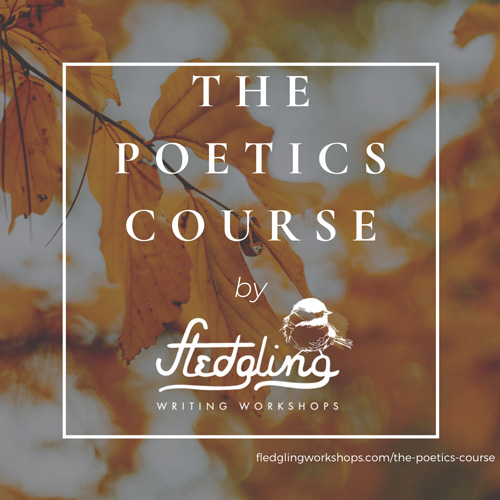 Fall Dates: Wednesdays, Nov 4–25; Winter Dates: Feb 3–24 from 6:30-8:30 pm EST
Location: Virtual
Low on inspiration? Let this gentle, four-week poetry intensive by one of NYC’s top writing schools according to TimeOut NY spark your creativity. Through two highly generative hours of weekly class time, plus limited homework assignments, guided journaling, and a supplemental workbook of readings, you’ll consider different ways to push the boundaries of your language and gain greater control over the poetic side of your voice. You’ll end the month having produced several short works. Join accomplished poet, educator, and visual artist Catie Hannigan for a month of recovering your creativity. $300, Wednesdays in November and February. Learn more at our website.
Spread the word!
Rewards & Consequences of Connection
 Guest Post by Eric P. Mueller
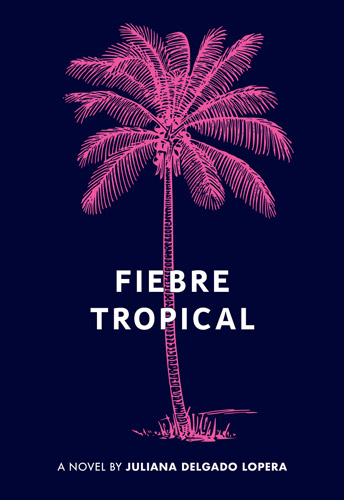
Rarely, if ever, is the narrator of a novel so personal that it’s like they’ve invited you for tea. Juliana Delgado Lopera’s Francisca does that and more, balancing colloquialisms and two languages with stage-speaking authority. Readers learn a lot and a little of Francisca—she is at least in her mid-20s while telling her story, but we mostly stay locked in on one special summer.
Fiebre Tropical reminds readers of monotony that can ensue during long breaks in high school. Living in Miami with little freedom and resources to explore her surroundings, Francisca is limited to watching her neighbor play computer games, watching telenovelas with her abuela, and interacting with the faith-based community her mother almost forcefully wants her to join.
Christian communities are ubiquitous and highly accessible for youths. This novel explores what happens to identity when one joins these spaces. Will Francesca the all-black wearing “heathen” be transformed by God and his followers, or will followers of Christ find themselves shadowed in Francisca’s queer darkness?
Lopera alternates languages almost seamlessly, creating an authentic intimacy that makes the novel’s tone fresh and inviting as opposed to alienating. The distinct voice keeps the novel consistent; as the reader traverses through the plot, they learn more about Francisca’s mother’s and grandmother’s histories, explored in a way that’s not far off from a Junot Diaz or Toni Morrison book.
The novel explores the relationship between mother and daughter, generational trauma, immigrant experience, coming of age as queer, and queerness repression. The book is also about heartbreak. With the pandemic quarantine reminding us of what it means to be powerless and stuck at home, Fiebre Tropical is a reminder of the vulnerable yet necessary act of connection, of it’s rewards and consequences.
Fiebre Tropical by Juli Delgado Lopera. Amethyst Editions, March 2020.
Reviewer bio: Eric P. Mueller is an essayist based in Alameda, CA. His work has appeared in Foglifter, Thought Erotic, and elsewhere. He reads for Longleaf Review. Follow him and his two dogs @realericmueller on Twitter or Instagram.
Buy this book from our affiliate Bookshop.org.
Spread the word!
Marybeth, Hollister and Jane
 Guest Post by Manasi Patil
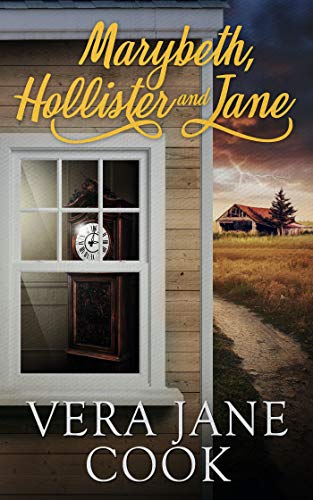
Marybeth, Hollister and Jane is a fictional story set in the rural area of Callicoon, New York. The book has a very realistic vibe to it and all the characters seem believable. It follows the journey of a handful of people trying to locate the Eagle Diamond, stolen in the 1960’s. At the start, most of them are from the same organization, LVAJ, whose job is to locate stolen arts, artifacts, etc. and then pass them to someone else. But as the story unfolds, the head of the organization, Peter Reece, is too weak to manage the organization, and eventually all the members separate and begin the search on their own.
All through the journey of reading this book, I was on a rollercoaster. The scenes are sketched out in a way that makes the words leap off the page. All the characters too, are perfect for their roles. Author Vera Jane Cook has done an exceptional job. I particularly like Brock Stanley with his wise, witty, and caring nature (for Jane).The unexpected twist of The Sisters and Jane was my favorite scene from this novel.
The ending could have been much better, though. It winded up too simple and easy and I felt that the story had promised a different sort of end. Nonetheless, Marybeth, Hollister and Jane is a great read, and I will certainly be reading more from this author.
Marybeth, Hollister and Jane by Vera Jane Cook. Chatter Creek Publishing, September 2020.
Reviewer bio: Manasi Patil is a young author with a passion for writing.
Spread the word!
Transport to Another World with Auel
 Guest Post by Amy Ballard
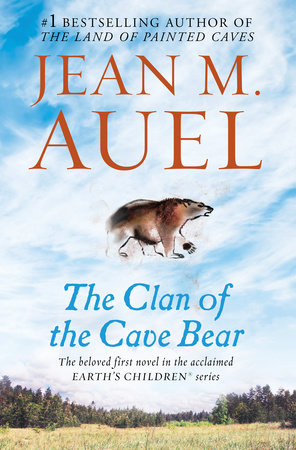
Which is more important, the clan or the individual? In Jean Auel’s 500-page series opener, Cro-Magnon Ayla navigates the customs of her adoptive Neanderthal people while pondering what it means that she is “Other.” To assimilate, she must comply with clan rules with which she disagrees. Sometimes she chooses defiance. When her practice of hunting with a sling (a man’s privilege) is discovered, she is placed under a death curse. Ayla isolates in a secret cave, an apt metaphor for the forced solitudes of today’s coronavirus pandemic. As clan political dynamics shift, she must determine whether she can live under the rule of a leader who, despite her valued status as a medicine woman, systematically abuses her.
Since its publication in 1980, the novel and its five sequels in the Earth’s Children series have generated a body of criticism, favorable and unfavorable, around its historicity, feminism, and treatment of race, among other topics. For the quarantined in 2020, though, The Clan of the Cave Bear does what it emphatically must: transport the reader to another world.
The Clan of the Cave Bear by Jean M. Auel. Penguin Random House, June 2002.
Reviewer bio: Amy Ballard writes and teaches in southern Idaho. Her fiction has appeared in Barely South Review and elsewhere. Find Amy at www.amyballard.com.
Buy this book at our affiliate Bookshop.org.
Spread the word!
Manifesto on Shared Solitude
 Guest Post by Jacqueline Williams
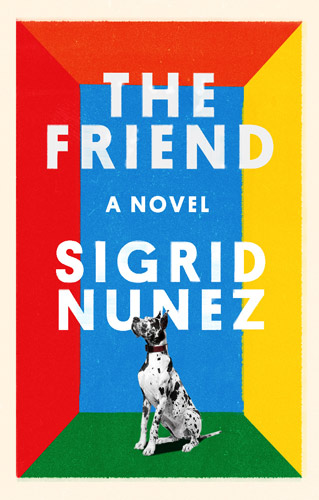
Given to me as a birthday gift, The Friend by Sigrid Nunez is a manifesto on shared solitude and the different ways in which we try to overcome grief. One of the intriguing things about the book is the author’s choice to leave the narrator unnamed along with most of the characters. However, at no point does that choice prove as an obstacle to the reading experience; instead, it renders visible particular details about the personality of the characters thereby allowing the reader to connect more deeply with them.
The book is a fairly easy read about the narrator’s journey of simultaneously losing and gaining someone and the idea of collective grief. As literary fiction, the book is peppered with trivia on various literary writers such as Adrienne Rich, T.S. Eliot, Virginia Woolf, and Franz Kafka among many others. The characters too draw from the similar flavor of what it means to be a writer and the conflicts attached to the profession of writing.
My favorite part of the book is the bond shared between the narrator and Apollo the Great Dane. Nunez’s take on the human-dog relationship is unlike any other. She is spot-on in her representation of the contemporary nature of company that of being alone, together. She writes, “What are we, Apollo and I, if not two solitudes that protect and greet each other?”
The Friend by Sigrid Nunez. Riverhead Books, February 2019.
Reviewer bio: My name is Jacqueline Williams and I’m currently pursuing M.A in English. My field of interests includes Gender Studies, Cultural Studies and Medical Humanities.
Buy this book at our affiliate Bookshop.org.
Spread the word!
Brush Up on “The Language of Liberty”
 Guest Post by Wilfred M. McClay
For at least the past thirty years, we have done a terrible job in this country of educating the young for the tasks of citizenship in a republic. Despite endless talk about the problem, little is actually done to improve matters. The concept of “civic literacy” is the latest buzzword of educators, and yet no one seems to know what the word signifies, let alone how to achieve it. But help is on the way.
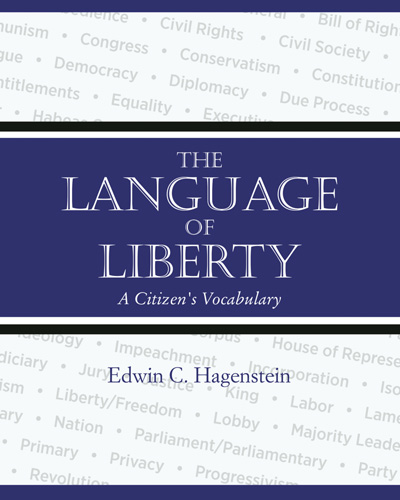
Civic literacy, meaning the body of knowledge that enables a citizen to function actively, intelligently, and effectively, is precisely what is offered us in Edwin Hagenstein’s splendid new book The Language of Liberty. To call it a “citizen’s vocabulary,” as the author does, is true enough; but the book is much more than that. It is not a treatise, but instead a collection of wise, subtle, and reflective essays on the keywords of our political and social discourse, covering everything from “the administrative state” to “the referendum,” with topics as philosophical as “conservatism” and “liberalism” and as down-to-earth as “gerrymander” and “whip.” It is both a handy reference book and a work of philosophy, nicely parceled out into easily digested essays. I’ve never seen anything quite like it.
The Language of Liberty: A Citizen’s Vocabulary by Edwin C. Hagenstein. Rootstock Publishing, October 2020.
Reviewer bio: Wilfred M. McClay is the G.T. and Libby Blankenship Chair in the History of Liberty at the University of Oklahoma.
Spread the word!
The Massachusetts Review – Fall 2020
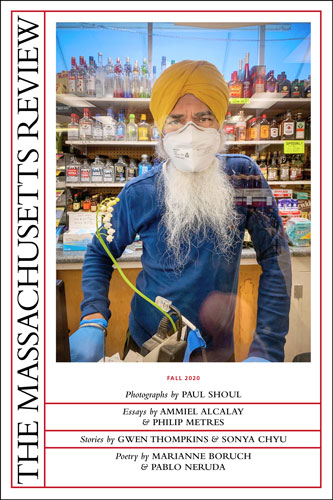
In the Fall 2020 issue of The Massachusetts Review: fiction by Gwen Thompkins, Alanna Schubach, Andrea Maturana, Kathleen Hawes, and more; poetry by Marcela Sulak, Emily Schulten, Lance Larsen, Esther Lin, Brooke Sahni, C. P. Cavafy, and others; and nonfiction by Karen S. Henry, Ammiel Alcalay, Margaret Lloyd, and more. Plus, photography by Paul Should and a novel excerpt by Giacomo Sartori. .
Spread the word!
EVENT – 49.2
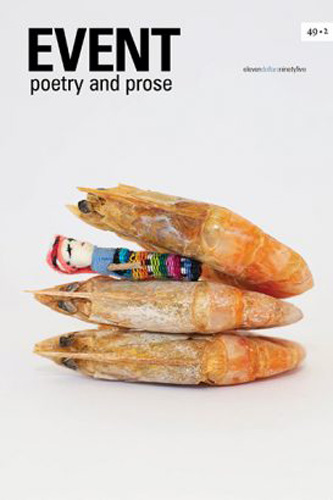
EVENT’s latest offering is jam-packed with a tantalizing assortment of literary goodies. Poetry by Bára Hladík, Alpay Ulku, Alan Hill, Patricia Young, A. Molotkov, Dominik Parisien, and more; fiction by Jason Jobin, Kari Teicher, Fraser Calderwood, and Wayne Yetman; and nonfiction by Scott Randall. Plus, four reviews of poetry, fiction, and nonfiction titles. Read more at the EVENT website.
Spread the word!
Boulevard – Fall 2020
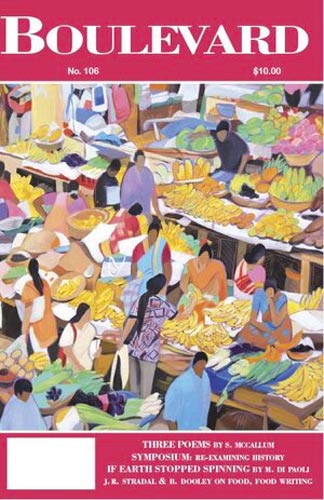
Boulevard No. 106 contains a fantastic and diverse slate of great writing, including the winning story from the 2019 Short Fiction Contest by Sena Moon; a Boulevard Craft Interview featuring a conversation between J. Ryan Stradal and Beth Dooley; new poetry from Shara McCallum, Eloisa Amezcua, Molly Brodak, Doug Ramspeck, Katherine Smith, Lisa Gluskin Stonestreet, Dara Elerath, and Jeannine Hall Gailey; new fiction from Ron Austin, Matthew Di Paoli, Christine Sneed, and Adam Roux; essays by Christine Spillson, Jodie Varon, Matt Jones, Brandon Parker, and Min Han; and a new symposium about re-examining history. Plus, fantastic, and striking cover art by Xizi Liu!
Spread the word!
About Place Journal – Oct 2020
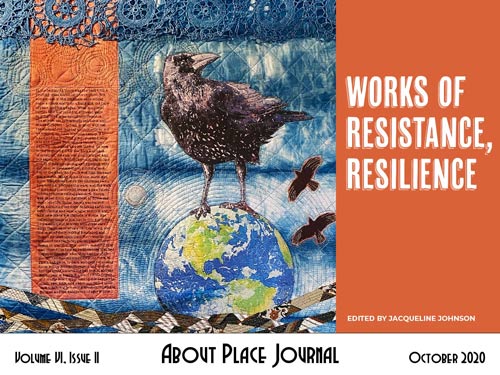
“Works of Resistance, Resilience” is comprised of poetry, fiction, nonfiction and visual art by 83 writers and artists. The issue has five themed sections that explore what it means to live in America at this time of profound reckoning. What does resistance look like? Can resistance contain love, power and empathy? In this age of collective anxiety, the writers and artists from around the world attempt to answer what it means to live and survive during the Covid-19 pandemic and beyond. The Works of Resistance, Resilience will rekindle our desire to learn and thrive and to discover what is needed to change our relationship to the earth and to each other. More info at the About Place Journal website.
Spread the word!
Event :: Iron City Magazine Issue 5 Virtual Launch

Event Date: Saturday November 7, 2020; Location: Online
Deadline: Saturday November 7, 2020
Iron City Magazine: Creative Expressions By and For the Incarcerated Free public online event features literary readings, art slideshows, and a live Q&A! Presenters include contributors and their chosen readers (friends, family, teachers) from Arizona and across the nation. RSVP via Eventbrite. Issue 5 can be pre-ordered with your online registration or at www.ironcitymagazine.org. Merchandise can be purchased at Redbubble.com. Iron City Magazine is a 501(c)(3) nonprofit. This publication is made possible by generous grant awards from the Ibis Foundation of Arizona and AZ Humanities.
Spread the word!
Tinted Tales Virtual Reading
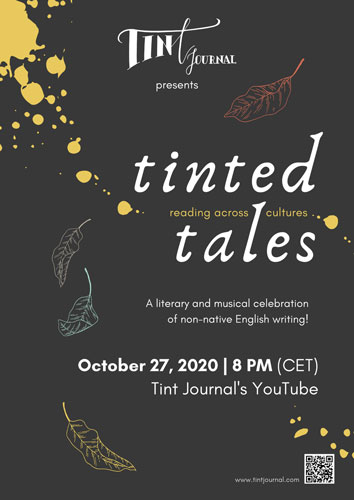 Join Tint Journal on October 27 at 8PM (CET) for an online reading livestream via the journal’s YouTube channel. The “Tinted Tales” reading is a musical celebration of non-native English writing. Stay tuned to learn who will be performing.
Be sure to bookmark the Tint Journal YouTube channel so you don’t miss out on the reading, and while you’re there, check out readings from earlier in the year.
Spread the word!
The Poetry of Plath
 Guest Post by Elda Pappadà
Sylvia Plath Poems Chosen by Carol Ann Duffy is a well put together ensemble of Plath’s deeply honest poetry. Her writings were vulnerable and held profound personal thoughts. Reading her poetry, I hear the voice of all women.
As Duffy mentions, Plath wrote confessional poems. She represented women and our challenges. Her voice is the voice we hear but quietly dare not express aloud, but still desperately feel and can never altogether ignore. I especially felt this from her poem “Mirror.” It is troubling and candid: “in me she has drowned a young girl, and in me/ an old woman/ rises . . . .”
She explores many motifs. At times, her poetry can be gripping and sad, but she also captures beautiful flashes and makes light of dark situations like in the poem “Last Words.” She has lines that make you smile because they are intelligently crafted even though the context is nothing to smile about, considering what we know about Plath’s life: “I should sugar and preserve my days like fruit!”
Sylvia Plath Poems Chosen by Carol Ann Duffy by Sylvia Plath. Faber & Faber, 2012.
Reviewer bio: Elda Pappadà recently self-published her first poetry book, Freedom—about love, loss, and understanding. A book about defining life and giving weight to everything we do. Twitter: @poems_elda.
Spread the word!
An A+ YA Novel
 Guest Post by Manasi Patil
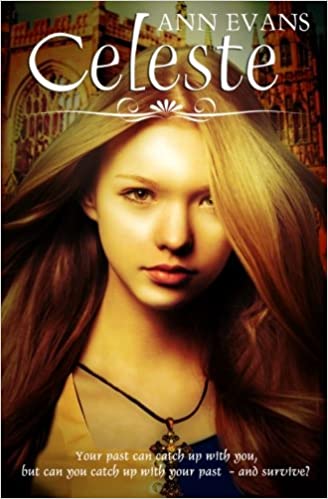
Celeste by Ann Evans is a real page-turner! The main character, Megan Miller, is a teen and is facing sensations of Deja vu. Along with her are two more side characters who play a really important role in the novel.
The story is written in between time-slips, which many authors fail to manage. But Ann Evans has successfully completed and managed the time-slip writing very well!
This is the first book I‘ve read from this author and I’ll certainly be reading more. The story is exciting and scary, breath-taking in many places as it moves seamlessly between present day and a time in the distant past. The characters are all believable. I particularly liked Jamie. He’s very friendly and helpful. Megan at first, suspects him of—sorry, not going to tell you that; no spoilers!—but eventually their friendship blooms. The writing style is also very clear and I can vote it as an A+. The author’s narrative blends well, and the story is all believable and seems true.
What I would like Evans to improve is the story length. The book is a quick read, and I would have really loved it if the story would have lasted a while longer. Maybe the author could have added scenes about Megan’s prior residence, her description, her sister Ruth’s description, the new residence and school’s description, and a few more scenes. But I highly recommend Celeste to all the readers who are looking out to read in this genre.
Celeste by Ann Evans. Createspace, June 2014.
Reviewer bio: Manasi Patil is a young author with a passion for writing.
Spread the word!
Pry into a New Experience
 Guest Post by Laurie Jackson
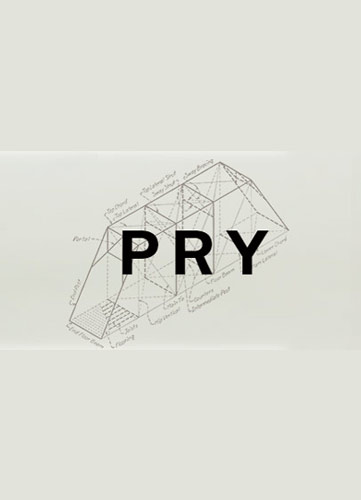
The more you look, the more you learn. Samantha Gorman and Danny Cannizzaro have created an out of the ordinary eBook experience, an app novella, that dives into the overlapping thoughts of James, a demolition consultant who struggles with his vision and his memories of the Gulf War. Pry isn’t just a story you read off a screen, but one you interact with.
Pry has a branching narrative, similar to game writing, which can feel overwhelming at first because it is a new way of interactively reading. The words keep opening and connecting deeper thoughts, enhancing the story. The reader becomes James, not just by reading his thoughts, but by seeing the world around him. The reader pinches and pulls on the screen, revealing the vast layers of images, videos, and text all filtered through James’ mind.
James’ suffering past, and his lack of communication with his best friend, Luke, causes feelings of discomfort. James is disconnected from his current life and distances himself from Luke, even though they presently work together. All he sees is the squad leader version of Luke. During the war, James had feelings for Jessie, another member of their squad, who was secretly involved with Luke. James added photos of Jessie to an album that held memories of his late mother. The album was supposed to be his way to leave thoughts of war and remind himself of human connection; but instead, it became a fire of regrets and the catalyst that led to Jessie’s death.
It would be interesting to change narrators and experience Luke’s perspective. The creativity behind Pry provides a unique and memorable experience. Look deeper and your eyes will catch something else that will pry open that desire for human connection and to keep those we love close.
Pry by Danny Cannizzaro & Samantha Gorman. Tender Claws, October 2014.
Reviewer bio: Laurie Jackson is a writer and artist who is currently working on her first YA series. She started combining her artwork with her creative writing in the imagine section of her blog #words2art.
Spread the word!
The End of the Ocean
 Guest Post by Kristín M Hreinsdóttir
The End of the Ocean is a novel by Maja Lunde who is a Norwegian author. I started to read this book because it was due to be the next book to read in my book club. When I started reading, I was not sure what I was going to find. I had not at that point read something written by Maja Lunde and was not sure I was going to like it—before my reading, I was told it was about some environmental tragedy and also set in the future. Maybe it is my inner fear or some underlying knowledge about a tragedy like that which makes me dislike the subject, as well as my long-lasting dislike for books or stories set in the future. Why don’t I like stories like that? It is because I think it can be so often overdramatic and superficial and not real. Maja Lunde does the opposite and did hold my attention from beginning to almost the end.
Yes, it is about an environmental tragedy in the future, but it can also be in our time when the water is beginning to be the most important thing, though most of us are not willing to accept that. The novel is also about how the individual handles crises and difficult times, and is a protest against our greedy action against nature. Greed is something we have seriously to think about.
I liked how the book is written but sometimes it lacked flow, but it did not spoil the story so much. The characters are interesting and so well set up that you start to have some strong opinion on them, growing to like or dislike them very much. The weakest part of the story is the end; it almost ended so suddenly that the reader gets the feeling that there is something missing. You are left wanting to know what happens next. But that is maybe a plus that you start to wonder about the end and make your own.
The End of the Ocean by Maja Lunde. HarperVia, January 2020.
Reviewer bio: My name is Kristín M Hreinsdóttir. I live in Iceland and have always like books and literature. I hold B.Ed. in information technology and media and an MA in museum study.
Buy this book from our affiliate Bookshop.org.
Spread the word!
Program :: University of South Alabama MA with Creative Writing Emphasis
Earn your MA with an emphasis in Creative Writing in the vibrant city of Mobile, near some of our country’s best beaches. Tuition waivers and assistantships are available as are additional scholarships for excellence and summer creative writing projects. Home of the Stokes Center for Creative Writing. For more information, visit our website: www.southalabama.edu/colleges/artsandsci/english/.
Spread the word!
River Teeth Launches Weekly Online Magazine of Micro-Essays
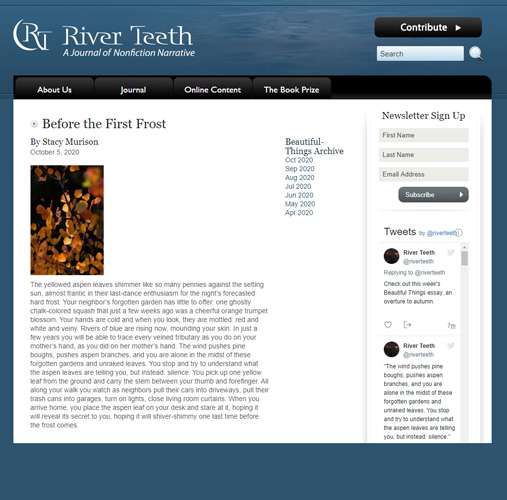
In April 2020, biannual print literary magazine River Teeth launched the online weekly journal Beautiful Things. This publication is devoted to very brief nonfiction that finds beauty in the everyday. Readers can subscribe to receive the latest micro-essay in their inbox every Monday morning. Today’s essay is “Before the First Frost” by Stacy Murison.
Beautiful Things was inspired by Michelle Webster-Hein’s essay “Beautiful Things” which was originally published in Volume 15, Number 1 of River Teeth. This column is co-edited by Michelle Webster-Hein and Jill Christman.
River Teeth is devoted to publishing the best creative nonfiction, including narrative reportage, essays, and memoir. Stop by their listing on NewPages to learn more about them and their new online publication.
Spread the word!
Zombie Parallels
 Guest Post by Nick D’Onofrio
The whole Covid-19 pandemic got me into reading World War Z by Max Brooks. Published in 2007, the novel follows characters around the world as they struggle to survive a zombie outbreak that overtakes the globe. It takes place before, during, and after the zombie outbreak.
The narrator interviews a new survivor from a different part of the world for each chapter. Some chapters can be two pages long, while others can be twenty pages depending on what is being covered. From clearing the catacombs beneath Paris to managing satellites in space, the novel describes interesting scenarios that I would have never thought of when dealing with the undead.
All this being said, it does have a fair share of gore, which is expected in the zombie genre. So it is not for the faint of heart. What really drew me into picking up World War Z were the parallels people online were pointing out between the book and what has happened with the coronavirus. In the novel, the zombie outbreak starts in China and the government there tries to cover it up but it spreads. The United States is overconfident in its ability to contain the threat and promotes a fake drug, Phalanx, which supposedly cures the new disease. I could go on, but I don’t want to spoil too much.
I bought both the book itself and the audiobook. I follow along as it is being read, because that is how I absorb the information best due to my dyslexia. Even the audiobook has a different voice actor for each chapter. There were even some voices I recognized such as Nathan Fillion, Mark Hamill, Simon Pegg, and Martin Scorsese. However, I noticed the audiobook did have a few paragraphs and chapters missing in the beginning but that didn’t bother me that much.
World War Z by Max Brooks. Penguin Random House, October 2007.
Reviewer bio: I grew up in South Carolina but have lived in Switzerland. My traveling experiences have sparked my creativity and inspired me to write.
Buy this book at our affiliate Bookshop.org.
Spread the word!
World Literature Today – Fall 2020
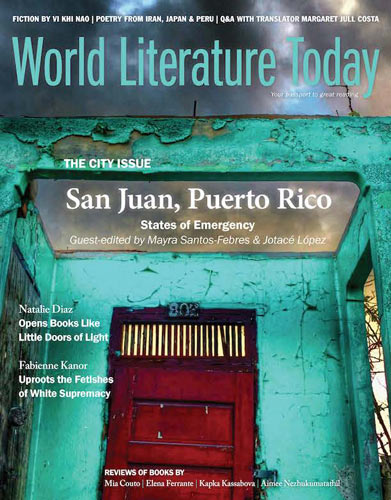
San Juan, Puerto Rico, takes the spotlight in World Literature Today’s annual city issue with a powerful selection of poetry, stories, and essays by 17 writers. Other highlights in the autumn issue include Fabienne Kanor’s essay on uprooting the fetishes of white supremacy; interviews with Natalie Diaz and Margaret Jull Costa; a stunning poem by Achy Obejas on “the universe at absolute zero”; fiction by Vi Khi Nao and Lidija Dimkovska; and much more. Reviews of new books by Elena Ferrante, Mia Couto, Kapka Kassabova, and dozens more make WLT your go-to guide for the best in international literature
Spread the word!
Understorey Magazine – Issue 18
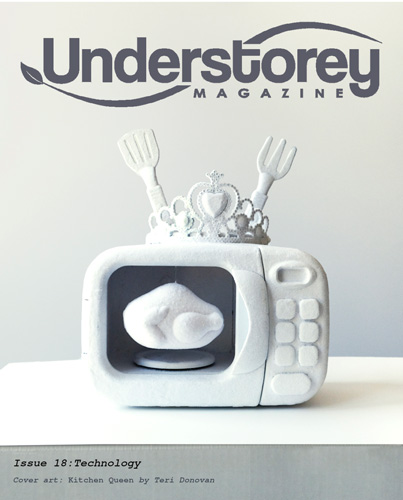
Understorey Magazine Issue 18 is out. Read for examinations on the many ways science and technology affect our everyday lives. Poetry by Moni Brar, Daze Jefferies, Kimberley Orton, Dawn Macdonald, Kayleigh Cline, and I. Sabrina Samreen; fiction by Gail Willis; and nonfiction by Jeanne Kwong, Sima Chowdhury, Stacey McLeod, and Rita Kindl Myers. Plus, interviews with Maryam Heba and Chelsey Purdy.
Spread the word!
THEMA – Fall 2020
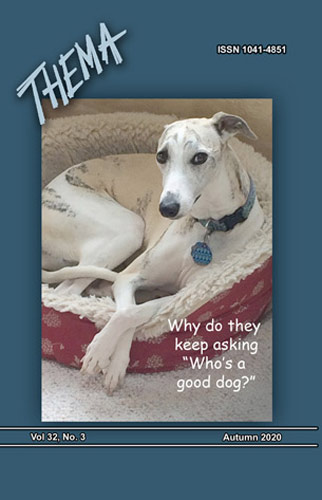
The writers in the Autumn 2020 issue of THEMA all explore the theme: What a Strange Question! Stories, short-shorts, poems, and photographs by Andrew M. Seddon, Virginia McGee Butler, Linda Berry, Beverly Boyd, Lynda Fox, J. Jackson, John Hill, Dick Moody, and more.
Spread the word!
Plume – October 2020

This month’s Plume featured selection includes an interview with francine j harris by Amy Beeder, as well as works by the poet. Charles Coe writes “A Hard Road” in the essays and comment section, and Chelsea Wagenaar reviews Brett Foster’s Extravagant Rescues.
Spread the word!
The Georgia Review – Fall 2020
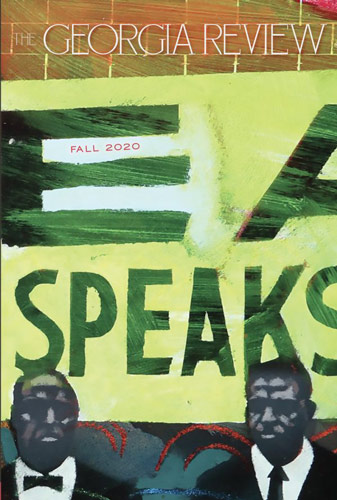
The Georgia Review’s Fall 2020 issue is out with new work from Kaitlyn Greenidge, Wayne Koestenbaum, Sally Wen Mao, Charles Baxter, Marianne Boruch, Yona Harvey, and many other compelling voices, both emerging and long-established. Special features include a portfolio of artwork from the High Museum of Art’s exhibition Picture the Dream: The Story of the Civil Rights Movement Through Children’s Books and a translation of Vinod Kumar Shukla’s masterful short story “College.”
Spread the word!
Cleaver Magazine – Oct 2020
In this issue of Cleaver, find three collaborations: “Reparations Wine Label” with text and concept by J’nai Gaither and art by Phoebe Funderburg-Moore; “The Esperanza Project” with music by Richard Casimir, video editing by Michael Casimir, and a poem by Herman Beavers; and “Terra in Flux” with poetry by Mark Danowsky and photography by John Singletary.
Spread the word!
Cimarron Review – Issue 211
Issue 211 of Cimarron Review features poetry by Bonnie Auslander, Clemonce Heard, Leslie McGrath, Emily Franklin, Chris Haven, Matt Morgan, Laura McKee, Bryce Berkowitz, Elisabeth Murawski, Jan Beatty, Kayla Sargeson, and others; fiction by Andrew Geyer, Molly Anders, and Steven Wingate; and nonfiction by Ephraim Scott Sommers and Caroline Sutton. This issue’s cover art is “River Fog” by Richard Speedy.
Spread the word!
Brilliant Flash Fiction – Sept 2020
In the September 2020 issue of Brilliant Flash Fiction, find new flash by Madalyn Aslan, Bernard Arogyaswamy, Lisa Fox, Alan Ford, Sudha Balagopal, and more. Find out more at the Brilliant Flash Fiction website.
Spread the word!
The Baltimore Review – 2020

This year’s print collection of The Baltimore Review is now out. It includes poems, stories, and creative nonfiction published in The Baltimore Review‘s Summer 2019 Maryland Writers Special Issue, Fall 2019, Winter 2020, and Spring 2020 online issues. Work by Sandy Longhorn, Tim Griffith, Maggie Andersen, Jennifer Lang, Kathleen Hellen, Kris Faatz, Michael Downs, Grace Cavalieri, Stephen Tuttle, Libby Heily, Emily Stoddard, Diana Xin, Omer Friedlander, Jeannine Hall Gailey, Avra Margariti, Naomi Cohn, and many more.
Spread the word!
Event :: Driftwood Press Virtual Seminars for Fiction & Poetry
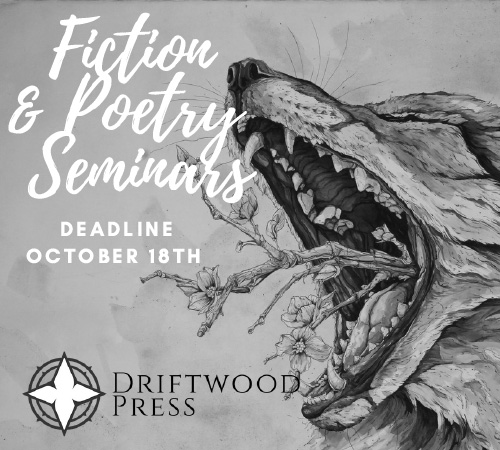 Driftwood Press‘ “Editors & Writers: The Path to Publication” and “Chapbook Creation” seminars are open for registration! Short story writers and poetry chapbook writers seeking to polish their craft and learn about the other side of submissions should apply; each course includes five lectures, critiques, prompts, readings, and more. Both courses are limited to fifteen spots each and will close when those spots are filled or when the course begins on October 19th. Click the link for more testimonials, a lecture list, and additional information.
Spread the word!
EVENT Virtual Fall Reading Series
 Have you been keeping up with EVENT Magazine‘s Fall Reading Series? Each week, they’re introducing one writer, along with a video of each author reading their work from the safety of their homes. So far, they’ve featured John Elizabeth Stintzi, Rose Cullis, and Jane Eaton Hamilton.
Stay safe at your own home and check out the videos on EVENT‘s YouTube channel, or via their blog. A great activity for these rainy, cool fall days we now find ourselves in.
Spread the word!
Hippocampus: Devoted to Memorable Creative Nonfiction
 Launched in 2011, online literary magazine Hippocampus was first dreamed about by founder and editor Donna Talarico when she was working on her MFA in creative writing at Wilkes University. Talarico wanted to create not just a literary magazine, but also develop a venue to education and inform those interested in reading and writing creative nonfiction.
Their sea horse logo was created since the hippocampus, the part of the brain dealing with memories, is sea-horse-shaped.
Over the years, they have launched a nonfiction writing contest, an annual nonfiction writing conference, and now a book publishing division. They are open to submissions annually from March through December.
Their September 2020 issue features work by Katie Parry, Kirsten Reneau, Rachel Fleishman, Brad Wetherell, Daniel K. Miller, Gwen Niekamp, and more.
Learn more about this magazine by stopping by their listing on NewPages.
Spread the word!
Find Nature with Humana Obscura
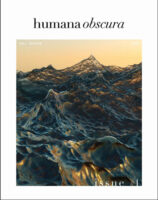
Online and print literary magazine Humana Obscura publishes the best new, emerging, and established writers and artists in the “nature space.” As their name applies (obscured human), they focus on works where the human elements is concealed, but not entirely absent, aiming to revive the genre of nature-centric poetry and art.
They publish two issues a year featuring poetry, short prose under 1,000 words, and artwork in various mediums. Their inaugural issue features poetry by James King, Emily Hermann, Danielle Zipkin, David Baker, Mary Buchinger, and more; prose by Kathleen Deep, Nick O’Brien, Maggie Maize; and Angela Shen; with art by Margaret Dries, Kyra Schmidt, J. T. Bruce, and more.
They are currently open to submissions for their second issue. Learn more here. Don’t forget to stop by NewPages to discover more about this fledgling literary magazine.
Spread the word!
Diversity of Little Libraries Lies in their Non-curated Nature
 Guest Post by S. B. Julian
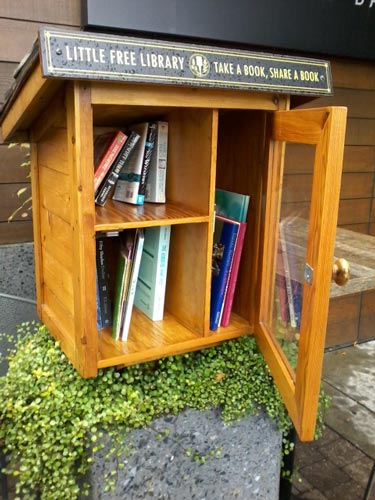
Is making the shelves of Little Free Libraries more diverse an appropriate role for their stewards? Emblems of diversity already, these little book nooks give pleasure by not being “stewarded” at all. Ideally, you never know what you might find in one. You don’t have the feeling that someone has pre-engineered your discovery. Continue reading “Diversity of Little Libraries Lies in their Non-curated Nature”
Spread the word!
A Wild Light
 Guest Post by Susan Kay Anderson
Bodwell’s Crown of Wild, with its gorgeous cover of an abstract painting (by the poet’s late father), is an exciting reminder of our own moments of wild abandon and others’ wild abandon gone right/gone wrong. In “Summertime” we get to read a list of pleasurable freedoms: “. . . swim the length of every pool . . . / . . . French kissing Matt Matera . . . .” later becoming abandoned to the larger universe as this poem closes. What are the answers, this poem seems to be asking. Can anything be held and kept, or is even capturing memories an act of abandon as this very idea is also in survival mode?
I’ve been reading these poems with the cover in my mind. Its brushstrokes seem to be a visual companion to the pain of grief and anxiety of what now overwhelms: forest fires, death and abuse, a madman at the helm.
What does abstract art do but tell a story in a different way, a way that leads to musings and fresh starts? There are no easy answers.
In “Where Rivers And Mountains Remain,” one of the poems in Crown Of Wild paying homage to Kayla Mueller, the captured American woman who was held and died in Syria, we see wishes for Mueller: ” . . . silvery dreams” and ” . . . a crown woven from stars” as gentle acknowledgements and gifts of praise.
What Bodwell constructs in Crown Of Wild are sculptures and sketches and shapes so each poem can express what was unthinkable. Where will the brush go? What color will it pick up as it merges and is dragged through what is already there? What is soothed? Stirred?
These poems do not need explanation, they seem to be saying. They stand alone on their base, on that which protects and extends and illustrates what is “wild” to what is really wild and beyond our imagining. They say here is beauty and the redemption that moonlit/starlit rivers and mountains bring because they remain after all that has happened, is happening.
Crown Of Wild by Erica Bodwell. Two Sylvias Press, 2020.
Reviewer bio: Susan Kay Anderson has work forthcoming from Loud Coffee Press, Sleet Magazine, and Finishing Line Press.
Buy this book from our affiliate Bookshop.org.
Spread the word!
New Lit on the Block :: Binsey Poplar Press
 “Having a safe space to share your art/writing and the power of publication to galvanize aspiring young artists and writers to share their voice” is a motivating factor behind Binsey Poplar Press according to Founder and Editor Sophia Smith. Featuring poetry, fiction, nonfiction, photography, and art by contributors ages 13-26, Binsey Poplar Press publishes an online literary magazine every two months as well as publishing pieces on their website. “Our website will be continuously updated with new art and writing pieces and issues,” said Jessica Gao, Web Designer and Co-Editor for Art. “We hope to make it even more visually appealing and be one of your favorite reading spots.” Continue reading “New Lit on the Block :: Binsey Poplar Press”