Home » NewPages Blog » Page 74

NewPages Blog

At the NewPages Blog readers and writers can catch up with their favorite literary and alternative magazines, independent and university presses, creative writing programs, and writing and literary events. Find new books, new issue announcements, contest winners, and so much more!

EVENT Virtual Fall Reading Series

Have you been keeping up with EVENT Magazine‘s Fall Reading Series? Each week, they’re introducing one writer, along with a video of each author reading their work from the safety of their homes. So far, they’ve featured John Elizabeth Stintzi, Rose Cullis, and Jane Eaton Hamilton.

Stay safe at your own home and check out the videos on EVENT‘s YouTube channel, or via their blog. A great activity for these rainy, cool fall days we now find ourselves in.

Hippocampus: Devoted to Memorable Creative Nonfiction

Hippocampus website screenshotLaunched in 2011, online literary magazine Hippocampus was first dreamed about by founder and editor Donna Talarico when she was working on her MFA in creative writing at Wilkes University. Talarico wanted to create not just a literary magazine, but also develop a venue to education and inform those interested in reading and writing creative nonfiction.

Their sea horse logo was created since the hippocampus, the part of the brain dealing with memories, is sea-horse-shaped.

Over the years, they have launched a nonfiction writing contest, an annual nonfiction writing conference, and now a book publishing division. They are open to submissions annually from March through December.

Their September 2020 issue features work by Katie Parry, Kirsten Reneau, Rachel Fleishman, Brad Wetherell, Daniel K. Miller, Gwen Niekamp, and more.

Learn more about this magazine by stopping by their listing on NewPages.

Find Nature with Humana Obscura

Online and print literary magazine Humana Obscura publishes the best new, emerging, and established writers and artists in the “nature space.” As their name applies (obscured human), they focus on works where the human elements is concealed, but not entirely absent, aiming to revive the genre of nature-centric poetry and art.

They publish two issues a year featuring poetry, short prose under 1,000 words, and artwork in various mediums. Their inaugural issue features poetry by James King, Emily Hermann, Danielle Zipkin, David Baker, Mary Buchinger, and more; prose by Kathleen Deep, Nick O’Brien, Maggie Maize; and Angela Shen; with art by Margaret Dries, Kyra Schmidt, J. T. Bruce, and more.

They are currently open to submissions for their second issue. Learn more here. Don’t forget to stop by NewPages to discover more about this fledgling literary magazine.

Diversity of Little Libraries Lies in their Non-curated Nature

Guest Post by S. B. Julian

Is making the shelves of Little Free Libraries more diverse an appropriate role for their stewards? Emblems of diversity already, these little book nooks give pleasure by not being “stewarded” at all. Ideally, you never know what you might find in one. You don’t have the feeling that someone has pre-engineered your discovery. Continue reading “Diversity of Little Libraries Lies in their Non-curated Nature”

A Wild Light

Guest Post by Susan Kay Anderson

Bodwell’s Crown of Wild, with its gorgeous cover of an abstract painting (by the poet’s late father), is an exciting reminder of our own moments of wild abandon and others’ wild abandon gone right/gone wrong.  In “Summertime” we get to read a list of pleasurable freedoms: “. . . swim the length of every pool . . . / . . . French kissing Matt Matera . . . .” later becoming abandoned to the larger universe as this poem closes. What are the answers, this poem seems to be asking. Can anything be held and kept, or is even capturing memories an act of abandon as this very idea is also in survival mode?

I’ve been reading these poems with the cover in my mind. Its brushstrokes seem to be a visual companion to the pain of grief and anxiety of what now overwhelms: forest fires, death and abuse, a madman at the helm.

What does abstract art do but tell a story in a different way, a way that leads to musings and fresh starts? There are no easy answers.

In “Where Rivers And Mountains Remain,” one of the poems in Crown Of Wild paying homage to Kayla Mueller, the captured American woman who was held and died in Syria, we see wishes for Mueller: ” . . . silvery dreams” and ” . . . a crown woven from stars” as gentle acknowledgements and gifts of praise.

What Bodwell constructs in Crown Of Wild are sculptures and sketches and shapes so each poem can express what was unthinkable. Where will the brush go? What color will it pick up as it merges and is dragged through what is already there? What is soothed? Stirred?

These poems do not need explanation, they seem to be saying. They stand alone on their base, on that which protects and extends and illustrates what is “wild” to what is really wild and beyond our imagining. They say here is beauty and the redemption that moonlit/starlit rivers and mountains bring because they remain after all that has happened, is happening.


Crown Of Wild by Erica Bodwell. Two Sylvias Press, 2020.

Reviewer bio: Susan Kay Anderson has work forthcoming from Loud Coffee Press, Sleet Magazine, and Finishing Line Press.

Buy this book from our affiliate Bookshop.org.

New Lit on the Block :: Binsey Poplar Press

“Having a safe space to share your art/writing and the power of publication to galvanize aspiring young artists and writers to share their voice” is a motivating factor behind Binsey Poplar Press according to Founder and Editor Sophia Smith. Featuring poetry, fiction, nonfiction, photography, and art by contributors ages 13-26, Binsey Poplar Press publishes an online literary magazine every two months as well as publishing pieces on their website. “Our website will be continuously updated with new art and writing pieces and issues,” said Jessica Gao, Web Designer and Co-Editor for Art. “We hope to make it even more visually appealing and be one of your favorite reading spots.” Continue reading “New Lit on the Block :: Binsey Poplar Press”

Abandon Mediocrity with Zero Mirrors

Guest Post by Gerty Haas

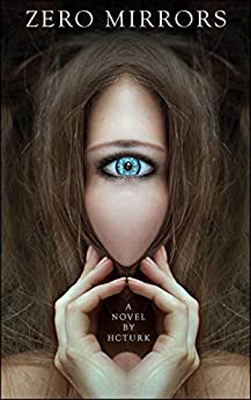
In my several decades of reading, I have never encountered the likes of Zero Mirrors.

The narrator is a sentient dress worn by the main character, a woman living in a city of boredom. Her companion is a kidult: an adult who had his body modified so he’s the size of a child, because that’s the only time of his life when he was truly happy. The dress is a WAD (Wearable Assistive Data-integrator) worn by Melony, who is a Sashayer in EasyLiving City (not a dancer, because dancing is illegal). Her dearest friend is Robben, the original pilot of the Tree, the area’s greatest building and a grounded spaceship.

Abetted by her companions, Melony’s goal is to sashay through time to save her land from a Plant Plague arriving from the future. Along with being thoughtful and hilarious, this time travel story deals with gender identity, ageism, and family leadership. A key theme is the nature of human movement, from dancing to fleeing to slipping through time.

I’m not going to delineate the story except to say it has three endings: past, present, and future. I’m not able to tell you how often I had to stop reading because the book was making my brain rattle from astonishment or my stomach churn from hilarity or my eyes tear from a poignancy beyond the reality we’re stuck with. A word I hate to see in the description of any artwork is “visionary,” but the word is appropriate here. H. C. Turk has a vision of the future that makes our present seem insubstantial and ignorant, a timeframe that should be left behind. With this book, the reader can abandon that mediocrity for an enthralling experience beyond the norm, exactly equal to the book’s unique, stylish energy.

“You can’t imagine how heartsick you can be when you don’t have a heart.”


Zero Mirrors by H. C. Turk. September 2020.

Reviewer bio: Recently retired from the construction industry, Gerty Haas is an avid reader and art lover living in Florida, which thankfully is not part of The South.
Sponsor Spotlight :: EVENT: The Douglas College Review

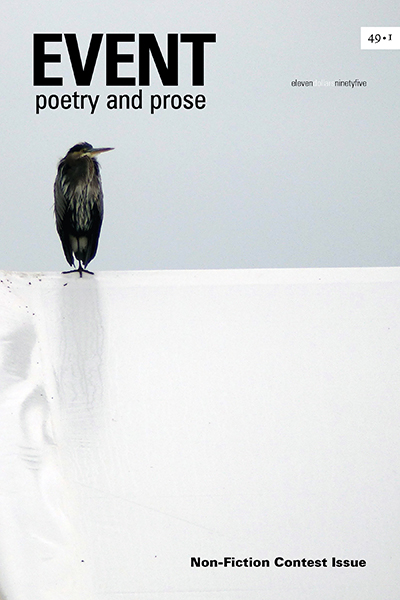
cover of EVENT Issue 49-1Founded in 1971, EVENT is a literary magazine dedicated to nurturing writers and presenting readers with the best contemporary writing from Canada and abroad. They strive to publish a diversity of voices and literary styles and have published many distinguished writers before and after they gained national or international recognition, i.e. André Alexis, George Bowering, Charles Bukowski, Esi Edugyan, Jack Hodgins, Annabel Lyon, Pablo Neruda, Alden Nowlan, Nino Ricci, Diane Schoemperlen, Carol Shields, Timothy Taylor, and Madeline Thien.

Each year they host a Non-Fiction Contest. The contest awards $3,000 in prizes ($1,500 First Place, $1,000 Second Place, $500 Third Place) plus publication in the Spring/Summer issue. This is the longest-running contest of its kind in Canada. The deadline to enter is October 15 annually. Check out Issue 49/1 to view the winning pieces of their 2019 contest: “Judge’s Essay” by Anthony Oliveira, “The Dead Green Man” by Jane Eaton Hamilton, “Things You Think When Your Husband Has a Heart Attack” by Mary Steer, and “My Beautiful Madness” by Rose Cullis.

Besides publishing issues three times a year, EVENT also offers a reading service for writers. Stop by their listing on NewPages to learn more.

The LaHave Review Spotlighting Poems & Poets

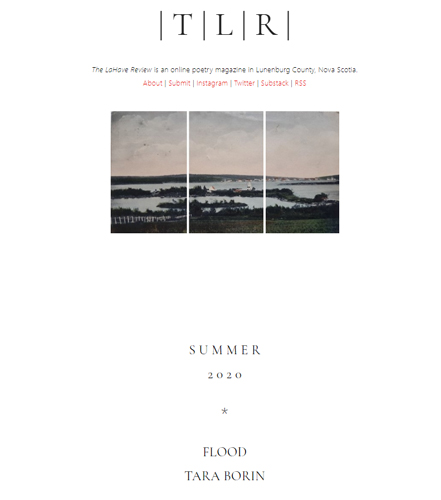
The LaHave Review Summer 2020 screenshotFounded in 2019, online quarterly literary magazine The LaHave Review highlights a single poem in each issue with an interview and notes about the poem. The Fall 2020 issue features “As For the Glossy Green Tractor Your Were” by Allison Adair. Past issues include “Flood” by Tara Borin (Summer 2020), “Buttercup” by Emily Tristan Jones (Spring 2020), and “What I Can’t Tell Her” by Ashley Anna McHugh (Winter 2020).

They read poetry submissions year-round and pay $100 CAD per poem for first publication rights.

The journal is named after the LaHave River in Lunenburg County, Nova Scotia where the magazine is based and is edited by Michael Goodfellow. Stop by their listing on NewPages to learn more.

Lyrical Examinations

Guest Post by Amber Caron

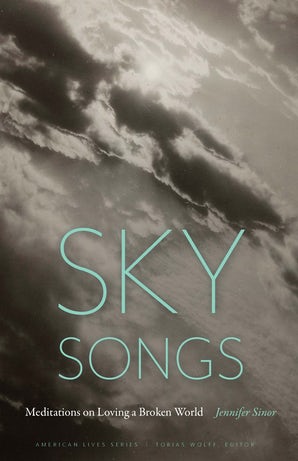
Like other readers, I had grand plans when the world went on lockdown. I would begin with War and Peace. I went as far as borrowing the book from a friend, left it on my shelf unopened, and instead turned to newly published nonfiction that grappled with the question of what it is to live a good life. The most recent addition to this stack of books is Jennifer Sinor’s Sky Songs. (Disclosure: Sinor and I teach at the same university.)

Both the title and cover image of Sinor’s essay collection are drawn from Alfred Stieglitz’s photographic study Songs of the Sky (later titled Equivalents), nearly four hundred abstract images captured when Stieglitz turned his camera to the clouds. “What is of greatest importance,” Stieglitz said, “is to hold a moment, to record something so completely that those who see it will relive an equivalent of what has been expressed.”

It was an emotional equivalence Stieglitz sought, and the same could be said of Sinor’s fifteen essays. Sky Songs meditates on the defining moments of a life—the tragic death of an uncle, a dissolving marriage, new love, the birth of a child, an encounter with wildlife, the loss of one religion and, years later, the unfolding of another. Read on their own, each essay offers a patient, lyrical examination of these moments. Together, the essays offer a profound reading experience, enriched by a layering of images, a deep sense of place, and the inescapable truth that although we are often haunted by our earliest tragedies, we are equally shaped by the beauty we find in the world around us. Ultimately, Sky Songs delivers what it promises, and what it promises is no small thing: the emotional equivalence of a life well lived.


Sky Songs: Meditations on Loving a Broken World by Jennifer Sinor. University of Nebraska Press, October 2020.

Reviewer bio: Amber Caron’s fiction and non-fiction can be found in The Threepenny Review, PEN America Best Debut Short Stories, Southwest Review, Longreads, and elsewhere.

Buy this book from our affiliate Bookshop.org.

This is Love

Guest Post by Courtney B. Jenkins

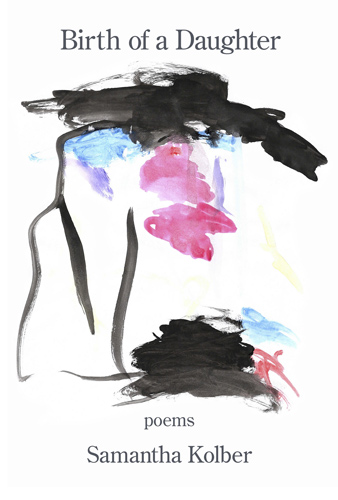
As I read Samantha Kolber’s poetry debut, I thought of all the mothers I know and hold dear—close friends, my sister, my own mother; I want to give them this book, share with them this gift of understanding.

I paused as I read to absorb moments of “Whoa,” as Kolber’s words reveal what it meant to her to become Mother. I re-read to assimilate every nuance before passing on to the next vignette. Each feeling evoked felt important. Kolber’s words are powerful draws into her world and, somehow, although I am not a mother—a birth-mother, anyhow—I know these feelings. I suddenly understand the patience I see in the mothers around me—browbeaten and screamed at by tiny versions of themselves—who are somehow able to smile in response and reply with patience and logic to the demands of their offspring. And, I realize, through this breadth of written, recorded emotion: this is love. My eyes teared with the fullness of it. And although I have no literal means of comparison in my own life, I understand. Continue reading “This is Love”

A Rewarding Challenge

Guest Post by Judith Pratt

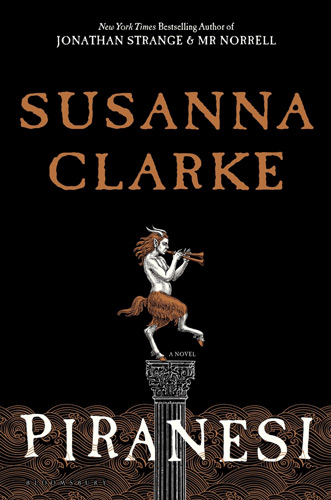
Susanna Clarke’s new novel is much shorter than her wonderful Jonathan Strange and Mr. Norrell, but even more challenging to read. It’s completely worth the trouble. Some novels I give away, but some are keepers. This is a keeper.

The man writing the story lives in a huge House of Halls, Vestibules, and Staircases. The House provides him with everything he needs—fish from the Tides that sweep the House, seaweed for food and fuel, and the Kindness of the many Statues that fill the House.

He writes daily journals in these capital letters, and creates directories of the entries. He feels blessed by the beauty of the House. The man knows only one human, whom he calls The Other. The Other has named him Piranesi, but the man knows that is not his name.

Once you have these basics, things begin to seem strange. Piranesi lives like an early tribal person, but analyzes things like a scholar. How would this Piranesi know that some statues are minotaurs? Why does he know what a crisp packet is? The book wasn’t making sense. For a chapter or two, I found that intriguing, but frustrating.

Don’t give up. The answers are more fantastical than the questions. And the answers create more questions. Would you rather be along in a world of mysterious beauty, or live an ordinary life with family and friends? How can we learn to see the beauty and magic in the world? What does it mean to be lost?

In retrospect, I’m glad that I knew nothing about this novel when I began to read it. I suggest you ignore the reviews—some of which are beautifully written—and go on the adventure as alone as Piranesi.


Piranesi by Susanna Clarke. Bloomsbury Publishing, September 2020.

Reviewer bio: Judith Pratt has acted, directed, and taught theatre. Her plays have been produced internationally. Her novel, Siljeea Magic, was published in 2019. She lives in Ithaca, NY with a husband and three cockatiels.

Buy this book at our affiliate Bookshop.org.

A Wonderful Read

Guest Post by Brooke Carpenter

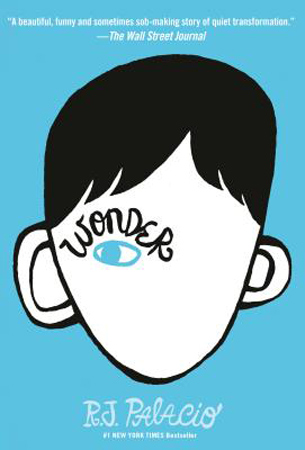
I don’t think I’ve ever laughed so hard or cried so much as in the book Wonder by R. J. Palacio. That’s saying something; I am one of the editors of the poetry section of the online journal Route 7 Review, which features the creativity of worldwide authors and artists. And Wonder is a stunning work of art. It is beautifully woven with introspect and paradigm-shifting opportunities. Palacio masterfully creates a soothing undertone of love and acceptance in a cruel world, while at the same time maintaining a lighthearted, hilarious overtone that digs at the very human essence. Palacio carefully crafts the perfect tones and perspectives for each character she delves into, creating a quick-paced, engaging read.

Wonder discusses the topics of kindness, forgiveness, and acceptance as it plunges headfirst into the world of August, a 5th grader going to public school for the first time. With 27 surgeries to his name and a severe facial deformity, August is highly aware that he attracts unwanted attention. Needless to say, he is terrified to become a public display as he starts school. The book not only follows August through the school year, through the ups and downs and fears and successes, but Palacio also cleverly weaves in the voices of the surrounding characters, adding a deeper level of interest to the novel.

As August’s story unfolds, it is impossible not to love the marvelous characters pushing and pulling against each other. Palacio’s beautiful writing delves into the far reaches of the soul to expose the hidden pieces. There is probably nothing more accurate to say than that Wonder is simply wonderful.


Wonder by R. J. Palacio. Knopf Books for Young Readers, 2012.

Reviewer bio: I am a Senior at Dixie State University and am an editor for the poetry section of DSU’s online journal, Route 7 Review. Submissions are open now until November 6.

Buy this book from our affiliate Bookshop.org.

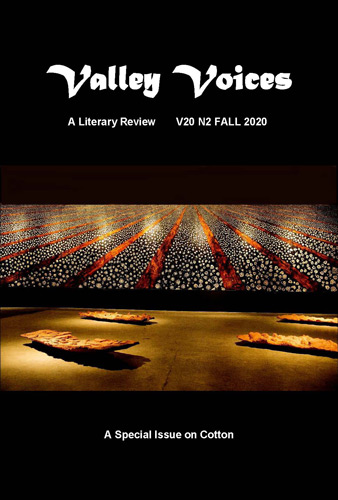
Valley Voices – Fall 2020

The Fall 2020 issue of Valley Voices features poetry by Paul Mariani, Gary Fincke, Janet McCann, Luci Shaw, Marge Piercy, Ted Kooser, D. S. Martin, Walter Bargen, Virginia Sullivan, Ed Madden, Le Hinton, Joseph Pearce, Jean-Mark Sens, John J. Han, and more; memoirs by Billy Middleton, Frederick W. Bassett, and Carol Coffee Reposa; and articles & interviews by Bruce Boyd Raeburn, Adam Gussow, Joseph Millichap, Janet Greenlees, Dominic Reisig, John J. Han, Gab D. Smith and Thomas H. Sayre, and David Tisdale.

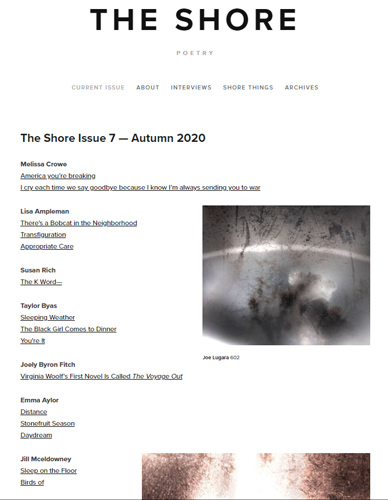
The Shore Poetry – Fall 2020

The autumn issue of The Shore features gorgeous and dynamic poetry by Melissa Crowe, Lisa Ampleman, Susan Rich, Taylor Byas, Joely Byron Fitch, Emma Aylor, Jill Mceldowney, Samuel Adeyemi, Taylor Fedorchak, Susan Moon, Owne McLeod, Oluwadare Popoola, Isaac George Lauristen, Duncan Mwangi, Adam Day, Natalie Young, Dan Wiencek, Andy Keys, Vincent Poturica, Katherine Fallon, and more. The issue also features digital art by Joe Lugara.

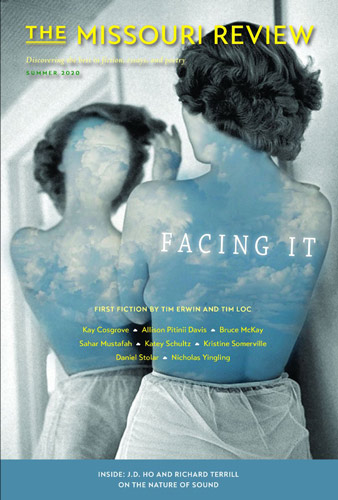
Missouri Review – Summer 2020

The Missouri Review “Facing It” issue is out. In this issue: first fiction from Tim Erwin and Tim Loc. Featuring Kay Cosgrove, Allison Pitinii Davis, Bruce McKay, Sahar Mustafa, Katey Schultz, Daniel Stolar, and Nicholas Yingling. Plus: J.D. Ho and Richard Terrill on the nature of sound.

Leaping Clear – Fall 2020

Leaping Clear - logo

Take the time to enjoy and be nourished by the art and writing in this new issue of Leaping Clear. There is humor, poignancy, power, ecstasy, calm, and beauty to be found in essays by Elizabeth Fletcher, Liz Woz, Ranjani Rao, and more; fiction by Taffeta Chime; and poetry by Alan Cohen, Carla Sarett, Fran Markover, J. P. White, Linda Parsons, Sandra Fees, Wayne Lee, and more.

Shape Your Fiction with Jerome Stern

Guest Post by James Gering

Here is a born creative writing teacher generously imparting dollops of warmth, humor, and wisdom in three sections that combine to resemble no other book in this crowded genre.

“The Shapes of Fiction” is the first section, where Stern vividly demonstrates his ideas in original and artful little storylines often featuring engaging dialogues. The first three shapes “show (you) how to handle thoughts, dialogue and action—techniques you’ll use over and over.” In “Iceberg,” a writer focuses on what characters choose to express or choose to keep in mind:


Brian thought, Oh God, here it comes. My Principal. The Pig That Walks Like a Man. “Hello, sir. What a fine day.”

Eiswold nodded. “What’s that on your tie, boy? Your lunch?”

“Oh, goodness,” Brian said, “I hadn’t noticed. Thank you, sir.”

A dynamic interplay between thought and speech unfolds, and it should be noted that fulsome conveyance of thought is where fiction triumphs over film.

Other shapes include “Bear at the Door,” “Onion,” “Visitation,” “Aha!,” and “Explosion,” the last of which advises you to blow the rest of the advice to smithereens and exclusively celebrate your own brilliance. The point: these are Stern’s insights (culled from decades of teaching at tertiary level), not cumbersome rules.

In the second section, “A Cautionary Interlude,” Stern points out common pitfalls on narrative journeys. Find out how to avoid “Population Explosions,” “The Banging-Shutter Story,” “The Hobos-in-Space Story,” and more.

The final section, is a comprehensive alphabetical rendering of writing terms, some universally known, others, like ‘intrigant,’ less so. The terms are deftly cross-referenced, making it a pleasure to follow related strands.

Befriend Jerome Stern! His wisdom and generosity will enrich your writing.


Making Shapely Fiction by Jerome Stern. W.W. Norton & Company, November 1991.

Reviewer bio: James Gering is a poet and short story writer from the Blue Mountains in Australia. He welcomes visitors at jamesgering.com.

Buy this book at our affiliate Bookshop.org.

Overlooked Beauty

Magazine Review by Katy Haas

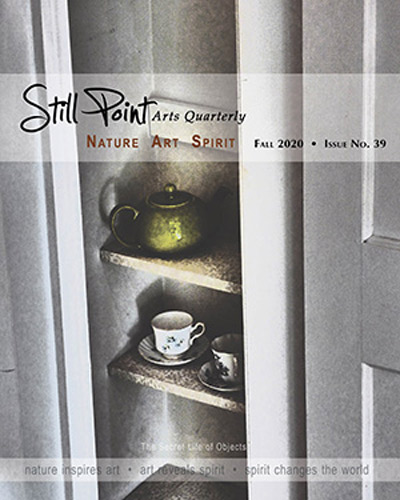
Now more than ever it’s important to find the beauty in whatever is around us. As writers, as artists, and as humans struggling through a traumatic period of time, it’s necessary to find bright spots. The Fall 2020 issue of Still Point Arts Quarterly puts this into practice, the theme of the issue being “The Secret Life of Objects.”

Throughout the pages, writers and artists look at what’s around them and capture their beauty. Adrienne Stevenson writes an ode to a “Kitchen Timer,” an appliance one doesn’t have to think much about until it’s gone. Kathleen Miller draws pared-down sketches of telephones, boats, pitchers, eliminating the details to follow Georgia O’Keeffe’s sentiment of “get[ting] at the real meaning of things.” Most of MJ Edwards’s compelling photography focuses on treasures of trash found on the beach, as they wonder about the “untold stories” the objects carry with them.

Art can be found in the everyday items around us, the objects easily overlooked. Don’t forget to look around you and find the beauty and inspiration they can hold.

Service Workers’ Words

Magazine Review by Katy Haas

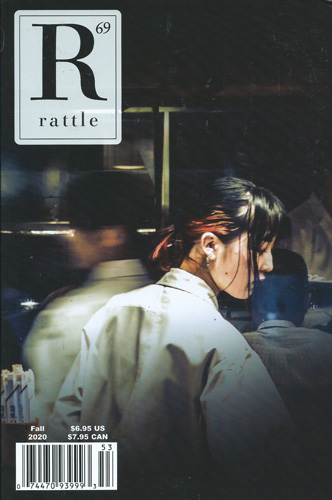
Since March, we’ve been relying heavily on service workers, those operating the essentials while the rest of the country slows or stops. The second half of the Fall 2020 issue of Rattle features work by poets who have served long periods of time as service workers.

In this section, readers can find Marylisa DeDomenicis’s “Excuse Me” and Jackleen Holton’s “The Hunter,” both of which discuss working in a restaurant. DeDomenicis writes of the prevalent racism in the kitchen where the speaker works, and Holton focuses on the sexism and harassment the women face at the restaurant where her speaker works. In both of these, the other workers advocate for each other when the higher-ups either do nothing or contribute to the problem. The speaker in DeDomenicis’s piece sticks up for the bullied Mexican bus boy, and the waitresses in Holton’s piece work the buddy system together so they’re never alone, lessening the severity of their harassment.

Laurie Uttich’s “To My Student with the Dime-Sized Bruises on the Back of Her Arms Who’s Still on Her Cellphone” stuck out to me most starkly. In this poem, the speaker notices her student’s bruises and implores that she put down her phone, her abusive boyfriend on the other end, so she can trade it for a pen and “Take a piece of the dark and put it on a page.” Sylvia Plath and Virginia Woolf stand by as supporting characters, offering comfort and a room of one’s own. Uttich’s use of language as the poem addresses the student is clever and flows quickly, familiar images flashing through the lines.

While we continue to rely on service workers to keep the world running, make sure to take time to hear their voices and their stories in their own words.

PoArtMo Anthology: 2020 Artists

We could all use a little positivity and Auroras & Blossoms agrees. This is why the literary magazine has established PoArtMo which stands for “Positive Art Month and Positive Art Moves.”

In the month of June, the PoArtMo creators urged writers and artists to “celebrate positive art for 30 days.” A collection of this positivity is to be memorialized in the PoArtMo Anthology. The anthology will feature drawings, paintings, photography, fiction, nonfiction, poetry, and six-word stories by the writers and artists who participated in the challenge. The magazine has announced the featured artists readers can expect to see in the anthology.

Congrats to the selected writers, and thank you for spreading your positive outlook!

Smith’s Final Season

Guest Post by James Penha

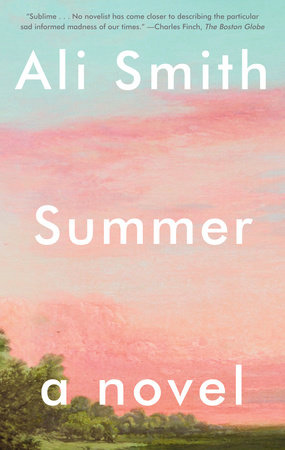
Summer is the fourth and final novel in Ali Smith’s seasonal quartet. I loved Autumn, Winter, and Spring. Summer is my favorite. It has what one expects from Smith: wonderfully idiosyncratic characters, interlocking story lines, humor, social and political themes. But the special shock of Summer is its timeliness—not just Summer; Summer 2020! Its present tense is our pandemic present. Ali Smith had planned for this novel from the time (2016) she published Autumn if not long before. How did Smith manage to integrate COVID-19 and lockdown so seamlessly into a novel already envisioned? I call it a miracle . . . and a great book.


Summer by Ali Smith. Pantheon, August 2020.
A native New Yorker, James Penha has lived for the past quarter-century in Indonesia. He edits The New Verse News, an online journal of current-events poetry.

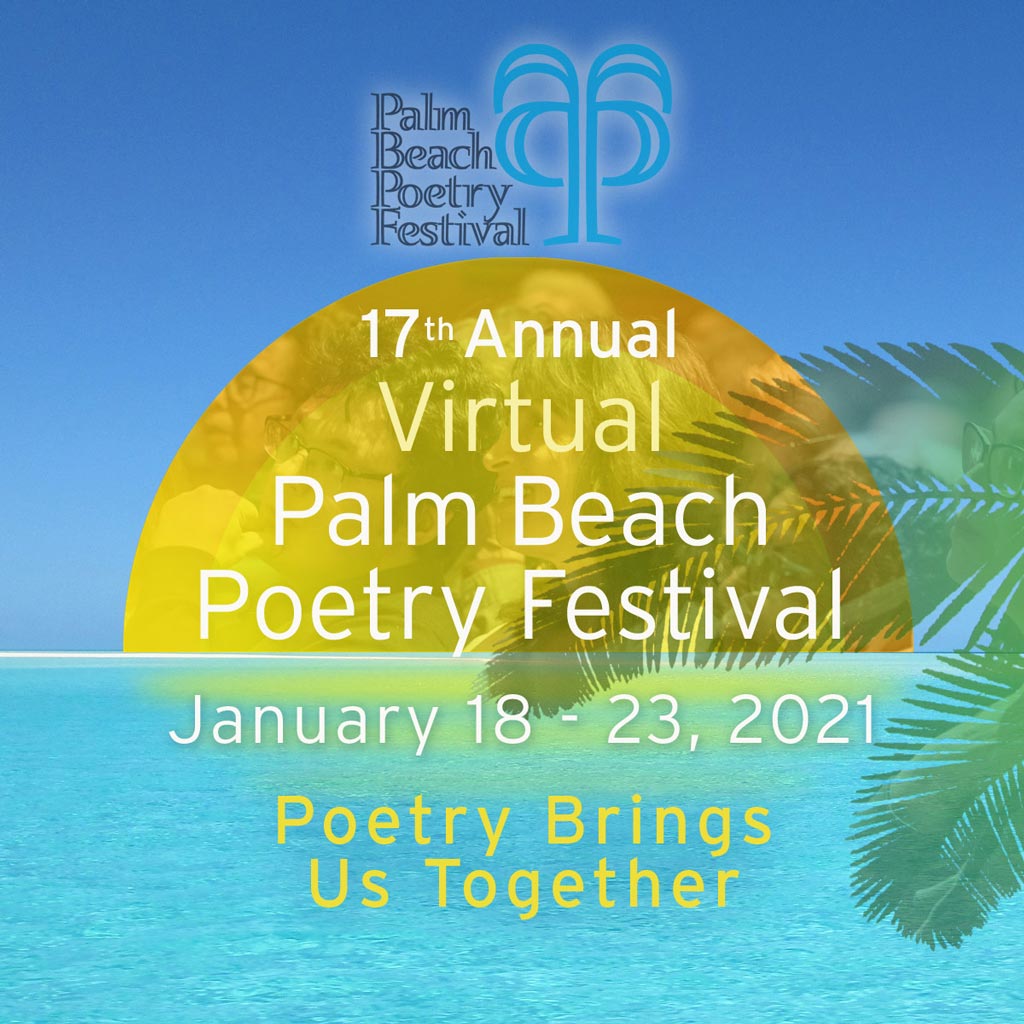
Event :: 2021 Virtual Palm Beach Poetry Festival

2021 Palm Beach Virtual Poetry Festival banner17th Annual Palm Beach Poetry Festival in Delray Beach, Florida, January 18-23, 2021. Focus on your work with America’s most engaging and award-winning poets. Workshops with David Baker, Laure-Anne Bosselaar, Traci Brimhall, Vievee Francis, Kevin Prufer, Martha Rhodes, and Tim Seibles. Six days of workshops, readings, craft talks, panel discussion, social events, and so much more. One-on-one conference Faculty: Lorna Blake, Sally Bliumis-Dunn, Nickole Brown, Jessica Jacobs, and Angela Narciso-Torres. Special Guest: Gregory Orr and the Parkington Sisters. Poet At Large: Brian Turner. To find out more, visit www.palmbeachpoetryfestival.org. Apply to attend a workshop! The application deadline has been extended to December 1 from November 10.

Get in the Halloween Mood

Guest Post by Claudia Gollini

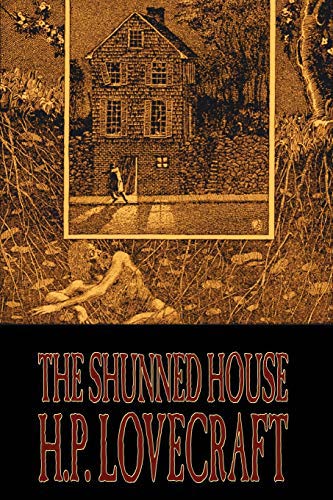
The Shunned House falls into the supernatural and folk genres. It is a horror fiction novelette by American author H. P. Lovecraft, written in October 1924 and first published in the October 1937 issue of Weird Tales.

Lovecraft links, at the story’s beginning, the tale to his idol Edgar Allan Poe. The unnamed narrator finds it ironic that during Edgar Allan Poe’s Providence sojourn, the master of the macabre many times passed a certain house on Benefit Street without recognizing the site of real horrors.

The Shunned House is a house on Benefit Street where a large number of people passed away. With the amount of fungus present in the house, it was declared to simply have “unhealthy” conditions. At worst, the house was deemed “unlucky.” No one suspected anything supernatural was going on.

However, the narrator’s uncle, physician and antiquarian Elihu Whipple, has a shivery fascination for the house. The house was built in 1763 by William Harris. Shortly after the Harrises moved in, his wife Rhoby delivered a stillborn son. For the next 150 years, no child would be born alive in the house. Once the narrator learns of his uncle’s suspicions, they decide to investigate the house.

The story’s narrator suspects that the family is connected to Jacques Roulet of Caude, who was condemned to death for lycanthropy in 1598 before being confined to an asylum.

Jacques Roulet was a real person, whom Lovecraft had read about in John Fiske’s Myths and Myth-Makers. “The family of Roulet had possessed an abnormal affinity for outer circles of entity—dark spheres which for normal folk hold only repulsion and terror.”

The Shunned House of the title is based on an actual house in Providence, Rhode Island, still standing at 135 Benefit Street and the novelette carries the perfect Halloween mood.


The Shunned House by H.P. Lovecraft.

Reviewer bio: Claudia Gollini is a makeup artist, fashion/beauty blogger and journalist, editor and writer, and body painter of events and TV shows.

NewPages Book Stand – September 2020

It’s that time of month again: a new Book Stand is now up on the website. With the September update, you can find five featured titles, as well as a selection of new and forthcoming books to check out.

In the forthcoming I’ll Fly Away, Rudy Francisco’s poems savor the day-to-day, treating it as worship, turning it into an opportunity to plant new seeds of growth.
The essays in Sky Songs: Meditations on Loving a Broken World by Jennifer Sinor offer a lyric exploration of language, love, and the promise inherent in the stories we tell: to remember.
Some Girls Walk into the Country They Are From is Sawako Nakayasu’s first poetry collection in seven years. The book radicalizes notions of “translation” as both process and product.

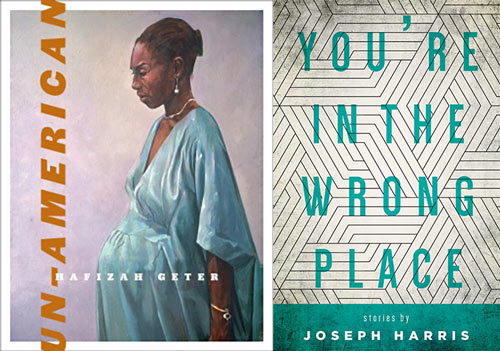
Hafizah Geter’s debut collection, Un-American, moves readers through the fraught internal and external landscapes—linguistic, cultural, racial, familial—of those whose lives are shaped and transformed by immigration.

Joseph Harris’s interconnected narrative You’re in the Wrong Place presents characters reaching for transcendence from a place they cannot escape in a landscape suddenly devoid of work, faith, and love.

You can learn more about each of these New & Noteworthy books at our website and find them at our our affiliate Bookshop.org. You can see how to place your book in our New & Noteworthy section here: https://npofficespace.com/classified-advertising/new-title-issue-ad-reservation/.

New Kooser Gem

Guest Post by Guinotte Wise

I see where the bookmark is in the closed pages of Ted Kooser’s Red Stilts and realize I’ve been reading faster than I meant to; it’s a new Kooser book and I like to savor the first read. It’s like a dish of something especially good and you want it to last longer than it does. Each poem is a pleasure. Even the epigraph at the start is Kooserian, though it’s a Tolstoy quote from “Father Sergius”: “After he’d walked away, she stood in the yard in starlight, listening to dogs bark, each more faintly as he passed the farms along the road.”

I can see it, hear it, feel it. That’s a summation of Ted Kooser’s poetry. The cover of this newest gem from Copper Canyon Press is a rather entrancing painting of an alley by Don Williams, an oil titled Nebraska City Alley and it, too, echoes Kooser charm and clarity.

Once finished with this, I’ll never be finished; I’ll return to it often. I have a shelf of Ted Kooser poetry and whichever book I pull from it, it takes me quietly away from whatever dissonance the outside world is shoveling at me, and into a gently masterful poem that seems so simple, so connected to everyday things we miss in our confusion.

Thank you, Mr. and Mrs. Kooser, for this kid you had in 1939. And thank the world for carving his genius. Simply awesome.


Red Stilts by Ted Kooser. Copper Canyon Press, 2020.

Reviewer bio: 5-time Pushcart nominee and author of seven books, Guinotte Wise’s poetry and prose have appeared in numerous journals. Some work is at http://www.wisesculpture.com.

Buy this book from our affiliate Bookshop.org.

Avian Inspiration

Guest Post by Amber Thompson

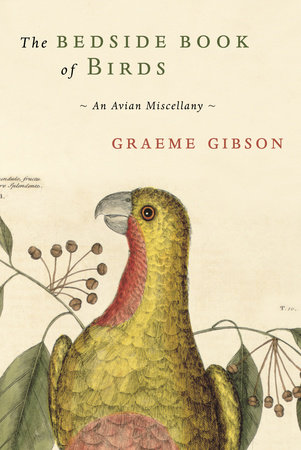
I discovered Graeme Gibson’s The Bedside Book of Birds while watching Margaret Atwood: A Word After a Word After a Word is Power. The day after I watched the documentary, my husband and I rescued a pair of near-fledgling doves. This, coupled with the fact that I found Atwood and Gibson’s relationship moving and relatable, convinced me I had to get this work for my husband, a lover of both books and birds.

Online it was selling for much more than the original list price, but at a bookstore a week and a half later, I watched my husband pick up a more reasonably priced copy. I told him a little about the book: that Atwood’s late husband had compiled it and that it was a collection of works on the relationship between birds and humans—in a sense, the awe the former has long inspired in the latter. I also told him I’d been hoping to get it for him and that if he liked the look of it, I still wanted to.

As we drove home, he cracked open the book. I peeked over to see the title of the first piece, a poem: “Night Crow” by Theodore Roethke. When he read it to me, I had the sudden realization that it was a poem I’d been searching for for years. These miraculous-feeling events coalesced into an experience of serendipity that we had not felt in a long time. When we curled into bed that night, he read more of the book aloud to me and we looked together at the beautifully included reproductions of sketches, paintings, and scientific drawings of birds. We rested quietly in the knowledge that we, through our friend Carol, the surviving fledgling, had been touched deeply by the avian world as well.


The Bedside Book of Birds: An Avian Miscellany by Graeme Gibson. Penguin Random House.

Reviewer bio: Amber Thompson is a Pushcart Prize nominee who recently published her debut poetry chapbook. She can be found at www.amberthompsonwrites.wordpress.com.

Event :: Willow Writers’ Fall 2020 Virtual Workshops

Registration Deadline: Rolling
Willow Writers’ Workshops is going virtual this fall! We will offer workshops, providing writing prompts, craft discussions, and manuscript consultations. All levels are welcome. Writers’ Workshops available on Thursday nights, Sunday afternoons, Saturday mornings, and Monday mornings. Fall seminars include Generating Story Ideas and Creating a Strong Sense of Place; Gothic Fiction, and Flash! Writing Short, Short Prose. Workshops and seminars run in September and October. The facilitator is Susan Isaak Lolis, a published and award-winning writer. For more information, check out willowwritersretreat.com.

Read It Again

Guest Post by Preksha Bothra

“Never let anyone make you feel ordinary.”

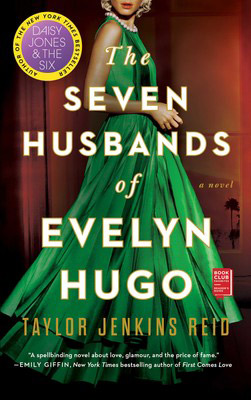
There were a lot of oh-I-wanna-read-this-again moments in Taylor Jenkins Reid’s The Seven Husbands of Evelyn Hugo. Nothing, literally nothing, in this book went the way I expected. A couple of times I was completely surprised with what happened. I didn’t even fully get it until I read the novel twice. Not many books have had that effect.

This book will definitely not bore you, because it’s never slow. The chapters skip from one husband to another quickly but without leaving any important details behind. The only one time that I didn’t like what I was reading was somewhere in the middle of the book, where I became a little tired with Evelyn and her marriages, but that is my only complaint. Highly recommended.


The Seven Husbands of Evelyn Hugo by Taylor Jenkins Reid. Washington Square Press, May 2018.

Reviewer bio: Find Preksha Bothra at on Instagram.

Buy this book from our affiliate Bookshop.org.

Event :: Poetry Lab’s Submit It Like You Mean It

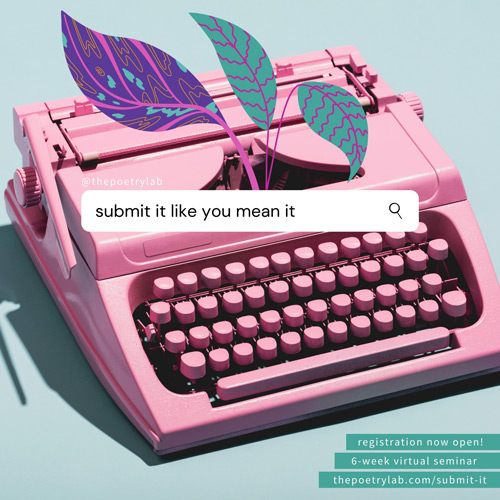
Poetry Lab's 2020 Submit It Like You Mean ItEnrolling now: six-week virtual seminar offered by The Poetry Lab, Submit It Like You Mean It: All You Need to Know to Successfully Submit Poetry for Publication. Reliable, effective submissions strategy with in-depth guidance on cover letters, bio statements, simultaneous submissions, where to submit, how to create a tracking sheet, and much more. Our goal is to demystify the path to publication with practical tools and insider knowledge in a friendly environment. Registration fee is $95 and includes one-month subscription to Duotrope. Scholarships are available. Class begins October 6, 2020. Learn more at our website.

Still Point Arts Quarterly – Fall 2020

The Fall 2020 issue homes in on “The Secret Life of Objects.” Featured artists include Cary Loving, Birgit Gutsche, Aaron M. Brown, Jeffrey Stoner, and more. Featured writers include Dawn Raffel, Judith Sornberger, Emily Uduwana, Kathleen Aponick, William Doreski, Keltie Zubko, Adrienne Stevenson, Susan Currie, and others. Find more info at the Still Point Arts Quarterly website.

Spoon River Poetry Review – Summer 2020

The Summer 2020 Issue of SRPR is out. In this issue, you’ll find cover art by Brittany Schloderback; the SRPR Illinois Poet Feature with new poetry by Simone Muench and Jackie K. White, with an interview of the poets by Carlo Matos and Amy Sayre Batista; and new poetry by Jose-Luis Moctezuma, Paul Martinez-Pompa, Julia Wong Kcomt translated by Jennifer Shyue, Michael Leong, Emily Carr, and more.

New England Review – 41.3

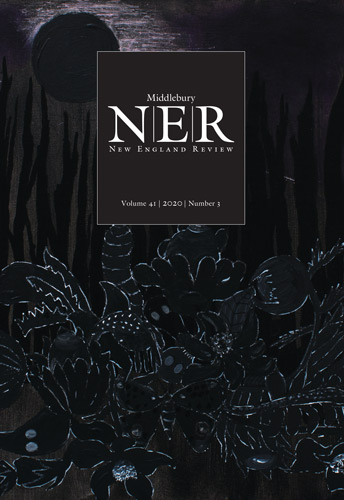
New England Review Volume 41 Number 3 is out. Featured work by May-lee Chai; Jeneva Stone; Laurence de Looze; Alyssa Pelish; John Kinsella; Clifford Howard; and translations of Scholastique Mukasonga, Karla Marrufo, and Nelly Sachs. Fiction by Kenneth Calhoun, Meron Hadero, Kate Petersen, and Kirk Wilson; poetry by Anders Carlson-Wee, Victoria Chang, Justin Danzy, Elisa Gabbert, torrin a. greathouse, Christina Pugh, and more; plus cover art by Heidi P.

Kaleidoscope – No. 81

During periods of unrest and uncertainty, when ominous dark clouds roll in and the sky becomes black, it can be easy to give in to feelings of despair. Kaleidoscope contains stories of adversity but it also offers hope. Featuring the essay “Between Rooms” by N. T. McQueen, the story “Mother Bear” by Melissa Murakami, and the essay “Nacre Upon Nacre” by Jenna Pashley Smith. In addition to these three, this issue contains an array of thought-provoking poetry and other wonderful stories of fiction and nonfiction. Issue 81 brings the promise that storm clouds will dissipate and the sun will shine again.

Jewish Fiction .net – #25

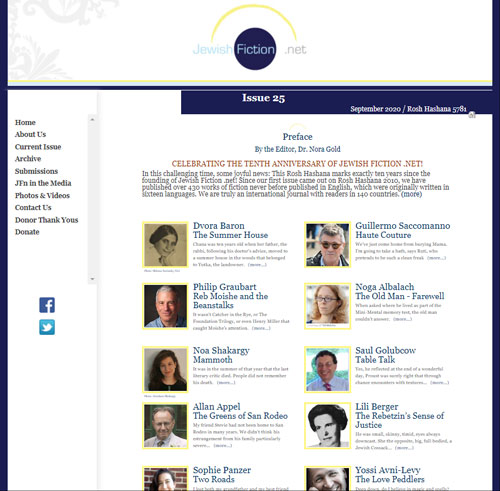
This Rosh Hashana marks exactly ten years since the founding of Jewish Fiction .net! Since our first issue came out on Rosh Hashana 2010, we have published over 430 works of fiction never before published in English, which were originally written in sixteen languages. We are a truly international journal with readers in 140 countries. Our new, 10th-anniversary issue of Jewish Fiction .net is now out and features 18 first-rate works of fiction originally written in Spanish, Yiddish, Hebrew, and English. We hope this special issue brings you pleasure, intellectual delight, entertainment, and comfort during this challenging time.

Brevity – Sept 2020

The essays in this guest-edited special issue of Brevity consider all aspects of illness and disability: what it is, what it means, how our understanding of disability is changing. Our anchor author is novelist and essayist Esmé Weijun Wang, author of The Collected Schizophrenias. Other authors featured include Barbara Lanciers, Meg Le Duc, William Fargason, Ona Gritz, Kelly Weber, Maya Osman-Krinsky, and more. The “Experiences of Disability” issue is guest edited by Keah Brown, Sonya Huber, and Sarah Fawn Montgomery. Artwork by Jill Khoury.

Remembering September 11 with Wisława Szymborska

Guest Post by Autumn Barraclough 

With September 11 close at hand, I’ve found my thoughts turning back to another time in American history in which our country suffered. I found myself reflecting back on September 11 and pictures.

In the poem “Photography from September 11,” Wisława Szymborska captures my thoughts as she describes the figures, forever frozen in history, as they jump from the twin towers. Her solemn respect and care for these souls resonates throughout the poem as she describes their flight, rather than their demise. This poem helps me to remember the tragedy of September 11 without the political connections—just understanding that humans were hurt and that I still have a country to love and care for that is full of people that care for each other in their own way.


Reviewer bio: Autumn Barraclough is a college student studying English. She is a Virginian at heart and loves to delve into the connections between France and Virginia, aspiring to create a written work that expresses that relationship.

450 Pages of Poetry & Prose to Love

Magazine Review by Katy Haas

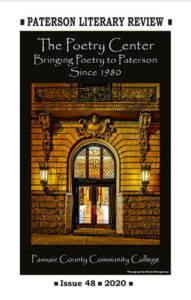
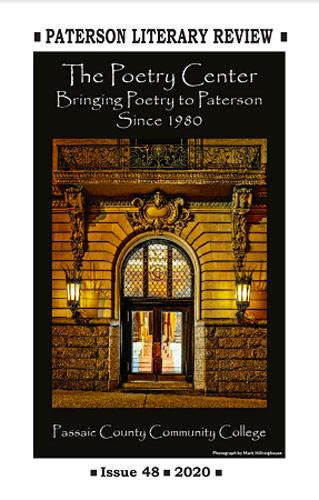
Issue 48 of Paterson Literary Review is a hefty 450 pages. A reader is guaranteed to find something they admire or connect with in those near-500 pages.

Readers can look forward to Vivian Shipley’s “A Glossary of Literary Terms for My Son,” a poem creatively and seamlessly broken up into nine different literary terms. Mary Ann Mayer writes an ode to “Walt Whitman’s Pants,” a poem that ends up being educational with its historical context. Penny Perry’s “Fig Bars” ends up being extremely relevant as the speaker sits with her husband and daughter as a wildfire burns twenty miles from their house.

And that’s just a small sampling of the poetry. The issue also includes prose and reviews. It’s nearly impossible to walk away from this brick of an issue without finding something to love.

A Portal to Powerful Nonfiction

Magazine Review by Katy Haas

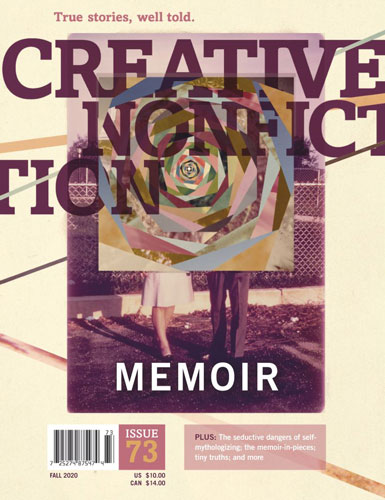
The art of John Belue dons the cover and pages of the Fall 2020 issue of Creative Nonfiction, and I absolutely love it. His work remixes vintage photos, thinly cut strips overlaying another photo to create an almost portal-like image. The art drew me into the “Memoir” issue of Creative Nonfiction and the writing made me stick around even longer.

Megan Doney’s nightmares haunt her after a shooting at the school where she teaches in “The Wolf and the Dog.” While her dreams leave her powerless, she imagines finding power if the situation ever happens again. The piece begins viscerally, a dark view into Doney’s mind after surviving a horrific event.

Mary Beth Ellis gets deeply personal in “Weaponry of the Cold War” as she walks readers through her vaginismus diagnosis. While the subject of her writing is both physically and emotionally painful, Ellis uses humor in unexpected places, her writing cynical and skeptical, light when it matters. As Ellis says, up to 14% of the female population suffers from vaginismus, and there is not much to read about the subject. Ellis adds her voice, her story, giving other people with vaginas something to relate to.

Whether you pick up Creative Nonfiction‘s latest issue because the art caught your eye, or because you crave powerful nonfiction, you will not be let down.

Congrats on 10 Years to Jewish Fiction .net

Congratulations to Jewish Fiction .net for ten years of publication!

From their website: “Since our first issue came out on Rosh Hashana 2010, we have published over 430 works of fiction never before published in English, which were originally written in sixteen languages.”

You can see this writing at their website, starting with their newly released tenth anniversary issue. The new issue offers 18 pieces of fiction originally written in Spanish, Yiddish, Hebrew, and English, including “The Old Days” by David Regenspan in honor of Rosh Hashana.

A Moment of Quiet

Guest Post by Brittany Waite

The current pandemic has impacted many aspects of our lives, especially our ability to interact with one another. There are many on social media who publish humorous portrayals of extroverts suffering under these conditions. At the same time, I feel that many introverts, shy and quiet in nature, feel a guilty sense of relief for this opportunity to stay cooped up in the comfort of their home.

In Quiet: The Power of Introverts in a World That Can’t Stop Talking, Susan Cain takes it upon herself to uncover these reserved figures and dive deep into their consciousness, exploring the individuality of their inner-minds. Using examples from history, concrete anecdotes, and years of research, Cain promotes the importance that introverts have in society and writes with the intent to show them the power they are capable of. So, whether you’re an introvert or not, Quiet will broaden your understanding of these reserved individuals, who they are, and what they can do.


Quiet: The Power of Introverts in a World that Can’t Stop Talking by Susan Cain. Broadway Books, October 2019.

Reviewer bio: Brittany Waite is a college student born and raised in Hawaii. She enjoys writing flash fictions but hopes to expand into other genres.

Buy this book at our affiliate Bookshop.org.

Sponsor Spotlight :: Desert Nights, Rising Stars will be Virtual in 2021

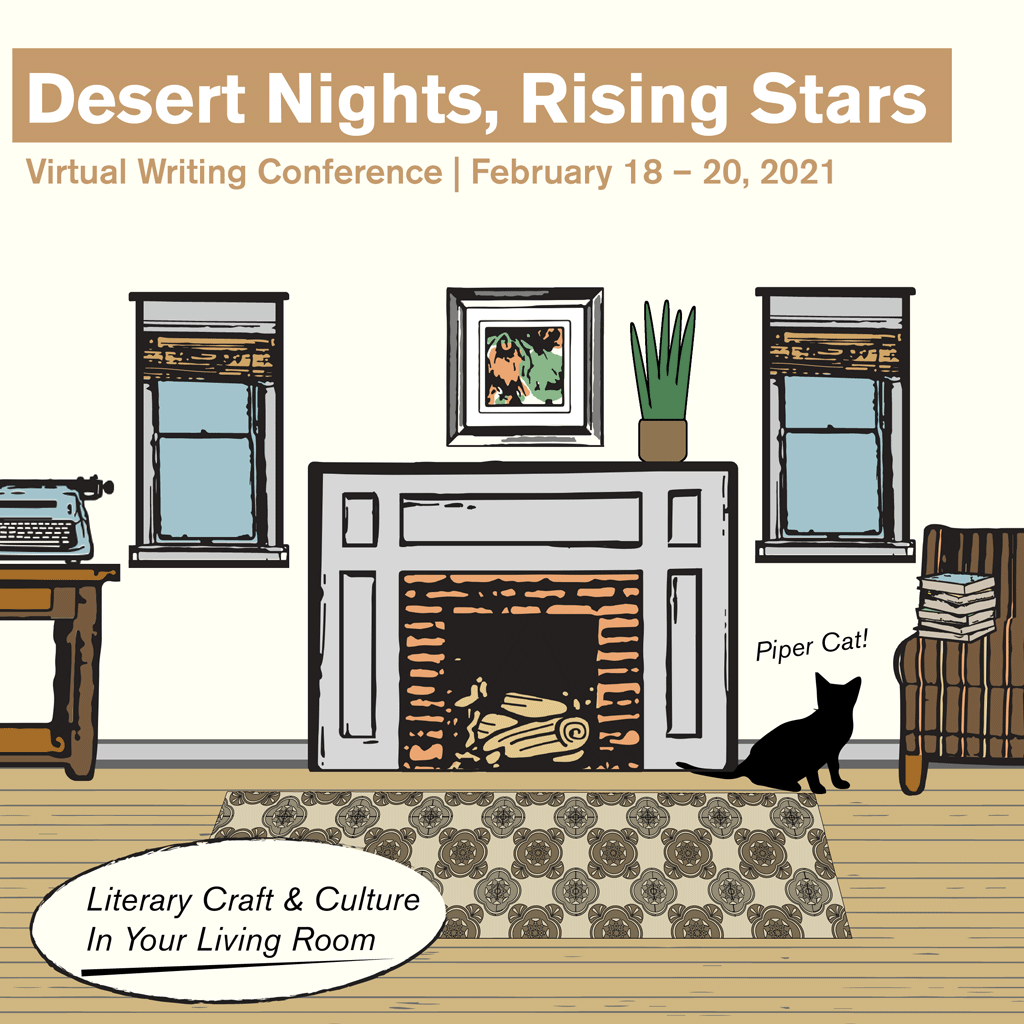
Desert Nights Rising Stars Writers Conference 2021While we would usually start things off with the beautiful desert weather and the southwestern landscape, things are a little different this year. With rising COVID cases in Arizona, restrictions surrounding travel around the nation, and ongoing orders against large public gatherings, we’ve made the choice to move Desert Nights, Rising Stars 2021 to a completely virtual experience.

The 2021 conference will be conducted online via Zoom from February 18 through 20. Program features will include writing workshops, panel discussions, readings, pitch sessions, book fair, author signings, and roundtable discussions. Genres covered this year include fiction, creative nonfiction, poetry, publishing, business of writing, memoir, and young adult.

The faculty for the conference will be Matt Bell, Mahogany L. Browne, Suyi Davies Okungbowa, Alan Dean Foster, Tod Goldberg, Raquel Gutiérrez, Marcelo Hernandez Castillo, Linda Hogan, Beverly Jenkins, C.B. Lee, Connie J. Mableson, Christopher Morgan, Cynthia Pelayo, Evan Winter, and Erika T. Wurth.

Early registration is only $225 before December 31. Swing by their listing at NewPages to get more details.

Works to Enjoy & Cherish

Guest Post by Regina Shumway

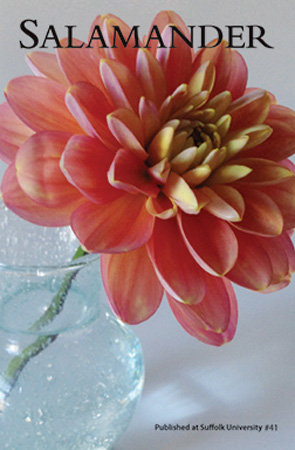
Salamander is a literary magazine that contains many works of poetry, fiction, and essays from a diverse collection of writers of varying backgrounds and writing styles. Issue 41 of this magazine is particularly spectacular. With themes ranging from the wonder found in the familiar to the indignity of a corpse, the works found in this issue provoke intense consideration for many different subjects and arguments.

Any type of reader is guaranteed to find a wide collection of works they will enjoy and cherish in Issue 41. A great deal of this magazine’s appeal is how each and every work requires the reader to delve deeper, often rereading the same lines over and over again to gain new, more profound meanings with each read through.  If you want to broaden your horizons in the writer’s world, Salamander is a magazine worthy of your time.


Reviewer bio: Regina Shumway is an eager writer, looking to improve her skills and experience. She is currently a student at Brigham Young University in Hawaii.

Sponsor Spotlight :: 2021 Palm Beach Poetry Festival Goes Virtual

2021 Palm Beach Virtual Poetry Festival bannerEnjoy the 17th annual Palm Beach Poetry Festival from the comfort of your own home as they go virtual in 2021. The event will take place January 18 through 23 and will feature writing workshops, panel discussions, manuscript critiques, and readings.

The keynote speaker is Gregory Orr and the Parkington Sisters. Workshop faculty includes David Baker, Laure-Anne Bosselaar, Traci Brimhall, Eduardo C. Corral, Vievee Francis, Kevin Prufer, Martha Rhodes, and Tim Seibles. One-on-one conferences available with Lorna Blake, Sally Bliumis-Dunn, Nickole Brown, Jessica Jacobs, and Angela Narciso-Torres.

They have extended the deadline to apply for the available workshops to December 1, 2020. Stop by their listing on NewPages to learn more about next year’s event.

A Fallen Kingdom

Guest Post by Caleb Willis

“The Kingdom That Failed” is a piece of flash fiction by Japanese author Haruki Murakami, published by The New Yorker. The introduction grabs you with no hesitation, throwing you into a unique setting that prepares you for a grungy fantasy adventure written around a fallen kingdom. This lasts for a grand total of two paragraphs, at which point the story changes gears to a more modern setting, dealing with life and people, not swords and dragons. It is a change in direction that totally threw me off guard, opening me up to the rest of the narration.

The story continues with an in-depth description of this man named “Q,” or more the struggle to explain Q. He is a handsome man, five hundred and seventy times more handsome than our narrator, with a great personality, from a well-to-do home, yet he isn’t quite extraordinary in anything, yet good at everything. Q is a true kingdom, a character without flaws.

Inspired by the quote, “To see a splendid kingdom fade away, is far sadder than seeing a second-rate republic collapse,” this story quickly and briefly shows a glimpse into the future life of Q. It delivers the known-too-well feeling of failed potential. While we are content to see the narrator complacent with where he is at in life, it is striking yet subtle to see the fall of Q. It isn’t a grand fall of a literal kingdom, and it doesn’t have the imagery of crumbling stone bricks and thick black smoke. Instead, we see a defeated man covered in soda, stuck in a thankless career. “The Kingdom That Failed” is a reminder of the somber reality of humanity, one that trumps any attempts of fantasy.


Reviewer bio: Caleb Willis is a college student studying Biochemistry and Applied Mathematics. He likes to read in his fleeting spare time.

Words Change Lives

Guest Post by Haley Marks

Throughout these difficult times, we all attempt to find meaning in our lives. We search for something that reassures us that we will make it through the never-ending struggles we endure. More than that, we seek an escape from these struggles. For many of us, words provide the perfect escape.

Whether the words come through books or TED Talks, they can have such a beautiful impact on our lives. Words change us. Words heal us, if we let them. However, I have found that the most colorful way words can reach us is through poetry. A well-written poem embodies the art of writing. Poetry can hold more emotion with a hundred words than many books do with a hundred pages. Its messy, imperfect words can weave together to create a masterpiece. As humans, we embrace anything as beautifully chaotic as we are; we can find exactly what we need in the relatable words of a disheveled poem.

A favorite place of mine to find some of the best poems is Poetry Foundation, providing poetry with words that touch the hearts of people in all walks of life. It provides poems for children and adults. It includes collections of poems for those struggling in school or those trying to relieve stress. The Poetry Foundation has poems available for anyone. The poems I have found on Poetry Foundation have surely blessed me; I have found words that express my emotions in a way I am incapable of doing on my own. The beautifully written poems included on this website and they’re literary journal Poetry have surely impressed me.

Poetry Foundation, in addition to poems, includes audio and guides for various poems. It successfully provides tools and poetry for anyone looking for words that could change his/her life.


Reviewer bio: Haley Marks is a student at Brigham Young University-Hawaii where she studies creative writing.

A Guided Exploration of Vulnerability

Guest Post by Tom Biesinger 

“Dangerous” and “love” may not be the first thing that comes to mind when thinking about great relationships, in fact most of us seek to keep “danger” and “love” as far apart as possible. Yet in a world where conflicts occur frequently and range from small disagreements over preference to relationship ending campaigns, it seems smart to invest in a little training to help keep the small things small and the big things in perspective.

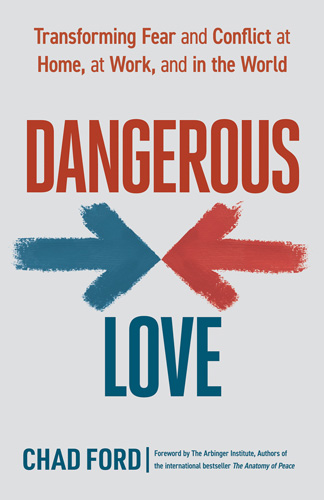
Dangerous Love is an exploration of vulnerability and personal transformation through the relationships that challenge us most. Instead of posing as a typical self-help book with condescending statements of cliché “breakthrough,” Dangerous Love takes a softer line and uses questions and experiences collected over years of mediation practice to gently draw us to challenge areas of our own conflict styles.

Practical in its philosophy, this book aims to first bolster your understanding of conflict in all of its forms (avoidance, management, resolution, transformation, and reconciliation) then to give you tools to work fearlessly in your own pursuit of dangerous love.

Readers should expect to be challenged to improve their own conflict practices and love a little deeper. This book does well to mirror its own advice and guide us gently but firmly to a more positive and transformational view of conflict, love, and relationships.


Dangerous Love by Chad Ford. Berrett-Koehler Publishers, June 2020.

Reviewer bio: Tom lives in Hawaii and spends most of his time with his family or in the ocean. He also loves Motion Design.

Buy this book from our affiliate Bookshop.org.

Totally Gothic Chill

Guest Post by Hilary King

I’ve been on a reading tear lately, thanks to the pandemic plus a heat wave and wildfire smoke. So what is the best thing to read in what feels like an apocalypse? How about a spooky Gothic novel? As a reader, I’ll admit I have a sweet tooth. Mysteries are my book dessert, the reading I end the day with, and a Gothic novel with its hints of fantasy, magical realism, and menace is the ultimate decadent dessert.

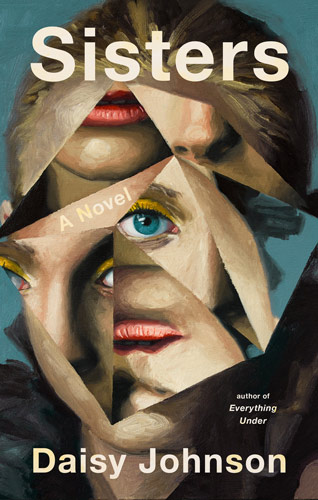
Daisy Johnson’s new novel, Sisters, was a delightful way to spend a 108-degree day. Two teenage sisters, named July and September, escape to a crumbling cottage on the coast of England to recover from Events. What were those Events is the heart of the mystery.  Hints are dropped, the past is visited, nature is wild, and there’s even a mother who takes to her bed. What’s real and what’s not is always the question a Gothic novel asks, and never wants to answer.

What’s fresh about Sisters is how it feels timeless yet doesn’t fear the tacky conveniences of modern life. When is this happening, I wondered at the beginning of the book, so classic were the scenes and characters. But Daisy Johnson weaves in cell phones, the internet, and chat rooms, and gives them a twist. The sisters do some haunting of their own on the World Wide Web.

If you need to spend a day away but can’t get out, let Sisters take you away.


Sisters by Daisy Johnson. Riverhead Books, August 2020.

Reviewer bio: Hilary King is a poet living in the San Francisco Bay Area of California, where she is reading and writing out the pandemic and wildfires.

Buy this book from our affiliate Bookshop.org.

Janelle Monáe Plus Irenosen Okojie Times Grace Jones

Guest Post by Marvel Chukwudi Pephel

Should I say shame on me for not knowing about Grace Jones till this “Lockdown Year” when I read a February 3, 2020 article on The Cut where Janelle Monáe’s definition of Afrofuture was put forward by herself as: “It looks like an orgasm and the big bang happening while skydiving as Grace Jones smiles.”? The article was written by no other than the inimitable Roxane Gay. I remember rushing to do my homework on who Grace Jones is, and what her smile looked like.

I wouldn’t tell you that I enjoyed the task, but I wouldn’t also say it wasn’t worth the stress; maybe this was better reflected when Irenosen Okojie won the Caine Prize for African Writing, an award described by many as the African Booker. Her story was titled “Grace Jones” and she was announced the winner of the prize on July 27, 2020, almost six months after I first stumbled on the “original” Grace Jones. Irenosen Okojie’s winning story is about a Grace Jones impersonator who mourns the death of her family in a house fire.

Frankly speaking, the story is hugely experimental and may not appeal to readers of literary fiction. The story itself is as strange as a rainbow in the night sky can be. Here is a writer who isn’t scared to take risks, and for which the judges praised her thus: “risky, dazzling, imaginative and bold.” It is a story steeped in dark experimentation and yet offers a chance for entertainment. It is also worthy of note to know that the Nigerian-British author says the £10,000 award for African writing has given her confidence as a black and female experimental writer. This, to me, is a huge personal win; a win too for African speculative fiction.


Reviewer bio: Marvel Chukwudi Pephel is a prolific Nigerian writer who writes poems, short stories and other things besides.