Home » NewPages Blog » Page 75

NewPages Blog

At the NewPages Blog readers and writers can catch up with their favorite literary and alternative magazines, independent and university presses, creative writing programs, and writing and literary events. Find new books, new issue announcements, contest winners, and so much more!

TriQuarterly – Summer Fall 2020

The Summer/Fall 2020 issue of TriQuarterly features work by Aram Mrjoian, Will Brewbaker, Shangyang Fang, Joe Meno, Nick Malone, Maggie Su, Sebastián Hasani Páramo, torrin a. greathouse, and Anita Olivia Koester. Plus work by additional writers, including a selection of video essays by Emma Piper-Burket, Nick Malone, and Sophie Paquette.

Tint Journal – Fall 2020

Tint Journal is the literary magazine for English as a Second Language creative writers, established in 2018 and based in Graz, Austria. We publish the finest of non-native English writing, including short stories, essays, and poems. Issue Fall ’20 has been released. Read twenty-five new literary creations by ESL writers from all around the world, now online and for free! Issue Fall ’20 also includes visual art creations by artists from all over the globe, combining the artistic realms of literature and art, as well as audio recordings of the writers reading their work.

Creative Nonfiction – No. 73

This issue celebrates stories of the self in the world. Writers find (or, at least, try to find) meaning in familiar as well as unimaginable moments—the loves, losses, and joys that define our lives. Also in this issue: the seductive dangers of self-mythologizing, the memoir-in-pieces, tiny truths, and more. See contributors at the Creative Nonfiction website.

A Studio Transformation

What’s more satisfying than a drastic before and after comparison? The Woven Tale Press blog has a great one to check out as part of theirInside the Studio” series, which “offers a behind-the-scenes peek into the work environments of WTP artists, as well as insight into their creative process within these resonate spaces.”

Artist Joe Hedges spent a month remodeling a neglected shed into a creative space for him to work and teach during the pandemic. The blog post includes before and after pictures, as well as some of Hedges’ process. Looking at the final product, it’s hard to believe the cozy space once started as a cluttered shed.

Take a moment to check it out and gain some inspiration for renovations of your own, or see what other artists have going on inside their own studios.

2020 Grodd Poetry Prize for Young Writers Winners

The sixteenth annual Grodd Poetry Prize for Young Writers winners are featured in the September/October 2020 issue of the Kenyon Review.

Winner
“Cutglass” by Manasi Garg

Runners-up
“(B)lack” by Eric Gottlieb
“Meat” by Annie Cao

Molly McCully Brown introduces the section with some words about the three placing entries, giving readers a preview of what to expect in the next several pages of the issue. Grab a copy to check them out.


A Kind Voice in the Emptiness

Magazine Review by Katy Haas

I like a piece of writing that piques my interest and leads me to do even more reading. Gail Peck’s “The Minister of Loneliness” in the Summer 2020 issue of The Main Street Rag managed to do just that for me.

The poem is introduced with a note: “The U.K. created the position of Minister of Loneliness, two years before COVID-19.” The title “Minister of Loneliness” was enough to interest me on its own, and even more so learning that it’s a real position. Peck’s poem addresses the minister in the days of COVID-19, women calling with their moments of loneliness. “It was bad enough before,” they admit, and now it’s gotten worse, their loneliness filled with uncertainties: “should they let the delivery boy in?”

The poem is touching and relevant. In addition to giving me something further to read about, it also gave me a point of connection as someone who lives alone and spent the early days of my state lockdown feeling incredibly lonely. What more could one ask from a poem about loneliness but a moment of connection and understanding? Peck’s poem itself works as a listening ear, a kind voice in the emptiness.

Timely Critique & Uncluttered Horizons

Guest Post by Christine Wambui

Bird Song weaves mythology into our present reality, juxtaposing waves of mythic cerulean sea with a snowy winter’s day in the Windy City, where Thelsie lives with an alcoholic uncle. The fluency of her exit strategy in this opening scene carefully lands us on an Ali-Smith-esque beach, possibly in Heaven. But this novel satisfyingly dives into the other world, replete with untouched olive trees, cypress, oaks, alien looking plants and wildflowers.

Hearing a voice that reminds Thelsie of her mama’s choir singing, she wanders inland to meet the locals. An appreciation for the natural world pervades the island of past and future, rich in prickly grass, ferns, and ancient Greek speaking characters. If looks can kill, you can imagine what sounds can do. Sirens struggle to protect the environment from man, tied to the mast, and ship, dashed about on the rocks.

But that’s the joy of it, to see the metaphor of industry undone by its own gluttony and cursed pretension. This book gives me hope that humans can overcome their greed and protect the environment. Bird Song’s timely critique and uncluttered horizons liberate the mind: truly a pleasure to read.


Bird Song: A Novella by Clara Hume. Dragonfly Pub, November 2020.

Reviewer bio: Christine Wambui is a passionate freelance writer from Kenya, who covers socio-economic, environmental, fashion related, and women’s issues. Her writing draws on a wide variety of work and life experiences.

Eating Candy with Josh Luckenbach

Guest Post by Grace Tuthill

Who doesn’t love candy? We all (at least most of us) have happy memories tied to these sweet treats. So then why did Josh Luckenbach use a tootsie roll wrapper as a catalyst for death? This very common candy beloved by many is the object used to tell a vivid story of love and death between two siblings. In this poem, “Eating the Tootsie Roll,” Luckenbach dances with death as a girl simply eats candy with unknown origins. Her brother prophecies her death, almost as a threat, and the girl then goes home and kills herself. The ending of the poem leads readers to wonder if this suicide because of a controlling and abusive poisoning of her mind or food poisoning. The last line is a hunting echo of a sister listening to her brother and the lasting effects, either good or bad, that siblings can have on each other.


Reviewer bio: Grace Tuthill is a Marine Biologist with a special interest in writing. She has no published work but likes the ocean and photographing sea life.

Four Steps to Save the Planet

Guest Post by Elizabeth Basok

In We are the Weather: Saving the Planet Begins at Breakfast, Jonathan Safran Foer argues that the science is in: we know that animal agriculture is destroying our planet. Rather convincingly, Foer makes an argument for a plant-based diet stating that this one small change in our lifestyle could positively impact the climate crisis. He is able to create concise, effective, and easy to understand arguments throughout the book, breaking up his points into bite sized pieces that can easily be regurgitated by everyday people that find themselves in a discussion about climate change or the environmental benefits of a plant-based diet. The author aims to drive home the most effective actions we can take against climate change, claiming four notable things we can do: eat a plant-based diet, avoid air travel, live car free, and have fewer children.

Part two of Foer’s book is packed with facts about “The Greatest Dying,” which is an extinction that is taking place right now. While there are many mass extinctions that have happened, Foer states that this extinction is the first to be the result of a climate crisis. He adds, “Humans are now adding greenhouse gases to the atmosphere ten times faster than the volcanoes did during the Great Dying” (one of the six mass extinctions).

Foer acknowledges that adjusting to a vegan diet can be challenging. He admits that, even though he has written now two books advocating for a plant-based diet, he has succumbed to eating a burger from time to time. Foer suggests eating vegan for breakfast and lunch, while eating vegetarian for dinner (if a full vegan lifestyle is out of the question), saying “Not eating animal products for breakfast and lunch has a smaller CO2e footprint than the average full-time vegetarian diet.”


We Are the Weather: Saving the Planet Begins at Breakfast by Jonathan Safran Foer. Farrar, Straus and Giroux, September 2019.

Reviewer bio: Elizabeth Basok is a lecturer at The Ohio State University. Her Instagram is @lizbasok.

Buy this book at our affiliate Bookshop.org.

The Meaning of Home

Guest Post by Christopher Woods

This year, perhaps like no year before, we are thinking about the concept of home. During the pandemic, most of us are spending much more time at home—in home offices, involved in remote teaching or learning, or simply in quarantine. Sadly, because of the economic collapse, many people are now homeless, and there will be more to follow. This year, more than ever, we are both consciously and subs-consciously considering the meaning and importance of home. We are thinking of safety and shelter. We have always been this way, but now it seems much more immediate and crucial, and even life-saving.

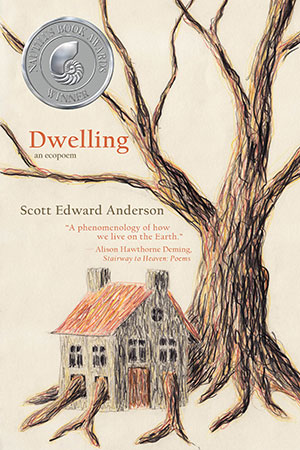
Dwelling by Scott Edward Anderson, delves deeply into this subject in the form of a book-length eco-poem. It began as a reaction to Martin Heidegger’s essay “Building Dwelling Thinking” and, in Anderson’s lyrical writing, took on a book-length life of its own. He asks questions such as “Do we carry home within?” Anderson’s poetic probing explores our place, not only inside a home, but in the larger world that is home to us all.

Ironically, many of us now have more time than ever to consider the concept of home, of refuge. Reading this book, I often stopped to look around the room, then out the window, considering the essential nature of everything. Readers might well find themselves doing the very same thing.


Dwelling: an ecopoem by Scott Edward Anderson. Shanti Arts Publishing, 2018.

Reviewer bio: Christopher Woods is a writer and photographer who lives in Texas. His photography book for writers, FROM VISION TO TEXT, is forthcoming from Propertius Press. https://www.instagram.com/dreamwood77019/

Buy this book from our affiliate Bookshop.org.

Event :: The Center for Creative Writing Online Courses & Virtual Retreats

The Center for Creative Writing has been guiding aspiring writers toward a regular writing practice for more than 30 years. Our passionate, published teachers offer inspiring online writing courses in affordable six-week sessions, as well as one-on-one services (guidance, editing) and writing retreats (virtual for 2020). Whatever your background or experience, we can help you become a better writer and put you in touch with the part of you that must write, so that you will keep writing. Join our inclusive, supportive community built on reverence for creativity and self-expression, and find your way with words.

Rattle – Fall 2020

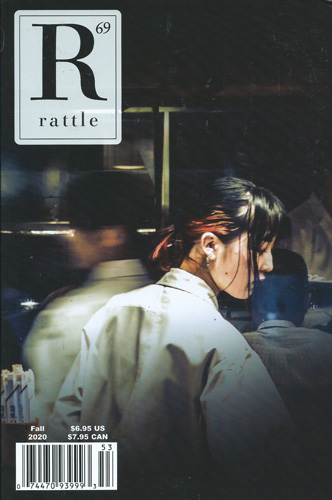
The Fall 2020 issue of Rattle features a timely tribute to service workers—those working in the lodging, food service, tourism, customer service and other industries in direct service to customers. Though planned long before the pandemic, service workers have been hit particularly hard this year, and we’re happy to be honoring poets who work in those fields. The conversation features Jan Beatty, covering her decades of experience working as a waitress, as well as the topics of adoption and the writing process. Another eclectic open section features twenty-two poems in a range of styles that are sure to make you laugh or cry.

Plume – Sept 2020

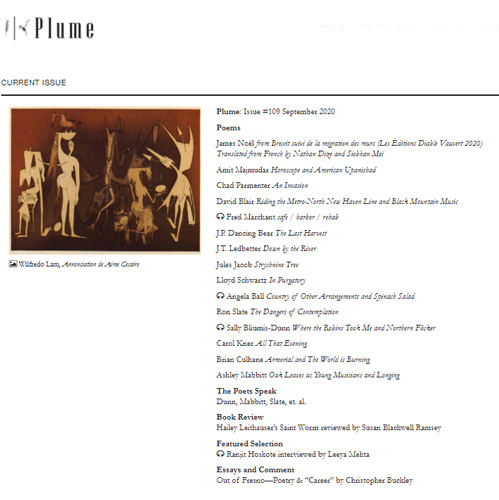
This month’s Plume featured selection: “The Chronicler of a Blue Planet: An audio interview with Ranjit Hoskote by Leeya Mehta” with work by the poet. Christopher Buckley pens the essay, “Out of Fresno—Poetry & ‘Career,’” and Susan Blackwell Ramsey reviews Hailey Leithauser’s Saint Worm.

The Louisville Review – Spring 2020

The latest print issue of The Louisville Review features fiction by Holly Tabor, Pamela Gullard, Bridget Mabunga, and Rebecca Thomas; nonfiction by Joseph Myers, Patricia Foster, Jessica Crowley, and Katherine Mitchell; and drama by Allie Fireel, Allen M. Price, Haydee Canovas, John Shafer, and Addae Moon. Poetry by Laura Judge, Joseph G. Anthony, James B. Goode, Shauna M. Morgan, Frank X Walker, and more

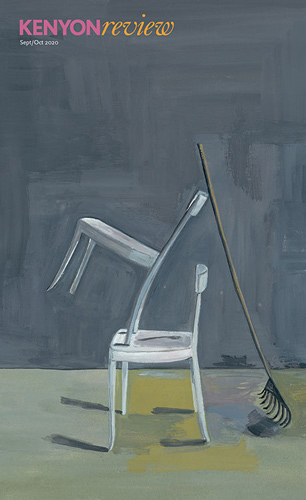
Kenyon Review – Sept/Oct 2020

The latest issue of Kenyon Review features a special poetry section, “All of This Is True,” guest-edited by Reginald Dwayne Betts, whose own poetry, a memoir, and essays explore the world of prison and the effects of violence and incarceration on American society. Betts has selected powerful work by fifteen poets including Sean Thomas Dougherty, April Gibson, Randall Horton, Roger Reeves, and others. The new issue also includes the winning poem and two runners-up in the 2020 Patricia Grodd Poetry Prize for Young Writers as well as four new works of fiction by Samuel Jensen, Dina Nayeri, Matthue Roth, and Marianne Shaneen.

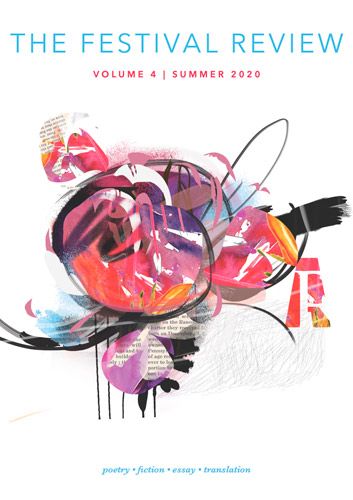
The Festival Review – Summer 2020

The Festival Review is pleased to announce the release of Volume 4 for Summer 2020. Explore modern voices in poetry, read exciting new fiction, discover the joy of work in translation, and more. All the new pieces are currently available to read for free on our website. A beautifully designed ebook version of Volume 4 is also available in our online store.

Allegro Poetry Magazine – Sept 2021

Allegro Logo

September is here with a new issue of Allegro Poetry Magazine. Find work by Ruth Aylett, Alwyn Marriage, Susan Castillo Street, Anna Saunders, Kathy Gee, Finola Scott, Carolyn Oulton, Stephen Kingsnorth, Clair Chilvers, Clive Donovan, Jane Blanchard, Marion Baraitser, Dan MacIsaac, Steven Jackson, Alan Kissane, Tim Love, Robert Dunsdon, and more.

New Lit on the Block :: Cathartic Youth Literary Magazine

logo

“Breaking the Silence” has been the long-time effort of The National Alliance on Mental Health, and now a new outlet sharing this mission is Cathartic Youth Literary Magazine, an online publication featuring contributions from youth 12-22 years old, and particularly works covering mental health conditions and the teenage experience.

Founder and Editor-in-Chief Anna Kiesewetter [pictured] shares the publication’s genesis, “The word ‘cathartic’ has always perfectly encapsulated what writing is to me. I realized that some of the most powerful writing I’ve read and created was used for catharsis – to deal with emotions, to make sense of life, to put trauma into words. I’m a firm believer in the power of vulnerability, and I’ve realized that writing has helped me with a lot of my own mental health struggles. Writing has made me more mindful of what goes on within my head and provides me with an outlet that I can’t really get anywhere else; I thus hoped it might provide similar benefits for other young people. Mental health is also a subject that has been almost taboo to discuss in the past, and even now it still carries quite a bit of stigma. Especially during this pandemic, which seems to be exacerbating existing conditions. Youth mental health is such a prevalent and important issue, yet one that isn’t often talked about. I felt like this magazine could serve a threefold purpose: to open up discussion about mental health, to encourage mindfulness and writing for catharsis, and to provide a platform for young writers as a sort of steppingstone to larger publications.”

Continue reading “New Lit on the Block :: Cathartic Youth Literary Magazine”

2020 CRAFT Short Fiction Prize Winners

CRAFT has announced the winners of the 2020 CRAFT Short Fiction Prize. Winners were selected by Guest Judge Alexander Chee.

First Place
“Ariel” by Jinwoo Chong:

Second Place
“Yo Te Veo” by Rachel Pollon

Third Place
“Mule” by Elie Piha

Visit CRAFT‘s website to check out finalists, the long list, and honorable mentions.

Celebrate 75 Years with The Fiddlehead

The Fiddlehead is celebrating 75 years of publication. To celebrate, the literary magazine is hosting a series of free online readings throughout the rest of the year. These readings feature the writers found in the forthcoming anniversary issue. An ASL interpreter will be present to translate events in real time.

You can find dates for readings at The Fiddlehead‘s website, along with a list of the readers you can expect to hear on each date. The next event will be September 30.

Friend or Foe, Good or Evil

Guest Post by Samantha Kolber

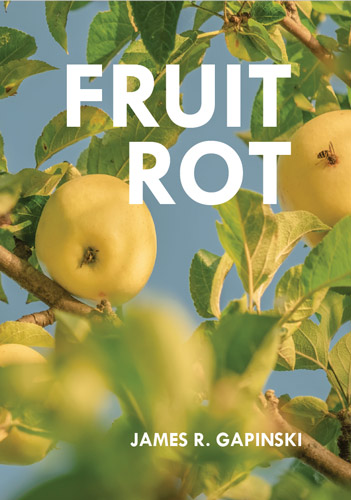
At its core, Fruit Rot by James R. Gapinski is a sweet story. Not sweet like saccharine, or Hallmark, but sweet like the meager couple in the book, with their ailments and traumas, artistic talents and impoverished lodgings; sweet like fairytales read aloud next to a hearth at bedtime; and sweet like love and the magic of imagination.

The story begins with a narrator, one half of a couple, telling the reader, “Lacey and I need money.” He tells us Lacey is depressed, with a history of abuse from her father, and since they can’t afford health insurance, she relies on St. John’s Wort from Walgreens. “It doesn’t work,” says our narrator. “She says she needs real drugs, but that takes real money.”

Gapinski is a sparse writer, yet spares no details. I love the bottle of herbs from Walgreens. I love how the narrator shuffles around the hole in the stairs. Though I don’t read comics, so may have missed some comic book references, I still love the descriptions of the narrator’s sketches and graphic artmaking endeavors. And I love the description of the mystery tree that pops up in their “barren dirt patch” of a front yard, written in the narrator’s characteristic, comic-obsessed voice:

This mystery tree is huge, and the bark is a perfect Silver Age green, like it jumped right off the Incredible Hulk #2 cover. The tree has sparkly leaves and golden fruit sprouting from its nuclear green arms. The fruit is round like an orange, but shiny like a ripe apple.

What would you do if a golden goose fell in your lap? Would you capitalize on it, even if your intentions were pure? Pure as healing the sick, mending the broken, making whole what once was? Would you play God? Would they call you a hero? Our narrator wrestles with this and so much more as the tree—their golden goose—and its magical powers permeate the couple’s lives in unimagined, unintended, and unwanted ways.

This story will stay with you for a long time, and the characters are so real—with that detailed writing—that you will think of them as friends—or foes, depending on where you sit on the good versus evil scale.


Fruit Rot by James R. Gapinski. Etchings Press, July 2020.

Reviewer bio: Samantha Kolber (samanthakolber.com) is a chapbook-loving poet and editor living in Montpelier, Vermont. Her own debut chapbook “Birth of a Daughter,” poems that reconcile an artistic self with motherhood, is out now with Kelsay Books.

The Thin Line Between Satire & Anxiety

Guest Post by Chana Kraus-Friedberg

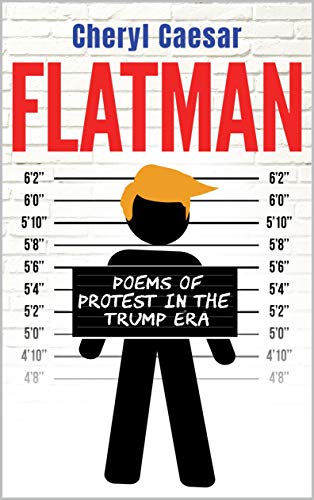
The current political climate is difficult to write about because so much of it seems to be its own satire. Imagine the most child-like, ludicrous system of logic possible, apply it to world events, and you have government policy in the US. Yet real damage is being done to the United States and the world, and that is certainly not funny. In her recent chapbook, Flatman: and Other Poems of Protest in the Trump Era, Cheryl Caesar brilliantly negotiates the line between satire and anxiety or grief, painting a sinister picture of how childish tendencies become destructive when combined with very adult power.

In the title poem, Caesar starts by imagining the president as a truly flat man in a way that reminds me of the popular kids’ character, Flat Stanley.  She describes the physical consequences of this flatness the way a picture book might. The president’s hair, we are told, is “rolled out in weird shapes, like a child’s / misshapen gingerbread man.” His head is square: “He could set his Diet Coke on it.” Later in the book, a spoof on Kipling’s If describes what happens if one can “fake a 4-F due to “bone spurs,”[ . . . ]  /And never go to war and win your own spurs, /But boast of dodging STDs instead[.]” It’s witty and easy to laugh at, but the laughter is uncomfortable. You read in the way that I think a lot of us are currently living, carrying the knowledge that the underlying joke is dark and uncontrolled and future-consuming. In a real world context, even fantastical flatness has consequences, Caesar reminds us: “[The president] can never cross the dimensional border. / And so he hates us (hate being / the flattening emotion), hates us all. Hates the round world.”


Flatman: and Other Poems of Protest in the Trump Era by Cheryl Caesar. Thurston Howl Publications, 2020.

Reviewer’s Bio: Chana Kraus-Friedberg is the winner of the 2020 Ritzenhein Award for Emerging Poets. Her first chapbook, Grammars of Hope, will be published in February 2021 (Finishing Line Press). Instagram: @chanakf2020

Unknowingly Reading a Novel for the Times

Guest Post by Murali Kamma

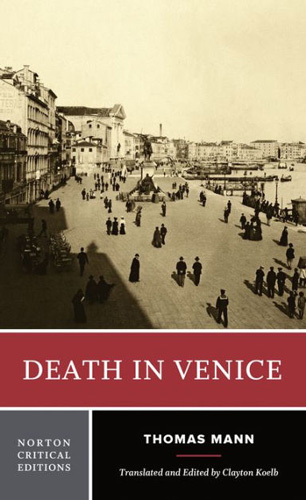
I haven’t picked up The Plague or A Journal of the Plague Year, let alone a contemporary dystopian novel. What I wanted in the Year of Covid was escapism. But having found comfort (and laughter) in the timeless fiction of the peerless P. G. Wodehouse, I was ready to move on. Thomas Mann’s Death in Venice caught my attention as I scanned my bookshelves.

All I knew about Mann’s Death in Venice—and Visconti’s film—was that a distinguished artist (Gustav Mahler?) is vacationing in Venice when he becomes infatuated with a boy visiting from another country. Soon I was swept away, and Michael Henry Heim’s brilliant English translation played no small role in providing another kind of escape from 2020. Not for long, though. I almost fell off my chair when I realized why the locals in early twentieth-century Venice don’t want to tell the protagonist (an author, not a composer) that their city is in trouble.

There’s an epidemic—a cholera epidemic, in fact, “emanating from the humid marshes of the Ganges Delta”—and though people are dying in Venice, officials are in denial. Even as the news spreads, causing increasing anxiety in the malodorous city, Venetians hide the facts from the tourists. It’s the oppressive heat, the sirocco—and there’s nothing to worry about, they say, their lies making the city as menacing as the disease threatening it. The author finally hears the truth from another foreigner, but it’s too late.

“The epidemic even seemed to be undergoing a revitalization; the tenacity and fertility of its pathogens appeared to have redoubled,” Mann writes.

More than a century has passed since Mann wrote this gripping novel. Sadly, we humans continue to make the same mistakes, and as this literary classic reminds us, some blind spots may never disappear.


Death in Venice by Thomas Mann. 1983.

Reviewer bio: Murali Kamma’s Not Native: Short Stories of Immigrant Life in an In-Between World won the 2020 Bronze Independent Publisher Book Award (IPPY) for multicultural fiction. 

Buy this book from our affiliate Bookshop.org.

‘Buried Seeds’ by Donna Meredith

Guest Post by Ed Davis

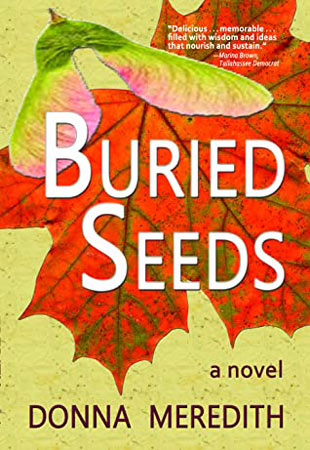
Donna Meredith’s new novel Buried Seeds is a timely novel of activism, about, among other things, the West Virginia teachers’ strike of 2018 that electrified the nation. Buried Seeds is actually two novels beneath one cover, alternating between Clarksburg, WV teacher Angie Fisher’s strike narrative and Angie’s great-great-grandmother Rosella Krause’s early twentieth century activism in the struggle for women’s right to vote.

Angie Fisher is an excellent Everyteacher, fiftyish, funny and self-deprecating. When Angie accepts leadership of the American Federation of Teachers in her district, she sets herself up for an agonizing dilemma: how can she lead a strike when her unemployed husband Dewey is applying for work with the local FBI, likely to frown on such law-breaking? After Angie and Dewey are forced to move in with her parents, daughter Trish and her new baby soon follow—and if the old farmhouse weren’t already over-crowded, sister MacKenzie winds up there, too, when she leaves her husband.

Alongside Angie’s anguished life, Meredith shoots us into the early 1900s, where we meet her great-great grandmother Rosella, who has endured similar suffering. Rosella, an artist, is now in San Francisco, along with her fourteen-year-old daughter. The girl’s diary describes her mother’s life as an activist tirelessly working for women to earn the right to vote in 1907. We also get Rosella’s first-person account of San Francisco’s great earthquake and fire of April 18, 1906, providing one of the novel’s most dramatic set pieces.

A seasoned writer of mysteries, Meredith doesn’t ignore the need for suspense to keep readers tantalized in this well-researched novel containing many shocks and surprises with great historical themes.


Buried Seeds by Donna Meredith. Wild Women Writers, March 2020.

Reviewer bio: Ed Davis’s Time of the Light, a poetry collection, was released by Main Street Rag Press in 2013. His latest novel, The Psalms of Israel Jones (West Virginia University Press 2014), won the Hackney Award for an unpublished novel in 2010.

Terrain.org – August 2020

Visit Terrain.org for the new work on the site this month. Arne Weingart reviews The Tilt Torn Away from the Seasons by Elizabeth Lindsey Rogers and Melissa L. Sevigny interviews Pam Houston. Fiction by Beth Alvarado; nonfiction by Tamie Parker Song, Scott Russell Sanders, and Paul Riley; and poetry by Seth García, Garrett Hongo, Collier Brown, and more. In currents: Charles Revello, Patricia Schwartz, and others.

Black Warrior Review – August 2020

Choose your boyfriend in the “Secret Boyfriend” edition of Boyfriend Village. Work by JinJin Xu, Charles Theonia, Jai Hamid Bashir, Rone Shavers, Landa wo, and more. Plus “20 Atomic Sonnets,” a chapbook by Rosebud Ben-Oni and work by featured artist Nicole Won Hee Maloof. Find even more contributors at the Black Warrior Review website.

Free Digital Copy – The Louisville Review

Have you wanted to check out The Louisville Review but haven’t had the chance or the extra money to spare? Now is the perfect time to change that. The Spring 2020 issue is currently available for free download at The Louisville Review website due to COVID-19. Download your copy to read work by Carolyn Forché, Patricia Foster, James B. Goode, and more.

Crying in Public with Holly Bourne

Guest Post by Chang Shih Yen

The Places I’ve Cried in Public is a young adult novel by British author Holly Bourne. This is not your typical young adult story about crushes and teenage angst. Teenage novels don’t usually come with a warning on the back cover, like this book does, that it contains material that some readers may find distressing.

In this book, Amelie fell in love with Reese, but now she can’t seem to get over him. So she’s going back to all the places where she cried in public to try and re-trace her steps, and see where her life went wrong. In the process, she’s learning about what love is not. This book is written in very British English and is set in places like London and Sheffield, but it deals with universal themes, like recognizing what is a healthy relationship, what is controlling behavior and abuse.

This book is powerful and intense. It is a work of fiction, but it deals with real issues. It is a tough read, in the sense that you need to mentally prepare to read until the end. You feel like you have been punched in the stomach after reading this book. But it is a good book; it deals with important issues. This book should be required reading for all young women.


The Places I’ve Cried in Public by Holly Bourne. Usborne Publishing Ltd., 2019.

Reviewer bio: Chang Shih Yen is a writer from Malaysia, seeing through the pandemic in New Zealand. She writes a blog at https://shihyenshoes.wordpress.com/.

What Happens at Night

Guest Post by Carla Sarett

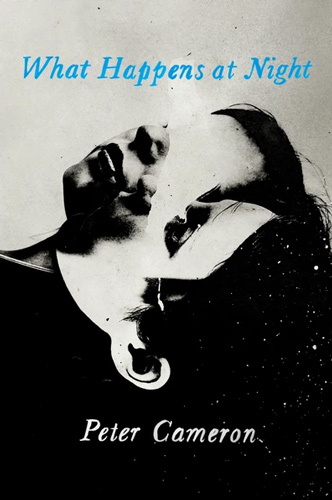
What with election hysterics and the COVID Blues, I was starved for a truly immersive read, and lo, Peter Cameron came to my rescue in What Happens at Night.

I’ve been a fan of Cameron’s elegant writing since, well, forever (if you have not read The City of Your Final Destination or Andorra, by all means, do so). Here, he takes Bowlesian themes (he does quote Jane Bowles, if there’s any doubt) but sprinkles them with kindness. Cameron’s mercifully free from the dour outlook on humanity that I’ve come to expect these days, and it makes this work enchanting in the best sense.

A not very happy New York couple wants to adopt a child, and in their quest, ends up in an icy “northern” foreign city, in a comically grand hotel (elaborately, but impractically, appointed). Nothing that happens from that point could possibly be predicted: the couple meets a faith healer, for one thing, and no, he’s not quite a fake. From there, the story by turns becomes surreal and funny and moving. The novel’s atmosphere is dark and cold, but its spirit is one of light, “a warm golden light.”

(I must also mention that the publisher has sprinkled the cover with a barely visible glitter. Perfect.)


What Happens at Night by Peter Cameron. Catapult, August 2020.

Reviewer bio: Carla Sarett’s recent work appears or is forthcoming in Third Wednesday, Prole, Halfway Down the Stairs, and elsewhere.  Her novel, A Closet Feminist, will be published in 2022.

Buy this book from our affiliate Bookshop.org.

Insights on Accidental Presidency

Guest Post by Eron Henry

Eight men became American presidents without being elected to the office. All acceded to the role after the incumbent was assassinated or succumbed to illness.

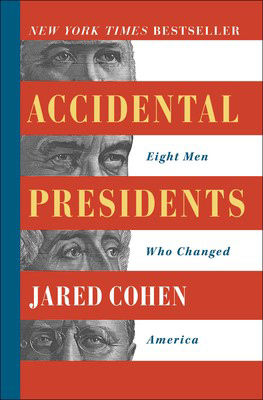
In Accidental Presidents: Eight Men Who Changed America, Jared Cohen provides historical details of their achievements and failings. Most were unprepared for the top office because they were uninterested, though a few coveted the presidency.

Theodore Roosevelt and Harry Truman were extraordinarily successful. The former succeeded William McKinley Jr. who was assassinated, and the latter Franklin Delano Roosevelt, who died of longstanding ailments. Except for the Vietnam War debacle, some believe Lyndon Johnson would be among the greatest presidents ever. He became president after the assassination of John Kennedy.

The most disastrous was Andrew Johnson, who became president after Abraham Lincoln was gunned down. The first to be impeached, Johnson reversed policies by Lincoln to help the nation heal after the bloody civil war. He set the stage for Jim Crow, initiating a century of intense discrimination against African Americans that boiled over into the Civil Rights Movement in the 1960s.

Cohen demonstrates the importance of presidents choosing able persons as their deputy.  Not all vice presidents were chosen for their ability but as a compromise candidate to appease interest groups or various constituencies in their party.

In the times we live, Cohen’s Accidental Presidents may prove especially insightful.


Accidental Presidents: Eight Men Who Changed Americav by Jared Cohen. Simon and Schuster, April 2019

Reviewer bio: Eron Henry is a communications consultant. He blogs at https://oletimesumting.com.

Buy this book at our affiliate Bookshop.org.

Take Me To Your Stutter

Guest Post by Susan Kay Anderson

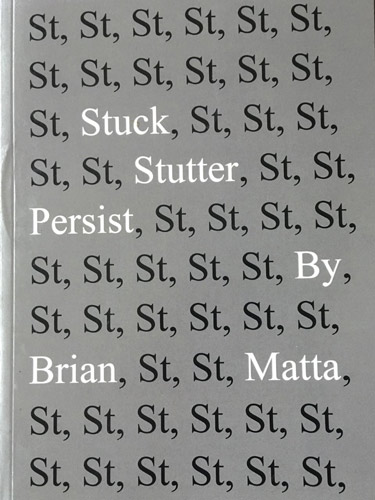
Brian Matta’s superbly inventive Stuck, Stutter, Persist is like stepping into a room only to have a secret door open, revealing an entity who will communicate with you, maybe bonding with you forever and ever. This entity is expressed as a stutter, but is the inexplicable making itself known. What is signified by a glitch, a pause, a repetition, or an echo is really something very different. But what?

In the poem, “Check out that breech” the main character is the stutter (sound) “—ch” and it is heard throughout in a list of material items; “chest . . . brunch . . . chapel” which seem ordinary and unsuspecting but invoke a stutter near the end of the poem. The stutter asserts itself here and in each poem in this marvelous and tantalizing book, not as “—ch” but as a different stutter sound in each poem.

These stutters (these poems) slowly become fodder for existential contemplation. Much like the world Gregor in Kafka’s novella, The Metamorphosis, experiences, we see that this world also needs no introduction once you start reading. The stutter does persist to draw out and slow down the experience of dramatic life events and serves to underscore and even lead the poems away from simple explanation.

When I first began reading Stuck, Stutter, Persist, I was intrigued because it seemed weird and a sort of strange homage to anger or patience or both. But it is much different because it is masterfully poetic in its unblinking regard of the parts of life which fly by so fast that only a stutter can catch bits of them before they are lost.


Stuck, Stutter, Persist by Brian Matta. Black Centipede Press, 2019.

Reviewer bio: Susan Kay Anderson’s first book of poems is Mezzanine. Anderson was the poetry editor of Big Talk, a free publication in the early 1980s featuring Pacific Northwest punk bands. She has a poem forthcoming in Sleet Magazine’s Winter Issue, “The Inside Edition II and Please Plant This Book Coast To Coast, Virginia Brautigan Aste’s memoir, will be published by Finishing Line Press in 2021. Her recent work can be found in Calibanonline, Gnashing Teeth, Lily Poetry Review, Mojave River Review, NewPages What Am I Reading?, Panoply, Tinderbox Poetry Journal, and Porter Gulch Review.

Buy this book from our affiliate Bookshop.org.

Wordrunner eChapbooks – No 40

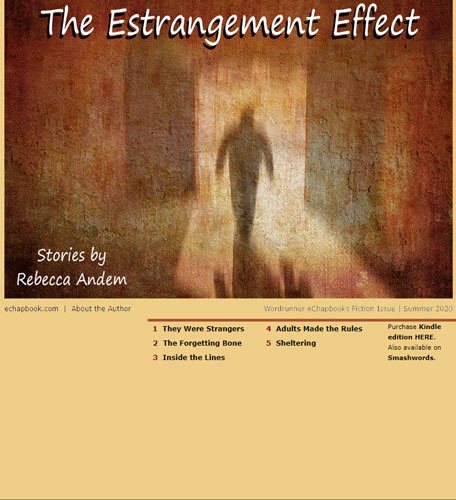
Wordrunner eChapbooks‘ 40th issue, the Summer 2020 fiction echapbook: The Estrangement Effect: Stories by Rebecca Andem. The five stories in Andem’s collection explore the startling, disconcerting, unsatisfying, and liberating moments in which we understand that the most central relationships in our lives are inhabited by strangers, strangers we are deeply connected to, be they lovers, spouses, parents, siblings or children.

Willow Springs – Fall 2020

The Fall 2020 issue of Willow Springs features Joseph Millar, Ramona Ausubel, Jessica Lee Richardson, Andrew Furman, Lawrence Lenhart. Plus Sarah Bates, Dmitry Blizniuk, Bruce Bond, Maggie Graber, Matthew Lippman, J. Estanislao Lopez, Owen McLeod, John A. Nieves, John Sibley Williams, and more.

Event :: 2021 Palm Beach Poetry Festival

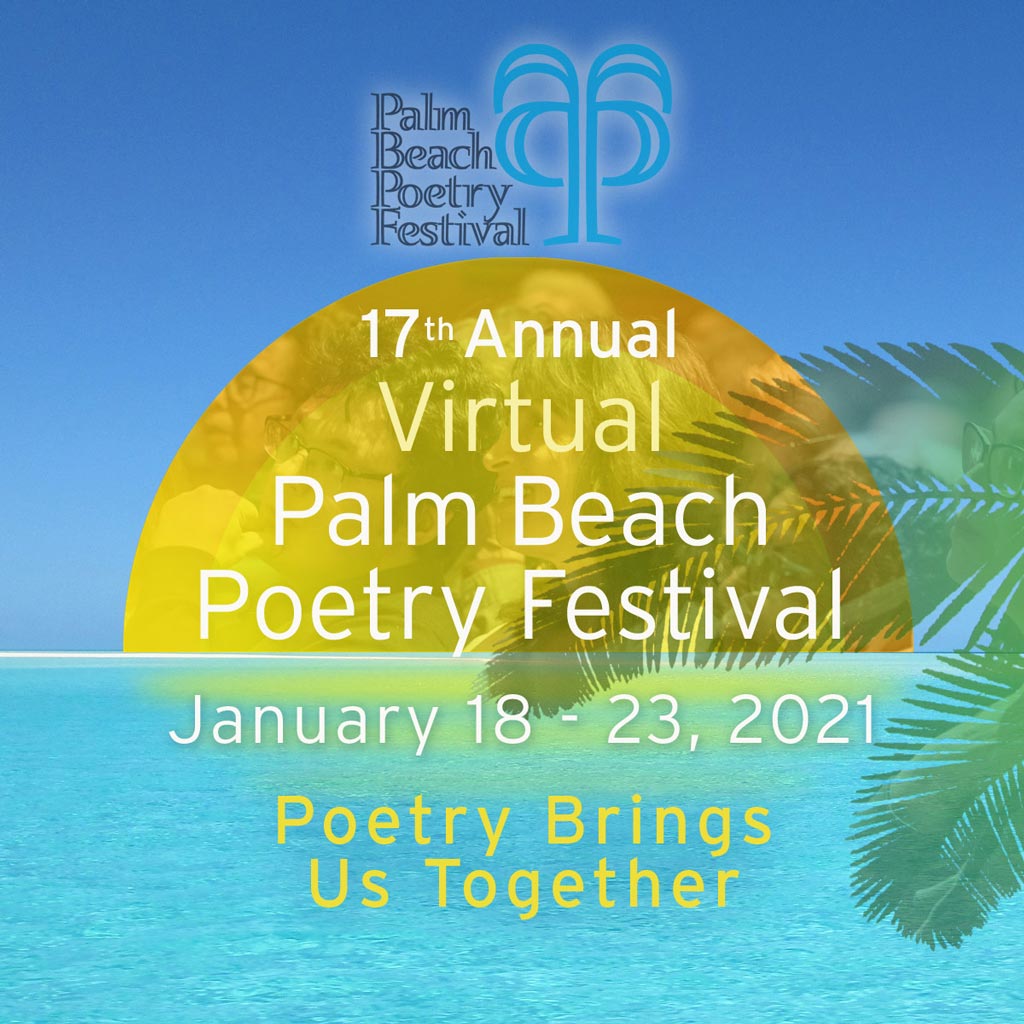
2021 Palm Beach Virtual Poetry Festival bannerEvent Dates: January 18-23, 2021; Location: Virtual
Application Deadline: November 10, 2020
17th Annual Palm Beach Poetry Festival in Delray Beach, Florida, January 18-23, 2021. Focus on your work with America’s most engaging and award-winning poets. Workshops with David Baker, Laure-Anne Bosselaar, Traci Brimhall, Vievee Francis, Kevin Prufer, Martha Rhodes, and Tim Seibles. Six days of workshops, readings, craft talks, panel discussion, social events, and so much more. One-on-one conference Faculty: Lorna Blake, Sally Bliumis-Dunn, Nickole Brown, Jessica Jacobs, and Angela Narciso-Torres. Special Guest: Gregory Orr and the Parkington Sisters. Poet At Large: Brian Turner. To find out more, visit www.palmbeachpoetryfestival.org. Apply to attend a workshop!

The Main Street Rag – Summer 2020

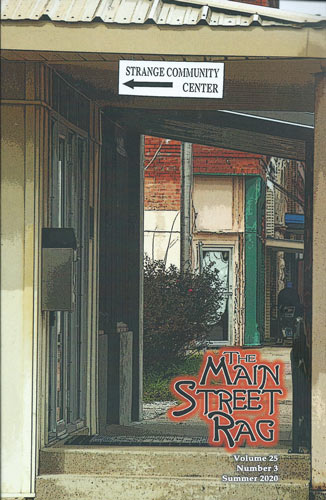
This issue’s featured interview: “Digging for Gold,” an Interview with Don Kesterson by Terresa Cooper Haskew. Fiction by Ethan Forrest Ross, Michael L. Woodruff, NV Baker, and Rita Ariyoshi. Poetry by Steven Ablon, Mark Burke, Chris Capitanio, Llyn Clague, Shutta Crum, Darren C. Demaree, Craig Evenson, Barbara Greenbaum, Angela Gregory-Dribben, Katrina Hays, Scott T. Hutchison, and more. Also in this issue: a selection of book reviews.

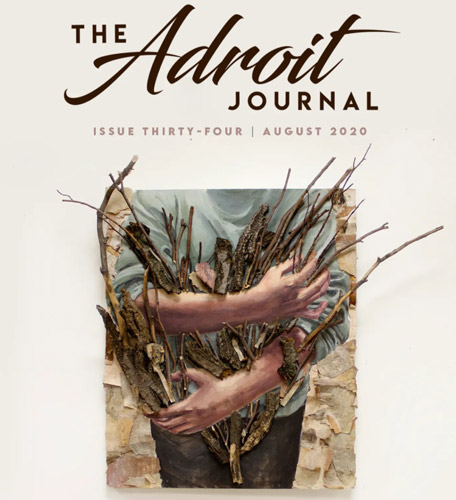
The Adroit Journal – August 2020

We’re beyond excited to bring you new work from Alicia Ostriker, Diane Seuss, Aimee Nezhukumatathil, Jos Charles, Yalie Kamara, David Naimon, and Jordan Jace. We’re also extremely excited to feature poetry by Asa Drake, Thomas Dooley, Mary Biddinger, Kevin Prufer, Maya C. Popa, Jordan Keller-Martinez, and more, prose by Emily Yang and Andreas Trolf, and art by Caroline Zhang, Taylor Wang, Ariel Kim, and others. Read more at The Adroit Journal website.

New Lit on the Block :: The Milking Cat

What happens when you repeatedly tell a teen they can’t do something? Of course, they will find a way to do it, which, in the case of Editor-in-Chief Benji Elkins, resulted in The Milking Cat, an online publication of comedy in all forms, from written works to movies to comics and more.

The name itself has a comedic referent, as Benji explains, “’The Milking Cat’ is a reference to the 2000 film Meet The Parents where Ben Stiller’s character lies about milking a cat on a farm that has no cows.” Benji found the scene especially humorous and decided to name the website as a testament to it. “Also,” he adds, “it rolls off the tongue once you get used to it.”

Behind the name, the mission of The Milking Cat is to provide an outlet for aspiring teen comedians, but the initial motivation stemmed from an experience Editor-in-Chief Benji Elkins faced. “It goes something like this: In ninth grade, there was a stairwell that consistently had pencils stuck in its ceiling. When I returned to school in the tenth grade, the pencils were completely gone! All that remained was the scarred terrain of pencils that once were. As a result, I wrote a comedic piece featuring the pencils’ removal entitled ‘COLLECTIVE STUDENT BODY ART PIECE DESTROYED BY SCHOOL.’ However, when the school newspaper refused to publish it, I asked that they create a humor column. When they refused that, I asked his school’s activities director if I could start a humor paper. When they refused that as well, I decided I would simply have to do it myself.”
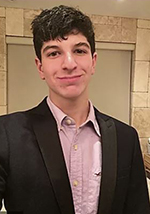
Putting together a humor publication editorial staff is a delicate balance between skill sets. Benji Elkins [pictured] says he has always enjoyed both writing and making jokes at the dinner table. “I’ve been involved in other (and much more serious) teen literary magazines through the submission of my own work,” Benji quips, “and therefore like to believe I ‘know the industry.’ But I’ve also been an active member in my school’s literary magazine. Currently, I’m the co-Editor-in-Chief. Otherwise, I’m simply a fan of writing and comedy and a huge fan of trying to put the two together.”

Alongside his efforts is friend and colleague Dan Soslowsky, who, “after coming down from the high of winning his third-grade art contest,  needed something to keep his cartooning skills sharp.” As Dan tells it, “I originally turned down my offer to be the Senior Editor and Head of Illustration and Design for The Milking Cat, but ultimately gave in after receiving a box of chocolates, flowers, and a 2018 Mercedes-AMG® GT C Coupe on my doorstep with a note signed ‘With love, Benji.’” In addition to his role with The Milking Cat, Dan is the Head Editor of the Humor Section in his school’s newspaper as well and is involved in numerous other art-related extracurriculars.

The final editorial staffer is Noah Stern, who “has been an avid fan of comedy since his parents let him watch their DVD box set of the Family Guy Star Wars parody episodes.” Noah is the head of the satire section at his school paper as well.

Additionally, “in case anyone was wondering,” Benji included, “all of the Editors’ favorite apparatus on the Bop-It machine is Twist-It.”

The learning curve for running their own publication was steep, as Noah shares the greatest hurdle they have faced was “bringing The Milking Cat to the level it is at today. Originally, The Milking Cat submissions were open to anyone of any age, but in retrospect, we cast the net too wide. We would rarely get submissions or viewers and as a result, the main people submitting were mostly us three editors. We pushed ourselves to write something every week, and it was increasingly stressful. However, when COVID-19 hit, we decided to kick it up a notch and grow our team – specifically around teens like us. We rebranded as a ‘by teens, for teens’ comedy website and began receiving many staff applications and comedy submissions. As a result, the greatest joy we’ve all experienced probably comes out of our greatest hurdle; the thing we love most about the site is giving teens around the world the opportunity to not only to read comedy, but also to provide them the opportunity to create it themselves as well.”

Readers of the publication, which posts new content every Monday evening, can expect to find content related to sports, politics, riffs on classic literature – “all sorts of readers can find a comedic piece that fits their specific interests,” Noah assures. “We triple-dog-dare you to pick any piece at random, and no matter which you stumble upon, you will find something thoughtful, well-written, and (hopefully) funny.”

In addition to the editors’ contributions, recent content includes:

Julianna Reidell – Hamlex Commercial: A commercial screenplay for the new prescription drug inspired by Shakespeare’s Hamlet
Asher Hancock – I Tried 5 Dark Web Dating Sites and was Pleasantly Surprised: A lonely romantic reviews various shady dating sites such as SatanMate.com and WeHaveCandy.com.
Sascha Nastasi-Feinburg – Pad+ Casting Calls: A mock casting call asking for actors to fill roles in the next big WattPad novel adaptations, including “I Fell in Love with a Cannibal because I Thought He Was a Vampire.”

And a sampling of humor by title alone:

Man Plays Air Guitar With All The Wrong Notes
The Life of an Undercover Dental Student
High School Student Shocked To See Chemistry Teacher Peeing In Middle Urinal

Teenaged contributors who are not a part of The Milking Cat Staff are welcome to submit works. Submissions are collectively reviewed by the Editors on its publication status. If accepted, the work is uploaded verbatim to the site. Pieces written by staff members are reviewed by Staff Curators who make edits and suggestions that the author can accept or reject before publication.

Looking to the future, Benji says, “Our plans for this summer include The Milking Cat Comedy Competition, where teens around the world can submit humorous pieces of any kind for the chance to win special prizes from 4 Ivy League Humor Magazine and the satirical site The Hard Times, such as up to $350, merch from the various humor magazines, workshop sessions, and much more! We also hope to establish ourselves more among teens as a regular place to read comedy from their peers. As for long term plans for the publication, we will keep doing it as long as it keeps bringing us joy (and it is).”

Here’s to a lifetime of joy for The Milking Cat!

The Malahat Review Novella Prize – 2020 Winner

The Malahat Review hosts a Novella Prize biennially. The 2020 winner opens the Summer 2020 issue. Judges Samantha Jade Macpherson and Naben Ruthnum selected “Yentas” by Rebecca Păpucaru.

Of “Yentas,” the judges said: “‘Yentas’ is a nostalgia-free portrait of girlhood lived among the Jewish communities of 1980s Montreal. The novella’s evocation of the cruelties and kindnesses of teenage friendship, territorialism, and enmity is built in prose as funny as it is precise. Rebecca Păpucaru’s treatment of culture, ethnicity, and religion as complex structures informing protagonist Karen’s family and social life achieves impressive depth and nuance. Through Karen’s eyes we are totally immersed in a rich and bubbling teenaged world. Visceral and enchanting, a truly fantastic read!”

At The Malahat Review‘s website, readers can check out an interview with the winning author.

The Adroit Journal – Adroit Prize Winners

There is plenty for readers to check out in Issue 34 of The Adroit Journal, including the results of the Adroit Prizes.

Poetry Winner
“On Their Birthday, Suge Knight & My Daddy Discuss Forgiveness” by Tariq Thompson

Poetry Runner-Up
“Cha” by Stephanie Chang

Prose Winner
“Valley of Saints” by Yasmeen Khan

Prose Runner-Up
“A Dominicana’s Guide to Surviving a PWI” by Coral Bello-Martinez

In addition to these winners, you can also find a selection of high school and college students who placed as finalists.

Re-reading ‘The New Jim Crow’ in the Era of Black Lives Matter

Guest Post by Laura Plummer

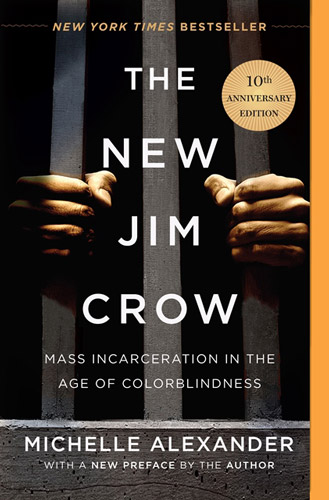
When I first read Michelle Alexander’s groundbreaking book The New Jim Crow: Mass Incarceration in the Age of Colorblindness in 2010, Obama was in the beginning of his first term as president. Many white Americans believed his election was a sign that our country was now post-racial, that equality had finally been achieved. But that was a myth, as Alexander explains in painstaking detail. Using the statistics of the day, she lays bare the racism embedded in our criminal justice system, which she likens to modern-day slavery.

This year, I decided it was a good time to dust off Alexander’s work, to see how its distressing statistics had improved over the past ten years. The answer was, tragically, not enough. Blacks still face more discrimination than other races in every phase of the criminal justice system—from stops and arrests to sentencing and parole. They are still the primary targets of the fictional “War on Drugs,” which was invented as a legal means to put large numbers of Black people behind bars. They are still locked in to what Alexander calls a “permanent undercaste.”

The New Jim Crow came out before the 2013 killing of Trayvon Martin birthed #BlackLivesMatter, before the 2014 killings of Michael Brown and Eric Garner. It was before the killing of George Floyd and other Black Americans sparked worldwide protests against racist policing, before Black Lives Matter became a global movement. While the discrimination against Black people in America is much the same as when the book was published, the public support for protecting and defending Black lives has grown exponentially. The ground is fertile for all Americans who value justice to demand a new reality. To quote Dr. King, no one is free until we are all free.


The New Jim Crow: Mass Incarceration in the Age of Colorblindness by Michelle Alexander. 2010.

Reviewer bio: Laura Plummer is an American freelance journalist and writer from Massachusetts. Read her work at lauraplummer.me.

Buy this book from our affiliate Bookshop.org.

Visit Cape Cod with Thoreau

Guest Post by Michael Stutz

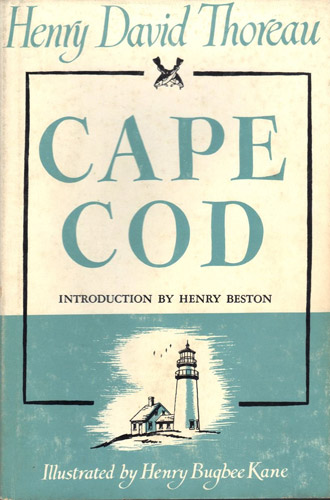
The surf might be the same on every shore, but its sound is different on Cape Cod than anywhere. And I miss it—it’s been a handful of years since I’ve been there, so in a mood of summer longing and nostalgia I turned to Thoreau’s Cape Cod, an 1883 edition that’s looked fine in my library for years but that I’d never touched.

It’s a good read. The chapters are like thick travel essays, of the kind I vaguely remember in those paper things they used to call magazines, back before the net age. Like the longreads that now sometimes fall into our phones.

Each chapter is on some subject or portion of the Cape. Thoreau explains that the book was the result of his own travels there, and right away in reading it, I see it turns out I’ve spent almost the exact amount of time there as he did: three distinct visits, totaling about three weeks.  I’ve written about Cape Cod before—much of it yet unpublished—but this reminds me that I’ve got more to write even if I never return.

My visits weren’t as gruesome as his—the book nearly begins with scores of dead bloated bodies tumbling in with the tides, and with Thoreau seeing headless bodies on the dry-sanded shore, and beaches lined with coffins and unrecognizable victims of mean shipwrecks. In my modern visits there was none of that. In fact, it seemed that everyone could live to be old and wrinkled as walnuts if our common plagues like cancer and car accidents were avoided.

Otherwise, the people he describes and the old haunted streets and the treeless shores are much like the Cape I know. Like him, I agree that October is the time to be there—the Cape is haunted, the shore moans with ghosts, and that’s the best time to catch them.


Cape Cod by Henry David Thoreau. 1865.

Reviewer bio: Michael Stutz is the author of Circuits of the Wind, the story of the net generation. His writing has appeared in many journals and magazines.

Buy this book at our affiliate Bookshop.org.

Sponsor Spotlight :: Minnesota State University, Mankato MFA in Creative Writing

Minnesota State University, Mankato logoThe MFA in Creative Writing at Minnesota State University, Mankato seeks to meet the needs of students who want to strike a balance between the development of individual creative talent and close study of literature and language. The program helps to develop work in the genres of fiction, creative nonfiction, and poetry. Students typically spend three years completing coursework, workshops, and book-length theses.

Current faculty includes Robin Becker, Candace Black, Geoff Herbach, Diana Joseph, Chris McCormick, Richard Robbins, and Michael Torres. Recent visiting writers include Juan Felipe Herrera, Marcus Wicker, Leslie Nneka Arimah, Danez Smith, Layli Long Soldier, and Ada Limón.
Students have the opportunity to grow within a rich and active community of writers with the Good Thunder Reading Series, the Writers Bloc Open Reading Series, and working on literary magazine Blue Earth Review.

Stop by their listing at NewPages to learn more.

NewPages Book Stand – August 2020

Stop by and visit the August Book Stand at NewPages. This month, you can check out five featured titles, as well as a selection of new and forthcoming books to add to your to-read list.

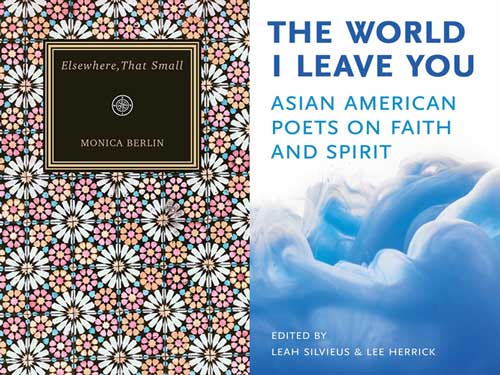
The poems in Elsewhere, That Small by Monica Berlin are “intimate, contemplative, seeking out the smallest folds of language,” and urge readers to really listen to what they’re taking in.

The Exquisite Triumph of Wormboy by James Kochalka and Sydney Lea follow the exploits of a worm who embarks on an adventure of rescue.

In The History of Our Vagrancies by Jason Irwin, readers can find “comfort, companionship, longing, and then suddenly an acute sorrow that somehow makes us want more of the whole tragic beautiful thing.”

Jon Boilard’s Junk City is set in San Francisco, following characters that roam in a shadowy world but, from time to time, find slivers of light.

The World I Leave You: Asian American Poets on Faith & Spirit edited by Leah Silvieus & Lee Herrick spotlight 62 poets of Asian descent. These poets create a varied and nuanced portrait of today’s Asian American poets and their spiritual engagements.

You can learn more about each of these New & Noteworthy books at our website and find them at our our affiliate Bookshop.org. You can see how to place your book in our New & Noteworthy section here: https://npofficespace.com/classified-advertising/new-title-issue-ad-reservation/.

Event :: Willow Writers’ Retreat Offering Virtual 2020 Workshops

Beginning Dates: July 27; Virtual
Registration Deadline: Rolling
Don’t forget Willow Writers’ Workshops is going virtual this summer and fall! They are offering workshops, providing writing prompts, craft discussions, and manuscript consultations. All levels are welcome. Three different courses are being offered: Desire to Write? An Introduction to Creative Writing; Flash: Writing Short, Short Prose; and Writers Workshop on Thursday Nights, a six-week course focusing on short stories. Summer dates began July 27. The facilitator is Susan Isaak Lolis, a published and award-winning writer. For more information, check out willowwritersretreat.com.

The Malahat Review – Summer 2020

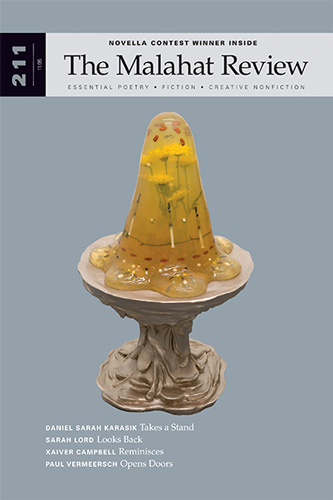
This issue of The Malahat Review features the 2020 Novella-Prize-winning “Yentas” by Rebecca Păpucaru, Daniel Allen Cox’s “The Glow of Electrum,” Mike Alexander’s “An Afternoon Gentleman,” Matthew Hollett’s “I’m Sorry, I Have to Ask You to Leave,” Ronna Bloom’s “Legend of Saint Ursula,” Alamgir Hashmi’s “Anywhere, 2019,” and Kate Felix’s “Beneath the Pond.” Also in this issue: Sarah Tolmie, Xaiver Campbell, Sarah Venart, Theressa Slind, Chris Banks, Daniel Sarah Karasik, Sarah Lord, Ron Riekki, Paul Vermeersch, and Alisha Dukelow. Plus, a selection of book reviews, and cover art by Sharona Franklin: “Mycoplasma.”

Carve Magazine – Summer 2020

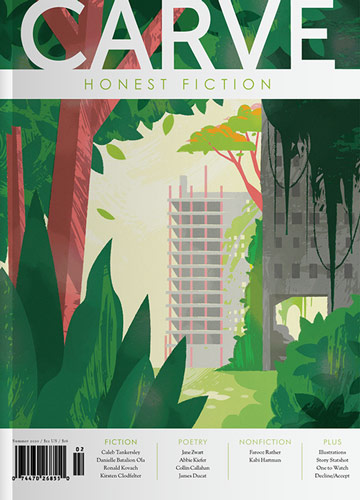
In the newest issue of Carve, find short stories by Caleb Tankersley, Danielle Batalion Ola, Ronald Kovach, and Kirsten Clodfelter, as well as interviews with the authors. New poetry by Jane Zwart, Abbie Kiefer, Collin Callahan, and James Ducat, and new nonfiction by Feroz Rather and Kabi Hartman. In “Decline/Accept,” is “Clean Kills” by Greg November. Read more at the Carve website.

The Writer’s Hotel Goes Virtual for Fall 2020 Conferences

The Writer’s Hotel‘s three writing conferences will be hosted virtually in October instead of in NYC like normal this year.

The All Fiction Writers Conference will take place October 14-20. The schedule has been redesigned to offer their attendees the very best service possible. Major workshops will be capped at nine people instead of their usual fourteen.

2020 faculty this year includes Rick Moody, Jeffrey Ford, David Anthony Durham, Robyn Schneider, Michael Thomas, Ernesto Quiñonez, James Patrick Kelly, Elizabeth Hand, Francine Prose, Saïd Sayrafiezadeh, Sapphire, Elyssa East, Kevin Larimer, Jennie Dunham, Steven Salpeter and TWH Directors Shanna McNair and Scott Wolven. Deadline to apply is August 22.

The Nonfiction Weekend Conference will be held October 1-5. Application deadline is August 28. Faculty includes Meghan Daum, Mark Doty, Carolyn Forché, Richard Blanco, Hisham Matar, Michael Thomas, Beth Ann Fennelly, Molly Peacock, Honor Moore, Saïd Sayrafiezadeh, Elyssa East, Jonathan M. Katz, Kevin Larimer, Stephen Salpeter and TWH Directors Shanna McNair and Scott Wolven.

The Poetry Weekend Conference will take place October 22-26. Deadline to apply is September 1. Faculty includes current U.S. Poet Laureate Joy Harjo, Marie Howe, Heather McHugh, Terrance Hayes, Mark Doty, Cornelius Eady, Deborah Landau, Tim Seibles, Valzhyna Mort, Pádraig Ó Tuama, Camille Dungy, Javier Zamora, Alexandra Oliver, Kevin Larimer, Jenny Xie, TWH Directors Shanna McNair and Scott Wolven.