Challenging “Supposed To”

Magazine Review by Katy Haas

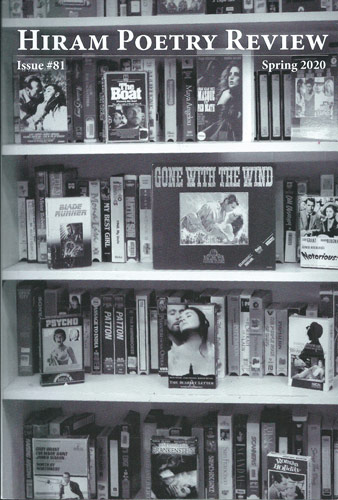
If you’re using pride month as a time to become more familiar with LGBTQIA+ writers, I recommend grabbing a copy of the Spring 2020 issue of Hiram Poetry Review. Inside is the four-page poem “I Didn’t Know You Were Transgender” by Mercury Marvin Sunderland. This poem is a response to the observation cisgender people have made: “I didn’t know you were transgender / they tell me / I thought you were a cis man.”

Sunderland spends the poem speaking to these people, asserting his place in the gender spectrum. At one point he declares:

if you knew
even a scrap
of trans culture
you’d know i
already do look
like a trans man
because we are a diverse multitude all over the earth.

With this poem, he challenges the idea of what someone is “supposed” to or expected to look like, challenges the argument that using “they” as singular “destroy[s] the english language,” challenges the idea that “stick[ing] medicine in me” means “i want to be cisgender.”

Throughout the four pages, Sunderland provides a better understanding of what it means to be a trans man, and what it means to be Sunderland himself.
Poetry – May 2020

In the May 2020 issue of Poetry, find work by A.E. Stallings, Perry Janes, Raymond Antrobus, Mary Ruefle, D. M. Spratley, Desirée Alvarez, Kelle Groom, Kayleb Rae Candrilli, Safia Elhillo, Janice N. Harrington, Zakia El-Marmouke, Eileen Myles, Lupe Mendez, TC Tolbert, Karen Skofield, Daniel Poppick, Jennifer Barber, Inua Ellams, Stuart Barnes, Travis Nichols & Jason Novak, Kyle Carrero Lopez, Ricki Cummings, Dean Browne, Jennifer L. Knox, Jayme Ringleb, Gerard Malanga, Helen Mort, and Srikanth Reddy. Plus, Vidyan Ravinthrian in the Comment section.

Plume – #106

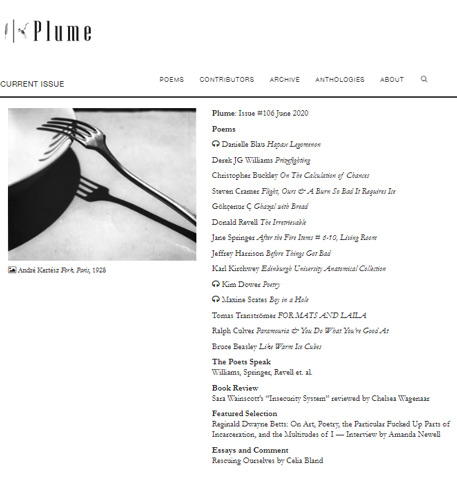
This month’s Plume featured selection: Reginald Dwayne Betts: On Art, Poetry, the Particular Fucked Up Parts of Incarceration, and the Multitudes of I. Work by the poet is introduced with an interview by Amanda Newell. In the Essays & Comment section, find “Rescuing Ourselves” by Celia Bland. Chelsea Wagenaar reviews Sara Wainscott’s Insecurity System.

Best American Essays 2020 Sponsor Spotlights

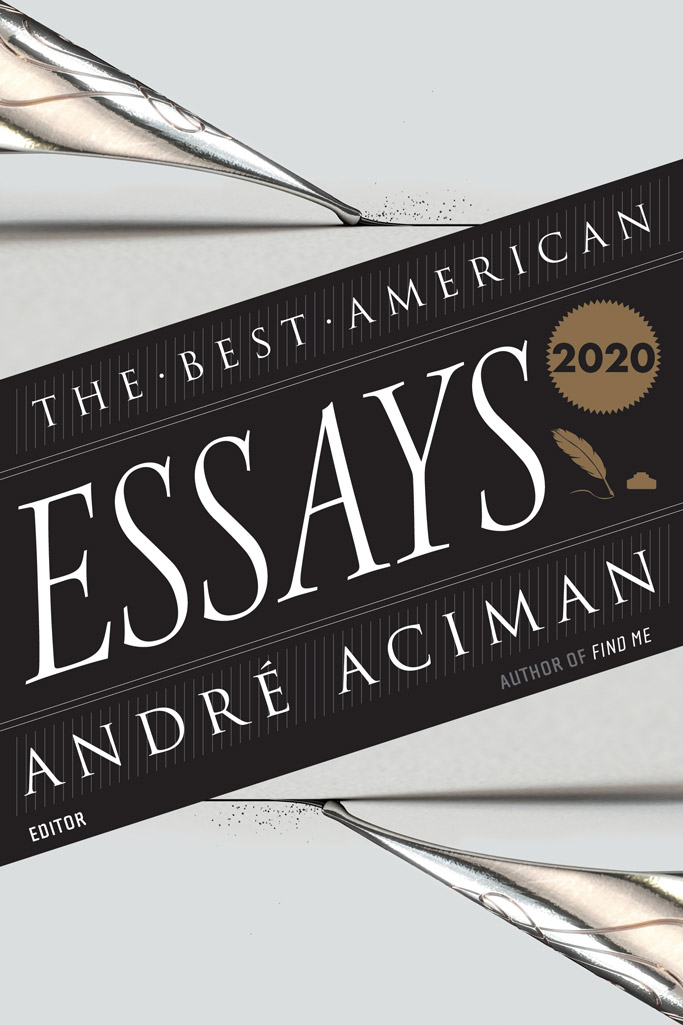
Best American Essays 2020Congratulations to two of NewPages sponsored magazines for having selections included in the Best American Essays 2020 due out on November 3, 2020. This year’s anthology was curated by guest editor André Aciman and series editor Robert Atwan.

“My Pink Lake and Other Digressions” by Alison Townsend was originally published in an issue of Cimarron Review. Jerald Walker’s “Breathe” was featured in New England Review 40.3.

Pembroke Magazine – No. 52

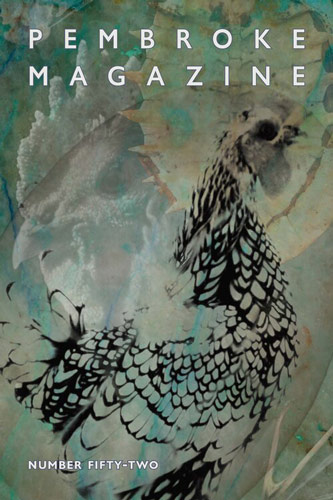
The latest issue of Pembroke Magazine contains poetry, fiction, and creative nonfiction by emerging and established authors from the US and abroad. A young mother struggling to nurse trades notes with a gorilla; a Midwesterner finds a bathing suit in a sock drawer that whisks his mind back to a Grecian beach; a woman desperately seeks to return to her home at the edge of the world; a man takes a manic road trip with his schizophrenic uncle; a couple in a gated community is saddled with the job of maintaining an exalted lawn; a woman flees a California wildfire for a holy site near Albuquerque; and much more. Cover art by Margie Labadie.

The Lake – June 2020

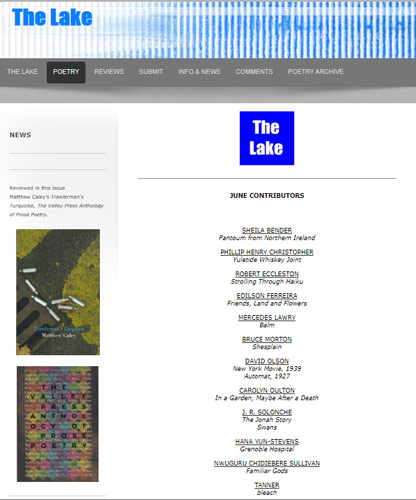
The Lake‘s June issue features Sheila Bender, Phillip Henry Christopher, Robert Eccleston, Edilson Ferreira, Mercedes Lawry, Bruce Morton, David Olson, Carolyn Oulton, J. R. Solonche, Hana Yun-Stevens, Nwuguru Chidiebere Sullivan, Tanner. Reviews of Matthew Caley’s Trawlerman’s Turquoise and The Valley Press Anthology of Prose Poetry.

Reading “Insomnia in Moonlight” by Alice Friman

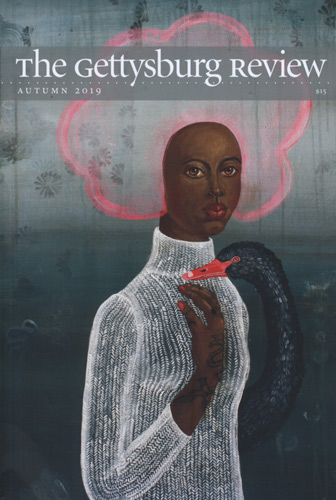
Gettysburg Review - Autumn 2019Guest Post by Emily Lowe

Alice Friman’s “Insomnia in Moonlight” in The Gettysburg Review Fall 2019 is a moving poem that grapples with a popular theme within this issue: death. Friman handles the topic delicately, with humor, and with heft. The poem is broken into four irregular stanzas beginning with the dead waking in the night, making noise. This stanza read with immediate intrigue through the life Friman breathed into death about a speaker who cannot sleep because the dead are alive in their thoughts. It suggests playfulness, too, written with a lighter tone than often associated with death and mourning.

Friman then equates the dead to the sun, something bright and fixed, and the speaker to the changeable moon, “she wears my child face—round, / sunburnt, and pensive.” The final lines in the poem are the most striking, offering up the speaker’s recount of a total eclipse where the moon tried to “blot out the sun.” It felt like a reflection of their desire to hold death in their hands and make sense of it, but the speaker admits that the moon fails in its attempt to resist permanence, to resist, as Friman puts so eloquently in her final two lines: “geometric progression, the unerasable / dead, and everything else I don’t understand.”


Reviewer bio: Emily Lowe is an MFA candidate in Nonfiction at the University of North Carolina Wilmington where she is also a fiction editor for Ecotone literary magazine.

Find New Favorites in The Malahat Review

Magazine Review by Katy Haas

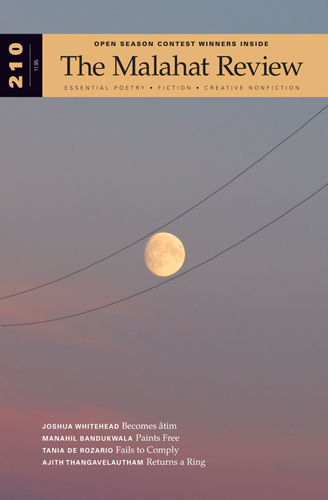
The cover of the latest issue of The Malahat Review is a calming scene: a full moon framed by powerlines over a pastel sky. It invites readers to pick it up and open it to discover what’s inside. I had found two new favorites in the pages: “Nice Girl” by Hollie Adams and “A High Frequency Words List” by Matthew Gwathmey.

In “Nice Girl,” Adams’s speaker likens herself to a mall who would “never automatically / open the doors even though / there’d be a sign saying / Automatic Doors.” She admits she’d keep them locked because she’s “evil / even though in real life / I’m always doing nice things.” This poem is a fun exploration of one’s inner self and the intentions behind actions. There’s a sense of humor in this piece even as it leads to introspection, an enjoyable aspect.

Gwathmey’s poem is in four sections, each one a list of words picked from the Fry and the Dolch sight word lists, used in children’s vocabulary development. This piece is just four paragraphs listing off words, a cool form of recycling.

There is plenty more poetry and prose to find inside this issue of The Malahat Review. Grab a copy to find your own favorites.

The Gettysburg Review – 33.4

The Autumn issue of The Gettysburg Review is out. The issue features paintings by Jared Small, fiction by Jennifer Anne Moses, Jared Hanson, Darrell Kinsey, and Sean Bernard; essays by Andrew Cohen, K. Robert Schaeffer, and Christopher Wall; poetry by Jill McDonough, Max Seifert, K. A. Hays, Albert Goldbarth, Mary B. Moore, R. T. Smith, Jill Bialosky, Katharine Whitcomb, Corey Marks, Kimberly Johnson, Margaret Ray, Danusha Laméris, Linda Pastan, Christopher Bakken, Christopher Howell, and Margaret Gibson.

The Adroit Journal – May 2020

The May 2020 issue is here with poetry by Jenny George, Arthur Sze, Jessica Abughattas, Melissa Crowe, Jamaica Baldwin, C.X. Hua, Kara van de Graaf, Hala Alyan, Mark Wunderlich, Raymond Antrobus, Stephanie Chang, and more; prose by Scott Broker, Alyssa Proujansky, Maura Pellettieri, and Mina Hamedi, with a prose feature by Dima Alzayat. See what else the issue has in store for you at The Adroit Journal website.

James Braun Brings Readers Back to Winter

Magazine Review by Katy Haas

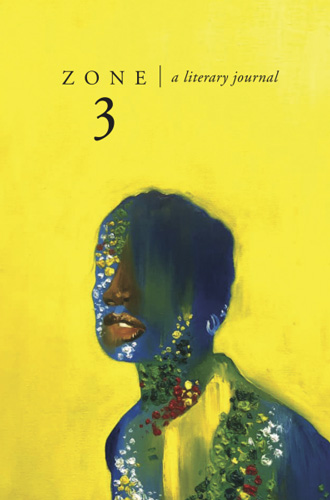
Everything is green and warm outside my window right now, but James Braun takes readers back to winter in his story “The Salt Man” from the Spring 2020 issue of Zone 3.

The story centers on two young sisters mid-winter. They are sent outside to wait for the salt man to come salt their roads before they’re allowed to play outside their yard. This is a dark piece. Poverty hangs heavy over the story. What once was green and beautiful has been covered by rocks. They have no heat in the house. Their neighbor loses fingers to frostbite. A woman cries on a couch while they go door to door asking if they can shovel driveways for cash to pay for a doctor bill. And the person they’re told will bring them a level of safety—the salt man—ends up being a source of danger in himself.
I enjoyed Braun’s writing style. There’s a level of flippancy with all the characters who view their lifestyle as ordinary. The story is short but holds a lot inside it. We’re able to discern as much meaning in what isn’t said as in what is clearly stated. And even though it is warm enough that I have my window open, a warm breeze blowing into my living room as I write this, Braun’s writing still makes a reader feel that inescapable cold of winter.

David Chorlton Interviewed in The Bitter Oleander

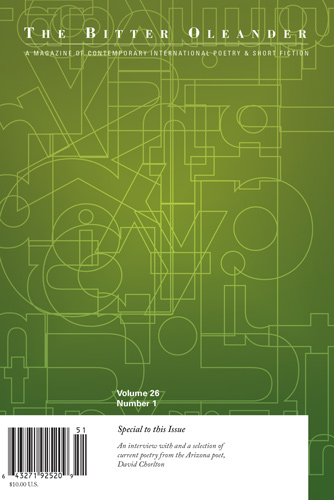
The Spring 2020 Issue of The Bitter Oleander includes a special feature. Editor Paul B. Roth interviews poet David Chorlton. Readers can also find a selection from Chorlton’s Speech Scroll. Below, check out an excerpt from the interview and visit The Bitter Oleander website to get a taste of Speech Scroll.

PBR: In your Speech Scroll, a sampling of which follows this interview, you’ve put the urban and the desert world together so expertly over some 158 poems. Did this particular project start off with that in mind or was it just your current ongoing consciousness of where you were in that environment and who you are that brought it forth?

DC: . . . While there are the times I sit down to commit words to paper, the actual writing of poetry is never turned off. Without placing a title or thinking of a poem’s shape, I had an ongoing path to follow and that helped me shift a little in the way I see images come together. Thinking about the political happenings of our tumultuous time might become too consuming, and for some people it is. Others seem to remain oblivious to anything that goes on in that realm. Writing poetry, being the most natural form of communication for me, has been a good place in which to scatter comments and observations that, I hope, provoke more thought than argument. Life encompasses a wide range of pleasures and frustrations, comfort for the fortunate and responsibility toward those who are not, and so with the help of various bird and animal species, plus a view of the sunrise from our front door when I’m up early to see it I take, as I mentioned earlier, what is given, and transform it the best way I can.

Emi Nietfeld Investigates Her Past

Magazine Review by Katy Haas

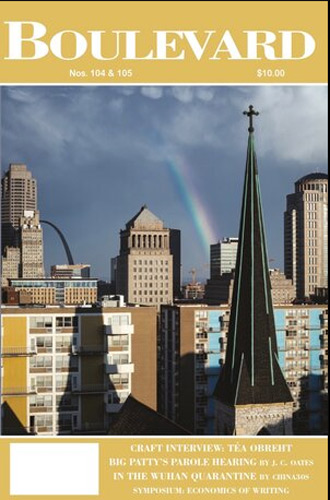
Opening the Spring 2020 issue of Boulevard is the winner of the journal’s 2019 Nonfiction Contest for Emerging Writers: “My Mom Claims I Had a Drink with My Rapist. I Investigate.” by Emi Nietfeld.

In this piece, Nietfeld looks back to June 28, 2010 when she was raped while in Budapest and to the conversations she had with her mother immediately after and eight years later about the incident. This investigation focuses on the drink that Nietfeld did or didn’t have and the influence the drink had on her mother’s reaction to the rape.

Nietfeld breaks the piece up into sections, investigating in-person conversations, emails that were sent in 2010, and her old computer documents. After she presents the “evidence,” she breaks it down and discusses it. I found this approach to be interesting and impactful as she turns a critical eye on past conversations, her memory, and her relationship with her mother.

Not only is this piece a strong start to the issue, but it demonstrates why Nietfeld deserves to have won the Nonfiction Contest for Emerging Writers.

Feel the Pulse of LitMag

Guest Post by Jamie Tews

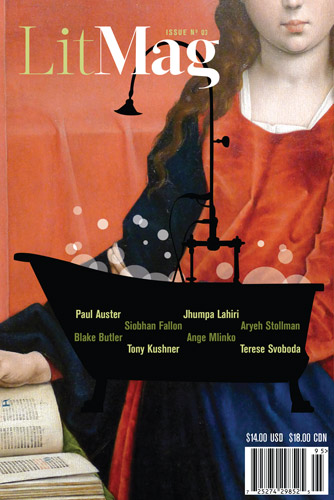
LitMag is a literary magazine published annually from New York City. The magazine’s pulse is found on page sixty-three with a quote from Aryeh Lev Stollman’s fiction piece “Dreams Emerging,” which states “true art is the condensation of ineffable yearning.” An ineffable yearning is a longing so strong it cannot be described; however, this issue’s work attempts description, and through writing, pieces of the unsaid become real. With fiction, nonfiction, poetry, and tributary letters, LitMag’s third issue holds work that embodies the condensation of ineffable yearning.

Meghan E. O’Toole’s fiction story “Abditory” carries the loudest pulse. It is a hazy and dreamlike exploration of how longing can manifest in dreams and become necessary for engaging with reality. O’Toole uses the image of milk to connect the main character’s past and present with their dream-images, and it is in the way the milk moves, the way it rises in the bedroom or pools on the road, that the story supplements the issue’s character of yearning. O’Toole’s story successfully employs elements of magical realism, which create a vivid sense of place that is consistent in every scene. I instantly believed in the fictional world she created, and this lack of hesitancy to trust and settle into the story’s place drew me back for a second and third read.

The magazine’s cohesion comes from every piece having its own sense of magnetism, and I read the magazine in one sitting. Each piece easily pulled me into the next, and it is for this ease and sense of connectivity that recommend LitMag.


Reviewer bio: Jamie is an MFA candidate at the University of North Carolina – Wilmington and holds a BA in English and Creative Writing from Indiana Wesleyan University. She has contributed work to Appalachian Voice, Appalachia Service Project, and has work forthcoming in the Chestnut Review.

Sponsor Spotlight: RHINO

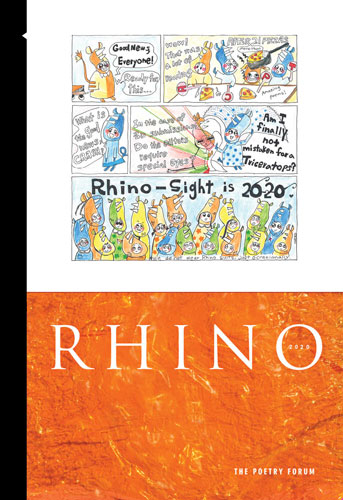
RHINO publishes some of the best and most innovative poetry, short shorts, and translations in their annual issues. For their 2020 issue, the editors have organized an ongoing virtual reading event for the month of May. You still have some time to join in the fun, and you can learn more about these virtual readings here.

To learn more about the annual journal, visit their sponsored listing at NewPages.

Zone 3 – Spring 2020

The issue of Zone 3 includes poetry by Darius Atefat-Peckham, Colin Bailes, Brian Bender, Daniel Biegelson, Christopher Citro, Lynn Domina, Alexandria Hall, Lauren Hilger, Angie Macri, Martha McCollough, A. Molotkov, Kell Nelson, Amy Seifried, Pui Ying Wong, and more; fiction by James Braun, Janice Deal, Tammy Delatorre, Maura Stanton, and Terry Thomas; nonfiction by Rebecca McClanahan, Katherine Schaefer, and William Thompson, and art by Khari Turner.

The Chattahoochee Review – Spring 2020

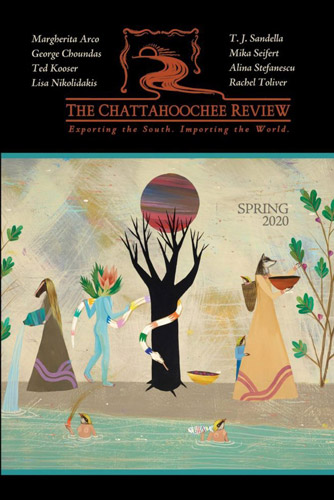
In this issue, poetry by Ruth Bardon, Mirande Bissell, Darren Demaree, Eli Eliahu, Stuart Gunter, Marlon Hacla, Ted Kooser, Len Krisak, Komal Mathew, and more; stories by Margherita Arco, Erin Flanagan, and more; essays by George Choundas, and others; and art by Deedee Cheriel. This issue also features the 2020 Lamar York Prize Winners: Lisa Nikolidakis in Fiction & Rachel Toliver in Nonfiction.

The Bitter Oleander – Spring 2020

The Spring 2020 issue of The Bitter Oleander features the contemporary Arizona poet David Chorlton, interviewed by our editor and including a generous selection of poems from his forthcoming book, Speech Scrolls. The issue also presents translations from the fiction of Sophia de Mello Breyner Andresen (Portugal); and poetry in translation by Paula Abramo (Mexico), Alberto Blanco (Mexico), Maritza Cino (Ecuador), Andre du Bouchet (France), and Elaine Vilar Madruga (Cuba).

AGNI – No 91

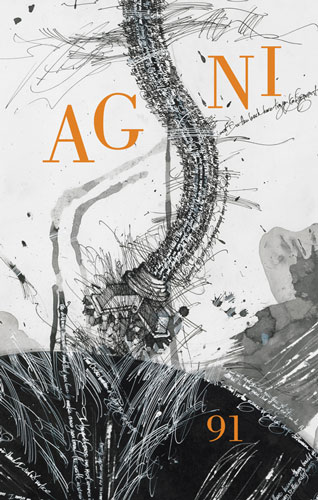
With AGNI #91 we welcome a roster of new editors. Collectively chosen work explores impending crises as well as acts of mitigating goodness; elegies marking losses sit side by side with expressions flashing pure surprise. Cover and portfolio artist Christopher Cozier captures the sly globalized vectors of use and misuse, tracing a long history forward to now. Poems by Sandra McPherson, Steven Sanchez, Emily Mohn-Slate, Colin Channer, and others offer the sensory grab of the immediate, as do stories by Shauna Mackay, David Crouse, and Aurko Maitra and essays by Debra Nystrom, Jiaming Tang, and Ann Hood.

Visual Poetry by Lillian-Yvonne Bertram

Magazine Review by Katy Haas

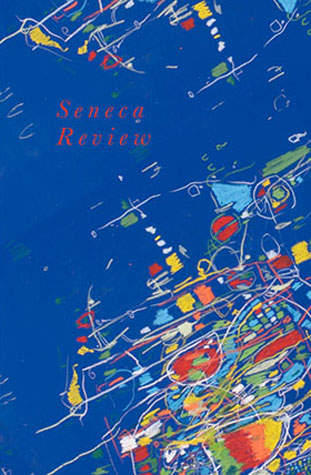
The Fall 2019 issue of Seneca Review includes four pieces by Lillian-Yvonne Bertram. These visual pieces draw in the eye with text boxes layered over one another, reminding me of a house of cards that’s fallen, the cards now strewn in overlapping angles. They’re all titled “World Map:” with a different year following the colon.

In these pieces, Bertram speaks about race and sexuality. The exploration of these themes comes in snippets that repeat and fade away like memories that resurface repeatedly: instant messenger conversations, conversations with her mother, antagonization on the basketball court.

Bertram uses the visuals in an inventive way that helps the poetry move along and creates a bigger impact for the message. I read the four pieces over and over, fully admiring the way in which they were presented.

Kenyon Review – May/June 2020

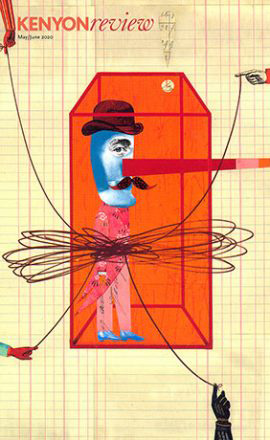
The May/June 2020 issue of the Kenyon Review features the sixth edition of “Nature’s Nature” includes twenty-nine new works by eighteen poets, selected by Poetry Editor David Baker. Featured contributors include Madhur Anand, Elizabeth Bradfield, Stephanie Burt, Stuart Dischell, Rebecca Morgan Frank, Paul Guest, Christian Gullette, Leslie Harrison, Didi Jackson, Devin Johnston, Joanna Klink, Phillis Levin, Leslie Adrienne Miller, Carol Muske-Dukes, Atsuro Riley, Nicole Stockburger, Hannah VanderHart, and Shelley Wong.

A Quick Yet Powerful Read

Magazine Review by Katy Haas

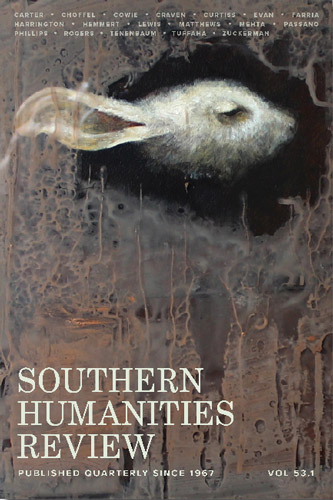
In the Spring 2020 issue of Southern Humanities Review, Heather Corrigan Phillips dives into the use of language in “A Scattershot Approach.” Broken up into different sections, this piece looks at the idioms and metaphors relating to gunfire that English uses. Each section is a different phrase or word.

This nonfiction piece looks at a span of time immediately after the Sandy Hook Elementary School shooting. Her brother-in-law was a first responder at the school that day and we learn about him and the way his health and family were impacted. Phillips writes about this while living out of the country and learns more in spurts through Skype and phone calls, and readers subsequently learn about this in similar ways. Little bits of his story are revealed and then explorations of gun-adjacent language is placed in between.

Reading this really does bring to light the amount of idioms and metaphors that we use which relate back to guns, and this only scratches the surface. There are plenty more that weren’t included. We’re lead to question why this language is so prevalent while also seeing into the lives of humans who have gone through a traumatic event. Here is the perfect balance of fact and emotion, a quick yet powerful read.

Jenni(f)fer Tamayo Answers “The Citizenship Question”

The Georgia Review - Spring 2020Magazine Review by Katy Haas

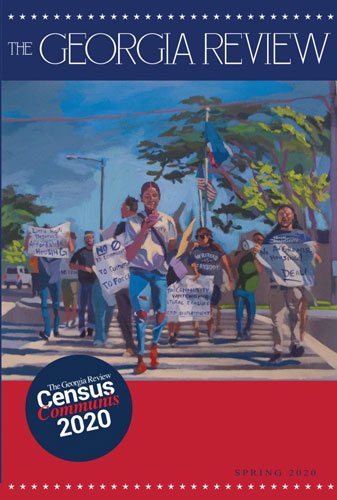
The Spring 2020 issue of The Georgia Review was released around the time U.S. citizens were receiving census information in the mail, and the work inside the issue relates back to this: the census and citizenship. Jenni(f)fer Tamayo’s “The Citizenship Question” is a stand-out among these.

The piece reimagines the Application for Naturalization, or the U.S. Citizenship Application. This piece spans three pages, and Tamayo rewrites the questions and options given. The first two pages are straight forward enough, with the third falling into a more chaotic format with text written upside down, overlapping other text, or fading away into blank space.

I always enjoy this type of writing that mixes the cold format of a form (Marissa Spear does something similar with her medical reports in “How Many Ways Can One Spell Hysteria?” found in Moonchild Magazine) and reworks it with heart, feeling, and poetry. It can be a bizarre feeling to see personal information about yourself reduced to a few lines and checkboxes in someone’s files, and Tamayo takes that information back, reclaims it as hers, and connects it back to her life and identity in an inventive and enjoyable read.

Valley Voices – Spring 2020

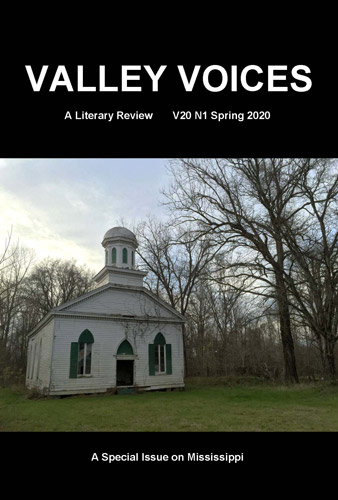
Visit this special issue on Mississippi. Poetry by George Drew, Jerry W. Ward Jr., Diane Williams, Charle R. Braxton, Kalamu ya Salaam, Angela Ball, Annette C. Boehm, Allison Campbell, Kendall Dunkelberg, and more; articles by John J. Han, Junying Jia, William Ferris, and Cassie Osborne Jr.; nonfiction by Hermine Pinson, Joseph Holt, and Kevin Baggett; and interviews with George Drew and Bennie Mae Fortune Harper. Plus, six book reviews.

Plume – May 2020

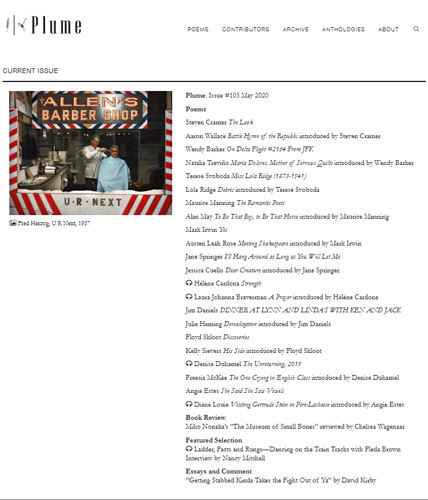
This month’s Plume Featured Selection includes work by and an interview with Fleda Brown. In nonfiction, David Kirby writes “Getting Stabbed Kidna Takes the Fight Out of Ya.” Chelsea Wagenaar interviews The Museum of Small Bones by Miho Nonaka. This month’s poetry selections include Steven Cramer, Terese Svoboda, Mark Irwin, Floyd Skloot, Denise Duhamel, Angie Estes, and more.

The Lake – May 2020

The May issue of The Lake features Jerrice J. Baptiste, Zoe Brooks, Holly Day, George Franklin, Nels Hanson, Jennifer A. McGowan, Warren Mortimer, Leah Mueller, Samuel Prince, Elaine Reardon, David Mark Williams, Rodney Wood, Abigail Ardelle Zammit. Reviews of Emma Lee’s The Significance of a Dress and Rachael Burn’s, a girl in a blue dress.

About Place Journal – May 2020

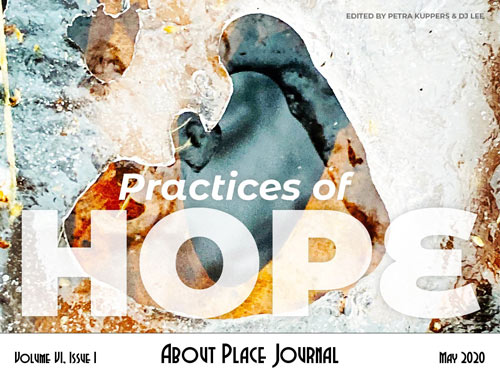
“Practices of Hope” showcases creative processes as ways of making change. The pieces in this issue of About Place ask: How can creative practice allow us to feel and act differently? How can we invent new collaborations and new embodiment practices for humans and other fellow creatures? What can speculative, non-realist, and hybrid forms mean for eco-arts? How can we imagine a different future with more of us in it? What hope can we afford? What hope do we need? Together, we reach for art that activates new relationships to embodiment, climate crisis, species extinction, and environmentally located social pressures.

Reclamation of a Name

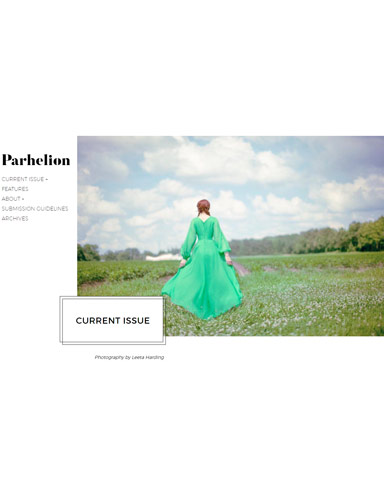
Parhelion - Winter 2020

Magazine Review by Katy Haas

In the latest issue of Parehlion, readers can find a selection of poetry by Sierra Lindsay. In this set of four poems, “The Line Between” especially stood out to me.

In this poem, Lindsay explores her name in three stanzas. The beginning draws readers in and explains the origin of this study: “I get lumps cut out of my breasts & on the hospital   bracelet, last name first.” The second stanza studies the name as it’s used by people she “shouldn’t be         fucking,” and the last stanza focuses on the name as it stands on a workplace name tag as customers question its source. The ending is explosive with its reclamation of her name and the power there, “I will put your name on my / tongue &       make you taste it.”

The layout of the poem makes it even more enjoyable to read, along with Lindsay’s careful construction of language that ebbs and flows.

Kari Gunter-Seymour Talks Trigger Warnings

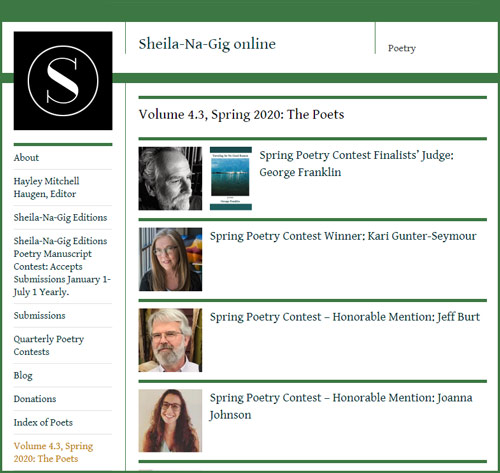
Sheila-Na-Gig online - Spring 2020Magazine Review by Katy Haas

The Spring 2020 issue of Sheila-Na-Gig online features the winner and honorable mentions of the Spring Poetry Contest. Winner Kari Gunter-Seymour pens the poignant “Trigger Warning.”

In this piece, the speaker’s son grapples with PTSD which worsens in November, the result of time in the military. The speaker’s ability to relate is limited; the closest thing she has is watching her father die, and holding dogs as they’ve died. Throughout the poem she mourns not only her father, but also “the farm boy, the quipster, / the Ren & Stimpy impersonator” who her son used to be before he “boarded the plane, now camouflaged / in anxiety meds and a skeletal body.” I really liked the use of “camouflage” here, an image that not only describes the concealing the person he was, but one that also conjures up military uniforms he once donned.

Gunter-Seymour sums up the message of the poem in two truthful lines, “We don’t get to choose our memories, / they are triggered.”

Sponsor Spotlight: Fiction Southeast

Fiction Southeast is all about flash fiction. The online journal shares new fiction on a rolling basis, easily accessible on electronic devices.

A feature I’m especially fond of recently is their Flash Audio Series. I’ve had no attention span for reading while sheltering in place, but these audio versions of flash fiction do the work for you and are great to play in the background while making dinner, relaxing in the tub, gardening out in the yard—a welcome voice to accompany whatever you’re up to.

Driftwood Press Wants Your Graphic Work

Any graphic novelists or comic creators in the house? Driftwood Press is eager to hear from you! They currently accept short graphic works (one image up to 22 pages of comic art) for publication in their biannual, online journal. They’re open to serializing longer graphic works with presentation of the work’s first chapter and a series outline. The editors also seek graphic novel manuscripts for publication consideration. Submit full or partial manuscripts via Submittable.

Comic submissions to the magazine and graphic novel manuscript submissions are both free. Learn more about what they’re looking for at their website.

But if graphic work isn’t for you, the magazine is still accepting submissions for two of their contests until July 1.

De-stigmatize Uncomfortable Realities: Interview with Aby Kaupang & Matthew Cooperman

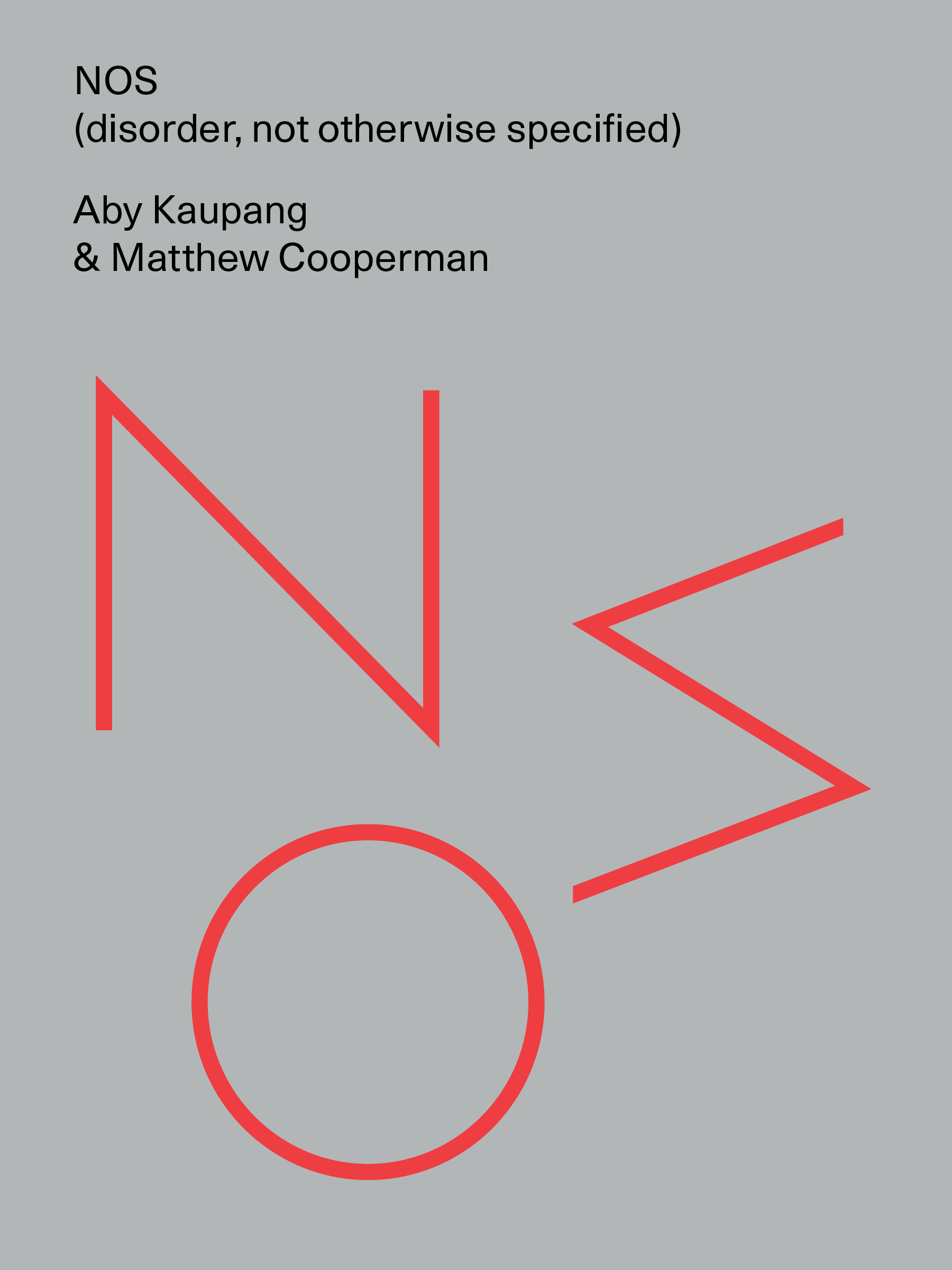
NOS coverElizabeth Jacobson sat down with Aby Kaupang and Matthew Cooperman to discuss their 2018 release of NOS (disorder, not otherwise specified). The book, published by Futurepoem Books, documents the odyssey into a foreign environment of hospitals, doctors, and diagnoses. Terrain.org published an excerpt from the book along with this interview.

Interviewer Elizabeth Jacobson starts the interview with the question about choosing to make the decision to let your child live or die and explains that she grew up in a family where a different choice was made.

Aby responds, “thank you for sharing your story a bit. I hope to hear more. I say that because I care, but also because I wish more people would write/speak about the difficult choices. De-stigmatize uncomfortable realities.”

She and Matthew Cooperman go on to explain how the book started as a private journal of Aby’s and transformed into something completely different. They also talk about how their lives have changed since its publication and what new challenges they face with their daughter who is now thirteen. Check out the full interview here…and maybe prepare a tissue or two.

Sponsor Spotlight :: Del Sol Review

Originally started in 1997 under the name of “Editor’s Picks,” Del Sol Review has transformed from highlighting select work from print journals to being its very own literary magazine. Contributors include Maxine Chernoff, Paul West, Linh Dinh, Holly Iglesias, Deborah Olin Unferth, Michael Martone, and Daniel Bosch.

Del Sol Review accepts unsolicited works of speculative fiction, poetry, prose poetry, creative nonfiction, short stories, and flash fiction year-round. They love works containing unique and interesting subject matter.

Their latest issue, No. 24, is the Richard Basehart Issue. This contains fiction by Joe Kowalski, Zeke Jarvis, Glen Pourciau, Debbie Ann Ice, Evan Steuber, Jenny Drummey, Andrew Stancek, Richard Leise, Risa Mickenberg, Joseph Couchet, Robert Miltner, Ron Riekki, and Mark Walling; and poetry by Michael Salcman, Nancy Botkin, Wendy Barker, Hilary Sideris, Rich Ives, and Nish Amarnath.

I love the little snippets they put with their issues: “Carnivores. Astonomy. Zsa Zsa Gabor Geeks.” or “Innocent, flight, teeth, yecch, and more!”

Unique & Refreshing Poems by Tyler Dempsey

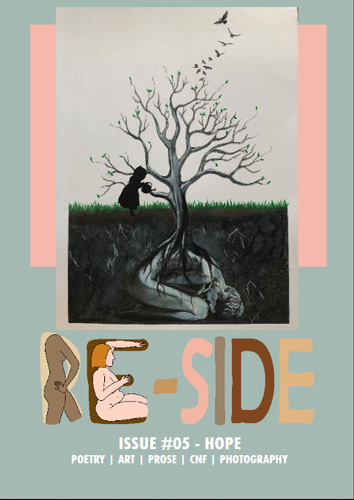
Re-Side Issue 5Guest Post by C.L. Butler

The other day while combing the world of literary magazines I came across something both unique and refreshing. I’m referring to Tyler Dempsey’s two poems most recently published in Re-Side Magazine Issue 5. These pieces use erasure poetry crafted from letters from Dempsey’s brother Travis Dempsey, who has been serving a prison sentence since 2009 in Oklahoma.

His poem “protein” captures the woes of the incarcerated for the outside world to hear. It draws attention to the role of economics in prisons to deal with basic everyday needs like nutrition. In “150MphWinds,” Dempsey points to his brother’s everyday observations. He finds the crux between complex and the dignity of simplicity by again showing what we take for granted.

While Tyler Dempsey is the curator of these poems, the words present a unique voice filled with legitimacy for the reader. It feels as if Dempsey’s brother is talking himself, creating a poetic mirroring of these letters. I chose to review these poems to not only produce more reviews on indie authors, but also to bring the attention of the privileged to the art coming from those with the least amount of civil liberties.


Reviewer bio: C.L. Butler is an African American and Dutch poet, historian, and entrepreneur from Philadelphia based in Houston, TX. In 2017 his poem Laissez Faire was published by The Bayou Review. In 2019 he published academic research with the Journal of International Relations & Diplomacy.

The Greensboro Review – Spring 2020

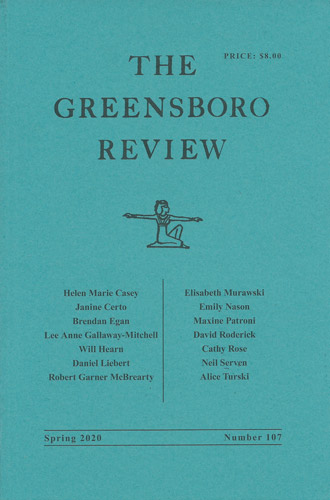
Greensboro Review - Spring 2020

In this issue: the Robert Watson Literary Prize-winning story, Brendan Egan’s “War Rugs,” and Prize-winning poem, Emily Nason’s “Sertraline,” as well as an Editor’s Note from Terry L. Kennedy and new work from Helen Marie Casey, Will Hearn, Daniel Liebert, Robert Garner McBrearty, Elisabeth Murawski, Maxine Patroni, Alice Turski, and more. Read more at The Greensboro Review website.

The Common- Spring 2020

The Common - Spring 2020

The Common’s Spring 2020 issue released today. Inside the issue: an Arabic Portfolio from Sudan with work by Andel-Ghani Karamalla, Ishraga Mustafa Hamid, Bwader Basheer, Jamal Aldin Ali Alhaj, Mustafa Mubarak, and more. Also in this issue is fiction by Thoraya El-Rayyes, Catherine Buni, Bina Shah, and others; essays by A. Kendra Greene, Suraj Alva, and Tanya Coke; and poetry by January Gill O’Neil, Emily Leithauser, Megan Pinto, Mira Rosenthal, Tara Skurtu, John Freeman, marcus scott williams, and more.