Home » NewPages Blog » Page 75

NewPages Blog

At the NewPages Blog readers and writers can catch up with their favorite literary and alternative magazines, independent and university presses, creative writing programs, and writing and literary events. Find new books, new issue announcements, contest winners, and so much more!

NewPages Book Stand – March 2021

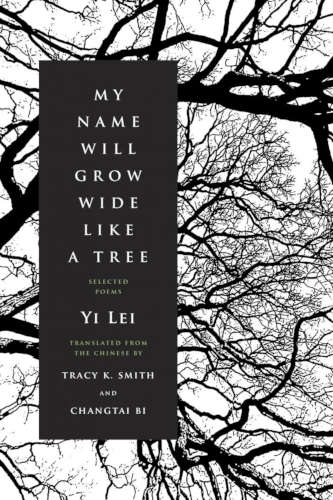
A new Book Stand is here with great new and forthcoming fiction, nonfiction, and poetry books. Check out this month’s six featured titles below!

Joshua Cross’s debut story collection Black Bear Creek shows characters struggling to survive as they find ways to love and hope and fight in a mining town past its glory days.

Stephanie Dickinson opens a door out of Austrian poet Georg Trakl’s psyche in the poems of Blue Swan, Black Swan: The Trakl Diaries.

In the nine stories of How Other People Make Love, Thisbe Nissen chronicles the lives and choices of people questioning the heteronormative institution of marriage.

Lily-livered by Wren Hanks “is a beautifully braided catalog of ways to live and not die.”

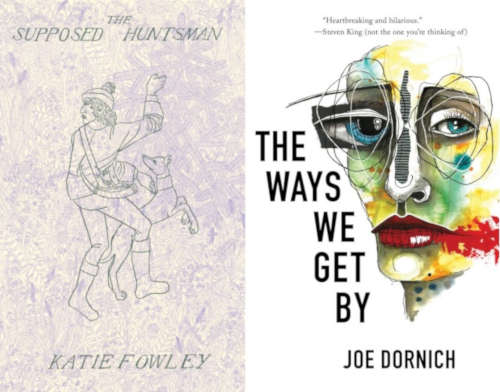
In her debut full-length collection of poems The Supposed Huntsman, Katie Fowley blurs the lines of gender, species, and self.

The Ways We Get By by Joe Dornich is the “bizarre, charming, darkly comic irreality of paid cuddlers and mean-spirited parents, where intimacy is commodified.”

You can learn more about each of these New & Noteworthy books at our websiteClick here to see how to place your book in our New & Noteworthy section.

Happy 5th Anniversary Leaping Clear

Leaping Clear - logoCongrats to Leaping Clear! The online lit mag is celebrating its fifth anniversary this spring.

With this special occasion, the masthead is welcoming in new editors Simon Boes and Jen Schmidt.

Readers can celebrate with the magazine by checking out their brand new Spring/Summer 2021 issue. Instead of the usual format, this issue is published as a weekly Showcase Feature which will highlight one contributor from the past five years each week until the 2021 Fall issue is released in September. This week’s showcase is “Call and Response” by author and artist Deborah Kennedy.

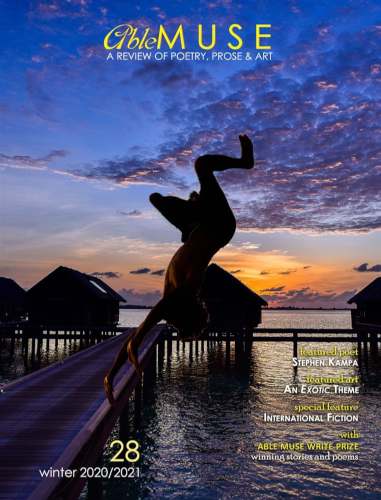
Virtual Launch Reading for Able Muse Winter 2020/2021 Edition

Picture collage with blue background and pictures of several peopleLiterary magazine Able Muse is celebrating the release of its new print edition with a virtual reading and Q&A session with the contributors and authors of Issue Number 28.

The event is hosted by poetry associated editor Nicole Caruso Garcia and will include fellow editors Alexander Pepple, Richard Wakefield, Karen Kevorkian, and N. S. Thompson. Contributors/readers include Bruce Bennett, Anna M. Evans, Dan Campion, Estill Pollock, J.C. Scharl, John Beaton, Susan McLean, Nageen Rather, L.M. Brown (who will be reading the winning story of the 2020 Able Muse Write Prize for Fiction), and N. S. Thompson.

The launch event will take place virtually via Zoom on April 3 from 3-4PM EDT. Attendance is free and everyone is welcome to join that wishes, too. You just have to register for the event first.

A Grade-A Sequel

Guest Post by Natalie Hess.

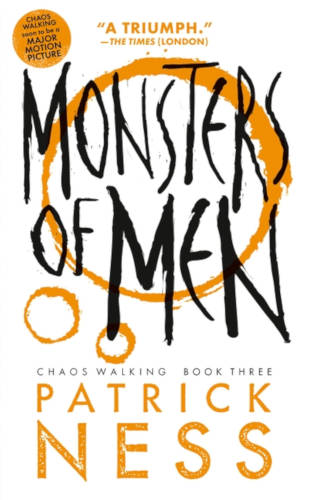
This sequel to The Knife of Never Letting Go literally made me gasp and have to pause the audiobook to process all of my life decisions on multiple occasions. At the start of this book Viola and Todd have just made it to Haven, and based on the recent events that occurred at the end of the previous book, they are expecting a war, but that is not what happens at all. The town doesn’t try to fight at all, and they are overtaken by Mayor Prentiss as he tries to completely change the ways that all of these people live.

It was really cool that we got to read from both Viola’s and Todd’s perspectives as we watched them be repeatedly separated and reunited. Their romance is their main motivation for all of their actions without completely taking over the story and it’s such a great balance.

The concept of corrupt leaders and having to choose sides is so interesting to read in this book because both options seem terrible and everyone seems to be hurting people and only trying to make the situation even worse than it already is. This gave me major Mockingjay by Suzanne Collins and The Maze Runner by James Dashner vibes so if you enjoyed either of those, I think you’ll definitely like this. Like the first book, I also gave this one 4 stars.


The Ask and the Answer by Patrick Ness. Candlewick Press, July 2014.

Reviewer bio: I’m Natalie Hess and I’m simply a high school student who LOVES reading everything from scifi to romance to nonfiction and everything in between. I also love sharing my thoughts and I hope you enjoy!

Buy this book from our affiliate Bookshop.org.

Still Point Arts Quarterly – Spring 2021

This issue’s theme is “My Deep Love of Place.” Featured writers include Melodie Corrigall, Suzanne Finney, Catherine Young, Amy Cotler, Jeri Ann Griffith, Lawrence Gregory, Sue Schuerman, Cayce Osborne, Penny Milam, David Denny, William Bless, Barbara Cole, Rosalie Sanara Petrouske, and Teresa H. Klepac. Featured artists include Catherine L. Schweig, Walt Hug, Birgit Gutsche, MJ Edwards, and Barbara Anne Kearney. Find more info at the Still Point Arts Quarterly website.

Rattle – Spring 2021

The Spring 2021 issue of Rattle features a Tribute to Neurodiversity. This issue’s conversation features Michael Mark, who discusses how dyslexia has contributed to his life and work, as well as advertising, ghost stories, Buddhism, and many other topics. The issue includes another exciting and highly varied open section, presenting poets such as Skye Jackson and Stephen Dunn, covering a wide range of subjects and styles.

Hippocampus Magazine March-April 2021

The March-April 2021 issue of Hippocampus Magazine is now at the Mag Stand, and it’s full of CNF goodness for you, including work by Scott Bane, Paul Crenshaw, Bethany Kaylor, Anya Liftig, Francisco Martinezcuello, Tiffany Mathewson, Sheila Monaghan, Jim Ross, Michelle Strausbaugh, Kareem Tayyar, and Lish Troha. Also in this issue: a book review by Emily Dillon, a craft essay by Michelle Levy, and Robin Wheeler on “Going Mobile.”

Hampden-Sydney Poetry Review – Winter 2020

The poems inside this issue of Hampden-Sydney Poetry Review speak to our moment in different and unpredictable ways. Maurice Manning attempts to capture the past; Lauren Slaughter faces mourning head-on; and Ed Falco wonders fitfully about Narcissus. And maybe Narcissus can be a mascot of sorts for this weird moment of ours—how so many of us have stared at our own faces on Zoom and felt paralyzed, perhaps not by self-regard, but by something still inevitably bounded by the self. Hopefully, the poems and interviews in this year’s issue of HSPR will help break you out of whatever trance you might be in.

Georgia Review – Spring 2021

The Georgia Review’s Spring 2021 issue begins our seventy-fifth number, features new writing from T Cooper, Eloghosa Osunde, Kazim Ali, Heather Christle, Nikki Wallschlaeger, and many more. Spring 2021 features new translations of work by Alain Mabanckou, Hiromi Itō, and Toshiko Hirata and a special section with Julie Iromuanya and Virginia Jackson’s writings on Claudia Rankine’s Just Us: An American Conversation. This issue’s art portfolio presents Yaron Michael Hakim’s innovative anti-colonial artworks, as seen in two distinctive series, with an introduction from editor Gerald Maa.

Colorado Review – Spring 2021

The Spring 2021 issue features nonfiction by Molly Rogers; fiction by Kathryn Harlan; and poetry by Genevieve Payne, T. Dallas Saylor, and Emma Lewis. Also in this issue: Tim Erwin, Holly Goddard Jones, Monica Macansantos, and more. See other contributors at the Colorado Review website.

Able Muse – Winter 2020

This issue’s themed art exhibit is “Exotic,” and our featured poet is “Stephen Kampa,” interviewed by Chelsea Woodard. Other poets in this issue include Tim McGrath, John Beaton, Richard Cecil, Estill Pollock, Bruce Bennett, Anne Delana Reeves, Elise Hempel, Terese Coe, Verga Ignatowitsch, Dan Campion, and others. Plus, a selection of book reviews; essays by N.S. Thompson and Christopher Rivas; and an international fiction special feature. See more contributors at the Able Muse website.

The Magic of Making a Decision

Alma’s MFA in Creative Writing director Sophfronia Scott offers decision-making advice for students approaching the graduate school application season.

There’s a wonderful quote by the Scottish mountaineer William Hutchison Murray about making decisions. Specifically he’s talking about getting to that first step of a climb. The quote goes like this:

Until one is committed, there is hesitancy, the chance to draw back, always ineffectiveness. Concerning all acts of initiative and creation, there is one elementary truth the ignorance of which kills countless ideas and splendid plans: that the moment one definitely commits oneself, then providence moves too.

All sorts of things occur to help one that would never otherwise have occurred. A whole stream of events issues from the decision, raising in one’s favour all manner of unforeseen incidents, meetings and material assistance which no man could have dreamed would have come his way.

Whatever you can do or dream you can, begin it. Boldness has genius, power and magic in it. Begin it now.

Note he says “committed,” which means you have to make a firm decision before the assistance shows up. Why? Continue reading “The Magic of Making a Decision”

The Common: 2021 Festival of Debut Authors

Celebrate ten years of publishing new voices with The Common‘s special events team. Hop on Zoom on March 25 at 7PM EST and join Ama Codjoe, Sara Elkamel, LaToya Faulk, Ben Shattuck, Angela Qian, and Ghassan Zeineddine for readings and conversation. The event will raise scholarship funds for The Common‘s Young Writers Program. Learn more and register for the reading via the journal’s website.

Read for Months To Years

Quarterly journal Months To Years is currently looking for volunteer nonfiction and poetry readers. The work in Months To Years explores death, loss, and grief.

A degree in creative writing or English is helpful but not required. Gain experience working with a small nonprofit lit mag. Apply via their Submittable by April 1.

March 2021 eLitPak :: LitNuts – Connecting Indie Authors with Booklovers

screenshot of LitNuts March 2021 eLitPak Flier
click image to view full-sized flier

LitNuts eNewsletter: Connecting Indie Authors with Booklovers

Special Offers for Authors: Give us a try with a book promotion for the introductory price of only $10 with discount code NewPages10. Fantasy authors: Feature your book in a special March 25 fantasy issue for only $5 with discount code Fantasy5 (deadline 3/22/21). Visit our site for more information.

View the full March 2021 eLitPak Newsletter.

March 2021 :: Point Park University Low-res MFA

Screenshot of Point Park University Low-Res MFA in Writing for the Stage & Screen February 2021 eLitPak Flier
click image to open full-size flier

Writing for the Screen and Stage: Low-residency MFA At Point Park University

Point Park University’s low-residency MFA in Writing for the Screen & Stage is accepting applications now thru June 15, 2021. Discover your creative voice with a team of professional writers and a program that will prepare you for a multi-faceted writing career. We offer generous artistic scholarships based on your submitted artistic portfolio. Applying is free! Do it today!

View the full March 2021 eLitPak Newsletter.

March 2021 eLitPak :: Coed Summer Graduate Programs

screenshot of Hollins University Summer Graduate Programs

Pursue graduate study during an intensive six-week summer session. Programs are available in:

  • Children’s Book Writing & Illustrating
  • Children’s Literature (MA or MFA)
  • Playwriting (MFA)
  • Screenwriting & Film Studies (MA)
  • Screenwriting (MFA)

This summer courses will be offered virtually from June 21 – July 30. For more information, visit our website or call (540) 362-6575.

View the full March 2021 eLitPak Newsletter.

March 2021 eLitPak :: Get 15% Off Your First WritingWorkshops.com Class

Screenshot of WritingWorkshops.com March 2021 eLitPak flier
click image to view full-size flier

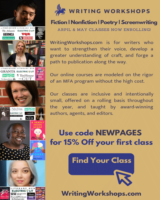
WritingWorkshops.com: Get 15% Off Your First Class!

Exclusive for NewPages fans: Get 15% off your first class at WritingWorkshops.com. Our classes are inclusive and intentionally small, offered on a rolling basis throughout the year, and taught by award-winning authors, agents, and editors. Use code NEWPAGES at checkout—but hurry, our upcoming classes are almost full! Discount expires 3/24/2021. Visit our website.

View the full March 2021 eLitPak Newsletter.

March 2021 eLitPak :: Spring 2021 Titles from Livingston Press

Screenshot of Livingston Press March 2021 eLitPak flier
click image to view full-size flier

Spring Titles for Livingston Press at University of West Alabama

All these titles are available online from the Press at our website or the usual suspects of Amazon, Powells, B & N, SPDBooks. The Press will return to open submissions in August. We are interested especially in novels and novellas.

View the full March 2021 eLitPak Newsletter.

March 2021 eLitPak :: Take 10% off CARVE Online Writing Classes

screenshot of CARVE March 2021 eLitPak flier
click image to view full-size flier

Use code NEWPAGES for 10% off CARVE’s group online writing classes with 6 weeks of lessons and peer critiques. Short Story Writing: Fundamentals starts March 29 and covers Character & Plot, Point of View, Dialogue, Inner Monologue, and Description. Short Story Writing: Techniques starts May 10 and covers Use of Senses, Imagery, Metaphors & Similes, Rhythm & Pacing, and Threading.

View the full March 2021 eLitPak Newsletter.

March 2021 eLitPak :: Foster a Connection with the Environment

screenshot of Elk River Writers Workshop January, February, March 2021 eLitPak Flier
click image to view full-size flier

Explore Your Wild at the Elk River Writers Workshop

The Elk River Writers Workshop takes place at Chico Hot Springs, Montana, bringing together some of the country’s most celebrated nature writers with students who are serious about fostering a connection with the environment in their writing. This year, we are thrilled to welcome faculty members Rick Bass, Linda Hogan, J. Drew Lanham, William Pitt Root, and Pamela Uschuk.

View the full March 2021 eLitPak Newsletter.

March 2021 eLitPak :: 5th Annual Taos Writers Conference

screenshot of Taos Writers Conference March, April, May 2021 eLitPak flier
click image to view full-size flier

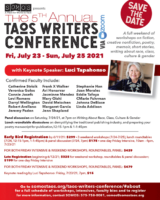
5th Annual Taos Writers Conference with Keynote Speaker, Luci Tapahonso

Join your fellow writers at the virtual 5th Annual Taos, New Mexico, Writers Conference on Zoom. Panel presentation on “Writing about Race, Class, Culture & Gender” plus over 20 workshops in all genres. Faculty include: Frank X Walker, CMarie Fuhrman, Levi Romero, Ari Honarvar, Stephanie Han, Jeremy Paden, Margaret Garcia and many more. Go to our website, call 575-758-0081, or email us.

View the full March 2021 eLitPak Newsletter.

Out of One’s Head and Into the Godhead

Guest Post by Bruce A. Mason

A philosophy professor wants to get out of his head . . . and into the Godhead.

Thousands of years ago in India, great beings explored the inner Cosmos of their own minds through meditation, seeking answers to the big questions. Who are we? What is the purpose of life? How can we overcome the intractable problem of human suffering? These are the metaphysical matters at the center of To Be Enlightened, the debut novel by Alan J. Steinberg.

Set in southern California, the story tracks the spiritual quest of Abe Levy, a philosophy professor at Pomona College. Deep into midlife, he struggles between the duties and pleasures of being a husband and the strong desire to expand his consciousness. As his pursuit grows increasingly zealous, so does the anxiety of Abe’s longtime wife, Sarah, who fears Abe’s ascension will divide them. At the college, Abe teaches “The Insider’s Guide to Our Self” (a survey of Vedic philosophy and the roots of religion), which serves as the setting for much of the novel’s Socratic-style debate and helps outline the book’s philosophical ideas. Namely, that Vedic philosophy addresses many questions left unanswered by Western philosophy.

Connecting the dots between science and alchemy, Eastern and Western philosophy, and the underlying wisdom of many faith traditions—from Judaism to Christianity to Hinduism to Sufism—Steinberg invokes the “God” beyond all religion, reminding us that no religion has dibs on Ultimate Reality. A pleasurable read that makes Eastern philosophy accessible, the book is plausibly far-out. It makes a convincing case that everyone has the potential to transcend.


To Be Enlightened by Alan J. Steinberg. Adelaide Books, 2021.

Reviewer bio: Bruce a writer, aspiring playwright, lover of life, globe trekker and dweller on the threshold. You can read some of his work in his Huffington Post column and on his Instagram page.

Buy this book from our affiliate Bookshop.org.

‘Ghost in a Black Girl’s Throat’

Guest Post by Lannie Stabile.

A Black girl can be a dog, a rat, a gadget, a myth, a ghost, a mermaid, origami, or livestock. A Black girl can be a scavenger, a caged bird metaphor, a “perfect little alien,” or unwelcomed roots. A Black girl can be a black cloud, but she cannot be the white sky. A Black girl can be any imaginable thing, but she is not allowed to be a person. Not in the eyes of a white crowd, anyway. This is the trap, the endless, disparaging loop, that Khalisa Rae describes in her debut book of poetry Ghost in a Black Girl’s Throat.

The collection is broken into three sections titled: “Fire,” “Wind and Water,” and “Earth and Spirit,” and it’s easy to see why this is an important designation. Rae writes, “You will be asked, where are you from? more than you are asked, how are you doing?” As if white people don’t know Black girls are elemental, powerful, and from the very core of this earth.

But, still, the expertly-crafted poems are mournful and simmering with unexpressed rage. They illustrate quiet resignation (“You’re left to break and mend, stitch your wounds to not spill the secrets, sober your sorrows and be back before Monday’s 8:00 a.m. exam.”), peaceful protest (“Sometimes, I go to white spaces, plant myself. I know my roots aren’t welcome there.”), and grave desperation (“We gamble with our obituaries like we don’t have a thousand other ways to die.”).

When white people feel entitled to every space, what is a Black girl to do? The advancement is made in excruciating inches, but it comes at the expense of her raw throat and heart.


Ghost in a Black Girl’s Throat by Khalisa Rae. Red Hen Press, 2021.

Reviewer bio: Lannie Stabile (she/her) is the winner of OutWrite’s 2020 Chapbook Competition in Poetry; the winning chapbook, “Strange Furniture,” is out with Neon Hemlock Press. She is also a back-to-back finalist for the 2019/2020 and 2020/2021 Glass Chapbook Series and back-to-back semifinalist for the Button Poetry 2018 and 2019 Chapbook Contests.

Buy this book at our affiliate Bookshop.org.

Flash Frog Delivers Flash Fiction Weekly

screenshot of Flash Frog website

Online literary magazine Flash Frog delivers up one story under 1,000 words weekly with an accompanying original artwork created just for that piece.

Founded just this year, their focus is on “language that jumps off the page” and “stories that linger for days” as they like their stories as they like dart frogs: small, brightly colored, and deadly to the touch.

Recent stories include “And This is How You Fade Away” by Tyrel Klessinger; Shannon Layne’s “All the Ways We Tried to Kill My Father”; and “Man on the Moon” by Patricia Q. Bidar.

They are open to submissions year-round and do not charge a submission fee. Hop on over to their listing on NewPages to learn more.

Tint Journal – March 2021

A new Tint Journal is out. Read 25 new literary creations by ESL writers from all around the world online and for free at our website. Each text is accompanied with visual art creations by international artists, and many feature audio recordings of the writers reading their work. The 25 new poems, short stories and essays by writers identifying with 19 different nationalities and speaking 18 different mother tongues are just as diverse in their subject matter: Ranging from immigration, food, loss, LGBTQ+ and race to horror and romance, they will cue readers to think about the pressing issues of our time and open new literary landscapes to enjoy.

Kenyon Review – March/April 2021

In addition to the 2020 Short Nonfiction Contest winners, Miriam Grossman, Mary O. Parker, and Stella Li, the Mar/Apr Kenyon Review includes “Nature’s Nature,” our seventh annual special poetry section centered on “nature, the environment, and ecological witness,” as Poetry Editor David Baker describes it in his introduction.

Blackout Poems by Jennifer Sperry Steinorth

Magazine Review by Katy Haas.

The Winter 2020 issue of the Missouri Review includes a selection of blackout poetry by Jennifer Sperry Steinorth. These poems move beyond the traditional blackout poem, though, and move into a realm beyond, each poem a well-crafted work of art. The variety in style is inspiring as she demonstrates the creative ways one can manipulate text. The art speaks as much as the selected words do. Each turn of the page reveals something inventive and exciting, a treasured find in this issue.

SRPR 2020 Editors’ Prize Winners

Opening the latest issue of Spoon River Poetry Review are the winners of the 2020 SRPR Editors’ Prize. The placing poems are introduced by the final judge, Austin Smith.

First Place
“Disbelieving These Deaths, I Go to Sit by Lake Huron” by David Groff

Runners-up
“Wonders of the World” by Todd Copeland
“Field Notes: To Excavate Beyond Despair” by Erica Sofer Bodwell

Honorable Mentions
“You can have it all” by Kelsey Taylor
“In the Exhaust of an Outboard  Motor, I Talk to Myself and to Grandpa” by Cody Smith
“Dear Crossed, Did You Know That You’re Not Your Body?” by Gabriel Dozal

Find a copy of this issue at SRPR‘s website.

Underrepresented Indie Poetry

Guest Post by M. A. Dubbs.

As I’ve turned more to e-books and my Kindle through this COVID-19 winter, I have fallen in love with some beautiful indie poetry. 207th Bone is one of these books and showcases translated prose from China. Written by Zhou Li, a Chinese doctor and caretaker of one hundred tortoises, it explores themes of slice of life China, sensuality, depression, and the stress of practicing medicine.
The book starts with an introduction from Xi Nan who discusses the difficult translation process from Chinese to English. Next is an interview from Li as he explores his worldview of nihilism and how this has influenced his writing. The poems are untitled and separated by time periods of Li’s life. The tone shifts from bleak and visceral (“Go down the throat / Into my stomach / Don’t know which season is growing / In my body”) to political (“’China Dream’ is written / Under the billboard / A beggar is sleeping on the ground / I dare not toss a coin to him / I’m afraid the sound / would interrupt / His dream”).

207th Bone is a great read for anyone looking for modern Chinese poetry which is largely underrepresented in current literature.


207th Bone by Zhou Li. Simi Press, August 2020.

Reviewer bio: M. A. Dubbs is an award winning LBTQ Mexican-American poet from Indiana.

Buy this book from our affiliate Bookshop.org.

Split Lip Magazine & Barrelhouse Team Up for Free Virtual Reading

Purple background with textLiterary magazines Split Lip and Barrelhouse have joined forces to bring you “A Celebration of Print” in honor of their latest print issues. Join them March 18 at 8PM EST and enjoy hearing Alejandro Varela, Amy Lee Lillard, Jaya Wagle, Monica Brashears, Patrick Mullen-Coyoy, Shane McCrae, SJ Sindu, and Yamilette Vizcaíno read from their work.

There will also be issue-themed cocktails and mocktails along with a prize drawing!

You do need to register, but the tickets are free. You have to claim your ticket by 9PM EST on March 17 to be eligible for their prize raffle (must also be virtually present to win).

Writing Tips for the Apocalypse

Runestone Journal logoHaving a hard time writing during what feels like the apocalypse? On Runestone Journal‘s blog, Blake Butenhoff offers, “Tips For Writing In the Apocalypse.” He brings writers three funny, lighthearted tips to get those apocalyptic writing juices flowing: “Know your audience’s needs and time constraints,” “Find other ways to journal,” and “History will have the last say, so do it anyway.”

At this point, I would maybe ignore his advice to “start using clay tablets” if you run out of paper, but find “There are no rules anymore,” to be pretty helpful.

Find out what else Butenhoff has to say here.

Literary Magazine Ailment to Launch Podcast in 2021

blue hexagon with Ailment written under it in capital lettersIt’s March which means a new issue of literary magazine Ailment: Chronicles of Illness Narratives will be launching a new annual issue soon. The prompt for the 2021 issue was “Hope is…”.

Besides their annual issues and blog Telling, they have announced they will be launching a podcast in 2021 called Cellular Bodies “where voices connect around chronic illness, creativity, and healing.

The podcast is aimed at discovering the relationship in reflective contemplation of artistic works, exploring the role creativity plays in chronic illness, and examining transformation amid loss, grief, unknowing, hope, faith, and joy.

Visible & Invisible Identities of Immigrant Life

Guest Post by Padmaja Reddy.

The Language We Were Never Taught to Speak debut poetry collection by Grace Lau, is an intensive attempt in discovering concealed elements of immigrant inheritances, queer yearnings, and multi-generational mysteries.

These poems valiantly exhibit the lonely corners and abandoned experiences of great pain. Readers explore the visible and invisible identities of immigrant life in poems like “Ginseng, winter melon, lotus root,” “My grandmother’s wallpaper,” “My grief is winter,” “Family Vacation,” “Going Home.”

Influences of church, technology, western culture, and ancestral customs among second-generation lives are revealed artfully in her poetry. A granddaughter wonders about her grandmother’s age as she believes the latter stole a few years to work early to feed her family in “The Lies That Bend.” “She said loneliness is better; than sin” summarizes how the Asian parents feel about unconventional/queer lives.
The emotional intensity of Lau’s work is shown in these compelling lines:

“She swung a sword as a man,
Wept as woman
Sang as both”

“How do you find yourself
When you don’t know your motherland”

“He has been mourning
The future
For the last twenty years”

“Loss that lives in a new-silence snow.”

I loved reading this very remarkable poetry collection.


The Language We Were Never Taught to Speak by Grace Lau. Guernica Editions, May 2021.

Reviewer bio: Padmaja Reddy, originally from India, lives in Connecticut. She received an MA in English Literature from SK University. Former journalist and she published poetry and book reviews in various publications like Yale Review of Books, NewPages.

Buy this book from our affiliate Bookshop.org.

‘The Knife of Never Letting Go’

Guest Post by Natalie Hess.

The Knife of Never Letting Go by Patrick Ness is a dystopian story told in quite a strange way. It follows the main character Todd Hewitt as he lives in a place called Prentisstown where all women have been wiped out by a disease which has caused all the men and boys to hear each other’s thoughts. This portrays a very chaotic life for all of these people because there is never a time when they have the luxury of hearing silence, until Todd comes across a girl. That’s all I’m going say about the plot of the story because I don’t want to give anything away, but the way the story was written was really cool.

Patrick Ness did a really good job of giving Todd a lot of personality with his thoughts. It’s also surprisingly easy to differentiate between Todd’s thoughts and the thoughts of others, despite how chaotic and messy the combination of all of those seem. Throughout the story, I really loved seeing Todd having to decide who to trust and transition from always being told what to do to having to make major decisions on his own without much help at all.

I listened to this novel as an audiobook and I did get a tiny bit lost in a couple places, but I think that was more my fault for not being able to focus than the book’s fault for being confusing. Overall, I gave this book four stars and if you’re on the fence about whether or not to pick it up, you should totally go for it!


The Knife of Never Letting Go by Patrick Ness. Candlewick Press, May 2008.

Reviewer bio: I’m Natalie Hess and I’m simply a high school student who LOVES reading everything from scifi to romance to nonfiction and everything in between. I also love sharing my thoughts and I hope you enjoy!

Buy this book from our affiliate Bookshop.org.

Spoon River Poetry Review – Winter 2020

The Winter 2020 Issue of SRPR is now available. You will find cover art by Jessi Simpson; The SRPR Illinois Poet Feature with new poetry by Carlo Matos and Amy Sayre Batista, with an interview of the poets by Simone Muench and Jackie K. White; The Editors’ Prize-winning poem by David Groff, as well as runners-up poems by Todd Copeland and Erica Bodwell, honorable mention poems by Kelsey Taylor, Cody Smith, and Gabriel Dozal.

South Dakota Review 55.3

New poetry by Heather Lang-Cassera, Wale Ayinla, Suphil Lee Park, Anne Champion, and others; fiction by Joseph Bathanti, Natanya Ann Pulley, and Grant William Currier; and essays by Tariq Al Haydar, Karen Salyer McElmurray, and more. Plus Patrick Hicks reviews Angel Bones by Ilyse Kusnetz. Read more at the South Dakota Review website.

Mudfish – No. 22

Mudfish 22 is here and is bursting with poems, prose and art, that are revelations, that grab you by the lapels, that defy forgetting. They are before and after visions and celebrations of our world today. Guest art editor John Yau has filled the pages with work from young New York-based artists that is immediate and sparkling.

Missouri Review – Winter 2020

Inside the latest issue of Missouri Review: first fiction from Isabelle Shifrin. Featuring poetry by John Gallaher, Jennifer Sperry Steinorth, and Teresa Ott, fiction by Drew Calvert, Yxta Maya Murray, Mehr-Afarin Kohan, and Sam Dunnington, essays from Molly Wright Steenson and Phillip Hurst, and more, including a Curio Cabinet piece on Hans Christian Andersen.

Gargoyle Magazine – No. 73

In this issue of Gargoyle: family and relationship works, a thread of Greek myths, bullies, and a couple NASA poets. Nonfiction by Anne McGouran, Frances Park, Marilyn Stablein, and D. E. Steward; fiction by Sean Gill, Frederick Highland, Len Kruger, Jillian Oliver, Max Talley, Curtis Smith, and more; and poetry by CL Bledsoe & Michael Gushue, Roger Camp, Kathleen Clancy, German Dario, Holly Day, Alexis Draut, Robert Estes, Michelle Fenton, and others.

Event :: Study Online with Great Writers Who Are Also Great Teachers

yellow start with blue text on a white background saying The Constellation A Place for WritersDeadline: Year-round
Location: Virtual
The Constellation, A Place for Writers provides innovative, online creative writing workshops that inspire, instruct, nurture, and challenge. Our acclaimed instructors offer classes in short fiction, novel, essay, memoir, poetry, children and young adult, literary translation, publishing, and hybrid forms. We host sessions for writers at all levels. The brainchild of award-winning and bestselling author Connie May Fowler, The Constellation is a global community of writers who support and elevate each other as they engage in the important work of honing their art and craft. In addition to workshops, The Constellation mentors weekly free prompts, write-ins, and more.

“An Email to the Rose Creek School Board”

Magazine Review by Katy Haas.

I’ve been watching a lot of comedy movies and TV shows lately, enjoying the much needed escape from reality, so it makes sense that I’d gravitate toward Wesley Korpela’s “An Email to the Rose Creek School Board” in the Fall 2020 issue of Emerald City.

Korpela writes an email to the “Members of the Facilities Committee” from Genevieve Powers-Harrison’s point of view. Genevieve requests the elementary school’s name be changed to honor her still-living ex-husband Carl. Carl’s obsession with getting on the show America’s Funniest Home Videos drives the couple apart, but ultimately Genevieve believes he deserves the award as “a ‘win.'” After all, “he’s a nice enough man.”

I loved the voice Korpela gives to Genevieve and found the obsession with AFV to be a fun and fresh twist on the divorce story. There’s no ill-will between the two, just many failed attempts at five seconds of fame. A good, silly story is just what I needed.
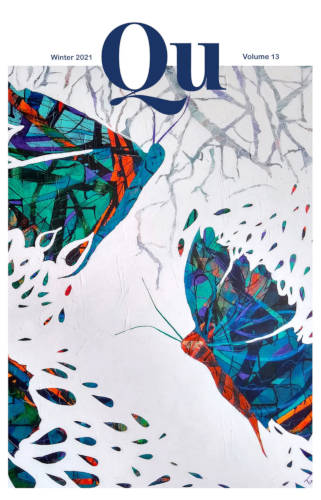
2020 River Styx Microfiction Contest Winners

River Styx Issue 103/104 coverIssue 103/104 of River Styx just hit our mailbox, bringing the winners of the 2020 River Styx Microfiction Contest with it. The winners were selected by the literary magazine’s editors. These stories must be 500 words or less.

First Place
“The Great Migration of Whales” by Michelle Kim Hall

Second Place
“Weighted Vest” by Rachel Furey

Third Place
“His Exposure” by Matthew Pitt

Honorable Mentions
“Wild Thing” by Haley Creighton
“Maybe This One” by Robert McBrearty
“On Liminality” by Marc Sheehan

Shooter’s Animal Love Issue Helps Stray Dogs

little girl holding flowers out for a dog to smellShooter Literary Magazine‘s Animal Love issue seeks to help benefit stray dogs. The theme for this issue was set before editor Melanie White’s own dog was diagnosed with cancer and passed away. This issue has transformed into a tribute to him and 10% of profits from issue sales will go to benefit Spanish Stray Dogs UK, a charity working to rehome abused and abandoned dogs of Spain.
From the editor:

I hope, as you read the stories and poetry in this issue, that you enjoy the transporting levity and engaging provocation of a lot of the pieces. These are, to say the least, difficult and isolating times for most of us, and we might like to read lighter fare than usual as a result. You will find plenty of heartening, diverting and insightful work in these pages. Please go to the Subscriptions page to order a copy.

Silk Road Offering Issues Online & In Print

Silk Road Issue 22 cover artDid you know that literary magazine Silk Road is offering its issues online beginning with Issue 17? You may not find 100% of the work featured in Issues 17 through 20, but starting with Issue 21 you can view all the content online.

Check out these archives and the Spring 2020 issue and don’t forget to order a print copy or subscribe to the journal to help support them.

Silk Road is a literary magazine run by undergraduate students at Pacific University. They are now a paying market, too! Writers receive $10/page up to $250 while artists receive $30 for each piece of art featured. They are currently open to submissions through May 1. There is a $2 fee to submit.

15th Mudfish Poetry Prize Winners

The 15th annual Mudfish Poetry Prize was judged by Erica Jong, author of The World Began With Yes (Red Hen Press, 2019).

The grand prize winner is Mark Schimmoeller from Frankfort, Kentucky with his poem “Benediction.”

First honorable mention is Cornelia Hoogland’s “Landscape with the Fall of Icarus” and the second honorable mentions is James Trask’s “Springtime and Single Again.”

First place winner and the two honorable mentions will be featured in Mudfish 22 which will soon be available and don’t forget to stay tuned for news announcing the 16th annual Mudfish Poetry Prize deadline and guidelines.

Finalists:

Madeline Artenberg
Kew Gardens, New York

Adrian Blevins
Waterville, Maine

Paola Bruni
Aptos, California

Cornelia Hoogland
Hornby Island, Canada

Daniel Liebert
St. Louis, Missouri

Tim Louis Macaluso
Rochester, New York

Samuel Oguntoyinbo
Solon, Ohio

Mark Schimmoeller
Frankfort, Kentucky

Don Schofield
Thessaloniki, Greece

Deborah Schupack
Croton-on-Hudson, New York

James Trask
San Marcos, Texas

Laurie Zimmerman
Los Angeles, California

Convenience Store Woman: An ode to the odd

Guest Post by Vanessa Cervini Rios.

When Sayaka Murata writes, she blocks out the version of herself that lives in the real world, the one bound by conventionalities of a so-called functioning society. Instead, she conjures scenarios that might lead to ‘real truths’ she’s been searching for since childhood. That’s what her 10 books have been, experiments to unveil what senses dulled by normalcy can’t spot.

Konbini NingenConvenience Store Woman in English—became a sensation of sorts when it was published back in 2016 and addressed the revered subjects of marriage, social norms, and work dynamics in Japan head-on. In just over 160 pages, the author lays out the full picture of Keiko Furukura’s life as a single convenience store employee in her late 30’s. A self-proclaimed cog of society, her mere existence threatens the carefully assembled foundation of everything that is acceptable; and what’s more unnerving for anyone that knows her, that’s all she wants to be.

Diving into Murata’s transparent narrative is a trip. One worth taking for anyone willing to defy conventional thinking. And if that sounds odd to you, tell me, what does normal mean, anyway?


Convenience Store Woman by Sayaka Murata. Translated by Ginny Tapley Takemori. Grove Press, September 2019.

Reviewer bio:  Vanessa Cervini Rios is an avid reader in four languages and enjoys writing about the link between cultural products and the social imaginary. More words by her: 12booksclub.substack.com.

Buy this book at our affiliate Bookshop.org.

Finding Strength in Ocean Currents

Guest Post by Chloe Yelena Miller.

Ocean Currents by Hannah Rousselot offers the reader the narrator’s strength as she directly faces emotional and physical pain and struggles with mental illness. Rousselot does what a good teacher should do, as she writes in the poem “Guidance,” “Or, I should say, I do not teach them- / I provide the tools they need to live within themselves.” Rousselot gives the reader the tools to face and learn from such hard emotions.

The collection opens with the poem “Vacation” which immediately introduces suicide. The poem begins, “What if you could kill yourself, / but like, only for a day?” When I read the opening line, I paused. Could I handle reading this, I wondered? The conversational tone and turn in the poem with, “but like,” offered me a path into the poem and the collection.

Ocean Currents is rooted in the body. The narrator describes hurting herself, but also actively grounding herself. She writes in “Immersed,” “When I rise out of the pond, water drips down / my skin and sinks into the ground. The Earth is soft // between my toes. Standing there, wet and grounded, I can feel the rotation of my planet.” When the narrator’s hurt and relief are boldly and physically described, the reader knows she can trust the poems.

This is a book that instructs: face your truth while tending your needs to survive. In “Sleepwalking”, Rousselot writes, “It {Life} needs a reminder to wake up.” Ocean Currents grounds and wakes up the reader to know herself and others.

In “Leather Gloves” Rousselot writes, “& how can you be adult with so much / child inside of you?” But she has the superpower described in the same poem, “In college, I tell my friend about my / ‘world’ hurts and she tells me / that I have a superpower.”


Ocean Currents by Hannah Rousselot. Finishing Line Press, June 2021

Reviewer bio: Chloe Yelena Miller is a writer and teacher living in Washington, D.C.