Home » NewPages Blog » Page 63

NewPages Blog

At the NewPages Blog readers and writers can catch up with their favorite literary and alternative magazines, independent and university presses, creative writing programs, and writing and literary events. Find new books, new issue announcements, contest winners, and so much more!

Delectable Poetry by Dorothy Chan

I love Dorothy Chan’s poetry, so I’m always excited to see her name in a lit mag’s table of contents. Two of her poems are included in the Fall/Winter 2021 issue of Colorado Review: “You Might Change Your Mind About Kids” and “Triple Sonnet for Batman Villains and Whatever This Is.”

In “You Might Change Your Mind About Kids,” the speaker is told this titular sentence by a man she has a romantic relationship with. The poem is the mental dissection of his opinion on this topic, an inner rebellion broiling beneath the surface. Who is this man to claim her body, her future, her future child? How is she seen as “the place to reserve / for a baby, the hotel for a womb?” She feels palpable derision toward his assumptions and I love that clarity of the speaker knowing exactly what she wants and does not want. She’s not going to change for this man or any other man and she finishes the poem with, “If I ever love someone, I’ll be baby forever.”

“Triple Sonnet for Batman Villains and Whatever This Is” is such a fun poem that still holds a hefty dose of seriousness in its final stanza. This poem has one thing I always enjoy about Chan’s poetry which is the absolute pleasure of experiencing different foods. These two pieces are just as delectable as “sashimi and Snow / Beauty sake and mango mochi for dessert.”
Let’s Read Together!

Photograph of people attending an OSU writing project event with the name OSU Writing Project label.

From Dr. Sarah J. Donovan: This winter-spring, the OSU Writing Project is offering an online professional development and would like to invite you, even if you are not in Oklahoma, to register for this online experience.

For pre-service, inservice, & veteran teachers who love reading and learning through literature. For educators who want to support students and families by making classroom libraries and curriculum more inclusive-affirming of students’ intersecting identities. This monthly book group (January-June, 2022) is a place to ignite thoughtful conversation about young adult literature informed by Dr. Yolanda Sealy-Ruiz’s (2020) Six Components to Racial Literacy Development.

Your registration fee of $35 is a commitment to attend the conversations and for your PD certificate of 6 hours. You will buy from a store or reserve from your library the selected books. We will meet once a month via Zoom for an hour to discuss the texts, which will include extensions into ideas for sharing literature with students and studying of author’s craft. Respectful, invitational dialogue is expected of all participants.

We are going to read with a lens of what Dr. Yolanda Sealy-Ruiz named racial literacy development, which includes historical awareness of the forces that shape the society we live in along with critical humility or how we can “remain open to understanding the limits of our own worldviews & ideologies” and toward critical love or “a profound ethical commitment to caring.” We want to center love as transformative, recognizing harm but noticing the ways we heal and feel joy through young adult literature. Thus, our focus is on authors’ craft and celebrating beautifully crafted passages in the texts that represent intersecting identities.

Here is the book list. Notice, there are several verse novels listed in April, so you can choose any or all. Again, it will be up to you to acquire these books in the medium you prefer. We hope you will consider your local library and/or a local Black-owned bookstore. All meetings are Sundays, 6:00-7:00pm CT.

Continue reading “Let’s Read Together!”

Weekly Round-up of Calls & Contests :: January 7, 2022

Happy New Year! Here’s hoping that 2022 is filled with great news on the writing and craft advancement front for you all. To help you start out the new year and keep your submissions goals strong, here are submission opportunities featured on NewPages this past week.

Don’t forget that newsletter subscribers get a first peek before everyone else. Subscribe today! Besides our weekly newsletter, subscribers also receive our monthly eLitPak. Our next eLitPak is slated for January 19, so stay tuned!

Continue reading “Weekly Round-up of Calls & Contests :: January 7, 2022”

A Darned Good Book About Vermont Humor

Guest Post by Alec W. Hastings.

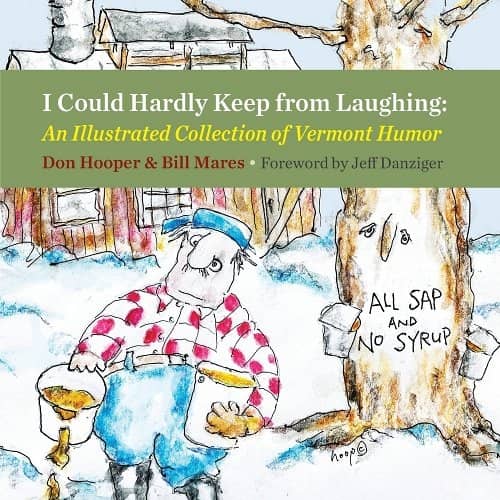
Bill Mares and Don Hooper put out a darned good book about Vermont humor. It’s called I Could Hardly Keep from Laughing. Even though I’ve grown up in Vermont—well, almost—I’ve always wondered what that is. Vermont humor, I mean. How would I know it if I met it walking down the street? I read eagerly and kept my eyes open for the answer.

The authors collected Vermont jokes and anecdotes by the truckload. I delighted in Hooper’s cartoon art, the bug-eyed but endearing folk of our Vermont hills. I could hardly keep from smiling at the humor of familiar Vermonters like Silent Cal, Francis Colburn, George Woodard, Al Boright, Fred Tuttle, and Rusty DeWees. Some of the Vermont humorists I met in these pages were new to me, and it tickled me to get acquainted with Robert C. Davis, David K. Smith, or Josie Leavitt.

Did Mares and Hooper entertain me and add to my understanding of Vermont humor? St. Peter on a pogo stick! You bet they did! Did they define Vermont humor like Webster? They’ve lived in Vermont long enough to know better. They did give a few hints to help us put classic Vermont humor up a tree. What did they say in chapter one? “Dry, wry, understated.” And when they unloaded their truck, the humor that tumbled out fizzed with playful wit, but I agree with Danziger. He says in the foreword it’s easier to tell what Vermont humor is than what it is not. In my mind’s eye there is always a hint of mischief in the eye of the Vermont humorist looking back at me. It bespeaks an urge to tease but never to be unkind.

For me, the best Vermont humorists have always put themselves in the same boat with their audience. Theirs is not so much the idea that “the joke is on you,” as it is that “the joke is on all of us.” But what do I know? As the fella said in chapter three, “Not a damn thing.” Vermont humor remains something of a mystery to me. Maybe that’s good. A butterfly pinned to a board is nowhere near as pretty as one fluttering by on the breeze.


I Could Hardly Keep from Laughing by Don Hooper & Bill Mares. Rootstock Publishing, December 2021.

Reviewer bio: Alec W. Hastings is the author of Cap Pistols, Cardboard Sleds & Seven Rusty Nails: A Vermont Boyhood in Happy Valley. He grew up in the hill country of Vermont when Jersey cows still grazed the pastures and men in denim boiled sap in wood-fired evaporators.

Buy this book from our affiliate Bookshop.org.

Try Your Hand at a Glosa with Page & Pappadà

Guest Post by Elda Pappadà.

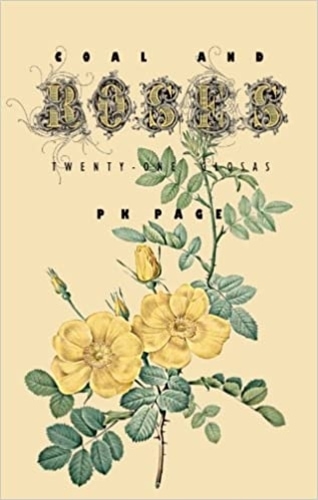
I discovered P.K. Page about two years ago, and since then this talented, prolific writer has become one of my favorite poets. I was determined to read all her poetry books when I came across: Coal and Roses: Twenty-One Glosas. Glosa (Glose) is a Spanish form of poetry where the author quotes a quatrain from an existing poet and writes four ten-line stanzas with the four lines acting as a refrain in the final line of each stanza. Therefore, the first line from the quatrain would be the final line in the first stanza, and etc.  The last word at the end of the sixth and ninth lines must also rhyme with the last word in the borrowed tenth line.

Coal & Roses was a captivating find. P. K. Page manages to keep the flow continuous and writes with such ease, originality, and skill. It is very interesting to see the final product. A Glosa can keep the same tone as the original quatrain or can take a whole new path and narrative. I tried my own hand at writing a Glosa and found it to be rather liberating with unlimited possibilities. The final product was unlike most poetry I have ever written.


Coal and Roses: Twenty-One Glosas by P. K. Page. The Porcupine’s Quill, 2009.

Reviewer bio: Elda Pappadà has self-published her first poetry book, Freedom – about love, loss, and understanding. Freedom is about finding meaning in the highs and lows of everyday life, to learn and even re-learn what we need to move forward.  It’s about defining life and giving weight to everything we do.

A Realistic Portrayal of Recovery

Guest Post by Lailey Robbins.

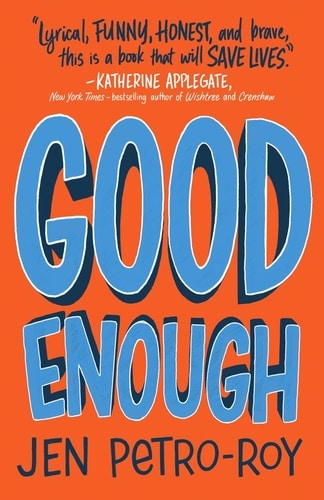
Good Enough, written by Jen Petro-Roy, is a piece of fiction that sits comfortably between middle reader and young adult. It is quite a realistic piece of fiction with a profoundly honest and vulnerable look into the life of Riley, who is hospitalized for her struggles with anorexia nervosa. Through the story, we see her heal, stumble, and navigate through a realistically and maturely portrayed journey of recovery.

This work is nothing short of phenomenal. With its accessible language and mature-yet-realistic handling of the sensitive topics that it delves into, it is a must have. Petro-Roy, being a survivor of an eating disorder herself, offers sensitive and helpful insight into the life of recovery and the many struggles that come with it. This, alongside her brilliant character development and the portrayal of relationships within the work, home in on her wonderful style. Not only does the audience watch Riley change, grow, and heal, they are also able to watch her juggle both the friendships that she has made within the facility while simultaneously trying to keep her pre-hospitalization friendships alive.

However, the downfall of this novel lies within its conclusion. The ending is unsatisfying, for lack of better words, as there is no definite answer for what comes next. As the novel draws nearer to Riley’s release from the facility, the book ends, leaving the reader with a sense of confusion as the character that they had been expecting to see make a full recovery is still struggling. Though it is realistic to not know what comes next, especially when in recovery, the ending of this novel seems to disregard its stakes entirely, leaving the reader completely lost.

However, if you are one for open endings, this novel has many redeeming qualities that allow it to be a wonderful read.


Good Enough by Jen Petro-Roy. Feiwel & Friends, February 2019.

Reviewer bio: Lailey Robbins is a creative writing student from Salem College, North Carolina. Currently, she is working on a short story and a novel, with hopes to be published in the future.

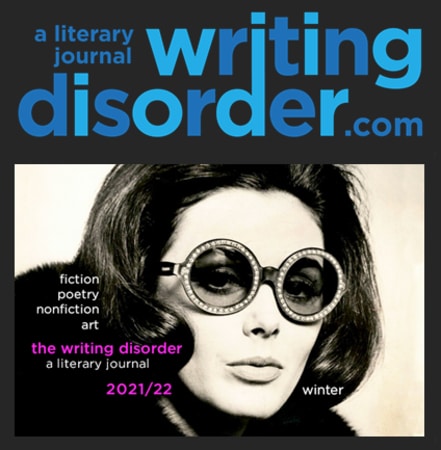
The Writing Disorder – Winter 2021/22

Winter is upon us and so is the new issue of The Writing Disorder. Find “Aesthetic Transmissions,” an interview with Robert Hass by George Guida; fiction by Robert Boucheron, Inez Hollander, Justin Reamer, Jeff Underwood, and more; poetry by Holly Day, Ash Ellison, Jonah Meyer, Bruce Parker, Frederick Pollack, and Kate Porter; nonfiction by Joan Frank, Donna Talarico, and Emilio Williams; and art by Nick Bryant.

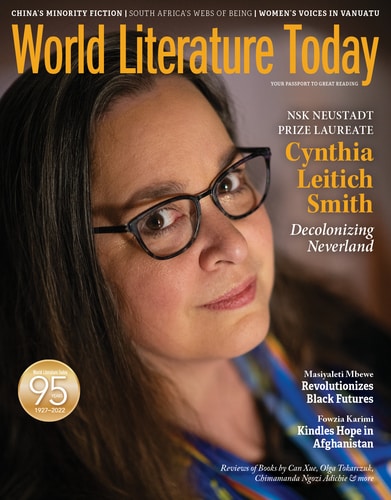
World Literature Today – Jan 2022

Muscogee writer Cynthia Leitich Smith headlines the January 2022 issue with a reflective essay on “Decolonizing Neverland” in YA lit. Also inside, Fowzia Karimi finds a “small flame” of hope in Afghanistan, while other essays survey Vanuatu women writers, China’s minority fiction, and the new Van Gogh exhibition at the Dalí Museum. Additional highlights include interviews with African writers Masiyaleti Mbewe and Henrietta Rose-Innes, fiction from Iran and Japan, and poetry from Colombia, Ivory Coast, and Siberia. As always, more than twenty book reviews.

More info at World Literature Today website.

Magazine Stand :: Wordrunner eChapbooks – Winter 2021

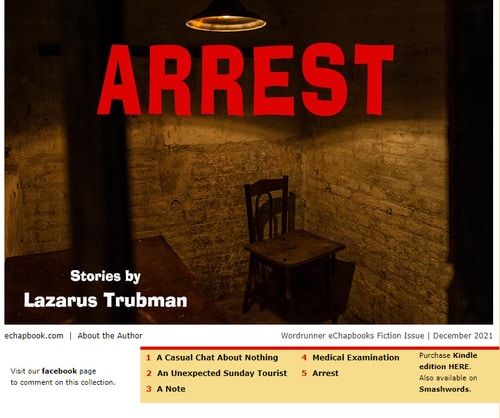
We are pleased to announce publication of Wordrunner eChapbooks‘ 44th issue, our Winter 2021 fiction echapbook: Arrest, Stories by Lazarus Trubman. A riveting and grimly comic collection, Arrest is the account of a Moldavian-Jewish dissident’s interrogation by the KGB, subsequent imprisonment in a labor camp, and a difficult emigration from the former Soviet Union with his family. The author’s life is the source for this fiction, narrated by a character named Trubman, a survivor scarred by his experience who finds a new home in the USA.

More info at the Wordrunner website.

The Shore – Winter 2021

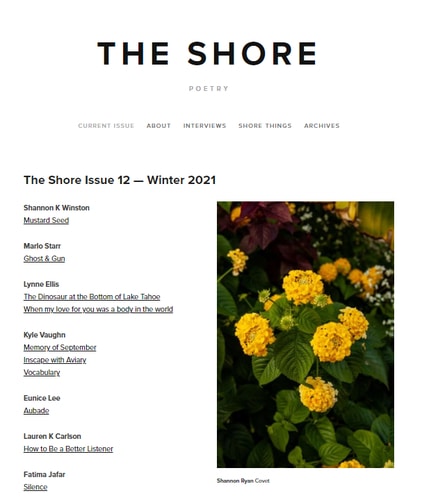
This winter’s new issue of The Shore marks our third full year of publication! In it is glistening poetry by Shannon K. Winston, Marlo Starr, Lynne Ellis, Kyle Vaughn, Eunice Lee, Lauren K. Carlson, Fatima Jafar, Taiwo Hassan, Stefanie Kirby, Charles Hensler, Simon Perchik, Stephen Ruffus, Kathryn Knight Sonntag, Amy Williams, Meghan Kemp-Gee, Matthew Murrey, David Dodd Lee, Lorrie Ness, Julia Schorr, Jake Bailey, Katie Kemple, C.C. Russell, Adam Deutsch, Nick Visconti, Andrea Krause, Sam Moe, Patrick Wright, Brittney Corrigan, and more. Find a full list of contributors at The Shore website.

Prime Number Magazine – Jan – March 2022

Prime Number Magazine logo

Happy New Year from everyone at Press 53 and Prime Number Magazine! In our new issue you’ll find the judges for the 2022 Prime Number Magazine Awards for Poetry and Short Fiction; winners of our monthly 53-word Short Story Contest for October, November, and December; our 2021 nominees for the Pushcart Prize, poetry selected by LaWanda Walters; fiction selected by Michael Beadle; four authors highlighted in the Press 53 Spotlight; and the guest editors for Issue 227. More information at the Prime Number website.

Magazine Stand :: Concho River Review – 36.2

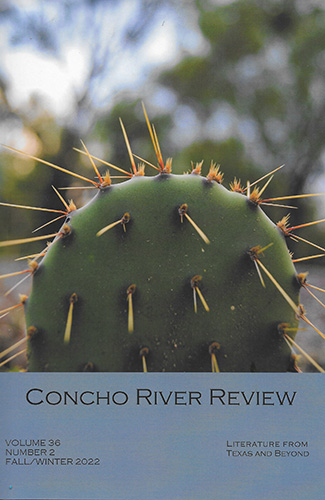
Concho River Review print literary magazine fall/winter 2022 issue cover image

The Fall/Winter 2022 issue of Concho River Review (36.2) opens with an Editor’s Note letting readers know they have online access to the full proceedings of the 25th Angelo State University Writers Conference in Honor of Elmer Kelton through the Angelo State University digital archives. This includes a transcript of the interview with Naomi Shihab Nye, the featured writer. Also in this issue is a tribute by Drew Geyer to writer and “Master Craftsman” Clay Reynolds, who passed away April 2022; he was a constant supporter and regular contributor to the publication since its first issue in 1987. Contributors to this issue are David Denny, Marlene Olin, David Pratt, Clay Reynolds, Jim Sanderson, C. D. Albin, Jeffrey Alfier, Tobi Alfier, Roy Bentley, Jonathan Bracker, Matthew Brennan, Camille Carter, Robert Cooperman, Johanna DeMay, Paul Dickey, E. P. Fisher, Stephen Gibson, Garret Keizer, Gunilla T. Kester, Gordon Kippola, Ulf Kirchdorfer, Nicholas Kriefall, Richard Krohn, Russell Rowland, Michael Salcman, John Schneider, George Searles, Matthew J. Spireng, Eric Fisher Stone, Elizabeth Sylvia, David Vancil, Ken Wheatcroft-Pardue, Francine Witte, Gladys Haunton, Melissa Musick, D. E. Steward, and Christopher Thornton.

To find more great reading, visit the NewPages Guide to Literary Magazines, the NewPages Big List of Literary Magazines, the NewPages Big List of Alternative Magazines, and the NewPages Guide to Publications for Young Writers.

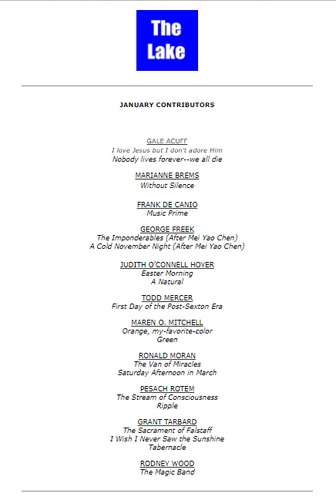
The Lake – January 2022

The January issue is out now featuring Gale Acuff, Marianne Brems, Frand De Canio, George Freek, Judith O’Connell Hoyer, Todd Mercer, Maren O. Mitchell, Ronald Moran, Pesach Rotem, Gant Tarbard, Rodney Wood. Review of Laura Kolbe’s Little Pharma.

More info at The Lake website.

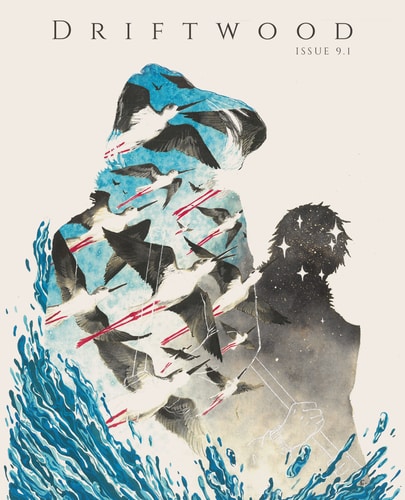
Driftwood Press – Issue 9.1

Driftwood Press‘s latest short stories “Wing Breaker” by Rachel Phillippo and “Spanish Soap Operas Killed My Mother” by Dailihana Alfonseca take you from brutal arctic traditions to the cultural traumas of migrants in America. This issue also collects some of the most insightful and harrowing poetry being written today; these poems delve into illness, motherhood, religious pressure, and much more. Wrapping up the issue are visual arts and comics by Io Weurich, Kelsey M. Evans, SAMO Collective, Jim Still-Pepper, Andrew White, Kimball Anderson, & Casey Jo Stohrer. Now at the Driftwood Press website.

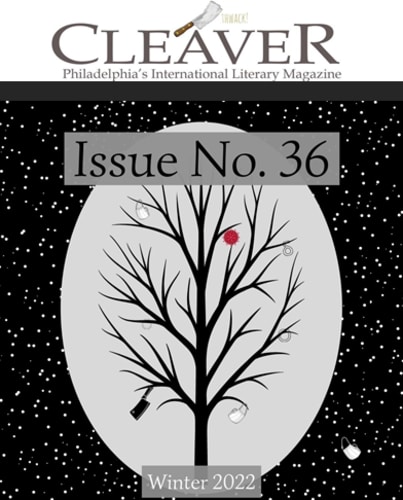
Cleaver Magazine – No. 36

Our Wintry Mix. Creative nonfiction by Bree Smith, Dhaea Kang, Christine Muller, Benedicte Grima, and Virginia Petrucci; flash by Eliot Li, Gabriella Souza, Cassie Burkhardt, and others; fiction by Amy Savage, Kim Magowan, and Maggie Hill; and poetry by Peter Grandbois, Kelley White, Brenda Taulbee, and more. Learn about this issue’s visual work at the Cleaver Magazine website.

Big Muddy – No. 21

This issue of Big Muddy includes work by Brian Baumgart, August B. Clark, Charlotte Covey, Mark Fabiano, Doris Ferleger, Spencer Fleury, Jennifer Gravely, Ian T. Hall, D.E. Kern, Bronson Lemer, Paul Luikart, Leah Mccormack, Matt Mcgowan, Luke Rolfes, Rosalia Scalia, Christine Stewart-Nuñez, Katie Strine, Rachel Tramonte, Carol Tyx, Christian Vazquez, Daniel Webre, Adam D. Weeks, Holden Tyler Wright, and Kirby Michael Wright.

Find more info at the Big Muddy website.

Join Iron City Magazine for Release of Issue 6

iron-city-magazine.jpg

Iron City Magazine celebrates the launch of Issue 6! This will be a virtual event featuring readings, art, and a live Q&A.

Join friends, contributors, and editors of Iron City Magazine: Creative Expressions By and For the Incarcerated as they present work from the latest issue.

Iron City Magazine highlights voices of often silenced writers and artists.

Iron City Magazine is a 501(c)(3) nonprofit. This publication is made possible by the generous grant awards from the Ibis Foundation of Arizona and AZ Humanities.

Enjoy this virtual launch on Iron City Magazine’s YouTube channel.

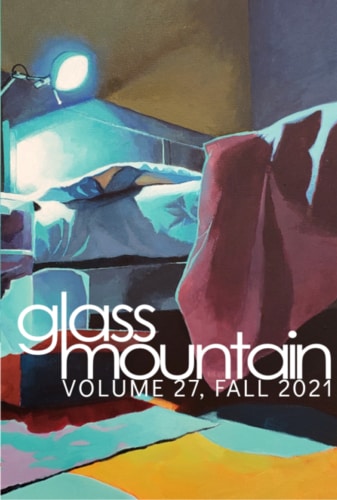
Robertson Prize Winners in Glass Mountain Volume 27

Glass Mountain hosts their annual Boldface Writers’ Conference. Attendees are invited to enter the Robertson Prize after revising their work. Winners of this free contest (one per genre) receive $100 and publication in Glass Mountain. This year’s winners are included in Volume 27.

Winners
“Four Yelp Reviews (After J. Bradley)” by Robin Burns
“The Masseuse” by John Cai
“An Obituary for the Ginko Berry Tree in Drexel” by Coutney DuChen

Learn more about the Boldface Conference here.

Chestnut Review’s Free Feedback Fridays

Did you know Chestnut Review offers a chance to win free feedback on select Fridays?

Follow the lit mag on Twitter, tweet #freefeedbackfriday on the first Friday of each month, and you’ll be entered to win a free critique on your submission. The next free Friday will take place on January 7, so get your writing ready.

Recent Themed Issues to Add to Your Reading List

If you like themed lit mag issues, we’ve got some recommendations!

Each issue of THEMA focuses on one themed prompt. The Autumn 2021 issue’s theme is “Which Virginia?” Twenty contributors try their hand at exploring this Virginian theme.

While not quite a theme, Hanging Loose does feature a selection of high school aged writers in each issue. Issue 111 includes work by eleven different high school writers who close out the issue.

Bennington Review‘s Summer 2021 issue focuses on a theme that’s probably on most of our minds right now: The Health of the Sick. Michael Dumanis’s note from the editor explains, “Many of the pieces in this issue of Bennington Review display a keen awareness of the vulnerability of the human body, physically, emotionally, and psychologically.” The theme “borrows its title from Argentine writer Julio Cortázar’s underappreciated 1966 short story . . . “

Issue 22 of The Common includes a portfolio of writing from the Arabian Gulf introduced by Deepak Unnikrishnan. This includes fiction by Tariq Al Haydar, Farah Ali, and others; essays by Mona Kareem, Keija Parssinen, and Priyanka Sacheti; and poetry by Hala Alyan, Rewa Zeinati, Zeina Hashem Beck, and more.

AGNI Number 94 brings readers a portfolio of work in translation. You can expect to find work by Azzurra D’Agostino translated by Johanna Bishop, Yi Won translated by E. J. Koh & Marci Calabretta Cancio-Bello, Ananda Devi translated by Kazim Ali, and much more.

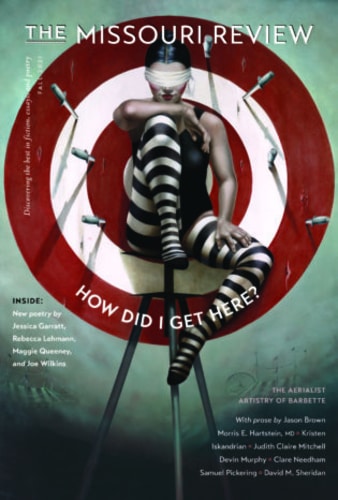
Finally, The Missouri Review asks the question “How did I get here?” in the Fall 2021 issue, the theme inspired by “Once in a Lifetime” by the Talking Heads.

Visit each literary magazine to show some support and learn more about these issues.

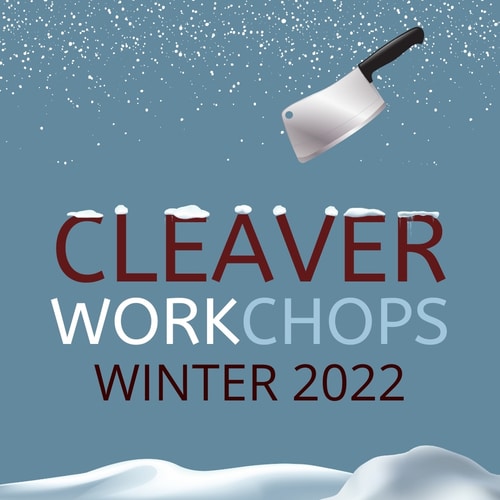
Cleaver Winter 2022 Workshops Coming Soon

Next month, Cleaver begins their Winter 2022 Workshops. The magazine’s senior editors are bringing writers EKPHRASTIC POETRY: The Art of Words on Art with Poetry editor Claire Oleson, UNSHAPING THE ESSAY: Experimental Forms in Creative Nonfiction with Creative Nonfiction editor Sydney Tammarine, and WRITE, REVISE, PUBLISH! Flash and Microfiction Practice with Flash editor Kathryn Kulpa.

These all take place online. Workshops are capped at twelve registrants.

Learn more about the upcoming workshops here and register through Submittable.

Event :: Still Time to Get Tickets to 2022 Virtual Palm Beach Poetry Festival

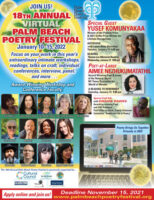
Screenshot of Palm Beach Poetry Festival 2022 Flier for the NewPages LitPak
click image to open full-size flier

Event Dates: January 10-15, 2022
Event Location: Virtual
18th Annual Virtual Palm Beach Poetry Festival, January 10-15, 2022. Focus on your work with America’s most engaging and award-winning poets. Workshops with Kim Addonizio, Laure-Anne Bosselaar, Chard deNiord, Mark Doty, Yona Harvey, John Murillo, Matthew Olzmann, and Diane Seuss. One-On-One Conferences with Lorna Blake, Sally Bliumis Dunn, Nickole Brown, Jessica Jacobs, and Angela Narciso Torres. A special Craft Talk by Kwame Dawes, Special Guest Poet, Yusef Komunyakaa. Poet-at-Large, Aimee Nezhukumatathil. To find out more, visit www.palmbeachpoetryfestival.org. Individual event tickets as well as full conference packages still available.

NewPages Book Stand – December 2021

The last Book Stand of 2021 is here! Stop by and learn about this month’s featured titles below.

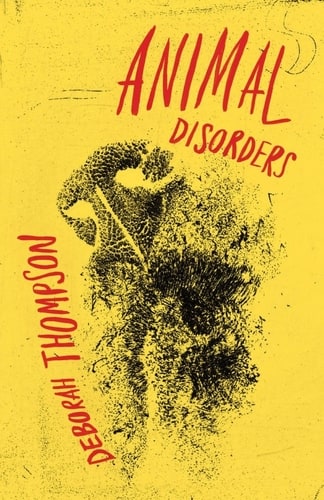
In Animal Disorders, Deborah Thompson relates her own complicity in some of the disordered approaches to nonhuman animals, including such practices as pet-keeping, animal hoarding, animal sacrifice (both religious and scientific), magical thinking, and grieving.

Art Essays, edited by Alexandra Kingston-Reese, is a passionate collection of the best essays on the visual arts written by award-winning writers such as Zadie Smith, Chris Kraus, Teju Cole, Orhan Pamuk, and Jhumpa Lahiri.

In Chris Linforth’s The Distortions we glimpse a pageant of characters struggling to understand their lives after the dissolution of Yugoslavia.

Through stories, secrets and memories experienced, read, heard, reimagined and remixed, Ra Malika Imhotep’s gossypiin reckons with a peculiar yet commonplace inheritance of violation, survival, and self-possession.

Temple University Press has recently released Invisible People by Alex Tizon in paperback. This book collects the best of Tizon’s rich, empathetic accounts.

You can learn more about each of these New & Noteworthy books at our websiteClick here to see how to place your book in our New & Noteworthy section.

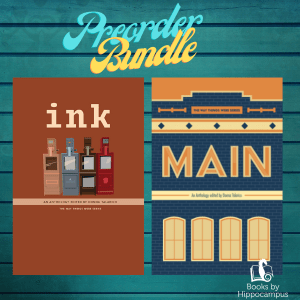
Pre-Orders Available for Ink and Main Anthologies

Covers of Books by Hippocampus anthologies Ink and Main

Books by Hippocampus has announced you can still pre-order their next two anthologies Ink and Main whose production and release has sadly been delayed.

Ink a part of The Way Things Were series which celebrates print media—magazines and newspapers—from the pre-digital age. You’ll find essays taking you from the newsroom to production. Each piece sharing a common thread of how people and publications built community, impacted change, celebrated local milestones, or mourned national tragedies. Contributors include Nancy Brewka-Clark, Richard Fellinger, Andrea Frantz, Timothy Kenny, Magin LaSov Gregg, Richard LeBlond, Nina B. Lichtenstein, Kate Meadows, Anthony J. Mohr, Judy S. Richardson, Marsh Rose, Roxanna Ross, and Laura Stanfill.

Main is also part of The Way Things Were series with a focus of celebrating small town America. It features twelve stories about the stories, services, and specialty shops that once ruled Main Street America. Contributors share how these family businesses defined and redefined themselves and how these endeavors evolved over time. Enjoy work by Lindsay Gelay-Akins, Joan Taylor Cehn, Christopher Cocca, Kimberly Ence, Nina Gaby, Linda Hansell, Melissa Hart, Kristine Kopperud, Dyann Nashton, Kelly Garriott Waite, Suzanne Samuels, and Melissa Scholes Young.

You can also purchase these anthologies in cost-saving a bundle! Get your copies here.

Shadow & Light in Samuel Martin’s Newest Novel

Guest Post by Elizabeth Genovise.

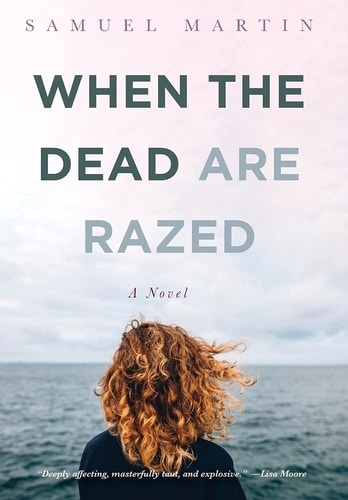
Samuel Thomas Martin, author of This Ramshackle Tabernacle and A Blessed Snarl, has produced a third work of high-caliber fiction: When the Dead are Razed, published by Slant Books. With the mesmerizing setting of urban Newfoundland as its backdrop, the novel follows the perilous adventures of Teffy Byrne, a woman determined not to raze the dead, but rather to seek justice on their behalf.

Long-interred mendacities, deeply troubled faith, and the constant threat of catastrophe keep the strings tight and ringing throughout the entire narrative as Teffy strives to solve the mystery of a young woman’s murder. There is both shadow and light in these characters and in the novel itself, with moments like these speaking to us from someplace raw and real and painfully recognizable:  “She hears a creak and spins, searches the tear-smudged room, but there’s no one there. Not a soul. Only her. Her and the goddamn wind. ‘And you!’ she turns on Christ. ‘Why is it that we ask and ask and ask and you do nothing? You do nothing! Not for me or Fin or Ger. Not for any of us! Who are you!?’ she screams. ‘Who are you to shuck off being God!'”

Martin’s novel is a wild ride, but its sensational plot does not undercut its exploration of critical ideas, specifically the necessity of memory, truth, and justice.


When the Dead are Razed by Samuel Thomas Martin. Slant Books, September 2021.

Reviewer bio: Elizabeth Genovise is an MFA graduate from McNeese State University and the author of three short story collections, the most recent being Posing Nude for the Saints from the Texas Review Press. https://www.elizabethgenovisefiction.org/

Carve 2022 Online Classes Announced

CARVE has announced their upcoming 2022 schedule of online classes.

Short Story Writing: Fundamentals consists of five lessons on Character & Plot, Point of View, Dialogue, Inner Monologe, and Description. The course runs for 6 weeks. Available dates are January 3 – February 13, March 28 – May 8, June 20 – July 31, and September 12 – October 23.

Short Story Writing: Techniques is also a 6-week course comprised of 5 lessons on Use of Senses, Imagery, Metaphors & Similies, Rhythm & Pacing, and Threading. Available dates are February 14 – March 27, May 9 – June 19, August 1 – September 11, and October 24 – December 4.

Each class needs to have at least five students and there will be weekly deadlines to completed writing exercises and provide peer feedback. There is no instructor feedback for these courses.

Subscribers to CARVE can receive a 10% discount on these classes. Learn more at CARVE‘s website.

Valley Voices – 21.2

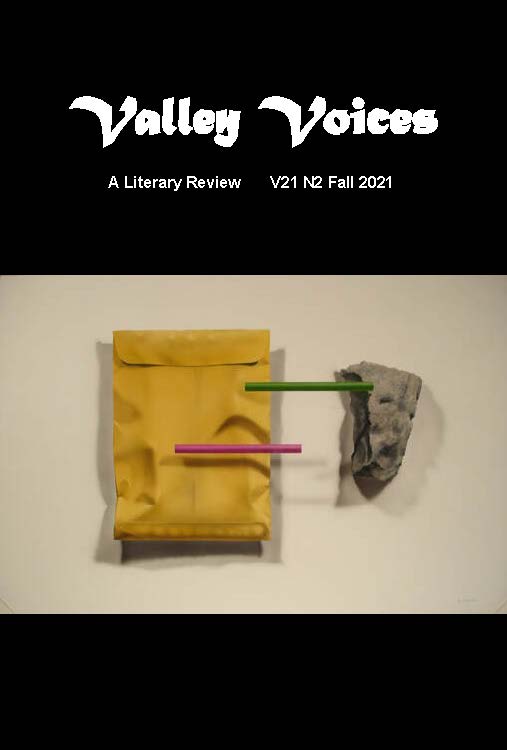
This issue’s Special Feature is “Beyond Illusory Space” by Albert Wong, who is also interviewed by John Zheng. Lauri Scheyer interviews Lenard D. Moore. In Haibun & Tanka Prose: Rich Youmans, Keith Polette, Ce Rosenow, and Terri L. French. Poetry by Elizabeth Burk, Ambrielle Butler, Andrea DEeken, Theodore Haddin, Charlene Langfur, Ann Lauinger, George Looney, Ted McCormack, Adam Moore, Steve Myers, Dan Pettee, Margo Taft Stever, and Jason Visconti. Find prose contributors at the Valley Voices website.

Still Point Arts Quarterly – Winter 2021

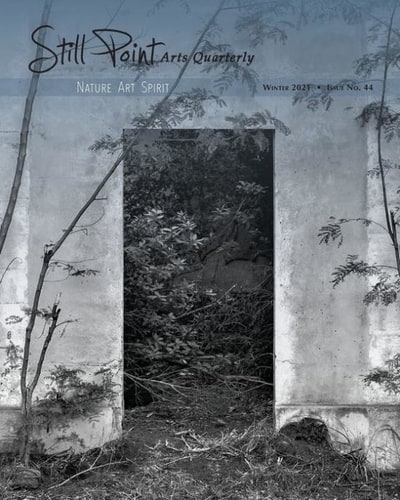
The Winter 2021 issue of Still Point Arts Quarterly is available digitally and in print. The theme of this issue is Ruins. It includes the work of roughly fifty artists and writers from around the world. Work by Beebe Bahrami, Sandra Fees, Barbara Haas, J. R. Solonche, Zach Murphy, Jen Mierisch, Catherine MacKenzie, Jane Hertenstein, Mercury-Marvin Sunderland, Cici Grove, Terry Allen, Bob Royalty, Martin Willitts Jr., Kiss Moon, Andrew Ilachinski, Diane Danthony, Hall Jameson, and Carol McCord. More info at the Still Point Arts Quarterly website.

Magazine Stand :: Missouri Review – Fall 2021

How Did I Get Here? Inside: Poetry by Jessica Garratt, Rebecca Lehman, Maggie Queeney, and Joe Wilkins. Stories and essays by Jason Brown, Morris E. Hartstein MD, Kristen Iskandrian, Judith Claire Mitchell, Devin Murphy, Clare Needham, and David M. Sheridan, with features on Barbette and Duchamp, and a review of new and recent Southern writing from Sam Pickering. Now at the Missouri Review website.

New England Review – 42.4

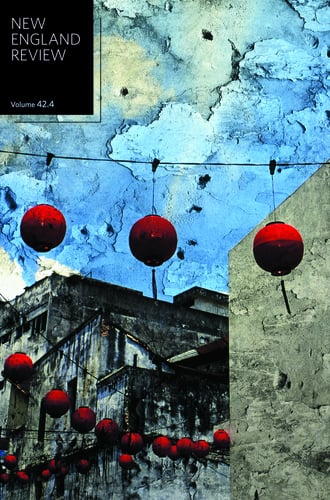
Last year at this time we released our first issue dedicated to emerging writers, and now with 42.4 we’ve done it again. While this issue offers up the range of voices, genres, and styles New England Review promises every quarter, this time that mission is accomplished by writers who won’t be recognizable to most readers, that is, they’ve not yet published a book or full-length collection. Find a selection of this year’s contributors at the New England Review website.

The Louisville Review – Fall 2021

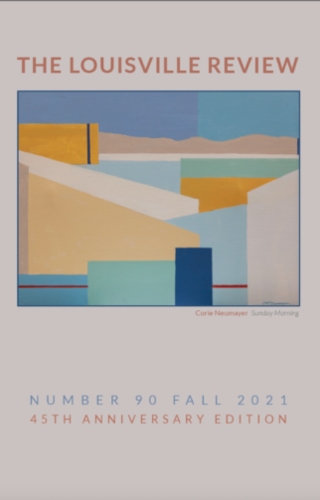
The Louisville Review, Volume 90, Fall Edition is the 45th anniversary issue! It features poetry, fiction, non-fiction and children’s poetry from grades K-12. Poetry: Susan Ayres, Christopher Buckley, Claudia Buckholts, Elsa Cross, Olga-Maria Cruz, Angela D’Ambra, Andrea Doll, Regina Derieva, Marcia L. Hurlow, and more; nonfiction by Sarah Gorham, Corie Neumayer, and Jonathan Weinert; fiction by Jeff McLaughlin, Neema Muneer, Tony O’Keeffe, Erik Peters, Seth Brady Tucker, Nadeem Zaman, and others. See the K-12 contributors at The Louisville Review website.

Glass Mountain – Fall 2021

Volume 27 is out with art by Isabella Celentano, David Dodd Lee, Weining Wang, Emily Fannin, Nicole Choi, and more; poetry by Jose Wilson, Tom War, Tobias Tegrotenhuis, David Romanda, Riley Morrison, Annie Martin, Delaney Kelly, Ambrose Day, and Lorelei Bacht; and prose by Amber Barney, Nicole Collingwood, Devan Hawkins, Haley Herzberg, Hannah Lindsay, Khalid McCalla, Adia Muhammad, Elena Negrón, and Beatrix Zwolfer. Plus the winners of the Robertson Prize. More info at the Glass Mountain website.

Cutleaf – 1.23

Cutleaf celebrates the end of our first year with this all-nonfiction issue featuring three must-read essays. Elise Lasko speculates on the potential for relapse into old habits while imagining her mother’s death and funeral, in “Relapse Fantasy.” Carter Sickels realizes that “the universe keeps moving, surprising you with what it drops in your path,” in “Rescued.” Greg Bottoms recounts how his father and grandfather expressed—or didn’t express—emotion, in “One Summer Morning.” Learn about this issue’s images at the Cutleaf website.

December 2021 eLitPak :: A Rollercoaster Ride of Suspense and Thrills!

Screenshot of Brother Mockingbird's flier for the NewPages December 2021 eLitPak Newsletter
click image to open PDF

In the new dystopian world of the Grays, you do not live past your 16th birthday before changing into a creature that is no longer human. Scout is humanity’s last hope because if she dies, the world dies with her. Black is the second book in The Firebrand Trilogy. Get the first chapter of Black FREE on our website.

View the full December 2021 eLitPak Newsletter.

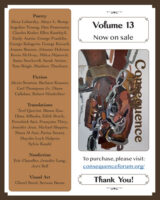
December 2021 eLitPak :: Consequence Volume 13—Now for Sale

Screenshot of Consequence's flier for the NewPages December 2021 eLitPak Newsletter

Consequence Volume 13 is now for sale! Although this is the first issue since our founding editor passed, the volume is still chock-full of provocative and sublime works dealing with the human consequences and realities of war or geopolitical violence. Check the flyer to see the star-studded contributors’ list.

View the full December 2021 eLitPak Newsletter.

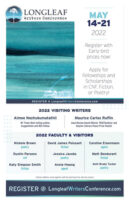
December 2021 elitPak :: Apply for Scholarship/Fellowships or Enroll Today!

Screenshot of Longleaf Writers Conference flier for the NewPages December 2021 eLitPak Newsletter
click image to open PDF

Fellowships for Creative Nonfiction, Poetry, Fiction: deadline January 10, 2022. Scholarships for Veterans and Under-represented Groups: deadline January 10, 2022. Register today for full conference with or without housing and with or without workshops! We fill up fast so secure your spot today!

View the full December 2021 eLitPak Newsletter.

A Totally Fine Flash Collection

Book Review by Katy Haas.

Zac Smith wants you to know that everything is totally fine. Or maybe it’s totally fucked. Or maybe it’s totally normal. Or maybe it’s somehow all three at once. Forthcoming Everything Is Totally Fine is a collection of flash fiction presented in three sections: “Everything is Totally Fucked, “Everything is Totally Fine,” and “Everything is Normal Life.” The stories are a little zany, a little bit off-kilter, which makes every page fun and unexpected. But there is one thing a reader can come to expect after reading a few of these little stories: things are maybe not okay, despite the narrators’ wishes to repeat how totally fine it all is.

The narrator of “Kellogg’s Pop-Tarts Frosted S’mores Pastries 2ct” wants to “explore new ways of feeling like shit” and ends up “feeling like shit in the wrong way, or feeling like the wrong kind of shit.” The man in “Giving Up Requires Agency in a Way that Feels Like It Shouldn’t by Virtue of Being the Act of Giving Up,” leaves the piece feeling “miserable in a deep, ominous way.” Even the titular octopus of “The Octopus” “felt unhappy and didn’t know what would make it happy. It reasoned possibly nothing could.”
Maybe it’s the shorter, colder days, or the approach of year three of a global pandemic, or reflections on society and climate change and politics and on and on and on that makes these hopeless stories so enjoyable and relatable despite the pitiful and off-the-wall circumstances. Maybe it’s the mix of seriousness and silliness that is everyday, normal life, or the vague notion that none of it matters, not really. Whatever it is, Zac Smith’s figured it out in this fun, fucked, fine collection.


Everything is Totally Fine by Zac Smith. Muumuu House, January 2022.

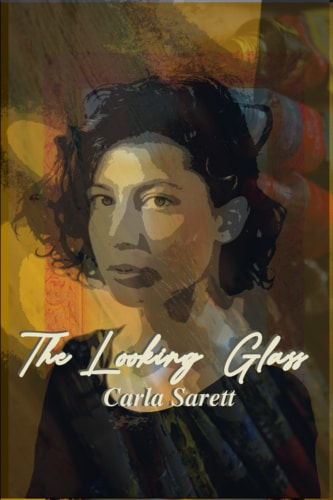
Sarett’s ‘The Looking Glass’

Guest Post by Susan I. Weinstein.

“A female artist fights for success in a world dominated by men and expectations of conventional sexuality in The Looking Glass, novella by Carla Sarett.” —Propertius Press

Claire Charles, a member of 1930s New York high society, has been trained in painting in preparation for marriage, but shocks everyone by pursuing art as a career and her own inclinations. In Paris, fifteen years later, she collides with Leah, a mysterious artist who has been secretly painting for her husband. When Kay Charles, Claire’s 16-year year old niece, reluctantly models for a portrait, the lives of the three women become intertwined. Claire’s voice alternates with James, a handsome art dealer, and Kay, who claims a special legacy. From Manhattan to Paris, galleries to artist colonies, from the 1930s to the 1970s, The Looking Glass is a story about women, art, and memory.

I found this story particularly moving for what’s rarely shown: how women artists have lived and worked in two worlds, the public one under the male gaze and the private one where freedom from the male gaze and power structure is essential for creativity and love that’s meaningful.


The Looking Glass by Carla Sarett. Propertius Press, October 2021.

Susan I. Weinstein worked as an in-house publicity writer for publishers, before starting Susan Weinstein PR. She is the author of The Anarchist’s Girlfriend, Paradise Gardens, and Tales of the Mer Family Onyx; published in New Editions by Pelekinesis. Her play, ETHER: The Strange Afterlife of Harry Houdini and Sir Arthur Conan Doyle was workshopped 12/19 at I.R.T. Theater in NYC. notanotherbookreview.blogspot.com is her book review blog.

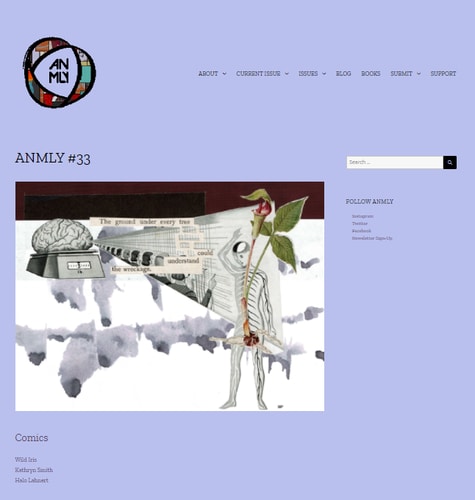
Anomaly Announces New Staff

In their December 14 newsletter, Anomaly announced additions to their editorial staff with new editors in fiction, nonfiction, poetry, and translation.

Ashely Adams and Mizzy Hussain join as new Nonfiction Co-Editors while the Poetry editorial team welcomes Tricia Lopez, Tianna Bratcher, Lucy Zhou, and Eleonora Natilii. The Fiction team has been revamped with Talia Wright, Dino de Haas, Carson Faust, and jonah wu with Maxine Savage joining as their new Assistant Translation Editor.

Also joining Anomaly is Meca’Ayo Cole and Addie Tsai who become the new Features & Reviews co-editors. They will be taking the lead on ANMLY’s Blog. Lip Manegio and Gillian Joseph are also joining the team as Assistant Folio Editors. They will work alongside Zeb Wimsatt to curate each issue’s feature folios.

And with this announcement, they also want you to know they are currently open to submissions of translations, creative nonfiction, fiction, poetry, and comics through March 1, 2022. They have no-questions-asked fee waivers available for writers and artists in need. There is also no fee for Black and Indigenous contributors.

Don’t forget to swing by their website to read their latest issues and check out all of their offerings.

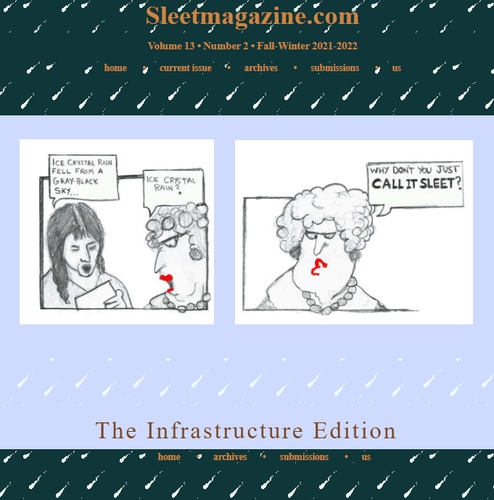
Sleet Magazine – Winter 2021-2022

Sleet‘s Winter 2021-2022 Infrastructure Edition is out. Read about art, bears, snow, fatherhood and more as infrastructure! Featuring new work by poet/professor Deborah Keenan; Lucia Cherciu; Trevor Moffa; Christian Chase Garner; Daniel Edward Moore and Yun Wang. New sweetest fiction from Astrid Egger and Ryan Love. Irregulars by Howie Good; Raphael Kosek; Steven Ostrowski; Elizabeth Kerlikowske; Guillermo Rebollo Gil and Timothy Pilgrim. AND CNF from Kathryn Ganfield, Susan Petrie and Sara Dovre Wudali.

More info at the Sleet Magazine website.

The RavensPerch – Dec 2021

RavensPerch this month: poetry by Joseph D. Milosch, Diana Raab, Barbara Schweitzer, Wally Swist, Giuseppe Ungaretti, Hoyt Rogers, and Margaret Krusinga. Fiction by Anne Hosansky. Nonfiction by Edgy Sack.

More info at The RavensPerch website.

Poetry – Dec 2021

In this issue: Suzi F. Garcia, Taylor Johnson, Tamara Panici, Bryan Byrdlong, John Lee Clark, Angelo Mao, Simon Shieh, Kelan Nee, Lilly Bechtel, Eleanor Stanford, Paul Hlava Ceballos, Aurielle Marie, Julian Randall, Diannely Antigua, Alexis V. Jackson, Ugochukwu Damian Okpara, Steven Espada Dawson, and Camille Carter. See “Respect the Mic” contributors at the Poetry website.

The Malahat Review – Autumn 2021

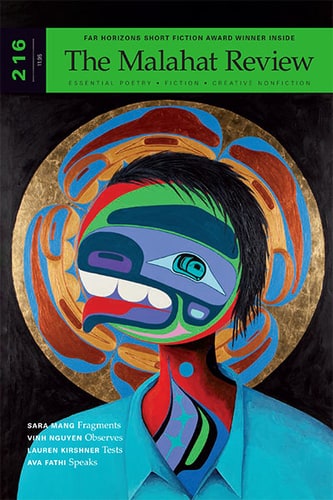
The Autumn 2021 issue is here featuring the winner of our 2021 Far Horizons Award for Short Fiction. Poetry by Y. S. Lee, Laurie D. Graham, Yuan Changming, Sebastien Wen, Allison LaSorda, Danielle Hubbard, Elisabeth Gill, Rozina Jessa, Sue J. Levon, and morej, as well as fiction by Jenny Ferguson, Sara Mang, and Cassidy McFadzean. Find more contributors at The Malahat Review website.

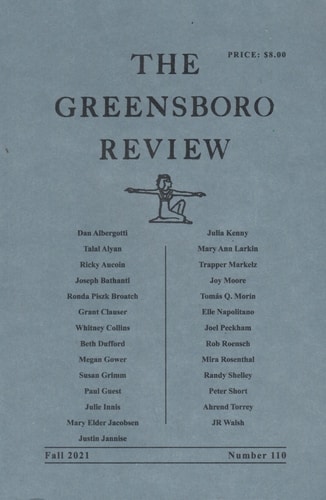
The Greensboro Review – Fall 2021

Featuring the Amon Liner Poetry Prize winner, “Pygmalion” by Megan Gower, an Editor’s Note from Terry L. Kennedy, and new work from Dan Albergotti, Talal Alyan, Ricky Aucoin, Joseph Bathanti, Ronda Piszk Broatch, Grant Clauser, Whitney Collins, Beth Dufford, Susan Grimm, Paul Guest, Julie Innis, Mary Elder Jacobsen, Justin Jannise, Julia Kenny, Mary Ann Larkin, Trapper Markelz, Joy Moore, Tomás Q. Morín, Elle Napolitano, and more. Find more contributors at The Greensboro Review website.

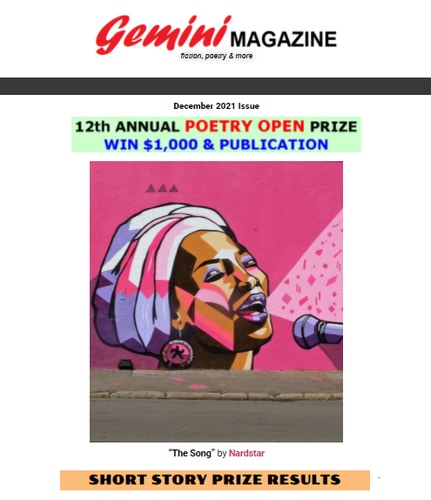
Gemini Magazine – December 2021

The new issue of Gemini Magazine is now online featuring the winners of our 12th annual Short Story Contest. Top honors and the $1,000 prize go to Kathleen Spivack of Watertown, Massachusetts for “Moths,” a high intensity story about a woman who fights with her husband over the future of their special-needs child. Second prize: “Banjo” by Earl LeClaire. See honorable mentions at the Gemini Magazine website.

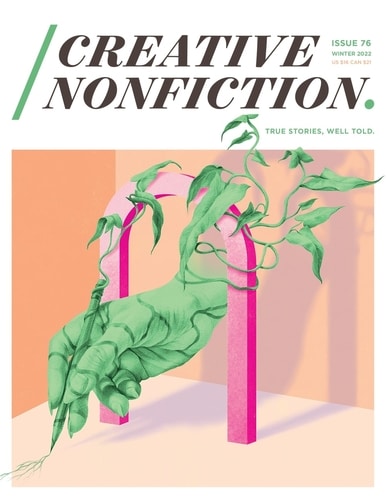
Creative Nonfiction – No. 76

In this newly redesigned issue of Creative Nonfiction we explore the roots of the genre and celebrate the spirit of rebellion that’s always infused it. And we consider where we are now at this moment that feels pivotal for so many. Plus, new essays about the limitations of identity labels; what we can (and can’t) learn from dinosaur tracks; how to reintegrate after two military tours overseas; the challenges of translation; and how to approach a sibling who’s taken a deep dive into conspiracy theories. Essays by Valerie Boyd, Margaret Kimball, Bret Lott, Marisa Manuel, Brenda Miller, Clinton Crockett Peters, and others.

More info at the Creative Nonfiction website.

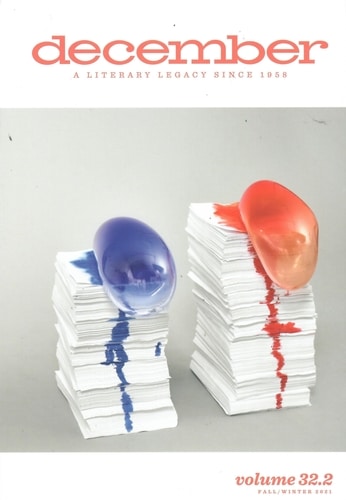
december – 32.2

Featuring new work from Ricardo Pau-Llosa, Jane O. Wayne, Tim Whitsel, the winners of our 2021 Curt Johnson Prose Awards, two beautiful art portfolios by Howard Skrill and Jean Wolff, and much more! Poetry by Erin Bealmear, Erica Bodwell, Dina Elenbogen, Rebecca Foust, Ellen Romano, Reyes Ramirez, and others. Fiction by Dinah Cox, Bill Gaythwaite, Barb Johnson, Sarah Starr Murphy, K.W. Oxnard, and Anamyn Turowski. Check out nonfiction contributors at the december website.

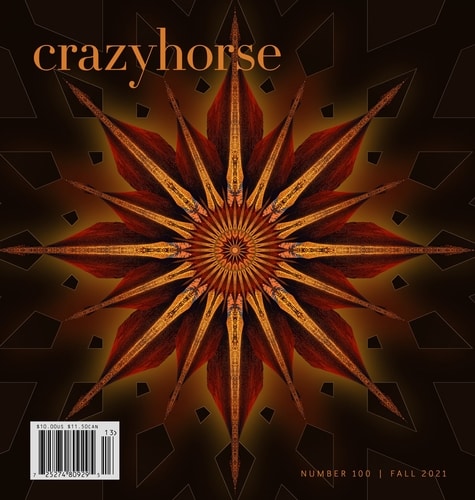
Crazyhorse – Fall 2021

Featuring the 2021 Crazyhorse prize winners in fiction, nonfiction, and poetry, Mary Clark, Jung Hae Chae, and Mark Wagenaar; a debut story from Nancy Nguyen; fiction from Nicole VanderLinden, Weston Cutter, and Timothy Mullaney; an essay from A.C. Zhang; and poems from Lisa Low, Michael Prior, Mary Kaiser, Jose Hernandez Diaz, and Mehrnoosh Torbatnejad, among others. Now on Crazyhorse website.

2021 Raymond Carver Contest Winners

The Fall 2021 issue of Carve is out now and features the winners of the Raymond Carver Contest, guest judged by Leesa Cross-Smith.

First Place
“Habits” by Morgan Nicole Green

Second Place
“The Pit” by Chris Blexrud

Third Place
“Field Dressing” by Mariah Rigg

Editors’ Choice
“What Happened With the Librarian?” by Haley Hach
“Kingdom of the Shades” by Nina Ellis

You can learn more about each story by checking out the author interviews following each piece. Print and digital issues are available at Carve‘s website.

Biology and Connection: An Interview with Lauren Taylor Grad

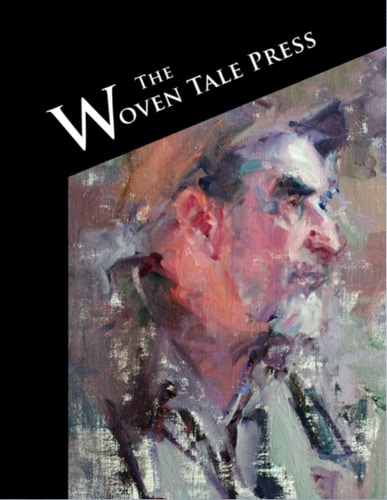
The Woven Tale Press – Volume 9 Number 9, 2021

Lauren Taylor Grad’s work was featured in Woven Tale Press Volume XI Number 9. Jennifer Nelson, WTP feature writer interviewed Taylor Grad recently on the meaning and thought processes behind several of her works along with her pursuit of an MFA.

From using found items to create sculptures to utilizing her undergraduate work in biology to create paintings, Taylor Grad’s work is diverse. One of the most interesting pieces is Tethered which is comprised of used clothing made to create two concrete boulders and a connecting line between them. She also created a video art piece to accompany the sculpture about moving these boulders around a curving path.

Nelson: Why did you feel it was important to earn an MFA?

The decision to go to graduate school and earn my Masters in Fine Arts was not one that I took lightly. It is a huge investment, both in time and money, and I wanted to be sure that it was the right path for me to take before I made that leap. I personally really enjoy academia; I think that the amount of growth and nurturing that occurs in an individual throughout art school in such a short amount of time is transformative, and unlike anything that you can get elsewhere.

Taylor Grad also talked about taking time off after earning her undergraduate degree to try out being a living artist and other avenues before ultimately going back to earn her MFA so that she can also become an art instructor.

Read the full interview here and look at some of Taylor Grad’s amazing work.