The Necessity of Human Myth

Guest Post by Adrian Thomson.

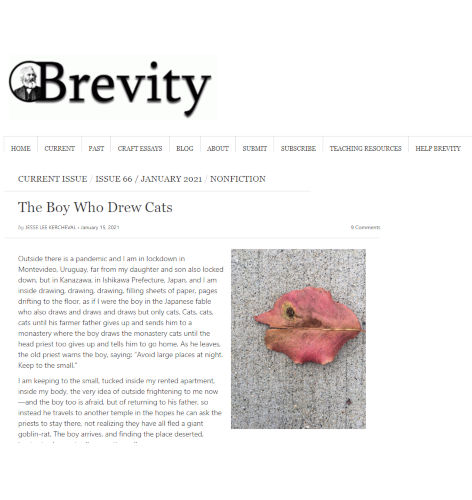
Jesse Lee Kercheval’s “The Boy Who Drew Cats” speaks both to our current time and to the necessity of human myth. Confined to a house in Uruguay as her children face quarantine in Japan, Kercheval connects to the hero of a Japanese fable, the titular drawer of cats, in an attempt to find solace within herself through her own artistic ventures.

This connection to cultural myth—and Kercheval does cement her own tale very concretely to the modern as well as the mythical—inspires the author in its assertions of safety, balance, and a sense of stability. The myth helps her recapture her own love of art and facilitates a return to  the page where flowers transform into felines. Kercheval does not uphold the myth as a perfect guideline, either—she comments upon it, accepting the good she sees there while acknowledging elements she appears to dislike.

But her inclusion of the fable also speaks to the wider purpose of human myth—as a necessity of the imagination to allow us to “visit” faraway places and to inspire. Kercheval places both within the story to generate trust that the world will get better, as well as trust in her own abilities.


The Boy Who Drew Cats” by Jesse Lee Kercheval. Brevity, January 2021.

Reviewer bio: Adrian Thomson is a graduate student at Utah State University, currently working toward his MS by way of a thesis in poetry.
New Letters Volume 87 Numbers 1 & 2

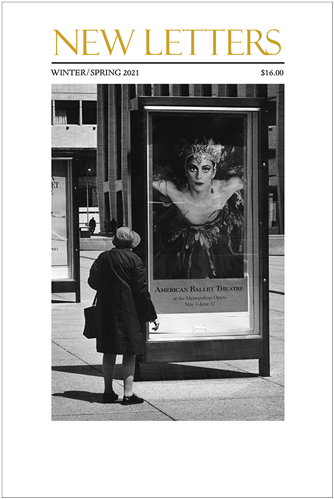
woman looking at a poster for a ballet performanceLiterary magazine New Letters publishes two double issues a year in print. Their Winter/Spring 2021 issue is now available for purchase and features fiction by Blair Hurley, Robert P. Kaye, Kirstin Scott, Anthony Varallo, and Leslie Blanco; essays by Carolina Avarado Molk, Emily Howorth, and Michaela Django Walsh; and poetry by Rebecca Foust, Jennifer Perrine, D.S. Waldman, Ted Kooser, Mihaela Moscaliuc, and Liane Strauss.

Also in this issue find the winners of their annual literary awards!

  • “Indigent” by Elizabeth Robinson, winner of the Editor’s Choice Award
  • Two poems by Mark Wagenaar, winner of the Patricia Clearly Miller Award for Poetry
  • “Lobu Hoteru” by Jacob R. Weber, winner of the Robert Day Award for Fiction
  • “Joan” by Rebecca Young, winner of the Beasley Jr. Award for Nonfiction

Their current awards in fiction, poetry, and nonfiction are open to entries through midnight CST on May 18! Check out the 2020 winners and don’t forget to pick up this issue and support the journal by subscribing!

Magazine Stand :: Wordrunner eChapbooks – 2021

Our theme for this issue is LOVE in all its painful, confusing, passionate, and joyous diversity. Featuring fiction by Louise Blalock, Margaret Emma Brandl, Ed Davis, Stefan Kiesbye, and Nick Sweeney; memoir by Jane Boch, Ruth Askew Brelsford, Laura Foxworthy, and Carmela Delia Lanza; and poetry and prose poems by Leonore Hildebrandt, Robert Murray, and Jacalyn Shelley.

At the Intersection of Religion & Generational Conflict

Guest Post by Madeline Thomas.

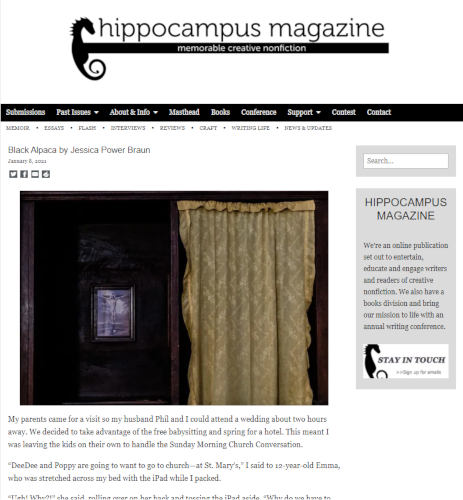
When a combination of a Catholic upbringing and the unforgettable viewing of a commercial for The Exorcist sends a young girl’s mind to the inevitability of a personal demon possession, the first steps are taken on a path to parental disappointment. Jessica Power Braun’s “Black Alpaca” places readers at the intersection of religion, generational conflict, and closet-Jesus nightmares with sharp humor and unflinching honesty.

The essay, published in Hippocampus Magazine, works through the realities of fear and guilt in the Catholic Church, the slow movement away from your family’s religious identity, and the discovery of a poignant black alpaca painting in the context of Braun’s identities as a mother, wife, and daughter. Humor forms the heart of the piece, but the essay makes no attempt to pull away from what is both painful and real—forming a balance that cultivates both emotional impact and investment for readers.

In a time where I feel the need for constant breaks from the mire of news and the world in general, the humor and tone present in “Black Alpaca” provides needed relief. Braun utilizes her power in storytelling to craft something worth connecting with.


Black Alpaca” by Jessica Power Braun. Hippocampus Magazine, January 2021.

Reviewer bio: Madeline Thomas is a graduate student and writer at Utah State University.

Join Poor Yorick for Their Monthly Reading Series

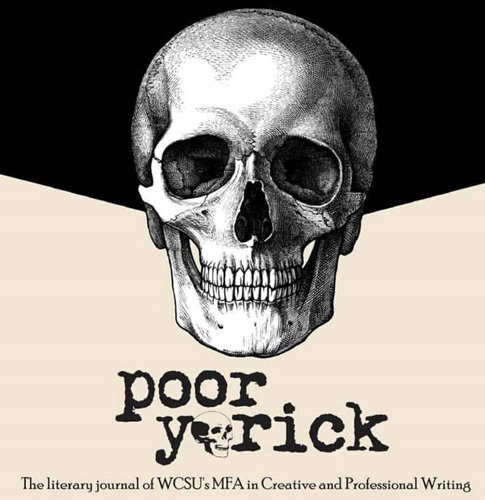
skull on black and pink backgroundPoor Yorick is continuing their monthly reading series with a virtual open mic and fireside chat! This event features a sneak preview of upcoming special issue in honor of National Poetry Month, “The Poet’s Mask.” Several contributors will present their work on the theme of masks and masking on April 29.

Contact Brianna Paris ([email protected]) for a Microsoft Teams invitation.

“The Poet’s Mask” will be published on Friday, April 30 on Poor Yorick‘s website.

This event is brought to you by the editorial team at Poor Yorick: A Journal of Rediscovery, which is the online literary publication of Western Connecticut State University’s M.F.A. Program. The journal publishes poems, stories, essays, photo essays, and other innovative works about rediscovery, the lost and the found—what we bury, and what we dig up. The editor will be on hand at the open mic to talk submissions, too; if this sounds like your kind of publication, contact us!

Sponsor Spotlight :: Neon: A Literary Magazine

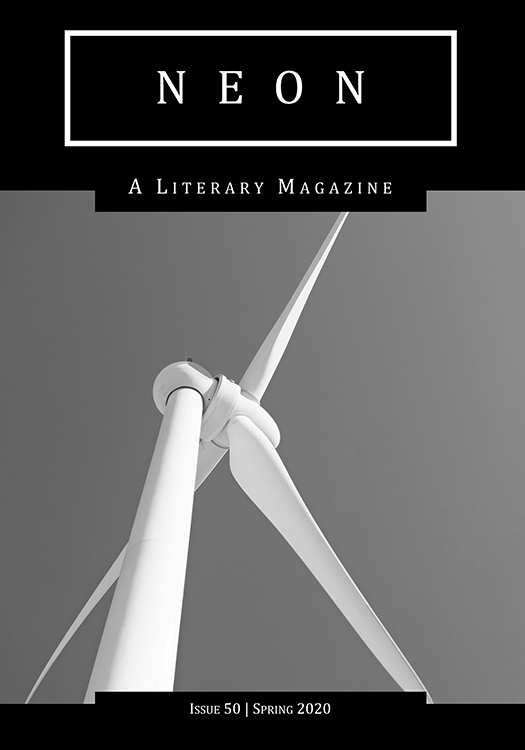
black and white photograph looking up at a wind turbineNeon: A Literary Magazine is a tiny biannual journal and chapbook press. It is one of the longest-running independent literary magazines in the UK which focuses on slipstream fiction, poetry, and artwork. They publish work that is fantastical, surreal, and which crosses the boundaries between science fiction, horror, and literary fiction.

Neon publishes in print and a range of digital formats. They allow you to set your own price for a digital copy. When you purchase a print subscription (they ship to anywhere in the world!), you can addon on of their chapbooks, too. Subscribe today!

Plus, if you’re a writer, Neon is currently open to submissions. The theme of the next issue will be “Cities.” They are a paying market.

Drop by their listing on NewPages to learn more.

West Trade Review Volume 12 Available for Preorder

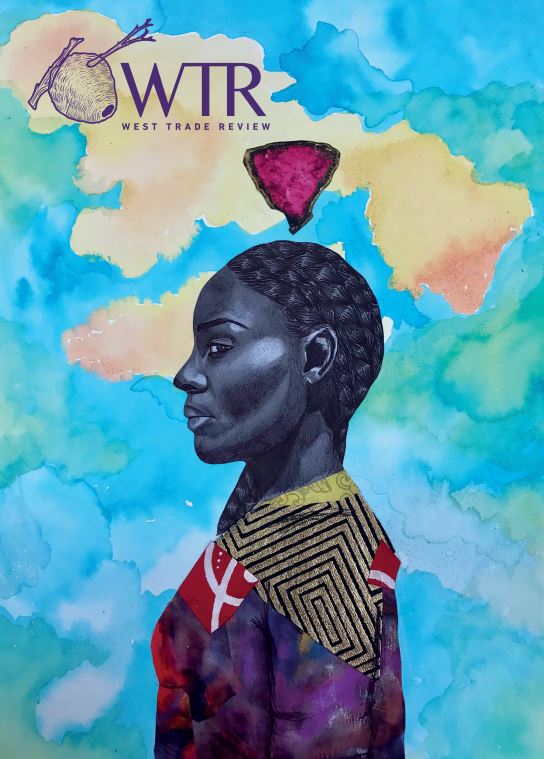
West Trade Review Volume 12 cover

West Trade Review, formerly Encore Literary Arts Magazine, is accepting preorders for its 12th print issue due out in May of this year.

This issue features fiction by Sophie Nau, Reshmi Hebbar, Lex Chilson; poetry by Mercury-Marvin Sunderland, Tesa Flores, Hunter Boone, Stephanie Dickinson; plus art, interviews, and reviews. Check out their preview and don’t forget to order a copy today.

Plus, don’t forget to swing by their listing on NewPages to learn more about them.

World Literature Today – Spring 2021

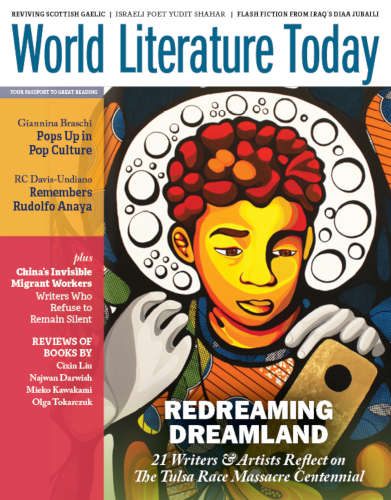
World Literature Today’s spring issue, “Redreaming Dreamland,” gathers the work of 21 writers and artists reflecting on the centennial of the 1921 Tulsa Race Massacre, including Patricia Smith, Joy Harjo, Jewell Parker Rhodes, and Tracy K. Smith. Additional highlights in the issue include a special section on Chinese migrant workers’ literature; an essay on how Giannina Braschi’s work keeps “popping up” in pop culture; fiction from Belarus and Iraq; plus reviews of new books by Najwan Darwish, Cixin Liu, Olga Tokarczuk, and dozens more.

Sky Island Journal – Spring 2021

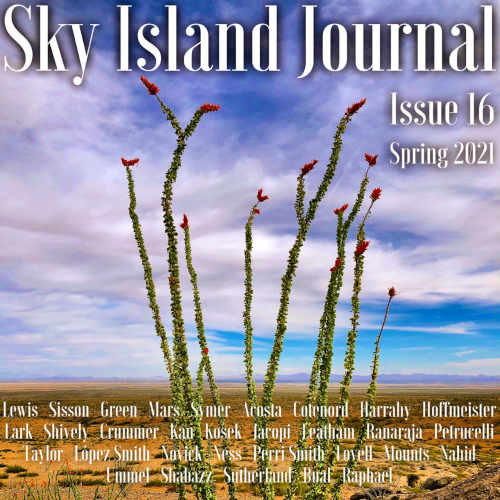
Sky Island Journal’s stunning 16th issue features poetry, flash fiction, and creative nonfiction from contributors around the globe. Accomplished, well-established authors are published—side by side—with fresh, emerging voices. Readers are provided with a powerful, focused literary experience that transports them: one that challenges them intellectually and moves them emotionally. Always free to access, and always free from advertising, discover what over 80,000 readers in 145 countries already know; the finest new writing is here, at your fingertips.

Chestnut Review – Spring 2021

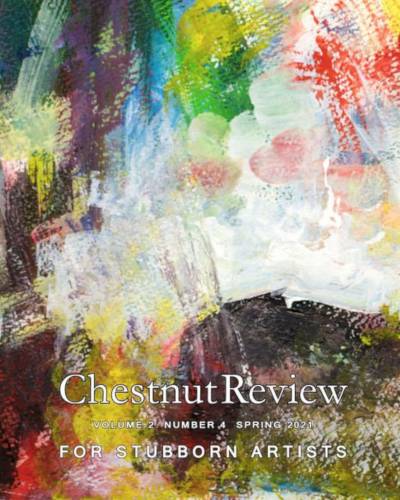
The springtime brings a sense of renewal: feeling the sun beginning to heat up and shedding the cocoon of cold winter nights. Spring offers the opportunity to get out and discover something new. At Chestnut Review, we are also experiencing a turn, a closing of our second volume and anticipating our third. This issue features work by Cutter Streeby, Gretchen Rockwell, Rebecca Poynor, Zackary Medlin, Lorette C. Luzajic, Satya Dash, Fatima Malik, and more. See what else can be found in this issue at the Chestnut Review website.

Alaska Quarterly Review – Winter 2021

In this issue, find special Memoir as Drama feature “Dialogue Box” by Debbie Urbanski. Also in this issue: stories by Emily Mitchell, Elizabeth Stix, Cara Blue Adams, JoAnna Novak, and more; essays by Emma Hine, Catalina Bode, Nicole Graev Lipson, and Josh Shoemake; and poetry by Emily Nason, Rose DeMaris, Dorsey Craft, and others. Find more contributors at the Alaska Quarterly Review website.

The Power of Fiction

Guest Post by Elle Smith.

Michael Keenan Gutierrez explores the meaning of truth and the power of fiction in his essay “Lies I’ll Tell My Son.” Gutierrez starts the reader grounded in fact. His great grandfather, Red, was a bookie: “This is true.” Then the details of Red’s life grow murkier. The story of Red winning a WWI draft card in a poker game sounds dramatic enough it might have come from a movie. Red’s birth certificates and draft cards have different dates and names. Gutierrez’s uncle proclaims, “They were all a bunch of fucking liars.”

Gutierrez has heard that we aren’t supposed to lie to children “except about Santa Claus and death.” But what is the purpose of the lies that build such fantastic family lore? The tales are in contrast to a more recent generation that lived “the standard formula of work, retirement, and death.” The lore of Red paints the world as “more magical than a paycheck and a mortgage.”

Gutierrez resolves to tell his son the tales of his family and “shade the truth in fiction.” What about the hard truths about life and death? Well, Gutierrez explains: “I’ll let him figure out heaven on his own.”


Lies I’ll Tell My Son” by Michael Keenan Gutierrez. 805 Lit + Art, February 2021.

Reviewer bio: Elle Smith is a graduate student at Utah State University.

When Gaps Become Story

Guest Post by Mark Smeltzer.

“We don’t know much about Mr. Otomatsu Wada of Unit B in Barrack 14 in Block 63 of the Gila River Relocation Center,” Eric L. Muller admits at the start of his essay, “The Desert Was His Home.” This lack of knowledge does not deter Muller from examining the pain and power of absence, as well as how deep research becomes an avenue for creative discovery.

Throughout this essay, Muller lays out the facts about this one Japanese-American, among many, held prisoner in the U.S. during World War II. Muller uses what little is known of this man to sketch out a rough but potent portrait of his life. Most notable was Wada’s “two-year-old mystery” marked by the refrain “We don’t know” that Muller uses until Wada’s fate is revealed.

This essay demonstrates how seamlessly and naturally a story can incorporate the many don’t knows and can’t knows inevitable in research. It is even possible, as “The Desert” shows us, how the gaps in a subject’s life can become the story. This piece can be found in Issue 74 of Creative Nonfiction.


The Desert Was His Home” by Eric L. Muller. Creative Nonfiction, Winter 2021.

Reviewer bio: Mark Smeltzer is a graduate student in Utah State University’s English Department. His area of specialization is in poetry.

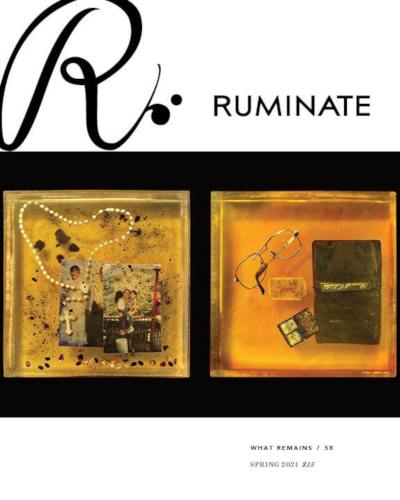
Ruminate – Spring 2021

From the editors: In the face of the immense grief that surrounds us, for this issue Ruminate Magazine editors decided to explore What Remains. “Everything is held together with stories,” writes the acclaimed author Barry Lopez, who died this past year, a few months after the Holiday Farm Fire destroyed his house and archives. “That is all that is holding us together. Stories and compassion.” This issue features the winners of our 2020 Broadside Poetry Prize: Michael Dechane and S. Yarberry.
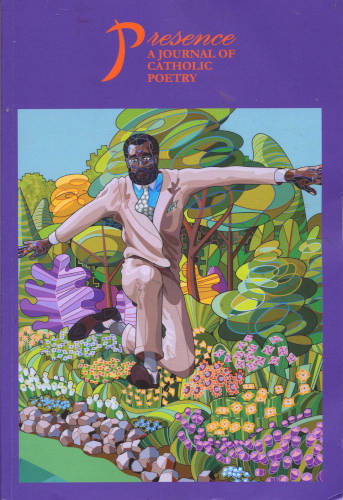
Presence – 2021

With the publication of this 2021 issue comes the fifth anniversary of Presence Journal. Enjoy art by Reginald Baylor and work by featured poet Joseph A. Brown, S.J. Ashaq Hussain Parray translates work by Rehman Rahi and Shahnaz Rasheed. Barbara Crooker, Dante Di Stefano, Linda Nemec Foster, and Mary Ladany celebrate the lives of others in the “In Memoriam” section.

“Cathedrals of Hope” by Lauren Markham

Guest Post by Holly Vasic.

In the 35th-anniversary edition of the San Francisco-based literary magazine ZYZZYVA, Lauren Markham’s essay, “Cathedrals of Hope,” reminisces on the women’s suffrage movement. This piece is timely as 2020 America marked the centennial anniversary of women gaining the right to vote. Markham not only reflects on the women who sacrificed their freedom and endured abuse so that women can vote today but also discusses populations forgotten in the 1920s: men and women of color.

Markham weaves her own narrative into the larger historical picture, describing how her first-time voting was marked with devastation when George Bush Jr. won—again. Markham takes a unique look at where we as Americans are in regard to democracy while commentating on where we came from. Markham writes, “How easy human beings can forget the people who came before us, and the debts we owe.”


Cathedrals of Hope” by Lauren Markham. ZYZZYVA, 2020.

Reviewer bio: Holly Vasic is a Graduate Instructor seeking a Master’s in Folklore at Utah State University with an undergrad in Journalism.

Plundered Beliefs

Guest Post by Andrew Romriell.

In “White Witchery,” from Guernica, Elissa Washuta offers fierce insight into the varied and complex ways whiteness has plundered Indigenous bodies and beliefs. Here, Washuta offers difficult truths surrounding colonialism and settler violence alongside the strength of her own perseverance.

Growing up in a “heavily Catholic, forest-and-farmland slice of New Jersey,” Washuta found a sincere desire to make magic, to be a witch who “brings change to the seen world using unseen forces.” To Washuta, magic became a way of finding stability within the uncontrollable world surrounding Native women in America, an America where, Washuta describes, “[colonizers whisper] that I’m not wanted here, not worthy of protection, nothing but a body to be pummeled and played with and threatened into submission.” Yet, through magic, her own tenacity, and the communal strength she finds in a women’s spiritual circle, Washuta says, “ My whole body is a fire” and “I have not died yet.”

“White Witchery” grants a rare and vulnerable insight into the capitalistic industry of the United States, the pop-culture surrounding self-care and self-healing, and the internal struggle of surviving a colonized America as a Native woman, a woman with “nothing now but my big aura, my fistful of keys, and my throat that still knows how to scream because no man has succeeded in closing it.” Though the journey Washuta takes us on is not an easy one, it is one of the most compelling, vulnerable, and important ones we can take.


White Witchery” by Elissa Washuta. Guernica, February 2019.

Reviewer bio: Andrew Romriell is an avid writer, teacher, and student who is passionate about experimental forms, research-based writing, and intersections of genre. Learn more at ajromriell.com.

What the Heart Remembers

Guest Post by Kelsie Peterson.

Catherine Young’s essay, “In That River I Saw Him Again,” published online in November 2020 by Hippocampus Magazine, reads like a coal train passing by you. It is full of glimpses of beauty and wonder, as well as the past, with a poetic through line that moves like the “shadows” Young describes. Using the imagery of coal trains from her childhood, photographs, and early motion pictures, Young’s essay wonders at the idea of memory, of life, and of those lost in her childhood.

The central question running through this essay is, “What can the heart remember? Young invites readers to discover an answer with her as moving pictures first allow her father to come alive once more, and then ultimately, her uncle. Young’s writing offers a unique and engaging perspective on the life of memory.
What engaged me most as a reader was this piece’s inventive use of engaging imagery and repetition of poetic meditations. The reading experience mirrored that of a train passing or of the flicker of the early motion picture. The flashes of ideas flowed together in a truly unforgettable piece.

In That River I Saw Him Again” by Catherine Young. Hippocampus Magazine, November 2020.

Reviewer bio: Kelsie Peterson is completing her last semester at Utah State University and will graduate with her MS in English.

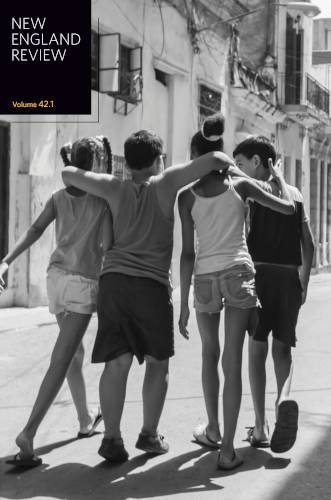
New England Review – 42.1

New design. New writing from Cuba. New essays, stories, and poems—from Susan Daitch, Carl Dennis, Matthew Lansburgh, Charif Shanahan, and more. In our long-awaited translation feature of new writing from Cuba, you’ll find “hyper-real, speculative, socio-politically explicit, photographically existential, and experimental forms,” says translator Katerina Gonzalez Seligmann in her introduction. Read more at the New England Review website.

Plume – April 2021

For this month’s Plume featured selection, Nancy Mitchell interviewed five Poet Laureates: Tina Chang, Elizabeth Jacobson, Paisley Rekdal, Levi Romero and Laura Tohe. In nonfiction: “Correspondence In The Air” by Ilya Kaminsky and “Twilight of the Theorists” by Doug Anderson. Andrea Read reviews Steven Cramer’s Listen.

Sweetness of Honey

Guest Post by Christopher Nicholson.

The best friend I ever had was my dog Milo. He offered the best kind of love—not unconditional but predicated on the most reasonable conditions. I had to earn his love and could feel good about that, but he didn’t expect me to be perfect. This sensation is nothing new to most people who have had a pet.

In “Honey, I’m Home: Beyond the Rescue Door,” published in the Fall/Winter 2020-2021 edition of Magnets and Ladders, Bonnie Blose reminisces on sharing such a love with the titular cat, Honey, who found her at a local rescue shelter and chose her immediately. Honey had some traumatic experiences in her past that affected her behavior and didn’t make her an easy pet. Blose committed from the very beginning to give her the love she needed, no matter what, for however much time they had together. She did exactly that.

Blose extols her cat’s intelligence and emotion, painting her as almost human—or as Blose would insist, better than human. This is also a relatable mindset for me and other past or present pet owners. They are not mere accessories; they are our friends, our family, our confidantes. Honey shows as much personality in the story as any human character, and one senses that it’s true to life, that Blose isn’t just anthropomorphizing her for dramatic purposes.

Magnets and Ladders is an online magazine for writers with disabilities, and this story won first place in the nonfiction category of the National Federation of the Blind Writers’ Division’s 2020 contest, so the author’s disability is a constant subtext without ever being stated outright in the story. One gets the impression that Blose needed Honey as much as Honey needed her, that their relationship was symbiotic in a way. Many people are so preoccupied with finding romantic companionship to “complete” themselves that they overlook the potential of pets—but in this time when human connection is so limited, they may rediscover an appreciation for the one-of-a-kind bonds that animals can offer.

Take a few minutes, open your heart, and give this story a chance.


“Honey, I’m Home: Beyond the Rescue Door” by Bonnie Blose. Magnets and Ladders, Fall/Winter 2020-2021.

Reviewer bio: Christopher Nicholson is an English 1010 instructor and Creative Writing graduate student at Utah State University. He writes and blogs about all kinds of things at https://www.christopherrandallnicholson.com.

Mortality and Motherhood

Guest Post by Mia Jensen.

“When the butterfly struggles out of its pupa, for three long hours its wings are wet and as utterly useless as a newborn’s hands.”

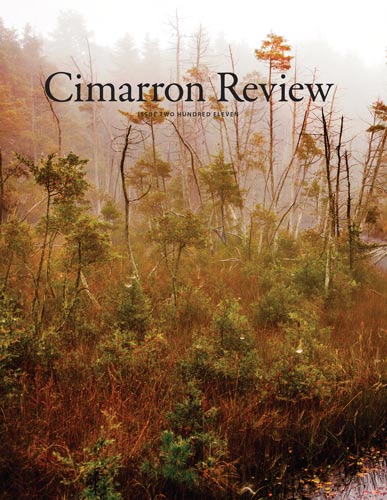
In “Life Inside,” found in Issue 211 of Cimarron Review, author Caroline Sutton contemplates the limitations of mortality and motherhood amid the upcoming birth of her first granddaughter. Sutton ingeniously weaves the eager experiences of her pregnant daughter with the vulnerable life cycle of monarch butterflies and their fruitless efforts for survival in a hostile world.

Reflecting on her own complicated pregnancy decades before, Sutton likens the near loss of her infant to the toxic consumption of milkweed leaves. Monarch mothers lay eggs on milkweed plants and milkweed plants alone, for when monarch larvae ingest the plant’s toxic properties, predators avoid the black and yellow creature. Sutton thinks back to her traumatic delivery and questions her blind trust during the delivery, her assumptions that everything would be alright because it always was, because mothers always offered protection. But, in a world strung with chaos and turmoil, perhaps there are some obstacles a mother cannot predict.

Sutton concludes by comparing her daughter’s upcoming delivery with a caterpillar’s metamorphic emergence. Rather than reflecting on the cliché symbol of hope, Sutton contemplates the feebleness of the new creature. Its wings, wet, useless, and unable to defend against predators looking to “attack and devour the butterfly, toxins and all, before the wings ever open fully.” Although monarch mothers provide protection from larvae to pupa, they cannot predict the perils awaiting beyond the chrysalis.


Life Inside” by Caroline Sutton. Cimarron Review, Spring 2020.

Reviewer bio: Mia Jensen is a graduate student at Utah State University studying creative writing. She loves horror novels, trail running, and her Australian Shepherd.

The Shore – Spring 2021

The spring issue of The Shore is bursting with breathtaking poetry by Dana Blatte, Jessica Poli, Matthew Tuckner, CD Eskilson, Dakota Reed, Kelsey Carmody Wort, Martha Silano, SK Grout, Hilary King, Babo Kamel, Noa Saunders, Jeremy Michael Reed, Lucy Zhang, C Samuel Rees, Becki Hawes, Kevin Grauke, Jenny Wong, Steven Pfau, Ashley Steineger, Danielle Pieratti, Eric Steineger, Farnaz Fatemi, Scarlett Peterson, Sarah Elkins, Katie Holtmeyer, Robert Fanning, Jean Theron, Heidi Seaborn, Caroline Riley, Sarah Stickney, David Keplinger, Nwuguru Chidiebere Sullivan, Tara A Elliott, Laren Mallett, Richard Prins and Sam Sobel. It also features dazzling art by Joshua Young.

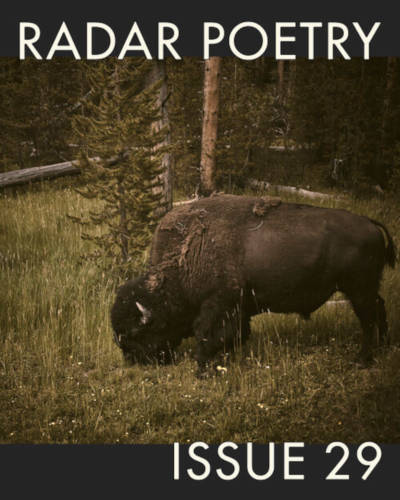
Radar Poetry – No. 29

Radar Poetry’s newest issue features poetry by Geula Geurts, Despy Boutris, K. D. Harryman, Jennifer Beebe, Marietta Brill, Kathryn Haemmerle, Michelle Menting, Julia Paul, Amanda Chiado, Jane Zwart, Meggie Royer, Claudia Acevedo-Quiñones, Janine Certo, Cynthia White, Rachael Inciarte, Josh Exoo, Casey Patrick, and Ruth Dickey, as well as accompany art by artists such as Ethan Pines, Tema Stauffer, Lava Munroe, Honour Mack, and more.

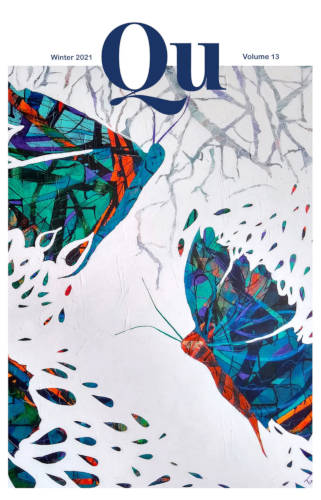
Qu – Winter 2021

This issue of Qu features “Rogue Valley” by Midge Raymond, “Social Studies” by Stephany Brown, “The Summer of Disappearing Moms” by Kristin Gallagher, “Brooklyn” by Roy Bentley, “survival float” by Rachael Gay, “Touch Starvation” by Rachael Gay, “Last Seen Leaving Campus with Unnamed Male” by Mary Wolff, “A Marriage of Lies and One Truth” by Mary Wolff, and more.

“She” by Grace Camille

Guest Post by Tyler Hurst.

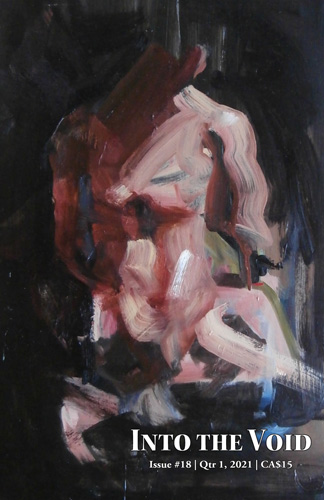
In “She,” published in Issue 18 of Into the Void, author Grace Camille begins with an inventory of the things that the she has chosen to hold onto. Through the memories the objects invoke, we are introduced to the narrator’s own addiction, a need to belong, to be a part of something and to nurture “a proper addiction” that “began as a Hail Mary plan to be accepted by sleek, serious coworkers.”

Camille’s loneliness becomes our loneliness through the use of the third person, creating an emotional distance from events that still allows the reader to recognize. When she meets “him,” he makes her feel needed, wanted. When he leaves for the Peace Corps, the world becomes one of routines. “She jogs in the evenings, washes her hair weekly, flosses daily, eats sometimes,” and the list goes on. One-hundred-and-three days later, she’s still wishing after him, remembering him and longing for what she cannot hold. While she “reaches for his hand,” he is “reaching for a firefly,” revealing the futility of trying to hold onto that which does not wish to be held.


She” by Grace Camille. Into the Void, 2021.

Reviewer bio: Tyler Hurst is a graduate student at Utah State University studying creative writing while completing his last semester there.

The Masters Review Announces Inaugural Chapbook Award Finalists & Winner

The Masters Review has announced the finalists and winner of their inaugural Chapbook Award judged by Steve Almond. The winning manuscript is Masterplans by Nick Almeida. His chapbook is set to be published in the fall.

Finalists were Deep Blue by Jay Allison and Oscillations by Tanya Perkins.

Don’t forget their Anthology Contest closes to entries on March 28 at midnight PST.

Happy 5th Anniversary Leaping Clear

Leaping Clear - logoCongrats to Leaping Clear! The online lit mag is celebrating its fifth anniversary this spring.

With this special occasion, the masthead is welcoming in new editors Simon Boes and Jen Schmidt.

Readers can celebrate with the magazine by checking out their brand new Spring/Summer 2021 issue. Instead of the usual format, this issue is published as a weekly Showcase Feature which will highlight one contributor from the past five years each week until the 2021 Fall issue is released in September. This week’s showcase is “Call and Response” by author and artist Deborah Kennedy.