Home » Newpages Blog » Fiction » Page 9

Ethan Hayes Reads ‘One Hundred Years of Solitude’

Guest Post by Ethan Hayes

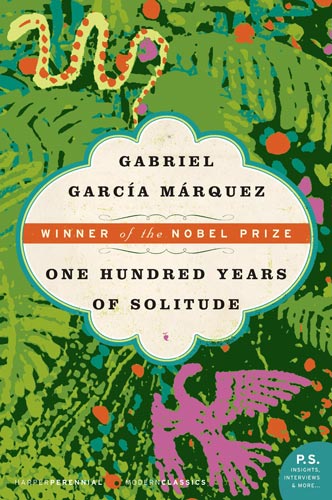
“Many years later, as he faced the firing squad, Colonel Aureliano Buendia was to remember that distant afternoon when his father took him to discover ice.” These are the immortal opening lines of Gabriel García Márquez’s One Hundred Years of Solitude, a novel filled with so many more beautiful lines. The novel is concerning the generational story of Maconda and its founders, the family of Jose Arcadio Buendia.

I have found the novel to be filled with a wonderful whimsy that has made García Márquez famous. Every line is poetry that flows through the magical story that fills the pages. The main characters are the motley crew of Jose Arcadio Buendia’s family, who range from the dirt-eating Rebeca who wandered into the family to Jose Arcadio, the first-born son of Jose Arcadio Buendia who inherited his strength.

The novel is told in such a wonderful fairy tale style that blends magic into the storied events that plague this family and the town that they founded. One of García Márquez’s best works.


One Hundred Years of Solitude by Gabriel García Márquez. 1967.

Reviewer bio: My name is Ethan Hayes. I am a writer from Colorado. I like to write fiction and fantasy as well as short prose. You can find my blog at https://ewwhayes.wordpress.com/.

Buy this book through our affiliate Bookshop.org.

Never Give Up: The Charmed Circle

Guest Post by Dawn Corrigan

As a child I read voraciously, but erratically. When it was time to pick a new Nancy Drew, I made my selection based on the cover art, rather than reading in sequence. I reread old books just as often as seeking new ones. It wasn’t always clear where the books had come from.

Thus I had in my adolescent collection a copy of The Charmed Circle, a 1962 “teenage novel” by Dorothea J. Snow. Somewhere along the way it disappeared, but in 2014, in a fit of nostalgia, I ordered a used copy from Amazon, sorting through more than a dozen “Charmed Circle” titles until I found the right one. Then I stuck it on a shelf and forgot about it. But recently, in my search for comfort food reading, I took it down.

I thought I’d read a little and then quickly fall asleep. Instead, I stayed up past two and finished it. That’s how it was when I was a teenager, too. Sometimes I’d finish it, then immediately flip back to the first page and start again.

Which is funny, because even back then the class stuff annoyed me, and it annoyed me even more this time. For instance, it had not occurred to me previously that our heroine, Lauralee Larkin, is elected Homecoming Queen mainly because her parents are willing to host (and fund) an endless array of pizza parties.

Nonetheless, there’s obviously something about the book I really like, and this time I figured out what: Lauralee tries things that scare her, and never gives up, even when those things don’t work out.

It occurs to me now that reading this book over and over again as a youth may have contributed to my ability to keep trying—to keep submitting my writing, to keep applying for jobs that seem like long shots, even to keep asking guys out (right up through my husband). This tenaciousness in the face of much rejection has served me well. It’s pretty much my only move! Fortunately, it’s the only one I’ve needed.


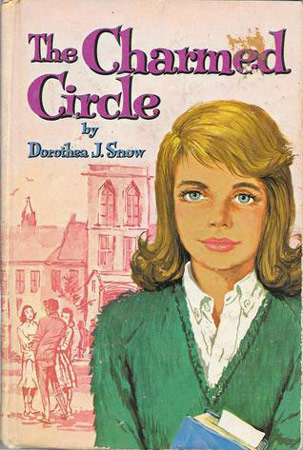
The Charmed Circle by Dorothea J. Snow. Whitman, 1962.

Reviewer bio: Dawn Corrigan‘s poetry and prose have appeared widely in print and online. She works in the affordable housing industry and lives in Myrtle Grove, FL.

A Relevant Classic Inspiring Resiliency

Guest Post by Kathryn Sadakierski

Little Women is a timeless classic and remains relevant during unprecedented days. On the surface, the endearing stories of Meg, Jo, Beth, and Amy March may seem to recount simpler times, but greater complexity underlies what appears to be sentimental. At its heart, Little Women is about family, growing stronger despite distance.

While their father serves as a chaplain in the Civil War, the March daughters, with the loving guidance of their mother, adapt, soldiering on together, each making their own destinies. They support each other through adversities, sharing in triumphs. When Beth falls ill, Amy stays with Aunt March, avoiding catching scarlet fever, but while distanced, she learns about herself, ultimately maturing. Their “castles in the air,” innermost dreams of places far-removed from their Concord home, sustain them, until the Marches realize that the lives they lead are better than anything they could have dreamed, finding beauty even in the bittersweet, as they come of age, surmounting the burdens they once lamented. It is not tangible walls that make up their home, but the love of their family.

Reading Little Women at home during the quarantine came not to be an escape from reality, so much as a telling reflection of it; the novel captures the ebbs and flows of life and time, which, as the Marches saw, are to be cherished. Being at home, away from their father and the promising reaches of the world they had yet to see was difficult for the spirited March girls, but in time, they turned what were once limits into opportunities, each contributing her own gift to the world, from Jo with her imaginative writing, to Beth with her music and compassionate heart. Challenges they overcame shaped them, becoming a source of empowerment. This message of resiliency continues to inspire.

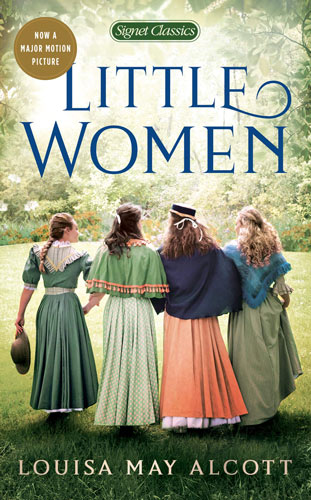
Little Women by Louisa May Alcott. 1868.

Kathryn Sadakierski is a 20-year-old writer whose work has appeared in The Ekphrastic Review, Dime Show Review, Nine Muses Poetry, iō Literary Journal, and elsewhere.

Program :: MA in Creative Writing at University of South Alabama

Earn your MA with an emphasis in Creative Writing in the vibrant city of Mobile, near some of our country’s best beaches. Tuition waivers and assistantships are available as are additional scholarships for excellence and summer creative writing projects. Home of the Stokes Center for Creative Writing. Full-time students can finish the program in four semesters. Students can also enroll part time and/or complete the degree through evening coursework. For more information, visit our website: www.southalabama.edu/colleges/artsandsci/english/.

Sync Audio YA for Summer

Once again, Sync Audiobooks is offering a free summer audiobook program for teens (13+) – and perhaps some adults too! SYNC 2020 is utilizing Sora, a student reading app available for free download from OverDrive. Each week Sync shares two YA titles that can be downloaded with no expiration. After the week, the titles are no longer available to download, but previous titles with descriptions remain available on the site.

It’s already Week 5 of the program, but there are seven more weeks remaining. Previous titles include Monday’s Not Coming by Tiffany D. Jackson, The 57 Bus by Dashka Slater, Secret Soldiers by Paul B. Janeczko, Picture Us in the Light by Kelly Loy Gilbert, Faust by Johann Wolfgang von Goethe (stupendously performed!), Stalking Jack the Ripper by Kerri Maniscalco, Sisters Matsumoto by Philip Kan Gotanda, and Disappeared by Francisco X. Stork.

All you have to do to access the titles is register your email address. I’ve done so for the past two years and never receive any related junk mail or other solicitations, so this is an great program for teens and adults alike!

The Gettysburg Review – 33.4

The Autumn issue of The Gettysburg Review is out. The issue features paintings by Jared Small, fiction by Jennifer Anne Moses, Jared Hanson, Darrell Kinsey, and Sean Bernard; essays by Andrew Cohen, K. Robert Schaeffer, and Christopher Wall; poetry by Jill McDonough, Max Seifert, K. A. Hays, Albert Goldbarth, Mary B. Moore, R. T. Smith, Jill Bialosky, Katharine Whitcomb, Corey Marks, Kimberly Johnson, Margaret Ray, Danusha Laméris, Linda Pastan, Christopher Bakken, Christopher Howell, and Margaret Gibson.

The Adroit Journal – May 2020

The May 2020 issue is here with poetry by Jenny George, Arthur Sze, Jessica Abughattas, Melissa Crowe, Jamaica Baldwin, C.X. Hua, Kara van de Graaf, Hala Alyan, Mark Wunderlich, Raymond Antrobus, Stephanie Chang, and more; prose by Scott Broker, Alyssa Proujansky, Maura Pellettieri, and Mina Hamedi, with a prose feature by Dima Alzayat. See what else the issue has in store for you at The Adroit Journal website.

James Braun Brings Readers Back to Winter

Magazine Review by Katy Haas

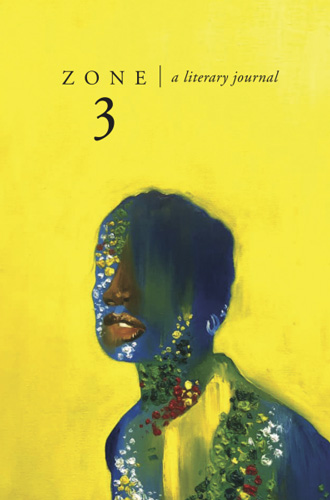
Everything is green and warm outside my window right now, but James Braun takes readers back to winter in his story “The Salt Man” from the Spring 2020 issue of Zone 3.

The story centers on two young sisters mid-winter. They are sent outside to wait for the salt man to come salt their roads before they’re allowed to play outside their yard. This is a dark piece. Poverty hangs heavy over the story. What once was green and beautiful has been covered by rocks. They have no heat in the house. Their neighbor loses fingers to frostbite. A woman cries on a couch while they go door to door asking if they can shovel driveways for cash to pay for a doctor bill. And the person they’re told will bring them a level of safety—the salt man—ends up being a source of danger in himself.

I enjoyed Braun’s writing style. There’s a level of flippancy with all the characters who view their lifestyle as ordinary. The story is short but holds a lot inside it. We’re able to discern as much meaning in what isn’t said as in what is clearly stated. And even though it is warm enough that I have my window open, a warm breeze blowing into my living room as I write this, Braun’s writing still makes a reader feel that inescapable cold of winter.

Feel the Pulse of LitMag

Guest Post by Jamie Tews

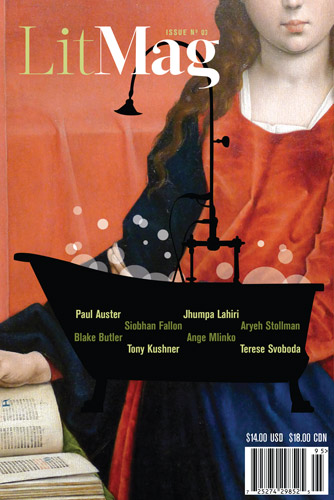
LitMag is a literary magazine published annually from New York City. The magazine’s pulse is found on page sixty-three with a quote from Aryeh Lev Stollman’s fiction piece “Dreams Emerging,” which states “true art is the condensation of ineffable yearning.” An ineffable yearning is a longing so strong it cannot be described; however, this issue’s work attempts description, and through writing, pieces of the unsaid become real. With fiction, nonfiction, poetry, and tributary letters, LitMag’s third issue holds work that embodies the condensation of ineffable yearning.

Meghan E. O’Toole’s fiction story “Abditory” carries the loudest pulse. It is a hazy and dreamlike exploration of how longing can manifest in dreams and become necessary for engaging with reality. O’Toole uses the image of milk to connect the main character’s past and present with their dream-images, and it is in the way the milk moves, the way it rises in the bedroom or pools on the road, that the story supplements the issue’s character of yearning. O’Toole’s story successfully employs elements of magical realism, which create a vivid sense of place that is consistent in every scene. I instantly believed in the fictional world she created, and this lack of hesitancy to trust and settle into the story’s place drew me back for a second and third read.

The magazine’s cohesion comes from every piece having its own sense of magnetism, and I read the magazine in one sitting. Each piece easily pulled me into the next, and it is for this ease and sense of connectivity that recommend LitMag.


Reviewer bio: Jamie is an MFA candidate at the University of North Carolina – Wilmington and holds a BA in English and Creative Writing from Indiana Wesleyan University. She has contributed work to Appalachian Voice, Appalachia Service Project, and has work forthcoming in the Chestnut Review.

Modern Espionage in Ancient Rome

Guest Post by Bill Cushing

Pulitzer Prize winner John Hersey is probably best known for his books dealing with China, where his father served as a missionary, but in The Conspiracy, he takes readers back to the first century AD and Nero’s imperial and mainly insanity-tinged reign.

Like the works of Robert Graves or Leon Uris, Hersey uses a historical backdrop to present a political thriller of the first order. Employing two main characters—Tigellinus, co-consul of the Praetorian guard, and Paenus, tribune of the Roman secret police, along with a series of memos, assorted notes, intercepted letters, and interrogation transcripts—the two members of Nero’s intelligence community try chasing leads concerning a potential assassination attempt against their emperor.

The primary suspects involved in this plan?

The philosopher Seneca and a cadre of poets, artists that Nero had earlier supported and entertained, are surveilled, bringing up images from the Oscar-winning film The Lives of Others.

However, as the layers of the plot open, it begins to reveal Nero’s descent into madness.

Soon, the reader begins to wonder if this is an actual investigation or a means to create a paper trail pointing to others in order to establish scapegoats while the members of Nero’s own security people become the real perpetrators.

One interesting aspect of this book is that it was released in 1972, when news and revelations of the Watergate incident dominated worldwide media and occupied American minds. Hersey’s story produced numerous parallels between the subterfuge and hidden messages of the novel with the events of those days. If readers want to make those connections or draw any parallels with current events is their choice, of course, but the fact that it’s possible only verifies what a relevant story Hersey concocted in any age when he conceived and delivered The Conspiracy.


The Conspiracy by John Hersey. 1972.

Reviewer bio: Bill Cushing writes and facilitates a writing group for 9 Bridges. His poetry collection, A Former Life, was released last year by Finishing Line Press.

Zone 3 – Spring 2020

The issue of Zone 3 includes poetry by Darius Atefat-Peckham, Colin Bailes, Brian Bender, Daniel Biegelson, Christopher Citro, Lynn Domina, Alexandria Hall, Lauren Hilger, Angie Macri, Martha McCollough, A. Molotkov, Kell Nelson, Amy Seifried, Pui Ying Wong, and more; fiction by James Braun, Janice Deal, Tammy Delatorre, Maura Stanton, and Terry Thomas; nonfiction by Rebecca McClanahan, Katherine Schaefer, and William Thompson, and art by Khari Turner.

The Bitter Oleander – Spring 2020

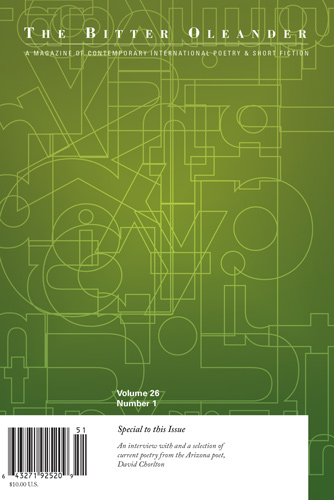
The Spring 2020 issue of The Bitter Oleander features the contemporary Arizona poet David Chorlton, interviewed by our editor and including a generous selection of poems from his forthcoming book, Speech Scrolls. The issue also presents translations from the fiction of Sophia de Mello Breyner Andresen (Portugal); and poetry in translation by Paula Abramo (Mexico), Alberto Blanco (Mexico), Maritza Cino (Ecuador), Andre du Bouchet (France), and Elaine Vilar Madruga (Cuba).

AGNI – No 91

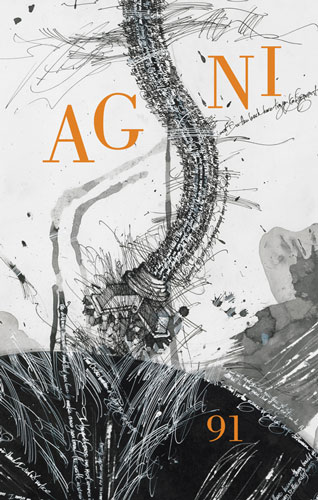
With AGNI #91 we welcome a roster of new editors. Collectively chosen work explores impending crises as well as acts of mitigating goodness; elegies marking losses sit side by side with expressions flashing pure surprise. Cover and portfolio artist Christopher Cozier captures the sly globalized vectors of use and misuse, tracing a long history forward to now. Poems by Sandra McPherson, Steven Sanchez, Emily Mohn-Slate, Colin Channer, and others offer the sensory grab of the immediate, as do stories by Shauna Mackay, David Crouse, and Aurko Maitra and essays by Debra Nystrom, Jiaming Tang, and Ann Hood.

Explore Your Wild at the Elk River Writers Workshop

2020 Elk River Writers Workshop FlierThe Elk River Writers Workshop embodies the idea that deep, communal experiences with the wild open the door to creativity. We bring together some of the most celebrated nature writers in the U.S. with students who are serious about fostering a connection with the environment in their writing, all under the big Montana skies. Rolling application deadline. Offering full refunds for coronavirus-related cancellations. elkriverwriters.org

View the full May eLitPak newsletter here.

2020 Chesapeake Writers’ Conference: Words. Water. Woods: Write on the River.

Spend the first week of summer on the St. Mary’s River! The 9th Annual Chesapeake Writers’ Conference offers an immersive experience featuring daily workshops with accomplished faculty in fiction, poetry, creative nonfiction, and songwriting; a diverse schedule of craft talks, lectures, panels, and readings; a youth workshop for high school students; and a Teachers’ Seminar for educators. All levels welcome. www.smcm.edu/events/chesapeake-writers-conference/

**They are monitoring the current situation and are optimistic they will be able to host the June conference as planned. A final decision will be made this month.**

View the entire May eLitPak newsletter here.

Sponsor Spotlight: Litowitz Creative Writing Graduate Program, MFA+MA

Northwestern University Litowitz MFA+MA logoThis new and distinctive program offers intimate classes; the opportunity to pursue both creative and critical writing; close mentorship by renowned faculty in poetry, fiction, and creative nonfiction; and three fully supported years in which to grow as writers and complete a book-length creative project. Our curriculum gives students time to deepen both their creative writing and their study of literature. Students will receive full financial support for three academic years and two summers. Both degrees—the MFA in Creative Writing and the MA in English—are awarded simultaneously at graduation.

Program faculty include Chris Abani, Eula Biss, Brian Bouldrey, John Bresland, Averill Curdy, Sheila Donohue, Stuart Dybek, Reginald Gibbons, Juan Martinez, Shauna Seliy, Natasha Trethewey, and Rachel Jamison Webster.

Sponsor Spotlight: University of New Hampshire MFA in Writing

University of New Hampshire logoThe MFA Program at the University of New Hampshire has a clear goal: to help you mold your gifts and passion for the art and to prepare you for the opportunities and demands that all writers will experience in a long career. What happens to you after you leave this program—how you will sustain yourself and your work—is one of our strongest concerns. This supportive community of students and faculty shares a belief that writing matters and that the best books of fiction, poetry, and nonfiction are made out of both the creative imagination and rigorous work.

Focus on fiction, narrative nonfiction or poetry in our graduate M.F.A. program, which has launched the careers of hundreds of poets, novelists, storywriters, essayists and memoirists. What is notable is not just how hard students work on their own creative writing, but how much effort goes into their response to the work of their peers. Writers here care deeply about each other, and the production of honest work that captures life on the page.

Kenyon Review – May/June 2020

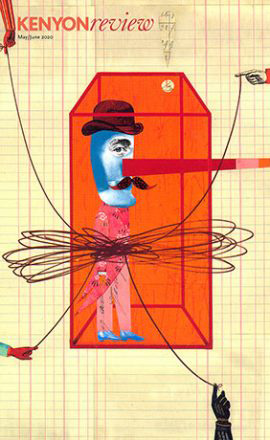
The May/June 2020 issue of the Kenyon Review features the sixth edition of “Nature’s Nature” includes twenty-nine new works by eighteen poets, selected by Poetry Editor David Baker. Featured contributors include Madhur Anand, Elizabeth Bradfield, Stephanie Burt, Stuart Dischell, Rebecca Morgan Frank, Paul Guest, Christian Gullette, Leslie Harrison, Didi Jackson, Devin Johnston, Joanna Klink, Phillis Levin, Leslie Adrienne Miller, Carol Muske-Dukes, Atsuro Riley, Nicole Stockburger, Hannah VanderHart, and Shelley Wong.

Documenting Awakening

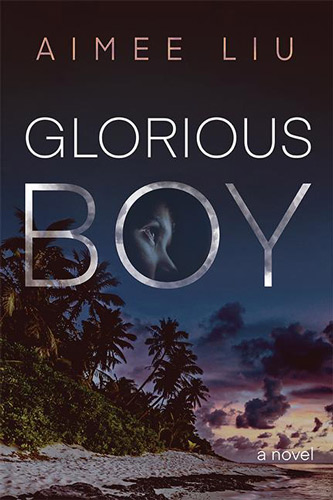
Aimee Liu’s Glorious Boy opens in 1942 but begins in 1936 New York when Claire, aspiring anthropologist, meets Shep, a young British doctor being punished by exile.

They soon marry and depart to his duty station, Port Blair on the Andaman Island in the Bay of Bengal. The island serves as a penal colony for political prisoners. Once there, they hire eight-year-old Nalia to care for their mute son, Ty, the “glorious boy” of the title. Nalia possesses “an uncanny ability to intuit whatever Ty wanted or needed—as if the children had their own spiritual language.”

As British hold over the island falters, they hear more of Japan’s rallying cry of “Asia for Asians.” When Rangoon, a neighboring Burmese city, falls, civilians are ordered out of Port Blair with a single standing order: “No local borns or natives.” Because of the connection between Nalia and young Ty, Claire promises to find a means of getting Nalia off-island as soon as she can.

During the departure, however, an earthquake separates Claire from the rest of her family along with Nalia. Not long after, the island falls to the Japanese army as Nalia hides Ty among the tribes Claire began studying. Claire dedicates herself to retrieving her son. Meanwhile Ty becomes more a creature of the jungle than a child of the empire, seeming to straddle the “primitive” and “civilized.”

Glorious Boy documents the awakening of Claire as nations dive into World War II. She learns “that ambition is worthless unless it’s rooted in human understanding” and is astute enough to understand that “prosperity” is often aligned with, almost synonymous with “slavery,” that those who are politically powerful and connected find deference to their desires, and that “colonial rules [prove to be] a tyranny of injustice, not to mention ineptitude.”


Glorious Boy by Aimee Liu. Red Hen Press, May 2020.

Reviewer bio: Bill Cushing writes and facilitates a writing group for 9 Bridges. His poetry collection, A Former Life, was released last year by Finishing Line Press.

Buy this book through our affiliate Bookshop.org.
Mayur Kalbag’s Mythical Voyage

Adventures of Poorna by Mayur KalbagGuest Post by Durdana Parveen

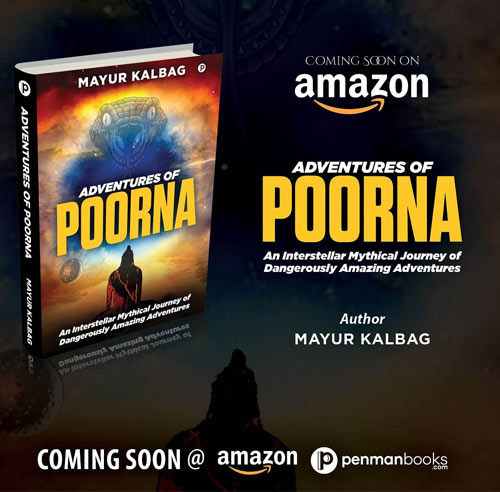
Adventures of Poorna, the debut work of Mayur Kalbag, is a mythical voyage of the protagonist Rudra who wakes up in a strange land and meets a monk there. Upon his guidance, he sets out on a long quest, gains a lot of mystical skills, discovers his past life, meets his guru and friends, and finally finds the purpose of his rebirth.

The plots and characters were so beautifully described that they could get struck in the reader’s mind forever. The concept of shivering was distinctly redefined in many instances. I personally liked the way author personified leaves and thorns in the story: “leaf would bite if not asked permission to pluck it” and “the thorns oozed ink when touched the leaf.” The colored water and the vapors that monk offers Rudra to quench his thirst and satiate his hunger were fascinating.

In addition to the detailed description of the plots and characters the author also mentions many rituals: havan pooja, third eye opening, appearance of Lord Shiva, and many other spiritual and mystical events.

The title is apt to the story and the author’s intentions and scope of the book are well-depicted. Although the story is little lengthy, I like the book as a whole and I’d recommend it for all the readers.


Adventures of Poorna by Mayur Kalbag. Penman Books, March 2020.

Reviewer bio: I’m Durdana Parveen Mohammad from India. I am currently pursuing my MBBS and writes poems, quotes, and reviews as a hobby at my own instagram page: @ifathwrites.

Anthony Doerr Gives Nature a Voice

Guest Post by Christy O’Callaghan

My happy place in life is also my happy place in words—with nature. The book could be the history of a plant or tree or the natural world herself playing a character. That old conflict of man vs. nature is such a large part of our world, even when we’re under stay at home orders during a pandemic. I have a hardy appreciation for those who approach this subject well.  Anthony Doerr is one of them.

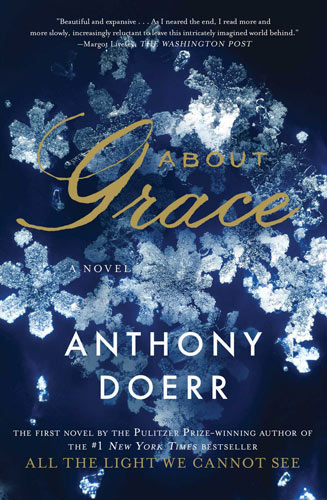
If I admire an author, I’ll read all their works. All the Light We Cannot See was terrific and deserves the praise it receives. Last summer, someone recommended The Shell Collector, and that was what hooked me to Doerr’s work. Most recently, I have been escaping into the frozen winters of Alaska and the tropical island days of the Caribbean in About Grace. In each location of the book, nature is not only an element setting a mood outside of the window. She’s a mighty character.

We follow David Winkler, who studies water, especially snow, and the younger Naaliyah, who studies insects and crustaceans. Our third main character has her own agenda. “The wind assumed its voice: moaning against the window, humming around the roof corners; hissing through drafts. It whispered about darkness, about the coming shadows. Let go, it said, let go.”

Doerr evokes the power and cyclical rhythm of nature, seasons, and time. Even with characters who live in reverence of the natural world, they can’t compare with her. She exists not in the service of people but has her own story to tell.


About Grace by Anthony Doerr. Simon & Schuster, October 2015

Reviewer bio: Christy O’Callaghan lives in Upstate, New York.  Her favorite pastimes include anything in the fresh air.  For her blog and writing, go to christyflutterby.com.

Sponsor Spotlight: Fiction Southeast

Fiction Southeast is all about flash fiction. The online journal shares new fiction on a rolling basis, easily accessible on electronic devices.

A feature I’m especially fond of recently is their Flash Audio Series. I’ve had no attention span for reading while sheltering in place, but these audio versions of flash fiction do the work for you and are great to play in the background while making dinner, relaxing in the tub, gardening out in the yard—a welcome voice to accompany whatever you’re up to.

The MFA at Florida Atlantic University

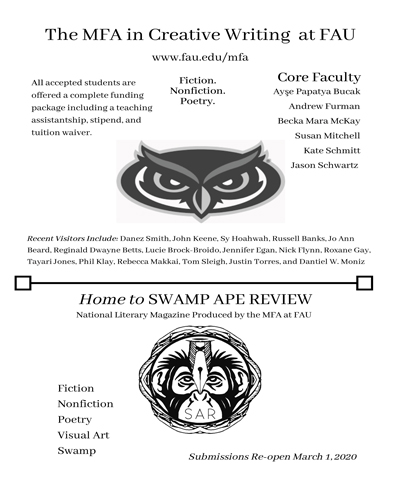
Florida Atlantic University MFAFlorida Atlantic University’s MFA program offers concentrations in fiction, creative nonfiction, and poetry. All accepted students are offered a complete funding package including a teaching assistantship, stipend, and tuition waiver. Core faculty include Ayşe Papatya Bucak, Andrew Furman, Becka Mara McKay, Susan Mitchell, Kate Schmitt, and Jason Schwartz. Students have the opportunity to work on national literary magazine Swamp Ape Review.

Event :: Summer 2020 Writers Institute at Washington University in St. Louis

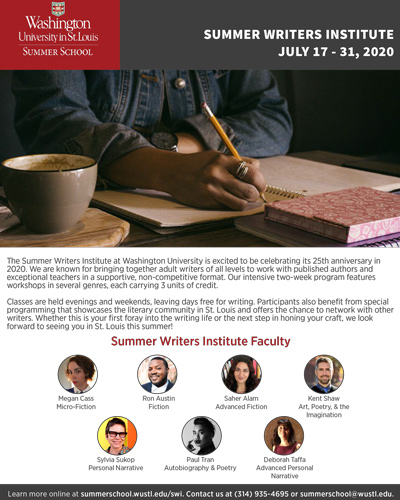
They are monitoring the current situation, but are hopeful the Summer Writers Institute will be able to happen as planned. This annual event brings together many of St. Louis’ finest writers to share their expertise with students who are serious about developing their writing. This year celebrates their 25th anniversary. The Institute is an intensive two-week program featuring workshops in fiction, micro-fiction, poetry, and personal narrative. Deadline to register is July 16. The Institute will run July 17 through 31. summerschool.wustl.edu/summer-writers-institute

James McBride Offers a Moment of Happiness

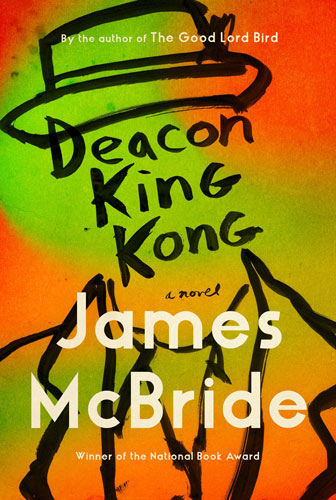
Deacon King Kong by James McBrideGuest Post by Liz Bertsch

My pleasure reading is typically done at night, in bed with my Kindle. Mid-pandemic, however, reading has become less a pleasure and more an exercise in mindfulness as my mind drifts towards panic about my family, the world, and my zany and delightful middle-school students. I begin and then abandon many a book, just like my students, because who has time to waste on a book that doesn’t hold you?  And then James McBride’s Deacon King Kong stumbles into view, and any book bold enough for that title is something I’ll consider.

McBride’s novel centers on a crime that takes place in and around a Brooklyn housing project in 1969 when a drunken and elderly character named Sportcoat pulls out a gun and shoots a 19-year-old drug dealer.  The crime occurs early afternoon, and although the audience for the shooting in the housing project is young drug dealers, older churchgoers, janitors, and undercover police, the crime reverberates in the surrounding quiet Brooklyn neighborhood of mob bosses and organized criminals. McBride’s novel is part Greek tragedy, police procedural, crime thriller, and there is a bit of ghosty stuff thrown in for good luck.

The nicknames of McBride’s characters are hilarious, and while reading, I think of my students who would delight in encountering the character of Sister T.J. Billings affectionally known as Bum Bum, and Hot Sausage, a friend of Sportcoats.  And in a vignette when church folk tell stories of Sportcoat’s many near-death experiences, and describe the time, “He went “fatty boom bang!” I laugh and keep on reading because I care about Sportcoat, and I’m happy.


Deacon King Kong by James McBride. Penguin Random House, March 2020.

Reviewer bio: Liz Bertsch teaches in an independent school on the East End of Long Island.  Her essays have appeared in a variety of arts and literary journals.

Buy this book through our affiliate Bookshop.org.
Want to Read a Plague Book?

Guest Post by Bill Cushing

Although best known for his Dune series, Frank Herbert’s 1982 book The White Plague may be just what the doctor ordered these days.

In a nutshell, Dr. John Roe O’Neill, an American biophysicist visiting Ireland on a research grant, witnesses his wife and twin sons killed from an IRA bombing. To say he “loses it” would be a serious understatement. The first chapter opens with an ancient Irish curse—“May the hearthstone of hell be his bed rest forever”—and Herbert delivers fully on this hex from there.

O’Neill returns to the states, isolated and vengeful, and decides that since a political cause took his wife and children from him, he would reciprocate. Designing a genetic virus that does not affect men but kills females, he adopts the name “The Madman,” releasing his biological scourge on the world by infecting low denomination bills.

Once released, the plague destroys the world in short order, causing whole nations to collapse, even forcing the Vatican to relocate to Philadelphia. As the world descends further into self-isolated tribes killing anyone approaching, Scotland Yard conducts its hunt for “The Madman.”

However, this is not simply the story of investigators trying to locate and capture The Madman. That is there, of course, but there is much more.

Like Thomas Mann’s allegorical Magic Mountain—where he uses a tuberculosis sanitarium as a vehicle for examining European nations on the edge of World War I, Herbert uses this book as a means to study nations and their peculiarities. It also offers the author an opportunity to study people’s reactions to the direst of situations as well as their use and pursuit of power.

At fewer than 500 pages, The White Plague offers a much more restrained analysis of such behavior as is seen in the massive Dune series.


The White Plague by Frank Herbert. 1982.

Reviewer bio: Bill Cushing writes and facilitates a writing group for 9 Bridges. His poetry collection, A Former Life, was released last year by Finishing Line Press.

Sponsor Spotlight :: Del Sol Review

Originally started in 1997 under the name of “Editor’s Picks,” Del Sol Review has transformed from highlighting select work from print journals to being its very own literary magazine. Contributors include Maxine Chernoff, Paul West, Linh Dinh, Holly Iglesias, Deborah Olin Unferth, Michael Martone, and Daniel Bosch.

Del Sol Review accepts unsolicited works of speculative fiction, poetry, prose poetry, creative nonfiction, short stories, and flash fiction year-round. They love works containing unique and interesting subject matter.

Their latest issue, No. 24, is the Richard Basehart Issue. This contains fiction by Joe Kowalski, Zeke Jarvis, Glen Pourciau, Debbie Ann Ice, Evan Steuber, Jenny Drummey, Andrew Stancek, Richard Leise, Risa Mickenberg, Joseph Couchet, Robert Miltner, Ron Riekki, and Mark Walling; and poetry by Michael Salcman, Nancy Botkin, Wendy Barker, Hilary Sideris, Rich Ives, and Nish Amarnath.

I love the little snippets they put with their issues: “Carnivores. Astonomy. Zsa Zsa Gabor Geeks.” or “Innocent, flight, teeth, yecch, and more!”

Wonderful Book of Laughter, Family, Heartbreak

Guest Post by Doug Mathewson

I watched a TED Talk by Luis Alberto Urrea, and like most TED talks I agreed with every word, but five minutes later I couldn’t remember a one of them. What did stay with me was how smart and well-spoken Urrea was. He has better than a dozen books to his credit, both fiction and nonfiction, as well as numerous awards including a Pulitzer Prize nomination on 2005.

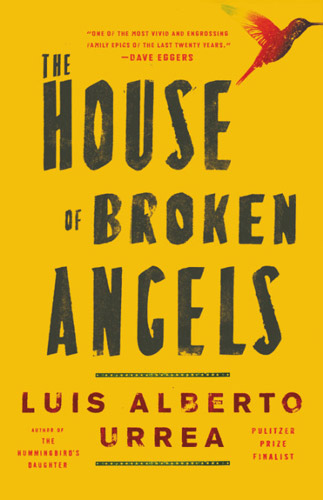
House of Broken Angels is a wonderful book of laughter, family, and heartbreak. Elderly and beloved Mamá has died and grand funeral is planned. The funeral coincides with patriarch Big Angel’s birthday, and he is terminally ill. Big Angel can’t last much longer; his condition worsens daily. The very extended de La Cruz family on both sides of the California – Mexico border comes together for a large farewell party to honor Mamá and Big Angel.

More and more family arrives, and there is food, and there is laughter, but old grievances too. Some to be resolved and forgiven, others as fresh and venomous as ever. New feuds emerge as well. Obscure relatives and friends materialize. Estranged relatives hold back, unsure how they will be received, the pros and cons of reestablishing family contact an ever shuffling deck of emotions. A successor must be chosen for Big Angel, and the logical choice refuses the role.

I loved the world of this book and the de La Cruz family in all of its engaging glory: the romances, the shifts in power, the unresolved mysteries, stories of benevolence, stories of grief and need. The quirky details will make you smile, and the big ideas of the book are very moving and real.


The House of Broken Angels by Luis Alberto Urrea. Little, Brown and Company, March 2018.

Reviewer bio: Doug Mathewson is the Founding Editor of Blink-Ink. His own writing can be found at: www.little2say.org.

Buy this book through our affiliate Bookshop.org.
Earn Your MA Near Some of the Country’s Best Beaches

Earn your MA with an emphasis in Creative Writing in the vibrant city of Mobile, near some of our country’s best beaches. Tuition waivers and assistantships are available as are additional scholarships for excellence and summer creative writing projects. Home of the Stokes Center for Creative Writing. Students who enroll in the program full time, can complete it in four semesters. There are also part time and evening coursework options. For more information, visit our website: www.southalabama.edu/colleges/artsandsci/english/.

The Secret Garden: Animal Charmer vs. Mansplainer

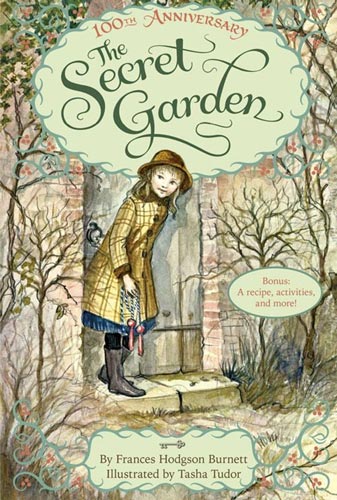
The Secret Garden by Frances Hodgson BurnettGuest Post by Dawn Corrigan

I’ve been rereading some of my favorite books from childhood, a form of comfort food. I recently reread The Secret Garden by Frances Hodgson Burnett. Here are my observations.

I was both annoyed by and somewhat seduced by the Christian Scientist / Science of Mind content in the final chapters, which I don’t remember from my many childhood readings of the book, probably because I didn’t understand the context back then.

I liked Dickon much better this time around—he was a little pious for my taste when I was 10. In fact this time he was my favorite character, though Mary was a close second.

When the focus shifted to Dickon in the middle of the book, I was convinced Mary had a crush on him, and was annoyed when I went to Goodreads and learned that in the 1987 made-for-TV movie, Dickon is killed in WWI and Mary marries Colin. But then I got to the Colin part and realized those movie makers were on to something. Mary’s crush shifts to Colin pretty quickly, signaled by her description of each boy in turn as “beautiful.” After she calls Colin beautiful, Dickon starts to fade into the background. I approve of Mary’s boy craziness but disapprove of her choice, which shows she’s still locked into the caste system. Colin is okay, and I’m glad he gets better, but the better he gets the more of a pompous mansplainer he turns out to be. Dickon only provides information when it is asked for. And it’s always on target, and never overly verbose. Plus: Animal Charmer!

At the end of the book, Dickon disappears altogether, and even Mary fades into the background. As Colin gets well, he looms over everything. The ending is not as good as the beginning because we get more Science of Mind and mansplaining and less plot and garden and fewer delicious secrets.


The Secret Garden by Frances Hodgson Burnett. 1911.

Reviewer bio: Dawn Corrigan‘s poetry and prose have appeared widely in print and online. She works in the affordable housing industry and lives in Myrtle Grove, FL.

Buy this book through our affiliate Bookshop.org.

The Common- Spring 2020

The Common - Spring 2020

The Common’s Spring 2020 issue released today. Inside the issue: an Arabic Portfolio from Sudan with work by Andel-Ghani Karamalla, Ishraga Mustafa Hamid, Bwader Basheer, Jamal Aldin Ali Alhaj, Mustafa Mubarak, and more. Also in this issue is fiction by Thoraya El-Rayyes, Catherine Buni, Bina Shah, and others; essays by A. Kendra Greene, Suraj Alva, and Tanya Coke; and poetry by January Gill O’Neil, Emily Leithauser, Megan Pinto, Mira Rosenthal, Tara Skurtu, John Freeman, marcus scott williams, and more.

Able Muse – Winter 2019

In this issue, find essays by Edward Lee and Tony Whedon; a photographic exhibit from artists around the world on the theme “Hunt”; poetry by Daniel Galef, Len Krisak, Katie Hartstock,  Hailey Leithauser, and more. Featured in this issue are the 2019 Write Prize for Poetry winners and finalists and the 2019 Write Prize for Fiction Winner. Find a full list of contributors at the Able Muse website.

Into the Void Introduces #LittleReadings

Online and print literary magazine Into the Void introduces a new series today: #LittleReadings. They contacted past contributors to their journal to submit a video of them reading their work and received an overwhelming response. If you have had work published in their journal, they hope you consider submitting a reading as well.

The first piece in the series is Charlie Scaturro reading his flash fiction piece “Perfect Blue Circles” which was published in their recent issue, #15.

They hope to release a few pieces a week with a weekly roundup newsletter.

Richly Evocative Historical Narrative

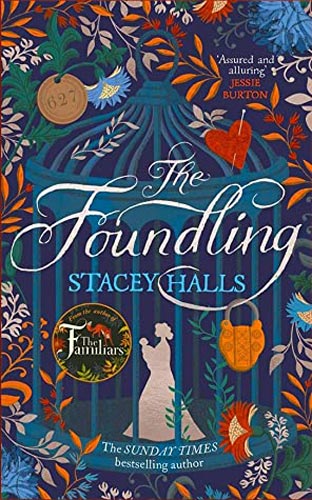
The Foundling by Stacey HallsGuest Post by M.C. LeBrun

The Foundling is Stacey Halls’s much-anticipated second novel. Like her debut The Familiars, we are placed in a world where patriarchal powers dictate the mores of the day and women must use their wits to regain their autonomy. This is a tale of two mothers situated on either side of the class divide in 18th century Georgian London but connected by a child, born to one and raised by the other.

Bess Bright, newly delivered of her illegitimate little girl, is passing through the gates of a Foundling home, ushered along in a line of destitute mothers in various states of despair. There is little time for recovery from trauma, heartbreak, and physical pain when a lack of coin means a life on the streets. For the next six years, Bess does all she can to muster together the money she needs to bring her daughter home for good. However, when the time comes, she discovers her child missing, claimed by another who has stolen Bess’s identity.

From the vivid descriptions of Bess’s life on the streets hawking shrimp and sideswiping lecherous hands, we are introduced to Alexandra Callard, an orphan and widow whose vulnerability is more easily disguised by her wealth and power. Agoraphobic and distrustful of the world, Alexandra tightly controls every aspect of her existence and that of her child, Charlotte. Compulsively repressive and lacking in maternal instinct, Alexandra struggles to understand the needs and desires of Charlotte as separate from her own. When Alexandra is finally coerced to permit the presence of a nursemaid in her child’s life, it is then these women’s worlds collide.

An entangled story of juxtaposed dichotomies unfolds: wealth and poverty, power and deprivation, the expressed and suppressed. We the readers are moved from one subjective reality to the other, playing judge to their choices and witnessing the powerlessness of the child at the center of it all. What makes a good mother? Stacey Halls’s finely tuned and richly evocative historical narrative transports us to another era to explore this very modern question.


The Foundling by Stacey Halls. Manilla Press, February 2020

Namwali Serpell’s Chorus of Voices

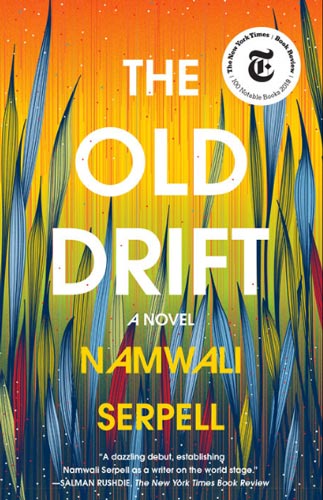
The Old Drift by Namwali SerpellGuest Post by Olga Zilberbourg

I’ve just finished The Old Drift by Namwali Serpell. It took me about six weeks to read it—it’s a big book, and I’ve had snippets of time. What I loved about it is the way it moved from being a historical narrative into science fictional territory, creating something of an alternative reality for Zambia’s near future. I don’t really know any other novel that does this movement in quite this way. The story is told by a chorus of voices, each of whom is engaging in their own way, and another fascinating way about this book is the unexpected way they come together at the end. I still need to mull it over.


The Old Drift by Namwali Serpell. Hogarth, May 2020.

Reviewer bio: Olga Zilberbourg’s fiction has appeared in Confrontation, World Literature Today, Narrative, Outpost 19’s Golden State 2017 anthology, and others. She co-hosts the weekly San Francisco Writers Workshop.

Buy this book through our affiliate Bookshop.org.

Words. Water. Woods: Write on the River.

**The Chesapeake Writers’ Conference is keeping a close eye on the current situation and as of now still plans on holding their annual June conference.**

Spend the first week of summer on the St. Mary’s River! The 9th Annual Chesapeake Writers’ Conference offers an immersive experience featuring daily workshops with accomplished faculty in fiction, poetry, creative nonfiction, and songwriting; a diverse schedule of craft talks, lectures, panels, and readings; a youth workshop for high school students; and a Teachers’ Seminar for educators. All levels welcome. www.smcm.edu/events/chesapeake-writers-conference/
View the full April eLitPak here.

Some Fun Stuff

Guest Post by Bill Cushing

Okay, we’re all stuck indoors for the duration, so I’ve used the opportunity to get to some books I’ve not read. However, occasionally I like returning to a guilty pleasure—whether it’s a movie or book. Here are two such recommended books.

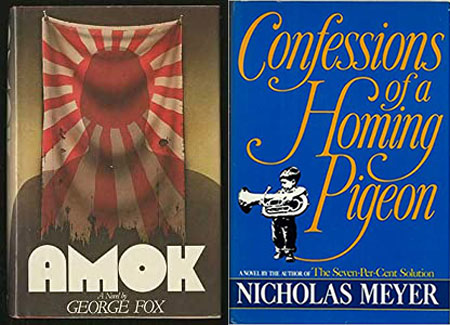
Although George Fox wrote several novels, Amok remains my favorite; the ride is such fun that I can now breeze through in about two hours. The story isn’t new by any stretch: a Japanese soldier still fights WWII in the Philippines during the 1970s. Hell, even Gilligan’s Island did that one, but it’s the way Fox constructs his story that makes this version so interesting.

For example, he begins by noting that the word “amok” began as a noun. Now, there’s a hook. Additionally, Fox’s story is so cinematic that I was casting it during my first reading some 40 years ago.

When Nicholas Meyer moved from writing scripts and novels (Time After Time and The Seven Percent Solution stand out) to directing films, I felt a sense of loss to the world of letters. Not that I blame the man, and he is actually responsible for two of the better Star Trek films (The Wrath of Khan and Undiscovered Country), so there was an upside.

But his novel Confessions of a Homing Pigeon offers one of the best coming-of-age books around. An orphaned boy of acrobat parents moves to Paris with his paternal uncle. He’s taken from the morally ambiguous relative to Chicago after his mother’s family decides he needs a “proper upbringing.” Quickly tiring of that suburban grind, he decides to return to the beloved uncle and makes his way back to France in a novel quite accurately described as “charming.”

Meyer is a great writer, and this may be his greatest yet least known book.


Amok by George Fox. 1978.
Confessions of a Homing Pigeon by Nicholas Meyer. Dial Press, January 1981.

Reviewer bio: Bill Cushing writes and facilitates a writing group for 9 Bridges. His poetry collection, A Former Life, was released last year by Finishing Line Press.

We Still Have Books – Christopher Chambers Reads Eduardo Halfon

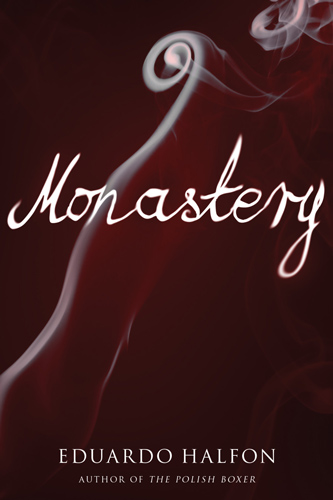
Monastery by Eduardo HalfonGuest Post by Christopher Chambers

I discovered Eduardo Halfon in a used bookstore, not so long ago but long enough ago that used bookstores were open and one was able yet to indulge in the decadent past-time of browsing. Halfon’s novel The Polish Boxer caught my eye. I bought it and read it, and then purchased the other two books of his that have been translated into English (all handsomely published by Bellevue Literary Press).

I began Monastery in solitude amid the pandemic. Upon completing it, I experienced the uncanny feeling of when the lights come up after the end of good film and you walk out of the theater into the world, now dark, perhaps raining, and it seems like a strange and different world as you emerge from the world of the film (another of those experiences no longer available to us). We still have books though, and reading as a strategy for survival. I’m slowly emerging from the world of Monastery and I’m in no particular hurry to leave it behind. I’m resisting for the moment reaching for Mourning, the next of his books which awaits on the shelf alongside a selection from the lovely NYRB reprint series, some of which also await reading, some re-reading.

Halfon has said that he’s only writing one book, and everything he publishes is just part of it, as if each book he writes is another chapter. Mourning awaits me, the next chapter of this ongoing book. And I await Mourning, which I suspect will become necessary in the coming weeks and months as we proceed further into this century and all it has in store. Robert Bolaño once said: “The literature of the twenty-first century will belong to (Andrés) Neuman and to a handful of his blood brothers.” Eduardo Halfon is among that number.


Monastery by Eduardo Halfon. Bellevue Literary Press, February 2014.

Reviewer bio: Christopher Chambers is editor of Midwest Review, and author of Delta 88, a small book of very short fiction. He lives in Madison, Wisconsin.

Buy this book through our affiliate Bookshop.org.

Wordrunner eChapbooks – 2020

Wordrunner eChapbooks - April 2020

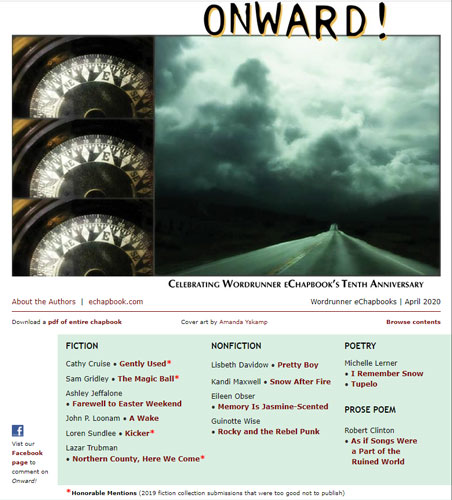
The title and cover art for Wordrunner eChapbook‘s 2020 anthology reflect a future more uncertain than usual, as well as hopefulness as we intend to publish more excellent writing in the next decade. Fiction by Cathy Cruise, Sam Gridley, Ashley Jeffalone, Lazar Trubman, and more; nonfiction by Lisbeth Davidoff, Kandi Maxwell, and others; poetry by Michelle Lerner and a prose poem by Robert Clinton.

Orson’s Review

Orson’s Review - April 2020

The new issue of Orson’s Review is out. In this issue: “Mia” an excerpt by Kayla Eason, “Run Over Dog” by Brian Moore, “The Kushcopia” by Jordan Dilley, “The Little General,” by Joyce Polance, and “Four Years Later” by Michael Bourne.

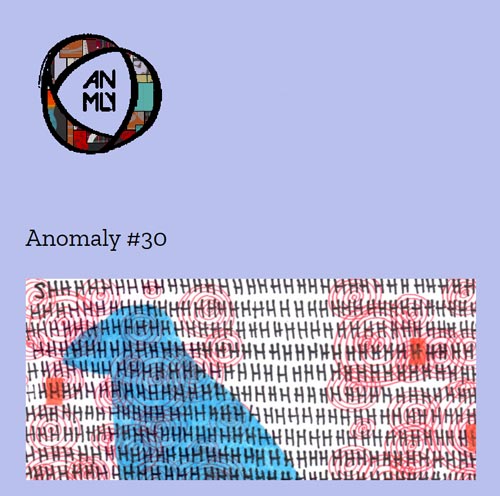
Anomaly – No 30

Anomaly - April 2020

The latest issue of Anomaly is out. In this issue: comics by Mita Mahato, Kimball Anderson, Jason Hart, and more; fiction by Monica Macansantos, Feliz Moreno, and more; poetry by Turandot Shayegan, Rodney A. Brown, María Lysandra Hernández, Jacq Greyja, Hussain Ahmed, Hari Alluri, Gabrielle Spear, Fargo Tbakhi, Derek Berry, Ashely Adams, and more; and translated work by Zsuka Nagy, Yan An, João Luís Barreto Guimarães, and others.