Home » NewPages Blog » Page 89

NewPages Blog

At the NewPages Blog readers and writers can catch up with their favorite literary and alternative magazines, independent and university presses, creative writing programs, and writing and literary events. Find new books, new issue announcements, contest winners, and so much more!

The Secret Garden: Animal Charmer vs. Mansplainer

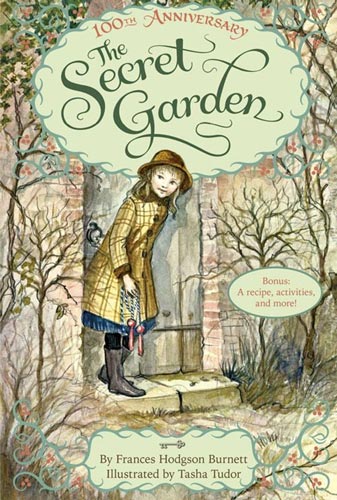
The Secret Garden by Frances Hodgson BurnettGuest Post by Dawn Corrigan

I’ve been rereading some of my favorite books from childhood, a form of comfort food. I recently reread The Secret Garden by Frances Hodgson Burnett. Here are my observations.

I was both annoyed by and somewhat seduced by the Christian Scientist / Science of Mind content in the final chapters, which I don’t remember from my many childhood readings of the book, probably because I didn’t understand the context back then.

I liked Dickon much better this time around—he was a little pious for my taste when I was 10. In fact this time he was my favorite character, though Mary was a close second.

When the focus shifted to Dickon in the middle of the book, I was convinced Mary had a crush on him, and was annoyed when I went to Goodreads and learned that in the 1987 made-for-TV movie, Dickon is killed in WWI and Mary marries Colin. But then I got to the Colin part and realized those movie makers were on to something. Mary’s crush shifts to Colin pretty quickly, signaled by her description of each boy in turn as “beautiful.” After she calls Colin beautiful, Dickon starts to fade into the background. I approve of Mary’s boy craziness but disapprove of her choice, which shows she’s still locked into the caste system. Colin is okay, and I’m glad he gets better, but the better he gets the more of a pompous mansplainer he turns out to be. Dickon only provides information when it is asked for. And it’s always on target, and never overly verbose. Plus: Animal Charmer!

At the end of the book, Dickon disappears altogether, and even Mary fades into the background. As Colin gets well, he looms over everything. The ending is not as good as the beginning because we get more Science of Mind and mansplaining and less plot and garden and fewer delicious secrets.


The Secret Garden by Frances Hodgson Burnett. 1911.

Reviewer bio: Dawn Corrigan‘s poetry and prose have appeared widely in print and online. She works in the affordable housing industry and lives in Myrtle Grove, FL.

Buy this book through our affiliate Bookshop.org.

Unique & Refreshing Poems by Tyler Dempsey

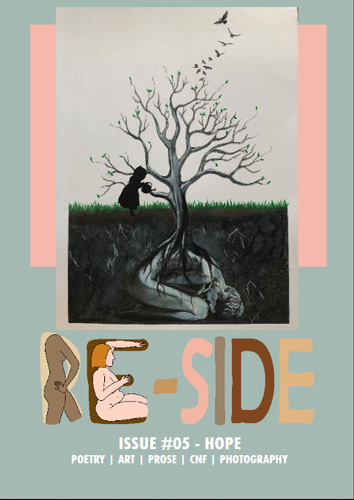
Re-Side Issue 5Guest Post by C.L. Butler

The other day while combing the world of literary magazines I came across something both unique and refreshing. I’m referring to Tyler Dempsey’s two poems most recently published in Re-Side Magazine Issue 5. These pieces use erasure poetry crafted from letters from Dempsey’s brother Travis Dempsey, who has been serving a prison sentence since 2009 in Oklahoma.

His poem “protein” captures the woes of the incarcerated for the outside world to hear. It draws attention to the role of economics in prisons to deal with basic everyday needs like nutrition. In “150MphWinds,” Dempsey points to his brother’s everyday observations. He finds the crux between complex and the dignity of simplicity by again showing what we take for granted.

While Tyler Dempsey is the curator of these poems, the words present a unique voice filled with legitimacy for the reader. It feels as if Dempsey’s brother is talking himself, creating a poetic mirroring of these letters. I chose to review these poems to not only produce more reviews on indie authors, but also to bring the attention of the privileged to the art coming from those with the least amount of civil liberties.


Reviewer bio: C.L. Butler is an African American and Dutch poet, historian, and entrepreneur from Philadelphia based in Houston, TX. In 2017 his poem Laissez Faire was published by The Bayou Review. In 2019 he published academic research with the Journal of International Relations & Diplomacy.

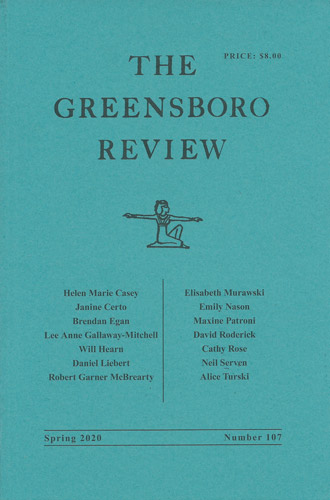
The Greensboro Review – Spring 2020

Greensboro Review - Spring 2020

In this issue: the Robert Watson Literary Prize-winning story, Brendan Egan’s “War Rugs,” and Prize-winning poem, Emily Nason’s “Sertraline,” as well as an Editor’s Note from Terry L. Kennedy and new work from Helen Marie Casey, Will Hearn, Daniel Liebert, Robert Garner McBrearty, Elisabeth Murawski, Maxine Patroni, Alice Turski, and more. Read more at The Greensboro Review website.

The Common- Spring 2020

The Common - Spring 2020

The Common’s Spring 2020 issue released today. Inside the issue: an Arabic Portfolio from Sudan with work by Andel-Ghani Karamalla, Ishraga Mustafa Hamid, Bwader Basheer, Jamal Aldin Ali Alhaj, Mustafa Mubarak, and more. Also in this issue is fiction by Thoraya El-Rayyes, Catherine Buni, Bina Shah, and others; essays by A. Kendra Greene, Suraj Alva, and Tanya Coke; and poetry by January Gill O’Neil, Emily Leithauser, Megan Pinto, Mira Rosenthal, Tara Skurtu, John Freeman, marcus scott williams, and more.

Able Muse – Winter 2019

In this issue, find essays by Edward Lee and Tony Whedon; a photographic exhibit from artists around the world on the theme “Hunt”; poetry by Daniel Galef, Len Krisak, Katie Hartstock,  Hailey Leithauser, and more. Featured in this issue are the 2019 Write Prize for Poetry winners and finalists and the 2019 Write Prize for Fiction Winner. Find a full list of contributors at the Able Muse website.

Into the Void Introduces #LittleReadings

Online and print literary magazine Into the Void introduces a new series today: #LittleReadings. They contacted past contributors to their journal to submit a video of them reading their work and received an overwhelming response. If you have had work published in their journal, they hope you consider submitting a reading as well.

The first piece in the series is Charlie Scaturro reading his flash fiction piece “Perfect Blue Circles” which was published in their recent issue, #15.

They hope to release a few pieces a week with a weekly roundup newsletter.

Indie Bookstore Check-In

Have you checked in on your local indie bookstore lately? Contribute to fundraisers, order books for delivery or curbside pick-up, or just send a supportive message to see how they’re doing while they’re closed to the public.

You can use the NewPages Guide to Literary Magazines to find stores in your area in the United States and Canada. The status of what services they’re providing is constantly changing, so it’s good to keep seeing what’s up if you’re able.

A Multilayered Achievement

Yellow House by Sarah BroomGuest Post by Andrea Roach

I am reading Sarah M. Broom’s The Yellow House, a memoir about generations of family and place (New Orleans, pre & post-Katrina, and their family homes). One of the things that I like about this book is the artful way the author brings the reader into what could be an extremely confusing story, with so many characters and the landscape of New Orleans, by initially laying it out like a map: this is where my neighborhood and my house fit into the history of NOLA, and here’s a blueprint of my relatives leading to me. She refers to Katrina as The Water and so, like the Yellow House, makes it its own complicated character. It’s a multilayered achievement that connects history, politics, race, culture, disaster, and identity, while also telling the ways in which we become our homes and our homes become us. I’d recommend!


The Yellow House by Sarah M. Broom. Grove Press, August 2019.

Reviewer bio: Andrea Roach is a writer of memoir, essays, and creative nonfiction. She received her MFA in Creative Writing from Lesley University and was a finalist for The Writer’s Room of Boston Fellowship Award.

Buy this book through our affiliate Bookshop.org.

Richly Evocative Historical Narrative

The Foundling by Stacey HallsGuest Post by M.C. LeBrun

The Foundling is Stacey Halls’s much-anticipated second novel. Like her debut The Familiars, we are placed in a world where patriarchal powers dictate the mores of the day and women must use their wits to regain their autonomy. This is a tale of two mothers situated on either side of the class divide in 18th century Georgian London but connected by a child, born to one and raised by the other.

Bess Bright, newly delivered of her illegitimate little girl, is passing through the gates of a Foundling home, ushered along in a line of destitute mothers in various states of despair. There is little time for recovery from trauma, heartbreak, and physical pain when a lack of coin means a life on the streets. For the next six years, Bess does all she can to muster together the money she needs to bring her daughter home for good. However, when the time comes, she discovers her child missing, claimed by another who has stolen Bess’s identity.

From the vivid descriptions of Bess’s life on the streets hawking shrimp and sideswiping lecherous hands, we are introduced to Alexandra Callard, an orphan and widow whose vulnerability is more easily disguised by her wealth and power. Agoraphobic and distrustful of the world, Alexandra tightly controls every aspect of her existence and that of her child, Charlotte. Compulsively repressive and lacking in maternal instinct, Alexandra struggles to understand the needs and desires of Charlotte as separate from her own. When Alexandra is finally coerced to permit the presence of a nursemaid in her child’s life, it is then these women’s worlds collide.

An entangled story of juxtaposed dichotomies unfolds: wealth and poverty, power and deprivation, the expressed and suppressed. We the readers are moved from one subjective reality to the other, playing judge to their choices and witnessing the powerlessness of the child at the center of it all. What makes a good mother? Stacey Halls’s finely tuned and richly evocative historical narrative transports us to another era to explore this very modern question.


The Foundling by Stacey Halls. Manilla Press, February 2020

Namwali Serpell’s Chorus of Voices

The Old Drift by Namwali SerpellGuest Post by Olga Zilberbourg

I’ve just finished The Old Drift by Namwali Serpell. It took me about six weeks to read it—it’s a big book, and I’ve had snippets of time. What I loved about it is the way it moved from being a historical narrative into science fictional territory, creating something of an alternative reality for Zambia’s near future. I don’t really know any other novel that does this movement in quite this way. The story is told by a chorus of voices, each of whom is engaging in their own way, and another fascinating way about this book is the unexpected way they come together at the end. I still need to mull it over.


The Old Drift by Namwali Serpell. Hogarth, May 2020.

Reviewer bio: Olga Zilberbourg’s fiction has appeared in Confrontation, World Literature Today, Narrative, Outpost 19’s Golden State 2017 anthology, and others. She co-hosts the weekly San Francisco Writers Workshop.

Buy this book through our affiliate Bookshop.org.

Leading Readers Back Into the Sun

A Heartbreaking Work of Staggering Genius by Dave EggersGuest Post by Kelsey Owen

Lately, I’ve been finding solace in rereading A Heartbreaking Work of Staggering Genius by Dave Eggers. Written to be read like a novel, Eggers’s genre-splicing memoir follows him through becoming a parent by proxy to his eight-year-old brother after the sudden losses of both parents.

What’s so enduring about this book is how, on the surface, Eggers embodies the pessimism and acid-reflux-irony of postmodernism, but he swiftly and frequently undercuts his own nihilism by exalting the constructive power of familial bonds and solidarity between characters—or, real people. Character-ish people. The narrative style itself draws on the ironic, self-aggrandizing voices of writers like David Foster Wallace, sharing the same undercurrent of desire to locate and create meaning in the seemingly vapid and obscene.

Eggers’s competing aspirations to distinguish himself from others and assimilate into something greater than himself makes his journey both intense and darkly humorous, but Eggers’s often last-minute refusals to abandon the silver-lining, his enduring sentimentality amid existential and physical destitution, never fail to lead you back out into the sun.


A Heartbreaking Work of Staggering Genius by Dave Eggers. Vintage, February 2001.

Reviewer bio: Kelsey Owen is an editorial assistant at Under the Gum Tree.

Buy this book through our affiliate Bookshop.org.

Tupelo Press Recent Releases and BOGO Sale

Tupelo Press presents two recent releases, Shahr-e-jaanaan: The City of the Beloved by Adeeba Shahid Talukder, and our latest printing of Maggie Smith’s “Good Bones” onto broadsides. Also be sure to check out the Tupelo Press BOGO sale going on at tupelopress.org. View the entire April eLitPak Newsletter here.

Shocking, Elegiac, Revelatory

How We Fight for Our Lives by Saeed JonesGuest Post by Evan White

I’ve been reading the memoir How We Fight for Our Lives by Saeed Jones. What I like about the book is this: the story of a young, gay black man growing up in the south could go any number of expectedly tragic ways. And in the hands of a lesser writer, a story like Jones’s might have fallen prey to the unrelenting misery that is so often a substitute for poignancy. As it stands, however, How We Fight for Our Lives clips along without stopping to cry, and it’s this clear-eyed observation—this cataloguing of experience, and, by implication, the self—that makes Jones’s story by turns shocking, elegiac, and revelatory. Plus, he’s funny.


How We Fight for Our Lives by Saeed Jones. Simon & Schuster, October 2019.

Reviewer bio: Evan White is a graduate of the University of California, Davis. White co-founded Absurd Publications and published the anthology, All the Vegetarians in Texas Have Been Shot, in addition to the creative journal The Oddity.

Buy this book through our affiliate Bookshop.org.

Words. Water. Woods: Write on the River.

**The Chesapeake Writers’ Conference is keeping a close eye on the current situation and as of now still plans on holding their annual June conference.**

Spend the first week of summer on the St. Mary’s River! The 9th Annual Chesapeake Writers’ Conference offers an immersive experience featuring daily workshops with accomplished faculty in fiction, poetry, creative nonfiction, and songwriting; a diverse schedule of craft talks, lectures, panels, and readings; a youth workshop for high school students; and a Teachers’ Seminar for educators. All levels welcome. www.smcm.edu/events/chesapeake-writers-conference/

View the full April eLitPak here.

Some Fun Stuff

Guest Post by Bill Cushing

Okay, we’re all stuck indoors for the duration, so I’ve used the opportunity to get to some books I’ve not read. However, occasionally I like returning to a guilty pleasure—whether it’s a movie or book. Here are two such recommended books.

Although George Fox wrote several novels, Amok remains my favorite; the ride is such fun that I can now breeze through in about two hours. The story isn’t new by any stretch: a Japanese soldier still fights WWII in the Philippines during the 1970s. Hell, even Gilligan’s Island did that one, but it’s the way Fox constructs his story that makes this version so interesting.

For example, he begins by noting that the word “amok” began as a noun. Now, there’s a hook. Additionally, Fox’s story is so cinematic that I was casting it during my first reading some 40 years ago.

When Nicholas Meyer moved from writing scripts and novels (Time After Time and The Seven Percent Solution stand out) to directing films, I felt a sense of loss to the world of letters. Not that I blame the man, and he is actually responsible for two of the better Star Trek films (The Wrath of Khan and Undiscovered Country), so there was an upside.

But his novel Confessions of a Homing Pigeon offers one of the best coming-of-age books around. An orphaned boy of acrobat parents moves to Paris with his paternal uncle. He’s taken from the morally ambiguous relative to Chicago after his mother’s family decides he needs a “proper upbringing.” Quickly tiring of that suburban grind, he decides to return to the beloved uncle and makes his way back to France in a novel quite accurately described as “charming.”

Meyer is a great writer, and this may be his greatest yet least known book.


Amok by George Fox. 1978.
Confessions of a Homing Pigeon by Nicholas Meyer. Dial Press, January 1981.

Reviewer bio: Bill Cushing writes and facilitates a writing group for 9 Bridges. His poetry collection, A Former Life, was released last year by Finishing Line Press.
Choose kindness, Generosity, Compassion with Shanti Arts

Shanti Arts COVID19 ReponseShanti Arts, publisher of Still Arts Quarterly, has created a new page on their website just for responses to and thoughts on COVID-19. These pieces of writing and art show how to “choose kindness, generosity, and compassion” during these times.

Right now, readers can find art by MJ Edwards, poetry by Heidi Blankenship, photography by Joseph Murphy, and more. Writers and artists who want to contribute their own work can find out how at the website.

Every Cloud Has A Silver Lining

Cloud Upon the Sanctuary by Karl von EckartshausenGuest Post by Katie Anderson

The Cloud Upon the Sanctuary is a beautifully written series of letters about the evolution of humankind published in 1793. Karl von Eckartshausen describes the “mystery of the New Man” as the synthesis of an alchemical union between man and spirit, or man and God. This transformative art he explains must occur as the mystery teachings from ancient Greece, through a series of stages. This formula espouses an evolution of knowing thyself outwardly, then inwardly.

Eckartshausen illustrates the formula for the transformative art as one that confers wisdom at successive levels, but not as an undertaking belonging to an elite group. He had envisioned it as a spiritual pursuit that the whole of humankind would enter, not a secret practice known only to men in the lodges and salons of the eighteenth century. Eckartshausen uses biblical symbolism and allegory to express the philosophy of an esoteric spiritual counsel 55 years before the advent of Spiritualism and 102 years before Theosophy. This “interior community of light” in union with humankind, produces the illuminated community. Two archetypes embody the exoteric and the esoteric, the Priest and the Prophet, whose union produces the archetype of the illuminated man.

People are looking towards traditional and alternative forms of spirituality to find inner peace of mind. This is in response to the constraints of shelter orders and social distancing measures in place to cope with the Covid-19 pandemic. Quarantine has stripped away human social interaction, but it also has dissolved our illusions. We’re no longer comfortably numb. When there isn’t anyone to talk to, we listen to the silence and talk to ourselves. What might we learn in the interim?


The Cloud Upon the Sanctuary by Karl von Eckartshausen, edited by Isabel de Steiger. William Rider & Son, Ltd, 1909.

Reviewer bio: Katie Anderson is a historian and writer living in Troy, Missouri.  Her work has appeared in Eternal Haunted Summer and The Far Shining One.

NewPages Book Stand – April 2020

The April 2020 Book Stand is now up at NewPages! It’s important to continue supporting small and university presses, authors, and indie bookstores now by checking out new and forthcoming titles to keep you company at home. This month, we bring you five new featured titles.

Adelante by Jessica Guzman is the winner of the 2019 Gatewood Prize, selected by Patricia Smith who calls collection “unerringly fresh and restless.”

Barbara Sabol won the 2019 Sheila-Na-Gig Editions Poetry Manuscript Contest with Imagine a Town, studying the concept of home and longing to belong.

Sand Creek and the Tragic End of a Lifeway by Louis Kraft draws on the words and actions of those who participated in the events of the Sand Creek Massacre.

The Story I Am: Mad About the Writing Life by Roger Rosenblatt celebrates the art, the craft, and the soul of writing.

Danielle Vogel’s The Way a Line Hallucinates Its Own Linearity creates a latticework of repair and moves in the space between the poem and the essay.

You can learn more about each of these New & Noteworthy books at our website, and find out how to place your book in our New & Noteworthy section here: https://npofficespace.com/classified-advertising/new-title-issue-ad-reservation/.

Sponsor Spotlight: Qu Literary Magazine

Qu Literary Magazine - Winter 2020Qu Literary Magazine, published by the MFA Program at Queens University of Charlotte, publishes poetry, prose, and script excerpts from new and established voices. Writers are paid for their contributions: $100 per prose piece and $50 per poem.

For readers, past contributors have included Keija Parssinen and Jon Pineda.

Learn more about their submissions (opening soon) and more at their listing.

Soothing & Stinging – Poetry of Christina Fulton

Guest Post by Preston L. Allen

The poems in Christina Fulton’s exquisite debut collection, To the Man in the Red Suit, are ruminations on a life of the ironic, the beautiful, the poignant, and the bitter-sweet.  Prominent among the memories that are fuel for the fire of these poems are the poet’s childhood in New Jersey and the suicide of her workaholic father.  My favorite poem, an ode called “To My Father’s Confused and Empty Desk,” ends with the perfectly adroit enjambment of lines:

He only came back
to count your rings,

and kiss the scissors

good night.

Sometimes these pretty poems soothe, sometimes they sting, sometimes they fill your mouth with precious stones that you cannot chew but break your teeth on trying.  The poet uses no clichés but masterfully creates them: ‘I saw your lies bend’; ‘That imperfect field / where Jesus / taught the lilies to blush’; ‘You can jiggle / but can you bend?’  Long after you read this book, you will be quoting from it.


To the Man in the Red Suit by Christina Fulton. Rootstock Publishing, May 2020.

Reviewer bio: Preston L. Allen is a recipient of a State of Florida Individual Artist Fellowship and author of the novels Jesus Boy, All or Nothing, and Every Boy Should Have a Man. He lives in South Florida.

Looking Within Through Poetry

Them Last Visit by Chad AbushanabGuest Post by José Jiménez Vivaldi

Abuse, suicide, abandonment, and enough alcoholism to mimic a Bukowski novel, Chad Abushanab’s The Last Visit narrates his troubled past in a series of seemingly chronological scenes, each depicting the aforementioned themes. With the collection standing as an exploration into the depths of human pain, Abushanab leads the expedition with such introspection that it sets an example of bravery for its readers.

Though a poetry collection, The Last Visit reads like a novel. The pieces are narrative and contain lots of concrete detail. Most of them could stand alone and give the reader an understanding of Abushanab’s story, but to read only one poem is like viewing a complex image from just one angle. The poems tell different stories, and take different forms as Abushanab experiments with a variety of poetic vehicles, such as the ode, the ballad, the ghazal, and the elegy. However, they’re all are connected by their themes, which directly relate to his upbringing, as well as his struggles to cope with the scars of his past as an adult. Therefore, upon reading the collection in a linear manner, the reader develops a three-dimensional perspective of his story and family.

If there’s one message The Last Visit sends to its readers, it’s that the answers to the present can be found in the past, but the future is yours to define. Chad Abushanab did a wonderful job creating such an insightful piece of literature. Not only should writers aspire to shine a light at the darkness within themselves to create material the way he does, but readers should adopt similar methods of self-reflection to aid their personal growth.


The Last Visit by Chad Abushanab. Autumn House Press, March 2019.

Review bio: José Jiménez Vivaldi is part of this year’s graduating class at Loyola University Maryland.

Buy this book through our affiliate Bookshop.org.

Sponsor Spotlight: Leaping Clear

Leaping Clear - logoOnline magazine of the arts and literature Leaping Clear features artists and writers from around the world who work from dedicated meditation and contemplation practices. These include formal meditation, spiritual inquiry, prayer, integrated mind-body spiritual disciplines, dedicated communion with nature, philosophical reflections, and beyond.

Readers can enjoy an ad-free experience, and writers do not have to pay any submission fees to have their work read. Writers, take note: submissions open on May 1 and close at the end of the month, so you have some time to polish your work and send it over.

We Still Have Books – Christopher Chambers Reads Eduardo Halfon

Monastery by Eduardo HalfonGuest Post by Christopher Chambers

I discovered Eduardo Halfon in a used bookstore, not so long ago but long enough ago that used bookstores were open and one was able yet to indulge in the decadent past-time of browsing. Halfon’s novel The Polish Boxer caught my eye. I bought it and read it, and then purchased the other two books of his that have been translated into English (all handsomely published by Bellevue Literary Press).

I began Monastery in solitude amid the pandemic. Upon completing it, I experienced the uncanny feeling of when the lights come up after the end of good film and you walk out of the theater into the world, now dark, perhaps raining, and it seems like a strange and different world as you emerge from the world of the film (another of those experiences no longer available to us). We still have books though, and reading as a strategy for survival. I’m slowly emerging from the world of Monastery and I’m in no particular hurry to leave it behind. I’m resisting for the moment reaching for Mourning, the next of his books which awaits on the shelf alongside a selection from the lovely NYRB reprint series, some of which also await reading, some re-reading.

Halfon has said that he’s only writing one book, and everything he publishes is just part of it, as if each book he writes is another chapter. Mourning awaits me, the next chapter of this ongoing book. And I await Mourning, which I suspect will become necessary in the coming weeks and months as we proceed further into this century and all it has in store. Robert Bolaño once said: “The literature of the twenty-first century will belong to (Andrés) Neuman and to a handful of his blood brothers.” Eduardo Halfon is among that number.


Monastery by Eduardo Halfon. Bellevue Literary Press, February 2014.

Reviewer bio: Christopher Chambers is editor of Midwest Review, and author of Delta 88, a small book of very short fiction. He lives in Madison, Wisconsin.

Buy this book through our affiliate Bookshop.org.

Wordrunner eChapbooks – 2020

Wordrunner eChapbooks - April 2020

The title and cover art for Wordrunner eChapbook‘s 2020 anthology reflect a future more uncertain than usual, as well as hopefulness as we intend to publish more excellent writing in the next decade. Fiction by Cathy Cruise, Sam Gridley, Ashley Jeffalone, Lazar Trubman, and more; nonfiction by Lisbeth Davidoff, Kandi Maxwell, and others; poetry by Michelle Lerner and a prose poem by Robert Clinton.

Sponsor Spotlight: New Online Lit Mag Hole In The Head Review

Hole In The Head Review is a new online literary magazine founded in 2020 “on the perilous coast of Maine” where the “sun rises on the United States and darkness falls first.” Their debut issue, published earlier this year, features new works from Michael Hettich, Larkin Warren, Frankie Soto, Andrew Periale, Amy Young, Julia Wagner, Richard Heckler, Mawi Sonna, and Nancy Jean Hill.

Hole In The Head Review May 2020They are enthusiastic about publishing both new and established poets together on a quarterly basis. In fact, their next issue is slated for release on May Day. They listen for a strong voice and look for a clarity of vision.

“You need another literary journal like you need a hole in the head.” Yes, yes we do.

Anomaly – No 30

Anomaly - April 2020

The latest issue of Anomaly is out. In this issue: comics by Mita Mahato, Kimball Anderson, Jason Hart, and more; fiction by Monica Macansantos, Feliz Moreno, and more; poetry by Turandot Shayegan, Rodney A. Brown, María Lysandra Hernández, Jacq Greyja, Hussain Ahmed, Hari Alluri, Gabrielle Spear, Fargo Tbakhi, Derek Berry, Ashely Adams, and more; and translated work by Zsuka Nagy, Yan An, João Luís Barreto Guimarães, and others.

Escape Into Francis House

Francis House Issue 6Want to escape your home for a little while? Pay a visit to Francis House. Founded in 2017, this online literary magazine publishes issues known as “rooms” as well as print anthologies and chapbooks (“houses”). They publish poems of all shapes and sizes and especially love the oddly-proportioned and under-appreciated.

Their latest Room features work by Rose DeLeon, Aaron El Sabrout, Robin Gow, and Ashley Cline.

Books from the Past Warning Us of the Present

Hot Zone by Preston & Blood Work by TuckerGuest Post by Leland Davidson

As COVID-19 has ravaged this world effecting many emotionally and physically, the emotions of how governments are handling are telling as well. Two books show a serendipitous attitude we are dealing with today as a society, while also showing history repeating itself.

One of these is The Hot Zone by Richard Preston, which gives a in depth story and research on Ebola. The book is based around different stories detailing where it came from, how it spread, and close call to a pandemic that almost ravaged the United States. What makes this book so chilling are the stories that took place in the 1980s and 90s in the continent of Africa and United States, but are detailed examples of what we are seeing today. These stories range from the beginning of the disease’s origins showing how messing with nature can cause a pandemic, or how nonuse of safety measures will help spread the disease. This book is a chilling narrative of how history, disease, and panic is not new, which should be a lesson for all.

Blood Work: A Tale of Medicine and Murder in the Scientific Revolution by Holly Tucker details the history of blood transfusion in England and France in the 1600s, going into detail of its history and the people involved in its transformation. Showing medical science experiments of the time may seem crazy today, but it is still relevant in modern thinking. With current news stories of people selling snake oils or ways to cure COVID-19, we see similarities in the core belief of the time that blood from a cow transfused with a sheep will make a monster. The book shows how scientific, political, and religious clashes of the 1600s mimic today’s clashes. Tucker details the narrative that stopping science and medical experiments will not only stop breakthroughs but keep humans in the dark instead of forward thinking to a better life.


The Hot Zone by Richard Preston. Penguin Random House, June 1999.
Blood Work: A Tale of Medicine and Murder in the Scientific Revolution by Holly Tucker. W. W. Norton & Company, May 2012.

Reviewer bio: Leland Davidson, a native of East Tennessee, holds an M.A. in Conflict Resolution and Coexistence from Heller School at Brandeis University, 2020.

Buy this book through our affiliate Bookshop.org.

Lovely Use of Language

Night Boat to Tangier by Kevin BarryGuest Post by Doug Mathewson

I am a confirmed fan of Kevin Barry I enjoy his telling of a tale, his settings and plots, but it is his lovely and amazing use of language that wins me over. He is not for every reader, I’ll grant you that, but for those of us who enjoy the journey as much or more than the destination he is a delight.

The story of Night Boat to Tangier has our boys, two aging Irish gents Charlie Redmond and Maurice Hearne, in the old Spanish port of Algeciras. They are haunting the boat reception terminal in hopes of intersecting a specific passenger. She is Dilly Hearne, and intricately related to them both.

Through Maurice and Charlie’s charming recollections and reminiscences we learn of their shared history of violence, drug smuggling, betrayal, addiction, and madness. But here we are, on the other side of all that, as they wait for 23-year-old Dilly who they both truly love, and who may have done them wrong.


Night Boat to Tangier by Kevin Barry. Penguin Random House, September 2019.

Reviewer bio: Doug Mathewson regards himself as quite grand but actually is a most modest fellow who spends his days writing short fiction and working as Senior Editor for Blink-Ink which publishes the finest in contemporary 50-word fiction. More of his work can be found at www.little2say.org

Buy this book through our affiliate Bookshop.org.

Valuable Tool for Activists

Wading Right In by Catherine Owen Koning and Sharon M. AshworthGuest Post by Richie Swanson

Ever dreamt of saving turtles squashed on highways? Of creating clean water and carbon sequestration? Of undoing the havoc humanity has wrought upon nature? Then read Wading Right In. It interprets crucial science for the layman and sometimes reads like a novel, depicting wetland-loving characters irrepressibly driven to protect nature. Some wetland lovers save and incubate eggs from road-killed diamondback turtles and release hatchlings into the wild. Another knocks on doors with a rare spadefoot toad in hand and convinces a landowner to conserve its habitat. Another invents tidal gates made of olive barrels to restore a city’s impounded (and dying) saltmarshes. Others restore an eroding island, unloading 500 barges of sand and gravel by hand, growing their own native vegetation and enlisting 350 ninth graders to help plant a shoreline.

The wetland-loving scientists present themselves with humor. One describes sinking into freezing mud in the dark until a professor pulls her out. The book reveals nature’s genius: a fishing spider the size of a human hand has a waxy coating and hairs on legs that allows it to zoom through water as it turns prey five times its weight into “a sushi smoothie.” Wetland plants create their own air pipes and oxygen pumps, and beavers build mud piles and secrete scents that enable other beavers to know their nutritional health and kinship connections.

Authors Ashworth and Koning discuss the science of ecosystem services to assess mitigation, the legal process of compensating wetlands loss in one place by creating wetlands in another. The assessment involves water filtration, flood control, carbon storage, shoreline protection and species diversity—not dry details but valuable tools for activists. This book inspired me as much as Aldo Leopold and Rachel Carson.


Wading Right In: Discovering the Nature of Wetlands by Catherine Owen Koning and Sharon M. Ashworth. The University of Chicago Press, August 2019.

Reviewer bio: Richie Swanson’s novel First Territory depicts the Yakama War 1855-56. His short stories about Indian-white relations and bird-related nonfiction are republished from journals at richieswanson.com.

Buy this book through our affiliate Bookshop.org.

White Oleander: Like a Favorite Album on Repeat

White Oleander by Janet FitchGuest Post by Ashanté J. Ford

The rawness and compassion of “White Oleander” by Janet Fitch had me turning pages so fast that I was surprised when it was finished. This book read like a favorite album that I can’t stop listening to on repeat. It carried me into the deep despair and depression that comes with being an orphan child, and raised me like I was its own. White Oleander is a book I will never forget.

Fitch captures the bond of a mother and daughter like a photograph, while simultaneously weaving the implications of imperfection into their relationship. This renowned fictional story follows a young girl by the name of Astrid Magnussen into adulthood while she navigates how to grow up and deems her religion as “survival.” This novel captivated me in the same way poetry does. I wanted to listen to the brute advice Astrid’s mother gave and I wanted to fall into lust with every person that gave Astrid hope. Hope was a loose character in this book. It left as soon as it was near and pulled away every single time.

This novel has gained praise from the likes of Oprah Winfrey, and was even adapted into a film after it became a national bestseller in the early 2000s. I applaud this book for its versatility and creativeness. The themes of motherhood were depicted in such a poignant manner—they made me grovel and thank God for the woman that birthed me.


White Oleander by Janet Fitch. Hachette, September 2006.

Reviewer bio: Ashanté J. Ford is 21 years old. She is in college pursuing her bachelor’s degree in International Relations.

Buy this book through our affiliate Bookshop.org.

Traveling the World While at Home

Guest Post by June Calender

While “sheltering in place,” I’m taking a serious look at the natural world through what I’m reading.

I began with Robert Macfarlane’s nonfiction Underland which explores the world of fungi and root systems under forests then goes much, much deeper in caves all over the world. I am a claustrophobic and had many breathless moments but survived with a sense of awe.

That was followed by Richard Powers’s novel, The Overstory, which is about old growth forests and people trying to save them.

Trapped in my apartment, I have still been able to see many parts of the world in depth.


Underland: A Deep Time Journey by Robert Macfarlane. W. W. Norton & Company, June 2019.
The Overstory by Richard Powers. W. W. Norton & Company, April 2019.

Reviewer bio: June Calender retired to Cape Cod after 20+ years as an off-off-Broadway playwright in NYC. She now teaches writing skills at the Academy for Lifelong Learning at Cape Cod Community College. Her work has been published in various small journals.

Buy The Overstory and Underland: A Deep Time Journey through our affiliate Bookshop.org.

Eco-Poem Partnership

Tiger Moth Announcement

The Tiger Moth Review brings readers eco-poems in their biannual issues. But if you’re still wanting more, they have it. Partnering with the Centre for Stories, The Tiger Moth Review is working to bring a new, online collection of eco-poems to the journal’s website this year.

Editor Esther Vincent Xueming will mentor a group of Australian poets from the Centre, while the Centre’s creative director Robert Wood will provide workshops. This collaboration connecting the cultural ecologies of Perth and Singapore will introduce readers to new voices and create more understanding about our relationship to the world we live in.

Find out more about this partnership at The Tiger Moth Review’s website, and keep an eye out for these new eco-poems.

A “Love Letter” to Writing on Plague

The Decameron - Giovanni BoccaccioGuest Post by Bill Cushing

Where have you been all my life, Giovanni?

You’d think that, studying lit, I’d have read Boccaccio’s Decameron during my studies, but somehow, that was not the case. Feeling guilty about that, I bought a copy last year, and the timing couldn’t have been better than the present to actually read it.

Full disclosure: mine isn’t the complete text but 25 stories chosen for this edition, but I’m still glad to have gotten around to it at some point in my lifetime because—even with what appears to be a somewhat “clunky” translation—I regret the years of never having visited this work. I’ve long known how Boccaccio inspired Chaucer, after translating it into English, to write The Canterbury Tales, but readers can also see the influence that this has had on many future writers.

In the first story of day one, Boccaccio recounts tale of a conman wrangling near-sainthood from the Church, a character reminding me of Moliere’s Tartuffe with a trace of Nikolai Gogol’s Chichikov in Dead Souls.

And so it goes.

By the way, that plagiarism of Vonnegut is not accidental since his view of human behavior and character are here as well. One even sees traces of Shakespeare in these ribald, often downright dirty tales that are occasionally a dark but always fascinating peek into the human condition—something that hasn’t changed much despite all our other advances. Written in a style very much in the oral tradition of storytelling, Boccaccio’s narrators regale each other during a time of plague, proving how important “stories” are to our spiritual, cultural, moral as well as mental health.

Anyone willing to take a deep dive about 700 years back will find a worthwhile literary journey in these pages. Plus it’s easily found it online!


The Decameron of Giovanni Boccaccio by Giovanni Boccaccio.

Reviewer bio: Bill Cushing writes and facilitates a writing group for 9 Bridges. His poetry collection, A Former Life, was released last year by Finishing Line Press.
Inside The Ring

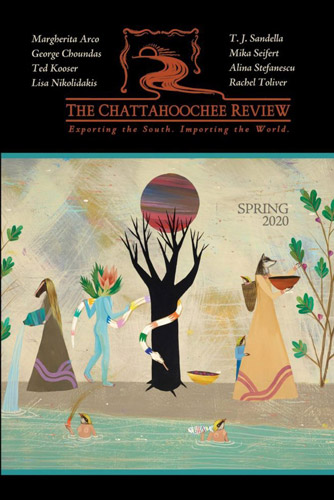
The Ring - April 2020Guest Post by Andrew Rihn

This month’s issue of The Ring magazine (“The Bible of Boxing”) straddles what has come to feel like two very distinct, almost distant, time periods. It arrived two days ago but, given the timeline for magazine publishing, most of the issue’s content covers events that happened roughly six weeks ago.

Example: the cover features Román “Chocolatito” González, hand raised in victory after his Feb 29 defeat of Khalid Yafai. Example: Robert “The Nordic Nightmare” Helenius is deemed “Fighter of the Month” for his upset over rising star Adam Kownacki on March 7.

I savor this issue of The Ring with a hastily cultivated sense of nostalgia; so much distance between that March to this April. Locked down in Ohio, it feels like time is telescoping away, these fights from another world, another life. Didn’t I just have friends over to watch Helenius vs Kownacki? Didn’t we share a pizza? Sit next to each other on the couch? How long ago was that?

There is some coronavirus coverage as well. An article titled “Standstill” opens with an arresting photo of an amateur bout being held in an empty stadium. And in “Voices from the Outbreak,” various fighters comment on how shutdowns and fight cancellations have upended their lives. “This is a time when we shouldn’t be talking about ‘We miss boxing,’” says recent Hall of Famer Bernard Hopkins. “This is a time we have to re-evaluate our good deeds and evil deeds.”

Known for responding to short questions with passionate, sometimes drifting monologues, Hopkins continues: “Ask someone you love how they’re doing. Ask someone about their dog.”


Reviewer bio: Andrew Rihn wrote Revelation, a book of poetry about Mike Tyson. He also writes The Pugilist, a monthly boxing column with a literary edge.

Our Haunted Past: On Molly McCully Brown’s Virginia State Colony for Epileptics and Feebleminded

The Virginia State Colony for Epileptics and Feebleminded by Molly McCully Brown. Guest Post by Kelly Williamson

In her remarkable debut, The Virginia State Colony for Epileptics and Feebleminded, Molly McCully Brown revisits the history of a state-run institution that sterilized patients without their consent, offering readers the opportunity to confront the dark realities of the eugenics movement. With a documentary approach, Brown bases the poems on the historical evidence she gleans from archival research. Exploring the perspectives of the colony’s caretakers, and patients, Brown pays tribute to an unacknowledged chapter from our nation’s dark history.

This collection serves as evidence of Brown’s curiosity and bravery in facing what she considered unknown and scary. Similarly, it can be an act of discovery for the reader as well. Readers might be alarmed to come across such wreckage that they once failed to notice. However, Brown invites readers to understand, rather than rebuking them for not knowing. Brown’s collection reminds us that poetry builds empathy that can raise the awareness needed to foster change.

Readers may have never heard of the Virginia State Colony for Epileptics and Feebleminded, a blind room, or known of the sterilizations posed as appendectomies in the state-run institution located in Virginia. Brown’s book allows readers to recognize that this lack of knowledge is a privilege, for the painful history that took life away from innocent girls is a history that must be known. Although much has changed, these poems can encourage us to understand ways in which our current society can do better. While it’s easy for readers to see the title and feel far removed from history, this collection of poems works to close that gap of separation, to use these imagined patients as windows into a haunting past.


The Virginia State Colony for Epileptics and Feebleminded by Molly McCully Brown. Persea Books, 2017.

Reviewer bio: Kelly Williamson is a senior at Loyola University Maryland minoring in writing. She has published poems in her school’s literary magazine, Corridors.

Buy this book through our affiliate Bookshop.org.

Relevant Reading for Everyone

Penguin Book of Migration Literature - Dohra AhmadGuest Post by Serenity Schoonover

As 68.5 million people currently live as displaced persons on the planet, a short, potent anthology on immigration, emigration, and asylum-seeking is relevant reading for everyone. The Penguin Book of Migration Literature: Departures, Arrivals, Generations, Returns showcases thirty writers’ artful examinations of striking out to start over, staying put despite instability, and even circling back to a country that disowned you.

Among established writers, Emine Sevgi Özdamar’s “The Bridge of the Golden Horn,” notes the wry negotiations of Turkish factory women in Germany: “the man made meatballs out of horses- we didn’t know that, because we couldn’t speak German. Meatballs were our mother’s favorite food.” Another, from Mehdi Charef’s “Tea in the Harem,” examines the volatile relationship between an Algerian mother and her son in France, both caught in the cross-hairs of identity crisis, “between two cultures, two languages, and two colors of skin.”

Emerging writer Djamila Ibrahim’s story, “Heading Somewhere,” laments an Ethiopian man’s marriage of convenience, a relationship based on leverage rather than love: “he resented Marianne her power. Divorce meant the loss of his permanent resident card, maybe even deportation.” Most unforgettable in the collection is Warsan Shire’s prose poem, “Conversations about Home (From the Deportation Center),” which begs the question: “Do you know how difficult it is, to talk about the day your own city dragged you by the hair?”

The power of this anthology, edited by Dohra Ahmad with a foreword by Edwidge Danticat, is its potential to be the first in a line of future works, literature that is willing to discuss, rather than dismiss or demonize, “people with deep histories-individuals as well as collective- that predate the migration, rather than newly created humans whose lives begin in a boat, plane or desert crossing.”


The Penguin Book of Migration Literature: Departures, Arrivals, Generations, Returns edited by Dohra Ahmad. Penguin Random House, September 2019.

Reviewer bio: Essays by Serenity Schoonover have aired on NPR, with book reviews appearing in Split Rock Review, Women’s Independent Press, CALYX, The Bookends Review, among others.

Buy this book through our affiliate Bookshop.org.

Ijeoma Oluo’s Call to Action

So You Want to Talk About Race by Ijeoma OluoGuest Post by C.L. Butler

Have you ever read a book and felt that it was actually a call to action? I have been fortunate enough to be able to take refuge in art while social distancing. I’ve read a variety of different books written by authors ranging from Ta-Nehisi Coates to Bram Stoker. One book that stood out to me was Ijeoma Oluo’s So You Want to Talk About Race. Oluo tells of her personal experiences as not only a Black woman, but also a queer woman, single mother, middle class, biracial feminist. I found this intersectional approach to be a metaphoric glass of ionized water. It’s the refreshing kick in the ass that society needs in order to come to terms with progress.

By adopting a multilayered intersectional lens, Oluo allows the reader to fully explore numerous alternate perspectives beyond their own. Oluo asserts that societal norms and social constructs including, but not limited to, patriarchy, misogyny, and heteronormativity dictate the world around us. In reading the book, I felt that the author had a true understanding that these topics are uncomfortable which provides an authentic vulnerability rather than a purely academic narrative.

Oluo provides a conversational manual for all backgrounds. She also owns her personal privileges throughout the book. Her work challenges skeptics to not only hear, but also feel her point of view. After reading So You Want to Talk About Race my eyes were opened even wider. We all need the dosage of reality that Oluo offers being a queer female of color.

So You Want to Talk About Race is the perfect read and cultural model for a 21st century audience. This book illuminates the aspects of patriarchy running rampant throughout various institutions. I highly recommend to it anyone looking to do more for inclusion.


So You Want to Talk About Race by Ijeoma Oluo. Seal Press, January 2018.

Reviewer bio: C.L. Butler is an African American poet, historian, and entrepreneur from Philadelphia based in Houston, TX. In 2017 his poem ‘Laissez Faire’ was published by the University of Houston-Downtown Bayou Review. In 2019 he published academic research with the Journal of International Relations & Diplomacy.

Buy this book through our affiliate Bookshop.org.

Green Mountains Review Launches Social Distance Reading Series

Social Distance Reading Series poetsLiterary magazine Green Mountains Review has partnered with the Vermont School to highlight writers whose book launches have been “snuffed out” by the COVID-19 pandemic.

They post new videos to their Social Distance Reading Series twice a week on Wednesday and Sunday so that authors can read from their newly released collections of poetry. Right now the focus is on writers whose book events were cancelled in the months of January through May.

You can currently find readings by Chard deNiord, Kathryn Nuernberger, Felicia Zamora, Philip Metres, Tommye Blount, Penelope Crazy, and Matthew Lipman.

Wade in the Poems of Maggie Paul

Scrimshaw by Maggie PaulGuest Post by Lynn Levin

Maggie Paul’s Scrimshaw gifts us with superbly crafted poems of graceful statement and gentle wisdom. I sense here a soul making peace with the near past and distant past as the speaker recollects mother, father, children, a lover, and others. Paul writes in “Linguistics,” a poem about some unspecified but insurmountable conflict between lovers: “So much goes on beneath / the surface that the tide never washes up.” Conflicts here are discreetly remembered and slantly alluded to. This is an approach I particularly admire as it counters much of the graphic rhetoric of pain we see in poems today.

A water motif runs through many of the poems, referencing ponds, streams, and the sea. There is both delight and melancholy in these poems, and the melancholy glows as burnished gold. Take for example the opening lyric “Trochilidae.” The poem compares a diminished girl to a tiny fragile bird who comes to “bring fire to the world.”

One of my favorite poems in the collection is “Watershed,” a metaphysical poem about the flow of life and time. This prose poem tumbles forth in a rush of figurative language describing the flow of water, which is “fragrant as a season, forthright as a calendar.” Paul has the ideal sense of an ending, landing her poems neither too definitively, nor too ambiguously. In “Looking Back,” a poem about doubt and written in a series of couplets that capture paradoxes and contradictions, she writes, “We thought we came for one thing / but really came for another.” The lyric ends, “And that thing we would have died for? / We’ll not die for it again.” These are poems of wise beauty. Wade in them.


Scrimshaw by Maggie Paul. Hummingbird Press, 2020.

Reviewer bio: Lynn Levin’s most recent book is the poetry collection The Minor Virtues (Ragged Sky, 2020).

Stephen King’s Novel of Hope and Resilience

The Stand by Stephen KingGuest Post by David Armand

My kids’ last day of school was on Friday, March 13, four weeks ago today. They left class that afternoon not knowing that they wouldn’t be seeing their friends or teachers again for who knows how long. They seem worried sometimes, confused. So am I. But we’ve finally been able to settle into somewhat of a routine here at home: we made a vegetable garden in the backyard last week, bought some baby chickens and built a brooder for them. It gives everyone something to do.

And I like to spend the first hour or so of each morning—when it’s still dark outside and quiet—reading before everyone else wakes up. I’ve always done this, but now the act seems more meditative, more important than it ever has before.

You see, the day after the schools closed and I went to working remotely from home, I picked up Stephen King’s The Stand from my bookshelf. It’s an old copy and the dust jacket is torn off, tucked between the yellowed pages as a bookmark, but still I’ve been reading it every day since all this started.

It’s a long novel, just over eight-hundred pages, and I’ve spent this last month reading it for what is now the third time (I read the unabridged version, which is over a thousand pages long, in 1998; then I read it again about fifteen years later).

But now, on this third read, it seems more poignant than ever: not necessarily because it’s about a plague that wipes out most of the human population, but more because it’s a novel about the inherent sense of hope that people tend to have, about the faith we place in the goodness of others—even in the darkest of times. Which is something to remember now more than ever.


The Stand by Stephen King. Anchor, 1978.

Reviewer bio: David Armand’s latest novel, The Lord’s Acre, is forthcoming this fall from Texas Review Press.
Buy this book through our affiliate Bookshop.org.

Tangible Acts of Resistance

Dictionary of the Undoing by John FreemanGuest Post by RS Deeren

John Freeman’s Dictionary of the Undoing, a collection of twenty-six alphabetical short essays, is a reclamation project, collating a “lexicon of engagement and meaning” for progressive political protest. Freeman sees language as “the one tool being vandalized before our very eyes” in the news, on social media, and in public spheres. Starting with “Agitate” and charging through words like “Citizen” and “Hope,” Freeman highlights the ways in which the meanings of single words have been split, twisted, or ignored until they are either used against us, like in the section “Police,” or until they lose much of their power, a notion present in the section “Vote.” Of particularly high import in a book filled with immediacy, are the sections on “I” and “You.”

In “I,” Freeman tackles the internet as used today: to promote and protect an image of ourselves, to ensconce the self, through algorithms and polishing of persona. The phone resembles a mirror and our capacity for seeing the world beyond the mirror, of hearing voices outside the echo chamber, has severely limited our compassion for one another. Freeman argues that this curation of the individual “I” keeps us from becoming a much more powerful “we” capable of bringing about social change. This pitting of my “I” against your “I”, keeps us fighting among ourselves and not against the powerful and wealthy who benefit from our infighting.
In “You,” the penultimate call-to-kindness, Freeman directs a challenge plainly to You, dear reader, to engage in “one act of resistance in the form of love . . . without restriction.” Freeman echoes the “I” section here, stating that to connect through kindness is a tangible act of resistance against a society that sells us an idea of the “I” who stands on their own.


Dictionary of the Undoing by John Freeman. Farrar, Straus and Giroux, November 2019.

Reviewer bio: RS Deeren received his BA from Saginaw Valley State University, his MFA from Columbia College Chicago, and is a PhD candidate at UW- Milwaukee. You can read his creative work at www.rsdeeren.com.

Buy this book through our affiliate Bookshop.org.

Terrain.org – April 2020

Terrain.org - March/April 2020

New on Terrain.org: fiction by Kelly K. Ferguson; nonfiction by Kristen Munson, Désirée Zamorano, Julian Hoffman, John T. Price, and Naomi Cohn; and poetry by William Woolfitt, Jon Davis, Cynthia Neely, John Saad, Jen Karetnick, Cate Lycurgus, Jennifer Bullis, and Cameron McGill.

Mom Egg Review – No. 18

Mom Egg Review - Spring 2020

The 18th annual edition of Mom Egg Review is here, with the theme of “Home.” Back in 2019, we conceived of an issue on the subject. Now, as we shelter in place, we experience new relationships with our dwellings. Is a home a place, a feeling, a center, a community? Mom Egg Review writers explore “Home” through the lens of motherhood.

Apple Valley Review – Spring 2020

Apple Valley Review - Spring 2020

Featuring new fiction from Timothy Kenny and poetry from Francesca Gargallo (translated from the Spanish by Dana Delibovi), Carol V. Davis, Robert L. Penick, Débora Benacot (translated from the Spanish by Margaret Young), Eric Stiefel, Trina Gaynon, Stan Sanvel Rubin, and Gail Peck. Cover photograph from Brooklyn by Solomon Laker. More info at the Apple Valley Review website.