
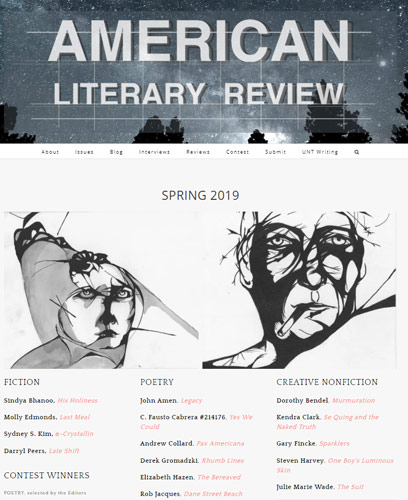
 In the latest issue, American Literary Review brings readers the winners of the annual ALR Awards. The 2019 winners feature Ellen Seusy in poetry, Cady Vishniac in fiction, and Julialicia Case in nonfiction.
Seusy’s “The Spiral Jetty” is an ekphrastic poem about Robert Smithson’s titular art piece. Seusy’s speaker compares Smithson’s creation with six-year-olds creating bowls from mud and spit, pointing out how “It’s the making that matters most,” even now that “we’re / out of breath, still running. Still tasting / dirt and salt. The work holds water, still.” It isn’t the finished product or the public reception that matters most—it’s the act of creating.
The narrator in Vishniac’s “Bumper Crop” faces the consequences he’s created for himself. The main character—bitter and a bit insufferable after his recent separation from his wife—encounters chickens on the way to the daycare where he works, an interruption to his usual day of hitting on his co-teacher, being too protective of his son who attends the daycare, and holding grudges against children. Vishniac crafts an entertaining story with a satisfying karmic ending.
Karmic endings also come into play in Case’s “The Stories I Do Not Know For Sure.” The nonfiction piece centers on Case’s former coworker David and his wife Sandra. The two concoct stories about their lives, stories that eventually fall apart, revealing muddled truths underneath. Case ends the piece reflecting on the stories we tell and the realities they create, recreate, or destroy. The gripping piece almost reads like a thriller, each paragraph revealing a new detail about Case’s story and the stories David and Sandra weave.
The winners of the ALR Awards are a great introduction to American Literary Review, and this year’s contest is currently open for submissions until October.
Review by Katy Haas
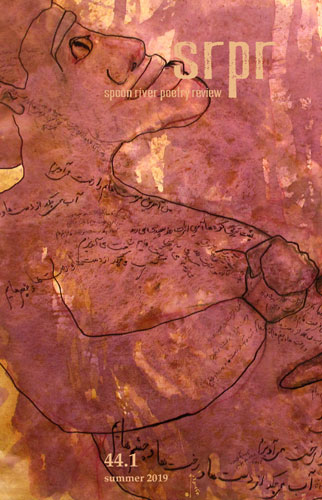 A recent series of poems by Jeannine Hall Gailey in the Spoon River Poetry Review is a testament to the tenacity of poetry and its poet. In her first chapbook, Female Comic Book Superheroes (Pudding House Publishing, 2005), I met Gailey as a stealthy kick-ass feminist poet. Her works were subtle but fierce, drawing character, voice, and reader into a collective sense of powerful control. Her following five books continued on this vein through recurring themes of mythology, fairy tale, feminism, science, science fiction, and the apocalypse. Through the years, I also kept up with her blog, where she shared her diagnosis of MS. But, as she first noted, back in 2013, “. . . I don’t want to define myself by this or any of the other weirdo health stuff I have. I am maybe a mutant, but I have a lot of good things in my life too.”
 Promising “stimulating, relevant, high-quality writing and art from across the world” focused on issues related to climate change, environmental justice, social justice, and, in the case of their upcoming second issue, resilience, Paperbark Literary Magazine is a stunning new annual of poetry, prose, and visual and multimedia art.
 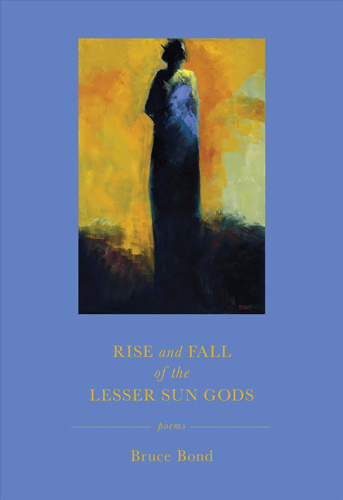 Perhaps it is because this was written in January, and in my part of the world, the temperature was hovering around 0 degrees. Maybe it is the hours I had spent hibernating and devouring hours of classic movies from the 1940s and 50s aired on TCM. Or maybe it’s simply the idea of a ‘radio in the sand’ emitting static and faint music from another place in the universe—Hollywood.
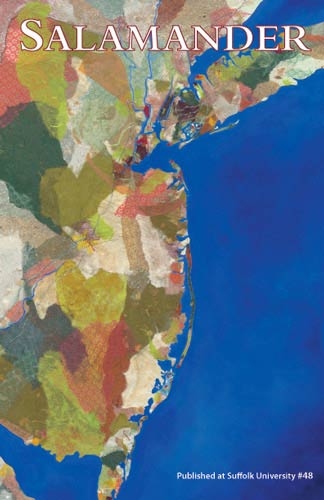 After twenty-seven years, Jennifer Barber has left her position as Editor-in-Chief of Salamander. In the Summer 2019 issue, readers can find a portfolio, edited by Fred Marchant, dedicated to Barber’s work with Salamander over the years.
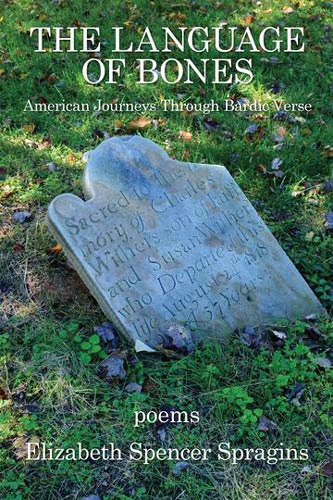 Elizabeth Spencer Spragins’ passion for bardic verse in The Language of the Bones is irresistible. I can’t imagine a writer who, after reading this, wouldn’t try her hand at it or even use this as a class text to inspire students. Though Spragins does not provide ‘guidelines’ for the forms she utilizes – four Welsh (cywydd llosgyrnog, rhupunt, clogyrnach, cyhydedd hir) and one Gaelic (rannaigheacht ghairid) – a Google search offers plenty of resources (including an article by Spragins herself).
 Cutting, strange, and daring are the words The Shore uses to describe the kind of poetry they seek to publish for its readership. Like the waters of lakes or seas or even rivers, the editors detail, “We want poems that push and ache and recede.” And like any beautiful and powerful shoreline, how could readers and writers not be drawn in?
  Crazyhorse Fiction Editor Anthony Varallo’s Editor’s Note to the Spring 2019 issue couldn’t be more timely. In it, he recounts a conversation with a colleague asking, “What do you do with all your books?”
 1st place goes to Rachael Uwada [pictured] Clifford of Baltimore, Maryland, who wins $2500 for “What the Year Will Swallow.” Her story will be published in Issue 106, the final issue of Glimmer Train Stories. This will be her first fiction publication.
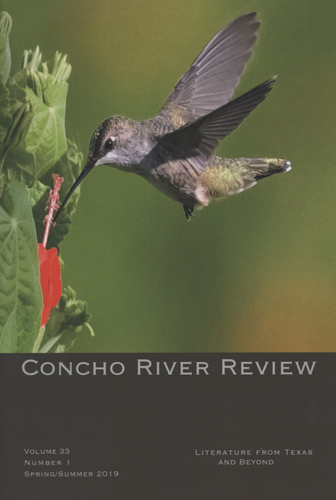 It doesn’t matter if you gravitate toward fiction, nonfiction, or poetry when cracking open a new issue of literary magazine—the Spring/Summer 2019 Concho River Review has you covered.
 Wish I could have been at this party: Ciclops Cyderie and Brewery in Spartanburg, SC created a beer release of “Sense and Sprucability – A Writer’s Tale,” based on a recipe by home brewer Jane Austen to celebrate the tenth anniversary of the Converse College Low-Residency MFA. At the same event, South 85 Journal, the semi-annual online literary journal published by the MFA program, welcomed Lisa Hase-Jackson [pictured] as their new Managing Editor. Hase-Jackson is herself a published poet and served as Review Editor of 85 South Journal in the past. Read more about the upcoming change here.
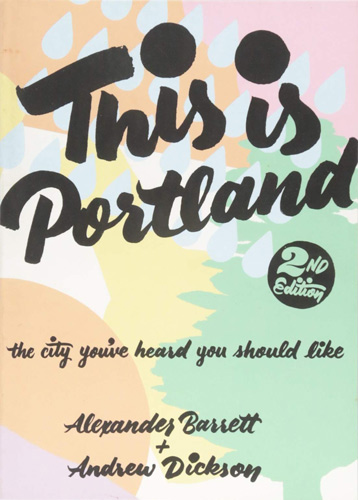 I walked into
 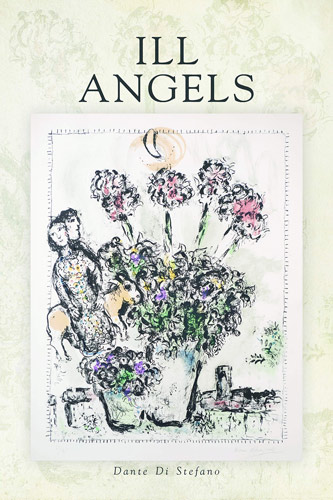 Dante Di Stefano creates a fascinating read of precise opinions and clever phrasing with poetry in his new book, Ill Angels. If I were to divide it roughly into subject chapters, one would be musicians, another would be portraits, then love poems to his wife, verses about America, and poems for his students. Throughout the book, a characteristic worthy of attention is his skill in giving fresh meaning to words.
 Moonflowers
 1st place
 Bending Genres online literary journal offers monthly online weekend genre workshops. For $111 each, writers can sign up for “Mutate Through the Five Elements: Flash Your Fleshy Pearls” July 12- 14 with Meg Tuite, “Opening the Back Door: Absurdism as a Way to Truth” August 23 – 25 with Nancy Stohlman [pictured], and “Human Typography: Sculpting Surprising, Broken – and Real – Characters for More Compelling Stories” September 20 – 22 with Robert Russell. For more information about each workshop and registration, click here.
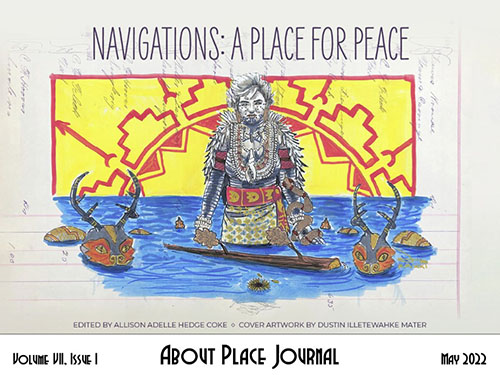 Published by the Black Earth Institute, dedicated to re-forging the links between art, spirit, and society, the May 2019 issue of About Place is themed “Dignity As An Endangered Species.”

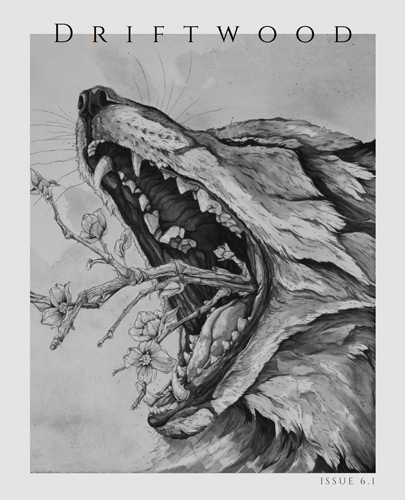 In 2018, Driftwood Press began accepting graphic work for their book publishing arm, and as readers wait for their chance to pick up a new graphic novel, they can check out the graphic work in the literary magazine. The current issue published at the start of 2019 features three selections in graphic works: “LaughTrack” by J. Collings, “The Salton Sea” by Cindy House, and “Émigré Animals” by Jason Hart.
 Adding an interview almost every month, Frontier Poetry has so far interviewed Kristin George Bagdanov of Ruminate Magazine, Rick Barot of New England Review, Chelene Knight of Room, Esther Vincent [pictured] of The Tiger Moth Review, Talin Tahajian of Adroit Journal, J.P. Dancing Bear of Verse Daily, Gabrielle Bates of Seattle Review, Melissa Crowe of Beloit Poetry Journal, Marion Wrenn of Painted Bride Quarterly, Hannah Aizenman of The New Yorker, Anthony Frame of Glass Poetry, Luther Hughes of The Shade Journal, Don Share of Poetry, Sumita Chakraborty of Agni, Jessica Faust of The Southern Review, and Kwame Dawes of Prairie Schooner.
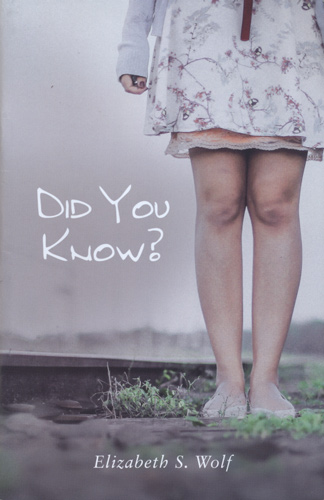 Subscribers to Rattle received a bonus with their Summer 2019 issue: Rattle Chapbook Prize winner Did You Know? by Elizabeth S. Wolf.
 The Spring 2019 issue of The Missouri Review includes the 2018 Jeffrey E. Smith Editors’ Prize Winners.
 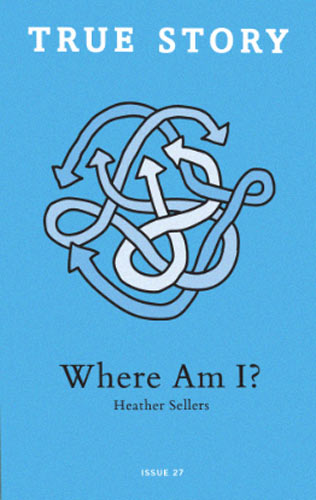 If my mother and I walk out of a store into the center of the mall or exit a building onto any town’s main street, there’s a 95% chance she’ll ask me which way we came from and which way we’re now headed. If we park in a crowded lot, she follows as I lead to her hidden car. When I’m with her, I am the navigator, the way-finder.
 The basic stories in much of our canon of literature are hardly subtle. Their power and wisdom come from the discoveries about human nature and behavior through characters and their struggles. Beware of pride-bound, stubborn, pigheaded leaders—yes and beware of the idea that the themes of classic literature are “irrelevant” today. The resiliency of literature comes also in the clear and perfect expression of the moments and moods of life through language, many examples of which cannot be forgotten—Hamlet with the skull of his jester, Keats and his nightingale, or the sheer poignancy of Nick Carroway at the end of Daisy’s dock, looking out on the green light, thinking “So we beat on, boats against the current, borne back ceaselessly into the past.”
 “People in glass houses should not throw stones”
 Cutthroat: A Journal of the Arts is collaborating with Black Earth Institute on the publication of a major anthology of contemporary Chicanx writers. Until August 1, 2019, they are accepting submissions of Chicanx poetry and prose from across the country.
 Winner for Fiction
 In response to the recent abortion bans in the United States, Jellyfish Review has been publishing a series of “Pro-Choice stories” with their usual selections. In the days surrounding the bans, my social media accounts exploded with people in my life coming forward with their own abortion stories, each of their needs and wants behind their choices unique. The Pro-Choice stories of Jellyfish Review mimic this: varying voices and points of view from different walks of life, all of them valid.
 The Courtship of Winds each issue asks five questions of writers whose work has previously appeared in the online publication. The Winter 2019 Digital Forum invited Perle Besserman [pictured], Sandra Kohler, Denise Kline, and Jennifer Page to respond to questions to discuss how they see the #MeToo movement now – post initial profound effect, post backlash, post Kavanaugh hearings, and post Christine Blasey Ford testimony.
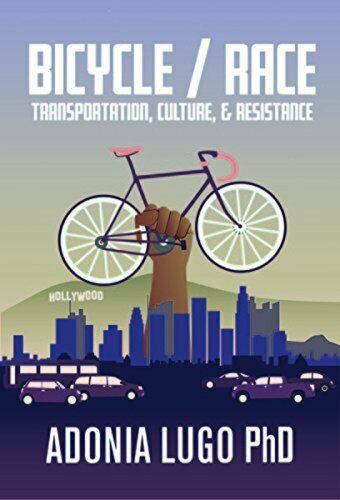 In “Bicycle/ Race: Transportation, Culture and Resistance,” Dr. Adonia Lugo brings her anthropology dissertation research into a readable and accessible book, documenting the intersection of race, transportation inequality and bicycling. As a mixed race Chicanx, having grown up in Orange County, California, Lugo explores resistance against car culture as well as her own place in bike activism. Where does she stand in a majority white-led movement? Lugo’s book forces readers to understand the stakes of cars versus bikes, with particular consideration to history, race, and who gets left behind.
  “In my view, writing, at least literary writing, is not just a matter of inventing out of whole cloth or drawing on things we remember, but also of accessing sought-for words and connections. Do we, when we’re writing, reach in to actively find the parts of our next sentences, or are those ‘given’ to us? It often feels like the latter, which naturally makes me wonder through what agency. As Joseph Brodsky wrote somewhere, life is a gift, and where there is a gift there must be a giver.”
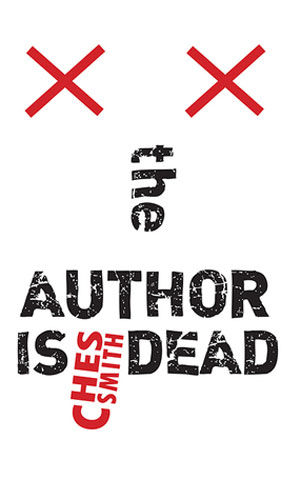 It’s nothing new for a novel’s key character to share his name with the book’s author. Past examples are Stephen King in Song of Savannah, Paul Auster in New York Trilogy, and Philip Roth in Operation Shylock. But Ches Smith’s protagonist, Ches Smith, is something apart and definitely a standout character in Smith’s new book, The Author is Dead. Try not to speculate on any detail in this book that might be drawn from the author’s life, except that it’s about a writer who writes a book titled The Author is Dead.
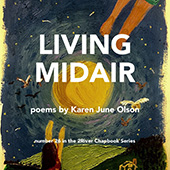 Living Midair by Karen June Olson is the newest offering in the 2River Chapbook Series. Numbering 26, these chapbooks are available open access online as well as free download using the PDF or “chap the book” feature which provides a booklet formatted print copy.
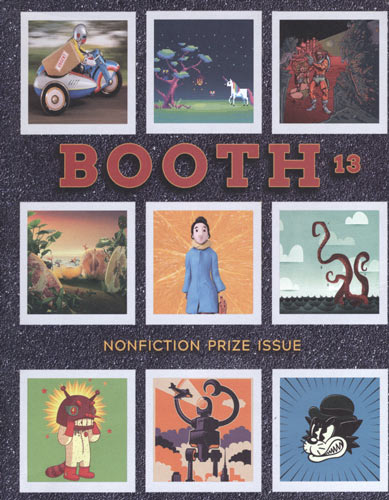 The cover of Booth’s Winter 2019 issue invites readers in with little square scenes of bright colors and caricatures, with text promising the Nonfiction Prize winners inside. Of the four pieces selected by Judge Brian Oliu, two touched me most: “A Fractured Atlas” by Alex Clark and “Remember the Earth” by Angelique Stevens.
 Poetry Winner
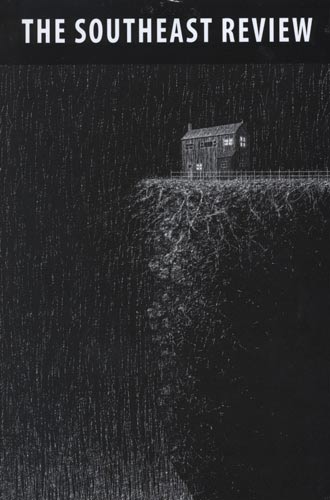 Spanning four pages of The Southeast Review (37.1), Tiana Clark’s “Gentrification” conjures up hidden details, the poem’s speaker talking in wisps, the ghosts of a summer past haunting the neighborhood in East Nashville where she used to live and which has now been gentrified. The speaker discusses the ways in which her body—a woman of color’s body—fits into this forgotten space:
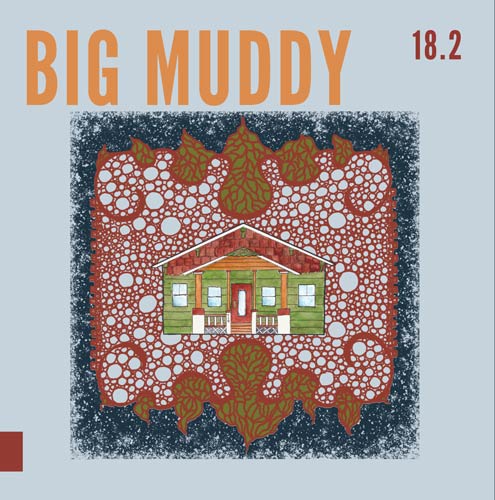 Big Muddy has proven to be one of my most favorite journals to read. The topics of its many stories and poems speak to that downhome, simpler type of life, even if sometimes it may not be a positive image or experience for those involved.
 The Spring 2019 issue includes fourteen tiny essays on a range of topics including ‘caregiving for a parent with dementia’ (ChrisGNguyen), finding a single cigarette butt in the driveway every day (GitaCBrown), a family’s welcome back “as if no time had passed” (MPMcCune2), going home “in my dreams” (sevans_writer), ‘a musician explaining his song title’ (ZippyZey aka Karen Zey – pictured), doing the hokey pokey so as not to look a fool (by ridiculoustimes) and memories stirred by listening to the news (mjlevan).
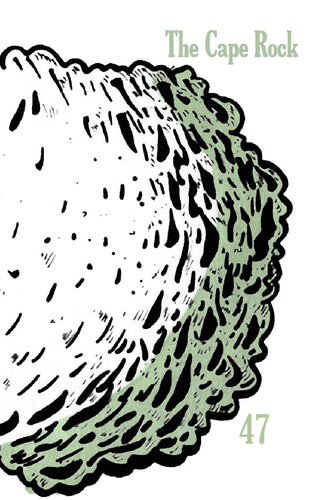 It only takes looking at some of the poem titles in The Cape Rock #47 to get that this slim volume published out of Southeast Missouri State University is poetry by and for the people: “Dad’s Skoal Can” and “Song of the Opossum” by January Pearson; “Toilet Cubicle” by Steve Denehan; “Trimming My Father’s Toenails” by Cecil Sayre; “Long Distance Dating for the Elderly” by Mark Rubin. Not meaning to be dismissive in perhaps attributing these works as common, the craft and skill exhibited in them speaks to the draw of the publication and the selective capabilities of a strong editorial staff.
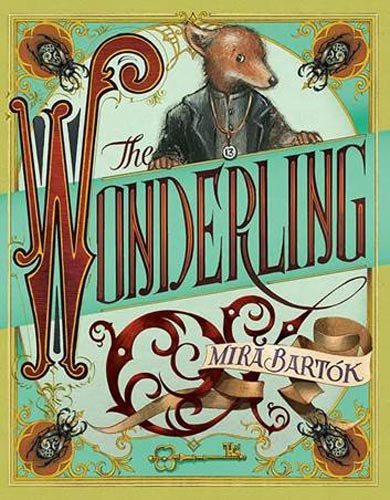 “Have you been unexpectedly burdened by a recently orphaned or unclaimed creature? Worry not! We have just the solution for you!” Welcome to the Home for Wayward and Misbegotten Creatures!
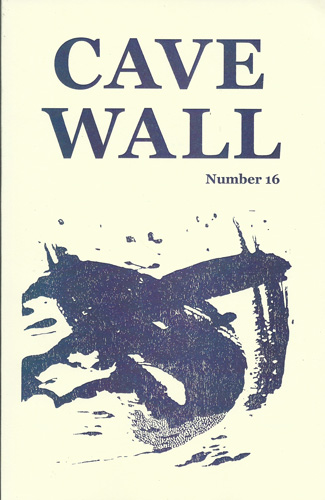 Cave Wall 15 includes a focus on revision. The ‘artwork’ for this issue consists of fifteen early draft images of some of the poems included. The cover art is actually Emma Bolden’s draft of “Easter Sunday.” Other authors whose drafts are included: Matthew Thorburn, Billy Reynolds, Chelsea Wagenaar, Jessica Cuello, Peter Kline, and Molly Spencer.
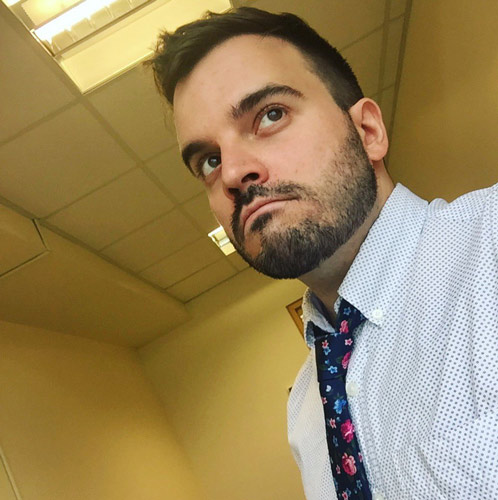 It was the illustration by Ricardo Bessa that originally drew me to Anthony Oliveira’s [pictured] short and poetic “Dayspring.” The image caught my eye as I scrolled down the front page of Hazlitt: browns and tans and reds, one man lying on another’s chest, their beards brushing; the embracing figures exude warmth and intimacy as sunlight filters through leaves above them. The story behind this depiction imagines (an unnamed) John, “the disciple whom he loved,” as Jesus’ lover in the days before the crucifixion.
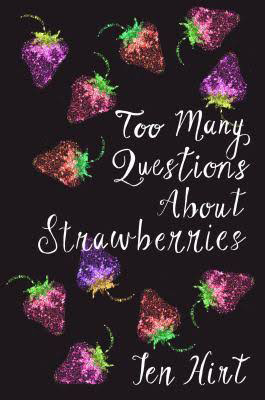 Brandi Pischke’s cover art of sparkly strawberries invites us into Jen Hirt’s book of poems, Too Many Questions About Strawberries. Can we expect a romp through a garden or farmer’s market? Not necessarily, though Hirt’s book takes us through fun, rowdy poems, as well as challenging ones that do, in some cases, concern plant life.
 There’s still a lot of summer left and many books titles to enjoy from Sync Audiobooks for Teens free summer program.
 The Summer 2019 issue of Rattle includes a “Tribute to Instagram Poets.” The editor’s preface explains that the poems were originally published on Instagram, which uses captions that are included along with the poems. The editors assert that the poems were selected based “on their own merits and not the popularity of their authors.”
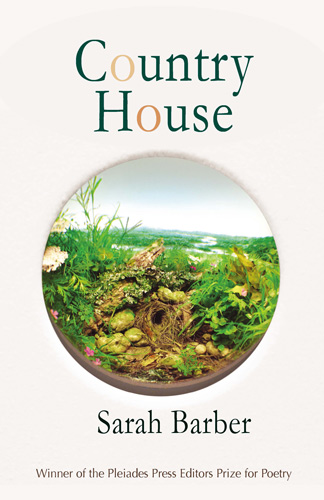 Knowing you can no longer build
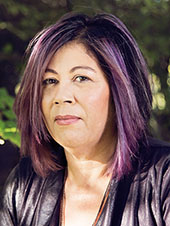 2018 Constance Rooke Creative Nonfiction Prize
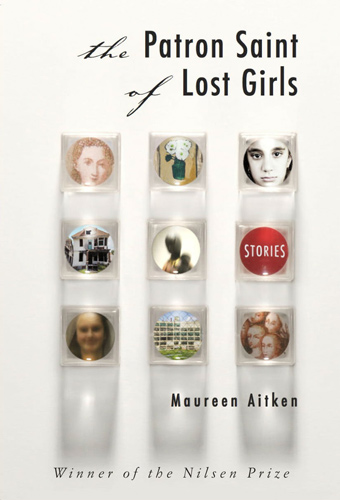 Maureen Aitken’s linked short stories, The Patron Saint of Lost Girls, is the winner of the 2018 Nilsen Prize, awarded to American writers who have not yet published a novel. The fourteen stories follow Mary, a sometimes artist, struggling through the economic recession in Detroit in the 1970s and 1980s. Told in the first-person point of view, Aitken’s stories are intimately close to Mary’s life and relationships all the while reflecting more broadly on the Midwest. Aitken’s stories are small and intimate but backed by the weight of broader themes: urban decay and what it means to survive as a woman.
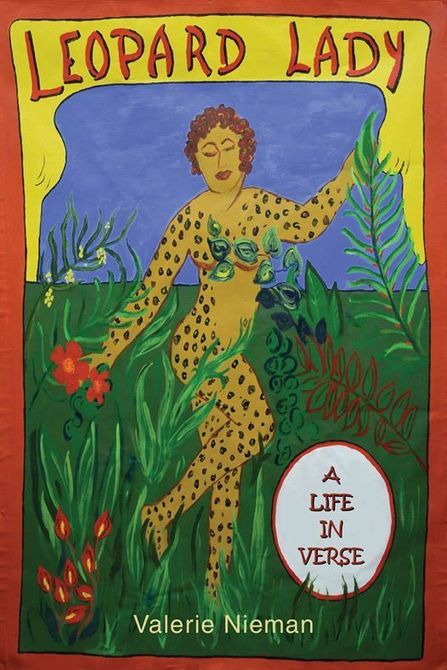 Valerie Nieman’s Leopard Lady: A Life in Verse sweeps aside everything you might think about sideshow and carnival performers of the mid-20th century. Her poems open up the private life of a mixed-race woman, Dinah, the titular Leopard Lady.