
 Volume 12 Number 2 of Diode Poetry Journal shows the variety of sources poets draw inspiration from, whether it’s musical artists, medical documentation, or other poets.
Lip Manegio draws from one of my longtime favorite musical artists—Death Cab for Cutie—in “you tell me about your childhood memories of death cab for cutie, and i imagine every future and past we will ever get to live through.” Using Death Cab song titles as a way to jump into each stanza and light, beautiful language, they create a new song for themselves and the person the poem is addressed to.
Charlie Clark turns to “I am the beast I worship,” a line from the song “Beware” by Death Grips as he conjures his own beast, one that “speaks vulgar French,” “his whole demeanor muscle-thick and pissed.” The piece reads like a slow burn, a fiery anthem.
“[Infect this page]” by Hadara Bar-Nadav is an erasure poem made from the drug information for the antibiotic Ceftriaxone. Bar-Nadav creates art through the dissection of medical text and examines both sickness and art, urging the reader to action, to “Infect,” “Inject,” and “Kill / your need to / question / this / garbage art.”
Both of John Allen Taylor’s poems draw inspiration from other poets. “The boy thinks of after,” is written after Laurie Lamon, and “Dear Friend,” is written after and for Brionne Janae. Not only were his poems enjoyable to read, but they also open a door to introduce readers to other poets they may not be familiar with.
The latest issue of Diode shows the many ways writers draw inspiration from the media they consume and offers its own inspiration to readers.
Review by Katy Haas
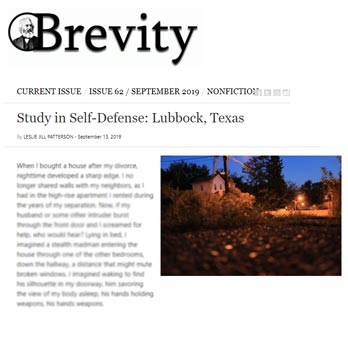 From the introduction to the final sentence, Leslie Jill Patterson’s flash essay,“Study in Self-Defense: Lubbock, Texas,” published in the September 2019 issue of Brevity (Issue 62), kept me on the edge of my seat. A perfect read for this October, Patterson tells the story of the tense moments that follow her dog’s ferocious reaction to something, or someone, outside her house at one in the morning—an event that gives her “a lesson in self-defense.”
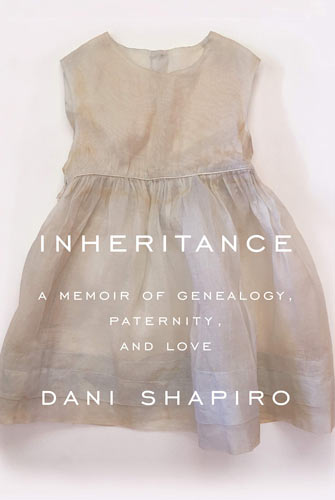 A psychoanalytic spin on the “unthought known” stream of one woman’s stumble upon the narrative of self, reflective of intuitive synchronicity, Inheritance: A Memoir of Genealogy, Paternity, and Love bursts the bubbles of vintage notions of the perfect family, or at least the façade of what the perfect family should have been.
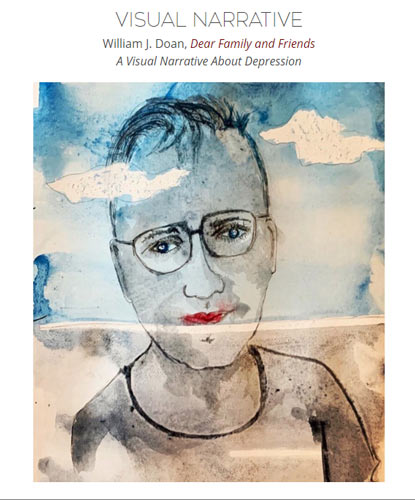 According to William J. Doan’s visual narrative “Dear Family and Friends,” in Issue 27 of Cleaver Magazine, “17 million adults had a major depressive episode last year.” Despite affecting so many people, it can be hard to articulate the experience, and even harder for the people around them to understand, especially when the sufferer is wearing a mask of “normality,” a mask of laughter and smiles. As Doan says, “Sharing what it’s like to live with anxiety and depression is a lot like undressing in front of strangers. It’s AWKWARD.” But after a while, masking began to feel like lying to Doan, and “Dear Family and Friends” is an attempt at breaking that silence and “coming out” to those around him.
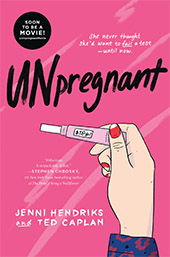 Unpregnant Offers a Radical Normalization of Abortion and Reproductive Health. Currently, we’re in a terrifying moment in history for reproductive health in America, which makes abortion no laughing matter—and that’s exactly why Unpregnant, the debut YA novel by Jenni Hendricks and Ted Caplan, is such a breath of fresh air. Unpregnant tells the tale of an overachieving 17-year-old named Veronica Clarke who discovers that she is pregnant a month before her high-school graduation. Seeing her college education (she’s been accepted to Brown University) and future slipping away, she enlists her former best friend—and current school outcast—Bailey Butler to drive her to an abortion clinic that doesn’t require a parental signature. The only catch? The clinic is more than 900 miles away… Read full review at BitchMedia here.
 The works in the latest issue of Runestone Journal, which publishes writing by undergraduates, is splashed with color.
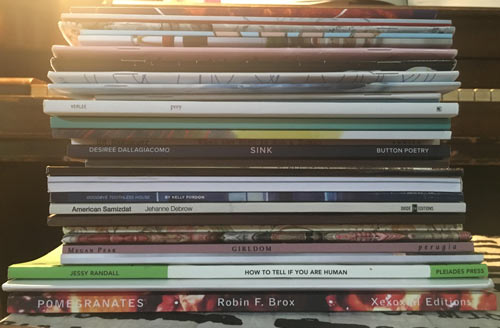
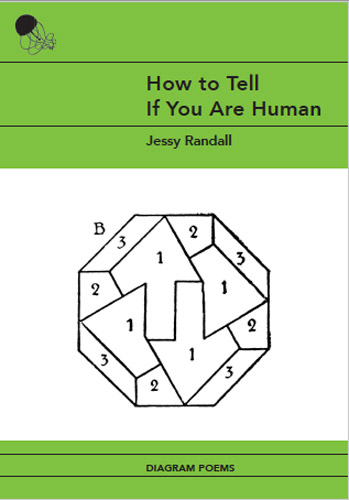 Do you ever find yourself feeling out of sorts, unable to tell if you’re still human? Jessy Randall has considered this feeling and helps readers handle it with an instructional manual of sorts in How to Tell If You Are Human: Diagram Poems, part of the Pleaides Press Visual Poetry Series.
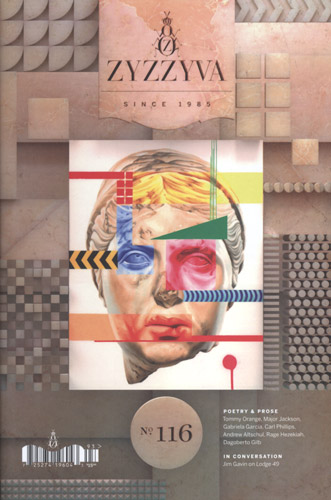 Gabriela Garcia’s “Mrs. Sorry” can be found in the latest issue of ZYZZYVA. Focusing on class and gender, the short story is narrated by a young woman working at a cosmetics counter. At work, she helps rich women (and one in particular who comes to be known as the titular character) pick out skincare products. At home, she feels herself slipping away from herself and her boyfriend, who begins offering her the Roxicodone pills he’s been stealing from his work at a pharmacy.
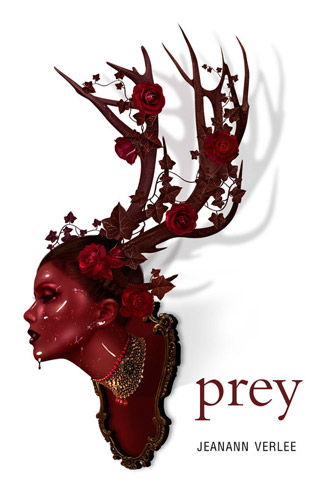 Jeanann Verlee digs into the culture of violence against women in Prey. Published last August, the collection of poems is broken into five parts. The speaker details her own story of an abusive ex-husband and the horrors he put her through, as well as a broader focus: “The New Crucible” speaks on the ways men have used religion to justify their violence against women, and multiple pieces called “His Version” are made of quotes from men like Brock Turner and the men involved in the Steubenville rape trial. The latter set of poems are presented without comment, without words from Verlee, speaking volumes on their own. Verlee writes with unflinching honesty, recording a history of violence that leaves one breathless and bent defensively over the pages.
 Publishing short (500-2500-word) fiction that “gives an insight into the human condition,” the online Fictive Dream featured a summer series called “Revisits.” Each Revisit is a selection of three previously published stories that have a similar theme: Love, Abuse, Growing Up, Grief, Rivalry, Magic Realism, Friendship, Missing, Sex, and War. Editor Laura Black curated the series and introduces each issue. A great way to sample the Fictive Dreams back catalog as well as a conveniently curated collection for the classroom.
 Beautiful Things is a weekly column of “very brief nonfiction that find beauty in the everyday” published on the River Teeth: A Journal of Nonfiction Narrative website. Edited by Michelle Webster-Hein and Sarah M. Wells, the inspiration for the column was Michelle Webseter-Hein’s essay, “Beautiful Things,” published in River Teeth 15.1 and appearing in a series of excerpts on the website.
 Maa, along with Lawrence-Minh Bùi Davis, founded the Asian American Literary Review in 2009 and has been serving as editor-in-chief. In his introduction to Georgia Review readers Maa writes, “A print periodical—dare I say here—is capable of cultivating communities in ways that no other medium can. To open up a journal—break a spine, perhaps—to carry a volume, or run your fingers over your name printed on a page is very special. But to congregate around a print journal is also special in its own right.”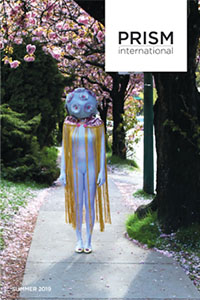

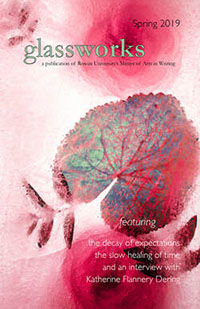
 Between October 2016 and February 2017, Heron Tree online poetry journal published a series of works “constructed from materials in the public domain in the United States.” Editors Chris Campolo and Rebecca Resinski then compiled these into a PDF ebook, Found in the Public Domain, that is free to download.
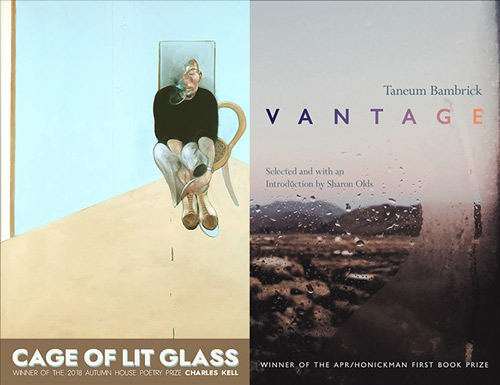 Take some time to check out award-winning books published this September.
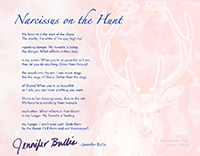 In addition to publishing poetry, interviews, and reviews twice a year online as well as chapbooks, Under a Warm Green Linden accompanies each issue with a selection of beautiful, affordable, high-quality print broadsides signed by the authors. The adjectives to describe these broadsides are my own; I have sought them out for purchase with every new issue – so I can attest to their production value! Add to that, Under a Warm Green Linden donates a portion of all proceeds from sales to the Arbor Day Foundation and the National Forest Foundation – both with specific reforestation efforts. To date. Under a Warm Green Linden supporters have helped plant 300 trees. A win all around!
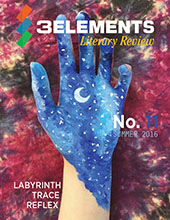 Each quarter, 3Elements Review presents three elements, and all three must be used in the story or poem in order to be considered for publication.
  The Fall 2019 issue of Rattle Tribute to African Poets features seventeen poems “representative of the urgency and excitement that makes the poetry coming out of the continent feel so vital.”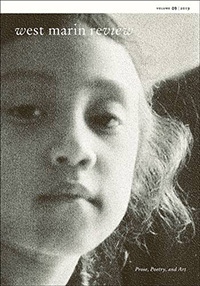

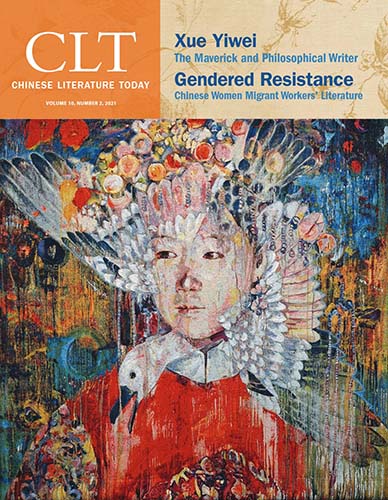 Contemporary Chinese Poetry is the special focus of the latest issue of Chinese Literature Today (v8 n1), with several works by each poet. The featured authors and the translators include:
 You are now part of The Chain.
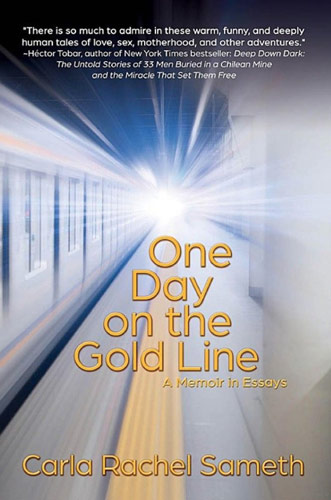 Carla Rachel Sameth’s One Day on the Gold Line offers a gut-wrenching account of Sameth’s life from young adulthood through middle-age, spinning around maternal desire and loss, and probing the critical distinctions between an imaginary motherhood and the lived reality of mothering her son through young-adulthood. Structured through a series of twenty-nine short chapters that refuse easy chronology, the book is both thematically and formally interested in questions of time and identity.
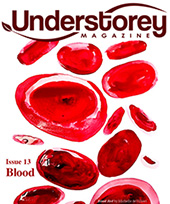 Understorey Magazine is an online publication of Canadian literature and visual art inviting “compelling, original stories and art by Canadian writers and artists who identify as women or non-binary.”
 First Prize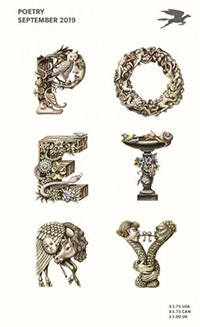
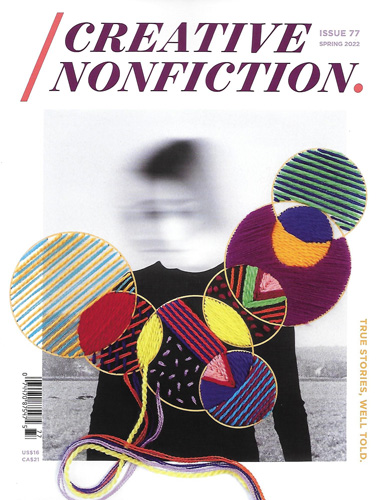
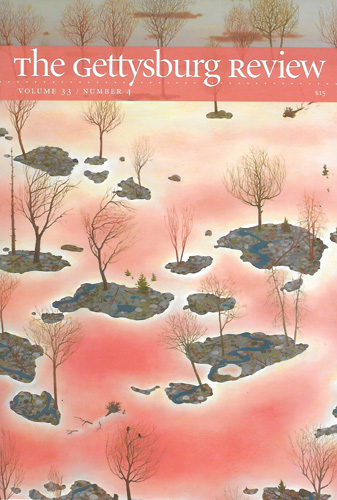
 Poetry Winner
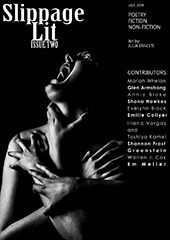 I have a friend who likes to order items on a menu that are sound fun to say when we go out to eat. That’s how I first came to try calamari and bibimbap. It’s also a way to discover great new lit mags, like Slippage Lit, whose co-editors, Jacob Parsons and Admir Šiljak, along with Social Media Editor Semina Pekmezović, admit they chose the name because they just like the way it sounds. But that’s not the only reason.
  Cleaver: Philadelphia’s International Literary Magazine online features Writer-to-Writer: Essays on Craft and The Writing Life.
 Hinsey discusses her approach to this collection, coming to the difficult question of “how to choose among so many brilliant authors? Should one pick a range of poets, or focus on individual key texts that might reflect a Polish reader’s idea of major ‘missing’ poems?”
 Dogwood Literary Award in Fiction
 If you love rules and regulations, following forms and formulas to make something work, gnashing your teeth and pulling out your hair to meet perfection – and you love poetry – then you’re going to love this free Prime 53 Summer Challenge Poetry Contest.
 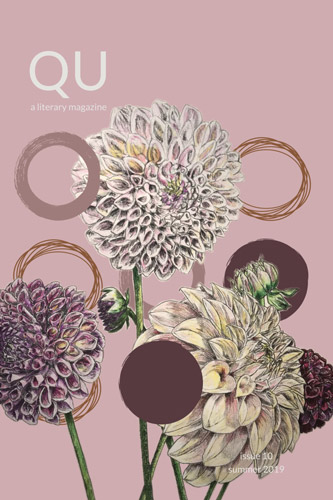 Wrap up your summer and get ready to head back to school with Zac Thompson’s “The Water of Life” a stage/screenplay in Qu #10. The characters, Leah and Carrie, are young, romantic partners at the close of their two-month summer relationship, each preparing to go to college—Carrie away to university and Leah to the local junior college. Leah, a preacher’s daughter, has set up a baptistery so the two can bind their relationship with a ritual. The dialogue is subtly quick and revealing, Leah being the pragmatist and Carrie the comic; Leah the “intense” dramatist and Carrie the lighthearted, “afraid to express [her] feelings.” It’s an intimate scene, full of the love and subsequent gut-churning realism young people face when their paths are on the verge of separation. A memorably bittersweet read.
 Drawing inspiration from Eric Magrane’s “Various Instructions for the Practice of Poetic Field Research,” Bell writes that “these instructions are an invitation to think deeply in and with place. They have proved enduring; I’ve been glad to use them in teaching and in my own poetic practice.”
 We’re two weeks and a day into
 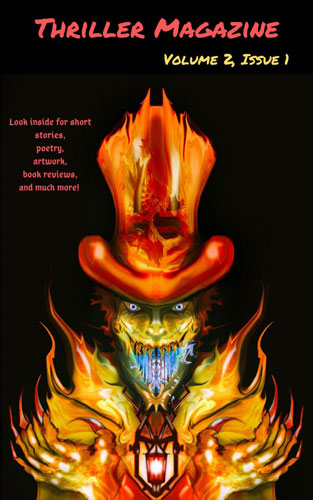 Robb T. White’s lead story “A Civilized Man” is provided as a sample of the July 2019 Thriller Magazine (2.1). White’s narrator opens the story with, “What is a civilized man?” and walks readers through his fiancé’s disappearance and ultimate discovery of her brutalized dead body. The predictable dead-end investigation is offset by the narrator’s unexpected choice of action as he lays down his own justice. “It’s odd that I feel no guilt or shame.” The narrator confesses, “Quite the opposite. I feel . . . pleased, if that’s the right word.” Likewise, in reading the objectively detailed sequence of events, I felt no guilt or shame in his actions either. Pleased ? Maybe that is the right word.
 First Place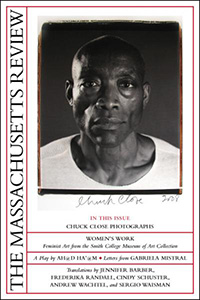

 Two whirlwind prose poems by Leslie Marie Aguilar in the May 2019 issue of wildness online speak in abstractions melded with concrete symbols, creating a contemporary mythology of the self. “Bone Altar” begins, “Legends begin with valerian root, red clover, & a touch of tequila.” and instructs the reader to call upon ancestors. “Cartography,” just at the moment I think the poem’s speaker is deeply troubled, assures me, “If this sounds like a cry for help, like shouting into a canyon & hoping to hear a voice different than your own, it’s not.” Two dizzyingly brief works with lasting impact.
 In his “Front Matter” editor’s note to the July/August 2019 issue of Kenyon Review, David H. Lynn announces his intention to step down from his role as The David F. Banks Editor of the publication:
 CRAFT Literary’s mission is to “explore the art of fiction with a focus on the elements of craft.” They do this through publishing fiction with commentary, pieces on craft, interviews, and more.
 Jillian Weise’s bio at the back of her latest collection, Cyborg Detective, boasts an impressive professional history, from books published to awards won to disability rights activism to starring in the tongue-in-cheek web series “Tips for Writers by Tipsy Tullivan.” In Cyborg Detective, Weise continues to show off her skills while holding the mirror up to the literary community.
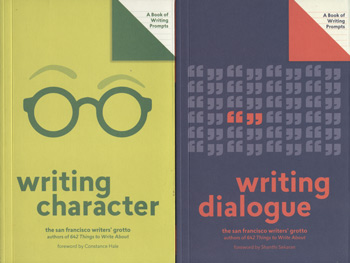 Abrams Noterie, imprint of ABRAMS Books, publishes stationary, artbooks, journals, and activity books, with a four-part collection on writing to be released this September.
 First Place
 The latest issue of Blood Orange Review offers plenty of good writing, the nonfiction inviting readers to consider where they come from as the three writers do the same.
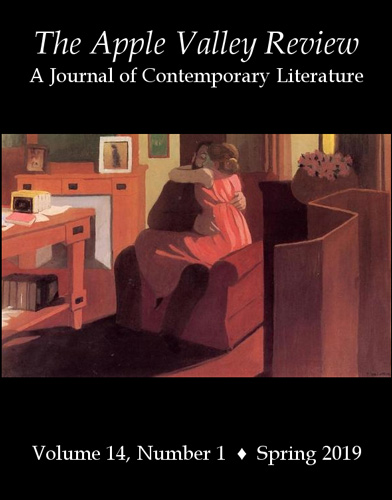 Our families and the people we care about affect much of how we feel or what we do in life, so it’s appropriate that many of the poems in the Spring 2019 issue of Apple Valley Review center on family.
 One-Legged Pigeon
 The Summer 2019 issue of The Malahat Review features winners of their biannual Long Poem Prize for 2019 judged by Jordan Abel, Sonnet L’Abbé and Gillian Sze: