New work on the Fiction Southeast website from the past month, work by Christopher Murphy, Gauraa Shekhar, Ashley Havrid, Ben Sandman, Nicholas Dighiera, Michael Vojtech, and Nathaniel Edwards.
At the NewPages Blog readers and writers can catch up with their favorite literary and alternative magazines, independent and university presses, creative writing programs, and writing and literary events. Find new books, new issue announcements, contest winners, and so much more!

New work on the Fiction Southeast website from the past month, work by Christopher Murphy, Gauraa Shekhar, Ashley Havrid, Ben Sandman, Nicholas Dighiera, Michael Vojtech, and Nathaniel Edwards.

Choose your boyfriend in the “Secret Boyfriend” edition of Boyfriend Village. Work by JinJin Xu, Charles Theonia, Jai Hamid Bashir, Rone Shavers, Landa wo, and more. Plus “20 Atomic Sonnets,” a chapbook by Rosebud Ben-Oni and work by featured artist Nicole Won Hee Maloof. Find even more contributors at the Black Warrior Review website.

2River begins its twenty-fifth year with the Fall 2020 issue of The 2River View. New poems by Deborah Bacharach, Andrew Cox, Mario Duarte, Paul Jones, Richard Jones, Susan Landgraf, Bern Mulvey, Cecil Morris, Salawu Olajide, Ben Sloan, and Liane Tyrrel.
Have you wanted to check out The Louisville Review but haven’t had the chance or the extra money to spare? Now is the perfect time to change that. The Spring 2020 issue is currently available for free download at The Louisville Review website due to COVID-19. Download your copy to read work by Carolyn Forché, Patricia Foster, James B. Goode, and more.
The Places I’ve Cried in Public is a young adult novel by British author Holly Bourne. This is not your typical young adult story about crushes and teenage angst. Teenage novels don’t usually come with a warning on the back cover, like this book does, that it contains material that some readers may find distressing.
In this book, Amelie fell in love with Reese, but now she can’t seem to get over him. So she’s going back to all the places where she cried in public to try and re-trace her steps, and see where her life went wrong. In the process, she’s learning about what love is not. This book is written in very British English and is set in places like London and Sheffield, but it deals with universal themes, like recognizing what is a healthy relationship, what is controlling behavior and abuse.
This book is powerful and intense. It is a work of fiction, but it deals with real issues. It is a tough read, in the sense that you need to mentally prepare to read until the end. You feel like you have been punched in the stomach after reading this book. But it is a good book; it deals with important issues. This book should be required reading for all young women.
The Places I’ve Cried in Public by Holly Bourne. Usborne Publishing Ltd., 2019.
Reviewer bio: Chang Shih Yen is a writer from Malaysia, seeing through the pandemic in New Zealand. She writes a blog at https://shihyenshoes.wordpress.com/.
Guest Post by Carla Sarett
What with election hysterics and the COVID Blues, I was starved for a truly immersive read, and lo, Peter Cameron came to my rescue in What Happens at Night.
I’ve been a fan of Cameron’s elegant writing since, well, forever (if you have not read The City of Your Final Destination or Andorra, by all means, do so). Here, he takes Bowlesian themes (he does quote Jane Bowles, if there’s any doubt) but sprinkles them with kindness. Cameron’s mercifully free from the dour outlook on humanity that I’ve come to expect these days, and it makes this work enchanting in the best sense.
A not very happy New York couple wants to adopt a child, and in their quest, ends up in an icy “northern” foreign city, in a comically grand hotel (elaborately, but impractically, appointed). Nothing that happens from that point could possibly be predicted: the couple meets a faith healer, for one thing, and no, he’s not quite a fake. From there, the story by turns becomes surreal and funny and moving. The novel’s atmosphere is dark and cold, but its spirit is one of light, “a warm golden light.”
(I must also mention that the publisher has sprinkled the cover with a barely visible glitter. Perfect.)
What Happens at Night by Peter Cameron. Catapult, August 2020.
Reviewer bio: Carla Sarett’s recent work appears or is forthcoming in Third Wednesday, Prole, Halfway Down the Stairs, and elsewhere. Her novel, A Closet Feminist, will be published in 2022.
Buy this book from our affiliate Bookshop.org.
Eight men became American presidents without being elected to the office. All acceded to the role after the incumbent was assassinated or succumbed to illness.
In Accidental Presidents: Eight Men Who Changed America, Jared Cohen provides historical details of their achievements and failings. Most were unprepared for the top office because they were uninterested, though a few coveted the presidency.
Theodore Roosevelt and Harry Truman were extraordinarily successful. The former succeeded William McKinley Jr. who was assassinated, and the latter Franklin Delano Roosevelt, who died of longstanding ailments. Except for the Vietnam War debacle, some believe Lyndon Johnson would be among the greatest presidents ever. He became president after the assassination of John Kennedy.
The most disastrous was Andrew Johnson, who became president after Abraham Lincoln was gunned down. The first to be impeached, Johnson reversed policies by Lincoln to help the nation heal after the bloody civil war. He set the stage for Jim Crow, initiating a century of intense discrimination against African Americans that boiled over into the Civil Rights Movement in the 1960s.
Cohen demonstrates the importance of presidents choosing able persons as their deputy. Not all vice presidents were chosen for their ability but as a compromise candidate to appease interest groups or various constituencies in their party.
In the times we live, Cohen’s Accidental Presidents may prove especially insightful.
Accidental Presidents: Eight Men Who Changed Americav by Jared Cohen. Simon and Schuster, April 2019
Reviewer bio: Eron Henry is a communications consultant. He blogs at https://oletimesumting.com.
Buy this book at our affiliate Bookshop.org.
Guest Post by Susan Kay Anderson
Brian Matta’s superbly inventive Stuck, Stutter, Persist is like stepping into a room only to have a secret door open, revealing an entity who will communicate with you, maybe bonding with you forever and ever. This entity is expressed as a stutter, but is the inexplicable making itself known. What is signified by a glitch, a pause, a repetition, or an echo is really something very different. But what?
In the poem, “Check out that breech” the main character is the stutter (sound) “—ch” and it is heard throughout in a list of material items; “chest . . . brunch . . . chapel” which seem ordinary and unsuspecting but invoke a stutter near the end of the poem. The stutter asserts itself here and in each poem in this marvelous and tantalizing book, not as “—ch” but as a different stutter sound in each poem.
These stutters (these poems) slowly become fodder for existential contemplation. Much like the world Gregor in Kafka’s novella, The Metamorphosis, experiences, we see that this world also needs no introduction once you start reading. The stutter does persist to draw out and slow down the experience of dramatic life events and serves to underscore and even lead the poems away from simple explanation.
When I first began reading Stuck, Stutter, Persist, I was intrigued because it seemed weird and a sort of strange homage to anger or patience or both. But it is much different because it is masterfully poetic in its unblinking regard of the parts of life which fly by so fast that only a stutter can catch bits of them before they are lost.
Stuck, Stutter, Persist by Brian Matta. Black Centipede Press, 2019.
Reviewer bio: Susan Kay Anderson’s first book of poems is Mezzanine. Anderson was the poetry editor of Big Talk, a free publication in the early 1980s featuring Pacific Northwest punk bands. She has a poem forthcoming in Sleet Magazine’s Winter Issue, “The Inside Edition II” and Please Plant This Book Coast To Coast, Virginia Brautigan Aste’s memoir, will be published by Finishing Line Press in 2021. Her recent work can be found in Calibanonline, Gnashing Teeth, Lily Poetry Review, Mojave River Review, NewPages What Am I Reading?, Panoply, Tinderbox Poetry Journal, and Porter Gulch Review.
Buy this book from our affiliate Bookshop.org.

Wordrunner eChapbooks‘ 40th issue, the Summer 2020 fiction echapbook: The Estrangement Effect: Stories by Rebecca Andem. The five stories in Andem’s collection explore the startling, disconcerting, unsatisfying, and liberating moments in which we understand that the most central relationships in our lives are inhabited by strangers, strangers we are deeply connected to, be they lovers, spouses, parents, siblings or children.

The Fall 2020 issue of Willow Springs features Joseph Millar, Ramona Ausubel, Jessica Lee Richardson, Andrew Furman, Lawrence Lenhart. Plus Sarah Bates, Dmitry Blizniuk, Bruce Bond, Maggie Graber, Matthew Lippman, J. Estanislao Lopez, Owen McLeod, John A. Nieves, John Sibley Williams, and more.
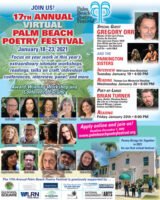
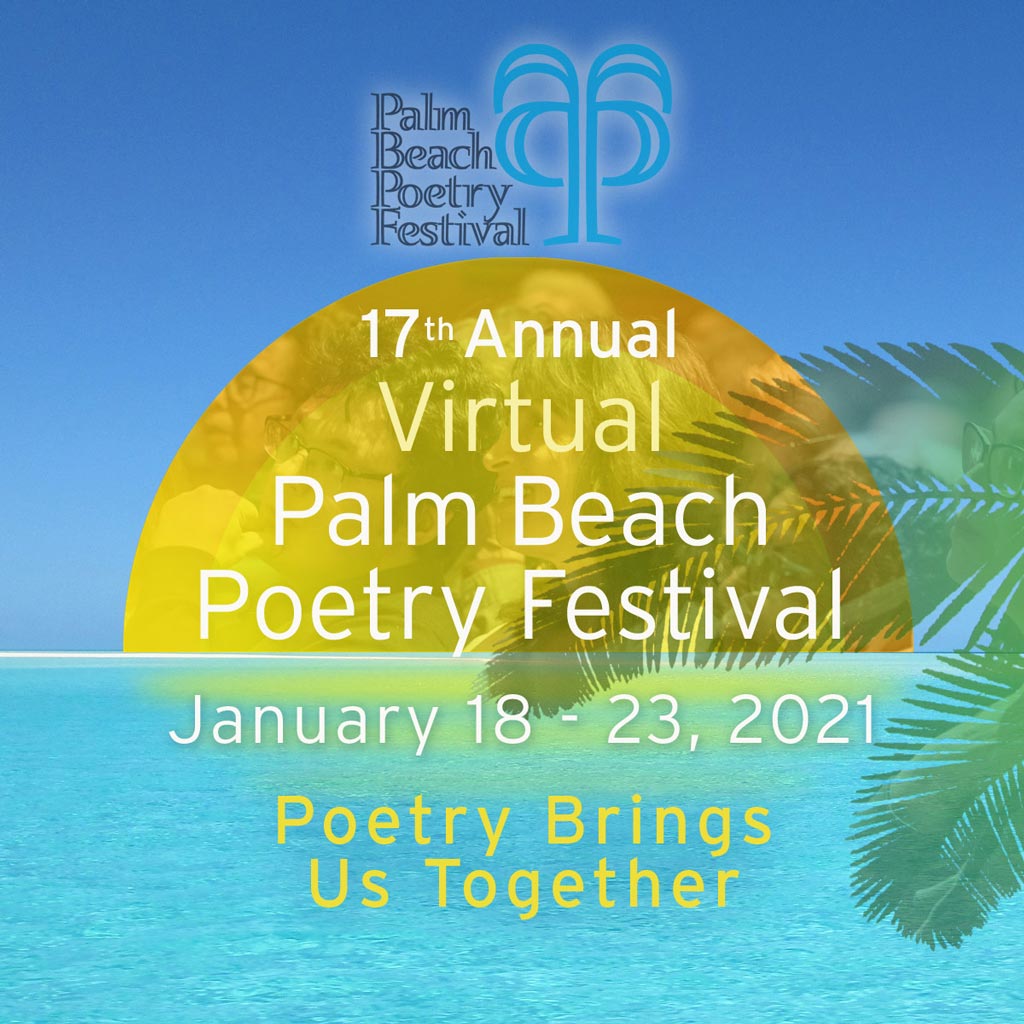
Event Dates: January 18-23, 2021; Location: Virtual
Application Deadline: November 10, 2020
17th Annual Palm Beach Poetry Festival in Delray Beach, Florida, January 18-23, 2021. Focus on your work with America’s most engaging and award-winning poets. Workshops with David Baker, Laure-Anne Bosselaar, Traci Brimhall, Vievee Francis, Kevin Prufer, Martha Rhodes, and Tim Seibles. Six days of workshops, readings, craft talks, panel discussion, social events, and so much more. One-on-one conference Faculty: Lorna Blake, Sally Bliumis-Dunn, Nickole Brown, Jessica Jacobs, and Angela Narciso-Torres. Special Guest: Gregory Orr and the Parkington Sisters. Poet At Large: Brian Turner. To find out more, visit www.palmbeachpoetryfestival.org. Apply to attend a workshop!

This issue’s featured interview: “Digging for Gold,” an Interview with Don Kesterson by Terresa Cooper Haskew. Fiction by Ethan Forrest Ross, Michael L. Woodruff, NV Baker, and Rita Ariyoshi. Poetry by Steven Ablon, Mark Burke, Chris Capitanio, Llyn Clague, Shutta Crum, Darren C. Demaree, Craig Evenson, Barbara Greenbaum, Angela Gregory-Dribben, Katrina Hays, Scott T. Hutchison, and more. Also in this issue: a selection of book reviews.

We’re beyond excited to bring you new work from Alicia Ostriker, Diane Seuss, Aimee Nezhukumatathil, Jos Charles, Yalie Kamara, David Naimon, and Jordan Jace. We’re also extremely excited to feature poetry by Asa Drake, Thomas Dooley, Mary Biddinger, Kevin Prufer, Maya C. Popa, Jordan Keller-Martinez, and more, prose by Emily Yang and Andreas Trolf, and art by Caroline Zhang, Taylor Wang, Ariel Kim, and others. Read more at The Adroit Journal website.
What happens when you repeatedly tell a teen they can’t do something? Of course, they will find a way to do it, which, in the case of Editor-in-Chief Benji Elkins, resulted in The Milking Cat, an online publication of comedy in all forms, from written works to movies to comics and more.
The name itself has a comedic referent, as Benji explains, “’The Milking Cat’ is a reference to the 2000 film Meet The Parents where Ben Stiller’s character lies about milking a cat on a farm that has no cows.” Benji found the scene especially humorous and decided to name the website as a testament to it. “Also,” he adds, “it rolls off the tongue once you get used to it.”
Behind the name, the mission of The Milking Cat is to provide an outlet for aspiring teen comedians, but the initial motivation stemmed from an experience Editor-in-Chief Benji Elkins faced. “It goes something like this: In ninth grade, there was a stairwell that consistently had pencils stuck in its ceiling. When I returned to school in the tenth grade, the pencils were completely gone! All that remained was the scarred terrain of pencils that once were. As a result, I wrote a comedic piece featuring the pencils’ removal entitled ‘COLLECTIVE STUDENT BODY ART PIECE DESTROYED BY SCHOOL.’ However, when the school newspaper refused to publish it, I asked that they create a humor column. When they refused that, I asked his school’s activities director if I could start a humor paper. When they refused that as well, I decided I would simply have to do it myself.”
Putting together a humor publication editorial staff is a delicate balance between skill sets. Benji Elkins [pictured] says he has always enjoyed both writing and making jokes at the dinner table. “I’ve been involved in other (and much more serious) teen literary magazines through the submission of my own work,” Benji quips, “and therefore like to believe I ‘know the industry.’ But I’ve also been an active member in my school’s literary magazine. Currently, I’m the co-Editor-in-Chief. Otherwise, I’m simply a fan of writing and comedy and a huge fan of trying to put the two together.”
Alongside his efforts is friend and colleague Dan Soslowsky, who, “after coming down from the high of winning his third-grade art contest, needed something to keep his cartooning skills sharp.” As Dan tells it, “I originally turned down my offer to be the Senior Editor and Head of Illustration and Design for The Milking Cat, but ultimately gave in after receiving a box of chocolates, flowers, and a 2018 Mercedes-AMG® GT C Coupe on my doorstep with a note signed ‘With love, Benji.’” In addition to his role with The Milking Cat, Dan is the Head Editor of the Humor Section in his school’s newspaper as well and is involved in numerous other art-related extracurriculars.
The final editorial staffer is Noah Stern, who “has been an avid fan of comedy since his parents let him watch their DVD box set of the Family Guy Star Wars parody episodes.” Noah is the head of the satire section at his school paper as well.
Additionally, “in case anyone was wondering,” Benji included, “all of the Editors’ favorite apparatus on the Bop-It machine is Twist-It.”
The learning curve for running their own publication was steep, as Noah shares the greatest hurdle they have faced was “bringing The Milking Cat to the level it is at today. Originally, The Milking Cat submissions were open to anyone of any age, but in retrospect, we cast the net too wide. We would rarely get submissions or viewers and as a result, the main people submitting were mostly us three editors. We pushed ourselves to write something every week, and it was increasingly stressful. However, when COVID-19 hit, we decided to kick it up a notch and grow our team – specifically around teens like us. We rebranded as a ‘by teens, for teens’ comedy website and began receiving many staff applications and comedy submissions. As a result, the greatest joy we’ve all experienced probably comes out of our greatest hurdle; the thing we love most about the site is giving teens around the world the opportunity to not only to read comedy, but also to provide them the opportunity to create it themselves as well.”
Readers of the publication, which posts new content every Monday evening, can expect to find content related to sports, politics, riffs on classic literature – “all sorts of readers can find a comedic piece that fits their specific interests,” Noah assures. “We triple-dog-dare you to pick any piece at random, and no matter which you stumble upon, you will find something thoughtful, well-written, and (hopefully) funny.”
In addition to the editors’ contributions, recent content includes:
Julianna Reidell – Hamlex Commercial: A commercial screenplay for the new prescription drug inspired by Shakespeare’s Hamlet
Asher Hancock – I Tried 5 Dark Web Dating Sites and was Pleasantly Surprised: A lonely romantic reviews various shady dating sites such as SatanMate.com and WeHaveCandy.com.
Sascha Nastasi-Feinburg – Pad+ Casting Calls: A mock casting call asking for actors to fill roles in the next big WattPad novel adaptations, including “I Fell in Love with a Cannibal because I Thought He Was a Vampire.”
And a sampling of humor by title alone:
Man Plays Air Guitar With All The Wrong Notes
The Life of an Undercover Dental Student
High School Student Shocked To See Chemistry Teacher Peeing In Middle Urinal
Teenaged contributors who are not a part of The Milking Cat Staff are welcome to submit works. Submissions are collectively reviewed by the Editors on its publication status. If accepted, the work is uploaded verbatim to the site. Pieces written by staff members are reviewed by Staff Curators who make edits and suggestions that the author can accept or reject before publication.
Looking to the future, Benji says, “Our plans for this summer include The Milking Cat Comedy Competition, where teens around the world can submit humorous pieces of any kind for the chance to win special prizes from 4 Ivy League Humor Magazine and the satirical site The Hard Times, such as up to $350, merch from the various humor magazines, workshop sessions, and much more! We also hope to establish ourselves more among teens as a regular place to read comedy from their peers. As for long term plans for the publication, we will keep doing it as long as it keeps bringing us joy (and it is).”
Here’s to a lifetime of joy for The Milking Cat!
The Malahat Review hosts a Novella Prize biennially. The 2020 winner opens the Summer 2020 issue. Judges Samantha Jade Macpherson and Naben Ruthnum selected “Yentas” by Rebecca Păpucaru.
Of “Yentas,” the judges said: “‘Yentas’ is a nostalgia-free portrait of girlhood lived among the Jewish communities of 1980s Montreal. The novella’s evocation of the cruelties and kindnesses of teenage friendship, territorialism, and enmity is built in prose as funny as it is precise. Rebecca Păpucaru’s treatment of culture, ethnicity, and religion as complex structures informing protagonist Karen’s family and social life achieves impressive depth and nuance. Through Karen’s eyes we are totally immersed in a rich and bubbling teenaged world. Visceral and enchanting, a truly fantastic read!”
At The Malahat Review‘s website, readers can check out an interview with the winning author.
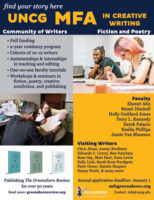
Application Deadline: January 1.
One of the first creative writing programs in the country, UNC Greensboro’s MFA is a two-year residency program offering fully funded assistantships with stipends and health insurance. Students work closely with faculty in one-on-one tutorials, take courses in poetry, fiction, publishing, and creative nonfiction, and pursue opportunities in college teaching or editorial work for The Greensboro Review. More at mfagreensboro.org.
There is plenty for readers to check out in Issue 34 of The Adroit Journal, including the results of the Adroit Prizes.
Poetry Winner
“On Their Birthday, Suge Knight & My Daddy Discuss Forgiveness” by Tariq Thompson
Poetry Runner-Up
“Cha” by Stephanie Chang
Prose Winner
“Valley of Saints” by Yasmeen Khan
Prose Runner-Up
“A Dominicana’s Guide to Surviving a PWI” by Coral Bello-Martinez
In addition to these winners, you can also find a selection of high school and college students who placed as finalists.
When I first read Michelle Alexander’s groundbreaking book The New Jim Crow: Mass Incarceration in the Age of Colorblindness in 2010, Obama was in the beginning of his first term as president. Many white Americans believed his election was a sign that our country was now post-racial, that equality had finally been achieved. But that was a myth, as Alexander explains in painstaking detail. Using the statistics of the day, she lays bare the racism embedded in our criminal justice system, which she likens to modern-day slavery.
This year, I decided it was a good time to dust off Alexander’s work, to see how its distressing statistics had improved over the past ten years. The answer was, tragically, not enough. Blacks still face more discrimination than other races in every phase of the criminal justice system—from stops and arrests to sentencing and parole. They are still the primary targets of the fictional “War on Drugs,” which was invented as a legal means to put large numbers of Black people behind bars. They are still locked in to what Alexander calls a “permanent undercaste.”
The New Jim Crow came out before the 2013 killing of Trayvon Martin birthed #BlackLivesMatter, before the 2014 killings of Michael Brown and Eric Garner. It was before the killing of George Floyd and other Black Americans sparked worldwide protests against racist policing, before Black Lives Matter became a global movement. While the discrimination against Black people in America is much the same as when the book was published, the public support for protecting and defending Black lives has grown exponentially. The ground is fertile for all Americans who value justice to demand a new reality. To quote Dr. King, no one is free until we are all free.
The New Jim Crow: Mass Incarceration in the Age of Colorblindness by Michelle Alexander. 2010.
Reviewer bio: Laura Plummer is an American freelance journalist and writer from Massachusetts. Read her work at lauraplummer.me.
Buy this book from our affiliate Bookshop.org.
The surf might be the same on every shore, but its sound is different on Cape Cod than anywhere. And I miss it—it’s been a handful of years since I’ve been there, so in a mood of summer longing and nostalgia I turned to Thoreau’s Cape Cod, an 1883 edition that’s looked fine in my library for years but that I’d never touched.
It’s a good read. The chapters are like thick travel essays, of the kind I vaguely remember in those paper things they used to call magazines, back before the net age. Like the longreads that now sometimes fall into our phones.
Each chapter is on some subject or portion of the Cape. Thoreau explains that the book was the result of his own travels there, and right away in reading it, I see it turns out I’ve spent almost the exact amount of time there as he did: three distinct visits, totaling about three weeks. I’ve written about Cape Cod before—much of it yet unpublished—but this reminds me that I’ve got more to write even if I never return.
My visits weren’t as gruesome as his—the book nearly begins with scores of dead bloated bodies tumbling in with the tides, and with Thoreau seeing headless bodies on the dry-sanded shore, and beaches lined with coffins and unrecognizable victims of mean shipwrecks. In my modern visits there was none of that. In fact, it seemed that everyone could live to be old and wrinkled as walnuts if our common plagues like cancer and car accidents were avoided.
Otherwise, the people he describes and the old haunted streets and the treeless shores are much like the Cape I know. Like him, I agree that October is the time to be there—the Cape is haunted, the shore moans with ghosts, and that’s the best time to catch them.
Cape Cod by Henry David Thoreau. 1865.
Reviewer bio: Michael Stutz is the author of Circuits of the Wind, the story of the net generation. His writing has appeared in many journals and magazines.
Buy this book at our affiliate Bookshop.org.
The MFA in Creative Writing at Minnesota State University, Mankato seeks to meet the needs of students who want to strike a balance between the development of individual creative talent and close study of literature and language. The program helps to develop work in the genres of fiction, creative nonfiction, and poetry. Students typically spend three years completing coursework, workshops, and book-length theses.
Current faculty includes Robin Becker, Candace Black, Geoff Herbach, Diana Joseph, Chris McCormick, Richard Robbins, and Michael Torres. Recent visiting writers include Juan Felipe Herrera, Marcus Wicker, Leslie Nneka Arimah, Danez Smith, Layli Long Soldier, and Ada Limón.
Students have the opportunity to grow within a rich and active community of writers with the Good Thunder Reading Series, the Writers Bloc Open Reading Series, and working on literary magazine Blue Earth Review.
Stop by their listing at NewPages to learn more.
Stop by and visit the August Book Stand at NewPages. This month, you can check out five featured titles, as well as a selection of new and forthcoming books to add to your to-read list.
The poems in Elsewhere, That Small by Monica Berlin are “intimate, contemplative, seeking out the smallest folds of language,” and urge readers to really listen to what they’re taking in.
The Exquisite Triumph of Wormboy by James Kochalka and Sydney Lea follow the exploits of a worm who embarks on an adventure of rescue.
In The History of Our Vagrancies by Jason Irwin, readers can find “comfort, companionship, longing, and then suddenly an acute sorrow that somehow makes us want more of the whole tragic beautiful thing.”
Jon Boilard’s Junk City is set in San Francisco, following characters that roam in a shadowy world but, from time to time, find slivers of light.
The World I Leave You: Asian American Poets on Faith & Spirit edited by Leah Silvieus & Lee Herrick spotlight 62 poets of Asian descent. These poets create a varied and nuanced portrait of today’s Asian American poets and their spiritual engagements.
You can learn more about each of these New & Noteworthy books at our website and find them at our our affiliate Bookshop.org. You can see how to place your book in our New & Noteworthy section here: https://npofficespace.com/classified-advertising/new-title-issue-ad-reservation/.
Beginning Dates: July 27; Virtual
Registration Deadline: Rolling
Don’t forget Willow Writers’ Workshops is going virtual this summer and fall! They are offering workshops, providing writing prompts, craft discussions, and manuscript consultations. All levels are welcome. Three different courses are being offered: Desire to Write? An Introduction to Creative Writing; Flash: Writing Short, Short Prose; and Writers Workshop on Thursday Nights, a six-week course focusing on short stories. Summer dates began July 27. The facilitator is Susan Isaak Lolis, a published and award-winning writer. For more information, check out willowwritersretreat.com.

This issue of The Malahat Review features the 2020 Novella-Prize-winning “Yentas” by Rebecca Păpucaru, Daniel Allen Cox’s “The Glow of Electrum,” Mike Alexander’s “An Afternoon Gentleman,” Matthew Hollett’s “I’m Sorry, I Have to Ask You to Leave,” Ronna Bloom’s “Legend of Saint Ursula,” Alamgir Hashmi’s “Anywhere, 2019,” and Kate Felix’s “Beneath the Pond.” Also in this issue: Sarah Tolmie, Xaiver Campbell, Sarah Venart, Theressa Slind, Chris Banks, Daniel Sarah Karasik, Sarah Lord, Ron Riekki, Paul Vermeersch, and Alisha Dukelow. Plus, a selection of book reviews, and cover art by Sharona Franklin: “Mycoplasma.”
The July/August edition of Hippocampus Magazine is still live! Featuring creative nonfiction by Lisa K. Buchanan, Max King Cap, Amy Cowger, Erica Plouffe Lazure, and others. See more contributors at the Mag Stand.

In the newest issue of Carve, find short stories by Caleb Tankersley, Danielle Batalion Ola, Ronald Kovach, and Kirsten Clodfelter, as well as interviews with the authors. New poetry by Jane Zwart, Abbie Kiefer, Collin Callahan, and James Ducat, and new nonfiction by Feroz Rather and Kabi Hartman. In “Decline/Accept,” is “Clean Kills” by Greg November. Read more at the Carve website.
The Writer’s Hotel‘s three writing conferences will be hosted virtually in October instead of in NYC like normal this year.
The All Fiction Writers Conference will take place October 14-20. The schedule has been redesigned to offer their attendees the very best service possible. Major workshops will be capped at nine people instead of their usual fourteen.
2020 faculty this year includes Rick Moody, Jeffrey Ford, David Anthony Durham, Robyn Schneider, Michael Thomas, Ernesto Quiñonez, James Patrick Kelly, Elizabeth Hand, Francine Prose, Saïd Sayrafiezadeh, Sapphire, Elyssa East, Kevin Larimer, Jennie Dunham, Steven Salpeter and TWH Directors Shanna McNair and Scott Wolven. Deadline to apply is August 22.
The Nonfiction Weekend Conference will be held October 1-5. Application deadline is August 28. Faculty includes Meghan Daum, Mark Doty, Carolyn Forché, Richard Blanco, Hisham Matar, Michael Thomas, Beth Ann Fennelly, Molly Peacock, Honor Moore, Saïd Sayrafiezadeh, Elyssa East, Jonathan M. Katz, Kevin Larimer, Stephen Salpeter and TWH Directors Shanna McNair and Scott Wolven.
The Poetry Weekend Conference will take place October 22-26. Deadline to apply is September 1. Faculty includes current U.S. Poet Laureate Joy Harjo, Marie Howe, Heather McHugh, Terrance Hayes, Mark Doty, Cornelius Eady, Deborah Landau, Tim Seibles, Valzhyna Mort, Pádraig Ó Tuama, Camille Dungy, Javier Zamora, Alexandra Oliver, Kevin Larimer, Jenny Xie, TWH Directors Shanna McNair and Scott Wolven.

Magazine Review by Katy Haas
At a time when I felt incredibly alone, Ira Sukrungruang kept me company with his collection of essays, Buddha’s Dog: & Other Meditations. I stayed up all night reading it, telling myself I’d just read one more essay and then sleep and before I knew it, the book was finished and dawn was right around the corner. So now when I again feel those nagging feelings of loneliness, I was excited to see he had a new nonfiction piece in the Spring 2020 issue of Crazyhorse to help fill in the spaces around me: “Eulogy for My Father.”
This eulogy is written in short, one-sentence paragraphs that rapidly fall down the sixteen pages they occupy. “Let me start again,” he repeatedly states and follows another thread as he sorts the complicated thoughts and feelings surrounding the relationship he had with his father, his father’s absence, and the ways in which these feelings now echo over his relationship with his son.
The piece is honest and tender, bringing tears to my eyes by the time I reached the end and his final “restart.” It was nice seeing Sukrungruang once again show off his mastery of the nonfiction form. Even sitting with his grief, it was also nice to feel close to something for the moment.
Originally titled Sojourn, Reunion: The Dallas Review is a literary magazine which has been publishing exceptional short fiction, drama, visual art, poetry, translation work, nonfiction, and interviews for over twenty years. Their mission is to cultivate the arts community in Dallas, Texas and promote the work of talented writers and artists both locally and around the world.
Reunion is published by The School of Arts & Humanities, home of the creative writing program of the University of Texas at Dallas. They publish an annual print volume as well as featuring a new piece of work monthly on their website. You can view past interviews with writers on their website as well.
Stop by their listing on NewPages to learn more.
MFA in Creative Writing at The Ohio State University is designed to help graduate students develop their talents and abilities as writers of poetry, fiction, and creative nonfiction. Graduate teaching assistants teach special topics undergraduate creative writing courses as well as first-year and second-year writing. Students also have the option to work as editors of the prize-winning literary magazine, The Journal, and to serve on the editorial staff of two annual book prizes.
All students are fully funded for three years in a program well known for its sense of community and a faculty that is committed to teach as much as they are to their own writer. Current faculty includes Kathy Fagan Grandinetti, Michelle Herman, Marcus Jackson, Lee Martin, Elissa Washuta, and Nick White. Recent writers who have visited the program include Tarfia Faizullah, Melissa Febos, Garth Greenwell, Dan Kois, Nicole Sealey, and Danez Smith.
The program also offers special topics in addition to the regular workshops so opportunities abound for students to experiment.
Stop by NewPages to learn more about the program.
Event Dates: August 27, October 8; Virtual
Deadline: Rolling
New six-week virtual seminar offered by The Poetry Lab, Submit It Like You Mean It: All You Need to Know to Successfully Submit Poetry for Publication. Reliable, effective submissions strategy with in-depth guidance on cover letters, bio statements, simultaneous submissions, where to submit, how to create a tracking sheet, and much more. Our goal is to demystify the path to publication with practical tools and insider knowledge in friendly environment. Registration fee $85 and includes one-month subscription to Duotrope. Scholarships are available. First session begins August 27. Learn more at thepoetrylab.com/submit-it.
Guest Post by Chuck Augello
The stories in Death, Desire, and Other Destinations, a new collection by Tara Isabel Zambrano, depict a vivid landscape of sensual experiences ranging from a widowed mother’s kitchen to the surface of the moon. A desire for escape is a recurrent theme. In “Lunar Love,” a couple flies to the moon to exchange their vows. “We have been excited about doing something that everyone we know does these days since they find nothing exciting about the earth anymore,” the narrator says, and it’s a telling line. Daily life, with its expectations and social conventions, no longer excites. Zambrano’s characters seek their pleasures elsewhere, often in the body.
One of the strongest stories is “Up and Up,” in which a daughter interrupts her widowed mother during an intimate moment with another man. While the daughter is shaken, the mother is nonchalant and unapologetic. “It’s a blessing to be alive with no one to answer to,” the mother says, dismissing her daughter’s questions about the neighbors and the memory of the recently departed husband/father. The mother’s new lover, Santosh, soon reappears holding three mangoes, a perfect detail, the succulent fruit signaling the sensual tour-de-force to come. Santosh stands behind the narrator, and a scene that could have been uncomfortable or even creepy becomes a passionate delight, Zambrano surprising the reader with what happens between the characters, her language lush and evocative, the daughter’s “pores opening onto wonder, previous half-baked climaxes and affairs slipping out, my body poured into a new cast.” It’s a moment charged with desire, sexy and emotionally revealing.
The stories in Death, Desire, and Other Destinations are imaginative and unique, Zambrano’s collection the perfect destination for readers looking to escape the doldrums of quarantine and sheltering in place.
Death, Desire, and Other Destinations by Tara Isabel Zambrano. Okay Donkey, September 2020.
Reviewer bio: Chuck Augello is the author of the novel The Revolving Heart and the story collection The Inexplicable Grey Space We Call Love.
What a thrill it is to read Nola Schiff’s magical, vivid, fast-paced novel A Whistling Girl. Set in Southern Rhodesia in the early 1950s, the story follows the exploits and coming-of-age struggles of a young girl named Nicole “Nick” Doughty.
Smart, daring, and serious, Nick, who hates dresses, is the leader of her gang of kids and eggs them on to all sorts of misadventures. More than that, Nick dreams of befriending the intrepid journalist Sarah J. Bridgeworthy, then journeying through Africa on a dangerous mission to interview members of the Mau Mau. Nick follows S. J. through news reports and her own imaginings to the journalist’s final tragic end, which Nick takes harder than any trauma that befalls her, including being raped by the brother of one of her gang members.
Setting and society play key roles in this novel. Schiff weaves a tapestry rich with the flowers, trees, birds, and other wildlife of the region. Her young heroine never fails to notice the social inequality among the races, and her world intersects with those from many different walks of life and ethnic backgrounds. Young Nick is part Peter Pan, Huck Finn, and Tom Sawyer. I feared for her, but more than anything I cheered for her in this page-turner of a book.
A Whistling Girl by Nola Schiff. BookBaby, July 2020.
Reviewer bio: Lynn Levin’s most recent book is the poetry collection The Minor Virtues (Ragged Sky, 2020).
Fledgling online literary magazine Grand Little Things is a journal that embraces versification, lyricism, and formal poetry. Founded in 2020, they feature new poems on a rolling basis. They have recently published work by Dawn Corrigan, Chris Bullard, Brian Yapko, Liana Kapelke-Dale, Peggy Landsman, Ken Gosse, Dan Campion, and P.J. Martin.
They like all formal poems from the sestina to the couplet to sonnets to villanelles and seek to feature new, established, and emerging poets. They also publish blank or free verse poems that utilize traditional poetic techniques.
They believe “language is small. It’s just markings that we’ve assigned meaning to. However, that meaning fills the entirety of our universe.”
Swing by their listing on NewPages to learn more and don’t forget they are open to submissions.
The Michener Center for Writers is the only MFA program in the world that provides full and equal funding to every writer, yet it is the extraordinary faculty and sense of community that most distinguishes them. Theirs is a three-year, fully funded residency program with a unique interdisciplinary focus. While writers apply and are admitted in a primary genre—fiction, poetry, playwriting, or screenwriting—they also study a secondary genre during their time in Austin.
Enrolled students have no teaching duties, allowing them to fully commit themselves to their writing. Only 12 writers are admitted to the program each year so that faculty have ample time to devote to every writer. Current faculty includes Joanna Klink, Lisa Olstein, Roger Reeves, Dean Young, Edward Carey, Oscar Casares, Peter LaSalle, Bret Anthony Johnston, Elizabeth McCracken, Deb Olin Unferth, Stuart Kelban, Richard Lewis, Cindy McCreery, Beau Thorne, Annie Baker, Liz Engelman, Branden Jacobs-Jenkins, Kirk Lynn, and KJ Sanchez.
Writers also have the opportunity gain professional editing experience with literary magazine Bat City Review; a collaborative process between the Michener Center for Writers, the New Writers Project, and Studio Art.
Stop by their listing at NewPages to learn more.
Sunita Puri’s memoir That Good Night: Life And Medicine in the Eleventh Hour is poetic, beautiful, and insightful.
The book traces Dr. Puri’s journey into the world of palliative care. Offering a collection of wisdom stories taken from her work with the dying, she gives us a view of death as a moment of dignity and grace.
Dr. Puri is the doctor whom hospitals call when a patient enters the terminal phase of illness. Some patients are antagonistic toward her presence and despise her, thinking she is encouraging them to give up. Yet, she is actually there to give dying patients and their loved ones the strength to know when it is time to let go. It is a fine distinction to make, but she does it beautifully.
In this memoir, Puri shares spiritual and philosophical insights into the dying process. She demystifies and unfolds the process of death as a journey we must all make. In so doing, she teaches lessons about the ways to embrace life until we must release it. And in that release can come great peace.
As she writes, “For we will each age and die, as my father told me years ago. We will lose the people we love. No matter our ethnicity, place of residence, income, religion, or skin color, our human lives are united by brevity and finitude, and the certainty of loss. Just as we strive for dignity and purpose throughout our lives, well before the light fades, we can bring this same dignity and purpose to our deaths, as we each journey into our own good night.”
As we all struggle to make sense of death and dying during this long and arduous road of the pandemic, Dr. Sunita Puri’s memoir shines a light in the darkness.
That Good Night: Life And Medicine in the Eleventh Hour by Sunita Puri. Penguin Random House, March 2020.
Reviewer bio: M.G. Noles is a freelance writer. whose work appears on Medium’s The Pine Wood Review (https://medium.com/@writinglife). She also reviews books for GoodReads.com (https://www.goodreads.com/user/show/118714169-mg-noles).
Buy this book at our affiliate Bookshop.org.
Guest Post by Claudia Gollini
Animal Farm by George Orwell was first published in 1945 and will be celebrating its seventieth birthday next year.
One of Orwell’s finest works, it is a political fable based on the events of Russia’s Bolshevik revolution and the betrayal of the cause by Joseph Stalin.
Parents need to know that Animal Farm is a biting satire of totalitarianism, written in the wake of World War II and published amid the rise of Soviet Russia. Although it tells a fairly simple story of barnyard animals trying to manage themselves after rebelling against their masters, the novel demonstrates how easily good intentions can be subverted into tyranny.
The fable is alive with brilliant touches. At first the victorious pigs write out a set of revolutionary rules, the seventh and most important is of which is “All animals are equal.” It was a brilliant idea to have the clever pigs simplify this for the dimmer animals (the sheep, hens and ducks) into the motto “Four legs good, two legs bad.” But it was a real stroke of genius for Orwell to later have the pigs amending these rules, most notoriously amending rule seven to become “All animals are equal—but some are more equal than others.“ This says something so profound about human beings and our laws and rules that it can be applied anywhere where laws are corrupted and distorted by the powerful.
The book seems relatively simple on the first read but there are several layers of complexity to represent the Soviet government. The novel contains a fair amount of satire and humor, which personally is one of the main reasons why I recommend reading it.
Animal Farm by George Orwell. 1945.
Reviewer bio: Claudia Gollini is a makeup artist, fashion/beauty blogger and journalist, editor and writer, and body painter of events and TV show (Make-up Deborah-Gucci and Castrocaro TV talent show, body painter to Art gallery ‘Spazio l’altrove’ and TV show Sky 869 Village festival and another fairs & exhibition on Italy).
Perhaps you need a little bit of an escape from reality at the moment. This is a good book to do that. The Princess and the Goblin is a classic fantasy novel written by Scottish writer George MacDonald (1824-1905). It first appeared in 1871, before being published in book form in 1872.
The Princess and the Goblin tells the story of Princess Irene who is rescued from a goblin attack by a miner boy called Curdie. The book tells of a battle between goblins who live underground and humans. With her new friend Curdie and some magical help, Princess Irene must find a way to defeat the goblins and save her father’s kingdom.
Despite being written in the Victorian era, the language in this book is very easy to follow. You can’t tell that it was written almost 150 years ago. This was a very enjoyable book. It’s the type of book where illustrations are not necessary because it’s better to use your own imagination to picture all the goblins and other creatures. This classic fantasy novel inspired Tolkien’s Lord of the Rings and The Chronicles of Narnia by C.S. Lewis. George MacDonald wrote at least 50 books, but most of his work is not remembered now, which is a shame. George MacDonald deserves more recognition.
The Princess and the Goblin by George MacDonald. 1872.
Reviewer bio: Chang Shih Yen is a writer from Malaysia, seeing through the pandemic in New Zealand. She writes a blog at https://shihyenshoes.wordpress.com/.
Buy this book from our affiliate Bookshop.org.

In this issue of upstreet, Vivian Dorsel interviews David Jauss. Fiction by Joseph Bathanti, Lee Martin, Midge Raymond, and more; nonfiction by Mason Cashman, Barbara Haas, Jericho Parms, and others; and poetry by Jennifer Barber, Vincent Bell, Patricia Clark, and more.

Issue 3 of Hole in the Head Review is out. New work from Betsy Sholl, Charles Simic, Alison Harville, Amalia Galdona Broche, Patrick Cole, Dawn Potter, Linda Aldrich, Janet Powers, Peter Bruno, Jaina Cipriano, Alice B. Fogel, Greg Clary, Richard Heckler, and many others. Michael Hettich interviews Denise Duhamel. In commentary: Baron Wormser.

The Spring 2020 issue is here and it features the winner of the Crazyshorts! Short-Short Fiction Competition (“Spinning Stories” by Bailey Cunningham) alongside outstanding stories, essays, and poems by Rebecca Morgan Frank, Afabwaje Kurian, Iheoma Nwachukwu, W. Scott Olsen, Ira Sukrungruang, Amy M. Alvarez, and more. Read more at the Crazyhorse website.

In the Winter 2020 issue of Cimarron Review: poetry by Allison Hutchcraft, Jennifer Funk, Toshiaki Komura, Amy Bilodeau, Monica Joy Fara, Darren C. Demaree, Laura Read, Isabelle Barricklow, Amber Arnold, Meriwether Clarke, Amie Irwin, Ben Swimm, Sophia Parnok, Brooke Sahni, Will Cordeiro, and Patrick Yoergler; fiction by Nancy Welch, Dan Pope, and Michael Deagler; and nonfiction by R Dean Johnson and Jon Volkmer.
Deadline: Year-round
The Center for Creative Writing has been guiding aspiring writers toward a regular writing practice for more than 30 years. Our passionate, published teachers offer inspiring online writing courses in affordable six-week sessions, as well as one-on-one services (guidance, editing) and writing retreats (virtual for 2020). Whatever your background or experience, we can help you become a better writer and put you in touch with the part of you that must write, so that you will keep writing. Join our inclusive, supportive community built on reverence for creativity and self-expression, and find your way with words. Creativewritingcenter.com.
Have you visited the latest issue of Baltimore Review yet? In the Summer 2020 issue, readers can find the latest contest winners.
Flash Fiction
“Telephone” by Cara Lynn Albert
Flash Creative Nonfiction
“Kept Miniature in Size” by Ellie Roscher
Prose Poetry
“Absence Archive” by Anita Olivia Koester
Check out the full new issue, or spend some time just taking in the contest winners. Either way is a great way to spend some of your Sunday.
In the early days of lockdown, I had friends comment to me that they felt almost a sense of relief. Despite the tragedies reported in the news and the uncertainty of the new world we found ourselves in, they felt like they were able to breathe for the first time—to spend days resting or creating or getting personal work done or fully focusing on their families, none of which they were able to accomplish during the busyness of everyday life.
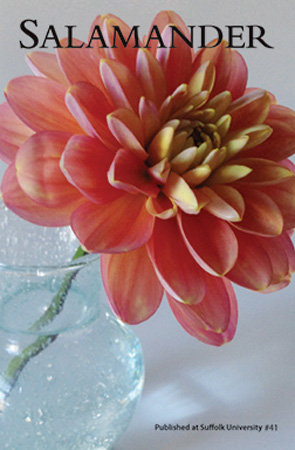
In the Spring/Summer 2020 issue of Salamander, Anne Kilfoyle’s story “Double-Yolked” reminded me of those conversations and feelings. As narrator Keera and her husband Jesse prepare for an emergency evacuation following an unnamed global threat, she reflects:
The last three days have been good days, some of the best. We have been holding our breath but also our problems got smaller. [ . . . ] Our biggest fear wasn’t mass annihilation, it was that we’d have to go back to how things were, back to our jobs and our lives [ . . . ].
Despite their lack of preparation, she feels okay with what’s coming to them, feels capable knowing they have each other, now somehow stronger together, as they move forward.
The short piece is relatable and timely: empty store shelves, last minute orders from Amazon in an attempt to ease the new worries, the uncertainty that surrounds them, and that strange relief of being released from normal life. It can be difficult to read disaster-themed writing while living through a similar situation, but Kilfoyle manages to cover the topic in a way that’s casual and comforting without adding to the current, similar stresses.
Radar Poetry is an online literary magazine devoted to publishing poems from both established and emerging writers. The journal was founded in 2013 by Rachel Marie Patterson and Dara-Lyn Shrager. Each issue features pairings of poetry and visual art, selected by the editors and contributors. They seek to feature visual art that interprets, reimagines, or responds to the poem with which it appears.
Issues are published quarterly and the founders and editors also host workshops and retreats.
Each year, Radar Poetry hosts the Coniston Prize. This award is open to female-identifying poets writing in English. The prize is currently accepting submissions through September 1. This year’s judge is Ada Limón. The winning poet receives $1,500 and publication. $10 reading fee.
Issue 27, published in July, features poetry and art by Lauren Camp, Walker Evans, Jen Jabaily-Blackburn, Dante DiStefano, Honour Mack, Martha McCollough, Jack Delano, and more.
Guest Post by Christopher Linforth
In her debut collection Collective Gravities, Chloe N. Clark offers a dose of the fantastic into the ordinary, and sometimes humdrum, lives of her characters. Twenty-five aesthetically similar stories make up the book, which dilutes the power of the collection as a whole, but shows the range of Clark’s fascination with parallel universes, zombies, and the breakdown of relationships. The strongest stories reveal Clark’s gift as a storyteller and as a purveyor of the weird.
In the collection’s opener “Balancing Beams,” the astronaut narrator Ava struggles with an unknown, debilitating ailment in a futuristic America. In a beautifully written flash of insight, she tells us:
I couldn’t speak for a moment. The weight of words on my tongue. In the Out, there had been so many times I fumbled words, slurred them. They don’t tell you that zero-gravity even affects your tongue. Your mouth can feel so heavy when you try to say something.
Other stories seem to take their cues from B-movies and horror stories and the world of science fiction. Throughout the collection, Clark remakes these historically male-dominated forms to center her stories on women and the deleterious effects of culture on their bodies.
Clark’s debut is a mixed collection, yet it shines so brightly in spots that it’s clear she is destined to wow us with her next book.
Collective Gravities by Chloe N. Clark, Word West Press, 2020.
Reviewer bio: Christopher Linforth is the author of three story collections, The Distortions (Orison Books, 2021), winner of the 2020 Orison Books Fiction Prize, Directory (Otis Books/Seismicity Editions, 2020), and When You Find Us We Will Be Gone (Lamar University Press, 2014).
Buy this book at our affiliate Bookshop.org.
Guest Post by Anthony DiAntonio
Jane Alison’s Mender, Spiral, Explode, is a nonfiction, creative writing guidebook for both writers and avid readers alike. Alison argues that there are multiple ways to craft a narrative, other than the Aristotelian “masculo-sexual arc” we have all come to know and love. Narratives can follow many patterns that we see in nature, like the spiral, the fractal, or even the meandering trail of snails. Alison provides examples from multiple contemporary works of fiction to prove her premise, including Murray Bail’s Eucalyptus, Marguerite Duras’ The Lover, and Sandra Cisneros’ The House on Mango Street. Starting each part with a personal reflection, Alison connects her own experience with these patterns to further validate their influence on human life. Through exquisite vocabulary that fuels a powerful, humorous, and direct work, Jane Alison’s Mender, Spiral, Explode is a must-read for those who admire pattern and design in any narrative.
Meander, Spiral, Explode: Design and Pattern in Narrative by Jane Alison. Catapult, April 2019.
Reviewer bio: Anthony DiAntonio is a high school English teacher at Cumberland County Technical Education Center in New Jersey. He is also currently studying for his Masters in Writing Arts at Rowan University. To achieve his Masters, he will be completing a novel focused on mindfulness, positivity, and moving forward from emotional trauma.
Buy this book from our affiliate Bookshop.org.

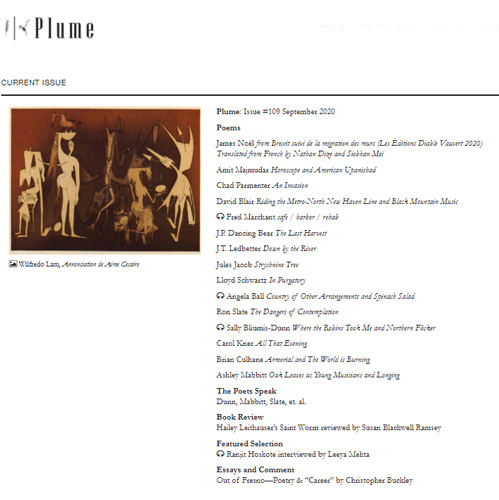
Visit this month’s Plume featured selection: “From Lewisburg to Syracuse: An interview with Bruce Smith by Chard deNiord.” Sydney Lea, in nonfiction, writes “Inviting the Reader: Narrative Values, Lyric Poems” and Donovan McAbee reviews Kontemporary Amerikan Poetry by John Murillo.

The August issue of The Lake features Rey Armenteros, Robert G. Cowser, Rhienna Renèe Guedry, Stella Hayes, Karen McAferty Morris, Anthony Owen, Fiona Sinclair, Shelby Stephenson, Hannah Stone, Grant Tarbard. Reviews of Oz Hardwick’s The Lithium Codex, Jeffrey McDaniel’s Holiday in the Islands of Grief, and J.R. Solonche’s The Time of Your Life.

The latest issue of Colorado Review features fiction by Jessica Treadway; nonfiction by Jennifer Genest; and poetry by Saretta Morgan, M.A. Cowgill, and Matthew Gellman. See other contributors at the Colorado Review website.