Home » NewPages Blog » Page 93

NewPages Blog

At the NewPages Blog readers and writers can catch up with their favorite literary and alternative magazines, independent and university presses, creative writing programs, and writing and literary events. Find new books, new issue announcements, contest winners, and so much more!

Ecotone – Fall Winter 2019

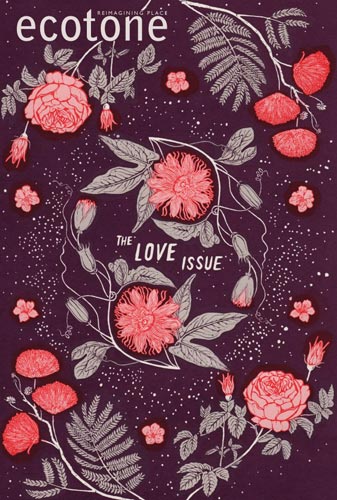
Ecotone - Fall/Winter 2019

Love on the mind? Visit Ecotone‘s “The Love Issue.” Inside, Jennifer Tseng & Amanda Tseng envision their father, Sarah Seldomridge & Eduardo Espada draw the beginnings of a family, Silas House sings of a boy’s first love, and Jennifer Elise Foerster reads Jane Johnston Schoolcraft. Plus, sonnets, rondels prime, sonzals, and brefs double, from Chad Abushanab, Ashley M. Jones, Amit Majmudar, and A. E. Stallings.

Diode Poetry Journal – March 2020

Diode - March 2020

The March 2020 issue of Diode Poetry Journal is with brand new poetry by TR Brady, Brandon Jordan Brown, Sarah A. Chavez, Brian Glaser, Sarah Gridley, Mandy Gutmann-Gonzalez, KA Hays, Kathleen Heil, Janiru Liyanage, Brett Elizabeth Jenkins, Luisa Caycedo-Kimura & Dean Rader, Virginia Konchan, Amit Majmudar, Christopher McCurry, Cindy Hunter Morgan, JoAnna Novak, Meghan Privitello, Iliana Rocha, Daniel Ruiz, Aaron Samuels, Nate Slawson, Kelly Grace Thomas, Svetlana Turetskaya, Jorrell Watkins, Rewa Zeinati, and Jane Zwart.

Cimarron Review – Fall 2019

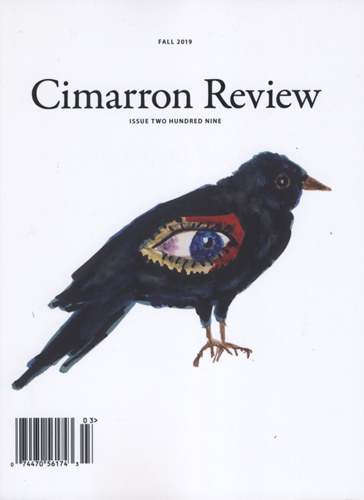
Cimarron Review - Fall 2019

The Fall 2019 issue of Cimarron Review offers poetry by Jacqueline Winter Thomas, Shavahn Dorris-Jefferson, Luke Patterson, Ainsley Kelly, Anne Delana Reeves, Khaleel Gheba, Zach Mueller, Dayna Patterson, Laura Green, Adam Clay, Sophia Stid, Margaret Cipriano, G.C. Waldrep, and Athena Kildegaard; fiction by Robin Becker, Catherine Wong, JP Gritton, and Clancy McGlligan; and nonfiction by Danielle Thien. Our cover art is “Esotrope” by Monica McFawn.

Alaska Quarterly Review – Winter Spring 2020

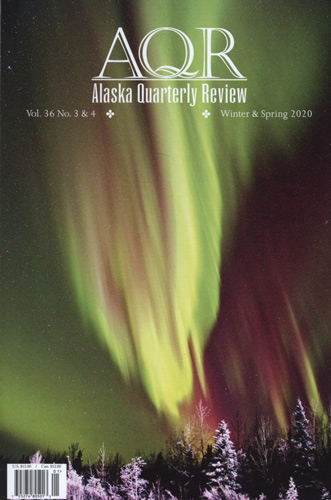
Alaska Quarterly Review - Winter/Spring 2020

AQR’s Winter & Spring 2020 edition features stories by Joy Lanzendorfer, Elise Juska, Matthew Lansburgh, and Patricia Page. Also featured are stories by Katya Apekina, Molly Gutman, Daniel Pearce, and Kirsten Madsen. The edition also includes three engaging personal essays, an exceptional collection of poems by twenty-four poets, and a special anthology “Carrying the Fire: Celebrating Indigenous Voices of Canada.” These voices include Mika Lafond, Billy-Ray Belcourt, Smokii Sumac, Tenille K. Campbell, Francine Merasty, J.D. Kurtness, Brandi Bird, and more.

Qu Literary Magazine – Winter 2020

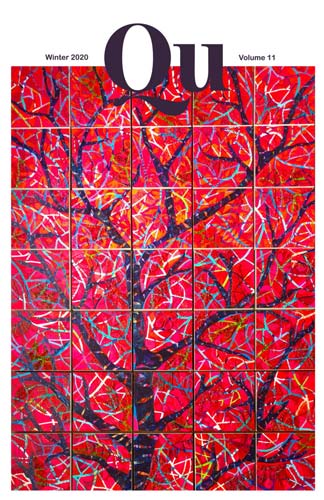
Qu Literary Magazine - Winter 2020

The Winter 2020 issue of Qu Literary Magazine is out. Fiction by Renay Costa and Kevin M. Kearny; nonfiction by Jackie Kenny and Stephanie Dickinson; and poetry by Betty Rosen, nicole v basta, Sara Moore Wagner, Tom C. Hunley, Kelly Weber, and Elsa Ball. Patricia Powell provides “On Listening” in our “The Writing Life” section, and in stage/screen writing: Kate McMorran and Libby M. Gardner.

Cold Mountain Review’s Reaching Inside Project

Cold Mountain Review Reaching Inside Project bannerCold Mountain Review, celebrating more than 40 years of continuous publication, has launched the Reaching Inside Project.

In an effort to be socially conscious members of the literary world, we began the Reaching Inside Project to provide boxes of ten archived copies of the journal (a total cover value of $80) to organizations with an identifiable need.

The first recipients of this project will be prison libraries across the US. People can choose to help them in this effort by sponsoring boxes. The cost is $20 which covers packaging and shipping. You can even choose a specific prison where you want the box sent. Please note that they do not guarantee the specified prison will accept the box, but will try their best.

Southeast Review Offering Full Issues Online in 2020

In a recent article in The Writer, the future of literary magazines was a hot topic and current editors of journals responded with how the literary magazine publishing landscape is evolving. One thing that was clear was that change and adaptation is needed in order for journals to survive.

Southeast Review created an online component to its print publication known as SER TWO: This Week Online in which they published fresh content on a weekly basis. They are now taking things one step further as they hope to transition to fully online.

Beginning with their Spring 2020 issue, they will offer their biannual issues not only in print format, but also entirely online. Read up on this change in Editor-in-Chief Zach Linge’s Letter from the Editor.

Zizzle Literary Branches Out in 2020

Zizzle Literary launched as a flash fiction literary magazine for families in 2018. Since its inception, it has morphed into a short story anthology series for readers young and old.

Zizzle Selects coverZizzle is now evolving into a small press and hopes to begin to offer novels, graphic novels, and short story collections in the near future. The first of their new offerings, Zizzle Selects, will be released in June 2020. This anthology for teens features flash fiction stories from previous issues of Zizzle Literary and includes a discussion guide.

Patricia Powell “On Listening” in Qu Winter 2020

Qu: a Literary Magazine logoQu, the literary magazine from Queens University of Charlotte, features regular articles on The Writing Life.

Patricia Powell, author of Me Dying Trial, A Small Gathering of Bones, The Pagoda, and The Fullness of Everything, dives into how listening is purposeful, and sometimes down right difficult, not only in workshops and writing, but in our everyday lives and our relationships.

When we write we are listening. We often choose a quiet place free from noise and interruptions and close the door. We still the thinking, chattering mind and slowly tune inward. We sit, our bodies like giant ears, waiting for the sound under all things to burp into consciousness.  This kind of full-bodied listening provides spaciousness for the work to show up without pressure, for the work to be.

[ . . . ]

Deep Listening can often lead to right speech and right action. We must listen before we act. We must not slouch in our efforts to fight for climate and food and housing justice. We must not slouch in our efforts to fight for racial and gender and wage justice.

Read Powell’s full article in Qu‘s Winter 2020 issue.

Blood Orange Review Vol. 11.2

Blood Orange Review v11.2 screenshotOnline literary magazine Blood Orange Review released Volume 11.2 in January 2020. This issue was delayed a bit as they worked hard on relaunching their site with a new design.

The majority of artwork featured in this issue was gathered from visual art MFA students at Washington University: Siri Margaret Stensberg, Stephanie Broussard, and Kelsey Baker. Also featured in this issue is art from Sarah Hussein who hales from Egypt.

Besides art, find poetry by Hussain Ahmed, Benjamin Bartu, John Byrne, Isiah Fish, Joseph Gunho Jang, Maya Marshall, and Kim Young; nonfiction by Sarah Rose Cadorette, Kelly Hill, and Austin Maas; and fiction by Wandeka Gayle, Arielle Jones, Sakae Manning, Lois Melina, and Joel Streicker.

Blood Orange Review is currently open to general and contest submissions.

CRAFT 2019 First Chapter Contest Winners

CRAFT 2019 First Chapters WinnersOnline literary magazine CRAFT published the winners of its 2019 First Chapters Contest over the course of February.

The contest was judged by Naomi Huffman of MCDxFSG and FSG Originals.

In first place is “Paradise Pawn” by Meg Richardson.

In second place is “Little Squirrel” by Tim Hickey.

In third place is “Empire of Dirt” by Jonathan Bohr Heinen.

See the full list of finalists, honorable mentions, and read the first chapters at their website.

Jessica Lind Peterson 2020 Deborah Tall Lyric Essay Book Prize Winner

Jessica Lind PetersonIn December of 2019, Seneca Review announced the winner of its annual Deborah Tall Lyric Essay Book Prize.

Final judge Jenny Boully selected Living Room Horses by Minnesota-based essayist and playwright Jessica Lind Peterson. The book will be published in November 2020.

Finalists:
Vanessa Saunders, The Flat Woman
Dennis James Sweeney, You’re the Woods Too
Nance Van Winckel, Sister Zero

Alongkian Writer Conferences June 2020 New York Pitch Conference

New York Pitch Conference headerAlgonkian Writer Conferences hosts the New York Pitch Conference and writers workshop four times a year. The next event is taking place June 18 through 21. Their goal is to help set writers on a realistic path to publication.

This event focuses on the art of the novel pitch “as the best method not only for communicating your work, but for having you and your work taken seriously by industry professionals.”

The registration fee will go up after June 13. Learn more…

Runestone Interview with John Ostrander

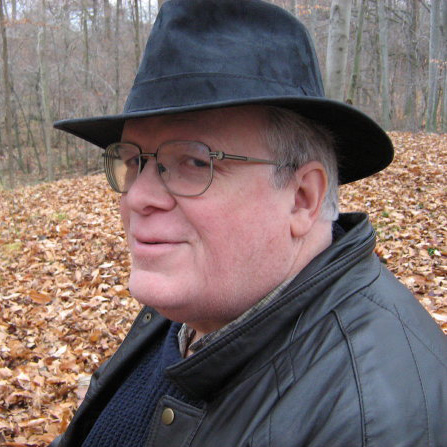
John Ostrander
Photo Credit: Hieu Minh Nguyen

Runestone Volume 6 was released at the end of February and features an interview with John Ostrander, prolific writer of comics in the the DC, Marvel, and Star Wars universes.

Ostrander answers questions about comics he loved as a child (he had to hide super hero comics from his mother), the challenges of joining an already well-established comics universe, and how involved in the process he was for his comics being adapted into films.

In terms of working minorities and more diverse characterization in, I’m very proud of that.  One of the characters I created was Amanda Waller for The Suicide Squad.  There was no one like her at the time, and really not many like her since then.  When I was first working on it, I knew that as the head of it I wanted someone who was not super-powered, I wanted someone who was African American, I wanted a female, I wanted someone slightly older, and I wanted them to be tough as nails.

Read part one of the interview with Ostrander here.

AWP: Money for nothin’ and the drinks aren’t free

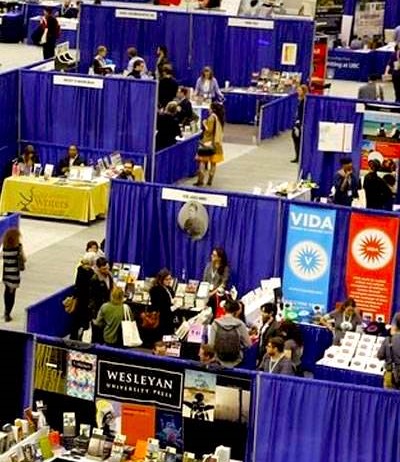
AWP imageThe Problem of Money and Access at AWP. By Alison Stine, Lit Hub.

Is it possible to attend AWP if you’re poor? If you’re not going to be reimbursed by a university, should you even bother? The short answer is: I did it, and many others do too—but it can be a lonely and difficult experience.

…Though AWP was funded to serve writers teaching at the college level, more and more writers just can’t get those jobs, especially not writers of color, women writers, or writers who are disabled. There just aren’t that many jobs anymore to get. More and more, it’s writers outside of academia who participate in AWP—not just to attend, but to present and give readings—and who shoulder expenses themselves.

…It’s not illegal to discriminate against the poor. But when 60 percent of college students face food insecurity every month; when academia runs on the exploitation of adjuncts’ labor; when tenure track professors give lectures to hordes of students, only a fraction of whom will ever obtain jobs in the profession in which they trained (and often paid dearly for), it seems glaringly insensitive not to directly address the deep and systematic income inequalities of the field.

The Georgia Review Special Issue Dedicated to the 2020 Census

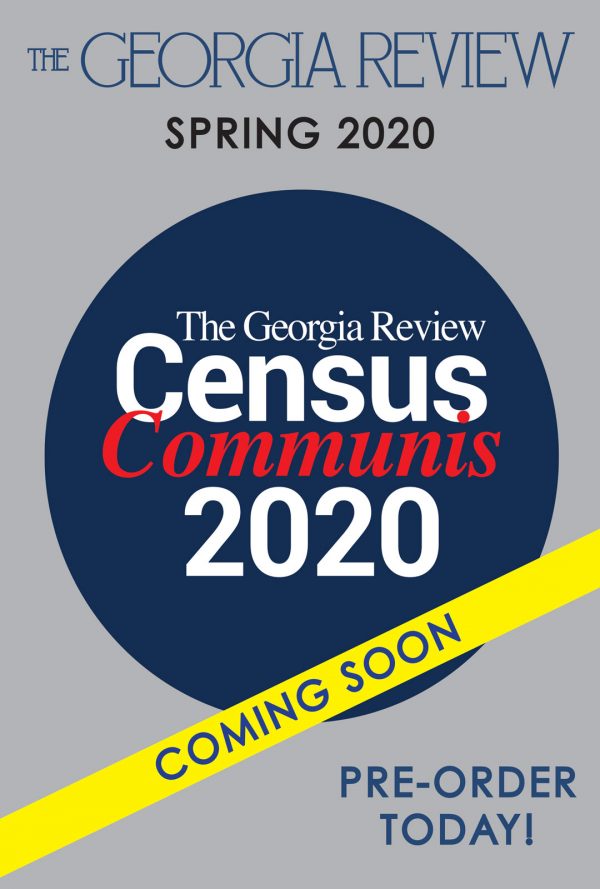
The Georgia Review Spring 2020 issueThe Georgia Review‘s Spring 2020 issue will focus on the 2020 U.S. Census. They currently have this special issue available for pre-order for $15.

Featured in this issue you will find work by Coleman Barks, Lauren Berlant and Kathleen Stewart, Lawrence-Minh Davis, W. Ralph Eubanks, LeAnne Howe, Gary Paul Nabhan, Jenni(f)fer Tamayo, Joshua Weiner, Karen Tei Yamashita, and many more.

And if you decided to go to AWP 2020 in San Antonio, they are there at Booth 862. Drop by, say hi, and pick up some swag.

Vote for Your Favorite Lake Covington Couple

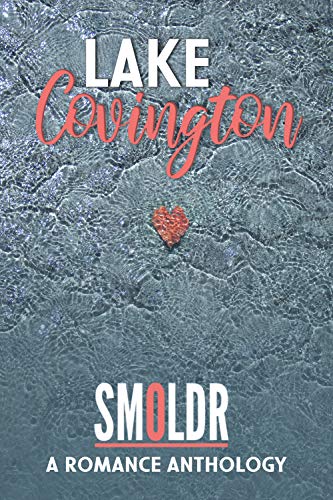
Lake Convington coverThe people behind literary magazine Gold Man Review started SMOLDR back in 2018 with the launch of a writing contest for romance stories based around fictional characters living in Lake Covington.

They released Lake Covington on Valentine’s Day this year and are now accepting votes through March 14 for readers to choose their favorite couple. The top three writers whose couples are chosen will receive cash prizes. Grab your copy of the anthology today and vote for your couple.

Oh, and don’t forget that Gold Man Review is currently open to submissions from West Coast writers for their annual issue through May 1.

Rattle – Spring 2020 Feature

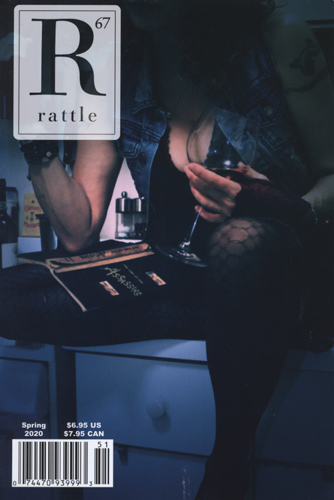
Rattle - Spring 2020Rattle’s special features always help spice up an issue. It’s fun to see what has been included in each issue’s theme and how the writers fit inside it. In the Spring 2020 issue, readers can find a “special tribute section of poems written by students of Kim Addonizio’s poetry workshops (as well as one poem by Kim herself).” An interview with Addonizio is also included after the poetry selections. In addition to her poems, there are pieces by sixteen of her students covering a wide array of topics. Parenthood, love for pets, politics, sex, and suicide just scratch the surface of what these poets focus on in this feature. Grab yourself a copy of this issue of Rattle to discover the full selection Addonizio and her students offer us.

“On Our Toes” by Cristina Rivera Garza

World Literature Today - Winter 2020Magazine Review by Katy Haas

In the past couple years, it has been difficult not to notice the hashtags #MeToo or #TimesUp filling up timelines across the internet. But while so heavily focused on what’s going on in the United States, and despite the connection of social media, many of us have been able to overlook what’s happening in other countries, including one bordering our own. Cristina Rivera Garza in “On Our Toes: Women against the Femicide Machine In Mexico” in the Winter 2020 issue of World Literature Today sheds light on #RopaSucia, which was used “to showcase incidences of misogyny in academic institutions and cultural circles”; #MiPrimerAcoso, stories of “my first harassment”; and #MeToo as tools used by feminists throughout Mexico as they fight to make changes for women in their country.

Continue reading ““On Our Toes” by Cristina Rivera Garza”

Killer Nashville 2020 Registration Deadlines

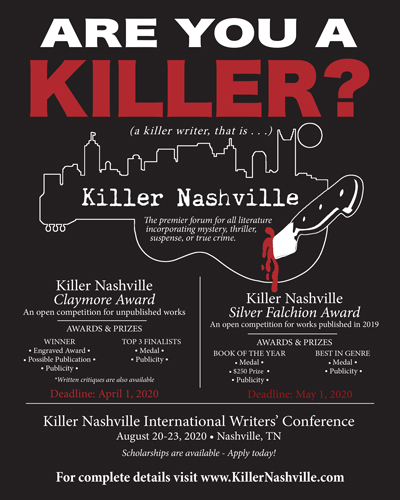
Killer Nashville 2020 ContestsKiller Nashville is the premier forum for all genres incorporating elements of mystery, thriller, or suspense. It brings together forensic experts, writers, and fans of the genre for a weekend in August in Franklin, Tennessee.

The 2020 conference takes place August 20-23. The early registration deadline is March 31 with August 19 being the regular deadline.

They also offer writing contests for both published and unpublished works with winners receiving discounted registration. Learn more…

Superstition Review Author Talk with Todd Dillard

Photo from Superstition Review

If you didn’t already know, online literary magazine Superstition Review offers a wonderful series called Authors Talk. The latest installment in this series features Todd Dillard going to Twitter to answer questions by his followers. Topics range from writing to craft to cats to . . . Ninja Turtles.

Todd Dillard’s debut poetry collection “Ways We Vanish” is currently available for pre-order. Checkout the podcast to learn how Todd curated this collection and his thoughts about poetry and craft in general.

9th Annual Chesapeake Writers’ Conference

Chesapeake Writers' Conference logoApplications are being accepted on a rolling basis for the 9th annual Chesapeake Writers’ Conference. The event takes place June 21 through 27. This year’s faculty includes Liz Arnold, Matt Burgess, Patricia Henley, Crystal Brandt, Angela Pelster, and Matthew Henry Hall.

This year they will be offering workshops in songwriting along with workshops in fiction, poetry, screenwriting, translation, and creative nonfiction. They also offer craft talks, lectures, readings, and panel discussions, plus a youth workshop.

Scholarships, course credit, and continuing professional development are also available. There is no fee to apply. Learn more…

Raleigh Review 2020 Flash Fiction Contest Winners

Raleigh Review - Spring 2020The Spring 2020 issue of Raleigh Review features the winner and two runners-up of the 2020 Flash Fiction Contest. The winner received $500 and publication, and the runners-up received Raleigh Review’s standard $15 payment as well as publication. The pieces are set apart in the latest issue with pages bordered in blue for the winner and purple for the runners-up.

Winner
“The Museum of Forgotten Emotions” by Alexander Weinstein

Runners-up
“Cezanne” by Alexander Steele
“The Year of Transformation” by Sarah Hardy

The Raleigh Review Fiction Team served as this year’s judges. The 2020 contest opened on July 1, 2019, so check back this summer for details on the 2021 contest.

“Tent People” by Kate Arden McMullen

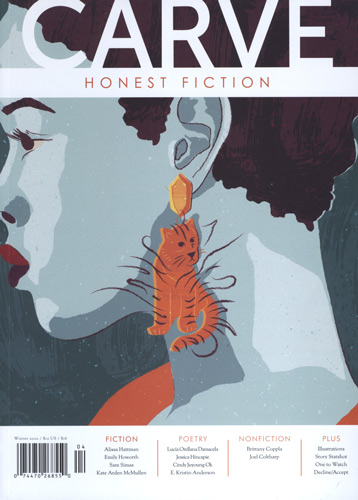
Carve Magazine - Winter 2020Magazine Review by Katy Haas

Carve Magazine never fails in bringing readers fresh fiction. In the Winter 2020 issue, Kate Arden McMullen opens her story “Tent People” with a paragraph introducing our narrator, Baby, and her family: Lily, Elis, and Daddy. As the scene unfolds, Baby’s mother is notably absent. The story wraps around this absence as Baby wanders around in her newly found womanhood (“I’m full-grown now Mama says since I got my first-ever period last month,” she notes). Continue reading ““Tent People” by Kate Arden McMullen”

Take a Walk Down “One Narrow Street in Tokyo”


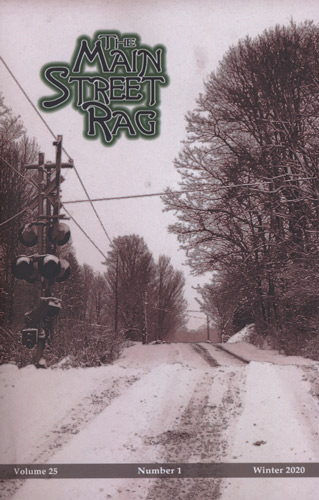
The Main Street Rag - Winter 2020Magazine Review by Katy Haas

There’s something simple and sweet in “One Narrow Street in Tokyo” by L. Davis, published in the Winter 2020 issue of The Main Street Rag, and it’s that simplicity that drew me into it. The language is sparse, and so is the poem itself, taking up just a tiny sliver of text on each side of the page.

Davis captures a small section of time in which life changes for a girl, a life so fleeting compared to that of the shrine she passes. A nearly mystical aura lingers around the fox that watches from its home in the shrine. Davis uses no punctuation used in this piece, sweeping readers up into the scene and to the end in one seamless motion. I read it over and over, letting it wash over me, my eye originally caught by the poem’s formatting. Short and sweet, it’s a good place to start with this issue of The Main Street Rag.


About the reviewer: Katy Haas is Assistant Editor at NewPages. Recent poetry can be found in Taco Bell Quarterly, petrichor, and other journals. She regularly blogs at: https://www.newpages.com/.

Prism Review: Fiction & Poetry Contest Winners

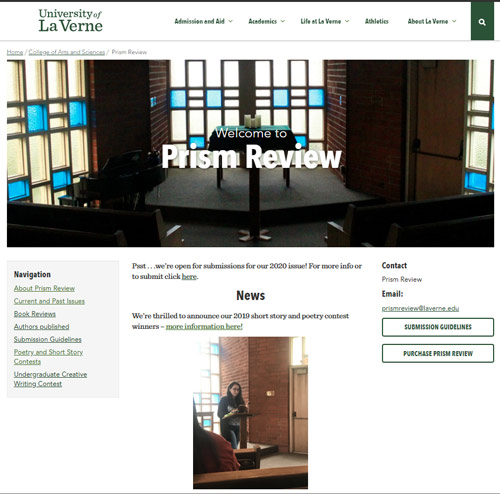
Prism Review HomepagePrism Review has announced their 2020 contest winners!

Short Fiction: Alan Sincic, “Porter Must Be Stopped”
Judge Aurelie Sheehan: ” “Porter Must Be Stopped” could not be stopped. The language tumbles and collides and crests and takes a breath and rolls in again, and somehow all the world is poised and spinning on the fingertip of a storyteller for our pleasure. The story relies on and is in service to beauty—it conjures beauty out of thin air.”

Poetry: Anna Sandy-Elrod, “Only Two”
Judge Michelle Brittan Rosado: “In “Only Two,” the speaker transforms the difficulty of communicating into a charmingly awkward dance of pairs. These (mis)matchings include the Spanish and Portuguese spoken respectively by the customer and shopkeeper; the unnamed city’s buildings appearing “blue against blue, pink against cream”; and the imagined “two small cups on a plate” as metaphor for the speaker and their lover. This poet reminds us of the inadequacy of language to capture the true experience, even as it assures us that we can be both “failed and triumphant.” ”

Both winners receive $250 and will be published in the next issue. The editors thank all the entrants—the decisions were not easy!

The Writer’s Hotel 2020 Application Deadlines

The Writer's Hotel logoThe Writer’s Hotel’s All-Fiction Conference will take place June 3 through 9 in NYC. The deadline for writers to apply is March 22 at midnight. There is a $30 application fee.

Faculty this year includes Rick Moody, Jeffrey Ford, Robyn Schneider, Michael Thomas, Ernesto Quiñonez, James Patrick Kelly, Elizabeth Hand, Francine Prose, Saïd Sayrafiezadeh, Sapphire, Elyssa East, Kevin Larimer, Steven Salpeter, Jennie Dunham, Shanna McNair, and Scott Wolven.

New in 2020: The Writer’s Hotel is now offering NYC Weekends which are shorter conferences in the genres of poetry and nonfiction.

The deadline to apply to the Poetry Weekend is listed as March 15. This conference will take place May 21 through 25. Faculty for this event includes Mark Doty, Marie Howe, Terrance Hayes, Nick Flynn, Deborah Landau, Alexandra Oliver, Kevin Larimer, Jenny Xie, Shanna McNair, and Scott Wolven.

The Poetry Weekend is capped at 40 participants. There is a $30 fee to apply. If they reach 40 participants before the deadline, the application form will close early.

The Nonfiction Weekend will take place October 1-5. Faculty this year includes Mark Doty, Meghan Daum, Hisham Matar, Honor Moore, Elyssa East, Saïd Sayrafiezadeh, Shanna McNair, and Scott Wolven.

The Nonfiction Weekend is capped at 40 participants. There is a $30 fee to apply.

 

Nimrod – Spring Summer 2020

Nimrod Spring/Summer 2020

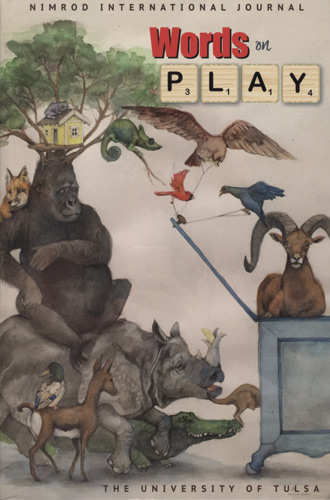
The theme for Nimrod‘s latest issue “Words at Play” sounds like a lot of fun. Learn more about it: featuring fiction by Gauraa Shekhar, Sean Bernard, Jackson Ingram, and Alison Ho; nonfiction by JJ Peña; and poetry by James Toupin, Joanna Gordon, Michelle Penn, Wendy Drexler, Holly Painter, Gabriel Spera, Amy Miller, Matthew J. Spireng, George Looney, Ellen Kombiyil, Margot Kahn, Myra Shapiro, Cindy Veach, Katy Day, Marjorie Maddox, Brooke Sahni, Ella Flores, Madeline Grigg, Jean-Mark Sens, Nicholas Yingling, and more.

Poetry – March 2020

Poetry - March 2020

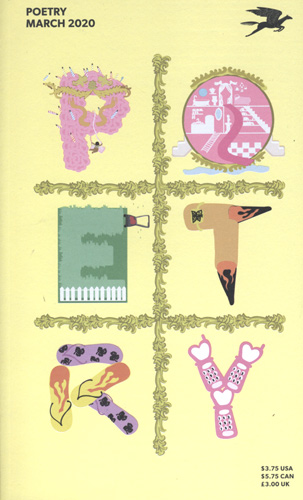
The cover of Poetry‘s March 2020 issue is inviting. Learn what’s inside: a “Latinext” feature with work by Willie Perdomo, Féi Hernandez, Naomi Ayala, J. Estanislao Lopez, Stephanie Roberts, Roberto Carlos Garcia, Ashley August, Nicole Sealey, Noel Quiñones, Virgil Suárez, P.E. Garcia, Benjamín Naka-Hasebe Kingsley, Sergio Lima, Anthony Morales, Anaïs Deal-Márquez, Lupe Mendez, and Melinda Hernandez. Plus more poetry by John McAuliffe, Douglas Kearney, Robin Gow, Jennifer Chang, Suzi F. Garcia, Luther Hughes, Yusef Komunyakaa, John Kinsella & Thurston Moore, Caroline Bird, and more. Nonfiction by Matthew Bevis.

Raleigh Review – 10.1

Raleigh Review - Spring 2020

This issue of Raleigh Review features the winner of the flash fiction contest, Alexander Weinstein, and runners-up, Alexander Steele and Sarah Hardy. Plus new fiction from Michael Horton, Laura Marshall, Casey McConahay, Jeff McLaughlin, AJ Nolan, and Mark Wagenaar, and new poetry by Threa Almontaser, Kyce Bello, Despy Boutris, Lupita Eyde-Tucker, Charlotte Hughes, Kamal E. Kimball, Sandy Longhorn, Aimee Seu, Lena Khalaf Tuffaha, and more. This issue also features the art of Stacey Cushner, and an interview with Patricia Henley.

The Lake – March 2020

The Lake - March 2020

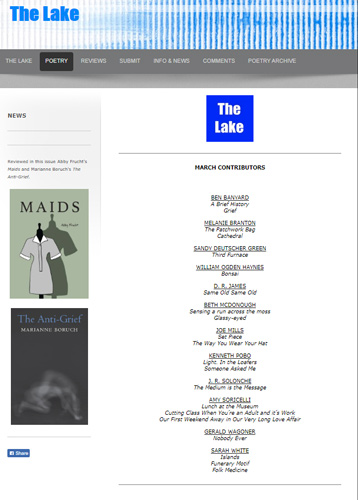
The Lake brings readers poetry every month. The March issue includes poems by Ben Banyard, Melanie Branton, Sandy Deutscher Green, William Ogden Haynes, D. R. James, Beth McDonough, Joe Hills, Kenneth Pobo, J. R. Solonche, Amy Soricelli, Gerald Wagoner, Sarah White. Reviews of Abby Frucht’s Maids and Marianne Boruch’s The Anti-Grief.

Cherry Tree – No. 6

Cherry Tree - 2020

Cherry Tree‘s sixth issue features work by Diannely Antigua, Destiny O. Birdsong, Mirande Bissell, Jennifer Bullis, Lauren Camp, Hannah Cohen, Bailey Cohen-Vera, Raymond Deej, Dante Di Stefano, Jen Stewart Fueston, Jeannine Hall Gailey, David Groff, Christian Gullette, Steve Henn, Korey Hurni, Ashley M. Jones, Kasey Jueds, Toshiya Kamei, Genevieve Kaplan, Olivia Kingery, Mingpei Li, Alice Liang, Sarah Lyons-Lin, Angie Macri, Ann Stewart McBee, Afopefoluwa Ojo, JJ Peña, Robert L. Penick, Emilia Phillips, Caroline Plasket, Alec Prevett, Sara Ryan, F. Daniel Rzicznek, Martha Silano, DeAnna Stephens, Anne Dyer Stuart, Yerra Sugarman, Ojo Taiye, Adam Tavel, Yasumi Tsuhara, Elsa Valmidiano, Hannah VanderHart, April Wang, and Art Zilleruelo!

Allegro Poetry Magazine – No. 24

Allegro Logo

Allegro Poetry Magazine has recently moved to a biannual publication schedule. This issue’s contributors include Judith Russell, Michael G. Casey, John Grey, Leslie Tate, Ruth Taaffe, Dan Overgaard, Ken Cumberlidge, William Snyder, Beth McDonough, Holly Day, Goran Gatalica, Kate Noakes, Aaliyah Cassim, Awósùsì Olúwábùkúmí A, Phil Wood, Gordon Gibson, Sean Howard, Michael Burton, Julia White, Julie Mullen, and Michele Waering.

Calling all censors!

Tennessee libraries bill graphicTennessee Becomes Second State to Propose ‘Parental Review Boards’ for Public Libraries. Publishers Weekly.
The controversial bills propose to give elected “parental review boards” the power to decide which “age-appropriate” materials can be accessible to minors within a public library, with librarians who don’t comply with the board’s decisions subject to prison time.

“Public librarians around the country are often put in the uncomfortable position of standing up for free speech in their own institutions, and refusing to take down a book simply become some members of the community object,” Tager said. “Apparently the sponsors of this Act feel that this should be treated as criminal conduct when it’s actually librarians simply doing their jobs.”


7 Writers to Rediscover This March

women's history month graphic7 Writers to Rediscover This March. Powell’s City of Books Blog.

Women authors, particularly queer authors and authors of color, have frequently been relegated to the dustbin of history while their male contemporaries have been added to the Western canon and taught in classrooms ad infinitum. Some women are successful in their lifetimes, but, overshadowed by their male contemporaries, fall out of print and the collective consciousness after their deaths. Others languish in obscurity during their most prolific years and find recognition only at the end of their lives; or, they are recognized posthumously, when the mores of society catch up with them.

In celebration of Women’s History Month, here are seven authors who were underappreciated in their lifetimes, or who were forgotten and deserve to be better known.

What does the Future Hold for Literary Magazines?

The Writer talks to editors of literary magazines to gain insight into the future of publishing in “What does the future look like for literary magazines?

The problem is that more people want to get published than want to read.

Print journals have seen a decrease in subscriptions which has cut into already minuscule budgets to produce issues and pay writers. But while subscription numbers can be seen decreasing…submissions are on the upswing.

Take a look at what current editors of both online and print magazines have to say about trying to stay afloat in the precarious world of literary publishing and foraying not only into online-only content, but into other ventures to keep their journals alive.

The Gettsyburg Review – Autumn 2019

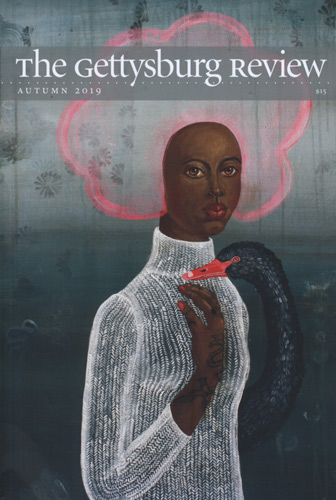
Gettysburg Review - Autumn 2019The Autumn 2019 issue of The Gettysburg Review offers readers a great selection of poetry and prose as usual, from Alice Friman’s “Hygiene,” which utilizes breasts as a way to measure time and maturity in a sort of tongue-in-cheek way, to the 55-part essay “A Brief Account of Certain Left-Leaning Tendencies” by Valerie Sayers which highlights her father by using the word “left,” to digestible words of wisdom in three poems by Joyce Sutphen.

But what really left me enamored was the art feature. Nine paintings by Anne Siems grace the pages and cover of this issue. The portraits are whimsical and magical, using creative patterns and images of nature to create portraits that draw viewers in. More little details pop out the longer one looks. People become one with nature—mushrooms cloud around a body in “We Are All Connected,” animal heads sprout from hands like puppets in “Beasts,” antlers grow from the head of an animal-surrounded girl in “Eve Dreams of a Wolf.” These works are gorgeous and give readers a good reason to stick around within the pages of this issue long after they’ve gotten their share of words.

The Hampden-Sydney Poetry Review – Fall 2019

Hampden-Sydney Poetry Review - Winter 2019Magazine Review by Katy Haas

I’m ready for spring to hurry up and get here already, so I couldn’t help gravitating toward poems featuring plants in the Fall 2019 issue of The Hampden-Sydney Poetry Review.

Tara Bray focuses on plants in all three of her poems: “Inside the Sycamore,” “Milkweed: Doxology,” and “Lemon Verbena.”  She writes with a hushed appreciation and admiration for each of these. There’s a familiarity and softness in her words. She calls the lemon verbena “sister,” she and her family fit themselves inside the sycamore, she feeds off the milkweed, a deep connection tying her to each plant.

This makes me appreciate Brian McDonald’s “Basil,” found on the following page, that much more. He heads in the completely opposite direction, beginning his poem with much less adoration: “Fuck. Another summer of trying to grow / these oily leaves I’ve always let fry / in the heat.” The basil plants lead McDonald to consider his shortcomings: other plants that have died in windowsills and his uncertainty about whether he’s treating his wife how she should be treated. He’s open and honest, deeply human, all with the help of these fragile basil plants.

It will still be cold here in Michigan for at least another month or two, so I definitely appreciate the writers that are able to deliver me from the chilliness and drop me in the middle of a sycamore or a warm backyard, a tray of basil plants in hand.

Advice for the AWP Newbie from an AWP Oldie

brevity blog awp graphicAdvice for the AWP Newbie from an AWP Oldie. By Suzanne Roberts, Brevity Blog.

Pace Yourself. Put together a schedule of things you want to attend, but don’t try to go to a panel in every time slot. Shoot for no more than two panels a day, and try to hit the keynote readings. I can’t tell you how happy I am that I got to see people like W.S. Merwin, Seamus Heaney, Grace Paley, and Dereck Walcott read now that they are gone.  Seeing these luminaries was more memorable than those times I went to a 26-person marathon reading in a crowded bar with bad free beer…


2019 Constance Rooke Creative Nonfiction Prize Winner

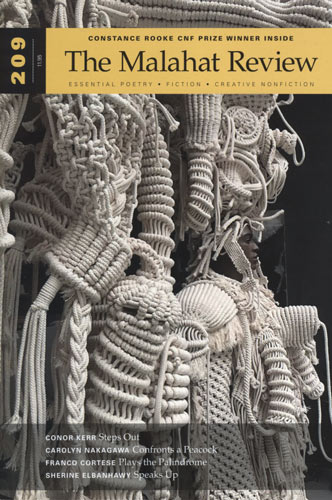
The Malahat Review - Winter 2019The Malahat Review annually hosts the Constance Rooke Creative Nonfiction Prize. The editors consider submissions of “a genre that embraces, but is not limited to, the personal essay, memoir, narrative nonfiction, social commentary, travel writing, historical accounts, and biography, all enhanced by such elements as description, dramatic scenes, dialogue, and characterization.” The Winter 2019 issue features the 2019 winner, chosen by Judge Yasuko Thanh: “Bat Reign” by Jeanette Lynes.

In an interview, Thanh said she was looking for “A story with a heartbeat, the ring of truth; to be surprised on every page with turn of phrase, or metaphor, or image so apt it’s breathtaking. Insight. A climactic “punchline” in the sense that its timing is perfectly paced and creates a resolution as inevitable as unexpected.”

Pick up a copy of the Winter 2019 issue of The Malahat Review to see how Lynes meets these expectations with “Bat Reign,” and check back in May of this year for details on the 2020 prize.

Don’t be afraid to let children read graphic novels.

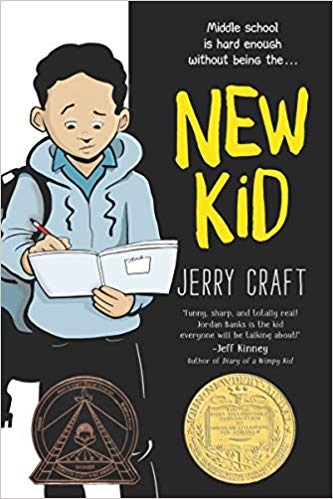
new kid graphicDon’t be afraid to let children read graphic novels. They’re real books. By Karen MacPherson, Washington Post.

The kids are on board with comics, and so are many publishers, librarians, teachers and literary award givers. I’m hopeful that still-reluctant parents and educators are coming around. Whenever I encounter resistance, I think of what Robin Brenner, teens librarian at the Public Library of Brookline, Mass., and founder of the “No Flying No Tights” website, said: “Comics are not intended to replace prose. They are just one way to tell a story. But they can be as demanding, creative, intelligent, compelling, and full of story as any book.”

A dirty secret: you can only be a writer if you can afford it

make money writing graphicA dirty secret: you can only be a writer if you can afford it

When students ask me for advice with regard to how to “make it as a writer”, I tell them to get a job that also gives them time and space somehow to write; I tell them find a job that, if they still have it 10 years from now, it wouldn’t make them sad. I worry often that they think this means I don’t think their work is worthy; that I don’t believe they’ll make it in the way that they imagine making it, but this advice is me trying help them sustain themselves enough to make the work I know they can.
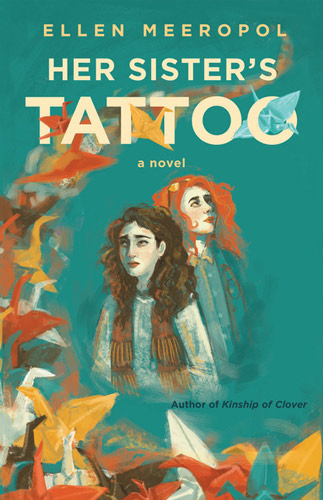
‘Her Sister’s Tattoo’ by Ellen Meeropol

Her Sisters Tattoo - Ellen MeeropolBook Review by  Jacqueline Sheehan

I’ve been a fan of Ellen Meeropol’s novels for ten years. Her three previous books merged personal drama with social justice. But not until Her Sister’s Tattoo has Meeropol so masterfully grasped the political strife in our country since the 1960’s. And as a true novelist can do, she allows us to experience the turmoil through the intimate lives of two characters whom we come to know and understand.

Rosa and Esther Levin are caught up in the passion and violence of the anti-war protests of 1968 in Detroit. When protest marchers are bloodied by the mounted police, the sisters spontaneously take an action to distract the police that would seem innocuous, even childlike. They hurl apples at the police. But a horse is spooked and a police officer is horribly injured. In that one moment, their lives change in unimaginable ways, driving a brutal wedge between the two sisters that will endure for decades. The dynamics of loyalty to family and one’s conscience become the battleground for a truly American novel.

Late in the book, (I’m not giving anything away here) a character says, “The Levin sisters taught me it’s not your family that determines who you become. It’s not even your abilities. Your choices define you.”

We all make choices every day that define us, but some of us make choices with more lethal consequences. Will our loyalties reside first with our loved ones, or should we sacrifice even our freedom to a larger belief in what is right? Meeropol pulls back the curtain on the lives of two sisters in the midst of this and by doing so, pulls back the curtain on a history of political activism that reverberates through time. For those with an eye for politics and fiction, Ellen Meeropol’s novel will not disappoint.


Her Sister’s Tattoo by Ellen Meeropol. Red Hen Press, April 2020.

About the reviewer: Jacqueline Sheehan, is a New York Times Bestselling author and a psychologist. Her novels include, The Comet’s Tale a novel about Sojourner Truth, Lost & Found, Now & Then, Picture This, The Center of the World, and The Tiger in the House. She also writes essays including the New York Times column, Modern Love. She is one of the founders and former president of The Straw Dog Writers Guild in Western Massachusetts. She teaches workshops at Writers in Progress in Northampton.

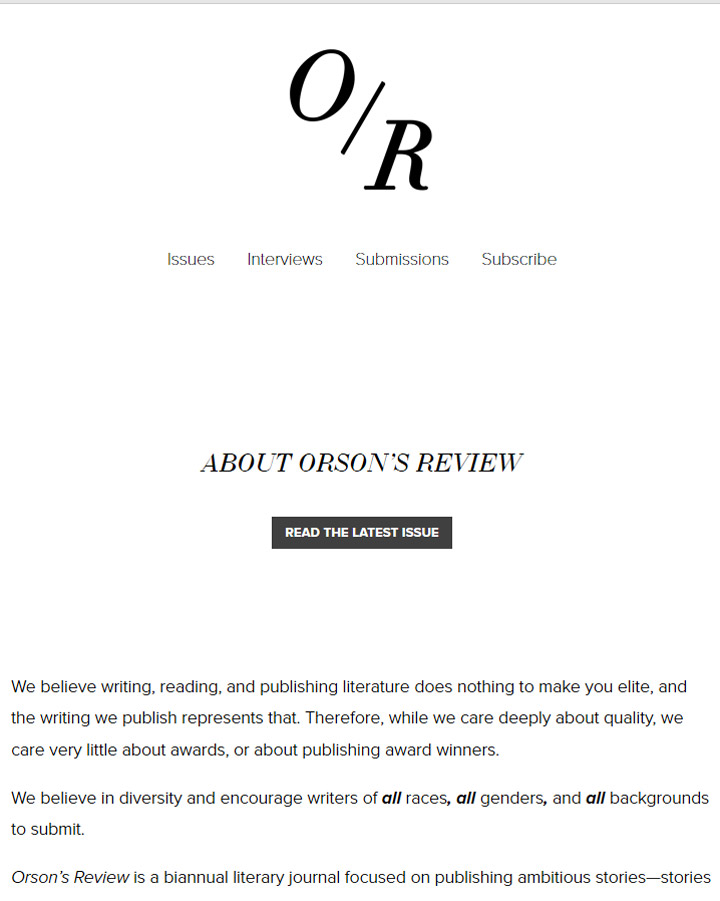
Orson’s Review has a New Website

Orson's Review screenshotBiannual online literary magazine Orson’s Review has a new website. It was formerly included on the website of parent company Orson’s Publishing, but has now branched off on its own.

The new site has a nice, minimalist design to highlight the work published.

All the archives have moved as well so you can read issues one through three on the new site. Plus, you can read interviews with contributors. Don’t forget to subscribe to receive notifications when Issue 4 is released soon.

Rattle – Spring 2020

Rattle - Spring 2020

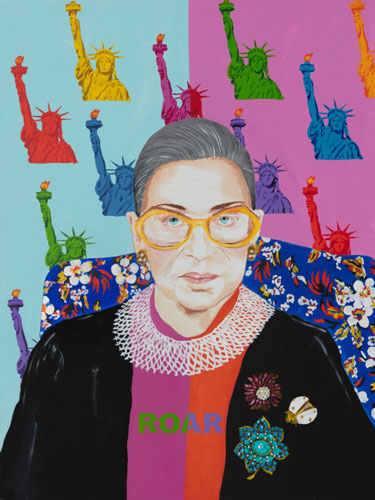
The Spring 2020 issue of Rattle features a special tribute section of poems written by students of Kim Addonizio’s poetry workshops (as well as one poem by Kim herself). In the open section, the poems themselves are as good as their titles: “The Cow I Didn’t Eat.” “Social Experiments in Which I Am the [Bear].” “Ode to the Mattress on the Side of the Interstate.” Diverse as always, the new issue features a poem written in “the imagined voice of Frida Kahlo” (Barbara Lydecker Crane), “Young Dyke” by Alison Hazle, a duo of triolets by Carolyne Wright, and much more.

New Orleans Review – Winter Spring 2020

New Orleans Review - Winter/Spring 2020

Find out more about the new online version of New Orleans Review. Contributors: Danley Romero, Kaylie Saidin, Britton Hanson, Maria Kuznetsova, Apryl Lee, Diana Valenzuela, Anna Claire Hodge, Ryan Burgess, Rage Hezekiah, Julia Cohen and Lisa Nikolidakis. Cover by Ashley Longshore.

Fiction Southeast – Feb 2020

Fiction Southeast logo

Fiction Southeast publishes work on a rolling basis. Contributors this year include work by Robin Littell, Ziaul Moid Khan, Jason Graff, Marianne Rogoff, Dakota Canon, Vandana Khanna, Andrea Jarrell, Jessica Love, Richard Sogliuzzo, Annie Mountcastle, Kay Sloan, Staci Mercado, and Mike Wilson.

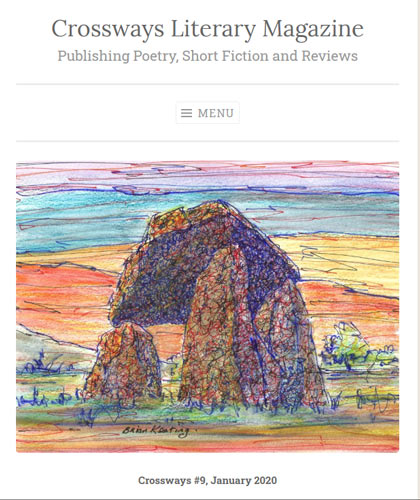
Crossways Literary Magazine – No. 9

Crossways - January 2020

This issue includes poetry by Sinead McClure, Mary Kathryn Jablonski, Timothy Gordan, Beth McDonough, Milton Ehrlich, Breda Joyce, Susie Gharib, Alun Robert, and more; fiction by Patrick Doherty, J. Scott Hardin, Chuck Teixeira, Max Dunbar, and Fiona Billie Lawlor; and a book review by Nicola Spendlove. [no website]

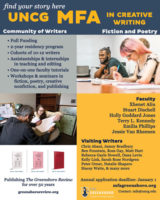
Program :: University of North Carolina Greensboro MFA

UNCG MFA Winter 2020 LitPak FlierApplication Deadline: January 1 (annually)
One of the oldest creative writing programs in the country, UNC Greensboro’s MFA Writing Program offers fully funded graduate assistantships with stipends, tuition remission, and subsidized health insurance. The MFA is a two-year residency program with an emphasis on studio time for the writing of poetry or fiction. Students work closely with acclaimed faculty in one-on-one tutorials and small classes, including courses in contemporary publishing and creative nonfiction. Our campus features a Distinguished Visiting Writers Series of authors and editors; other professionalization opportunities include college teaching and hands-on editorial work for The Greensboro Review. More at mfagreensboro.org and greensbororeview.org.