Home » Newpages Blog » Poetry » Page 11

David Chorlton Interviewed in The Bitter Oleander

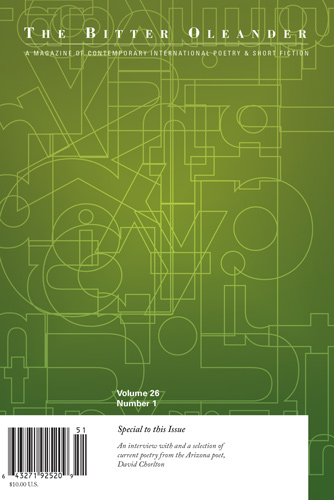
The Spring 2020 Issue of The Bitter Oleander includes a special feature. Editor Paul B. Roth interviews poet David Chorlton. Readers can also find a selection from Chorlton’s Speech Scroll. Below, check out an excerpt from the interview and visit The Bitter Oleander website to get a taste of Speech Scroll.

PBR: In your Speech Scroll, a sampling of which follows this interview, you’ve put the urban and the desert world together so expertly over some 158 poems. Did this particular project start off with that in mind or was it just your current ongoing consciousness of where you were in that environment and who you are that brought it forth?

DC: . . . While there are the times I sit down to commit words to paper, the actual writing of poetry is never turned off. Without placing a title or thinking of a poem’s shape, I had an ongoing path to follow and that helped me shift a little in the way I see images come together. Thinking about the political happenings of our tumultuous time might become too consuming, and for some people it is. Others seem to remain oblivious to anything that goes on in that realm. Writing poetry, being the most natural form of communication for me, has been a good place in which to scatter comments and observations that, I hope, provoke more thought than argument. Life encompasses a wide range of pleasures and frustrations, comfort for the fortunate and responsibility toward those who are not, and so with the help of various bird and animal species, plus a view of the sunrise from our front door when I’m up early to see it I take, as I mentioned earlier, what is given, and transform it the best way I can.
August Poetry Postcard Festival

Considering all the cancelled or postponed or modified conferences and workshops, it’s comforting to know the August Poetry Postcard Festival is up and running this year just as it has been for the past twelve years!
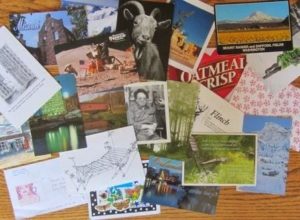
The concept is simple: You sign up and your name is added to a group along with 31 others. Once the group is “full,” you each get the list with names and addresses of participants in your group. The week before August, you start writing and sending you postcards (so that the first one arrives around the first of August). You write one postcard per day and send it to the person listed after your name in the group. The next day, you write another poem and send it to the next person – and so on until you go through the list. One for each day.

The idea is spontaneous writing without editing, censoring, or revision. You can use the postcard as your prompt or not. Some people choose a theme to write on for the month. The postcards vary from store bought to homemade, contemporary to vintage. It’s really wide open to your creativity, imagination, and passion. Then, throughout the month of August, you will receive poems in the mail from the others in your group.

This year – the one change in the event has been year-round registration – so you can register now. Some participants have already started sending cards instead of waiting until August – in response to the pandemic – since we could all use a bit more poetry and a bit more connection in our daily lives. A few ambitious writers have already completed their 31 cards and have signed up for another group! The organizers welcome repeat participation.

This is a safe and fun way to connect, motivate your writing, and enjoy the wonderful gifts that others will send your way. Sign up today!


Sponsor Spotlight: RHINO

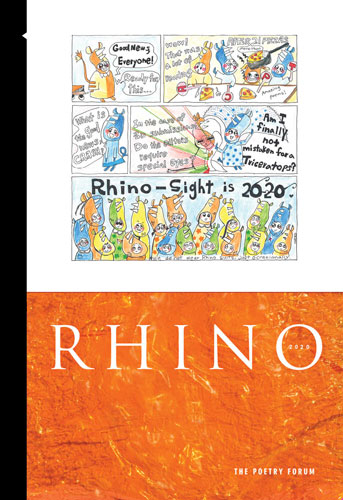
RHINO publishes some of the best and most innovative poetry, short shorts, and translations in their annual issues. For their 2020 issue, the editors have organized an ongoing virtual reading event for the month of May. You still have some time to join in the fun, and you can learn more about these virtual readings here.

To learn more about the annual journal, visit their sponsored listing at NewPages.

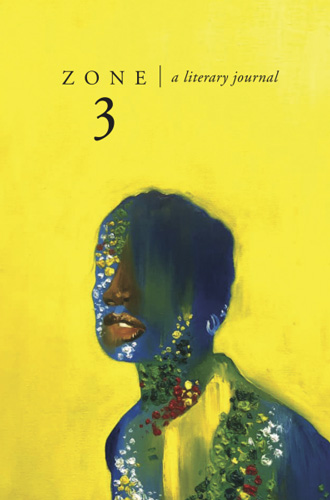
Zone 3 – Spring 2020

The issue of Zone 3 includes poetry by Darius Atefat-Peckham, Colin Bailes, Brian Bender, Daniel Biegelson, Christopher Citro, Lynn Domina, Alexandria Hall, Lauren Hilger, Angie Macri, Martha McCollough, A. Molotkov, Kell Nelson, Amy Seifried, Pui Ying Wong, and more; fiction by James Braun, Janice Deal, Tammy Delatorre, Maura Stanton, and Terry Thomas; nonfiction by Rebecca McClanahan, Katherine Schaefer, and William Thompson, and art by Khari Turner.

The Bitter Oleander – Spring 2020

The Spring 2020 issue of The Bitter Oleander features the contemporary Arizona poet David Chorlton, interviewed by our editor and including a generous selection of poems from his forthcoming book, Speech Scrolls. The issue also presents translations from the fiction of Sophia de Mello Breyner Andresen (Portugal); and poetry in translation by Paula Abramo (Mexico), Alberto Blanco (Mexico), Maritza Cino (Ecuador), Andre du Bouchet (France), and Elaine Vilar Madruga (Cuba).

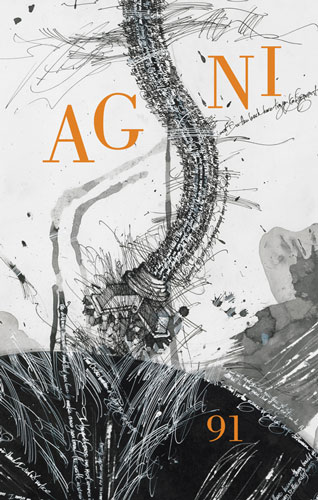
AGNI – No 91

With AGNI #91 we welcome a roster of new editors. Collectively chosen work explores impending crises as well as acts of mitigating goodness; elegies marking losses sit side by side with expressions flashing pure surprise. Cover and portfolio artist Christopher Cozier captures the sly globalized vectors of use and misuse, tracing a long history forward to now. Poems by Sandra McPherson, Steven Sanchez, Emily Mohn-Slate, Colin Channer, and others offer the sensory grab of the immediate, as do stories by Shauna Mackay, David Crouse, and Aurko Maitra and essays by Debra Nystrom, Jiaming Tang, and Ann Hood.

Visual Poetry by Lillian-Yvonne Bertram

Magazine Review by Katy Haas

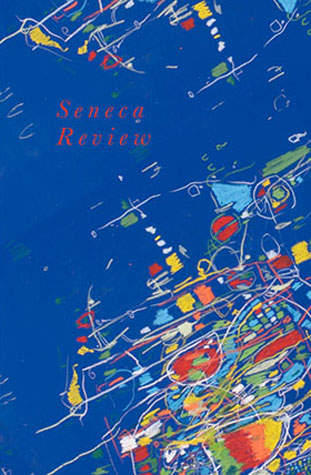
The Fall 2019 issue of Seneca Review includes four pieces by Lillian-Yvonne Bertram. These visual pieces draw in the eye with text boxes layered over one another, reminding me of a house of cards that’s fallen, the cards now strewn in overlapping angles. They’re all titled “World Map:” with a different year following the colon.

In these pieces, Bertram speaks about race and sexuality. The exploration of these themes comes in snippets that repeat and fade away like memories that resurface repeatedly: instant messenger conversations, conversations with her mother, antagonization on the basketball court.

Bertram uses the visuals in an inventive way that helps the poetry move along and creates a bigger impact for the message. I read the four pieces over and over, fully admiring the way in which they were presented.

Explore Your Wild at the Elk River Writers Workshop

2020 Elk River Writers Workshop FlierThe Elk River Writers Workshop embodies the idea that deep, communal experiences with the wild open the door to creativity. We bring together some of the most celebrated nature writers in the U.S. with students who are serious about fostering a connection with the environment in their writing, all under the big Montana skies. Rolling application deadline. Offering full refunds for coronavirus-related cancellations. elkriverwriters.org

View the full May eLitPak newsletter here.

2020 Chesapeake Writers’ Conference: Words. Water. Woods: Write on the River.

Spend the first week of summer on the St. Mary’s River! The 9th Annual Chesapeake Writers’ Conference offers an immersive experience featuring daily workshops with accomplished faculty in fiction, poetry, creative nonfiction, and songwriting; a diverse schedule of craft talks, lectures, panels, and readings; a youth workshop for high school students; and a Teachers’ Seminar for educators. All levels welcome. www.smcm.edu/events/chesapeake-writers-conference/

**They are monitoring the current situation and are optimistic they will be able to host the June conference as planned. A final decision will be made this month.**

View the entire May eLitPak newsletter here.

Sponsor Spotlight: Litowitz Creative Writing Graduate Program, MFA+MA

Northwestern University Litowitz MFA+MA logoThis new and distinctive program offers intimate classes; the opportunity to pursue both creative and critical writing; close mentorship by renowned faculty in poetry, fiction, and creative nonfiction; and three fully supported years in which to grow as writers and complete a book-length creative project. Our curriculum gives students time to deepen both their creative writing and their study of literature. Students will receive full financial support for three academic years and two summers. Both degrees—the MFA in Creative Writing and the MA in English—are awarded simultaneously at graduation.

Program faculty include Chris Abani, Eula Biss, Brian Bouldrey, John Bresland, Averill Curdy, Sheila Donohue, Stuart Dybek, Reginald Gibbons, Juan Martinez, Shauna Seliy, Natasha Trethewey, and Rachel Jamison Webster.

Sponsor Spotlight: University of New Hampshire MFA in Writing

University of New Hampshire logoThe MFA Program at the University of New Hampshire has a clear goal: to help you mold your gifts and passion for the art and to prepare you for the opportunities and demands that all writers will experience in a long career. What happens to you after you leave this program—how you will sustain yourself and your work—is one of our strongest concerns. This supportive community of students and faculty shares a belief that writing matters and that the best books of fiction, poetry, and nonfiction are made out of both the creative imagination and rigorous work.

Focus on fiction, narrative nonfiction or poetry in our graduate M.F.A. program, which has launched the careers of hundreds of poets, novelists, storywriters, essayists and memoirists. What is notable is not just how hard students work on their own creative writing, but how much effort goes into their response to the work of their peers. Writers here care deeply about each other, and the production of honest work that captures life on the page.

Ekphrastic Poetry Bringing New Meaning & Depth

Guest Post by Madhuri Palaji

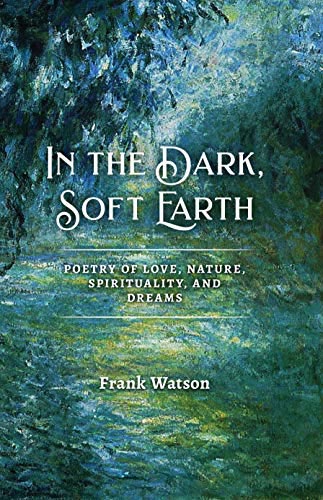
In the Dark, Soft Earth by Frank Watson is a book of poems about love, nature, spirituality, and dreams.

The specialty of the book is the amazing paintings from historic to contemporary presented in it. There are paintings done by Lenoir, Kandinsky, Dali, Somov, and many more. Some poems are inspired by these paintings, though not all.

Each poem is unique and deep. There is a beauty in the way the author has woven the words. I have seen most of the paintings in the book in some art books and exhibitions but when I look at these paintings after reading the poems, I feel like I’m seeing the painting for the first time. The author has brought a whole new meaning and depth to the art. It’s like the author has translated the painting and colors into words.

There is one poem named “Vanished” where the author says:

there was no fish
that day
but even worse
for the fisherman
there was no sea

This made my heart clench, literally. How true, given the kind of world we are living in right now; there is major destruction happening all around and we are left with too little to fix.

In The Dark, Soft Earth has many wonderful poems which I have read again and again because they make so much sense. The magic, love, pain, dreams and hope in the book give a whole new meaning to the way we look at life!


In the Dark, Soft Earth by Frank Watson. Independently Published, July 2020.

Reviewer Bio: Madhuri Palaji is a writer and book reviewer from India. Her book ‘Poems of The Clipped Nightingale’ is available on Kindle. Find her at http://www.theclippednightingale.com/

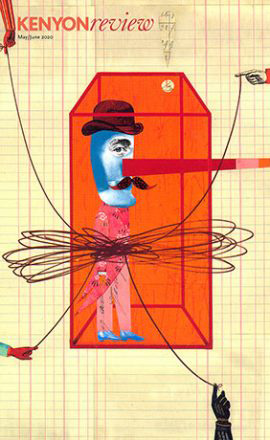
Kenyon Review – May/June 2020

The May/June 2020 issue of the Kenyon Review features the sixth edition of “Nature’s Nature” includes twenty-nine new works by eighteen poets, selected by Poetry Editor David Baker. Featured contributors include Madhur Anand, Elizabeth Bradfield, Stephanie Burt, Stuart Dischell, Rebecca Morgan Frank, Paul Guest, Christian Gullette, Leslie Harrison, Didi Jackson, Devin Johnston, Joanna Klink, Phillis Levin, Leslie Adrienne Miller, Carol Muske-Dukes, Atsuro Riley, Nicole Stockburger, Hannah VanderHart, and Shelley Wong.

Jenni(f)fer Tamayo Answers “The Citizenship Question”

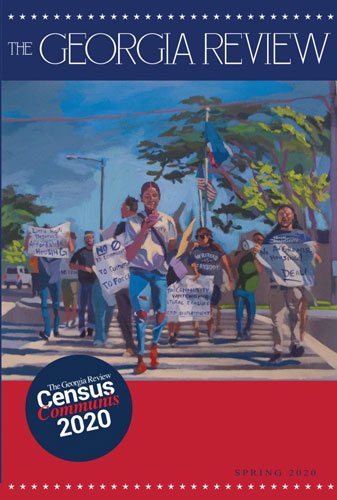
The Georgia Review - Spring 2020Magazine Review by Katy Haas

The Spring 2020 issue of The Georgia Review was released around the time U.S. citizens were receiving census information in the mail, and the work inside the issue relates back to this: the census and citizenship. Jenni(f)fer Tamayo’s “The Citizenship Question” is a stand-out among these.

The piece reimagines the Application for Naturalization, or the U.S. Citizenship Application. This piece spans three pages, and Tamayo rewrites the questions and options given. The first two pages are straight forward enough, with the third falling into a more chaotic format with text written upside down, overlapping other text, or fading away into blank space.

I always enjoy this type of writing that mixes the cold format of a form (Marissa Spear does something similar with her medical reports in “How Many Ways Can One Spell Hysteria?” found in Moonchild Magazine) and reworks it with heart, feeling, and poetry. It can be a bizarre feeling to see personal information about yourself reduced to a few lines and checkboxes in someone’s files, and Tamayo takes that information back, reclaims it as hers, and connects it back to her life and identity in an inventive and enjoyable read.

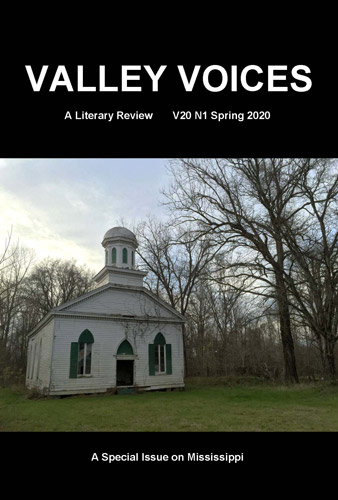
Valley Voices – Spring 2020

Visit this special issue on Mississippi. Poetry by George Drew, Jerry W. Ward Jr., Diane Williams, Charle R. Braxton, Kalamu ya Salaam, Angela Ball, Annette C. Boehm, Allison Campbell, Kendall Dunkelberg, and more; articles by John J. Han, Junying Jia, William Ferris, and Cassie Osborne Jr.; nonfiction by Hermine Pinson, Joseph Holt, and Kevin Baggett; and interviews with George Drew and Bennie Mae Fortune Harper. Plus, six book reviews.

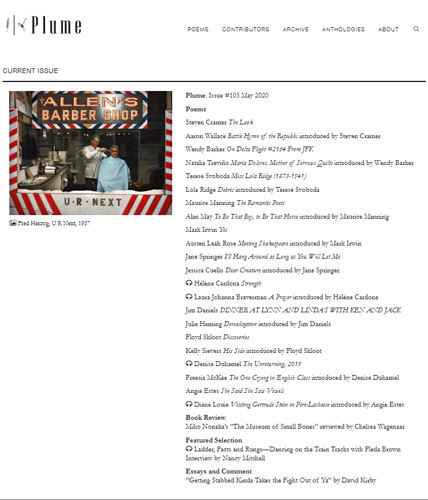
Plume – May 2020

This month’s Plume Featured Selection includes work by and an interview with Fleda Brown. In nonfiction, David Kirby writes “Getting Stabbed Kidna Takes the Fight Out of Ya.” Chelsea Wagenaar interviews The Museum of Small Bones by Miho Nonaka. This month’s poetry selections include Steven Cramer, Terese Svoboda, Mark Irwin, Floyd Skloot, Denise Duhamel, Angie Estes, and more.

The Lake – May 2020

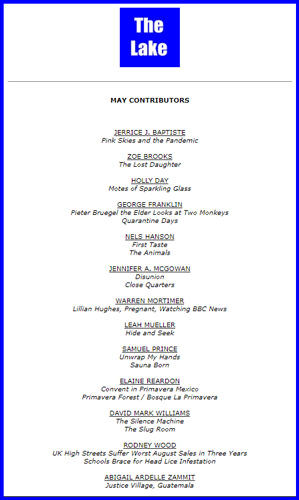
The May issue of The Lake features Jerrice J. Baptiste, Zoe Brooks, Holly Day, George Franklin, Nels Hanson, Jennifer A. McGowan, Warren Mortimer, Leah Mueller, Samuel Prince, Elaine Reardon, David Mark Williams, Rodney Wood, Abigail Ardelle Zammit. Reviews of Emma Lee’s The Significance of a Dress and Rachael Burn’s, a girl in a blue dress.

Kari Gunter-Seymour Talks Trigger Warnings

Sheila-Na-Gig online - Spring 2020Magazine Review by Katy Haas

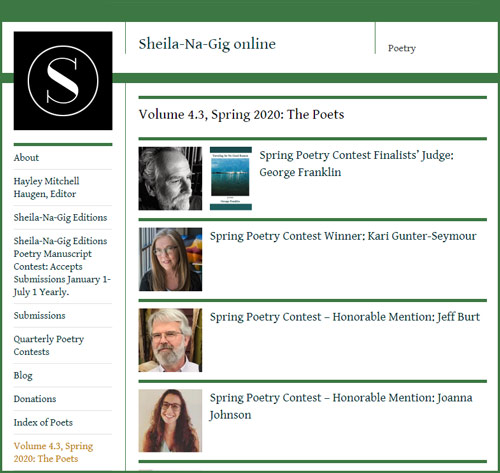
The Spring 2020 issue of Sheila-Na-Gig online features the winner and honorable mentions of the Spring Poetry Contest. Winner Kari Gunter-Seymour pens the poignant “Trigger Warning.”

In this piece, the speaker’s son grapples with PTSD which worsens in November, the result of time in the military. The speaker’s ability to relate is limited; the closest thing she has is watching her father die, and holding dogs as they’ve died. Throughout the poem she mourns not only her father, but also “the farm boy, the quipster, / the Ren & Stimpy impersonator” who her son used to be before he “boarded the plane, now camouflaged / in anxiety meds and a skeletal body.” I really liked the use of “camouflage” here, an image that not only describes the concealing the person he was, but one that also conjures up military uniforms he once donned.

Gunter-Seymour sums up the message of the poem in two truthful lines, “We don’t get to choose our memories, / they are triggered.”

The MFA at Florida Atlantic University

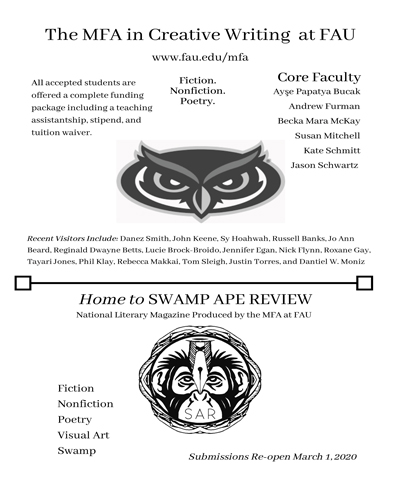
Florida Atlantic University MFAFlorida Atlantic University’s MFA program offers concentrations in fiction, creative nonfiction, and poetry. All accepted students are offered a complete funding package including a teaching assistantship, stipend, and tuition waiver. Core faculty include Ayşe Papatya Bucak, Andrew Furman, Becka Mara McKay, Susan Mitchell, Kate Schmitt, and Jason Schwartz. Students have the opportunity to work on national literary magazine Swamp Ape Review.

Event :: Summer 2020 Writers Institute at Washington University in St. Louis

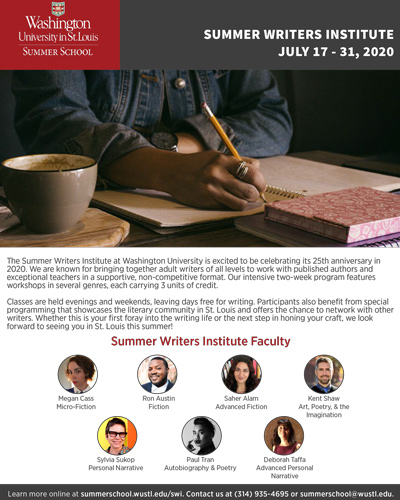
They are monitoring the current situation, but are hopeful the Summer Writers Institute will be able to happen as planned. This annual event brings together many of St. Louis’ finest writers to share their expertise with students who are serious about developing their writing. This year celebrates their 25th anniversary. The Institute is an intensive two-week program featuring workshops in fiction, micro-fiction, poetry, and personal narrative. Deadline to register is July 16. The Institute will run July 17 through 31. summerschool.wustl.edu/summer-writers-institute

Sponsor Spotlight :: Del Sol Review

Originally started in 1997 under the name of “Editor’s Picks,” Del Sol Review has transformed from highlighting select work from print journals to being its very own literary magazine. Contributors include Maxine Chernoff, Paul West, Linh Dinh, Holly Iglesias, Deborah Olin Unferth, Michael Martone, and Daniel Bosch.

Del Sol Review accepts unsolicited works of speculative fiction, poetry, prose poetry, creative nonfiction, short stories, and flash fiction year-round. They love works containing unique and interesting subject matter.

Their latest issue, No. 24, is the Richard Basehart Issue. This contains fiction by Joe Kowalski, Zeke Jarvis, Glen Pourciau, Debbie Ann Ice, Evan Steuber, Jenny Drummey, Andrew Stancek, Richard Leise, Risa Mickenberg, Joseph Couchet, Robert Miltner, Ron Riekki, and Mark Walling; and poetry by Michael Salcman, Nancy Botkin, Wendy Barker, Hilary Sideris, Rich Ives, and Nish Amarnath.

I love the little snippets they put with their issues: “Carnivores. Astonomy. Zsa Zsa Gabor Geeks.” or “Innocent, flight, teeth, yecch, and more!”

Earn Your MA Near Some of the Country’s Best Beaches

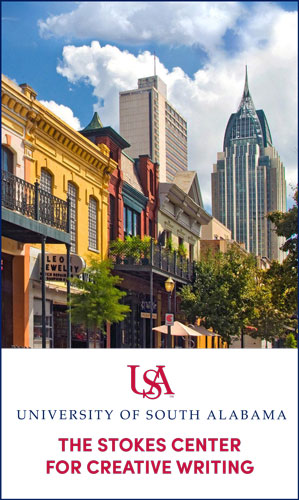
Earn your MA with an emphasis in Creative Writing in the vibrant city of Mobile, near some of our country’s best beaches. Tuition waivers and assistantships are available as are additional scholarships for excellence and summer creative writing projects. Home of the Stokes Center for Creative Writing. Students who enroll in the program full time, can complete it in four semesters. There are also part time and evening coursework options. For more information, visit our website: www.southalabama.edu/colleges/artsandsci/english/.

Unique & Refreshing Poems by Tyler Dempsey

Re-Side Issue 5Guest Post by C.L. Butler

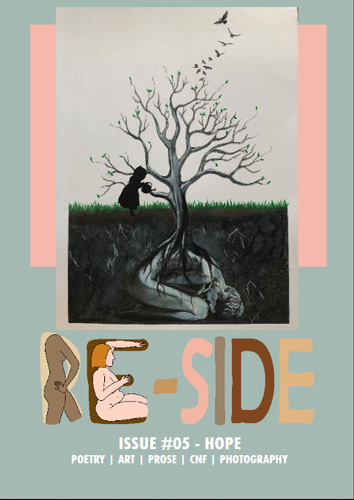
The other day while combing the world of literary magazines I came across something both unique and refreshing. I’m referring to Tyler Dempsey’s two poems most recently published in Re-Side Magazine Issue 5. These pieces use erasure poetry crafted from letters from Dempsey’s brother Travis Dempsey, who has been serving a prison sentence since 2009 in Oklahoma.

His poem “protein” captures the woes of the incarcerated for the outside world to hear. It draws attention to the role of economics in prisons to deal with basic everyday needs like nutrition. In “150MphWinds,” Dempsey points to his brother’s everyday observations. He finds the crux between complex and the dignity of simplicity by again showing what we take for granted.

While Tyler Dempsey is the curator of these poems, the words present a unique voice filled with legitimacy for the reader. It feels as if Dempsey’s brother is talking himself, creating a poetic mirroring of these letters. I chose to review these poems to not only produce more reviews on indie authors, but also to bring the attention of the privileged to the art coming from those with the least amount of civil liberties.


Reviewer bio: C.L. Butler is an African American and Dutch poet, historian, and entrepreneur from Philadelphia based in Houston, TX. In 2017 his poem Laissez Faire was published by The Bayou Review. In 2019 he published academic research with the Journal of International Relations & Diplomacy.

The Common- Spring 2020

The Common - Spring 2020

The Common’s Spring 2020 issue released today. Inside the issue: an Arabic Portfolio from Sudan with work by Andel-Ghani Karamalla, Ishraga Mustafa Hamid, Bwader Basheer, Jamal Aldin Ali Alhaj, Mustafa Mubarak, and more. Also in this issue is fiction by Thoraya El-Rayyes, Catherine Buni, Bina Shah, and others; essays by A. Kendra Greene, Suraj Alva, and Tanya Coke; and poetry by January Gill O’Neil, Emily Leithauser, Megan Pinto, Mira Rosenthal, Tara Skurtu, John Freeman, marcus scott williams, and more.

Able Muse – Winter 2019

In this issue, find essays by Edward Lee and Tony Whedon; a photographic exhibit from artists around the world on the theme “Hunt”; poetry by Daniel Galef, Len Krisak, Katie Hartstock,  Hailey Leithauser, and more. Featured in this issue are the 2019 Write Prize for Poetry winners and finalists and the 2019 Write Prize for Fiction Winner. Find a full list of contributors at the Able Muse website.

Words. Water. Woods: Write on the River.

**The Chesapeake Writers’ Conference is keeping a close eye on the current situation and as of now still plans on holding their annual June conference.**

Spend the first week of summer on the St. Mary’s River! The 9th Annual Chesapeake Writers’ Conference offers an immersive experience featuring daily workshops with accomplished faculty in fiction, poetry, creative nonfiction, and songwriting; a diverse schedule of craft talks, lectures, panels, and readings; a youth workshop for high school students; and a Teachers’ Seminar for educators. All levels welcome. www.smcm.edu/events/chesapeake-writers-conference/

View the full April eLitPak here.

Soothing & Stinging – Poetry of Christina Fulton

Guest Post by Preston L. Allen

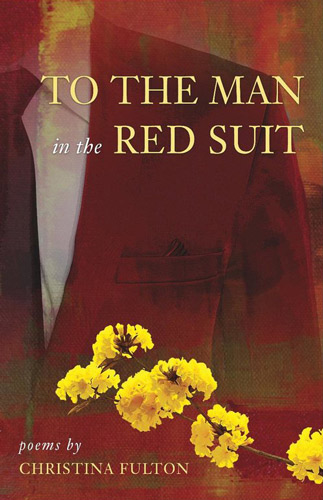
The poems in Christina Fulton’s exquisite debut collection, To the Man in the Red Suit, are ruminations on a life of the ironic, the beautiful, the poignant, and the bitter-sweet.  Prominent among the memories that are fuel for the fire of these poems are the poet’s childhood in New Jersey and the suicide of her workaholic father.  My favorite poem, an ode called “To My Father’s Confused and Empty Desk,” ends with the perfectly adroit enjambment of lines:

He only came back
to count your rings,

and kiss the scissors

good night.

Sometimes these pretty poems soothe, sometimes they sting, sometimes they fill your mouth with precious stones that you cannot chew but break your teeth on trying.  The poet uses no clichés but masterfully creates them: ‘I saw your lies bend’; ‘That imperfect field / where Jesus / taught the lilies to blush’; ‘You can jiggle / but can you bend?’  Long after you read this book, you will be quoting from it.


To the Man in the Red Suit by Christina Fulton. Rootstock Publishing, May 2020.

Reviewer bio: Preston L. Allen is a recipient of a State of Florida Individual Artist Fellowship and author of the novels Jesus Boy, All or Nothing, and Every Boy Should Have a Man. He lives in South Florida.

Looking Within Through Poetry

Them Last Visit by Chad AbushanabGuest Post by José Jiménez Vivaldi

Abuse, suicide, abandonment, and enough alcoholism to mimic a Bukowski novel, Chad Abushanab’s The Last Visit narrates his troubled past in a series of seemingly chronological scenes, each depicting the aforementioned themes. With the collection standing as an exploration into the depths of human pain, Abushanab leads the expedition with such introspection that it sets an example of bravery for its readers.

Though a poetry collection, The Last Visit reads like a novel. The pieces are narrative and contain lots of concrete detail. Most of them could stand alone and give the reader an understanding of Abushanab’s story, but to read only one poem is like viewing a complex image from just one angle. The poems tell different stories, and take different forms as Abushanab experiments with a variety of poetic vehicles, such as the ode, the ballad, the ghazal, and the elegy. However, they’re all are connected by their themes, which directly relate to his upbringing, as well as his struggles to cope with the scars of his past as an adult. Therefore, upon reading the collection in a linear manner, the reader develops a three-dimensional perspective of his story and family.

If there’s one message The Last Visit sends to its readers, it’s that the answers to the present can be found in the past, but the future is yours to define. Chad Abushanab did a wonderful job creating such an insightful piece of literature. Not only should writers aspire to shine a light at the darkness within themselves to create material the way he does, but readers should adopt similar methods of self-reflection to aid their personal growth.


The Last Visit by Chad Abushanab. Autumn House Press, March 2019.

Review bio: José Jiménez Vivaldi is part of this year’s graduating class at Loyola University Maryland.

Buy this book through our affiliate Bookshop.org.

Wordrunner eChapbooks – 2020

Wordrunner eChapbooks - April 2020

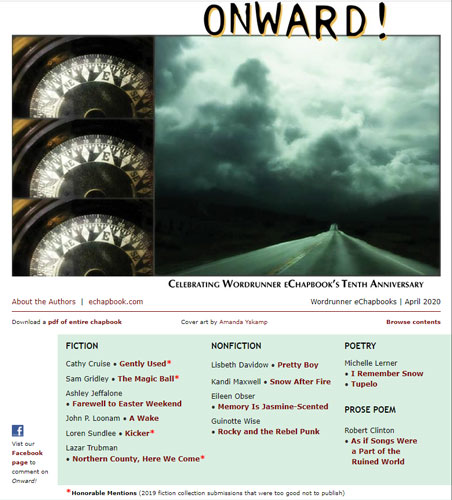
The title and cover art for Wordrunner eChapbook‘s 2020 anthology reflect a future more uncertain than usual, as well as hopefulness as we intend to publish more excellent writing in the next decade. Fiction by Cathy Cruise, Sam Gridley, Ashley Jeffalone, Lazar Trubman, and more; nonfiction by Lisbeth Davidoff, Kandi Maxwell, and others; poetry by Michelle Lerner and a prose poem by Robert Clinton.

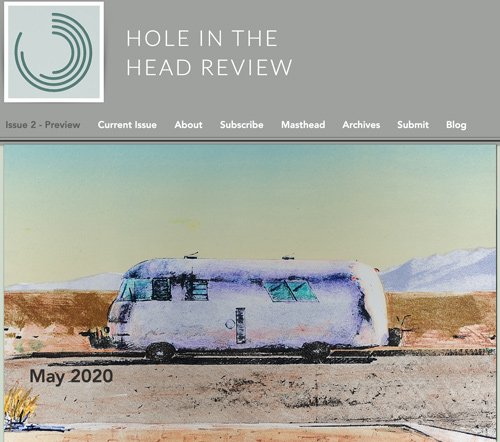
Sponsor Spotlight: New Online Lit Mag Hole In The Head Review

Hole In The Head Review is a new online literary magazine founded in 2020 “on the perilous coast of Maine” where the “sun rises on the United States and darkness falls first.” Their debut issue, published earlier this year, features new works from Michael Hettich, Larkin Warren, Frankie Soto, Andrew Periale, Amy Young, Julia Wagner, Richard Heckler, Mawi Sonna, and Nancy Jean Hill.

Hole In The Head Review May 2020They are enthusiastic about publishing both new and established poets together on a quarterly basis. In fact, their next issue is slated for release on May Day. They listen for a strong voice and look for a clarity of vision.

“You need another literary journal like you need a hole in the head.” Yes, yes we do.

Anomaly – No 30

Anomaly - April 2020

The latest issue of Anomaly is out. In this issue: comics by Mita Mahato, Kimball Anderson, Jason Hart, and more; fiction by Monica Macansantos, Feliz Moreno, and more; poetry by Turandot Shayegan, Rodney A. Brown, María Lysandra Hernández, Jacq Greyja, Hussain Ahmed, Hari Alluri, Gabrielle Spear, Fargo Tbakhi, Derek Berry, Ashely Adams, and more; and translated work by Zsuka Nagy, Yan An, João Luís Barreto Guimarães, and others.

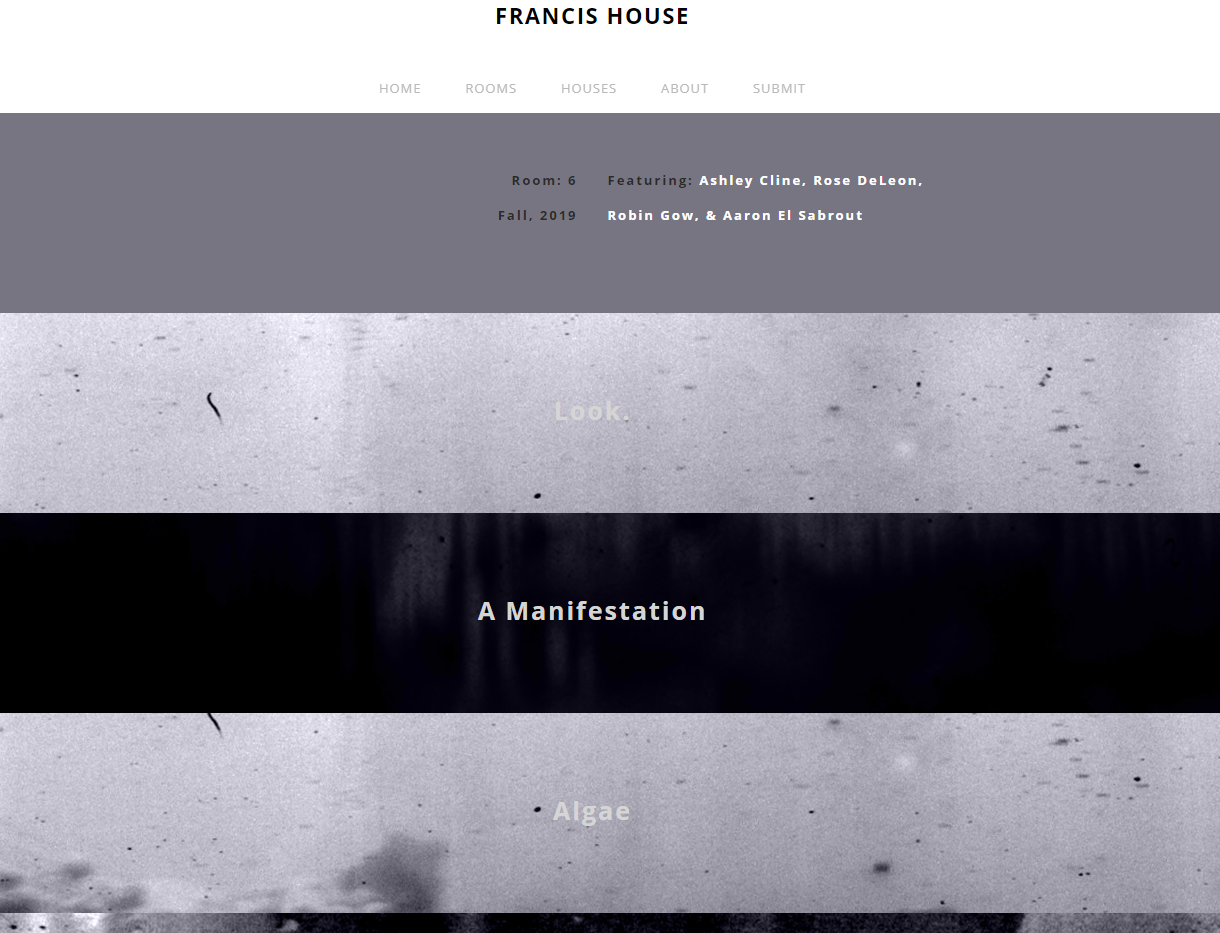
Escape Into Francis House

Francis House Issue 6Want to escape your home for a little while? Pay a visit to Francis House. Founded in 2017, this online literary magazine publishes issues known as “rooms” as well as print anthologies and chapbooks (“houses”). They publish poems of all shapes and sizes and especially love the oddly-proportioned and under-appreciated.

Their latest Room features work by Rose DeLeon, Aaron El Sabrout, Robin Gow, and Ashley Cline.

Eco-Poem Partnership

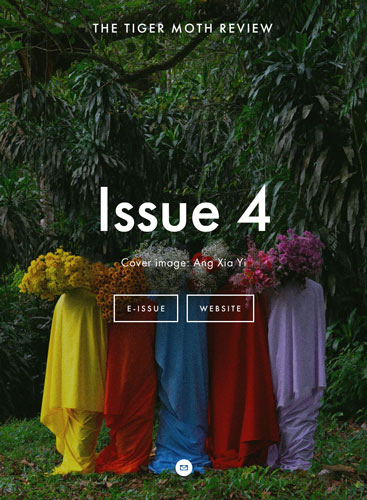
Tiger Moth Announcement

The Tiger Moth Review brings readers eco-poems in their biannual issues. But if you’re still wanting more, they have it. Partnering with the Centre for Stories, The Tiger Moth Review is working to bring a new, online collection of eco-poems to the journal’s website this year.

Editor Esther Vincent Xueming will mentor a group of Australian poets from the Centre, while the Centre’s creative director Robert Wood will provide workshops. This collaboration connecting the cultural ecologies of Perth and Singapore will introduce readers to new voices and create more understanding about our relationship to the world we live in.

Find out more about this partnership at The Tiger Moth Review’s website, and keep an eye out for these new eco-poems.

Our Haunted Past: On Molly McCully Brown’s Virginia State Colony for Epileptics and Feebleminded

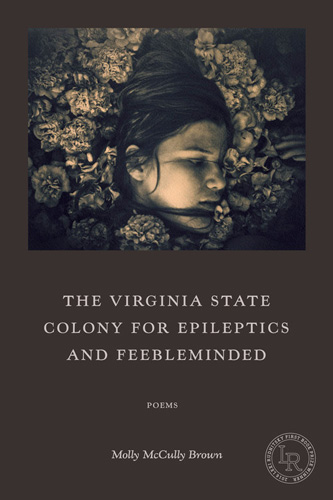
The Virginia State Colony for Epileptics and Feebleminded by Molly McCully Brown. Guest Post by Kelly Williamson

In her remarkable debut, The Virginia State Colony for Epileptics and Feebleminded, Molly McCully Brown revisits the history of a state-run institution that sterilized patients without their consent, offering readers the opportunity to confront the dark realities of the eugenics movement. With a documentary approach, Brown bases the poems on the historical evidence she gleans from archival research. Exploring the perspectives of the colony’s caretakers, and patients, Brown pays tribute to an unacknowledged chapter from our nation’s dark history.

This collection serves as evidence of Brown’s curiosity and bravery in facing what she considered unknown and scary. Similarly, it can be an act of discovery for the reader as well. Readers might be alarmed to come across such wreckage that they once failed to notice. However, Brown invites readers to understand, rather than rebuking them for not knowing. Brown’s collection reminds us that poetry builds empathy that can raise the awareness needed to foster change.

Readers may have never heard of the Virginia State Colony for Epileptics and Feebleminded, a blind room, or known of the sterilizations posed as appendectomies in the state-run institution located in Virginia. Brown’s book allows readers to recognize that this lack of knowledge is a privilege, for the painful history that took life away from innocent girls is a history that must be known. Although much has changed, these poems can encourage us to understand ways in which our current society can do better. While it’s easy for readers to see the title and feel far removed from history, this collection of poems works to close that gap of separation, to use these imagined patients as windows into a haunting past.


The Virginia State Colony for Epileptics and Feebleminded by Molly McCully Brown. Persea Books, 2017.

Reviewer bio: Kelly Williamson is a senior at Loyola University Maryland minoring in writing. She has published poems in her school’s literary magazine, Corridors.

Buy this book through our affiliate Bookshop.org.

Relevant Reading for Everyone

Penguin Book of Migration Literature - Dohra AhmadGuest Post by Serenity Schoonover

As 68.5 million people currently live as displaced persons on the planet, a short, potent anthology on immigration, emigration, and asylum-seeking is relevant reading for everyone. The Penguin Book of Migration Literature: Departures, Arrivals, Generations, Returns showcases thirty writers’ artful examinations of striking out to start over, staying put despite instability, and even circling back to a country that disowned you.

Among established writers, Emine Sevgi Özdamar’s “The Bridge of the Golden Horn,” notes the wry negotiations of Turkish factory women in Germany: “the man made meatballs out of horses- we didn’t know that, because we couldn’t speak German. Meatballs were our mother’s favorite food.” Another, from Mehdi Charef’s “Tea in the Harem,” examines the volatile relationship between an Algerian mother and her son in France, both caught in the cross-hairs of identity crisis, “between two cultures, two languages, and two colors of skin.”

Emerging writer Djamila Ibrahim’s story, “Heading Somewhere,” laments an Ethiopian man’s marriage of convenience, a relationship based on leverage rather than love: “he resented Marianne her power. Divorce meant the loss of his permanent resident card, maybe even deportation.” Most unforgettable in the collection is Warsan Shire’s prose poem, “Conversations about Home (From the Deportation Center),” which begs the question: “Do you know how difficult it is, to talk about the day your own city dragged you by the hair?”

The power of this anthology, edited by Dohra Ahmad with a foreword by Edwidge Danticat, is its potential to be the first in a line of future works, literature that is willing to discuss, rather than dismiss or demonize, “people with deep histories-individuals as well as collective- that predate the migration, rather than newly created humans whose lives begin in a boat, plane or desert crossing.”


The Penguin Book of Migration Literature: Departures, Arrivals, Generations, Returns edited by Dohra Ahmad. Penguin Random House, September 2019.

Reviewer bio: Essays by Serenity Schoonover have aired on NPR, with book reviews appearing in Split Rock Review, Women’s Independent Press, CALYX, The Bookends Review, among others.

Buy this book through our affiliate Bookshop.org.

Green Mountains Review Launches Social Distance Reading Series

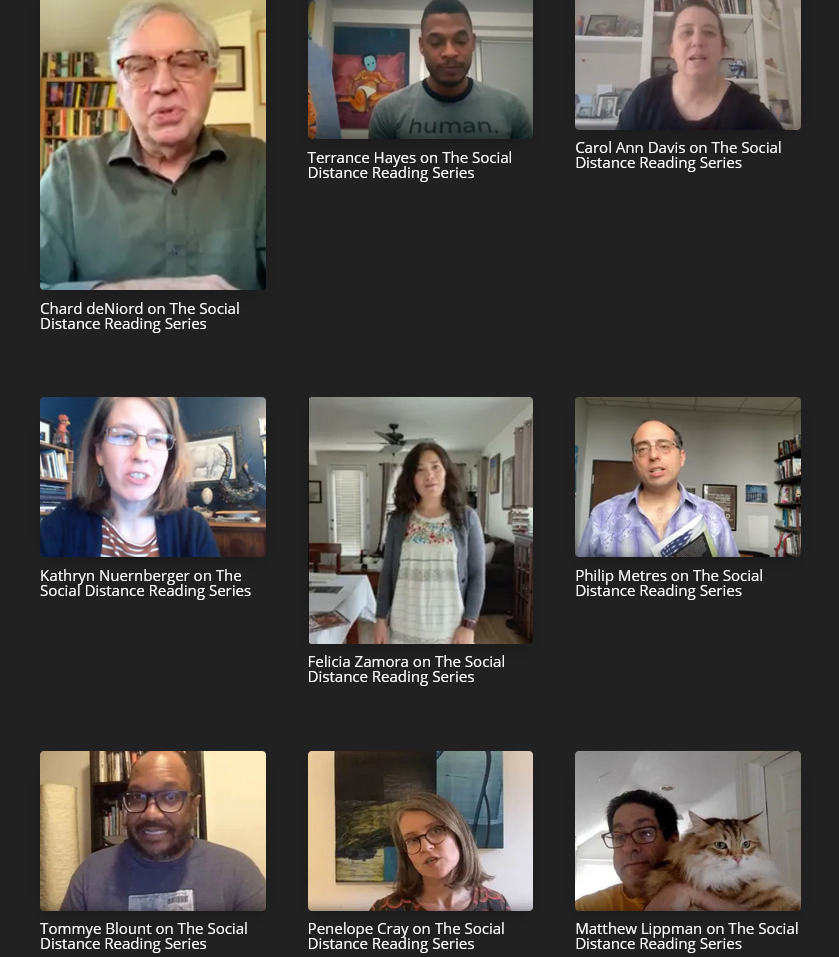
Social Distance Reading Series poetsLiterary magazine Green Mountains Review has partnered with the Vermont School to highlight writers whose book launches have been “snuffed out” by the COVID-19 pandemic.

They post new videos to their Social Distance Reading Series twice a week on Wednesday and Sunday so that authors can read from their newly released collections of poetry. Right now the focus is on writers whose book events were cancelled in the months of January through May.
You can currently find readings by Chard deNiord, Kathryn Nuernberger, Felicia Zamora, Philip Metres, Tommye Blount, Penelope Crazy, and Matthew Lipman.

Wade in the Poems of Maggie Paul

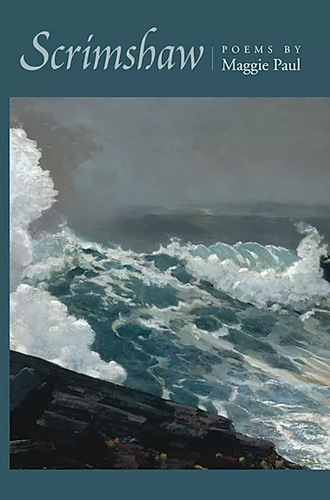
Scrimshaw by Maggie PaulGuest Post by Lynn Levin

Maggie Paul’s Scrimshaw gifts us with superbly crafted poems of graceful statement and gentle wisdom. I sense here a soul making peace with the near past and distant past as the speaker recollects mother, father, children, a lover, and others. Paul writes in “Linguistics,” a poem about some unspecified but insurmountable conflict between lovers: “So much goes on beneath / the surface that the tide never washes up.” Conflicts here are discreetly remembered and slantly alluded to. This is an approach I particularly admire as it counters much of the graphic rhetoric of pain we see in poems today.
A water motif runs through many of the poems, referencing ponds, streams, and the sea. There is both delight and melancholy in these poems, and the melancholy glows as burnished gold. Take for example the opening lyric “Trochilidae.” The poem compares a diminished girl to a tiny fragile bird who comes to “bring fire to the world.”

One of my favorite poems in the collection is “Watershed,” a metaphysical poem about the flow of life and time. This prose poem tumbles forth in a rush of figurative language describing the flow of water, which is “fragrant as a season, forthright as a calendar.” Paul has the ideal sense of an ending, landing her poems neither too definitively, nor too ambiguously. In “Looking Back,” a poem about doubt and written in a series of couplets that capture paradoxes and contradictions, she writes, “We thought we came for one thing / but really came for another.” The lyric ends, “And that thing we would have died for? / We’ll not die for it again.” These are poems of wise beauty. Wade in them.


Scrimshaw by Maggie Paul. Hummingbird Press, 2020.

Reviewer bio: Lynn Levin’s most recent book is the poetry collection The Minor Virtues (Ragged Sky, 2020).

Focus on Flowers

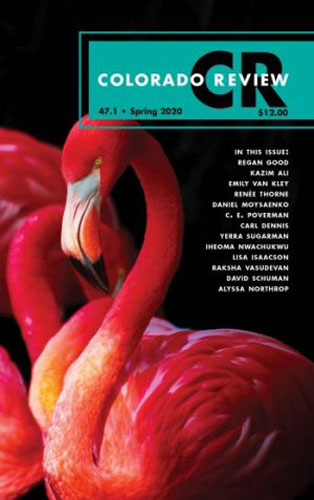
Colorado Review - Spring 2020Magazine Review by Katy Haas

With the weather warming up, I see new green sprouting in my backyard daily. This seems like a good time to focus on poems about flowers found in the Spring 2020 issue of Colorado Review.

In “Bloom,” Emily Van Kley’s speaker talks to the forsythia plant “beside the house.” Together, they move through the seasons: gray in winter, blooming in summer just for the blooms to quickly disappear into leaves. Van Kley’s images are beautiful and strong with lines that really pulled at me, like “The sadness that carries / my thoughts close to its chest / will unpack it’s summer / wardrobe,” and “Soon the last rains // will poor themselves down / storm sewers’ gullets.”

Leah Tieger also writes of flowers in “Five Sunflowers,” which are a gift from “the man who loves me.” The flowers “turn the room from real / to magazine, so picture my life perpetually happy.” The flowers urge the speaker to be grateful, “if not for your presence, / at least for the hands that brought you.” The piece feels warm and loving, the same “brilliant / and saturated” yellow of the flowers.

Welcome in spring and some much needed color with these poems from Colorado Review.

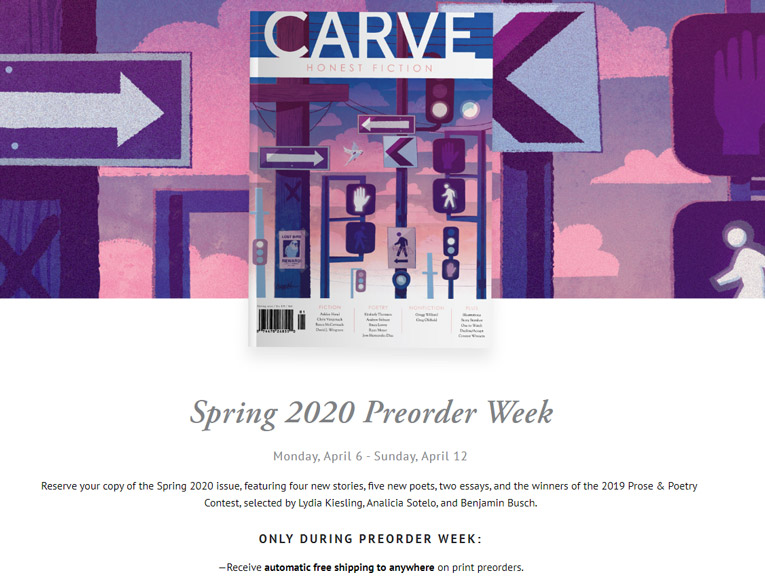
Carve Spring 2020 Preorder Week

Carve Magazine screenshotThat’s right! This week is the week you can preorder Carve Magazine‘s Spring 2020 issue. From now until April 12, you can reserve your copy of the special print edition and receive automatic free shipping to anywhere on print preorders. You also get 15% off a 1-year print or digital subscription. Need more reasons to preorder this issue? It features four new stories, five new poets, two essays and the winners of the 2019 Prose & Poetry Contest selected by Lydia Kiesling, Analicia Sotelo, and Benjamin Busch.

Exploring Loss with Page Hill Starzinger

Vortex Street by Page Hill StarzingerGuest Post by Shin Yu Pai

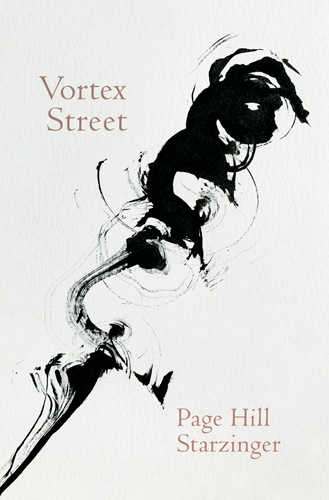
In Page Hill Starzinger’s Vortex Street, the poet explores many different kinds of loss, to resist squandering what is given. In her revisions of complicated grief, she takes up the subjects of unborn children, the ending of fertility, and becoming an orphaned adult after the death of parents. The fleeting life cycle of a mayfly which only endures for 24 hours is held against the cognitive decline of an aging father. In this act of ongoing “rentrayage” or remaking, the poet turns towards locating the quiet harbor where grief can be held—through the senescent body, its memories, and the exterior dwelling places that anchor us to the past.


Vortex Street by Page Hill Starzinger. Barrow Street Press, May 2020.

Reviewer bio: Shin Yu Pai is the author of AUX ARCS, Adamantine, Sightings, and Equivalence. In March 2020, Entre Rios Books published Ensō, a 20-year survey of her work across disciplines. For more info, visit www.shinyupai.com.