
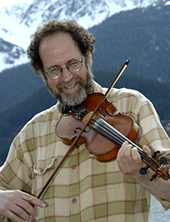
 Frustrated with the current policital administration? You protest, rally, write letters, get yourself and others ready to vote…what more can you do? For poet and musician Ken Waldman (aka Alaska’s Fiddling Poet), there’s poetry. Sonnets to be exact, and a lot of them. With two volumes already completed and one more (at least) on the way, Waldman is taking this administration to task – and perhaps salvaging his own sanity as well as that of his readers – responding to the daily fodder by turning it to his muse for poetry.
Like many of us, in a stunned stupor the day after the election, Wednesday, November 9, 2016, Waldman writes that he was “processing Donald Trump’s surprise victory in the 2016 U.S. presidential election, and wrote, ‘You make George W. seem a statesman–your opening trick,’ which I turned into the first line and a half of a sonnet. A week later I wrote two more Donald Trump-inspired sonnets. Between Thanksgiving and Christmas, another 68. That’s 71 sonnets, a full-length collection. 41 were written in the voice of Donald Trump. The rest were addressed to him.” The book’s subtitle – The First 50 Days – speaks to the process many of us went through at the start.
Now in our second year of Trump’s reign, Waldman continues to see us through with Trump Sonnets Volume 2: 33 Commentaries, 33 Dreams. “Half of this sequel’s 66 poems is incisive commentary,” writes Waldman,. “Half, dreams that I imagine Donald Trump might have, and those are in Trump’s voice.”
Both volumes, as well as Waldman’s other books, are available through SPD Distribution or directly from Waldman. Visitors to his website can also view YouTube videos of Waldman reading the poems with a little bit of his iconic fiddling style thrown in.
 In addition to celebrating its tenth anniversay of publication, the newest issue of Canada’s Hamilton Arts & Letters (11.1) is also a celebration of Bertrand Russell and the 50th Anniversary of the Russell Archives.
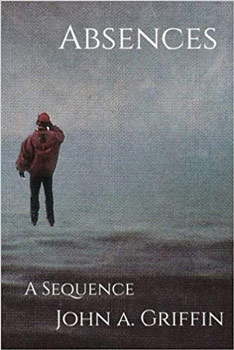 New out this month is the first chapbook from literary magazine The Esthetic Apostle: Absences: A Sequence by John A. Griffin. Accompanied by collages by artist Martine Mooijenkind, the chapbook explores forms of loss. In “Relic,” the speaker notes: “It is November and a concussed fog hangs above the lake,” and this fog seems to settle over the rest of the pieces within the collection, somber and haunted by absences.
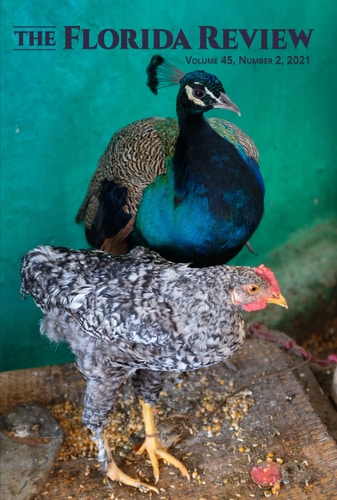 The Aquifer, the online journal of The Florida Review, is now accepting film and video work as they expand their visual arts and new media offerings for readers.
  The Florida Review
 If you’re traveling anywhere near Montgomery, Alabama, consider spending the night in the former home of F. Scott and Zelda Fitzgerald which now houses the Fitzgerald Museum and a two-bedroom apartment. “This historic home houses the only dedicated museum to F. Scott & Zelda Fitzgerald in the world. The family lived here from 1931 until 1932, writing portions of their respective novels, Save Me The Waltz and Tender Is The Night, during their time here.”
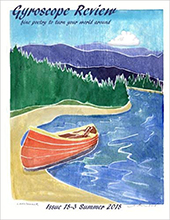 Gyroscope Review: Fine Poetry to Turn Your World Around has announced a call for submissions for The Crone Issue to feature contemporary poetry from poets who identify as women and are over the age of 50.
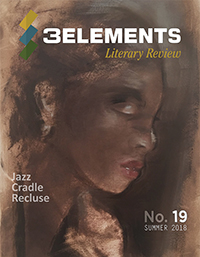

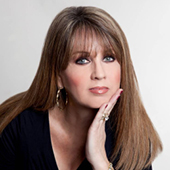 Glen Armstrong / Cruel Garters
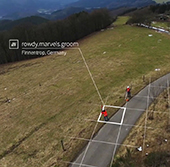 As a kid (and adult for that matter) who was forever unable to remember her numerical lock combinations, what3words is the most brilliant invention of all time. And who among us readers/writers can’t absolutely fall in love with this concept: The entire planet mapped out in three meter squares with each one assigned a unique three-word sequence.
 In keeping with Memoir Magazine‘s mission, “to be a witness to both factual and emotional truths that resonate with the human heart by supporting writers and artists in sharing their stories—whether personal, social or political– through publication, education, and advocacy,” the publication offers Memoir Magazine University, “a safe space dedicated entirely to the development of writers and stories that need to be heard.”
 Not to rush your summer, but July 4th signals the opening of registration for the annual August Poetry Postcard Festival!
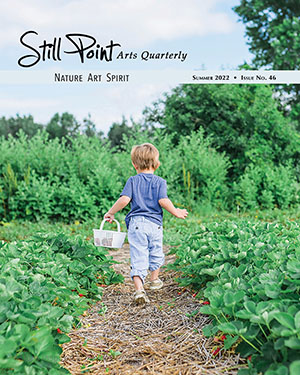 Celebrating ten years and thirty issues of Still Point Arts Quarterly, Founding Editor Christine Brooks Cote’s introduction to the Summer 2018 issue reads like an advice article for anyone with the idea to start up a journal.
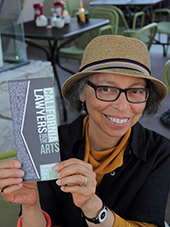 Volunteer Lawyers for the Arts (VLA) is a general term used to identify this non-profit resource that can be found in numerous communities across the country. VLAs provide low-cost or free legal aid and guidance to artists and organizations, and some will even provide consultation to artists from areas that do not have their own VLA. In the past, I’ve received phone consults from the VLA in New York prior to Michigan having its own organization. Some, such as the St. Louis VLAA include Accountants for the Arts as well. The VLAA website has a directory of VLAs with the advice that if you do not see your state listed to contact your state arts council.
 Gearhart Poetry Contest
 The Great American Read is an eight-part series from PBS that “explores and celebrates the power of reading, told through the prism of America’s 100 best-loved novels (as chosen in a national survey). It investigates how and why writers create their fictional worlds, how we as readers are affected by these stories, and what these 100 different books have to say about our diverse nation and our shared human experience.”


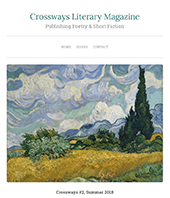 The titles of WB Yeats’s first collection of poems is the inspiration behind the naming of Crossways Literary Magazine, an online quarterly of poetry and short fiction based out of Ireland.
 The Spring 2018 issue of The Missouri Review features the winners of the 2017 Jeffrey E. Smith Editor’s Prize.
 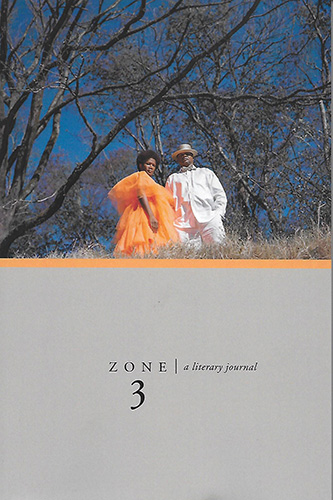 Excerpted from “Choler” by Bruce Bond from the Spring 2018 issue of Zone 3:
 Winner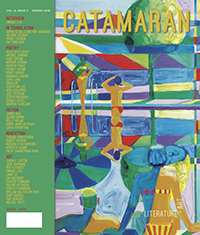
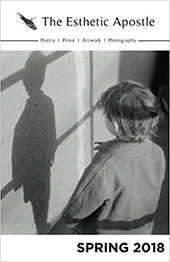 Based out of Chicago, The Esthetic Apostle is a new online monthly of poetry, prose, artwork and photography which also releases print issues quarterly.
 The Malahat Review #202 features 2018 Open Season Awards winners:
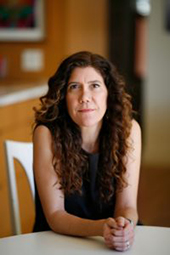
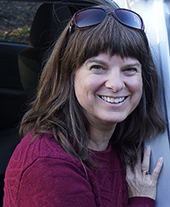
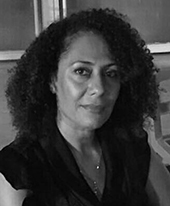 The Spring 2018 issue of The Bellingham Review includes two features: Who Are These Assembled Nations?: New Poems from Palestine with works from Sheikha Helawy [pictured], Najwan Darwish, and Anwar Al-Anwar, and Unbidden Stories: New Writing from Israel with fiction by Orly Castel-Bloom, Anat Levin, and Liran Golod, poetry by Shimon Adaf and Anna Herman, and a hybrid text-image collaboration between Etgar Keret and Neta Rabinovitch. Credit for this curation goes to international consultant Liran Golod who worked with S. Paola Antonetta to bring these collections to readers.
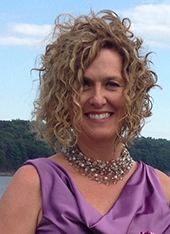 The Spring 2018 issue of The Bellingham Review features winners of their annual contests: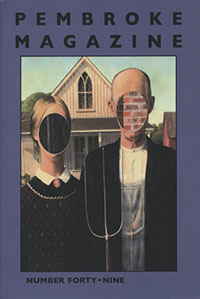
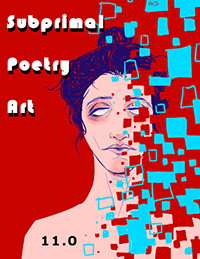
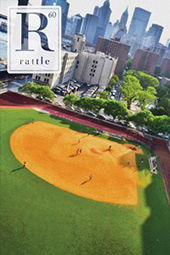 In addition to its regular content of poetry, the Summer 2018 issue of Rattle includes a Tribute to Athlete Poets. “The stereotypes about athletes and poets might make it seem like an odd combination, but poetry lives everywhere, and stereotypes need to be broken,” comment the editors.
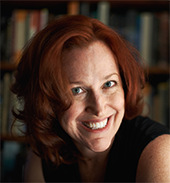 Brevity‘s Social Media Editor Allison K Williams offers some great advice and resources for anyone considering “Going Hybrid” – using a hybrid model for book publishing. Williams offers clarification on “self-publishing” vs. hybrid publishing against the backdrop of traditional publishing, and provides consideration of such criteria as time, bookstore placement, royalty split, subsidiary rights, editing, production quality and marketing.