Home » Newpages Blog » Poetry » Page 10

Image, Music, and Language

Magazine Review by Katy Haas

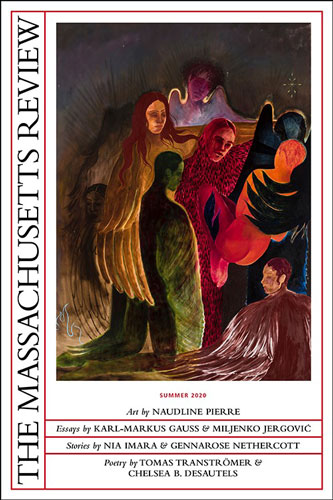
I love when a poem has visual components, so I was happy to see a couple pieces by Ryan Mihaly in the Summer 2020 issue of The Massachusetts Review with visual accompaniment.

“[B]” and “[A♯/B♭]” are paired with clarinet fingering charts. In “[B],” the speaker looks back at “a catalogue of embarrassments,” which are broken down and pointed out on the chart as “Wrong name,” “Loss of language,” and “Failed elegance.” “[A♯/B♭]” explores language and communication, finishing, “Music is not a language because it cannot be translated into anything. It can only be described. A♯, then, is the word ‘handiwork’ mispronounced ‘hand-eye-work.’” The chart above shows a corresponding “Hand,” “Eye,” and “Work.”

While both poems would work just fine without the visual aspect, their presence is still welcome and enhances each piece, the text almost working as a footnote to guide the reader through the charts.

Jesus & Disney Princesses Have Much in Common

Magazine Review by Katy Haas

I may be an atheist, but that didn’t stop me from enjoying Liz Bruno’s poem in the latest issue of The Cape Rock. “Jesus, The Original Disney Princess” compares the religious figure to the familiar cartoon girls of our youth. I found the comparison to be lighthearted and sweet, the connections between Jesus and the girls clear. They’re all “Westernized beauty queen[s],” with “endless magic.” They teach “girls and boys to dream big and look pretty” and are friends with animals, are critics of the bourgeois, and rise above their humble beginnings.

A new and different take on the familiar religious figure, Bruno creates an endearing poem with an eye-catching title.

Sponsor Spotlight :: Better Than Starbucks, Not Your Ordinary Poetry Magazine

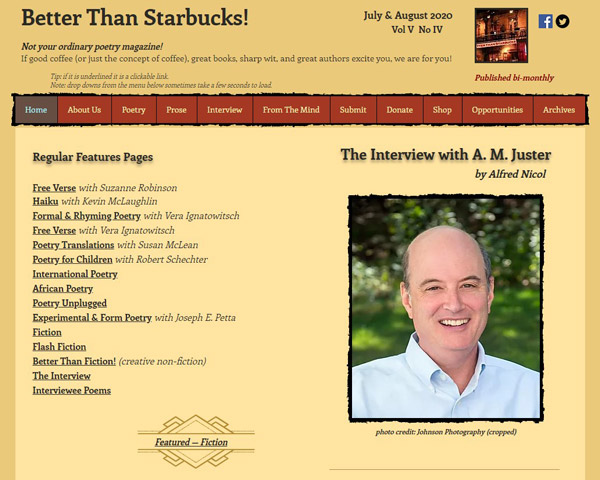
Better Than Starbucks July/August 2020 IssueBetter Than Starbucks is an online literary magazine publishing multiple genres of poetry including free verse, formal poetry, haiku, experimental poetry, poetry for children, African and international poetry, and poetry translations. Every issue features a poetry interview with a featured section of poems. While the main focus of the journal is poetry, they do also publish fiction, flash fiction, micro fiction, and creative nonfiction.

They publish six issues a year and you can find over 30 of their past and recent issues available to read in their online archives. Their current edition features an interview with A. M. Juster by Alfred Nichol. Learn more about them at their listing on NewPages.

2020 Dogwood Literary Award Winners

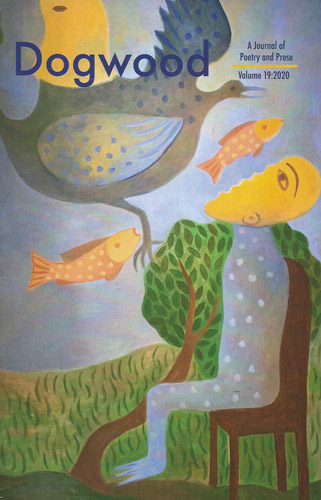
The Spring 2020 issue of Dogwood features the 2020 Dogwood Literary Award Winners in fiction, nonfiction, and poetry.

Nonfiction
“The Ritual of Smoking” by Rhonda Zimlich

Poetry
“Dear You” by Fay Dillof

Fiction
“Arbor Day” by Rebecca Timson

This year’s contest judges were Daisy Hernández (nonfiction), Ellen Doré Watson (poetry), and Ladee Hubbard (fiction). Visit Dogwood’s website for a celebration of each of the winners with words from the judges and bios for the winning writers.

Sponsor Spotlight :: Auroras & Blossoms Focuses on Positivity, Art, & Inspiration

Auroras & Blossoms 2020 NaPoWriMo Anthology coverAuroras & Blossoms is an electronic literary magazine launched in 2019 by co-founders Cendrine Marrouat and David Ellis. It is dedicated to promoting positive, uplifting, and inspirational poetry, poetry-graphy, short stories, 6-word stories, paintings, drawings, and photography. They feature poetry from adults as well as young writers ages 13-16. As they are a family-friend platform, no swear words, dirty words, politics, or erotica is allowed.

They also publish digital anthologies. Their first is the NaPoWriMo Anthology which contains poetry written throughout National Poetry Writing Month in April 2020 and features work by Donna Allard, Chandni Asnani, Maria L. Berg, Jamie Brian, Jimena Cerda, Jaewon Chang, Ravichandra Chittampalli, Sandra Christensen, Mimi DiFrancesca, Fiona D’Silva, Kate Duff, Judy Dykstra-Brown, Amanda M. Eifert, Stacie Eirich, David Ellis, Michael Erickson, Deveree Extein, Jack M. Freedman, Alicia Grimshaw, Jenny Hayut, Patrick Jennings, Liam Kennedy, Ting Lam, Rose Loving, Cendrine Marrouat, Michele Mekel, Ally Nellmapius, William Reynolds, Madhumita Sarangi, Anna Schoenbach, Julie A. Sellers, Jonathan Shipley, Dorian J. Sinnott, Krupali Trivedi, Angela van Son, Michele Vecchitto, Penny Wilkes, and Gemma Wiseman. Their next anthology will be PoArtMo which stands for Positive Art Month and Positive Art Moves.

Stop by their listing at NewPages to learn more.

Sponsor Spotlight :: Snapdragon: A Journal of Art & Healing

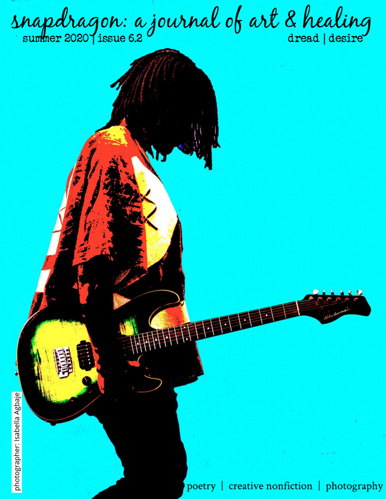
Snapdragon Summer 2020 Issue

Snapdragon: A Journal of Art & Healing is an electronic literary magazine publishing new issues quarterly. The journal was founded in 2015 by Jacinta V. White. They publish provocative poetry, creative nonfiction, and photography with a healing bent from across the globe. Their goal is to extend the conversation on art and healing believing that art is a catalyst for wellbeing.

They are a subscription-based journal offering one-time purchases or annual subscriptions. Each issue focuses on a certain theme. 2020 themes include vibrant · vision, dread · desire, empty · enough, and silence · sound. They accept 100 free submissions a month. Once they hit that, it is $5 to submit.

Snapdragon Journal is a part of The Word Project which offers online workshops, downloadable guides, coaching opportunities and more. Swing by their listing at NewPages to learn more.

Sponsor Spotlight :: Months To Years

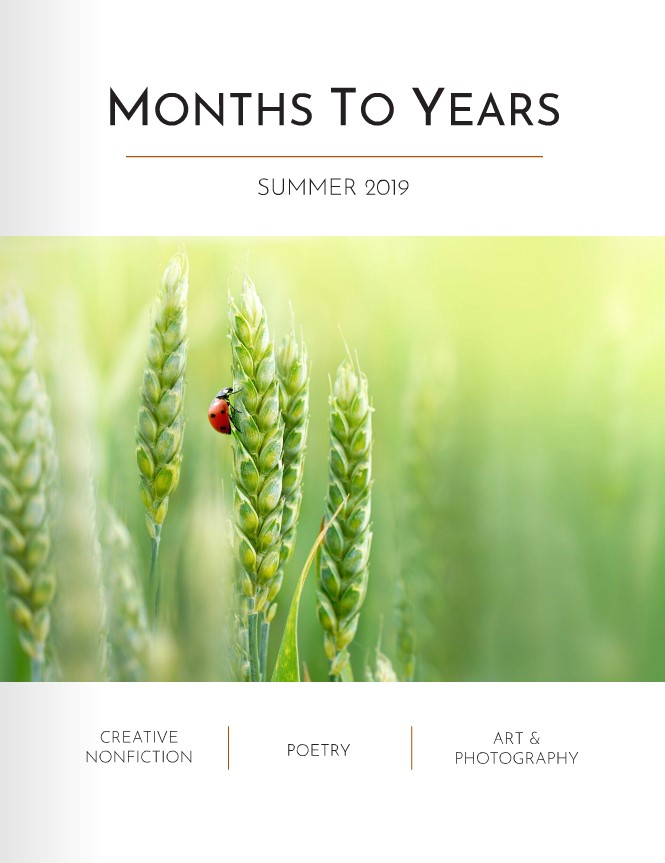
Months to Years Summer 2019 IssueFounded in 2017 by Renata and Tim Louwers, Months To Years is an online literary magazine exploring mortality and terminal illness. Both editors experienced the loss of their first spouses due to bladder cancer and early onset Alzheimer’s, inspiring them to co-found this journal. They wanted to create a literary space where those experiencing grief can reflect on their experiences through literature and art. The name of the journal is a phrase often used with terminally ill patients as the doctor’s best estimate of expected life span.

Months To Years publishes nonfiction, poetry, photography, and art that explores grief, death, and dying on a quarterly basis. They are now back after a brief hiatus and accepting submissions on a continuous basis whether you are a terminally ill person, a doctor, someone who suffered a loss, a caregiver, or someone simply contemplating mortality.

Stop by their listing at NewPages to learn more about this journal.

Hirt Finds Her Way Home

Guest Post by Shannon Frystak

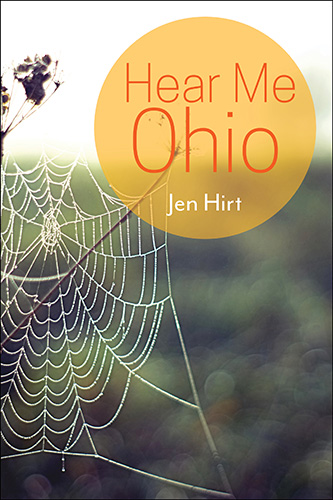
Jen Hirt is first and foremost a nature writer. Having grown up in her family’s greenhouse in Ohio, her latest essay collection, Hear Me Ohio takes us on a journey from Iowa to Idaho to Pennsylvania and Maine, as she grapples with the meaning of her varied and often mundane experiences traversing the country through multiple job searches, to a “reality house” church, a man and his ball of string, the views from her front porch where she muses on the lives of spiders and befriends a stray cat, to the forest where she and her dog encounter dead deer, and on the waterfront at her home in Harrisburg, where she grapples with a premonition about a dead body.

Jen Hirt’s gift is her attentive and detailed descriptions of the natural landscape—both flora and fauna—allowing us to travel alongside her, revealing herself and, sometimes, her family, through her peripatetic life seemingly searching for meaning and magic in all things, not the least of which include bats, one-eyed deer, and unicorns. Hirt always finds her way home, to Ohio—in a hundreds-year old horseradish bottle, her family’s history, and her mother’s death. Insightful and contemplative, this collection of short meditations is a beautiful and thought-provoking compilation of memoir essays.


Hear Me Ohio by Jen Hirt. The University of Akron Press, March 2020.

Reviewer bio: Shannon Frystak, Ph.D. is a Professor of History at East Stroudsburg University where she specializes in Black, Women, and Civil Rights History. She is the author of Our Minds on Freedom: Women and the Struggle for Black Equality in Louisiana, 1924-1967, and is currently working on a collection of essays Confessions of an Academic Bartender: Essays on Life Inside and Outside of the Guild.

Buy this book at our affiliate Bookshop.org.

The Lake – July 2020

The July issue is now online featuring Ken Autry, William Bonfiglio, David Callin, Kitty Coles, Eileen Walsh Duncan, Maren O. Mitchell, Ronald Moran, and more. Reviews of Claire Walker’s Collision and Oisín Breen’s Flowers All Sorts in Blossom, Figs, Berries and Fruits Forgotten. Also features a tribute to Eavan Boland. .

New England Review – 41.2

The summer New England Review issue extends deep into the past, with translations from ancient Greek, historical fiction featuring Alfred Nobel, and an essay/collage about Virginia Woolf and Elizabeth Bowen. It imagines the future with speculative fiction and crosses the Atlantic to bring together fifteen contemporary poets from the UK. Fiction by Hugh Coyle, Rachel Hall, Laura Schmitt, and more; poetry by Emma Bolden, Jehanne Dubrow, David Keplinger, Esther Lin, Joannie Stangeland, and others; and nonfiction by Indran Amirthanayagam, Zoë Dutka, and more.

The Cape Rock – Vol. 48 2020

The latest issue of The Cape Rock features new poetry by Caroline Mann, Mark Christhilt, Rachel Tramonte, Carol Levin, Diana Becket, Olivia Vittitow, Nathan Graziano, Elian JRF Wiseblatt, Mukund Gnanadesikan, Daisy Bassen, Christine Donat, Barry Peters, Michael Estabrook, Holly Day, Dick Bentley, Liz Bruno, Sandra Sylvia Nelson, Phillip Sterling, Tobi Alfier, Martina Reisz Newberry, Donna Emerson, James K. Zimmerman, Chase Dimock, David M. Taylor, Seward Ward, Judith Cody, Sharon Kennedy-Nolle, Arlene Naganawa, and Simon Perchik.

Sponsor Spotlight: Club Plum Literary Journal

Club Plum logoClub Plum Literary Journal is a new quarterly online literary magazine founded in 2019. They have released three issues to date with a focus on flash fiction, prose poetry, and art from both emerging and established writers. Their aim is to act as a “temporary entrance into a literary world of empathy, art, and sound. A place to take and to give.”

They keep their site clean and free of ads and distracting elements so the reader’s experience is focused on the absorbing tales and imagery unravelling in voices either understated or lyrical, but always powerful. “This is a safe place. Our hearts have been pummeled; our minds have been toyed with. We see clearly now. This is a place for thinkers and doers. A place to turn our pain into wondrous works of art.”

Check out their basic submission information and full publisher’s description at their listing on NewPages.

“Shelter in Place” with Bishakh Som

Magazine Review by Katy Haas

In the Summer 2020 issue of The Georgia Review, Bishakh Som finds a creative way to process feelings of longing and isolation in “Shelter in Place.” This graphic poem spans days in May, the images taking readers into a futuristic, sci-fi setting. Calendar dates guide the piece along, moving us from one day to the next as the speaker writes of what and who she misses in this strange state of life. At the end of the piece, we’re met with that now familiar feeling of time becoming unreal and immeasurable as the calendar page reads “May 32.”

While we all process our feelings about sheltering in place, living in a time of a global pandemic, and missing the physical connection with people we were once allotted, I appreciated this different and creative take. The change in setting and the beautiful language make “Shelter in Place” a stand-out among other pieces of writing that are responding to current life in COVID-19.

The Georgia Review – Summer 2020

The Georgia Review‘s latest issue features new writing from Garrett Hongo, Aimee Nezhukumatathil, Laura van den Berg, A. E. Stallings, and many other exciting voices! Original translations of poetic works by Hisham Bustani and Shuzo Takiguchi. Illustrated features on the theme “Shelter in Place,” by Lindsey Bailey, Kaytea Petro, and Bishakh Som. Cover art and portfolio by Doron Langberg. This issue is not to be missed—read selected online features today!

2019 Carve Prose & Poetry Contest Winners

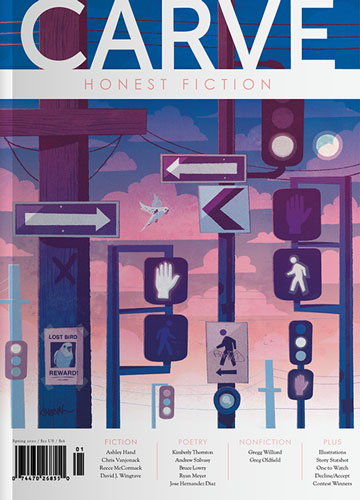
Carve annually hosts the Prose & Poetry Contest for submissions in fiction, nonfiction, and poetry. There is one winner in each genre category, each awarded a $1000 prize.

Readers can find the winners of the 2019 contest in the Spring 2020 issue.

Fiction
“A Simple Case” by Nancy Lundmerer

Nonfiction
“From the Book on Pit Firing Pottery” by Sarah Sousa

Poetry
“Cleft” by Jason M. Glover

The judges for this past year’s contest were Lydia Kiesling in fiction, Analicia Sotelo in nonfiction, and Benjamin Busch in poetry. Submissions for this year’s contest will reopen at the beginning of October.

2019 Able Muse Write Prize Winners

Able Muse‘s annual Write Prize awards $500 for the best submitted poem, $500 for the best submitted flash fiction, and publication in the print journal. The Winter 2019 issue of Able Muse features the winners of the 2019 contest.

Poetry Winner
“Waiting for the Angel” by David MacRae Landon

Poetry Finalists
“Dear Sonnet” by Amy Bagan
“Paradox” by Beth Paulson
“Postcard, Vermont” by Miriam O’Neal

Fiction Winner
“To the Bottleneck Fiction” by Erin Russell

Stay tuned for the winners of the 2020 contest, which closed this past March.

Maggie Smith Writes to America

Magazine Review by Katy Haas

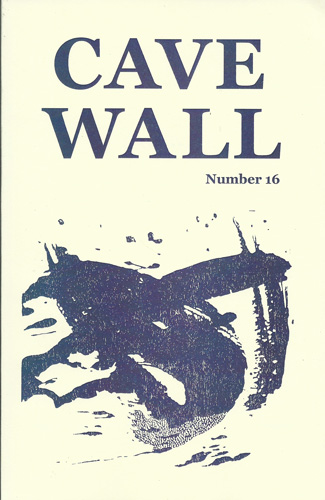
In Cave Wall Number 16, Maggie Smith writes a poem to America. “Tender Age” focuses on the reality of the country, which is decidedly “not what I learned / in grade school.” Instead, this America “caged / even the babies.”

She questions who our laws serve, questions where the country’s conscience lives, or where it’s been removed from. Reminiscing on the past, Smith writes of the street she grew up on and the church she attended, as well as the handbells played there. These memories are unburied again as she wonders whether there will be “neighborhoods / named for this undeclared war” like we’ve named ones “Lexington, / Bunker Hill, Valley Forge.” Finally, the piece ends on the images of the handbells again ins sobering stanza:

America, when we want to silence
the bells, we extinguish
their open mouths
on our chests.

This poem is unfortunately continuously timely and relevant with the continued practice of caging migrant children and following the recent news that another 1,500 have been “lost.” Smith’s poem encourages readers to join in as she speaks to America and against the horrific, harmful systems we’ve created.

The Shore – Summer 2020

The summer issue of The Shore features dazzling poetry by: Catherine Pierce, Kim Harvey, Beth Gylys, Joshua Garcia, Sara Moore Wagner, Kristi Maxwell, Dillon Thomas Jones, Matthew Bruce, Lorrie Ness, C.C.Russell, Travis Truax, Stanley Princewill McDaniels, Njoku Nonso, Erin Rodoni, Phillip Sterling, William Doreski, and more.

The Briar Cliff Review – 2020

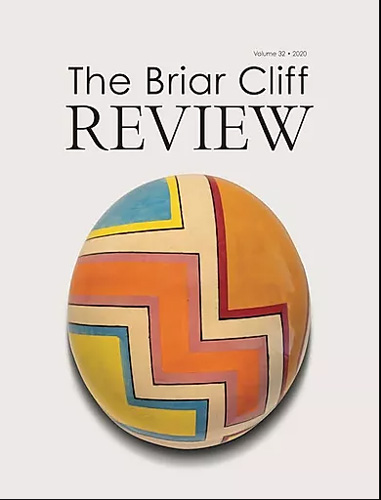
The 2020 issue of The Briar Cliff Review explores themes of violence, disconnectedness, and the legacy of slavery. Find poetry by Jed Myers, Claude Wilkinson, AE Hines, Lindy Obach, Doug Rampseck, Laura Stott, Melanie Krieps Mergen, Mary Fitzpatrick, Dar Hurni, and more; fiction by Deac Etherington, Carrie Callaghan, and others; and nonfiction by Karen Holmberg, Ryan McCarl, and more. Plus, two book reviews and pages of art.

Inaugural Nina Riggs Poetry Award Winner

author head shotRhett Iseman Trull, Editor of Cave Wall poetry magazine has announced the first winner for The Nina Riggs Poetry Award.
“We were thrilled with the many nominations that came in from individuals, presses, and journals,” Rhett commented. “The 10 finalists that went to the guest judge were powerful poems, all worthy of the award, poems everyone should read.”

Guest Judge Maria Hummel chose Rachel Eliza Griffiths’ poem “Good Mother,” which first appeared in Tin House, as this year’s inaugural winner. Griffiths’ poem can be read here.

The Nina Riggs Poetry Award is a crowd-funded award, with the winner receiving at least $500. “Thanks to the generous donations of so many supporters,” Rhett shared, “we were able to award Rachel Eliza $1,000.”

Honorable Mention went to Melissa Crowe for “Dear Terror, Dear Splendor.”

Finalists

Traci Brimhall, “Oh, Wonder”
Tiana Clark, “A Louder Thing”
Carrie Fountain, “Will You?”
Keetje Kuipers, “Still Life with Small Objects of Perfect Choking Size”
Megan Peak, “What I Don’t Tell My Mother about Ohio”
Thomas Reiter, “Companions”
Anna Ross, “One Time”
Molly Spencer, “A Wooing, Outright, of My Beloved Ones”

Rhett added, “We hope many people will nominate poems for the next round. Any poems received before Nov. 1 will be considered for the 2021 award. We are looking for the finest poems on family, relationships, or domestic life published in the last three years. No self-nominations.”

For more information, visit: http://www.cavewallpress.com/ninaaward.html

Merging Memory with Storytelling

Guest Post by Kate Gaskin

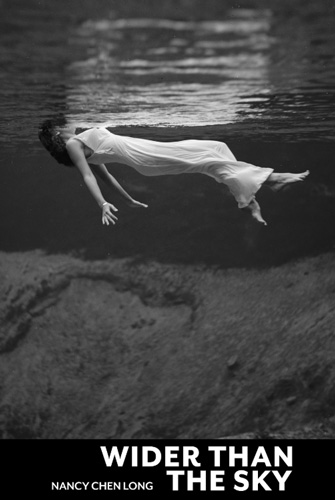
In Wider than the Sky, Nancy Chen Long’s second book of poetry, the biological constraints of memory merge with the practice of storytelling to show how families create intimate legacies and private lexicons that both heal and stifle.

Long uses the language of science to meditate on the power of stories to determine—or even rewrite—reality. In “Interstice,” she writes “Our memory is flooded with holes, pocked like cotton eyelet.” To participate in narrative, then, is to admit its fallibility: “There are gaps in our stories / and in our history. People are missing.” “In the Family of Erasure” shows a daughter and mother engaged in a complicated dance through each other’s individual memories in order to arrive at a shared history they can both tolerate.

Throughout this collection, Long mines both the personal and the general to show how memory is a mutable and ever-evolving force that steers migrating butterflies around long-gone mountains and compels a daughter to clean “off the family’s stains . . . to keep her memory-rooms blameless.” In the closing poem “Wordlust,” Long writes of the bittersweet futility of determining shared history: “The world is filled / with words. We are a seaward-bound people, / chasing a flood / of sorrows our stories cannot explain.” These are tender and insightful poems that probe the fallibility of memory, asking which parts of our legacy we can control and which parts are inherited by complex forces that stretch back into our DNA.


Wider than the Sky by Nancy Chen Long. Diode Editions, March 2020.

Reviewer bio: Kate Gaskin is the author of Forever War (YesYes Books 2020). She is a poetry editor for The Adroit Journal. 

2020 Jeff Marks Memorial Poetry Prize Winner and Finalists

The latest issue of december includes the 2020 Jeff Marks Memorial Poetry Prize winner and finalists.

First Place
“River” by Kimani Rose

Honorable Mention
“The Mirrored Room” by Carolyn Foster Segal

Finalists
“The Chosen” by Partridge Boswell
“An Invitation to an Eclipse Party” by
“Going to Church” by Gibson Fay-LeBlanc
“Ars Poetica With Clickbait” by Rebecca Foust
“Pink Peonies” by Valentina Gnup
“On Midwest Marriage” by Gina Keplinger
“My Daughter Makes Pan Dulces” by Abby E. Murray
“Origin of a Disaster” by Purnama
“House Bill #118” by Molly Bess Rector
“Rupture” by Raisa Tolchinsky

You can view a selection of these at the magazine’s website, or grab yourself a copy to check out all the placing poems.

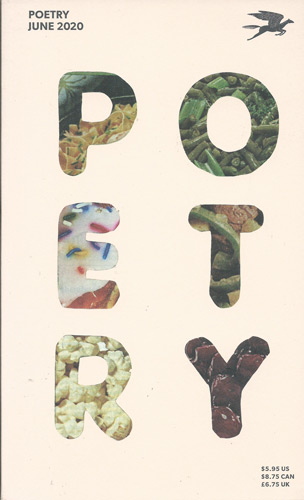
Poetry – June 2020

New poetry by Karen An-Hwei Lee, Jan Freeman, Ashanti Anderson, Ken Babstock, Drew Swinger, W. Todd Kaneko, Susan Parr, Noah Baldino, Faylita Hicks, Erika Martínez, Ian Pople, Bradley Trumpfheller, Alla Gorbunova, Marion McCready, Eleanor Hooker, Tim Seibles, Carol Ann Davis, Karisma Price, Rita Dove, Fran Lock, Emily Fragos, Rajiv Mohabir, Cynthia Guardado, Sandra McPherson, Elizabeth Metzger, Miller Oberman, Catherine Cleary, and more. In “The View from Here” section: Nicolas Bos, Zach Pino, Leah Ward Sears, Mairead Case, and John Green. Plus two essays by Torrin A. Greathouse and Christian Wiman. Check out other poetry contributors at the Poetry website.

Still Point Arts Quarterly – Summer 2020

This issue’s theme is “Making a Mark,” and the current art exhibition explores this theme. Featured artists include David Sapp, Mary Macey Butler, Cary Loving, and others. Featured writers include Karla Van Vliet, Wally Swist, Paula Penna, Dave Gregory, Bethany Bruno, Gergory Stephens, Mary Lane Potter, Roudri Bandyopadhyay, Sarah Brown Weitzman, Mark Tulin, Joe Kowalski, and more. Find more info at the Still Point Arts Quarterly website.

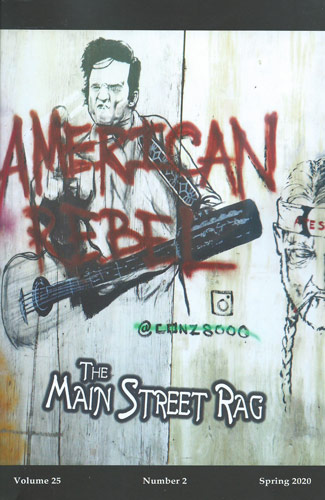
The Main Street Rag – Spring 2020

In the Spring 2020 issue: fiction by Jarrett Kaufman, Emily Alice Katz, J.T. Ledbetter, John Mancini, David Pratt, and Timothy Reilly; poetry by Jeffrey Alfier, Tobi Alfier, John Azrak, Tara Ballard, Chris Bullard, Dorritt Carroll, Ricks Carson, George Bishop, Sudasi J. Clement, Joan Colby, and more; and six book reviews. Be sure to check out our featured interview with Tim Bascom by Beth Browne.

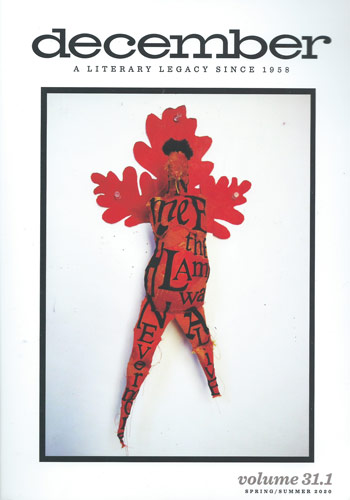
december – Spring Summer 2020

Our latest issue features poetry by Kenda Allen, Jamaica Baldwin, Ronda Pizza Broatch, Satya Dash, Gibson Fay-LeBlanc, Rebecca Foust, Valentina Gnup, Tate Lewis, Abby E. Murray, Phong Nguyen, Eric Pankey, Kimani Rose, Joel Showalter, Ellora Sutton, Raisa Tolchinsky, and more; and fiction by Stacy Austin Egan, Lucy Ferriss, Tyler McAndrew, Casey McConahay, Susan Mersereau, and Griffin Victoria Reed. Read more info at the december website.

Event :: The Center for Creative Writing Offers Online Courses & Community

Deadline: Year-round
The Center for Creative Writing has been guiding aspiring writers toward a regular writing practice for more than 30 years. Our passionate, published teachers offer inspiring online writing courses in affordable six-week sessions, as well as one-on-one services (guidance, editing) and writing retreats (virtual for 2020). Whatever your background or experience, we can help you become a better writer and put you in touch with the part of you that must write, so that you will keep writing. Join our inclusive, supportive community built on reverence for creativity and self-expression, and find your way with words. Creativewritingcenter.com.

Call :: The Daphne Review Seeks Mentors & Student Writers

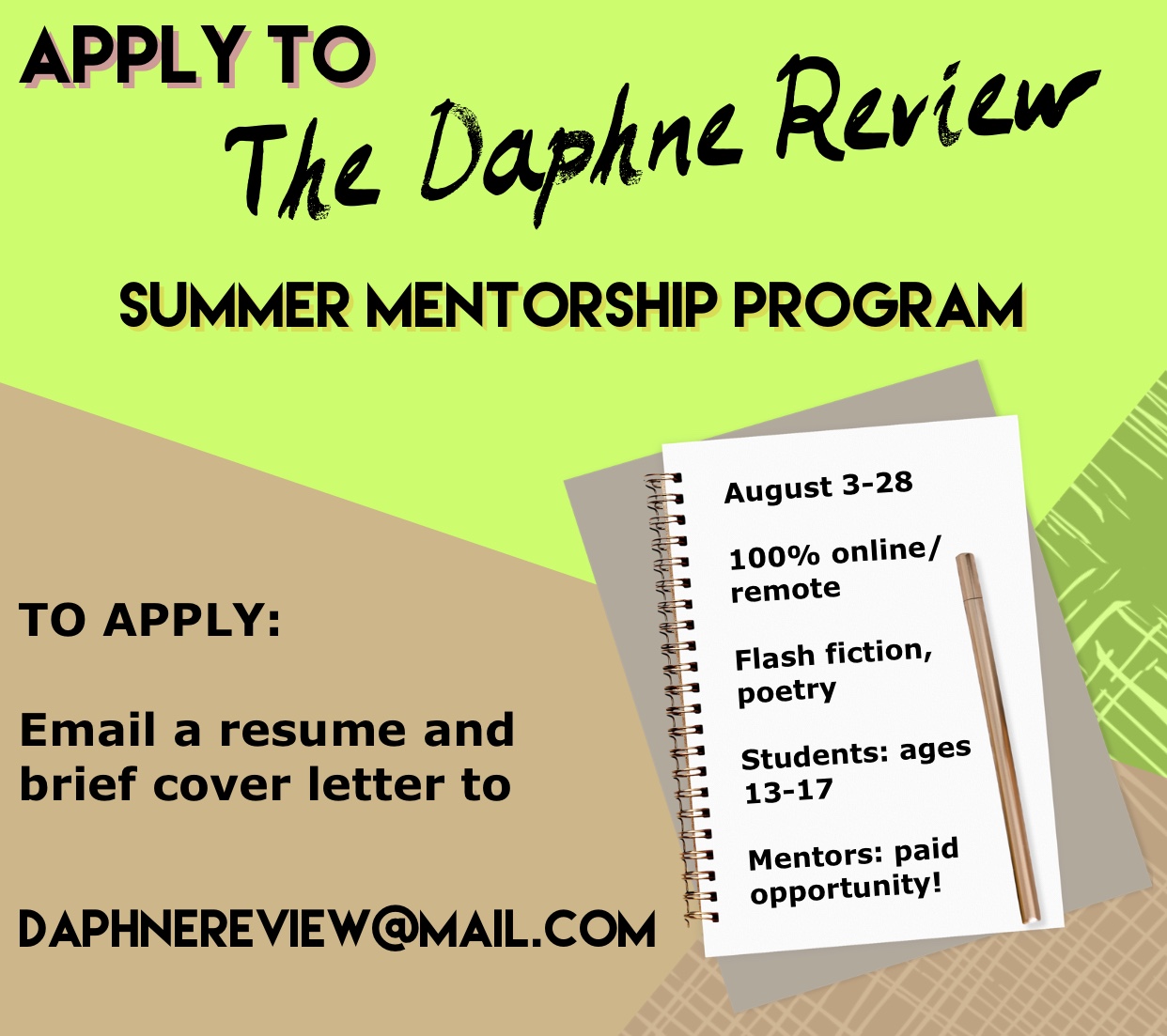
The Daphne Review 2020 Summer Mentorship bannerDeadline: July 31, 2020
The Daphne Review is hosting an online mentorship program for talented high school student writers and established writers/teachers acting as their mentors. We’re currently taking applications for both types (students and qualified mentors) until July 31st! To apply, submit a resume and brief cover letter to [email protected]. Start Date: August 3-28. Format: online. Classes: flash fiction, poetry. Pay for mentors: $50 per hour for skype or $200; $25 per hour for email or $100; total: $300 via paypal. www.thedaphnereview.org

Fresh First Poetry Collection Draws on Women of Myth

Guest Post by Rebecca Moon Ruark

“Eve, / How often do you think of me? / the house now, the kids, and / Everyone needs to eat, I know how tired / You are to mother the world”— “Oh” from The Desperate Measure of Undoing: Poems by Jessica Fischoff

Poetry is meant to be read aloud, preferably to an in-person audience. Luckily, one of the last live poetry readings I attended pre-pandemic featured Jessica Fischoff reading from her poetry chapbook.

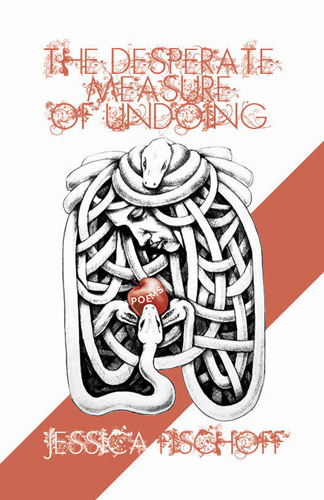
The Desperate Measure of Undoing: Poems is a little book with big impact. Fischoff’s poems borrow from women of myth but are their own unique creations. The poet plays with persona, writing her poem, “Oh,” quoted above, not from Eve’s perspective but from that of the serpent. In a recent interview, Fischoff told me that “Oh” came from a prompt to write from the perspective of a villain. The poem reads as a letter from the serpent, who has been abandoned in the garden by Eve, and grants age-old Eve new agency and power.

There is a lot to admire in this chapbook that explores the feminine through the ages and through fresh takes. Original cover art and flower-illustrated front and back pages complement the poems and provide the reader a garden-like respite from our world’s current situation.

Read more about Fischoff and her debut poetry chapbook in a new interview at Parhelion Literary Magazine.


The Desperate Measure of Undoing by Jessica Fischoff. Across the Margin, 2019.

Reviewer bio: Rebecca Moon Ruark is features editor for Parhelion Literary Magazine, which publishes features, along with fiction, nonfiction, and poetry in winter, summer, and fall issues.

Challenging “Supposed To”

Magazine Review by Katy Haas

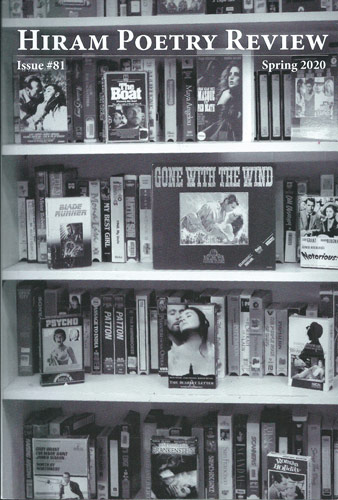
If you’re using pride month as a time to become more familiar with LGBTQIA+ writers, I recommend grabbing a copy of the Spring 2020 issue of Hiram Poetry Review. Inside is the four-page poem “I Didn’t Know You Were Transgender” by Mercury Marvin Sunderland. This poem is a response to the observation cisgender people have made: “I didn’t know you were transgender / they tell me / I thought you were a cis man.”

Sunderland spends the poem speaking to these people, asserting his place in the gender spectrum. At one point he declares:

if you knew
even a scrap
of trans culture
you’d know i
already do look
like a trans man
because we are a diverse multitude all over the earth.

With this poem, he challenges the idea of what someone is “supposed” to or expected to look like, challenges the argument that using “they” as singular “destroy[s] the english language,” challenges the idea that “stick[ing] medicine in me” means “i want to be cisgender.”

Throughout the four pages, Sunderland provides a better understanding of what it means to be a trans man, and what it means to be Sunderland himself.

Thrive with The Tiger Moth Review

Last month, Esther Vincent of The Tiger Moth Review was invited to read poetry on the Thrive Hour Community Corner Facebook group. This group is provides free live sessions to help keep users thriving and accepts donations for families in need.

You can now find these readings on the literary magazine’s website. Each of the three videos includes several poems. Most of these have appeared in The Tiger Moth Review, like “Tree” by Lee Soo Jin or “Elegy for a Silent Stalker” by Ow Yeong Wai Kit. There are also other familiar names such as Mary Oliver and Joy Harjo included.

Take a moment to appreciate eco-poetry read aloud for you by visiting The Tiger Mother Review‘s website.

Poetry – May 2020

In the May 2020 issue of Poetry, find work by A.E. Stallings, Perry Janes, Raymond Antrobus, Mary Ruefle, D. M. Spratley, Desirée Alvarez, Kelle Groom, Kayleb Rae Candrilli, Safia Elhillo, Janice N. Harrington, Zakia El-Marmouke, Eileen Myles, Lupe Mendez, TC Tolbert, Karen Skofield, Daniel Poppick, Jennifer Barber, Inua Ellams, Stuart Barnes, Travis Nichols & Jason Novak, Kyle Carrero Lopez, Ricki Cummings, Dean Browne, Jennifer L. Knox, Jayme Ringleb, Gerard Malanga, Helen Mort, and Srikanth Reddy. Plus, Vidyan Ravinthrian in the Comment section.

Plume – #106

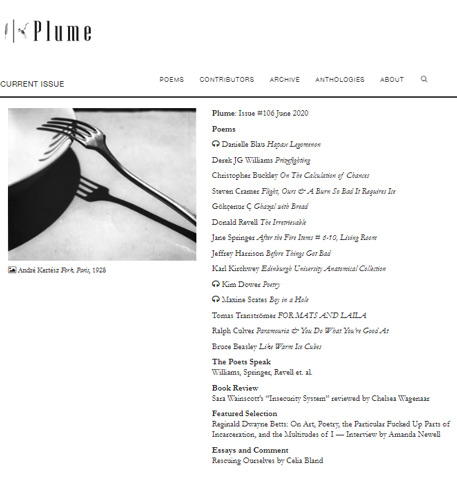
This month’s Plume featured selection: Reginald Dwayne Betts: On Art, Poetry, the Particular Fucked Up Parts of Incarceration, and the Multitudes of I. Work by the poet is introduced with an interview by Amanda Newell. In the Essays & Comment section, find “Rescuing Ourselves” by Celia Bland. Chelsea Wagenaar reviews Sara Wainscott’s Insecurity System.

A Graceful Revelation

The Off-Season by Jen Levitt

Guest Post by Heidi Seaborn

Finishing up my MFA at NYU, I wanted to read a first collection by a poet who had travelled this same path, Jen Levitt. While I waited for the delivery of Levitt’s The Off-Season from my local bookstore, I went in search of her poetry online. When I found “The Reality Show,” I knew I had met a kindred spirit—someone who delivers ironic humor but approaches it without a suit of armor. Her emotional temperature is tempered only by coolness of her cultural references.

Any poem about physique, about not feeling attractive and the brutality of middle school brings its own pathos, but this poem embeds, “In montage I mourn the boy killed by this classmate / for liking to wear heels & makeup, / also the jury’s devastating hearts / that go out to shooter / because twenty-one years is a lot of time” in the middle, a turn that is both jarring but important to weight this poem. The stakes are suddenly clear. With the line, “like the time it takes to get over middle school,” the reader accepts the burden of living in the speaker’s body, as well as one’s own.

Body and sexuality dominate this Levitt collection. In the titular poem, “The Off-Season”, the speaker wrestles with the awkwardness of coming of age—made more acute by her growing awareness of her sexual orientation. When I read this poem to my queer daughter, she said the poem was so evocative of that ‘puzzling’ experience. Levitt is piecing together the puzzle that is her—as she matures. She is also coming of age as a poet, under the influence of Elisabeth Bishop and Emily Dickinson. Yet, her poems in conversation with Bishop and Dickinson steer clear of worshipful dialogue, instead they reveal a more naked self. The Offseason is a graceful revelation of body, sexuality, growing into one’s self as a person and a poet.


The Off-Season by Jen Levitt. Four Way Books, 2016.

Reviewer bio: Heidi Seaborn is Editorial Director of The Adroit Journal and author of the award-winning collection Give a Girl Chaos (C&R Press/Mastodon Books, 2019) and two chapbooks.

Buy this book through our affiliate Bookshop.org.

Program :: MA in Creative Writing at University of South Alabama

Earn your MA with an emphasis in Creative Writing in the vibrant city of Mobile, near some of our country’s best beaches. Tuition waivers and assistantships are available as are additional scholarships for excellence and summer creative writing projects. Home of the Stokes Center for Creative Writing. Full-time students can finish the program in four semesters. Students can also enroll part time and/or complete the degree through evening coursework. For more information, visit our website: www.southalabama.edu/colleges/artsandsci/english/.

The Lake – June 2020

The Lake‘s June issue features Sheila Bender, Phillip Henry Christopher, Robert Eccleston, Edilson Ferreira, Mercedes Lawry, Bruce Morton, David Olson, Carolyn Oulton, J. R. Solonche, Hana Yun-Stevens, Nwuguru Chidiebere Sullivan, Tanner. Reviews of Matthew Caley’s Trawlerman’s Turquoise and The Valley Press Anthology of Prose Poetry.

Reading “Insomnia in Moonlight” by Alice Friman

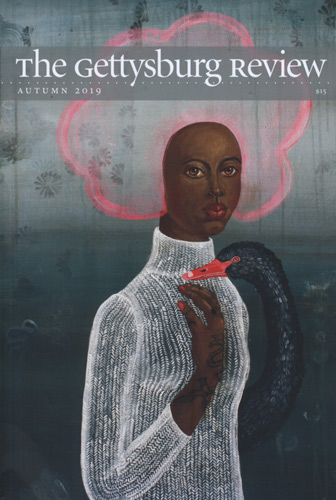
Gettysburg Review - Autumn 2019Guest Post by Emily Lowe

Alice Friman’s “Insomnia in Moonlight” in The Gettysburg Review Fall 2019 is a moving poem that grapples with a popular theme within this issue: death. Friman handles the topic delicately, with humor, and with heft. The poem is broken into four irregular stanzas beginning with the dead waking in the night, making noise. This stanza read with immediate intrigue through the life Friman breathed into death about a speaker who cannot sleep because the dead are alive in their thoughts. It suggests playfulness, too, written with a lighter tone than often associated with death and mourning.

Friman then equates the dead to the sun, something bright and fixed, and the speaker to the changeable moon, “she wears my child face—round, / sunburnt, and pensive.” The final lines in the poem are the most striking, offering up the speaker’s recount of a total eclipse where the moon tried to “blot out the sun.” It felt like a reflection of their desire to hold death in their hands and make sense of it, but the speaker admits that the moon fails in its attempt to resist permanence, to resist, as Friman puts so eloquently in her final two lines: “geometric progression, the unerasable / dead, and everything else I don’t understand.”


Reviewer bio: Emily Lowe is an MFA candidate in Nonfiction at the University of North Carolina Wilmington where she is also a fiction editor for Ecotone literary magazine.

Find New Favorites in The Malahat Review

Magazine Review by Katy Haas

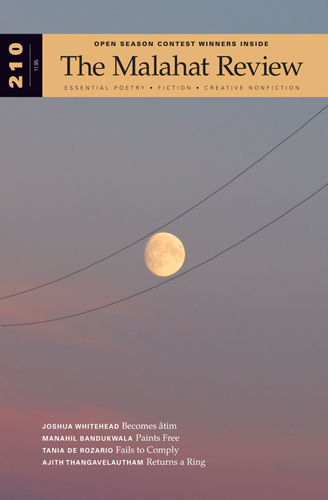
The cover of the latest issue of The Malahat Review is a calming scene: a full moon framed by powerlines over a pastel sky. It invites readers to pick it up and open it to discover what’s inside. I had found two new favorites in the pages: “Nice Girl” by Hollie Adams and “A High Frequency Words List” by Matthew Gwathmey.

In “Nice Girl,” Adams’s speaker likens herself to a mall who would “never automatically / open the doors even though / there’d be a sign saying / Automatic Doors.” She admits she’d keep them locked because she’s “evil / even though in real life / I’m always doing nice things.” This poem is a fun exploration of one’s inner self and the intentions behind actions. There’s a sense of humor in this piece even as it leads to introspection, an enjoyable aspect.

Gwathmey’s poem is in four sections, each one a list of words picked from the Fry and the Dolch sight word lists, used in children’s vocabulary development. This piece is just four paragraphs listing off words, a cool form of recycling.

There is plenty more poetry and prose to find inside this issue of The Malahat Review. Grab a copy to find your own favorites.

The Gettysburg Review – 33.4

The Autumn issue of The Gettysburg Review is out. The issue features paintings by Jared Small, fiction by Jennifer Anne Moses, Jared Hanson, Darrell Kinsey, and Sean Bernard; essays by Andrew Cohen, K. Robert Schaeffer, and Christopher Wall; poetry by Jill McDonough, Max Seifert, K. A. Hays, Albert Goldbarth, Mary B. Moore, R. T. Smith, Jill Bialosky, Katharine Whitcomb, Corey Marks, Kimberly Johnson, Margaret Ray, Danusha Laméris, Linda Pastan, Christopher Bakken, Christopher Howell, and Margaret Gibson.

The Adroit Journal – May 2020

The May 2020 issue is here with poetry by Jenny George, Arthur Sze, Jessica Abughattas, Melissa Crowe, Jamaica Baldwin, C.X. Hua, Kara van de Graaf, Hala Alyan, Mark Wunderlich, Raymond Antrobus, Stephanie Chang, and more; prose by Scott Broker, Alyssa Proujansky, Maura Pellettieri, and Mina Hamedi, with a prose feature by Dima Alzayat. See what else the issue has in store for you at The Adroit Journal website.