Kenyon Review – Sept/Oct 2020

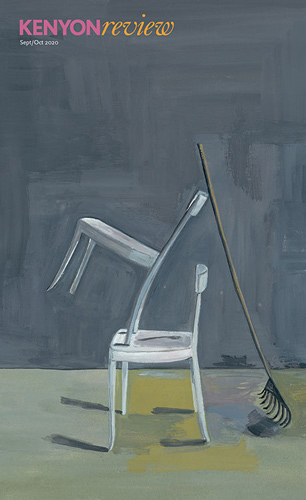
The latest issue of Kenyon Review features a special poetry section, “All of This Is True,” guest-edited by Reginald Dwayne Betts, whose own poetry, a memoir, and essays explore the world of prison and the effects of violence and incarceration on American society. Betts has selected powerful work by fifteen poets including Sean Thomas Dougherty, April Gibson, Randall Horton, Roger Reeves, and others. The new issue also includes the winning poem and two runners-up in the 2020 Patricia Grodd Poetry Prize for Young Writers as well as four new works of fiction by Samuel Jensen, Dina Nayeri, Matthue Roth, and Marianne Shaneen.

New Lit on the Block :: Cathartic Youth Literary Magazine

logo

“Breaking the Silence” has been the long-time effort of The National Alliance on Mental Health, and now a new outlet sharing this mission is Cathartic Youth Literary Magazine, an online publication featuring contributions from youth 12-22 years old, and particularly works covering mental health conditions and the teenage experience.

Founder and Editor-in-Chief Anna Kiesewetter [pictured] shares the publication’s genesis, “The word ‘cathartic’ has always perfectly encapsulated what writing is to me. I realized that some of the most powerful writing I’ve read and created was used for catharsis – to deal with emotions, to make sense of life, to put trauma into words. I’m a firm believer in the power of vulnerability, and I’ve realized that writing has helped me with a lot of my own mental health struggles. Writing has made me more mindful of what goes on within my head and provides me with an outlet that I can’t really get anywhere else; I thus hoped it might provide similar benefits for other young people. Mental health is also a subject that has been almost taboo to discuss in the past, and even now it still carries quite a bit of stigma. Especially during this pandemic, which seems to be exacerbating existing conditions. Youth mental health is such a prevalent and important issue, yet one that isn’t often talked about. I felt like this magazine could serve a threefold purpose: to open up discussion about mental health, to encourage mindfulness and writing for catharsis, and to provide a platform for young writers as a sort of steppingstone to larger publications.”

Continue reading “New Lit on the Block :: Cathartic Youth Literary Magazine”

Celebrate 75 Years with The Fiddlehead

The Fiddlehead is celebrating 75 years of publication. To celebrate, the literary magazine is hosting a series of free online readings throughout the rest of the year. These readings feature the writers found in the forthcoming anniversary issue. An ASL interpreter will be present to translate events in real time.

You can find dates for readings at The Fiddlehead‘s website, along with a list of the readers you can expect to hear on each date. The next event will be September 30.

Terrain.org – August 2020

Visit Terrain.org for the new work on the site this month. Arne Weingart reviews The Tilt Torn Away from the Seasons by Elizabeth Lindsey Rogers and Melissa L. Sevigny interviews Pam Houston. Fiction by Beth Alvarado; nonfiction by Tamie Parker Song, Scott Russell Sanders, and Paul Riley; and poetry by Seth García, Garrett Hongo, Collier Brown, and more. In currents: Charles Revello, Patricia Schwartz, and others.

Wordrunner eChapbooks – No 40

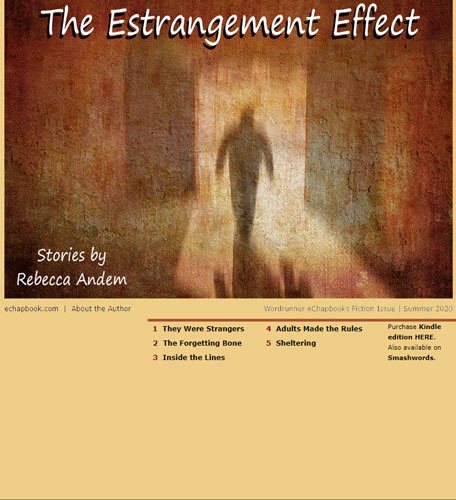
Wordrunner eChapbooks‘ 40th issue, the Summer 2020 fiction echapbook: The Estrangement Effect: Stories by Rebecca Andem. The five stories in Andem’s collection explore the startling, disconcerting, unsatisfying, and liberating moments in which we understand that the most central relationships in our lives are inhabited by strangers, strangers we are deeply connected to, be they lovers, spouses, parents, siblings or children.

The Main Street Rag – Summer 2020

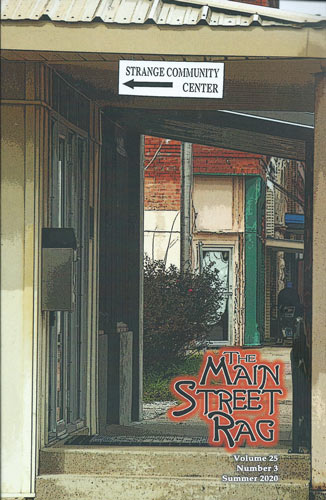
This issue’s featured interview: “Digging for Gold,” an Interview with Don Kesterson by Terresa Cooper Haskew. Fiction by Ethan Forrest Ross, Michael L. Woodruff, NV Baker, and Rita Ariyoshi. Poetry by Steven Ablon, Mark Burke, Chris Capitanio, Llyn Clague, Shutta Crum, Darren C. Demaree, Craig Evenson, Barbara Greenbaum, Angela Gregory-Dribben, Katrina Hays, Scott T. Hutchison, and more. Also in this issue: a selection of book reviews.

The Adroit Journal – August 2020

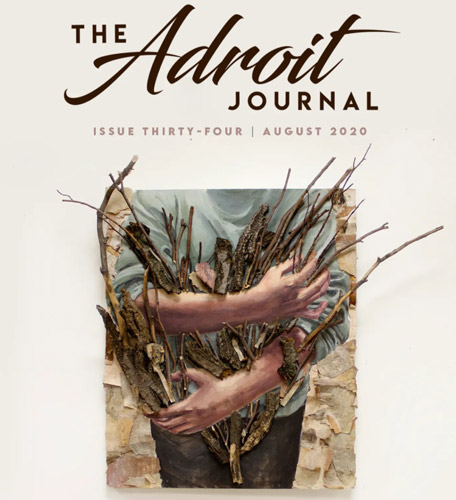
We’re beyond excited to bring you new work from Alicia Ostriker, Diane Seuss, Aimee Nezhukumatathil, Jos Charles, Yalie Kamara, David Naimon, and Jordan Jace. We’re also extremely excited to feature poetry by Asa Drake, Thomas Dooley, Mary Biddinger, Kevin Prufer, Maya C. Popa, Jordan Keller-Martinez, and more, prose by Emily Yang and Andreas Trolf, and art by Caroline Zhang, Taylor Wang, Ariel Kim, and others. Read more at The Adroit Journal website.

New Lit on the Block :: The Milking Cat

What happens when you repeatedly tell a teen they can’t do something? Of course, they will find a way to do it, which, in the case of Editor-in-Chief Benji Elkins, resulted in The Milking Cat, an online publication of comedy in all forms, from written works to movies to comics and more.

The name itself has a comedic referent, as Benji explains, “’The Milking Cat’ is a reference to the 2000 film Meet The Parents where Ben Stiller’s character lies about milking a cat on a farm that has no cows.” Benji found the scene especially humorous and decided to name the website as a testament to it. “Also,” he adds, “it rolls off the tongue once you get used to it.”

Behind the name, the mission of The Milking Cat is to provide an outlet for aspiring teen comedians, but the initial motivation stemmed from an experience Editor-in-Chief Benji Elkins faced. “It goes something like this: In ninth grade, there was a stairwell that consistently had pencils stuck in its ceiling. When I returned to school in the tenth grade, the pencils were completely gone! All that remained was the scarred terrain of pencils that once were. As a result, I wrote a comedic piece featuring the pencils’ removal entitled ‘COLLECTIVE STUDENT BODY ART PIECE DESTROYED BY SCHOOL.’ However, when the school newspaper refused to publish it, I asked that they create a humor column. When they refused that, I asked his school’s activities director if I could start a humor paper. When they refused that as well, I decided I would simply have to do it myself.”
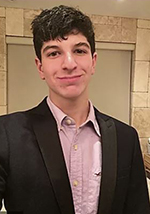
Putting together a humor publication editorial staff is a delicate balance between skill sets. Benji Elkins [pictured] says he has always enjoyed both writing and making jokes at the dinner table. “I’ve been involved in other (and much more serious) teen literary magazines through the submission of my own work,” Benji quips, “and therefore like to believe I ‘know the industry.’ But I’ve also been an active member in my school’s literary magazine. Currently, I’m the co-Editor-in-Chief. Otherwise, I’m simply a fan of writing and comedy and a huge fan of trying to put the two together.”

Alongside his efforts is friend and colleague Dan Soslowsky, who, “after coming down from the high of winning his third-grade art contest,  needed something to keep his cartooning skills sharp.” As Dan tells it, “I originally turned down my offer to be the Senior Editor and Head of Illustration and Design for The Milking Cat, but ultimately gave in after receiving a box of chocolates, flowers, and a 2018 Mercedes-AMG® GT C Coupe on my doorstep with a note signed ‘With love, Benji.’” In addition to his role with The Milking Cat, Dan is the Head Editor of the Humor Section in his school’s newspaper as well and is involved in numerous other art-related extracurriculars.

The final editorial staffer is Noah Stern, who “has been an avid fan of comedy since his parents let him watch their DVD box set of the Family Guy Star Wars parody episodes.” Noah is the head of the satire section at his school paper as well.

Additionally, “in case anyone was wondering,” Benji included, “all of the Editors’ favorite apparatus on the Bop-It machine is Twist-It.”

The learning curve for running their own publication was steep, as Noah shares the greatest hurdle they have faced was “bringing The Milking Cat to the level it is at today. Originally, The Milking Cat submissions were open to anyone of any age, but in retrospect, we cast the net too wide. We would rarely get submissions or viewers and as a result, the main people submitting were mostly us three editors. We pushed ourselves to write something every week, and it was increasingly stressful. However, when COVID-19 hit, we decided to kick it up a notch and grow our team – specifically around teens like us. We rebranded as a ‘by teens, for teens’ comedy website and began receiving many staff applications and comedy submissions. As a result, the greatest joy we’ve all experienced probably comes out of our greatest hurdle; the thing we love most about the site is giving teens around the world the opportunity to not only to read comedy, but also to provide them the opportunity to create it themselves as well.”

Readers of the publication, which posts new content every Monday evening, can expect to find content related to sports, politics, riffs on classic literature – “all sorts of readers can find a comedic piece that fits their specific interests,” Noah assures. “We triple-dog-dare you to pick any piece at random, and no matter which you stumble upon, you will find something thoughtful, well-written, and (hopefully) funny.”

In addition to the editors’ contributions, recent content includes:

Julianna Reidell – Hamlex Commercial: A commercial screenplay for the new prescription drug inspired by Shakespeare’s Hamlet
Asher Hancock – I Tried 5 Dark Web Dating Sites and was Pleasantly Surprised: A lonely romantic reviews various shady dating sites such as SatanMate.com and WeHaveCandy.com.
Sascha Nastasi-Feinburg – Pad+ Casting Calls: A mock casting call asking for actors to fill roles in the next big WattPad novel adaptations, including “I Fell in Love with a Cannibal because I Thought He Was a Vampire.”

And a sampling of humor by title alone:

Man Plays Air Guitar With All The Wrong Notes
The Life of an Undercover Dental Student
High School Student Shocked To See Chemistry Teacher Peeing In Middle Urinal

Teenaged contributors who are not a part of The Milking Cat Staff are welcome to submit works. Submissions are collectively reviewed by the Editors on its publication status. If accepted, the work is uploaded verbatim to the site. Pieces written by staff members are reviewed by Staff Curators who make edits and suggestions that the author can accept or reject before publication.

Looking to the future, Benji says, “Our plans for this summer include The Milking Cat Comedy Competition, where teens around the world can submit humorous pieces of any kind for the chance to win special prizes from 4 Ivy League Humor Magazine and the satirical site The Hard Times, such as up to $350, merch from the various humor magazines, workshop sessions, and much more! We also hope to establish ourselves more among teens as a regular place to read comedy from their peers. As for long term plans for the publication, we will keep doing it as long as it keeps bringing us joy (and it is).”

Here’s to a lifetime of joy for The Milking Cat!

The Malahat Review Novella Prize – 2020 Winner

The Malahat Review hosts a Novella Prize biennially. The 2020 winner opens the Summer 2020 issue. Judges Samantha Jade Macpherson and Naben Ruthnum selected “Yentas” by Rebecca Păpucaru.

Of “Yentas,” the judges said: “‘Yentas’ is a nostalgia-free portrait of girlhood lived among the Jewish communities of 1980s Montreal. The novella’s evocation of the cruelties and kindnesses of teenage friendship, territorialism, and enmity is built in prose as funny as it is precise. Rebecca Păpucaru’s treatment of culture, ethnicity, and religion as complex structures informing protagonist Karen’s family and social life achieves impressive depth and nuance. Through Karen’s eyes we are totally immersed in a rich and bubbling teenaged world. Visceral and enchanting, a truly fantastic read!”

At The Malahat Review‘s website, readers can check out an interview with the winning author.

The Adroit Journal – Adroit Prize Winners

There is plenty for readers to check out in Issue 34 of The Adroit Journal, including the results of the Adroit Prizes.

Poetry Winner
“On Their Birthday, Suge Knight & My Daddy Discuss Forgiveness” by Tariq Thompson

Poetry Runner-Up
“Cha” by Stephanie Chang

Prose Winner
“Valley of Saints” by Yasmeen Khan

Prose Runner-Up
“A Dominicana’s Guide to Surviving a PWI” by Coral Bello-Martinez

In addition to these winners, you can also find a selection of high school and college students who placed as finalists.

The Malahat Review – Summer 2020

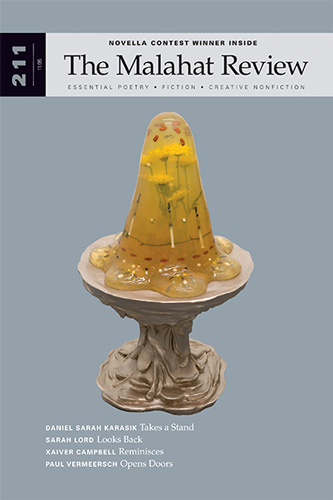
This issue of The Malahat Review features the 2020 Novella-Prize-winning “Yentas” by Rebecca Păpucaru, Daniel Allen Cox’s “The Glow of Electrum,” Mike Alexander’s “An Afternoon Gentleman,” Matthew Hollett’s “I’m Sorry, I Have to Ask You to Leave,” Ronna Bloom’s “Legend of Saint Ursula,” Alamgir Hashmi’s “Anywhere, 2019,” and Kate Felix’s “Beneath the Pond.” Also in this issue: Sarah Tolmie, Xaiver Campbell, Sarah Venart, Theressa Slind, Chris Banks, Daniel Sarah Karasik, Sarah Lord, Ron Riekki, Paul Vermeersch, and Alisha Dukelow. Plus, a selection of book reviews, and cover art by Sharona Franklin: “Mycoplasma.”

Carve Magazine – Summer 2020

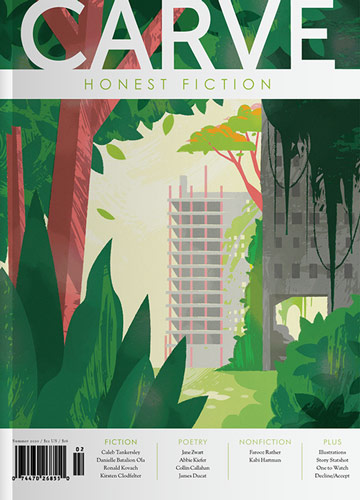
In the newest issue of Carve, find short stories by Caleb Tankersley, Danielle Batalion Ola, Ronald Kovach, and Kirsten Clodfelter, as well as interviews with the authors. New poetry by Jane Zwart, Abbie Kiefer, Collin Callahan, and James Ducat, and new nonfiction by Feroz Rather and Kabi Hartman. In “Decline/Accept,” is “Clean Kills” by Greg November. Read more at the Carve website.

Eulogy for a Father

Magazine Review by Katy Haas

At a time when I felt incredibly alone, Ira Sukrungruang kept me company with his collection of essays, Buddha’s Dog: & Other Meditations. I stayed up all night reading it, telling myself I’d just read one more essay and then sleep and before I knew it, the book was finished and dawn was right around the corner. So now when I again feel those nagging feelings of loneliness, I was excited to see he had a new nonfiction piece in the Spring 2020 issue of Crazyhorse to help fill in the spaces around me: “Eulogy for My Father.”

This eulogy is written in short, one-sentence paragraphs that rapidly fall down the sixteen pages they occupy. “Let me start again,” he repeatedly states and follows another thread as he sorts the complicated thoughts and feelings surrounding the relationship he had with his father, his father’s absence, and the ways in which these feelings now echo over his relationship with his son.

The piece is honest and tender, bringing tears to my eyes by the time I reached the end and his final “restart.” It was nice seeing Sukrungruang once again show off his mastery of the nonfiction form. Even sitting with his grief, it was also nice to feel close to something for the moment.

Sponsor Spotlight :: Reunion: The Dallas Review

Reunion: The Dallas Review website screenshotOriginally titled SojournReunion: The Dallas Review is a literary magazine which has been publishing exceptional short fiction, drama, visual art, poetry, translation work, nonfiction, and interviews for over twenty years. Their mission is to cultivate the arts community in Dallas, Texas and promote the work of talented writers and artists both locally and around the world.

Reunion is published by The School of Arts & Humanities, home of the creative writing program of the University of Texas at Dallas. They publish an annual print volume as well as featuring a new piece of work monthly on their website. You can view past interviews with writers on their website as well.

Stop by their listing on NewPages to learn more.

Sponsor Spotlight :: Grand Little Things Seeks to Promote Formal Poetry

Grand Little Things logoFledgling online literary magazine Grand Little Things is a journal that embraces versification, lyricism, and formal poetry. Founded in 2020, they feature new poems on a rolling basis. They have recently published work by Dawn Corrigan, Chris Bullard, Brian Yapko, Liana Kapelke-Dale, Peggy Landsman, Ken Gosse, Dan Campion, and P.J. Martin.

They like all formal poems from the sestina to the couplet to sonnets to villanelles and seek to feature new, established, and emerging poets. They also publish blank or free verse poems that utilize traditional poetic techniques.

They believe “language is small. It’s just markings that we’ve assigned meaning to. However, that meaning fills the entirety of our universe.”

Swing by their listing on NewPages to learn more and don’t forget they are open to submissions.

Cimarron Review – Winter 2020

In the Winter 2020 issue of Cimarron Review: poetry by Allison Hutchcraft, Jennifer Funk, Toshiaki Komura, Amy Bilodeau, Monica Joy Fara, Darren C. Demaree, Laura Read, Isabelle Barricklow, Amber Arnold, Meriwether Clarke, Amie Irwin, Ben Swimm, Sophia Parnok, Brooke Sahni, Will Cordeiro, and Patrick Yoergler; fiction by Nancy Welch, Dan Pope, and Michael Deagler; and nonfiction by R Dean Johnson and Jon Volkmer.

Baltimore Review Summer 2020 Contest Winners

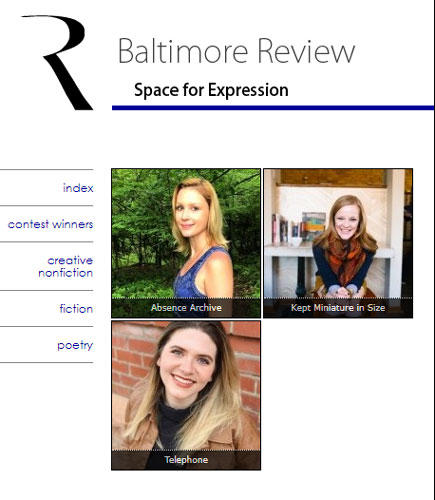
Have you visited the latest issue of Baltimore Review yet? In the Summer 2020 issue, readers can find the latest contest winners.

Flash Fiction
“Telephone” by Cara Lynn Albert

Flash Creative Nonfiction
“Kept Miniature in Size” by Ellie Roscher

Prose Poetry
“Absence Archive” by Anita Olivia Koester

Check out the full new issue, or spend some time just taking in the contest winners. Either way is a great way to spend some of your Sunday.

Finding Relief in Anne Kilfoyle’s Fiction

Magazine Review by Katy Haas

In the early days of lockdown, I had friends comment to me that they felt almost a sense of relief. Despite the tragedies reported in the news and the uncertainty of the new world we found ourselves in, they felt like they were able to breathe for the first time—to spend days resting or creating or getting personal work done or fully focusing on their families, none of which they were able to accomplish during the busyness of everyday life.

In the Spring/Summer 2020 issue of Salamander, Anne Kilfoyle’s story “Double-Yolked” reminded me of those conversations and feelings. As narrator Keera and her husband Jesse prepare for an emergency evacuation following an unnamed global threat, she reflects:

The last three days have been good days, some of the best. We have been holding our breath but also our problems got smaller. [ . . . ] Our biggest fear wasn’t mass annihilation, it was that we’d have to go back to how things were, back to our jobs and our lives [ . . . ].

Despite their lack of preparation, she feels okay with what’s coming to them, feels capable knowing they have each other, now somehow stronger together, as they move forward.

The short piece is relatable and timely: empty store shelves, last minute orders from Amazon in an attempt to ease the new worries, the uncertainty that surrounds them, and that strange relief of being released from normal life. It can be difficult to read disaster-themed writing while living through a similar situation, but Kilfoyle manages to cover the topic in a way that’s casual and comforting without adding to the current, similar stresses.

Sponsor Spotlight :: Radar Poetry

Radar Poetry is an online literary magazine devoted to publishing poems from both established and emerging writers. The journal was founded in 2013 by Rachel Marie Patterson and Dara-Lyn Shrager. Each issue features pairings of poetry and visual art, selected by the editors and contributors. They seek to feature visual art that interprets, reimagines, or responds to the poem with which it appears.

Issues are published quarterly and the founders and editors also host workshops and retreats.

Each year, Radar Poetry hosts the Coniston Prize. This award is open to female-identifying poets writing in English. The prize is currently accepting submissions through September 1. This year’s judge is Ada Limón. The winning poet receives $1,500 and publication. $10 reading fee.

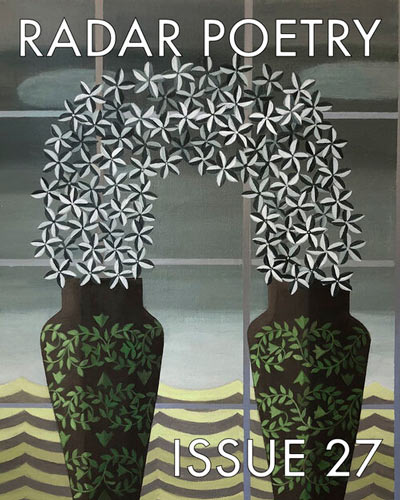
Issue 27, published in July, features poetry and art by Lauren Camp, Walker Evans, Jen Jabaily-Blackburn, Dante DiStefano, Honour Mack, Martha McCollough, Jack Delano, and more.

Stop by their listing on NewPages to learn more.

The Lake – August 2020

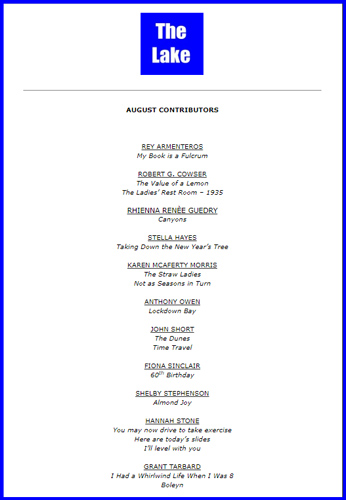
The August issue of The Lake features Rey Armenteros, Robert G. Cowser, Rhienna Renèe Guedry, Stella Hayes, Karen McAferty Morris, Anthony Owen, Fiona Sinclair, Shelby Stephenson, Hannah Stone, Grant Tarbard. Reviews of Oz Hardwick’s The Lithium Codex, Jeffrey McDaniel’s Holiday in the Islands of Grief, and J.R. Solonche’s The Time of Your Life.

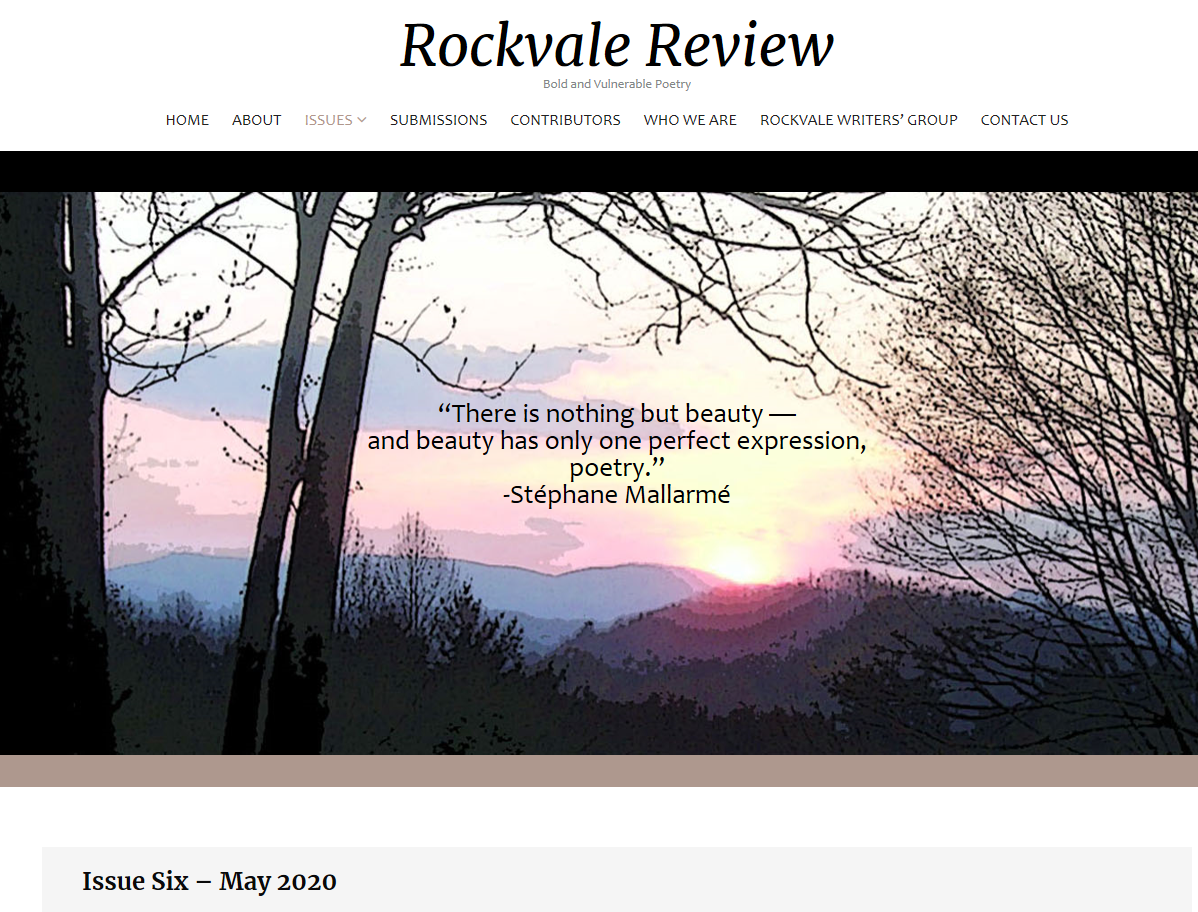
Sponsor Spotlight :: Rockvale Review: Bold & Vulnerable Poetry

Rockvale Review screenshotRockvale Review was founded in 2017 as an online journal devoted to “bold and vulnerable poetry.” They publish work from new, emerging, and established writers and feature image-driven poems that are hard-edged and finely crafted. They do offer optional print editions of their issues which are released in May and November of each year.

They have a unique feature where every poem accepted for publication is paired with a piece of art created by a Featured Artist. A Featured Musician will also craft music to respond to several of the poems in each issue. In doing so, Rockvale Review produces a journal that speaks beyond words, moving into the visual and auditory layers of the human spirit.

Their sixth issue was published in May 2020 and features work by Travis Stephens, Ivo Drury, Kate Deimling, Shannon Wolf, M.G. Hofmann, Wendy Drexler, and more. Stop by their listing at NewPages to learn more.

They the Mothers

Magazine Review by Katy Haas

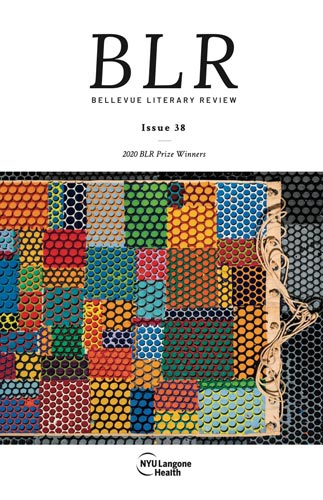
From Issue 38 of Bellevue Literary Review, Kathi Hansen’s “We the Mothers” (honorable mention in the 2020 BLR Prize) imagines the mothers of boys who have been accused of sexual assault. They meet together in book-club-like fashion, able to speak freely with one another when no one else understands.

Hansen writes of them in a collective. They speak of their sons as one being as they look back to their childhoods, their teenage years, and the ways their boys were raised in their homes. Only when one woman begins to question her son’s innocence does the story diverge, separating her from the rest of the group, finally naming her apart from the others. I found this to be a cool, well done device for this piece, and a unique point of view to have on these now familiar stories.

Despite focusing on this side of the story, Hansen does a good job of avoiding too much sentimentality. The mothers tell their collective story without demanding understanding or sympathy from the reader. After all, as they point out, only those in their group can truly understand.

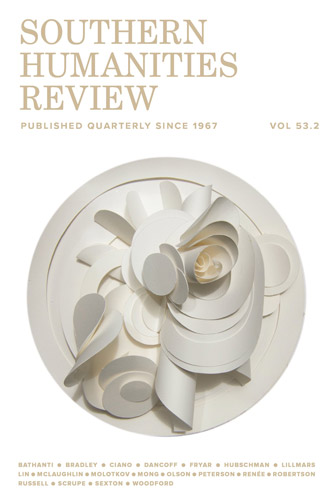
Southern Humanities Review – 53.2

In this issue find nonfiction by Charlotte Taylor Fryar and A. Molotkov; fiction by Kim Bradley, Judith Dancoff, Janis Hubschman, Jeff McLaughlin, and Ann Russell; and poetry by Joseph Bathanti, James Ciano, Bryce Lillmars, Esther Lin, Derek Mong, Christina Olson, Lee Peterson, L. Renée, Kristin Robertson, Mara Adamitz Scrupe, Wesley Sexton, and Annie Wodford. Find more info at the Southern Humanities Review website.

Bellevue Literary Review – No 38

Issue 38 of the Bellevue Literary Review (BLR) came together just as NYC and Bellevue Hospital were in the throes of the Covid-19 pandemic. Some of the BLR staff were alternating N95 masks with red pens, balancing patient-care with literary work. But the issue made it to the presses and is packed with good reads. It features the winners of the 2020 BLR Literary Prizes. The poems, essays, and stories in this issue travel from China to Texas to Tehran, from small town to big city, from World War I-era to the present. Stay tuned for Issue 39, coming in the fall, whose theme is “Reading the Body.” Read more at the Bellevue Literary Review website.

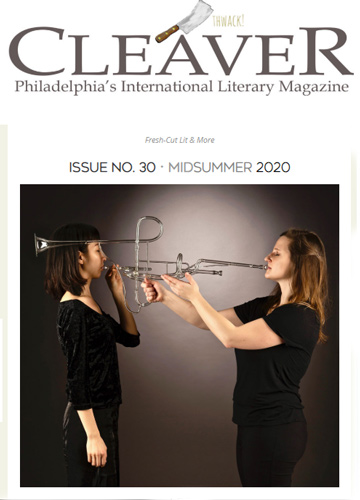
Take a Walk “In the Woods” with Emily Steinberg

Magazine Review by Katy Haas

Emily Steinberg takes a walk “In the Woods” with her dog, Gus, in her visual narrative found in the Midsummer 2020 issue of Cleaver. During her walk, she focuses on Gus and her surroundings, reflecting on the way the real world and its real problems seem far away. In the woods, “All human makings disappear . . .” and there is only the sounds of the wind in the trees and the creek and Gus’s paws around her. This moment doesn’t last forever, though. She has to cross the threshold back into the real world where everything “comes sweeping back. Crowding my brain. Not letting me breathe.” But for a moment there is peace.

This short visual narrative gives readers a moment of peace as well as we soak in the quiet moment of respite along with Steinberg. Each panel features only Gus, a fluffy scribble of a dog padding through the woods, a dog always good comfort when it’s needed. The piece works as a good reminder to take a moment to find calm and quiet in the midst of the tragedies and turmoil swirling around us. By taking these moments, we’re able to recharge as we head back into the real world to face everything once more.

Creative Nonfiction Now Enrolling for Fall Online Classes

Creative Nonfiction Fall 2019 coverThat’s right! Literary magazine Creative Nonfiction‘s Fall 2020 online writing courses are open to enrollment. They offer courses for writers of all levels from those just starting out to the more advanced. All courses will begin on September 7. If you sign up by August 15, you will save $50. If you have a buddy you want to do these courses with, you could save an additional $25.
Courses include a Creative Nonfiction Boot Camp, Introduction to Audio Podcasting & Storytelling, Magazine Writing, The Building Blocks of the Personal Essay, Writing for Change: The Study & Craft of Environmental Writing, Advanced Memoir: From First Sentence to Resolution, Advanced Personal Essay: Finding a Way Through, and Advanced Science Writing.

Learn more about all their courses and how to sign up at their website.

Seeing Dead People

Magazine Review by Katy Haas

Say, “I see dead people,” to just about anyone, and they’ll likely be able to name the movie it came from. But unlike Haley Joel Osment’s character in The Sixth Sense, attempting to help the dead find peace, Jasmine, the narrator in Catherine Stansfield’s “I See Dead People and Other Gags” uses the concept to help herself.

Jasmine tells people she can speak to their dead loved ones, and uses social media to glean information that she later uses in her sessions. Having lost her own mother at a young age and never really speaking about it again gives her a detachment from death and the sentimental feelings surrounding it, so she profits off other people’s pain and grief. However, at the end of the story, she’s hit with a surprise that may make her change her mind about her career path.

I would’ve enjoyed reading more about Jasmine and her work, getting to know more about her clients and her grandmother who casts a shadow over her mother’s death. Stansfield’s writing style is matter of fact and straight forward, fitting for Jasmine’s no-nonsense character. But what we are given is a fun read, a peak behind the medium’s curtain.

Moran Remembers

Magazine Review by Katy Haas

March and the beginning of lockdowns in the United States somehow seems like it was years ago and just days ago. Time continues to slip by in strange ways. Emma Moran touches upon this in her nonfiction piece “What I Will Say” found in the Summer 2020 issue of Sky Island Journal: “Times had changed.  The quality of time had changed.  Hours extended and compressed.  Two hours talking to your sister passed in ten minutes.  Ten minutes extended into days, as you listened to the clock counting out the seconds you couldn’t sleep through.”

In this piece, she reflects on her dad’s instruction to “Remember this. One day your grandchildren will ask what it was like, living through this. Remember it all, so you can tell them.” In the following four paragraphs she explains the way life changed during the first few months of the pandemic, and she does so poetically and eloquently: “People built fortresses out of plans.  I will write those letters, I will train the dog, I will learn to speak French, I will learn to knit, I will learn, I will learn.  We would try to learn.”

Time continues to pass and the push to return to the normal life we used to know is insistent, but Moran remembers and gives a reminder of what we did for others and how we “learned; how we changed” during those first few weeks and months, writing with a thoughtful and sympathetic voice.

Sponsor Spotlight :: The Society of Classical Poets Journal

The Society of Classical Poets Journal Vol. VIII cover

The Society of Classical Poets, a non-profit organization formed in 2012, publishes an annual literary magazine called The Society of Classical Poets Journal. They are dedicated to the continuation of Beauty, Goodness, Truth, and excellent poetry. They believe good, new poetry cherishes and builds on the perennial techniques like meter and rhyme as such poetry carries a message and is infused with the profound insights and character of the poet.

The latest issue of the journal contains more than 300 pages of work by James A. Tweedie, Adam Sedia, Joe Tessitore, Leo Zoutewelle, Theresa Rodriguez, Peter Hartley, C.B. Anderson, Randal A. Burd, Jr., T.M. Moore, Martin Rizley, David Watt, Joseph Charles MacKenzie, Gleb Zavlanov, Michael Curtis, Joseph S. Salemi, Martin Hill Ortiz, Sally Cook, Daniel Galef, Susan Jarvis Bryant, Ron L. Hodges, and many more.

They also post essays and poems online as well has hosting poetry contests and offering a forum for writers to workshop their poems. They are open to submissions year-round. Stop by their listing on NewPages to learn more.

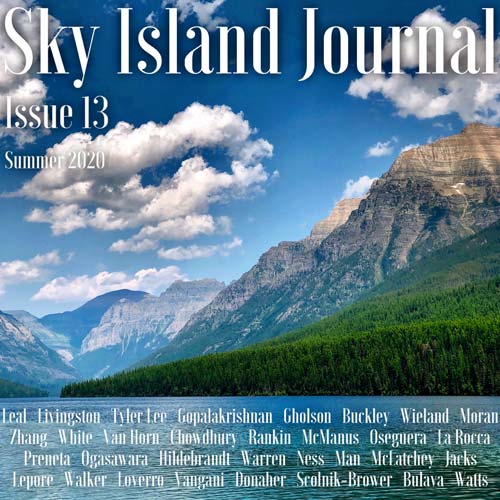
Sky Island Journal – Summer 2020

Sky Island Journal’s stunning 13th issue features poetry, flash fiction, and creative nonfiction from contributors around the globe. Accomplished, well-established authors are published—side by side—with fresh, emerging voices. Readers are provided with a powerful, focused literary experience that transports them: one that challenges them intellectually and moves them emotionally. Always free to access, and always free from advertising, discover what over 70,000 readers in 145 countries already know; the finest new writing is here, at your fingertips.

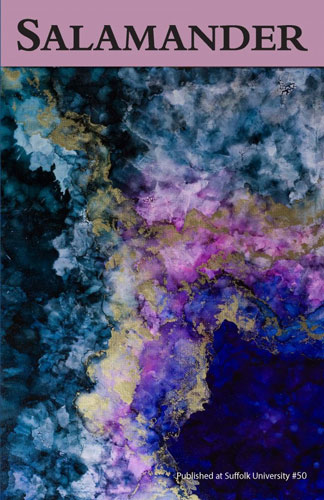
Salamander – No. 50

The Summer 2020 issue of Salamander features poetry by Rajiv Mohabir, Emily O’Neill, Rose McLarney, Sebastián Hasani Páramo, and many more; translations by Martha Collins, Nguyen Ba Chung, and Sergey Gerasimov; fiction by Anne Kilfoyle, Matthew Wamser, Olivia Wolfgang-Smith, and Joanna Pearson; creative nonfiction by Kathryn Nuernberger; artwork by Emily Forbes; and reviews by Joseph Holt, Mike Good, Katie Sticca, and Brandel France de Bravo.

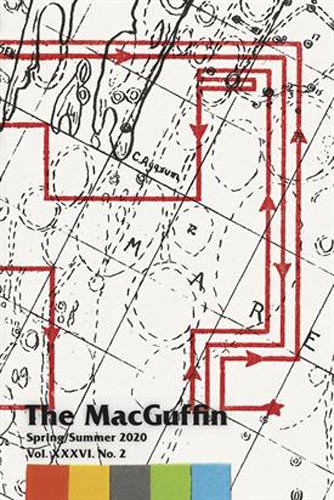
The MacGuffin – Spring Summer 2020

Evan D. Williams’ Escape Risk on the cover of The MacGuffin’s Volume 36.2 charts a vivid route out via literature of whatever quarantine situation you may find yourself trapped in. Journey to a new home and a new job in Mark Halpern’s “Would You Like Fries with That?” or head out on a cinematic cross-country trek with grandma in Jordan J.A. Hill’s “Marching Towards Golgotha.” Matthew Olzmann—guest judge of this year’s Poet Hunt contest—is highlighted in a short feature that begins on p. 101, while Erin Schalk’s gouache, ink, and wax form a vibrant mid-volume oasis.