Home » Newpages Blog » Fiction » Page 10

Lovely Use of Language

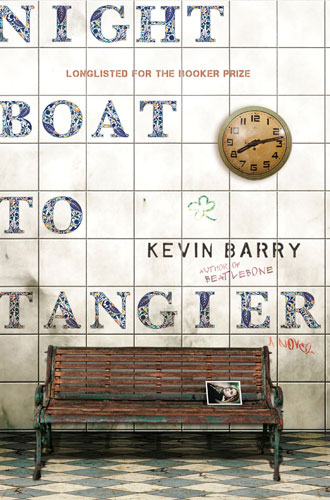
Night Boat to Tangier by Kevin BarryGuest Post by Doug Mathewson

I am a confirmed fan of Kevin Barry I enjoy his telling of a tale, his settings and plots, but it is his lovely and amazing use of language that wins me over. He is not for every reader, I’ll grant you that, but for those of us who enjoy the journey as much or more than the destination he is a delight.

The story of Night Boat to Tangier has our boys, two aging Irish gents Charlie Redmond and Maurice Hearne, in the old Spanish port of Algeciras. They are haunting the boat reception terminal in hopes of intersecting a specific passenger. She is Dilly Hearne, and intricately related to them both.

Through Maurice and Charlie’s charming recollections and reminiscences we learn of their shared history of violence, drug smuggling, betrayal, addiction, and madness. But here we are, on the other side of all that, as they wait for 23-year-old Dilly who they both truly love, and who may have done them wrong.


Night Boat to Tangier by Kevin Barry. Penguin Random House, September 2019.

Reviewer bio: Doug Mathewson regards himself as quite grand but actually is a most modest fellow who spends his days writing short fiction and working as Senior Editor for Blink-Ink which publishes the finest in contemporary 50-word fiction. More of his work can be found at www.little2say.org

Buy this book through our affiliate Bookshop.org.
White Oleander: Like a Favorite Album on Repeat

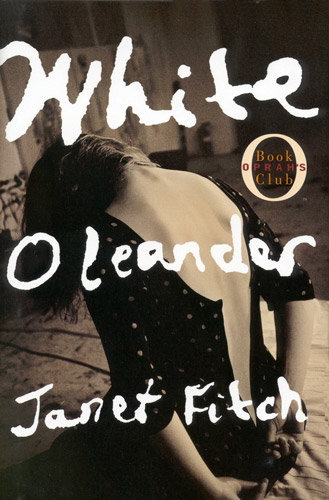
White Oleander by Janet FitchGuest Post by Ashanté J. Ford

The rawness and compassion of “White Oleander” by Janet Fitch had me turning pages so fast that I was surprised when it was finished. This book read like a favorite album that I can’t stop listening to on repeat. It carried me into the deep despair and depression that comes with being an orphan child, and raised me like I was its own. White Oleander is a book I will never forget.

Fitch captures the bond of a mother and daughter like a photograph, while simultaneously weaving the implications of imperfection into their relationship. This renowned fictional story follows a young girl by the name of Astrid Magnussen into adulthood while she navigates how to grow up and deems her religion as “survival.” This novel captivated me in the same way poetry does. I wanted to listen to the brute advice Astrid’s mother gave and I wanted to fall into lust with every person that gave Astrid hope. Hope was a loose character in this book. It left as soon as it was near and pulled away every single time.

This novel has gained praise from the likes of Oprah Winfrey, and was even adapted into a film after it became a national bestseller in the early 2000s. I applaud this book for its versatility and creativeness. The themes of motherhood were depicted in such a poignant manner—they made me grovel and thank God for the woman that birthed me.


White Oleander by Janet Fitch. Hachette, September 2006.

Reviewer bio: Ashanté J. Ford is 21 years old. She is in college pursuing her bachelor’s degree in International Relations.

Buy this book through our affiliate Bookshop.org.
Traveling the World While at Home

Guest Post by June Calender

While “sheltering in place,” I’m taking a serious look at the natural world through what I’m reading.

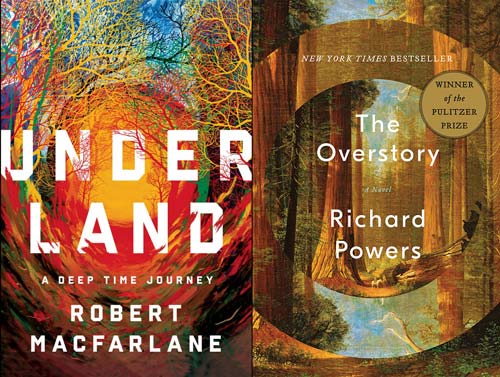
I began with Robert Macfarlane’s nonfiction Underland which explores the world of fungi and root systems under forests then goes much, much deeper in caves all over the world. I am a claustrophobic and had many breathless moments but survived with a sense of awe.

That was followed by Richard Powers’s novel, The Overstory, which is about old growth forests and people trying to save them.

Trapped in my apartment, I have still been able to see many parts of the world in depth.


Underland: A Deep Time Journey by Robert Macfarlane. W. W. Norton & Company, June 2019.
The Overstory by Richard Powers. W. W. Norton & Company, April 2019.

Reviewer bio: June Calender retired to Cape Cod after 20+ years as an off-off-Broadway playwright in NYC. She now teaches writing skills at the Academy for Lifelong Learning at Cape Cod Community College. Her work has been published in various small journals.

Buy The Overstory and Underland: A Deep Time Journey through our affiliate Bookshop.org.

A “Love Letter” to Writing on Plague

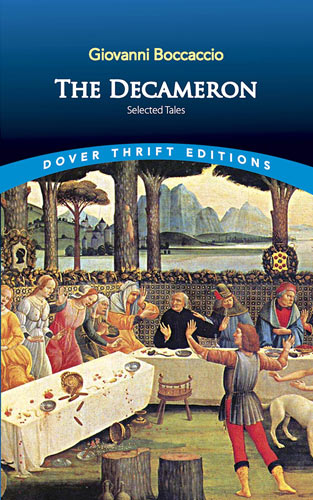
The Decameron - Giovanni BoccaccioGuest Post by Bill Cushing

Where have you been all my life, Giovanni?

You’d think that, studying lit, I’d have read Boccaccio’s Decameron during my studies, but somehow, that was not the case. Feeling guilty about that, I bought a copy last year, and the timing couldn’t have been better than the present to actually read it.

Full disclosure: mine isn’t the complete text but 25 stories chosen for this edition, but I’m still glad to have gotten around to it at some point in my lifetime because—even with what appears to be a somewhat “clunky” translation—I regret the years of never having visited this work. I’ve long known how Boccaccio inspired Chaucer, after translating it into English, to write The Canterbury Tales, but readers can also see the influence that this has had on many future writers.

In the first story of day one, Boccaccio recounts tale of a conman wrangling near-sainthood from the Church, a character reminding me of Moliere’s Tartuffe with a trace of Nikolai Gogol’s Chichikov in Dead Souls.

And so it goes.

By the way, that plagiarism of Vonnegut is not accidental since his view of human behavior and character are here as well. One even sees traces of Shakespeare in these ribald, often downright dirty tales that are occasionally a dark but always fascinating peek into the human condition—something that hasn’t changed much despite all our other advances. Written in a style very much in the oral tradition of storytelling, Boccaccio’s narrators regale each other during a time of plague, proving how important “stories” are to our spiritual, cultural, moral as well as mental health.

Anyone willing to take a deep dive about 700 years back will find a worthwhile literary journey in these pages. Plus it’s easily found it online!


The Decameron of Giovanni Boccaccio by Giovanni Boccaccio.

Reviewer bio: Bill Cushing writes and facilitates a writing group for 9 Bridges. His poetry collection, A Former Life, was released last year by Finishing Line Press.

Relevant Reading for Everyone

Penguin Book of Migration Literature - Dohra AhmadGuest Post by Serenity Schoonover

As 68.5 million people currently live as displaced persons on the planet, a short, potent anthology on immigration, emigration, and asylum-seeking is relevant reading for everyone. The Penguin Book of Migration Literature: Departures, Arrivals, Generations, Returns showcases thirty writers’ artful examinations of striking out to start over, staying put despite instability, and even circling back to a country that disowned you.

Among established writers, Emine Sevgi Özdamar’s “The Bridge of the Golden Horn,” notes the wry negotiations of Turkish factory women in Germany: “the man made meatballs out of horses- we didn’t know that, because we couldn’t speak German. Meatballs were our mother’s favorite food.” Another, from Mehdi Charef’s “Tea in the Harem,” examines the volatile relationship between an Algerian mother and her son in France, both caught in the cross-hairs of identity crisis, “between two cultures, two languages, and two colors of skin.”

Emerging writer Djamila Ibrahim’s story, “Heading Somewhere,” laments an Ethiopian man’s marriage of convenience, a relationship based on leverage rather than love: “he resented Marianne her power. Divorce meant the loss of his permanent resident card, maybe even deportation.” Most unforgettable in the collection is Warsan Shire’s prose poem, “Conversations about Home (From the Deportation Center),” which begs the question: “Do you know how difficult it is, to talk about the day your own city dragged you by the hair?”

The power of this anthology, edited by Dohra Ahmad with a foreword by Edwidge Danticat, is its potential to be the first in a line of future works, literature that is willing to discuss, rather than dismiss or demonize, “people with deep histories-individuals as well as collective- that predate the migration, rather than newly created humans whose lives begin in a boat, plane or desert crossing.”


The Penguin Book of Migration Literature: Departures, Arrivals, Generations, Returns edited by Dohra Ahmad. Penguin Random House, September 2019.

Reviewer bio: Essays by Serenity Schoonover have aired on NPR, with book reviews appearing in Split Rock Review, Women’s Independent Press, CALYX, The Bookends Review, among others.

Buy this book through our affiliate Bookshop.org.
Stephen King’s Novel of Hope and Resilience

The Stand by Stephen KingGuest Post by David Armand

My kids’ last day of school was on Friday, March 13, four weeks ago today. They left class that afternoon not knowing that they wouldn’t be seeing their friends or teachers again for who knows how long. They seem worried sometimes, confused. So am I. But we’ve finally been able to settle into somewhat of a routine here at home: we made a vegetable garden in the backyard last week, bought some baby chickens and built a brooder for them. It gives everyone something to do.

And I like to spend the first hour or so of each morning—when it’s still dark outside and quiet—reading before everyone else wakes up. I’ve always done this, but now the act seems more meditative, more important than it ever has before.

You see, the day after the schools closed and I went to working remotely from home, I picked up Stephen King’s The Stand from my bookshelf. It’s an old copy and the dust jacket is torn off, tucked between the yellowed pages as a bookmark, but still I’ve been reading it every day since all this started.

It’s a long novel, just over eight-hundred pages, and I’ve spent this last month reading it for what is now the third time (I read the unabridged version, which is over a thousand pages long, in 1998; then I read it again about fifteen years later).

But now, on this third read, it seems more poignant than ever: not necessarily because it’s about a plague that wipes out most of the human population, but more because it’s a novel about the inherent sense of hope that people tend to have, about the faith we place in the goodness of others—even in the darkest of times. Which is something to remember now more than ever.


The Stand by Stephen King. Anchor, 1978.

Reviewer bio: David Armand’s latest novel, The Lord’s Acre, is forthcoming this fall from Texas Review Press.

Buy this book through our affiliate Bookshop.org.

Learn Online with Carve Magazine

Carve Online Writing ClassesBesides being both an online and print literary magazine, Carve also offers online writing classes and online workshops. Did you know that?

They currently offer two writing classes on the Wet Ink platform: Short Story Writing: Fundamentals and Short Story Writing Techniques. Theses classes both run five weeks and are held multiple times during the year.

Fundamentals consists of five lessons: Character & Plot, Point of View, Dialogue, Inner Monologue, and Description.

  • June 15 – July 19
  • August 24 to September 27

Techniques consists of five lessons: Use of Senses, Imagery, Metaphors & Similes, Rhythm & Pacing, and Threading.

  • May 11 – June 14
  • July 20 – August 23
  • September 28 – November 1

Their Online Writing Workshop is devoted to editing for short stories or essays. This is a 10-week course where you get one-on-one attention from a Carve editor. Their next workshops start on June 1 and September 14.

Lock-Down Pleasures in Recent Reading

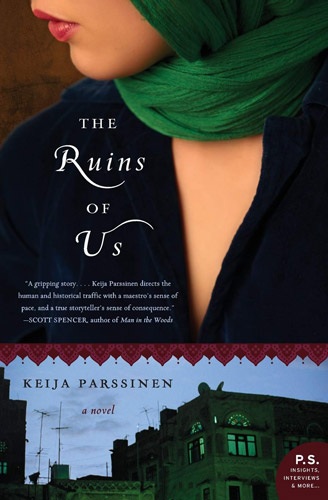
Ruins of Us by Keija ParssinenGuest Post by S.B. Julian

Recently I moved into a new apartment building for people age 55-plus: the generations that grew up with books, not digitalia. Their schooling emphasized reading, which means the building’s shared library is a serendipitous treasure trove.

Why is it that a book you find by chance is often more pleasurable than an equally worthy book you specially ordered? Some delightful chance findings: Continue reading “Lock-Down Pleasures in Recent Reading”

Bible studies, Burgess style

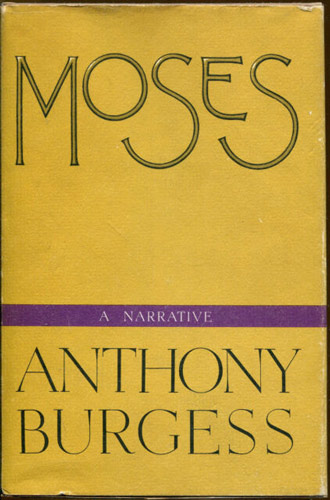
Moses by Anthony BurgessGuest Post by Bill Cushing

Retiring in mid-February, I foresaw a sedentary future. However, this virus has taken even that to unexpected heights. With my time in isolation (so to speak; I have a family), I’ve been able to read Moses, a fictional narrative based on the biblical figure’s life by Anthony Burgess.

While most know Burgess for Clockwork Orange, that’s hardly his best. He is the primary reason I pursued an MFA after a 15-year absence from school.

Now I recall why I love (and envy) his writing so much. Moses is a bit closer to two of his earlier works: Napoleon Symphony, where he presents his interpretation of the diminutive conqueror’s life while dividing the book into four sections attempting to replicate the pacing of Beethoven’s Third Symphony, and Man of Nazareth, a look at the life of Jesus as narrated by a Greek merchant returning from business in Jerusalem at the time of the crucifixion.

Moses strikes out on its own in several ways, beginning with its structure. A narrative in verse. it reminds the reader of the Greek epic poems. It humanizes its characters—even Ramses. Moses himself suffers from a speech impediment. This is not unexpected for readers familiar with Burgess; most of his characters with outward defects tend to be the only complete person: recall the grotesque minister defending Alex in Clockwork Orange or the narrator’s disfigured sister in Earthly Powers.

But, like all things coming from Burgess, there are lessons to derive from this one. Issues such as free will, individual responsibility, and respect for simply stated (not grandiose and intricate) law are chief among those. This may be one of the easiest books from Burgess to read although I’d still recommend having a dictionary handy since the linguistic “tricks” found in his diction are always entertaining.


Moses: a narrative by Anthony Burgess. Dempsey & Squires, 1976.

Reviewer bio: Bill Cushing writes and facilitates a writing group for 9 Bridges. His poetry collection, A Former Life, was released last year by Finishing Line Press.

A Comprehensive Search for Explanations

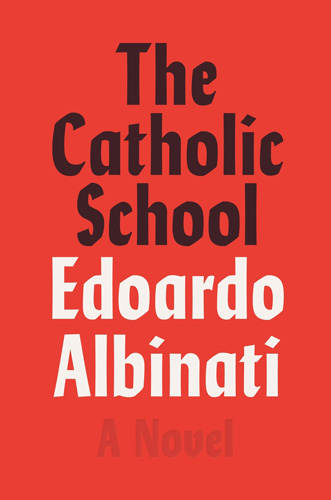
The Catholic School by Edoardo AlbinatiGuest Post by Katy Scrogin

Sheltering in place has provided the perfect opportunity to dive into Edoardo Albinati’s The Catholic School, a thorough exploration of the author’s coming of age in a particular Roman neighborhood in the 1970s. More than simple description or reminiscence, the book is propelled by a comprehensive search for explanations—specifically, regarding a gruesome crime committed by a few of the quarter’s well-heeled young inhabitants. The story is itself an unsparing quest to understand the conditions and sentiments and reigning assumptions that made such a thing even conceivable.

This is no straightforward mystery or crime novel, and indeed, readers not fond of philosophical or sociocultural speculation will probably not enjoy what for this reader amounts to delicious intellectual revelry. But if the lengthy and incisive discourses on bourgeois morality and hypocrisy, the nature of violence, the troubling and troubled realities of masculinity, the strange arena that is the family, or religion and politics in Italy, aren’t your bag, all is not lost! The 1200-plus-page behemoth can most certainly be incorporated into that weight-training routine you have time to take up now that we’re all stuck inside.


The Catholic School by Edoardo Albinati. Macmillan, August 2019.

Reviewer bio: Katy Scrogin’s most recent online work is featured at The Book Smuggler’s Den and The Bookends Review. She can also be found at katyscrogin.wordpress.com.

Buy this book through our affiliate Bookshop.org.

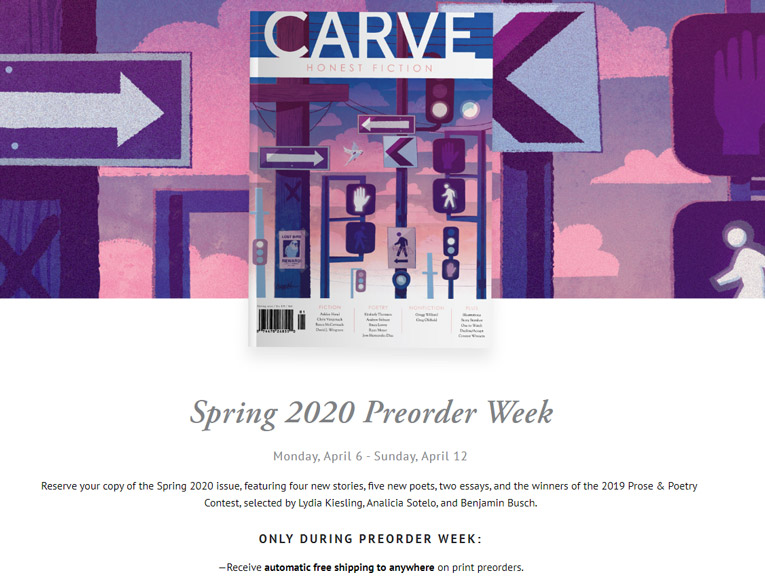
Carve Spring 2020 Preorder Week

Carve Magazine screenshotThat’s right! This week is the week you can preorder Carve Magazine‘s Spring 2020 issue. From now until April 12, you can reserve your copy of the special print edition and receive automatic free shipping to anywhere on print preorders. You also get 15% off a 1-year print or digital subscription. Need more reasons to preorder this issue? It features four new stories, five new poets, two essays and the winners of the 2019 Prose & Poetry Contest selected by Lydia Kiesling, Analicia Sotelo, and Benjamin Busch.

Rereading Jane Eyre

Jane Eyre by Charlotte Bronte

Guest Post by Eliza Mimski

When I go through troubling times, I often reread certain chapters in Charlotte Brontë’s Jane Eyre. It’s the part starting in Chapter 27 where Jane knows that she can’t morally stay at Thornfield Hall any longer and that in order to be true to herself she must leave Mr. Rochester. On her sad voyage away from him, she loses her money and is homeless and starving and yet her connection to nature and to her God is at its strongest. She carries on, not knowing that she will soon happen upon her long-lost relatives and will later reconnect with Mr. Rochester.

What Jane, or Charlotte Brontë, does for me here is to remind me that when I’m in the middle of a crisis I need to remember to connect to my spirituality in a big way, and also to remember that no matter how bad the situation seems, the future can bring change and that I won’t stay stuck forever. To place this in the present situation, it is necessary for me to remember that the suffering brought about by the pandemic will end.


Jane Eyre by Charlotte Brontë. October 1847.

Reviewer bio: I live in San Francisco, California, and am doing my best, like the rest of you, to stay healthy during the pandemic. Find my website here.

C.J. Sansom’s 16th Century Reality

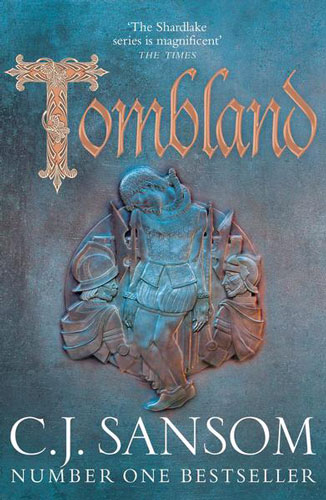
Tombland by CJ SansomGuest Post by M.C. LeBrun 

In C.J. Sansom’s seventh addition to the marvellous Shardlake series, we find ourselves in 1549 and once more at the whims of the Lady Elizabeth, a self-possessed and impassioned fifteen-year-old with little hint of teenage naivety. A missing woman reappears and is then savagely murdered. Her estranged husband, a distantly related Boleyn, stands accused of the crime. Matthew Shardlake is sent to Norfolk to investigate and uncovers intrigue at the highest echelons of elite society. While there, he is captured and caught up in a Kett’s Rebellion, a revolt of the peasant classes against greedy land grabs of the local gentry.

Born with a curvature of the spine and an astute and clear-sighted intellect, Matthew navigates the unsanitary conditions and unjust realities of 16th century England in the years after Henry VIII’s demise, leaving an eleven year old boy on the throne and in the midst of a lion’s den of power players. He is a man of his time but the disability which has marks him as an outsider has also engendered an empathetic awareness of the plight of others. His own critical reckoning and that of those around him, crosses the centuries, offering more relevance to modern thinking while remaining plausibly within the realms of 16th century reality and experience.

The intimacy of Matthew’s asides along with the minutiae of his daily tasks enhances the sense we are shadowing this man through each hour of his life, adding to the immersive experience of the reader into his medieval reality. And what an existence it is: political intrigue, civic unrest, religious discord, intensely unequal economic disparity, ruptured innocence, and war crimes. Add to that Matthew’s own reluctant investigations into gruesome murders, the duplicitous doings of the social elite, and the undue suffering of the poor and powerless and we have a meticulously researched novel of such scope and depth that, by god’s wounds, it is often hard to pull oneself back from it into modern life.


Tombland by C.J. Sansom. Pan MacMillan, October 2018.

Buy this book through our affiliate Bookshop.org.

The Massachusetts Review – Spring 2020

The Massachusetts Review - Spring 2020

The Spring 2020 issue includes poetry by Desirée Alvarez, Danusha Laméris, Julie Murphy, Nancy Miller Gomez, Charlie Peck, Cynthia White, Keith Leonard, Augusta Funk, and more; fiction by Sylvia Hanitra Andriamampianina, Karin Cecile Davidson, Tad Bartlett, Gabriella Kuruvilla, Hebe Uhart, Jung Young Moon, and others; and nonfiction by Gianni Celati, Lesley Wheeler, Amy Yee, and Melanie McCabe.

The Georgia Review – Spring 2020

The Georgia Review - Spring 2020

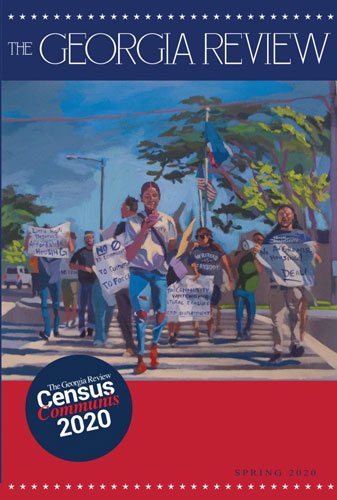
The Georgia Review‘s Spring 2020 issue presents authors’ and artists’ explorations of what it means to attempt representation of the diverse communities that comprise the United States. Special features include “Un-Redacted: A Census of Native Land,” a collection of writings by Native authors on the legacy of settler colonialism in the U.S.; a section on the internment of people of Japanese descent in North America during WWII; and dispatches from an innovative research project on prison labor in the post–Civil War “New South.” Art by Eddie Arroyo.

Colorado Review – Spring 2020

Colorado Review - Spring 2020

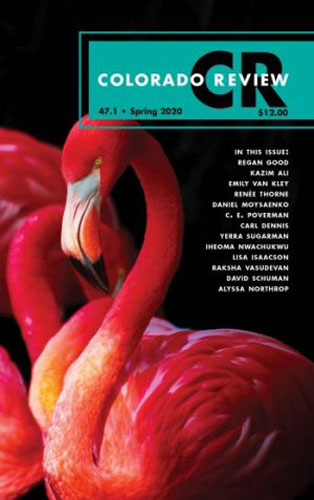
Featured in this issue of Colorado Review, find poetry by Jack Ridl, Amanda Gunn, and Yerra Sugarman; fiction by Alyssa Northrop; and nonfiction by David Schuman. Plus Raksha Vasudevan, Emily Van Kley, Leah Tieger, Gay Baines, Michael Homolka, Kazim Ali, Franco Paz, Laura Kolbe, Angie Macri, Benjamin Seanor, and many more. See other contributors at the Colorado Review website.

Cleaver Magazine

Cleaver Magazine - Spring 2020

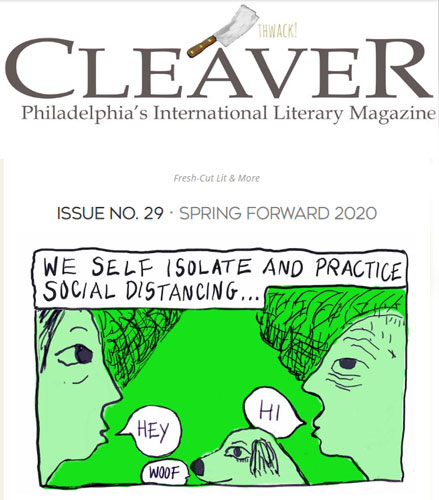
The newest issue of Cleaver features a visual narrative by Emily Steinberg; short stories by Catherine Parnell, Andrea Ellis-Perez, and others; flash by Uma Dwivedi, Kim Magowan, and more; and poetry by Marc Harshman, Jackie Craven, and more. Additional art by Serge Lecomte.

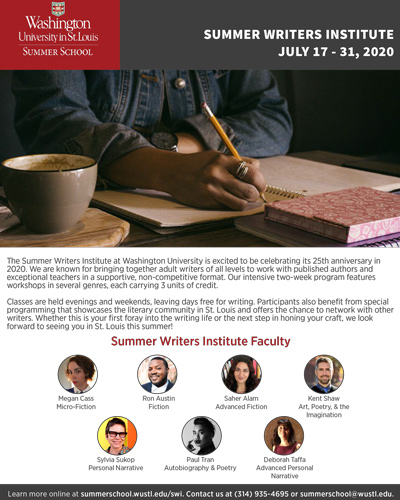
Event :: Summer Writers Institute Celebrates 25 Years

Registration Deadline: July 16, 2020
Event Dates: July 17 – July 31, 2020; Washington University in St. Louis
The Summer Writers Institute is excited to celebrate its 25th anniversary in 2020. We are known for bringing together adult writers of all levels to work with published authors and exceptional teachers in a supportive, non-competitive format. Our intensive two-week program features workshops in fiction, micro-fiction, poetry, and personal narrative. Whether this is your first foray into the writing life or the next step in honing your craft, we look forward to welcoming you in St. Louis this summer! summerschool.wustl.edu/summer-writers-institute

Bonus Issues with The First Line

The First Line typewriter

Readers, did you know you get a bonus when you subscribe to The First Line? Each subscription comes with one free issue of The Last Line. For those unfamiliar with the journal, The First Line features stories that all start with the same opening sentence, and The Last Line features stories that end with the same closing sentence.

A subscription to The First Line gets you one free issue of The Last Line per subscribed year. It doesn’t matter if you go for the print or the digital subscription—both offer the free issue. The issues are already very affordably priced, but you should still take advantage of the offer and get yourself another source of great writing.

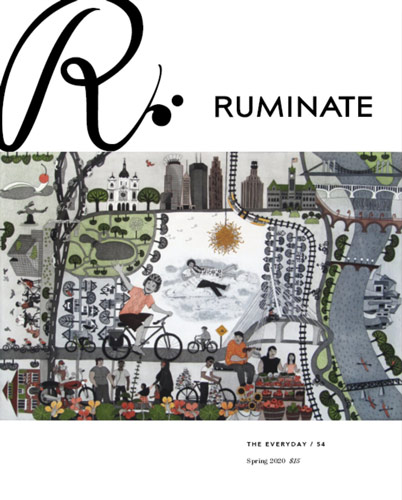
Ruminate – Issue 54

Ruminate - Spring 2020

“The Everyday” issue celebrates Ruminate‘s focus on finding the sacred within everyday moments and routines. This issue features work from our 2019 Broadside winner Meredith Stricker, as well as the winning pieces from our 2020 VanderMey Nonfiction Prize written by Jasmine V. Bailey, Kelly J. Beard, and Atash Yaghmaian chosen by judge Brianna Van Dyke. Also in this issue: Erin Malone, Chelsea Dingman, Sneha Subramanian Kanta, Nick Yingling, Alyse Bensel, Daniel Seth Kraus, Andrew Huot, Stacy Trautwein Burns, and more.

New England Review – 41.1

New England Review - Volume 41 Number 1

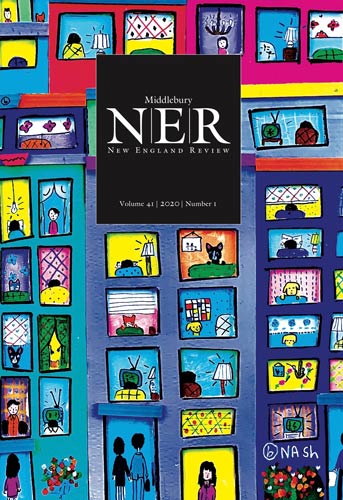
In this issue of New England Review you’ll find fiction by Maud Casey, David Allan Cates, Nandini Dhar, Elin Hawkinson, Christine Sneed, and Lindsay Starck; poetry by Su Cho, John Freeman, Rodney Gomez, Zach Linge, Vandana Khanna, Joanna Klink, Philip Metres,, Maura Stanton, Emily Jungmin Yoon, and more; nonfiction by Kazim Ali, Jennifer Chang, Ching-In Chen, Julia Cohen, and others; and Max Frisch in translations, translated by Linda Frazee Baker. Plus cover art by Brian Nash.

Gargoyle – No. 71

Gargoyle - Number 71

Check out the new issue of Gargoyle. Contributors include: Laura Arciniega, Paula Bonnell, Sarah Browning, Michael Casey, Grace Cavalieri, Patrick Chapman, Bonnie Chau, Katie Cortese, celeste doaks, Gabriel Don, Cornelius Eady, Blair Ewing, Abby Frucht, Patricia Henley, George Kalamaras, Louise Wareham Leonard, Trish MacEnulty, Franetta McMillian, Tony Medina, Nancy Mercado, Susan Neville, A.L. Nielsen, Josip Novakovich, James J. Patterson, bart plantenga, Bern Porter, Doug Rice, Jane Satterfield, Davis Schneiderman, Claire Scott, Gregg Shapiro, Rose Solari, Maya Sonenberg, Marilyn Stablein, Susan Tepper, Michael Waters, and many more.

The MacGuffin

MacGuffin - Winter 2020

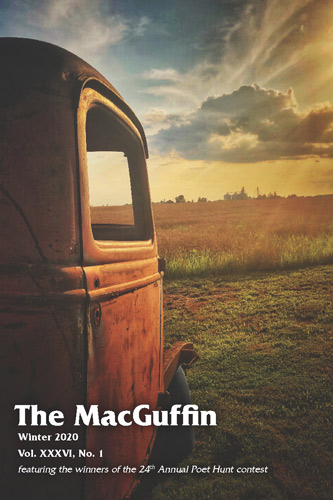
Discover a new issue of The MacGuffin. Volume 36 Number 1 spotlights the winners of our 2019 Poet Hunt Contest as selected by guest judge Richard Tillinghast. Jane Craven’s first place “The Sketchbooks of Hiroshige,” begins on p. 74, followed by our two honorable mention poets, Jill Reid and John Blair. This issue’s prose selections include Lucy Mihajlich’s “When I Infiltrated IKEA, They Greeted Me at the Door” and Teresa Milbrodt’s “Playing Krampus.” Featured artist Alison Devine graces the book’s inside and outside with a stroll through the Hamilton, Ontario countryside.

Black Warrior Review – Spring 2020

Black Warrior Review - Spring 2020

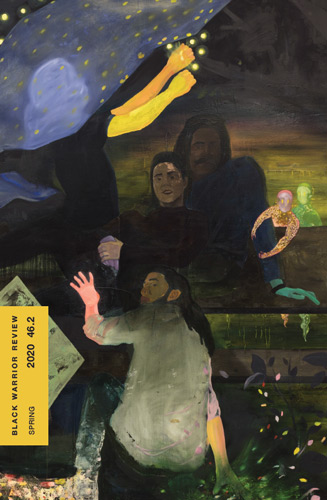
The Spring 2020 issue of Black Warrior Review is out. In this issue: Aliza Ali Khan, Sébastien Bernard, Agata Izabela Brewer, Naomi Day, Meg E. Griffitts, Katherine Indermaur, Sara Kachelman, Jasmine Khaliq, Jessica Lanay, M.L. Martin, Cherise Morris, Mónica Ramón Ríos (translated by Robin Myers), Monica Rico, Angie Sijun Lou, Molli Spalter, Qianqian Ye, and more. Chapbook by Seo-Young Chu. Cover art by Dominic Chambers.

Event :: Driftwood Press Online Editors & Writers Seminar

Event Location: Online Only
Application Deadline: April 30, 2020
Applications are now open for the “Editors & Writers: The Path to Publication” seminar. This is offered entirely online. The “Editors & Writers: The Path to Publication” seminar is perfect for short fiction writers who are submitting to magazines; come see the process and the craft from an editor’s point of view. Deadline to join the class is April 30th, and all students will be admitted on a first come, first served basis.

The Adroit Journal – March 2020

Adroit Journal - March 2020

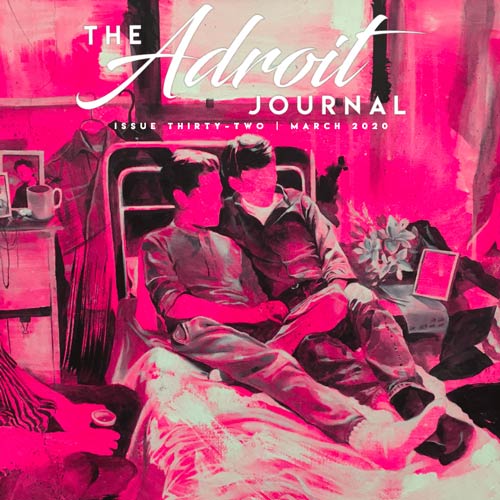
Find the newest issue of The Adroit Journal is out. Readers can check out poetry by Bryan Byrdlong, Steven Duong, Garous Abdolmalekian, Emily Lee Luan, John Freeman, Erin Adair-Hodges, Peter Streckfus, Ae Hee Lee, Matthew Gellman, Sara Elkamel, Seth Simons, Imani Davis, Kim Addonizio, Sahar Romani,  Zach Linge, Matthew Rohrer, Joanna Klink, and more; prose by Cathy Ulrich, K-Ming Chang, Connor Oswald, and others; plus conversations with Natalie Diaz, Matthew Rohrer, Brian Teare, Deb Olin Unferth, and Matthew Zapruder.

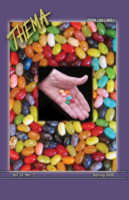
THEMA Puzzles Writers, Pleases Readers

THEMA Spring 2020 issue coverMagazine Review by Katy Haas

Each issue of THEMA invites writers to explore a given theme. The Spring 2020 issue’s theme is “Six Before Eighty,” which Editor Virginia Howard explains in her Editor’s Note, gave writers a run for their money. It “tended to puzzle more authors than usual.”

Despite the challenge, sixteen on-theme pieces made it into the issue. H.B. Salzer in “Her Number Six” writes of a woman’s bucket list—six things to do before she turns eighty. James “Jack” Penha in “Eulogy for My Elder Brother,” writes fondly of his brother who passed away at age seventy-four—six years before turning eighty. In “Written in Gold,” Larry Lefkowitz’s characters try their own hand at translating the theme finding it in a Mayan inscription in a temple. But my two favorite pieces in the issue each interpret the theme as different roads.

In “Mantra” by Lisa Timpf, the numbers are a reminder for a man’s fading memory. Regional Road 6 comes before Sideroad 80 and then he’s home. Readers can feel the anxiety in the piece as he repeats his mantra, trying to get home while admitting he “hasn’t told his wife / how much has slipped away.” But his mantra always gets him back home.

Cherie Bowers’s “Off-Ramp” is a short poem conjuring up Exit 6 as it merges onto 1-80. Here, a memorial with “fading words” reads, “We love you, Jason.” “To see it clearly,” the speaker says, “you must slow down,” a reminder for readers it’s necessary to slow down to truly see everything around us and to give thought to these fading signs we see beside the road.

I’m sure it was a lot of run writing for this issue of THEMA, and it was a lot of run reading what everyone was able to come up with.

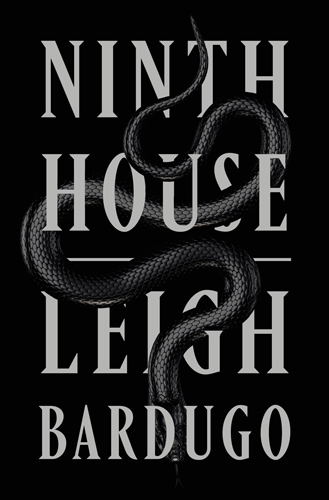
Fates Intertwine in Leigh Bardugo’s Ninth House

Ninth House by Leigh BardugoBook Review by Ken Brosky

Galaxy “Alex” Stern has been given a free ride to Yale, despite a shady past and nonexistent high school grades. Why? Because she can see ghosts, and one of Yale’s secret societies has use of her unique gift. If that’s not enough to get you interested, how about this: in the first 20 pages, the society Skull and Bones has already opened up a living man’s body to perform a ritual designed to pick winning stocks. That’s just a taste of the incredible creativity that awaits readers as Alex investigates the strange goings-on of the secret societies, searching for answers to a suspicious murder.

Leigh Bardugo’s writing style shifts perspective with ease, moving between two main characters whose fates are intertwined. But what sets this book apart is the incredible creativity. Each secret society in Yale practices a form of magic, with consequences that go beyond the campus. It’s difficult to come up with something new in the fantasy genre, but Bardugo’s twisted imagination succeeds so well that this book is impossible to put down.


The Ninth House by Leigh Bardugo. Flatiron Books, October 2019.

About the reviewer: Ken Brosky teaches English, plays guitar, and works in his woodshop when he’s not busy writing. He is short stories have been published in The Portland Review, Alfred Hitchcock’s Mystery Magazine, among others. He’s currently represented by agent Sandra Sawicka, and they’re working on a mystery novel.

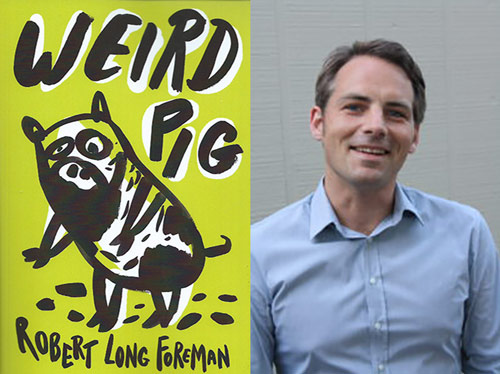
That’s Some (Weird) Pig!

Weird Pig Robert Long ForemanSoutheast Missouri State University Press may have their orders closed at the moment, but you can still learn about their forthcoming titles. In October 2020, they’ll publish Weird Pig by Robert Long Foreman, winner of the 2018 Nilsen Prize for a First Novel.

Although it’s his first novel, Foreman has made his mark by winning Pleiades Press’s Robert C. Jones Prize for Short Prize with his collection of essays Among Other Things and by winning a Pushcart Prize for fiction.

Find out more about the 2018 competition at SEMO Press’s website. And if you’re interested at trying your own luck at entering the Nilsen Prize for a First Novel, you have plenty of time—submissions close in November.

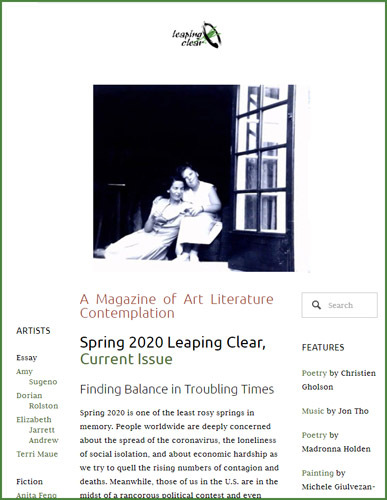
Leaping Clear – Spring 2020

Leaping Clear - Spring 2020

The Spring 2020 of Leaping Clear is out. This issue encourages readers to find balance in troubling times. Essays by Amy Sugeno, Dorian Rolston, and more; fiction by Anita Feng; mixed media by Barbara Parmet and Deborah Kennedy; music by Jon Tho; poetry by Ben Gallagher, Kathleen Hellen, Stephen Fulder, Yasmin Kloth, and more; video by Zangmo Alexander; and visual art by Denise Susanne Townsend, Michele Giulvezan-Tanner, and Stephanie Peek.

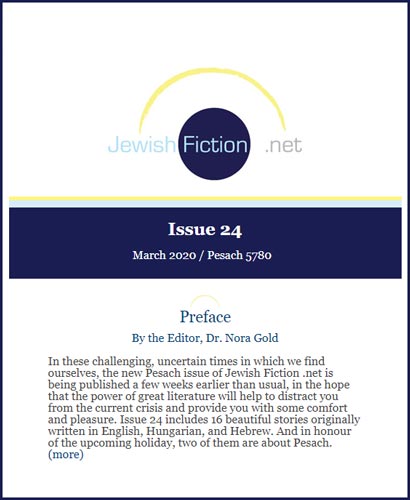
Jewish Fiction .net – March 2020

Jewish Fiction .net - March 2020

A beautiful new issue of Jewish Fiction .net is out. We’re sharing our journal with you earlier than usual in the hope that the power of great literature will provide you with comfort and pleasure now. Find 16 excellent stories, originally written in English, Hungarian, and Hebrew. And in honour of the upcoming holiday, two stories are about Passover: The Trade” by Mendele Mokher Seforim and “The Guest” by Remy Maisel. Enjoy this fabulous new issue and we wish you and yours continued good health.

Witness the Witness Literary Award Winners

Witness - Spring 2020The Spring 2020 issue of Witness features the winners of their latest Witness Literary Awards.

Poetry Winner:
“Future Ruins” by Andrew Collard

Poetry Runner-up:
“You Will See It Coming & You Won’t Run” by Emmy Newman

Fiction Winner:
“Delivery” by Emily Greenberg

Poetry Runner-up:
“The Dramatic Haircut” by Kristina Ten

Nonfiction Winner:
“When a Child Offends” by Michele Sharpe

Nonfiction Runner-up:
“Ani-la and Anne-la: On Everything I Knew and Didn’t Know” by Anne Liu Kellor

Poetry was selected by Heather Lang-Cassera, fiction was selected by Kristen Arnett, and nonfiction was selected by José Roach-Orduña. The rest of the issue is “magic” themed, so grab a copy and discover the magic inside.

Sheila-Na-Gig Editions Announce New Titles

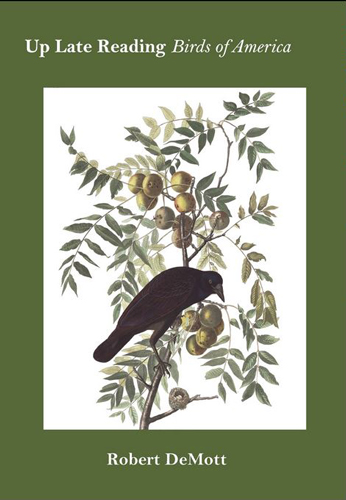
Up Late Reading Birds of America coverSheila-Na-Gig Editions, publisher of online lit mag Sheila-Na-Gig online, is not just celebrating the release of two new titles Robert DeMott’s collection of prose poems, Up Late Reading Birds of America, and Barbara Sabol’s Imagine a Town) but also two new titles in the hopper.

First they have their first-ever fiction title. This will be a re-release of John Bullock’s novel Mark Small: This is Your Life. It was previously titled Making Faces. This is a coming-of-age story set at the British seaside.

The winner of their Spring Poetry Contest, Kari Gunter-Seymour, has agreed to let them publish her forthcoming chapbook A Place So Deep Inside America It Can’t Be Seen. Stay tuned for more information on these titles and grab a copy of their current releases.

Oh, and don’t forget their Poetry Manuscript Contest is open through July 1 annually.

Encourage Excellent Writing Habits One Measure at a Time

Children writingDid you know Zizzle Literary has a blog known as “The Zizzling Pan”? There you can find some great articles about writing and reading…for adults and children.

Melissa Ostrom contributed “One Measure at a Time” to this last June and this would be something great to do to help channel your children’s energy into something creative and possibly fun. Flash fiction is a genre that has definitely seen a rise in recent years. I think the shortest pieces I ever read or studied in school were honest short stories. It was more so after college that I came around myself to see flash fiction.

This is something Ostrom also recalls in her article: “Though I write flash fiction regularly these days, a decade ago, I didn’t even know the form existed. I regret this. Had I been familiar with flash when I was still teaching high school English, I would have incorporated the reading and writing of it into my instruction.” I especially like how Ostrom says she used to believe more was better in terms of writing, but how flash could have suited her teaching purposes just as well.

Ostrom talks about 500 words being an average length for flash fiction. How about setting that as a challenge for your child? Read some great flash pieces for inspiration and have them try their own hand at writing and editing their own attempt down. A fun exercise to do over time to help them learn and grow “measure by measure.”

Zizzle 3-Issue Bundle

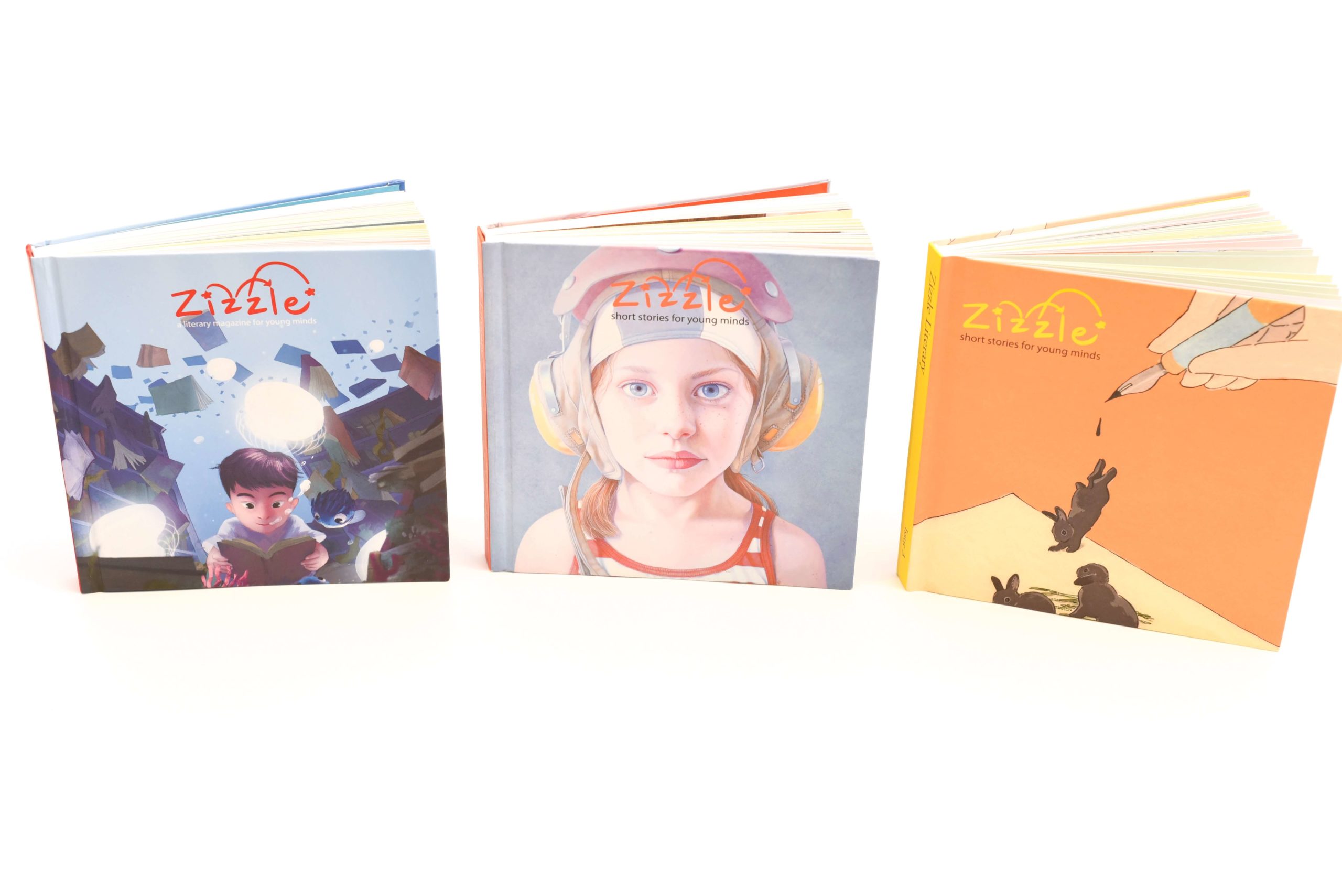
Zizzle First 3 IssuesLooking for something to do with the kids while you are stuck at home? Literary magazine Zizzle has a discounted bundle of their first 3 issues. These hardcover volumes are illustrated and feature fiction both parents and children can enjoy together. These are great keepsakes for families and meant to help bring parents and children together.

You can also subscribe to their newsletter to get free access to their new audio editions.

Zizzle is also transitioning into a press and hopes to be offering fiction for teens soon, too.

Best Microfiction 2020

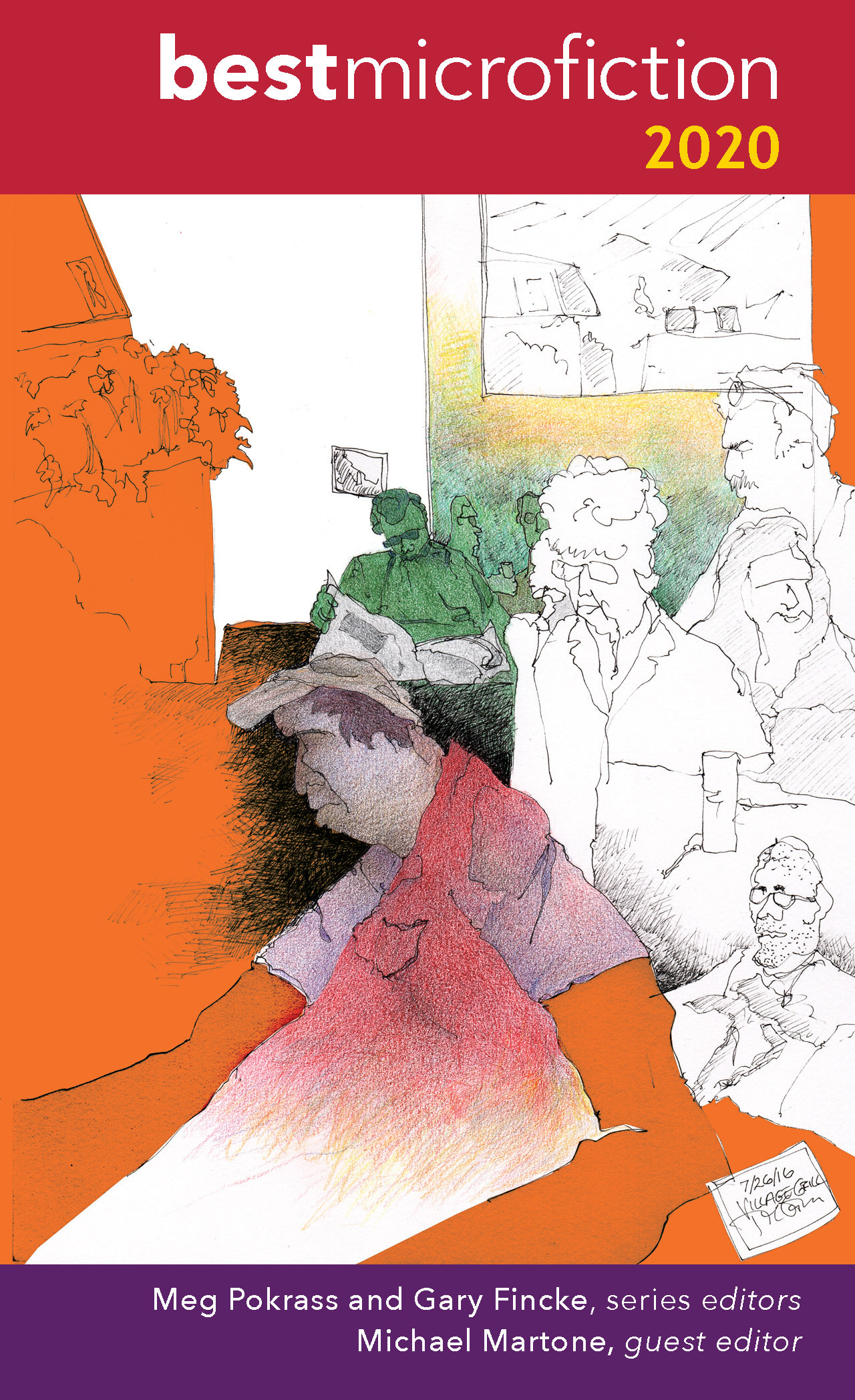
Best Microfiction 2020Mark your calendars! The Best Microfiction 2020 anthology is slated for release this April from Pelekinesis Press. The series is edited by Meg Pokrass and Gary Fincke. The guest editor this year was Michael Martone.

Featured in this edition is work originally published in Cherry Tree, E. Kristin Anderson’s “Ted Cruz Attends a Goldfish Funeral” and Catherine Edmunds’ “Her Wing”; Apple Valley Review, “Teeth” by Tim Fitts; Kenyon Review Online, “Thaddeus Gunn’s “An inventory of the possessions of William Kevin Thompson, Jr., age 19, upon his expulsion from the family residence on October 20, 1971”; Anomaly, “This Is A Comb” by Leila Ortiz; Into the Void, JJ Peña’s “the summer heat feels just like love”; The Sonder Review, CC Russell’s “Caught”; and much more.

Pre-order yourcopy today and support the awesome journals these pieces were originally published in.

If It Ain’t Pembroke, Fix It…

Pembroke Magazine Issue 51Pembroke Magazine is a literary journal from the University of North Carolina Pembroke. They publish new issues annually. Grab a copy of their 2019 issue featuring poetry, fiction, and creative nonfiction by writers living in eighteen states and abroad while you still can. You can also subscribe today to get your hands on the 2020 issue when it is officially released.

Muhammad Ali’s greatness dances across the page, witnessed from multiple perspectives; a frustrated writer begins receiving mysterious bars of chocolate that may or may not be driving him crazy; a long-separated couple makes love as the Twin Towers fall on TV; a vulture does its terrible and necessary work; a young man and woman enjoy the romantic machinations of fate—or something else—in Venice; a man considers the many useless skills he’s accumulated in life; a college student risks her safety by hitchhiking back to campus with a mysterious trucker; and much more.  Cover art by Alexander Grigoriev.

They are currently open to submissions of fiction, nonfiction, and poetry through April 30. You even have the option of purchasing their latest issue when you submit.

2019 Blood Orange Review Literary Contest Winners

Online literary magazine Blood Orange Review hosts an annual literary contest. The winners for the 2019 contest were Benjamin Bartu for his poem “Do You Love Her”; Austin Maas for his nonfiction piece “Trigger Finger”; and Joel Streicker for his story “For the Bounty Provided Us.” Read these and more in their latest issue.

Submissions are currently open through April 30 for the 2020 contest.

Witness – Spring 2020

Witness - Spring 2020

The “Magic” issue of Witness features new work by: Eric Tran, Mary Lane Potter, Pamela Yenser, Alex Berge, Nina Sudhakar, Andrea Eberly, Miranda Dennis, and more. Plus, the second annual Witness Literary Awards: Andrew Collard (poetry winner), Emmy Newman (poetry runner-up), Emily Greenberg (fiction winner), Kristina Ten (fiction runner-up), Michele Sharpe (nonfiction winner), and Anne Liu Kellor (nonfiction runner-up).

THEMA – Spring 2020

THEMA - Spring 2020

The latest issue of THEMA explores the theme “Six Before Eighty.” Find stories, short-shorts, poems, and photographs by Matthew J. Spireng, J. J. Steinfeld, Cherie Bowers, H.B. Salzer, James “Jack” Penha, Margo Peterson, Alison Arntz, Lisa Timpf, Lynda Fox, Yuan Changming, Georgia A. Hubley, Annie Percik, Robert Wooten, Larry Lefkowitz, and Virginia Howard.

Driftwood Press 2020 Seminar Series

In 2020 Driftwood Press will offer two courses in its Seminar Series. The first is an Erasure Poetry Seminar instructed by Jerrod Schwarz. He is an instructor of creative writing at the University of Tampa and his own erasure poetry has appeared in PANK, Entropy, Poets Reading the News, and the Plath Project. Applications open through April 30. This course will run five weeks from June 1 through July 3. The course is entirely online.

The next course is the Editors & Writers Seminar. This is a five week online class designed for writers submitting to magazines, for writers who want to be editors of short fiction or literary magazines, and writers who want to become better editors of their own work and others’. The course will be limited to 20 students. Applications are open through April 30. Managing fiction editor of Driftwood Press, James McNulty is the instructor. The course will run from June 1 through July 3.

AQR – Carrying the Fire: Celebrating Indigenous Voices of Canada

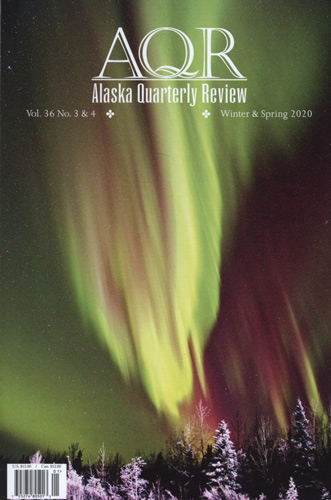
Alaska Quarterly Review - Winter/Spring 2020The Winter/Spring 2020 issue of Alaska Quarterly Review ends with a special feature—”Carrying the Fire: Celebrating Indigenous Voices of Canada.” This literary anthology is co-edited by Sophie McCall, Deanna Reder, Sarah Henzi, Sam McKegney, and Warren Cariou, who are interviewed as an introduction to their selections.

The selected winners and finalists of the Indigenous Voices Awards featured in this issue are: Mika Lafond, Billy-Ray Belcourt, Elaine McArthur, Treena Chambers, Joshua Whitehead, Nazbah Tom, Amanda Peters, Marie-Andrée Gill, Smokii Sumac, Tenille K. Campbell, Francine Merasty, J.D. Kurtness, Naomi Fontaine, Aviaq Johnston, Brandi Bird, David Agecoutay, Dawawn Dumont, and Carleigh Baker. Their work includes both poetry and prose.

Grab a copy of the latest issue of AQR to listen to the varied indigenous voices of Canada.

Bite-sized Bit of Literary Horror

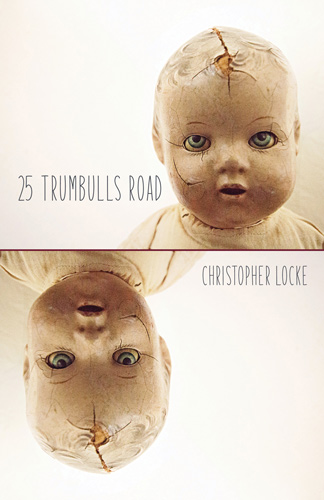
25 Trumbulls Road - Christopher Locke

Book Review by Katy Haas

Christopher Locke’s 25 Trumbulls Road, 2018 Black River Chapbook Competition Winner, is twenty-two pages of eerie enjoyment. The chapbook reads like five short horror films. Each story is called a “case” and is labeled with a date, which makes them feel a little more real despite remaining firmly planted in the surreal and fantastic. The cases are then broken up into numbered “exhibits,” some of which have been redacted. These redacted sections further steep the stories in mysterywhat has been removed and why?

Each story, except one, starts similarly: a family moves into a new home and begins to experience unexplainable events. A woman comes to the newcomer in a dream and leads her into the woods, characters hear source-less voices, objects thrown away return as if tethered to the homeowners. Sure, these are tropes we’ve seen in horror movies for years, but there’s something fresh and poetic about Locke’s little stories. There’s no reliance on special effects or visual jump scares. The horror is all in our imaginations, brought to life by Locke’s straight forward prose. With the short length of the stories, we’re immediately plunged into the darkness with little room to catch our breaths before another tale is introduced.

I read the chapbook while in public, during the middle of the day, sure that if I saved it for my bedtime reading, I’d be too creeped out to sleep soundly. And this is exactly what I want out of a book like this: to be both creeped out and impressed. Locke manages to do both in limited space. 25 Trumbulls Road is a perfectly bite-sized bit of literary horror.


25 Trumbulls Road by Christopher Locke. Black Lawrence Press, February 2020.

About the reviewer: Katy Haas is Assistant Editor at NewPages. Recent poetry can be found in Taco Bell Quarterly, petrichor, and other journals. She regularly blogs at: https://www.newpages.com/.

Runestone Journal – Vol. 6

Runestone Journal - February 2020

Runestone Journal proudly announces Volume 6, featuring: creative nonfiction from Hannah Baumgardt and True Dabill, fiction from Maryetta Henry, Gabraella Wescott, and Holley Ziemba; poetry from Lex Chilson, Marina Fec, arizona hurn, Maya Salemeh, Adam D. Weeks, and more; author interviews with Roy G. Guzmán and John Ostrander; and book reviews by the Student Editorial Board. Visit NewPages for more new issues.