Home » NewPages Blog » Page 87

NewPages Blog

At the NewPages Blog readers and writers can catch up with their favorite literary and alternative magazines, independent and university presses, creative writing programs, and writing and literary events. Find new books, new issue announcements, contest winners, and so much more!

A Meditation on Friendship

Guest Post by Leah Browning

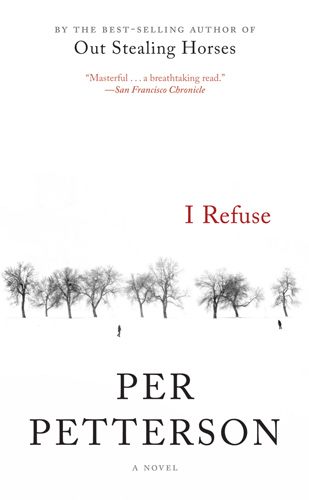
I Refuse is a novel by Per Petterson about two childhood friends. Tommy and Jim are now adults and have been estranged for many years when they unexpectedly cross paths on a bridge outside Oslo.

Per Petterson, who also grew up in Norway, is a thoughtful and moving writer. Overall, I see this book is a meditation on friendship, not only between the two main characters, but between others as well. There are several instances where a spontaneous act of kindness reverberates through another person’s day or even, in at least one case, an entire lifetime.

The book also focuses on something slipperier: the role of persistence or determination in a person’s life. One of the boys has a harsh, even brutal home life; the other has, in many ways, been luckier. Either could be destroyed by his circumstances.

At the beginning of the book, one of the men has been fishing, but it could have been either one: “As a rule I drove home before the first cars came down the hill towards the bridge, but today I had frittered my time away. I hadn’t even started to pack my bag, and the cars that were coming were classy cars, expensive cars. I turned my back to the road, my frayed navy blue reefer jacket wrapped tightly round me. I’d had that jacket ever since I was a boy in Mørk, and only one of the old brass buttons was still intact, and I had a woollen cap on as blue as the jacket, pulled down over my ears, so from behind I could have been anyone.”

Ambition has pushed one of the men in a strange, sometimes cruel direction. In this time of social distancing, reading about the powerful impact of friends and family members feels especially relevant.


I Refuse by Per Petterson (translated from the Norwegian by Don Bartlett). Graywolf Press, 2015.

Reviewer bio: Leah Browning edits the Apple Valley Review, which publishes short fiction, personal essays, and poetry in spring and fall issues. She occasionally blogs at https://leahbrowning.blogspot.com/.

Buy this book through our affiliate Bookshop.org.

Event :: Storyville Writing Workshop Offers Online Workshops

Storyville Writing Workshops logoOngoing Enrollment; Location: Online
Storyville Writing Workshop offers virtual writing workshops online for a wide variety of skill levels. Workshops provide personalized critiques, ongoing email access to the instructor, writing resources, personal virtual meetings via Google Meet, as well as access to writing forums. storyvilleworkshop.com/online-workshops/

If Borges is a Writer’s Writer Then Calveyra is a Writer’s Writer’s Writer

Guest Post by Jason Gordy Walker

Reading the prose poems of Calveyra, one feels the guiding presence of an enthusiastic genius, a soft-spoken bard, an artist of nature and deep emotional impression. With his subtle touch, the poet paints miniature landscapes of the mind and the natural world it experiences: “I came looking through loose autumn and slowed to a thistle beside the slide piled high with dead leaves. Wild! recently bloomed and gone into the raw milk.” These poems, all untitled, have a cumulative, epiphanic effect. His common tropes, such as chickens, the wind, the moon, the horizon, and the expanse of the countryside, shimmer with meaningfulness.

Calveyra’s verse pays respect and close attention to the local language of the region he grew up in, Entre Ríos. In translation, the result is occasionally clipped syntax and/or off-beat slices of language thrown into the midst of clear sentences, which leads the reader into a dreamlike state of consciousness: “Oh, the chicken’s already come in clucking with huge umbrella wings and this cheep-cheep will pass will pass and the last one will stay!” He has a talent for switching tones in a single poem. One moment the mood may be ecstatic, the next sorrowful or contemplative, the next whimsical, curious.

Elizabeth Zuba’s breezy translations do the poems justice. Perhaps the best way to absorb the book is to read the Spanish aloud first, refining a taste for Calveyra’s internal rhymes and rhythms. Next, with the originals in mind, read the English translations; the effect is often mesmerizing. During the pandemic, with all of the stress, worry, and panic that comes with it, reading Calveyra prompts one to think, as the poet opens the final piece in his collection, “Please don’t be worried, I’m not.” Calveyra, who fled Perón’s Argentina for Paris in 1961, deserves a wider audience.


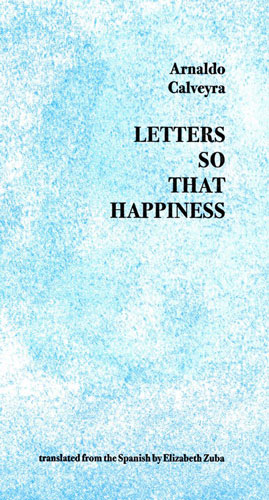
Letters So That Happiness by Arnaldo Calveyra. Ugly Duckling Presse, May 2018.

Reviewer bio: Jason Gordy Walker, a student at MFA@FLA, has published poetry in Confrontation, fiction in Monkeybicycle, and criticism in Birmingham Poetry Review and Alabama Writers’ Forum. He is against American Fascism.

Buy this book through our affiliate Bookshop.org.

A Study in the Miraculous: The Only Dance There Is

Guest Post by MG Noles

 The Only Dance There Is is the story of Dr. Richard Alpert, the man who had it all. He had attained the pinnacle of success as a tenured professor of psychology at Harvard University. He had the cars, the girls, the motorcycles, and the friends. He was regarded as a genius by colleagues and students. He was the cool professor all the kids wanted to study with.

It was the 1960s, baby, and Dr. Alpert was riding the wave of social evolution. He wanted to change the world and yearned to break free of the post-1950s zipped-up norms that continued into the early ‘60s. Continue reading “A Study in the Miraculous: The Only Dance There Is”

Poetry – June 2020

New poetry by Karen An-Hwei Lee, Jan Freeman, Ashanti Anderson, Ken Babstock, Drew Swinger, W. Todd Kaneko, Susan Parr, Noah Baldino, Faylita Hicks, Erika Martínez, Ian Pople, Bradley Trumpfheller, Alla Gorbunova, Marion McCready, Eleanor Hooker, Tim Seibles, Carol Ann Davis, Karisma Price, Rita Dove, Fran Lock, Emily Fragos, Rajiv Mohabir, Cynthia Guardado, Sandra McPherson, Elizabeth Metzger, Miller Oberman, Catherine Cleary, and more. In “The View from Here” section: Nicolas Bos, Zach Pino, Leah Ward Sears, Mairead Case, and John Green. Plus two essays by Torrin A. Greathouse and Christian Wiman. Check out other poetry contributors at the Poetry website.

Still Point Arts Quarterly – Summer 2020

This issue’s theme is “Making a Mark,” and the current art exhibition explores this theme. Featured artists include David Sapp, Mary Macey Butler, Cary Loving, and others. Featured writers include Karla Van Vliet, Wally Swist, Paula Penna, Dave Gregory, Bethany Bruno, Gergory Stephens, Mary Lane Potter, Roudri Bandyopadhyay, Sarah Brown Weitzman, Mark Tulin, Joe Kowalski, and more. Find more info at the Still Point Arts Quarterly website.

The Main Street Rag – Spring 2020

In the Spring 2020 issue: fiction by Jarrett Kaufman, Emily Alice Katz, J.T. Ledbetter, John Mancini, David Pratt, and Timothy Reilly; poetry by Jeffrey Alfier, Tobi Alfier, John Azrak, Tara Ballard, Chris Bullard, Dorritt Carroll, Ricks Carson, George Bishop, Sudasi J. Clement, Joan Colby, and more; and six book reviews. Be sure to check out our featured interview with Tim Bascom by Beth Browne.

Hiram Poetry Review – Spring 2020

In the Spring 2020 issue of Hiram Poetry Review, find poetry by Jo Brachman, R. Steve Benson, Dan Cardoza, Daniel Daly, J. David, Lynn Domina, Ben Goluboff, Stuart Gunter, Alec Hershman, Joanne Holdridge, Henry Hughes, Richard Jones, Peycho Kanev, Kara Marell, Jose Oseguera, Jonathan Andrew Pérez, William Snyder, and more.

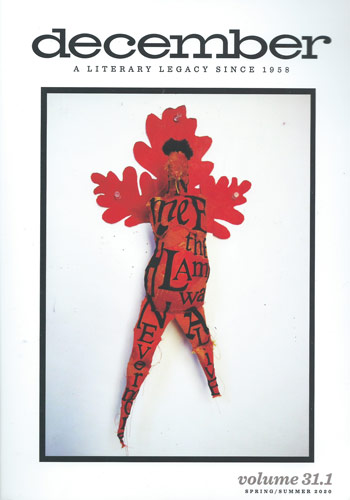
december – Spring Summer 2020

Our latest issue features poetry by Kenda Allen, Jamaica Baldwin, Ronda Pizza Broatch, Satya Dash, Gibson Fay-LeBlanc, Rebecca Foust, Valentina Gnup, Tate Lewis, Abby E. Murray, Phong Nguyen, Eric Pankey, Kimani Rose, Joel Showalter, Ellora Sutton, Raisa Tolchinsky, and more; and fiction by Stacy Austin Egan, Lucy Ferriss, Tyler McAndrew, Casey McConahay, Susan Mersereau, and Griffin Victoria Reed. Read more info at the december website.

Event :: The Center for Creative Writing Offers Online Courses & Community

Deadline: Year-round
The Center for Creative Writing has been guiding aspiring writers toward a regular writing practice for more than 30 years. Our passionate, published teachers offer inspiring online writing courses in affordable six-week sessions, as well as one-on-one services (guidance, editing) and writing retreats (virtual for 2020). Whatever your background or experience, we can help you become a better writer and put you in touch with the part of you that must write, so that you will keep writing. Join our inclusive, supportive community built on reverence for creativity and self-expression, and find your way with words. Creativewritingcenter.com.

Call :: The Daphne Review Seeks Mentors & Student Writers

The Daphne Review 2020 Summer Mentorship bannerDeadline: July 31, 2020
The Daphne Review is hosting an online mentorship program for talented high school student writers and established writers/teachers acting as their mentors. We’re currently taking applications for both types (students and qualified mentors) until July 31st! To apply, submit a resume and brief cover letter to [email protected]. Start Date: August 3-28. Format: online. Classes: flash fiction, poetry. Pay for mentors: $50 per hour for skype or $200; $25 per hour for email or $100; total: $300 via paypal. www.thedaphnereview.org

Fresh First Poetry Collection Draws on Women of Myth

Guest Post by Rebecca Moon Ruark

“Eve, / How often do you think of me? / the house now, the kids, and / Everyone needs to eat, I know how tired / You are to mother the world”— “Oh” from The Desperate Measure of Undoing: Poems by Jessica Fischoff

Poetry is meant to be read aloud, preferably to an in-person audience. Luckily, one of the last live poetry readings I attended pre-pandemic featured Jessica Fischoff reading from her poetry chapbook.

The Desperate Measure of Undoing: Poems is a little book with big impact. Fischoff’s poems borrow from women of myth but are their own unique creations. The poet plays with persona, writing her poem, “Oh,” quoted above, not from Eve’s perspective but from that of the serpent. In a recent interview, Fischoff told me that “Oh” came from a prompt to write from the perspective of a villain. The poem reads as a letter from the serpent, who has been abandoned in the garden by Eve, and grants age-old Eve new agency and power.

There is a lot to admire in this chapbook that explores the feminine through the ages and through fresh takes. Original cover art and flower-illustrated front and back pages complement the poems and provide the reader a garden-like respite from our world’s current situation.

Read more about Fischoff and her debut poetry chapbook in a new interview at Parhelion Literary Magazine.


The Desperate Measure of Undoing by Jessica Fischoff. Across the Margin, 2019.

Reviewer bio: Rebecca Moon Ruark is features editor for Parhelion Literary Magazine, which publishes features, along with fiction, nonfiction, and poetry in winter, summer, and fall issues.

2020 Lamar York Prize Winners

Pick up the Spring 2020 issue of The Chattahoochee Review for the winners of the Lamar York Prizes.

Fiction
“With Mercy to the Stars” by Lisa Nikolidakis

Nonfiction
“Catharsis, Diagnosis” by Rachel Toliver

The nonfiction winner was selected by judge Alice Bolin, who says the essay, “begins as straightforward memoir and blooms into something stranger and more wonderful: a treatise on the obsessive-compulsive act of storytelling, analysis of classic graphic novel, a meditation on how comics tell stories, and on how our lives, with their nonsensical, sometimes brutal vignettes resemble comics.”

Fiction judge Anthony Varallo writes that he was “drawn in from the first page, happy to be in the company of a young narrator who is just starting to glimpse the limitations of the adulthood that awaits her, as confining as the cage that houses her father’s prized bear.”

Be sure to check out these pieces for yourself in The Chattahoochee Review.

Challenging “Supposed To”

Magazine Review by Katy Haas

If you’re using pride month as a time to become more familiar with LGBTQIA+ writers, I recommend grabbing a copy of the Spring 2020 issue of Hiram Poetry Review. Inside is the four-page poem “I Didn’t Know You Were Transgender” by Mercury Marvin Sunderland. This poem is a response to the observation cisgender people have made: “I didn’t know you were transgender / they tell me / I thought you were a cis man.”

Sunderland spends the poem speaking to these people, asserting his place in the gender spectrum. At one point he declares:

if you knew
even a scrap
of trans culture
you’d know i
already do look
like a trans man
because we are a diverse multitude all over the earth.

With this poem, he challenges the idea of what someone is “supposed” to or expected to look like, challenges the argument that using “they” as singular “destroy[s] the english language,” challenges the idea that “stick[ing] medicine in me” means “i want to be cisgender.”

Throughout the four pages, Sunderland provides a better understanding of what it means to be a trans man, and what it means to be Sunderland himself.

Thrive with The Tiger Moth Review

Last month, Esther Vincent of The Tiger Moth Review was invited to read poetry on the Thrive Hour Community Corner Facebook group. This group is provides free live sessions to help keep users thriving and accepts donations for families in need.

You can now find these readings on the literary magazine’s website. Each of the three videos includes several poems. Most of these have appeared in The Tiger Moth Review, like “Tree” by Lee Soo Jin or “Elegy for a Silent Stalker” by Ow Yeong Wai Kit. There are also other familiar names such as Mary Oliver and Joy Harjo included.

Take a moment to appreciate eco-poetry read aloud for you by visiting The Tiger Mother Review‘s website.

Step Into the Library with Carolyn Rhodes

Guest Post by Suzanne G. Beyer

I just finished reading Library Girls of New York, Carolyn Rhodes’s 2019 memoir of growing up in two New York City libraries. I had no clue that Andrew Carnegie provided an apartment above NYC libraries for the custodian and his family to live in. But there’s a lot I didn’t know until I read her book.

You’d think that such an upbringing—no picket fence, no grassy yard, no flowerbeds—could be a reason for an under-privileged childhood . . . quite the opposite for author Rhodes! Continue reading “Step Into the Library with Carolyn Rhodes”

Ethan Hayes Reads ‘One Hundred Years of Solitude’

Guest Post by Ethan Hayes

“Many years later, as he faced the firing squad, Colonel Aureliano Buendia was to remember that distant afternoon when his father took him to discover ice.” These are the immortal opening lines of Gabriel García Márquez’s One Hundred Years of Solitude, a novel filled with so many more beautiful lines. The novel is concerning the generational story of Maconda and its founders, the family of Jose Arcadio Buendia.

I have found the novel to be filled with a wonderful whimsy that has made García Márquez famous. Every line is poetry that flows through the magical story that fills the pages. The main characters are the motley crew of Jose Arcadio Buendia’s family, who range from the dirt-eating Rebeca who wandered into the family to Jose Arcadio, the first-born son of Jose Arcadio Buendia who inherited his strength.

The novel is told in such a wonderful fairy tale style that blends magic into the storied events that plague this family and the town that they founded. One of García Márquez’s best works.


One Hundred Years of Solitude by Gabriel García Márquez. 1967.

Reviewer bio: My name is Ethan Hayes. I am a writer from Colorado. I like to write fiction and fantasy as well as short prose. You can find my blog at https://ewwhayes.wordpress.com/.

Buy this book through our affiliate Bookshop.org.

Poetry – May 2020

In the May 2020 issue of Poetry, find work by A.E. Stallings, Perry Janes, Raymond Antrobus, Mary Ruefle, D. M. Spratley, Desirée Alvarez, Kelle Groom, Kayleb Rae Candrilli, Safia Elhillo, Janice N. Harrington, Zakia El-Marmouke, Eileen Myles, Lupe Mendez, TC Tolbert, Karen Skofield, Daniel Poppick, Jennifer Barber, Inua Ellams, Stuart Barnes, Travis Nichols & Jason Novak, Kyle Carrero Lopez, Ricki Cummings, Dean Browne, Jennifer L. Knox, Jayme Ringleb, Gerard Malanga, Helen Mort, and Srikanth Reddy. Plus, Vidyan Ravinthrian in the Comment section.

Plume – #106

This month’s Plume featured selection: Reginald Dwayne Betts: On Art, Poetry, the Particular Fucked Up Parts of Incarceration, and the Multitudes of I. Work by the poet is introduced with an interview by Amanda Newell. In the Essays & Comment section, find “Rescuing Ourselves” by Celia Bland. Chelsea Wagenaar reviews Sara Wainscott’s Insecurity System.

A Graceful Revelation

The Off-Season by Jen Levitt

Guest Post by Heidi Seaborn

Finishing up my MFA at NYU, I wanted to read a first collection by a poet who had travelled this same path, Jen Levitt. While I waited for the delivery of Levitt’s The Off-Season from my local bookstore, I went in search of her poetry online. When I found “The Reality Show,” I knew I had met a kindred spirit—someone who delivers ironic humor but approaches it without a suit of armor. Her emotional temperature is tempered only by coolness of her cultural references.

Any poem about physique, about not feeling attractive and the brutality of middle school brings its own pathos, but this poem embeds, “In montage I mourn the boy killed by this classmate / for liking to wear heels & makeup, / also the jury’s devastating hearts / that go out to shooter / because twenty-one years is a lot of time” in the middle, a turn that is both jarring but important to weight this poem. The stakes are suddenly clear. With the line, “like the time it takes to get over middle school,” the reader accepts the burden of living in the speaker’s body, as well as one’s own.

Body and sexuality dominate this Levitt collection. In the titular poem, “The Off-Season”, the speaker wrestles with the awkwardness of coming of age—made more acute by her growing awareness of her sexual orientation. When I read this poem to my queer daughter, she said the poem was so evocative of that ‘puzzling’ experience. Levitt is piecing together the puzzle that is her—as she matures. She is also coming of age as a poet, under the influence of Elisabeth Bishop and Emily Dickinson. Yet, her poems in conversation with Bishop and Dickinson steer clear of worshipful dialogue, instead they reveal a more naked self. The Offseason is a graceful revelation of body, sexuality, growing into one’s self as a person and a poet.


The Off-Season by Jen Levitt. Four Way Books, 2016.

Reviewer bio: Heidi Seaborn is Editorial Director of The Adroit Journal and author of the award-winning collection Give a Girl Chaos (C&R Press/Mastodon Books, 2019) and two chapbooks.

Buy this book through our affiliate Bookshop.org.

Recommended Meditative Read

Guest Post by Christina Francine

The Healing Riverbeds is a sharing of reflections about being human at a time when the world suffers from a pandemic, contains violent unrest, and deals with brutal worldwide environmental concerns. Shobana Gomes considers humans accountability for these “calamities” and examines herself as well. At the same time, she takes a stand as a witness. She thinks about the positives around her too and considers her daughter’s unique way of viewing.

From a children’s point of the world, the solutions are clear: “The world outside was a messy world. It had become toxic and dangerous, and the ones who would be most affected were the children.” In order for her to continue, she would leave her “coloring for another day . . . till the riverbeds heal, till its waters flow freely once again.”

Gomes’ examination and reflection is thought-provoking, one that contemplates human’s positive and negative effects on the world. She also contemplates the challenges of being human and questions the “maze” we’ve all been placed into.

A stirring read that asks the deep questions of life and points toward innocence for answers. The type of read all humans should explore. A recommended meditative read.


The Healing Riverbeds by Shobana Gomes. Independently Published, April 2020.

Reviewer bio: Christina Francine is an enthusiastic author of a variety of work for all ages. When not weaving tales, she teaches academic writing at the college level. She’s also a licensed elementary teacher. Picture books: Special Memory and Mr. Inker. Academic: Journal of Literacy Innovation.

Never Give Up: The Charmed Circle

Guest Post by Dawn Corrigan

As a child I read voraciously, but erratically. When it was time to pick a new Nancy Drew, I made my selection based on the cover art, rather than reading in sequence. I reread old books just as often as seeking new ones. It wasn’t always clear where the books had come from.

Thus I had in my adolescent collection a copy of The Charmed Circle, a 1962 “teenage novel” by Dorothea J. Snow. Somewhere along the way it disappeared, but in 2014, in a fit of nostalgia, I ordered a used copy from Amazon, sorting through more than a dozen “Charmed Circle” titles until I found the right one. Then I stuck it on a shelf and forgot about it. But recently, in my search for comfort food reading, I took it down.

I thought I’d read a little and then quickly fall asleep. Instead, I stayed up past two and finished it. That’s how it was when I was a teenager, too. Sometimes I’d finish it, then immediately flip back to the first page and start again.

Which is funny, because even back then the class stuff annoyed me, and it annoyed me even more this time. For instance, it had not occurred to me previously that our heroine, Lauralee Larkin, is elected Homecoming Queen mainly because her parents are willing to host (and fund) an endless array of pizza parties.

Nonetheless, there’s obviously something about the book I really like, and this time I figured out what: Lauralee tries things that scare her, and never gives up, even when those things don’t work out.

It occurs to me now that reading this book over and over again as a youth may have contributed to my ability to keep trying—to keep submitting my writing, to keep applying for jobs that seem like long shots, even to keep asking guys out (right up through my husband). This tenaciousness in the face of much rejection has served me well. It’s pretty much my only move! Fortunately, it’s the only one I’ve needed.


The Charmed Circle by Dorothea J. Snow. Whitman, 1962.

Reviewer bio: Dawn Corrigan‘s poetry and prose have appeared widely in print and online. She works in the affordable housing industry and lives in Myrtle Grove, FL.

Best American Essays 2020 Sponsor Spotlights

Best American Essays 2020Congratulations to two of NewPages sponsored magazines for having selections included in the Best American Essays 2020 due out on November 3, 2020. This year’s anthology was curated by guest editor André Aciman and series editor Robert Atwan.

“My Pink Lake and Other Digressions” by Alison Townsend was originally published in an issue of Cimarron Review. Jerald Walker’s “Breathe” was featured in New England Review 40.3.

Three Books to Read

Guest Post William V. Ray

As a retired teacher, I’m someone whose reading habits haven’t been much affected by the pandemic. I’m usually reading several things at once. Currently, I’ve caught up with Simone de Beauvoir’s Memoirs of a Dutiful Daughter. I used to teach one of her novels but had never read this early but nevertheless striking piece of writing. It is a remarkable read not only because one senses on every page the relentlessly probing mind of the author, but also because of the window it provides into the emergence of the individual who is now recognized as breaking ground for the feminist movement. Although she is not alone in being someone who slowly departs from a bourgeois, Catholic background, she is particularly well suited to describe the journey.

I’ve also been reading Kevin Young’s poetry. At his best, he is one of the poets that makes me wonder at his ability to put together words and images that, while seemingly simple, knock one over with their power to reveal. Blue Laws: Selected and Uncollected Poems, 1995-2015 is an excellent survey of his work, showing his range—from searing exposés, as it were, of the enslavement of African Americans to concise universal cries such as the two-line poem ¨Grief¨:  “In the night I brush/ my teeth with a razor.” Cultural icons—Basquiat, Jack Johnson, Miles Davis among others—appear.

For those of us lucky enough to be able to get out to enjoy nature in the midst of the coronavirus crisis, Sydney Lea’s most recent book of poetry, Here, is a nice companion. You can read my short review on Amazon.


Memoirs of a Dutiful Daughter by Simone de Beauvoir. HarperCollins, August 2005.

Blue Laws: Selected and Uncollected Poems, 1995-2015 by Kevin Young. Knopf, September 2017.

Here by Sydney Lea. Four Way Books, September 2019.

Reviewer bio: William V. Ray is a retired English teacher who has also been a textbook editor, freelance writer, and, of late, a café owner. His published work includes textbooks as well as poetry and poetic prose. His work appears in Poetry East, The Write Launch, Subprimal Poetry Art, Pudding, The Opiate, The Art Bin, Painters & Poets, Mass Poetry, Poetry Pacific, and elsewhere. He is the editor of the online journal The Courtship of Winds. He lives outside Boston, Massachusetts.  For more detail, please visit his page at LinkedIn: https://www.linkedin.com/in/williamvray

A Relevant Classic Inspiring Resiliency

Guest Post by Kathryn Sadakierski

Little Women is a timeless classic and remains relevant during unprecedented days. On the surface, the endearing stories of Meg, Jo, Beth, and Amy March may seem to recount simpler times, but greater complexity underlies what appears to be sentimental. At its heart, Little Women is about family, growing stronger despite distance.

While their father serves as a chaplain in the Civil War, the March daughters, with the loving guidance of their mother, adapt, soldiering on together, each making their own destinies. They support each other through adversities, sharing in triumphs. When Beth falls ill, Amy stays with Aunt March, avoiding catching scarlet fever, but while distanced, she learns about herself, ultimately maturing. Their “castles in the air,” innermost dreams of places far-removed from their Concord home, sustain them, until the Marches realize that the lives they lead are better than anything they could have dreamed, finding beauty even in the bittersweet, as they come of age, surmounting the burdens they once lamented. It is not tangible walls that make up their home, but the love of their family.

Reading Little Women at home during the quarantine came not to be an escape from reality, so much as a telling reflection of it; the novel captures the ebbs and flows of life and time, which, as the Marches saw, are to be cherished. Being at home, away from their father and the promising reaches of the world they had yet to see was difficult for the spirited March girls, but in time, they turned what were once limits into opportunities, each contributing her own gift to the world, from Jo with her imaginative writing, to Beth with her music and compassionate heart. Challenges they overcame shaped them, becoming a source of empowerment. This message of resiliency continues to inspire.

Little Women by Louisa May Alcott. 1868.

Kathryn Sadakierski is a 20-year-old writer whose work has appeared in The Ekphrastic Review, Dime Show Review, Nine Muses Poetry, iō Literary Journal, and elsewhere.

The Return to Safekeeping

Guest Post by Christine Noelle

Months into the pandemic, I found myself longing for “the good ‘ol days” when it felt safe to travel, and I could focus long enough to immerse myself in a story. Once I read a book nonstop, cover-to-cover during a flight from New York to Seattle. If I read the book again, could it bring back a feeling of normal, when COVID-19 made our daily lives feel so foreign? I pulled the book from my shelf and, to my surprise, I liked that the word safe was in its title.

Safekeeping: Some True Stories from a Life by Abigail Thomas is a groundbreaking collage-style memoir containing elegantly written vignettes that seem unrelated, but build to a beautiful, meaningful whole. Thomas offers an intimate unfolding of pivotal moments that shaped her life: pregnancy at 18, joys and fears of being a single mother of three by age 26, love and frustration within her marriages, and the tragic death of her second husband. Readers of Safekeeping will bear witness to the art of sensory perspective: the before, the during, and the here-and-now, as told through stories that are poetic, visceral, and universal. The normal of life we all know.


Safekeeping: Some True Stories from a Life by Abigail Thomas. Penguin Random House, April 2001.

Christine Noelle is a writer and marketing consultant living in the San Francisco Bay area. She is a traveler and lover of trees. http://www.christinenoelle.com

Buy this book through our affiliate Bookshop.org.

Terrain.org – May 2020

See what was published in May at Terrain.org. Poetry by Charlotte Pence, Michael Daley, Maryann Corbett, Lois P. Jones, Elizabeth Jacobson, Traci Brimhall, Sharon Dolin, Beth Paulson, Alison Hawthorne Deming, and Dennis Held; nonfiction by Andrew Furman and Gretchen VanWormer; and fiction by Amy Barker.

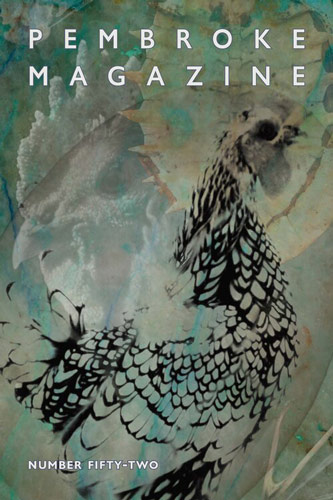
Pembroke Magazine – No. 52

The latest issue of Pembroke Magazine contains poetry, fiction, and creative nonfiction by emerging and established authors from the US and abroad. A young mother struggling to nurse trades notes with a gorilla; a Midwesterner finds a bathing suit in a sock drawer that whisks his mind back to a Grecian beach; a woman desperately seeks to return to her home at the edge of the world; a man takes a manic road trip with his schizophrenic uncle; a couple in a gated community is saddled with the job of maintaining an exalted lawn; a woman flees a California wildfire for a holy site near Albuquerque; and much more. Cover art by Margie Labadie.

Program :: MA in Creative Writing at University of South Alabama

Earn your MA with an emphasis in Creative Writing in the vibrant city of Mobile, near some of our country’s best beaches. Tuition waivers and assistantships are available as are additional scholarships for excellence and summer creative writing projects. Home of the Stokes Center for Creative Writing. Full-time students can finish the program in four semesters. Students can also enroll part time and/or complete the degree through evening coursework. For more information, visit our website: www.southalabama.edu/colleges/artsandsci/english/.

The Lake – June 2020

The Lake‘s June issue features Sheila Bender, Phillip Henry Christopher, Robert Eccleston, Edilson Ferreira, Mercedes Lawry, Bruce Morton, David Olson, Carolyn Oulton, J. R. Solonche, Hana Yun-Stevens, Nwuguru Chidiebere Sullivan, Tanner. Reviews of Matthew Caley’s Trawlerman’s Turquoise and The Valley Press Anthology of Prose Poetry.

Sync Audio YA for Summer

Once again, Sync Audiobooks is offering a free summer audiobook program for teens (13+) – and perhaps some adults too! SYNC 2020 is utilizing Sora, a student reading app available for free download from OverDrive. Each week Sync shares two YA titles that can be downloaded with no expiration. After the week, the titles are no longer available to download, but previous titles with descriptions remain available on the site.

It’s already Week 5 of the program, but there are seven more weeks remaining. Previous titles include Monday’s Not Coming by Tiffany D. Jackson, The 57 Bus by Dashka Slater, Secret Soldiers by Paul B. Janeczko, Picture Us in the Light by Kelly Loy Gilbert, Faust by Johann Wolfgang von Goethe (stupendously performed!), Stalking Jack the Ripper by Kerri Maniscalco, Sisters Matsumoto by Philip Kan Gotanda, and Disappeared by Francisco X. Stork.

All you have to do to access the titles is register your email address. I’ve done so for the past two years and never receive any related junk mail or other solicitations, so this is an great program for teens and adults alike!

Reading “Insomnia in Moonlight” by Alice Friman

Gettysburg Review - Autumn 2019Guest Post by Emily Lowe

Alice Friman’s “Insomnia in Moonlight” in The Gettysburg Review Fall 2019 is a moving poem that grapples with a popular theme within this issue: death. Friman handles the topic delicately, with humor, and with heft. The poem is broken into four irregular stanzas beginning with the dead waking in the night, making noise. This stanza read with immediate intrigue through the life Friman breathed into death about a speaker who cannot sleep because the dead are alive in their thoughts. It suggests playfulness, too, written with a lighter tone than often associated with death and mourning.

Friman then equates the dead to the sun, something bright and fixed, and the speaker to the changeable moon, “she wears my child face—round, / sunburnt, and pensive.” The final lines in the poem are the most striking, offering up the speaker’s recount of a total eclipse where the moon tried to “blot out the sun.” It felt like a reflection of their desire to hold death in their hands and make sense of it, but the speaker admits that the moon fails in its attempt to resist permanence, to resist, as Friman puts so eloquently in her final two lines: “geometric progression, the unerasable / dead, and everything else I don’t understand.”


Reviewer bio: Emily Lowe is an MFA candidate in Nonfiction at the University of North Carolina Wilmington where she is also a fiction editor for Ecotone literary magazine.

Find New Favorites in The Malahat Review

Magazine Review by Katy Haas

The cover of the latest issue of The Malahat Review is a calming scene: a full moon framed by powerlines over a pastel sky. It invites readers to pick it up and open it to discover what’s inside. I had found two new favorites in the pages: “Nice Girl” by Hollie Adams and “A High Frequency Words List” by Matthew Gwathmey.

In “Nice Girl,” Adams’s speaker likens herself to a mall who would “never automatically / open the doors even though / there’d be a sign saying / Automatic Doors.” She admits she’d keep them locked because she’s “evil / even though in real life / I’m always doing nice things.” This poem is a fun exploration of one’s inner self and the intentions behind actions. There’s a sense of humor in this piece even as it leads to introspection, an enjoyable aspect.

Gwathmey’s poem is in four sections, each one a list of words picked from the Fry and the Dolch sight word lists, used in children’s vocabulary development. This piece is just four paragraphs listing off words, a cool form of recycling.

There is plenty more poetry and prose to find inside this issue of The Malahat Review. Grab a copy to find your own favorites.

Life in Lockdown: Re-Reading Woolf’s The Mark on the Wall

Guest Post by M.G Noles

The Mark on the Wall is a brief tale in which Virginia Woolf describes a winter evening at home in the English countryside during WWI. She, like her fellow Britons, are under lockdown because of the war. Frankly, she has nothing but time on her hands, and she is so lonely that all she has to do with her time is gaze at a mark upon a wall.

The curious mark is the platform which allows her to ponder, not only the mark, but her life, her surroundings, and that pesky mark she cannot be bothered to walk across the room to identify. Could it be a nail? Perhaps a bit of gravy? She doesn’t know. So, she allows her mind to fly off in a thousand different meditations on life and death, on what it all means, on her place in the scheme of it all.

Woolf wrote this story in 1917 while the world was falling apart around her. She endured nightly air-raids, rockets blaring, shots fired across the channel. And, so, she used her writing as a way to escape it all.

The contemplation of a mark upon a wall seemed absurd to me when I read it years ago. But, now, having been a shut-in for these many weeks due to Covid-19, I find myself (like Woolf did) gazing at simple things around the house—toothpaste tubes, detergent boxes, and soup cans—and then my mind goes flying away. Life feels so foreign when shut indoors.

Woolf writes that life to her at that time felt like “being blown through the Tube at fifty miles an hour—landing at the other end without a single hair pin in one’s hair!”

That is exactly how I feel right now, too, that life is all of a sudden a bizarre affair in which we are utterly out of control, “with one’s hair flying back like the tail of a race horse.” And, heaven knows where on earth we will land.


The Mark on the Wall by Virginia Woolf. 1917.

Reviewer bio: M.G Noles is a freelance writer and history buff.

Nonlinear Exploration of Life

Guest Post by Karen J. Weyant

Sue William Silverman’s life is hanging by a thread.

Or, at least that may be the initial reaction a reader may get from Silverman’s latest collection, How to Survive Death and Other Inconveniences. The title itself suggests that Silverman’s book is a catalog of death-defying experiences and yes, there are somber essays that explore her survival as a sexual assault victim and her hypochondriac ventures into the medical world. But other essays are more lighthearted, such as the one piece where, as a middle-aged narrator, she tells about her adventures at an Adam Lambert conference.

In essence, Silverman’s book is a nonlinear exploration of her life arranged into three sections adapted from the Three Fates of Greek Mythology: Clotho (the spinner) Lachesis (the measurer), and Atropos (the cutter). Sometimes, her essays tell stories in the traditional narrative form, while others use more experimental styles. However, read together, this collection is more than just about surviving death: it’s really about having hope and resilience in life.


How to Survive Death and Other Inconveniences by Sue William Silverman. University of Nebraska Press, March 2020.

Reviewer bio: Karen J. Weyant‘s essays have been published in BioStories, Briar Cliff Review, Carbon Culture Review, Crab Creek Review, Coal Hill Review, Lake Effect and Waccamaw. She is an Associate Professor of English at Jamestown Community College in Jamestown, New York.

Buy this book through our affiliate Bookshop.org.

Goldmine of Wisdom

Guest Post by Bright Heaven’s

Have you ever wondered to yourself (like I did): how do the world’s great entrepreneurs and innovators come up with such unique and brilliant ideas for their businesses? Then this book, The Idea Hunter, a very recent read of mine, is what I will recommend for you.

Ideas rule the world. In fact, the global space runs on an idea cum knowledge economy. It is on this premise that the book was written and it serves to bust the myth that brilliant, earth-shaping, and career-boosting ideas come from brilliant minds. Rather, it seeks to reveal that breakaway ideas come to those who are in the habit of looking for them all the time. These people are referred to as Idea Hunters.

In this book, I learned about how and what it takes for people to create a superb idea that leads to the creation of a successful innovation through the description of the characteristics and behaviors of several successful idea hunters. The Idea Hunter informs and unearths the habits shared by many great innovators and inventors of the past century. From very popular innovators such as Thomas Edison, Walt Disney, Warren Buffet, Steve Jobs etc., to less popular names such as Jack Hughes, Paul Romer, Jim Koch, Greg brown Jay Hooley, Michael D White etc., readers get a raw perception into how they developed their ideas and the steps they took to bring them into reality. What I find most interesting is how several top global brand/companies such as Apple, Walt Disney, Gore-tex, Elixir Strings, and Boston Beer, among others, came into being through a simple albeit conscious act—the serious business of Idea Hunting.

This is quite an average volume consisting of six chapters, and I can tell you that each of the chapters is a goldmine deposited with wisdom on how to generate and actualize ideas.


The Idea Hunter: How to Find the Best Ideas and Make them Happen by Andy Boynton, Bill Fischer, William Bole. Wiley, April 2011.

Reviewer bio: Bright Heaven’s is an educator, a writer, poet, author, public speaker, information scientist, and a budding musician from Nigeria. He has publications in the Korea-Nigeria Anthology and several Association of Nigerian Authors (ANA) literary journals. Find him at: https://bright-heavens.site.live.

Buy this book through our affiliate Bookshop.org.

The Malahat Review – Spring 2020

Our spring issue showcases the 2020 Open Season Award winners: Joshua Whitehead (cnf), Patrick Grace (poetry), and Ajith Thangavelautham (fiction). Also featured: Manahil Bandukwala, Ayaz Pirani, Christine Wu, Rob Taylor, Edward Carson, Matthew Gwathmey, Tania De Rozario, Hollie Adams, Emi Kodama, Bradley Peters, Kevin Shaw, Emma Wunsch, Glen Downie, and more.

The Gettysburg Review – 33.4

The Autumn issue of The Gettysburg Review is out. The issue features paintings by Jared Small, fiction by Jennifer Anne Moses, Jared Hanson, Darrell Kinsey, and Sean Bernard; essays by Andrew Cohen, K. Robert Schaeffer, and Christopher Wall; poetry by Jill McDonough, Max Seifert, K. A. Hays, Albert Goldbarth, Mary B. Moore, R. T. Smith, Jill Bialosky, Katharine Whitcomb, Corey Marks, Kimberly Johnson, Margaret Ray, Danusha Laméris, Linda Pastan, Christopher Bakken, Christopher Howell, and Margaret Gibson.

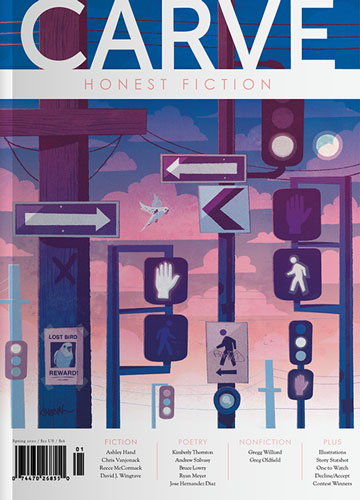
Carve Magazine – Spring 2020

This issue includes short stories by and interviews with Ashley Hand, Chris Vanjonack, Reece McCormack, and David J. Wingrave; poetry by Kimberly Thornton, Andrew Szilvasy, Bruce Lowry, Ryan Meyer, and Jose Hernandez Diaz; and nofiction by Gregg Williard and Greg Oldfield. Read more at the Carve website.

The Baltimore Review – Spring 2020

The Spring issue of The Baltimore Review features poems, fiction, and creative nonfiction by: John Blair, Shevaun Brannigan, Naomi Cohn, Jeannine Hall Gailey, Katherine Gekker, Matthew Henry, R. Dean Johnson, Yume Kitasei, Andrew Kozma, Avra Margariti, Rita Mookerjee, Glen Pourciau, Ellen Skirvin, David Urbina, and M. Drew Williams.

The Adroit Journal – May 2020

The May 2020 issue is here with poetry by Jenny George, Arthur Sze, Jessica Abughattas, Melissa Crowe, Jamaica Baldwin, C.X. Hua, Kara van de Graaf, Hala Alyan, Mark Wunderlich, Raymond Antrobus, Stephanie Chang, and more; prose by Scott Broker, Alyssa Proujansky, Maura Pellettieri, and Mina Hamedi, with a prose feature by Dima Alzayat. See what else the issue has in store for you at The Adroit Journal website.

James Braun Brings Readers Back to Winter

Magazine Review by Katy Haas

Everything is green and warm outside my window right now, but James Braun takes readers back to winter in his story “The Salt Man” from the Spring 2020 issue of Zone 3.

The story centers on two young sisters mid-winter. They are sent outside to wait for the salt man to come salt their roads before they’re allowed to play outside their yard. This is a dark piece. Poverty hangs heavy over the story. What once was green and beautiful has been covered by rocks. They have no heat in the house. Their neighbor loses fingers to frostbite. A woman cries on a couch while they go door to door asking if they can shovel driveways for cash to pay for a doctor bill. And the person they’re told will bring them a level of safety—the salt man—ends up being a source of danger in himself.

I enjoyed Braun’s writing style. There’s a level of flippancy with all the characters who view their lifestyle as ordinary. The story is short but holds a lot inside it. We’re able to discern as much meaning in what isn’t said as in what is clearly stated. And even though it is warm enough that I have my window open, a warm breeze blowing into my living room as I write this, Braun’s writing still makes a reader feel that inescapable cold of winter.

Resources for Young Writers

Among the many wonderful resources NewPages offers to readers and writers is our Young Writers Guide to Publications, which features publications by and for young readers, and our Young Writers Guide to Contests, which includes carefully vetted legitimate contests. These are open-access ad-free guides that I personally curate out of my commitment to supporting young readers and writers as well as parents and teachers.

Despite the pandemic which surrounds us, great efforts are still going on to create opportunities and provide motivation and encouragement for young writers. I recently heard from Sophia Hanson, who is one of three founders of the National Youth Foundation. This Pennsylvania-based non-profit seeks to improve literacy and educate youth on topics related to social justice. Each year, they run two book competitions: Student Book Scholars – which involves players from the NFL, NBA, and MLB; and Amazing Women’s Edition – a national writing contest focused on gender equality. Past competition winners have been honored at the Smithsonian Museum as well as having their images included in a statue honoring the late Marian Spencer, who was the subject of the winning book.

I am so heartened to know that this kind of outreach to young writers persists through these difficult times. When I asked Sophia how this has impacted their work, she responded, “The global pandemic has more parents at home than ever. We have also seen a major increase in emails from parents about our contests and programs. We even had NBA and NFL players contact us to host a Bounce Back art contest to help kids process the pandemic. On the flip side of that, we had two writing workshop series planned in Philadelphia with two amazing women, and those are on hold.”

Still, like so many efforts, the National Youth Foundation will find ways to continue to engage young writers. Now more than ever, online resources like ours are here to help. If you have young people in your life or know of others who do, please tell them about NewPages Guides for young readers and writers!

David Chorlton Interviewed in The Bitter Oleander

The Spring 2020 Issue of The Bitter Oleander includes a special feature. Editor Paul B. Roth interviews poet David Chorlton. Readers can also find a selection from Chorlton’s Speech Scroll. Below, check out an excerpt from the interview and visit The Bitter Oleander website to get a taste of Speech Scroll.

PBR: In your Speech Scroll, a sampling of which follows this interview, you’ve put the urban and the desert world together so expertly over some 158 poems. Did this particular project start off with that in mind or was it just your current ongoing consciousness of where you were in that environment and who you are that brought it forth?

DC: . . . While there are the times I sit down to commit words to paper, the actual writing of poetry is never turned off. Without placing a title or thinking of a poem’s shape, I had an ongoing path to follow and that helped me shift a little in the way I see images come together. Thinking about the political happenings of our tumultuous time might become too consuming, and for some people it is. Others seem to remain oblivious to anything that goes on in that realm. Writing poetry, being the most natural form of communication for me, has been a good place in which to scatter comments and observations that, I hope, provoke more thought than argument. Life encompasses a wide range of pleasures and frustrations, comfort for the fortunate and responsibility toward those who are not, and so with the help of various bird and animal species, plus a view of the sunrise from our front door when I’m up early to see it I take, as I mentioned earlier, what is given, and transform it the best way I can.

Emi Nietfeld Investigates Her Past

Magazine Review by Katy Haas

Opening the Spring 2020 issue of Boulevard is the winner of the journal’s 2019 Nonfiction Contest for Emerging Writers: “My Mom Claims I Had a Drink with My Rapist. I Investigate.” by Emi Nietfeld.

In this piece, Nietfeld looks back to June 28, 2010 when she was raped while in Budapest and to the conversations she had with her mother immediately after and eight years later about the incident. This investigation focuses on the drink that Nietfeld did or didn’t have and the influence the drink had on her mother’s reaction to the rape.

Nietfeld breaks the piece up into sections, investigating in-person conversations, emails that were sent in 2010, and her old computer documents. After she presents the “evidence,” she breaks it down and discusses it. I found this approach to be interesting and impactful as she turns a critical eye on past conversations, her memory, and her relationship with her mother.

Not only is this piece a strong start to the issue, but it demonstrates why Nietfeld deserves to have won the Nonfiction Contest for Emerging Writers.

Feel the Pulse of LitMag

Guest Post by Jamie Tews

LitMag is a literary magazine published annually from New York City. The magazine’s pulse is found on page sixty-three with a quote from Aryeh Lev Stollman’s fiction piece “Dreams Emerging,” which states “true art is the condensation of ineffable yearning.” An ineffable yearning is a longing so strong it cannot be described; however, this issue’s work attempts description, and through writing, pieces of the unsaid become real. With fiction, nonfiction, poetry, and tributary letters, LitMag’s third issue holds work that embodies the condensation of ineffable yearning.

Meghan E. O’Toole’s fiction story “Abditory” carries the loudest pulse. It is a hazy and dreamlike exploration of how longing can manifest in dreams and become necessary for engaging with reality. O’Toole uses the image of milk to connect the main character’s past and present with their dream-images, and it is in the way the milk moves, the way it rises in the bedroom or pools on the road, that the story supplements the issue’s character of yearning. O’Toole’s story successfully employs elements of magical realism, which create a vivid sense of place that is consistent in every scene. I instantly believed in the fictional world she created, and this lack of hesitancy to trust and settle into the story’s place drew me back for a second and third read.

The magazine’s cohesion comes from every piece having its own sense of magnetism, and I read the magazine in one sitting. Each piece easily pulled me into the next, and it is for this ease and sense of connectivity that recommend LitMag.


Reviewer bio: Jamie is an MFA candidate at the University of North Carolina – Wilmington and holds a BA in English and Creative Writing from Indiana Wesleyan University. She has contributed work to Appalachian Voice, Appalachia Service Project, and has work forthcoming in the Chestnut Review.

August Poetry Postcard Festival

Considering all the cancelled or postponed or modified conferences and workshops, it’s comforting to know the August Poetry Postcard Festival is up and running this year just as it has been for the past twelve years!

The concept is simple: You sign up and your name is added to a group along with 31 others. Once the group is “full,” you each get the list with names and addresses of participants in your group. The week before August, you start writing and sending you postcards (so that the first one arrives around the first of August). You write one postcard per day and send it to the person listed after your name in the group. The next day, you write another poem and send it to the next person – and so on until you go through the list. One for each day.

The idea is spontaneous writing without editing, censoring, or revision. You can use the postcard as your prompt or not. Some people choose a theme to write on for the month. The postcards vary from store bought to homemade, contemporary to vintage. It’s really wide open to your creativity, imagination, and passion. Then, throughout the month of August, you will receive poems in the mail from the others in your group.

This year – the one change in the event has been year-round registration – so you can register now. Some participants have already started sending cards instead of waiting until August – in response to the pandemic – since we could all use a bit more poetry and a bit more connection in our daily lives. A few ambitious writers have already completed their 31 cards and have signed up for another group! The organizers welcome repeat participation.

This is a safe and fun way to connect, motivate your writing, and enjoy the wonderful gifts that others will send your way. Sign up today!