Home » NewPages Blog » Page 66

NewPages Blog

At the NewPages Blog readers and writers can catch up with their favorite literary and alternative magazines, independent and university presses, creative writing programs, and writing and literary events. Find new books, new issue announcements, contest winners, and so much more!

West Trade Review Volume 12 Available for Preorder

West Trade Review Volume 12 cover

West Trade Review, formerly Encore Literary Arts Magazine, is accepting preorders for its 12th print issue due out in May of this year.

This issue features fiction by Sophie Nau, Reshmi Hebbar, Lex Chilson; poetry by Mercury-Marvin Sunderland, Tesa Flores, Hunter Boone, Stephanie Dickinson; plus art, interviews, and reviews. Check out their preview and don’t forget to order a copy today.

Plus, don’t forget to swing by their listing on NewPages to learn more about them.

World Literature Today – Spring 2021

World Literature Today’s spring issue, “Redreaming Dreamland,” gathers the work of 21 writers and artists reflecting on the centennial of the 1921 Tulsa Race Massacre, including Patricia Smith, Joy Harjo, Jewell Parker Rhodes, and Tracy K. Smith. Additional highlights in the issue include a special section on Chinese migrant workers’ literature; an essay on how Giannina Braschi’s work keeps “popping up” in pop culture; fiction from Belarus and Iraq; plus reviews of new books by Najwan Darwish, Cixin Liu, Olga Tokarczuk, and dozens more.

Sky Island Journal – Spring 2021

Sky Island Journal’s stunning 16th issue features poetry, flash fiction, and creative nonfiction from contributors around the globe. Accomplished, well-established authors are published—side by side—with fresh, emerging voices. Readers are provided with a powerful, focused literary experience that transports them: one that challenges them intellectually and moves them emotionally. Always free to access, and always free from advertising, discover what over 80,000 readers in 145 countries already know; the finest new writing is here, at your fingertips.

Chinese Literature Today – Vol 9 No 2

In this issue of Chinese Literature Today: a selection Coronavirus Poems, “On Being Elsewhere” a feature by Lu Min, “Travel with the Wild Wind” by Xue Yiwei, and paintings by Wang Mansheng. Plus, poetry by Haobo Shen, Bai Lin, Zheng Min, and more, and a short story by Zhang Ning.

Chestnut Review – Spring 2021

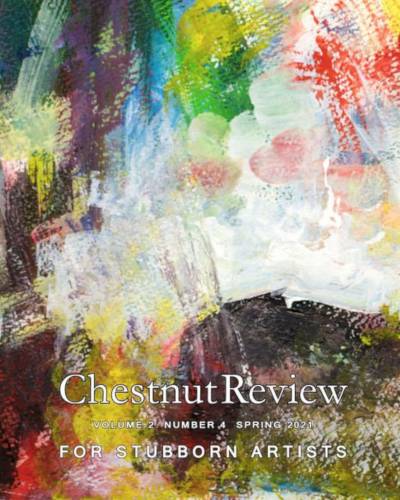
The springtime brings a sense of renewal: feeling the sun beginning to heat up and shedding the cocoon of cold winter nights. Spring offers the opportunity to get out and discover something new. At Chestnut Review, we are also experiencing a turn, a closing of our second volume and anticipating our third. This issue features work by Cutter Streeby, Gretchen Rockwell, Rebecca Poynor, Zackary Medlin, Lorette C. Luzajic, Satya Dash, Fatima Malik, and more. See what else can be found in this issue at the Chestnut Review website.

Beloit Fiction Journal – Spring 2021

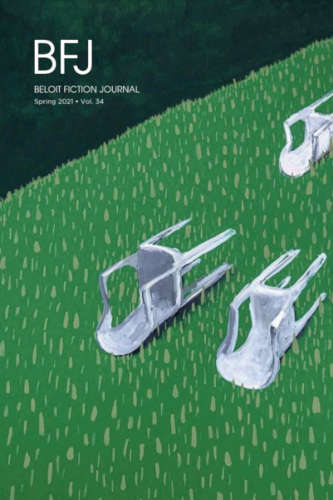
A new issue of Beloit Fiction Journal is out. Contributors to this issue include Sean Williamson, J. T. Townley, Casey McConahay, Andrew Bertaina, Paige Powell, Kathryn Henion, Maura Stanton, Caryn Cardello, Sara Heise Graybeal, Sam Gridley, and more. Read more at the Beloit Fiction Journal website.

Alaska Quarterly Review – Winter 2021

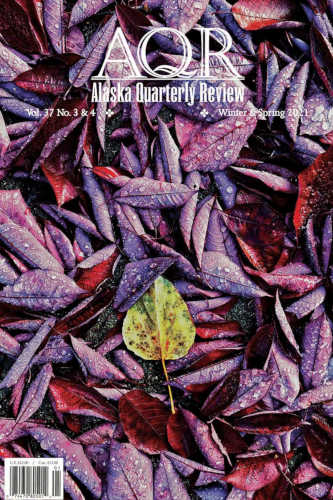
In this issue, find special Memoir as Drama feature “Dialogue Box” by Debbie Urbanski. Also in this issue: stories by Emily Mitchell, Elizabeth Stix, Cara Blue Adams, JoAnna Novak, and more; essays by Emma Hine, Catalina Bode, Nicole Graev Lipson, and Josh Shoemake; and poetry by Emily Nason, Rose DeMaris, Dorsey Craft, and others. Find more contributors at the Alaska Quarterly Review website.

The Power of Fiction

Guest Post by Elle Smith.

Michael Keenan Gutierrez explores the meaning of truth and the power of fiction in his essay “Lies I’ll Tell My Son.” Gutierrez starts the reader grounded in fact. His great grandfather, Red, was a bookie: “This is true.” Then the details of Red’s life grow murkier. The story of Red winning a WWI draft card in a poker game sounds dramatic enough it might have come from a movie. Red’s birth certificates and draft cards have different dates and names. Gutierrez’s uncle proclaims, “They were all a bunch of fucking liars.”

Gutierrez has heard that we aren’t supposed to lie to children “except about Santa Claus and death.” But what is the purpose of the lies that build such fantastic family lore? The tales are in contrast to a more recent generation that lived “the standard formula of work, retirement, and death.” The lore of Red paints the world as “more magical than a paycheck and a mortgage.”

Gutierrez resolves to tell his son the tales of his family and “shade the truth in fiction.” What about the hard truths about life and death? Well, Gutierrez explains: “I’ll let him figure out heaven on his own.”


“Lies I’ll Tell My Son” by Michael Keenan Gutierrez. 805 Lit + Art, February 2021.

Reviewer bio: Elle Smith is a graduate student at Utah State University.

When Gaps Become Story

Guest Post by Mark Smeltzer.

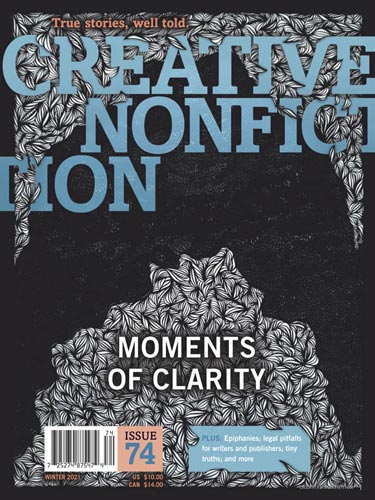
“We don’t know much about Mr. Otomatsu Wada of Unit B in Barrack 14 in Block 63 of the Gila River Relocation Center,” Eric L. Muller admits at the start of his essay, “The Desert Was His Home.” This lack of knowledge does not deter Muller from examining the pain and power of absence, as well as how deep research becomes an avenue for creative discovery.

Throughout this essay, Muller lays out the facts about this one Japanese-American, among many, held prisoner in the U.S. during World War II. Muller uses what little is known of this man to sketch out a rough but potent portrait of his life. Most notable was Wada’s “two-year-old mystery” marked by the refrain “We don’t know” that Muller uses until Wada’s fate is revealed.

This essay demonstrates how seamlessly and naturally a story can incorporate the many don’t knows and can’t knows inevitable in research. It is even possible, as “The Desert” shows us, how the gaps in a subject’s life can become the story. This piece can be found in Issue 74 of Creative Nonfiction.


“The Desert Was His Home” by Eric L. Muller. Creative Nonfiction, Winter 2021.

Reviewer bio: Mark Smeltzer is a graduate student in Utah State University’s English Department. His area of specialization is in poetry.

Chaos Walking Conclusion

Guest Post by Natalie Hess.

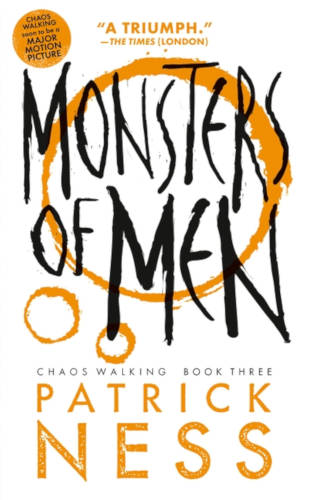
Monsters of Men by Patrick Ness is the conclusion to the Chaos Walking trilogy. Like the second book, this story follows Todd and Viola as they fight to be together, only this time, there is a war between the people and the spackle. We also get to read about the thoughts of a spackle and see their motives and their lives which adds a lot to the story.

The Ask and Answer are still not exactly in agreement, but their fight was put on pause to focus on the spackle. This was quite a bit different from the other two books because most people seemed to actually want peace, instead of just wanting to rule over everyone else. It’s wild how every single character is so trustworthy and suspicious at the same time, and just when you start to actually believe someone’s intentions, they do some significantly bad thing out of nowhere.

Like the other books, there were some parts that were confusing and sections where I just didn’t care what was happening, but there were also parts that were really good and I had to know how things turned out. Ness did a good job of tying up all of the loose ends and giving everyone the ending that suited them in one way or another. If you liked the other books, you’ll like this one too.


Monsters of Men by Patrick Ness. Candlewick Press, 2014.

Reviewer bio: I’m Natalie Hess and I’m simply a high school student who LOVES reading everything from scifi to romance to nonfiction and everything in between. I also love sharing my thoughts and I hope you enjoy!

Buy this book from our affiliate Bookshop.org.

A Gripping YA Sequel

Guest Post by Natalie Hess.

This sequel to Children of Blood and Bone by Tomi Adeyemi was quite gripping as we learned what happened after Zélie brought magic back to the people of Orïsha.

When two groups of people have been fighting for decades, it seems nothing can unite them, even if peace is ultimately what they both claim to want. It is so easy to see how these characters can become so confused by their morals and so easily fooled because of their trust, but it’s very frustrating at the same time. As the reader I just wanted the best for all of these characters at all times but it seemed that something bad awaited them at every corner.

I cannot wait to see how the author ties up these loose ends in the conclusion when it comes out.


Children of Virtue and Vengeance by Tomi Adeyemi. Pan Macmillan, March 2020.

Reviewer bio: I’m Natalie Hess and I’m simply a high school student who LOVES reading everything from scifi to romance to nonfiction and everything in between. I also love sharing my thoughts and I hope you enjoy!

Buy this book from our affiliate Bookshop.org.

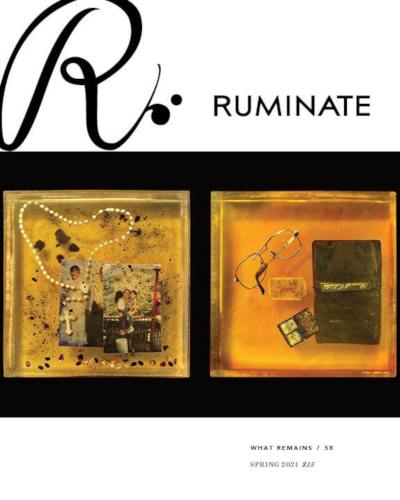
Ruminate – Spring 2021

From the editors: In the face of the immense grief that surrounds us, for this issue Ruminate Magazine editors decided to explore What Remains. “Everything is held together with stories,” writes the acclaimed author Barry Lopez, who died this past year, a few months after the Holiday Farm Fire destroyed his house and archives. “That is all that is holding us together. Stories and compassion.” This issue features the winners of our 2020 Broadside Poetry Prize: Michael Dechane and S. Yarberry.

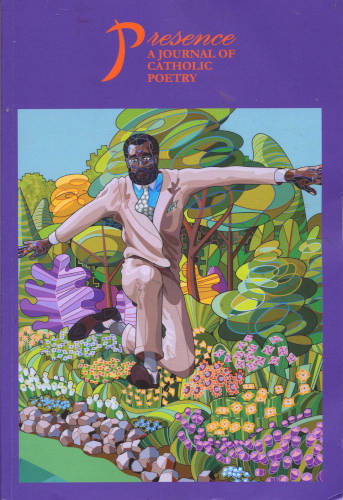
Presence – 2021

With the publication of this 2021 issue comes the fifth anniversary of Presence Journal. Enjoy art by Reginald Baylor and work by featured poet Joseph A. Brown, S.J. Ashaq Hussain Parray translates work by Rehman Rahi and Shahnaz Rasheed. Barbara Crooker, Dante Di Stefano, Linda Nemec Foster, and Mary Ladany celebrate the lives of others in the “In Memoriam” section.

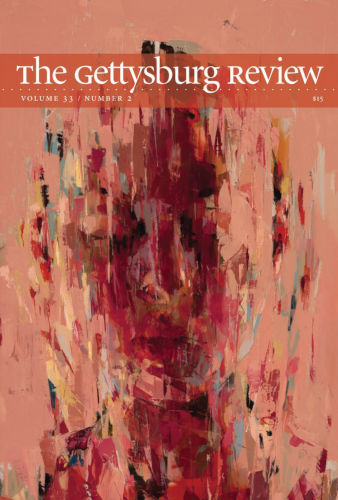
The Gettysburg Review – 33.2

In the latest issue of The Gettysburg Review: essays by Kate Lebo, Chad Davidson, Michele Battiste, Jen Silverman, and Maya Jewell Zeller; fiction by David Crouse, Lilly Schneider, and Melanie Ritzenthaler; and poetry by John Sibley Williams, Alice Friman, Kathryn Smith, and others.

“Cathedrals of Hope” by Lauren Markham

Guest Post by Holly Vasic.

In the 35th-anniversary edition of the San Francisco-based literary magazine ZYZZYVA, Lauren Markham’s essay, “Cathedrals of Hope,” reminisces on the women’s suffrage movement. This piece is timely as 2020 America marked the centennial anniversary of women gaining the right to vote. Markham not only reflects on the women who sacrificed their freedom and endured abuse so that women can vote today but also discusses populations forgotten in the 1920s: men and women of color.

Markham weaves her own narrative into the larger historical picture, describing how her first-time voting was marked with devastation when George Bush Jr. won—again. Markham takes a unique look at where we as Americans are in regard to democracy while commentating on where we came from. Markham writes, “How easy human beings can forget the people who came before us, and the debts we owe.”


“Cathedrals of Hope” by Lauren Markham. ZYZZYVA, 2020.

Reviewer bio: Holly Vasic is a Graduate Instructor seeking a Master’s in Folklore at Utah State University with an undergrad in Journalism.

Plundered Beliefs

Guest Post by Andrew Romriell.

In “White Witchery,” from Guernica, Elissa Washuta offers fierce insight into the varied and complex ways whiteness has plundered Indigenous bodies and beliefs. Here, Washuta offers difficult truths surrounding colonialism and settler violence alongside the strength of her own perseverance.

Growing up in a “heavily Catholic, forest-and-farmland slice of New Jersey,” Washuta found a sincere desire to make magic, to be a witch who “brings change to the seen world using unseen forces.” To Washuta, magic became a way of finding stability within the uncontrollable world surrounding Native women in America, an America where, Washuta describes, “[colonizers whisper] that I’m not wanted here, not worthy of protection, nothing but a body to be pummeled and played with and threatened into submission.” Yet, through magic, her own tenacity, and the communal strength she finds in a women’s spiritual circle, Washuta says, “ My whole body is a fire” and “I have not died yet.”

“White Witchery” grants a rare and vulnerable insight into the capitalistic industry of the United States, the pop-culture surrounding self-care and self-healing, and the internal struggle of surviving a colonized America as a Native woman, a woman with “nothing now but my big aura, my fistful of keys, and my throat that still knows how to scream because no man has succeeded in closing it.” Though the journey Washuta takes us on is not an easy one, it is one of the most compelling, vulnerable, and important ones we can take.


“White Witchery” by Elissa Washuta. Guernica, February 2019.

Reviewer bio: Andrew Romriell is an avid writer, teacher, and student who is passionate about experimental forms, research-based writing, and intersections of genre. Learn more at ajromriell.com.

What the Heart Remembers

Guest Post by Kelsie Peterson.

Catherine Young’s essay, “In That River I Saw Him Again,” published online in November 2020 by Hippocampus Magazine, reads like a coal train passing by you. It is full of glimpses of beauty and wonder, as well as the past, with a poetic through line that moves like the “shadows” Young describes. Using the imagery of coal trains from her childhood, photographs, and early motion pictures, Young’s essay wonders at the idea of memory, of life, and of those lost in her childhood.

The central question running through this essay is, “What can the heart remember? Young invites readers to discover an answer with her as moving pictures first allow her father to come alive once more, and then ultimately, her uncle. Young’s writing offers a unique and engaging perspective on the life of memory.

What engaged me most as a reader was this piece’s inventive use of engaging imagery and repetition of poetic meditations. The reading experience mirrored that of a train passing or of the flicker of the early motion picture. The flashes of ideas flowed together in a truly unforgettable piece.


“In That River I Saw Him Again” by Catherine Young. Hippocampus Magazine, November 2020.

Reviewer bio: Kelsie Peterson is completing her last semester at Utah State University and will graduate with her MS in English.

A Portrait of Perspective

Guest Post by Padmaja Reddy.

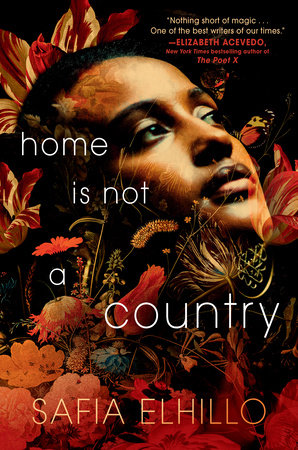
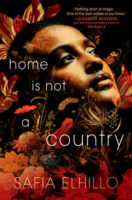
Safia Elhillo’s Home is Not a Country is a novel in verse with beautiful poems about Nima, her mama, her baba she has never seen, and the better and beautiful version of herself.

She opens with talking about the photographs in a lifetime before her and when her parents were not yet parents. She knows about her father through the photographs everywhere in their house including the one in her mama’s wallet.


Her verse captivates in narrating her life in suburban America, the land still foreign to her mama, her only friend Haitham, her school, Arabic classes.

Her name is supposed to be ‘Yasmeen’ not ‘Nima’ which means grace. And she believes she is not a graceful girl quite contrary to her name.

She echoes her mama’s grief over the loss of her father and a lost world where she would be happier.

I miss him too          my father            though we never met

I miss the country that I’ve never seen the cousins

& aunts & grandparents I miss the help

They could have offered

When she is bullied and called a terrorist, she questions mama: ‘why did you bring us here? they hate us’ and spills the desire to have her baba or someone to protect her, a common notion shared by all immigrant children about their parent’s decision to migrate leaving homeland.

Elhillo’s poetry elegantly captures how the questions about where we come from can take over our life. It’s a portrait of perspective, which holds up a mirror to show that ultimately, we are telling our own stories, and we can choose to see them differently.


Home Is Not a Country by Safia Elhillo. Make Me a World, March 2021.

Reviewer bio: Padmaja Reddy, originally from India, lives in Connecticut. She received an MA in English Literature from SK University. Former journalist and she published poetry and book reviews in various publications like Yale Review of Books, NewPages.

Buy this book from our affiliate Bookshop.org.

Blue Desert: Historical Fiction for Avid Readers

Guest Post by Sherri A. Wilkinson.

Alice, a young eighteen-year-old British woman, moves to Africa with her family in 1910, where they live through the fallout of the war (World War I). After an auto accident, Alice finds herself living among the Tuareg tribe in the Sahara Desert. She then has to re-enter British society seven years later, a changed woman. When she receives a telegram in her senior years (age 78, set in 1970) her secrets are revealed.

The story moves at a steady pace alternating between 1910 and 1970; her life in the desert is remembered as well as her current situation. As an older woman, we see how her early years have affected her. The story takes place in about one week’s time, but there is a lot we learn, with a lot of family drama. I was fascinated about the Tuareg culture and how Alice adapted.

Overall I enjoyed Blue Desert and recommend to avid readers.


Blue Desert by Celia Jeffries. Rootstock Publishing, April 2021

Reviewer bio: Sheri A. Wilkinson is an avid reader and reviewer from Princeton, Illinois. She is a longtime member of LibraryThing.com, where she has reviewed over 1000 books.

Buy this book from our affiliate Bookshop.org.
Event :: Study Online with The Constellation, A Place for Writers

yellow start with blue text on a white background saying The Constellation A Place for Writers

Study Online with Great Writers Who Are Also Great Teachers

Deadline: Year-round
Location: Virtual
The Constellation, A Place for Writers provides innovative, online creative writing workshops that inspire, instruct, nurture, and challenge. Our acclaimed instructors offer classes in short fiction, novel, essay, memoir, poetry, children and young adult, literary translation, publishing, and hybrid forms. We host sessions for writers at all levels. The brainchild of award-winning and bestselling author Connie May Fowler, The Constellation is a global community of writers who support and elevate each other as they engage in the important work of honing their art and craft. In addition to workshops, The Constellation mentors weekly free prompts, write-ins, and more. Workshops begin this May.

Stay Caught Up! NewPages Newsletter Now Available Online

That’s right. You can now access the full archive (for 2021 at least) of our weekly newsletters online on our blog! This is great if you don’t necessarily want to subscribe to yet another newsletter, but we highly recommend you do! It’s free after all. You can also easily find and access our monthly digital eLitPak newsletters, too. Enjoy! And, again, don’t forget to subscribe to get first access to everything.


Get Happy with Lawson

Guest Post by Natalie Hess.

This book was absolutely phenomenal and it was a 5-star read! It dealt with mental health, specifically anxiety and depression, in such a fun way. I burst out laughing so many times that people would actually give me weird looks or ask what was happening. Jenny Lawson is just so funny and she somehow combines this humor with her terrible experiences to create the intriguing, hilarious, inspiring masterpiece that is Furiously Happy. There are lighthearted parts, and there are parts that are really serious and it all balances out perfectly.

This book did leave me with more questions than answers, but it definitely made me think about how “normal” my life seems compared to hers. I also learned that both of those lives are perfectly acceptable.

To anyone who is struggling with mental health, this could definitely help you, and even if it doesn’t you will probably still enjoy it nonetheless. I know I did.


Furiously Happy: A Funny Book About Horrible Things by Jenny Lawson. Flatiron Books, February 2017.

Reviewer bio: I’m Natalie Hess and I’m simply a high school student who LOVES reading everything from scifi to romance to nonfiction and everything in between. I also love sharing my thoughts and I hope you enjoy!

Buy this book from our affiliate Bookshop.org.
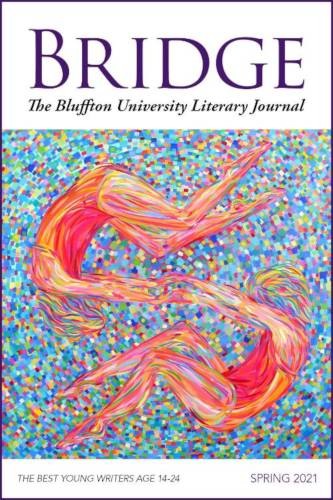
Bridge – Spring 2021

The Best Young Writers Age 14-24. These young writers and artists are deeply engaged—both with timeless themes and with their contemporary iterations and manifestations. Fiction by Michaela Crawford, Mac Bowers, Jonah Bradenday, Jacob C. Connerly, and Alexa Bocek. Nonfiction by Jessica Baker. Find more contributors at the Bridge website.

New England Review – 42.1

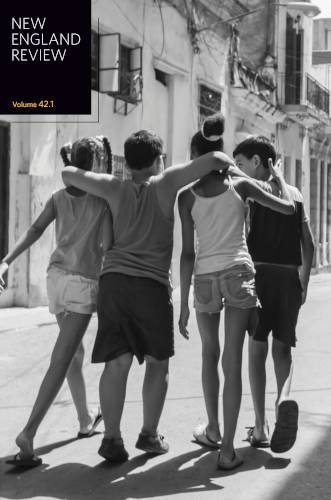
New design. New writing from Cuba. New essays, stories, and poems—from Susan Daitch, Carl Dennis, Matthew Lansburgh, Charif Shanahan, and more. In our long-awaited translation feature of new writing from Cuba, you’ll find “hyper-real, speculative, socio-politically explicit, photographically existential, and experimental forms,” says translator Katerina Gonzalez Seligmann in her introduction. Read more at the New England Review website.

Plume – April 2021

For this month’s Plume featured selection, Nancy Mitchell interviewed five Poet Laureates: Tina Chang, Elizabeth Jacobson, Paisley Rekdal, Levi Romero and Laura Tohe. In nonfiction: “Correspondence In The Air” by Ilya Kaminsky and “Twilight of the Theorists” by Doug Anderson. Andrea Read reviews Steven Cramer’s Listen.

Southern Humanities Review – 54.1

Nonfiction by Jade Hidle and Emily Waples; fiction by Remy Barnes, Christine Ma-Kellams, Raquel Olive, and Keija Parssinen; and poetry by John Blair, Asa Drake, Giles Goodland, Aiden Heung, Patrick Holian, Avery K. James, David Klose, and Rooja Mohassessy. Find more info at the Southern Humanities Review website.

The Writing Disorder – Spring 2021

The Spring 2021 issue of The Writing Disorder features fiction by Alison Bullock, Jennifer Makowsky, Robert Collings, Wendy Maxon, and more; poetry by R.T. Castleberry, Nicholas Karavatos, Mark DuCharme, Natasha Sharma, Hana Jabr, and John Tustin; nonfiction by Katy Wright, Riley Winchester, and Donna D. Vitucci. Art by Stewart Francis Easton.

Sweetness of Honey

Guest Post by Christopher Nicholson.

The best friend I ever had was my dog Milo. He offered the best kind of love—not unconditional but predicated on the most reasonable conditions. I had to earn his love and could feel good about that, but he didn’t expect me to be perfect. This sensation is nothing new to most people who have had a pet.

In “Honey, I’m Home: Beyond the Rescue Door,” published in the Fall/Winter 2020-2021 edition of Magnets and Ladders, Bonnie Blose reminisces on sharing such a love with the titular cat, Honey, who found her at a local rescue shelter and chose her immediately. Honey had some traumatic experiences in her past that affected her behavior and didn’t make her an easy pet. Blose committed from the very beginning to give her the love she needed, no matter what, for however much time they had together. She did exactly that.

Blose extols her cat’s intelligence and emotion, painting her as almost human—or as Blose would insist, better than human. This is also a relatable mindset for me and other past or present pet owners. They are not mere accessories; they are our friends, our family, our confidantes. Honey shows as much personality in the story as any human character, and one senses that it’s true to life, that Blose isn’t just anthropomorphizing her for dramatic purposes.

Magnets and Ladders is an online magazine for writers with disabilities, and this story won first place in the nonfiction category of the National Federation of the Blind Writers’ Division’s 2020 contest, so the author’s disability is a constant subtext without ever being stated outright in the story. One gets the impression that Blose needed Honey as much as Honey needed her, that their relationship was symbiotic in a way. Many people are so preoccupied with finding romantic companionship to “complete” themselves that they overlook the potential of pets—but in this time when human connection is so limited, they may rediscover an appreciation for the one-of-a-kind bonds that animals can offer.

Take a few minutes, open your heart, and give this story a chance.


“Honey, I’m Home: Beyond the Rescue Door” by Bonnie Blose. Magnets and Ladders, Fall/Winter 2020-2021.

Reviewer bio: Christopher Nicholson is an English 1010 instructor and Creative Writing graduate student at Utah State University. He writes and blogs about all kinds of things at https://www.christopherrandallnicholson.com.

Mortality and Motherhood

Guest Post by Mia Jensen.

“When the butterfly struggles out of its pupa, for three long hours its wings are wet and as utterly useless as a newborn’s hands.”

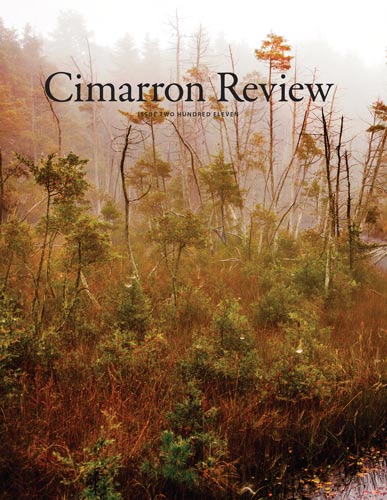
In “Life Inside,” found in Issue 211 of Cimarron Review, author Caroline Sutton contemplates the limitations of mortality and motherhood amid the upcoming birth of her first granddaughter. Sutton ingeniously weaves the eager experiences of her pregnant daughter with the vulnerable life cycle of monarch butterflies and their fruitless efforts for survival in a hostile world.

Reflecting on her own complicated pregnancy decades before, Sutton likens the near loss of her infant to the toxic consumption of milkweed leaves. Monarch mothers lay eggs on milkweed plants and milkweed plants alone, for when monarch larvae ingest the plant’s toxic properties, predators avoid the black and yellow creature. Sutton thinks back to her traumatic delivery and questions her blind trust during the delivery, her assumptions that everything would be alright because it always was, because mothers always offered protection. But, in a world strung with chaos and turmoil, perhaps there are some obstacles a mother cannot predict.

Sutton concludes by comparing her daughter’s upcoming delivery with a caterpillar’s metamorphic emergence. Rather than reflecting on the cliché symbol of hope, Sutton contemplates the feebleness of the new creature. Its wings, wet, useless, and unable to defend against predators looking to “attack and devour the butterfly, toxins and all, before the wings ever open fully.” Although monarch mothers provide protection from larvae to pupa, they cannot predict the perils awaiting beyond the chrysalis.


“Life Inside” by Caroline Sutton. Cimarron Review, Spring 2020.

Reviewer bio: Mia Jensen is a graduate student at Utah State University studying creative writing. She loves horror novels, trail running, and her Australian Shepherd.

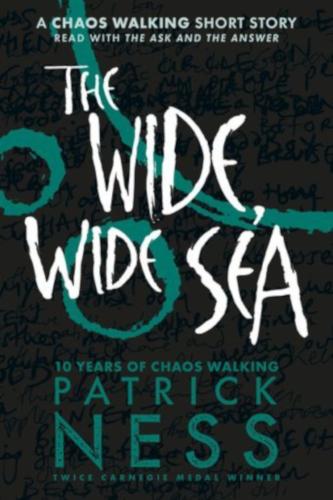
“The Wide, Wide Sea” by Patrick Ness

Guest Post by Natalie Hess.

Patrick Ness’s “The Wide, Wide Sea” is a short story from the Chaos Walking series that takes place before the start of the first book, but is meant to be read between the second and third.

I am a sucker for a good forbidden love story and this one did not disappoint. The main character is a human who has fallen in love with a spackle, and they have such a wholesome story in such a gruesome place. Realistically, I don’t think any of the plot twists were super unpredictable, but I personally did not see any of them coming and that was such a roller coaster of events coming out of nowhere. Not to mention how loveable the characters were despite the fact that the story was less than 40 pages long.

This was an extremely enjoyable story and I gave it 4.75 out of 5 stars.


“The Wide, Wide Sea” by Patrick Ness. Walker Books, 2018.

Reviewer bio: I’m Natalie Hess and I’m simply a high school student who LOVES reading everything from scifi to romance to nonfiction and everything in between. I also love sharing my thoughts and I hope you enjoy!

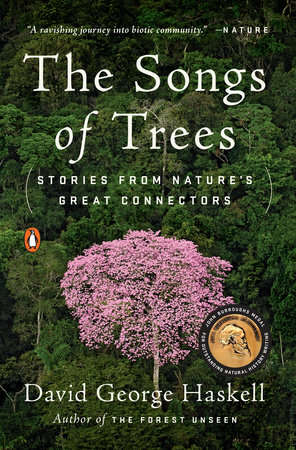
Listen to ‘The Songs of Trees’ with David George Haskell

Guest Post by Carolyn Dille.

How many tree whispers and shouts can you hear? How many mysteries and histories are there in wood and water, bird and human, ice and insect? How much do you like to travel? Go with George David Haskell to explore these questions and many others. He takes us far beyond tree rings and photosynthesis, far below roots and above crowns, though we visit those too when we read of his forest adventures around the world as a researcher and teacher of biology and environmental studies.

Listening to Haskell’s lush language, alive with many forest voices—maples and green ash in suburbs and forests, and Sabal palm forest in Georgia dunes—we attune to the wonders of our own senses of sound and touch and sight. Trees have developed their own suite of senses: They sense when water is fresh or salt and know how much to take up and conserve. How to shorten and wax-coat leaves in dry climates.

We meet individual trees and hear their rhythms throughout a year and into their afterlife. That afterlife is part of the larger symphony of nature, where the sounds and touches and sights include every sentient creature’s life and afterlife.

From an Amazon forest preserve in Ecuador where the ceibo tree is a living deity, through Echizen, capitol of Japanese artisan wood paper, with stops in New York City to listen to street trees, to the Florissant Fossil Beds in southern Colorado, and to other places with their own tree songs, Haskell writes the music of trees in a language that allows us to tune into the symphony of terrestrial life.


The Songs of Trees: Stories from Nature’s Great Connectors by David George Haskell. Penguin Random House, April 2018.

Reviewer bio: Carolyn is a poet and a Soto Zen priest who leads art and meditation retreats and workshops. She lives in Santa Cruz, California.

Buy this book from our affiliate Bookshop.org.
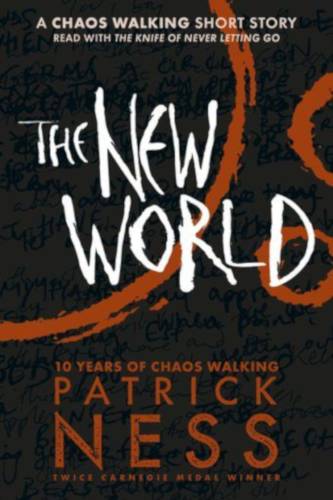
Ness’s “The New World”

Guest Post by Natalie Hess.

“The New World” is a short story and prequel to the Chaos Walking series by Patrick Ness. It follows Viola as she first travels from her beloved home ship in space to the new planet where her people are trying to find a new place to call home as their old planet is being slowly destroyed.

It was definitely very strange to read about this being described as such a big opportunity for all of these people, but for Viola to be so against the idea of being the first one to go to this place because of the risks it involved. Her negative attitude throughout the whole story was very obnoxious but relatable at the same time, and the ending made me question my judgement of her throughout the story even more.

This was quite a fun read, and I enjoyed learning about some of Viola’s background. I gave this one 3.75 out of 5 stars.


“The New World” by Patrick Ness. Candlewick Press, September 2010.

Reviewer bio: I’m Natalie Hess and I’m simply a high school student who LOVES reading everything from scifi to romance to nonfiction and everything in between. I also love sharing my thoughts and I hope you enjoy!

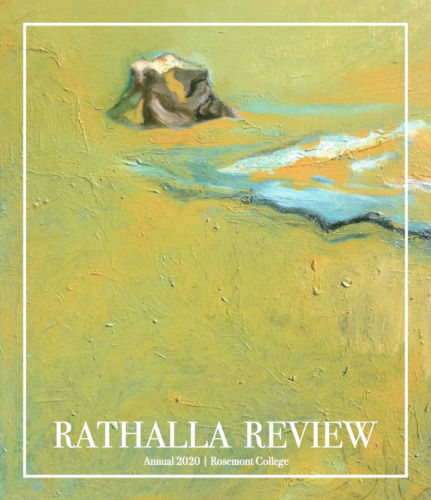
Rathalla Review – 2020

This annual issue of Rathalla Review is comprised of the best work from the Spring and Fall issues during the pandemic. In these pages, we showcase the best poems, essays, stories, and art we received during a time when all our lives were changing. Gale Acuff, Jay Julio, Bina Ruchi Perino, David Wright, and more.

The Shore – Spring 2021

The spring issue of The Shore is bursting with breathtaking poetry by Dana Blatte, Jessica Poli, Matthew Tuckner, CD Eskilson, Dakota Reed, Kelsey Carmody Wort, Martha Silano, SK Grout, Hilary King, Babo Kamel, Noa Saunders, Jeremy Michael Reed, Lucy Zhang, C Samuel Rees, Becki Hawes, Kevin Grauke, Jenny Wong, Steven Pfau, Ashley Steineger, Danielle Pieratti, Eric Steineger, Farnaz Fatemi, Scarlett Peterson, Sarah Elkins, Katie Holtmeyer, Robert Fanning, Jean Theron, Heidi Seaborn, Caroline Riley, Sarah Stickney, David Keplinger, Nwuguru Chidiebere Sullivan, Tara A Elliott, Laren Mallett, Richard Prins and Sam Sobel. It also features dazzling art by Joshua Young.

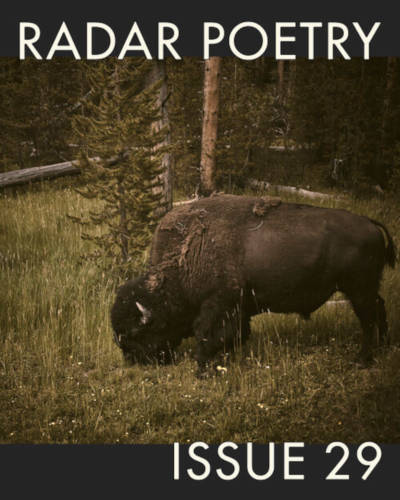
Radar Poetry – No. 29

Radar Poetry’s newest issue features poetry by Geula Geurts, Despy Boutris, K. D. Harryman, Jennifer Beebe, Marietta Brill, Kathryn Haemmerle, Michelle Menting, Julia Paul, Amanda Chiado, Jane Zwart, Meggie Royer, Claudia Acevedo-Quiñones, Janine Certo, Cynthia White, Rachael Inciarte, Josh Exoo, Casey Patrick, and Ruth Dickey, as well as accompany art by artists such as Ethan Pines, Tema Stauffer, Lava Munroe, Honour Mack, and more.

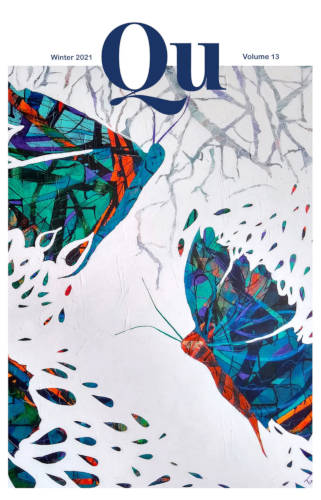
Qu – Winter 2021

This issue of Qu features “Rogue Valley” by Midge Raymond, “Social Studies” by Stephany Brown, “The Summer of Disappearing Moms” by Kristin Gallagher, “Brooklyn” by Roy Bentley, “survival float” by Rachael Gay, “Touch Starvation” by Rachael Gay, “Last Seen Leaving Campus with Unnamed Male” by Mary Wolff, “A Marriage of Lies and One Truth” by Mary Wolff, and more.

The Fiddlehead – Winter 2021

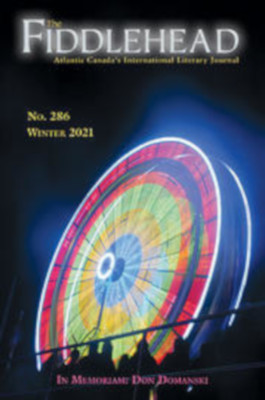
The Winter 2021 issue of The Fiddlehead features creative nonfiction by Chafic LaRochelle, Jen Ashburn, and Emira Tufo; fiction by Elise Thorburn, Liz Johnston, Dylan Taylor, and more; and poetry by Don Domanski, Rosebud Ben-Oni, Phoebe Wang, Keith Taylor, Rose Maloukis, LN Woodward, Monica Rico, and more.

“She” by Grace Camille

Guest Post by Tyler Hurst.

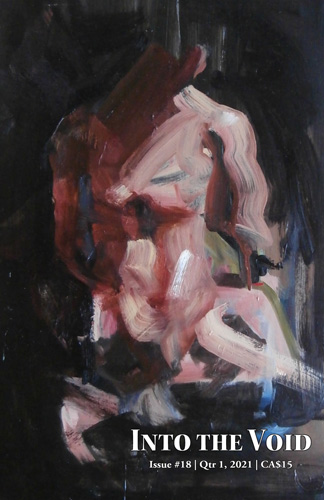
In “She,” published in Issue 18 of Into the Void, author Grace Camille begins with an inventory of the things that the she has chosen to hold onto. Through the memories the objects invoke, we are introduced to the narrator’s own addiction, a need to belong, to be a part of something and to nurture “a proper addiction” that “began as a Hail Mary plan to be accepted by sleek, serious coworkers.”

Camille’s loneliness becomes our loneliness through the use of the third person, creating an emotional distance from events that still allows the reader to recognize. When she meets “him,” he makes her feel needed, wanted. When he leaves for the Peace Corps, the world becomes one of routines. “She jogs in the evenings, washes her hair weekly, flosses daily, eats sometimes,” and the list goes on. One-hundred-and-three days later, she’s still wishing after him, remembering him and longing for what she cannot hold. While she “reaches for his hand,” he is “reaching for a firefly,” revealing the futility of trying to hold onto that which does not wish to be held.


She” by Grace Camille. Into the Void, 2021.

Reviewer bio: Tyler Hurst is a graduate student at Utah State University studying creative writing while completing his last semester there.

Explorations of Pain

Guest Post by Kayla Berryman.

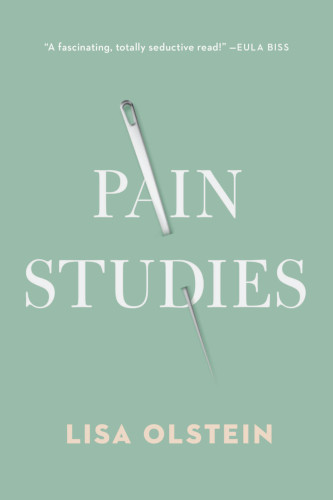
In Pain Studies, published in 2020 by Bellevue Literary Press, Lisa Olstein explores her relationship between pain and chronic migraines with the simple statement that “all pain is simple. And all pain is complex. You’re in it and you want to get out.”

From there Olstein takes readers through the explorations and complexities of pain by connecting pain to language, medical dramas, translations, and surprisingly, Joan of Arc. Readers will see echoes and references of Eula Biss’s lyric essay “The Pain Scale,” as well as references to the works of the poet and translator Anne Carson, among other poets. Olstein asks readers to consider migraine as “a particular version of the present. What happens when its present becomes yours for extended periods of time, for a significant portion of your life?”


Pain Studies by Lisa Olstein. Bellevue Literary Press, March 2020.

Reviewer bio: Kayla Berryman is a graduate student at Utah State University.

Buy this book from our affiliate Bookshop.org.
The Masters Review Announces Inaugural Chapbook Award Finalists & Winner

The Masters Review has announced the finalists and winner of their inaugural Chapbook Award judged by Steve Almond. The winning manuscript is Masterplans by Nick Almeida. His chapbook is set to be published in the fall.
Finalists were Deep Blue by Jay Allison and Oscillations by Tanya Perkins.

Don’t forget their Anthology Contest closes to entries on March 28 at midnight PST.