Home » NewPages Blog » Page 55

NewPages Blog

At the NewPages Blog readers and writers can catch up with their favorite literary and alternative magazines, independent and university presses, creative writing programs, and writing and literary events. Find new books, new issue announcements, contest winners, and so much more!

Able Muse Translation Special Reading 2022

Able Muse Press Authors: Lee Harlin Bahan, Jan D. Hodge, John Ridland

Able Muse is pleased to announce a special reading taking place February 19, 2022 from 3 to 4:30 PM EDT. It will feature poets and translators Lee Harlin Bahan, Jan D. Hodge, and John Ridland with Len Krisak acting as host.

The reading will take place via Zoom and it’s open to the general public and free to register. Find full details and the registration information here.

The Everyday Life of Cyclops

Guest Post by Kevin Brown.

Cyclopedia Exotica, the latest graphic novel by Aminder Dhaliwal, begins as a series of encyclopedia entries explaining how cyclops (or cyclopes, spelled both ways throughout the work) and Two-Eyes have interacted over time. Dhaliwal imagines a world where cyclops not only exist, but their history has combined with those of the Two-Eyes, referencing mythological works, but planting this relationship directly in the contemporary world.

Continue reading “The Everyday Life of Cyclops”

Flying High with John Gillespie Magee

Guest Post by Laura Bridge.

“High Flight” by John Gillespie Magee (1941) is a special poem that I discovered at just the right moment. It was March 2020. In the UK, schools were preparing to close due to Covid-19. I was supposed to be teaching my class of eleven-year-olds about the Second World War, but the children were anxious and restless; I did not want to add to their worries. In a frantic panic to find something uplifting but still on topic, I came across Magee’s sonnet. It was the perfect combination of energy and hope. 

Continue reading “Flying High with John Gillespie Magee”

Don’t Miss This Debut Novel

Guest Post by Alexandra Grabbe.

Olga Dies Dreaming is a tour de force. Xochitl (pronounced So-Cheel) Gonzalez has ticked off all the boxes—Literary, Commercial, Family Saga, LBGTQ, BIPOC. The tight prose moves as efficiently as Spielberg’s West Side Story dancers.

Continue reading “Don’t Miss This Debut Novel”

Buschi’s Paddock

Guest Post by David Ruekberg.

In Paddock images circulate like wavelets confronting an embankment, reshaping constructions we thought of as solid. There are two girls, or two sides of one girl. An omniscient but distant chorus. A mother, both dead and alive: a ghost but not a zombie.

Continue reading “Buschi’s Paddock”

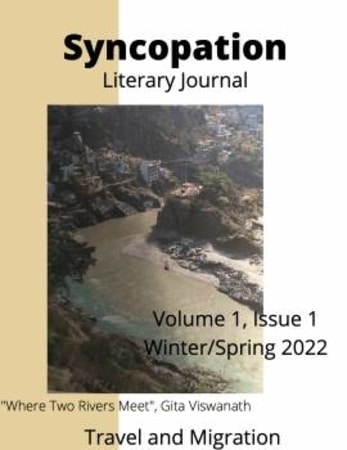
Sponsored :: Magazine Stand :: Syncopation Literary Journal – Vol. 1 No. 1

Syncopation Literary Journal amalgamates the realms of literature and music. Volume 1, Issue 1 is now available to read on the website for FREE! The first issue contains book excerpts, poetry, creative nonfiction, short stories and flash fiction penned by writers and musicians from around the world. Titles of pieces in issue include: “The First Time I Heard Leonard Cohen”, “Memphis, Tennessee”, and “I’ve Got the Blues.”

Visit the Syncopation Literary Journal website for more information.

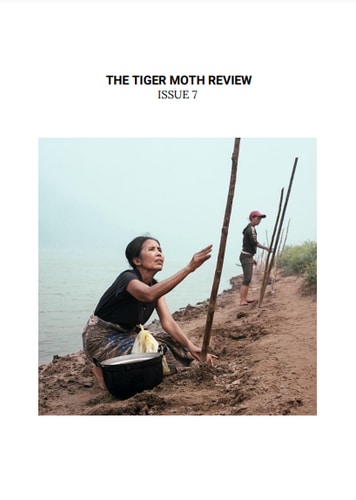
Tiger Moth Review – No. 7

Issue 7 is one of our more spiritual issues. Work by Tim Moder, Preeth Ganapathy, Bryan Joel Mariano, Christine Oberas Aurelio, Izzy Martens, Kali Norris, Claire Champommier, Natalie Foo Mei-Yi, Chrystal Ho, Brittany Nohra, Vanessa Hewson, Justin Groppuso-Cook, Zarina Muhammad & Zachary Chan, DH Jenkins, Andrew Vogel, Shilpa Dikshit Thapliyal, Art Ó Súilleabháin, and more.

More info at the Tiger Moth Review website.

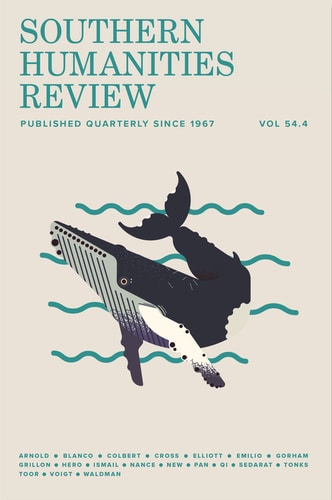
Southern Humanities Review – Vol. 54.4

In the latest issue: nonfiction by Philip Arnold and Sarah Gorham; fiction by Jerome Blanco, Michael Colbert, Evan Grillon, Eliamani Ismail, and Pardeep Toor; and poetry by Rebecca Cross, Chiyuma Elliott, Grego Emilio, Claire Hero, Sarah Nance, Carolina Harper New, Steven Pan, Jenny Qi, Roger Sedarat, Benjamin Voigt, and D.S. Waldman.

More info at the Southern Humanities Review website.

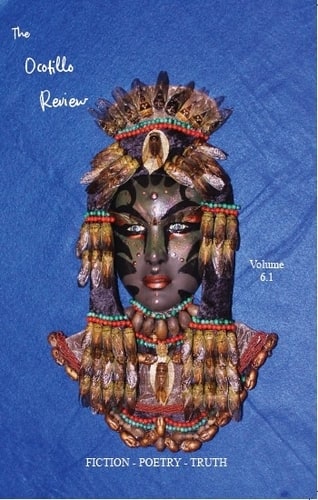
The Ocotillo Review – Winter 2022

The latest issue of The Ocotillo Review is a spiritual experience to release you from the doldrums of social isolation. 43 poets and writers, previews of upcoming releases, winning entries from the “J. Darling” and “CB Himes” contests. Something for everyone in 170 pages of moving literary art for your enjoyment.

More info at The Ocotillo Review website.

High Desert Journal – Winter 2022

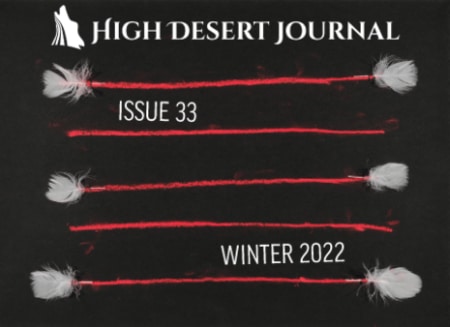
Featuring: Sandra Dal Poggetto, Rick Newby, Frances Stilwell, Scott Hartman, Zachary Ostraff, Suzanne Strazza, Emily Withnall, Brooke Williams, L. Barthule, Hillary Behrman, Camille Meder, Leath Tonino, Zoe Boyer, Lorri Frisbee, Talley Kayser, & John Yohe. More info on this issue at the High Desert Journal website.

The Dillydoun Review – No. 12

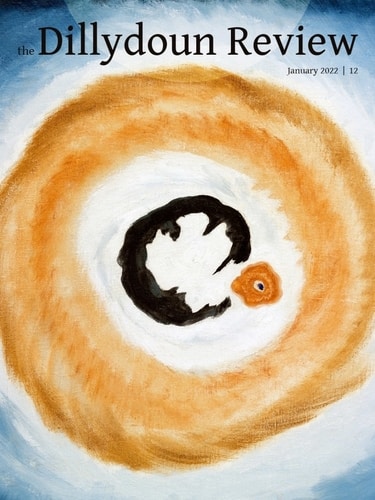
Short stories by Bobby Mathews, Kevin Joseph Reigle, Sidney Wollmuth, and L.M. Wright; flash fiction by Cameron Bocanegra, flash nonfiction by Siavash Saadlou; poetry by Dale Cottingham, Candice Kelsey, Eric v.d. Luft, Gary Reddin, and Nancy White, and one prose poem by Stephanie Michele.

More info at The Dillydoun Review website.

Chestnut Review – Winter 2022

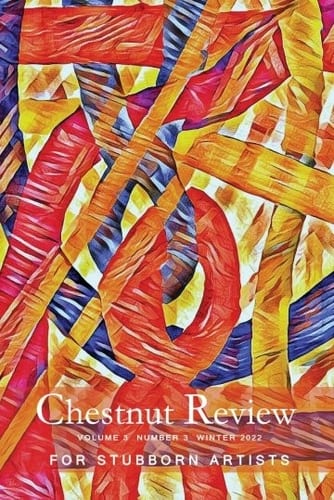
The Winter issue is out! With fresh and exciting prose, poetry, and visual art by Jules Chung, Emily Anderson Ula, Elizabeth Lee, Richard Vyse, Dabin Jeong, darius simpson, Anuja Ghimire, Leah Fairbank, Christy O’Callaghan, Robert S. Hillery, Emily Wick, Joy Guo, Luke Wortley, Ernest O. Ògúnyẹmí, Maxine Stoker, Yanita Georgieva, Susanne Swanson Bernard, Tommy Dean, Kolbe Riney, Hikari Miya, Chiwenite Onyekwelu, Cressida Blake Roe, Diana Donovan, Melissa Lomax, Joshua Beggs, Huan He, Mackenzie McGee, and Joshua Effiong.

More info at the Chestnut Review website.

Baltimore Review – Winter 2022

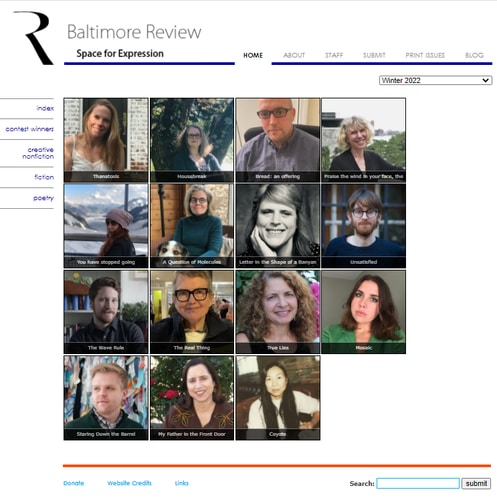
The Winter 2022 issue of Baltimore Review features creative nonfiction by Lucinda Cummings, Patricia Dwyer, Dan Hodgson, and contest winner Daniel Rousseau; fiction by Ross McCleary, Evan Brooke, Nicholas Otte, Mariah Rigg, and contest winner Robin Tung; and poetry by Francine Witte, Sara Henning, Rose Auslander, Stephanie McCarley Dugger, Lisa Suhair Majaj, and contest winner Aekta Khubchandani.

Head on over to Baltimore Review‘s website to read the Winter 2022 issue.

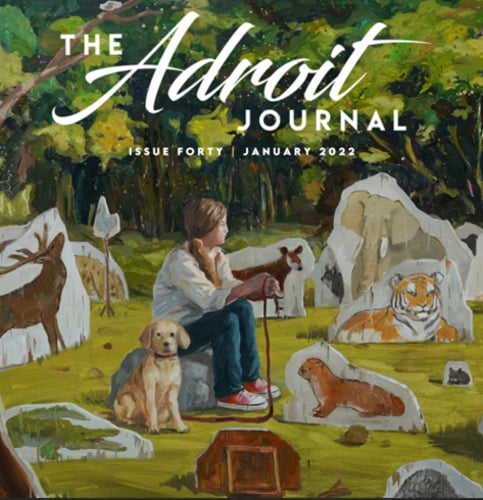
The Adroit Journal – No. 40

In this issue of The Adroit Journal, find poetry by Chen Chen, Eugenia Leigh, David Ehmcke, Sarah Fatimah Mohammed, Melissa Cundieff, Rose Alcalá, Monica Gomery, Gustav Parker Hibbett, Arielle Kaplan, Patrick Donnelly, Mark Kyungsoo Bias, Rick Barot, and more; prose by Kim Fu, Erin Sherry, Alyssa Asquith, Marcus Ong Kah Ho, Daniel Riddle Rodriguez, and Ann-Marie Blanchard; and art by Kathy Morris, Jack Jacques, Claire Hahn, Scarlett Cai, and others.

Plus five interviews that you can learn more about at The Adroit Journal website.

Frontier Poetry 2021 Award for New Poets Winner

Congratulations to the winner of Frontier Poetry‘s 2021 Award for New Poets. This year’s judges were Rosebud Ben-One, Andrés Cerpa, and Mai Der Vang.

Winner
“a sonnet: a slaughter field” by Chibuihe Obi Achimba

Second Place
“Herma” by Samuel Piccone

Third Place
“Ashes Arts and Crafts” by Emily Hyland

You can read the poems at Frontier Poetry‘s website.

Creative Nonfiction Spring 2022 Online Classes Announced

Creative Nonfiction has announced its lineup of Spring 2022 online writing classes. Don’t forget that subscribers to their journal receive a 10% discount for their online classes and webinars!

They are offering a nice mix of beginner, intermediate, and advanced courses.

Continue reading “Creative Nonfiction Spring 2022 Online Classes Announced”

New 5-in-5 Interview at Glass Mountain

Glass Mountain has a new 5-in-5 interview up at their website. This interview series features five questions answered in five minutes by established writers.

Big Poppa E was interviewed this week, and the questions asked were:

  • What work (by someone else) do you wish you had written?
  • If you could tell your young writing self anything, what would it be?
  • Which book have you reread more than any other?
  • What are some common “traps” writers should look out for?
  • If you didn’t write, what would you do for work?

Stop by Glass Mountain‘s website to see Big Poppa E’s answers.

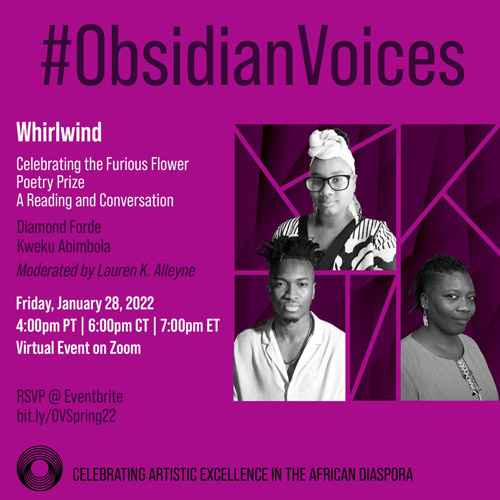
#ObsidianVoices Spring 2022 Events

Obsidian: Literature & Arts in the African Diaspora has announced its first #ObsidianVoices Spring 2022 events.

They are kicking off the new year on January 28 at 6PM CT with Whirlwind, a reading and conversation celebrating the Furious Flower Poetry Prize published in Obsidian 46.2. The event will be moderated by Lauren K. Alleyne and will feature Diamonde Forde and Kweku Abimbola.

Next, circle February 11 in your calendar. At 6PM CT they will be hosting a reading and conversation celebrating Obsidian 47.1. This event will be moderated by Sheree Renée Thomas and Nandi Comer and will feature Trace DePass, Aris Kian, MARS Marshall, Olufunke Ogundimu, & Ronda Racha Penrice.

These events are free and open to the public, but you do have to RSVP to receive the Zoom link.

Don’t forget to follow their website for more events and to RSVP.

Stories to Savor

Guest Post by Alexandra Grabbe.

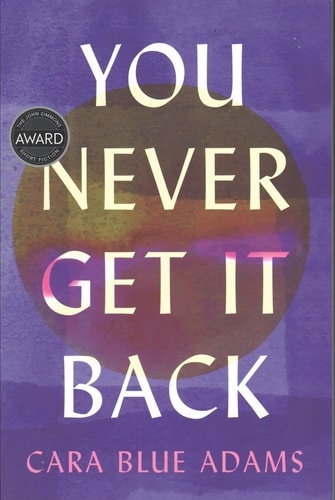
Many of the stories in Cara Blue Adams’s debut short story collection appeared in prestigious literary magazines. Readers follow a protagonist named Kate through her early twenties. She attends a New Year’s Eve party with postgrads in Cambridge, MA, socializes with a pushy former roommate, moves west to pursue a job opportunity, muses over the decision to discontinue a relationship with a married man, spends three days at the beach with her mom and sister. Nothing very monumental or out of the ordinary and yet the prose captivates, earning Adams both the John Simmons Award for Short Fiction and an Editor’s Choice pick from the New York Times.

Kate Bishop becomes Everywoman. She experiences heartbreak and joy and the everyday ennui that many readers will recognize from the same period of their lives. The collection begins with a gem in which Adams personifies loss, introducing a recurring theme. Read these stories slowly and savor them like fine wine.  


You Never Get it Back by Cara Blue Adams. University of Iowa Press, 2021.

Reviewer bio: Alexandra Grabbe has worked as an innkeeper, a lyricist, and a relocation consultant in Paris. For her most recent essays and stories, visit Alexandragrabbe.com.

NewPages Book Stand – January 2022

The first Book Stand of 2022 is here! Stop by and learn about this month’s featured titles below.

In Ante body, Marwa Helal explores how the psychological impacts of migration and complex traumas manifest as autoimmune disease as she critiques the ongoing unjust conditions that brought on the global pandemic. 

Mr. Potato Head vs. Freud by Clint McCown, has been called “as entertaining as it is instructive. And boy, is it instructive.”

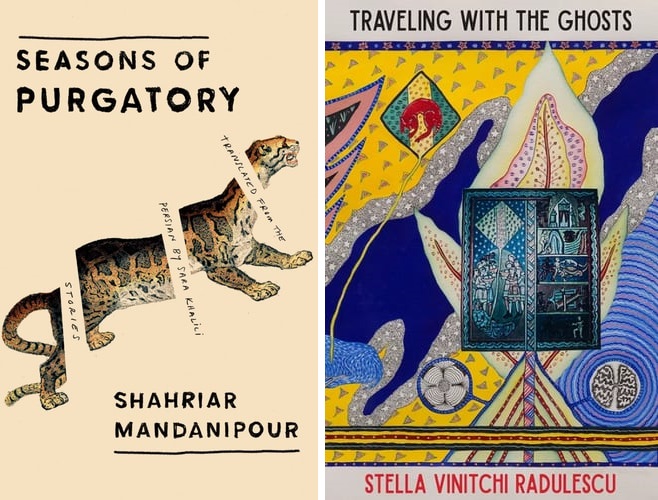
In Shahriar Mandanipour’s Seasons of Purgatory, the fantastical and the visceral merge in tales of tender desire and collective violence, the boredom and brutality of war, and the clash of modern urban life and rural traditions.

In her latest collection of English-language poems—Traveling With the Ghosts—trilingual poet Stella Vinitchi Radulescu continues to explore the capabilities and limits of language itself as the nexus where thought and physicality meet.

Your Nostalgia is Killing Me by John Weir collects eleven linked stories and questions how a gay white guy from New Jersey lived through fifty years of the twin crises of global AIDS and toxic masculinity in America.

You can learn more about each of these New & Noteworthy books at our website. Click here to see how to place your book in our New & Noteworthy section.

Take a Journey with The Birdseed

Guest Post by Emma Foster.

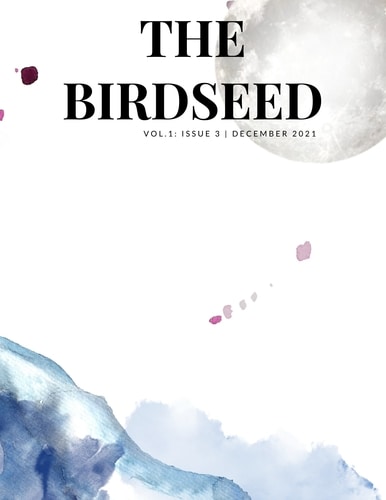
Literary journal The Birdseed knows where the best of flash comes from: the sky and sea, the beginning and end of things. In its third issue of volume one, The Birdseed’s flash pieces appear from those mysterious depths in succinct one hundred and fifty words or less each time.

The issue’s five themes, Space, Sea, Myth, Magic, and Death, all examine the unknown, the enigmatic corners of ourselves. Whether ominous with dark exploration like Katie Holloway’s “Reaching for Nana,” or composed of poignant emotion like Lou Faber’s “On the Shelf,” each flash piece leaves the reader with a little something afterwards. The emotional resonance of each either packs a punch or leaves reader’s hearts full, creating beauty and calm among the issue’s heavy, potentially heartbreaking themes.

As someone who loves and writes flash and microfiction, being dropped into a descriptive setting or a complex mind for a few moments never fails to surprise and challenge. The Birdseed’s journey into the places we dare to tread turns up satisfying results.


The Birdseed, December 2021.

Emma Foster’s fiction and poetry has appeared in The Aurora Journal, The Drabble, Sledgehammer Lit, and others. Links: https://fosteryourwriting.com/

The MacGuffin – Fall/Winter 2021

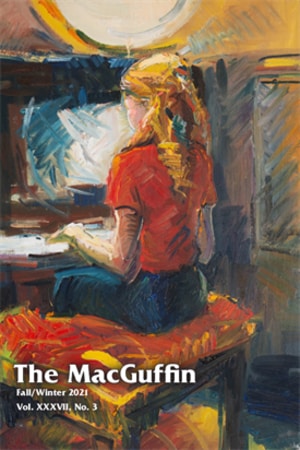
Nancy Buffum’s “Girl at Piano” on the cover of vol. 37.3 is a prelude to the trio of musical poetry in the exposition to this issue, composed by poets Frank Jamison, Tobey Hiller, and Vince Gotera. As with any other sonata, the recapitulation comes later—András Schiff through Murray Silverstein’s eyes; guitarists, off-stage (Berlioz anyone?) in Gabriella Graceffo’s “Relics”; extended vocal technique in Eric Rasmussen’s “The Irresistible Gobble”—but not before Lucy Zhang’s multi-part “Trigger” and Lynn Domina’s multi-peninsula “Yooper Love” develop the form a bit. Finally, we reach the coda, this time a scherzo: “The Slapathon,” from J.A. Bernstein.

Read more at The MacGuffin website.

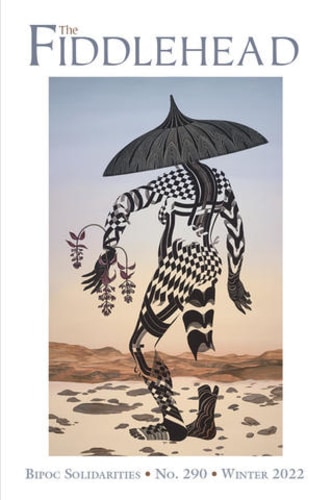
The Fiddlehead – Winter 2022

The BIPOC Solidarities Special Issue is meant as an opening, extending the invitation to BIPOC writers to transform the content and spirit of The Fiddlehead far beyond a single issue; this issue is a commitment to transformation and accountability. Visit The FIddlehead website to see some of the contributors you can expect to find in this issue.

Cutleaf – Vol 2 No 2

In this issue of Cutleaf, Yasmina Din Madden shows us the ABCs of relational ups and downs in “Zero Sum Game.” Tiffany Melanson reflects on color theory in and out of prison in four poems beginning with “Visitation: Tomoka Correctional Institution.” And Mary Zheng navigates the necessary pain of empathy in the emergency room in “Jane.”

Learn about this issue’s images at the Cutleaf website.

A New Novel of a Tempestuous Time

Guest Post by Rick Winston.

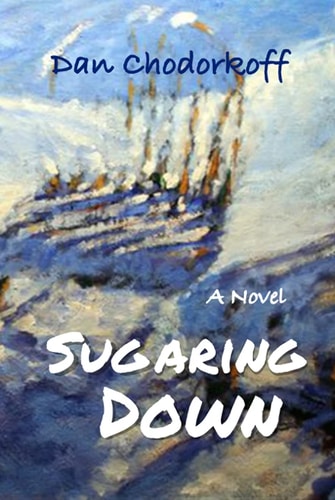
David, the protagonist of Dan Chodorkoff’s insightful new novel Sugaring Down, is conflicted. He moved to Vermont in 1969 to be part of an activist political collective, but finds himself drawn to the quiet rhythms of the Vermont seasons. The more radicalized his comrades (and especially his girlfriend Jill) become, the more David finds true fulfillment in putting down roots.

David and friends come to Vermont’s Northeast Kingdom with very little practical knowledge. Through his closest neighbors, the vividly realized Leland and Mary Smith, he gradually acquires the skills to survive. He must use them all when the collective disintegrates and he faces a winter alone.

Leland and Mary do not pass judgment on the newcomers and become a guide to much more than splitting wood and boiling syrup. They advise David and friends on what not to say to hostile individuals in town, how to behave at Town Meeting, and in general how to act so that— eventually—they might be accepted in their community.

Through Leland and Mary, we also learn some Vermont history that predates the counterculture. David has never heard about Barre’s radical history (Mary, the daughter of a granite worker, has Italian roots), or the forced sterilizations of Abenaki people during the eugenics movement, or the bulk tanks that forced Leland and Mary to give up dairy farming.

Chodorkoff is especially evocative as the reader sees each successive season—their glories and their challenges—through David’s city-bred eyes. And it was painful to this veteran of the late 1960s to relive the heated political conversations of the time. The book takes place at a time when some on the “New Left” were turning to violence, and Chodorkoff does not shy away from these upsetting themes.

Chodorkoff uses the maple sugaring process as a central metaphor, hence the title. The sap boils off (and there is furious boiling indeed) and we—and David—are left with the essence. Sugaring Down is a worthy addition to the growing literature about Vermont during this tempestuous time.


Sugaring Down by Dan Chodorkoff. Fomite Press, February 2022.

Reviewer bio: Rick Winston lives in Montpelier, Vermont and is the author of Red Scare in the Green Mountains: Vermont in the McCarthy Era 1946-1960.

‘The Love Songs of W.E.B. DuBois’

Guest Post by Kevin Brown.

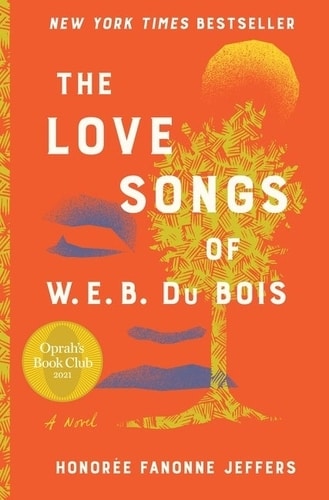
In her first novel, Jeffers covers a wide range of history, but focuses on one place called Chicasetta, moving from the Indigenous Creek to African Americans and whites as they move into or are brought into the area. The novel follows two strands of a story that ultimately intersect: one from the Native American viewpoint covering hundreds of years and one following Ailey Garfield from her childhood to graduate school in history in the early 2000s.

There are echoes of African American history and literature, ranging from the obvious references to DuBois—not only the title, but significant ideas in the novel—but also narratives by those who were enslaved (Jacobs and Douglass) and more contemporary writers, such as Alice Walker and Toni Morrison. While drawing on such sources, though, Jeffers makes this story her own by setting it so concretely in one place and following one family’s history.

My one criticism is that the novel covers so much time, even within the contemporary story, minor characters seem to come in to serve a particular role, then exit quickly. That’s especially true when Ailey is in college and graduate school, as those characters seem to represent some idea that needed covering.

However, Jeffers uses the historical sweep to explore questions of America and identity and race, knowing there are no answers, only questions, as Ailey says at the end of the novel: “I know the story will be over soon. That I will wake up with a question. And then another, but the question is what I have wanted. The question is the point. The question is my breath.” Jeffers’s novel shows us the power of questions: Who’s asking them? Who’s avoiding them? What’s left out?


The Love Songs of W.E.B. DuBois by Honorée Fanonne Jeffers. Harper, August 2021.

Reviewer bio: Kevin Brown has published three books of poetry: Liturgical Calendar: Poems (Wipf and Stock); A Lexicon of Lost Words (winner of the Violet Reed Haas Prize for Poetry, Snake Nation Press); and Exit Lines (Plain View Press).  He also has a memoir, Another Way: Finding Faith, Then Finding It Again, and a book of scholarship, They Love to Tell the Stories: Five Contemporary Novelists Take on the Gospels. You can find out more about him and his work on Twitter at @kevinbrownwrite or at http://kevinbrownwrites.weebly.com/.

A Tender New Year’s Resolution

Guest Post by Annie Eacy.

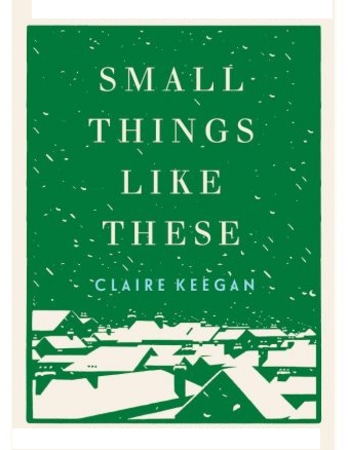
It’s New Year’s Eve as I write this, and I’m isolating in my childhood bedroom after testing positive for Covid-19 after nearly two years of masking, vaccinating, boosting, testing, and more. My whole body aches and all I would like to do is spiral in self pity. Instead, I pick up a green book on my bedside table: Small Things Like These by Claire Keegan.

Small town Ireland in the 1980s. A blue-collar man, reserved and hardworking, is married with five young daughters. He lives a measured and somewhat mundane life, not prone to much contemplation or self-reflection. That is, until one day not long before Christmas, he makes a discovery requiring an act of heroism that has the potential to change many lives and not all for the better.

This is a marvelous, unassuming novel filled with small, tender moments: helping his girls with the spelling in their Santa letters, filling hot water bottles for their beds, watching them sing in their church choir. “Aren’t we the lucky ones?” he says to his wife one night, and she agrees. However, his gratefulness is warped by the misfortune of others. How should they have so much and not share it? Keegan’s novel begs many questions about heroism and altruism, but the most compelling might be that while there can certainly be tenderness in heroism, can there also be heroism in tenderness?

I close the book, no longer wallowing in my self-pity. My mother knocks to offer me tea—her voice soothes, like honey for my sore throat. I hear her soft slippers on the stairs, the tapping of dog paws following, the click of the gas stove. Small, tender things. How much there is to be grateful for when you look or listen for it, and after reading Keegan’s novel, that’s what I’ll do.


Small Things Like These by Claire Keegan. Grove Atlantic, November 2021.

Reviewer bio: Annie Eacy is a writer living in the Finger Lakes. She writes poetry, fiction, and essays, and is currently working on a novel.

Publications for Young Writers

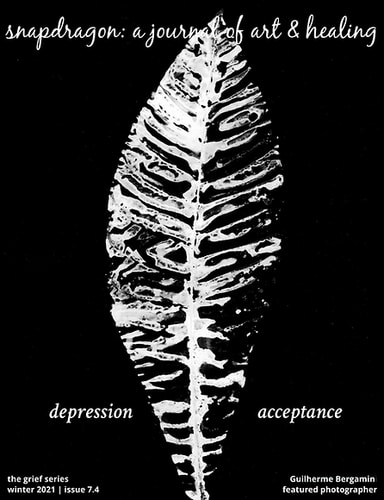
Drawn image of a face in profile looking at a full moon with the words Community Journalism Project

NewPages maintains two guides where young readers and writers can find print and online literary magazines to read, places to publish their own works, and legitimate contests: Publications for Young Writers and Writing Contests for Young Writers. Both of these are ad-free resources regularly updated with carefully vetted content.

Many of the magazines listed on NewPages Publications for Young Writers include resources to inspire and mentor writing. One such publication is the Young Writers Project that features a full year’s worth of writing and visual art “Challenges.” These are organized by week, with all entries in response to these prompts being considered for various publications, including the monthly digital magazine, The Voice, as well as for the YWP annual anthology.

In addition to this, YWP’s Community Journalism Project runs weekly prompts based on “newsy, issue-based challenges” as well as a special Climate Change Project.

These are wonderful resources for teachers to use in the classroom as well as for anyone mentoring young readers or writers in their lives.

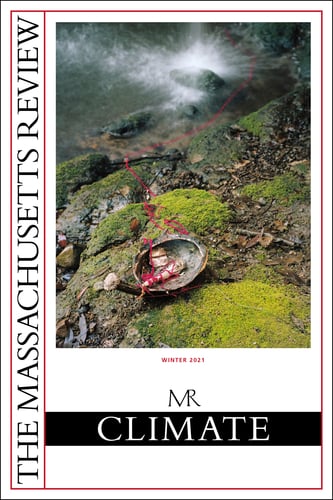
The Massachusetts Review – Winter 2021

This special issue is dedicated to the climate crisis and those being destroyed and changed by it. Work by Shailja Patel, Vanessa Place, Omar El Akkad, Rick Bass, Alex Kuo, CAConrad, Barry Lopez, Laura Dassow Walls, Craig Santos Perez, Salar Abdoh, Brian Turner, Lisa Olstein, Joseph Earl Thomas, Khairani Barokka, Amitav Ghosh, Marta Buchaca, Mercedes Dorame, Rob Nixon, Gina Apostol, and more. See a full list of contributors at The Massachusetts Review website.

Kenyon Review – Jan/Feb 2022

The Jan/Feb 2022 issue of the Kenyon Review features the winners of our 2021 Short Fiction Contest: Ted Mathys, Sam Zafris, Rachel L. Robbins, and Malavika Shetty; stories by Vanessa Chan, Lan Samantha Chang, Drew Johnson, and Joanna Pearson; essays by Melissa Chadburn, Beth Ann Fennelly, and Alice Jones; and poems by Ruth Awad, Cameron Awkward-Rich, Traci Brimhall, Katie Hartsock, Cate Marvin, Maggie Millner, Michael Prior, Natasha Sajé, and Joan Wickersham. Now at the Kenyon Review website.

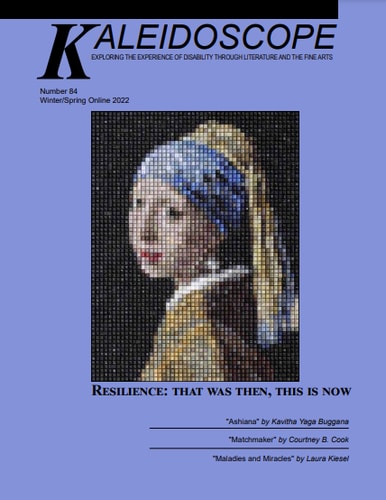
Kaleidoscope – No. 84

In this issue, we see a common thread of resilience. Humor and an appreciation for the little things are along for the ride. Featured essay by Kavitha Yaga Buggana. Featured art by Sandy Palmer. Fiction by Kelly A. Harmon, Lind McMullen, and Courtney B. Cook; a personal essay by Jackie D. Rust; creative nonfiction by Judy Kronenfeld, Laura Kiesel, Kristin LaFollette, and Tereza Crvenkovic; and a book review by Nanaz Khosrowshahi. Poetry by Alan Balter, Lucia Haase, John Dycus, Linda Fuchs, Diane S. Morelli, Alana Visser, Wren Tuatha, and T.L. Murphy.

Download the new issue PDF at the Kaleidoscope website.

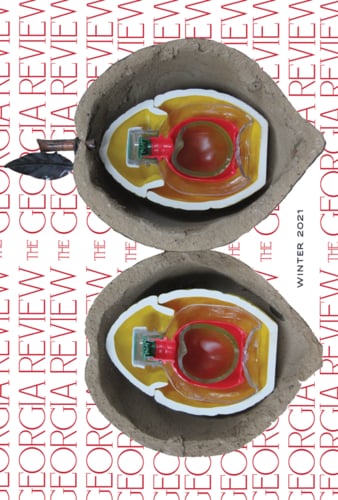
The Georgia Review – Winter 2021

The Georgia Review’s Winter 2021 issue with new writing from Morgan Talty, Victoria Chang, Cheryl Clarke, Ira Sukrungruang, Garrett Hongo, Edward Hirsch, and many more, as well a story by Maya Alexandrovna Kucherskaya translated from the Russian, two iconic speeches from the early years of the OutWrite literary conference, and the winner of this year’s Loraine Williams Poetry Prize.

More info at The Georgia Review website.

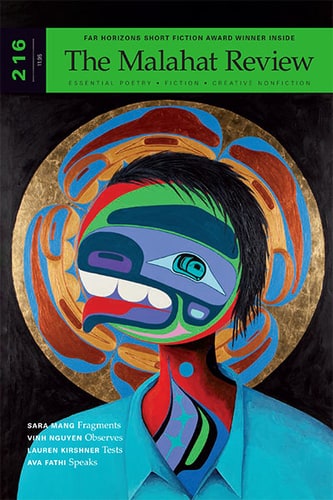
2021 Far Horizons Award for Short Fiction Winner

Congratulations to Ben Lof, winner of The Malahat Review‘s 2021 Far Horizons Award for Short Fiction. Lof won with his piece “Naked States.”

The story begins:

In January, Frank said to April, No more alcohol. This was not a New Year’s resolution. The vermouth pancakes tasted only of vermouth.

April said, Who the heck is named “Frank” anymore? I mean, what is this, the 1960s?

Frank said, That’s the booze talking, that kind of meanness. You used to be witty.

Oh? said April. I’m still witty, pal. Got buckets and buckets of wit.

So they dropped alcohol.

Lof was also interviewed for this issue, and you can check out the interview on The Malahat Review‘s website.

2021 William Van Dyke Short Story Prize Winners

Congratulations to the winners of the 2021 William Van Dyke Short Story Prize in Issue 60 of Ruminate.

First Place
“The Florist” by Alex Cothren

Second Place
“A Guide to Removal” by Amber Blaeser-Wardzala

Honorable Mention
“Katingo Carried 15,980 Tons and a Gentleman” by George Choundas

Finalists include Nina Gaby, Elizabeth Paley, Lauren Loftis, Skye Anicca, Catherine Miller, Alberto Daniels, and Suphil Lee Park.

Read comments on the winners from Judge Kelli Jo Ford inside the issue as an introduction to the pieces.

Buckle Your Seatbelts, You’re in for Quite a Ride!

Guest Post by Cindy Dale.

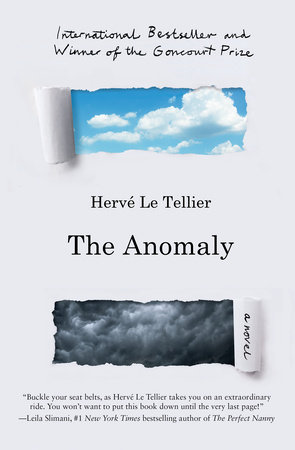
Air France 006, Paris to New York. The seatbelt sign comes on. The captain calmly announces, prepare for a little turbulence.  More than a little it turns out. If you’ve ever been on a flight where you questioned if the plane would successfully land, you know the feeling. I don’t profess to have completely unraveled (or made sense of) all the threads of this book, but I enjoyed the ride.  Part sci-fi, part political thriller, part philosophical treatise, The Anomaly by Hervé Le Tellier was a huge bestseller in France and won the Prix Goncourt.

It took a bit for the puzzle pieces to fall in place for me, but once the catalyst for these disparate stories was revealed the novel picked up speed. Apparently, the same flight with the same crew and the same passengers landed twice—four months apart.  Ultimately, we follow the fates of eleven passengers (and their clones)—from a contract killer to a film editor to the author of a novel called, you guessed it, The Anomaly. There are references to everything from Martin Guerre to Elton John to Nietzsche. Quotes from War and Peace, Romeo and Juliet, and Ecclesiastes. Sandwiched in there is the American government’s ham-fisted response to the mysterious second landing.

I confess to getting a little lost in some of the mathematical and astrophysics tangents, but the reader is drawn into the personal stories of the passengers (and their clones).  What would you say if confronted with an exact doppelgänger of you, right down to the same memories, the same secrets, the same neurosis? Definitely existential, but also humorous and with quite a few quotable lines. You may not be able to board a flight and go on an exotic adventure these days because of Covid, but you can take off on a wild ride from the comfort of home with The Anomaly.


The Anomaly by Hervé Le Tellier. Other Press, November 2021.

Reviewer bio: Cindy Dale has published over twenty short stories in literary journals and anthologies. She lives on a barrier beach off the coast of Long Island.

Contests for Young Writers

Image of a poster for the I Matter poetry contest

NewPages maintains two guides where young readers and writers can find print and online literary magazines to read, places to publish their own works, and legitimate contests: Publications for Young Writers and Writing Contests for Young Writers. Both of these are ad-free resources regularly updated with carefully vetted content.

The Lions Club International Peace Essay Contest is one of those listed, and the 2020-2021 winning essay “Peace Through Service” by 13-year-old Australian Joshua Wood is a beautiful example of the kinds of writing these contests can inspire. He can be seen/heard reading his essay on the site here, and his essay is available to read online or download to print.

If you know young readers and writers in your life, or if you yourself enjoy writing for young readers, check out these guides today!

[Image: National Youth Foundation poster for the “I Matter Poetry Contest.”]

Expect the Unexpected

Guest Post by Julia Wilson.

Elizabeth McCracken is one of my favorite authors, primarily for her graceful blending of mundane realities with imaginative and unusual details, thus painting seemingly humdrum lives sparkling with the unexpected.

Bowlaway is no exception. Ostensibly a story about generations of an extended family living in a small town, McCracken’s odd characters are mixes of humorous, pathetic, lonely, yearning, creative, frail, damaged, liberated, secretive, selfish, and loving. They are mysterious and perplexing, not necessarily likeable but compelling. The book starts with a woman, Bertha Truitt, being found unconscious in a cemetery, without explanation. Thus begins the family saga of the Truitts, who own a bowling alley in the northeastern town of Salford.

But the real story in Bowlaway is the complexities of relationships, primarily marriages. In McCracken’s smooth sentences and use of an omniscient narrator, the reader is witness to weaknesses, loyalty, secrets, misunderstandings, and resignation. The partners in these relationships don’t have much eagerness in looking forward to the future yet have found a reality they can tolerate, containing both joy and heartache. There is tenderness between a woman and her mother-in-law, compassion of a wife in the face of her husband’s alcoholism, a recluse’s love for a mourning mother, and the relief of the few who escape the dreary life in Salford.

McCracken is at her best painting the facets of her characters so they come alive to the reader. They are flawed, self-interested, confused, and searching—as are we all.


Bowlaway by Elizabeth McCracken. Ecco, November 2019.

Reviewer bio: Julia Wilson is an MA in Writing student at Johns Hopkins University

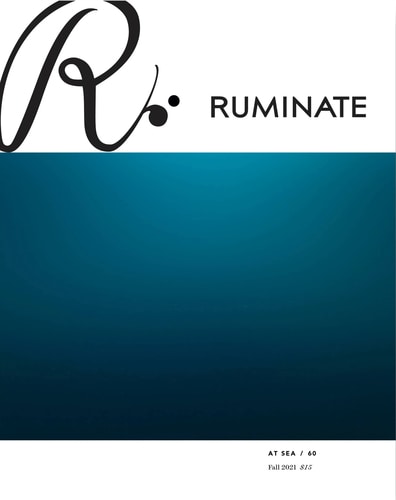
Ruminate – Issue 60

The writers and artists whose work makes up Ruminate Issue 60 probe the imagery and metaphor of being at sea. Included are Devon Miller-Duggan’s poem, “Perhaps a Prayer for Surviving the Night” and Peggy Shumaker’s “Gifts We Cannot Keep.” George Choundas’s engrossing story, “Katingo Carried 15,980 Tons and Gentleman,” transports us to the world of those who live and work on cargo ships. And O-Jeremiah Agbaakin’s poem, “landscape with broken ekphrasis,” muses on the image of the last ship that brought enslaved people to the United States. This issue features the winning story from our 2021 William Van Dyke Short Story Prize.

More info at the Ruminate website.

Plume – Feb 2022

This month’s featured selection: “On Long Poems, Lyric Sequences, and ‘Cop’”; An interview with Connie Voisine by Amanda Newell. Mark Wagenaar reviews Carmine Starnino’s Dirty Words. In nonfiction: “Reading the Qur’an with Rumi” by Amer Latif. This month’s poetry contributors include Ira Sadoff, John Hodgen, Katja Gorečan, Pablo Piñero Stillmann, Bhisham Bherwani, Kelli Russell Agodon, Brendan Constantine, and more. Find this issue at the Plume website.

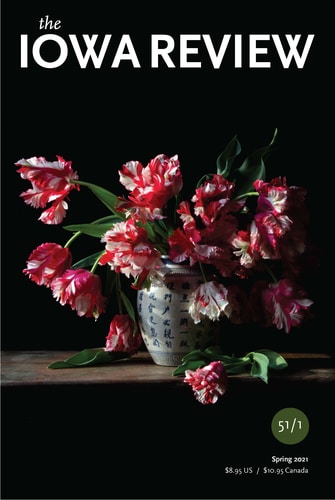
The Iowa Review – 51/1

In this issue: a shrinking house, winter ticks, COVID, Burning Man, Alexander Pope, crisis, spies, a plane crash, wars, Sandy Koufax, and more. Poetry by Stella Wong, Gilad Jaffe, Camille Guthrie, Maxine Scates, Steffi Drewes, and more; and nonfiction by Carol Guess & Rochelle Hurt, Ellis Scott, Greg Wrenn, Amy V. Blakemore, and Andrea Truppin. Find fiction contributors at The Iowa Review website.

Cutleaf – Issue 2.1

In our first issue of 2022, Ben Kaufman searches for the ghost in the machine as he questions the way language and meaning changes through time in “Unknown Caller.” Pauletta Hansel views various effects of trying to live as the marrow in someone else’s bones in three poems beginning with “So Maybe It’s True.” And George Singleton shares the story of a boy named Renfro who wants only to earn his driver’s license and to reconcile his odd parents in “Here’s a Little Song.”

Learn about this issue’s images at the Cutleaf website.

Delectable Poetry by Dorothy Chan

I love Dorothy Chan’s poetry, so I’m always excited to see her name in a lit mag’s table of contents. Two of her poems are included in the Fall/Winter 2021 issue of Colorado Review: “You Might Change Your Mind About Kids” and “Triple Sonnet for Batman Villains and Whatever This Is.”

In “You Might Change Your Mind About Kids,” the speaker is told this titular sentence by a man she has a romantic relationship with. The poem is the mental dissection of his opinion on this topic, an inner rebellion broiling beneath the surface. Who is this man to claim her body, her future, her future child? How is she seen as “the place to reserve / for a baby, the hotel for a womb?” She feels palpable derision toward his assumptions and I love that clarity of the speaker knowing exactly what she wants and does not want. She’s not going to change for this man or any other man and she finishes the poem with, “If I ever love someone, I’ll be baby forever.”

“Triple Sonnet for Batman Villains and Whatever This Is” is such a fun poem that still holds a hefty dose of seriousness in its final stanza. This poem has one thing I always enjoy about Chan’s poetry which is the absolute pleasure of experiencing different foods. These two pieces are just as delectable as “sashimi and Snow / Beauty sake and mango mochi for dessert.”

Let’s Read Together!

Photograph of people attending an OSU writing project event with the name OSU Writing Project label.
From Dr. Sarah J. Donovan: This winter-spring, the OSU Writing Project is offering an online professional development and would like to invite you, even if you are not in Oklahoma, to register for this online experience.

For pre-service, inservice, & veteran teachers who love reading and learning through literature. For educators who want to support students and families by making classroom libraries and curriculum more inclusive-affirming of students’ intersecting identities. This monthly book group (January-June, 2022) is a place to ignite thoughtful conversation about young adult literature informed by Dr. Yolanda Sealy-Ruiz’s (2020) Six Components to Racial Literacy Development.

Your registration fee of $35 is a commitment to attend the conversations and for your PD certificate of 6 hours. You will buy from a store or reserve from your library the selected books. We will meet once a month via Zoom for an hour to discuss the texts, which will include extensions into ideas for sharing literature with students and studying of author’s craft. Respectful, invitational dialogue is expected of all participants.

We are going to read with a lens of what Dr. Yolanda Sealy-Ruiz named racial literacy development, which includes historical awareness of the forces that shape the society we live in along with critical humility or how we can “remain open to understanding the limits of our own worldviews & ideologies” and toward critical love or “a profound ethical commitment to caring.” We want to center love as transformative, recognizing harm but noticing the ways we heal and feel joy through young adult literature. Thus, our focus is on authors’ craft and celebrating beautifully crafted passages in the texts that represent intersecting identities.

Here is the book list. Notice, there are several verse novels listed in April, so you can choose any or all. Again, it will be up to you to acquire these books in the medium you prefer. We hope you will consider your local library and/or a local Black-owned bookstore. All meetings are Sundays, 6:00-7:00pm CT.

Continue reading “Let’s Read Together!”

A Darned Good Book About Vermont Humor

Guest Post by Alec W. Hastings.

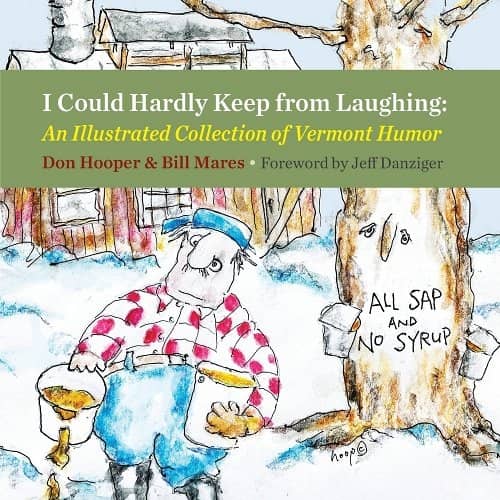
Bill Mares and Don Hooper put out a darned good book about Vermont humor. It’s called I Could Hardly Keep from Laughing. Even though I’ve grown up in Vermont—well, almost—I’ve always wondered what that is. Vermont humor, I mean. How would I know it if I met it walking down the street? I read eagerly and kept my eyes open for the answer.

The authors collected Vermont jokes and anecdotes by the truckload. I delighted in Hooper’s cartoon art, the bug-eyed but endearing folk of our Vermont hills. I could hardly keep from smiling at the humor of familiar Vermonters like Silent Cal, Francis Colburn, George Woodard, Al Boright, Fred Tuttle, and Rusty DeWees. Some of the Vermont humorists I met in these pages were new to me, and it tickled me to get acquainted with Robert C. Davis, David K. Smith, or Josie Leavitt.

Did Mares and Hooper entertain me and add to my understanding of Vermont humor? St. Peter on a pogo stick! You bet they did! Did they define Vermont humor like Webster? They’ve lived in Vermont long enough to know better. They did give a few hints to help us put classic Vermont humor up a tree. What did they say in chapter one? “Dry, wry, understated.” And when they unloaded their truck, the humor that tumbled out fizzed with playful wit, but I agree with Danziger. He says in the foreword it’s easier to tell what Vermont humor is than what it is not. In my mind’s eye there is always a hint of mischief in the eye of the Vermont humorist looking back at me. It bespeaks an urge to tease but never to be unkind.

For me, the best Vermont humorists have always put themselves in the same boat with their audience. Theirs is not so much the idea that “the joke is on you,” as it is that “the joke is on all of us.” But what do I know? As the fella said in chapter three, “Not a damn thing.” Vermont humor remains something of a mystery to me. Maybe that’s good. A butterfly pinned to a board is nowhere near as pretty as one fluttering by on the breeze.


I Could Hardly Keep from Laughing by Don Hooper & Bill Mares. Rootstock Publishing, December 2021.

Reviewer bio: Alec W. Hastings is the author of Cap Pistols, Cardboard Sleds & Seven Rusty Nails: A Vermont Boyhood in Happy Valley. He grew up in the hill country of Vermont when Jersey cows still grazed the pastures and men in denim boiled sap in wood-fired evaporators.

Buy this book from our affiliate Bookshop.org.

Try Your Hand at a Glosa with Page & Pappadà

Guest Post by Elda Pappadà.

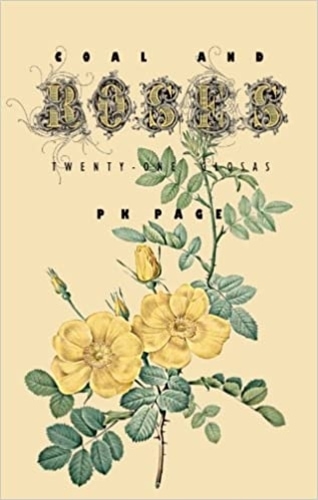
I discovered P.K. Page about two years ago, and since then this talented, prolific writer has become one of my favorite poets. I was determined to read all her poetry books when I came across: Coal and Roses: Twenty-One Glosas. Glosa (Glose) is a Spanish form of poetry where the author quotes a quatrain from an existing poet and writes four ten-line stanzas with the four lines acting as a refrain in the final line of each stanza. Therefore, the first line from the quatrain would be the final line in the first stanza, and etc.  The last word at the end of the sixth and ninth lines must also rhyme with the last word in the borrowed tenth line.

Coal & Roses was a captivating find. P. K. Page manages to keep the flow continuous and writes with such ease, originality, and skill. It is very interesting to see the final product. A Glosa can keep the same tone as the original quatrain or can take a whole new path and narrative. I tried my own hand at writing a Glosa and found it to be rather liberating with unlimited possibilities. The final product was unlike most poetry I have ever written.


Coal and Roses: Twenty-One Glosas by P. K. Page. The Porcupine’s Quill, 2009.

Reviewer bio: Elda Pappadà has self-published her first poetry book, Freedom – about love, loss, and understanding. Freedom is about finding meaning in the highs and lows of everyday life, to learn and even re-learn what we need to move forward.  It’s about defining life and giving weight to everything we do.

A Realistic Portrayal of Recovery

Guest Post by Lailey Robbins.

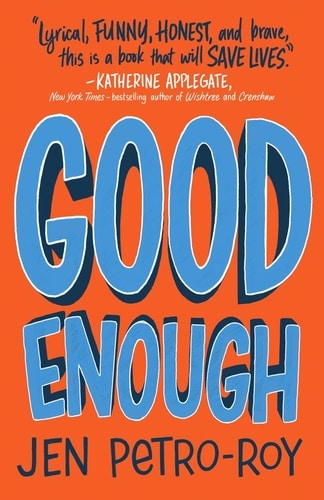
Good Enough, written by Jen Petro-Roy, is a piece of fiction that sits comfortably between middle reader and young adult. It is quite a realistic piece of fiction with a profoundly honest and vulnerable look into the life of Riley, who is hospitalized for her struggles with anorexia nervosa. Through the story, we see her heal, stumble, and navigate through a realistically and maturely portrayed journey of recovery.

This work is nothing short of phenomenal. With its accessible language and mature-yet-realistic handling of the sensitive topics that it delves into, it is a must have. Petro-Roy, being a survivor of an eating disorder herself, offers sensitive and helpful insight into the life of recovery and the many struggles that come with it. This, alongside her brilliant character development and the portrayal of relationships within the work, home in on her wonderful style. Not only does the audience watch Riley change, grow, and heal, they are also able to watch her juggle both the friendships that she has made within the facility while simultaneously trying to keep her pre-hospitalization friendships alive.

However, the downfall of this novel lies within its conclusion. The ending is unsatisfying, for lack of better words, as there is no definite answer for what comes next. As the novel draws nearer to Riley’s release from the facility, the book ends, leaving the reader with a sense of confusion as the character that they had been expecting to see make a full recovery is still struggling. Though it is realistic to not know what comes next, especially when in recovery, the ending of this novel seems to disregard its stakes entirely, leaving the reader completely lost.

However, if you are one for open endings, this novel has many redeeming qualities that allow it to be a wonderful read.


Good Enough by Jen Petro-Roy. Feiwel & Friends, February 2019.

Reviewer bio: Lailey Robbins is a creative writing student from Salem College, North Carolina. Currently, she is working on a short story and a novel, with hopes to be published in the future.

The Writing Disorder – Winter 2021/22

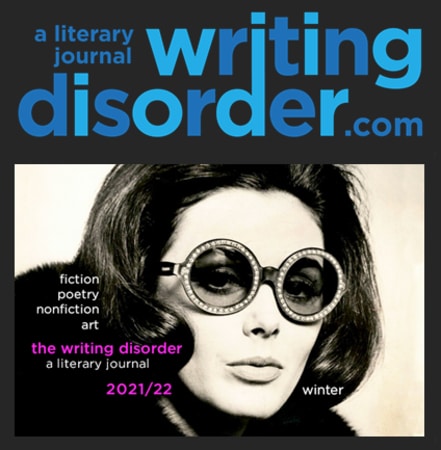
Winter is upon us and so is the new issue of The Writing Disorder. Find “Aesthetic Transmissions,” an interview with Robert Hass by George Guida; fiction by Robert Boucheron, Inez Hollander, Justin Reamer, Jeff Underwood, and more; poetry by Holly Day, Ash Ellison, Jonah Meyer, Bruce Parker, Frederick Pollack, and Kate Porter; nonfiction by Joan Frank, Donna Talarico, and Emilio Williams; and art by Nick Bryant.