At the NewPages Blog readers and writers can catch up with their favorite literary and alternative magazines, independent and university presses, creative writing programs, and writing and literary events. Find new books, new issue announcements, contest winners, and so much more!
Deadline: March 10, 2025 Collaboration is upon us for joy, productivity, and sometimes heartache. Please show us your art that involved collaboration and how that collaboration gave rise to your poetry, prose and images and hybrid forms. Here is a chance to tell us how you work and produce. Sponsored by Black Earth Institute valuing earth, spirit, and social justice. View flyer for more info and a link to our website.
Want early access to our eLitPak flyers? Subscribe to our weekly newsletter! You can also support NewPages with a paid subscription and get early access to the majority submission opportunities, upcoming events, and more before they are posted to our site.
Deadline: February 21, 2025 The Subnivean Awards are open: winners receive publication and blurbs from final judges, as well as $150 each. Finalists and winners are featured at a popular virtual event. Subnivean’s received submissions from 63 countries and every U.S. state, publishing U.S. Poet Laureate Emeritus Juan Felipe Herrera, Jane Wong, Molly Giles, Amit Majmudar and others. We await your poems and stories! View flyer for more info and a link to submit.
Want early access to our eLitPak flyers? Subscribe to our weekly newsletter! You can also support NewPages with a paid subscription and get early access to the majority submission opportunities, upcoming events, and more before they are posted to our site.
The path of a writer is often paved with challenges. Distractions, rejection, self-doubt, writer’s block, imposter syndrome, resistance, and a lack of structure can make the journey feel impossible. If you’ve ever felt overwhelmed and wondered if you’ll ever be able to finish projects or write consistently, you’re not alone. Come write with Writer’s Atelier! View flyer for more information and link to our website.
Want early access to our eLitPak flyers? Subscribe to our weekly newsletter! You can also support NewPages with a paid subscription and get early access to the majority submission opportunities, upcoming events, and more before they are posted to our site.
Contest Deadline: March 30, 2025 Submit your fiction, poetry, and creative nonfiction to Black Fox Literary Magazine’s Winter Prize with theme Rise or Ruin! Deadline: March 30, 2025! We are also accepting free general submissions for our summer 2025 print issue. Free subs close on May 31, 2025! View flyer for links to submit.
Want early access to our eLitPak flyers? Subscribe to our weekly newsletter! You can also support NewPages with a paid subscription and get early access to the majority submission opportunities, upcoming events, and more before they are posted to our site.
Deadline: Rolling We at Hindsight are looking to expand our online library! We accept artwork, photography, creative nonfiction prose, and poetry. All submissions are considered for both print and online publication. We accept internationally as well!
Want early access to our eLitPak flyers? Subscribe to our weekly newsletter! You can also support NewPages with a paid subscription and get early access to the majority submission opportunities, upcoming events, and more before they are posted to our site.
Deadline: Rolling The flagship journal of ekphrasis offers a variety of inspiring Zooms on art history and the writer’s craft. Join a welcoming community and connect in conversation and creativity. View our flyer for a link to our website.
Want early access to our eLitPak flyers? Subscribe to our weekly newsletter! You can also support NewPages with a paid subscription and get early access to the majority submission opportunities, upcoming events, and more before they are posted to our site.
Application Deadline: April 1, 2025 Have you ever wished you could attend your own private writing workshop that would teach you exactly what you need to know, at the right pace for you, and provide feedback and guidance in extensive one-on-one sessions? That’s Your Personal Odyssey Writing Workshop. It’s an intensive, personalized, one-on-one online workshop experience combining advanced lectures, expert feedback, and deep mentoring. View flyer for more information and a link to our website.
Want early access to our eLitPak flyers? Subscribe to our weekly newsletter! You can also support NewPages with a paid subscription and get early access to the majority submission opportunities, upcoming events, and more before they are posted to our site.
Deadline: April 15, 2025 Epiphany‘s 2025 Breakout! Writers prize will be judged by Victoria Chang in poetry and Hilary Leichter in prose. The contest is open to college and graduate students, and first prize winner in each genre will be awarded $1000 and publication. Submissions open March 1 and close April 15. View our flyer for more info and see more details on our website.
Want early access to our eLitPak flyers? Subscribe to our weekly newsletter! You can also support NewPages with a paid subscription and get early access to the majority submission opportunities, upcoming events, and more before they are posted to our site.
Deadline: February 28, 2025 During the month of February, Third Street Review, a quarterly literary journal, welcomes submissions of Flash Fiction, Creative Nonfiction, Poetry, Art, and Photography. If you have something wild, wooly, and wonderful, we want to see it. We value the work of individual creators—show us who you are and what you can do. In addition to being a paying publication, we promote across social media platforms and nominate for awards. Jump in—we can’t wait to meet you! View our website to learn more.
Want early access to our eLitPak flyers? Subscribe to our weekly newsletter! You can also support NewPages with a paid subscription and get early access to the majority submission opportunities, upcoming events, and more before they are posted to our site.
50 Submission Opportunities including calls for submissions, writing contests, and book prizes.
It is Friday and crazy weather has run rampant this week with bad rainstorms, ice storms, and snowstorms sweeping across the country. Now is a perfect time to stay indoors and write, write, write. . . and submit! NewPages is here to help you reach your submission goals with our weekly roundup of submission opportunities. As today is the fourteenth, there are a lot of calls and contests with February 15 deadlines. Don’t miss out!
Paid newsletter subscribers can get early access to the majority of submission opportunities and upcoming events before they go live on our site, so do consider subscribing or upgrading your subscription today. You also receive our monthly eLitPak Newsletter which features even more opportunities and other literary goodness.
Deadline: Year-round 10 Reasons to Submit to & check out Fahmidan: 1. Our Journal pays $25 per acceptance 2. No Submission Fees 3. Affordable Manuscript & Editorial Feedback 4. Affordable Reader Feedback 5. Affordable Workshops 6. An Accessible retreat 7. An International Team 8. A Team with 100s of combined publications 9. A 25-day max Response Time. 10. True Diversity of Thought View our flyer for more information and a link to our website.
Want early access to our eLitPak flyers? Subscribe to our weekly newsletter! You can also support NewPages with a paid subscription and get early access to the majority submission opportunities, upcoming events, and more before they are posted to our site.
HEART is a small literary journal from the low country of South Carolina published by Nostalgia Press. Its spirited and struggling editor-publisher has freely given voice to poets from all over the world since 1986. HEART uses modern prose poetry, poems that give life and motion to moods, messages from simple moments, and sparkling lines from meditative thought. An annual cash award is offered, and the 2024 HEART Poetry Award winner, “Piano” by Eric Machan Howd of Ithaca, New York is featured in HEART Issue 19. Readers can also enjoy works by Ben Onachila, Carol Despeaux Fawcett, Kimberly Lewis, David James, Ion Corcos, Jacob Friesenhahn, Kathie Collins, Laurice Gilbert, Victoria Melekian, Lesley Sherwood, Shutta Crum, Mike Wilson, and a contribution and commentary from Editor Connie Lakey Martin.
The Midwest Quarterly: A Journal of Contemporary Thought Winter 2025 is a special issue, “The Future. From a Woman’s Perspective,” guest edited by Judy B. Smetana, Interim Associate Dean for the Crossland College of Technology and Associate Professor and the HRD Graduate Program Coordinator in the School of Technology and Workforce Learning, Pittsburg State University. The articles in this issue include “Exploring the Intersectional Experiences of Black Women in Fortune 500 Companies” by Shana Yarberry, “Remote Work for Women in the Workplace: A Balancing Act to Doing It All” by Kayla Thomas, “Webs of Worry: Women and Financial Anxiety” by Goldie Prelogar-Hernandez, “Leading Through Change: An Adaptive Mindset” by Julie D. Dainty, “Business as an Agent of Individual Fulfillment” by Preeti D’mello, “A Word Please: The Effects of Using ‘Pussy’ as a Microaggression” by Erin Jordan, a selection of poetry, and the team-authored study, “Female Students’ Aspirations and Study in the U.S.: Voices of Gen Z from Uzbekistan.”
This Valentine’s Day, ditch the clichés and embrace the real. Join us on Zoom February 14 at 8 PM ET (5 PT) for the launch of Benjamin Talbot’s Periscope City: Where the Lonely Go to Live Alone. Following a brief reading by Benjamin, it’s your turn, so bring your best “love stinks” piece for our open mic. Sign up now. For more information, please view our flyer.
Want early access to our eLitPak flyers? Subscribe to our weekly newsletter! You can also support NewPages with a paid subscription and get early access to the majority submission opportunities, upcoming events, and more before they are posted to our site.
The editors of Posit Issue 38 believe that “the art and literature in this issue offers wisdom and succor for our troubled psyches readers,” offering remarkable new poetry and prose by Gillian Conoley, Matthew Cooperman, Judy Halebsky, Brian Johnson, Tony Kitt, Peter Leight, Edward Mayes, Sheila Murphy, Jesse Nissim, Mikey Swanberg, and Martha Zweig; sculpture, photography, and paintings by Loren Eiferman, John Einarsen, and Gregory Rick; and text + image by Joanna Fuhrman.
Many would agree it’s an act of utter folly to start up a traditional print literary journal in this day and age, let alone a ‘high end, coffee table’ production, so the name, Folly Journal, certainly seems apt for this print-only literary publication featuring cultural commentary, creative writing, essays, poetry, and “carefully curated scandal.” Trying, as Founder and Editor in Chief Emily Makere Broadmore says, to be “lightish, ornamental, and intriguing. Each issue documents our cultural moment in all its messy, magnificent glory in an inviting and accessible magazine format.”
Published annually with a November release, the publication is generous at around one-hundred pages, “but it feels like something you can dip in and out of and take away on holiday to enjoy flicking through on the beach,” Broadmore assures. Currently available in print only, Folly Journal is stocked in selected independent bookstores, luxury hotels, and cultural institutions. It is also available for purchase online by single issue or subscription.
Two Line Press’ Unusual Fragments: Japanese Stories brings together five previously untranslated peers of Osamu Dazai and Kōbō Abe in an exceptionally curated anthology of short fiction. While never explicitly stated, these are horror stories. Although their focus is never similar, enough themes and ideas are shared across all stories that it is hard to decide whether these are five isolated stories or equal parts of a homogenous universe.
Four of the five authors are women, the other queer, and gendered institutions form the bedrock through which strangeness grows. In one story, a wife’s simple hopes of going to the opera are complicated by her husband’s dimensions (he can fit in the box of a large sake bottle) and her mother-in-law’s connection to an ancient dwarf tribe. Elsewhere, a woman is so terrified by her husband’s annual departures that she obsessively buys new locks and mutilates herself — “radical cosmetic treatment” — in a way in which she hopes will keep him interested when he returns.
This is an amorphous collection, in which the only certainty is chaos. Age, size, gender and sexuality are in flux, and these characters — who seem to be contorting more than acting on their will — are archetypal protagonists of weird fiction.
Unusual Fragments: Japanese Stories, authors: Nobuko Takagi, trans. Philip Price; Tomoko Yoshida, trans. Margaret Mitsutani; Jeffrey Angles, trans. Jeffrey Angles; Takako Takahashi, trans. Brian Bergstrom; Taeko Kono, trans. Lucy North. Two Lines Press, Center for the Art of Translation, March 2025.
Reviewer bio: Colm McKenna is a writer based in Norfolk, England.
The newest South Dakota Review is a double issue of of new poetry by Albert Abonado, Chelsea Dingman, Sarah Fawn Montgomery, Keri Bentz, Michael Meyerhofer, Jill Khoury, CD Eskilson, Suzanne Frischkorn, Rebecca Macijeski, Adam Chiles, Morgan Eklund, Prosper Ìféányí, Alyse Knorr, Ilari Pass, Joan Larkin, Allison Field Bell, Gerry LaFemina, Sigman Byrd, Nano Taggart, Adam Deutsch, Rodney Gomez, Connie Post, Ellen June Wright, Maryam Ghafoor, and Sharon Chmielarz; new short stories by Janet Goldbert, Isabelle Stillman, Christopher Torockio, David Luoma, Michael Czyzniejewski, and Randy DeVita; and essays by Adam M. Sowards, Kathryn Ganfield, Meg Thompson, and Ha-Yun Jung. Cover art by Lee Ann Roripaugh.
The February 2025 issue of The Lake, an online journal of poetry and poetics, is now avaialbe for readers to enjoy, featuring new works by Peter Cashorali, Mike Dillon, Catherine Edmunds, Angela France, Martha Ellen Johnson, Tom Kelly, Kate Noakes, Marion Oxley, Jenny Robb, Kerry Ryan, Hannah Stone, A. R. Williams. Reviews of Roger McGough’s Collected Poems: 1959-2024, Bob Beagrie’s Romanceros, Oksana Maksymchuk’s Still City, and Stephen Cramer’s Shakespeare Redacted. “One Poem Reviews” is a unique feature in which readers can sample a single poem from a recently published collection. This month Mridul Dasgupta, Sarah Dixon, and Alan Price have generously shared their works.
From earliest childhood, memoirist Marty Ross-Dolen, a now-retired child psychiatrist, knew that her mother’s life had been marked by something she could only glimpse, but which manifested as a sadness and sense of loss that nothing could fix. As she came of age, she learned the reason: her mother, Patricia [called Patsy] the second of five children, had been orphaned in 1960 when she was fourteen. A plane carrying her parents – the executives at Highlights for Children Magazine – had been flying to a meeting in New York City to discuss expanded newsstand placement when a collision between their commercial jet and another plane left no survivors. This abrupt end to life as she knew it catapulted Patsy and her siblings from their midwestern home into the home of relatives in Texas. Although they were well cared for and well-treated, from that moment on, a gaping absence hovered over every aspect of Patsy’s life.
Likewise for daughter Marty, who feared upsetting her mom by asking too many questions about the people whose photos stared at her from the living room mantlepiece. Still, she wanted to know more about her maternal lineage, so she started digging. The result, Always There, Always Gone, involved fourteen years of research, including the perusal of thousands of letters – miraculously saved by family and Highlights archivists – between Ross-Dolen’s grandmother, Mary Martin Myers, and her business associates and relatives before her death at age thirty-eight.
The result is a genre-bending memoir, offering readers fragments that Ross-Dolen calls “wisps,” a blend of conventional narrative, erasure poetry, imagined conversations between her and her grandmother, and family photographs. Moving, if somewhat enigmatic, the memoir is an emotionally rich interrogation of the legacy of grief on people who are both directly and indirectly impacted by tragedy. A wise and thoughtful addition to our understanding of the long-term effects of trauma and its transmission from parent to child.
Reviewer bio: Eleanor J. Bader is a Brooklyn, NY-based journalist who writes about books and domestic social issues for Truthout, Rain Taxi, The Progressive, Ms. Magazine, the Los Angeles Review of Books, and The Indypendent.
49 Submission Opportunities including calls for submissions, writing contests, and book prizes.
Happy February! The groundhog miraculously saw his shadow on a day it did not seem like he would. But regardless of this old wives’ tradition that boasts a 30% accuracy rate…no matter what it is technically still 6 more weeks until Spring…right? It seems very appropriate that this weekend we have a winter storm locked in on us. So, if you will also be battling cold, windy, and snowy or icy weather, stay safe and, if you can, stay indoors and keep working on those submission goals.
Paid newsletter subscribers can get early access to the majority of submission opportunities and upcoming events before they go live on our site, so do consider subscribing or upgrading your subscription today. You also receive our monthly eLitPak Newsletter which features even more opportunities and other literary goodness.
The newest issue of december (35.2) features winners and honorable mentions of the publication’s 2024 Curt Johnson Prose Awards for fiction and nonfiction as well as a generous selection of new poetry by Samaa Abdurraqib, Nicole Adabunu, Jodi Balas, Martins Deep, C.W. Emerson, Chad Foret, Dagne Forrest, Kelle Groom, Staci Halt, SG Huerta, Judy Kaber, Aekta Khubchandani, Tate Lewis-Carroll, Sheleen McElhinney, Becka Mara McKay, Katherine Mitchell, Doug Ramspeck, Vincent Antonio, Rendoni Lex, Kelly R. Samuels, Annelise Schoups, Kelly Terwilliger; fiction by Toby Donovan, Joshua Levy, Trent Lewin, Jill E Marshall, Julie Trimingham, Tryphena Yeboah; nonfiction Jacob Aiello, R. Renee Branca, Carrie Hall, Maggie Hart, Danica Li, Laura Price Steele; and art by Jen Everett and Chyrum Lambert. Cover art: Anonymous Women: Gone Postal (2024) by Patty Carroll.
Danusha Laméris displays her skill for sensual poetics in this latest collection, Blade by Blade from Copper Canyon Press. The book’s naturalist bent is apparent from poem titles like “Okra,” “Praying Mantis,” and “Let Rain Be Rain.” It’s in thoughts of this natural world that the poet has taken refuge from the grief of losing both a brother and a son. As the speaker of “Slither” says, Laméris wants to “go back into the green, green world” of her youth, when she was “small as the curve / of a spoon,” and she invites readers along with her to “start over / leaf by leaf, blade by beckoning blade.”
Laméris may miss this world, but she has no illusions about its sometimes brutal nature. As the speaker of “The Cows of Love Creek” proclaims, alluding to the circle of life, “We cannot love the earth / without getting blood on our hands.” There’s bittersweet longing in many of these poems, with the natural world linked with the emotional through techniques like the double entendre in the poem, “(R)egret,” which begins simply with, “I see the word egret, but read, instead, / regret.”
While Laméris delivers a fine collection of poems with long, lush lines, there’s a distracting tendency to stray into cliche, seen even in poem titles like, “They Say the Heart Wants.” Though not every poem hit its mark for me, the poet’s skillful lines employing deft alliteration and assonance make the collection a pleasant read overall. Readers looking for an accessible, but meaningful poetry will enjoy this.
Blade by Blade by Danusha Laméris. Copper Canyon Press, October 2024.
Reviewer bio: Aiden Hunt is a writer, editor, and literary critic based in the suburbs of Philadelphia, PA. He is the editor and creator of the Philly Poetry Chapbook Review, an online literary magazine dedicated to poetry chapbooks. Aiden’s critical work has been published by The Adroit Journal, Tupelo Quarterly, On the Seawall, and Fugue, among others venues.
Joyride by Ellen Meister invites readers to travel along as Joybird Martin embarks on her dream of becoming a life coach — from the driver’s seat of her humble blue Honda Accord. Despite a challenging upbringing and an array of insecurities, Joybird is a determined optimist, seeing the glass always brimming: “It’s a choice. I make that decision every day.”
There were times I wanted to reach into the story and shake that young woman by the shoulders for putting the needs of others ahead of her own and for some questionable choices, particularly regarding her love life. I was that invested. Also, I was occasionally annoyed at her brittle, sarcastic father. There’s some mystery around why the father’s career is in desperate straits, although I can surely guess.
Meister is skilled in advancing plot and developing characters through dialogue. With unexpected challenges or new clients, Joybird needed only a few centering breaths to find her way to empathy. Navigating plenty of intergenerational, romantic, and New York City caste conflict, Joybird journeys towards a future as bright “as the sun rising resplendently over a seedy New York City impound lot.” A fun read about the power of attitude and choices.
Reviewer bio: Elizabeth S. Wolf has published five books of poetry, most recently I Am From: Voices from the Mako House in Ghana (2023). Her chapbook Did You Know? was a 2018 Rattle Prize winner. Elizabeth’s poetry appears in multiple journals and anthologies and has received several Pushcart nominations.
Sky Island Journal’s stunning 30th issue features poetry, flash fiction, and creative nonfiction from contributors around the globe. Accomplished, well-established authors are published—side by side—with fresh, emerging voices. Readers are provided with a powerful, focused literary experience that transports them: one that challenges them intellectually and moves them emotionally. Always free to access, and always free from advertising, discover what over 150,000 readers in 150 countries, and over 1,000 contributors from 54 countries, already know; the finest new writing can be found where the desert meets the mountains.
This Winter 2024 issue of The Missouri Review is themed “Sanctuary” and features the winners of the 2024 Perkoff Prize along with new fiction from Doug Crandell, Julia Ridley Smith, and Tate Gieselmann, new poetry from Kate Gaskin and Kara van de Graaf, and new essays from J. Malcom Garcia and prize-winning baker Graison Gill. Readers will also discover an art feature on Tsuguharu Foujita in Paris and a “Curio Cabinet” exploring the friendship of Mary Pickford and Frances Marion in early Hollywood, plus an omnibus book review on recent books considering the nature and place of stories in our contemporary moment.
Ferdia Lennon’s debut novel, Glorious Exploits, is set in ancient Greece, fifth-century Syracuse, to be exact. The Syracusans have recently defeated the Athenians in battle, a surprise to both sides, and they are keeping their prisoners of war in a quarry until they die. Lampo and Gelon are unemployed Syracusan potters, so they use their free time to visit the quarry to see which, if any, Athenians know any of Euripides’ plays, given Gelon’s love of theatre. That interest ultimately leads to their putting on a production of both Medea and The Trojan Women in one afternoon.
Lampo and Gelon, as well as the narrator, don’t sound like they live in ancient Greece, though; they sound like they live in twenty-first Ireland, more or less. Lennon, though, doesn’t play that approach for laughs. He simply uses contemporary language and voice to delve into the life of Lampo — the center of attention — as he tries to understand who he is. Gelon is the one who loves theatre and comes up with the idea to visit the Athenians, while Lampo simply goes along with his friend. Along the way, though, he has to make choices that will define the rest of his life.
It would be easy to say that this novel is about the power of art — Gelon at one point says, “It’s poetry we’re doing. It wouldn’t mean a thing if it were easy.” — but the novel is about more than that, as any good art is. It’s about friendship and sacrifice and hatred and love and mistakes. In other words, it’s about humanity, whether in ancient Greece or contemporary Ireland. The struggles and successes are the same, no matter the time or place.
Glorious Exploits by Ferdia Lennon. Henry Holt and Company, March 2024.
Reviewer bio: Kevin Brown has published three books of poetry: Liturgical Calendar: Poems (Wipf and Stock); A Lexicon of Lost Words (winner of the Violet Reed Haas Prize for Poetry, Snake Nation Press); and Exit Lines (Plain View Press). He also has a memoir, Another Way: Finding Faith, Then Finding It Again, and a book of scholarship, They Love to Tell the Stories: Five Contemporary Novelists Take on the Gospels. IG, Threads, and BlueSky: @kevinbrownwrites
If “read more” was on your New Year’s Resolution list, we’ve got you covered! Check out the New & Noted Literary & Alternative Magazine titles received here at NewPages.com.
Each month, we offer readers a round-up of new issues with content blurbs for our featured publications. The newest in poetry, fiction, nonfiction, comics, artwork, photography, media, contest winners, and so much more!
53 Submission Opportunities including calls for submissions, writing contests, and book prizes.
The Midwest got a small reprieve from winter weather only to have an awful wintry mix to come back today. If you are also experiencing some crazy seesawing weather, now is a good time to stay inside with a cup of chai and work on writing, editing, and submitting. Today is the final day of January 2025! This means there are submission opportunities ending today and tomorrow. Don’t miss out on these calls and contests from literary magazines, indie & university presses, and much more!
Paid newsletter subscribers can get early access to the majority of submission opportunities and upcoming events before they go live on our site, so do consider subscribing or upgrading your subscription today. You also receive our monthly eLitPak Newsletter which features even more opportunities and other literary goodness.
Turning the calendar to a new year is also a great time to be turning the pages on some new books! To help you achieve that goal, check out our monthly round-up of New Books. Each month we post the new and forthcoming titles NewPages selects from small, independent, university, and alternative presses as well as author-published titles and recent reviews.
If you are a follower of our blog or a subscriber to our weekly newsletter, you can see several of the titles we received featured. For publishers or authors looking to be featured on our blog and social media, please visit our FAQ page.
Though Susanne Dyckman’s and Elizabeth Robinson’s collaborative poetry collection Rendered Paradise “offers no route” to the poets’ compositional method, the experience of reading the collection prompts consideration of what constitutes collaboration. True artistic collaboration occurs when the combined result exceeds the sum of its parts, creating a third entity that, to borrow phrases from the poems, “assures its own fidelity” to a “truer / form of two,” one that is “sublimely unemphatic.” The emphasis and spirit of Rendered Paradise is on “Voices conjoined” in an “intimacy” of seeing.
Rendered Paradise “tells” the poets’ “story of looking” inspired by artists Vivian Maier, Agnes Martin, and Kiki Smith. The collection is divided into three sections, each devoted to looking at, responding to, and highlighting the artists’ subject matter and aesthetic. Poems inspired by Vivian Maier’s artworks emphasize portrait and gesture. Those responding to Agnes Martin explore color, shape, and pattern. Poems influenced by Kiki Smith’s artworks incorporate themes of animals, reptiles, and the cosmos. The poems “model” a language of active looking regardless of the subject-artist or the poet-speaker.
Collectively, they are “Who see it all.” The poems sometimes convey the perspective of one of the poets, and at other times reflect the viewpoints of the artists. The reader is left uncertain of who “I” or “you” refers to within the poems. This “gesture beyond its own climate” suggests the poets’ intention to transcend the “dispute” over the “proximity of the pronoun.” As one poem describes, “Where / voice stops explaining patterns, it begins to have a body.”
With both collaborative method and “Identity pushed aside,” Dyckman’s and Robinson’s ekphrastic poems are “assemblage bound” and stand “for the mixing,” writing toward a “release” of pride in the seer and attachment to the seen/scene. Rendered Paradise is an exaltation of pure seeing.
Rendered Paradise by Susanne Dyckman & Elizabeth Robinson. Apogee Press, April 2024.
Reviewer bio: Jami Macarty is the author of The Long Now Conditions Permit, winner of the 2023 Test Site Poetry Series Prize (forthcoming University of Nevada Press), and The Minuses (Center for Literary Publishing, 2020), winner of the 2020 New Mexico/Arizona Book Award – Poetry Arizona. Jami’s four chapbooks include The Whole Catastrophe (Vallum Chapbook Series, 2024) and Mind of Spring (Vallum Chapbook Series, 2017), winner of the 2017 Vallum Chapbook Award. To learn more about Jami’s writing, editing, and teaching practices, visit her author website.
Pro AI? Anti AI? Undecided? No matter where you are on the AI fence, re•mediate is making its own contribution to the conversation, publishing creative writing, criticism, and interviews, as well as a limited amount of visual/interactive work, all of which centers on what is traditionally called human-computer collaboration.
“At re•mediate,” explains Founding Editor P.D. Edgar, “we call it computer-assisted creative writing, which is to acknowledge, in broad strokes, that the practice of being a writer is computer-mediated at many more stages than the compositional. In Issue•1, we published a poem that was human-written but addressed, using three different fonts, how writers are expected to maintain an online audience or presence as a part of their brand and the frustration with that expectation. On the other hand, we also seriously consider work that’s made with AI or written computationally, such as with functional code that prints text. We’re not the first to do this (Taper), and luckily, we’re in a little cohort of fresh new literary magazines who are interested in serious experiments with AI (Ensemble Park, AI Literary Review).”
Why We Eat Fried Peanuts: A Celebration of Family and Lunar New Year Traditions by Zed Zha, illustrated by Sian James becker&mayer! kids (Quarto), January 2025
Readers are invited to join Mèng, a Chinese American girl, as she prepares for the Lunar New Year with her family. Through Mèng’s conversation with her father, readers will learn about the rich significance of ancestral stories, the history of the Mandarin language, and the traditional foods that make the holiday so special. Mèng’s father shares the inspiring tale of Tài Nǎi Nai, Mèng’s great-grandmother, whose act of bravery a century ago left a lasting legacy and offers timeless lessons for today’s generation. As Mèng learns, food plays a vital role in the celebration, with fried peanuts serving as a special snack tied to the family’s traditions. The story concludes with a simple, fun recipe for fried peanuts, offering a hands-on way for readers to bring the spirit of the Lunar New Year into their own homes.
Sean is a young man in Belfast, Ireland, who spends most of his time drinking or doing drugs, seemingly not making any progress in life. He and one of his best friends, Ryan, live in an apartment that they’re about to be evicted from, as their landlord ran away, and it has black mold growing in it, as well. They both work as bartenders to try to make some money, but they’ve been barred from most of the places they try to go and drink due to their behavior. In fact, the novel opens with Sean about to go to court for punching somebody at a house party, causing serious harm to the young man’s face and mouth.
However, life wasn’t supposed to go this way for Sean, as he was different than his friends. He left Belfast and went to Liverpool, where he attended university and received a degree in English. He wanted to be a writer.
He has long odds to overcome, though, as his family has fallen apart. His mother left his father when Sean was young, and it’s clear that the lack of a father has wrecked Sean. He spends part of his free time looking his father online, as well as his half-sister from his father’s new marriage. Both of Sean’s brothers behave as recklessly as he does, prompting his mother to be surprised that it’s Sean who ends up going to court due to violence. They may have learned that violence from the IRA members they grew up around.
The one bit of light in Sean’s life is Mairéad, a young woman Sean grew up with. She was as violent and out of control as Sean and his friends, but she has changed her life. She spends much of the novel preparing to move to Berlin to try to break into the world of independent filmmaking. The problem is Sean makes the same mistakes again and again. Magee raises the question of how much environment shapes people and how one can love friends and family who might be preventing one from growing. There aren’t easy answers, but the reader continues to hope Sean can figure his life out.
Close to Home by Michael Magee. Farrar, Straus & Giroux, May 2023.
Reviewer bio: Kevin Brown has published three books of poetry: Liturgical Calendar: Poems (Wipf and Stock); A Lexicon of Lost Words (winner of the Violet Reed Haas Prize for Poetry, Snake Nation Press); and Exit Lines (Plain View Press). He also has a memoir, Another Way: Finding Faith, Then Finding It Again, and a book of scholarship, They Love to Tell the Stories: Five Contemporary Novelists Take on the Gospels. IG, Threads, and BlueSky: @kevinbrownwrites
Kaleidoscopehas creatively explored the experience of disability through literature and the fine arts for 45 years, and issue 90 (Winter/Spring 2025) is now available. Contributors delve into the impact disability has on relationships, parenting, and aging, while other pieces provide insight into neurodiversity, chronic illness, ableism, and resilience.
In the featured essay, “My Legs,” Bonnie Ruane Wheeler takes a closer look at her lower limbs and contemplates the ways they have carried her for more than half a century. Beginning in the womb with a mere flutter, she eloquently recounts memories of legs that performed pirouettes, climbed, paced, and even buckled beneath her. These snapshots through time transport readers to the present day, and a diagnosis she might not be able to outrun.
Four local artists are featured in this issue along with a wonderful group of established and emerging writers: Mio Aoki-Sherwood, Brenda Beardsley, Diane Bell, Gail Brown, Virginia Isaacs Cover, Mimi Eagar, Meg Eden, Elliott Gorski, Linseigh Green, Mia Herman, Gabriel Hull, Elly Katz, Philip Andrew Lisi, M. S. Marquart, H. McCrystal, Anne Mikusinski, Tim Murphy, Dixie L. Partridge, Roselyn Perez, Zach Pietrafetta, Lily Sargent, Mary Harwell Sayler, Val Valdez, Bonnie Ruane Wheeler, Heather Wicks, Katharine Yusuf, Lisa Zimmerman, and Hearts For Music.
As the title gutter rainbows implies, “grit” and “glitter” coexist in Melissa Eleftherion’s third poetry collection. “Double consciousness” is also a characteristic of the poems’ speaker: “Before [she] understood the war of misogyny / [she] battled [her] own blood for understanding.” The poems also double in their artistic purpose, offering the poet “an attempt to / convene with the memory of the / interruption” while offering the reader “the story of [a girl’s] formation.”
The collection opens with Eleftherion’s portrayal of a “defiant,” self-possessed girl, navigating life between her own “kindling” and the challenging, often dangerous interactions with men. Eleftherion’s girl was “taught to hold space for the lion / sit quiet at his table” and to endure the “street mouths” as she walks “the avenue of eyeballs.” The poems highlight how these power dynamics and threats “damage” the girl’s sense of self-worth, leading to “internalized hatred” and “misogyny.”
As Eleftherion explores how the male gaze and patriarchal expectations “fracture” a girl’s life, she draws comparisons with how a geological depression interrupts a landform. Fracture variously appears in the poems as “gutter,” “gash,” “crack,” “ditch,” “pit,” “trench,” but in each case describes the shape of a landform that is lower in elevation than the surrounding area. This metaphor provides a visual and visceral vocabulary for experiences of trauma and the challenges faced by girls “fighting to be seen beneath” “a line of semen.”
Dear Sister Reader, “her story is my story is your story the axes we intersect.” Along with Eleftherion, we “hover as transformation / in the interstices / warrior, queen.”
So too, the transformation of trauma into poetry. Melissa Eleftherion’s gutter rainbows constructs a “lyric from the detritus.” While the poems explore themes of faults and fractures, they simultaneously reach “up up,” embodying true feminist resilience.
gutter rainbows by Melissa Eleftherion. Querencia Press, August 2024.
Reviewer bio: Jami Macarty is the author of The Long Now Conditions Permit, winner of the 2023 Test Site Poetry Series Prize (forthcoming University of Nevada Press), and The Minuses (Center for Literary Publishing, 2020), winner of the 2020 New Mexico/Arizona Book Award – Poetry Arizona. Jami’s four chapbooks include The Whole Catastrophe (Vallum Chapbook Series, 2024) and Mind of Spring (Vallum Chapbook Series, 2017), winner of the 2017 Vallum Chapbook Award. To learn more about Jami’s writing, editing, and teaching practices, visit her author website.
The title of Viet Thanh Nguyen’s memoir, A Man of Two Faces, might lead readers to think that he is the center of the book, especially with a focus on the various ways he feels pulled in two different directions. That latter part is true, but the true center of the book is Ba Má, his parents. He describes how they fled from North to South Vietnam, then to the United States. While Nguyen was alive during that time, he was too young to have many memories. He also talks about how hard his parents worked owning and running a grocery store, helping to provide for him and his brother.
However, Nguyen also talks about how he began to pull away from his parents, while also celebrating them in this book. Like many refugees and immigrants who come to America (or, as Nguyen describes it, AMERICATM), he loses much of his language and culture, partly because he wants to be more American, but partly because the culture that surrounds him shapes him differently than it does his parents, who spend much of their time at work.
That culture leads to a serious fracture in how Nguyen sees himself and the world, especially the various portrayals of Vietnam in the culture of his childhood. He talks about watching movies, such as Apocalypse Now and Rambo II: First Blood, seeing actors from other Asian countries play Vietnamese soldiers and civilians. However, he also digs deeper into the idea of colonizer and colonized, showing that people from North Vietnam, like his parents, took land from the Montagnards, an Indigenous group in the Central Highlands of the country.
One question he continually returns to is what has made him (and other refugees) who he is: is that because he is a refugee and Vietnamese or because of his family and his personal traumas. His book explores both of those poles without trying to reconcile them, as if there is any way they could be reconciled.
Reviewer bio: Kevin Brown has published three books of poetry: Liturgical Calendar: Poems (Wipf and Stock); A Lexicon of Lost Words (winner of the Violet Reed Haas Prize for Poetry, Snake Nation Press); and Exit Lines (Plain View Press). He also has a memoir, Another Way: Finding Faith, Then Finding It Again, and a book of scholarship, They Love to Tell the Stories: Five Contemporary Novelists Take on the Gospels. IG, Threads, and BlueSky: @kevinbrownwrites
Published quarterly by Partisan Press, Blue Collar Review offers readers poetry, short stories, literary reviews, and illustrations voicing the perspective of the progressive working class. The Fall 2024 issue editorial comments on the value of this work:
“In times like these, our efforts as poets and as a journal are needed more than ever. We are proud to claim Trump’s epithet of being the ‘enemy within’ and are determined to continue together — no matter what — to say what needs to be said. Our entire effort is, first and foremost, perspective shaping. We understand the power of art, of poetry, to make complex issues understood and felt, to change attitudes and minds. We understand our class commonalties and who really threatens our health and well being. [. . . ] Let us remember that we are not alone, that we have the numbers and that we have to be here for each other in the hard times we face. Together, we make a difference, together we will persevere.”
Contributors to the Fall 2024 issue include Larry Crist, Ken Meisel, Facundo Rompehuevos, Vaughn Wright, Ken Poyner, Lyrion Ap Tower, Michael Theroux, Kathryn Showalter, Cave Roskos, Jonathan Andersen, Tad Tuleja, Chris Collins, Tom Gengler, Andrea Reynolds, and many more. Cover art by Molly Crabapple.
46 Submission Opportunities including calls for submissions, writing contests, and book prizes.
There is only one week remaining in January which means there are plenty of deadlines for January 31 and February 1 on the horizon! NewPages is here to help you out so you do not miss out on these opportunities and can keep your submission goals going in the right direction in 2025.
Paid newsletter subscribers can get early access to the majority of submission opportunities and upcoming events before they go live on our site, so do consider subscribing or upgrading your subscription today. You also receive our monthly eLitPak Newsletter which features even more opportunities and other literary goodness.
Susan Muaddi Darraj’s latest work, Behind You is the Sea, is a series of interlocking stories that follow several Palestinian American families through their lives in Baltimore. While they all know each other well, their relationships both between families and within families are often strained, sometimes due to differences in class, but often because of a moral judgment one makes against another.
For example, the opening story centers on Reema Baladi, a young woman pregnant with her first child. She’s been seeing Torrey, but now that she’s pregnant, he is less interested in her. She compares herself to Amal, who is also pregnant, but who is planning to have an abortion, a decision that has made her an outcast in the community, including her family, as her parents have kicked her out of the house.
The collection ends with a story focused on Marcus Salameh, Amal’s brother. Their father has died, and Marcus has to take the body back to Palestine to bury him there. He discovers that their father had been supporting a woman named Rita, whom the Israelis had imprisoned and raped, leading to the community’s subtly ostracizing her—she’s invited to funerals, but not to weddings, for example. Marcus is confused as to how his father could reconcile supporting Rita, while banishing Amal, his own daughter.
The stories in between explore other relationships that are severed or strained, but also those that reconnect and grow. While some families break apart, other relationships develop and strengthen. There are stories that deal with domestic violence and eating disorders, but also those that reveal characters who discover the ability to love and forgive. As Marcus reflects in the final story, “The Arabs were a people that knew life could be horrifically unjust and unfair—and yet they cherished it.” Through all of their suffering, these are characters who cherish life, even when, like all of us, they do so inconsistently and imperfectly.
Reviewer bio: Kevin Brown has published three books of poetry: Liturgical Calendar: Poems (Wipf and Stock); A Lexicon of Lost Words (winner of the Violet Reed Haas Prize for Poetry, Snake Nation Press); and Exit Lines (Plain View Press). He also has a memoir, Another Way: Finding Faith, Then Finding It Again, and a book of scholarship, They Love to Tell the Stories: Five Contemporary Novelists Take on the Gospels. IG, Threads, and BlueSky: @kevinbrownwrites
Worlds End by George Myers Jr. Paycock Press, January 2025
Richly illustrated in color, George Myers Jr.’s novel Worlds End is a singular achievement, a one-of-a-kind tale about a time-obsessed historian and naturalist who’s trying to have his ephemeral life’s work included in his town’s time capsule. The illustrated Worlds End is told episodically through the items in the narrator’s map cabinet, where he has stored his research and memories about vanishing species, Mary Shelley, a beekeeper’s wife, a World War I ambulance driver, Marco Polo, and a woman with a prehensile ponytail. Myers blends the real and remembered in a haunting story about all that slips away. Myers also the author of Fast Talk with Writers and Mixers: On Hybrid Writing.
Flash Phantoms is a new online monthly dedicated to publishing the best horror stories of 1000 words or less as well as micro fiction horror of 100 words. They also offer readers a Story of the Month that includes an interview with the writer whose work is selected for this feature.
“Starting a lit mag has always been a goal of mine,” says Editor-in-Chief Laura Shell. “Granted, I didn’t think I’d do this so soon in life, but one day in November, I just decided to go for it.”
Shell is herself a lover of all things horror, who, if she could listen to only one song for the rest of her life, would choose “The Mob Rules” by Black Sabbath. As far as her more literary credentials, Shell has published in numerous magazines and just celebrated the release of her first anthology of horror/paranormal stories, The Canine Collection: Horror Stories Spotlighting Man’s Best Friend, which draws upon her experience as a veterinary assistant.
Joining her at the helm is Assistant Editor Pam Mets, who combines her English degree with her love of all things horror, and Lead Reader Terry Strait, whose horror sensibilities guide the final selections and who advises, “If I can’t picture what you’re selling in my mind, then submit something else.”
For writers, Flash Phantoms accepts submissions through Submittable. “I read them first,” Shell explains, “and decide if a story is worthy enough to be sent to Pam and Terry. If Pam and Terry like the story as well, then I will notify the author that their story will be published. This process usually takes up to two weeks. We do not provide feedback, but I’m considering offering that service for a fee, perhaps later on in the year.”
The resulting selections are then published in an open-access online format, and each story is accompanied by related artwork or photography. Some inaugural contributors include Deborah Sale-Butler, Leah Scott-Kirby, Devin James Leonard, Laura Cody, Daniel Kipps, Kris Green, Rebecca Klassen, Benjamin Sperduto, Lori Green, Kim Moes, Dale L. Sproule, Max Tackett, Chris Scott, David Turnbull, and Hidayat Adams.
Looking forward, Shell hopes to add writer services and create a means to pay writers. For now, the publication hopes to entice more readers who might offer their highest praise: “That Flash Phantoms site is f**king kick ass.”
The Canine Collection: Horror Stories Spotlighting Man’s Best Friend by Laura Shell Black Bed Sheet Books, March 2024
From veterinary assistant and exciting rising author, Laura Shell, comes Canine Collection, a fast-paced selection of four horror/paranormal stories featuring our beloved canines. In “My Sister’s Keeper,” a lonely woman worries that her vampire sister will turn on her new best friend, that just happens to be a dog. Will the vampire sister accept the canine as a pet or as a source of nourishment? In “The Shape of the Shift,” a shapeshifter is surprised to learn that the people around him aren’t what they appear to be, including the love of his life. In “Jinn or Jinx?,” the wishes granted by an ancient Jinn not only come with bizarre consequences but also reveal dark family secrets. In “Immortal Me,” a woman discovers she is immortal after surviving a brutal beating. While she tries to keep her newfound persona a secret, her attacker learns the truth and comes after her for a second time, but she has a few surprises for him.
Through the poems in their debut chapbook, Dancing Backwards Towards Pluperfect, Koss “face[s] the world so raw and open,” endeavoring to address a traumatic past and to make “some beautiful things.” Accomplishing this entails “filling in the blanks” between the “sticky” memories of childhood “horror and experience” and taking “the liberties one / can take when” “art is conceived.”
The poet, “dancing [their] pen between” the verse line and the prose sentence, offers poems from the perspective of adulthood, looking “backwards” at the flawed adults who abused and abandoned them. Because the poems move between past and present selves, the writing is “in flux between connections and short circuits.” And, at turns, a “Cry or curse” infused with purpose: To name the “opt-out mother” and a father who “left when [they] were six”; To admit being “a victim more than once”; To grieve the death of a lover by suicide; To face the delusions of friendship and therapy. The writing also contains a “picture [of] tomorrow” in which coming to terms performs the magical act of making the trauma “go away.”
Unfortunately, it does not work that way. “There is no winning.” But trying to “be honest now” “ease[s] the pretending” and enables the poet/person to “become who they are.” Whether identifying as “craggy boxing bitch,” lesbian, “one-speed train,” or “withdrawn and frequently tired,” the poet is “a bit at odds with” self but is determined to “just feel what [they] feel.” To a survivor of abuse and oppression, the felt expression is the ultimate liberty and triumph.
These poems are “proof of… dysfunction,” but they also prove the function of art as a “salve” for what we “see / and don’t.” Whether engaging with self through trauma, queerness, psychology, or art, Koss approaches the page “with an open sense of wonder.”
Reviewer bio: Jami Macarty is the author of The Long Now Conditions Permit, winner of the 2023 Test Site Poetry Series Prize (forthcoming University of Nevada Press), and The Minuses (Center for Literary Publishing, 2020), winner of the 2020 New Mexico/Arizona Book Award – Poetry Arizona. Jami’s four chapbooks include The Whole Catastrophe (Vallum Chapbook Series, 2024) and Mind of Spring (Vallum Chapbook Series, 2017), winner of the 2017 Vallum Chapbook Award. To learn more about Jami’s writing, editing, and teaching practices, visit her author website.
Lit Mag Covers: Picks of the Week recognizes cover art and designs for literary magazines, whether in print or online. These are chosen solely at the discretion of the Editor. Enjoy!
The Summer 2024 Tahoma Literary Review cover is After the Rain by Shyama Golden which “depicts a face-off with a yakka from Sri Lankan mythology” and is “a semi-autobiographical painting that represents a transformative time” in the artist’s life.
From our friends in Toronto, Juniper is an online poetry journal that seeks to “bring readers back to themselves and leave them with a deeper understanding of the world(s) in which they live.” Cover photo by Susan Winemaker.
A literary magazine dedicated to the spirit of the Adirondacks and beyond since 1979, Blueline features poetry, fiction, nonfiction, and art focused on nature’s shaping influence.
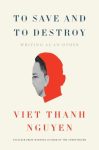
When Pulitzer Prize-winning writer-activist Viet Thanh Nguyen was asked to deliver Harvard’s annual Charles Eliot Norton lectures in 2023, he admits that he was intimidated. After all, a string of luminaries had preceded him – Leonard Bernstein, Nadine Gordimer, Czeslaw Milosz, Toni Morrison, Igor Stavinsky, and Wim Wenders, among them – but in accepting the honor, he agreed to probe what it means to write as an “other.”
To begin, he had to face his otherness as an amalgam: On one hand, he’s an outsider because of his race (Vietnamese) and working-class, refugee background. But he’s also an insider because of his occupation (English professor at USC) and current social standing (MacArthur Foundation and Guggenheim fellowship recipient).
Furthermore, Nguyen understands that his privilege is not representative of other “others.” Nonetheless, he defines otherness as encompassing all who are “out of step, out of tune, out of focus, even to themselves.” This, he writes, includes “the Asian, the minoritized, the racialized, the colonized, the hybrid, the hyphenated, the refugee, the displaced, the artist, the writer, the smart ass, the bastard, the sympathizer, and the committed.”
That is, pretty much everyone aside from white, ruling-class males.
The essays in To Save and To Destroy move seamlessly between the personal and the political, and while Nguyen presents a plethora of sometimes-obtuse literary references, he expresses heartfelt solidarity with refugees and those in exile. While he contests their categorization as voiceless – he believes everyone has a voice, even if it’s ignored – he is unfailingly sympathetic to individual struggles. Particularly moving is his account of displacement’s impact on mental health. In fact, by zeroing in on his mother’s psychiatric hospitalizations, the book provides a deeply-felt account of exile’s toll. It’s beautifully wrought.
Nguyen’s deepest wish is for humanity to move into “expansive political solidarity” for collective liberation. It’s an inspiring, if aspirational, vision.
Reviewer bio: Eleanor J. Bader is a Brooklyn, NY-based journalist who writes about books and domestic social issues for Truthout, Rain Taxi, The Progressive, Ms. Magazine, the Los Angeles Review of Books, and The Indypendent.
Publishing quarterly online, Cleaver Magazine publishes cutting-edge contemporary fiction, nonfiction, poetry, interviews, essays on craft and the writing life, and book reviews showcasing Philadelphia voices among national and international artists that represent the fullest diversity. The Winter 2024 issue spotlights Creative Nonfiction Finalists: Pamela Balluck, Ellen Wilson, Margo Sanabria, Barrett Warner, and Judith Serin. Readers will also enjoy fresh poetry by Christopher David Rosales, John Minczeski, Herman Beavers, Bradley J. Fest, Elly Katz, Anders Howerton; flash works by Eden Royce, Jeffrey G. Moss, Zoé Mahfouz, Coleman Bigelow, Tracie Adams, Connor Fisher, Kiely Todd Roska, Jessica Klimesh; fiction by Lindsey Godfrey Eccles, David Lydon-Staley, Jeff Gabel, Sinclair Cabocel, Krista Puttler; and a visual narrative by Clifford Thompson. Cover design by Karen Rile.
The poems of Cory Lavender’s Come One Thing Another form a “chromosomal / bridge of inheritance, progenitors resurrected.” Informed by his family’s lore, Lavender recounts the “crackling murmur” between generations while dispensing with categorical divisions between genre (poetry and memoir) and persona (poet and narrator).
Come One Thing Another is a collection of memoiristic poetry. Cory Lavender is the person recording the lives of his “Milk Father,” an uncle accidentally shot over the “fate of [his] heifer,” an aunt who survived the Depression, and a great grandmother with a bad temper, among others on his mother’s and father’s sides of the family.
The Roy and Lavender families are chock full of rebellious, tell-it-like-it-is characters with ties to Africa, Jamaica, Germany, and Nova Scotia. Lavender, the poet among them, writes idiomatically and colloquially, giving voice to and “capturing” his relatives’ “likenesses” in rangy poems that offer opinions on deer hunting, plastics pollution, lobster prices, and “Hard Times” that affect the way of life of his family, who farm and hunt the land in a “guns and grub” relationship that makes them intimately aware of change. “Nothing like it used to be.”
To “extend remembrance” is at the heart of what motivates Lavender to write his family story. The poet is also writing to address the “shadows” and “tangle” regarding his place in his family tree.
Necessarily, a few poems address the fact that he, like his father, “grew up unaware he’s mixed,” “half-ashamed of [his] signature curls.” In the poem “Fort Cory,” the most self-telling poem within the collection, the poet confesses feeling “embarrassed writing this.” Such are the personal and artistic pressures to measure up to the “hallowed coordinates” of the people he loves.
Despite being “Besieged by insecurities,” Cory Lavender walks his own “stretch of shore” in his “cobbled ode” and heartfelt memorial.
Reviewer bio: Jami Macarty is the author of The Long Now Conditions Permit, winner of the 2023 Test Site Poetry Series Prize (forthcoming University of Nevada Press), and The Minuses (Center for Literary Publishing, 2020), winner of the 2020 New Mexico/Arizona Book Award – Poetry Arizona. Jami’s four chapbooks include The Whole Catastrophe (Vallum Chapbook Series, 2024) and Mind of Spring (Vallum Chapbook Series, 2017), winner of the 2017 Vallum Chapbook Award. To learn more about Jami’s writing, editing, and teaching practices, visit her author website.
Submission Deadline: March 30, 2025 Submit your fiction, poetry, and creative nonfiction to Black Fox Literary Magazine’s Winter Prize with theme Rise or Ruin! Deadline: March 30, 2025! Registration is also open for our online January class: Goals, Routines, and Mindset for Writers on January 18, 2025 at 1-3 PM EST. View flyer for more information and a link to our website.
Want early access to our eLitPak flyers? Subscribe to our weekly newsletter! You can also support NewPages with a paid subscription and get early access to the majority submission opportunities, upcoming events, and more before they are posted to our site.
Kaleidoscope takes a closer look at relationships, aging, neurodiversity, chronic illness, ableism and resilience in its first issue of 2025. Each issue of the magazine explores the experience of disability through the lens of literature and fine art. Submit your best work to us today! View our flyer for more information and a link to our website.
Want early access to our eLitPak flyers? Subscribe to our weekly newsletter! You can also support NewPages with a paid subscription and get early access to the majority submission opportunities, upcoming events, and more before they are posted to our site.