Home » Newpages Blog » Poetry » Page 8

The Poetry of Plath

Guest Post by Elda Pappadà

Sylvia Plath Poems Chosen by Carol Ann Duffy is a well put together ensemble of Plath’s deeply honest poetry. Her writings were vulnerable and held profound personal thoughts. Reading her poetry, I hear the voice of all women.

As Duffy mentions, Plath wrote confessional poems. She represented women and our challenges. Her voice is the voice we hear but quietly dare not express aloud, but still desperately feel and can never altogether ignore. I especially felt this from her poem “Mirror.” It is troubling and candid: “in me she has drowned a young girl, and in me/ an old woman/ rises . . . .”

She explores many motifs. At times, her poetry can be gripping and sad, but she also captures beautiful flashes and makes light of dark situations like in the poem “Last Words.” She has lines that make you smile because they are intelligently crafted even though the context is nothing to smile about, considering what we know about Plath’s life: “I should sugar and preserve my days like fruit!”


Sylvia Plath Poems Chosen by Carol Ann Duffy by Sylvia Plath. Faber & Faber, 2012.

Reviewer bio: Elda Pappadà recently self-published her first poetry book, Freedom—about love, loss, and understanding. A book about defining life and giving weight to everything we do. Twitter: @poems_elda.
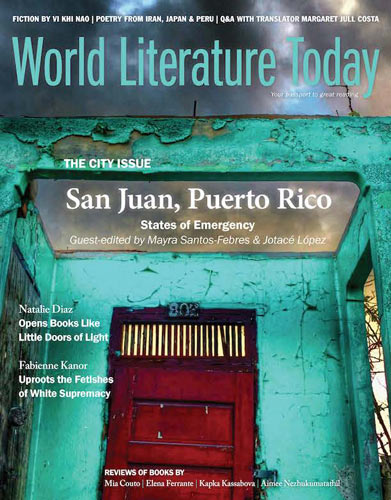
World Literature Today – Fall 2020

San Juan, Puerto Rico, takes the spotlight in World Literature Today’s annual city issue with a powerful selection of poetry, stories, and essays by 17 writers. Other highlights in the autumn issue include Fabienne Kanor’s essay on uprooting the fetishes of white supremacy; interviews with Natalie Diaz and Margaret Jull Costa; a stunning poem by Achy Obejas on “the universe at absolute zero”; fiction by Vi Khi Nao and Lidija Dimkovska; and much more. Reviews of new books by Elena Ferrante, Mia Couto, Kapka Kassabova, and dozens more make WLT your go-to guide for the best in international literature

Understorey Magazine – Issue 18

Understorey Magazine Issue 18 is out. Read for examinations on the many ways science and technology affect our everyday lives. Poetry by Moni Brar, Daze Jefferies, Kimberley Orton, Dawn Macdonald, Kayleigh Cline, and I. Sabrina Samreen; fiction by Gail Willis; and nonfiction by Jeanne Kwong, Sima Chowdhury, Stacey McLeod, and Rita Kindl Myers. Plus, interviews with Maryam Heba and Chelsey Purdy.

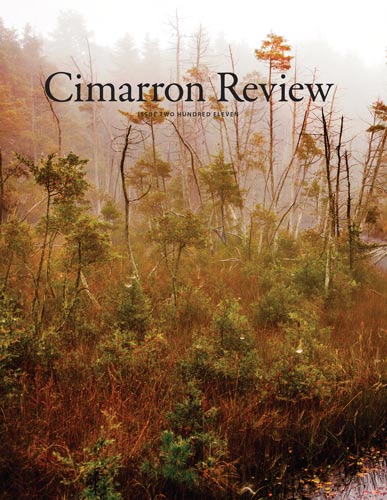
Cimarron Review – Issue 211

Issue 211 of Cimarron Review features poetry by Bonnie Auslander, Clemonce Heard, Leslie McGrath, Emily Franklin, Chris Haven, Matt Morgan, Laura McKee, Bryce Berkowitz, Elisabeth Murawski, Jan Beatty, Kayla Sargeson, and others; fiction by Andrew Geyer, Molly Anders, and Steven Wingate; and nonfiction by Ephraim Scott Sommers and Caroline Sutton. This issue’s cover art is “River Fog” by Richard Speedy.

Event :: Driftwood Press Virtual Seminars for Fiction & Poetry

Driftwood Press Fall 2020 Virtual Fiction & Poetry Seminars bannerDriftwood Press‘ “Editors & Writers: The Path to Publication” and “Chapbook Creation” seminars are open for registration! Short story writers and poetry chapbook writers seeking to polish their craft and learn about the other side of submissions should apply; each course includes five lectures, critiques, prompts, readings, and more. Both courses are limited to fifteen spots each and will close when those spots are filled or when the course begins on October 19th. Click the link for more testimonials, a lecture list, and additional information.

A Wild Light

Guest Post by Susan Kay Anderson

Bodwell’s Crown of Wild, with its gorgeous cover of an abstract painting (by the poet’s late father), is an exciting reminder of our own moments of wild abandon and others’ wild abandon gone right/gone wrong.  In “Summertime” we get to read a list of pleasurable freedoms: “. . . swim the length of every pool . . . / . . . French kissing Matt Matera . . . .” later becoming abandoned to the larger universe as this poem closes. What are the answers, this poem seems to be asking. Can anything be held and kept, or is even capturing memories an act of abandon as this very idea is also in survival mode?

I’ve been reading these poems with the cover in my mind. Its brushstrokes seem to be a visual companion to the pain of grief and anxiety of what now overwhelms: forest fires, death and abuse, a madman at the helm.

What does abstract art do but tell a story in a different way, a way that leads to musings and fresh starts? There are no easy answers.

In “Where Rivers And Mountains Remain,” one of the poems in Crown Of Wild paying homage to Kayla Mueller, the captured American woman who was held and died in Syria, we see wishes for Mueller: ” . . . silvery dreams” and ” . . . a crown woven from stars” as gentle acknowledgements and gifts of praise.

What Bodwell constructs in Crown Of Wild are sculptures and sketches and shapes so each poem can express what was unthinkable. Where will the brush go? What color will it pick up as it merges and is dragged through what is already there? What is soothed? Stirred?

These poems do not need explanation, they seem to be saying. They stand alone on their base, on that which protects and extends and illustrates what is “wild” to what is really wild and beyond our imagining. They say here is beauty and the redemption that moonlit/starlit rivers and mountains bring because they remain after all that has happened, is happening.


Crown Of Wild by Erica Bodwell. Two Sylvias Press, 2020.

Reviewer bio: Susan Kay Anderson has work forthcoming from Loud Coffee Press, Sleet Magazine, and Finishing Line Press.

Buy this book from our affiliate Bookshop.org.

Sponsor Spotlight :: EVENT: The Douglas College Review

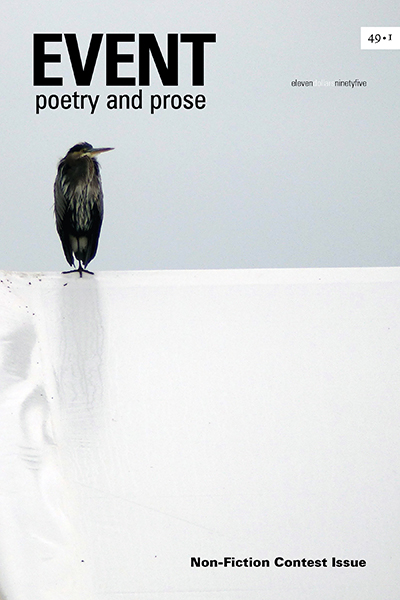
cover of EVENT Issue 49-1Founded in 1971, EVENT is a literary magazine dedicated to nurturing writers and presenting readers with the best contemporary writing from Canada and abroad. They strive to publish a diversity of voices and literary styles and have published many distinguished writers before and after they gained national or international recognition, i.e. André Alexis, George Bowering, Charles Bukowski, Esi Edugyan, Jack Hodgins, Annabel Lyon, Pablo Neruda, Alden Nowlan, Nino Ricci, Diane Schoemperlen, Carol Shields, Timothy Taylor, and Madeline Thien.

Each year they host a Non-Fiction Contest. The contest awards $3,000 in prizes ($1,500 First Place, $1,000 Second Place, $500 Third Place) plus publication in the Spring/Summer issue. This is the longest-running contest of its kind in Canada. The deadline to enter is October 15 annually. Check out Issue 49/1 to view the winning pieces of their 2019 contest: “Judge’s Essay” by Anthony Oliveira, “The Dead Green Man” by Jane Eaton Hamilton, “Things You Think When Your Husband Has a Heart Attack” by Mary Steer, and “My Beautiful Madness” by Rose Cullis.
Besides publishing issues three times a year, EVENT also offers a reading service for writers. Stop by their listing on NewPages to learn more.

The LaHave Review Spotlighting Poems & Poets

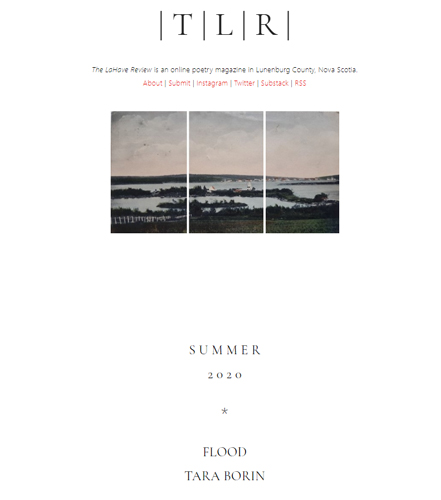
The LaHave Review Summer 2020 screenshotFounded in 2019, online quarterly literary magazine The LaHave Review highlights a single poem in each issue with an interview and notes about the poem. The Fall 2020 issue features “As For the Glossy Green Tractor Your Were” by Allison Adair. Past issues include “Flood” by Tara Borin (Summer 2020), “Buttercup” by Emily Tristan Jones (Spring 2020), and “What I Can’t Tell Her” by Ashley Anna McHugh (Winter 2020).

They read poetry submissions year-round and pay $100 CAD per poem for first publication rights.

The journal is named after the LaHave River in Lunenburg County, Nova Scotia where the magazine is based and is edited by Michael Goodfellow. Stop by their listing on NewPages to learn more.

This is Love

Guest Post by Courtney B. Jenkins

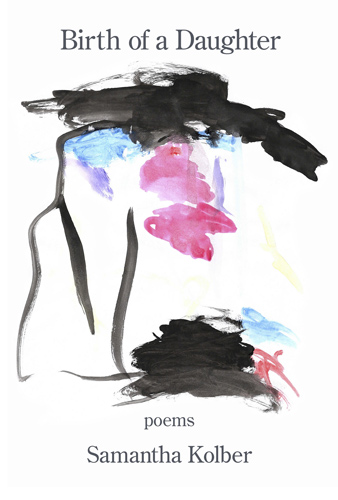
As I read Samantha Kolber’s poetry debut, I thought of all the mothers I know and hold dear—close friends, my sister, my own mother; I want to give them this book, share with them this gift of understanding.

I paused as I read to absorb moments of “Whoa,” as Kolber’s words reveal what it meant to her to become Mother. I re-read to assimilate every nuance before passing on to the next vignette. Each feeling evoked felt important. Kolber’s words are powerful draws into her world and, somehow, although I am not a mother—a birth-mother, anyhow—I know these feelings. I suddenly understand the patience I see in the mothers around me—browbeaten and screamed at by tiny versions of themselves—who are somehow able to smile in response and reply with patience and logic to the demands of their offspring. And, I realize, through this breadth of written, recorded emotion: this is love. My eyes teared with the fullness of it. And although I have no literal means of comparison in my own life, I understand. Continue reading “This is Love”

Valley Voices – Fall 2020

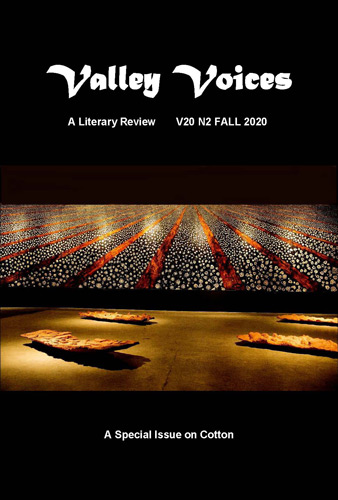
The Fall 2020 issue of Valley Voices features poetry by Paul Mariani, Gary Fincke, Janet McCann, Luci Shaw, Marge Piercy, Ted Kooser, D. S. Martin, Walter Bargen, Virginia Sullivan, Ed Madden, Le Hinton, Joseph Pearce, Jean-Mark Sens, John J. Han, and more; memoirs by Billy Middleton, Frederick W. Bassett, and Carol Coffee Reposa; and articles & interviews by Bruce Boyd Raeburn, Adam Gussow, Joseph Millichap, Janet Greenlees, Dominic Reisig, John J. Han, Gab D. Smith and Thomas H. Sayre, and David Tisdale.

The Shore Poetry – Fall 2020

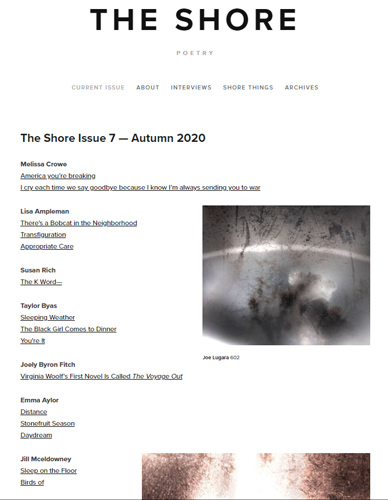
The autumn issue of The Shore features gorgeous and dynamic poetry by Melissa Crowe, Lisa Ampleman, Susan Rich, Taylor Byas, Joely Byron Fitch, Emma Aylor, Jill Mceldowney, Samuel Adeyemi, Taylor Fedorchak, Susan Moon, Owne McLeod, Oluwadare Popoola, Isaac George Lauristen, Duncan Mwangi, Adam Day, Natalie Young, Dan Wiencek, Andy Keys, Vincent Poturica, Katherine Fallon, and more. The issue also features digital art by Joe Lugara.

Leaping Clear – Fall 2020

Leaping Clear - logo

Take the time to enjoy and be nourished by the art and writing in this new issue of Leaping Clear. There is humor, poignancy, power, ecstasy, calm, and beauty to be found in essays by Elizabeth Fletcher, Liz Woz, Ranjani Rao, and more; fiction by Taffeta Chime; and poetry by Alan Cohen, Carla Sarett, Fran Markover, J. P. White, Linda Parsons, Sandra Fees, Wayne Lee, and more.
Overlooked Beauty

Magazine Review by Katy Haas

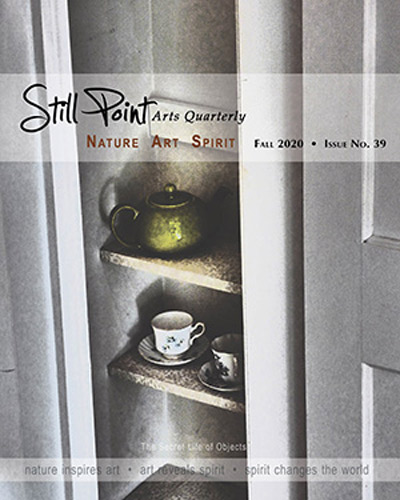
Now more than ever it’s important to find the beauty in whatever is around us. As writers, as artists, and as humans struggling through a traumatic period of time, it’s necessary to find bright spots. The Fall 2020 issue of Still Point Arts Quarterly puts this into practice, the theme of the issue being “The Secret Life of Objects.”

Throughout the pages, writers and artists look at what’s around them and capture their beauty. Adrienne Stevenson writes an ode to a “Kitchen Timer,” an appliance one doesn’t have to think much about until it’s gone. Kathleen Miller draws pared-down sketches of telephones, boats, pitchers, eliminating the details to follow Georgia O’Keeffe’s sentiment of “get[ting] at the real meaning of things.” Most of MJ Edwards’s compelling photography focuses on treasures of trash found on the beach, as they wonder about the “untold stories” the objects carry with them.

Art can be found in the everyday items around us, the objects easily overlooked. Don’t forget to look around you and find the beauty and inspiration they can hold.

Service Workers’ Words

Magazine Review by Katy Haas

Since March, we’ve been relying heavily on service workers, those operating the essentials while the rest of the country slows or stops. The second half of the Fall 2020 issue of Rattle features work by poets who have served long periods of time as service workers.

In this section, readers can find Marylisa DeDomenicis’s “Excuse Me” and Jackleen Holton’s “The Hunter,” both of which discuss working in a restaurant. DeDomenicis writes of the prevalent racism in the kitchen where the speaker works, and Holton focuses on the sexism and harassment the women face at the restaurant where her speaker works. In both of these, the other workers advocate for each other when the higher-ups either do nothing or contribute to the problem. The speaker in DeDomenicis’s piece sticks up for the bullied Mexican bus boy, and the waitresses in Holton’s piece work the buddy system together so they’re never alone, lessening the severity of their harassment.

Laurie Uttich’s “To My Student with the Dime-Sized Bruises on the Back of Her Arms Who’s Still on Her Cellphone” stuck out to me most starkly. In this poem, the speaker notices her student’s bruises and implores that she put down her phone, her abusive boyfriend on the other end, so she can trade it for a pen and “Take a piece of the dark and put it on a page.” Sylvia Plath and Virginia Woolf stand by as supporting characters, offering comfort and a room of one’s own. Uttich’s use of language as the poem addresses the student is clever and flows quickly, familiar images flashing through the lines.

While we continue to rely on service workers to keep the world running, make sure to take time to hear their voices and their stories in their own words.

Event :: 2021 Virtual Palm Beach Poetry Festival

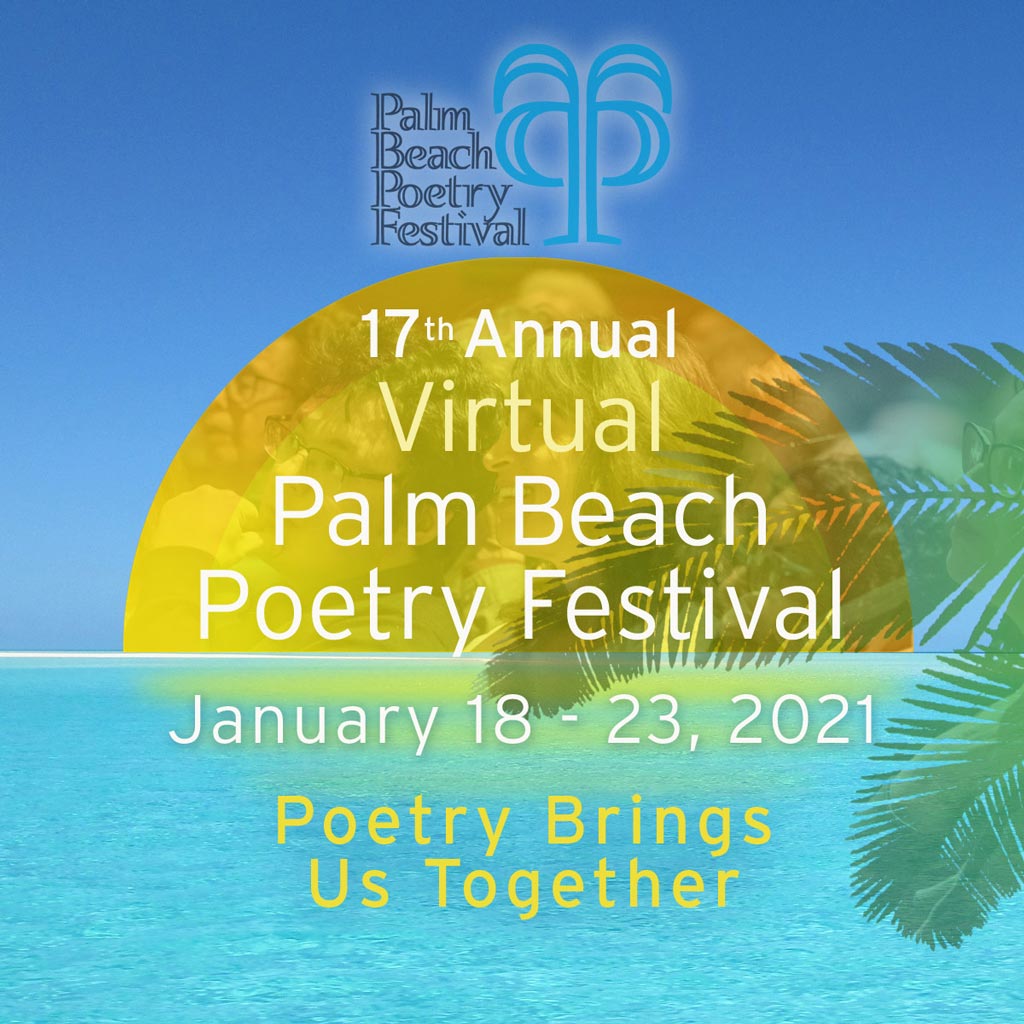
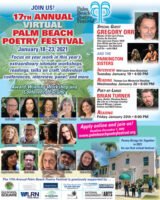
2021 Palm Beach Virtual Poetry Festival banner17th Annual Palm Beach Poetry Festival in Delray Beach, Florida, January 18-23, 2021. Focus on your work with America’s most engaging and award-winning poets. Workshops with David Baker, Laure-Anne Bosselaar, Traci Brimhall, Vievee Francis, Kevin Prufer, Martha Rhodes, and Tim Seibles. Six days of workshops, readings, craft talks, panel discussion, social events, and so much more. One-on-one conference Faculty: Lorna Blake, Sally Bliumis-Dunn, Nickole Brown, Jessica Jacobs, and Angela Narciso-Torres. Special Guest: Gregory Orr and the Parkington Sisters. Poet At Large: Brian Turner. To find out more, visit www.palmbeachpoetryfestival.org. Apply to attend a workshop! The application deadline has been extended to December 1 from November 10.

New Kooser Gem

Guest Post by Guinotte Wise

I see where the bookmark is in the closed pages of Ted Kooser’s Red Stilts and realize I’ve been reading faster than I meant to; it’s a new Kooser book and I like to savor the first read. It’s like a dish of something especially good and you want it to last longer than it does. Each poem is a pleasure. Even the epigraph at the start is Kooserian, though it’s a Tolstoy quote from “Father Sergius”: “After he’d walked away, she stood in the yard in starlight, listening to dogs bark, each more faintly as he passed the farms along the road.”

I can see it, hear it, feel it. That’s a summation of Ted Kooser’s poetry. The cover of this newest gem from Copper Canyon Press is a rather entrancing painting of an alley by Don Williams, an oil titled Nebraska City Alley and it, too, echoes Kooser charm and clarity.

Once finished with this, I’ll never be finished; I’ll return to it often. I have a shelf of Ted Kooser poetry and whichever book I pull from it, it takes me quietly away from whatever dissonance the outside world is shoveling at me, and into a gently masterful poem that seems so simple, so connected to everyday things we miss in our confusion.

Thank you, Mr. and Mrs. Kooser, for this kid you had in 1939. And thank the world for carving his genius. Simply awesome.


Red Stilts by Ted Kooser. Copper Canyon Press, 2020.

Reviewer bio: 5-time Pushcart nominee and author of seven books, Guinotte Wise’s poetry and prose have appeared in numerous journals. Some work is at http://www.wisesculpture.com.

Buy this book from our affiliate Bookshop.org.

Avian Inspiration

Guest Post by Amber Thompson

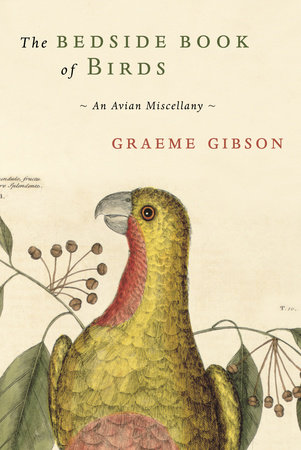
I discovered Graeme Gibson’s The Bedside Book of Birds while watching Margaret Atwood: A Word After a Word After a Word is Power. The day after I watched the documentary, my husband and I rescued a pair of near-fledgling doves. This, coupled with the fact that I found Atwood and Gibson’s relationship moving and relatable, convinced me I had to get this work for my husband, a lover of both books and birds.

Online it was selling for much more than the original list price, but at a bookstore a week and a half later, I watched my husband pick up a more reasonably priced copy. I told him a little about the book: that Atwood’s late husband had compiled it and that it was a collection of works on the relationship between birds and humans—in a sense, the awe the former has long inspired in the latter. I also told him I’d been hoping to get it for him and that if he liked the look of it, I still wanted to.

As we drove home, he cracked open the book. I peeked over to see the title of the first piece, a poem: “Night Crow” by Theodore Roethke. When he read it to me, I had the sudden realization that it was a poem I’d been searching for for years. These miraculous-feeling events coalesced into an experience of serendipity that we had not felt in a long time. When we curled into bed that night, he read more of the book aloud to me and we looked together at the beautifully included reproductions of sketches, paintings, and scientific drawings of birds. We rested quietly in the knowledge that we, through our friend Carol, the surviving fledgling, had been touched deeply by the avian world as well.


The Bedside Book of Birds: An Avian Miscellany by Graeme Gibson. Penguin Random House.

Reviewer bio: Amber Thompson is a Pushcart Prize nominee who recently published her debut poetry chapbook. She can be found at www.amberthompsonwrites.wordpress.com.

Event :: Willow Writers’ Fall 2020 Virtual Workshops

Registration Deadline: Rolling
Willow Writers’ Workshops is going virtual this fall! We will offer workshops, providing writing prompts, craft discussions, and manuscript consultations. All levels are welcome. Writers’ Workshops available on Thursday nights, Sunday afternoons, Saturday mornings, and Monday mornings. Fall seminars include Generating Story Ideas and Creating a Strong Sense of Place; Gothic Fiction, and Flash! Writing Short, Short Prose. Workshops and seminars run in September and October. The facilitator is Susan Isaak Lolis, a published and award-winning writer. For more information, check out willowwritersretreat.com.

Event :: Poetry Lab’s Submit It Like You Mean It

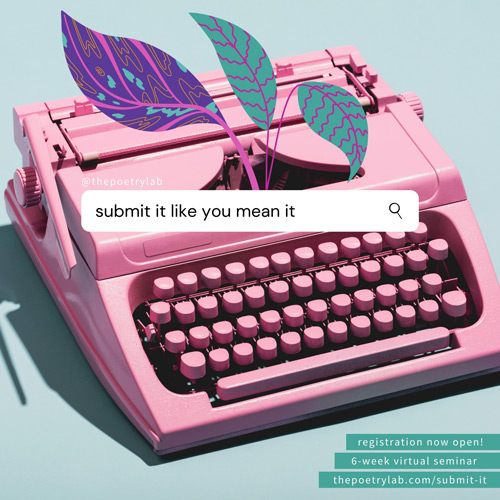
Poetry Lab's 2020 Submit It Like You Mean ItEnrolling now: six-week virtual seminar offered by The Poetry Lab, Submit It Like You Mean It: All You Need to Know to Successfully Submit Poetry for Publication. Reliable, effective submissions strategy with in-depth guidance on cover letters, bio statements, simultaneous submissions, where to submit, how to create a tracking sheet, and much more. Our goal is to demystify the path to publication with practical tools and insider knowledge in a friendly environment. Registration fee is $95 and includes one-month subscription to Duotrope. Scholarships are available. Class begins October 6, 2020. Learn more at our website.

Still Point Arts Quarterly – Fall 2020

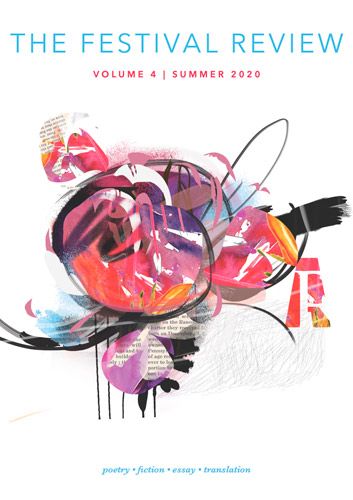
The Fall 2020 issue homes in on “The Secret Life of Objects.” Featured artists include Cary Loving, Birgit Gutsche, Aaron M. Brown, Jeffrey Stoner, and more. Featured writers include Dawn Raffel, Judith Sornberger, Emily Uduwana, Kathleen Aponick, William Doreski, Keltie Zubko, Adrienne Stevenson, Susan Currie, and others. Find more info at the Still Point Arts Quarterly website.

Spoon River Poetry Review – Summer 2020

The Summer 2020 Issue of SRPR is out. In this issue, you’ll find cover art by Brittany Schloderback; the SRPR Illinois Poet Feature with new poetry by Simone Muench and Jackie K. White, with an interview of the poets by Carlo Matos and Amy Sayre Batista; and new poetry by Jose-Luis Moctezuma, Paul Martinez-Pompa, Julia Wong Kcomt translated by Jennifer Shyue, Michael Leong, Emily Carr, and more.

New England Review – 41.3

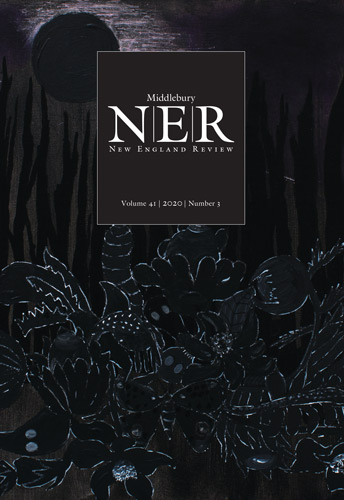
New England Review Volume 41 Number 3 is out. Featured work by May-lee Chai; Jeneva Stone; Laurence de Looze; Alyssa Pelish; John Kinsella; Clifford Howard; and translations of Scholastique Mukasonga, Karla Marrufo, and Nelly Sachs. Fiction by Kenneth Calhoun, Meron Hadero, Kate Petersen, and Kirk Wilson; poetry by Anders Carlson-Wee, Victoria Chang, Justin Danzy, Elisa Gabbert, torrin a. greathouse, Christina Pugh, and more; plus cover art by Heidi P.

Kaleidoscope – No. 81

During periods of unrest and uncertainty, when ominous dark clouds roll in and the sky becomes black, it can be easy to give in to feelings of despair. Kaleidoscope contains stories of adversity but it also offers hope. Featuring the essay “Between Rooms” by N. T. McQueen, the story “Mother Bear” by Melissa Murakami, and the essay “Nacre Upon Nacre” by Jenna Pashley Smith. In addition to these three, this issue contains an array of thought-provoking poetry and other wonderful stories of fiction and nonfiction. Issue 81 brings the promise that storm clouds will dissipate and the sun will shine again.

Remembering September 11 with Wisława Szymborska

Guest Post by Autumn Barraclough 

With September 11 close at hand, I’ve found my thoughts turning back to another time in American history in which our country suffered. I found myself reflecting back on September 11 and pictures.

In the poem “Photography from September 11,” Wisława Szymborska captures my thoughts as she describes the figures, forever frozen in history, as they jump from the twin towers. Her solemn respect and care for these souls resonates throughout the poem as she describes their flight, rather than their demise. This poem helps me to remember the tragedy of September 11 without the political connections—just understanding that humans were hurt and that I still have a country to love and care for that is full of people that care for each other in their own way.


Reviewer bio: Autumn Barraclough is a college student studying English. She is a Virginian at heart and loves to delve into the connections between France and Virginia, aspiring to create a written work that expresses that relationship.

450 Pages of Poetry & Prose to Love

Magazine Review by Katy Haas

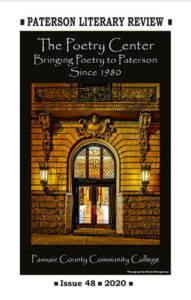
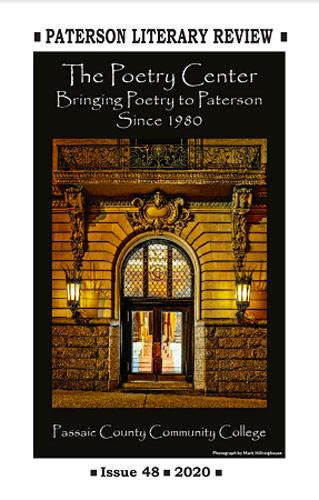
Issue 48 of Paterson Literary Review is a hefty 450 pages. A reader is guaranteed to find something they admire or connect with in those near-500 pages.

Readers can look forward to Vivian Shipley’s “A Glossary of Literary Terms for My Son,” a poem creatively and seamlessly broken up into nine different literary terms. Mary Ann Mayer writes an ode to “Walt Whitman’s Pants,” a poem that ends up being educational with its historical context. Penny Perry’s “Fig Bars” ends up being extremely relevant as the speaker sits with her husband and daughter as a wildfire burns twenty miles from their house.

And that’s just a small sampling of the poetry. The issue also includes prose and reviews. It’s nearly impossible to walk away from this brick of an issue without finding something to love.

September 2020 eLitPak :: 17th Annual Virtual Palm Beach Poetry Festival

Palm Beach Poetry Festival eLitPak flier
click image to open PDF

17th Annual Virtual Palm Beach Poetry Festival, January 18-23, 2021. Focus on your poems in intimate workshops with extraordinary faculty: David Baker, Laure-Anne Bosselaar, Traci Brimhall, Eduardo C. Corral, Vievee Francis, Kevin Prufer, Martha Rhodes, Tim Seibles. Conferences with: Lorna Blake, Sally Bliumis-Dunn, Nickole Brown, Jessica Jacobs, Angela Narciso-Torres. Special Guest: Gregory Orr & the Parkington Sisters. Application Deadline: December 1st. Apply today!

View full September 2020 eLitPak here.

Sponsor Spotlight :: Desert Nights, Rising Stars will be Virtual in 2021

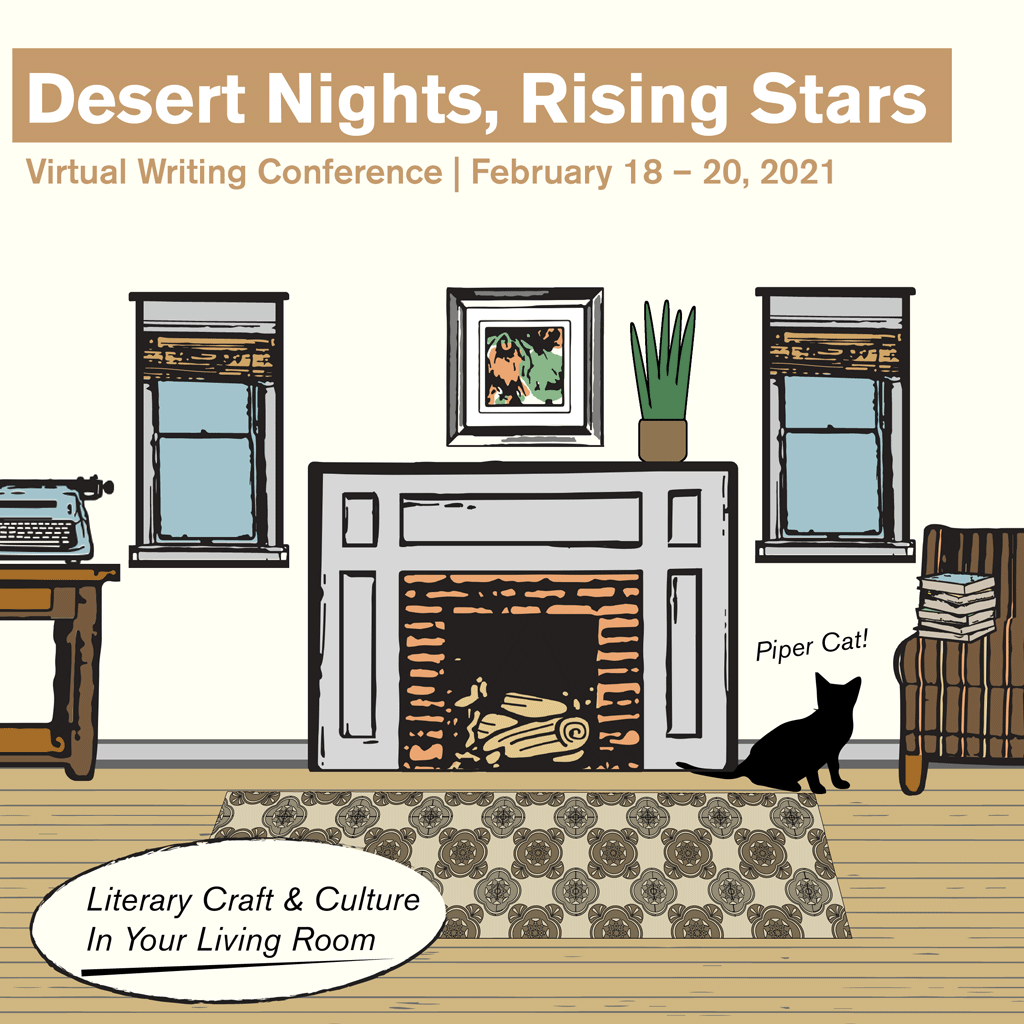
Desert Nights Rising Stars Writers Conference 2021While we would usually start things off with the beautiful desert weather and the southwestern landscape, things are a little different this year. With rising COVID cases in Arizona, restrictions surrounding travel around the nation, and ongoing orders against large public gatherings, we’ve made the choice to move Desert Nights, Rising Stars 2021 to a completely virtual experience.

The 2021 conference will be conducted online via Zoom from February 18 through 20. Program features will include writing workshops, panel discussions, readings, pitch sessions, book fair, author signings, and roundtable discussions. Genres covered this year include fiction, creative nonfiction, poetry, publishing, business of writing, memoir, and young adult.

The faculty for the conference will be Matt Bell, Mahogany L. Browne, Suyi Davies Okungbowa, Alan Dean Foster, Tod Goldberg, Raquel Gutiérrez, Marcelo Hernandez Castillo, Linda Hogan, Beverly Jenkins, C.B. Lee, Connie J. Mableson, Christopher Morgan, Cynthia Pelayo, Evan Winter, and Erika T. Wurth.

Early registration is only $225 before December 31. Swing by their listing at NewPages to get more details.

September 2020 eLitPak :: MFA in Creative Writing at UNCG: Find Your Story Here

UNCG MFA in Creative Writing August 2020 eLitPak flier
click image to open PDF

Application Deadline: January 1
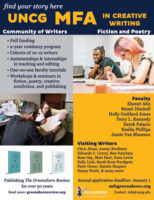
One of the first creative writing programs in the country, UNC Greensboro’s MFA is a two-year residency program offering fully funded assistantships with stipends and health insurance. Students work closely with faculty in one-on-one tutorials; take courses in poetry, fiction, publishing, and creative nonfiction; and pursue opportunities in college teaching or editorial work for The Greensboro Review. More at our website.

View the full September eLitPak here.

Sponsor Spotlight :: 2021 Palm Beach Poetry Festival Goes Virtual

2021 Palm Beach Virtual Poetry Festival bannerEnjoy the 17th annual Palm Beach Poetry Festival from the comfort of your own home as they go virtual in 2021. The event will take place January 18 through 23 and will feature writing workshops, panel discussions, manuscript critiques, and readings.

The keynote speaker is Gregory Orr and the Parkington Sisters. Workshop faculty includes David Baker, Laure-Anne Bosselaar, Traci Brimhall, Eduardo C. Corral, Vievee Francis, Kevin Prufer, Martha Rhodes, and Tim Seibles. One-on-one conferences available with Lorna Blake, Sally Bliumis-Dunn, Nickole Brown, Jessica Jacobs, and Angela Narciso-Torres.

They have extended the deadline to apply for the available workshops to December 1, 2020. Stop by their listing on NewPages to learn more about next year’s event.

Words Change Lives

Guest Post by Haley Marks

Throughout these difficult times, we all attempt to find meaning in our lives. We search for something that reassures us that we will make it through the never-ending struggles we endure. More than that, we seek an escape from these struggles. For many of us, words provide the perfect escape.

Whether the words come through books or TED Talks, they can have such a beautiful impact on our lives. Words change us. Words heal us, if we let them. However, I have found that the most colorful way words can reach us is through poetry. A well-written poem embodies the art of writing. Poetry can hold more emotion with a hundred words than many books do with a hundred pages. Its messy, imperfect words can weave together to create a masterpiece. As humans, we embrace anything as beautifully chaotic as we are; we can find exactly what we need in the relatable words of a disheveled poem.

A favorite place of mine to find some of the best poems is Poetry Foundation, providing poetry with words that touch the hearts of people in all walks of life. It provides poems for children and adults. It includes collections of poems for those struggling in school or those trying to relieve stress. The Poetry Foundation has poems available for anyone. The poems I have found on Poetry Foundation have surely blessed me; I have found words that express my emotions in a way I am incapable of doing on my own. The beautifully written poems included on this website and they’re literary journal Poetry have surely impressed me.

Poetry Foundation, in addition to poems, includes audio and guides for various poems. It successfully provides tools and poetry for anyone looking for words that could change his/her life.


Reviewer bio: Haley Marks is a student at Brigham Young University-Hawaii where she studies creative writing.

Tint Journal – Fall 2020

Tint Journal is the literary magazine for English as a Second Language creative writers, established in 2018 and based in Graz, Austria. We publish the finest of non-native English writing, including short stories, essays, and poems. Issue Fall ’20 has been released. Read twenty-five new literary creations by ESL writers from all around the world, now online and for free! Issue Fall ’20 also includes visual art creations by artists from all over the globe, combining the artistic realms of literature and art, as well as audio recordings of the writers reading their work.

2020 Grodd Poetry Prize for Young Writers Winners

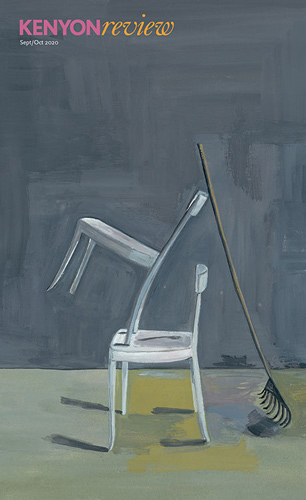
The sixteenth annual Grodd Poetry Prize for Young Writers winners are featured in the September/October 2020 issue of the Kenyon Review.

Winner
“Cutglass” by Manasi Garg

Runners-up
“(B)lack” by Eric Gottlieb
“Meat” by Annie Cao

Molly McCully Brown introduces the section with some words about the three placing entries, giving readers a preview of what to expect in the next several pages of the issue. Grab a copy to check them out.


A Kind Voice in the Emptiness

Magazine Review by Katy Haas

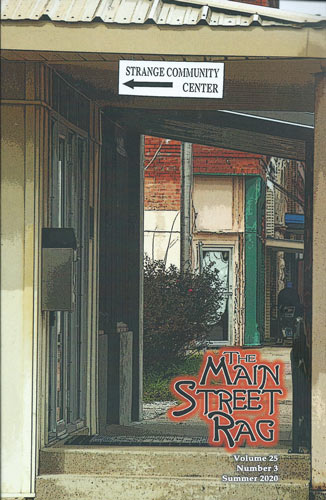
I like a piece of writing that piques my interest and leads me to do even more reading. Gail Peck’s “The Minister of Loneliness” in the Summer 2020 issue of The Main Street Rag managed to do just that for me.

The poem is introduced with a note: “The U.K. created the position of Minister of Loneliness, two years before COVID-19.” The title “Minister of Loneliness” was enough to interest me on its own, and even more so learning that it’s a real position. Peck’s poem addresses the minister in the days of COVID-19, women calling with their moments of loneliness. “It was bad enough before,” they admit, and now it’s gotten worse, their loneliness filled with uncertainties: “should they let the delivery boy in?”

The poem is touching and relevant. In addition to giving me something further to read about, it also gave me a point of connection as someone who lives alone and spent the early days of my state lockdown feeling incredibly lonely. What more could one ask from a poem about loneliness but a moment of connection and understanding? Peck’s poem itself works as a listening ear, a kind voice in the emptiness.

Eating Candy with Josh Luckenbach

Guest Post by Grace Tuthill

Who doesn’t love candy? We all (at least most of us) have happy memories tied to these sweet treats. So then why did Josh Luckenbach use a tootsie roll wrapper as a catalyst for death? This very common candy beloved by many is the object used to tell a vivid story of love and death between two siblings. In this poem, “Eating the Tootsie Roll,” Luckenbach dances with death as a girl simply eats candy with unknown origins. Her brother prophecies her death, almost as a threat, and the girl then goes home and kills herself. The ending of the poem leads readers to wonder if this suicide because of a controlling and abusive poisoning of her mind or food poisoning. The last line is a hunting echo of a sister listening to her brother and the lasting effects, either good or bad, that siblings can have on each other.


Reviewer bio: Grace Tuthill is a Marine Biologist with a special interest in writing. She has no published work but likes the ocean and photographing sea life.

The Meaning of Home

Guest Post by Christopher Woods

This year, perhaps like no year before, we are thinking about the concept of home. During the pandemic, most of us are spending much more time at home—in home offices, involved in remote teaching or learning, or simply in quarantine. Sadly, because of the economic collapse, many people are now homeless, and there will be more to follow. This year, more than ever, we are both consciously and subs-consciously considering the meaning and importance of home. We are thinking of safety and shelter. We have always been this way, but now it seems much more immediate and crucial, and even life-saving.

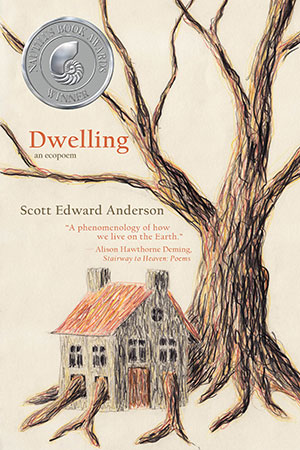
Dwelling by Scott Edward Anderson, delves deeply into this subject in the form of a book-length eco-poem. It began as a reaction to Martin Heidegger’s essay “Building Dwelling Thinking” and, in Anderson’s lyrical writing, took on a book-length life of its own. He asks questions such as “Do we carry home within?” Anderson’s poetic probing explores our place, not only inside a home, but in the larger world that is home to us all.

Ironically, many of us now have more time than ever to consider the concept of home, of refuge. Reading this book, I often stopped to look around the room, then out the window, considering the essential nature of everything. Readers might well find themselves doing the very same thing.


Dwelling: an ecopoem by Scott Edward Anderson. Shanti Arts Publishing, 2018.

Reviewer bio: Christopher Woods is a writer and photographer who lives in Texas. His photography book for writers, FROM VISION TO TEXT, is forthcoming from Propertius Press. https://www.instagram.com/dreamwood77019/

Buy this book from our affiliate Bookshop.org.

Event :: The Center for Creative Writing Online Courses & Virtual Retreats

The Center for Creative Writing has been guiding aspiring writers toward a regular writing practice for more than 30 years. Our passionate, published teachers offer inspiring online writing courses in affordable six-week sessions, as well as one-on-one services (guidance, editing) and writing retreats (virtual for 2020). Whatever your background or experience, we can help you become a better writer and put you in touch with the part of you that must write, so that you will keep writing. Join our inclusive, supportive community built on reverence for creativity and self-expression, and find your way with words.

Rattle – Fall 2020

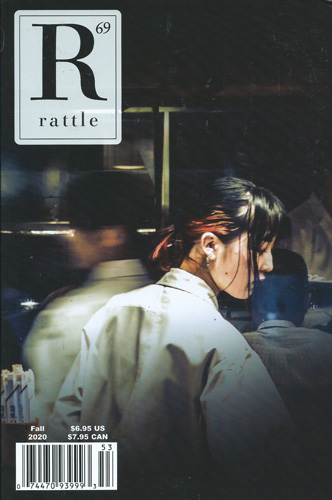
The Fall 2020 issue of Rattle features a timely tribute to service workers—those working in the lodging, food service, tourism, customer service and other industries in direct service to customers. Though planned long before the pandemic, service workers have been hit particularly hard this year, and we’re happy to be honoring poets who work in those fields. The conversation features Jan Beatty, covering her decades of experience working as a waitress, as well as the topics of adoption and the writing process. Another eclectic open section features twenty-two poems in a range of styles that are sure to make you laugh or cry.

Plume – Sept 2020

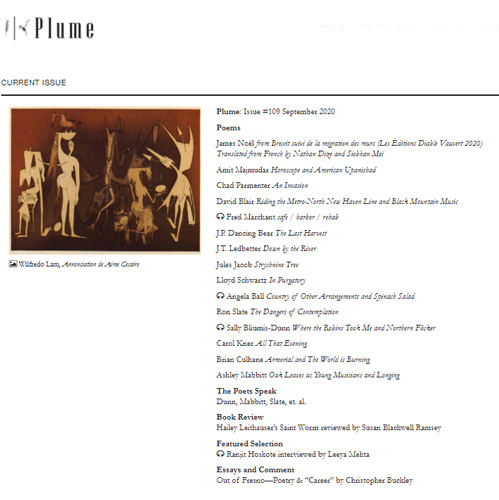
This month’s Plume featured selection: “The Chronicler of a Blue Planet: An audio interview with Ranjit Hoskote by Leeya Mehta” with work by the poet. Christopher Buckley pens the essay, “Out of Fresno—Poetry & ‘Career,’” and Susan Blackwell Ramsey reviews Hailey Leithauser’s Saint Worm.

The Louisville Review – Spring 2020

The latest print issue of The Louisville Review features fiction by Holly Tabor, Pamela Gullard, Bridget Mabunga, and Rebecca Thomas; nonfiction by Joseph Myers, Patricia Foster, Jessica Crowley, and Katherine Mitchell; and drama by Allie Fireel, Allen M. Price, Haydee Canovas, John Shafer, and Addae Moon. Poetry by Laura Judge, Joseph G. Anthony, James B. Goode, Shauna M. Morgan, Frank X Walker, and more

Kenyon Review – Sept/Oct 2020

The latest issue of Kenyon Review features a special poetry section, “All of This Is True,” guest-edited by Reginald Dwayne Betts, whose own poetry, a memoir, and essays explore the world of prison and the effects of violence and incarceration on American society. Betts has selected powerful work by fifteen poets including Sean Thomas Dougherty, April Gibson, Randall Horton, Roger Reeves, and others. The new issue also includes the winning poem and two runners-up in the 2020 Patricia Grodd Poetry Prize for Young Writers as well as four new works of fiction by Samuel Jensen, Dina Nayeri, Matthue Roth, and Marianne Shaneen.

The Thin Line Between Satire & Anxiety

Guest Post by Chana Kraus-Friedberg

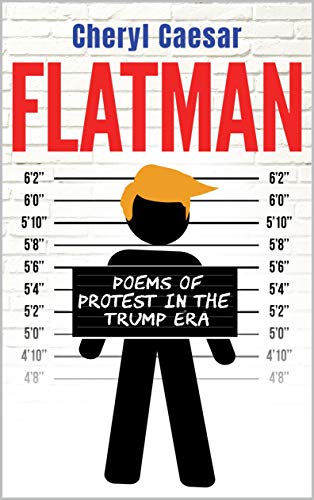
The current political climate is difficult to write about because so much of it seems to be its own satire. Imagine the most child-like, ludicrous system of logic possible, apply it to world events, and you have government policy in the US. Yet real damage is being done to the United States and the world, and that is certainly not funny. In her recent chapbook, Flatman: and Other Poems of Protest in the Trump Era, Cheryl Caesar brilliantly negotiates the line between satire and anxiety or grief, painting a sinister picture of how childish tendencies become destructive when combined with very adult power.

In the title poem, Caesar starts by imagining the president as a truly flat man in a way that reminds me of the popular kids’ character, Flat Stanley.  She describes the physical consequences of this flatness the way a picture book might. The president’s hair, we are told, is “rolled out in weird shapes, like a child’s / misshapen gingerbread man.” His head is square: “He could set his Diet Coke on it.” Later in the book, a spoof on Kipling’s If describes what happens if one can “fake a 4-F due to “bone spurs,”[ . . . ]  /And never go to war and win your own spurs, /But boast of dodging STDs instead[.]” It’s witty and easy to laugh at, but the laughter is uncomfortable. You read in the way that I think a lot of us are currently living, carrying the knowledge that the underlying joke is dark and uncontrolled and future-consuming. In a real world context, even fantastical flatness has consequences, Caesar reminds us: “[The president] can never cross the dimensional border. / And so he hates us (hate being / the flattening emotion), hates us all. Hates the round world.”


Flatman: and Other Poems of Protest in the Trump Era by Cheryl Caesar. Thurston Howl Publications, 2020.

Reviewer’s Bio: Chana Kraus-Friedberg is the winner of the 2020 Ritzenhein Award for Emerging Poets. Her first chapbook, Grammars of Hope, will be published in February 2021 (Finishing Line Press). Instagram: @chanakf2020

Terrain.org – August 2020

Visit Terrain.org for the new work on the site this month. Arne Weingart reviews The Tilt Torn Away from the Seasons by Elizabeth Lindsey Rogers and Melissa L. Sevigny interviews Pam Houston. Fiction by Beth Alvarado; nonfiction by Tamie Parker Song, Scott Russell Sanders, and Paul Riley; and poetry by Seth García, Garrett Hongo, Collier Brown, and more. In currents: Charles Revello, Patricia Schwartz, and others.