 Ongoing Enrollment; Location: Online
Storyville Writing Workshop offers virtual writing workshops online for a wide variety of skill levels. Workshops provide personalized critiques, ongoing email access to the instructor, writing resources, personal virtual meetings via Google Meet, as well as access writing forums. The Basics of Novel Writing is currently available to enroll in. Learn more at storyvilleworkshop.com/online-workshops/.

NewPages Blog
At the NewPages Blog readers and writers can catch up with their favorite literary and alternative magazines, independent and university presses, creative writing programs, and writing and literary events. Find new books, new issue announcements, contest winners, and so much more!
The MacGuffin – Spring Summer 2020
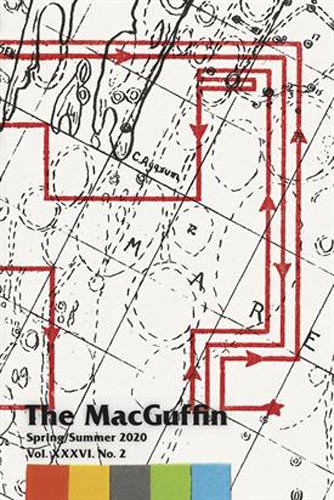
Evan D. Williams’ Escape Risk on the cover of The MacGuffin’s Volume 36.2 charts a vivid route out via literature of whatever quarantine situation you may find yourself trapped in. Journey to a new home and a new job in Mark Halpern’s “Would You Like Fries with That?” or head out on a cinematic cross-country trek with grandma in Jordan J.A. Hill’s “Marching Towards Golgotha.” Matthew Olzmann—guest judge of this year’s Poet Hunt contest—is highlighted in a short feature that begins on p. 101, while Erin Schalk’s gouache, ink, and wax form a vibrant mid-volume oasis.
Spread the word!
bioStories – Vol. 9 No. 1
The latest issue of bioStories introduces readers to the survivors of wars and the survivors of accidents, transports them to homeless shelters and hospitals, onto urban campuses and within rural farmhouses, and invites them to live briefly alongside occupants of cramped Brooklyn apartments and Southwest desert trailer parks. Work by Steven Beckwith, J. Malcolm Garcia, Jay Bush, Gary Fincke, and more.
Spread the word!
Event :: Willow Writers’ Workshop Now Offering Virtual Workshops for 2020
Beginning Dates: July 27; Virtual
Registration Deadline: Rolling
Willow Writers’ Workshops is going virtual this summer and fall! We will offer workshops, providing writing prompts, craft discussions, and manuscript consultations. All levels are welcome. Three different courses are being offered: Desire to Write? An Introduction to Creative Writing; Flash: Writing Short, Short Prose; and Writers Workshop on Thursday Nights, a six-week course focusing on short stories. Summer dates begin July 27. The facilitator is Susan Isaak Lolis, a published and award-winning writer. For more information, check out willowwritersretreat.com.
Spread the word!
Childhood Crushes & Dentist Fanfiction
Magazine Review by Katy Haas
Who didn’t have an embarrassing crush growing up? For thirteen-year-old Chava in “I Love You, Dr. Rudnitsky” by Avigayl Sharp, her new crush is her titular dentist.
Chava, deep in the throes of the brutality of puberty, falls in love with her dentist one day. Her newfound crush with its accompanying fantasies serves as a respite from her real life: being Jewish and bullied at her Catholic school, a disconnect with her distant mother, and disgust at her own body—her weight, her body hair, her budding sexuality.
Sharp gives Chava a voice that’s somehow both humorous and tragic, bringing me back to those awkward days of adolescence and the torturous process of puberty. She’s upfront and honest, telling us truths she doesn’t admit to others, while simultaneously wrapping us up in one lie after the other. By the end of the story, it feels like we’re reading her Dr. Rudnitsky fanfiction she’s posting on some secret blog. One can’t help feeling sympathy for Chava, for wanting to sit her down and give her a hug and some advice, and we can thank Sharp for creating such a cringe-worthy yet completely loveable character.
Spread the word!
“Tacos Callejeros” by Kenneth Hinegardner

Magazine Review by Katy Haas
There’s a fine selection of short fiction in the Spring/Summer 2020 issue of Concho River Review. Among them is the five-page “Tacos Callejeros” by Kenneth Hinegardner.
In this story, Steven observes a mother and her two children at a restaurant. The children misbehave as he eats and watches their behavior, and he ends up taking a liking to their mother, Melanie. Between these observations are passages about watching a dog fight on a past trip to Tijuana. As we read, it becomes clear Steven is not a caring and concerned individual, but is closer to a dog, its teeth around another dog’s throat.
Hinegardner writes with a slow build to the end, writing with precision and subtlety. The final character in this story, Ruben, acts the reader’s place, recognizing this part of Steven that is slowly revealed across the pages in this chilling, short piece.
Spread the word!
Event :: The Center for Creative Writing Offers Online Opportunities for Writers
The Center for Creative Writing has been guiding aspiring writers toward a regular writing practice for more than 30 years. Their passionate, published teachers offer inspiring online writing courses in affordable six-week sessions, as well as one-on-one services (guidance, editing) and writing retreats (virtual for 2020). Whatever your background or experience, They can help you become a better writer and put you in touch with the part of you that must write, so that you will keep writing. Join their inclusive, supportive community built on reverence for creativity and self-expression, and find your way with words. Creativewritingcenter.com.
Spread the word!
The Power of Translation in The Return
 Guest Post by Christy O’Callaghan
Last summer, when we could still travel, I had the honor of attending the Disquiet Literary Program in Lisbon. As part of that fantastic two weeks, we were treated to panels of local authors and discussions about the history of Portugal. Had I not had that experience, I may never have learned about the western world’s longest dictatorship. The panelists possessed so much history as people who lived those times or grew up in the wake of them. One such panelist was Dulce Maria Cardoso. Before I left Portugal, I’d already ordered her book The Return.
Her novel, which is translated into English by Angel Gurria-Quintana, mirrors her experience of being a Portuguese citizen but raised in Angola, one of Portugal’s colonies at the time. When Portugal had its revolution, so did their colonies. This book follows a family exiled back to Portugal, returning to a country many had never set foot in and where they weren’t welcomed with open arms. The main character Rui is a teenage boy trying to wrap his head around what’s happening, why, and how to live in this foreign Motherland.
Books like The Return exemplify why good translations are valuable. This dictatorship, let alone that colonies still existed, weren’t discussed when I was in school. And these events took place only 45 years ago. Being able to hear Dulce tell her story was a gift I shall treasure forever, but not everyone has that privilege. Access to books written in other languages then translated means more people can share in that information, those cultures, and experiences. Learning about our own society and history is essential. So too is knowing what has happened in the larger world—allowing us to glean from other’s experiences in hopes of not repeating them.
The Return by Dulce Marie Cardoso. MacLehose Press, 2016.
Reviewer bio: Christy O’Callaghan lives in Upstate, New York. Her favorite pastimes include anything in the fresh air. For her blog and writing, go to christyflutterby.com.
Spread the word!
Seneca Review – Spring 2020
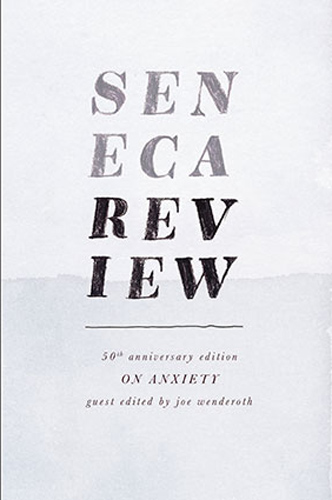
The 50th Anniversary Issue of Seneca Review, ON ANXIETY, is guest edited by Joe Wenderoth. Featuring poems and essays by Mary Ruefle, Graham Foust, Jamil Jan Kochai, Kitty Liang, Immanuel Mifsud, Amie Zimmerman, Lake Angela, Judy Bertelsen, Laura Brun, Eric Burger, Mike Carlson, Curtis D’Costa, and more. Cover art and design by Abigail Frederick.
Spread the word!
Plume – July 2020
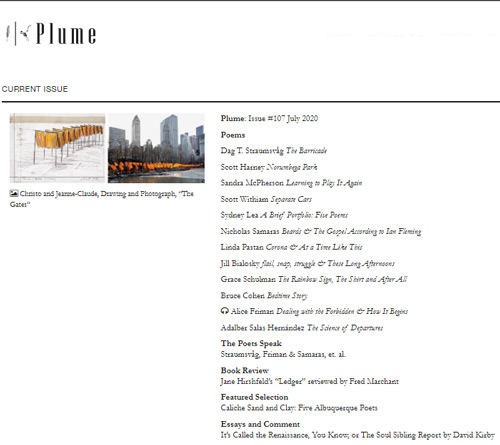
This month’s Plume Featured Selection: “Caliche Sand and Clay: Five Albuquerque Poets” with work by and interviews with Jenn Givhan, Felecia Caton Garcia, Michelle Otero, Rebecca Aronson, and Hilda Raz. In Essays & Comment: “It’s Called the Renaissance, You Know, or The Soul Sibling Report” by David Kirby. Fred Marchant reviews Ledger by Jane Hirschfield.
Spread the word!
Concho River Review – Spring 2020
This issue is dedicated to Dr. Terry Dalrymple, the founding editor of CRR. It includes fiction by Peter Barlow, Michael Fitzgerald, and others; nonfiction by Michael Cohen, Lucie Barron Eggleston, and more; and poetry by Barbara Astor, Roy Bentley, Jonathan Bracker, Matthew Brennan, Holly Day, Alexis Ivy, Ken Meisel, Alita Pirkopf, Maureen Sherbondy, Travis Stephens, Marc Swan, Loretta Diane Walker, Francine Witte, and more. Read more at the Concho River Review website.
Spread the word!
Cleaver Magazine – Summer 2020
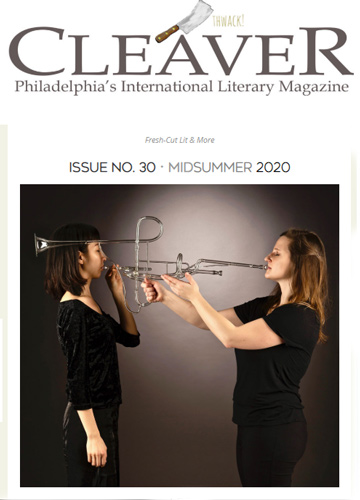
This issue of Cleaver Magazine features art by Madeline Rile Smith, a visual narrative by Emily Steinberg, and an essay on the art of Jan Powell by Melanie Carden. Also in this issue: short stories by Reilly Joret, Elaine Crauder, Melissa Brook, and Marion Peters Denard; flash by Susan Tacent, Brenna Womer, Michelle Ephraim, Leonard Kress, and others; and poetry by Roy Bentley, Stella Hayes, and more.
Spread the word!
Call :: Daphne Review Summer Mentor Program Applications Due July 31
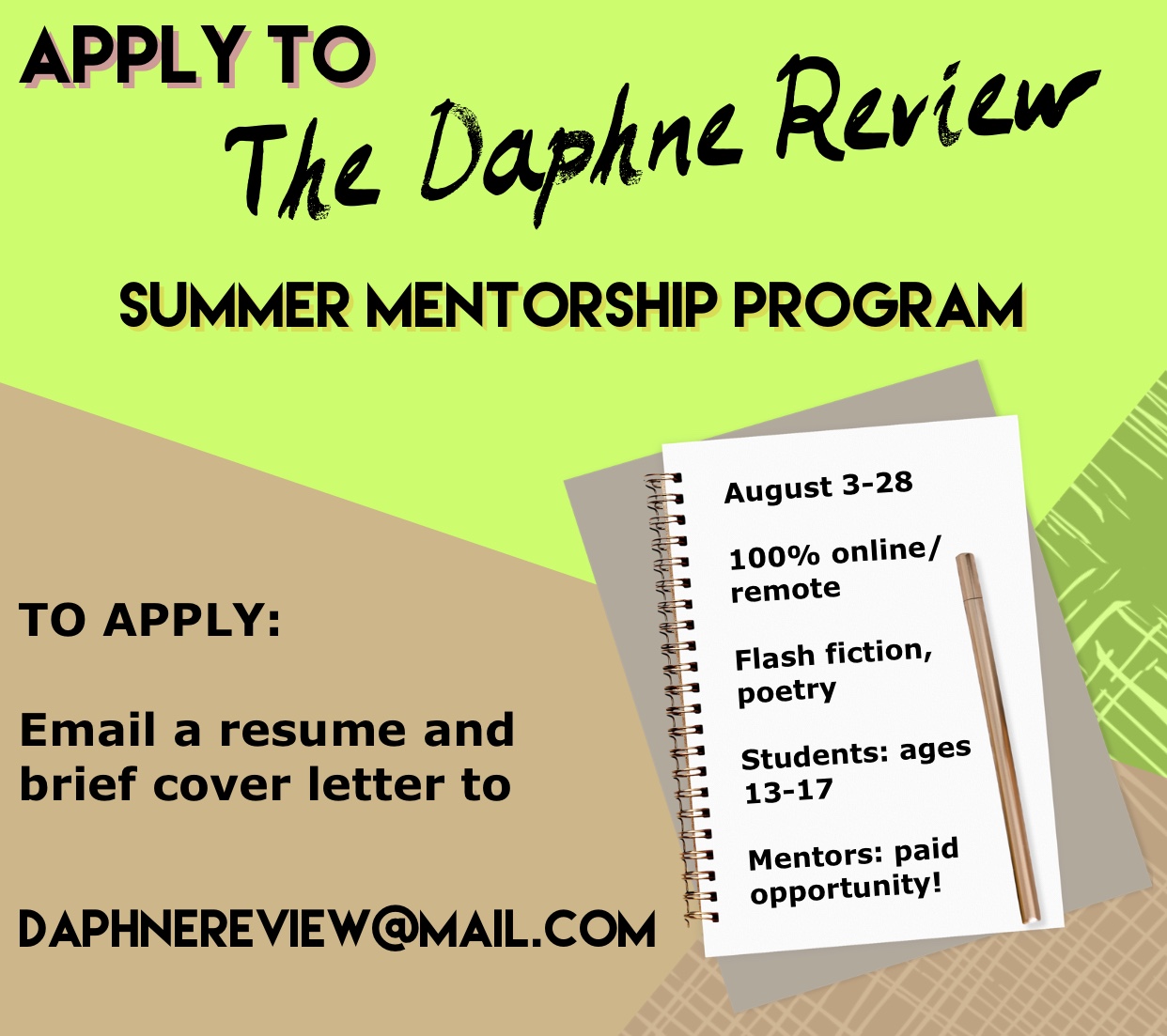 Deadline: July 31, 2020
Don’t forget The Daphne Review is hosting an online mentorship program for talented high school student writers and established writers/teachers acting as their mentors. They’re currently taking applications for both types (students and qualified mentors) until July 31st! To apply, submit a resume and brief cover letter to [email protected]. Start Date: August 3-28. Format: online. Classes: flash fiction, poetry. Pay for mentors: $50 per hour for skype or $200; $25 per hour for email or $100; total: $300 via paypal. www.thedaphnereview.org
Spread the word!
Discover and Rediscover with Megan Fernandes
 Guest Post by Emily Cinquemani
Megan Fernandes’ collection Good Boys takes a fresh and brilliant look at the anxieties and violence of our world, as well as the stories we create to accept them. These poems are both vast and personal. In them, I ran in the suburbs, visited Paris, and imagined what I would miss about the earth. Fernandes’ speaker is both vulnerable and bold. She gleans revelation from each new experience, including tarot readings, goat miscarriages, and knocking on the metal of an airplane before taking flight.
In this collection, mythology is an intimate part of the present moment. The speaker imagines herself stuck between Scylla and Charybdis and hears Virgil sing in her ribcage. We are asked to look at our own stories critically: what narratives do we have of our reality, and which of them are true? Which of them are harmful? Fernandes recognizes the stories we condone while unweaving them, and she does so with precision. She writes, “Only white people // can imagine a past / that was better // than now.” In the poem “Regret is a Blue Dive,” the speaker insists, “Things that are brave are often painful,” and wrestles with the possibility of being alone. These poems have an insistent, challenging, and beautiful honesty. They ask us to face uncertainty and let it linger, rather than running away.
Fernandes’ work also gives language to experiences I have previously been unable to name. For example, in her poem “Fabric in Tribeca,” her speaker refers to her sadness as “very adult” because it “will not make a scene” and asks, “Who makes curtains to give their sadness a perimeter?” Fernandes writes that, on earth, “everything is a portrait of gravity.” In every poem, I discovered something new or rediscovered something familiar. I am grateful for Fernandes’ voice and for the company these poems afford me as I move through the world.
Good Boys by Megan Fernandes. Tin House, February 2020.
Reviewer bio: Emily Cinquemani’s poetry is forthcoming or has recently appeared in Ploughshares, Colorado Review, 32 Poems, and Indiana Review. She is a poetry editor for The Adroit Journal.
Buy this book from our affiliate Bookshop.org.
Spread the word!
The Florida Review 2019 Editors’ Awards Winners & Finalists
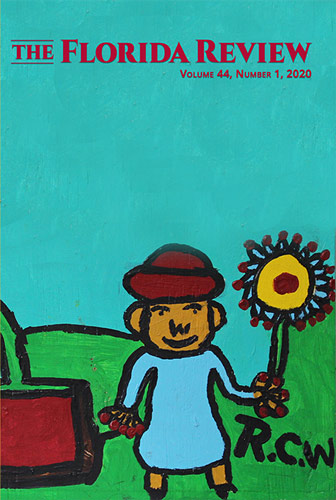
The latest issue of The Florida Review includes the writers who placed in the 2019 Editors’ Awards. There are plenty to sink your teeth into.
Nonfiction
“Skin the Bunny” by Kirk Wilson
“To Trace the Sky” by Cherie Nelson
Poetry
“Father-Son & Holy” by Aurielle Marie
“Bridal Suite” by Joanne Dominique Dwyer
“Culture Shock” & “The Cycle” by Lani Yu
Fiction
“In Loco Parentis” by Eleanor Bluestein
“Americana” by Jennifer Buentello
“All the Guessing Gets Us” by George Looney
Chapbook
“Bedweather” by Angelo R. Lacuesta & Roy Allen Martinez
from “My father is housed inside a whale” by My Tran
There’s even more to check out within this issue, so be sure to grab a copy for yourself.
Spread the word!
Sponsor Spotlight :: Tint Journal Focuses on Writing by Non-Native English Speakers
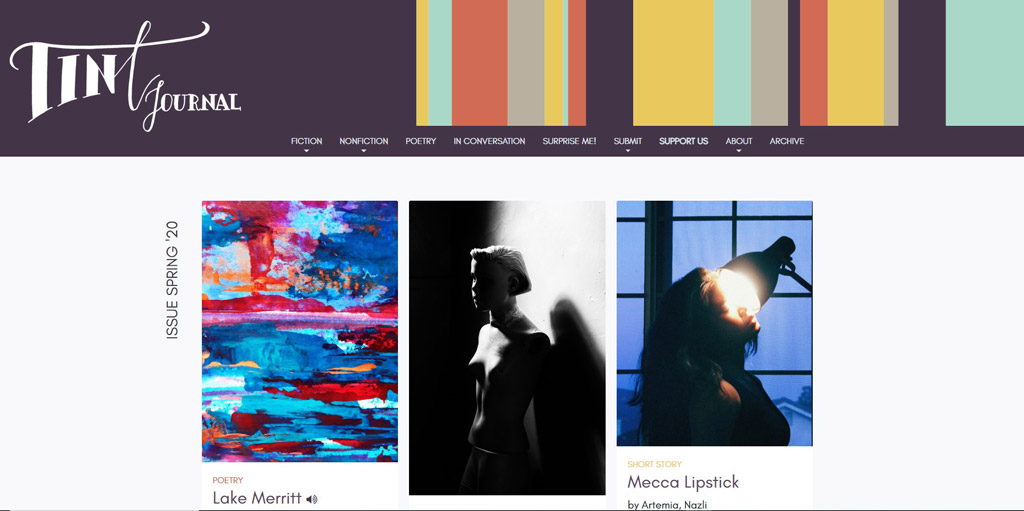 Online literary magazine Tint Journal was founded in 2018 during the LARB/USC Publishing Workshop. Their mission is to encourage emerging and established ESL authors to stand behind their non-native backgrounds. The publish fiction, nonfiction, and poetry by non-native English writers biannually. They also accept interviews and reviews by contributors of any linguistic background.
By choosing English as their means of communication, these writers provide their English reading audience with an immediate take on their values, ideas, and beliefs. They bridge borders and blend cultures without the third party of the translator and offer the purest and deepest understanding of their fiction and nonfiction worlds.
Their Spring 2020 issue features essays, poetry, and fiction by Catherine C. Con, Annick Duignan, Ifeoluwa Ayandele, Eneida P. Alcalde, Sejal Ghia, Rhea Malik, E. Izabelle Cassandra Alexander, Mario Marčinko, Hibah Shabkhez, and Caroline Smadja.
Stop by their listing on NewPages to learn more about them.
Spread the word!
Image, Music, and Language
 Magazine Review by Katy Haas
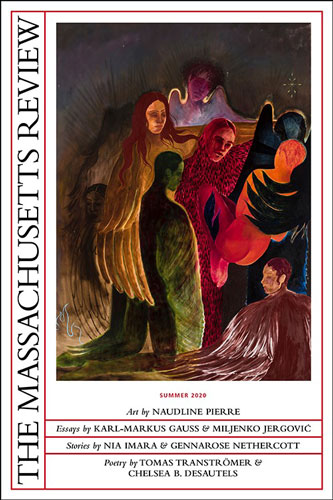
I love when a poem has visual components, so I was happy to see a couple pieces by Ryan Mihaly in the Summer 2020 issue of The Massachusetts Review with visual accompaniment.
“[B]” and “[A♯/B♭]” are paired with clarinet fingering charts. In “[B],” the speaker looks back at “a catalogue of embarrassments,” which are broken down and pointed out on the chart as “Wrong name,” “Loss of language,” and “Failed elegance.” “[A♯/B♭]” explores language and communication, finishing, “Music is not a language because it cannot be translated into anything. It can only be described. A♯, then, is the word ‘handiwork’ mispronounced ‘hand-eye-work.’” The chart above shows a corresponding “Hand,” “Eye,” and “Work.”
While both poems would work just fine without the visual aspect, their presence is still welcome and enhances each piece, the text almost working as a footnote to guide the reader through the charts.
Spread the word!
Jesus & Disney Princesses Have Much in Common

Magazine Review by Katy Haas
I may be an atheist, but that didn’t stop me from enjoying Liz Bruno’s poem in the latest issue of The Cape Rock. “Jesus, The Original Disney Princess” compares the religious figure to the familiar cartoon girls of our youth. I found the comparison to be lighthearted and sweet, the connections between Jesus and the girls clear. They’re all “Westernized beauty queen[s],” with “endless magic.” They teach “girls and boys to dream big and look pretty” and are friends with animals, are critics of the bourgeois, and rise above their humble beginnings.
A new and different take on the familiar religious figure, Bruno creates an endearing poem with an eye-catching title.
Spread the word!
Sponsor Spotlight :: Better Than Starbucks, Not Your Ordinary Poetry Magazine
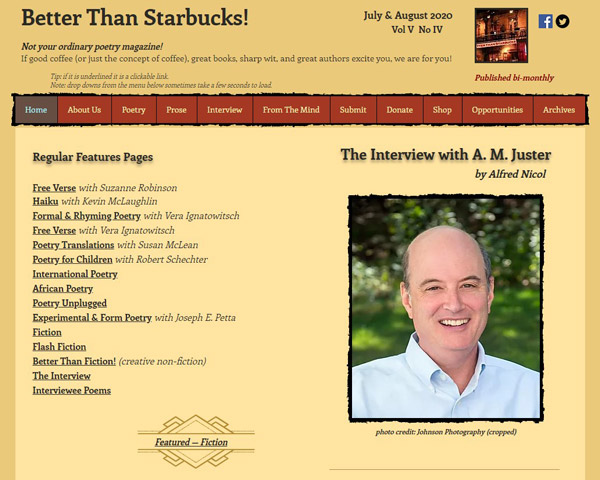 Better Than Starbucks is an online literary magazine publishing multiple genres of poetry including free verse, formal poetry, haiku, experimental poetry, poetry for children, African and international poetry, and poetry translations. Every issue features a poetry interview with a featured section of poems. While the main focus of the journal is poetry, they do also publish fiction, flash fiction, micro fiction, and creative nonfiction.
They publish six issues a year and you can find over 30 of their past and recent issues available to read in their online archives. Their current edition features an interview with A. M. Juster by Alfred Nichol. Learn more about them at their listing on NewPages.
Spread the word!
2020 Dogwood Literary Award Winners
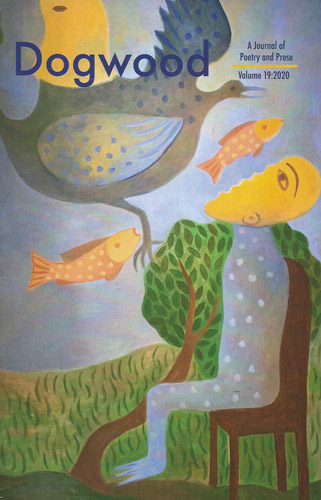
The Spring 2020 issue of Dogwood features the 2020 Dogwood Literary Award Winners in fiction, nonfiction, and poetry.
Nonfiction
“The Ritual of Smoking” by Rhonda Zimlich
Poetry
“Dear You” by Fay Dillof
Fiction
“Arbor Day” by Rebecca Timson
This year’s contest judges were Daisy Hernández (nonfiction), Ellen Doré Watson (poetry), and Ladee Hubbard (fiction). Visit Dogwood’s website for a celebration of each of the winners with words from the judges and bios for the winning writers.
Spread the word!
Sponsor Spotlight :: Auroras & Blossoms Focuses on Positivity, Art, & Inspiration
 Auroras & Blossoms is an electronic literary magazine launched in 2019 by co-founders Cendrine Marrouat and David Ellis. It is dedicated to promoting positive, uplifting, and inspirational poetry, poetry-graphy, short stories, 6-word stories, paintings, drawings, and photography. They feature poetry from adults as well as young writers ages 13-16. As they are a family-friend platform, no swear words, dirty words, politics, or erotica is allowed.
They also publish digital anthologies. Their first is the NaPoWriMo Anthology which contains poetry written throughout National Poetry Writing Month in April 2020 and features work by Donna Allard, Chandni Asnani, Maria L. Berg, Jamie Brian, Jimena Cerda, Jaewon Chang, Ravichandra Chittampalli, Sandra Christensen, Mimi DiFrancesca, Fiona D’Silva, Kate Duff, Judy Dykstra-Brown, Amanda M. Eifert, Stacie Eirich, David Ellis, Michael Erickson, Deveree Extein, Jack M. Freedman, Alicia Grimshaw, Jenny Hayut, Patrick Jennings, Liam Kennedy, Ting Lam, Rose Loving, Cendrine Marrouat, Michele Mekel, Ally Nellmapius, William Reynolds, Madhumita Sarangi, Anna Schoenbach, Julie A. Sellers, Jonathan Shipley, Dorian J. Sinnott, Krupali Trivedi, Angela van Son, Michele Vecchitto, Penny Wilkes, and Gemma Wiseman. Their next anthology will be PoArtMo which stands for Positive Art Month and Positive Art Moves.
Stop by their listing at NewPages to learn more.
Spread the word!
Find Happiness with Ginny Sassaman
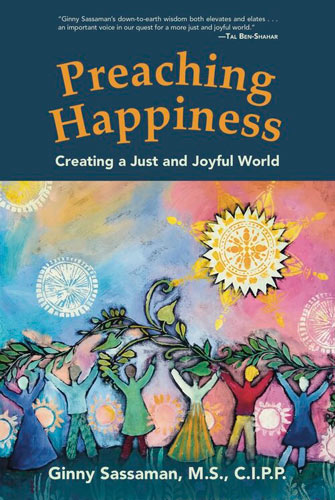 Guest Post by John de Graaf
Ginny Sassaman knows happiness! As a co-founder of Gross National Happiness USA and a participant in the national Happiness Walk, she’s been studying the subject for many years.
Her approach in these marvelous sermons is both personal and social—she knows we need to change both our behaviors and some of the policies that wreak havoc on our planet, which is actually making us less happy. She doesn’t shy away from the tougher questions. I especially like her sermon on beauty, an issue of quality of life that has been too often ignored in happiness research, surveys, and action.
In chapter fourteen, “The Extraordinary Value of Everyday Beauty,” Sassaman writes about a friend who took her own life; how that friend had collected objects of beauty as a way of mitigating her pain:
“Mandy may have carried more pain than most, but, just as all flowers need the sun, all humans need beauty. Piero Ferrucci, whose book on kindness is like a happiness bible for me, has written another invaluable text: Beauty and the Soul: The Extraordinary Power of Everyday Beauty to Heal Your Life. Ferrucci insists that beauty, far from being frivolous, is a primal need. ‘Beauty,’ he writes, ‘is not like a distant satellite, but like a sun that gives life and light to all areas of our life.’”
This is just one example of how Sassaman combines thoughtful stories and research in her sermons. I found great value in all of them and I think you, dear reader, will too. Don’t miss this book!
Preaching Happiness: Creating a Just and Joyful World by Ginny Sassaman. Rootstock Publishing, May 2020.
Reviewer Bio: John de Graaf is an author, filmmaker, speaker and activist. He is a co-founder of The Happiness Alliance and co-author of the bestselling book, Affluenza: The All-Consuming Epidemic.
Spread the word!
Sponsor Spotlight :: Snapdragon: A Journal of Art & Healing
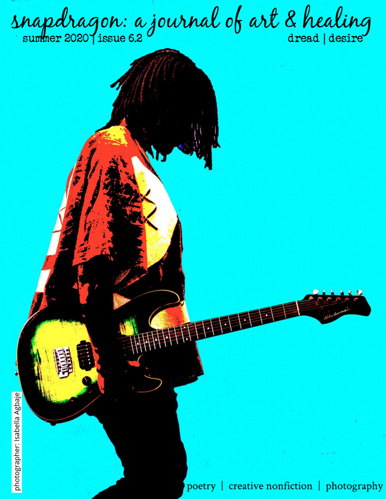
Snapdragon: A Journal of Art & Healing is an electronic literary magazine publishing new issues quarterly. The journal was founded in 2015 by Jacinta V. White. They publish provocative poetry, creative nonfiction, and photography with a healing bent from across the globe. Their goal is to extend the conversation on art and healing believing that art is a catalyst for wellbeing.
They are a subscription-based journal offering one-time purchases or annual subscriptions. Each issue focuses on a certain theme. 2020 themes include vibrant · vision, dread · desire, empty · enough, and silence · sound. They accept 100 free submissions a month. Once they hit that, it is $5 to submit.
Snapdragon Journal is a part of The Word Project which offers online workshops, downloadable guides, coaching opportunities and more. Swing by their listing at NewPages to learn more.
Spread the word!
Past Fiction Shapes Our Present

Guest Post by Leland Davidson
You are not a politician, but self-made through hard work. You are not political and don’t fancy politics and prefer a life of content over luxury. Then the president of the United States himself has asked you to become the head of a government subcommittee, which is supposed to help the nation’s safety and better the country that you live in.
However, through digging and fact-finding, you discover this committee is sponsored by a giant and powerful company that is buying off politicians and absorbing other markets such as the media and weapon manufacturing. Trevayne was written in 1973 by Robert Ludlum on the heels of the Watergate scandal. But in a way, this book is more relevant in our modern-day situation involving the privatization of the United States of America. Companies and powerful families such as Koch and DeVos. Add on corporations like Facebook, Amazon, and Raytheon, which have since majorly impacted our democracy, and we see a cautionary tale in this book written nearly 50 years ago.
In this book Andrew Trevayne has a choice to stop this corporation from completely taking over the country and influencing all its decisions, or assimilate with it, thus shaping the future United States in the same manner we are seeing today. Trevayne can be seen as a fictional and nonfictional example as the United States is more of a business and money opportunity for the rich than for the working class who truly shape the nation.
Trevayne by Robert Ludlum. Delacorte Press, 1973.
Reviewer bio: Leland Davidson, a native of East Tennessee, holds an M.A. in Conflict Resolution and Coexistence from Heller School at Brandeis University, 2020.
Buy this book through our affiliate Bookshop.org.
Spread the word!
Think Better to Feel Better
 Guest Post by Chang Shih Yen
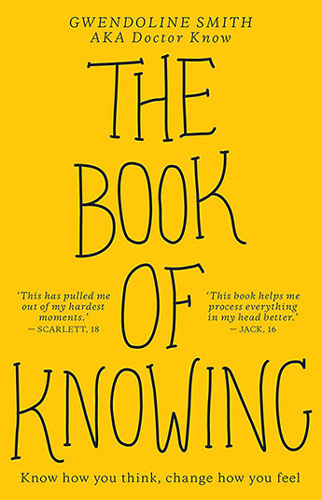
The global pandemic and associated lockdown is an extremely stressful time for everyone. During this difficult period, I found this book helpful. The Book of Knowing is written by Gwendoline Smith, a New Zealand-based clinical psychologist. It provides strategies on how to change your thinking to change the way you’re feeling.
This book is aimed at teenagers and young people who are feeling overwhelmed and anxious, but it is suitable for anyone going through difficult situations. Smith makes the point that you cannot change reality. As Smith says, “Reality just is and shit happens!” You may not be able to change reality, but you can change how you feel about reality and change the way you think. Smith gives tips and strategies on how to do this, including firstly how to identify thought viruses, or negative ways of thinking, which go on to affect how we feel. Your feelings towards any situation are based on your beliefs and the way you think. So if you can change your thinking, it will help you feel better.
Smith’s writing is based on Cognitive Behavioral Therapy. Her writing is straightforward and also funny. It is an easy read with illustrations that make the content accessible to everyone. Overall, it was a helpful book during a stressful time.
The Book of Knowing by Gwendoline Smith. Allen & Unwin Book Publishing, February 2019.
Reviewer bio: Chang Shih Yen is a writer from Malaysia, seeing through the pandemic in New Zealand. She writes a blog at https://shihyenshoes.wordpress.com/
Buy this book from our affiliate Bookshop.org.
Spread the word!
Sponsor Spotlight :: Months To Years
 Founded in 2017 by Renata and Tim Louwers, Months To Years is an online literary magazine exploring mortality and terminal illness. Both editors experienced the loss of their first spouses due to bladder cancer and early onset Alzheimer’s, inspiring them to co-found this journal. They wanted to create a literary space where those experiencing grief can reflect on their experiences through literature and art. The name of the journal is a phrase often used with terminally ill patients as the doctor’s best estimate of expected life span.
Months To Years publishes nonfiction, poetry, photography, and art that explores grief, death, and dying on a quarterly basis. They are now back after a brief hiatus and accepting submissions on a continuous basis whether you are a terminally ill person, a doctor, someone who suffered a loss, a caregiver, or someone simply contemplating mortality.
Stop by their listing at NewPages to learn more about this journal.
Spread the word!
Hirt Finds Her Way Home
 Guest Post by Shannon Frystak
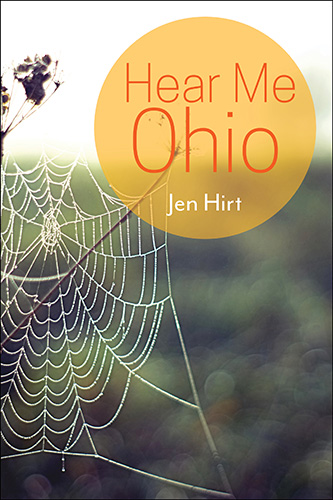
Jen Hirt is first and foremost a nature writer. Having grown up in her family’s greenhouse in Ohio, her latest essay collection, Hear Me Ohio takes us on a journey from Iowa to Idaho to Pennsylvania and Maine, as she grapples with the meaning of her varied and often mundane experiences traversing the country through multiple job searches, to a “reality house” church, a man and his ball of string, the views from her front porch where she muses on the lives of spiders and befriends a stray cat, to the forest where she and her dog encounter dead deer, and on the waterfront at her home in Harrisburg, where she grapples with a premonition about a dead body.
Jen Hirt’s gift is her attentive and detailed descriptions of the natural landscape—both flora and fauna—allowing us to travel alongside her, revealing herself and, sometimes, her family, through her peripatetic life seemingly searching for meaning and magic in all things, not the least of which include bats, one-eyed deer, and unicorns. Hirt always finds her way home, to Ohio—in a hundreds-year old horseradish bottle, her family’s history, and her mother’s death. Insightful and contemplative, this collection of short meditations is a beautiful and thought-provoking compilation of memoir essays.
Hear Me Ohio by Jen Hirt. The University of Akron Press, March 2020.
Reviewer bio: Shannon Frystak, Ph.D. is a Professor of History at East Stroudsburg University where she specializes in Black, Women, and Civil Rights History. She is the author of Our Minds on Freedom: Women and the Struggle for Black Equality in Louisiana, 1924-1967, and is currently working on a collection of essays Confessions of an Academic Bartender: Essays on Life Inside and Outside of the Guild.
Buy this book at our affiliate Bookshop.org.
Spread the word!
Ira Sukrungruang on Listening
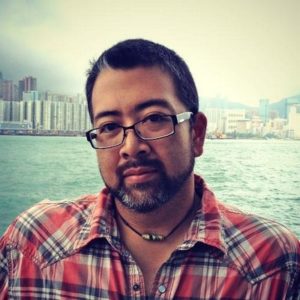 This past week, Sundress Publications and A Novel Idea bookstore sponsored Secluded: A Virtual Writing Conference with three days of online talks, readings, and even happy hours. I was able to attend Ira Sukrungruang’s keynote “Writing as Survival,” in which he spoke about the role of writing during times of chaos, uncertainty, and despair. Both a teacher and a father, his insightful honesty provided a sense of grounding. Ira named authors he encourages his students to read, including Ta-Nehisi Coates, Roxanne Gay, and Claudia Rankin, commenting:
Not to say these books will give you an answer, but to me, these books inform me, it insulates me in a community of people who want to talk instead of who to say something – who is refusing to listen. One of the things that I always preach nowadays to my students is that I’d rather you listen to the world at this point before you even open your mouth. But when you open your mouth, and I encourage them to, I encourage you to write, to speak out, to protest peacefully, to go out there and say what’s on your mind, what’s ailing your heart. But I think you also have to listen to what the world is trying to tell you.
The conference was free and recorded for replay here.
Spread the word!
The Massachusetts Review – Summer 2020
In this issue, find featured fiction by Alexandra Kulik & Julian Senn-Raemont and Nia Imara; essays by Allison Grimaldi Donahue and Miljenko Jergović; and poetry by Diamond Forde, Chelsea B. Desautels, Ryan Mihaly, and Thomas Tranströmer. Read more at The Massachusetts Review website.
Spread the word!
The Lake – July 2020

The July issue is now online featuring Ken Autry, William Bonfiglio, David Callin, Kitty Coles, Eileen Walsh Duncan, Maren O. Mitchell, Ronald Moran, and more. Reviews of Claire Walker’s Collision and Oisín Breen’s Flowers All Sorts in Blossom, Figs, Berries and Fruits Forgotten. Also features a tribute to Eavan Boland. .
Spread the word!
Kenyon Review – July/Aug 2020
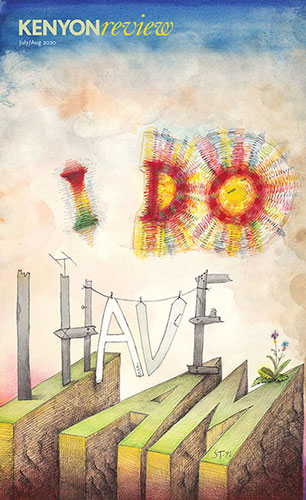
The July/Aug issue of the Kenyon Review offers fiction chosen by guest editor Angie Cruz. Featured authors include Samia Ahmed, Yalitza Ferreras, Katherinna Mar, Cleyvis Natera, and Namrata Poddar. In her introduction, Cruz writes “When I reread the stories featured in this issue, I find solace in them. They serve as evidence or reminders that as a collective, as members of the global community, everything we are feeling and experiencing now is both temporary and ongoing.” The new issue also includes work by Dan Beachy-Quick, Stephanie Burt, Floyd Collins, Nicola Dixon, Rodney Jones, Stanley Plumly, Grace Schulman, and Arthur Sze.
Spread the word!
The Florida Review – Spring 2020
The spring issue includes our 2019 Editors’ Awards winners Kirk Wilson, Aurielle Marie, and Eleanor Bluestein. With additional work by Billy Collins, Angelo R. Lacuesta and Roy Allen Martinez, Jennifer Popa, Yasmeen Alkishawi, Gabriel Thibodeau, and others.
Spread the word!
New England Review – 41.2
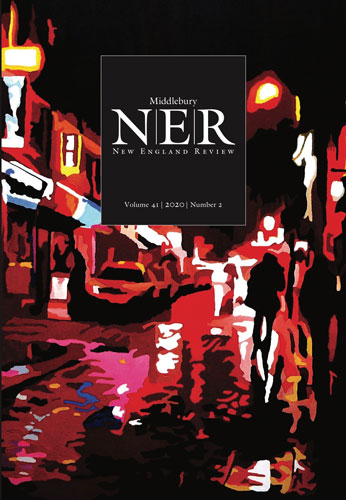
The summer New England Review issue extends deep into the past, with translations from ancient Greek, historical fiction featuring Alfred Nobel, and an essay/collage about Virginia Woolf and Elizabeth Bowen. It imagines the future with speculative fiction and crosses the Atlantic to bring together fifteen contemporary poets from the UK. Fiction by Hugh Coyle, Rachel Hall, Laura Schmitt, and more; poetry by Emma Bolden, Jehanne Dubrow, David Keplinger, Esther Lin, Joannie Stangeland, and others; and nonfiction by Indran Amirthanayagam, Zoë Dutka, and more.
Spread the word!
Driftwood Press – Issue 7.2
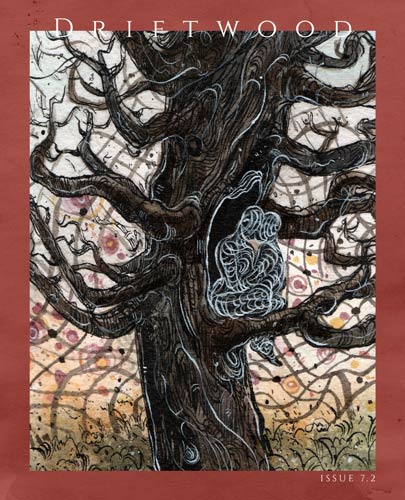
Featured in our latest issue is the 2020 In-House Contest winning story “Trash Man” by Jessica Holbert alongside another story, “The Taxidermist,” by Seth Tucker. The poetry in this issue explores the emotional and physical connections to different geographies and technologies, from abandoned lighthouses and frost-covered pastures to half-truth news coverage and Harry Potter. Wrapping up the issue are visual arts and comics by Coz Frimpong, Geoffrey Detrani, Yi-hui Huang, Aimee Cozza, and Jason Hart. Read more at the Driftwood Press website.
Spread the word!
MAYDAY Magazine Open Editorial Positions
After more than ten years of publishing literary fiction, poetry, nonfiction, and works in translation for an international readership, MAYDAY Magazine is relaunching with a new format and expanded editorial vision.
To help shape the online magazine’s new identity, MAYDAY is expanding and diversifying its editorial staff to include new backgrounds, experiences, perspectives, and points of view. Editors at MAYDAY Magazine work remotely and can live anywhere there’s an internet connection.
We invite applications to be submitted by July 31, 2020 for the following editorial positions:
- Two fiction editors
- One poetry editor
- Two nonfiction editors
- One culture editor
- One visual art editor
Please visit our complete Call for Applications to learn more.
Spread the word!
Dogwood – Vol. 19 2020
The nonfiction in this issue asks difficult questions regarding the nature of power, self-concept, and family story; the stories explore the construction of self against one’s own misperceptions; and the poems callus toward our own inferiorities refracted by multi-layered experiences of loss and death. Read more at the Dogwood website.
Spread the word!
The Cape Rock – Vol. 48 2020
The latest issue of The Cape Rock features new poetry by Caroline Mann, Mark Christhilt, Rachel Tramonte, Carol Levin, Diana Becket, Olivia Vittitow, Nathan Graziano, Elian JRF Wiseblatt, Mukund Gnanadesikan, Daisy Bassen, Christine Donat, Barry Peters, Michael Estabrook, Holly Day, Dick Bentley, Liz Bruno, Sandra Sylvia Nelson, Phillip Sterling, Tobi Alfier, Martina Reisz Newberry, Donna Emerson, James K. Zimmerman, Chase Dimock, David M. Taylor, Seward Ward, Judith Cody, Sharon Kennedy-Nolle, Arlene Naganawa, and Simon Perchik.
Spread the word!
Brilliant Flash Fiction – July 2020
New on their website: flash by Darcy Casey, Laura Bailey, Anthony Keers, Rimma Kranet, Kate Lunn-Pigula, Yongsoo Park, David Bassano, Dona McCormack, Christian McCulloch, and Cyan James. Find out more at the Brilliant Flash Fiction website.
Spread the word!
Sponsor Spotlight: Club Plum Literary Journal
 Club Plum Literary Journal is a new quarterly online literary magazine founded in 2019. They have released three issues to date with a focus on flash fiction, prose poetry, and art from both emerging and established writers. Their aim is to act as a “temporary entrance into a literary world of empathy, art, and sound. A place to take and to give.”
They keep their site clean and free of ads and distracting elements so the reader’s experience is focused on the absorbing tales and imagery unravelling in voices either understated or lyrical, but always powerful. “This is a safe place. Our hearts have been pummeled; our minds have been toyed with. We see clearly now. This is a place for thinkers and doers. A place to turn our pain into wondrous works of art.”
Check out their basic submission information and full publisher’s description at their listing on NewPages.
Spread the word!
“Shelter in Place” with Bishakh Som
 Magazine Review by Katy Haas
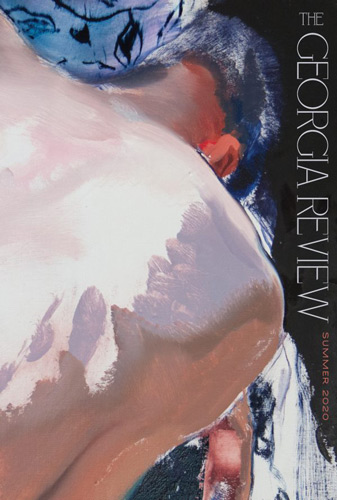
In the Summer 2020 issue of The Georgia Review, Bishakh Som finds a creative way to process feelings of longing and isolation in “Shelter in Place.” This graphic poem spans days in May, the images taking readers into a futuristic, sci-fi setting. Calendar dates guide the piece along, moving us from one day to the next as the speaker writes of what and who she misses in this strange state of life. At the end of the piece, we’re met with that now familiar feeling of time becoming unreal and immeasurable as the calendar page reads “May 32.”
While we all process our feelings about sheltering in place, living in a time of a global pandemic, and missing the physical connection with people we were once allotted, I appreciated this different and creative take. The change in setting and the beautiful language make “Shelter in Place” a stand-out among other pieces of writing that are responding to current life in COVID-19.
Spread the word!
Ancestry: Where We’re From and Where We’re Going
 Book Review by Katy Haas
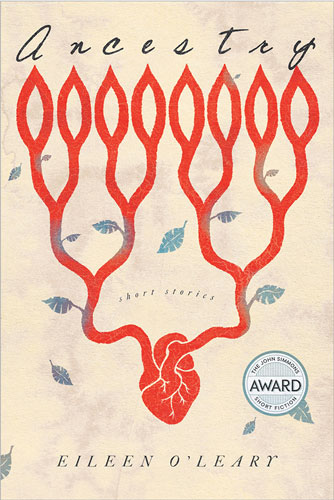
Readers can look forward to Eileen O’Leary’s Ancestry, winner of the John Simmons Short Fiction Award, forthcoming this fall. The characters in this collection’s short stories look back at where and who they’ve come from as they try to discover who they can possibly become.
In “Adam,” the titular character reconnects with his father whom he has never met and finds that the man in front of him is not quite how he imagined. Living together in a dilapidated building, he’s suddenly faced with a change in expectations. Cecile from “Michigan Would Get Beautiful,” is finally getting what she wants as an interior designer, just as the lives of her first clients implode, leaving her to look at where she is and where she’ll end up. In “The Flying Boat,” Vera leaves her family behind to start a new life overseas. On the cusp of war, she returns to her family to find that everything has unexpectedly changed in her absence.
Family ties and inner tensions propel these stories, the characters grappling with the changes happening within them and around them. Even in the small space of short stories, we’re able to see the characters grow and adapt as they learn more about themselves and the people in their lives. A quick read, each story grabs the reader’s attention and holds on tightly until the end.
Ancestry by Eileen O’Leary. University of Iowa Press, October 2020.
Buy this book from our affiliate Bookshop.org.
Spread the word!
Powerful Piece on Self-Reflection
Magazine Review by Katy Haas
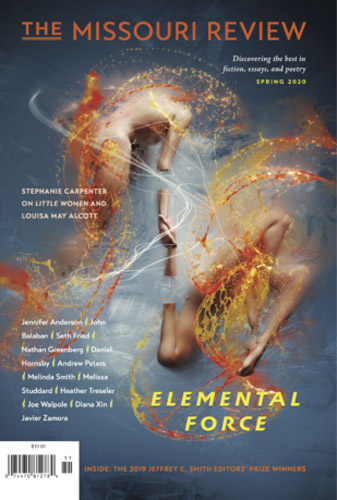
The latest issue of the Missouri Review features the winners of the Jeffrey E. Smith Editors’ Prize. The nonfiction winner, “The Trailer” by Jennifer Anderson is a powerful piece on self-reflection.
In “The Trailer,” a trailer appears on land Anderson owns. For awhile, it stays empty, and then one day a man and woman appear inside. Anderson then works on getting the inhabitants removed, and the trailer towed from the property.
In doing this, though, she ends up looking inside herself and examining her response to the two people that have begun squatting on her property. As a teen, she drank, did drugs, and engaged in risky behavior and she realizes she easily could have ended up just like the woman she evicts from her property. Later, when one of the women she delivers food to on her Meals on Wheels route must move out from her care facility and is essentially homeless, Anderson is filled with compassion and the desire to help, a response that is much different than her response to the woman in the trailer. After the woman leaves the trailer and the trailer is hauled away, Anderson continues to see her around town, each time having to face her past actions and feeling shame.
The piece is introspective and honest, a good reminder to examine our own actions. Anderson’s writing is compelling and hard to look away from, well-deserving of its placement as the nonfiction Editors’ Prize winner.
Spread the word!
New Lit on the Block: The Weight Journal
The weight of this sad time we must obey,
Speak what we feel, not what we ought to say.
― William Shakespeare, King Lear
 Editor in Chief of The Weight Journal Matthew E. Henry shared, “At the beginning of my state’s COVID-19 Stay at Home order, it was widely circulated on social media that Shakespeare likely composed some of his greatest works in the midst of the Black Death. This was being shared as an encouragement for writers to continue producing work in the midst of the pandemic. The Weight took its name, in part, from the ending of Lear. But it is a general call for teens to take up writing as a tool to lay down the various things ‘weighing’ on their lives.”
The Weight Journal, publishing online poetry, slam poetry, flash fiction, fiction, creative nonfiction, and hybrid works by writers ages 9-12 grade, “endeavors to showcase the best in teen literature, including works that are not deemed school appropriate.” Matthew adds: “whatever that means.”
“We want work that is honest and says something profound about the human experience as can only be captured by this age group,” he explains. “We want to provide a common, public space, for those who have dared to undertake the challenge of objectifying their experience and imagination in writing.”
Matthew E. Henry knows this challenging experience, having been nominated twice for Pushcart and a Best of the Net for his poetry. He has been publishing poetry and fiction since 2003, and his first collection, Teaching While Black was published by Main Street Rag in February. Joining Matthew are six editors, current or former high school English/creative writing teachers, each with at least one MFA or MA. They are all writers themselves with a varied background of interests and publications.
 Given this level of expertise and experience, writers who submit to The Weight Journal can expect their writing will undergo a rigorous process. “All submissions receive a first pass from the editor in chief,” Matthew explains, “to see if they are a potential fit for the general vibe of The Weight. After this, submissions are sent to the content editors, who pass their acceptance (sometimes with suggested changes), recommendation for resubmission, or rejection back to the editor. The editor then makes the final decision. Submitters are welcome (and encouraged!) to send in revised pieces or new ones in the future. Sometimes we’ve been able to provide one-on-one support through the revision process. We’re teachers and can’t help ourselves.”
The caliber of reading content available for the public is a standard Matthew defines clearly: “We aren’t publishing writers who are ‘good for their age.’ We’re publishing ‘good writing,’ period. So readers will find honesty and maturity from a diverse set of voices and experiences. Some works may be triggering for readers. Others will fill them with joy. All of them will make readers think, and rethink, and come back for more.”
Recent content published in The Weight includes “a conversation between what is alive, and what only pretends to be” hybrid by Anne Fu; “Broken Sanctuary” poetry by Sarah Street; “The Stages of Falling in Love with Her” poetry by Charlotte Edwards; “The Met” creative nonfiction by Alexandra Carpenter; and “Colors” creative nonfiction by Emma Kilbride.
Creating a new publication comes with joys and frustrations. Matthew focuses on what has worked well for The Weight: “Thus far, the greatest joy has been encouraging some amazing young writers. In some cases, we’ve been able to send the first acceptance letter to someone with a bright career ahead of them. We have already published pieces that I am jealous of and hope this will continue long into the future.”
In terms of the future for The Weight, “I want to see how this naturally evolves,” Henry muses. “The old man in me is thinking about a print publication or at least a ‘best of’ anthology in the future. But who knows? At this stage I am content to help usher these young authors into the literary scene.”
The Weight accepts submissions on a rolling basis, with a goal to publish new work every other Friday depending on the number of submissions. Matthew adds, “In light of our current realities, while submissions are still open for all students and on all topics, we are interested in works that are focused on matters of racial identity, especially from students of color. These works do not have to be centered on our current racial tensions, but they very well can be.”
While at times it absolutely feels like the weight of the world is upon us, how wonderful to have such a supportive and encouraging venue for young writers and readers of all ages to come together and share in the experience.
Spread the word!
Scared in the Air
 Guest Post by Chang Shih Yen
Flight or Fright is an anthology with one theme: scary things that can happen while flying. This anthology is edited by the king of horror writing, Stephen King. This seemed like a good book to read in lockdown when international air travel is almost impossible.
There are 16 short stories and one poem in this anthology. There are old stories by Ambrose Bierce (1842-1914) and Arthur Conan Doyle (1859-1930) written before air travel even became a thing. There are two new stories written specifically for this anthology. One by Stephen King is a story about air turbulence. The second new story is by Joe Hill (son of Stephen King) whose story is about passengers in a plane while a nuclear war starts on earth mid-flight. There are also classic short stories by the likes of Ray Bradbury and Roald Dahl. Dahl draws on his own experience as a fighter pilot in World War II. Some stories tell the reader its content in the title, like “Zombies on a Plane” by Bev Vincent and “Murder in the air” by Peter Tremayne. There are all sorts of terrifying tales in this collection, with topics ranging from monsters, time travel, war, and murder, to falling out of the sky.
This was a satisfying read if you’re looking for something scary. There are stories like “The Fifth Category” by Tom Bissell, which haunts you and gets in your head and stays with you long after the last page is turned.
Flight or Fright: 17 Turbulent Tales edited by Stephen King and Bev Vincent. Cemetery Dance Publications, September 2018.
Reviewer bio: Chang Shih Yen is a writer from Malaysia, seeing through the pandemic in New Zealand. She writes a blog at https://shihyenshoes.wordpress.com/
Buy this book from our affiliate Bookshop.org.
Spread the word!
Hope-Giving Horror
 Guest Post by Lauren Mead
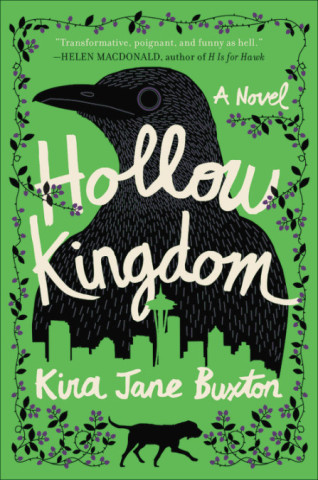
ST is concerned about his owner Big Jim when his eyeball falls out and lands in the grass. He should be, considering that Big Jim has just turned into a zombie thanks to a mysterious virus that travels through screens. When it becomes clear that cheering Big Jim up with his favourite beer and a bag of Cheetos isn’t going to help, ST (a domesticated crow) and Dennis (a dog) set out across the wilds of post-apocalyptic Seattle to find a cure.
On his journey, ST encounters hordes of vicious humans who are suffering from the same malady as Big Jim. He braves a deadly market (for doughnuts), the aquarium (for answers) and follows cryptic rumours of the one remaining human who can save them all. ST must set aside his fears to find a way forward in this new, and often frightening world.
I read Hollow Kingdom before COVID-19 was a phrase in my everyday life. I can remember thinking that I was glad there wasn’t some deadly virus on the loose, because gosh, wouldn’t that be awful? At the time, it kind of felt like it would be the end of the world. I’m a germaphobe, so I don’t handle sickness very well on a good day. Throw in a worldwide pandemic and you’ve got a recipe for this girl to never leave her house again. I didn’t, for awhile.
But if ST can face his fears in a zombie-infested world, I can sure as heck set foot outside. It’s funny how horror stories can have the opposite effect of real fear. Instead of making us want to hide, it makes us bolder to know that even if the worst, most terrifying thing were to happen, there would be a way forward. Horror gives us hope.
Hollow Kingdom by Kira Jane Buxton. Grand Central Publishing, August 2019.
Reviewer bio: Lauren Mead has been published in The Danforth Review, The MacGuffin, Soliloquies and Forest for the Trees. She also writes for her blog, www.novelshrink.com.
Buy this book at our affiliate Bookshop.org.
Spread the word!
Sleet Magazine – Spring Summer 2020
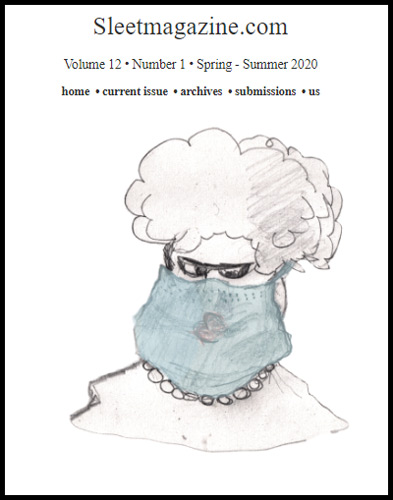
Sleet Magazine‘s slim Summer Edition has arrived! We promise you will not be disappointed; the pieces have heart and guts. Proud to showcase work by poets B. Baumgart, L. Castle, M. Dillon, J. Palen, O. Umukoro; Fiction by E. Ferrell, P. Sterling, SF Wright, K. Skiles Law; and CNF by A. Schur and W. Thornton.
Spread the word!
Missouri Review – Spring 2020
The “Elemental Force” issue of Missouri Review is out. Inside: The 2019 Jeffrey E. Smith Editors’ Prize winners, and Stephanie Carpenter on Little Women and Louisa May Alcott. Featuring John Balaban, Nathan Greenberg, Daniel Hornsby, Melissa Studdard, Diana Xin, Javier Zamora, and many more.
Spread the word!
The Iowa Review – Spring 2020
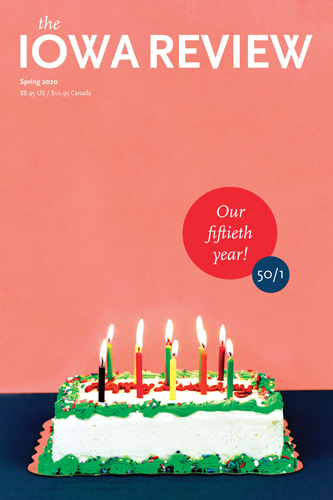
The latest issue of The Iowa Review is out. In this issue: birthday cake, auctioneering school, the 2018 Hawaii false missile alert, a male masseuse in Kanagawa Prefecture, a love performance, the winner of the 2019 David Hamilton Prize for Iowa Review Alumni, and tributes to Connie Brothers.
Spread the word!
Tolsun Books Seeks Volunteers
Tolsun Books is looking to expand our small, collaborative, remote team of volunteers. If you are passionate about energetic works of literature, and have experience in aspects of literary publishing, especially copy-editing and/or proofreading, please send us an email at [email protected].
Spread the word!
The Georgia Review – Summer 2020
The Georgia Review‘s latest issue features new writing from Garrett Hongo, Aimee Nezhukumatathil, Laura van den Berg, A. E. Stallings, and many other exciting voices! Original translations of poetic works by Hisham Bustani and Shuzo Takiguchi. Illustrated features on the theme “Shelter in Place,” by Lindsey Bailey, Kaytea Petro, and Bishakh Som. Cover art and portfolio by Doron Langberg. This issue is not to be missed—read selected online features today!