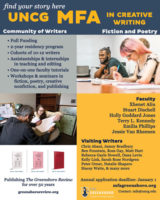
 Application Deadline: January 1 (annually)
One of the oldest creative writing programs in the country, UNC Greensboro’s MFA Writing Program offers fully funded graduate assistantships with stipends, tuition remission, and subsidized health insurance. The MFA is a two-year residency program with an emphasis on studio time for the writing of poetry or fiction. Students work closely with acclaimed faculty in one-on-one tutorials and small classes, including courses in contemporary publishing and creative nonfiction. Our campus features a Distinguished Visiting Writers Series of authors and editors; other professionalization opportunities include college teaching and hands-on editorial work for The Greensboro Review. More at mfagreensboro.org and greensbororeview.org.

NewPages Blog
At the NewPages Blog readers and writers can catch up with their favorite literary and alternative magazines, independent and university presses, creative writing programs, and writing and literary events. Find new books, new issue announcements, contest winners, and so much more!
New Titles :: Diode Editions
Diode Editions will be releasing five new books in March 2020 by Allison Joseph, Julia Cohen, Gregory Donovan, Michele Poulos, Nancy Chen Long, and Zeeshan Khan Pathan. They will also be at AWP 2020 and hosting a few events. Learn more…
Spread the word!
Event :: Elk River Writers Workshop 2020
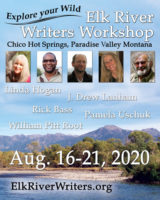 Deadline: Rolling (July 1 final deadline)
Elk River Arts and Lectures is now accepting applications to our summer writers workshop, August 16–21, at historic Chico Hot Springs Resort, 30 miles from Yellowstone National Park. We host some of the most celebrated nature writers in the United States to work with students in an area of Montana that has inspired the work of conservationists and writers for decades. Workshop classes are limited to 10 students in each genre. This year, Rick Bass, Linda Hogan, and J. Drew Lanham, William Pitt Root, and Pamela Uschuk will serve as our core faculty. Apply via Submittable or visit: elkriverwriters.org.
Spread the word!
Program :: Jackson Center for Creative Writing
 Application Deadline: January 6
For well over sixty years, this highly regarded Hollins MFA has supported lively and determined writers who want to concentrate on craft. Our intensive two-year graduate program helps students find their way in an atmosphere of cooperation and encouragement. Our students work successfully in poetry, short fiction, novels, and creative nonfiction—and in between genres. Our faculty writers take time to work with students in this vibrant, supportive community. Our alums have a remarkably high record of publication. Program provides graduate assistantships, teaching fellowships, travel funding, and generous scholarships. Most of all, a vibrant, supportive community. For information, www.hollins.edu/creative-writing-MFA.
Spread the word!
’50 Miles’ by Sheryl St. Germain
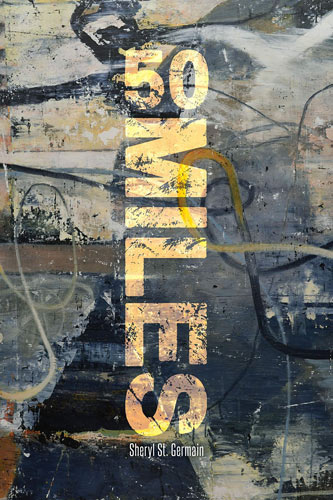 Book Review by Karen J. Weyant
Sheryl St. Germain opens her newest book, 50 Miles, with a simple statement: “My son was born into a family cursed with substance abuse.”
It’s this curse St. Germain explores in her collection of intertwining essays that examine the life, the struggles, and the eventual death of her son, Gray. Along the way, she also looks at her own clashes with addiction, struggles that mirror the demons that haunted many of her family members including her father and her brother. Continue reading “’50 Miles’ by Sheryl St. Germain”
Spread the word!
NewPages Book Stand – February 2020
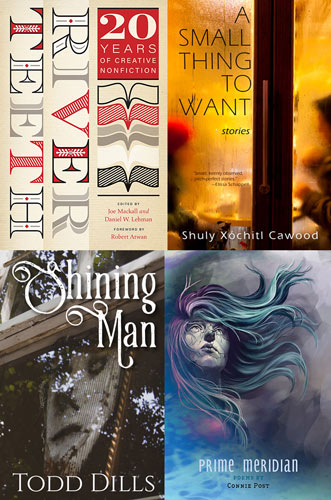 The February 2020 Book Stand is now up at NewPages! Visit for new and forthcoming titles in fiction, nonfiction, poetry, anthologies, and children’s/YA. Our New & Noteworthy section features work from six different presses month.
Diode Editions announces five forthcoming titles this spring: The Last Human Heart by Allison Joseph; Good Timing & Gertrude Stein: Inside Snoopy’s snout maggots feats upon my blood by Julia Cohen; Prismatics: Larry Levis & Contemporary American Poetry: Interviews from the Documentary Film A Late Style of Fire edited by Gregory Donovan and Michele Poulos; Wider Than the Sky from Nancy Chen Long; and The Minister of Disturbances from Zeeshan Khan Pathan. Visit our LitPak for more information.
The People’s Field by Haesong Kwon (Southeast Missouri University Press, October 2019), winner of the Cowles Poetry Prize, reflects on the sounds, ideas and histories of the Korean peninsula with attention to the Japanese occupation and the Korean War and its aftermath.
Juan Herrera invites readers to touch Connie Post’s Prime Meridian (Glass Lyre Press, January 2020) “in order to traverse the present age.”
River Teeth celebrates twenty years of publishing nonfiction with an anthology edited by founding editors Joe Mackall and Daniel W. Lehman (University of New Mexico Press, February 2020).
In Shining Man (Livingston Press, December 2019), Todd Dills “explodes themes of economic opportunity, identity and the individual’s place post-Great Recession in a politically polarized, culturally isolated, and class-stratified America.”
Debut collection A Small Thing to Want by Shuly Xóchitl Cawood (Press 53, May 2020) “chronicles the choices people make about whom to love and whom to let go, their yearnings that either bind them or set them free, and the surprising ways love shows up, without reason or restraint.”
You can learn more about each of these featured titles at our website, and find out how to place your book in our New & Noteworthy section here: https://npofficespace.com/classified-advertising/new-title-issue-ad-reservation/.
Spread the word!
NewPages Bookstore & Library Mailing Lists
 Planning on marketing your book to indie bookstores and libraries this spring? Let us help you get started. NewPages offers digital and physical mailing lists to bookstores, libraries, and newspapers within the United States. With a new, lower rate on our digital lists and guaranteed delivery to postal addresses, our lists are a great value and a big help getting your book into the hands of booksellers and readers across the country. Visit our website to learn more.
Spread the word!
14th Mudfish Poetry Prize Winner & Honorable Mentions
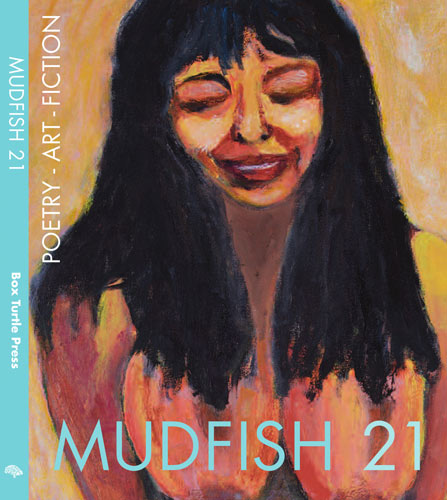 The newest issue of Mudfish features the winner and honorable mentions of the 14th Mudfish Poetry Prize. The 2019 judge was John Yau.
Winner
“Fluencies” by Mark Wagenaar
Honorable Mentions
“Not Yet Across” by G. Hanlon
“Crossing Lake Pontchartrain” by Stokes Howell
The 15th Mudfish Poetry Prize is currently open until March 15 and will be judged by poet and novelist Erica Jong.
Spread the word!
Award-Winning Books Published December 2019 – February 2020
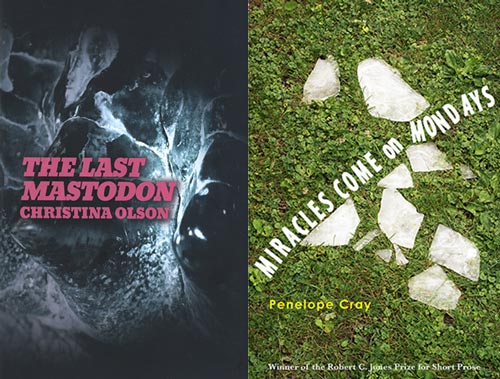 Check out new and forthcoming award-winning books we’ve received recently. Continue reading “Award-Winning Books Published December 2019 – February 2020”
Spread the word!
Blink-Ink – True Crime Issue
Magazine Review by Katy Haas
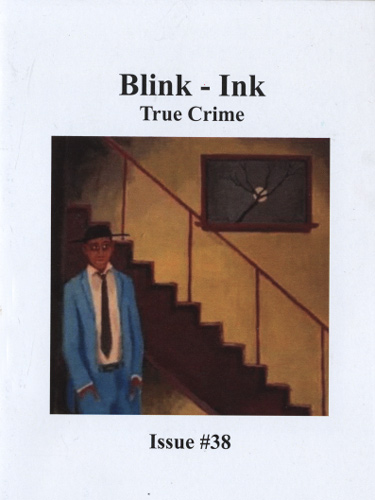
True crime seems to be all the rage lately, from books on famous cold cases to Netflix documentaries to hit podcasts. Blink-Ink tries its hand at covering this theme in Issue 38 wherein 16 writers use micro-fiction to explore true crime.
JR Walsh writes about a B&E at an ex’s house where the criminals’ “fingerprints never moved out.” Katie Yates writes of a husband who steals a puppy for his wife. In Craig Fishbane’s “Weapon of Choice,” one weapon is social media, the other is a gun. Leah Rogin-Roper provides four related pieces on a juvenile detention center. The stories in this issue cover a wide array of crimes in creative ways, and it’s fun to see a fictional take on truth.
Blink-Ink publishes stories that are 50 words or less. This makes for short, snappy stories that toss readers headfirst into the drama. In this issue, we never have to wait long to find out who did it in these whodunnits.
Spread the word!
Terrain.org
New this month on Terrain.org, find nonfiction by Sharon Dolin, Cara Stoddard, and Rachel Findlay; fiction by Michael McGuire and John Colman Wood; and poetry by Lex Runciman. Currently featured on the website: the winner of the Terrain.org 10th Annual Contest in Poetry are three poems by Stacey Balkun.
Spread the word!
Mudfish – No. 21
The newest issue of Mudfish features the winner of the 14th Mudfish Poetry Prize, judged by John Yau: Mark Wagenaar with “Fluencies.” Honorable mentions G. Hanlon and Stokes Howell are also included. Other contributors this issue: Dell Lemmon, Michael Lyle, Aillie McKeever, Beth Suter, Claire Scott, Vincent Bell, Marjorie Power, Angela Dribben, Yuyutsu Sharma, Holly Day, Jason Koo, James Trask, Jake Bauer, Francis Klein, Neal Zirn, Bob Coles, A. Kaiser, Kristin Entler, Tim Nolan, Kirk Wilson, Toni Hanner, and many more.
Spread the word!
Missouri Review – Feb 2020
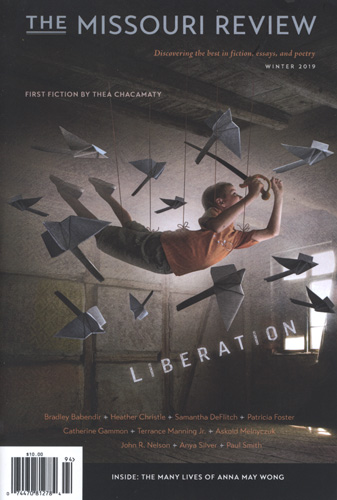
Inside our “Liberation” issue, First fiction from Thea Chacamaty and Bradley Babendir on Jewish comic novelists. Featuring Heather Christle, Samantha DeFlitch, Patricia Foster, Catherine Gammon, Terrance Manning Jr., Askold Melnyczuk, John R. Nelson, Anya Silver, and Paul Smith.
Spread the word!
The Antioch Review – February 2020
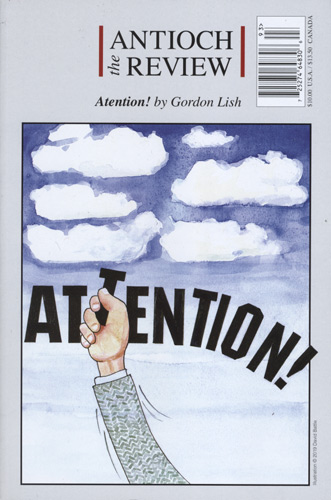
The “Atention!” issue of The Antioch Review includes Heinrich Böll’s “Cause of Death: Hooked Nose” (translated by Robert C. Conard) which captures Nobel laureate Boll’s vivid imagery about the corollary of unfettered hatred, unchallenged propaganda, and fearful inertia for countries, communities, and consciences. Rachel Rose’s “Buccal Swab” airs the concerns and realities families face when a member harmlessly hands over DNA to Ancestry.com or some other DNAanalyses company. Stuart Neville’s thriller “Coming in on Time” unfolds in the eyes of a child naïve to passions that stir so strongly and sting so seriously. Find a full list of contributors at The Antioch Review‘s website.
Spread the word!
Just a Few Billion Years Left to Go
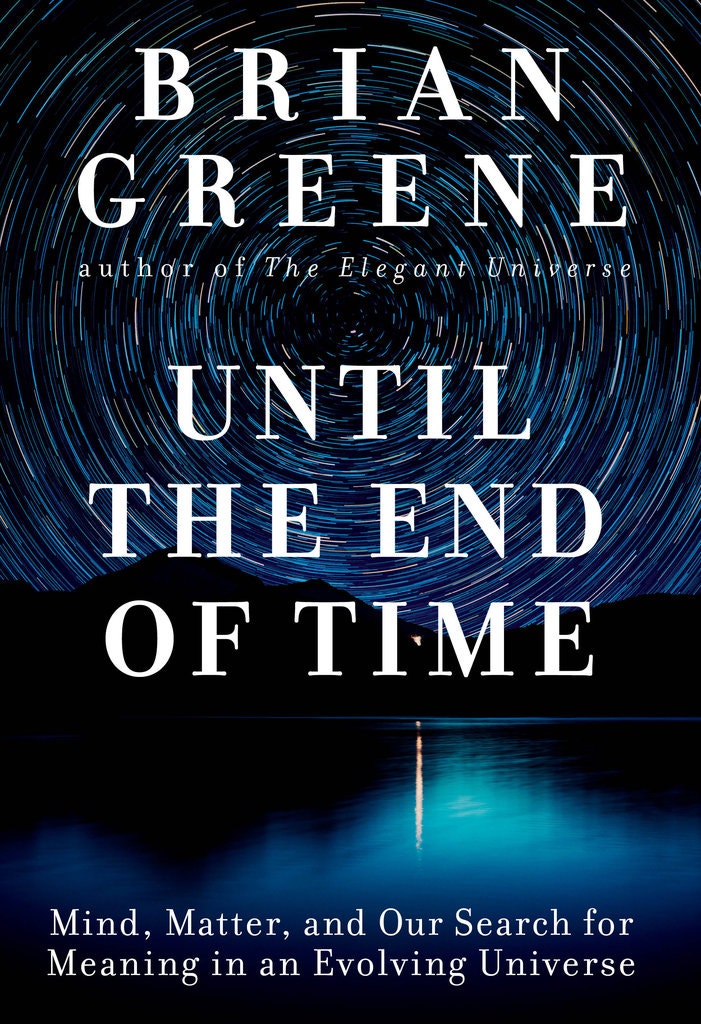 Until the End of Time. Mind, Matter, and Our Search for Meaning in an Evolving Universe By Brian Greene. Book Review, New York Times.
“In the fullness of time all that lives will die.” With this bleak truth Brian Greene, a physicist and mathematician at Columbia University, the author of best-selling books like “The Elegant Universe” and co-founder of the yearly New York celebration of science and art known as the World Science Festival, sets off in “Until the End of Time” on the ultimate journey, a meditation on how we go on doing what we do, why and how it will end badly, and why it matters anyway.
“Until the End of Time” is encyclopedic in its ambition and its erudition, often heartbreaking, stuffed with too many profundities that I wanted to quote, as well as potted descriptions of the theories of a galaxy of contemporary thinkers, from Chomsky to Hawking, and anecdotes from Greene’s own life — of which we should wish for more — that had me laughing.
Spread the word!
Women of a Certain Rage
 Women of a Certain Rage. Two New Books Tackle Getting Older—and More Pissed Off. Bitchmedia.
…I can’t say whether the despair I regularly feel is statistical or situational—the world is both literally and figuratively on fire, after all; I don’t trust anyone who isn’t despairing on some level. But as a woman, I also know that there can’t be any discussion of unhappiness at any numerical point of what we call “midlife” without acknowledging the powerful cultural narratives of gender and aging.
Those narratives, and the economic, political, sexual, and pop cultural impact of them, are at the center of two new books. Ada Calhoun’s Why We Can’t Sleep: Women’s New Midlife Crisis and Susan J. Douglas’s In Our Prime: How Older Women are Reinventing the Road Ahead both approach their subject matter from generational perspectives, each starting from a place of unsettled personal clarity: Well, shit, I got old. Now what?
Spread the word!
Patti Smith awarded PEN Award
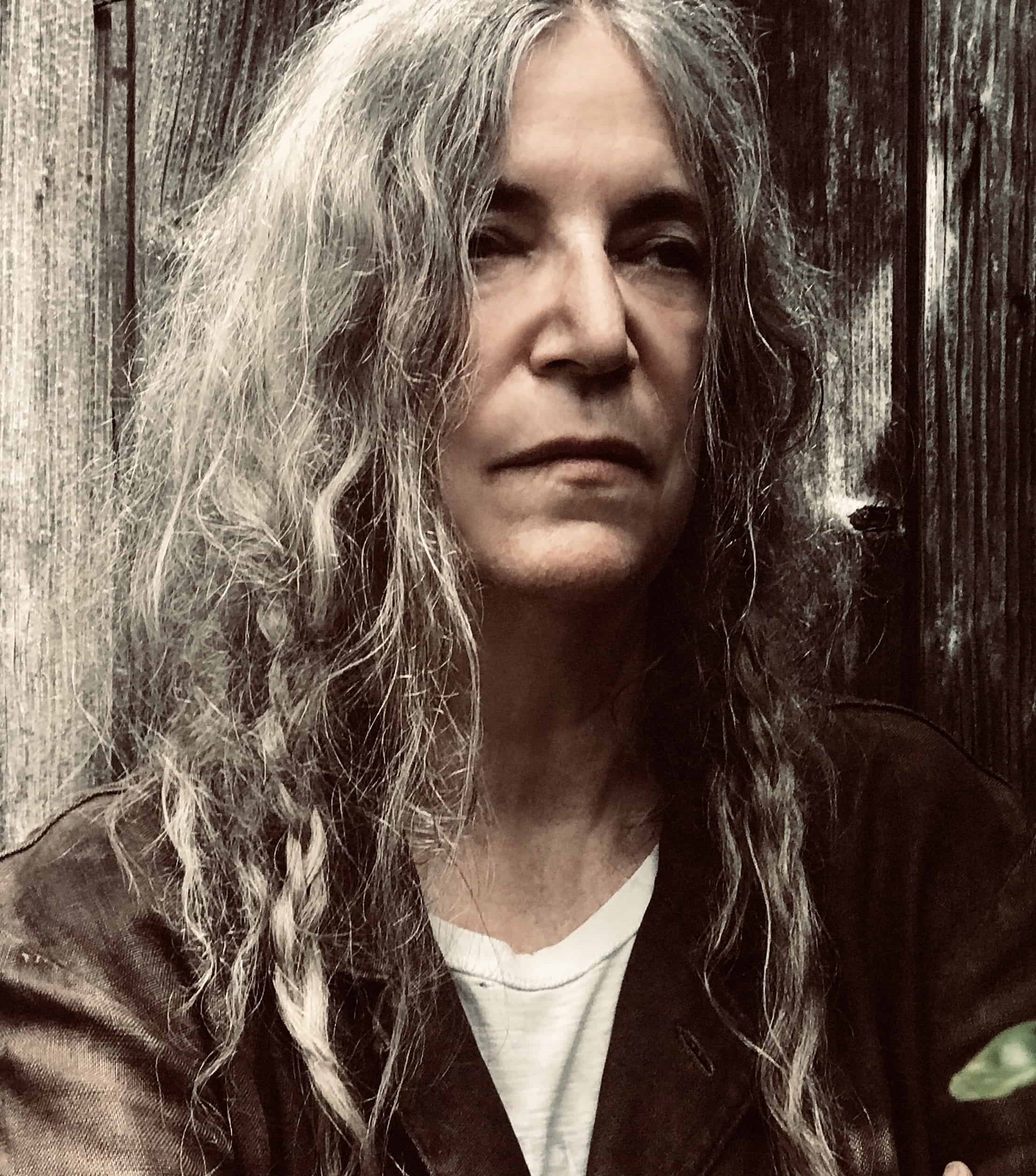 2020 PEN/Audible Literary Service Award: Patti Smith. Pen America.
Patti Smith is a writer, performer, and visual artist. She gained recognition in the 1970s for her revolutionary merging of poetry and rock. She has release 12 albums, including Horses, which has been hailed as one of the top 100 albums of all time by Rolling Stone.
Smith had her first exhibit of drawings at the Gotham Book Mart in 1973 and was represented by the Robert Miller Gallery for three decades. Her retrospective exhibitions include the Andy Warhol Museum, the Fondation Cartier, and the Wadsworth Atheneum Museum of Art. Her books include Just Kids, winner of the National Book Award in 2010, Witt, Babel, Woolgathering, The Coral Sea, Auguries of Innocence, M Train, and Devotion.
Spread the word!
2020 Rainbow Book List
 Rainbow Book List – GLBTQ Books for Children & Teens
The Rainbow Book List Committee is proud to announce the 2020 Rainbow Book List. The List is a curated bibliography highlighting books with significant gay, lesbian, bisexual, transgender, or queer/questioning content, aimed at children and youth from birth to age 18. This list is intended to aid youth and those working with youth in selecting high-quality books published in the United States of America between July 1, 2018 and December 31, 2019.
This year, our committee has noticed an abundance of genre fiction, as well as books whose plots do not revolve around anxiety concerning a queer character’s identity. Micro trends that we’ve noticed this year have been books about birds or with birds in the title, and books about queer witches. We’ve also seen an increase in books with non-binary, asexual-spectrum, and bisexual characters.
Spread the word!
“Poet Laureate? Poet Illiterate? What?”
 Does poetry matter? L.A.’s former poet-in-chief Luis J. Rodriguez explains why it’s life changing. Los Angeles Times.
Confusion aside, I felt it was about time “poet laureate” became a household term. The United States now has more poet laureates than ever before. There are poet laureates for states, counties, cities, communities, small towns, and Native American reservations (Luci Tapahonso became the first poet laureate of the Diné Nation). Claudia Castro Luna, a Salvadoran American, served as Seattle’s poet laureate and later held the same post for Washington state. Two Xicanx poets, Laurie Ann Guerrero and Octavio Quintanilla, did the same for San Antonio. Sponsored by New York City–based Urban Word, there is also a Los Angeles Youth Poet Laureate (I helped pick two of them) and the first ever National Youth Poet Laureate, eighteen-year-old Amanda Gorman.
…It’s hard to figure out poetry’s worth when there is a hierarchy of “values” hanging over our heads determined not by nature or skill but by powerful men in the publishing, media, and political industries — entities that are about making money. I’m not talking about family values or cool traits. I’m talking net worth, the bottom line: “If it don’t make dollars, it don’t make sense.”
If that’s the case, poetry should perish.
Spread the word!
$2 million book deals about the Trump administration are anything but brave
$2 million book deals about the Trump administration are anything but brave. Vox.
The book publishing industry has many problems, but the one I find most chilling as a former book editor who now reports in the industry is that people who have vital information about our democracy are rewarded for putting such info in books rather than coming forward.
For book lovers such as myself, the silver lining of Trump’s election was the possibility that readers would be looking for escapism and big ideas in art. So it’s particularly demoralizing to watch publishers package the ongoing debasement of our country as entertainment. If Trump’s best political weapon is being at the apex of an infotainment media system that is consumed like cable news, then publishers aren’t obligated to play his game.
Spread the word!
Poem: At Least
Poem: At Least. By Ha Jin. Selected by Naomi Shihab Nye. New York Times Magazine.
In a wry poem of direct counsel, Ha Jin dismisses obligatory mingling and networking. He’s talking to himself or to any of us, as the poem quietly advises and reasons. “A Distant Center,” Ha Jin’s profoundly appealing collection of poems written in Chinese, then translated by the author into English, contains so many breathtaking cleanses-of-spirit — begone bombast and posturing! Reading it is better than going to a spa. The title of this poem adds another encouraging nod to the topic. We may not know everything, but “at least” this.
“…Look, this skyful of stars,
which one of them
doesn’t shine or die alone?
Their light also comes
from a deep indifference.”
Spread the word!
‘Real censorship’: Roxane Gay responds to American Dirt death threat row
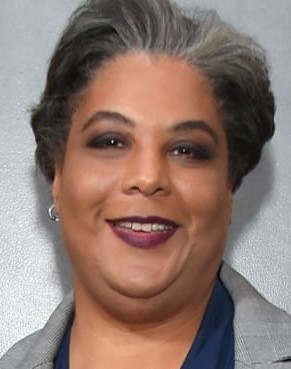 ‘Real censorship’: Roxane Gay responds to American Dirt death threat row. The Guardian.
The author argues the debate around Jeanine Cummins’ controversial novel shows how people are threatened for ‘daring to have opinions’
Gay, who explained that she receives death threats every week, and pays for a security service to monitor and protect her, said that it was “important to acknowledge the death threats people receive for daring to have opinions, for daring to be black or brown or queer or disabled or women or trans or any marginalised identity”.
“People need to realise what real censorship looks like. They need to understand how unsafe it can be to challenge authority and the status quo,” she said. “These are not things that should be taken lightly, nor should this level of harassment be dismissed as mere trolling. You never know when one of those so-called trolls is going to take his rage from the internet into the physical world.”
Spread the word!
How to Raise a Reader
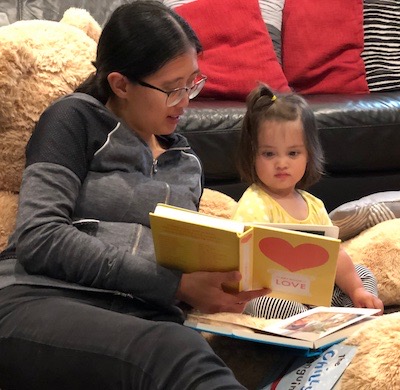 How to Raise a Reader (Does Anyone Actually Know?) BookRiot.
From what I can tell, the advice from these books can be distilled into three main points. One, read to your children, all the time, for as long as you can (even after they can read for themselves). Two, surround them with books and make books easily accessible. Borrow books from the library, buy books new, buy books secondhand, whatever it is — just have books at home. And three, model reading to them. One of the best ways to raise readers is to be a reader yourself, and let your child see that.
But thinking about these tips and advice also made me wonder: how effective are these tips? Can readers be made or are they born? The rest of these musings are exactly that: musings based on anecdotes and in no way on rigorous scientific research but it’s interesting to ponder.
Spread the word!
NewPages February 2020 Digital eLitPak
NewPages has sent out our monthly digital eLitPak to current newsletter subscribers yesterday afternoon. Not a subscriber yet? Sign up here: npofficespace.com/newpages-newsletter/.
Besides our monthly eLitPak featuring fliers from literary magazines, independent presses, and creative writing programs and events, we have a weekly newsletter filled with submission opportunities, literary magazines, new titles, reviews, and more.
Check out the current eLitPak below. You can view the original newsletter email here. Continue reading “NewPages February 2020 Digital eLitPak”
Spread the word!
Event :: Willow Writers’ Retreat 2020
The retreat will take place March 27-30 in Americus, Georgia. The award-winning Susan Isaak Lolis will facilitate. Final registration deadline is February 24. Guest speaker will be Margaret Harrington. Learn more…
Spread the word!
How to Write Fiction When the Planet Is Falling Apart
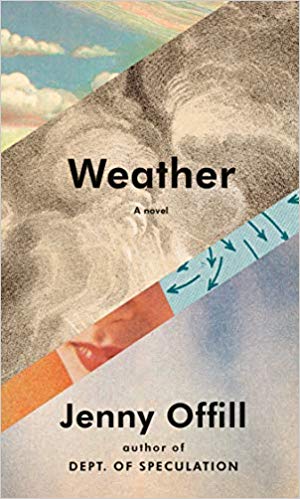 How to Write Fiction When the Planet Is Falling Apart. New York Times Magazine.
Jenny Offill is the master of novels told in sly, burnished fragments. In her latest, ‘Weather,’ she uses this small form to address the climate collapse.
In 2005, the naturalist Robert Macfarlane asked, in an influential essay in The Guardian: “Where is the literature of climate change? Where are the novels, the plays, the poems, the songs, the libretti, of this massive contemporary anxiety?” How should we understand the paucity of the cultural response to climate change, he asked, compared with the body of work catalyzed by the threat of nuclear war? In recent years, however, planetary collapse has emerged as a dominant concern in contemporary fiction…
The climate crisis, Offill shows, is reshaping not just our world but also our minds. “Weather” joins other new fiction in transforming the novel of consciousness into a record of climate grief. “Sometimes I think that people today must be the saddest people ever, because we know we ruined everything,” the heroine of Lucy Ellmann’s “Ducks, Newburyport” thinks.
Spread the word!
‘What Could Possibly Go Wrong?’ Edited by Richard Peabody

Book Review by Katy Haas
As a writer who is very prone to anxiety and stage fright, I’ve always turned down the opportunity to participate in readings. I can’t help running all the worst case scenarios through my head. This led me to picking up my copy of What Could Possibly Go Wrong? the pocket-sized anthology edited by Richard Peabody, featuring 36 writers sharing their own readings gone wrong.
The anthology starts off on a more serious note. Brett Axel’s reading devolves into a protest as police crash it, assuming the worst of teenage attendees. Abby Bardi’s publicity tour ends prematurely as it coincides with 9/11.
But a majority of these horror stories are less serious and more humorous. Mark Baechtel walks himself into a corner with one bad decision he commits to. Barbara Esstman has a selection of not one but four bad readings, and, luckily, she approaches each of them with levity. Alma Katsu is interrupted by a loud cheerleading practice. Both good weather and bad weather interfere with multiple readings. Tim Wendel must compete against the midnight release of his nemesis: Harry Potter.
Each writer presents their story with lightness and humor. Things didn’t go as planned, but they made it through and are still around writing and participating in more readings. I now find some comfort in the seemingly universality of readings gone awry. Sure, things might go wrong, but at least the experience will be there to laugh at (and possibly write about) later.
What Could Possibly Go Wrong? Edited by Richard Peabody. Paycock Press, 2019.
Spread the word!
True Story – No. 34
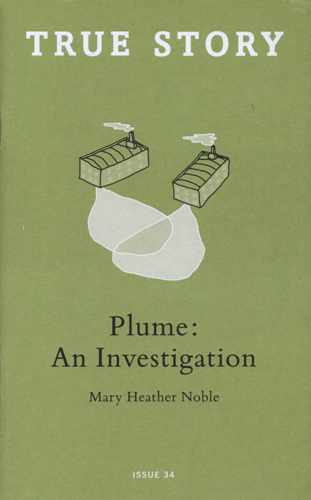
The single-author True Story has released a new issue. In “Plume: An Investigation” by Mary Heather Noble, a former environmental investigator applies her forensic skills to a family mystery. What happens to us when we are exposed to toxicity, both literally and figuratively? Can we change what we pass on to our kids? And at what cost?
Spread the word!
Plume – February 2020

Plume‘s February 2020 issue features selection is “Engraved Phrases on Open Seas: Poems and Notes on Translations of Khal Torabully” by Nancy Naomi Carlson. Charles Simic pens an “Essay on the Prose Poem,” and Mark Wagenaar reviews Mark Irwin’s Shimmer. Poets in this issue include Sawnie Morris, William Logan, Mary Jo Salter, Mark Irwin, Kim Addonizio, Andrea Cohen, Adam Scheffler, and more.
Spread the word!
The Main Street Rag – Winter 2020
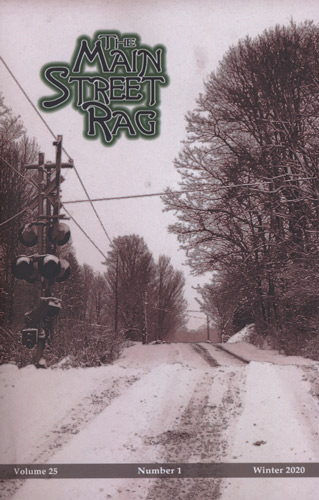
The Main Street Rag Winter 2020 issue includes featured interview “Living for the Day” with Laura Thurston by Richard Allen Taylor. Also in this issue, find fiction by Nancy Bourne, Michael Gaspeny, Nick Gardner, Don Stoll, Laurence Levey, and Michael Washburn; poetry by Joan Bauer, Ace Boggess, Les Brown, Brian Fanelli, Mary Alice Dixon, Sean Thomas Doherty, Vicki Mandel-King, Gerard Sarnat, Sibani Sen, Young Smith, and more; plus a selection of five book reviews.
Spread the word!
Hampden-Sydney Poetry Review – 2020

This year’s issue of HSPR is a collection of small things–the way the small things, the things we could almost overlook, often drive art as much as larger considerations. Our 4×4 section this year continues the theme – Richard Kenney, Tobi Kassim, Jessica Fisher and Stephanie Burt all weigh in on the role of small things in both making poems and appreciating them. Contributors include Jena Le, Sandra Lim, KE Duffin, Mary Cisper, Anna Tomlinson, Adam Tavel, Jonathan Wike, Tobi Kassim, and more. A changed logo, different paper, and new fonts are also small physical changes readers can note in this issue.
Spread the word!
Carve Magazine – Winter 2020
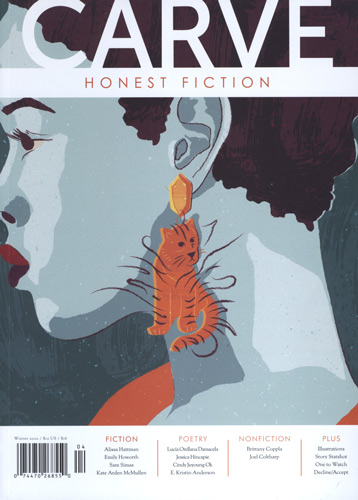
The Winter 2020 issue of Carve Magazine features short stories by and interviews with Alissa Hattman, Emily Howorth, Sam Simas, and Kate Arden McMullen; poetry by Lucia Orellana Damacela, Jessica Hincapie, Cindy Juyoung Ok, and E. Kristin Anderson; and nonfiction by Brittany Coppla and Joel Clotharp. Additional features include Decline/Accept with “Fit” by Rayne Ayers-Debsksi, a “One to Watch” interview with Brandon Taylor by Anna Zumbahlen, and illustrations by Justin Burks.
Spread the word!
Call & Event :: Columbus State University Creative Writers Conference 2020
Columbus State University is accepting panel and workshop proposals for its 2020 Creative Writers Conference through February 15. Consider attending the event taking place October 24 in Columbus, GA. Learn more…
Spread the word!
Patti Smith on Libraries and the Transformative Love of Books
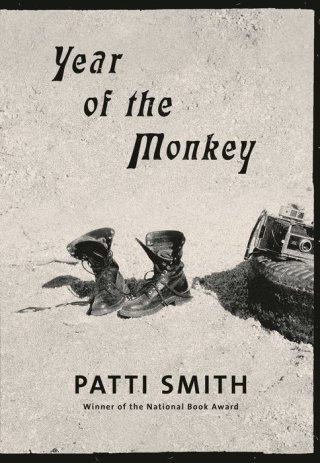 Patti Smith on Libraries and the Transformative Love of Books. Brain Pickings.
In Year of the Monkey — her unclassifiable, symphonic exploration of dreams, love, loss, and mending the broken realities of life — Patti Smith recounts how her local childhood library nurtured her inner life, tilling the soil of her becoming.
In consonance with that lovely parenthetical line from one of Nikki Giovanni’s poems celebrating libraries and librarians — “(You never know what troubled little girl needs a book.)” — Smith writes of the endearing, almost unreasonable devotion with which she sought solace for her nine-year-old troubles amid the stacks.
Spread the word!
Event :: Los Angeles Review of Books Publishing Workshop 2020
 Event Dates: July 5–24, 2020; Los Angeles
Applications are open for the Summer 2020 Los Angeles Review of Books Publishing Workshop: July 5–24, 2020 at Emerson College’s L.A. campus. Scholarship deadline is extended to March 30; all applications now due by April 13. For more information and to apply, visit thepublishingworkshop.com.
Spread the word!
‘The Way of the Wind’ by Francine Witte
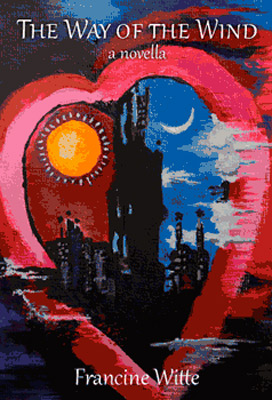 Guest Post by Arya F. Jenkins
In The Way of the Wind, poet and writer Francine Witte’s sparse but packed novella in flash, loss has a dozen names and belongs as much to the present as the past. After being dumped by her boyfriend of five years, the narrator, Lily, finds herself not only overwhelmed with grief but with the memory of other losses and, as she tries to work through them, takes the reader on a frantic, all-too familiar journey.
The Way of the Wind is divided into short, emotionally-charged chapters that grip from the start. Bitter wit provides respite throughout: “Love is a lot like tennis, you know? The ball is everything. Everything. If you’re not watching it, you might as well be sipping tea.”
As is true in the work of any masterful flash fiction writer, the only thing the reader can count on here is the unexpected. As Witte takes the reader on a bumpy ride full of emotional twists, highs and lows, the angst and dramedy feel familiar; the ache, all too real. Lily tries everything to escape her pain, going over the “ifs,” making excuses for the other, fantasizing to keep from acknowledging that her biggest fear—abandonment—has come to pass. The only way out of grief and loss, the narrator seems to suggest, is by uniting with what there is—other humans who care, and acceptance.
The Way of the Wind by Francine Witt. Ad Hoc Fiction, 2019.
Arya F. Jenkins is a poet and writer whose prose has been recently published in About Place Journal, Across the Margins, Cleaver Magazine, Eunoia Review, Five on the Fifth, Flash Fiction Magazine, Metafore Literary Magazine, and Vol. 1 Sunday Stories Series. Her fiction has received several nominations for the Pushcart Prize. Her latest poetry chapbook, Love & Poison, was published by Prolific Press in November 2019, and her short story collection Blue Songs in an Open Key (Fomite, 2018) is here: www.aryafjenkins.com.
Spread the word!
Poetry – February 2020
The Poetry February 2020 issue features work by Zach Linge, Jesus Govea, and Dasiy Fried. More work by Terese Svoboda, Alison C. Rollins, Mia You, Caoilinn Hughes, Virginia Keane, Francine J. Harris, Angela Jackson, Rodney Jones, David Felix, Dujie That, Talin Tahajian, Partridge Boswell, Lani O’Hanlon, Beth Bachmann, John Lee Clark, Maggie Smith, James McCorkle, Zeina Hashem Beck, Jessica Greenbaum, Mei-Mei Berssenbrugge, Mary B. Moore, Gabrielle Bates, Nome Emeka Patrick, Jack Underwood, and Liz Berry. Plus, an essay by Jeffrey Yang.
Spread the word!
The Malahat Review – Winter 2019
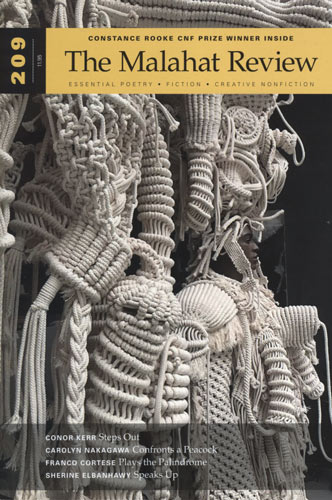
The Winter 2019 issue of The Malahat Review features 2019 Constance Rooke Creative Nonfiction Prize winner Jeanette Lynes. Also included: Carolyn Nakagawa, Julia Brush, Angélique Lalonde, Franco Cortese, Kurt Marti, Patricia Young, Sherine Elbanhawy, Suphil Lee Park, Emeka Patrick Nome, Hasan Alizadeh, Conor Kerr, Joel Robert Ferguson, Melanie Boyd, Bernadette White, Dominique Béchard, Jon Gingerich, Tatiana Oroño, Robert Hilles, Kulbir Saran, Sarah Yi-Mei Tsiang, Dawn Lo, and Sehrish Ranjha. Cover art by Sandra de Groot.
Spread the word!
The Literary Review
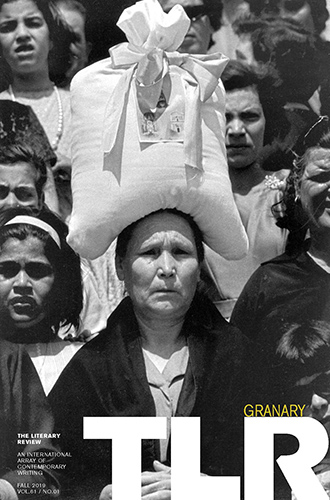
The “Granary” issue of The Literary Review features poetry by Rosa Alcalá, Mario Ariza, Christian Barter, Samuel Cheney, James Ciano, Heather Derr-Smith, Dalton Day, Michael Farman, Stuart Friebert, Ute von Funcke, Elisa Gonzalez, Benjamin S. Grossberg, Jennifer Grotz, Maricela Guerrero, Hannah Jansen, and more; fiction by Jody Azzouni, James Braziel, Rosy Fitzgerald, Case Q. Kerns, Laura Shaine, Christine Sneed, Eva Taylor, and Jenny Wu; and prose by Kelly Luce, Karen Luper, Toni Maraini, and Josip Novakovich.
Spread the word!
The Lake – February 2020
This week, we have The Lake‘s February issue, featuring Gaby Bedetti, David Butler, Brent Cantwell, Alexandra Corrin-Tachibana, Michael Dureck, Rebecca Gethin, David Krausman, Patrick Lodge, Bree A. Rolfe, Laura Stringfellow. Reviews of Jason Eng Hun Lee’s Beds in the East and Patrick Lodge’s Remarkable Occurrences.
Spread the word!
Event :: Odyssey Writing Workshop 2020
The Odyssey Workshop for fantasy, science fiction, and horror writers is accepting applications. Deadline to apply for the 2020 workshop is April 1. The event will run June 1 to July 10 in Manchester, NH. Learn more…
Spread the word!
Threats against the author of ‘American Dirt’ threaten us all
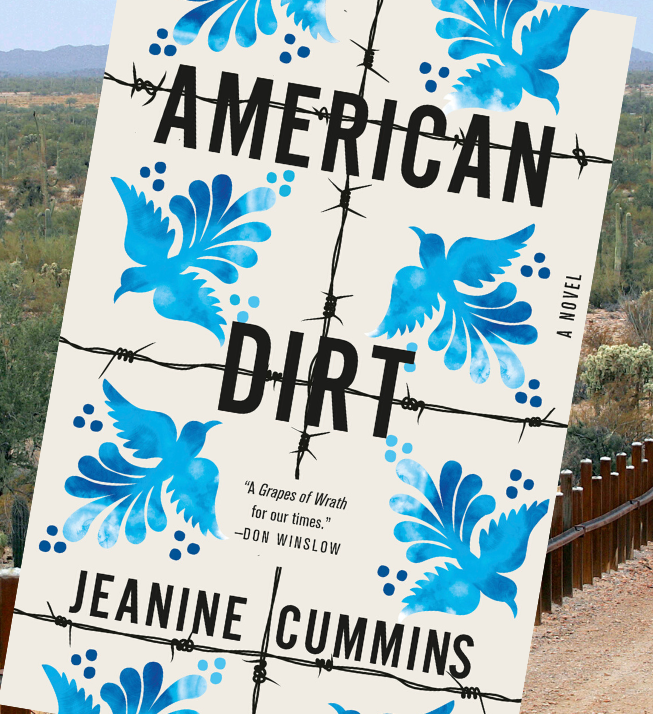 Threats against the author of ‘American Dirt’ threaten us all. By Ron Charles, The Washington Post.
And in the current climate, hate quickly becomes weaponized. Gurba told Vox this week that she had received death threats after posting her review of “American Dirt.” And the ad hominem comments about Cummins flying around the Web have been brutal. From the start, too much of the discussion of this mediocre novel has been snarled up in identity politics — a poisonous tendency encouraged by the author herself. In a pleading afterword to “American Dirt,” Cummins confesses that she wished “someone slightly browner than me would write it.”
…But some detractors are determined to short-circuit such a possibility — or any discussion sparked by this novel. Fortunately, Flatiron remains committed to serious debate. Although Cummins’s bookstore tour has been canceled, the publisher has announced plans to conduct town hall meetings involving Cummins and “some of the groups who have raised objections to the book.” Let’s hope those discussions can move forward without bullying, intimidation or violence.
…The best critics of “American Dirt” are clearly motivated by a desire to defend the integrity of Mexican culture and the humanity of our most vulnerable residents. But in today’s toxic atmosphere, those valuable critiques have been drowned out by a cowardly chorus of violence.
Spread the word!
Program :: The MFA at Florida Atlantic University
The MFA in Creative Writing program at Florida Atlantic University offers concentrations in fiction, creative nonfiction, and poetry. Core faculty include Ayşe Papatya Bucak, Andrew Furman, Becka Mara McKay, Susan Mitchell, Kate Schmitt, and Jason Schwartz.
Students have the opportunity to work with online literary magazine Swamp Ape Review (which reopens to submissions on April 1). Learn more…
Spread the word!
Brilliant Flash Fiction – January 2020
The January 2020 issue features flash fiction by David Galef, Martha Keller, Ron Hartley, Luke Rolfes, Kenneth Hinegardner, Michael Clark, Meg Pokrass, Marie Anderson, Roberta Beary, Robert Pope, Warren L Jones III, and David C. Metz.
Spread the word!
Trans Representation in Film & TV
 “Disclosure”: Groundbreaking Documentary Examines a Century of Trans Representation in Film & TV. Democracy Now.
The documentary examines the depiction of transgender people in television and film for more than a century, from the 1914 silent film A Florida Enchantment to the Oscar-winning 1999 film Boys Don’t Cry to the new hit television series Pose. Through in-depth interviews with transgender actors, activists and writers, the documentary reveals the way Hollywood and the media both manufacture and reflect widespread misunderstandings and prejudices against trans people. The film also champions the trans people in film and television who have fought and are fighting tirelessly for accurate and dignified representation on screen.
… There is a lack of historical context for trans people, which we actually see in the legislation, as well. There’s this notion that it’s a new phenomenon, that trans people are a sudden trend that need to be combated, because we have this continual historical forgetting. We don’t know our own past. We don’t know that we’ve been around, because we don’t get to see those images.
Spread the word!
The Adroit Journal – January 2020
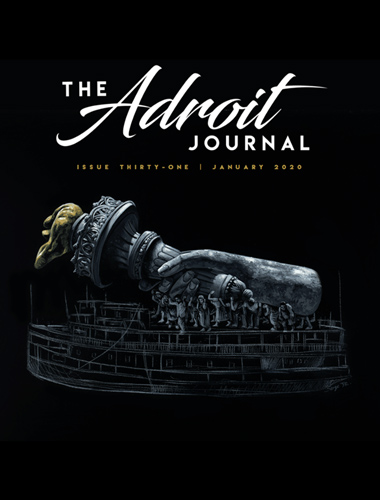
The Adroit Journal Issue 31 is here with new poetry by Victoria Chang, Michael Bazzett, Bruce Snider, Mark Halliday, Paul Guest, Lena Khalaf Tuffaha, Faylita Hicks, Caroline Crew, Paige Quiñones, Abby E. Murray, Natalie Eilbert, and more; prose by Kate Folk, Pete Segall, Alexander Weinstein, Alex Perez, Wendy Oleson, and John Elizabeth Stinzi; and art by Heather Betts, Jenny Shi, Anna Frankl, Niya Gao, You Young Kim, and Serge Gay Jr. Plus five new interviews with Victoria Chang, Danez Smith, Paige Lewis, Corrie Williamson, and Carmen Maria Machado.
Spread the word!
Science as Story
 In their recent newsletter, literary magazine Creative Nonfiction has announced a new series of events launching this spring called Science as Story. The best part of this series is that these events will be free thanks to the support from the Fisher Fund of the Pittsburgh Foundation.
From March to May, five scientists will visit Pittsburgh to give public lectures. If you aren’t a local to the area, these will also be available as webinars! Each of these scientist writers will also participate in intimate conversations along with Q&As to discuss the craft of writing.
Plus, they will also be running a six-week writing workshop for scientists who are itching to tell their stories.
Featured authors in this series are Azra Raza, Amanda Little, Dawn Raffel, Danielle Ofri, and Ruth Kassinger. Visit their website to learn more.
Spread the word!
Bookselling and Liberation
Bookselling and Liberation: Black Bookstores in America, from the ’60s to the Present. American Booksellers Association 2020 Winter Institute keynote event.
“These Black radical bookstores were part of a larger movement,” said Davis, and they emerged from social movements in the ’60s and ’70s, including civil rights, Black power, feminism, environmentalism, and the peace movement.
… “Our core is from that era because it represents us, and we’re very eager to share that with young people because it was written with them in mind,” she said. “People who were incredibly oppressed wrote for the next generation. And so, a good bookseller makes sure that the next generation gets access to what was left behind for them.”
Spread the word!
“Death of the Farm Family” by Sarah Smarsh
 Magazine Review by Makenzie Vance
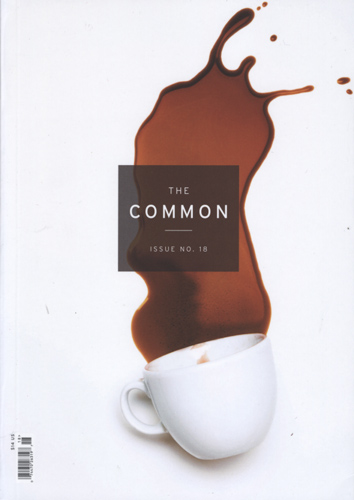
In the Issue 8 of The Common, Sarah Smarsh describes how her grandfather’s home became a central gathering place for friends and family and then how it was lost after his death. She begins two generations before her own and skillfully condenses her three-generational story into a compelling length.
Smarsh recounts how her drifter grandmother met her grandfather and finally settled down after a life of wandering with her teenage child—Smarsh’s mother. Though the farmhouse served as a communal space for family and friends and a home for eccentric farm traditions like sledding in a canoe behind a truck, the farm fell apart when her grandfather died, leaving a hole in their lives.
Smarsh speaks to all when she illustrates the importance of a central gathering place for a community, and she reaffirms the importance of small farms and the lives lived upon them.
About the reviewer: Makenzie Vance is a creative writing student at Utah State University.
Spread the word!
Caribbean region needs publishers
 Caribbean region needs publishers. Caribbean Life. The state of publishing in the Caribbean has regressed to the conditions of the 1940s, and apart from Barbados, anglophone Caribbean governments give short shrift to the literary arts.
So says Vincentian and leading Caribbean novelist and literary critic, Dr. Nigel Thomas, who while complimenting Barbados at a recent awards function for its vibrancy in promoting the arts, said the island has far to go for greater organisation in permanently recognising its outstanding artistes.
… Thomas who lives in Quebec and is author of 11 books and five novels contends that the absence of recognition for creators in literary arts is part of a bigger problem in the English-speaking Caribbean where those who pen from their imagination have little or no publishing opportunities.