At the NewPages Blog readers and writers can catch up with their favorite literary and alternative magazines, independent and university presses, creative writing programs, and writing and literary events. Find new books, new issue announcements, contest winners, and so much more!
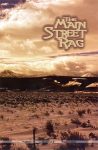
The Main Street Rag Winter 2024features an interview with poet Anne M. Kaylor by Kim Blum-Hyclak, followed by “Stories & Such” by Mark Brazaitis, Jan English Leary, John Mauk, Randy F. Nelson, Jessi Waugh, and a hefty selection of poetry by Anne M. Kaylor, Johnny Cordova, Chris Dahl, Adam Day, Richard Band, Morrow Dowdle, Gary Fincke, Bonnie Stanard, Chapman Hood Frazier, Tony Gloeggler, Diane Gottlieb, Alessio Zanelli, Dennis Herrell, Michael P. Hill, Dana Kinsey, Tom Laichas, Linda Lerner, Donald Levering, George Longenecker, Daniel Edward Moore, John Nizalowski, Hayden Nielander, Beth Paulson, Alexandria Peary, Scott Owens, Jason Ryberg, Richard Rubin, T. Parker Sanborn, William Snyder, George Staley, Rob Vance, Jessi Waugh, Frederick Wilbur, Dede Wilson, and Erin Wilson.
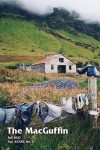
The MacGuffin Fall 2023 (vol. 39.2) issue welcomes a familiar name to the masthead’s editor slot: Brett M. Griffiths. Readers will remember Brett as a Poetry Staffer, and this issue’s diverse poetry selections should give a sense of this, from Angie Macri’s elegiac “The rain suddenly silver over the diamond,” to Rebecca Foust’s trio of Orwellian poems to, MacGuffin fan-favorite Joey Lew’s contemplative closing poem, “Holding Pattern.” The opening and closing stories follow the magazine’s recent bend toward narrative experimentation, with J. Grace’s Brautigan-esque “My Father Was a Serious Man” and the deconstructed narrative of Chris Wiberg’s “Multilateration” serving as prime examples.
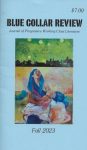
Blue Collar Review editor’s note opens the Fall 2023 publication: “This issue emerges in maddening times. As I write this, the Israeli slaughter of Palestinians, triggered by a brutal uprising of oppressed desperation, continues in Gaza as well as in the occupied West Bank with avid support and weapons supplied by our country’s leaders. [. . . ]
“Some poems in this issue struggle with whether our protests and resistance even matter in the face of overwhelming odds and the stubbornly deaf power of the corrupt monstrosity of our seemingly insane ruling class. They affirm, based in our own working class history, as well as continuing labor victories, that it absolutely does matter; that we lose when we give in to hopelessness, cynicism or the cultivated division that isolates and disempowers us. Given the impending climate catastrophe, the danger of growing wars and of nuclear war that threatens our existence, we, like Palestinians, have no choice but to struggle for our own survival against the same entrenched, corporate militarized power. [. . . ]
“We remain grateful for your support, for the strong words and poetry sent and to be able to continue publishing in spite of rising prices and postal rates. As a poem by Cathy Porter notes, ‘Poetry can’t solve a damn thing / but readers can / And we must.'”
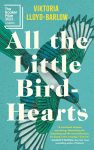
Sunday Forrester, the narrator of Lloyd-Barlow’s Booker-longlisted novel All the Little Bird-Hearts, is different than her family and friends. She prefers to eat white food only; she isn’t concerned about how she dresses; and her internal monologue makes it clear that she struggles in social situations. Though she never explicitly says she’s autistic, Lloyd-Barlow’s biography explains that she has “extensive personal, professional, and academic experience relating to autism,” and the publisher’s page pronounces the book to be “a remarkable debut by an author who is herself autistic.”
Despite her struggles, though, Sunday is quite happy with her life, both with her work at her ex-husband’s family’s greenhouse and her life with her daughter from that marriage, Dolly. Her life, in fact, seems to get better when Vita and Rollo move into the house beside hers, renting it for at least the summer, perhaps longer. Vita, especially, brings excitement and color to Sunday’s life, as Vita seems the opposite of Sunday in every aspect, yet she seems enamored by her new neighbor.
Vita and Rollo begin taking Sunday, then Dolly, into their life on a more regular basis. However, Vita and Rollo bring a wider world into Dolly’s small-town life, often taking her to London and showing her what a life away from her mother could look like. They use Sunday’s differences to create conflict, heightened by the difference in wealth and class, leading to a difficult ending for all involved.
All the Little Bird-Hearts by Viktoria Lloyd-Barlow. Algonquin Books, December 2023.
Reviewer bio: Kevin Brown has published three books of poetry: Liturgical Calendar: Poems (Wipf and Stock); A Lexicon of Lost Words (winner of the Violet Reed Haas Prize for Poetry, Snake Nation Press); and Exit Lines (Plain View Press). He also has a memoir, Another Way: Finding Faith, Then Finding It Again, and a book of scholarship, They Love to Tell the Stories: Five Contemporary Novelists Take on the Gospels. Twitter @kevinbrownwrite
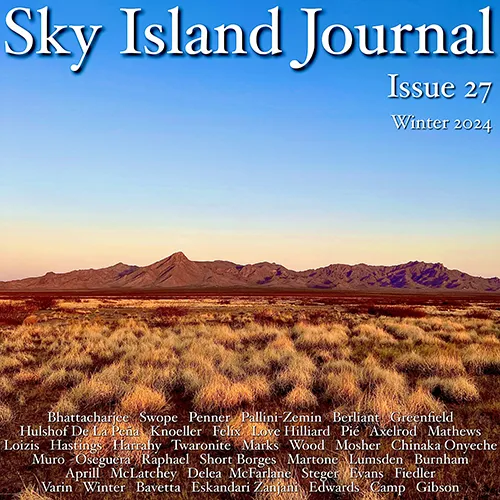
Sky Island Journal’s stunning 27th issue (Winter 2024) features poetry, flash fiction, and creative nonfiction from contributors around the globe. Accomplished, well-established authors are published—side by side—with fresh, emerging voices. Readers are provided with a powerful, focused literary experience that transports them: one that challenges them intellectually and moves them emotionally. Always free to access, and always free from advertising, discover what over 150,000 readers in 150 countries, and over 800 contributors in 50 countries, already know: the finest new writing can be found where the desert meets the mountains.
David Lipsky’s 2023 summer release, The Parrot and the Igloo, is a non-fiction work that focuses on climate change, but even more provocatively, the growing denial of its existence and the mammoth topic of potential human extinction.
Lipsky explains why climate change is so contentious using trendy narrative non-fiction techniques (think Capote or Mailer) to give insight into not only Thomas Edison, George Westinghouse, and Nikola Tesla’s scientific minds, but their personal idiosyncrasies as well. These insights allow casual readers to digest a convoluted and complicated topic: climate change and the subsequent denial of it.
Lipsky’s portrayal of a doom and gloom scenario reads like a comic entertainment of a who’s who in the field of science. Rife with current pop culture references from Disney’s Frozen to equating the severity of an ozone hole to a Christopher Nolan special effect, Lipsky makes reading about a potentially pending apocalypse fun. Wait… Is that possible? Unequivocally, yes.
Lipsky garnered much of his fame writing about the much more famous David Foster Wallace in his quasi memoir, Although of Course You End Up Becoming Yourself. But with the emergence of this Pynchonesque tragicomedy of world population proportions, Lipsky firmly stands on his own.
The Parrot and the Igloo by David Lipsky. W.W. Norton & Co., July 2023.
Reviewer Bio: Nicholas Agelis is an unpublished high school English teacher and basketball coach in North Jersey, and is currently an MFA student at William Paterson University.
Winner of the 2023 The Rachel Wetzsteon Chapbook Award, Fiona Lu’s debut chapbook, How to Become the God of Small Things, is a layered introspection on survival and mourning.Lu offers a glimpse into the irreplaceable and delicate nature of life on a personal level, as discussed in “Elegy” and “Misstep.” On the other hand, she plays devil’s advocate by painting the insignificance of one’s life in the grander schemes of the world in poems such as “Loneliness” and “Poem Made Entirely of Gardens.”
In addition, Lu’s poetry collection displays a great deal of hand imagery to convey the God-like power and control that lie in one’s hands, “he / stuck his hand into a fishtank and squeezed,” as well as the kindness and humanity capable from the same hands, “the way he always claps his hands in apology / before he feasts,” as demonstrated in “Hunting.”
Lu’s quiet resilience commands each page or world of hers, unafraid of experimenting with different forms and rhythms. Evidently, she has given much thought to the artistic composition of her pieces, since many are worthy of the cork/bulletin board treatment.
Overall, How to Become the God of Small Things delivers startling reality checks on mortality, leaving readers to ponder its visceral imagery in moments of stillness.
How to Become the God of Small Things by Fiona Lu. October 2023
Reviewer Bio: Debbie Pierre is working towards an MFA in Creative & Professional Writing from William Paterson University. She is the recipient of Bloomfield College’s Joyce Carol Oates Award in Creative Writing in 2022. As an up-and-coming poet, her poems have appeared in BC Underground. She loves the macabre, the arts, and cheesy jokes.
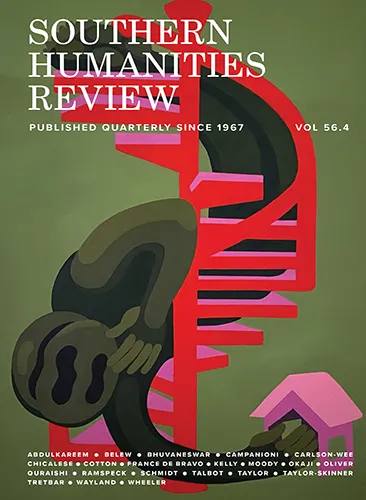
Southern Humanities Review issue 56.4 is full of water. A poem about renaming rivers. The story of a flight that ends in the ocean. An essay following boats full of refugees, landing in different countries, in different years. Themes of motherhood and mothers’ bodies are also woven throughout. This issue features poetry by Abdulkareem Abdulkareem, Terry Belew, Anders Carlson-Wee, Jackie Chicalese, Aliyah Cotton, Brandel France de Bravo, Trey Moody, Robert Okaji, Emily Oliver, Doug Ramspeck, Cheyenne Taylor, Alex Tretbar, Lindsey Wayland, and RL Wheeler. Nonfiction contributors include Chris Campanioni and Jennifer Taylor-Skinner. Fiction by Chaya Bhuvaneswar, Areej Quraishi, M.C. Schmidt, and Rachel Talbot. The abstract cover, Stairway to Heaven, 2023, is from Nora Kelly. Some content can be read online, and individual copies, as well as subscriptions, are available on the Southern Humanities Review website.
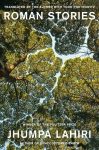
On one level, the title of Lahiri’s story collection, Roman Stories, is an obvious description of the work, given that all of the stories take place in Rome. However, in many of the stories, the characters are not actually Roman, or at least not by birth and, sometimes, citizenship.
Instead, they have often come to Rome later in life, and, thus, the retain that outsider status, even if they end up staying in Rome for the remainder of their days. By taking such an approach, Lahiri gives voice to a wide variety of characters, pointing out the multitude of stories found in a city like Rome.
The best example of this approach is the longest story in the collection, and the only one in Part II: “Steps.” The story shifts through six different sections, each focused on a different person/group of people: The Mother, The Widow, The Expat Wife, The Girl, Two Brothers, The Screenwriter. Each character or group has a connection to the same set of steps, a connection that reveals something important about each character or group. Though they come from a variety of backgrounds and experiences, this place in Rome binds them all together, at least on some level.
That serves as a metaphor for the collection itself, as the characters are diverse, but their connection to Rome binds them all together, whether they want to be or not.
Roman Stories by Jhumpa Lahiri. Alfred A. Knopf, October 2023.
Reviewer bio: Kevin Brown has published three books of poetry: Liturgical Calendar: Poems (Wipf and Stock); A Lexicon of Lost Words (winner of the Violet Reed Haas Prize for Poetry, Snake Nation Press); and Exit Lines (Plain View Press). He also has a memoir, Another Way: Finding Faith, Then Finding It Again, and a book of scholarship, They Love to Tell the Stories: Five Contemporary Novelists Take on the Gospels. Twitter @kevinbrownwrite
On the morning of April 16, 2014, a passenger ferry carrying 476 people was en route from Incheon, South Korea to the island of Jeju. After a dangerous turn against a strong current, the boat began to capsize, with hundreds trapped inside.
The sinking would take the lives of 306 passengers, including 250 schoolchildren and 11 teachers from the outskirts of Seoul onboard for a field trip. The excessive death toll has been largely attributed to the failure of the Korean Coast Guard to mobilize sufficiently, leading to a highly publicized court case and jail time for members of the crew, who abandoned the ship and all aboard.
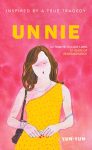
The tragedy caused public outcry around the world. But none were so bereft as the families left behind, like the main character, Yun-young. As the days turn into weeks and the weeks turn into months, they wait for news of Yun-young’s Unnie (the Korean word for “older sister”), a teacher now missing. As Yun-young embarks on an unfamiliar journey to understand Unnie’s life, she finds herself entangled in a blend of memories and unforeseen revelations, stirring an irresistible yearning. From Korea to America and back again, past and present overlap, as Yun-young tries to piece together the life of her enigmatic older sister.
“I’m a high school teacher in Korea,” writes author Yun-Yun. “At times, when I observe my students immersed in laughter with their peers, I feel a sudden wave of sadness, reminded of all the young lives taken away too soon. I imagine they, too, would have laughed just like that. Writing Unnie, my first novel, I was surprised at how easily the words flowed from me. To this day, I can’t shake the feeling that the lost students were guiding me as I wrote.”
Originally published in 2022, this edition is revised and re-released in honor of the 10-year anniversary of the event.
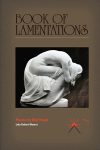
Book of Lamentations: Poems by Red Hawk, aka Robert Moore The Bittler Oleander Press, January 2024
Red Hawk’s Book of Lamentations opens with the poem, “Come Sisters, Let Us Lament,” which begins, “Where do we go, how / shall we make our way / when the Stars go out?” The collection is divided into sections of poems that seek to answer the question – or take readers on a quest of their own: Lamentations of Innocence: What is Lost, What is Gained; Lamentations of the Animals: Whose Cross is to Bear Our Pain; Lamentations of Experience: What it Costs, What Remains; Lamentations of Conscience: The Holy Ghost in Our Brains.
The author shares his experience that guides his writing, “Red Hawk is not an Indian name, nor was it ever intended to be one or pretend to be one; it is an Earth name, given by Mother Earth many years ago after a 4-day water fast at the Buffalo River in an effort to save my life in one of the darkest periods of my life. It was given as answered prayer. It indicates a deep love & reverence for the Earth which named me, and how it has shaped my life. I stand by it. Love of the Earth is my Spiritual path. It honors Her power to direct the course of our lives. I am Her legitimate son. As the illegitimate son of unknown parents, Robert Moore is my adopted name given to me by 2 people who died of alcoholism; I honor them by the way I live my life.”
Red Hawk is Emeritus Professor of English at the University of Arkansas at Monticello. He is the author of 11 books of poetry and two books on spiritual practice. He is a student and devotee of the Spiritual Teacher Lee Lozowick and of Lozowick’s Master, Yogi Ramsuratkumar, the Godchild of Tiruvanamali, India. He is also a long-time student of the Spiritual Teacher George Gurdjieff. His root-Guru was Osho Rajneesh. He is the winner of numerous national honors for his writing.
To discover more great books from small, independent, and university presses, visit the NewPages Guide to Publishers as well as our Books Received monthly roundup. Subscribe to our weekly newsletter to stay up to date!
The MacGuffin is looking to add a couple new editors to their Prose Staff. Staffers are responsible for reading around 10 stories per week (assigned on Submittable) and attending a Zoom discussion every other Thursday to decide what stories to publish. Interested readers can contact Gordon Krupsky, managing editor, at [email protected].
Where The Meadows Reside greets us this new year with its open-access, online seasonal quarterly publication of poetry, prose, creative nonfiction, hybrid, artwork, and audio. Founding Editor and Editor-in-Chief Meadow Sherif is a literary artist whose name you might think was the inspiration for the publication, but its inception is much more than that.
“I’ve always been intrigued by the liminality of the world,” Sherif says, “particularly in Augé’s non-places, though even beyond when I could ever put a name to it. Where The Meadows Reside is endlessness, an inevitability. I find the relationship between humanity and endlessness very enduring.
“We are constantly in our own fields — filled with moments like wildflowers, meadows. Though it seems as though there is a conflict between our external fields — our world in revolution around work, survival. So, in a world that revolves around endlessness and necessity, it seems as though what remains of the world – land – suddenly, endlessness with purpose.
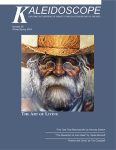
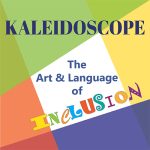
Kaleidoscope magazine publishes work that creatively explores the experience of disability through literature and the fine arts. In issue 88 several authors share ways they’re mastering the art of living with disability as an essential element of a creatively crafted life.
In the featured essay, “The Tree That Reminds Me,” author Rhonda Zimlich runs, and with every stride, she pushes her body, clears her mind, and denies the disease within. When she runs in her neighborhood she passes a tree that has been damaged by a lightning strike. MS has ravaged the bark of her nerves, leaving her scarred and exposed, just like the tree, and this kinship with the deciduous maple causes her to reflect on her existence.
Dave Wisniewski is the featured artist. He is a legally blind painter whose canvases depict larger-than-life characters from the Wild West. In addition to the features mentioned here, Kaleidoscope hopes readers will enjoy the work of these contributors: Aisha Ashraf, Kelsie Bennett, Cynthia Bernard, Tim Campbell, William Cass, Amy DeBellis, Stacie Eirich, Nancy J. Fagan, Connie Harold, Waylon Henggeler, Carrie Hinton, Claire Ibarra, Hareendran Kallinkeel, Danielle Krikorian, Geri Lipschultz, Emmy D. Wells, Jordan Wilson-Dalzell, and Ellen Zhang.
Lit Mag Covers: Picks of the Week recognizes cover art and designs for literary magazines, whether in print or online. These are chosen solely at the discretion of the Editor. Enjoy!
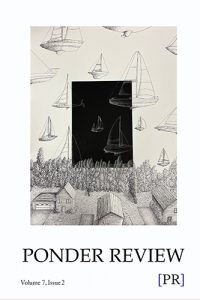
Ponder Review is a student-run publication of the MFA program at Mississippi University for Women publishes fiction, flash fiction, nonfiction, poetry, short plays, new media, and visual art twice a year. Cover art: “Near Future” by Lila Byrne.
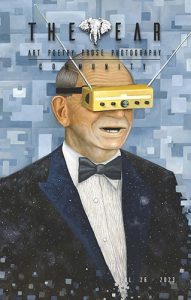
The Ear from Irvine Valley College has been publishing poetry, fiction, nonfiction, art, and photography annually since 1982 and can be read in print or online. This thought-provoking cover image is Synthesis of Man and Nature by Brennan Roach.
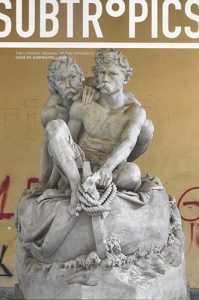
Subtropics: The Literary Journal of the University of Florida Summer/Fall 2023 issue cover image is In the Parco Piersanti Mattarella (Giardino inglese), Palermo (2022), photograph by Mark Mitchell.
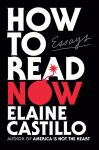
How to Read Now, Elaine Castillo’s collection of essays comes from the lineage of Toni Morrison’s Playing in the Dark, a work Castillo references several times. She wants to show readers the assumed whiteness of their reading and writing, the assumed whiteness of their world, essentially.
Castillo analyzes a wide range of writing (and texts in a wider sense), from the controversial Nobel-prize-winning Peter Handke to Jane Austen to the Cinderella story to Homer’s Odyssey, with many stops in between.
Like Morrison, Castillo points out numerous places where writers assume characters are white without any description of their being so and the effects that has on readers and how they see the world. She reminds readers to look for the gaps in texts, the places where authors are silent about the reality of the world in which they write, such as Austen’s father’s involvement in the buying and selling of those who were enslaved.
Her main point, which underlies all others, is that white writers/readers get the benefit of seeing their work as universal, while writers of color are educational material, something one reads to learn about a particular culture, not work that conveys any ideas about simply being human. After reading Castillo’s collection, a reader can’t help but look at the world and their reading differently, high praise for any book.
How to Read Now by Elaine Castillo. Viking, July 2022.
Reviewer bio: Kevin Brown has published three books of poetry: Liturgical Calendar: Poems (Wipf and Stock); A Lexicon of Lost Words (winner of the Violet Reed Haas Prize for Poetry, Snake Nation Press); and Exit Lines (Plain View Press). He also has a memoir, Another Way: Finding Faith, Then Finding It Again, and a book of scholarship, They Love to Tell the Stories: Five Contemporary Novelists Take on the Gospels. Twitter @kevinbrownwrite
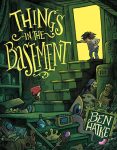
Things in the Basement by Ben Hatke is the fantastical adventure of young mop-headed Milo who is sent looking for his baby sister’s missing sock in the basement of their new home. Not just any sock, this “special sock” was made by her Tia Maria “with her special yarn.” The pressure is on as Milo reluctantly heads into the strange, gloomy basement to check the laundry.
What ensues is a series of Milo stumbling into and across one breadcrumb to the next, each taking him deeper and deeper into a secret world under his house. For kids who are terrified of basements, so is Milo! He is resistant time and again to continue his pursuit of the missing sock, but as he meets various underground dwellers and becomes entangled in their plight to survive, his inner hero eventually shines through.
Hatke’s use of frameless borders and often organically shaped panels lends to the eerie feeling of the story along with a rich palette of shades to reflect the gloomy atmosphere. Brighter colors emerge as the action ramps up with some pages seeming to burst with energy and excitement. Dialogue is minimal throughout, with some characters communicating in easily interpreted symbols.
Milo’s lack of confidence throughout the story is frustrating at times, but this also makes him a wonderful role model for kids who may fear basements as well as for kids who are fascinated by them. In the end, Milo’s victory saves his newly forged underground friendships and allows him to conquer his own internal struggle, making him the ultimate hero.
Things in the Basement by Ben Hatke. First Second :01, August 2023.
Reviewer bio: NewPages.com Editor Denise Hill reviews books based on personal interest.
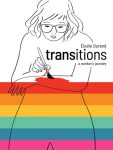
Transitions: A Mother’s Journey, Élodie Durand’s graphic nonfiction work, takes a nontraditional approach to narrative, visuals, and the idea of transitioning. First, this work isn’t a memoir, as Durand doesn’t tell her story; instead, she tells the story of Anne and Alex Marbot, fictional names for the mother and child whose lives she shares with the reader. Durand also moves back and forth in time, telling the Marbots’ story chronologically, at times, but then breaking up that story with inserts from Anne’s journal, which includes various inserts about gender identity.
Visually, the work moves between more realistic comic panels that tell most of the story and impressionistic sketches that reveal how characters (usually Anne) are feeling. The real difference, though, comes in the idea of transitioning. Rather than telling Alex’s story of their transition from female to male, this work focuses on Anne’s transition as she learns to accept her son for who he is.
Alex knows who he is throughout the work, as the reader only sees him after he comes to his mother to tell her of his decision. Anne, however, takes a couple of years to accept Alex, a journey that sees her move from questioning Alex’s decision in the fairly typical ways (believing they’re too young to make a decision or that their therapist put such an idea in their head) to becoming not just an accepting parent, but a staunch ally in the fight for trans rights and acceptance.
In this story, Anne is the one who must transition into becoming who she needs to be by the end of the work.
Transitions: A Mother’s Journey by Élodie Durand; translated by Evan McGorray. Top Shelf Productions, September 2023.
Reviewer bio: Kevin Brown has published three books of poetry: Liturgical Calendar: Poems (Wipf and Stock); A Lexicon of Lost Words (winner of the Violet Reed Haas Prize for Poetry, Snake Nation Press); and Exit Lines (Plain View Press). He also has a memoir, Another Way: Finding Faith, Then Finding It Again, and a book of scholarship, They Love to Tell the Stories: Five Contemporary Novelists Take on the Gospels. Twitter @kevinbrownwrite
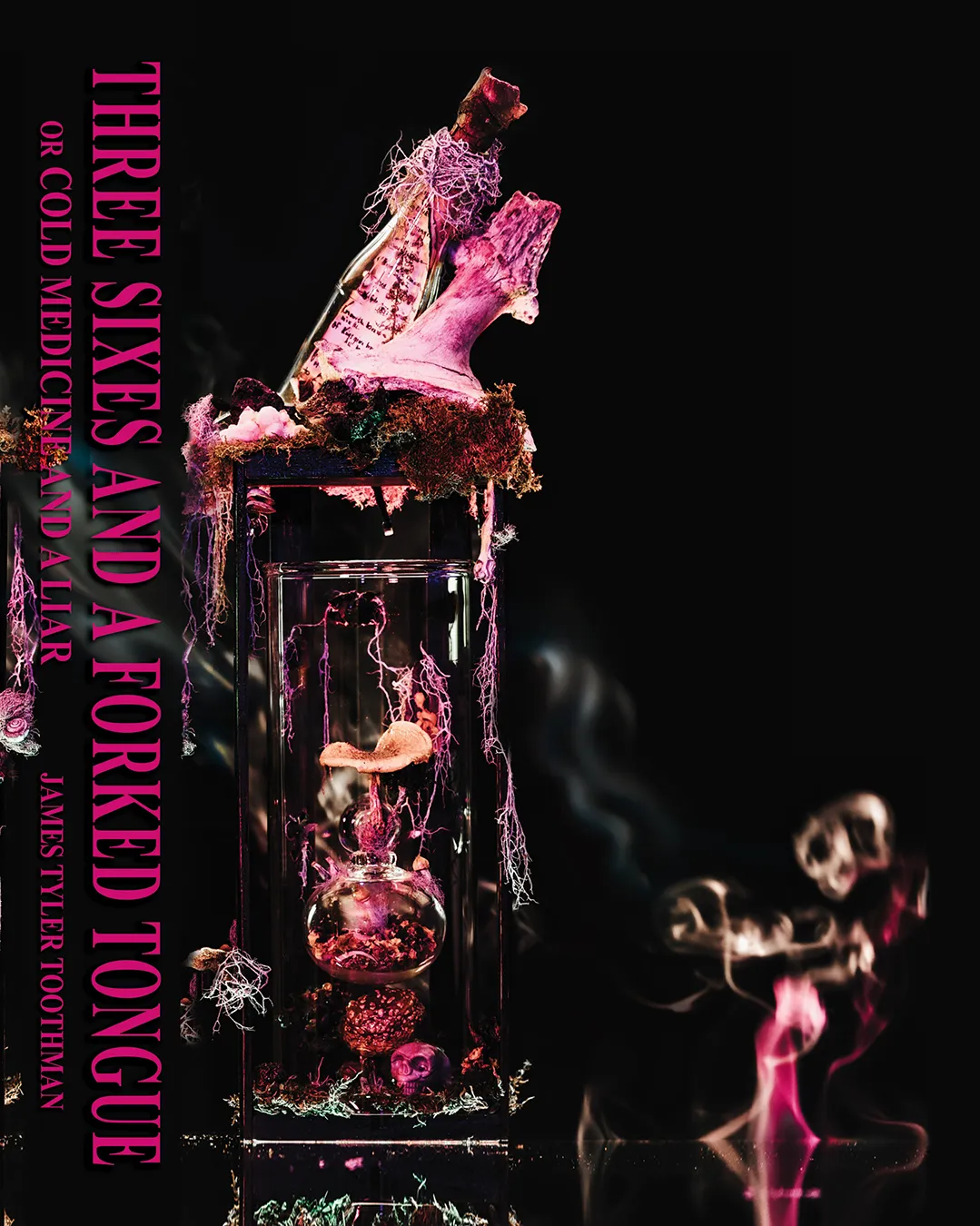
Three Sixes and a Forked Tongue or Cold Medicine and a Liar, Fiction by James Tyler Toothman
millions of colors, December 2023
The year is 1971. Lost deep in the woods of West Virginia, a desperate young girl discovers a book of witchcraft and pledges herself to Satan. But the Devil’s checking into town, and he’s got something special in store for this new little witch.
When Black Lavender Luci, the Devil himself, rocks up to Clockmaker, West Virginia in a Rolls Royce Silver Wraith, wearing alligator boots, a chinchilla coat, Porkpie hat and a gold-plated grin, he’s got his sights on only one thing: fifteen-year-old Miss Priscilla Carpenter, the baddest witch in town. Tired of being on the receiving end of Old Red—her father’s favorite paddle—Priscilla doesn’t hesitate when she stumbles upon a book of witchcraft and stains the pages with her blood.
At first, signing her soul away to Satan was just an opportunity to have some fun, help the people she loves, and get a little revenge on the townspeople that turned their backs on her and her mother, Lavinia. Flanked by her childhood best friend Joseph and her loyal disciple Big Tommy, Priscilla makes her way through the increasingly demanding spells of her beloved grimoire. But when the Devil calls in his favor and seduces Priscilla deeper into the world of dark magic, drugs, and desire, she unwittingly unleashes a torrent of death on Clockmaker, causing dams to break, women to go missing, and rabbit piss to fall from the sky. And pretty soon, she finds herself the baby mama of Hell himself.
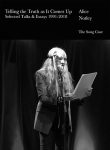
Telling the Truth as It Comes Up Selected Talks & Essays 1991-2018 by Alice Notley is a collection of prose writing that gives opinions and anecdotes of strong interest to reviewers and scholars of contemporary poets and poetics. It is also a great companion to Notley’s poetry, especially her book, At Night the States.
Notley digs deep into dream territory in the first essay, “What Can Be Learned From Dreams?” and says, “This work is also very disobedient” when describing her new work. Because she uses terms and language that are accessible, what is sometimes difficult and complex about poetry becomes transparent and real.
“The Mohave desert is vast with space and one fills it with thoughts and dreams—or I did. I acquired certain habits of thought from growing up in this landscape,” Notley writes in “Dreams, Again.”
I was so happy to find “Where’d You Get It?” her essay on Ed Dorn’s Gunslinger (2018) tucked in between “Musical Influences” and writing about Philip Whalen’s collected poems, “To do exactly that, right now” (2007).
Notley shows and tells what is apparent and transfers her whole self into whatever she discusses. In this collection, she is also a historian of American Poetry, especially the particular dreamscapes that modern technology brought/brings to influence dreams and dreaming.
Telling the Truth as It Comes Up Selected Talks & Essays 1991-2018 by Alice Notley. The Song Cave, November 2024.
Reviewer bio: Susan Kay Anderson lives in southwestern Oregon’s Umpqua River Basin. Her long poem “Man’s West Once” was selected for Barrow Street Journal’s “4 X 2 Project” and is included in Mezzanine (2019). Anderson also published Virginia Brautigan Aste’s memoir, Please Plant This Book Coast To Coast (2021).
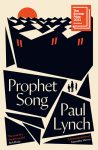
Paul Lynch’s 2023 Booker-prize-winning novel, Prophet Song, is timely and bleak. In a modern-day Ireland, the new government has passed laws that give them the power to clamp down on dissent, imprisoning and disappearing anyone who disagrees with them. That includes Larry, a leader of the teachers’ union, and, more importantly, Eilish’s husband.
Lynch follows Eilish and her four children as they try to hold their life together after Larry is arrested and the country slowly devolves into martial law, leading to a violent rebellion. Lynch mirrors this closing in by writing the novel without paragraph breaks, hemming the reader in, much as the Dubliners he writes about become increasingly trapped.
For much of the novel, Eilish tries to hold her family together by pretending their life is normal: she continues to take baby Ben to daycare, get the older kids to school, care for her father who is suffering from dementia. Even as some people leave the country, something Eilish’s sister who lives in Canada is willing to help Eilish and the family do, Eilish continues working to keep up a normal life. Ultimately, though, the conflict takes its toll on the family, which begins to fracture.
There’s no way to read this novel without thinking of the current rise of fascist or fascist-like leaders, despite the reader only seeing the result of decisions, not the politicians in charge. Sinclair Lewis titled a novel It Can’t Happen Here, which is how Eilish feels, but Lynch makes it abundantly clear what happens when people think that way.
Prophet Song by Paul Lynch. Oneworld, 2023.
Reviewer bio: Kevin Brown has published three books of poetry: Liturgical Calendar: Poems (Wipf and Stock); A Lexicon of Lost Words (winner of the Violet Reed Haas Prize for Poetry, Snake Nation Press); and Exit Lines (Plain View Press). He also has a memoir, Another Way: Finding Faith, Then Finding It Again, and a book of scholarship, They Love to Tell the Stories: Five Contemporary Novelists Take on the Gospels. Twitter @kevinbrownwrite
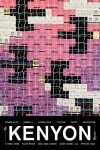
The Winter 2024 issue of The Kenyon Review includes an essay by Carrie Cogan, the winner of the 2023 Kenyon Review Nonfiction Contest, selected by Leslie Jamison; work by the 2021 Kenyon Review Developmental Editing Fellows, Allison Albino, Emily Stoddard, and Jane Walton; poetry by Sara Abou Rashed, Sarah Ghazal Ali, David Joez Villaverde, and Kim Garcia; fiction by K-Ming Chang, Melissa Yancy, and Brian Ma; nonfiction by Oz Johnson and Sarah Minor; and much more. The cover art is by DARNstudio, which consists of Ron Norsworthy and David Anthone.
NewPages Guide to Independent Bookstores in the U.S. and Canada is a great resource for finding local independent bookstores in your home area and as you travel. There is no better way to get to know a city than to check in with their local indie bookstore(s). For authors and publishers, our list is a great resource for finding sales outlets and reading venues to promote your books.
NewPages.com currently lists only brick-and-mortar stores (no online-only, pop-up, mobile, comics-only shops, or shops with books as a side business). We offer free enhanced listings in our Guide to Independent Bookstores to help booksellers connect with book lovers, so you can find a lot of info for many of the stores.
If we’re missing any stores you know about, drop us a quick note!
[Thanks to our friends at The Open Book in Mt.Pleasant, MI, for the lovely photo!]
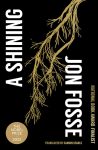
Compared to Septology, the doorstop that is John Fosse’s multi-volume, A Shining is a relative pamphlet. At 75 pages, the story can be summarized as follows: in the midst of a dérive, a man drives aimlessly (much like Fosse himself did while calming his nerves before the announcement of his being awarded the 2023 Nobel Prize in Literature), turning left and right without a thought, before he finds himself deep in the forest, his car stuck in the mud. He gets out to look for help, but all he finds is a shining, otherworldly presence. As the strangeness ramps up, he gets distracted from thoughts about his car.
There is some dialogue, though more often than not the slim cast of characters are unheard or ignored. The man’s words usually form a monologue, tracking his attempts to posit onto the world of A Shining a logic that is perpetually evading him. A dreamlike quality persists throughout; despite all the questioning, attempts to unwind the supernatural events are lackadaisical, and the phantasmal world is accepted without much fightback. At times, the glacial pacing of Fosse’s novella feels like an episode of sleep paralysis.
Comparisons to Beckett are hardly original, though A Shining does illuminate them. Here, as in Beckett’s famous trilogy, the world is shrunk down to the parameters of the story, characters are often nameless, seemingly insignificant objects become totems, and besides events that make up the blurb, nothing really happens.
A Shining by Jon Fosse, translated by Damion Searls. Transit Books, October 2023.
Reviewer bio: Colm McKenna is a second-hand bookseller based in Berlin. He has published and self-published an array of short stories and articles, hoping to eventually release a collection of stories. He is mainly interested in the works of John Cowper Powys, Claude Houghton, and a range of Latin American writers.
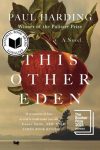
Paul Harding bases his new novel, This Other Eden, on a historical settlement of mixed-race people on an island off the coast of Maine. He uses that history as a springboard to create deep and rich characters who live there, ranging from Ethan Honey, a boy who can pass for white and has artistic talent that provides him with an opportunity others from the island never receive, to his grandmother Esther, a woman who sees the reality of what will come to their island, but who provides medicinal help to the residents in the meantime.
There are other finely-drawn characters, as well, such as Zachary Hand to God, who lives mostly in a tree while carving scenes from the Bible, and the Larks, who are almost translucent due to the amount of intermarriage in their family.
Harding pulls from historical accounts of what the government ultimately did to the residents of the island, relocating them to the mainland, putting them in institutions, even possibly sterilizing them to keep them from reproducing. Harding’s narrative voice, though, presents some contemporary views of Ethan’s artwork and the government’s actions, showing that those who lived on the island, while different than the mainlanders, had a thriving community with a culture of its own.
Harding reminds readers that what we do to others today will appear quite different a hundred years from now, which should give us pause before we alienate those who don’t match our definitions of normalcy.
This Other Eden by Paul Harding. W.W. Norton, 2023.
Reviewer bio: Kevin Brown has published three books of poetry: Liturgical Calendar: Poems (Wipf and Stock); A Lexicon of Lost Words (winner of the Violet Reed Haas Prize for Poetry, Snake Nation Press); and Exit Lines (Plain View Press). He also has a memoir, Another Way: Finding Faith, Then Finding It Again, and a book of scholarship, They Love to Tell the Stories: Five Contemporary Novelists Take on the Gospels. Twitter @kevinbrownwrite
Kaleidoscope: The Art and Language of Inclusion has launched episode five of its podcast. Focusing on issue 87 of the same-named Kaleidoscope magazine, this episode aims to lift the words from the pages to present them to an audience through a different perspective.
Join host Nick deCourville as he explores the ties that bind. In life, we experience many connections. Whether this is connections to our family, to our friends, or to ourselves, these ties help keep us tethered to reality. However, some ties can also keep us connected from that which we are trying to escape. Ties can help provide security and comfort, but it can also be far too easy to become entangled in our binds. Ties can keep us connected, yet somehow separate us.
This episode focuses on these ties and their impact on others with readings from Roly Andrews, Shanan Ballam, Caitlin C. Baker, Susan Whiting Kemp, Ujjvala Bagal Rahn, Robert Douglas Friedman, Margaret D. Stetz, Rebecca Brothers, Melanie Reitzel, Kate Robinson, Ellis Elliot, Shelly Jones, Connie Buckmaster, Marya Summers, and Benjamin Decter. Listen today and reflect on the ties that bind you.
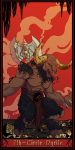
“Literary and artistic contributions to the journal are the beauty crafted in a hateful and violent world,” is how Founder and Editor in Chief Keiraj M. Gillis describes 7th-Circle Pyrite, an online bi-monthly of spirituality/religion, occult, horror, gothic, paranormal, mythology/folklore, and fantasy in all genres of writing and artwork. “My goal in starting the journal was – and always will be – to provide safety for writers and artists,” Gillis says, and “to be a refuge from the prevailing values in the literary world that have the potential to dismantle creatives’ confidence.”
A published author in gothic and spiritual poetry as well as a teacher, trainer, and IT grad, Gillis explains, “The themes supported by 7th-Circle Pyrite are very close to me. I have explored horror in its many forms as both a reader and writer, and have consistently been a student of religion, with involvement in everything from Christianity to Satanism. I’m an astrologer as well, and very much enjoy connecting with those who aren’t afraid to acknowledge that there may be ‘worlds beyond’ what we see.”
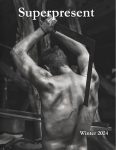
Provocations/Instigations is the theme for Superpresent Winter 2024 issue, which is most fitting since “provocation and instigation is really what the artists and writers do,” says Editor Kevin Clement. “Some the contributors instigate and provoke, others point out when it’s being done to us.”
The issue contains new works by well-lauded writers like Nick Flynn, David Kirby, and Duncan Forbes. There is also much to consider in the other contributions, like “Under Some Auspices (In Advance of a Broken State),” Shaun Griffiths’ 53-second video made in response to the Trump-led crimes of insurrection and treason on January 6th. The work comments on the instigations and provocations of the far right and its dependence on empty gestures. “Pop Out,” by Abaine Campbell-Gardner borrows from Willem de Kooning’s Women paintings, but radically morphs its iconography by adding a phallus and removing a face.
Sometimes form itself can be the provocation, as in the work of David Felix or that of Michael Webster. While some instigations rely on words leading to action, sometimes unexpected actions lead to the most meaningful words; “Words Will Come,” by Frances Gaudiano is an extraordinary case in point.
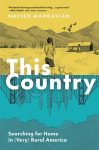
This Country: Searching for Home in (Very) Rural America, Navied Mahdavian’s graphic memoir, is, on the surface, the story of his and his wife’s attempt to literally make a home in rural Idaho. They have Amish builders construct and transport a tiny house to their land, and they begin learning how to survive in harsh conditions.
During their first winter, they’re unable to start their cars and, thus, get anywhere to buy food. Their attempts to raise enough food to live on doesn’t go well for their first year or two. They struggle to stay warm during the long, Idaho winters. However, their neighbors (loosely defined in such a rural setting, as they’re often more than a mile away) help them out, tell them stories about the area, and give them tips to help them survive. However, those same neighbors tell Mahdavian, whose parents are Iranian, that ISIS is in Idaho, they ask him if he’s Muslim, and they use racial and ethnic slurs to describe others when talking to him.
Navied and Emilie move to Idaho just before the 2016 election, which highlights such comments even more, making the book ultimately about Navied and Emilie’s attempt to find a country, to truly make a home, in a place that doesn’t welcome them. They ultimately have to face the choice of living the rural life they want or going elsewhere to try to create the life they want for themselves and their daughter.
This Country: Searching for Home in (Very) Rural America by Navied Mahdavian. Princeton Architectural Press, September 2023.
Reviewer bio: Kevin Brown has published three books of poetry: Liturgical Calendar: Poems (Wipf and Stock); A Lexicon of Lost Words (winner of the Violet Reed Haas Prize for Poetry, Snake Nation Press); and Exit Lines (Plain View Press). He also has a memoir, Another Way: Finding Faith, Then Finding It Again, and a book of scholarship, They Love to Tell the Stories: Five Contemporary Novelists Take on the Gospels. Twitter @kevinbrownwrite
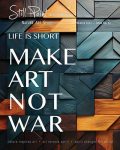
Still Point Arts Quarterly is a truly beautiful and engaging art and literary journal. “Living with Art” is the theme of the winter 2023 issue, which features historical and contemporary art and photography, fiction and non-fiction, and poetry. Still Point Arts Quarterly has been praised for its rich content as well as its splendid layout and design and is intended for artists, nature lovers, seekers, and enthusiasts of all types. A subscription to the interactive digital edition is free, and print editions may be purchased by subscription or single issue.
Another Name for Darkness: Sans. PRESS Anthology #6
Sans. PRESS, December 2023
A lifetime buried in the mud, a shadow haunting your past, a creature built from offered scraps – there is something lurking in the dark! In this new collection, 15 writers explore the many shapes that darkness can take, from the monstrous to the stark realities of loss and heartbreak. In tales that embrace both the mundane and the supernatural, nothing is impossible, and realities can be shattered and rebuilt for those willing to dare.
Lit Mag Covers: Picks of the Week recognizes cover art and designs for literary magazines, whether in print or online. These are chosen solely at the discretion of the Editor. Enjoy!
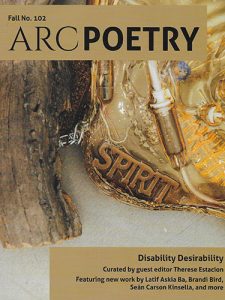
Arc Poetry Fall 2023 guest edited by Therese Estacion is themed “Disability Desirability” with cover image by Sharona Franklin.
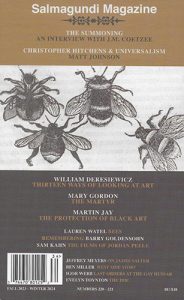
Salmagundi Magazine is an international quarterly magazine of politics, culture, literature, and the arts published at Skidmore College, and this Fall/Winter 2024 issue features a column on bees by Lauren K. Watel, thus the cool bee cover image, itself a color scheme nod to Edward Gorey.
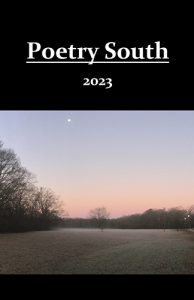
Poetry South is published annually by the low-residency MFA program in creative writing at Mississippi University for Women. The 2023 issue cover image, “Winter Trees” (no photographer credit), invites a moment of peaceful reflection before turning the first page.
The Bee Sting, Paul Murray’s latest novel, set primarily in rural Ireland, follows a family of four that is clearly having a difficult time. Dickie, the father, is in the process of running the family car dealership into the ground, while Imelda, his wife, is trying to understand who she is when she can’t define herself by spending money. Cass, their daughter, begins making some poor decisions around school, due largely to the family’s disintegration. PJ, their son, is experiencing the normal struggles of early adolescence and in desperate need of a friend.
Those problems sound like the setup for a typical domestic novel, but this book isn’t typical, as the bee sting of the title echoes back to Dickie and Imelda’s wedding and marriage, which is much more complicated and fraught than first seems. In fact, all of the characters have secrets that Murray slips out through a variety of flashbacks, as he allows each of the four main characters their own sections, so the reader can see them as they truly are, not as others see them.
That theme of appearance versus reality runs throughout the entire novel, and Murray is not about to let the reader off easy with a tied-up ending that will make it clear how this family fairs. Like all of us, they will continue to struggle, one way or another.
The Bee Sting by Paul Murray. Farrar, Straus & Giroux, August 2023.
Reviewer bio: Kevin Brown has published three books of poetry: Liturgical Calendar: Poems (Wipf and Stock); A Lexicon of Lost Words (winner of the Violet Reed Haas Prize for Poetry, Snake Nation Press); and Exit Lines (Plain View Press). He also has a memoir, Another Way: Finding Faith, Then Finding It Again, and a book of scholarship, They Love to Tell the Stories: Five Contemporary Novelists Take on the Gospels. Twitter @kevinbrownwrite
MONARCH: Stories subverts the reader’s common perceptions about how love can heal, how loss and suffering can transform, and how every character deserves a second chance. America’s city scars, sewers, alleyways, and bars are landscape to their wars, as characters heal and transform under wind turbines and on open roads, in golden cornfields and with the wails of Chicago blues. Heroes in this collection are the marginalized, the sufferers, the down-trodden, the misfits, the wanderers, and the wounded, shaped by grief but not defined by their scars.
The collection is driven by its characters, unsung heroes who are shades of the sufferers and healers in all. An inclusive invitation, MONARCH is aimed at an intimate portrayal of scarred characters on American streets beating the drum of current culture against the fierce rhythm of critical social justice issues. An exploration of the human condition through a lens of the damaged, MONARCH’s characters bear traumas with their bodies, and often, they transgress while learning how to love through small acts of kindness. They break in, break down, and ultimately, break open.
Foreword by Chris Abani, author of The Secret History of Las Vegas.
The January 2024 issue of The Lake, a journal of poetry and poetics, is now online featuring C. J. Anderson-Wu, Michael Flanagan, Tamsin Flower, Jenny Hockey, Norton Hodges, Jill Michelle, Richard Robbins, Sharon Whitehill, Kenton K. Yee. Readers will also enjoy reviews of Andrew Epstein’s The Cambridge Introduction to American Poetry since 1945, Patrick Woodcock’s Farhang Book One, Helen Ivory’s Wunderkammer, J. R. Solonche’s The Eglantine. The Lake’s “One Poem Review” feature invites readers to sample work from Jen Karetnick’s newest collection, Inheritance with a High Error Rate.
The Shore celebrates its 5th Anniversary with Issue 20 just in time for the season of reflection and introspection. These poems offer new ways to see the world accompanied by Susana Alcaraz’s visions of the world through a variety of art mediums. Poetry contributors include Sarah Barber, JP Dancing Bear, Tara Westmoor, Sarah Mills, Jane Zwart, Justin Howerton, Doug Rampseck, Zea Pippi Lotte van der Elsken, David Dodd Lee, Erinola E Daranijo, Allison Field Bell, Mickie Kennedy, Romana Iorga, Melanie H Manuel, Abbie Kiefer, Anna Pele, Kelle Groom, Drew Buxton, Philip Jason, James King, Grace Marie Liu, Osieka Osinimu Alao, Jane Satterfield, Rachel Becker, Caitlyn Curran, Agnieszka Tworek, Austin Allen James, Dorothy Lune, Milla van der Have, Kasey Jueds, Josh Luckenbach, Amanda Maret Scharf & Hannah Smith, Kathleen Winter, Alastair Morrison, Taylor Franson-Thiel, Seth Copeland, Ned Balbo and Constance Hansen.
These poems are about what is left after cruelties. Thornton’s voice is at a whisper. She shows us what it is like to be young and vulnerable, and we can barely grasp the magnitude of events that happen because her telling is elusive, it is non-confrontational. Many poems deal with hair and looks and how the world and the self react to what others expect, as in these lines from the amazing prose poem “Quick”:
[…] these twins with hair like disturbed water lead the show, they take gymnastics. you learned how to do a cartwheel off the tv. you join them because the teachers are suspicious. they never leave you alone.
And this excerpt from “Jackdaw”:
embarrassed by his unfiltered blackness, how it rings in his laugh like a broken key,
Thorton’s poems build and become fiercer and then settle down at the end to beauty found in nature instead of what might preoccupy humans. From “Equinox”:
[…] leaves, us calling, him calling, silky traces of inch worms, cottontails
What it tells about is something we cannot exactly find yet get hints from through the actions of others. What we want changes into something we don’t want and are stuck with until it also disappears.
Plucked by Miracle Thorton. Rattle, 2023.
Reviewer bio: Susan Kay Anderson lives in southwestern Oregon’s Umpqua River Basin. Her long poem “Man’s West Once” was selected for Barrow Street Journal’s “4 X 2 Project” and is included in Mezzanine (2019). Anderson also published Virginia Brautigan Aste’s memoir, Please Plant This Book Coast To Coast (2021).
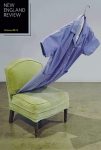
New England Review 44.4 features fresh prose by Subraj Singh, Angie Romines, A. J. Rodriguez, and Isabelle Appleton, provoking poetry by Alison Thumel, Dāshaun Washington, Gerardo Pacheco Matus, Deborah Golub, and Sean Cho A., captivating translations from the Korean, Spanish, and French, and much more. Writers, you won’t want to miss the Editor’s Note by Fiction Editor Ernest McLeod, which opens, “Can we retire the term slush pile?” Cover art: Hospital Fantasy by Jeff Gibbons.
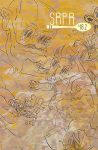
Spoon River Poetry Review (SRPR) is a volunteer-based, nonprofit poetry journal housed at Illinois State University in Normal, IL, and operated by the Spoon River Poetry Association. With cover art by Kitty F. Davies, the SRPR Illinois Poet Feature includes poetry by Edgar Garcia and an interview of the poet by Jose-Luis Moctezuma. Readers can also enjoy the Editors’ Prize winning poem, “Thirteen Ways of Looking at a Dead Fish” by Marissa Davis, selected by Jonah Mixon-Webster, as well as a runner-up poem by Ricardo de la Cruz II, and honorable mention poems by Linda Stern Zisquit, Bruce Bond, and Veronica Schorr. There is also new poetry by Sarah A. Etlinger, Jonah Bornstein, Artur Grabowski translated by Charles S. Kraszewski, Sandra S. McRae, Ivy Schweitzer, and more!
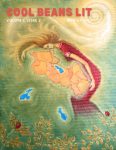
This winter 2023 issue of Cool Beans Lit is themed “A Light in the Dark.” It showcases the writing and art of talented creators expressing their way out of the shadows either through nature, other worlds, modern technology, family relationships, personal struggles, or mental illness. The pieces are striking and eclectic yet all support the notion that our strength lies in the resiliency of the human spirit. Featured authors include Gina M. Angelone, Corinne Harrison, Kelly Sargent, Bernard Pearson, Brad Shurmantine, and Tom Squitieri. Artists include Anna Maeve, China Lamont, Sheldon Kleeman, and Zoe Stanek. This issue is sure to provide a warm light to your own path this winter season.
Spalding University is home to one of the nation’s most respected low-residency MFA in Writing programs. Beginning in 2024, priceless MFA experiences are available with in-person residencies on campus—or with virtual residencies you can attend from anywhere.
Attend residency in person . . .
Residencies take place in May and November on Spalding’s campus in downtown Louisville, a top destination for arts, dining, parks, and historic neighborhoods. Each residency includes a theatre performance, museum visit, or other arts experience. Friendships form at our “dormitory,” the elegant 1920s-era Brown Hotel, a short walk from campus.
. . . or virtually . . .
If an in-person residency doesn’t work for you, you can attend a virtual residency in June. You’ll engage with the same immersive curriculum, taught live in real time by our outstanding MFA faculty. Small workshops create a close-knit learning environment. Tuition is the same for both residency types, but virtual residencies cut out travel time and costs.
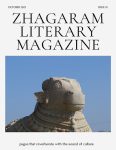
Publishing twice a year as a free downloadable PDF, Zhagaram Literary Magazine was founded to create a literary magazine of Indian origin that publishes international work. “In Tamizh, one of the oldest languages,” Editor Suchita Senthil Kumar explains of the publication’s name, “Zhagaram is a word that refers to a sound. The zh sound is pronounced as ɻ and is a reflex approximant (not the zz sound although it is written that way. The ɻ is a sound resembling an L and R sound together). Zhagaram is the word that refers to this zh sound.
“We aim at publishing work that explores the human condition through the lens of culture, heritage, and language,” Kumar says. “Thus, Zhagaram aims to be a creative space accessible to writers of marginalized communities, giving them an international platform to express their voices. At the same time, we are also open to submissions from international writers, which makes a magazine displaying a vast tapestry of cultures in our diverse publication.”
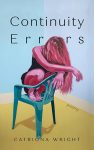
The super real, feminist, and sharp-edged poems of Catriona Wright’s Continuity Errors are at turns an “embodied presence / in virtual environments,” a “fever / dream of escape,” a “walk through the cemetery,” and “a scathing assessment” of our time. To tell us like it is, our self-deprecating narrator, a fierce new mother, “got” her wings “removed,” owns her “inner bitch,” and admits she “know[s] … little about how to live / a good life or about who [she] want[s] to be.”
A line item in her assessment: The angelic/“rowdy” paradigm for women within her family and the impact a woman’s choices have on “job, … marriage, / a life organized // around wealth.”
Another item: Relationship difficulties. We are reminded “don’t kid // yourself, love has always been / transactional.” Our “demons / look like our mothers… exes / … bosses and professors” who “condescend / and lecture and harangue, activating / shames from childhood.”
These poems implicate “parental models,” gatekeepers, “scammers,” “tourists,” the “betrayer and betrayed,” and the “visionaries and oracles,” and they make us face the “old sputtering hurts” we cause ourselves, one another, and our world. This is the world our narrator has brought her child into, admitting we “can’t fix” or “staunch” its bleeding fast enough. It may not be fair, but some of us “get to stay here longer than the white rhinos, / the bees.” Informed by environmental ethicist Michael Vincent McGinnis’s term “species loneliness,” Catriona Wright’s poems “flicker” and “mourn,” and are “as likely as anything / to banish loneliness from the world.”
Continuity Errors by Catriona Wright. Coach House Books, May 2023.
Reviewer bio: Jami Macarty is the author of The Minuses (Center for Literary Publishing, 2020), winner of the 2020 New Mexico/Arizona Book Award – Poetry Arizona, and three chapbooks, including Mind of Spring (Vallum, 2017), winner of the 2017 Vallum Chapbook Award. Jami’s writing has been honored by financial support from Arizona Commission on the Arts, British Columbia Arts Council, and by editors at magazines such as The Capilano Review, Concision Poetry Journal, Interim, Redivider, Vallum, and Volt, where Jami’s poems appear.
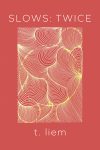
The poems, “filled with ellipses and reversals,” of T. Liem’s Slows: Twice are offered by a “speaker” who doesn’t “always feel / like” they are who they “say” they are, from a “threshold / between [self] and potential in any direction.” That is, the poems explore and explicate a betweenness: “on either side / of leaving… on either side / of the kind of words that look / right at you and leave you / in the middle of nowhere.” Even “nowhere” is “somewhere.”
This “threshold” is a way to “conceive of what a border could consist of.” A “border” is a place where “two things can be true at once”; both a place where “every fact has an afterlife” and a place “to link arms with some future.” At a border, time folds in on itself. The present reflects “what looks back at you”; the future “what can unfold from hurt.”
Liem’s poems swing on the hinges of “asking and repeating” the question: “[W]hat will carry you through what hurt you?” The poet uses mirror imaging and strikethroughs of poem text to suggest this phenomenon of “renewal or expiry.” The poet also uses their poems to argue with “time… spent // in omission” because, they assert, “there is no place and time / without names.” Our “bodies become an etymology”; “language is change.”
Dear Reader, whether you would choose to “slow time, / speed it up,” “[w]ouldn’t you like to be transported?” To read T. Liem’s Slows: Twice is to encounter “what other kind of living”—and writing—”is possible.”
Slows: Twice by T. Liem. Coach House Books, May 2023.
Reviewer bio: Jami Macarty is the author of The Minuses (Center for Literary Publishing, 2020), winner of the 2020 New Mexico/Arizona Book Award – Poetry Arizona, and three chapbooks, including Mind of Spring (Vallum, 2017), winner of the 2017 Vallum Chapbook Award. Jami’s writing has been honored by financial support from Arizona Commission on the Arts, British Columbia Arts Council, and by editors at magazines such as The Capilano Review, Concision Poetry Journal, Interim, Redivider, Vallum, and Volt, where Jami’s poems appear.
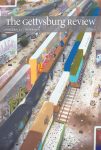
Due to Gettysburg College’s decision to close the Gettysburg Review, the final edition was made available for preorder only. Issue 35:1 features paintings by Michael Alvarez, fiction by Dariel Suarez, Leyna Krow, Leslie Pietrzyk, and others; essays by Marilyn Abildskov, Maura Lammers, Christina Pugh, and others; poetry by Natania Rosenfeld, Angie Estes, Virginia Konchan, Samyak Shertok, and others.
Editor’s Note: Our condolences and all due respect to the long history of editorial staff, writers, and readers who have loved and supported this publication since its debut in 1988. It is sad to witness such short-sighted decision-making by the administration, shuttering the college’s thirty-five-year reputation within the literary community and beyond.
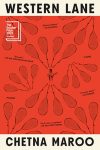
Western Lane, Chetna Maroo’s debut, Booker-Prize-shortlisted novel, follows Gopi, a British Indian teenager after the death of her mother. Before her mother’s death, her father had been taking her and her two sisters to Western Lane to play squash, but the game was nothing more than a hobby.
After the funeral, their father takes it much more seriously, mainly due to their Aunt Ranjan’s complaint that the girls are wild and need discipline. While her two sisters lose interest in the game, Gopi becomes obsessed with it, mainly as a way to build a connection with her father, but she also becomes quite good at it.
She is too good to play with her sisters, so she begins playing with Ged, a non-Indian boy whose mother works at Western Lane, a relationship that threatens to develop into something more. While her father grieves the death of her mother, Aunt Ranjan and Uncle Pavan offer to take in one of the girls to help him, which complicates Gopi’s burgeoning squash playing, as Aunt Ranjan thinks it’s unacceptable for a girl to participate in such a sport.
The novel is quiet and concise, as the characters and the narrator often leave what is most important unsaid, but readers can see the relationships fray and deepen as Gopi grows into a formidable player and teenage girl.
Western Lane by Chetna Maroo. Farrar, Straus and Giroux, November 2023.
Reviewer bio: Kevin Brown has published three books of poetry: Liturgical Calendar: Poems (Wipf and Stock); A Lexicon of Lost Words (winner of the Violet Reed Haas Prize for Poetry, Snake Nation Press); and Exit Lines (Plain View Press). He also has a memoir, Another Way: Finding Faith, Then Finding It Again, and a book of scholarship, They Love to Tell the Stories: Five Contemporary Novelists Take on the Gospels.
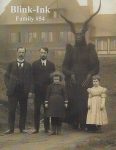
Blink-Ink Issue #54 is themed “Family” and features 28 works of “approximately 50 words” each, including “When Baba Flew in from Florida” by Lois Villemarie, “When Relatives from the Cool Temperate Zone Visit” by Julie Dron, “The Corn is Angry” by Karen Walker, “Sisters” by Paul Beckman, “The Green Sofa” by Sarah Shum, “Hawk Logic” by Meg Pokrass, “LEGO City” by Caiti Quatmann, “Home for the Holiday” by Jeff Harvey, “My Family Jewels” by Catfish McDaris, “Blended Family” by Kathy Lynn Carroll, and “Gothic America” by Gay Degani. See the Blink-Ink website for subscription information as well as their 2023 Pushcart Prize Nominations.
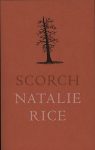
In Scorch, Natalie Rice writes “under the gravity / of immovable objects.” Our narrator asks, “How far can one carry such // emptiness?” Someone in these lyric, meditative poems wants “to be lonely,” despite the “ache in my chest completely / out of control”; yearns to feel “the freight / of my own becoming,” “to know the narrative // of my life.” In this way, Rice’s poems form a seeker’s pilgrimage and a mountain retreat “to lean / into what cannot be explained.”
There’s a sense that the poems are “tethered” to an aftermath of “collapse,” and that though there may be “nothing / left here to burn,” there is reparation and rejuvenation taking place: “a newness /… pushing / through soot,” marking how easily the natural world holds “contradictions.”
Situated in and “shaped by the living world of the Okanagan valley,” the poems “ blaze” with “iridescent bodies”: “the lady slipper / [that] blooms before the tiger lily,” “wild clematis,” “balsamroot flower,” “the last goldenrod /… plucked for the table,” and “[g]rass [that] is a fire // before it knows it is fire.” Is this “what emptiness sounds like” from “a body designed for grief”? “What if the answer // is that there is no answer?” Then, could it be enough to recognize the “unsayable // hung like a red berry in the back / of [the] throat”? Might the act of describing cast one of the “spells / to ward off longing,” “a common grief… / dissolving without telling // us why”?
Dear Reader, with a fine “ear / tethered to the ground” and “one line of a poem…tethered to two hundred / million small, beating bodies,” Natalie Rice heightens our awareness “into something so precious.”
Scorch by Natalie Rice. Gaspereau Press, 2023.
Reviewer bio: Jami Macarty is the author of The Minuses (Center for Literary Publishing, 2020), winner of the 2020 New Mexico/Arizona Book Award – Poetry Arizona, and three chapbooks, including Mind of Spring (Vallum, 2017), winner of the 2017 Vallum Chapbook Award. Jami’s writing has been honored by financial support from Arizona Commission on the Arts, British Columbia Arts Council, and by editors at magazines such as The Capilano Review, Concision Poetry Journal, Interim, Redivider, Vallum, and Volt, where Jami’s poems appear.
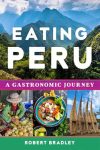
Eating Peru: A Gastronomic Journey by Robert Bradley The University of Oklahoma Press, September 2023
In Eating Peru: A Gastronomic Journey, wine merchant–turned–archaeologist and art historian Robert Bradley shares his past twenty-five years of personal discovery about the food of Peru and the history that led to its current culinary fluorescence today. Journeying from coasts to highlands and back again, the author introduces readers to the most interesting aspects of Peruvian cuisine that he encounters along the way, with several recipes included. Bradley sizzles about Peruvian ceviche, pisco and the pisco sour, and the country’s best restaurants—two ranked in the top ten by The World’s 50 Best Restaurants 2023. He does this all while sampling food lore, Andean anthropology, history, linguistics, and the pleasures and perils of travel within Peru.
Robert C. Bradley started out as a wine merchant for New York City’s most acclaimed restaurants. A trip to Central America put him on the path to studying Mesoamerican art history and archaeology at Columbia University. He is now an associate professor in the School of Art and Design at the University of Texas Rio Grande Valley.
Editor’s Choice is not a paid promotion; selections are made solely at the discretion of the editor. To discover more great books from small, independent, and university presses, visit the NewPages Guide to Publishers as well as our Books Received monthly roundup. Subscribe to our weekly newsletter to stay up to date!
The December 2023 Magazine Stand features our monthly roundup of great new literary and alternative magazine titles we receive. You can find brief descriptions for many new magazine issues with a link to their blog post for more information. Grab a warm cuppa and settle in to enjoy some good reading. You can also subscribe to our weekly newsletter to stay the most up-to-date on all things literary.