Registration Deadline: Rolling
Willow Writers’ Workshops is going virtual this fall! We will offer workshops, providing writing prompts, craft discussions, and manuscript consultations. All levels are welcome. Writers’ Workshops available on Thursday nights, Sunday afternoons, Saturday mornings, and Monday mornings. Fall seminars include Generating Story Ideas and Creating a Strong Sense of Place; Gothic Fiction, and Flash! Writing Short, Short Prose. Workshops and seminars run in September and October. The facilitator is Susan Isaak Lolis, a published and award-winning writer. For more information, check out willowwritersretreat.com.

Still Point Arts Quarterly – Fall 2020
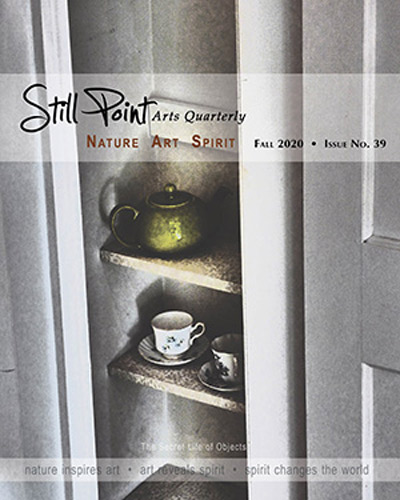
The Fall 2020 issue homes in on “The Secret Life of Objects.” Featured artists include Cary Loving, Birgit Gutsche, Aaron M. Brown, Jeffrey Stoner, and more. Featured writers include Dawn Raffel, Judith Sornberger, Emily Uduwana, Kathleen Aponick, William Doreski, Keltie Zubko, Adrienne Stevenson, Susan Currie, and others. Find more info at the Still Point Arts Quarterly website.
New England Review – 41.3
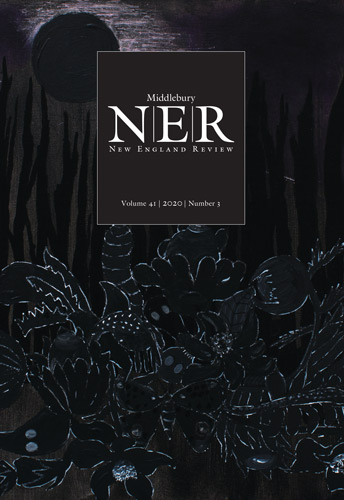
New England Review Volume 41 Number 3 is out. Featured work by May-lee Chai; Jeneva Stone; Laurence de Looze; Alyssa Pelish; John Kinsella; Clifford Howard; and translations of Scholastique Mukasonga, Karla Marrufo, and Nelly Sachs. Fiction by Kenneth Calhoun, Meron Hadero, Kate Petersen, and Kirk Wilson; poetry by Anders Carlson-Wee, Victoria Chang, Justin Danzy, Elisa Gabbert, torrin a. greathouse, Christina Pugh, and more; plus cover art by Heidi P.
Kaleidoscope – No. 81

During periods of unrest and uncertainty, when ominous dark clouds roll in and the sky becomes black, it can be easy to give in to feelings of despair. Kaleidoscope contains stories of adversity but it also offers hope. Featuring the essay “Between Rooms” by N. T. McQueen, the story “Mother Bear” by Melissa Murakami, and the essay “Nacre Upon Nacre” by Jenna Pashley Smith. In addition to these three, this issue contains an array of thought-provoking poetry and other wonderful stories of fiction and nonfiction. Issue 81 brings the promise that storm clouds will dissipate and the sun will shine again.
Brevity – Sept 2020
The essays in this guest-edited special issue of Brevity consider all aspects of illness and disability: what it is, what it means, how our understanding of disability is changing. Our anchor author is novelist and essayist Esmé Weijun Wang, author of The Collected Schizophrenias. Other authors featured include Barbara Lanciers, Meg Le Duc, William Fargason, Ona Gritz, Kelly Weber, Maya Osman-Krinsky, and more. The “Experiences of Disability” issue is guest edited by Keah Brown, Sonya Huber, and Sarah Fawn Montgomery. Artwork by Jill Khoury.
A Portal to Powerful Nonfiction
 Magazine Review by Katy Haas
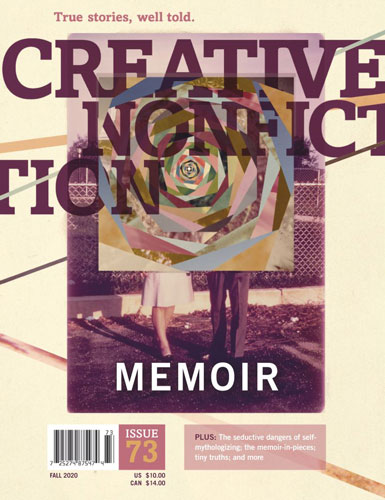
The art of John Belue dons the cover and pages of the Fall 2020 issue of Creative Nonfiction, and I absolutely love it. His work remixes vintage photos, thinly cut strips overlaying another photo to create an almost portal-like image. The art drew me into the “Memoir” issue of Creative Nonfiction and the writing made me stick around even longer.
Megan Doney’s nightmares haunt her after a shooting at the school where she teaches in “The Wolf and the Dog.” While her dreams leave her powerless, she imagines finding power if the situation ever happens again. The piece begins viscerally, a dark view into Doney’s mind after surviving a horrific event.
Mary Beth Ellis gets deeply personal in “Weaponry of the Cold War” as she walks readers through her vaginismus diagnosis. While the subject of her writing is both physically and emotionally painful, Ellis uses humor in unexpected places, her writing cynical and skeptical, light when it matters. As Ellis says, up to 14% of the female population suffers from vaginismus, and there is not much to read about the subject. Ellis adds her voice, her story, giving other people with vaginas something to relate to.
Whether you pick up Creative Nonfiction‘s latest issue because the art caught your eye, or because you crave powerful nonfiction, you will not be let down.
A Moment of Quiet

Guest Post by Brittany Waite
The current pandemic has impacted many aspects of our lives, especially our ability to interact with one another. There are many on social media who publish humorous portrayals of extroverts suffering under these conditions. At the same time, I feel that many introverts, shy and quiet in nature, feel a guilty sense of relief for this opportunity to stay cooped up in the comfort of their home.
In Quiet: The Power of Introverts in a World That Can’t Stop Talking, Susan Cain takes it upon herself to uncover these reserved figures and dive deep into their consciousness, exploring the individuality of their inner-minds. Using examples from history, concrete anecdotes, and years of research, Cain promotes the importance that introverts have in society and writes with the intent to show them the power they are capable of. So, whether you’re an introvert or not, Quiet will broaden your understanding of these reserved individuals, who they are, and what they can do.
Quiet: The Power of Introverts in a World that Can’t Stop Talking by Susan Cain. Broadway Books, October 2019.
Reviewer bio: Brittany Waite is a college student born and raised in Hawaii. She enjoys writing flash fictions but hopes to expand into other genres.
Buy this book at our affiliate Bookshop.org.
Sponsor Spotlight :: Desert Nights, Rising Stars will be Virtual in 2021
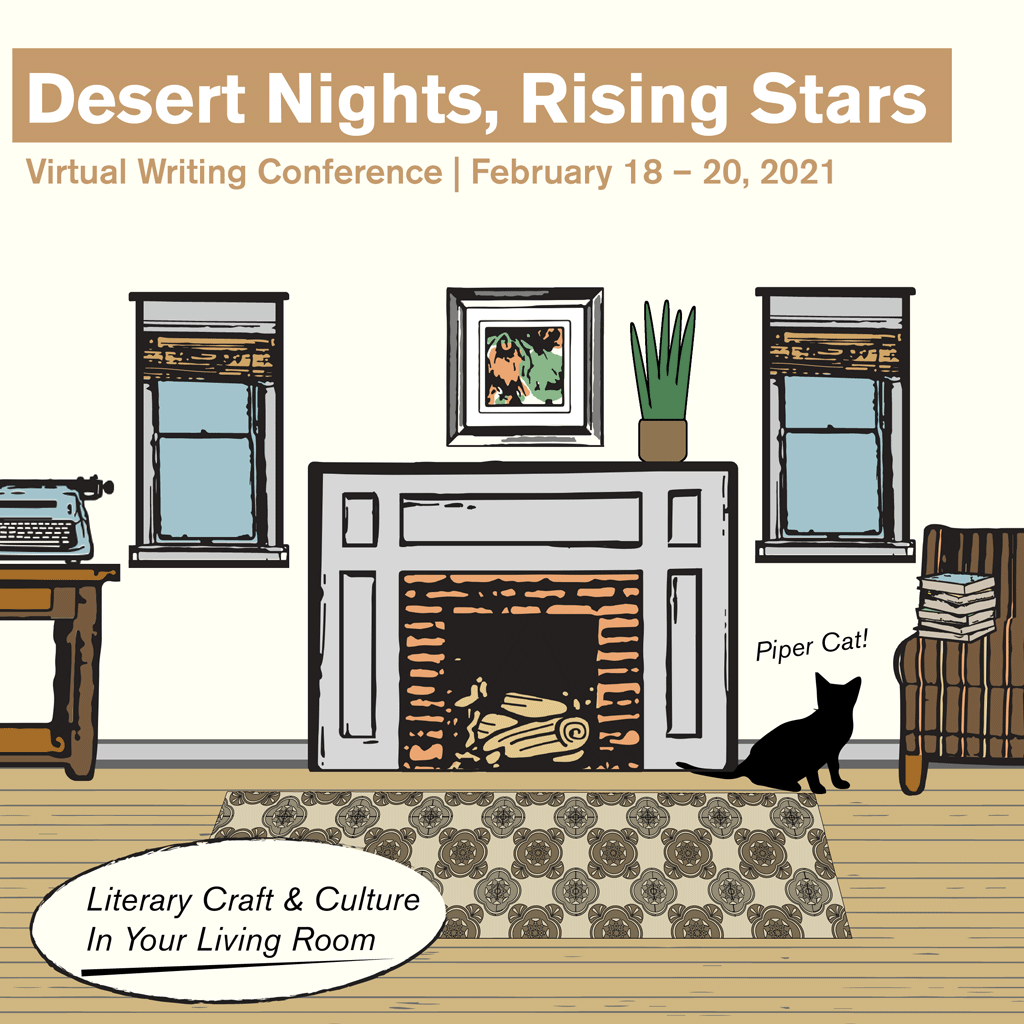 While we would usually start things off with the beautiful desert weather and the southwestern landscape, things are a little different this year. With rising COVID cases in Arizona, restrictions surrounding travel around the nation, and ongoing orders against large public gatherings, we’ve made the choice to move Desert Nights, Rising Stars 2021 to a completely virtual experience.
The 2021 conference will be conducted online via Zoom from February 18 through 20. Program features will include writing workshops, panel discussions, readings, pitch sessions, book fair, author signings, and roundtable discussions. Genres covered this year include fiction, creative nonfiction, poetry, publishing, business of writing, memoir, and young adult.
The faculty for the conference will be Matt Bell, Mahogany L. Browne, Suyi Davies Okungbowa, Alan Dean Foster, Tod Goldberg, Raquel Gutiérrez, Marcelo Hernandez Castillo, Linda Hogan, Beverly Jenkins, C.B. Lee, Connie J. Mableson, Christopher Morgan, Cynthia Pelayo, Evan Winter, and Erika T. Wurth.
Early registration is only $225 before December 31. Swing by their listing at NewPages to get more details.
September 2020 eLitPak :: MFA in Creative Writing at UNCG: Find Your Story Here
Application Deadline: January 1
One of the first creative writing programs in the country, UNC Greensboro’s MFA is a two-year residency program offering fully funded assistantships with stipends and health insurance. Students work closely with faculty in one-on-one tutorials; take courses in poetry, fiction, publishing, and creative nonfiction; and pursue opportunities in college teaching or editorial work for The Greensboro Review. More at our website.
View the full September eLitPak here.
A Guided Exploration of Vulnerability
 Guest Post by Tom Biesinger
“Dangerous” and “love” may not be the first thing that comes to mind when thinking about great relationships, in fact most of us seek to keep “danger” and “love” as far apart as possible. Yet in a world where conflicts occur frequently and range from small disagreements over preference to relationship ending campaigns, it seems smart to invest in a little training to help keep the small things small and the big things in perspective.
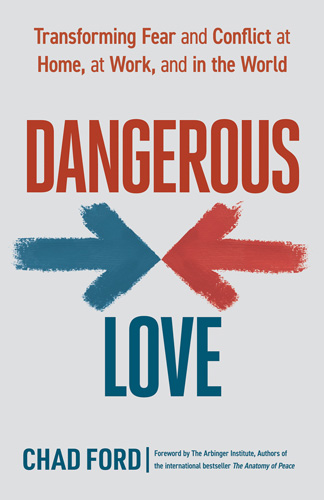
Dangerous Love is an exploration of vulnerability and personal transformation through the relationships that challenge us most. Instead of posing as a typical self-help book with condescending statements of cliché “breakthrough,” Dangerous Love takes a softer line and uses questions and experiences collected over years of mediation practice to gently draw us to challenge areas of our own conflict styles.
Practical in its philosophy, this book aims to first bolster your understanding of conflict in all of its forms (avoidance, management, resolution, transformation, and reconciliation) then to give you tools to work fearlessly in your own pursuit of dangerous love.
Readers should expect to be challenged to improve their own conflict practices and love a little deeper. This book does well to mirror its own advice and guide us gently but firmly to a more positive and transformational view of conflict, love, and relationships.
Dangerous Love by Chad Ford. Berrett-Koehler Publishers, June 2020.
Reviewer bio: Tom lives in Hawaii and spends most of his time with his family or in the ocean. He also loves Motion Design.
Buy this book from our affiliate Bookshop.org.
Paterson Literary Review – No. 48
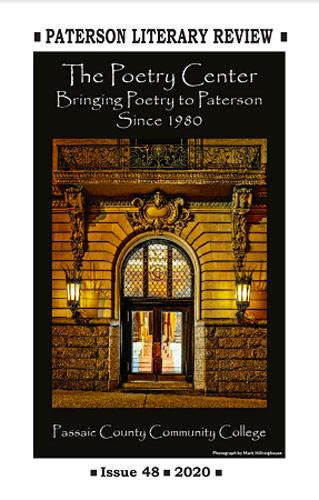
The 2020 Issue #48 of the Paterson Literary Review features poetry, fiction, essays, memoir, and reviews, and includes all the winning and honorable mention poems for the Allen Ginsberg Poetry Awards.
TriQuarterly – Summer Fall 2020
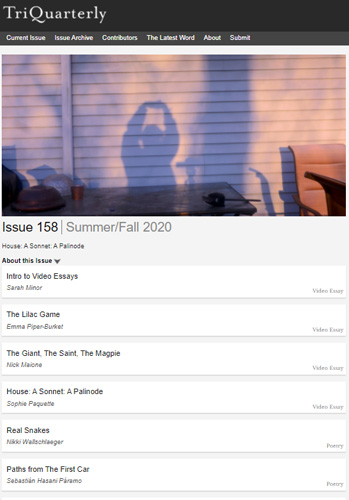
The Summer/Fall 2020 issue of TriQuarterly features work by Aram Mrjoian, Will Brewbaker, Shangyang Fang, Joe Meno, Nick Malone, Maggie Su, Sebastián Hasani Páramo, torrin a. greathouse, and Anita Olivia Koester. Plus work by additional writers, including a selection of video essays by Emma Piper-Burket, Nick Malone, and Sophie Paquette.
Tint Journal – Fall 2020

Tint Journal is the literary magazine for English as a Second Language creative writers, established in 2018 and based in Graz, Austria. We publish the finest of non-native English writing, including short stories, essays, and poems. Issue Fall ’20 has been released. Read twenty-five new literary creations by ESL writers from all around the world, now online and for free! Issue Fall ’20 also includes visual art creations by artists from all over the globe, combining the artistic realms of literature and art, as well as audio recordings of the writers reading their work.
Creative Nonfiction – No. 73
This issue celebrates stories of the self in the world. Writers find (or, at least, try to find) meaning in familiar as well as unimaginable moments—the loves, losses, and joys that define our lives. Also in this issue: the seductive dangers of self-mythologizing, the memoir-in-pieces, tiny truths, and more. See contributors at the Creative Nonfiction website.
Four Steps to Save the Planet
 Guest Post by Elizabeth Basok
In We are the Weather: Saving the Planet Begins at Breakfast, Jonathan Safran Foer argues that the science is in: we know that animal agriculture is destroying our planet. Rather convincingly, Foer makes an argument for a plant-based diet stating that this one small change in our lifestyle could positively impact the climate crisis. He is able to create concise, effective, and easy to understand arguments throughout the book, breaking up his points into bite sized pieces that can easily be regurgitated by everyday people that find themselves in a discussion about climate change or the environmental benefits of a plant-based diet. The author aims to drive home the most effective actions we can take against climate change, claiming four notable things we can do: eat a plant-based diet, avoid air travel, live car free, and have fewer children.
Part two of Foer’s book is packed with facts about “The Greatest Dying,” which is an extinction that is taking place right now. While there are many mass extinctions that have happened, Foer states that this extinction is the first to be the result of a climate crisis. He adds, “Humans are now adding greenhouse gases to the atmosphere ten times faster than the volcanoes did during the Great Dying” (one of the six mass extinctions).
Foer acknowledges that adjusting to a vegan diet can be challenging. He admits that, even though he has written now two books advocating for a plant-based diet, he has succumbed to eating a burger from time to time. Foer suggests eating vegan for breakfast and lunch, while eating vegetarian for dinner (if a full vegan lifestyle is out of the question), saying “Not eating animal products for breakfast and lunch has a smaller CO2e footprint than the average full-time vegetarian diet.”
We Are the Weather: Saving the Planet Begins at Breakfast by Jonathan Safran Foer. Farrar, Straus and Giroux, September 2019.
Reviewer bio: Elizabeth Basok is a lecturer at The Ohio State University. Her Instagram is @lizbasok.
Buy this book at our affiliate Bookshop.org.
Event :: The Center for Creative Writing Online Courses & Virtual Retreats
The Center for Creative Writing has been guiding aspiring writers toward a regular writing practice for more than 30 years. Our passionate, published teachers offer inspiring online writing courses in affordable six-week sessions, as well as one-on-one services (guidance, editing) and writing retreats (virtual for 2020). Whatever your background or experience, we can help you become a better writer and put you in touch with the part of you that must write, so that you will keep writing. Join our inclusive, supportive community built on reverence for creativity and self-expression, and find your way with words.
Plume – Sept 2020
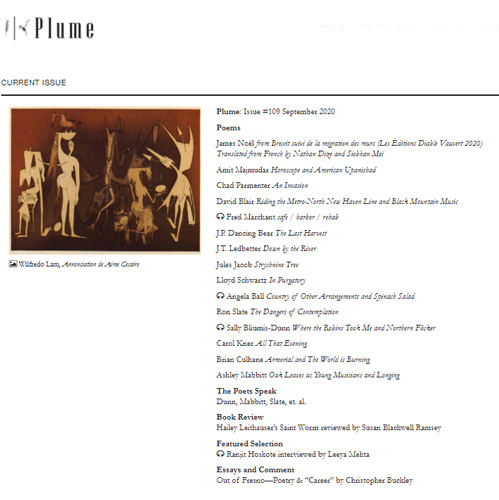
This month’s Plume featured selection: “The Chronicler of a Blue Planet: An audio interview with Ranjit Hoskote by Leeya Mehta” with work by the poet. Christopher Buckley pens the essay, “Out of Fresno—Poetry & ‘Career,’” and Susan Blackwell Ramsey reviews Hailey Leithauser’s Saint Worm.
The Louisville Review – Spring 2020
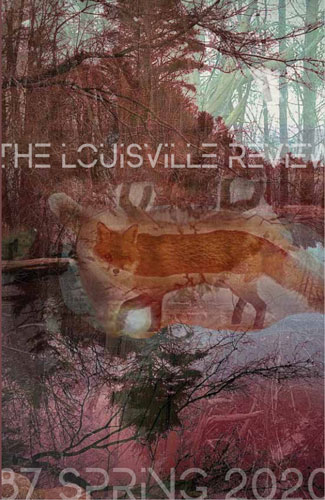
The latest print issue of The Louisville Review features fiction by Holly Tabor, Pamela Gullard, Bridget Mabunga, and Rebecca Thomas; nonfiction by Joseph Myers, Patricia Foster, Jessica Crowley, and Katherine Mitchell; and drama by Allie Fireel, Allen M. Price, Haydee Canovas, John Shafer, and Addae Moon. Poetry by Laura Judge, Joseph G. Anthony, James B. Goode, Shauna M. Morgan, Frank X Walker, and more
Kenyon Review – Sept/Oct 2020
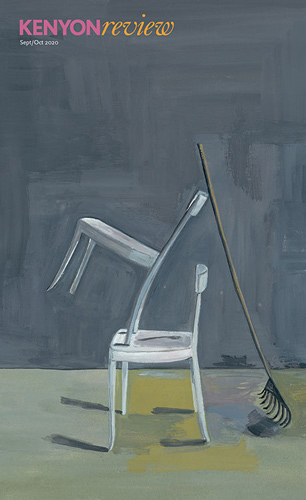
The latest issue of Kenyon Review features a special poetry section, “All of This Is True,” guest-edited by Reginald Dwayne Betts, whose own poetry, a memoir, and essays explore the world of prison and the effects of violence and incarceration on American society. Betts has selected powerful work by fifteen poets including Sean Thomas Dougherty, April Gibson, Randall Horton, Roger Reeves, and others. The new issue also includes the winning poem and two runners-up in the 2020 Patricia Grodd Poetry Prize for Young Writers as well as four new works of fiction by Samuel Jensen, Dina Nayeri, Matthue Roth, and Marianne Shaneen.
Terrain.org – August 2020

Visit Terrain.org for the new work on the site this month. Arne Weingart reviews The Tilt Torn Away from the Seasons by Elizabeth Lindsey Rogers and Melissa L. Sevigny interviews Pam Houston. Fiction by Beth Alvarado; nonfiction by Tamie Parker Song, Scott Russell Sanders, and Paul Riley; and poetry by Seth García, Garrett Hongo, Collier Brown, and more. In currents: Charles Revello, Patricia Schwartz, and others.
Insights on Accidental Presidency
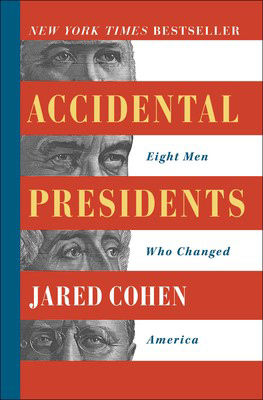 Guest Post by Eron Henry
Eight men became American presidents without being elected to the office. All acceded to the role after the incumbent was assassinated or succumbed to illness.
In Accidental Presidents: Eight Men Who Changed America, Jared Cohen provides historical details of their achievements and failings. Most were unprepared for the top office because they were uninterested, though a few coveted the presidency.
Theodore Roosevelt and Harry Truman were extraordinarily successful. The former succeeded William McKinley Jr. who was assassinated, and the latter Franklin Delano Roosevelt, who died of longstanding ailments. Except for the Vietnam War debacle, some believe Lyndon Johnson would be among the greatest presidents ever. He became president after the assassination of John Kennedy.
The most disastrous was Andrew Johnson, who became president after Abraham Lincoln was gunned down. The first to be impeached, Johnson reversed policies by Lincoln to help the nation heal after the bloody civil war. He set the stage for Jim Crow, initiating a century of intense discrimination against African Americans that boiled over into the Civil Rights Movement in the 1960s.
Cohen demonstrates the importance of presidents choosing able persons as their deputy. Not all vice presidents were chosen for their ability but as a compromise candidate to appease interest groups or various constituencies in their party.
In the times we live, Cohen’s Accidental Presidents may prove especially insightful.
Accidental Presidents: Eight Men Who Changed Americav by Jared Cohen. Simon and Schuster, April 2019
Reviewer bio: Eron Henry is a communications consultant. He blogs at https://oletimesumting.com.
Buy this book at our affiliate Bookshop.org.
Willow Springs – Fall 2020

The Fall 2020 issue of Willow Springs features Joseph Millar, Ramona Ausubel, Jessica Lee Richardson, Andrew Furman, Lawrence Lenhart. Plus Sarah Bates, Dmitry Blizniuk, Bruce Bond, Maggie Graber, Matthew Lippman, J. Estanislao Lopez, Owen McLeod, John A. Nieves, John Sibley Williams, and more.
The Adroit Journal – August 2020
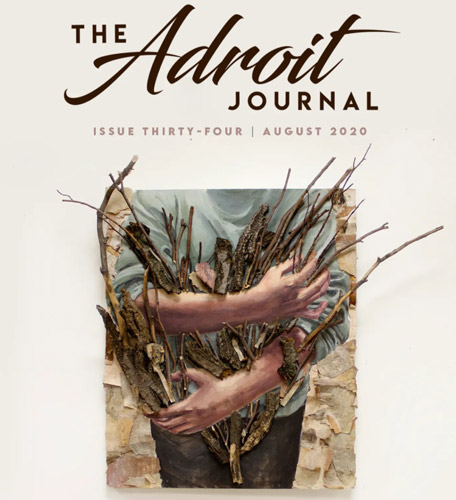
We’re beyond excited to bring you new work from Alicia Ostriker, Diane Seuss, Aimee Nezhukumatathil, Jos Charles, Yalie Kamara, David Naimon, and Jordan Jace. We’re also extremely excited to feature poetry by Asa Drake, Thomas Dooley, Mary Biddinger, Kevin Prufer, Maya C. Popa, Jordan Keller-Martinez, and more, prose by Emily Yang and Andreas Trolf, and art by Caroline Zhang, Taylor Wang, Ariel Kim, and others. Read more at The Adroit Journal website.
August 2020 eLitPak :: MFA in Creative Writing at UNCG
Application Deadline: January 1.
One of the first creative writing programs in the country, UNC Greensboro’s MFA is a two-year residency program offering fully funded assistantships with stipends and health insurance. Students work closely with faculty in one-on-one tutorials, take courses in poetry, fiction, publishing, and creative nonfiction, and pursue opportunities in college teaching or editorial work for The Greensboro Review. More at mfagreensboro.org.
Re-reading ‘The New Jim Crow’ in the Era of Black Lives Matter
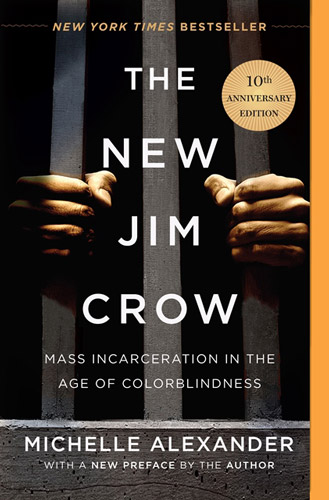 Guest Post by Laura Plummer
When I first read Michelle Alexander’s groundbreaking book The New Jim Crow: Mass Incarceration in the Age of Colorblindness in 2010, Obama was in the beginning of his first term as president. Many white Americans believed his election was a sign that our country was now post-racial, that equality had finally been achieved. But that was a myth, as Alexander explains in painstaking detail. Using the statistics of the day, she lays bare the racism embedded in our criminal justice system, which she likens to modern-day slavery.
This year, I decided it was a good time to dust off Alexander’s work, to see how its distressing statistics had improved over the past ten years. The answer was, tragically, not enough. Blacks still face more discrimination than other races in every phase of the criminal justice system—from stops and arrests to sentencing and parole. They are still the primary targets of the fictional “War on Drugs,” which was invented as a legal means to put large numbers of Black people behind bars. They are still locked in to what Alexander calls a “permanent undercaste.”
The New Jim Crow came out before the 2013 killing of Trayvon Martin birthed #BlackLivesMatter, before the 2014 killings of Michael Brown and Eric Garner. It was before the killing of George Floyd and other Black Americans sparked worldwide protests against racist policing, before Black Lives Matter became a global movement. While the discrimination against Black people in America is much the same as when the book was published, the public support for protecting and defending Black lives has grown exponentially. The ground is fertile for all Americans who value justice to demand a new reality. To quote Dr. King, no one is free until we are all free.
The New Jim Crow: Mass Incarceration in the Age of Colorblindness by Michelle Alexander. 2010.
Reviewer bio: Laura Plummer is an American freelance journalist and writer from Massachusetts. Read her work at lauraplummer.me.
Buy this book from our affiliate Bookshop.org.
Sponsor Spotlight :: Minnesota State University, Mankato MFA in Creative Writing
 The MFA in Creative Writing at Minnesota State University, Mankato seeks to meet the needs of students who want to strike a balance between the development of individual creative talent and close study of literature and language. The program helps to develop work in the genres of fiction, creative nonfiction, and poetry. Students typically spend three years completing coursework, workshops, and book-length theses.
Current faculty includes Robin Becker, Candace Black, Geoff Herbach, Diana Joseph, Chris McCormick, Richard Robbins, and Michael Torres. Recent visiting writers include Juan Felipe Herrera, Marcus Wicker, Leslie Nneka Arimah, Danez Smith, Layli Long Soldier, and Ada Limón.
Students have the opportunity to grow within a rich and active community of writers with the Good Thunder Reading Series, the Writers Bloc Open Reading Series, and working on literary magazine Blue Earth Review.
Stop by their listing at NewPages to learn more.
Event :: Willow Writers’ Retreat Offering Virtual 2020 Workshops
Beginning Dates: July 27; Virtual
Registration Deadline: Rolling
Don’t forget Willow Writers’ Workshops is going virtual this summer and fall! They are offering workshops, providing writing prompts, craft discussions, and manuscript consultations. All levels are welcome. Three different courses are being offered: Desire to Write? An Introduction to Creative Writing; Flash: Writing Short, Short Prose; and Writers Workshop on Thursday Nights, a six-week course focusing on short stories. Summer dates began July 27. The facilitator is Susan Isaak Lolis, a published and award-winning writer. For more information, check out willowwritersretreat.com.
The Malahat Review – Summer 2020
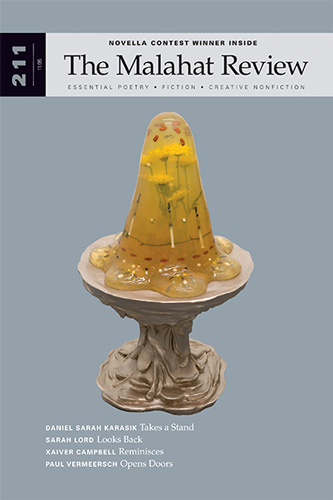
This issue of The Malahat Review features the 2020 Novella-Prize-winning “Yentas” by Rebecca Păpucaru, Daniel Allen Cox’s “The Glow of Electrum,” Mike Alexander’s “An Afternoon Gentleman,” Matthew Hollett’s “I’m Sorry, I Have to Ask You to Leave,” Ronna Bloom’s “Legend of Saint Ursula,” Alamgir Hashmi’s “Anywhere, 2019,” and Kate Felix’s “Beneath the Pond.” Also in this issue: Sarah Tolmie, Xaiver Campbell, Sarah Venart, Theressa Slind, Chris Banks, Daniel Sarah Karasik, Sarah Lord, Ron Riekki, Paul Vermeersch, and Alisha Dukelow. Plus, a selection of book reviews, and cover art by Sharona Franklin: “Mycoplasma.”
Hippocampus Magazine August 2020
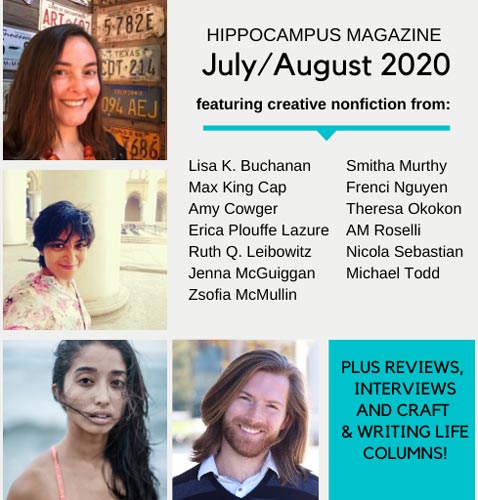
The July/August edition of Hippocampus Magazine is still live! Featuring creative nonfiction by Lisa K. Buchanan, Max King Cap, Amy Cowger, Erica Plouffe Lazure, and others. See more contributors at the Mag Stand.
Carve Magazine – Summer 2020
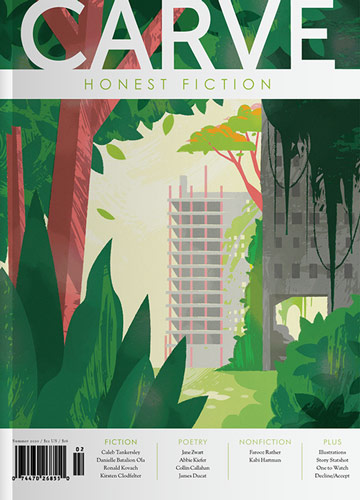
In the newest issue of Carve, find short stories by Caleb Tankersley, Danielle Batalion Ola, Ronald Kovach, and Kirsten Clodfelter, as well as interviews with the authors. New poetry by Jane Zwart, Abbie Kiefer, Collin Callahan, and James Ducat, and new nonfiction by Feroz Rather and Kabi Hartman. In “Decline/Accept,” is “Clean Kills” by Greg November. Read more at the Carve website.
The Writer’s Hotel Goes Virtual for Fall 2020 Conferences
The Writer’s Hotel‘s three writing conferences will be hosted virtually in October instead of in NYC like normal this year.
The All Fiction Writers Conference will take place October 14-20. The schedule has been redesigned to offer their attendees the very best service possible. Major workshops will be capped at nine people instead of their usual fourteen.
2020 faculty this year includes Rick Moody, Jeffrey Ford, David Anthony Durham, Robyn Schneider, Michael Thomas, Ernesto Quiñonez, James Patrick Kelly, Elizabeth Hand, Francine Prose, Saïd Sayrafiezadeh, Sapphire, Elyssa East, Kevin Larimer, Jennie Dunham, Steven Salpeter and TWH Directors Shanna McNair and Scott Wolven. Deadline to apply is August 22.
The Nonfiction Weekend Conference will be held October 1-5. Application deadline is August 28. Faculty includes Meghan Daum, Mark Doty, Carolyn Forché, Richard Blanco, Hisham Matar, Michael Thomas, Beth Ann Fennelly, Molly Peacock, Honor Moore, Saïd Sayrafiezadeh, Elyssa East, Jonathan M. Katz, Kevin Larimer, Stephen Salpeter and TWH Directors Shanna McNair and Scott Wolven.
The Poetry Weekend Conference will take place October 22-26. Deadline to apply is September 1. Faculty includes current U.S. Poet Laureate Joy Harjo, Marie Howe, Heather McHugh, Terrance Hayes, Mark Doty, Cornelius Eady, Deborah Landau, Tim Seibles, Valzhyna Mort, Pádraig Ó Tuama, Camille Dungy, Javier Zamora, Alexandra Oliver, Kevin Larimer, Jenny Xie, TWH Directors Shanna McNair and Scott Wolven.
Eulogy for a Father

Magazine Review by Katy Haas
At a time when I felt incredibly alone, Ira Sukrungruang kept me company with his collection of essays, Buddha’s Dog: & Other Meditations. I stayed up all night reading it, telling myself I’d just read one more essay and then sleep and before I knew it, the book was finished and dawn was right around the corner. So now when I again feel those nagging feelings of loneliness, I was excited to see he had a new nonfiction piece in the Spring 2020 issue of Crazyhorse to help fill in the spaces around me: “Eulogy for My Father.”
This eulogy is written in short, one-sentence paragraphs that rapidly fall down the sixteen pages they occupy. “Let me start again,” he repeatedly states and follows another thread as he sorts the complicated thoughts and feelings surrounding the relationship he had with his father, his father’s absence, and the ways in which these feelings now echo over his relationship with his son.
The piece is honest and tender, bringing tears to my eyes by the time I reached the end and his final “restart.” It was nice seeing Sukrungruang once again show off his mastery of the nonfiction form. Even sitting with his grief, it was also nice to feel close to something for the moment.
Sponsor Spotlight :: Reunion: The Dallas Review
 Originally titled Sojourn, Reunion: The Dallas Review is a literary magazine which has been publishing exceptional short fiction, drama, visual art, poetry, translation work, nonfiction, and interviews for over twenty years. Their mission is to cultivate the arts community in Dallas, Texas and promote the work of talented writers and artists both locally and around the world.
Reunion is published by The School of Arts & Humanities, home of the creative writing program of the University of Texas at Dallas. They publish an annual print volume as well as featuring a new piece of work monthly on their website. You can view past interviews with writers on their website as well.
Stop by their listing on NewPages to learn more.
Sponsor Spotlight :: Ohio State University MFA in Creative Writing
 MFA in Creative Writing at The Ohio State University is designed to help graduate students develop their talents and abilities as writers of poetry, fiction, and creative nonfiction. Graduate teaching assistants teach special topics undergraduate creative writing courses as well as first-year and second-year writing. Students also have the option to work as editors of the prize-winning literary magazine, The Journal, and to serve on the editorial staff of two annual book prizes.
All students are fully funded for three years in a program well known for its sense of community and a faculty that is committed to teach as much as they are to their own writer. Current faculty includes Kathy Fagan Grandinetti, Michelle Herman, Marcus Jackson, Lee Martin, Elissa Washuta, and Nick White. Recent writers who have visited the program include Tarfia Faizullah, Melissa Febos, Garth Greenwell, Dan Kois, Nicole Sealey, and Danez Smith.
The program also offers special topics in addition to the regular workshops so opportunities abound for students to experiment.
Stop by NewPages to learn more about the program.
Life & Death in Sharp Focus
 Guest Post by M.G. Noles
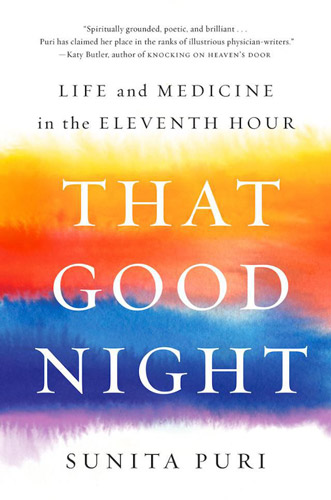
Sunita Puri’s memoir That Good Night: Life And Medicine in the Eleventh Hour is poetic, beautiful, and insightful.
The book traces Dr. Puri’s journey into the world of palliative care. Offering a collection of wisdom stories taken from her work with the dying, she gives us a view of death as a moment of dignity and grace.
Dr. Puri is the doctor whom hospitals call when a patient enters the terminal phase of illness. Some patients are antagonistic toward her presence and despise her, thinking she is encouraging them to give up. Yet, she is actually there to give dying patients and their loved ones the strength to know when it is time to let go. It is a fine distinction to make, but she does it beautifully.
In this memoir, Puri shares spiritual and philosophical insights into the dying process. She demystifies and unfolds the process of death as a journey we must all make. In so doing, she teaches lessons about the ways to embrace life until we must release it. And in that release can come great peace.
As she writes, “For we will each age and die, as my father told me years ago. We will lose the people we love. No matter our ethnicity, place of residence, income, religion, or skin color, our human lives are united by brevity and finitude, and the certainty of loss. Just as we strive for dignity and purpose throughout our lives, well before the light fades, we can bring this same dignity and purpose to our deaths, as we each journey into our own good night.”
As we all struggle to make sense of death and dying during this long and arduous road of the pandemic, Dr. Sunita Puri’s memoir shines a light in the darkness.
That Good Night: Life And Medicine in the Eleventh Hour by Sunita Puri. Penguin Random House, March 2020.
Reviewer bio: M.G. Noles is a freelance writer. whose work appears on Medium’s The Pine Wood Review (https://medium.com/@writinglife). She also reviews books for GoodReads.com (https://www.goodreads.com/user/show/118714169-mg-noles).
Buy this book at our affiliate Bookshop.org.
upstreet – 2020

In this issue of upstreet, Vivian Dorsel interviews David Jauss. Fiction by Joseph Bathanti, Lee Martin, Midge Raymond, and more; nonfiction by Mason Cashman, Barbara Haas, Jericho Parms, and others; and poetry by Jennifer Barber, Vincent Bell, Patricia Clark, and more.
Crazyhorse – Spring 2020
The Spring 2020 issue is here and it features the winner of the Crazyshorts! Short-Short Fiction Competition (“Spinning Stories” by Bailey Cunningham) alongside outstanding stories, essays, and poems by Rebecca Morgan Frank, Afabwaje Kurian, Iheoma Nwachukwu, W. Scott Olsen, Ira Sukrungruang, Amy M. Alvarez, and more. Read more at the Crazyhorse website.
Cimarron Review – Winter 2020

In the Winter 2020 issue of Cimarron Review: poetry by Allison Hutchcraft, Jennifer Funk, Toshiaki Komura, Amy Bilodeau, Monica Joy Fara, Darren C. Demaree, Laura Read, Isabelle Barricklow, Amber Arnold, Meriwether Clarke, Amie Irwin, Ben Swimm, Sophia Parnok, Brooke Sahni, Will Cordeiro, and Patrick Yoergler; fiction by Nancy Welch, Dan Pope, and Michael Deagler; and nonfiction by R Dean Johnson and Jon Volkmer.
Event :: Center for Creative Writing Offers Virtual Opportunities for Writers
Deadline: Year-round
The Center for Creative Writing has been guiding aspiring writers toward a regular writing practice for more than 30 years. Our passionate, published teachers offer inspiring online writing courses in affordable six-week sessions, as well as one-on-one services (guidance, editing) and writing retreats (virtual for 2020). Whatever your background or experience, we can help you become a better writer and put you in touch with the part of you that must write, so that you will keep writing. Join our inclusive, supportive community built on reverence for creativity and self-expression, and find your way with words. Creativewritingcenter.com.
Baltimore Review Summer 2020 Contest Winners
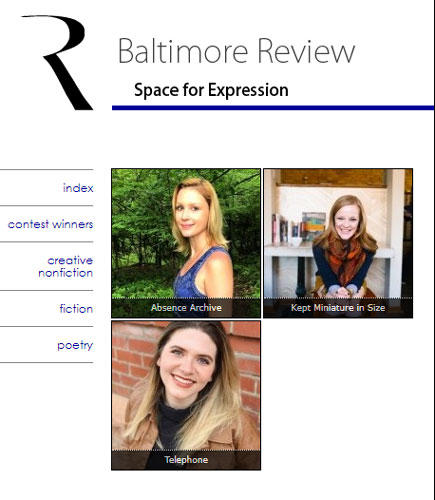 Have you visited the latest issue of Baltimore Review yet? In the Summer 2020 issue, readers can find the latest contest winners.
Flash Fiction
“Telephone” by Cara Lynn Albert
Flash Creative Nonfiction
“Kept Miniature in Size” by Ellie Roscher
Prose Poetry
“Absence Archive” by Anita Olivia Koester
Check out the full new issue, or spend some time just taking in the contest winners. Either way is a great way to spend some of your Sunday.
Narrative Pattern & Design
 Guest Post by Anthony DiAntonio
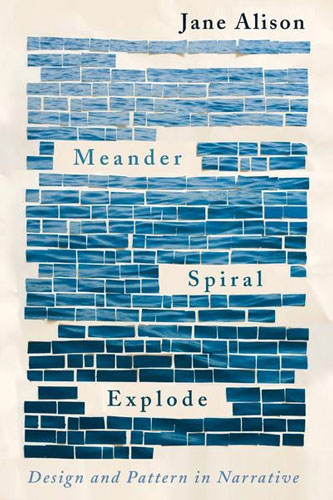
Jane Alison’s Mender, Spiral, Explode, is a nonfiction, creative writing guidebook for both writers and avid readers alike. Alison argues that there are multiple ways to craft a narrative, other than the Aristotelian “masculo-sexual arc” we have all come to know and love. Narratives can follow many patterns that we see in nature, like the spiral, the fractal, or even the meandering trail of snails. Alison provides examples from multiple contemporary works of fiction to prove her premise, including Murray Bail’s Eucalyptus, Marguerite Duras’ The Lover, and Sandra Cisneros’ The House on Mango Street. Starting each part with a personal reflection, Alison connects her own experience with these patterns to further validate their influence on human life. Through exquisite vocabulary that fuels a powerful, humorous, and direct work, Jane Alison’s Mender, Spiral, Explode is a must-read for those who admire pattern and design in any narrative.
Meander, Spiral, Explode: Design and Pattern in Narrative by Jane Alison. Catapult, April 2019.
Reviewer bio: Anthony DiAntonio is a high school English teacher at Cumberland County Technical Education Center in New Jersey. He is also currently studying for his Masters in Writing Arts at Rowan University. To achieve his Masters, he will be completing a novel focused on mindfulness, positivity, and moving forward from emotional trauma.
Buy this book from our affiliate Bookshop.org.
Plume – August 2020
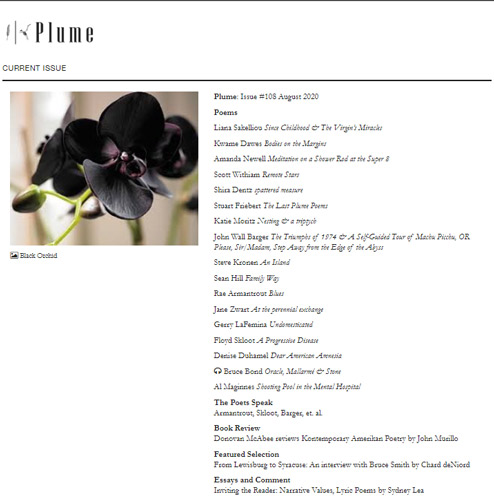
Visit this month’s Plume featured selection: “From Lewisburg to Syracuse: An interview with Bruce Smith by Chard deNiord.” Sydney Lea, in nonfiction, writes “Inviting the Reader: Narrative Values, Lyric Poems” and Donovan McAbee reviews Kontemporary Amerikan Poetry by John Murillo.
Colorado Review – Summer 2020
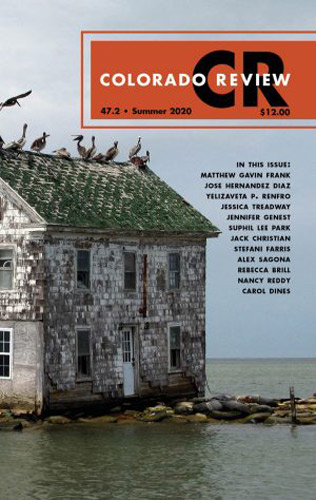
The latest issue of Colorado Review features fiction by Jessica Treadway; nonfiction by Jennifer Genest; and poetry by Saretta Morgan, M.A. Cowgill, and Matthew Gellman. See other contributors at the Colorado Review website.
Chinese Literature Today – Vol 9 No 1
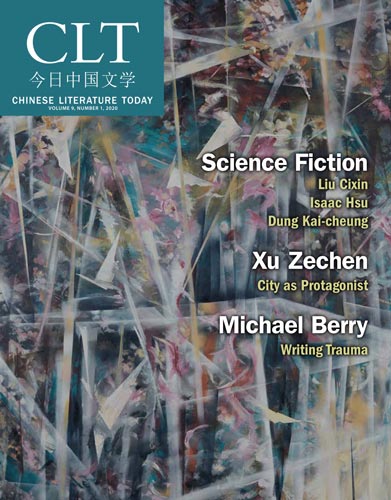
Chinese Literature Today Volume 9 Number 1 features short science fiction by Liu Cixin, Isaac (Shuntang) Hsu, and Dung Kai-cheung; an exploration of Xu Zechen’s urban fiction; a novella by Li Jing; and a look at diverse works by Sinologist Michael Berry.
Program :: University of South Alabama’s MA in English with a Concentration in Creative Writing
 Spring 2021 Application Deadline: December 1
The MA in English with a concentration in Creative Writing offers students an opportunity to develop their writing in a variety of genres (including screenwriting) and to work with the writers sponsored by the Stokes Center for Creative Writing. The Stokes Center enhances the English department’s offerings in creative writing by sponsoring readings, lectures, forums, community projects, and other events that are free and open to the public. It also supports students through its undergraduate and graduate awards in poetry, fiction, and creative nonfiction. A number of competitive scholarships are available to augment the assistantships and tuition waivers such as summer creative writing awards for work on individual projects. For students who enroll full time, the MA in English can be completed in four semesters. Students also have the option of enrolling part time and/or completing the degree through evening coursework. Come develop your craft in a diverse and vibrant city near world-class beaches.
Weaponized Information
 Guest Post by Eron Henry
Information and news are increasingly weaponized. While not new, the weaponization of news and information has been set on steroids by the rise of social media. Facebook, Twitter, YouTube and their counterparts in other countries, such as in Russia and China, have become the main source of news for citizens.
It is in and through social media that propaganda, misinformation, and disinformation thrive. The first, propaganda, is a way to tell one’s own story and can be used for good or ill. Advertising, for instance, is a form of propaganda. The second, misinformation, is false and faulty news that need not be deliberately false but can be harmful. The last, disinformation, is the deliberate spreading of false and misleading news and information with the intention to create confusion and cause harm.
Because social media is now the most widely used source of news and information, persons become easily misled and fooled because social media is a fertile breeding ground for misinformation and disinformation.
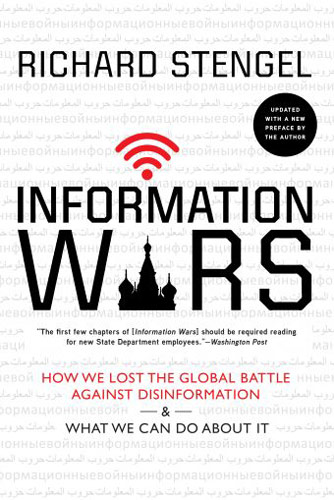
In Information Wars: How We Lost the Global Battle Against Disinformation and What We Can Do About It, Richard Stengel tells how false and faulty news is now normalized. The former editor of Time Magazine, Stengel was recruited by the State Department during the Obama Administration to counter misinformation and disinformation, especially those put out by Russia and ISIS, the terrorist group.
It was a Byzantine experience. An admixture of outdated technology, ill-prepared and ill-informed government officials and workers, turf wars, career ambitions, ego, and more, got in the way of countering the coordinated and concerted attack on truth and facts, both within the United States and globally.
Information Wars: How We Lost the Global Battle Against Disinformation and What We Can Do About It by Richard Stengel. Atlantic Books, October 2019
Reviewer bio: Eron Henry is a communications consultant. He blogs at https://oletimesumting.com.
Buy this book at our affiliate Bookshop.org.
Literature that Rattles the Soul
 Guest Post by Brian Phillip Whalen
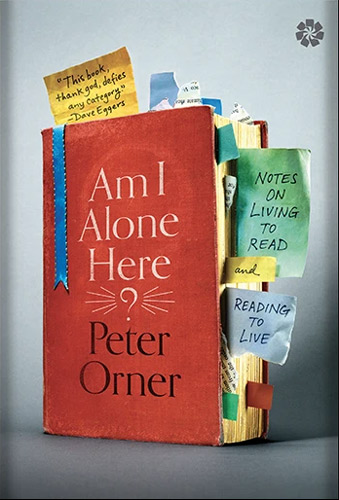
I’m rereading Peter Orner’s collection of essays, Am I Alone Here?: Notes on Living to Read and Reading to Live. (What a title! I’m also rereading Jonathan Franzen’s How to Be Alone.) Orner’s essays are ideal stay-at-home reading—easy-to-digest, elegantly composed—and his sparing prose is second-to-none at conveying depths of feeling in few words. The result is a perfectly-paced, heartfelt, sad, funny, and breathtaking book.
Orner seamlessly blends craft analysis (examinations of Chekhov, Welty, Malamud, Hurston, Wideman, Kafka, and scores of other writers) with memoir (stories of fathers, children, love, loss, joys, regrets, the pleasures—and solitude—of reading). Each essay is inspired by an act of reading, prompting explorations into the ways in which the books we read inform, intersect with, and sometimes mirror our lives:
It gets me every time. The way a story about characters, nonexistent people, pushes us back to our own, the people who do exist, who do walk the earth.”
It’s Orner’s voice, however, that draws me in. Though I’ve never met him, the feeling I get reading his essays is akin to sharing stories of hurt and redemption with an old friend over a cold beer, sitting on lawn chairs in the yard at sunset.
We have all done things we wish we could erase, forever, from the record. No matter how we airbrush our histories, the hurt we have caused will, always, reach out for us—like for me today—out of the December rain.”
Orner’s objective was to write about literature that “rattles the soul,” and in so doing, he amassed a collection of essays that continues to rattle mine. This is my go-to recommendation for readers wanting bite-size, ruminative literary essays—and these days, for anyone looking, as the title beckons, for some company in isolation.
Am I Alone Here? by Peter Orner. Catapult, 2016.
Reviewer bio: Brian Phillip Whalen’s debut collection of fiction, Semiotic Love [Stories], will be released in 2021 (Awst Press). Find him here: www.brianphillipwhalen.com.
Buy this book from our affiliate Bookshop.org.
Bluegrass Writers Studio Open to Fall 2020 Applications through August 1
 There is still a few days left to submit your application to the low-residency MFA in Creative Writing program at Eastern Kentucky University. The Bluegrass Writers Studio offers one of the most affordable and progressive low-residency programs in the nation.
They offer a close-knit and supportive writing community, are devoted to their students creative and professional success, and are supportive of both literary and literary genre writing. The program offers online workshops conducted with live audio, intensive residency workshops, international literary and cultural experiences, and web-based courses in contemporary literature. Students also have the option of working on Jelly Bucket, the annual graduate-student-produced literary journal.
To be considered for their Fall 2020 program, applications need to be received by August 1. To start their program in spring, applications need to be received by December 1.
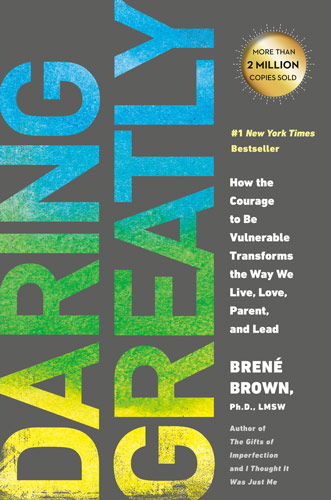
Vulnerability Is Strength
Guest Post by Joshua Lindenbaum
When one thinks of courage, they usually think about someone going into a burning building to save a person’s life; however, Dr. Brené Brown provides a unique, much-needed lens in which to view bravery in a broader sense in her book Daring Greatly: How the Courage to Be Vulnerable Transforms the Way We Live, Love, Parent, and Lead. The writing is a beautiful concert of personal anecdotes alongside empirically-based research. Furthermore, Dr. Brown reveals not-so-flattering details about herself, and therefore lives the practices in which she details in her book. It is a lovely trident of logos, pathos, and ethos designed to pierce into the stubbornness of convention and tradition, especially amongst men who have been taught to not show emotions.
This incredibly organized text uproots widely-held beliefs, such as “vulnerability is weakness.” On the contrary, in her previous book The Gifts of Imperfection, Dr. Brown declares, “vulnerability is our most accurate measurement of courage.” She defines ” . . . vulnerability as uncertainty, risk, and emotional exposure,” which comprises everyday life, especially during this pandemic. That’s what I think many readers will appreciate about her work: Brown manages to quantify concepts like vulnerability, shame, and even joy. She includes accounts from her own qualitative research alongside a panoply of reliable sources. In addition to providing background, there are also practical steps in, for example, fostering trust. For instance, there’s a section on “the marble jar,” a metaphor used to help us in assessing whether an individual is trustworthy or not based upon specific criteria. This approach allows one the ability to express themselves while also creating boundaries against those that don’t deserve our trust.
I know what you’re thinking: this sounds like a corny self-help book. You are wrong. It is a humanity book. Step into its pages!
Daring Greatly: How the Courage to Be Vulnerable Transforms the Way We Live, Love, Parent, and Lead by Brené Brown. Avery/Penguin Random House, April 2015.
Reviewer bio: Joshua Lindenbaum’s poetry has appeared in Drunk Monkeys, Breadcrumbs, Yes Poetry, The Bangalore Review, Five:2:One, 3Elements Review, Typishly, and elsewhere.
Buy this book from our affiliate Bookshop.org.
Sponsor Spotlight :: Mills College Flex Res MFA in Creative Writing
 Mills College is now offering a new kind of MFA in creative writing that enables its students to earn a degree in poetry, fiction, or nonfiction in their own way.
Along with offering more traditional classroom-based workshops and craft classes, Mills College also offers the ability to complete the degree by working one-on-one with a faculty mentor. This allows students to be on campus as much or as little as they desire. They are also expanding the amount of online offerings available during summer and January terms.
The program offers concentrations in education, literary arts administration, PhD preparation, and young adult fiction. Students can also create their own unique concentration with electives in podcasting, performance, and pedagogy. They offer a literary editing and production course that gives students hands on experience in editing their annual graduate journal 580 Split.
Stop by their listing on NewPages to learn more about their program.