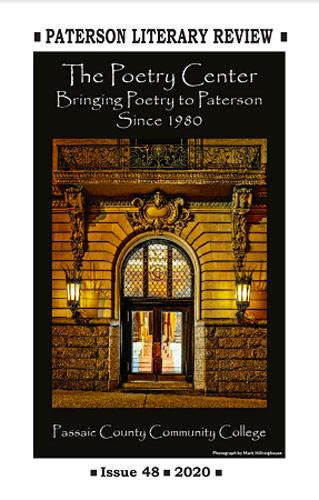
The 2020 Issue #48 of the Paterson Literary Review features poetry, fiction, essays, memoir, and reviews, and includes all the winning and honorable mention poems for the Allen Ginsberg Poetry Awards.

The 2020 Issue #48 of the Paterson Literary Review features poetry, fiction, essays, memoir, and reviews, and includes all the winning and honorable mention poems for the Allen Ginsberg Poetry Awards.
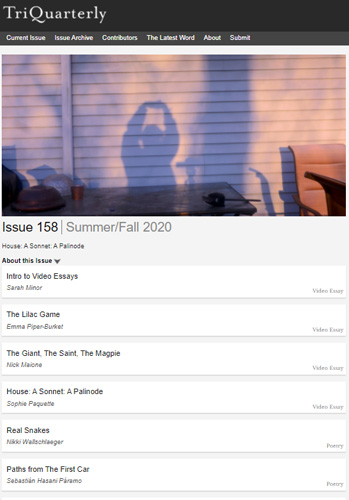
The Summer/Fall 2020 issue of TriQuarterly features work by Aram Mrjoian, Will Brewbaker, Shangyang Fang, Joe Meno, Nick Malone, Maggie Su, Sebastián Hasani Páramo, torrin a. greathouse, and Anita Olivia Koester. Plus work by additional writers, including a selection of video essays by Emma Piper-Burket, Nick Malone, and Sophie Paquette.

Tint Journal is the literary magazine for English as a Second Language creative writers, established in 2018 and based in Graz, Austria. We publish the finest of non-native English writing, including short stories, essays, and poems. Issue Fall ’20 has been released. Read twenty-five new literary creations by ESL writers from all around the world, now online and for free! Issue Fall ’20 also includes visual art creations by artists from all over the globe, combining the artistic realms of literature and art, as well as audio recordings of the writers reading their work.
 Guest Post by Christine Wambui
Bird Song weaves mythology into our present reality, juxtaposing waves of mythic cerulean sea with a snowy winter’s day in the Windy City, where Thelsie lives with an alcoholic uncle. The fluency of her exit strategy in this opening scene carefully lands us on an Ali-Smith-esque beach, possibly in Heaven. But this novel satisfyingly dives into the other world, replete with untouched olive trees, cypress, oaks, alien looking plants and wildflowers.
Hearing a voice that reminds Thelsie of her mama’s choir singing, she wanders inland to meet the locals. An appreciation for the natural world pervades the island of past and future, rich in prickly grass, ferns, and ancient Greek speaking characters. If looks can kill, you can imagine what sounds can do. Sirens struggle to protect the environment from man, tied to the mast, and ship, dashed about on the rocks.
But that’s the joy of it, to see the metaphor of industry undone by its own gluttony and cursed pretension. This book gives me hope that humans can overcome their greed and protect the environment. Bird Song’s timely critique and uncluttered horizons liberate the mind: truly a pleasure to read.
Bird Song: A Novella by Clara Hume. Dragonfly Pub, November 2020.
Reviewer bio: Christine Wambui is a passionate freelance writer from Kenya, who covers socio-economic, environmental, fashion related, and women’s issues. Her writing draws on a wide variety of work and life experiences.
The Center for Creative Writing has been guiding aspiring writers toward a regular writing practice for more than 30 years. Our passionate, published teachers offer inspiring online writing courses in affordable six-week sessions, as well as one-on-one services (guidance, editing) and writing retreats (virtual for 2020). Whatever your background or experience, we can help you become a better writer and put you in touch with the part of you that must write, so that you will keep writing. Join our inclusive, supportive community built on reverence for creativity and self-expression, and find your way with words.
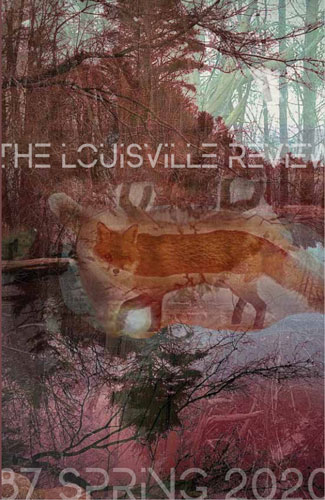
The latest print issue of The Louisville Review features fiction by Holly Tabor, Pamela Gullard, Bridget Mabunga, and Rebecca Thomas; nonfiction by Joseph Myers, Patricia Foster, Jessica Crowley, and Katherine Mitchell; and drama by Allie Fireel, Allen M. Price, Haydee Canovas, John Shafer, and Addae Moon. Poetry by Laura Judge, Joseph G. Anthony, James B. Goode, Shauna M. Morgan, Frank X Walker, and more
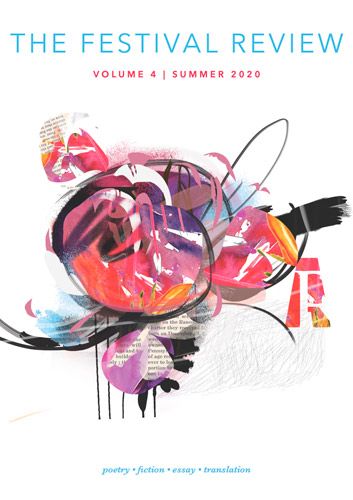
The Festival Review is pleased to announce the release of Volume 4 for Summer 2020. Explore modern voices in poetry, read exciting new fiction, discover the joy of work in translation, and more. All the new pieces are currently available to read for free on our website. A beautifully designed ebook version of Volume 4 is also available in our online store.
 CRAFT has announced the winners of the 2020 CRAFT Short Fiction Prize. Winners were selected by Guest Judge Alexander Chee.
First Place
“Ariel” by Jinwoo Chong:
Second Place
“Yo Te Veo” by Rachel Pollon
Third Place
“Mule” by Elie Piha
Visit CRAFT‘s website to check out finalists, the long list, and honorable mentions.
 Guest Post by Samantha Kolber
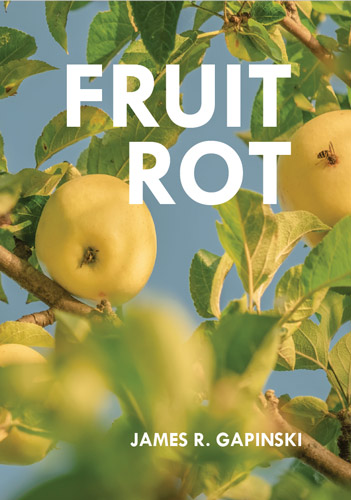
At its core, Fruit Rot by James R. Gapinski is a sweet story. Not sweet like saccharine, or Hallmark, but sweet like the meager couple in the book, with their ailments and traumas, artistic talents and impoverished lodgings; sweet like fairytales read aloud next to a hearth at bedtime; and sweet like love and the magic of imagination.
The story begins with a narrator, one half of a couple, telling the reader, “Lacey and I need money.” He tells us Lacey is depressed, with a history of abuse from her father, and since they can’t afford health insurance, she relies on St. John’s Wort from Walgreens. “It doesn’t work,” says our narrator. “She says she needs real drugs, but that takes real money.”
Gapinski is a sparse writer, yet spares no details. I love the bottle of herbs from Walgreens. I love how the narrator shuffles around the hole in the stairs. Though I don’t read comics, so may have missed some comic book references, I still love the descriptions of the narrator’s sketches and graphic artmaking endeavors. And I love the description of the mystery tree that pops up in their “barren dirt patch” of a front yard, written in the narrator’s characteristic, comic-obsessed voice:
This mystery tree is huge, and the bark is a perfect Silver Age green, like it jumped right off the Incredible Hulk #2 cover. The tree has sparkly leaves and golden fruit sprouting from its nuclear green arms. The fruit is round like an orange, but shiny like a ripe apple.
What would you do if a golden goose fell in your lap? Would you capitalize on it, even if your intentions were pure? Pure as healing the sick, mending the broken, making whole what once was? Would you play God? Would they call you a hero? Our narrator wrestles with this and so much more as the tree—their golden goose—and its magical powers permeate the couple’s lives in unimagined, unintended, and unwanted ways.
This story will stay with you for a long time, and the characters are so real—with that detailed writing—that you will think of them as friends—or foes, depending on where you sit on the good versus evil scale.
Fruit Rot by James R. Gapinski. Etchings Press, July 2020.
Reviewer bio: Samantha Kolber (samanthakolber.com) is a chapbook-loving poet and editor living in Montpelier, Vermont. Her own debut chapbook “Birth of a Daughter,” poems that reconcile an artistic self with motherhood, is out now with Kelsay Books.
 Guest Post by Murali Kamma
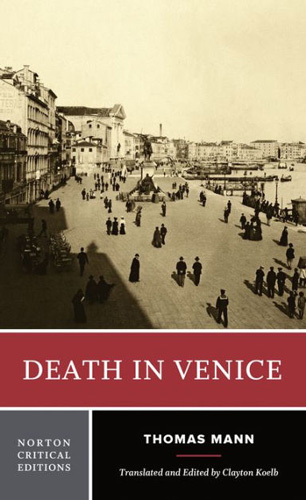
I haven’t picked up The Plague or A Journal of the Plague Year, let alone a contemporary dystopian novel. What I wanted in the Year of Covid was escapism. But having found comfort (and laughter) in the timeless fiction of the peerless P. G. Wodehouse, I was ready to move on. Thomas Mann’s Death in Venice caught my attention as I scanned my bookshelves.
All I knew about Mann’s Death in Venice—and Visconti’s film—was that a distinguished artist (Gustav Mahler?) is vacationing in Venice when he becomes infatuated with a boy visiting from another country. Soon I was swept away, and Michael Henry Heim’s brilliant English translation played no small role in providing another kind of escape from 2020. Not for long, though. I almost fell off my chair when I realized why the locals in early twentieth-century Venice don’t want to tell the protagonist (an author, not a composer) that their city is in trouble.
There’s an epidemic—a cholera epidemic, in fact, “emanating from the humid marshes of the Ganges Delta”—and though people are dying in Venice, officials are in denial. Even as the news spreads, causing increasing anxiety in the malodorous city, Venetians hide the facts from the tourists. It’s the oppressive heat, the sirocco—and there’s nothing to worry about, they say, their lies making the city as menacing as the disease threatening it. The author finally hears the truth from another foreigner, but it’s too late.
“The epidemic even seemed to be undergoing a revitalization; the tenacity and fertility of its pathogens appeared to have redoubled,” Mann writes.
More than a century has passed since Mann wrote this gripping novel. Sadly, we humans continue to make the same mistakes, and as this literary classic reminds us, some blind spots may never disappear.
Death in Venice by Thomas Mann. 1983.
Reviewer bio: Murali Kamma’s Not Native: Short Stories of Immigrant Life in an In-Between World won the 2020 Bronze Independent Publisher Book Award (IPPY) for multicultural fiction.
Buy this book from our affiliate Bookshop.org.
 Guest Post by Ed Davis
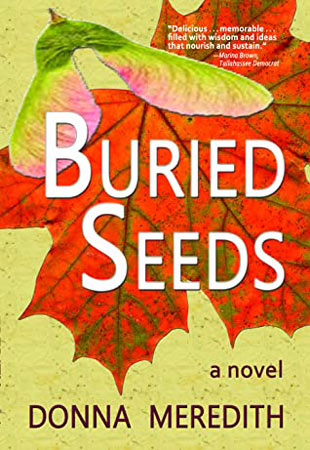
Donna Meredith’s new novel Buried Seeds is a timely novel of activism, about, among other things, the West Virginia teachers’ strike of 2018 that electrified the nation. Buried Seeds is actually two novels beneath one cover, alternating between Clarksburg, WV teacher Angie Fisher’s strike narrative and Angie’s great-great-grandmother Rosella Krause’s early twentieth century activism in the struggle for women’s right to vote.
Angie Fisher is an excellent Everyteacher, fiftyish, funny and self-deprecating. When Angie accepts leadership of the American Federation of Teachers in her district, she sets herself up for an agonizing dilemma: how can she lead a strike when her unemployed husband Dewey is applying for work with the local FBI, likely to frown on such law-breaking? After Angie and Dewey are forced to move in with her parents, daughter Trish and her new baby soon follow—and if the old farmhouse weren’t already over-crowded, sister MacKenzie winds up there, too, when she leaves her husband.
Alongside Angie’s anguished life, Meredith shoots us into the early 1900s, where we meet her great-great grandmother Rosella, who has endured similar suffering. Rosella, an artist, is now in San Francisco, along with her fourteen-year-old daughter. The girl’s diary describes her mother’s life as an activist tirelessly working for women to earn the right to vote in 1907. We also get Rosella’s first-person account of San Francisco’s great earthquake and fire of April 18, 1906, providing one of the novel’s most dramatic set pieces.
A seasoned writer of mysteries, Meredith doesn’t ignore the need for suspense to keep readers tantalized in this well-researched novel containing many shocks and surprises with great historical themes.
Buried Seeds by Donna Meredith. Wild Women Writers, March 2020.
Reviewer bio: Ed Davis’s Time of the Light, a poetry collection, was released by Main Street Rag Press in 2013. His latest novel, The Psalms of Israel Jones (West Virginia University Press 2014), won the Hackney Award for an unpublished novel in 2010.

Visit Terrain.org for the new work on the site this month. Arne Weingart reviews The Tilt Torn Away from the Seasons by Elizabeth Lindsey Rogers and Melissa L. Sevigny interviews Pam Houston. Fiction by Beth Alvarado; nonfiction by Tamie Parker Song, Scott Russell Sanders, and Paul Riley; and poetry by Seth García, Garrett Hongo, Collier Brown, and more. In currents: Charles Revello, Patricia Schwartz, and others.

New work on the Fiction Southeast website from the past month, work by Christopher Murphy, Gauraa Shekhar, Ashley Havrid, Ben Sandman, Nicholas Dighiera, Michael Vojtech, and Nathaniel Edwards.
 Guest Post by Chang Shih Yen
The Places I’ve Cried in Public is a young adult novel by British author Holly Bourne. This is not your typical young adult story about crushes and teenage angst. Teenage novels don’t usually come with a warning on the back cover, like this book does, that it contains material that some readers may find distressing.
In this book, Amelie fell in love with Reese, but now she can’t seem to get over him. So she’s going back to all the places where she cried in public to try and re-trace her steps, and see where her life went wrong. In the process, she’s learning about what love is not. This book is written in very British English and is set in places like London and Sheffield, but it deals with universal themes, like recognizing what is a healthy relationship, what is controlling behavior and abuse.
This book is powerful and intense. It is a work of fiction, but it deals with real issues. It is a tough read, in the sense that you need to mentally prepare to read until the end. You feel like you have been punched in the stomach after reading this book. But it is a good book; it deals with important issues. This book should be required reading for all young women.
The Places I’ve Cried in Public by Holly Bourne. Usborne Publishing Ltd., 2019.
Reviewer bio: Chang Shih Yen is a writer from Malaysia, seeing through the pandemic in New Zealand. She writes a blog at https://shihyenshoes.wordpress.com/.
Guest Post by Carla Sarett
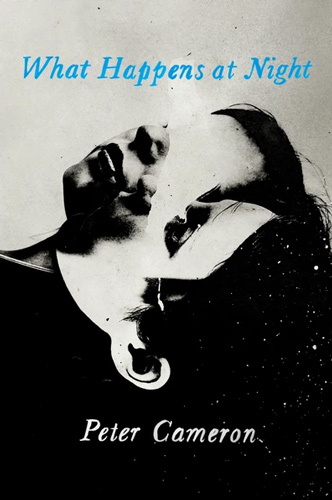
What with election hysterics and the COVID Blues, I was starved for a truly immersive read, and lo, Peter Cameron came to my rescue in What Happens at Night.
I’ve been a fan of Cameron’s elegant writing since, well, forever (if you have not read The City of Your Final Destination or Andorra, by all means, do so). Here, he takes Bowlesian themes (he does quote Jane Bowles, if there’s any doubt) but sprinkles them with kindness. Cameron’s mercifully free from the dour outlook on humanity that I’ve come to expect these days, and it makes this work enchanting in the best sense.
A not very happy New York couple wants to adopt a child, and in their quest, ends up in an icy “northern” foreign city, in a comically grand hotel (elaborately, but impractically, appointed). Nothing that happens from that point could possibly be predicted: the couple meets a faith healer, for one thing, and no, he’s not quite a fake. From there, the story by turns becomes surreal and funny and moving. The novel’s atmosphere is dark and cold, but its spirit is one of light, “a warm golden light.”
(I must also mention that the publisher has sprinkled the cover with a barely visible glitter. Perfect.)
What Happens at Night by Peter Cameron. Catapult, August 2020.
Reviewer bio: Carla Sarett’s recent work appears or is forthcoming in Third Wednesday, Prole, Halfway Down the Stairs, and elsewhere. Her novel, A Closet Feminist, will be published in 2022.
Buy this book from our affiliate Bookshop.org.
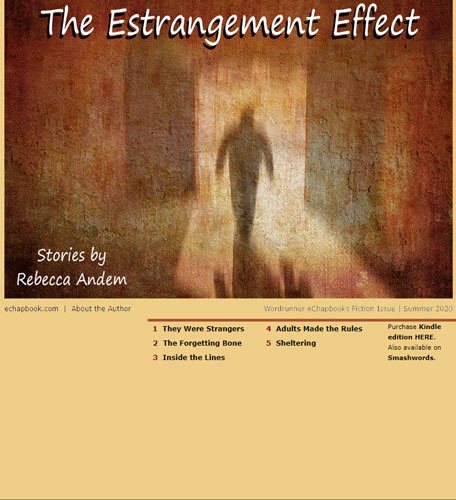
Wordrunner eChapbooks‘ 40th issue, the Summer 2020 fiction echapbook: The Estrangement Effect: Stories by Rebecca Andem. The five stories in Andem’s collection explore the startling, disconcerting, unsatisfying, and liberating moments in which we understand that the most central relationships in our lives are inhabited by strangers, strangers we are deeply connected to, be they lovers, spouses, parents, siblings or children.

The Fall 2020 issue of Willow Springs features Joseph Millar, Ramona Ausubel, Jessica Lee Richardson, Andrew Furman, Lawrence Lenhart. Plus Sarah Bates, Dmitry Blizniuk, Bruce Bond, Maggie Graber, Matthew Lippman, J. Estanislao Lopez, Owen McLeod, John A. Nieves, John Sibley Williams, and more.
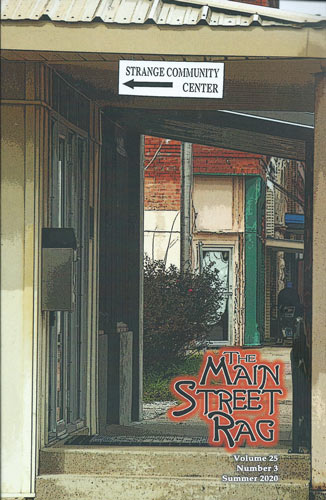
This issue’s featured interview: “Digging for Gold,” an Interview with Don Kesterson by Terresa Cooper Haskew. Fiction by Ethan Forrest Ross, Michael L. Woodruff, NV Baker, and Rita Ariyoshi. Poetry by Steven Ablon, Mark Burke, Chris Capitanio, Llyn Clague, Shutta Crum, Darren C. Demaree, Craig Evenson, Barbara Greenbaum, Angela Gregory-Dribben, Katrina Hays, Scott T. Hutchison, and more. Also in this issue: a selection of book reviews.
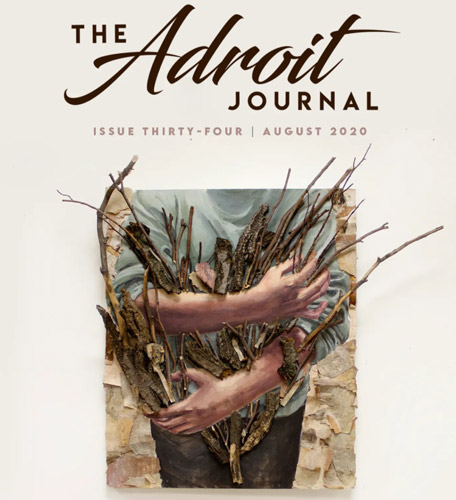
We’re beyond excited to bring you new work from Alicia Ostriker, Diane Seuss, Aimee Nezhukumatathil, Jos Charles, Yalie Kamara, David Naimon, and Jordan Jace. We’re also extremely excited to feature poetry by Asa Drake, Thomas Dooley, Mary Biddinger, Kevin Prufer, Maya C. Popa, Jordan Keller-Martinez, and more, prose by Emily Yang and Andreas Trolf, and art by Caroline Zhang, Taylor Wang, Ariel Kim, and others. Read more at The Adroit Journal website.
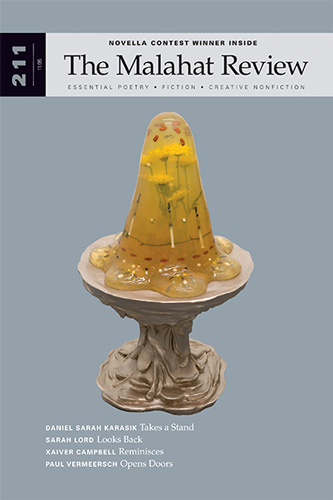 The Malahat Review hosts a Novella Prize biennially. The 2020 winner opens the Summer 2020 issue. Judges Samantha Jade Macpherson and Naben Ruthnum selected “Yentas” by Rebecca Păpucaru.
Of “Yentas,” the judges said: “‘Yentas’ is a nostalgia-free portrait of girlhood lived among the Jewish communities of 1980s Montreal. The novella’s evocation of the cruelties and kindnesses of teenage friendship, territorialism, and enmity is built in prose as funny as it is precise. Rebecca Păpucaru’s treatment of culture, ethnicity, and religion as complex structures informing protagonist Karen’s family and social life achieves impressive depth and nuance. Through Karen’s eyes we are totally immersed in a rich and bubbling teenaged world. Visceral and enchanting, a truly fantastic read!”
At The Malahat Review‘s website, readers can check out an interview with the winning author.
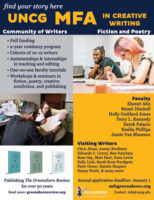
Application Deadline: January 1.
One of the first creative writing programs in the country, UNC Greensboro’s MFA is a two-year residency program offering fully funded assistantships with stipends and health insurance. Students work closely with faculty in one-on-one tutorials, take courses in poetry, fiction, publishing, and creative nonfiction, and pursue opportunities in college teaching or editorial work for The Greensboro Review. More at mfagreensboro.org.
 The MFA in Creative Writing at Minnesota State University, Mankato seeks to meet the needs of students who want to strike a balance between the development of individual creative talent and close study of literature and language. The program helps to develop work in the genres of fiction, creative nonfiction, and poetry. Students typically spend three years completing coursework, workshops, and book-length theses.
Current faculty includes Robin Becker, Candace Black, Geoff Herbach, Diana Joseph, Chris McCormick, Richard Robbins, and Michael Torres. Recent visiting writers include Juan Felipe Herrera, Marcus Wicker, Leslie Nneka Arimah, Danez Smith, Layli Long Soldier, and Ada Limón.
Students have the opportunity to grow within a rich and active community of writers with the Good Thunder Reading Series, the Writers Bloc Open Reading Series, and working on literary magazine Blue Earth Review.
Stop by their listing at NewPages to learn more.
Beginning Dates: July 27; Virtual
Registration Deadline: Rolling
Don’t forget Willow Writers’ Workshops is going virtual this summer and fall! They are offering workshops, providing writing prompts, craft discussions, and manuscript consultations. All levels are welcome. Three different courses are being offered: Desire to Write? An Introduction to Creative Writing; Flash: Writing Short, Short Prose; and Writers Workshop on Thursday Nights, a six-week course focusing on short stories. Summer dates began July 27. The facilitator is Susan Isaak Lolis, a published and award-winning writer. For more information, check out willowwritersretreat.com.
This issue of The Malahat Review features the 2020 Novella-Prize-winning “Yentas” by Rebecca Păpucaru, Daniel Allen Cox’s “The Glow of Electrum,” Mike Alexander’s “An Afternoon Gentleman,” Matthew Hollett’s “I’m Sorry, I Have to Ask You to Leave,” Ronna Bloom’s “Legend of Saint Ursula,” Alamgir Hashmi’s “Anywhere, 2019,” and Kate Felix’s “Beneath the Pond.” Also in this issue: Sarah Tolmie, Xaiver Campbell, Sarah Venart, Theressa Slind, Chris Banks, Daniel Sarah Karasik, Sarah Lord, Ron Riekki, Paul Vermeersch, and Alisha Dukelow. Plus, a selection of book reviews, and cover art by Sharona Franklin: “Mycoplasma.”
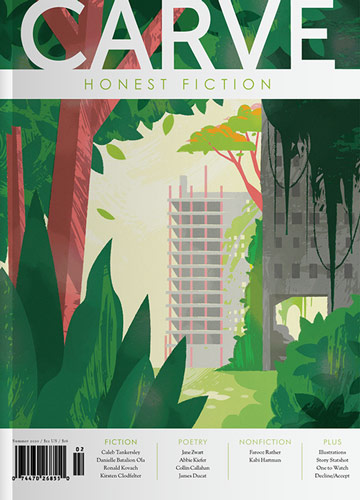
In the newest issue of Carve, find short stories by Caleb Tankersley, Danielle Batalion Ola, Ronald Kovach, and Kirsten Clodfelter, as well as interviews with the authors. New poetry by Jane Zwart, Abbie Kiefer, Collin Callahan, and James Ducat, and new nonfiction by Feroz Rather and Kabi Hartman. In “Decline/Accept,” is “Clean Kills” by Greg November. Read more at the Carve website.
The Writer’s Hotel‘s three writing conferences will be hosted virtually in October instead of in NYC like normal this year.
The All Fiction Writers Conference will take place October 14-20. The schedule has been redesigned to offer their attendees the very best service possible. Major workshops will be capped at nine people instead of their usual fourteen.
2020 faculty this year includes Rick Moody, Jeffrey Ford, David Anthony Durham, Robyn Schneider, Michael Thomas, Ernesto Quiñonez, James Patrick Kelly, Elizabeth Hand, Francine Prose, Saïd Sayrafiezadeh, Sapphire, Elyssa East, Kevin Larimer, Jennie Dunham, Steven Salpeter and TWH Directors Shanna McNair and Scott Wolven. Deadline to apply is August 22.
The Nonfiction Weekend Conference will be held October 1-5. Application deadline is August 28. Faculty includes Meghan Daum, Mark Doty, Carolyn Forché, Richard Blanco, Hisham Matar, Michael Thomas, Beth Ann Fennelly, Molly Peacock, Honor Moore, Saïd Sayrafiezadeh, Elyssa East, Jonathan M. Katz, Kevin Larimer, Stephen Salpeter and TWH Directors Shanna McNair and Scott Wolven.
The Poetry Weekend Conference will take place October 22-26. Deadline to apply is September 1. Faculty includes current U.S. Poet Laureate Joy Harjo, Marie Howe, Heather McHugh, Terrance Hayes, Mark Doty, Cornelius Eady, Deborah Landau, Tim Seibles, Valzhyna Mort, Pádraig Ó Tuama, Camille Dungy, Javier Zamora, Alexandra Oliver, Kevin Larimer, Jenny Xie, TWH Directors Shanna McNair and Scott Wolven.
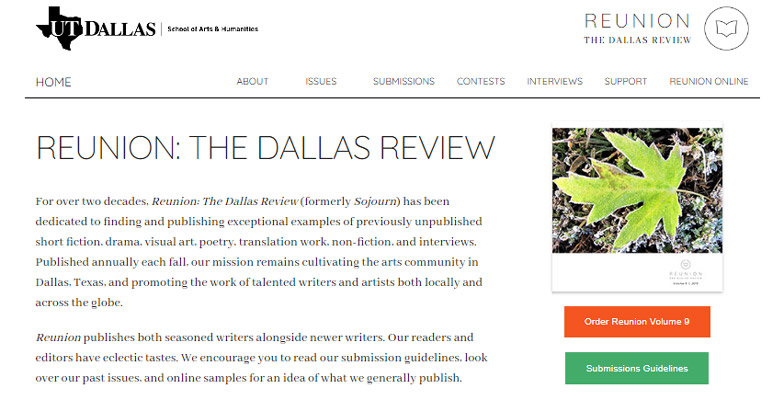 Originally titled Sojourn, Reunion: The Dallas Review is a literary magazine which has been publishing exceptional short fiction, drama, visual art, poetry, translation work, nonfiction, and interviews for over twenty years. Their mission is to cultivate the arts community in Dallas, Texas and promote the work of talented writers and artists both locally and around the world.
Reunion is published by The School of Arts & Humanities, home of the creative writing program of the University of Texas at Dallas. They publish an annual print volume as well as featuring a new piece of work monthly on their website. You can view past interviews with writers on their website as well.
Stop by their listing on NewPages to learn more.
 MFA in Creative Writing at The Ohio State University is designed to help graduate students develop their talents and abilities as writers of poetry, fiction, and creative nonfiction. Graduate teaching assistants teach special topics undergraduate creative writing courses as well as first-year and second-year writing. Students also have the option to work as editors of the prize-winning literary magazine, The Journal, and to serve on the editorial staff of two annual book prizes.
All students are fully funded for three years in a program well known for its sense of community and a faculty that is committed to teach as much as they are to their own writer. Current faculty includes Kathy Fagan Grandinetti, Michelle Herman, Marcus Jackson, Lee Martin, Elissa Washuta, and Nick White. Recent writers who have visited the program include Tarfia Faizullah, Melissa Febos, Garth Greenwell, Dan Kois, Nicole Sealey, and Danez Smith.
The program also offers special topics in addition to the regular workshops so opportunities abound for students to experiment.
Stop by NewPages to learn more about the program.
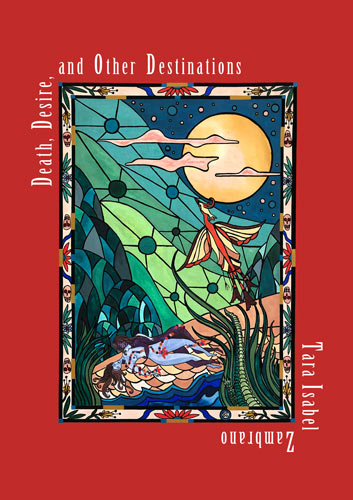
Guest Post by Chuck Augello
The stories in Death, Desire, and Other Destinations, a new collection by Tara Isabel Zambrano, depict a vivid landscape of sensual experiences ranging from a widowed mother’s kitchen to the surface of the moon. A desire for escape is a recurrent theme. In “Lunar Love,” a couple flies to the moon to exchange their vows. “We have been excited about doing something that everyone we know does these days since they find nothing exciting about the earth anymore,” the narrator says, and it’s a telling line. Daily life, with its expectations and social conventions, no longer excites. Zambrano’s characters seek their pleasures elsewhere, often in the body.
One of the strongest stories is “Up and Up,” in which a daughter interrupts her widowed mother during an intimate moment with another man. While the daughter is shaken, the mother is nonchalant and unapologetic. “It’s a blessing to be alive with no one to answer to,” the mother says, dismissing her daughter’s questions about the neighbors and the memory of the recently departed husband/father. The mother’s new lover, Santosh, soon reappears holding three mangoes, a perfect detail, the succulent fruit signaling the sensual tour-de-force to come. Santosh stands behind the narrator, and a scene that could have been uncomfortable or even creepy becomes a passionate delight, Zambrano surprising the reader with what happens between the characters, her language lush and evocative, the daughter’s “pores opening onto wonder, previous half-baked climaxes and affairs slipping out, my body poured into a new cast.” It’s a moment charged with desire, sexy and emotionally revealing.
The stories in Death, Desire, and Other Destinations are imaginative and unique, Zambrano’s collection the perfect destination for readers looking to escape the doldrums of quarantine and sheltering in place.
Death, Desire, and Other Destinations by Tara Isabel Zambrano. Okay Donkey, September 2020.
Reviewer bio: Chuck Augello is the author of the novel The Revolving Heart and the story collection The Inexplicable Grey Space We Call Love.
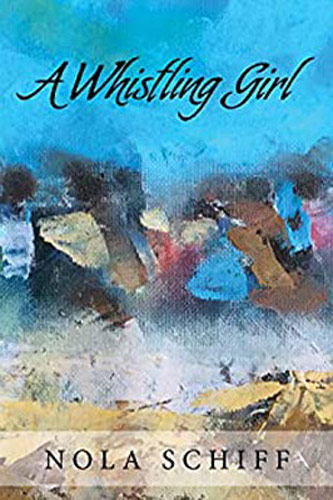 Guest Post by Lynn Levin
What a thrill it is to read Nola Schiff’s magical, vivid, fast-paced novel A Whistling Girl. Set in Southern Rhodesia in the early 1950s, the story follows the exploits and coming-of-age struggles of a young girl named Nicole “Nick” Doughty.
Smart, daring, and serious, Nick, who hates dresses, is the leader of her gang of kids and eggs them on to all sorts of misadventures. More than that, Nick dreams of befriending the intrepid journalist Sarah J. Bridgeworthy, then journeying through Africa on a dangerous mission to interview members of the Mau Mau. Nick follows S. J. through news reports and her own imaginings to the journalist’s final tragic end, which Nick takes harder than any trauma that befalls her, including being raped by the brother of one of her gang members.
Setting and society play key roles in this novel. Schiff weaves a tapestry rich with the flowers, trees, birds, and other wildlife of the region. Her young heroine never fails to notice the social inequality among the races, and her world intersects with those from many different walks of life and ethnic backgrounds. Young Nick is part Peter Pan, Huck Finn, and Tom Sawyer. I feared for her, but more than anything I cheered for her in this page-turner of a book.
A Whistling Girl by Nola Schiff. BookBaby, July 2020.
Reviewer bio: Lynn Levin’s most recent book is the poetry collection The Minor Virtues (Ragged Sky, 2020).
 The Michener Center for Writers is the only MFA program in the world that provides full and equal funding to every writer, yet it is the extraordinary faculty and sense of community that most distinguishes them. Theirs is a three-year, fully funded residency program with a unique interdisciplinary focus. While writers apply and are admitted in a primary genre—fiction, poetry, playwriting, or screenwriting—they also study a secondary genre during their time in Austin.
Enrolled students have no teaching duties, allowing them to fully commit themselves to their writing. Only 12 writers are admitted to the program each year so that faculty have ample time to devote to every writer. Current faculty includes Joanna Klink, Lisa Olstein, Roger Reeves, Dean Young, Edward Carey, Oscar Casares, Peter LaSalle, Bret Anthony Johnston, Elizabeth McCracken, Deb Olin Unferth, Stuart Kelban, Richard Lewis, Cindy McCreery, Beau Thorne, Annie Baker, Liz Engelman, Branden Jacobs-Jenkins, Kirk Lynn, and KJ Sanchez.
Writers also have the opportunity gain professional editing experience with literary magazine Bat City Review; a collaborative process between the Michener Center for Writers, the New Writers Project, and Studio Art.
Stop by their listing at NewPages to learn more.
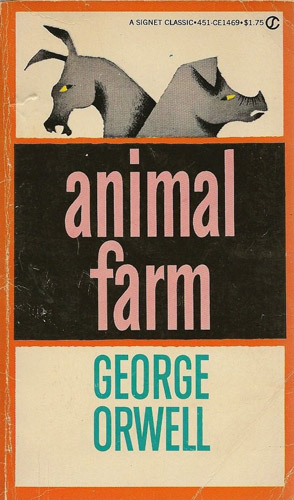
Guest Post by Claudia Gollini
Animal Farm by George Orwell was first published in 1945 and will be celebrating its seventieth birthday next year.
One of Orwell’s finest works, it is a political fable based on the events of Russia’s Bolshevik revolution and the betrayal of the cause by Joseph Stalin.
Parents need to know that Animal Farm is a biting satire of totalitarianism, written in the wake of World War II and published amid the rise of Soviet Russia. Although it tells a fairly simple story of barnyard animals trying to manage themselves after rebelling against their masters, the novel demonstrates how easily good intentions can be subverted into tyranny.
The fable is alive with brilliant touches. At first the victorious pigs write out a set of revolutionary rules, the seventh and most important is of which is “All animals are equal.” It was a brilliant idea to have the clever pigs simplify this for the dimmer animals (the sheep, hens and ducks) into the motto “Four legs good, two legs bad.” But it was a real stroke of genius for Orwell to later have the pigs amending these rules, most notoriously amending rule seven to become “All animals are equal—but some are more equal than others.“ This says something so profound about human beings and our laws and rules that it can be applied anywhere where laws are corrupted and distorted by the powerful.
The book seems relatively simple on the first read but there are several layers of complexity to represent the Soviet government. The novel contains a fair amount of satire and humor, which personally is one of the main reasons why I recommend reading it.
Animal Farm by George Orwell. 1945.
Reviewer bio: Claudia Gollini is a makeup artist, fashion/beauty blogger and journalist, editor and writer, and body painter of events and TV show (Make-up Deborah-Gucci and Castrocaro TV talent show, body painter to Art gallery ‘Spazio l’altrove’ and TV show Sky 869 Village festival and another fairs & exhibition on Italy).
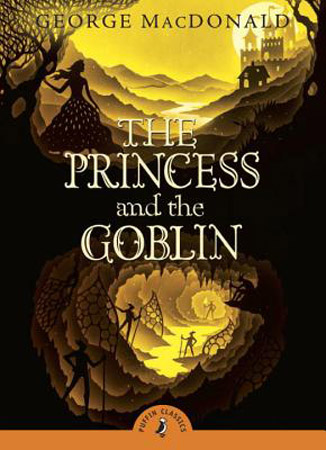 Guest Post by Chang Shih Yen
Perhaps you need a little bit of an escape from reality at the moment. This is a good book to do that. The Princess and the Goblin is a classic fantasy novel written by Scottish writer George MacDonald (1824-1905). It first appeared in 1871, before being published in book form in 1872.
The Princess and the Goblin tells the story of Princess Irene who is rescued from a goblin attack by a miner boy called Curdie. The book tells of a battle between goblins who live underground and humans. With her new friend Curdie and some magical help, Princess Irene must find a way to defeat the goblins and save her father’s kingdom.
Despite being written in the Victorian era, the language in this book is very easy to follow. You can’t tell that it was written almost 150 years ago. This was a very enjoyable book. It’s the type of book where illustrations are not necessary because it’s better to use your own imagination to picture all the goblins and other creatures. This classic fantasy novel inspired Tolkien’s Lord of the Rings and The Chronicles of Narnia by C.S. Lewis. George MacDonald wrote at least 50 books, but most of his work is not remembered now, which is a shame. George MacDonald deserves more recognition.
The Princess and the Goblin by George MacDonald. 1872.
Reviewer bio: Chang Shih Yen is a writer from Malaysia, seeing through the pandemic in New Zealand. She writes a blog at https://shihyenshoes.wordpress.com/.
Buy this book from our affiliate Bookshop.org.

In this issue of upstreet, Vivian Dorsel interviews David Jauss. Fiction by Joseph Bathanti, Lee Martin, Midge Raymond, and more; nonfiction by Mason Cashman, Barbara Haas, Jericho Parms, and others; and poetry by Jennifer Barber, Vincent Bell, Patricia Clark, and more.

The Spring 2020 issue is here and it features the winner of the Crazyshorts! Short-Short Fiction Competition (“Spinning Stories” by Bailey Cunningham) alongside outstanding stories, essays, and poems by Rebecca Morgan Frank, Afabwaje Kurian, Iheoma Nwachukwu, W. Scott Olsen, Ira Sukrungruang, Amy M. Alvarez, and more. Read more at the Crazyhorse website.

In the Winter 2020 issue of Cimarron Review: poetry by Allison Hutchcraft, Jennifer Funk, Toshiaki Komura, Amy Bilodeau, Monica Joy Fara, Darren C. Demaree, Laura Read, Isabelle Barricklow, Amber Arnold, Meriwether Clarke, Amie Irwin, Ben Swimm, Sophia Parnok, Brooke Sahni, Will Cordeiro, and Patrick Yoergler; fiction by Nancy Welch, Dan Pope, and Michael Deagler; and nonfiction by R Dean Johnson and Jon Volkmer.
Deadline: Year-round
The Center for Creative Writing has been guiding aspiring writers toward a regular writing practice for more than 30 years. Our passionate, published teachers offer inspiring online writing courses in affordable six-week sessions, as well as one-on-one services (guidance, editing) and writing retreats (virtual for 2020). Whatever your background or experience, we can help you become a better writer and put you in touch with the part of you that must write, so that you will keep writing. Join our inclusive, supportive community built on reverence for creativity and self-expression, and find your way with words. Creativewritingcenter.com.
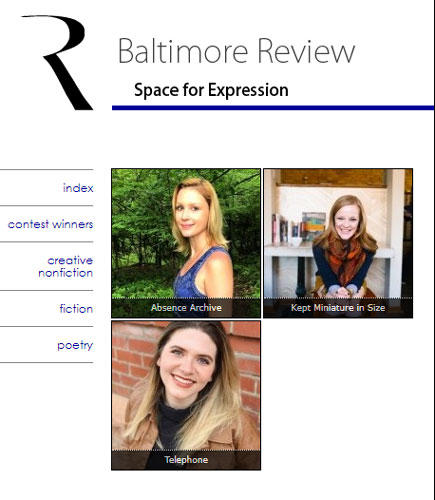 Have you visited the latest issue of Baltimore Review yet? In the Summer 2020 issue, readers can find the latest contest winners.
Flash Fiction
“Telephone” by Cara Lynn Albert
Flash Creative Nonfiction
“Kept Miniature in Size” by Ellie Roscher
Prose Poetry
“Absence Archive” by Anita Olivia Koester
Check out the full new issue, or spend some time just taking in the contest winners. Either way is a great way to spend some of your Sunday.
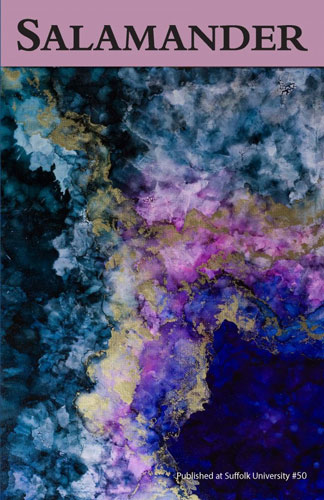 Magazine Review by Katy Haas
In the early days of lockdown, I had friends comment to me that they felt almost a sense of relief. Despite the tragedies reported in the news and the uncertainty of the new world we found ourselves in, they felt like they were able to breathe for the first time—to spend days resting or creating or getting personal work done or fully focusing on their families, none of which they were able to accomplish during the busyness of everyday life.
In the Spring/Summer 2020 issue of Salamander, Anne Kilfoyle’s story “Double-Yolked” reminded me of those conversations and feelings. As narrator Keera and her husband Jesse prepare for an emergency evacuation following an unnamed global threat, she reflects:
The last three days have been good days, some of the best. We have been holding our breath but also our problems got smaller. [ . . . ] Our biggest fear wasn’t mass annihilation, it was that we’d have to go back to how things were, back to our jobs and our lives [ . . . ].
Despite their lack of preparation, she feels okay with what’s coming to them, feels capable knowing they have each other, now somehow stronger together, as they move forward.
The short piece is relatable and timely: empty store shelves, last minute orders from Amazon in an attempt to ease the new worries, the uncertainty that surrounds them, and that strange relief of being released from normal life. It can be difficult to read disaster-themed writing while living through a similar situation, but Kilfoyle manages to cover the topic in a way that’s casual and comforting without adding to the current, similar stresses.
 Guest Post by Christopher Linforth
In her debut collection Collective Gravities, Chloe N. Clark offers a dose of the fantastic into the ordinary, and sometimes humdrum, lives of her characters. Twenty-five aesthetically similar stories make up the book, which dilutes the power of the collection as a whole, but shows the range of Clark’s fascination with parallel universes, zombies, and the breakdown of relationships. The strongest stories reveal Clark’s gift as a storyteller and as a purveyor of the weird.
In the collection’s opener “Balancing Beams,” the astronaut narrator Ava struggles with an unknown, debilitating ailment in a futuristic America. In a beautifully written flash of insight, she tells us:
I couldn’t speak for a moment. The weight of words on my tongue. In the Out, there had been so many times I fumbled words, slurred them. They don’t tell you that zero-gravity even affects your tongue. Your mouth can feel so heavy when you try to say something.
Other stories seem to take their cues from B-movies and horror stories and the world of science fiction. Throughout the collection, Clark remakes these historically male-dominated forms to center her stories on women and the deleterious effects of culture on their bodies.
Clark’s debut is a mixed collection, yet it shines so brightly in spots that it’s clear she is destined to wow us with her next book.
Collective Gravities by Chloe N. Clark, Word West Press, 2020.
Reviewer bio: Christopher Linforth is the author of three story collections, The Distortions (Orison Books, 2021), winner of the 2020 Orison Books Fiction Prize, Directory (Otis Books/Seismicity Editions, 2020), and When You Find Us We Will Be Gone (Lamar University Press, 2014).
Buy this book at our affiliate Bookshop.org.
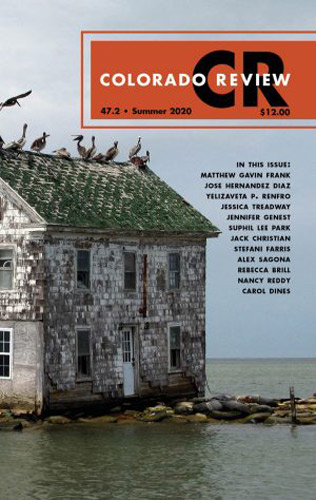
The latest issue of Colorado Review features fiction by Jessica Treadway; nonfiction by Jennifer Genest; and poetry by Saretta Morgan, M.A. Cowgill, and Matthew Gellman. See other contributors at the Colorado Review website.
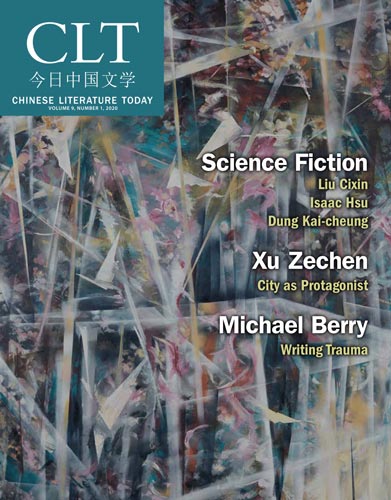
Chinese Literature Today Volume 9 Number 1 features short science fiction by Liu Cixin, Isaac (Shuntang) Hsu, and Dung Kai-cheung; an exploration of Xu Zechen’s urban fiction; a novella by Li Jing; and a look at diverse works by Sinologist Michael Berry.
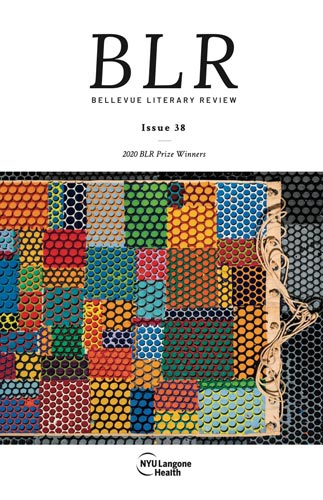
Magazine Review by Katy Haas
From Issue 38 of Bellevue Literary Review, Kathi Hansen’s “We the Mothers” (honorable mention in the 2020 BLR Prize) imagines the mothers of boys who have been accused of sexual assault. They meet together in book-club-like fashion, able to speak freely with one another when no one else understands.
Hansen writes of them in a collective. They speak of their sons as one being as they look back to their childhoods, their teenage years, and the ways their boys were raised in their homes. Only when one woman begins to question her son’s innocence does the story diverge, separating her from the rest of the group, finally naming her apart from the others. I found this to be a cool, well done device for this piece, and a unique point of view to have on these now familiar stories.
Despite focusing on this side of the story, Hansen does a good job of avoiding too much sentimentality. The mothers tell their collective story without demanding understanding or sympathy from the reader. After all, as they point out, only those in their group can truly understand.
 Spring 2021 Application Deadline: December 1
The MA in English with a concentration in Creative Writing offers students an opportunity to develop their writing in a variety of genres (including screenwriting) and to work with the writers sponsored by the Stokes Center for Creative Writing. The Stokes Center enhances the English department’s offerings in creative writing by sponsoring readings, lectures, forums, community projects, and other events that are free and open to the public. It also supports students through its undergraduate and graduate awards in poetry, fiction, and creative nonfiction. A number of competitive scholarships are available to augment the assistantships and tuition waivers such as summer creative writing awards for work on individual projects. For students who enroll full time, the MA in English can be completed in four semesters. Students also have the option of enrolling part time and/or completing the degree through evening coursework. Come develop your craft in a diverse and vibrant city near world-class beaches.
 Guest Post by Laura Kincaid
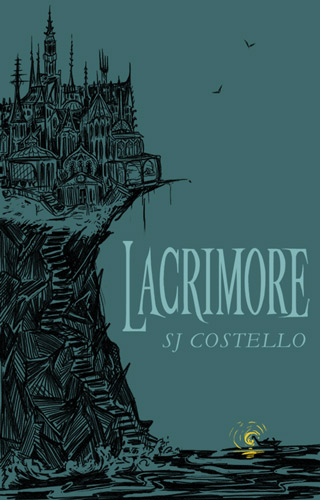
Lacrimore by SJ Costello explores our relationship with grief and tragedy through a speculative lens. The gothic novel draws readers in with beautifully dark prose that builds a haunting world. While the story unfolds slowly, the flawed characters and mystery compel readers to turn the page.
The novel opens with Sivre Sen, a faithless medium journeying across a stormy lake to a small island. There sits Lacrimore, a crumbling labyrinth of a mansion shrouded by legends. During a vision, a ghost called her there to complete his funeral rites. In Costello’s Victorian-inspired world, mediums are revered and influential, especially after a recent epidemic. However, Sen has never before experienced visions of the dead. After arriving, she meets the dead man (who is still alive), a staff trapped by circumstances, and a dubious doctor in exile. As Sivre searches the house for answers and closure, she discovers dark secrets in its rotting walls. The book is like Lacrimore itself—a quiet, mysterious tale standing alone in a much larger world.
Though in development before the COVID-19, the novel was a poignant and refreshing take on pandemic literature. Instead of focusing on dystopian survival, the story centers on what happens after survival. How do we process our grief? How do we reflect on the societal failures that came to light? What change is required to be better? Lacrimore doesn’t claim to answers all these questions. It remains a spooky story that is fun to read, but opens the door for those who want to ponder its deeper themes.
Lacrimore by SJ Costello. June 2020.
Reviewer bio: Laura Kincaid is a writer, editor, and lover of the fantastical. Find her work in Twist in Time and at laurakincaidmusings.wordpress.com.
 There is still a few days left to submit your application to the low-residency MFA in Creative Writing program at Eastern Kentucky University. The Bluegrass Writers Studio offers one of the most affordable and progressive low-residency programs in the nation.
They offer a close-knit and supportive writing community, are devoted to their students creative and professional success, and are supportive of both literary and literary genre writing. The program offers online workshops conducted with live audio, intensive residency workshops, international literary and cultural experiences, and web-based courses in contemporary literature. Students also have the option of working on Jelly Bucket, the annual graduate-student-produced literary journal.
To be considered for their Fall 2020 program, applications need to be received by August 1. To start their program in spring, applications need to be received by December 1.
 Guest Post by Caroline V.D.
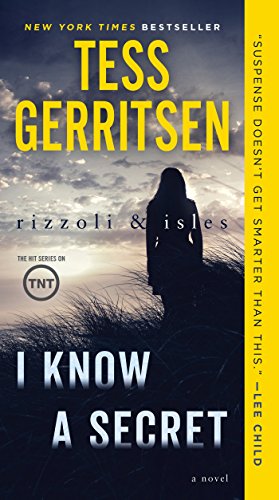
As a first timer being introduced into the world of Rizzoli and Isles’s grisly world, I found myself left exposed to the intensity and intricately woven plot in Tess Gerritsen’s addition.
In I Know a Secret, we are pushed straight into the unfortunate murder of Cassandra Coyle, an indie filmmaker and are soon greeted with Rizzoli and Isles. For those like me who are meeting the two strong women quite late into the series, Gerritsen does a wonderful job in establishing familiarity and understanding of their characters as the murder investigation goes on. The characters throughout the book all contribute to the tension and suspense in deducing the culprit’s motives and next actions, as the number of bodies pile up and pasts uncovered. There are no moments that are wasted and no conversations that do not provide a twist to the story, as Coyle’s colleague says “Horror 101 . . . it’s always the person you least expect.”
The symbolism and messages throughout the story are consistent and well placed by Tess Gerritsen who had impressively created an impression of a web laid out by a culprit who could not be traced yet by the end of the book; the web could be followed into a single string as the culprit’s motives are laid out to the reader. It is an amazing feat done by Gerritsen who I commend for roping in another reader into her series!
I Know a Secret: A Rizzoli & Isles Novel by Tess Gerritsen. Penguin Random House, April 2018.
Reviewer bio: Hey all, it’s Caroline, and I am an aspiring book reviewer. Currently I’m working on a personal project where you’ll be seeing me and a lot more books in the future. Check it out at: https://theladywithinkstainedhair.tumblr.com/.
Buy this book at our affiliate Bookshop.org.
 Mills College is now offering a new kind of MFA in creative writing that enables its students to earn a degree in poetry, fiction, or nonfiction in their own way.
Along with offering more traditional classroom-based workshops and craft classes, Mills College also offers the ability to complete the degree by working one-on-one with a faculty mentor. This allows students to be on campus as much or as little as they desire. They are also expanding the amount of online offerings available during summer and January terms.
The program offers concentrations in education, literary arts administration, PhD preparation, and young adult fiction. Students can also create their own unique concentration with electives in podcasting, performance, and pedagogy. They offer a literary editing and production course that gives students hands on experience in editing their annual graduate journal 580 Split.
Stop by their listing on NewPages to learn more about their program.

New in July on Terrain.org, find poety by Kim Parko, Anna B. Sutton, Dean Rader, and Andrea Cohen; nonfiction by Meg Mills-Novoa, Jason BreMiller, Samantha Scibelli, and Lucy Bryan; and fiction by Susan M. Gaines. Plus, Matthew Cooperman reviews Joshua McKinney’s Small Sillion.
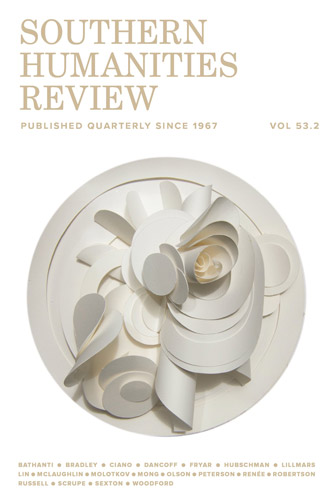
In this issue find nonfiction by Charlotte Taylor Fryar and A. Molotkov; fiction by Kim Bradley, Judith Dancoff, Janis Hubschman, Jeff McLaughlin, and Ann Russell; and poetry by Joseph Bathanti, James Ciano, Bryce Lillmars, Esther Lin, Derek Mong, Christina Olson, Lee Peterson, L. Renée, Kristin Robertson, Mara Adamitz Scrupe, Wesley Sexton, and Annie Wodford. Find more info at the Southern Humanities Review website.