Lawrence Ferlinghetti, who played a leading role in West Coast literary history by championing Beat writer Allen Ginsberg, passed away in his home on Monday, February 22. He was 101 years old. Ferlinghetti and partner launched City Lights as the country’s first-ever all paperback bookstore in 1953. The bookstore was renowned for its bohemian atmosphere and collections of international poetry, fiction, progressive political journals and magazines. It later spawned a literary press which published Ginsberg’s controversial poem “Howl” which saw Ferlinghetti embroiled in a historic court case. Learn more…

NewPages Blog
At the NewPages Blog readers and writers can catch up with their favorite literary and alternative magazines, independent and university presses, creative writing programs, and writing and literary events. Find new books, new issue announcements, contest winners, and so much more!
THEMA – Spring 2021
Writers and artists follow the theme of “Not of This World” in the Spring 2021 issue of THEMA. Some of the authors’ takes will definitely surprise readers. Contributors include Kayleigh McKee, James Swafford, Lynda Fox, Emily Hanlon, Margo Peterson, James Armstrong, Jennifer Erickson, Linda Berry, John Grey, Tricia Lowther, and more.
Spread the word!
River Styx – No. 103
In this issue of River Styx: poetry by Nin Andrews, Gabriella Balza, Talia Bloch, Bruce Bond, Lyn Li Che, Jeff Gundy, David Kirby, Jenna Le, Timothy Liu, Adrian Matejka, Miho Nonaka, Emily Ransdell, Erin Saxon, Troy Varvel, Kiani Yiu, and more; fiction by Winston Bribach, Michael Byers, Jack Driscoll, and Andrea L. Rogers; essays by Maura Lammers, Jennifer Murvin, and Kerry Neville.
Spread the word!
Months to Years – Winter 2021

A journal of personal stories exploring mortality, death, and dying related topics. This issue of Months to Years features work by Gaye Brown, Helen Bowie, Patti Santucci, Briana Gervat, Mari-Carmen Marin, Michael Biegner, Bethany Bruno, John Timothy Robinson, Mary Ann Noe, Patricia Miller, Mara Lefebvre, Lee Landau, Sherri Levine, Susan Robison, Jeremy Gadd, and more.
Spread the word!
The Chattahoochee Review – Winter 2021
In the final issue of The Chattahoochee Review, find poetry by Darius Atefat-Peckham, John Brandon, Jesse Breite, Taylor Byas, Luis Alberto de Cuenca, Maria Castro Dominguez, Courtney Faye Taylor, Bethan Tyler, Joke van Leeuwen, L. A. Weeks, Ross White, and more.
Spread the word!
Baltimore Review – Winter 2021

The Winter 2021 issue of Baltimore Review features poetry and prose by John Van Kirk, Mary Ardery, Tara Lynn Masih, Shailen Mishra, Basmah Sakrani, LeRoy Sorenson, Susan Messer, Alden M. Hayashi, Gregory Byrd, Emily James, and more.
Spread the word!
Hippocampus AWP 2021
 The Association of Writers and Writing Programs (aka AWP) will have their annual conference and book fair this year and it will be completely virtual. Hippocampus Magazine an Books will be participating. Besides being available during regular Book Fair hours, they are hosting two author meet and greets. The first is with Rebecca Fish Ewan on Friday, March 5 from 4-5:30 PM EST. The second is with Sam Chiarelli on Saturday, March 6 from 2-3:30 PM EST. You can even pick up some virtual AWP-exclusive downloads and enter to win swag at their virtual booth.
If you aren’t a subscriber to their newsletter yet, what are you waiting for? They hope to announce an official update soon about their annual creative nonfiction conference HippoCamp. Plus, you can keep on top of the latest issues of the journal as well as cool events they host, like their recent Doodles & Discussion with Rebecca Fish Ewan.
Spread the word!
Brobby’s Double Jeopardy
 Magazine Review by Katy Haas.
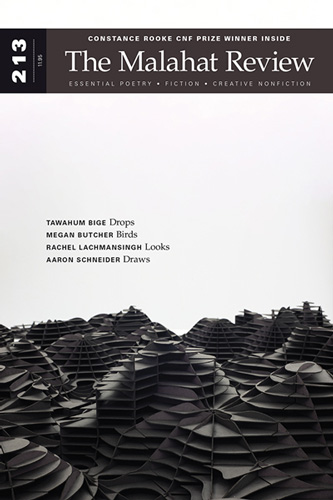
The Winter 2020 issue of The Malahat Review opens with the winner of the 2020 Constance Rooke Prize for Creative Nonfiction: “On Playing Double Jeopardy!” by Christina Brobby. This piece works through the different money categories in a game of Jeopardy all on the theme of photographic terms. Like the show, Brobby is given the answer and she responds with the appropriate question as she connects the term to her life.
I enjoyed the set-up of this piece. It flows seamlessly, Brobby always taking care to weave the photographic terms into the moments of her life. She examines how she presents as her race, in her adoptive family, as a wife, a partner, a mother. When she gives the answer of “What is a filter?” she ends the section turning it back inward: “Be more or less vibrant, act more coolly, like when the man after your husband said you were too emotional and that’ s not what he was signing up for. You donned your neutral-density filter . . . ”
This piece is a great opener for the issue, and well-deserved of taking home the Constance Rooke Prize. It immediately caught my eye and drew me in with its unique format, something greatly appreciated in the these days of shortened attention spans.
Spread the word!
2020 Kenyon Review Short Fiction Contest Winners
 Grab a copy of the January/February 2021 issue of Kenyon Review for the winners of the 2020 Kenyon Review Short Fiction Contest.
Winner
“Fish Stories” by Janika Oza
Runners-Up
“Dungeness” by Steffi Sin
“Cactus Eater” by Stanley Delgado
Kenyon Review Fellow Misha Rai introduces the placing stories.
Spread the word!
Sunday Short Reads
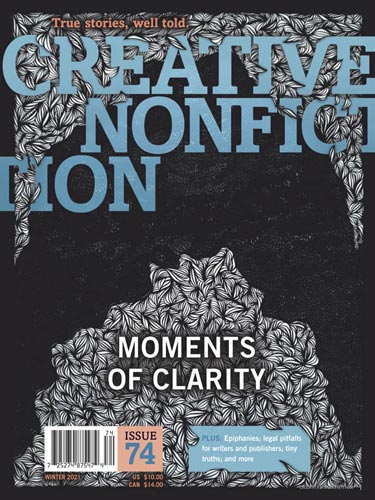
Love creative nonfiction in bite-sized form? Literary magazine Creative Nonfiction has you covered with Sunday Short Reads. This is flash nonfiction delivered weekly straight to your inbox. The pieces featured in this mailing are hand-selected from the archives of Creative Nonfiction, Brevity, Diagram, River Teeth, and Sweet Lit. They will also sometimes feature the occasional original works, too.
Check out past issues here, and consider subscribing today to satisfying your nonfiction cravings.
Interested in submitting your own nonfiction? They are open to submissions of nonfiction by older writers (age 60+) through February 22.
Spread the word!
Moral Quandaries, Deal-Making, and Courtroom Dramas in this Legal Memoir
 Guest Post by Hamilton Davis.
The early 1970s were rough on Vermont’s criminal justice system. Central to that era was the long criminal career of Paul Lawrence, the bad cop who, while working as an undercover narcotics agent for state and local police, framed more than 100 young Vermonters on drug charges. Lawrence’s depredations managed to contaminate the whole justice system—state police and several prosecutors and judges—and his crimes and the resulting turmoil put Vermont on front pages across the land.
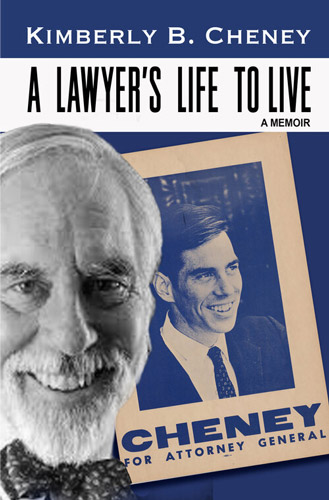
One public official deeply affected by the Lawrence mess was Kimberly Cheney, a Yale Law School graduate and a Republican, who had just been elected in 1972 as Vermont’s attorney general. Cheney, in his candid memoir A Lawyer’s Life to Live, tells much about his life in Montpelier, Vermont, as attorney general but also, earlier and later, as a small-town private attorney and county prosecutor. He describes all the moral quandaries, deal-making, the courtroom dramas, and the shenanigans that readers would expect from an observant lawyer-turned-author.
But what he also offers is a striking assessment of what became known as the “Paul Lawrence Affair.” Lawrence’s crimes were committed long ago, but Cheney’s book is an important reminder of how things can go wrong. The author is as tough on himself as he is on other players who were far more involved in that affair. That’s a quality that is rare and praiseworthy in the literature of public life.
A Lawyer’s Life to Live: A Memoir by Kim Cheney. Rootstock Publishing, February 2021.
Reviewer bio: Hamilton E. Davis has been a journalist and policy analyst for more than 50 years. He is the author Mocking Justice: America’s Biggest Drug Scandal (Crown Publishers, 1978).
Buy this book from our affiliate Bookshop.org.
Spread the word!
The Other Hamlet Brother

Guest Post by Manasi Patil.
An extraordinarily ordinary play script is what draws Tim Hamlet, the twin brother of Prince Hamlet, the crown prince of Denmark, towards Elsinore to uncover the dark secrets that awaits him, whether he wants it or not.
When I started reading the first chapter of The Other Hamlet Brother, I was entirely drawn in the book. Luke Swanson’s words kept me on the edge throughout the journey of reading ‘The Other Hamlet Brother’. Well, I’ve always loved this genre, so I was more than happy to review the book, and I’m pleased to say that it did much more than simply ‘satisfy’ me. Continue reading “The Other Hamlet Brother”
Spread the word!
Get Ready to Write Brilliant Flash Fiction
 If you’ve been wanting to strengthen your flash fiction skills, Brilliant Flash Fiction has you covered.
Join presenter Cindy Skaggs on Saturday, March 13, 2021 for a virtual flash fiction fundraiser workshop. The one-hour workshop will take you from zero to finished flash fiction. Find out more about Skaggs and registration at Brilliant Flash Fiction‘s website.
Master your flash fiction now and have something to submit to the journal’s next print anthology, submissions open until May 14.
Spread the word!
Aveyard’s ‘Broken Throne’
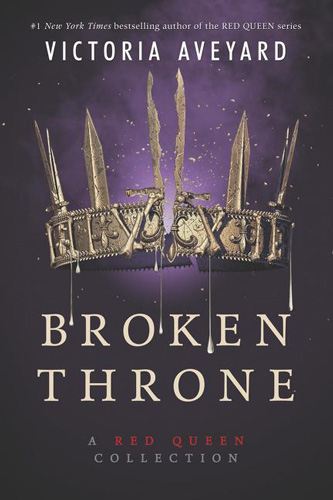 Guest Post by Natalie Hess.
Broken Throne is a solid addition to Victoria Aveyard’s Red Queen series. I give it 3.5 stars, and I enjoyed seeing these characters heal after all they’ve been through. Continue reading “Aveyard’s ‘Broken Throne’”
Spread the word!
New England Review – 41.4
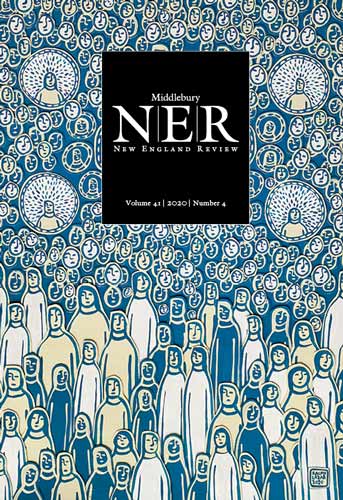
The Winter 2020 issue of New England Review is by turns bracing, inspiring, surprising, and devastating. Like every issue of NER, it gives readers a chance to expand their sense of the known world through language, image, and narrative. But what’s different is that emerging writers almost entirely populate this issue, and for many this is among their first publications.
Spread the word!
The Massachusetts Review – Winter 2020
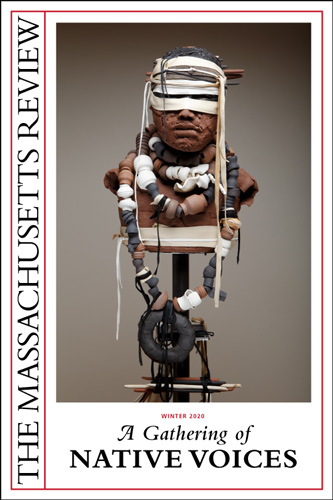
We are honored to present the very first Massachusetts Review issue focused on Native American writing. The issue’s poetry and prose show the depth and range of Native writing in our current moment. We put forward work by both new and established Indigenous writers that is diverse in its aesthetics and comes from tribal people who live all over the country. Essays by Tiffany Midge, Shaina A. Nez, Chandre Szafran, and more; stories by Stephen Graham Jones, Chip Livingston, Erika Wurth, and more; and poetry by Lemanuel Loley, Stephanie Lenox, Bojan Louis, Jessica Mehta, and more. Plus novel excerpts and hybrid texts. Read more at The Massachusetts Review website.
Spread the word!
The Malahat Review – Winter 2020
This issue features work by Tawahum Bige, Megan Butcher, Rachel Lachmansingh, and Aaron Schneider. Plus the winner of the 2020 Constance Rooke CNF Prize: Christina Brobby who is also interviewed.
Spread the word!
The Main Street Rag – Winter 2021
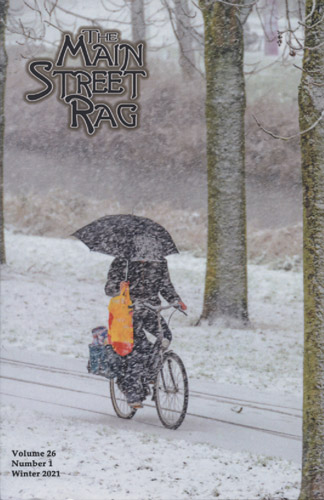
In this issue of The Main Street Rag, find a featured interview with Ellen Birkett Morris by Beth Browne. Fiction by Ellen Birkett Morris, Lawrence F. Farrar, Michael Graves, Kathie Giorgio, and Steve Cushman. Poetry by Carrie Albert, Diana Anhalt, Rose Auslander, Joan Barasovska, Brenton Booth, Raymond Byrnes, Robert Cooperman, Rachel Dixon, Richelle Buccilli, Angela Gaito-Lagnese, Martha Golensky, Kari Gunter-Seymour, Ted Jonathan, Elda Lepak, Anne Hall Levine, Vikram Masson, Ken Meisel, David Mills, Randy Minnich, Harry Moore, Gail Peck, Ann Pedone, Gary V. Powell, Charles Rammelkamp, David Rock, Seth Rosenbloom, Russell Rowland, Tom Wayman, and more.
Spread the word!
EVENT Winter 2020 2021
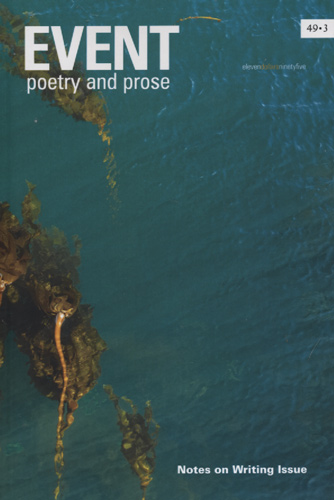
This issue features Notes on Writing from Maria Reva, Souvankham Thammavongsa, and Joshua Whitehead. Also in this issue: nonfiction by Darlene McLeod; fiction by Dian Parker, Stephen Guppy, and Dennis McFadden; and poetry by Ashley Hynd, Shazia Hafiz Ramji, Rose Hunter, Natasha Zarin, Peter Richardson, Thomas Mixon, Nate Logan, Jean Van Loon, D.S. Martin, and more. Read more at the EVENT website.
Spread the word!
Grand Little Thing Launches The Umbran Project
 Grand Little Things, an online literary magazine devoted to showcasing formal verse and free verse using typical versification techniques, has announced the creation of The Umbran Project. The name comes from The Umbra Poets who are known for skirting the line between “Art for Art’s Sake” and “For the Culture.”
The idea of the Umbran Project came about as the editor realized there are “a limited number of avenues that are specifically targeting African American Writers.” They hope to publish the Umbran Project twice a year and would love to feature at least 30 poets per issue.
The first issue’s deadline is April 14, 2021.
Spread the word!
EVENT’s 2021 Featured Indigenous Voices
 EVENT‘s fifth annual Indigenous Voices: An Evening of Poetry & Prose is coming up this month on February 25th, 2021, at 6 pm PST on Zoom. Molly Cross-Blanchard is hosting.
The event will feature three indigenous writers Garry Gottfriedson, Jessica Johns, and Richard Van Camp.
Find out more about the featured writers and register for your free ticket at EVENT‘s website.
Spread the word!
“Comfort Poems” in Cimarron Review
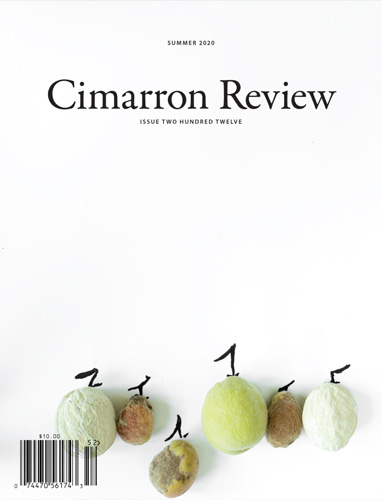
Magazine Review by Katy Haas.
Issue 212 of Cimarron Review includes what feel like the comfort food of poetry. After a long week, it felt good to sit wrapped up in a blanket with this issue in my lap.
Victoria Hudson offers warmth to readers of “11th & Quaker.” Inside the apartment, the speaker and another person complete a crossword and watch well-known The Office. There’s comfort in the familiarity of both tasks, a quiet intimacy surrounding them.
Kim Kent’s “At the YMCA” shows us a different scene of intimacy as YMCA lifeguards practice CPR on one another “just to be sure,” all of them “generous with our drowned / and undrowned lips.” Kent kindles the heat of summer and the closeness of the two bodies with expertise.
David Ruekberg offers a “Cure for Thought” with a list of instructions that both calm and inspire the reader. He quietly guides us to observe and imagine until we reach the final, always useful step: “Listen.”
Make time to stop and listen to the words of the writers in this issue of Cimarron Review and find your own comfort poems.
Spread the word!
Janet B. McCabe Poetry Prize Winners
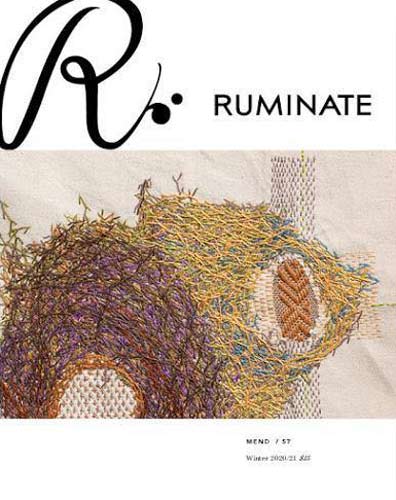 Issue 57 of Ruminate features the winners of the Janet B. McCabe Poetry Prize. Grab a copy now to check them out.
First Place
“The Difference Between a Year and a Lifetime” by Laura Budofsky Wisniewski
Second Place
“Papier-mâché” by Yvette Siegert
Honorable Mentions
“In Another Dream Where My Father Apologizes” by Hajjar Baban
“The Sparrow in the Banquet Hall” by Betsy Sholl
Finalists include Chaun Ballard, Jennifer Barber, Charley Gibney, Catherine Hodges, Suzanne Lummis, Megan Merchant, Brian Sneeden, Samuel Ugbechie, David Wright, and Haolun Xu.
Spread the word!
Poor Yorick Reading Series: “Family Matters”
 Poor Yorick: A Journal of Rediscovery is continuing their monthly reading series with a virtual open mic and fireside chat!
Cozy up with your favorite beverage and share your poetry, short fiction, and creative nonfiction. Stick around for an open discussion between readers and writers.
This month’s theme is about family—the people who get us through bad times and celebrate the good times with us.
The reading will take place on February 25 from 7-9 pm EST and is free to attend on Microsoft Zoom. Find out more at Poor Yorick‘s website.
Spread the word!
Cozy Up with Calder
 Guest Post by Michael Rhames.
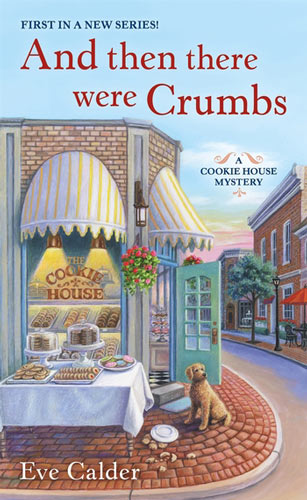
Back when I was a teenager and the internet wasn’t a thing, one of my favorite activities was to sit or lay down with a book. Anything by Agatha Christie I could get my hands on ended up being a favorite. This one may just be a close second, as far as cozy mysteries go.
While Eve Calder’s style is her own, the resemblance to Christie’s is undeniable, and doesn’t stop with the title. Kate McGuire even has her own modern-day Hastings to help her solve the mystery presented in this little masterpiece of the genre.
After losing her job, her fiancé, and her apartment all in the same day, Kate decides to move south from New York to beautiful Coral Cay, Florida. There, she arrives at The Cookie House where owner Sam Hepplewhite won’t sell cookies, of all things. Being a pastry chef, but still needing a job, Kate takes the front clerk post offered to her instead. All the while, she’s been seeing someone following her around.
Then she meets Stuart Lord, a millionaire who wants to turn the island into an exclusive vacation destination for the rich. He is trying to bully Sam into selling the business, but Sam won’t budge. From there, everything goes downhill. There is a death, and Sam goes to jail as the main suspect.
Kate enlists new friends to help uncover the true killer’s identity. Their discovery is unpredictable, just the way it should be. But that is why it’s called a mystery!
I have absolutely no complaints about this book, which is rare for cozies lately. If you like cozies and a fair amount of food talk, this may just be your thing.
And Then There Were Crumbs by Eve Calder. St. Martin’s Press, July 2019.
Reviewer bio: Michael Rhames. Birth Date: 6/8/1971. Birth Place: San Juan, PR. Living In: Boston, MA.
Buy this book from our affiliate Bookshop.org.
Spread the word!
Position Available :: Fine Arts “Barista”
 The Fictional Café, an online arts ‘zine, was established in 2013 and has steadily grown in popularity. Today, we have over 900 Coffee Club members in 64 countries. We publish fine arts exhibits, fiction, poetry, and podcasts, along with more occasional reviews, commentaries and interviews, each month.
As of March 1, we have an opening for our Fine Arts Barista. In this unpaid volunteer position, your role is assessing incoming art submissions for possible publication, as well as reaching out to art communities to invite artists to submit their work. You recommend exhibits to the editorial board and once approved, curate the artist’s works in publishable format with descriptions of each work, an Artist’s Statement, the artist’s bio and (optional) photograph. We strive to publish a Fine Arts exhibit once a month. Please review what we have published on our website, www.fictionalcafe.com.
If you’re interested, please reply to me at [email protected]. Type “Fine Arts Barista – NP” in the subject line. Please describe yourself, your artistic interests and how you feel you might fit in with our baristas and our community. The editorial board will begin interviews the last week of February. We extend a three-month trial period for new baristas; if we are all agreed on moving forward together, you’ll be introduced on our website and be given your own business cards and a Fictional Café Microsoft Office 365 account.
Spread the word!
Salamander – No. 51
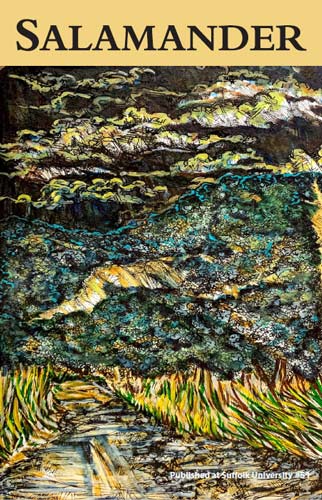
Salamander #51, featuring: fiction by Jinwoo Chong, Gretchen Comba, Michael O’Brien, Carol Dines, and Kanza Javed; nonfiction by Darius Stewart; an art portfolio by Angela N. Weddle; reviews by Hope Wabuke, Marcela Sulak, and Jacquelyn Pope; and poetry by Michael Bazzett, Paula Abramo tr. by Dick Cluster, Suphil Lee Park, Jennifer Jean, and more.
Spread the word!
Ruminate – Issue 57
Runimate Issue 57: Mend investigates what needs to be mended, who does the mending, and how we might mend. As Megan Merchant writes in her poem “Mammography,” “Not all things heal when left alone.” Featuring the Janet B. McCabe prizewinning poems by Laura Budofsky Wisniewski, Yvette Siegert, Hajjar Baban, and Betsy Sholl.
Spread the word!
Plume – February 2021
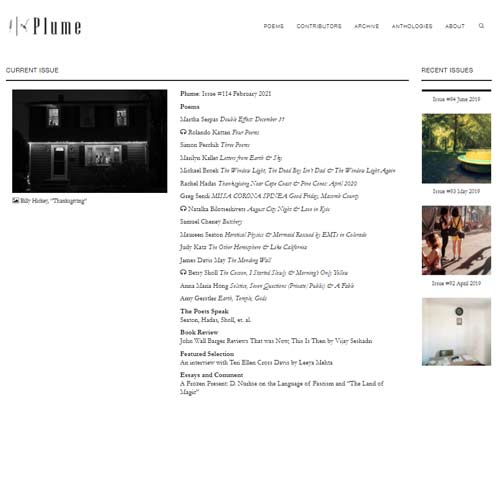
This issue’s Plume featured selection includes an interview with Teri Ellen Cross Davis by Leeya Mehta, as well as work by the poet. John Wall Barger reviews That was Now, This Is Then by Vijay Seshadri. In nonfiction find A Frozen Present: D. Nurkse on the Language of Fascism and “The Land of Magic.”
Spread the word!
Into the Void
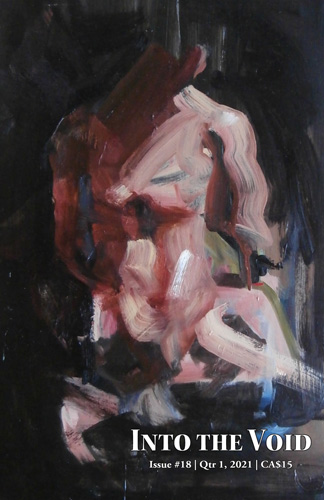
Issue #18 is Into the Void‘s most packed issue ever, 10% bigger than previous issues. The eye-catching cover image “Sub Seb 2” by Chalice Mitchell would really spice up your bookshelf. Inside the cover: fiction by Anne Baldo, Nim Folb, Eloise Lindblom, Karl Plank, Ash Winters, and more; creative nonfiction by Grace Camille and Bill Capossere; and poetry by Annie Cigic, Daun Daemon, Roy Duffield, Rebecca Faulkner, Molly Fuller, Beth Gordon, Chana G. Miller, and others.
Spread the word!
Hole in the Head Review – Feb 2021
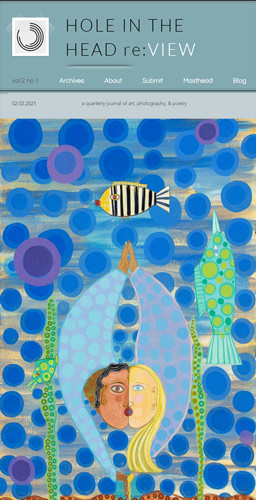
Hole in The Head Review begins their second year with this new issue. Visit for new work by Tim Benjamin, Richard Jones, S. Stephanie, Connor Doyle, Ashley Mallick, Larkin Warren, Eva Goetz, Ron Riekki, Beth Copeland, Roger Camp, Heather Newman, Tom Barlow, Dennis Herrell, Lily Anna Erb, Dick Altman, Glen Armstrong, Erin Wilson, Yoni Hammer-Kossov, Matthew Moment, Cynthia Galaher, Lisa Zimmerman, Christy Sheffield, Tilly Woodward, and more.
Spread the word!
Cimarron Review – Summer 2020
Issue 212 of Cimarron Review features poetry by Michael Marberry, Robert Bharda, Emily Grelle, Adam Day, Ellen Cantrell, Jennifer Met, Morgan Hamill, Ben Aguilar, Carolyn Adams, Kim Kent, Donna Reis, and more; fiction by Toby Donovan, Rachel Hall, Thomas H. McNeely, and Abby Frucht.
Spread the word!
Bennington Review – No. 8
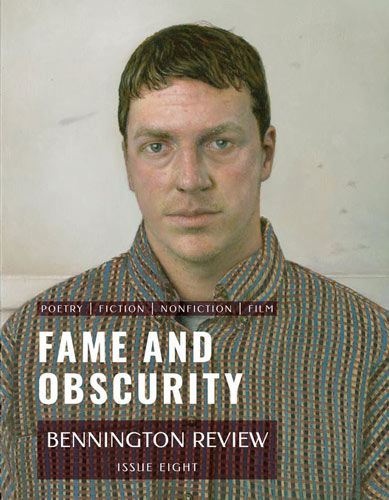
The “Fame and Obscurity” issue with poetry by Emily Pettit, Maia Seigel, Elizabeth Hughey, Jacob Montgomery, Oni Buchanan, Kathleen Ossip, Anne Marie Rooney, Jose Hernandez Diaz, jayy dodd, Catherine Pierce, Rob Schlegel, Ed Skoog, TR Brady, Ryo Yamaguchi, and more; fiction by Cynthia Cruz, Stuart Nadler, Lucy Corin, Bonnie Chau, and others; and nonfiction by Elisa Albert, Kelle Groom, Craig Morgan Teicher, Kirsten Kaschock, and more. More info at the Bennington Review website.
Spread the word!
Ekphrastic Poetry in Concho River Review
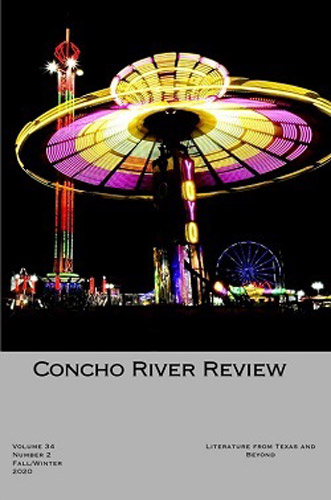
In the Fall/Winter 2020 issue of Concho River Review, two ekphrastic poems can be found one after the other. First is “Abraham Preparing to Sacrifice His Son” by David Denny about Marc Chagall’s “Abraham Preparing to Sacrifice his Son, According to God’s Command,” and the second is “Telephone in a Dish with Three Grilled Sardines at the end of September” by Paul Dickey about Salvador Dali’s painting which the poem is titled after.
Denny’s poem describes Chagall’s piece and then slides the focus out of frame, to those not pictured. The speaker states, “[ . . . ] while the men / play out their little dramas of heaven and earth, / it’s those left out of the official portrait that make / the real sacrifices.” Denny then paints a picture of Sarah, Abraham’s wife, imaging the heartbreaking grief one would feel seeing her husband “tie her beloved boy to the saddle, / tuck his best knife into his belt.” I enjoyed this focus on the emotion the portrait fails to include.
Dickey’s poem questions the meaning of Dali’s painting again and again, walking us through the detail as his attention slips from one to the next. While Denny focuses on what’s not in the portrait, Dickey becomes focused on discovering what is presented to us and what it means.
These two poems work as great companion pieces for one another, well-placed within the pages of this issue.
Review by Katy Haas
Spread the word!
Perfect Your Poem
 Do you have a problem poem that’s not cooperating with you? Check out Into the Void‘s new poetry and editing development service. Poetry Editor Andrew Rihn aims to be critical but encouraging with his feedback and promises: “I’ll highlight what’s working (because there is good stuff in every draft!) while pointing out places where you can develop and invigorate your writing. I’ll prompt you to consider the poem from new angles. I’ll ask a lot of questions.”
Find out more about Rihn’s rates and what else you can expect with the editing and development of your poem at Into the Void‘s submission manager.
Spread the word!
Able Muse YouTube Channel: Readings & Book Trailers
If you weren’t able to attend the virtual reading and Q&A with Able Muse Press authors Carrie Green, Hailey Leithauser, and Sally Thomas on January 27, they have uploaded a recording of the event to their official YouTube Channel.
Don’t forget to subscribe for more content…like their recently released book trailer for William Baer’s New Jersey Noir: Cape May. This is the second book of the Jack Colt Murder Mystery Novels Series. It was released on January 15 of this year. They are hoping to bring even more book trailers in the new future.
Plus! Don’t forget their 2021 contests are open to submissions! You can submit fiction and poetry to their Write Prize for publication in their literary magazine Able Muse through March 15. You can submit full-length poetry collections to their Book Award through March 31.
Spread the word!
University of South Alabama Launches Race and Identity Lecture Series
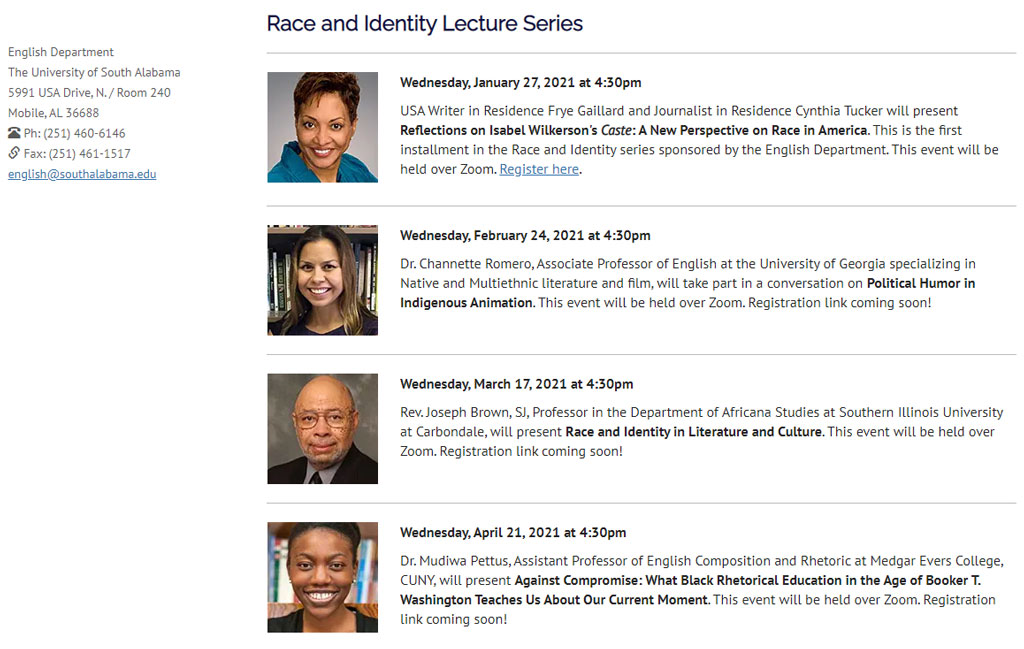 On January 27th the English department at the University of South Alabama launched their virtual Race and Identity Lecture Series with USA Writer in Residence Frye Gaillard and Journalist in Residence Cynthia Tucker with “Reflections on Isabel Wilkerson’s Caste: A New Perspective of Race in America.” They have three more events scheduled in the series all to be held via Zoom.
This month is Dr. Channette Romero, an associate professor of English at the University of Georgia, who will take part in a conversation on Political Humor in Indigenous Animation on February 24 at 4:30 PM. Next month features Reverend Joseph Brown on Race and Identity in Literature in Culture. In April, Dr. Mudiwa Pettus will present Against Compromise: What Black Rhetorical Education in the Age of Booker T. Washington Teaches Us About Our Current Moment.
The English department offers an MA in English with an emphasis in creative writing and is home to the Stokes Center for Creative Writing.
Spread the word!
Poetic Lessons on Love & Gratitude

Guest Post by Padmaja Reddy.
A beautiful collection of poems, How to Love the World is a true pleasure to read.
The poems seem to be written by the hearts that view the world through the lens of kindness. Poems that reflect on “Joy of Presence,” “Small Victories,” “Pieces of Heaven” and other modes of positive outlooks.
The love of a father and his desire to see his kid painted so vividly in such a short poem (“Bus Stop”). Another father appears “taking care [of his daughter] in full silence and secrecy.” He loves her even when she is lost in sleep. Such beautiful images of love and bonding.
Readers can see an optimistic parent believing in the goodness of the world in the words of January Gill O’Neil “and wonder who could mistake him for anything but good.” The speaker also fears “for his safety—the darkest child on our street in the empire of blocks.”
Rain sounds different and appears as remembered wisdom in “Praise of Darkness.” We imagine ourselves as immortal in bright summer nights and learn to love both ordinary and extra in “Perceptive Prayer.”
Poetic expressions like “Hope doesn’t know its destination”; “Tomorrow the world will begin again, another fresh start”; “A letting go of one thing, to fall into other”; “A girl of color is a light house”; “A day that began like a gift”; and “the decades of side-by-side, our great good luck” fill hearts with warm joy and bliss.
“My Daughter’s Singing,” “Fifteen Years Later, I See How It Went,” “Kindergarten Studies the Human Heart,” “Held Open,” and “The Lesson of the Falling Leaves” are among some of my favorite poems.
To sum up aptly, “Glad to be in this place, this life and to read this book” as in the poem of “Astral Chorus.”
How to Love the World: Poems of Gratitude and Hope edited by James Crews. Storey Publishing, April 2021.
Reviewer bio: Padmaja Reddy, originally from India, lives in Connecticut. She received an MA in English Literature from SK University. Former journalist and she published poetry and book reviews in various publications like Yale Review of Books, NewPages.
Buy this book from our affiliate Bookshop.org.
Spread the word!
The Iowa Review’s Veteran’s Writing Gallery
Literary magazine The Iowa Review, whose Fall 2020 issue was released last month after unexpected delays due to the pandemic, offers a web-home for veterans’ writing as well as resources for veteran writers with their Veteran’s Writing Gallery. In it they feature all work in its entirety by veteran writers who were published in the Spring 2013 and Spring 2015 issues.
They also offer a biennial writing contest for veterans, the Jeff Sharlet Memorial Award for Veterans. The winners and runner-ups of the 2020 contest will be published in the Spring 2021 issue. First place was James Janko’s “Fallujah in a Mirror”; second place was Jerri Bell’s “He Said, She Said”; and runners-up were Erik Cederblom, Ashley Hand, and Brian Kerg. Their next contest is slated for a May 2022 deadline.
If you are a veteran writer, do check out their resources page which offers a guide to publishing venues, workshops and classes, and writing contests devoted to veterans and active-duty military and reservists.
Spread the word!
When the Magic Feels Real

Guest Post by Michael Wright.
It means something for there to be a book where red pea soup is cooked the right way, obeah is real and so are monsters, permed hair falls out, and you understand what it means to be a runner, or a ball player, to be marginalized and to be a person at the same time.
Inquisitive, sharp, and alluring, Morgan Christie’s These Bodies is a detailed look into the lives of those whose lives we have forgotten, or ignored, or a bit of both. Her stories touch the hidden corners of who we are, who we recognize in the magic and the everyday lives she examines. From Alfred, who wants to know what it means to be a parent—and his partner Win, who wants to know what it means to be in love (“Monkey Paws”). Or Jemma, who wonders how it would feel to not come second to her father’s alcoholism (“12 Steps”). Or like Lester, who wants, needs, and wishes to be seen as more than his skin (“The Abada”).
Christie’s stories take you on a journey of love and loss, but mostly on a journey towards better understanding that we are all more than just these bodies. A whole lot more.
These Bodies by Morgan Christie. Tolsun Books, 2020.
Reviewer bio: Michael Wright is a father, husband, banker, and drinker of fine beers. He reads articles that make him think and books that make him think more.
Buy this book from our affiliate Bookshop.org.
Spread the word!
Doodling for Writers: Rebecca Fish Ewan in Conversation with Donna Talarico
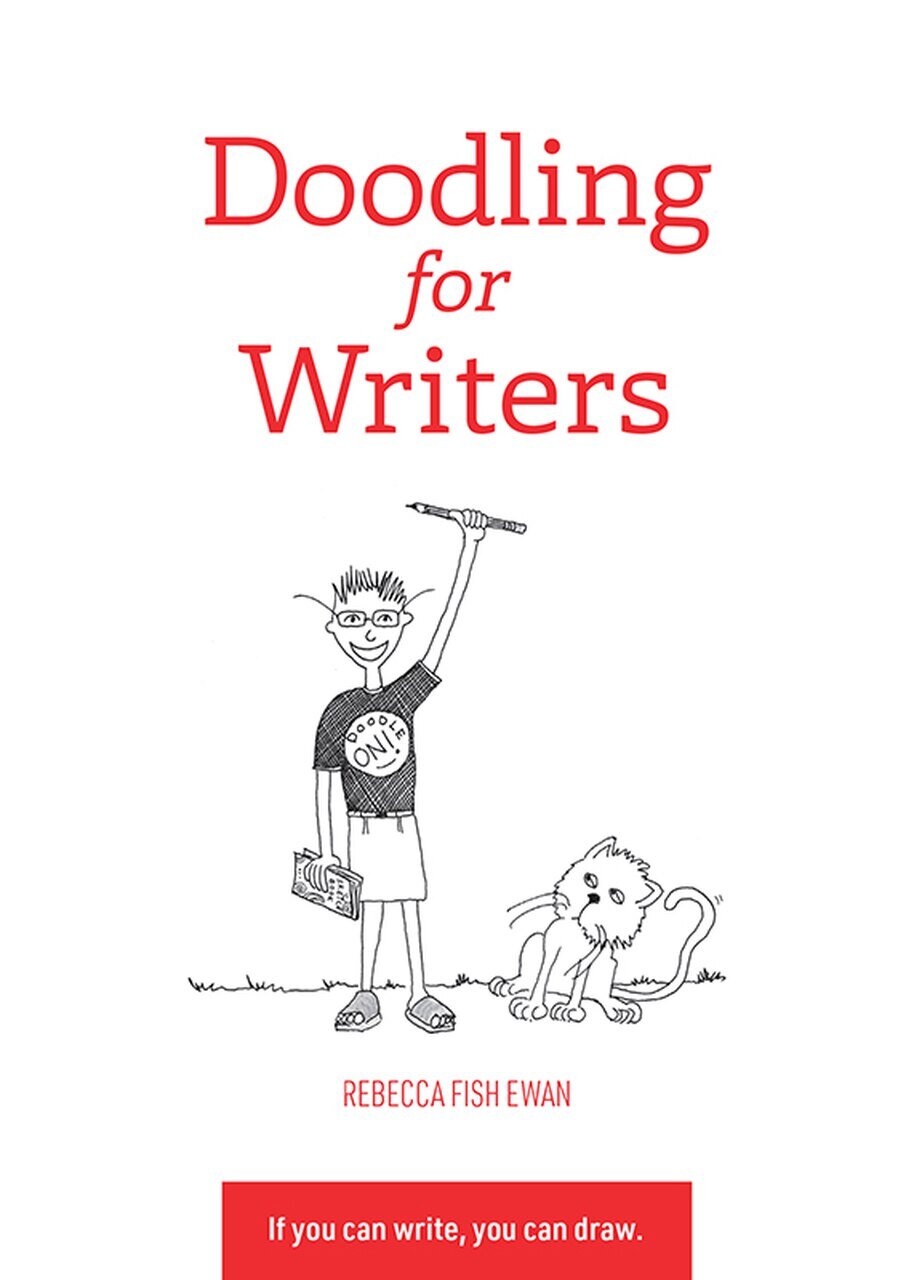 Last year Hippocampus Books released Rebecca Fish Ewan’s Doodling for Writers which is filled with “wit and wisdom with practical, engaging prompts and activities to illustrate how simple sketching can get you over hurdles, bring back memories, and even provide a roadmap for where your story needs to go.”
To celebrate the anniversary of its release, they are hosting a virtual event with Rebecca Fish Ewan in conversation with Hippocampus Books publisher Donna Talarico. This will take place February 9 at 7:00 PM EST. There will be an audience Q&A and an optional, fun, no-pressure draw-along.
There are also chances to win Doodle On! to-shirts and mini notebooks.
Book sales are encouraged through Midtown Scholar Bookstore which is hosting the event.
Spread the word!
Write in Brooklyn with the MFA at St. Francis College
The low-residency MFA in creative writing at St. Francis College offers a lecture series called Write in Brooklyn which features prominent writers from a range of genres. In 2019, they launched their own YouTube channel allowing you to view these discussions online. Participants in this series have included Mahogany Brown, Dominique Morisseau, Jason Reynolds, and Amber Tamblyn.
The low-residency program meets in-person twice a year in January and June. The January residency this year was moved completely online. They offer separate genre tracks in fiction, poetry, and dramatic screenwriting/playwriting. They have a 6-to-1 student to faculty ratio that offers “an intimate, focused environment for aspiring writers to flourish.”
Stop by their listing on NewPages to learn more.
Spread the word!
Floersch Hammers Home Her Lessons
 Guest Post by Kevin Wiberg.
This is a little book with a big heart and a lot of common sense.
In the fast-paced, high-stress world of securing competitive funding, it can be easy to chase opportunities and lose sight of what matters most—the people and communities who rely on the success of your work. While chasing the dollars is often driven by the organizational imperative to survive, it is an ineffective and uninspired strategy to engage grantmakers.
As my career has moved from grantseeker to grantmaker, Barbara Floersch has identified critical themes and strategies that I continue to look for when evaluating proposals. Don’t assume a grantmaker knows who you are and what you do; but do assume that most grantmakers will be deeply grounded in the fields, populations, and issues that your organization addresses.
A critical part of your organization’s work is to demonstrate competency, document a solid grounding in data trends from national to local levels, promising and best practices, identify who else does similar work, and how your organization collaborates with others to produce efficient and impactful outcomes. These are just a few of the critical lessons Floersch has shared with thousands of grantseekers around the US and internationally. I credit Floersch’s teaching and mentorship over the years with my success in securing millions of public and private dollars and these lessons continues to inform my work as a grantmaker.
A real strength of Floersch’s new book is her engaging and authentic communications style. She practices what she preaches, and I’m so pleased she continues to share her knowledge with a genuine interest in your organization’s success in addressing critical and compelling social issues and needs.
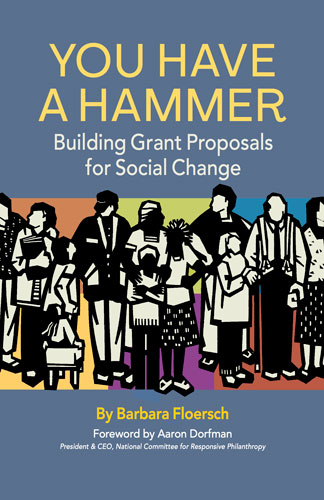
You Have a Hammer: Building Grant Proposals for Social Change by Barbara Floersch, Rootstock Publishing, January 2021.
Reviewer bio: Kevin Wiberg lives in Vermont and is the Philanthropic Advisor for Community Engagement at The Vermont Community Foundation.
Spread the word!
december – Fall Winter 2020

Featuring gorgeous cover art from Raqs Media Collective, new work from Eileen G’Sell, Albert Goldbarth, Noah Davis, John Sibley Williams, and the winner from our 2020 Curt Johnson Prose Awards, art from Brian Dettmer and Ebony Paterson, and much more. Read more info at the december website.
Spread the word!
Understorey Magazine – No. 19
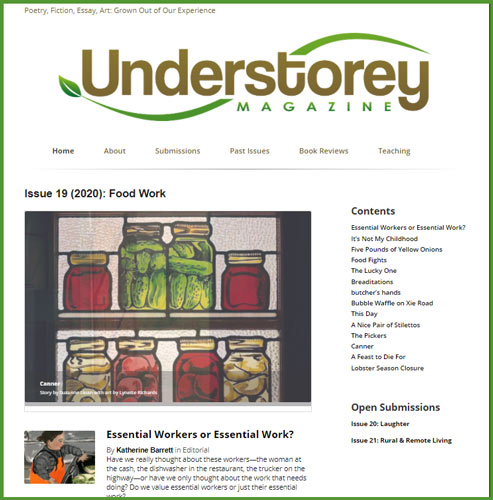
Welcome to the “Food Work” issue. Katherine Barrett urges us to think more about essential workers. Cairistiona Clark, Moni Brar, Kathy Mak, Carmen Wall, Christine Pennylegion, and Chantal Martineau pen poems on the theme. Read more at the Understorey website.
Spread the word!
The Lake – February 2021

The February issue of The Lake features Edward Alport, Holly Day, Mike Dillon, William Ogden Haynes, Katherine Hoerth, Paul McDonald, Gordon Meade, Jill Sharp, J. R. Solonche, John L. Stanizzi, J. S. Watts, Emma Wells, Sarah White. Reviews of Colin Carberry’s Ghost Homeland, Paul Summers’ the dreamer’s ark, and Jennifer McGowan’s Still Lives with Apocalypse.
Spread the word!
New Orleans Review Issue 45: Queer Issue

In Fall of 2020, literary magazine New Orleans Review released its first-ever issue devoted entirely to poetry and prose by queer writers. The issue also featured interviews with four artists from the LGBTQAI2+ community. Editor Lindsay Sproul, the first queer editor of the journal, states in the Editor’s Note: “As editor, I will continue to seek out the work of queer writers, and to hold intersectionality and advocacy at the center of our journal.”
Contributors in the Fall 2020 issue include Cassidy Wells, Jordan Lassiter, Lisa Ahima, Kimberly Pollard, Jason Villemez, Kate Milliken, Buzz Mauro, Corinne Manning, Rita Mookerjee, Kathleen Balma, Ava Dadvand, Zach Linge, Steven Cordova, Danley Romero, Eleanor Garran, and Jennifer Steil.
Read this issue and consider submitting work to future issues. For the month of February, Black History Month, black writers can submit their work for free.
Spread the word!
Cumberland River Review – January 2021
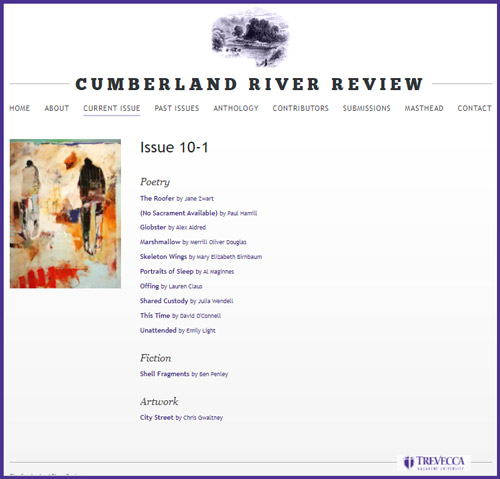
This issue of Cumberland River Review features new poetry by Jane Zwart, Paul Hamill, Alex Aldred, Merrill Oliver Douglas, Mary Elizabeth Birnbaum, Al Maginnes, Lauren Claus, Julia Wendell, David O’Connell, and Emily Light. Fiction by Ben Penley. Artwork by Chris Gwaltney.
Spread the word!
Creative Nonfiction – No. 74
Creative Nonfiction #74: “Moments of Clarity” features stories of sudden realizations, things that can’t be unsaid, and power dynamics laid bare: a seventeen-year-old flirts her way into trouble; a daughter’s offhand remark shatters a family’s fragile peace; an employee quietly decides HR’s focus on diversity is actually kind of racist, and more.
Spread the word!
Concho River Review – Fall Winter 2020
In this issue: fiction by Tom Murphy, Doug Ramspeck, Terry Sanville, and Ken Wheatcroft-Pardue, and nonfiction by Paul Juhasz, Jeffrey Lockwood, John Robinson, Rachel Schiel, and Steve Wing. Read more at the Concho River Review website.