Home » Newpages Blog » Nonfiction » Page 10

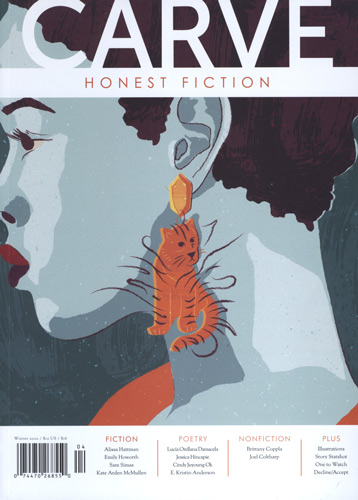
Carve Magazine – Winter 2020

Carve Magazine - Winter 2020

The Winter 2020 issue of Carve Magazine features short stories by and interviews with Alissa Hattman, Emily Howorth, Sam Simas, and Kate Arden McMullen; poetry by Lucia Orellana Damacela, Jessica Hincapie, Cindy Juyoung Ok, and E. Kristin Anderson; and nonfiction by Brittany Coppla and Joel Clotharp. Additional features include Decline/Accept with “Fit” by Rayne Ayers-Debsksi, a “One to Watch” interview with Brandon Taylor by Anna Zumbahlen, and illustrations by Justin Burks.

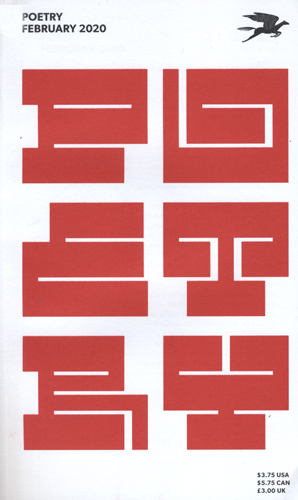
Poetry – February 2020

Poetry - February 2020

The Poetry February 2020 issue features work by Zach Linge, Jesus Govea, and Dasiy Fried. More work by Terese Svoboda, Alison C. Rollins, Mia You, Caoilinn Hughes, Virginia Keane, Francine J. Harris, Angela Jackson, Rodney Jones, David Felix, Dujie That, Talin Tahajian, Partridge Boswell, Lani O’Hanlon, Beth Bachmann, John Lee Clark, Maggie Smith, James McCorkle, Zeina Hashem Beck, Jessica Greenbaum, Mei-Mei Berssenbrugge, Mary B. Moore, Gabrielle Bates, Nome Emeka Patrick, Jack Underwood, and Liz Berry. Plus, an essay by Jeffrey Yang.

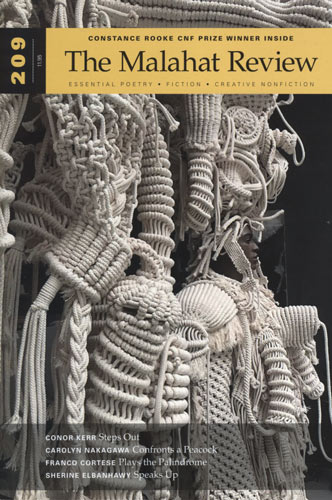
The Malahat Review – Winter 2019

The Malahat Review - Winter 2019

The Winter 2019 issue of The Malahat Review features 2019 Constance Rooke Creative Nonfiction Prize winner Jeanette Lynes. Also included: Carolyn Nakagawa, Julia Brush, Angélique Lalonde, Franco Cortese, Kurt Marti, Patricia Young, Sherine Elbanhawy, Suphil Lee Park, Emeka Patrick Nome, Hasan Alizadeh, Conor Kerr, Joel Robert Ferguson, Melanie Boyd, Bernadette White, Dominique Béchard, Jon Gingerich, Tatiana Oroño, Robert Hilles, Kulbir Saran, Sarah Yi-Mei Tsiang, Dawn Lo, and Sehrish Ranjha. Cover art by Sandra de Groot.

The Literary Review

The Literary Review - Fall 2019

The “Granary” issue of The Literary Review features poetry by Rosa Alcalá, Mario Ariza, Christian Barter, Samuel Cheney, James Ciano, Heather Derr-Smith, Dalton Day, Michael Farman, Stuart Friebert, Ute von Funcke, Elisa Gonzalez, Benjamin S. Grossberg, Jennifer Grotz, Maricela Guerrero, Hannah Jansen, and more; fiction by Jody Azzouni, James Braziel, Rosy Fitzgerald, Case Q. Kerns, Laura Shaine, Christine Sneed, Eva Taylor, and Jenny Wu; and prose by Kelly Luce, Karen Luper, Toni Maraini, and Josip Novakovich.

Program :: The MFA at Florida Atlantic University

The MFA in Creative Writing program at Florida Atlantic University offers concentrations in fiction, creative nonfiction, and poetry. Core faculty include Ayşe Papatya Bucak, Andrew Furman, Becka Mara McKay, Susan Mitchell, Kate Schmitt, and Jason Schwartz.

Students have the opportunity to work with online literary magazine Swamp Ape Review (which reopens to submissions on April 1). Learn more…

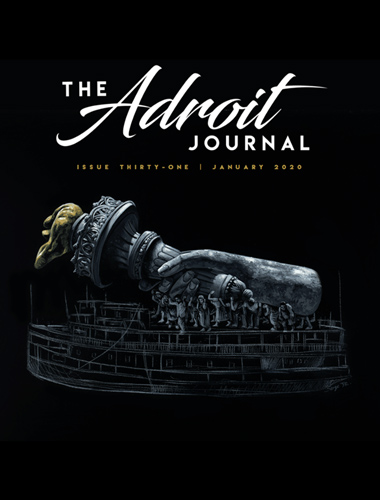
The Adroit Journal – January 2020

Adroit Journal - January 2020

The Adroit Journal Issue 31 is here with new poetry by Victoria Chang, Michael Bazzett, Bruce Snider, Mark Halliday, Paul Guest, Lena Khalaf Tuffaha, Faylita Hicks, Caroline Crew, Paige Quiñones, Abby E. Murray, Natalie Eilbert, and more; prose by Kate Folk, Pete Segall, Alexander Weinstein, Alex Perez, Wendy Oleson, and John Elizabeth Stinzi; and art by Heather Betts, Jenny Shi, Anna Frankl, Niya Gao, You Young Kim, and Serge Gay Jr. Plus five new interviews with Victoria Chang, Danez Smith, Paige Lewis, Corrie Williamson, and Carmen Maria Machado.

Science as Story

Creative Nonfiction Fall 2019 coverIn their recent newsletter, literary magazine Creative Nonfiction has announced a new series of events launching this spring called Science as Story. The best part of this series is that these events will be free thanks to the support from the Fisher Fund of the Pittsburgh Foundation.

From March to May, five scientists will visit Pittsburgh to give public lectures. If you aren’t a local to the area, these will also be available as webinars! Each of these scientist writers will also participate in intimate conversations along with Q&As to discuss the craft of writing.

Plus, they will also be running a six-week writing workshop for scientists who are itching to tell their stories.

Featured authors in this series are Azra Raza, Amanda Little, Dawn Raffel, Danielle Ofri, and Ruth Kassinger. Visit their website to learn more.

“Death of the Farm Family” by Sarah Smarsh

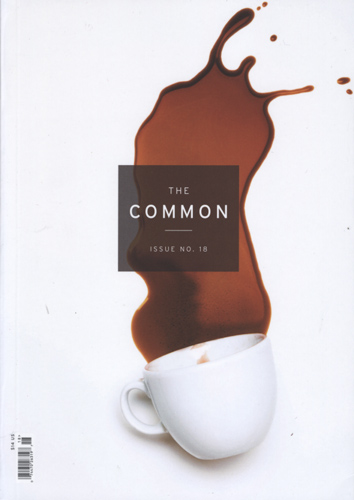
The Common - Fall 2019Magazine Review by Makenzie Vance

In the Issue 8 of The Common, Sarah Smarsh describes how her grandfather’s home became a central gathering place for friends and family and then how it was lost after his death. She begins two generations before her own and skillfully condenses her three-generational story into a compelling length.

Smarsh recounts how her drifter grandmother met her grandfather and finally settled down after a life of wandering with her teenage child—Smarsh’s mother. Though the farmhouse served as a communal space for family and friends and a home for eccentric farm traditions like sledding in a canoe behind a truck, the farm fell apart when her grandfather died, leaving a hole in their lives.

Smarsh speaks to all when she illustrates the importance of a central gathering place for a community, and she reaffirms the importance of small farms and the lives lived upon them.


About the reviewer: Makenzie Vance is a creative writing student at Utah State University.

‘Wilderness of Hope’ by Quinn Grover

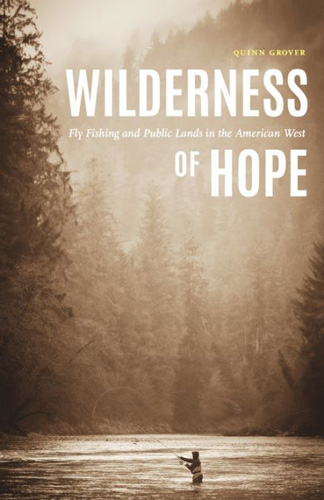
Wilderness of Hope - Quinn GroverGuest Post by Carly Schaelling

Quinn Grover takes readers into a landscape of rivers, wildness, and fly fishing in his essay collection Wilderness of Hope: Fly Fishing and Public Lands in the American West. His descriptions of Idaho, Utah, and Oregon rivers make the reader feel as if they can hear the current and smell the water. Central to this essay collection is a discussion about home, and he suggests that certain geographies can make us feel “young and old, safe and unsure . . . closer to those I love, yet perfectly alone.”

Through punchy short essays consisting solely of dialogue and moments of self-deprecating humor, Grover’s collection interrogates the meaning of wildness and the importance of public lands. One of my favorite moments in this collection is an essay called “The Case for Inefficiency.” Grover recounts a fishing trip that gets off to a rocky start—a forgotten sleeping bag, a popped tire. Instead of giving in to feeling inefficient, he asks whether it is possible to measure wasted time. If we walk somewhere instead of drive, but find ourselves outside breathing the air and being more patient because of it, is our time really wasted? To treat public lands well sometimes “requires us to blaspheme the gospel of efficiency.”

You don’t have to know anything about fishing to enjoy this book. You will escape to places you may have never been to and fall in love with them when giving this collection a read.


Wilderness of Hope by Quinn Grover. Bison Books, September 2019.

About the reviewer: Carly Schaelling is a creative writing student at Utah State University.

Southern Humanities Review – Winter 2019

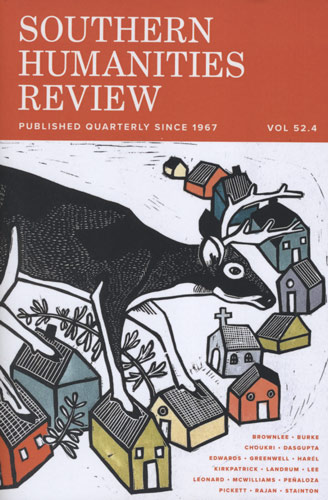
Southern Humanities Review - Winter 2019

The Winter 2019 issue of Southern Humanities Review is out. In the issue: nonfiction by Lia Greenwell and Leslie Stainton; fiction by Erin Blue Burke, Dounia Choukri, Sayantani Dasgupta, and Alex Pickett; and poetry by J. Scott Brownlee, Sarah Edwards, Jared Harél, Kathryn Kirkpatrick, Matthew Landrum, Donna J. Gelagotis Lee, Rodney Terich Leonard, A.T. McWilliams, Michelle Peñaloza, and Supritha Rajan. Plus, cover art by Martha Park.

The Iowa Review – Winter 2019

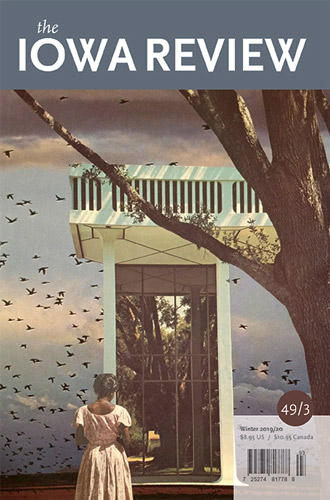
Iowa Review - Winter 2019/2020

The latest issue of The Iowa Review is out. In this issue: toes, 362.28 in the card catalog, a portfolio of fantastical and surreal writing and artwork, a tenure review gone awry, and the winners of the 2019 Iowa Review Awards. Contributors include Julie Gray, Derby Maxwell, Elizabeth Dodd, Andes Hruby, and Laura Crossett in nonfiction; Joyelle McSweeney, Brian Sneeden, Philip Metres, Maggie Millner, and Stephanie Ellis Schlaifer in poetry; and Chloe Wilson, Sherry Kramer, Terrence Holt, Analia Villagra, and Bruce Holbert in fiction.

The Gettysburg Review – Fall 2019

Gettysburg Review - Autumn 2019

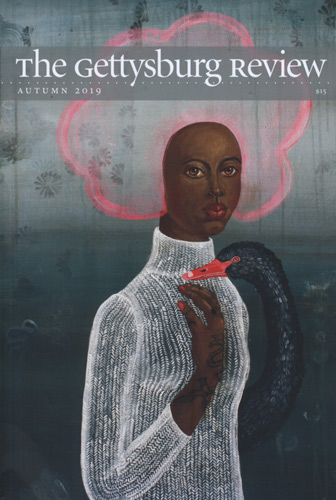
The Autumn 2019 issue of The Gettysburg Review features a selection of paintings by Anne Siems; fiction by Cody Harrison, Gary Amdahl, and Kathryn Harlan; essays by Valerie Sayers, Geoff Wyss, and Floyd Collins; poetry by Gregory Fraser, Robert Gibb, Adam Tavel, G. C. Waldrep, Connor Yeck, Kathryn Nuernberger, Alison Pelegrin, Todd Davis, Alice Friman, Nancy Carol Moody, Edward Mayes, Averill Curdy, Joyce Sutphen, Sarah Kain Gutowski, and Stanley Plumly.

“Owosso” by Mary Birnbaum

Crazyhorse - Fall 2019Magazine Review by Katy Haas

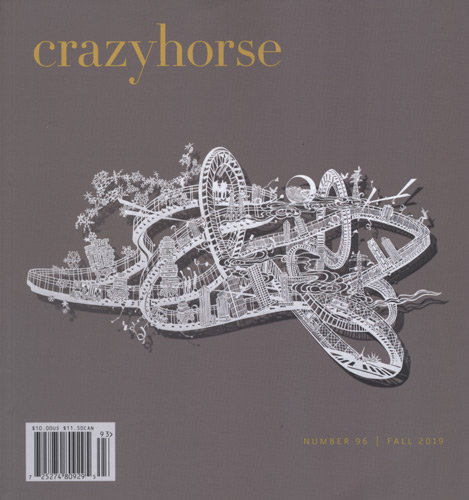
Mary Birnbaum’s nonfiction piece “Owosso” caught my eye in the latest issue of Crazyhorse, not only because it’s the winner of the Crazyhorse Nonfiction Prize, but because it’s a familiar name (though a surprise to see in a national literary journal); the tiny town in Michigan is a mere hour away from where I’ve lived my whole life. It’s also where Birnbaum’s grandfather lived, she learns as she reads his obituary at the gym. This discovery leads her on an exploration of the concept of ghosts and hauntings.

Across the country, Birnbaum writes of the ghostly characters of The Turn of the Screw by Henry James and personal ghost stories shared by two friends. This leads her to look at the ghosts of her own life. These are not supernatural beings haunting the darkness, but are her father and her grandfather, two strangers removed from her life.

Birnbaum’s thoughts about her father and grandfather are complex and complicated. She breaks her ideas apart into small chunks, making them easily digestible as she bounces back and forth between ghost stories, the “what-ifs” of finding and confronting her father, and her discovery at the gym. At one point she wonders, “if it’s worse to be a ghost or to be haunted. I wonder if both are possible in me,” leading me to consider the ways in which I myself am a ghost or am being haunted in my own life.

As the essay wraps up, Birnbaum decides to label Owosso a mythical location. But while the small city is something separated from herself, it did conjure up from the shadows a tiny, welcomed connection between writer and this reader.

“Transcendence: A Schematic” by Alyssa Quinn

Meridian - Summer 2019Magazine Review by Shaun Anderson

Alyssa Quinn’s “Transcendence: A Schematic”—Meridian Editors’ Prize 2019 winner—explores her efforts to process the loss of her brother. Weaving together a pilgrimage to Walden Pond, her memories of her brother, and her own beliefs and doubts, Quinn probes the hollowed out spaces, searching for a truth she can hold in the absence of her brother.

The exploration of emptiness leads Quinn to consider the places others turn to for truth. She explores science, religion, and maps, searching for a space where she can find her brother. Even in form, Quinn demonstrates absence as she creates a schematic, seeking answers from figures that do not exist. As Quinn tries to present an answer to her questions about death, transcendence, and reality she can only state with absolute uncertainty, “Perhaps the center is just as elusive as the beyond; matter as problematic as spirit.” In death, Quinn’s brother has shattered Quinn’s understanding of reality.

While the essay pulses with the agony of living in an emptied reality, Quinn recognizes that even her writing has been reformed by the loss of her brother. Quinn must confront the fact that “Syntax cannot convey true absence—say ‘I miss him’ and there he is again—there is no language for loss, for such awful missing.” Her work plunges into the loss of her brother, and emerges with the knowledge that Quinn must create a space to hold her brother within her own words.


About the reviewer: Shaun Anderson is a creative writing student at Utah State University.

“Dream Logic: The Art of Ten Contemporary Surrealists” by Kristine Somerville

Missouri Review - Fall 2019

Magazine Review by Katy Haas

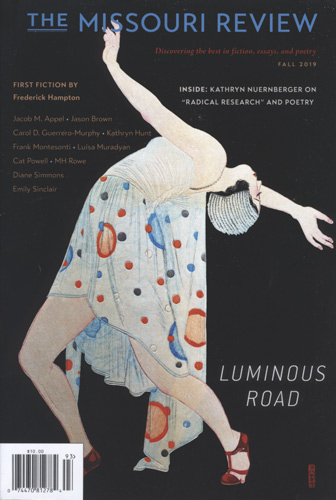
The Fall 2019 issue of the Missouri Review invites readers to wander away from the ordinary into a world that’s a little bit “off” in its feature. In “Dream Logic: The Art of Ten Contemporary Surrealists,”Kristine Somerville offers a brief history of the surrealist art movement.

While we learn the history, we also see full-color images of surreal artwork, including embroidered mixed media images by Robin McCarthy, clay sculptures by Ronit Baranga, collages by Rodriguez Calero, and more. Indeed, these all carry dreamlike qualities as they challenge our expectations. Each piece grabs the eye and forces it to take in new, creative perspectives. Baranga’s work features grotesque human features emerging from delicate teacups. Gensis Belanger’s work seems to showcase the ordinary until you blink and realize a stool is supported by four large cigarettes instead of regular legs, and the foot inside the sandal that rests on the stool is actually a hot dog. Whimsy and dream logic reign in this feature. The provided history grounds us, though, giving a clear lens through which we can examine the art.

Somerville closes with the reminder, “surrealism provides an outlet for creativity and spontaneity and an escape from the tyranny of the real.” Allow yourself to escape for a moment and wander into the dreams of the surreal artists found in the Fall 2019 issue.

“How does one not write a depressing book about depression?”

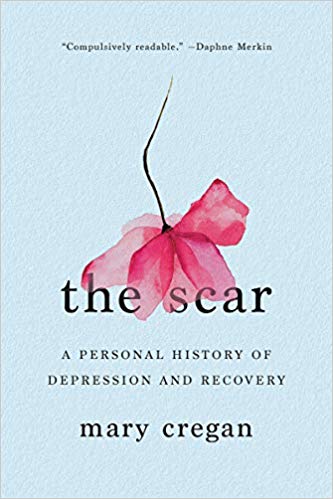
Book cover of The Scar by Mary CreganCaoilinn Hughes talks with Mary Cregan about her new book The Scar. …But this book is far more than a memoir: it is the result of decades of research on the medical history of the diagnosis, as well as the classification and treatment of depression and melancholia. To this rigorous and fascinating scholarship, Cregan has added the work of a variety of artists—from the ancient Greeks to Leonard Cohen. No surprise, then, that she teaches literature at Barnard College.

For a long time I couldn’t figure out how to write the book because the subject is seen by most people as “depressing.” How does one not write a depressing book about depression? Add to that the trigger of the death of an infant, and it seemed a daunting thing to invite readers to enter into. Death, grief, suicide, illness: these are subjects that a lot of people prefer to avoid thinking about.

NewPages January 2020 Digital eLitPak

NewPages has sent out our monthly digital eLitPak to current newsletter subscribers this afternoon. Not a subscriber yet? Sign up here: npofficespace.com/newpages-newsletter/.

Besides our monthly eLitPak featuring fliers from literary magazines, independent presses, and creative writing programs and events, we have a weekly newsletter filled with submission opportunities, literary magazines, new titles, reviews, and more.

Check out the current eLitPak below. You can view the original newsletter email here. Continue reading “NewPages January 2020 Digital eLitPak”

A Short History of Presidential Election Crises

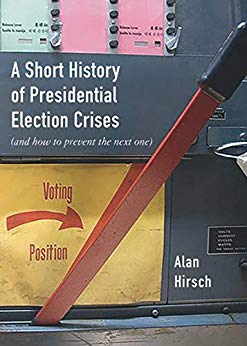
Short-History-Presidential-Election-CrisesIn A Short History of Presidential Election Crises (City Lights Publishing), Constitutional scholar Alan Hirsch addresses these issues with urgency and precision. He presents a concise history of presidential elections that resulted in crises and advocates clear, common-sense solutions, including abolishing the Electoral College and the creation of a permanent, non-partisan Presidential Election Review Board to prevent or remedy future crises.

2019 Curt Johnson Prose Award Winners

december‘s Fall/Winter 2019 issue features the winners and honorable mentions of the 2019 Curt Johnson Prose Award in Fiction and Nonfiction.

This year’s Award in Fiction was judged by Rita Mae Brown, and the Award in Nonfiction was judged by Amy Chua. Contest Editor Lauren Lederman introduces the winners, and readers can find a full list of finalists inside the issue.

2019 Curt Johnson Prose Award in Fiction
First Place
“The Land Behind the Fog” by Andrea Eberly
Honorable Mention
“The Augmentation Dilemma” by TN Eyer

2019 Curt Johnson Prose Award in Nonfiction
First Place
“Gumdrop Electric” by Sarah Treschl
Honorable Mention
“The One Who Didn’t Stay” by Samantha Rogers