Home » NewPages Blog » Page 251

NewPages Blog

At the NewPages Blog readers and writers can catch up with their favorite literary and alternative magazines, independent and university presses, creative writing programs, and writing and literary events. Find new books, new issue announcements, contest winners, and so much more!

Audio :: Ubu Web

Rare Audio from Anthology Film Archives (1964-1974)

UbuWeb has announced a new project in their ongoing partnership with Anthology Film Archives in New York City. This is the first in a series of over 1,000 tapes from the Anthology historic audio collection. These recordings feature many years worth of interviews, lectures, question & answer sessions and other amazing discoveries.

The first series includes: P. Adams Sitney Interviews Kenneth Anger on WNYC’s “Arts Forum” (1972); Charles Levine Interviews Robert Breer (July 1970); Jonas Mekas Interviews Emile De Antonio (11/06/1969); Jonas Mekas Interviews Emile De Antonio (11/06/1969); Poetry And The Film: Amos Vogel, Maya Deren, Parker Tyler, Willard Maas & Dylan Thomas Sessions 1 & 2 At Cinema 16 (10/28/ 1953); P. Adams Sitney Interviews Sidney Peterson On WNYC’s “Arts Forum” (1976); P. Adams Sitney Interviews Sidney Peterson On WNYC’s “Arts Forum” (1976); Annette Michelson Interviews Yvonne Rainer On WNYC’s “Arts Forum” (01/25/1974); Pauline Kael And Stan Brakhage (1964); Robert Haller Interviews Carolee Schneemann (11/30/1973); Hollis Frampton At Binghampton University, Part 1 & 2 (03/11/1972); Ken Jacobs, Larry Gottheim, Stan Brakhage: Binghampton Council Of Churches (11/23/1970) defending a Hermann Nitsch action; Harry Smith Interviewed by P. Adams Sitney (1965).

You can also read selections from FILM CULTURE Magazine (1955-1996) including many of the artists featured in the audio archive.

UbuWeb is a completely independent resource dedicated to all strains of the avant-garde, ethnopoetics, and outsider arts.

All materials on UbuWeb are being made available for noncommercial and educational use only. All rights belong to the author(s).

UbuWeb is completely free.

Bits from Iowa Review

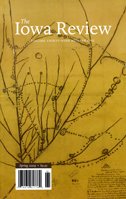
The Iowa Review offers a number of works from their most recent issue (v39n1) online, including a link to an audio excerpt of Tom Montgomery-Fate’s Saunter: A Conversation with Henry David Thoreau, and a work by Ron Tanner, “Cats as Tuna” which I will whet your appetite with here: “I filled a pot with housecats. The pot was my biggest. Still, there were a lot of cats. They didn’t seem to mind being in the pot. I knew they weren’t tuna. But I needed to make tuna salad. And all I had were cats. Cats always seem to be around and underfoot, winding through my legs. Cat hair floats through my house like dandelion down.”

Gigantic’s First Issue

The first issue of Gigantic is out, and it indeed holds up to its name (or rather, needs to be held up). This puppy is big, but in a fun-to-read-on-the-bus sort of way, and I imagine the superlarge, four-color image by Nat Russel of dancing cowboys is going to end up decorating a lot of walls.

Fiction by Kenny Aquiles, Dan Bevacqia, Ben Blum, Matt Di Paoli, Douglas Elsass, Howard Good, Yuka Igarashi, Derek Johnson, Shane Jones, Kristen O’Toole, Ed Park, Pedro Ponce, Lauren Spohrer, Justin Taylor, Adm Wilson and Anya Yurchyshyn; Dialogues with Malcolm Gladwell, Tao Lin, Garry Shteyngart, Deb Olin Unferth, and Joe Wenderoth; Artwork by Joanna Neborsky, Andrew Bulger, Mark Hewko, Jerome Jakubiec, Kevin Kwan, Thomas Pierce, Nat Russell, Erin Grey West, James J. Williams III, Todd Zuniga.

Hudson-Brown Fellowship at Washington College

The Hodson-Brown Fellowship supports work by academics, independent scholars and writers working on significant projects relating to the literature, history, culture,or art of the Americas before 1830. The fellowship is also open to filmmakers, novelists, creative and performing artists, and others working on projects that draw on this period of history.

The fellowship award supports two months of research and two months of writing. The stipend is $5,000 per month for a total of $20,000, plus housing and university privileges.

Deadline: July 15, 2009

New Lit on the Block :: Arroyo

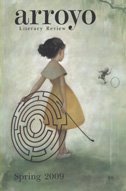
Spring 2009 brings readers the premier annual issue of Arroyo Literary Review (v1n1) from the Department of English at California State University, East Bay. Editors Eric Neuenfeldt, John Gannon (designer) and Scott Goodenow, and advisors Susan Gubernat and Aaron Jason have put together a beautiful-to-touch-and-see publication with even more to read than can be imagined within its eighty-some pages.

This first issue includes an interview with and fiction by Eric Miles Williamson, a Cal State alum, fiction by Patrick Ryan, Richard Peabody, Sara McAulay, and Stephen D. Gutierrez, peotyr by Dan Bellm, Mark Svenvold, Jeremy Halinen, Ilyse Kusnetz, Patty Seyburn, Marvin Bell, Jan Heller Levi, Lucille Lang Day, Trebor Healey, and Nellie Hill, and cover art by James Jean and a unique threadwork portfolio by Lisa Solomon.

Hemingway Reissue: A Moveable Feast

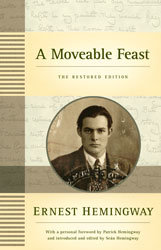
Reissued from Simon & Shuster: “When Ernest Hemingway died in 1961 he had nearly completed A Moveable Feast, which eventually was published posthumously in 1964 and edited by his widow Mary Hemingway. This new special edition of Hemingway’s classic memoir of his early years in Paris in the 1920’s presents the original manuscript as the author intended it to be published at the time of his death. This new publication also includes a number of unfinished Paris sketches on writing and experiences that Hemingway had with his son, Jack, his wife Hadley, F. Scott Fitzgerald, Ford Maddox Ford and others. A personal foreword by Patrick Hemingway, Ernest’s sole surviving son, precedes an introduction by the editor, Sean Hemingway, grandson of the author. It is a literary feast, brilliantly evoking the exuberant mood of Paris after World War I and the youthful spirit, unbridled creativity, and unquenchable enthusiasm that Hemingway himself epitomized.”

Literary Chopping Block: Is Your State Next?

As pointed out in this notice from Creative Nonfiction, this is not just a Pennsylvania issue – it’s one that, if your state hasn’t been hit with already, you should be proactive about confronting:

Times are tough, but when your State Senate passes a budget that includes ZERO FUNDING FOR THE ARTS, you know you’re in trouble. And that is exactly what’s happening here in Pennsylvania.

To put this in perspective, the funding CNF receives from the state is equivalent to the yearly amount we spend paying our writers… and paying writers is a good thing, no?

Thankfully, bureaucracy moves slowly, and there’s still time to take action. If you live in Pennsylvania, then the following information is for you. Even if you don’t, you may want to pay attention, this could be a sign of things to come across the nation.

From the Greater Pittsburgh Arts Council:

Yesterday afternoon the Pennsylvania Senate passed its version of the FY 2010 state budget (SB 850) with a 30-20 vote. The bill, introduced on May 4, eliminates all arts and culture grants in the state through the Pennsylvania Council on the Arts (PCA) and the Pennsylvania Historical and Museum Commission (PHMC). While this is an unfortunate occurrence, the budget process isn’t complete yet.

Appropriations Chair Dwight Evans introduced the House budget bill (HB 1416) which includes funding for both the PCA and the PHMC. The House will act on this piece of legislation later this month, so it is important for anyone who cares about arts and culture to continue to communicate with their legislators about this issue. The two bills will then go into what will likely be a contentious conference committee before its final passage in the General Assembly…

…Be sure to thank [your representives] when they vote favorably for issues that are of importance to you. At the same time, it is equally important to let them know when they vote in a manner that is not representative of your views… See how your State Senator voted on SB 850.

If you have yet to contact your legislators about ensuring that funding for arts and culture is included in the FY2010 Pennsylvania State budget, we urge you to do so today, before it is too late. To locate your legislators please visit the Citizens for the Arts in Pennsylvania website.

Please, if you’re a PA resident, take a moment to contact your legislators and urge them to support funding for arts and culture in the 2010 budget.

Grant :: Warhol Foundation

The Creative Capital / Warhol Foundation Arts Writers Grant Program supports individual writers whose work addresses contemporary visual art through grants in the following categories: articles; blogs; books; new and alternative media; and short-form writing. Grants range from $3,000 to $50,000 depending on the needs and scope of the project. Application Deadline: Monday, June 8, 2009

TriQuarterly’s Notes from Donna Seaman

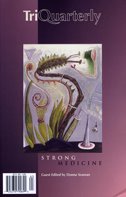
Booklist editor Donna Seaman was the guest editor for the most recent issue of TriQuarterly (133). In her introduction, she begins: “My respect for the mystery implicit in creativity runs high, so I decided not to interfere with the process in my role as guest editor for this brimming issue of TriQuarterly. I did not name a theme, or assign a topic. Instead, I sought out writers who see life whole, who are curious about the interconnectivity and complexity of existence, and who care, deeply and unabashedly, about the world. When asked what I was looking for, I simply said, ‘strong medicine.'”

“Good writing,” she goes on, “is a tonic. The work of inquisitive, imaginative, unfettered, and courageous observers, thinkers, and dreamers provide succor. Heat and light. Food for thought and balm for pain. Lucid and compassionate literature breaks the isolating fever of the self.”

Seaman has more to say on the parallels of this soul-felt medicine, introducing numerous contributors in the issue and their works, but it was her closing remark on the concept I was most comforted by, as so often, I don’t find what I read so much soothing as jarring, awakening me to feelings unlike any salve should. Seaman addresses this as well: “Strong medicine may make you sick before it makes you better. Here, writers and readers alike face harsh truths about humankind’s diabolical paradoxes and planet-altering endeavors. Strong medicine goads us into asking questions, articulating objections, and fueling the coalescence, let us hope, of new ways of seeing, and new ways of being.”

Will my insurance cover this prescription of TriQuarterly? Oh, heck – the cover price is less than my co-pay, and no nasty side effects!

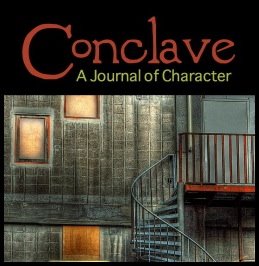
New Lit on the Block :: Conclave

Founding Editor Valya Dudycz Lupescu and a crew of over two dozen editors and readers have brought forth the premier issue of Conclave: A Journal of Character, an annual print journal of character-focused writing and photography.

The first print issue, including some online content, features:

POETRY by: Jeffrey C. Alfier, Denise Duhamel, Michael S. Glaser, Randall Horton, Lawrence Kessenich, Claire Keyes, Christina Lovin, Mark Neely, Christina Pacosz, K.H. Solomon, Savannah Thorne, Jeffrey Warzecha, Amy Watkins, Andrea L. Watson, Kathleen Dusenbery, Michelle Menting;

NONFICTION by: Jill Christman, Richard Goodman, Lisa Van Orman Hadley, Tom Maremaa, Kendra Ann Thomas;

FICTION by: Kevin Brown, Louisa Howerow, Stephen Johnston, Amanda Leduc, Sarah Maloney, Tara L. Masih, Ryan B. Richey. Lori Romero, Lisa Carl, Christine Beth Reish, Richard Rutherford, Jeremy Adam Smith;

DRAMATIC EXCERPTS by Kathy Coudle King, Anne Phelan, Steven Shutzman;

PHOTOGRAPHY by: Stacey Debono, Michael Epps, Vinayak Garg, Beth Hommel, G

Residency :: A Studio in the Woods

Changing Landscapes is a 6-week residency based on the premise that Southern Louisiana can be seen as a microcosm of the global environment, manifesting both the challenges and possibilities inherent in human interaction with the natural world.

Open to visual, musician/composing, performance, literary, new media, and interdisciplinary artists. Both established and emerging artists are encouraged to apply, but a rigorous work ethic and demonstrated commitment to environmental issues are expected.

Grant :: Washington State

Washington State Artist Trust Fellowship is accepting grant applications from practicing professional artists of exceptional talent and demonstrated ability working in crafts, literary arts, media arts, and music in Washington State. The total amount to be awarded is up to $7,500 in unrestricted funds, with $500 payable to artists upon completion of a Meet the Artist event. Deadline: June 12, 2009.

Lit Mag Survival

There’s always much being said on the issue of funding and support for literary magazine, whether they are associated with a university, non-profit arts organization, or completely “independent,” but now more than ever, there is a real concern about the survival of the literary magazine. Like the roots of an old oak, those concerns run deep, branching into areas far beyond simple finances.

A two-part manifesto Virginia Quarterly Review blog post brings a great deal of the matter into focus, with plenty of further reading reference:

The Future of University Presses and Journals (A Manifesto)
By Ted Genoways
May 9th, 2009

Whose Woods Are These? (A Manifesto, Part 2)
By Ted Genoways
May 14th, 2009

Via Carolyn Kellogg

Awards :: Tupelo Press Dorset Prize

Tupelo Press has announced the results of this year’s Dorset Prize. Judge Ilya Kaminsky has selected Joshua Corey of Evanston, IL for the manuscript Severance Songs.

Runner-up:
Geri Doran of Eugene, OR for the manuscript Sanderlings

Honorable Mentions to:
Shane McCrae, Iowa City, IA for Mule
Rusty Morrison, Richmond, CA for Landscape, Not Fable

A full list of other finalists and semi-finalists can be viewed on Tupelo’s website.

Residency & Fellowship :: Vermont Studio

Vermont Studio Center
Full Fellowships
Deadline: June 15

The Vermont Studio Center is an international residency program open to all artists and writers. Year-round, VSC hosts 50 artists and writers per month, each of whom receives an individual studio, private room, and all meals. Residencies last from 2-12 weeks and provide uninterrupted time to work, a community of creative peers, and a beautiful village setting in northern Vermont. In addition, VSC’s program includes a roster of Visiting Artists and Writers (2 painters, 2 sculptors and 2 writers per month) who offer slide talks/readings and individual studio visits/conferences.

Visual Verse

Free Verse: Poetry in the Wild

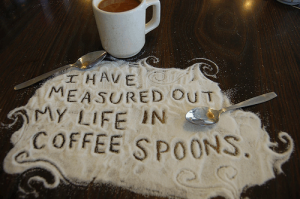
Inspired by the 2009 National Poetry Month poster design, the Academy of American Poets invites you to capture and share your own ephemeral bits of verse. Write lines from a favorite poem on a sandy beach, assemble twigs on a hillside, or chalk the sidewalk. Take a photo before it disappears and post it to the Free Verse group page on Flickr. Include the source of your lines in the photo caption.

All photos posted by April 15 were automatically entered in a contest to win the new Poem in Your Pocket Anthology and a commemorative piece of hand-engraved jewelry by San Francisco designer Jeanine Payer.

Selected entries to the Free Verse Photo Project will be featured in the ongoing gallery on Poets.org.

Worth a visit!

(Image submitted by Amy T. from San Luis Obispo, CA)

Some Agni Bits

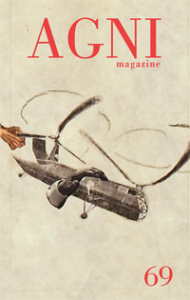
Agni has long been providing exclusive online content, unique and separate from the print publication, with the content of each carefully selected for the delivery mechanism. The newest print issue of Agni (69) indeed offers something not only unique to print, but wholly unique to Agni among literary magazines: an exceptionally well reproduced, two-sided, trifold foldout of the collage “Where Were You When the Moon Was Full” by Aldwyth. This is in addition to several other color and black and white images to accompany Rosamond Purcell’s art feature on Aldwyth, “In Her Hand: The Art World Goes to War.”

Also included in this issue, the Editor’s Note by Sven Birkerts, “What Remains,” honors the lives of David Foster Wallace and John Updike through a thoughtful remembrance of their writing. As only Birkerts can, these comments truly honor without gushing, and say a great deal more about the place of writers in our memories. Worth a read regardless of your fan status with either author.

Literary Canada’s Fight for Survival

Canadian lit mags are still putting a call out for support. According to Managing Editor Rosalynn Tyo of The New Quarterly, “the Department of Canadian Heritage plans to eliminate funding for magazines with less than 5000 in annual ciculation as of April 2010…All that would remain on the table, of what’s on my table anyway, is Geist and Canadian Living.”

Like so many other quality, small literary publications, TNQ and other Canadian magazines could probably get by for a short period of time without this support, but more to the point is demanding the arts continue to be recognized for their cultural value and importance and supported as such. Not, as Tyo points out, forcing profitability and commercial viability as the marker of survival. Some things we just know are good for us, even if they don’t make us rich.

Speaking from a state (Michigan) where we’ve seen massive funding cuts for arts and historical organizations, it’s a sad, sad existence. And once it’s taken away, don’t think you’re going to see it back any time soon. Fight while you still can, Canada, and for those of you with any say in this, visit TNQ‘s website for information on how to participate. Of course, purchasing subscriptions always helps.

New Press CFS :: Slash Pine Press

Fixed the Links!

From the editors of SPS: “Housed a the University of Alabama, Slash Pine Press is currently seeking poetry or mixed-genre chapbook manuscripts, with the aim of publishing two of them in the coming year. The press locates itself as an intellectual space where forms and intuitions make writing a process of risk and otherness—a space where the high stakes of creative inquiry make self-effacement impossible. Neither cynical nor rhetorically meek, the work is concerned with but not limited by the map; its logic is global, written against the grain of history and biography. And where there is a cut, a thick sap flows. For more information, please visit our website or join our Facebook group (type in Slash Pine Press).”

What’s New at Antioch Review?

According to Editor Robert Fogarty, the Antioch Review Spring 2009 issue introduces the new feature From Our Archives: “Beginning with this issue we will reprint a famous piece from our archives (essays, stories, poems).”

I’ve previously heard some controversy about publications doing this, as reprinting already published works takes up valuable real estate that hungry new writers are ever eager to fill. However, Antioch‘s approach to this, simply stated, is intriguing: “Read it and see how it stood the test of time. Is it gold or pyrite?”

Regardless of the hungry masses, this is a great question to ask and have the opportunity to explore. As often as I run across “old” lit mags and am thrilled to find some of the first works of now-famous authors, there are far more where-are-they-now authors. Granted, we can’t all be famous, or even a recognized name, but probably more the issue: is what was written for the time, or for all time? And does its having been the former rather than the latter render it “pyrite”? I’ll be interested to see what Antioch discovers with their new feature and some feedback from their readers.

New Lit on the Block :: MAYDAY Magazine

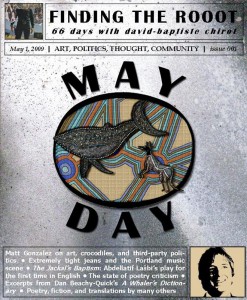
Editors David Bowen, Okla Elliott, Jared Schickling, and Art Consultant Dave Myers have unveiled MAYDAY Magazine, a biannual of nonfiction, microfiction, poetry, political/cultural commentary, translation, and visual art. An annual print edition will feature the best work published in the last two online issues as well as longer prose and other work more appropriate for a print medium.

The premier issue features work by writers and translators including David R. Slavitt, Abdellatif La

Kindled Too

Yes, we did it. NewPages bought a Kindle – or Kindle 2, as I am corrected by Kindle snobs. Yeah, “whatever” is what I would have thought, until Kindle 3 was just announced this week. With its nearly $500 price tag, it will certainly make us the Kindle users on the other side of the tracks.

Kindle this, Kindle that. I put off making the purchase of this yet-another-have-to-have piece of technology mainly because of the cost. I think it’s ridiculously overpriced. Holding one in my hands hasn’t changed my mind. It certainly is all it’s hyped up to be when it comes to a couple features. The first I noticed is ease on the eyes for reading. After several days of Kindle reading, I went back to a book (the word sounds so antiquated now…), and I could immediately feel a slight eye strain. Okay, so Kindle is good for aging/old people like me. And the other cool feature that holds true is being able to read the Kindle in bright sunlight. I hate to say it, but even better than a book in that I didn’t get the page glare.

Other than these two features, niceties include being able to get the New York Times (as we have always lived in a non-delivery area), Slate, and other mags delivered and portable for ease of reading access. I also appreciate being able to purchase a book and download it in seconds – literally. Again, living in an area with limited access to book sources (libraries and bookstores), when each time I go to the bookstore, I’m sure to hear, “We can order it for you,” it’s dandy to be able to find the book and begin reading it immediately. I also like being able to read a sample of the book before ordering it. A true “bookstore” style feature.

The documents download is also a great feature. I can send documents in myself, Amazon will convert them, then I can load them into the Kindle, all for free. I can also send documents and Amazon will convert them and wirelessly load them, but for that there is a fee, and a growing one. Still, worth it in a pinch. I’ve sent a couple PDFs through, and the formatting does come back a bit screwy, but it’s not terrible. Pictures are what mess it up, not so much just plain text.

My biggest Kindle mistake? Downloading a cookbook. Had it not been free through Amazon, I wouldn’t have loaded it, but for free, what the heck. The mistake? I’m not setting my Kindle on the cupboard next to a pan popping hot oil, not to mention the other open ingredients: flour, tomato sauce, wine (that’s for the cook, not the recipe). One look at my cookbooks will tell you favorite recipes by the spills and spatters on the pages. Adds character to the book. Would kill the Kindle. That said, reading in the bathtub is also out of the question.

Other irritations include thumb strain. No kidding. The ultraslim design is nice, but I find myself having to pinch it more closely than I would a book, so my thumbs hurt after reading on it for extended periods of time. It’s also odd in that I think I have pretty large hands, but the Kindle feels just a bit too wide for me to hold comfortably. So, I’m thinking it’s better designed for even larger “guy” hands. But, the keyboard is definitely more easily accessed by smaller thumbs. So, if we evolve to this technology, we’ll have larger hands and thinner thumbs. Kindle 3, however, with its newspaper reading screen – well, its beyond me how that could be comfortable.

Overall, the Kindle is cute but not a necessity. I can see how schools would be interested in using them for textbook delivery, though there need to be some modifications made in saving and organizing clippings/notes to make student use more effective. And, ultimately, I come back to the price. In keeping with the Matthew principle: those who already have will be able to afford it and continue to benefit. The have-nots will continue to be left in the dust. Not only at the cost of the device, but imagine no more cheaper, used textbooks. A level price field on books – which should all be cheaper with no paper, right? Certainly, no more borrowing textbooks from a roommate (since you can’t share Kindle files – and it’s unlikely roomies will loan you their $300+ reader with all their other books and notes on it).

A fun tech tool, but not worth the cover price. Had I not been able to consider it a tax write-off, I wouldn’t have considered it at all.

Awards :: Poetry Out Loud

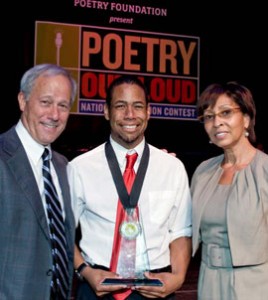
“Backed by a cheering section of his family and friends, 18-year-old William Farley of Arlington, Virginia captivated both judges and audience with his poetry recitations to gain the title of 2009 Poetry Out Loud National Champion. Farley was among 12 finalists and 53 state champions from around the country who participated in the fourth national poetry recitation contest, sponsored by the National Arts Endowment and the Poetry Foundation.”

Best of the Web 2009

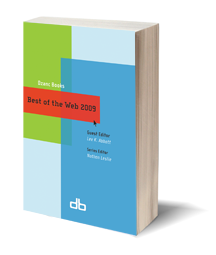
It’s heeee-eeere… Well, almost. ARCs are out in reviewer corners, and pre-orders are being taken at Dzanc Books as well as at your local booksellers: Dzanc Books Best of the Web 2009 with Guest Editor Lee K. Abbot and Series Editor Nathan Leslie. Including stories, flashes, poems and essays, this year’s list of authors and publications is HUGE, so visit Dzanc Books for a preview, and to order your copy.

Gutenberg Music

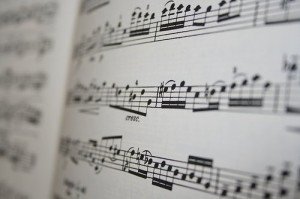
Many readers may have been aware of the thousands of free e-books available on Project Gutenberg, but did you know they also have music? The Gutenberg Sheet Music Project, thanks to the work of many volunteer hours, has digitized public domain sheet music, using a variety of techniques (MIDI, PDF, MOBI, plain text, etc.), to enable study and performance. For the most part, the musical pieces created have been chamber music, with composers such as Brahms and Beethoven. A great incentive to getting together your own community music group!

What I’m Reading and So What

Here’s the problem when you have a friend who writes a book and gives you a copy, then wants to know what you think about it. What if you think it’s absolute crap? Well, long-time friend of NewPages, Marc Fitten, would know that if I thought it was crap, I would tell him so, with lots of facial gestures and dramatic delivery of, “Oh my god, this is the worst thing I’ve ever read.” And that would only be the beginning.

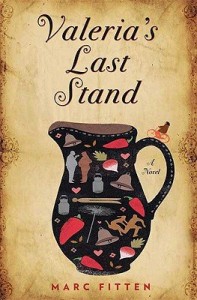
As it turns out, Marc’s first novel, Valeria’s Last Stand, out now from Bloomsbury, is not crap (how’s that for a book cover blurb?).

However, fearing it would be, I did put off reading it for a while, which is not what I would recommend to anyone else. In fact, once I started reading it, fearful with every turn of the page that it would disappoint in some way, I have to admit, I became completely absorbed in the story. I found the characters entering my daily thoughts and I was eager to get back to reading, to find out what was going to happen next.

Likened to a fable or fairy tale, I would take this novel and its characters to another level. This is mythology and archetypes vividly developed with contemporary twists. The main character, Valeria, is the town matriarch/baba yaga. She is a 68-year-old spinster living in a fictional, off-the-map small town (Zivatar) in post-Communist Hungary. Though ostracized in some ways of the baba-yaga, at the same time, she yields great power over the community, keeping the daily market standards high under her scornful eye, as in this exchange:

Valeria then sniffed the vegetable in question and shook her head.
“How old is this?”
The vendor was speechless.
“Why does it smell like urine?”
The vendor shrugged.
“Are you letting your cat pee on these? You should be imprisoned,” Valeria said, and tugged at her keys.

Her ever present maternal keys, the symbols of her meager power and control over every cupboard in her home, soon fall to the wayside along with her self-control, as she finds herself attracted to the equally aged town potter. Not to give away too much, Valeria and the potter have a lovely tryst, which is problematic for 58-year-old Ibolya, the Aphrodite bar owner who has her own flocculating relationship with the potter. Add to the mix a Loki chimney sweep whose entrance into the village creates greater havoc than luck, and a Zeus of a mayor who sees the town and the people as his playthings while (of course) screwing around on his trophy wife. It’s delicious. All absolutely delicious. And that’s just a loosely related character map. There’s so much more.

Most stunning to me in the book is the third person omniscient narration that fairly reveals the complexity of thought of each character, not necessarily in segments, but interwoven throughout the story. As carefully as we read and watch the potter build prototype after prototype of his creations for Valeria (first an ewer, then a pair of vases), so too does the story blend and mix the clay of the characters through each new development of their stories.

And, no, the potter has no name, nor does his male apprentice, nor the male chimney sweep, nor the male mayor character (well, other than Mayor, at times). Which is not to say this isn’t a man’s story just as much as it is a woman’s story. In that, Fitten has created a wonderful blend, and played both genders seamlessly. It reminds me of the line from the movie As Good As It Gets, when the woman asks Jack Nickolson’s character, “How do you write women so well?” Only, instead of his smarmy response, I can say that Fitten writes both men and women well, tapping into that which makes them tender as well as tough, each with their strength of independence, and each with their need for one another, right down to the most resistant of them.

Shifts and changes in relationships and aging are all a part of this narrative. Considered the first in a trilogy of books focused on strong female characters, our protagonist in this story is 68, but no where near retirement from that which brings her pleasure in life. In fact, Valeria is just beginning a very new kind of awakening for herself. At 58, Ibolya sees her days of sexual power coming to an end: “no matter how short her skirt was or how far over she leaned, the men she enticed were now all older than she was. Their handsome grandsons smiled and flirted, but she could see in their eyes that there was no real interest in there.” To solve her dilemma, and keep the men drinking and spending money, she hires young Zsofi, who is in love with the potter’s somewhat clueless and somewhat resistant apprentice. Theirs is the youngest relationship in the book, and equally as intertwined with the others.

In addition to creating the story of the daily lives of these characters as they move forward, Fitten has also done well to include numerous backstories in the narrative. That of Valeria’s having to grow up quickly and take care of herself, of the potter’s care for his dying wife, of Ilboyla’s being left alone to fend for herself and using her sexual power to do so, of the mayor’s long list of failed attempts to bring capitalism to the town that time forgot, and of the chimney sweep’s disgust for his own profession, as well as, of all things, an intriguing backstory of the bicycle he uses as his transportation. These backstories do not disrupt nor drag on the flow of the story as they are carefully crafted into the narrative and so concisely and specifically developed in the intricacy of their detail as to feel necessary and integral.

Thematically this is an ambitious novel: place, change, progress, power, love, lust, ambition, aging, relationships, and how much more? Yet, I never felt in reading it that there was any lack of control or chaos among these. Each seems to come forth through the myriad characters and storylines that create the narrative in whole. It was only in finishing the book did I feel a sudden, overwhelming swirl of all it had contained. Not a negative outcome for me as a reader, and actually, one which I prefer, since it keeps me thinking about the book long after I have finished reading it. As well as recommending it to others. Highly. And anxiously awaiting the next in the trilogy.

New Lit on the Block :: Poesy Planet

Producer Paul A. Toth, editor of Hit and Run Magazine and Sitting Pretty Magazine, is just getting started with Poesy Planet, a weekly mini-podcast that will feature one poet reading up to five poems, 15 minutes max. Currently featuring Gabriel Orgrease and Emilia A. Phillips, Poesy Planet is accepting submissions. See website for information on creating your own mp3. Poesy Planet can be found listed on NewPages Guide to Multimedia: Podcasts, Video, and Audio.

Awards :: Malahat Review

The Malahat Review has announced that this year’s recipient of the Jack Hodgins Founders’ Award for Fiction is Sarah L. Taggart of Vancouver, for her short story “Deaf,” which appeared in the Summer 2008 issue. Taggart’s award-winning story was chosen by Steven Heighton.

The Malahat Review also announced the winner of this year’s P. K. Page Founders’ Award for Poetry is Shane Rhodes of Ottawa for his poem, “For Donnie Peters (1964-1999),” which appeared in the Summer 2008 issue. Shane Rhodes’ award-winning poem was chosen by Harold Rhenisch.

Poetry and Healing

A Symposium on the Poetics of Healing
San Francisco State University
Saturday May 9, 2009

Supported by a two-year project grant from the Creative Work Fund, the Poetry Center will be hosting throughout 2009 a series of programs under the title The Poetics of Healing: creative investigations in art, medicine, and somatic practice. Curated by San Francisco poet and scholar Eleni Stecopoulos, the project will bring together innovative writers, artists, and medical practitioners doing parallel work within altogether different traditions and practices.

Guest participants will read, perform, and discuss their own work, talk with each other, and engage with audiences. Throughout the project, Eleni Stecopoulos will be writing an original book on the subject (incorporating material by other participants and as arising out of the public forum) to be published late 2010 by Factory School.

NewPages Updates :: Literary Magazines :: May 2009

The following have recently been added to NewPages Guide to Literary Magazines:

ouroboros review – poetry, art
Prune Juice – poetry
Wag’s Revue – fiction, nonfiction, poetry, media
Memewar – poetry, fiction, non-fiction, articles, essays, reviews, visual art, illustrations and comics
Quills Canadian Poetry Magazine
Second Run – poetry, fiction, plays, essays
The Sienese Shredder – poetry, critical writing, art
Dear Sir – poetry, prose, translation

Farewell to The Puritan

The Puritan Editors Spencer Gordon and Tyler Willis have sent notice that as of May 1, 2009, “The Puritan is officially out of commission.” Citing “including insurmountable financial debt, a dramatic change in location, and the current abysmal economy,” the magazine will be on “permanent hiatus.” As with so many mags, that pretty much means done unless a lot of money were to fall into their laps. Our thanks to The Puritan for their work in bringing new voices onto the lit scene for so many years.

Antioch and Cowboy Education

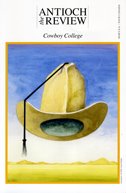
Intrigued as I am by magazine covers, the “Cowboy College” line on the cover of Antioch Review (Spring 2009) drew me in. Editor Robert Fogerty takes a moment to introduce Bruce Fleming’s lead essay on his ‘student-centered-learning’ experience at Deep Springs, “a unique educational endeavor located in the wilderness in California.” Fogerty writes, “There is more here than a look at a quirky college; it is, rather, an examination of educational vlaues and vexing questions about authority and a look at a slice of contemporary youth culture. And most important it is an essay that looks at a much more fundamental issue: what is the purpose of an education?” Explored, though I don’t dare say answered in Flemings essay, this is just the start of a very diverse, conversation-starter issue of Antioch.

The New Bomb

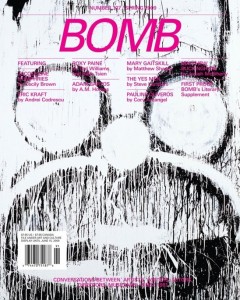
Started in 1981 in downtown New York, BOMB has continued through the years to provide a forum for conversations between artists, writers, directors, actors, and musicians. This spring, BOMB gets a bit of a makeover with new layouts, a new logo, and a new, even larger trim size. Still the same is the great content BOMB has long established, including its literary supplement insert, including works by Ana Menedez, Rusty Morrison, Sally Anne Clegg, J.R. Thelin, Charles Mary Kubricht, Ben Ehrenreich, Laura Mullen, and Michael Martone. And this is just the insert, so you can imagine what the rest of the magazine has to offer! Or, better yet, visith BOMB and find out for sure.
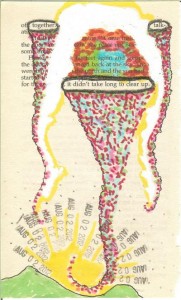
Altered Books

“The Idea: Cut the bindings off of books found at a used book store. Find poems in the pages by the process of obliteration. Put pages in the mail and send them all around the world. Lather, rinse, repeat.”

The Altered Books site is a chronicle of a very specific set of collaborations between the artists and titles. Participants include: John M. Bennett, David-Baptiste Chirot, Holly Crawford, Fran Hill, Jennifer Hill-Kaucher, Geof Huth, Adeena Karasick, Helen Kaucher, Donna Kuhn, Jim Leftwich, Mike Magazinnik, Tim Martin, Kristen McQuillin, Sheila E. Murphy, Ross Priddle, Meghan Scott, Michelle Taransky, Kevin Thurston, Nico Vassilakis, Dan Waber, Marlea J. Waber.

Portland Anarchist Book Fair

2009 Portland Anarchist Book Fair
June 6 & 7, 2009 (Sat & Sun)
Liberty Hall – 311 N Ivy | Portland, OR 97227
503-516-9220 | [email protected]

The Axiom Collective is hosting the first annual Portland Anarchist Book Fair. This two day event will feature over 20 collectives and organizations offering a a wide range of radical, feminist, and revolutionary literature, art, and ideas.

This event is FREE to attend. Childcare will be provided.

Info re: tables, workshop facilitators, housing, rides, etc. on MySpace link above.

New Lit on the Block :: Second Run

Editor Jim Coppoc debuted the new quarterly Second Run at AWP 2009. Second Run was started to address the “problem” of previously published works that have fallen out of public access or were never accessible online. Second Run accepts re-submissions of poems, plays, essays, and short stories along with a one-paragraph provenance to let readers know where the piece came from, where you were in life when you wrote it, where it was first published, etc. Authors retain all rights except the non-exclusive right for Second Run to publish submitted work in perpetuity.

For the first issue, Coppoc says he wanted something “special,” so “instead of posting mass solicitations in all the usual places, I spent a long time thinking about who has influenced me as a writer and as a literate human being. Then, I asked them for their work. Some of these writers are close friends, so I knew I’d get a response. Some I only know in passing, but I wanted to acknowledge the deep influence they’ve had on me by putting their work in this issue. I was pleasantly surprised to see that most of the people I asked for work actually sent it.”

Issue One includes prose by Michael Martone, Sheryl St. Germain, and John Domini, plays by Murray Wolfe and John Fenn, and poetry by Patricia Smith, Ted Kooser, Matt Mason, Heather Knowles, Jim Moore, Deborah Keenan, Ada Limon, and Bryonn Bain.

New Lit on the Block :: Dear Sir

Edited by Sandra Huber (a Canadian poet currently living, writing, teaching in Vienna, Austria), Dear Sir is a “nascent online journal created from the want to present innovative, unconventional or emerging voices in literature. It is based around the concept of quality over quantity, and will therefore only feature a clutch of writers in each issue whose work in some way, and somehow, surprises.

Dear Sir, follows an intentionally minimalist layout, where the frame of the page defers to the writing within (where site is retina then writing = iris and page the sclera).

“The idea for Dear Sir, came about while reading Ulysses: if magazines like The Little Review and the Egoist never took a chance on serializing Joyce’s work in 1918, we may never have had it in 1922.”

The premier issue includes works by Benediktas Januševičius, Garry Thomas Morse, James Wilkes, Nathan Horowitz, Stephen Collis, Gloria Personne, and Alfred Noyes.

Dear Sir accepts short or long poems, narratives, fragments, notations of sound poems, marginalia, experiments and manifestos, traditional forms revamped, dialogues, monologues and monosyllables. Dear Sir, leans towards the poetic, the speculative and the cross-genre.

A note on language: work in English, German and French is currently being considered.