Taken to Heart: 70 Poems from the Chinese Translated by Gary Young and Yanwen Xu White Pine Press, November 2022
The seventy poems that comprise this collection constitute an anthology, Elementary School Chinese Textbook (Jiangsu Edition), given to Chinese school children as a text to aid their instruction in Mandarin and to introduce them to China’s rich literary history. The poems are considered representative of China’s highest poetic achievements from the Han Dynasty to the Qing. The study of these poems is also meant to subtly guide students toward an appreciation of traditional Chinese virtues, culture, historical events, and social etiquette. The poems are memorized by every student, and by the end of their course of study, Chinese children will have absorbed a storehouse of Chinese characters and been steeped in a cultural tradition that spans more than two thousand years.
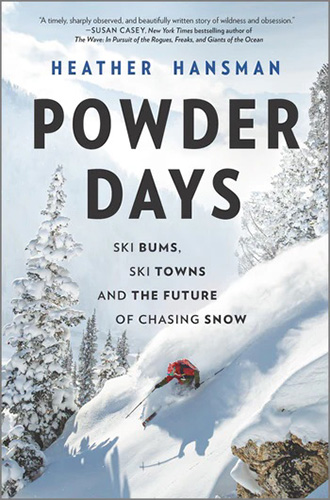
Through a mix of literary journalism and memoir in Powder Days: Ski Bums, Ski Towns and the Future of Chasing Snow, Heather Hansman asks the question: is the ski town dream dead, and did it ever exist in the first place? Hansman uses her own connections and experiences as a former ticket checker, ski patroller, and restaurant worker in a Colorado ski town to tell a story of the realities of working-class skiers who are still “living the dream.”
“We moved to the mountains and let the other facets of our lives fall into place from there.” In dispelling the common perceptions of the archetypical ski bum, Hansman paints a picture of communities in crisis due to stagnant wages and rising housing costs, mental health issues among ski industry workers, racial tensions, and the ever-looming threat of disappearing snow due to climate change. All framed by her nostalgic, months-long road trip to ski towns across the country. Anyone who has ever loaded everything they owned into their car and moved to a ski town – or even considered doing so after a weekend on the slopes – will find something to relate to in Powder Days.
Reviewer bio: Keegan Waller is a graduate student in Utah State’s creative writing program. His writing has been featured in Door is a Jar, Boston Literary Magazine, and elsewhere. You can find him on Twitter @keeg_wall.
Welcome to Dragon Talk: Inspiring Conversations About Dungeons & Dragons and the People Who Love to Play It By Shelly Mazzanoble and Greg Tito University of Iowa Press, December 2022
If you have any D&D fans on your holiday gift lists, then Welcome to Dragon Talk is exactly what you are looking for! Hosts of the official D&D podcast, Shelly Mazzanoble and Greg Tito and their surprising guests show how this beloved pastime has amassed a diverse, tight-knit following of players who defy stereotypes. The authors recount some of their most inspiring interviews and illuminate how their guests use the core tenets of the game in everyday life. An A-list actor defends D&D by baring his soul (and his muscles) on social media. A teacher in a disadvantaged district in Houston creates a D&D club that motivates students to want to read and think analytically. A writer and live-streamer demonstrates how D&D–inspired communication breaks barriers and empowers people of color. Readers will see why Dungeons & Dragons has remained such a pop culture phenomenon and how it has given this disparate and growing community the inspiration to flourish and spread some in-game magic into the real world.
All This Thinking: The Correspondence of Bernadetter Mayer and Clark Coolidge Edited by Stephanie Anderson and Kristen Tapson University of New Mexico Press, December 2022
All This Thinking explores the deep friendship and the critical and creative thinking between Bernadette Mayer and Clark Coolidge, focusing on an intense three-year period in their three decades of correspondence. These fiercely independent American avant-garde poets have influenced and shaped poets and poetic movements by looking for radical poetics in the everyday. This collection of letters provides insight into the poetic scenes that followed World War II while showcasing the artistic practices of Mayer and Coolidge themselves. A fascinating look at both the poets and the world surrounding them, All This Thinking will appeal to all readers interested in post-World War II poetry.
To find more great books from small, independent, and university presses, visit the NewPages Guide to Publishers as well as the New Books category on our blog. Click here to sign up for our weekly newsletter to stay up to date!
An Audible Blue: Selected Poems 1963-2016 Poetry by Klaus Merz, Trans. by Marc Vincenz White Pine Press, November 2022
Throughout his career, Swiss Poet Klaus Merz has been praised as an artisan of the understatement, and it is precisely in these smallest of details that the great unexpected has the potential to be illuminated. As Merz himself has said: “The poetry nudges toward a secret, hopefully without ostentation, rather through the power of its own alphabet.” This seminal volume brings together selections from Merz’s fifteen collections of poetry (1963-2016). Marc Vincenz is a poet, translator, fiction writer, editor, musician and artist. He has published over 30 books of poetry, fiction and translation. His newest books are There Might Be a Moon or a Dog (Gazebo, Australia, 2022) and The Pearl Diver of Irunmani (White Pine Press, forthcoming 2023).
Hajar Hussaini’s poems in Disbound scrutinize the social, political, and historical traces inherited from one’s language. The traces she finds—the flow of international commodities implied in a plosive consonant, an image of the world’s nations convening to reject the full stop—retrieve a personal history between countries (Afghanistan and the United States) and languages (Persian and English) that has been constantly disrupted and distorted by war, governments, and media. Hussaini sees the subjectivity emerging out of these traces as mirroring the governments to whom she has been subject, blurring the line between her identity and her legal identification. The poems of Disbound seek beauty and understanding in sadness and confusion, and find the chance for love in displacement, even as the space for reconciliation in politics and thought seems to get narrower.
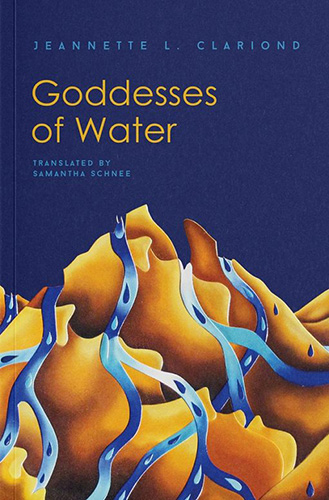
Goddess of Water by Jeannette L. Clariond Trans. Samantha Schnee World Poetry Books, September 2022
Mexican poet Jeannette L. Clariond’s Goddess of Water draws upon Mesoamerican cosmogony to lament the present-day epidemic of femicides in Mexico. The author’s sixth book in English translation reconstructs the myth of the moon goddess Coyolxauhqui, employing the lyricism of Nahuatl philosophy and investigating gender construction and fluidity in Aztec mythology. Printed in a bilingual edition, the cycle of poems is accompanied by a glossary of the Nahuatl words and Aztec concepts critical to its comprehension. In Samantha Schnee’s keen and urgent translation, this collection of poems presents a surprising window on an invisible war waged against thousands of Mexican women. Clariond astounds us with her ability to painstakingly analyze a phenomenon that has drawn attention around the globe. Translator Samantha Schnee is the founding editor of Words Without Borders. Her translation of Carmen Boullosa’s El libro de Eva, a finalist for the Mario Vargas Llosa Biennial Novel Prize, will be published by Deep Vellum in 2023.
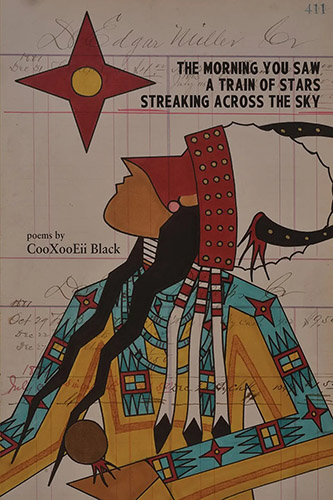
The Morning You Saw a Train of Stars Streaking Across the Sky by CooXooEii Black Rattle Poetry, November 2022
CooXooEii Black is an Afro-Indigenous writer and a member of the Northern Arapaho Tribe. He is an MFA creative writing candidate at the University of Memphis and a poetry reader for The Pinch Journal. His poetry has appeared in Eco Theo Review, Palette Poetry, and Carve Magazine. His creative nonfiction has appeared in The Tusculum Review. This collection of sixteen poems came bundled with the December issue of Rattle poetry magazine. Subscribers to Rattle are treated to bonus chapbooks and anthologies with each issue, but each issue and each bonus publication can also be purchased separately from the Rattle website.
NewPages receives many wonderful titles each month to share with our readers. You can read more about some of these titles by clicking on “New Books” under the NewPages Blog or Books tab on the menu. If you are a publisher or author looking to be listed here or featured on our blog and social media, please contact us!
Poetry
After Ward, Wendell Hawken, Cherry Grove Collections Alone in the House of My Heart, Kari Gunter-Seymour, Swallow Press Born Under the Influence, Andrena Zawinski, Word Poetry The Day Gives Us So Many Ways to Eat, Lindsay Wilson, WordTech Editions Disbound, Hajar Hussaini, University of Iowa Press Edgewood, Mark Belair, Turning Point Books Goddess of Water, Jeannette L. Clariond, World Poetry Books In the Plague Year, W.H. New, Rock’s Mills Press It’s About Time, J.R. Solonche, Deerbook Editions John Scotus Eriugena at Laon and Other Poems, Jacques Darras, World Poetry Books Leaving the Base Camp at Dawn, Daniel Thomas, Cherry Grove Collections Little Disruptions, Biljana D. Obradovic, WordTech Editions Little Wife: The Story of Gold, Nuova Wright, The Calliope Group Lords of Misrule, ed. Henry Israeli and Rebecca Lauren, Saturnalia Books
Dancing on the Sun Stone: Mexican Women and the Gendered Politics of Octavio Paz by Marjorie Becker University of New Mexico Press, December 2022
Dancing on the Sun Stone is a uniquely transdisciplinary work that fuses modern Latin American history and literature to explore women’s lives and gendered politics in Mexico. In this important work, scholar Marjorie Becker focuses on the complex Mexican women of rural Michoacán who performed an illicit revolutionary dance and places it in dialogue with Nobel Prize winner Octavio Paz’s signature poem, “Sun Stone”–allowing a new gendered history to emerge. Through this dialogue, the women reveal intimate and intellectual complexities of Mexican women’s gendered voices, their histories, and their intimate and public lives. The work further demonstrates the ways these women, in dialogue with Paz, transformed history itself. Becker’s multigenre work reconstructs Mexican history through the temporal experiences of crucial Michoacán females, experiences that culminate in their complex revolutionary dance, which itself emerges as a transformative revolutionary language.
To find more great books from small, independent, and university presses, visit the NewPages Guide to Publishers as well as the New Books category on our blog. Click here to sign up for our weekly newsletter to stay up to date!
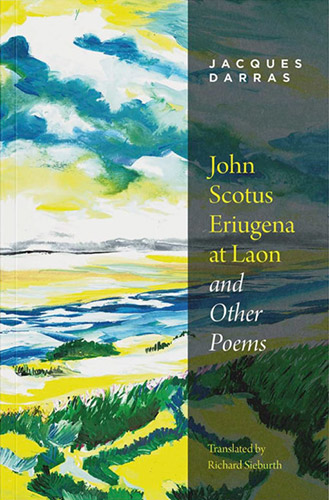
John Scotus Eriugena at Laon and Other Poems Poetry by Jacques Darras, Trans. Richard Sieburth World Poetry Books, September 2022
John Scotus Eriugena at Laon is the “long overdue volume” of Jacques Darras, celebrated French poet of place and nature, and prolific translator and scholar of American and British poetry. The title poem recounts the journey of a ninth-century Irish monk to the cathedral city of Laon in the heart of Picardy to translate a recently discovered Byzantine manuscript into Latin—the first such transmission of ancient Greek thought northward into Carolingian Europe. Eriugena’s pithy formulation of neo-Platonism—omnia quae sunt lumina sunt—echoes forth in Pound’s Pisan Cantos as “all things that are are lights.” This is the radiance that pulses through the theophanic nature poetry of Jacques Darras, celebrant of northern rivers, islands, seas, and bard of Picardy. His lifelong commerce with the English language as the translator of Shakespeare, Blake, Whitman, Pound, Bunting and MacDiarmid is here met by Richard Sieburth’s wide-ranging and award-winning forays into French. Richard Sieburth is the translator from the French of works by Nostradamus, Scève, Labé, Nerval, Baudelaire, Artaud, Leiris, and Michaux. His translations from the German include Hölderlin, Büchner, Benjamin, and Scholem. In addition, he is the editor of a number of Ezra Pound’s works.
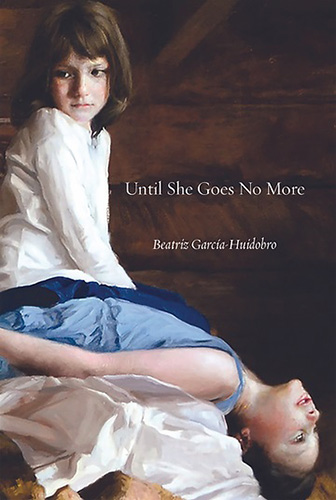
Until She Goes No More Fiction by Beatriz García-Huidobro, Trans. by Jacqueline Nanfito White Pine Press, November 2022
In Until She Goes No More, Beatriz García-Huidobro simultaneously maps the coordinates of the intimate story of a female teenager and the broader historical and socioeconomic reality of Chile in the early 70’s. The story is narrated in the form of a monologue, through the eyes of a young female protagonist who resides in desolate town in the mountainous region where the landscape is bleak and barren, and men futilely toil in unproductive fields. The aridness of the land mirrors the hopeless and hapless lives of the characters whose dreams are futile and futures are compromised. Like silhouettes in sepia, the protagonist and others are sketched as characters that live out a wearisome, tenuous existence, shrouded in ambiguity, in a circular time that is based upon the repetition of daily chores and the changing of the seasons, marked by the events in the life cycle.
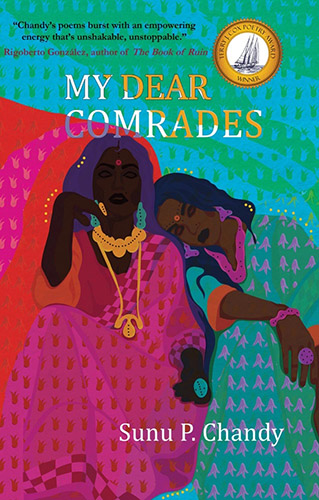
In this poetry collection, Sunu P. Chandy includes stories about her experiences as a woman, civil rights attorney, parent, partner, daughter of South Asian immigrants, and member of the LGBTQ community with themes ranging from immigration, social justice activism, friendship loss, fertility challenges, adoption, caregiving, and life during a pandemic. Amidst the competing notions of how we are expected to be in the world, especially when facing a range of barriers, Sunu’s poems provide company for many who may be experiencing isolation through any one of these experiences and remind us that we are not, in fact, going it alone. Whether the experience is being disregarded as a woman of color attorney, being rejected for being queer, losing a most treasured friendship, doubting one’s romantic partner or any other form of heartbreak, Sunu highlights the human requirement of continually starting anew. These poems remind us that we can, and we will, rebuild. They remind us that whether or not we know it, there are comrades who are on parallel roads too, and that as a collective, we are, undoubtedly, cheering each other on.
To find more great books from small, independent, and university presses, visit the NewPages Guide to Publishers as well as the New Books category on our blog. Click here to sign up for our weekly newsletter to stay up to date!
Urbanshee Poetry by Siaara Freeman Button Poetry, July 2022
Urbanshee is Siaara Freeman’s retelling of fairy tales and mythological stories through a modern and urban lens. This collection discusses the weight of being Black in America, Freeman’s relationships to lovers and family, and how the physical place you grew up can become part of your identity. Urbanshee expertly combines humor, fantasy, and raw emotion to create this astonishing reinvention of classic fables. Freeman’s poems are ventrously unique and are sure to enchant anyone who reads them. Siaara Freeman is from Cleveland Ohio, where she is the current Lake Erie Siren and a teaching artist for Center For Arts Inspired Learning and The Sisterhood Project in conjunction with the Anisfieldwolf Foundation.
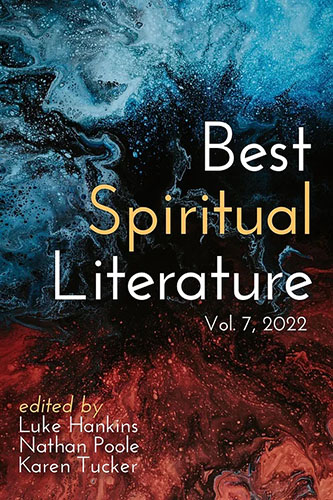
Best Spiritual Literature, Vol. 7 Edited by Luke Hankin, Nathan Poole, Karen Tucker Orison Books, December 2022
Best Spiritual Literature is the new name of The Orison Anthology, under the same editorship and publisher, and it continues the same mission to collect the finest spiritually engaged writing that appeared in periodicals in the preceding year. In addition to reprinted material, each year the anthology also includes new, previously unpublished works of fiction, nonfiction, and poetry by the winners of The Best Spiritual Literature Awards. The award judges for Vol. 7 were SJ Sindu (fiction), Molly McCully Brown (nonfiction), and Leila Chatti (poetry). Contributors to this volume include Ser Álida, Jai Hamid Bashir, Ellen Bass, Jack B. Bedell, Wendy Cheng, Broderick Eaton, B. Tyler Lee, Kenji C. Liu, Nancy Ludmerer, Joy Moore, David Naimon, Darius Simpson, and Gideon Young.
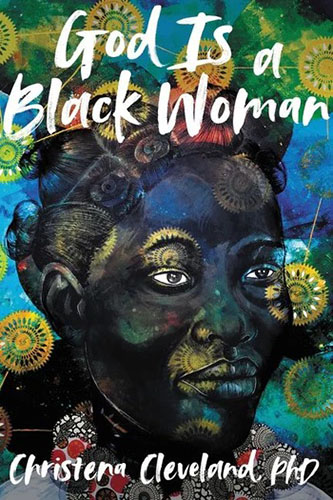
In God is a Black Woman, author and professor Christena Cleveland confronts the faults of the mainstream Christian deity, whom she refers to as “whitemalegod.” A perpetrator of endless wrongs in society, the whitemalegod that Cleveland interrogates is found at the heart of racism, misogyny, transphobia, homophobia, and toxic masculinity, among others. Cleveland makes her case for mainstream Christianity’s role in these issues succinctly and effectively, providing compelling evidence from recent events and her own upbringing in Christianity; stories drawn from her life prove as compelling and honest as they are tragic and too common.
All the while, Cleveland presents a narrative of her travels through France on a pilgrimage seeking out Black Madonnas—statues of the Virgin Mary throughout the world who are Black. In her efforts to connect with these works of art, she enumerates the multifaceted ways in which Black Madonna—the titular figure of the book—contrasts with and rejects the white supremacist ideals of whitemalegod. She applies Black Madonna ideology to modern issues and rhetoric. Most of all, Cleveland gives hope for people in need of a God who truly loves amid the post-Trump rise in Christian hatred and nationalism.
Reviewer bio: Jack Bylund teaches and studies English literature and fiction at Utah State University. He loves contemporary lit, Panda Express, and books about the end of the world.
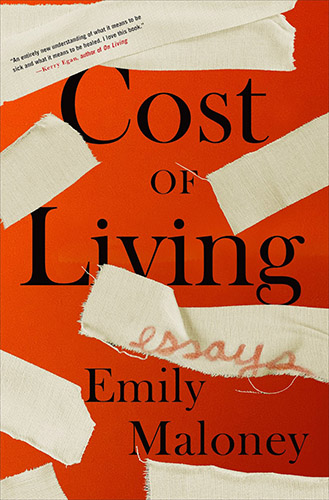
Emily Maloney’s memoir, Cost of Living, is an exploration of “an expense that’s hard to bear.” In the sixteen essays that make up the collection, Maloney introduces readers to a roster of memorable characters and generously shares stories that explain – but never excuse – the financial and metaphorical costs of the American healthcare system. Maloney employs a surgeon’s precision to cut into the business of health, revealing unethical prescribing, inequitable resources, medical sexism, inadequate mental health care, and other malignancies that hide beneath the surface. Her insights come from time spent as a patient as well as an employee: her background includes such varied work as an emergency room tech “expected to guard against the depletion of resources,” an EMT trainee who learned “it was never about the patients themselves,” and a “medical publications manager” who was tasked with schmoozing doctors at conferences. Though Maloney’s essays inspire a multitude of reactions from melancholy to righteous anger to utter disbelief, her writing is never preachy or overwrought. Her personal stories serve the greater narrative, reminding us that there are real people behind the bloated price tag of even simple curative procedures. With an artful, sardonic humor and a refreshingly straightforward perspective, Maloney stitches medical facts together with personal experience and observation to investigate the “enormous cost” of trying to stay healthy in America today.
Cost of Living by Emily Maloney. Henry Holt and Co., February 2022.
Reviewer bio: Jackie Martin is a writer and teacher from the Boston area. Her stage plays have been produced around the U.S. and published by Heuer, Applause, and others. She is currently pursuing her MA in English at Bridgewater State University.
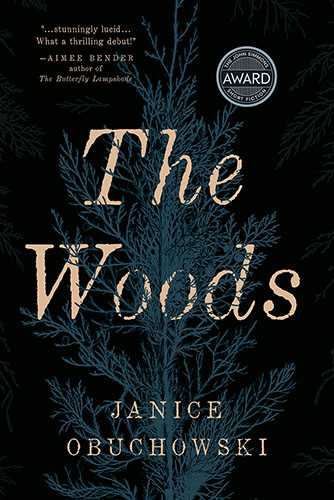
Winner of The John Simmons Short Fiction Award, The Woods explores the lives of people in a small Vermont college town and its surrounding areas—a place at the edge of the bucolic, where the land begins to shift into something untamed. In the tradition of Elizabeth Strout’s Olive Kitteridge and Sherwood Anderson’s Winesburg, Ohio, these stories follow people who carry private griefs but search for contentment. As they try to make sense of their worlds, grappling with problems—worried about their careers, their marriages, their children, their ambitions—they also sift through the happiness they have, and often find deep solace in the landscape.
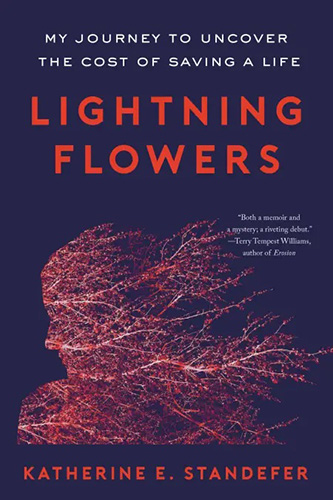
“On the last morning of my first life,” are the words that haunt the second chapter of Katherine E. Standefer’s debut memoir, Lightning Flowers: My Journey to Uncover the Cost of Saving a Life. In her early twenties, Standefer is confronted with the ghosts of her past — a genetic heart defect hidden within her bloodline for generations (called Long QT syndrome) — and must now learn to navigate young adulthood while simultaneously trying to reconnect with her body which, she states, has “become a stranger.” This book is as much about the grief of a life-changing diagnosis as it is a biting criticism of the broken medical system housed under capitalism, which holds “inordinate power” over a vulnerable population. Standefer, who begins her Long QT journey uninsured, finds that she’s unable to afford the life-saving care that she needs without significant help from her family, friends, and charitable doctors; she writes that she “was paying in other ways” as by having to rearrange her life around her symptoms and medical appointments. As an activist, Standefer feels hesitant about getting a doctor-recommended defibrillator, which could be made from conflict metals. She is then forced to question if her life is worth more than those who work to mine the metal. Standefer’s work portrays the intense and complex feelings of having a chronic illness, and the desperation of an American bound to a broken system. However, there is hope and love found within these pages, too. Through this journey, Standefer grows closer with her family and her own sense of self. It serves as a reminder that there is “hard work that lies before us,” and it is our responsibility to change a broken system.
Lightning Flowers by Katherine E. Standefer. Little, Brown Spark, November 2020.
Reviewer bio: Elizabeth Robin is a student at Bridgewater State University and a teacher. She live in the Boston area with her partner and their two cats.
Simultaneities and Lyric Chemisms Poetry by Ardengo Soffici, Trans. Olivia E. Sears World Poetry Books, September 2022
This publication is being heralded as “a vital reconstruction” of Italian Futurist poet Ardengo Soffici’s visual poetics, presented for the first time in English in Olivia E. Sears’s exacting translations with a foreword by Marjorie Perloff. With unexpected lyricism, buzzing between the entropic and the erotic, Soffici’s unrelenting poems manifest his milieu’s fascination with the metropolis. Guillaume Apollinaire called it “very important work, rich in fresh beauties.” This facsimile-style edition—with a foreword by Marjorie Perloff, helpful annotations, and an informative afterword by the translator—offers a glimpse into the vibrant early avant-garde, when modernity held tremendous promise. Ardengo Soffici (1879-1964) was an Italian painter, poet, and art critic associated with Florentine Futurism. Years spent in Parisian artistic circles spurred Soffici to champion an artistic renewal in Italy, introducing French impressionism and cubism and a vibrant magazine culture. Olivia E. Sears is a translator of Italian poetry and prose, specializing in avant-garde women writers. She founded the Center for the Art of Translation and the journal Two Lines, where she served as editor for twelve years.
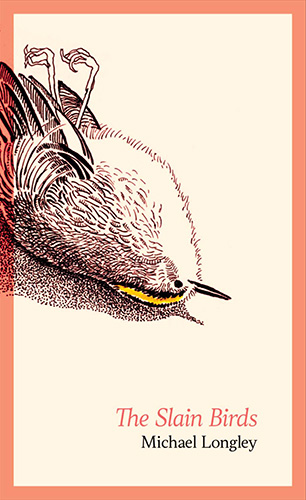
The late Seamus Heaney titled his first collection of poems Death of a Naturalist. Michael Longley, his friend and fellow poet from Northern Ireland, has devoted decades to just the opposite principle: celebrating the flora and (mostly avian) fauna of Carrigskeewaun, in County Mayo of the Republic. In The Slain Birds, Longley continues this project, his imagination sparked by bog asphodel and snowdrop, white helleborine and sneezewort, some of the flowers, like some of the townlands (Carricksnashinnagh, Barnabaun, Kinnakillew) sounding made up, invented—and yet, what names are not? Flowers, he declares, seem the “Secret of the cosmos,” some house martins “God-spark . . .dream birds.” But Longley’s practice is less an Adamic naming than an honoring, an affirming of love, family lore, and local custom even as he draws parallels from Homer, modern war, and recent pandemic. Whether his eye falls on lupine and catkin or follows the flight of plovers and godwits, whether his ear is attuned to the ”cheer-up-cheer-up” of nightingale or the “wind’s / Vocal cords,” Longley pays tribute. From the elegiac to the exuberant, the poems brought together here form a lyrical, joyous extension of a sparkling poetic career.
The Slain Birds by Michael Longley. Wake Forest University Press, 2022.
Reviewer bio: James Scruton is the author of two full collections and five chapbooks of poetry as well as dozens of reviews, essays, and articles on poetry, fiction, and non-fiction.
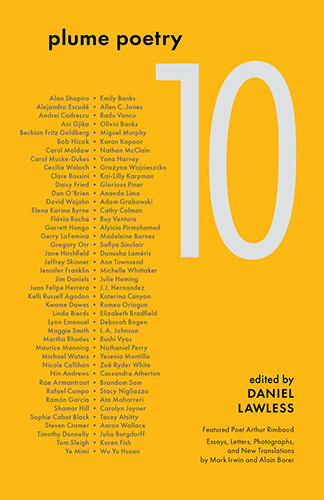
Plume Poetry 10 Edited by Daniel Lawless Canisy Press, 2022
For those who love poetry, teach poetry, and who write poetry, add this Plume Poetry 10 anthology to your list. In keeping with the approach used in their previous anthology, Plume invited “’well-known/established’ poets (for lack of better descriptor) to contribute a poem; then each of these poets introduces a poem from a ‘less well-known/established’ poet, whom they have selected and believe merit a brighter spotlight.” The result, says Lawless, “makes for a more diverse reading experience.” Plume Poetry 10 includes new poems from “established” poets ranging from Juan Felipe Herrera to Jane Hirshfield, Kwame Dawes to Rae Armantrout — and so many more, with a Featured Selection including new translations, essays on and photographs of Rimbaud, by Mark Irwin. Visit the Plume website Anthologies page for ordering information for this newest anthology as well as past anthologies.
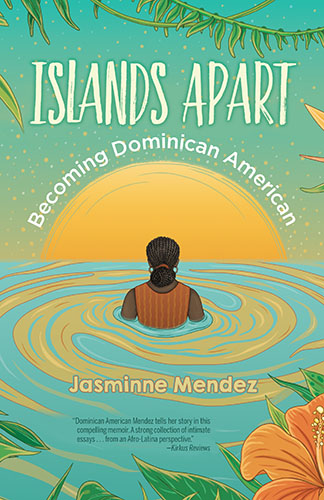
Islands Apart: Becoming Dominican American YA Memoir by Jasminne Mendez Piñata Books, September 2022
Jasminne Mendez didn’t speak English when she started kindergarten, and her young, white teacher thought the girl was deaf because in Louisiana, you were either black or white. She had no idea that a black girl could be a Spanish speaker. In this memoir for teens about growing up Afro Latina in the Deep South, Jasminne writes about feeling torn between her Dominican, Spanish-speaking culture at home and the American, English-speaking one around her. She desperately wanted to fit in, to be seen as American, and she realized early on that language mattered. Learning to read and write English well was the road to acceptance. Mendez shares typical childhood experiences such as having an imaginary friend, boys and puberty, but she also exposes the anti-black racism within her own family and the conflict created by her family’s conservative traditions.
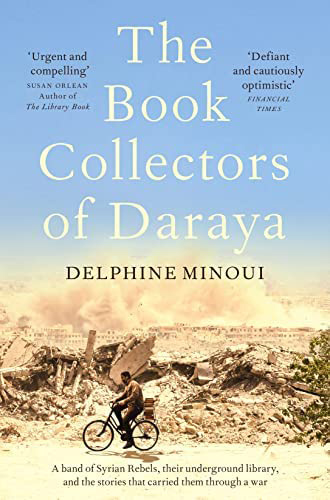
The Book Collectors of Daraya by Delphine Minoui offers a particular glimpse into the drama of the Syrian Civil War. The author, a correspondent for the French newspaper Le Figaro in Istanbul, happened to find on Facebook a picture of two men in a library in 2015. The caption of the picture informed her that the library was located in Daraya, a suburb of Syria’s capital Damascus besieged by Bashar al-Assad’s troops since 2012.
Throughout numerous interviews conducted over Skype, which stretched for almost a year, Minoui got to know first-hand about the bombing and lack of food and medicines the inhabitants of Daraya had to endure. At the same time, however, Minoui learned more about the project a group of revolutionaries had managed to build in the midst of general destruction: a secret library with books rescued from the bombed ruins of Daraya. Minoui describes the secret library as “a hopeful page in the dark novel that is Syria.”
When interviewed by the author, Ahmad Muaddamani, one of the co-founders of the library in 2013, explained that creating a site of culture and sharing information about it on Facebook was a way to send a powerful message to the world. As he explains, “What better way to defy Syria’s leader than to contradict his narrative of a terrorist opposition? Another of the organizers of the library, Shadi Matar, tells Minoui how the group organized English lessons in the library and describes these moments as “a feeling of normalcy.”
The Book Collectors of Daraya is the result of Minoui’s conviction that, despite her inability to travel to Syria and cover what was happening on the ground, the story of the Daraya library deserved to be told. And the French author does so in a most convincing way.
The Book Collectors of Daraya by Delphine Minoui. Picador, March 2020.
Reviewer bio: Marc Martorell Junyent graduated in International Relations and currently studies holds a joint Master in Comparative Middle East Politics and Society at the Eberhard Karls University of Tübingen and the American University in Cairo. His main interests are the politics and history of the Middle East (particularly Iran, Turkey and Yemen). He has studied and worked in Ankara, Istanbul and Tunis. He tweets at @MarcMartorell3.
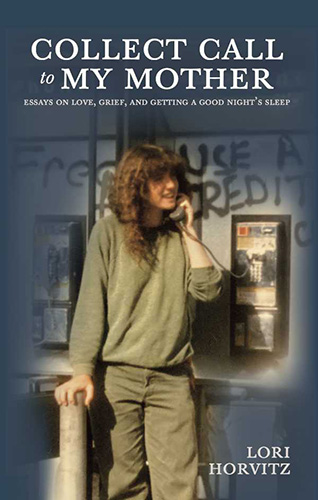
Collect Call to My Mother: Essays on Love, Grief, and Getting a Good Night’s Sleep Nonfiction by Lori Horvitz New Meridian Arts, February 2023
Collect Call to My Mother follows Lori Horvitz’ experiences as a queer Jewish New Yorker living in the South, looking for love in the internet age. When she teaches a class of queer college students who look to her as a role model, what they don’t know is that she spent her twenties and thirties in the closet, and leapt from one relationship disaster to the next. Each of her turbulent trysts helps unearth the roots of her poor judgment: a chaotic upbringing, compounded by her mother’s emotional distance and early death. In these essays exploring themes of love, family, and grief, Horvitz gradually embraces who she is and finds a healthy, long-term relationship. Horvitz’ first collection of memoir-essays, The Girls of Usually (Truman State UP), won the 2016 Gold Medal IPPY Book Award in Autobiography/Memoir. Her creative nonfiction has appeared in a variety of journals. Professor of English at UNC Asheville, Horvitz holds a Ph.D. in English from SUNY Albany, and an MFA in Creative Writing from Brooklyn College. The book is currently available for pre-order directly from the author who will sign advanced order copies.
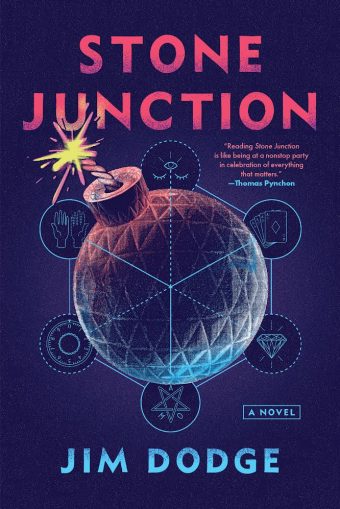
This year saw the re-release of Jim Dodge’s 1990 cult classic Stone Junction. While Fup remains the cornerstone of Dodge’s legacy, his first full novel is considerably more ambitious. Inexplicably, it is yet to be made into a film.
The story follows Daniel Pearse, a child taken in by AMO – Alliance of Magicians and Outlaws alongside his mother Annalee. Following her murder early on in the story, Stone Junction evolves into a bildungsroman, with Daniel being brought up by an eccentric cast of criminals and wizards. His unconventional education occurs alongside a search for his mother’s killer and an attempt to steal a supernatural diamond from the U.S. government.
Daniel and Annalee’s relationship is a driving force of the story, even after her death. Their situation is unusual, but their bond means they never feel unrelatable. Early on, Daniel offers his mother a piece of tear-soaked birthday cake he had just smashed; he was angry that she couldn’t tell him who his father was even if she wanted to. This moving scene of reconciliation takes place on a boat for magicians and outlaws, perfectly displaying the book’s capacity to juggle emotionally heavy themes and a more playful side.
With the recent success of literary adaptations (The Queen’s Gambit, Shadow and Bone, etc.), re-printing Stone Junction feels appropriate if a film is ever going to come. The novel appeals both to young and old readers; it is an emotionally intelligent coming-of-age story, but also engages with adult themes, ranging from grief to impotency. Dodge’s oeuvre has a minor place in 20th Century American Literature, and I hope this re-print of Stone Junction can help it receive the recognition it deserves.
Reviewer bio: Colm McKenna is a second-hand bookseller based in Paris. He has published and self-published an array of short stories and articles, hoping to eventually release a collection of stories. He is mainly interested in the works of John Cowper Powys, Claude Houghton and a range of Latin American writers.
Bipolar Bear and the Terrible, Horrible, No Good, Very Bad Health Insurance A Fable for Grownups by Kathleen Founds Graphic Mundi, November 2022
Theodore is a bear with wild mood swings. When he is up, he carves epic poetry into tree trunks. When he is down, he paints sad faces on rocks and turtle shells. In search of prescription medications that will bring stability to his life, Theodore finds a job with health insurance benefits. He gets the meds, but when he can’t pay the psychiatrist’s bill, he becomes lost in the Labyrinth of Health Insurance Claims. Featuring 195 color illustrations, this tale follows the comical exploits of Theodore, a loveable and relatable bear, as he copes with bipolar disorder, navigates the inequities of capitalist society, founds a commune, and becomes an activist, all the while accompanied by a memorable cast of characters—fat-cat insurance CEOs, a wrongfully convicted snake, raccoons with tommy guns, and an unemployed old dog who cannot learn new tricks. Entertaining, whimsical, and bitingly satirical, Bipolar Bear is a fable for grownups that manages the delicate balance of addressing society’s ills while simultaneously presenting a hopeful vision for the world.
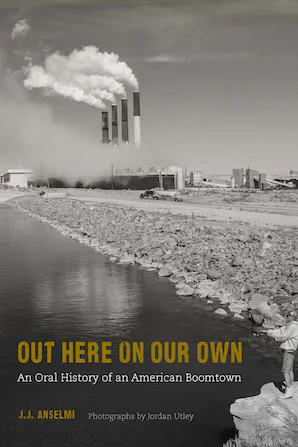
The spirited voices of Rock Springs, Wyoming come to life in J.J. Anselmi’s retelling of an American boomtown’s prosperous but turbulent history. Out Here on Our Own: An Oral History of an American Boomtown captures the history of Rock Springs by chronicling the town’s boom and bust cycles through personal narratives from locals alongside his own personal account of the coal-mining town.
Shining a light on the amoral history of Rock Springs, Anselmi reflects on the way of life of the residents impacted by the oil drilling industry that seized their community. The toils from the laborious coal-mining operation are gathered candidly from the voices of residents who shared witness to the troubles that plagued the area, such as widespread alcoholism and a disturbing increase of mental and physical health illnesses.
Out Here on Our Own offers a candid view of Rock Springs through honest words from people who call the boomtown home and are accompanied by Jordan Utley’s fascinating photographs. Words capture the stark truth and pain of living in Rocksprings during booms and recessions. The photos provide a glimpse of their reality, showing the bleak lifestyle of Rock Springs without denying the sheer beauty of the region’s landscape. Although Anselmi admits after moving away, “I may never be a resident of the town again . . . ” the fascinating stories from the residents of Rock Springs show that the value of the town is not from the coal-mining industry, but rather the reverence that persists in the people who choose to stay and tell their stories.
Reviewer bio: Raymond Jenkins is a student at Bridgewater State University, in the English MA program with a concentration in Creative Writing. Raymond is an emerging writer residing in the Boston area. He enjoys long hikes with friends, binge watching tv shows and drinking tea during sunset.
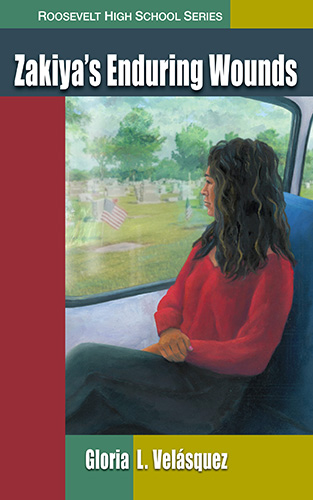
Zakiya’s Enduring Wounds Roosevelt High School Series Fiction by Gloria L. Velásquez Piñata Books, September 2022
Zakiya, a sophomore at Roosevelt High School, has settled into the new school year. She loves her friends, the volleyball team and her dance class. There’s even a cute guy she has her eye on. But her world falls apart when her dad dies unexpectedly. Zakiya had a special relationship with her father and is completely devastated by his death. After the funeral, her friends and family try to console her, but Zakiya pushes them away. She just wants to be alone. She quits the volleyball team, shuts down the boy she once dreamed of dating and even skips school. When she experiences a frightening episode of anxiety, she discovers that cutting herself helps to relieve the pain. Will she ever learn how to deal with her grief and sense of loss?
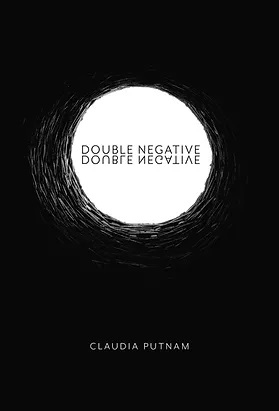
“The intimacy of housing another body and soul inside your own body and soul is indescribable,” writes Claudia Putnam in her debut nonfiction chapbook Double Negative, winner of the 2021 Nonfiction/Hybrid Chapbook Contest. In this short memoir, Putnam engages her reader with this connection of mother and child. It is an intimate portrait of a mother who welcomed her son, Jacob, into the world, only to see him pass so soon in his infancy. Putnam is cerebral but genuine, her prose approachable. She contemplates life and death, the soul, where and how it arrives and departs, the beforehere and the afterhere.
Putnam writes this some three decades after losing her son, Jacob, and what she would have done for him. “Hack and splice, sure. I would have let them cut out my heart if it would have cured my son. It would not have.” This willingness of Putnam to offer her own body in sacrifice for her son, her very heart, echoes the deep bond between mother and child, of souls interwoven even in death. Admitting that this sacrifice would not have saved him is harrowing. She leaves the reader to consider that even if Jacob was saved, his would have been a life of constant struggle and pain. Putnam wants us to consider what it must be like to live beyond the unimaginable.
Double Negative is a meditation on life and death, of parenthood, of the soul and spirit, of dreams and the often-harsh reality that comes with living. Putnam successfully invites us to reflect on the concept of how we live, oftentimes so close to death.
Double Negative by Claudia Putnam. Split Lip Press, March 2022.
Reviewer bio: Mark Guzman lives and teaches in Massachusetts. He is currently pursuing his Master of Arts in Teaching (MAT) degree in English at Bridgewater State University.
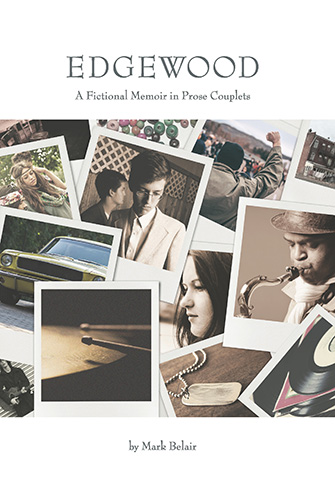
Edgewood: A Fictional Memoir in Prose Couplets Poetry by Mark Belair Turning Point Books, August 2022
Edgewood, a sequel to Stonehaven, the author’s previous book, finds that story’s young, small- town, 1950s family in the booming suburbs at the onset of a new era: the Late 1960s. An era-troubled over Civil Rights and the Vietnam War-whose underlying social conflicts remain troublingly current. Edgewood uses formal strategies to create a work of fiction with the intimacy and detail of a memoir set in language looser than poetry, tauter than prose. The narrative again borrows from music the three-movement form of the sonata (exposition of themes; development; recapitulation), while the text, as in film, renders the behavior of the characters without authorial comment, leaving all interpretation to the reader. The story in each book is self-contained, but the ready resonances between the books reward a combined reading. Sample poems can be read on the publisher’s website.
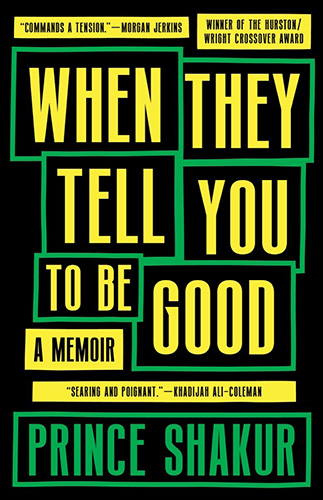
In his debut memoir, When They Tell You To Be Good, Prince Shakur traverses geography and time to answer a question that has “haunted” him since adolescence, “Who am I? Who am I? Who am I?” There’s Shakur, a Jamaican immigrant, searching for a better life only to have his father murdered. There’s the closeted Shakur who faces his truth as well as his family’s violent proclivities. There’s Shakur, who travels the globe because, “If America could not deliver me what I deserved as a young and curious Black person, I deserved to try to find it where I could and not be overpowered by the kind of son or citizen I needed to be.” There’s Shakur, the revolutionary, who combats racism, homophobia, and colonialism. There’s Shakur, the humanist, who learns that “one of the best ways we can love people is to not be afraid of them.” There’s Shakur, the provocative writer who becomes “grateful for my body, my heart, my mind, and all the people who loved me and asked questions.” This speaks to the power of “Who Am I,” which Shakur asked early on and ultimately transcends to a universal query in this artful debut.
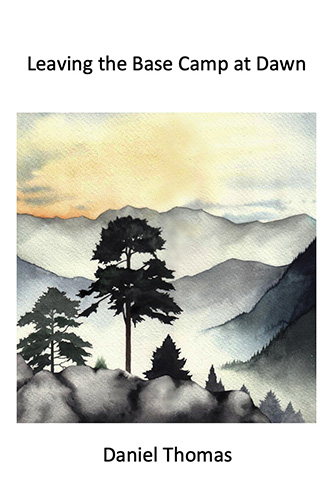
Drawing from Eastern and Western spiritual traditions, Leaving the Base Camp at Dawn explores how a long relationship of love is like a spiritual practice, a challenge to live in true care and compassion with those to whom we are closest. Interspersed throughout this lyric and narrative sequence are 14 poems that travel cliffs, streams and dirt paths and envision climbing a mountain whose peak cannot be reached. This contemplation of the challenge of love makes us think deeply about finding grace and charity in the ordinary moments of our daily life. Sample poems can be read on the publisher’s website.
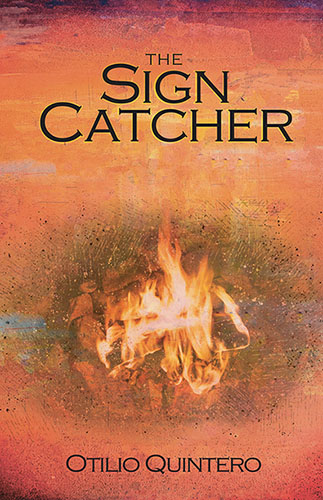
The Sign Catcher Biography by Otilio Quintero Arte Publico Press, March 2022
As a young boy, Otilio Quintero lived with his family in abject poverty in a labor camp in California’s San Joaquin Valley. Later, they moved to a housing project that exposed him to the madness of violence. Despite his difficult childhood, he managed to go to college. But more important to his development was a trip to Mexico in which he was taken in and taught by the Mayan Chol people. In his memoir, The Sign Catcher, Quintero writes he found his calling at an indigenous ceremony during The Longest Walk, a 3,000-mile march across the country—from Alcatraz Island in San Francisco to Washington, DC—in 1978 by Native Americans to protest federal attacks on their way of life. The marchers carried the sacred pipe to the nation’s capital and ultimately legislative bills detrimental to indigenous people were defeated. His life took a dramatic turn when he found himself in a maximum-security prison facing a possible 20-year sentence.
In his memoir Stay True, Hua Hsu explores identity through three different lenses: race/ethnicity, friendship, and music. Music is by far the dominant way Hsu defined himself when he was in college, the years he focuses on in this work. He uses his love of music partly to define himself as different than others—as a way to carve out an identity for himself—and to judge others—as a way to keep others at a distance. He becomes friends with Ken, a student unlike Hsu in almost every way, including musical tastes. Despite those differences, Ken becomes a friend who helps Hsu grow and change, slowly moving past his easy judgments about others. Ken and Hsu are both Asian Americans, but Ken is Japanese American. His family has been in the United States for generations, while Hsu is the son of Taiwanese immigrants, leading Hsu to feel less settled in his racial/ethnic identity. All of these strands help Hsu talk about who he was then and how that time has shaped him into who is, but the main concern of the memoir is a specific event in his relationship with Ken, one Hsu is still coming to terms with years afterward.
Stay True by Hua Hsu. Penguin Random House, September 2022.
Reviewer bio: Kevin Brown has published three books of poetry: Liturgical Calendar: Poems (Wipf and Stock); A Lexicon of Lost Words (winner of the Violet Reed Haas Prize for Poetry, Snake Nation Press); and Exit Lines (Plain View Press). He also has a memoir, Another Way: Finding Faith, Then Finding It Again, and a book of scholarship, They Love to Tell the Stories: Five Contemporary Novelists Take on the Gospels. Twitter @kevinbrownwrite or kevinbrownwrites.weebly.com/.
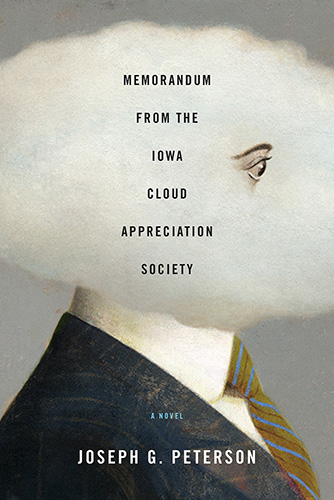
Memorandum from the Iowa Cloud Appreciation Society Fiction by Joseph G. Peterson University of Iowa Press, November 2022
When his girlfriend, Rosemary, asks about his life, Jim Moore, a successful salesman whose territory covers the entire continental United States and parts of Canada, doesn’t think there is anything to say and so he tells her “nothing happened,” or maybe he doesn’t know how to put it all into words or maybe he doesn’t want to. Stuck in an airport because of blizzard conditions, and packed into a crowded terminal with other travelers, Moore has come to believe that his life is not worth reporting about because it has largely been a life lived without incident. However, chance encounters with a yoga instructor, a man traveling to bury his mother, and an enigmatic woodsman reawaken long dormant emotions about his father’s suicide and cause Jim to newly reflect on his own life and on a memorandum that he later discovered in his deceased father’s papers, which lists all the names of the clouds, and which Jim now, from time to time, recants as if it were his own private kaddish to memorialize his lost father.
Strangled True Crime by LaDonna Humphrey with Alecia Lockhart Genius Book Publishing, October 2022
LaDonna Humphrey gains a new ally in her effort to find justice in the 1994 unsolved murder case of Melissa Ann Witt when Alecia Lockhart reveals a dark and troubling secret from her past. Together, Humphrey and Lockhart must delve inside a dangerous and twisted world known as the “dark web” to unlock a series of mysteries, including Alecia’s haunting connection to Melissa Witt’s murder. Strangled is the shocking and suspenseful account of the war Humphrey and Lockhart wage on a warped and depraved online community set on destruction, murder and mayhem. The stakes are high. Their safety is compromised. Evil lurks with every click. Just how far are they willing to go to find the answers they need?
Deadline: December 31, 2022 The Tartt First Fiction Award from Livingston Press at the University of West Alabama is given annually to a collection of short stories written in English by an American citizen. Writers cannot have already published or be under contract to publish a fiction collection. Winner will receive $1000, plus standard royalty contract, which includes 60 copies of the book. Visit the Livingston Press website or view flyer to learn more.
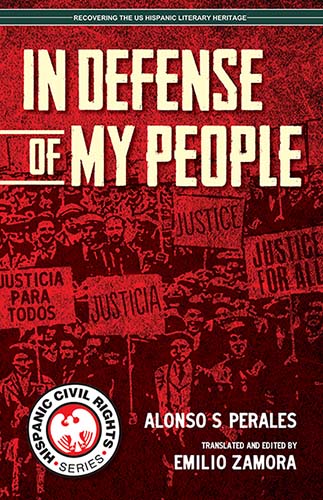
In Defense of My People Hispanic Civil Rights Series By Alonso S. Perales, Trans. by Emilio Zamora Arte Publico Press, November 2021
Originally published in Spanish in 1936 and 1937, In Defense of My People contains articles, letters and speeches written by Alonso S. Perales, one of the most influential civil rights activists of the early twentieth century. When Mexican-American veterans of World War II were denied service in a South Texas pool hall, even while wearing their uniforms, Perales wrote about the incident for The San Antonio Express. He also exhorted his community to secure an education and participate in civic duties. His form letter, “How to Request School Facilities for Our Children,” helped parents secure schools “equal to those furnished children of Anglo-American descent.”
Deadline: March 31, 2023 The 17th annual National Indie Excellence® Awards (NIEA) are open to all English language printed books available for sale, including small presses, mid-sized independent publishers, university presses, and self-published authors. NIEA is proud to be a champion of self-publishing and independent presses. Monetary awards, sponsorships, and entry rules are described in detail on our website.
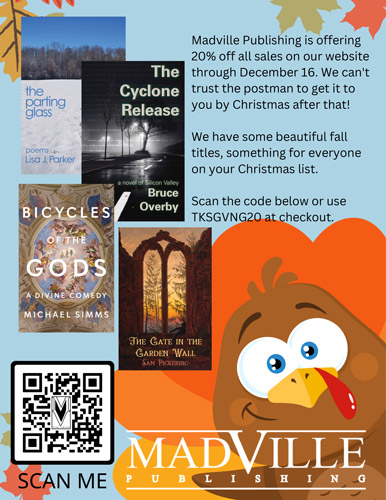
Madville Publishing is offering 20% off all sales on our website through December 16. We can’t trust the postman to get it to you by Christmas after that! We have some beautiful fall titles, something for everyone on your Christmas list. Scan the code or use TKSGVNG20 at checkout. View flyer or .
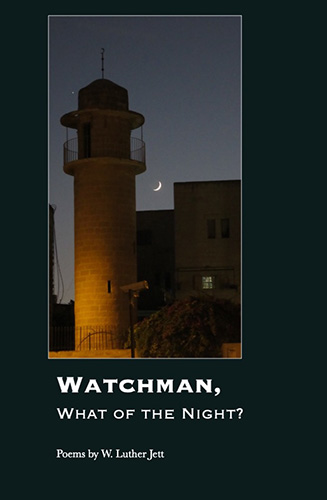
Watchman, What of the Night Poems by W. Luther Jett CW Books, June 2022
W. Luther Jett’s newest collection, Watchman, What of the Night? bears witness to a world in turmoil, as tyrants rise with the warming seas, while entire generations are displaced by war and catastrophe. The poet asks, what centre can hold in this whirlwind night? Here are poems which speak of past calamities in order to hold up a lamp to pierce the present murk and fog in search of clarity. This book is an alarm-bell, a cry in the night, and above all else, a call to action. Visit the CW Books website to read a sample from the collection.
Alone in the House of My Heart Poetry by Kari Gunter-Seymour Swallow Press, September 2022
Ohio Poet Laureate Kari Gunter-Seymour’s second full-length collection resounds with candid, lyrical poems about Appalachia’s social and geographical afflictions and affirmations. History, culture, and community shape the physical and personal landscapes of Gunter-Seymour’s native southeastern Ohio soil, scarred by Big Coal and fracking, while food insecurity and Big Pharma leave their marks on the region’s people. A musicality of language swaddles each poem in hope and a determination to endure. Alone in the House of My Heart offers what only art can: a series of thought-provoking images that evoke such a clear sense of place that it’s familiar to anyone, regardless of where they call home.
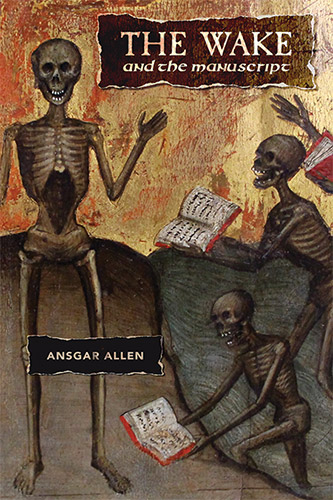
The Wake and the Manuscript Fiction by Ansgar Allen Anti-Oedipus Press, December 2022
In this brooding and obsessive novel, Ansgar Allen recounts the story of a nameless man who attends a funerary wake with no other distraction than papers that once belonged to the body on display. The deceased considered the papers to be his magnum opus, a text that unraveled everything he had been educated to accept, beginning with the spectre of religion—namely The Church of Christ, Scientist—and ending with the very fabric of educated, civilized thought. Allen’s protagonist thinks he’s above the conclusions drawn in the titular manuscript, but the blurred lines between what he reads and what he sees in himself incite an apocalypse of introspection. The result is a dark, labyrinthine attempt to diminish (and eventually annihilate) the memory of the man who came to rest on the table before him. Literary and existential, The Wake and the Manuscript explores the vagaries of death, identity, desire, and indoctrination as it (un)buries a history of delusion that speaks volumes about the human condition.
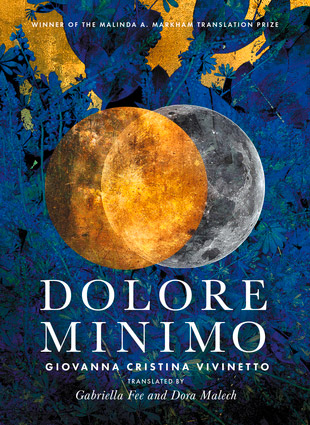
Dolore Minimo Poetry by Giovanna Cristina Vivinetto Translated by Gabriella Fee and Dora Malech Saturnalia Books, October 2022
In Dolore Minimo, Giovanna Cristina Vivinetto attends to her own becoming in language both tender and fierce, painful and luminous. This collection, Vivinetto’s first, charts the course of her gender transition in poems that enact a mutually constitutive relationship between self and place, interrogating the foundations of physical, cultural, and emotional landscapes assumed or averred immutable. Her imagination is rooted in the Sicilian landscape of her native Siracusa, even as that ground shifts under foot in response to the poet’s own emotional and physical transformations. Vivinetto engages with classical mythology, Italian feminist theory, and received constructs of family, religion, and gender to explore the terrors and pleasures of a childhood that culminates in a second birth, in which she must be both mother and child. Fee and Malech’s collaborative translations reflect the polyvocal and processual qualities of Vivinetto’s poetry, using language that foregrounds an active liminality and expresses the multiplicities of the self in dynamic conversation over the course of the collection. In Dolore Minimo, the lyric “I” is a chorus, but an intimate one.
In the Plague Year Poetry by W.H. New Rock’s Mills Press, September 2021
A book still timely in its content and as a testament to our shared experience, In the Plague Year is a book about living through the Covid-19 pandemic, when a coronavirus and its variants swept around the globe. In this suite of poems, William New reveals how, from March 2020 to March 2021, people coped with the threat. This is a book about love and death, laughter and loss, the price of isolation, and the cost of staying alive. This pandemic was no minor unease, and this book is no workaday diary: it’s a powerful record of people’s lives as a new pandemic vocabulary became the idiom of the day. In these poems, people prove to be both dismissive and empathetic; officials react both creatively and slowly; institutions adapt or fail; not everyone survives. New’s poems are fresh, witty, serious, and sensitive―a powerful personal documentary that testifies to the strength of community.
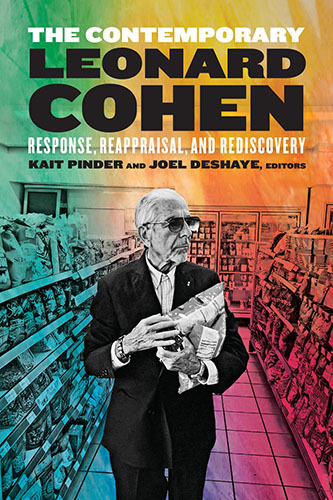
The Contemporary Leonard Cohen: Response, Reappraisal, and Rediscovery Edited by Kait Pinder and Joel Deshaye Wilfrid Laurier University Press, November 2022
The death of Leonard Cohen received media attention across the globe, and this international star remains dear to the hearts of many fans. This book examines the diversity of Cohen’s art in the wake of his death, positioning him as a contemporary, multi-media artist whose career was framed by the twentieth-century and neoliberal contexts of its production. The authors borrow the idea of “the contemporary” especially from philosophy and art history, applying it to Cohen for the first time—not only to the drawings that he included in some of his books but also to his songs, poems, and novels. This idea helps us to understand Cohen’s techniques after his postmodern experiments with poems and novels in the 1960s and 1970s. It also helps us to see how his most recent songs, poems, and drawings developed out of that earlier material, including earlier connections to other writers and musicians.
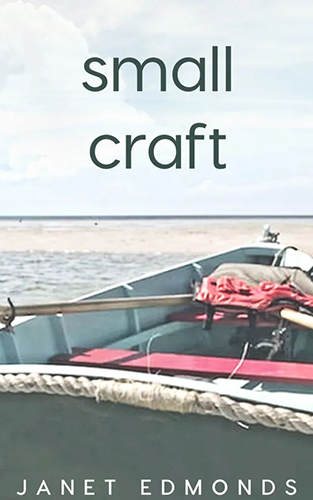
Janet Edmonds’s debut poetry collection from Sea Crow Press, Small Craft, seeks to answer two fundamental questions regarding the relationship between language and setting:
Is it possible to capture the essence of a certain place with words?
How is one able to properly articulate the aspects that define a space or a place, and implement language to reflect the attributes at the core of a location?
These poems immerse readers in the sights, sounds, and experiences that encapsulate a life in Cape Cod, Massachusetts. From the spring tides “disporting with each new and full moon, / tuned to waxing lunar cycles” to the sand where “each page of wind and ice grinds out / …eroded fossils, rocks, and minerals” to the rainbow’s “ascension of raindrops refracting reflections / of ages and places traversing the harbor,” no aspect of the natural landscape remains untouched or forgotten by Edmonds. Cycling through the seasons to present a rich image of a place during all walks of life, the reader goes on a journey from the “Dogwood, cherry, lilac blossom, petal” of the spring to the “Light streaks of long nights’ shooting stars” of the winter solstice. Time has no influence on this place, for no matter the time of year or how much time has passed since setting foot in this landscape, there is a certainty in the continuous beauty. “Across the dunes, the Province Lands: / Roiling crests crash the swash,” she writes, “and mulct the shore of every trace / Of time / And tracks / And tendered hand.” Edmonds’ poetry is a beautiful testament to the nature of Cape Cod, and the way she implements language to highlight the aspects which enhance the individuality and uniqueness of her chosen place makes her reader feel like they are coming home – or discovering home for the first time.
Small Craft by Janet Edmonds. Sea Crow Press, March 2022.
Reviewer bio: Catherine Hayes is a graduate student in English at Bridgewater State University in Massachusetts and resides in the Boston area. Her work has appeared in or is forthcoming in Blood & Thunder: Musings of the Art of Medicine, Atticus Review, NewPages, and an anthology with Wising up Press. She can be found on Twitter @Catheri91642131
Chelsea Manning’s astonishing new book README.txt: A Memoir reads like a spy novel of the highest order. Imagine John Le Carre or Graham Greene at their best, and you will get a sense of how good the memoir is.
As Ernest Hemingway writes, “A writer’s job is to tell the truth.” Manning seems to follow this credo throughout her gripping memoir. Rich in detail, Manning examines her life through multiple lenses: from the lens of a lost trans kid in Oklahoma, from the lens of a talented Army operative analyzing war, and from the lens of a person entirely disenchanted with the horrors she witnesses firsthand on the ground in Iraq.
As her story as an intelligence analyst unfolds, Manning decides to leak documents showing episodes in which the military kills innocent civilians in the Iraq war. Not only do the soldiers kill them; they celebrate it. This is the turning point, the denouement, of her life. It is her truthfulness and her inability to turn a blind eye to this inhumanity that leads to her undoing.
The documents she leaks expose the hideous underbelly of war and cast the U.S. government in a negative light. As a consequence, she endures the hell of a court martial and a lengthy imprisonment. She comes through it bruised but not broken. Though she says she is still unable to tell us many of the details of her experience, she tells us enough to paint a vivid picture of a whistleblower’s life, and the consequences of telling the truth. Her ultimate conclusion: “The U.S. intelligence community is in a very poor position to be trusted with protecting civil liberties while engaging in intelligence work.”
Manning’s book is a watershed and a gripping read.
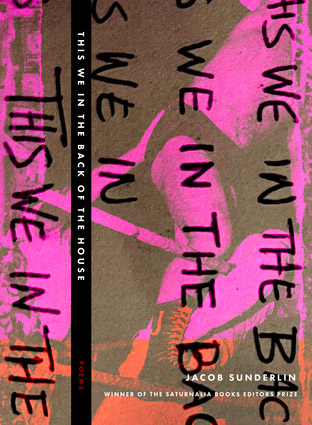
This We in the Back of the House Poetry by Jacob Sunderlin Saturnalia Books, October 2022
Winner of the Saturnalia Book Editors Prize, Jacob Sunderlin’s first book of poems is measured in long shifts, out of sight of customers, written out in bleach, cigarette butts, and cheers to that we who work in the back of the house. Poems written the way stock pots are scoured with steel wool, the way bricks are laid with violent precision and exhausted resignation. These poems were dreamed by a head stuck inside a cement mixer, drunk on the language of work and the spoken we language creates. This is not the romanticized imaginary “Midwest” exploited by cynical politicians but a lyrical and even occult working-class landscape. Its we is made gentle by listening, by being in garages with apple-juice jugs of antifreeze underneath a sky hazed by contrails in the shape of Randy Savage and bootlegged diamonds of anti-helicopter lights while Appetite for Destruction whispers from a pile of burning leaves. This we is made of brothers, of the teenage bricklayer scamming free nuggets from Mickey Dees. These poems are sharp but loving, spoken in the light of a Coleman lantern from a boombox spread out on a blanket down by a river Monsanto owns. This we rides in a 1957 Chevrolet Bel-Air left parked out in a shed, windows half-down.