
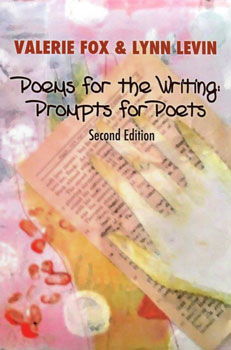
 In the second edition of Poems for the Writing: Prompts for Poets (Texture Press, 2019), authors Valerie Fox and Lynn Levin provide 18 entertaining and motivating prompts that range from the light-hearted to the serious and challenging. Drawing on both traditional forms and contemporary experiments, the authors encourage the use of found text, song titles, facts, and quotations. They propose scenarios and invite a poetic response. They even show how to “translate” the text of a poem written in a language you can’t read! Each prompt is followed by suggestions for getting started and sample poems written in response. What distinguishes Poems for the Writing from other poetry-prompt collections is that most of the sample poems are by undergraduates, community workshop participants, and some working poets. The responses are fresh, energetic, and unexpected.
This is an excellent book for poets and for teachers of poetry. The authors, both poets and teachers themselves, have selected prompts that work well in the classroom—for poets at any level and just about any age. They encourage emotional orientations, helping the students to plumb their personal experiences—and with just enough structure to help students struggling to organize and articulate emotional responses. But all of this comes with a touch of levity. Like Fox and Levin’s own approach to teaching, the book is friendly, open, and eclectic. The results are a testament to the extent to which prompts can trigger new and imaginative insights and jog one out of a routine approach to the blank page. Prompts are entry points—doors and doorknobs, as the authors put it—to new rooms, new emotional and intellectual spaces. The results are likely to be both surprising and satisfying.
Review by Antonia Clark
Antonia Clark has taught poetry and fiction writing and is co-administrator of an online poetry forum, The Waters. She is the author of a poetry chapbook, Smoke and Mirrors, and a full-length poetry collection, Chameleon Moon (2014, 2019), and the forthcoming Dance Craze. Her poems and short stories have appeared in numerous print and electronic journals, including The Cortland Review, Eclectica, The Pedestal Magazine, and Rattle, and she has reviewed poetry collections for The Rumpus, Literary Bohemian, Wild Goose Poetry Review, and IthacaLit. Toni lives in Vermont, loves French picnics, and plays French café music on a sparkly purple accordion.
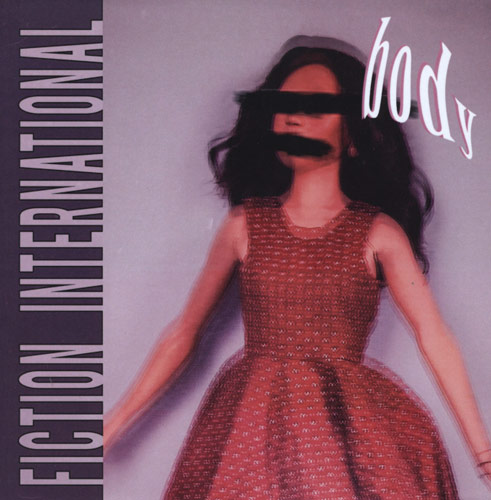 “B.K.” by Robert James Cross stands out in Issue 52 of Fiction International. Instead of straightforward text on the page, he utilizes other means: telegrams, “handwritten” and typed letters, an illustration, and official documentation.
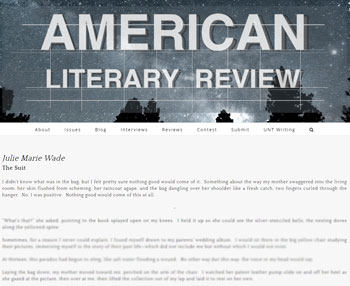 “The Suit,” published in the Spring 2019 issue of American Literary Review, is an essay by Julie Marie Wade in which Wade questions, but never resolves, what it means for her to be born in a female body.
 In the Fall 2019 issue of Southern Humanities Review, William Walker concocts a suspenseful, haunting tale with “Saturn Devouring His Son.”
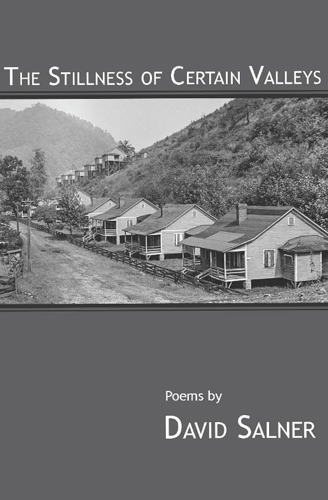 David Salner‘s The Stillness of Certain Valleys is impressively sustained. I could quote memorable lines from every poem. “Beer for Breakfast” is a pitch-perfect opening poem, and the subsequent sequence “A Dream of Quitting Time” is very strong. Then comes the agonizing “Goodbye to My Big Toe.” Salner writes with gritty authority about many kinds of work, including a stint as a cab driver in “Like Silver,” as well as in steel mills and coal mines. Now that world is in a state of collapse, hence “water drips from a tipple / to wild strawberries sprouting from rail beds” in the title poem. I admire the moving way he evokes the dignity of a working man in “Horse Trailer with Beans”: “nothing / but the dirt under his nails / and who he is.” This first section concludes with the understated “Steel Lunch Pail.”
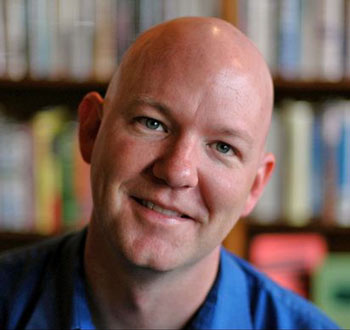 Readers can find the 2019 Auburn Witness Poetry Prize winner and finalists in the Fall 2019 issue of Southern Humanities Review. The contest honors the late Jake Adam York [pictured], and the winner of the contest receives $1000 in addition to publication. This year’s contest was judged by Vievee Francis.
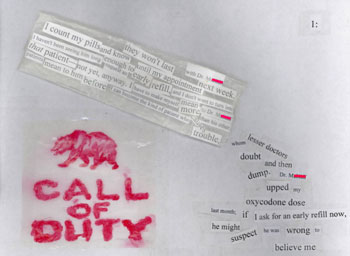 Issue 19.4 of DIAGRAM gives us “Call of Duty,” a riveting essay that explores the juxtaposition of needing and wanting. In this piece, Amy Long shares her experience with the unintended effects caused by opioid addicts for those who truly need the medicine and the lengths she went to in order to find relief from her own pain. Through beautiful and sharp phrases such as “I’ve betrayed the one person who really trusts me,” “I don’t want to turn into that patient,” and “I don’t lose everything. I don’t lose anything,” we get a sense of the narrator’s pain and the mask that she puts on and lives with in order to keep the trust of the people who matter most to her.
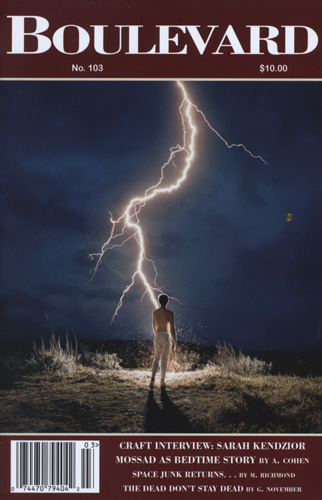 Greg November opens the Fall 2019 issue of Boulevard with “The Business of Killing Tony.” After initially skimming the first sentences as I paged through the issue, I found it nearly physically impossible to stop reading: “Tony’s death—the first one, I’m talking—last a week. We had nothing to do with that one, Gwen and I, at least not directly.”
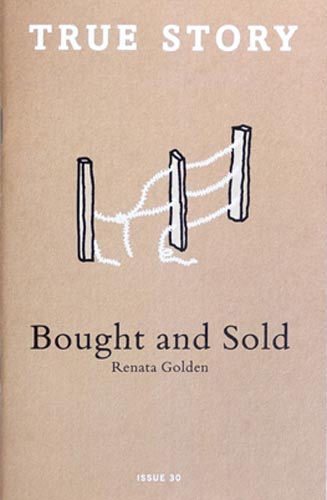 In “Bought and Sold,” Issue 30 of True Story, author Renata Golden locates herself in the complicated history of the American West after inheriting two half-acre ranchettes outside of Deming, New Mexico.
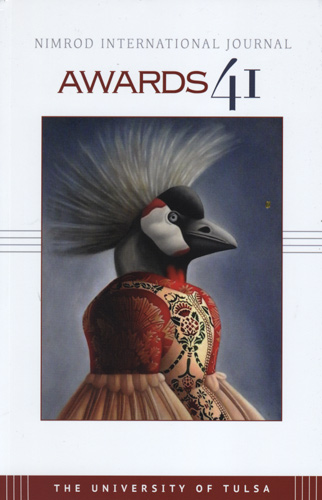 The current issue of Nimrod International Journal is entirely made up of the winners, finalists, semi-finalists, and honorable mentions of the Katherine Anne Porter Prize for Fiction and the Pablo Neruda Prize for Poetry.
 Last week Concordia College’s Ascent shared a couple pieces of exciting news.
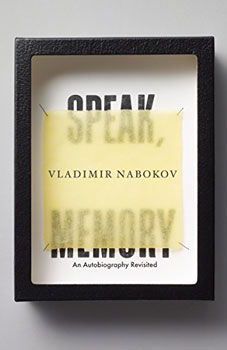 Although published in 1951, any person serious about literature would do well to read or reread Nabokov’s captivating autobiography, if not for the rapture of his complicated life, then for the beauty of his syntactical architecture. A master of form devoted to meaning, Nabokov relays the truths of a man twice removed from his home country of Russia, once by revolution and again with the rise of the iron curtain. He renders through complex but clear sentence structure the pains of diaspora and the call to home which he can never truly answer. Within this beautiful prose he also provides insight into his master works Lolita, Despair, and The Gift. He dangles before the reader a maze of sentences each providing a decadent feast for those who value—above all—the meaning-making capacity of provoking syntax.
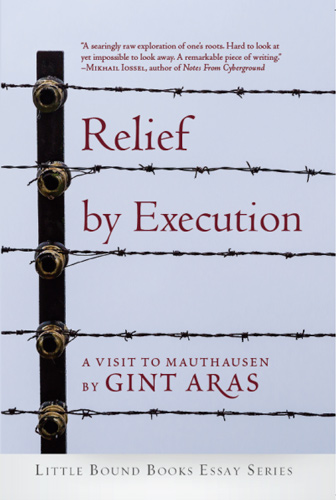 A haunting meditation on the legacy of racism, violence, and abuse, Relief by Execution: A Visit to Mauthausen by Gint Aras is a gut-kick of a memoir in which Aras contemplates the far-reaching tentacles of anger and hate from the normalized cruelty of a boy’s childhood to the genocide of World War II. After a prolonged bout of PTSD following a violent attack, Aras visits the Mauthausen concentration camp in Lithuania and reflects on its horrors, acknowledging that as a descendant of Lithuanians, there exists within himself “the energy of the victim and the perpetrator.”
 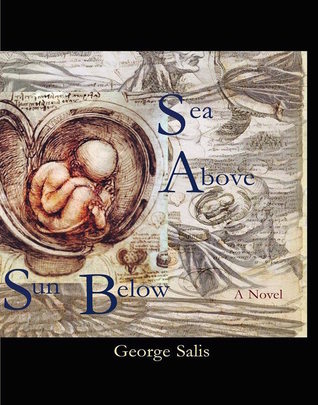 Sea Above, Sun Below by George Salis is a rich and masterful novel. It is a balanced reading experience, told from differing perspectives, chockablock with symbolism and allusion and wordplay.
 In the Fall 2019 issue of Raleigh Review, readers can find the winners and finalists of the 2019 Laux/Millar Poetry Prize, selected by Dorianne Laux & Joseph Millar. Readers can easily find these pieces in the current issue as they’re outlined in gradient blue (winner) and pink (finalists).
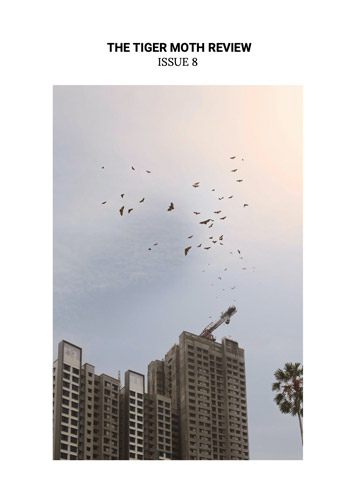 The Tiger Moth Review publishes art and literature that “engages with nature, culture, the environment, and ecology” from Singapore and beyond.
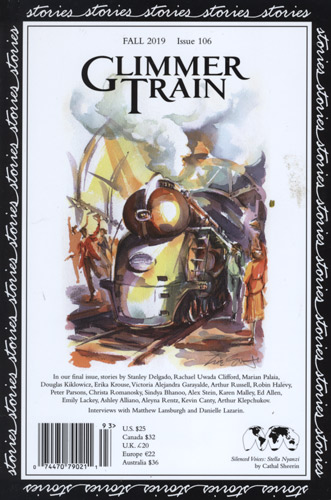 It’s never easy to say good-bye, but readers should still take the time to say their farewells to the fiction monolith Glimmer Train. The Fall 2019 issue is here, marking
 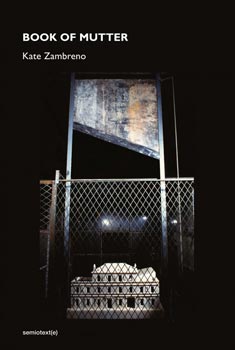 Exploring the complexities and absurdities of grief, Book of Mutter is a lyrical text that will leave readers returning to its textured fragments of memory and meditation again and again. And each time, those moments will reassemble into something new and incisive.
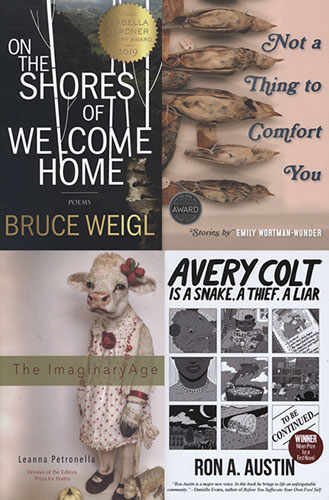 Today we’re bringing you a tall stack of award-winning fiction and poetry books published this past month. Click Read More to find the full list.
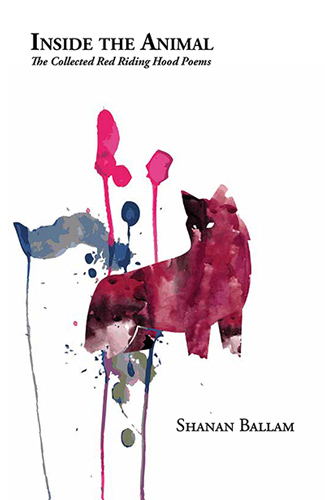 Shanan Ballam’s newest book, Inside the Animal: The Collected Red Riding Hood Papers, published by Main Street Rag Publishing Company in 2019, pushes the persona poem to its most shimmering and starved limit. Blending her voice with the perspectives of a depraved wolf, a blossoming girl, and a wilting grandmother, Ballam continually smashes wide the familiar fairy tale and trades reader comfort for animalistic truth. What empathy can be had for the predator? Is there a love story folded into the sheets of Grandmother’s bed? Would Red Riding Hood slip into the wolf again? Continuing the work begun in her 2010 chapbook The Red Riding Hood Papers and furthered in her 2013 book Pretty Marrow, Ballam writes deeply into new velveteen layers of the aged cautionary tale.
 The Fall 2019 issue of Carve Magazine features the winners of the 2019 Raymond Carver Contest, guest-judged by Claire Fuller. These can be found online, as well as in the print issue. An interview with each writer can be found after their stories in the print edition.
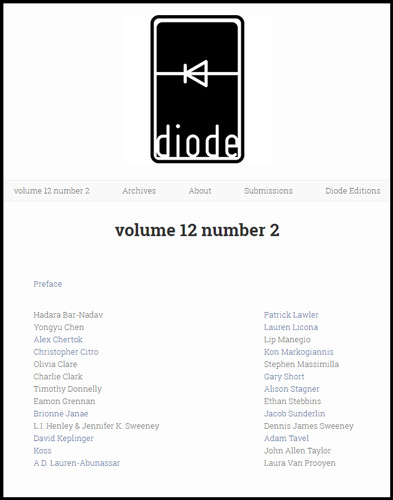 Volume 12 Number 2 of Diode Poetry Journal shows the variety of sources poets draw inspiration from, whether it’s musical artists, medical documentation, or other poets.
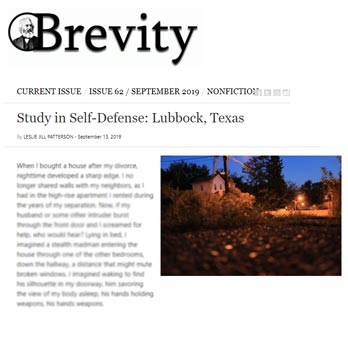 From the introduction to the final sentence, Leslie Jill Patterson’s flash essay,“Study in Self-Defense: Lubbock, Texas,” published in the September 2019 issue of Brevity (Issue 62), kept me on the edge of my seat. A perfect read for this October, Patterson tells the story of the tense moments that follow her dog’s ferocious reaction to something, or someone, outside her house at one in the morning—an event that gives her “a lesson in self-defense.”
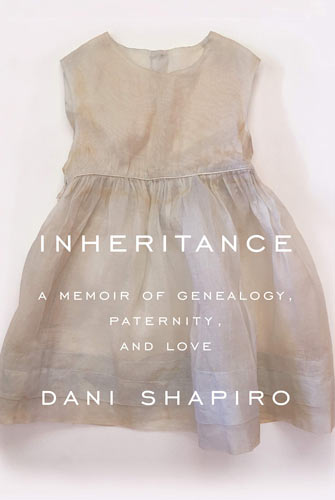 A psychoanalytic spin on the “unthought known” stream of one woman’s stumble upon the narrative of self, reflective of intuitive synchronicity, Inheritance: A Memoir of Genealogy, Paternity, and Love bursts the bubbles of vintage notions of the perfect family, or at least the façade of what the perfect family should have been.
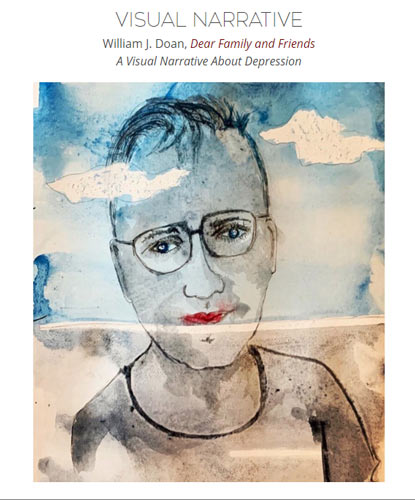 According to William J. Doan’s visual narrative “Dear Family and Friends,” in Issue 27 of Cleaver Magazine, “17 million adults had a major depressive episode last year.” Despite affecting so many people, it can be hard to articulate the experience, and even harder for the people around them to understand, especially when the sufferer is wearing a mask of “normality,” a mask of laughter and smiles. As Doan says, “Sharing what it’s like to live with anxiety and depression is a lot like undressing in front of strangers. It’s AWKWARD.” But after a while, masking began to feel like lying to Doan, and “Dear Family and Friends” is an attempt at breaking that silence and “coming out” to those around him.
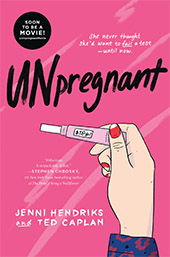 Unpregnant Offers a Radical Normalization of Abortion and Reproductive Health. Currently, we’re in a terrifying moment in history for reproductive health in America, which makes abortion no laughing matter—and that’s exactly why Unpregnant, the debut YA novel by Jenni Hendricks and Ted Caplan, is such a breath of fresh air. Unpregnant tells the tale of an overachieving 17-year-old named Veronica Clarke who discovers that she is pregnant a month before her high-school graduation. Seeing her college education (she’s been accepted to Brown University) and future slipping away, she enlists her former best friend—and current school outcast—Bailey Butler to drive her to an abortion clinic that doesn’t require a parental signature. The only catch? The clinic is more than 900 miles away… Read full review at BitchMedia here.
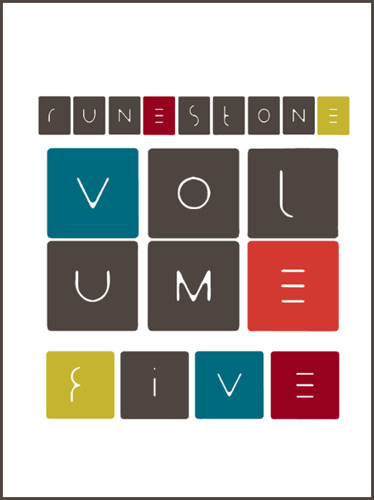 The works in the latest issue of Runestone Journal, which publishes writing by undergraduates, is splashed with color.
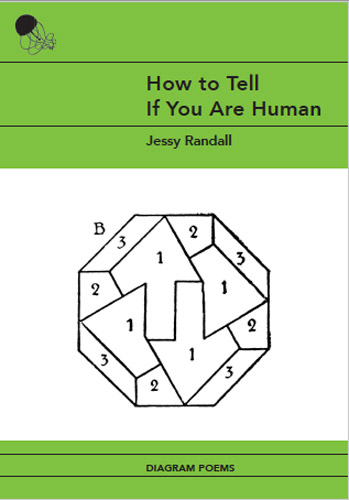 Do you ever find yourself feeling out of sorts, unable to tell if you’re still human? Jessy Randall has considered this feeling and helps readers handle it with an instructional manual of sorts in How to Tell If You Are Human: Diagram Poems, part of the Pleaides Press Visual Poetry Series.
 Gabriela Garcia’s “Mrs. Sorry” can be found in the latest issue of ZYZZYVA. Focusing on class and gender, the short story is narrated by a young woman working at a cosmetics counter. At work, she helps rich women (and one in particular who comes to be known as the titular character) pick out skincare products. At home, she feels herself slipping away from herself and her boyfriend, who begins offering her the Roxicodone pills he’s been stealing from his work at a pharmacy.
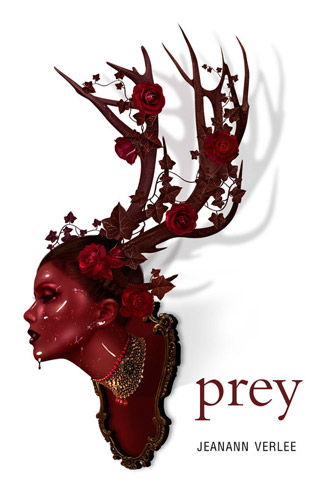 Jeanann Verlee digs into the culture of violence against women in Prey. Published last August, the collection of poems is broken into five parts. The speaker details her own story of an abusive ex-husband and the horrors he put her through, as well as a broader focus: “The New Crucible” speaks on the ways men have used religion to justify their violence against women, and multiple pieces called “His Version” are made of quotes from men like Brock Turner and the men involved in the Steubenville rape trial. The latter set of poems are presented without comment, without words from Verlee, speaking volumes on their own. Verlee writes with unflinching honesty, recording a history of violence that leaves one breathless and bent defensively over the pages.
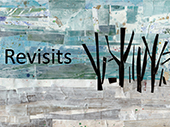 Publishing short (500-2500-word) fiction that “gives an insight into the human condition,” the online Fictive Dream featured a summer series called “Revisits.” Each Revisit is a selection of three previously published stories that have a similar theme: Love, Abuse, Growing Up, Grief, Rivalry, Magic Realism, Friendship, Missing, Sex, and War. Editor Laura Black curated the series and introduces each issue. A great way to sample the Fictive Dreams back catalog as well as a conveniently curated collection for the classroom.
 Beautiful Things is a weekly column of “very brief nonfiction that find beauty in the everyday” published on the River Teeth: A Journal of Nonfiction Narrative website. Edited by Michelle Webster-Hein and Sarah M. Wells, the inspiration for the column was Michelle Webseter-Hein’s essay, “Beautiful Things,” published in River Teeth 15.1 and appearing in a series of excerpts on the website.
 Maa, along with Lawrence-Minh Bùi Davis, founded the Asian American Literary Review in 2009 and has been serving as editor-in-chief. In his introduction to Georgia Review readers Maa writes, “A print periodical—dare I say here—is capable of cultivating communities in ways that no other medium can. To open up a journal—break a spine, perhaps—to carry a volume, or run your fingers over your name printed on a page is very special. But to congregate around a print journal is also special in its own right.”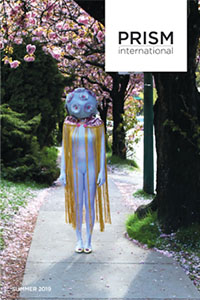

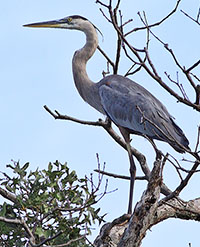 Between October 2016 and February 2017, Heron Tree online poetry journal published a series of works “constructed from materials in the public domain in the United States.” Editors Chris Campolo and Rebecca Resinski then compiled these into a PDF ebook, Found in the Public Domain, that is free to download.
 Take some time to check out award-winning books published this September.
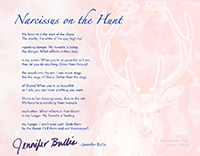 In addition to publishing poetry, interviews, and reviews twice a year online as well as chapbooks, Under a Warm Green Linden accompanies each issue with a selection of beautiful, affordable, high-quality print broadsides signed by the authors. The adjectives to describe these broadsides are my own; I have sought them out for purchase with every new issue – so I can attest to their production value! Add to that, Under a Warm Green Linden donates a portion of all proceeds from sales to the Arbor Day Foundation and the National Forest Foundation – both with specific reforestation efforts. To date. Under a Warm Green Linden supporters have helped plant 300 trees. A win all around!
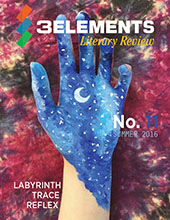 Each quarter, 3Elements Review presents three elements, and all three must be used in the story or poem in order to be considered for publication.
  The Fall 2019 issue of Rattle Tribute to African Poets features seventeen poems “representative of the urgency and excitement that makes the poetry coming out of the continent feel so vital.”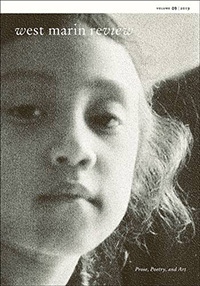
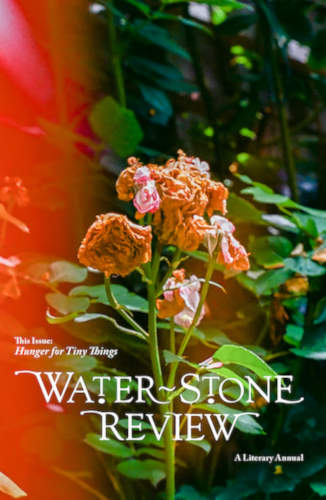

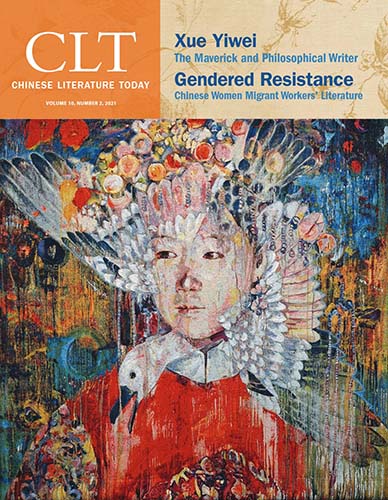 Contemporary Chinese Poetry is the special focus of the latest issue of Chinese Literature Today (v8 n1), with several works by each poet. The featured authors and the translators include:
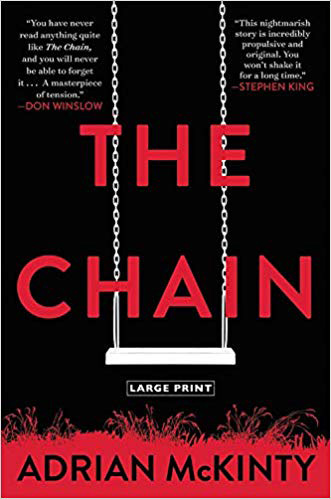 You are now part of The Chain.
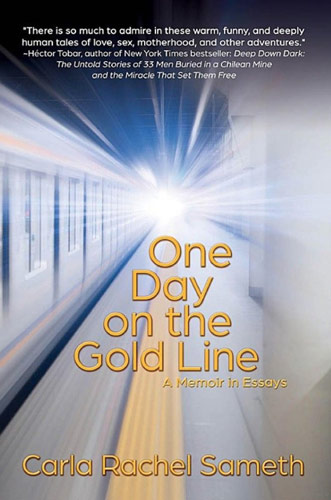 Carla Rachel Sameth’s One Day on the Gold Line offers a gut-wrenching account of Sameth’s life from young adulthood through middle-age, spinning around maternal desire and loss, and probing the critical distinctions between an imaginary motherhood and the lived reality of mothering her son through young-adulthood. Structured through a series of twenty-nine short chapters that refuse easy chronology, the book is both thematically and formally interested in questions of time and identity.
 Understorey Magazine is an online publication of Canadian literature and visual art inviting “compelling, original stories and art by Canadian writers and artists who identify as women or non-binary.”
 First Prize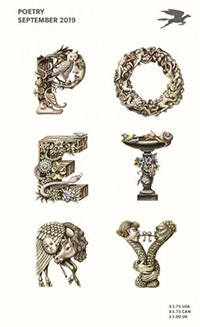
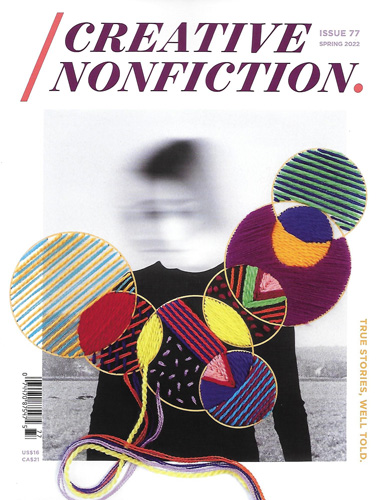
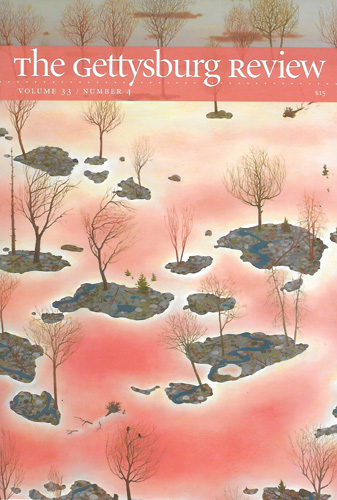
 Poetry Winner