Home » Newpages Blog » books

Book Review :: Real Americans by Rachel Khong

Review by Kevin Brown

Real Americans, Rachel Khong’s second novel, follows three generations, beginning with the middle one. The first section tells of Lily’s life as a second-generation Chinese immigrant, as she tries to make a life in New York. She has an unpaid internship and a stereotypically small apartment until she meets Matthew, a tall, handsome, extremely wealthy, white man, an encounter that changes their lives. They get married, and Lily gives birth to Nico, the focus of the second section of the book.

He grows up on an island off the coast of Washington State with only his mother, going by the name of Nick. While he loves his mother, he also longs to escape the claustrophobic life of the island, ultimately leading him to attend college at Yale, even though he doesn’t feel he fits in there. He also struggles with his identity, as his mother is of Chinese heritage and he can speak Chinese, but he looks as white as his father, including his blue eyes. He reconnects with his father and begins to learn why his mother left, leading him to try to understand who he truly is, so he can craft his own life.

The final section’s focus is on May, Nick’s grandmother, providing the reader with more background on the family, helping to explain the actions and reactions that have led to Nick’s life. Underneath the family dynamics—the core of the novel—there is a larger ethical question that the contemporary world will have to deal with in the coming years, though I don’t want to give that aspect of the novel away.

Even without that issue, Khong clearly explores how parents try to do what is best for their children, how children misunderstand those actions, how parents sometimes make mistakes, and how children sometimes forgive them and sometimes don’t.


Real Americans by Rachel Khong. Alfred A. Knopf, April 2024.

Reviewer bio: Kevin Brown has published three books of poetry: Liturgical Calendar: Poems (Wipf and Stock); A Lexicon of Lost Words (winner of the Violet Reed Haas Prize for Poetry, Snake Nation Press); and Exit Lines (Plain View Press). He also has a memoir, Another Way: Finding Faith, Then Finding It Again, and a book of scholarship, They Love to Tell the Stories: Five Contemporary Novelists Take on the Gospels. Twitter @kevinbrownwrite

Book Review :: Kursid Kids by Ronan Russell and Pat LaMarche

Review by Eleanor J. Bader

In Kursid Kids: Winter Turns [Book Two], the Kursid family are in a downward spiral. After breadwinner Koal loses his job, he, his wife, and three kids are evicted from their home. Despair forces them to take shelter in the woods, and as they try to evade the authorities something miraculous happens: a magic cat enters their lives and grants the two older kids special powers.

As a result, Winter, the oldest, can now morph between a human boy and a flying-swimming creature capable of hearing the area’s iron-handed ruler strategize about jailing the adults and breaking up the family. His sister, seven-year-old Pearl, has been given a different ability; to date, she has been able to warm even the coldest of hearts by a touch of her hand. But will this work on a greedy Magnate eager to make an example of the Kursids? It’s tense set-up and is left unresolved in this second of three intertwined books. (The first was released in 2022; the publication date of the third has not been disclosed.)

The books, written by a grandson and grandmother, weave a social justice fantasy into the harsh realities of class inequality. It’s a compassionate introduction to the day-to-day struggles of homeless families.

For readers 13 and older. All proceeds benefit the Homeless Remembrance Blanket Project.


Kursid Kids: Winter Turns [Book Two], Creative author, Ronan Russell; Technical author, Pat LaMarche, Illustrated by Aron Rook. Charles Bruce Foundation, September 2024.

Reviewer bio: Eleanor J. Bader is a Brooklyn, NY-based journalist who writes about books and domestic social issues for Truthout, Rain Taxi, The Progressive, Ms. Magazine, the Los Angeles Review of Books, and The Indypendent.

Book Review :: Wordly Things by Michael Kleber-Diggs

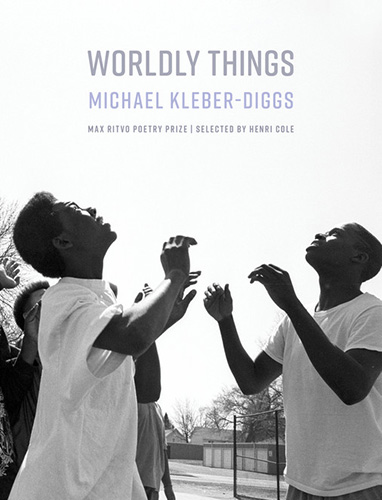
Wordly Things by Michael Kleber-Diggs book cover image

Guest Post by Jami Macarty

In Worldly Things, Michael Kleber-Diggs offers readers the opportunity to tune to his point of view as a middle-class Black American: “this is what I witness; / I want you to notice it, too.” Kleber-Diggs shows up to the page with a direct address and his “full humanity,” allowing the reader to come to know him as a generous poet, an ethical person, a family man, and community-minded soul, seeking and contributing to a socially just world. His poems recount the great suffering caused by “circumstances / marginalized, disenfranchised, and unheard”—the zeitgeist of his time and ours. Because he “wanted it different,” through his poems, he offers “aid.” As Kleber-Diggs’s lungs “take in / send out—oxygen/words,” his poems help us “know how twisted up our roots / are,” and dreams that “we might make vast shelter together—” Selected by Henri Cole as winner of the 2020 Max Ritvo Poetry Prize, Michael Kleber-Diggs’s haze-clearing, solace-offering, and love-illuminated debut Worldly Things expands the gamut, “the entirety of it”!


Worldly Things by Michael Kleber-Diggs. Milkweed Editions, July 2021.

Reviewer bio: Jami Macarty is the author of The Minuses (Center for Literary Publishing, 2020), winner of the 2020 New Mexico/Arizona Book Award – Poetry Arizona, and three chapbooks, including Mind of Spring (Vallum, 2017), winner of the 2017 Vallum Chapbook Award. Jami’s writing has been honored by financial support from Arizona Commission on the Arts, British Columbia Arts Council, and by editors at magazines such as The Capilano Review, Concision Poetry Journal, Interim, Redivider, Vallum, and Volt, where Jami’s poems appear. More at https://jamimacarty.com/

Books Received December 2022

NewPages receives many wonderful titles each month to share with our readers. You can read more about some of these titles by clicking on “New Books” under the NewPages Blog or Books tab on the menu. If you are a publisher or author looking to be listed here or featured on our blog and social media, please contact us!

Poetry

After Ward, Wendell Hawken, Cherry Grove Collections
Alone in the House of My Heart, Kari Gunter-Seymour, Swallow Press
Born Under the Influence, Andrena Zawinski, Word Poetry
The Day Gives Us So Many Ways to Eat, Lindsay Wilson, WordTech Editions
Disbound, Hajar Hussaini, University of Iowa Press
Edgewood, Mark Belair, Turning Point Books
Goddess of Water, Jeannette L. Clariond, World Poetry Books
In the Plague Year, W.H. New, Rock’s Mills Press
It’s About Time, J.R. Solonche, Deerbook Editions
John Scotus Eriugena at Laon and Other Poems, Jacques Darras, World Poetry Books
Leaving the Base Camp at Dawn, Daniel Thomas, Cherry Grove Collections
Little Disruptions, Biljana D. Obradovic, WordTech Editions
Little Wife: The Story of Gold, Nuova Wright, The Calliope Group
Lords of Misrule, ed. Henry Israeli and Rebecca Lauren, Saturnalia Books

Continue reading “Books Received December 2022”

Books Received November 2022

NewPages receives many wonderful titles each month to share with our readers. You can read more about some of these titles by clicking on the “Books” tag under “Popular Blog Topics.” If you are a publisher or author looking to be listed here or featured on our blog and social media, please contact us!

Anthology

An Adventurous Spirit, ed. Nicholas Litchfield, Lowestoft Chronicle Press
At the Ogre’s Table: A Red Ogre Review Anthology

Poetry

An Audible Blue, Klaus Merz, White Pine Press
Around Here, J.R. Solonche, Kelsay Books
The Bright Invisible, Michael Robins, Saturnalia Books
Common Life, Stéphane Bouquet, Nightboat Books
Composition, Junious “Jay” Ward, Button Poetry
Defying Extinction, Amy Barone, Broadstone Books
Dolore Minimo, Giovanna Cristina Vivinetto, Saturnalia Books
Elizabeth/The Story of Drone, Louise Akers, Propeller Books
Handling Filth, Jared Schickling, Unlikely Books
If This Should Reach You In Time, Justin Marks, Barrelhouse Books
In a Few Minutes Before Later, Brenda Hillman, Wesleyan University Press
A Life Lived Differently, Kathryn Jacobs & Rachel Jacobs, Better Than Starbucks Publications

Continue reading “Books Received November 2022”

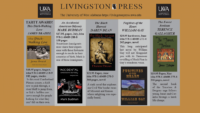
August 2021 eLitPak :: New Titles from Livingston Press

Screenshot of Livingston Press May 2021 NewPages eLitPak Flier
click image to open full-size flier

New summer titles from Livingston Press by James Braziel (a Tartt First Fiction Award winner due out this month!), Mark Budman, Daren Dean, William Gay, and Terence Gallagher. We will announce the Tartt winner soon and then will resume open reading for fiction titles. Plus, stay tuned for new fall and winter releases by Christy Alexander Hallberg, Kurt Leviant, James Findlay Sleigh, and M. Kaat Toy.

View the full NewPages August 2021 eLitPak newsletter.

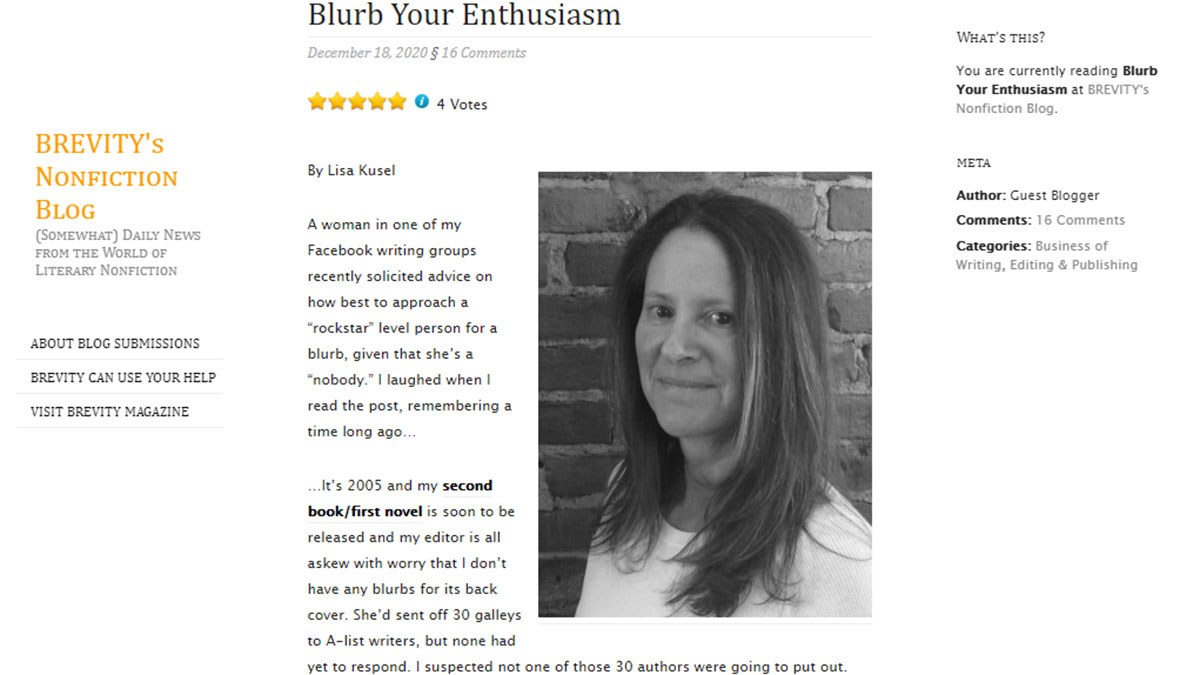
Brevity Blog: Blurb Your Enthusiasm

Brevity Blog: "Blurb Your Enthusiasm" by Lisa KuselAre you a follower of literary blogs? Do you love nonfiction? Did you know online literary magazine Brevity: A Journal of Concise Literary Nonfiction has a (nearly) daily blog? It should definitely be on your blogroll! You can find reviews, articles, and so much more.

I highly recommend checking out Lisa Kusel’s “Blurb Your Enthusiasm” posted on December 18. The piece is an interesting take on the value of blurbs on the back of your book and the luck of a lesser known writer getting a big name to step in and contribute a blurb. It was particularly interesting to me because I actually do not heed blurbs on the back of books. When trying to select a new book to read, I always felt annoyed when I saw blurbs from others when I what I wanted was a brief book summary to actually let me know what the book was about.

Have you ever selected a book based on the back cover blurbs alone?

While you are checking that out, don’t forget to scroll through more posts. They are definitely an interesting read.

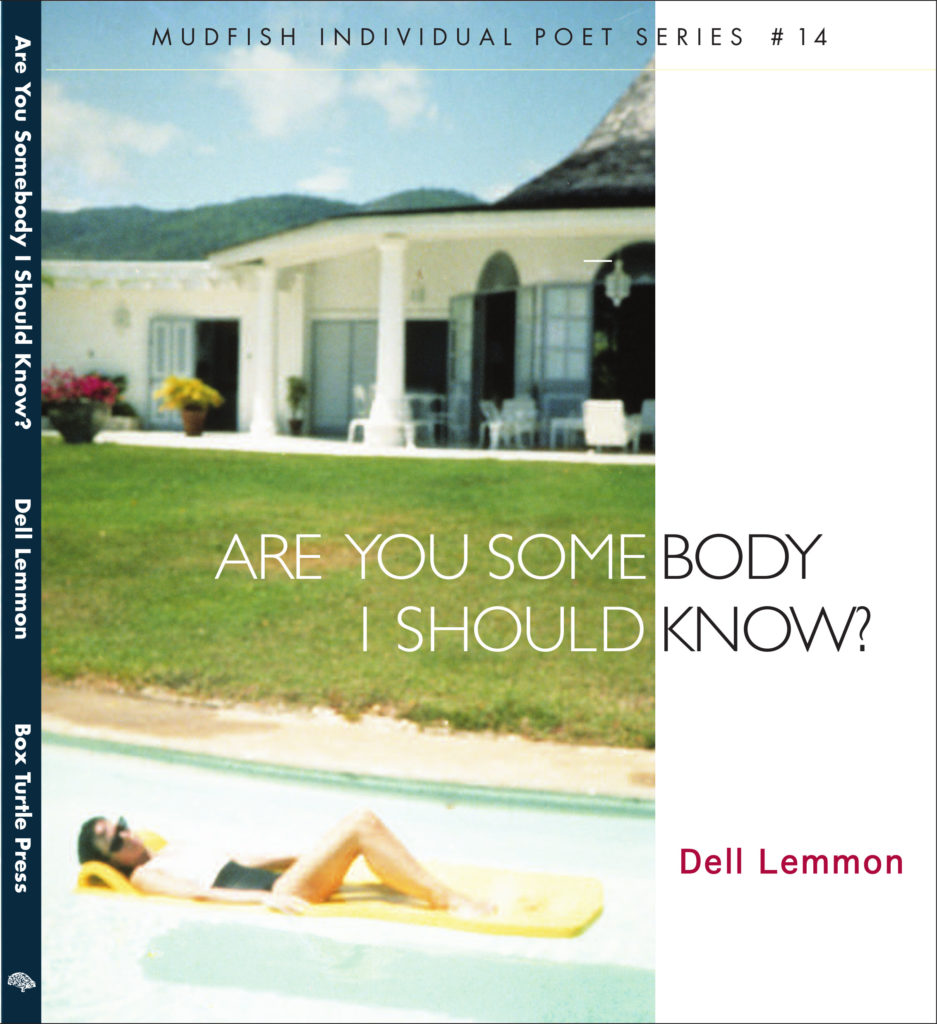
Are You Somebody I Should Know? Mudfish Individual Poet Series #14

Girl floating in book outside a white house

Mudfish has released the 14th installment in their Individual Poet Series. Are You Somebody I Should Know? by Dell Lemmon. Art critic and poet John Yau says that Lemmon’s “memoir poems, as she calls them, are strong rivers pulling you into their currents. Her poems are pared down and direct and move at a rapid clip without ever tripping over themselves.” Jason Koo, Founder and Executive Director of Brooklyn Poets, says Lemmon’s book will convince you that you have missed so “much of your life, haven’t truly seen it, haven’t treasured nearly enough of all your friends, your loves, your family, let alone all the people you thought were not important enough to know.”

Are You Somebody I Should Know is available via SPD, Amazon, and Mudfish‘s website.

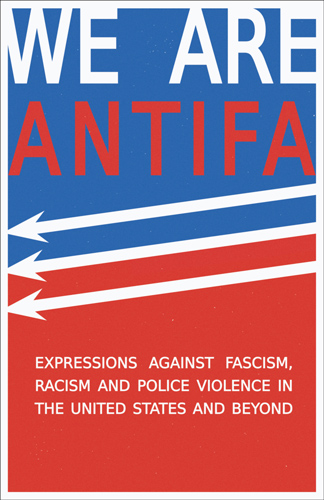
Into The Void Releases We Are Antifa Anthology

Into the Void Antifa Anthology flierAt the beginning of the month, literary magazine Into the Void released it’s We Are Antifa: Expressions Against Fascism, Racism and Police Violence in the United States and Beyond. The anthology features creative nonfiction, fiction, and poetry from diverse writers all over the world, i.e. the US, Canada, Ireland, the UK, Greece, Nigeria, and more.

Into the Void will be donating 100% of proceeds from the anthology’s sales to Black Lives Matter Canada. In order to maximize profits, the book will only be available via Amazon in ebook and paperback formats.

We Are Antifa was edited by Heath Brougher, Jay C. Mims, Amanda Gaines, Andrew Rihn, and Philip Elliot. It features “breathtaking writing condemning fascism, racism and state-sanctioned brutality through powerful expressions of grief, rage, hope and love.”

The title is a response to Donald Trump’s declaration that the US will be designating Antifa as a terrorist organization. The editors encourage readers to check out “A Brief History of Anti-Fascism” in Smithsonian Magazine to better understand why they published this anthology and “how anti-fascism and anti-racism are inextricably linked in the fight against oppression and supremacy.”

September 2020 eLitPak :: LitNuts: Crazy About Books

LitNuts eLitPak flier
click image to open PDF

Coming September 21, the LitNuts eNewsletter promotes books from independent presses. A special offer is now available for authors! Subscribe to the newsletter (it’s free!) and indicate that you are an author. We’ll send you discount codes for free and discounted advertising that can be used during our launch, now through January 2021.

View full September eLitPak here.

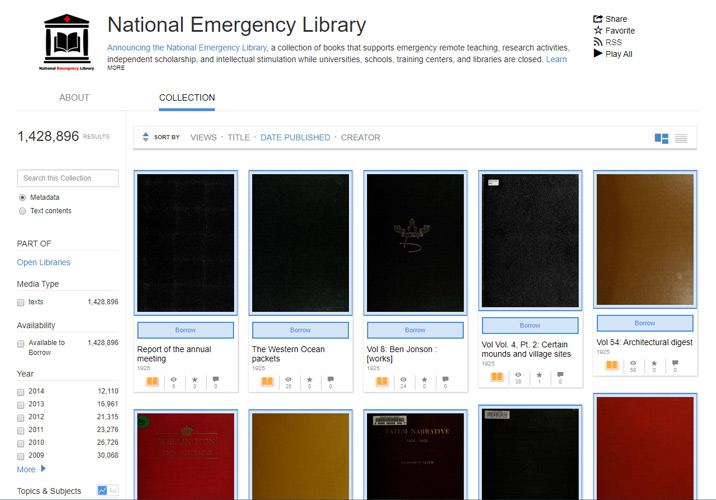
Internet Archive Launches National Emergency Library

Last week Internet Archive launched the National Emergency Library which contains 1.4 million digitized books to serve the needs of students, educators, and learners. This means that they have suspended the waitlists, at least through June 30. This allows students to have the access they need to assigned readings and other library materials.

Brewster Kahle, founder of Internet Archive, says, “Think of this as a huge experiment. In one big push, we can improve online learning and its infrastructure in a way that may otherwise have taken years. This crisis encourages universities to be bold, to make investments that ultimately may mean many more students can benefit. Perhaps 500 undergraduates can fill a hall at MIT, but how many millions can take an online MIT course, once the books, materials and lessons are online?”

The library brings together all the books from Phillips Academy Andover and Marygrove College with much of Trent University’s collections. There is also over a million other books donated by other libraries to readers worldwide. Yes, worldwide. The timeline for the waitlist is timed to the crisis in the U.S., but readers all over the world are able to utilize this collection.

This launch has met with much criticism from the publishing community and writers. In a recent NPR article, it has been revealed that many writers and publishers say that the Internet Archive has been sharing full digital copies of books without permission before the establishment of this new library. The Authors Guild, which provides legal assistance to writers, stated the Internet Archive “tramples on authors’ rights by giving away their books to the world” without permission.

They recommend utilizing your own local libraries and their own e-book lending platforms instead.

Support Indie Bookstores

Indie BookstoresIndie bookstores give back to their communities in numerous ways: hosting events, providing safe spaces, offering places to gather with like-minded people, introducing readers to writers. With pandemic-caused closures and lock-downs across the country, bookstores and the authors they support could currently use some help from the community in return.

Visit our Guide to Independent Bookstores to see the stores in your area and check in on how they’re doing. Some have shortened hours or have limited the amount of people allowed in the store at one time, some have completely transitioned to online sales, some will package up a book and run it out to you at the curb.

If you’re able, pick up or order a book to keep you company while you’re holed up at home. And don’t forget to keep washing your hands!

Alongkian Writer Conferences June 2020 New York Pitch Conference

New York Pitch Conference headerAlgonkian Writer Conferences hosts the New York Pitch Conference and writers workshop four times a year. The next event is taking place June 18 through 21. Their goal is to help set writers on a realistic path to publication.

This event focuses on the art of the novel pitch “as the best method not only for communicating your work, but for having you and your work taken seriously by industry professionals.”

The registration fee will go up after June 13. Learn more…

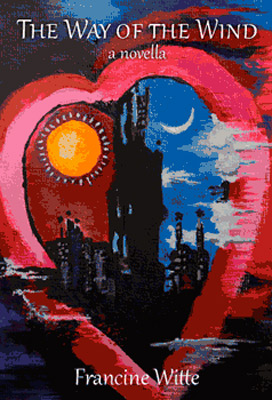
‘The Way of the Wind’ by Francine Witte

Way of the Wind by Francine WitteGuest Post by Arya F. Jenkins

In The Way of the Wind, poet and writer Francine Witte’s sparse but packed novella in flash, loss has a dozen names and belongs as much to the present as the past. After being dumped by her boyfriend of five years, the narrator, Lily, finds herself not only overwhelmed with grief but with the memory of other losses and, as she tries to work through them, takes the reader on a frantic, all-too familiar journey.

The Way of the Wind is divided into short, emotionally-charged chapters that grip from the start. Bitter wit provides respite throughout: “Love is a lot like tennis, you know? The ball is everything. Everything. If you’re not watching it, you might as well be sipping tea.”

As is true in the work of any masterful flash fiction writer, the only thing the reader can count on here is the unexpected. As Witte takes the reader on a bumpy ride full of emotional twists, highs and lows, the angst and dramedy feel familiar; the ache, all too real. Lily tries everything to escape her pain, going over the “ifs,” making excuses for the other, fantasizing to keep from acknowledging that her biggest fear—abandonment—has come to pass. The only way out of grief and loss, the narrator seems to suggest, is by uniting with what there is—other humans who care, and acceptance.


The Way of the Wind by Francine Witt. Ad Hoc Fiction, 2019.

Arya F. Jenkins is a poet and writer whose prose has been recently published in About Place Journal, Across the Margins, Cleaver Magazine, Eunoia Review, Five on the Fifth, Flash Fiction Magazine, Metafore Literary Magazine, and Vol. 1 Sunday Stories Series. Her fiction has received several nominations for the Pushcart Prize. Her latest poetry chapbook, Love & Poison, was published by Prolific Press in November 2019, and her short story collection Blue Songs in an Open Key (Fomite, 2018) is here: www.aryafjenkins.com

Why Book Reviewing Isn’t Going Anywhere

Why Book Reviewing Isn’t Going Anywhere. The American Scholar. Now an assistant professor of sociology at McMaster University in Ontario, Chong researches how fiction book reviews come to fruition, trying to solve the puzzle of why some books get reviewed and why so many more are ignored. Her new book, Inside the Critics’ Circle: Book Reviewing in Uncertain Times makes the case for the persistence of old-guard professional criticism even in the Internet age.

… reading, especially literary novels—which is what I focus on—has always been practiced by a really elite group of people, and these are often people who are invested in the idea of reading as a way to understand the world around us. People don’t just read reviews to find books to buy, they also read reviews to learn about what ideas are circulating in the culture.

… But to go back to the idea of authenticity and trust, this is just as much if not more of an issue for reviews on places like Goodreads and Amazon. Who is booklover123? Is it the author’s aunt? Agent? An ex-student who feels he deserved an “A”?

‘Wilderness of Hope’ by Quinn Grover

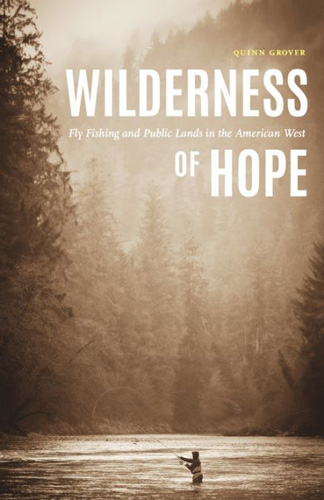
Wilderness of Hope - Quinn GroverGuest Post by Carly Schaelling

Quinn Grover takes readers into a landscape of rivers, wildness, and fly fishing in his essay collection Wilderness of Hope: Fly Fishing and Public Lands in the American West. His descriptions of Idaho, Utah, and Oregon rivers make the reader feel as if they can hear the current and smell the water. Central to this essay collection is a discussion about home, and he suggests that certain geographies can make us feel “young and old, safe and unsure . . . closer to those I love, yet perfectly alone.”

Through punchy short essays consisting solely of dialogue and moments of self-deprecating humor, Grover’s collection interrogates the meaning of wildness and the importance of public lands. One of my favorite moments in this collection is an essay called “The Case for Inefficiency.” Grover recounts a fishing trip that gets off to a rocky start—a forgotten sleeping bag, a popped tire. Instead of giving in to feeling inefficient, he asks whether it is possible to measure wasted time. If we walk somewhere instead of drive, but find ourselves outside breathing the air and being more patient because of it, is our time really wasted? To treat public lands well sometimes “requires us to blaspheme the gospel of efficiency.”

You don’t have to know anything about fishing to enjoy this book. You will escape to places you may have never been to and fall in love with them when giving this collection a read.


Wilderness of Hope by Quinn Grover. Bison Books, September 2019.

About the reviewer: Carly Schaelling is a creative writing student at Utah State University.

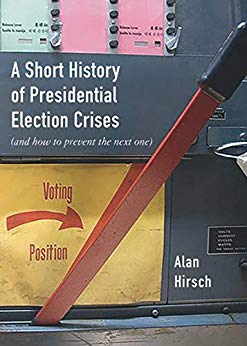
A Short History of Presidential Election Crises

Short-History-Presidential-Election-CrisesIn A Short History of Presidential Election Crises (City Lights Publishing), Constitutional scholar Alan Hirsch addresses these issues with urgency and precision. He presents a concise history of presidential elections that resulted in crises and advocates clear, common-sense solutions, including abolishing the Electoral College and the creation of a permanent, non-partisan Presidential Election Review Board to prevent or remedy future crises.

Main Street Rag – Interview with Cathryn Cofell

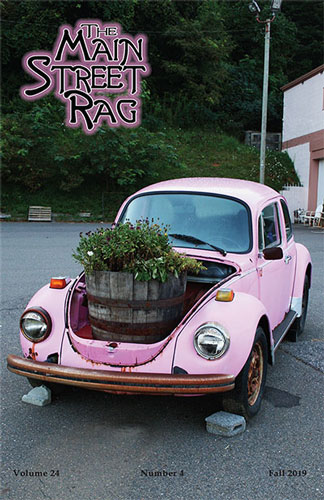
Main Street Rag - Fall 2019The Fall 2019 Issue of The Main Street Rag includes an interview with Cathryn Cofell. The interview touches upon career, inspiration, and the Cofell’s submission process.

Cofell was named the winner of the 2019 Main Street Rag Poetry Book Award and readers can also find three of her poems in this issue: “Rush Hour,” “What I Learned from My Father,” and “Resignation Notice.”

Stick Figure with Skirt, the winning book, was released in November 2019 and is available at the Main Street Rag bookstore. Readers can also find additional sample poems from the book at the store.

‘We Are Meant to Carry Water’ by Carlson, Reed, and Dibella Seluja

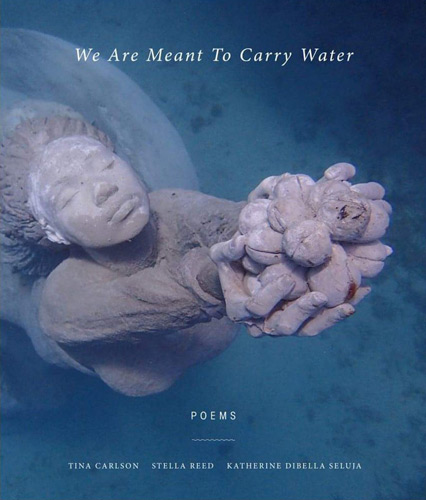
We Are Meant to Carry Water

Guest Post by Kimberly Ann Priest

“Are we only bone, skin, and urge?” asks the speaker in The Great Square That Has No Corners. I am beginning to wonder if the answer to that question is affirmative. Yes. As I write this, I am sitting in my living room on a Tuesday afternoon in October, mid-way through another semester teaching, and realizing that, this autumn, I have over-committed myself . . . again.

As projects begin to pile up and my network grows, while responsibilities increase and my own poetry demands that I give it more of my attention, I have to let some things go. After four years reading and writing about new works by various authors and publishers, this will be my last review for NewPages. It’s time, once again, to listen to my body and check my urges. And, how fitting that I should end my review history with a review of a collaborative manuscript by three clearly very talented women who have written an elegant collection of poems on assaulted womanhood—a topic that continually shows up in my own work. Drawing from mythology, Tina Carlson, Stella Reed, and Katherine Dibella Seluja have woven a modern (though not modernized) conversation between Helen, Leda, and Lilith, and they have done so with such precision, such tastefulness, such raw beauty. Continue reading “‘We Are Meant to Carry Water’ by Carlson, Reed, and Dibella Seluja”

‘Night Sky with Exit Wounds’ by Ocean Vuong

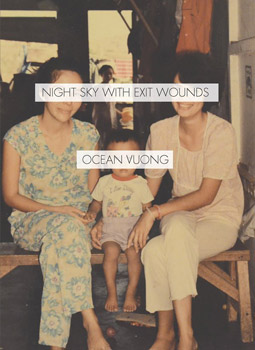
Night Sky with Exit Wounds by Ocean VuongGuest Post by Andrew Romriell

Ocean Vuong’s collection of poetry, Night Sky with Exit Wounds, is a masterpiece that illustrates the most vital and sincere hardships of humanity in astonishingly few words. Leaping from free-verse to prose poetry, from stringent format to broken syntax, Vuong fashions here a collection of inclusion.

We open on “Threshold,” a poem where Vuong introduces his themes of body, parenthood, sexuality, and history. He warns us from the very beginning that “the cost of entering a song—was to lose your way back.” Vuong asks us to enter into his words and lose ourselves there. And we do, poem after poem, until we close on Vuong’s book with the penultimate piece, “Someday I’ll Love Ocean Vuong.” In this poem, we read an assumed message from Vuong to Vuong where he tells himself “don’t be afraid,” and to “get up,” and that the most beautiful part of his body “is where it’s headed.” Before this, we’ve read pages of poetry full of pain, fear, and shattering, but here, Vuong embraces himself—and us alongside him.

“Someday I’ll Love Ocean Vuong,” like all the poems in Night Sky with Exit Wounds, rings with pain, wonder, regret, and history. Yet, there is also hope here, and I would say this is the theme of Vuong’s work: hope, inclusion, and change. Vuong takes us through a journey, shatters our expectations, holds our hearts, tells us to get up, and that, like him, we can survive the voyage.


Night Sky with Exit Wounds by Ocean Vuong. Copper Canyon Press, April 2016.

About the reviewer: Andrew Romriell is a creative writing student at Utah State University.

Lynda Barry: Making Comics

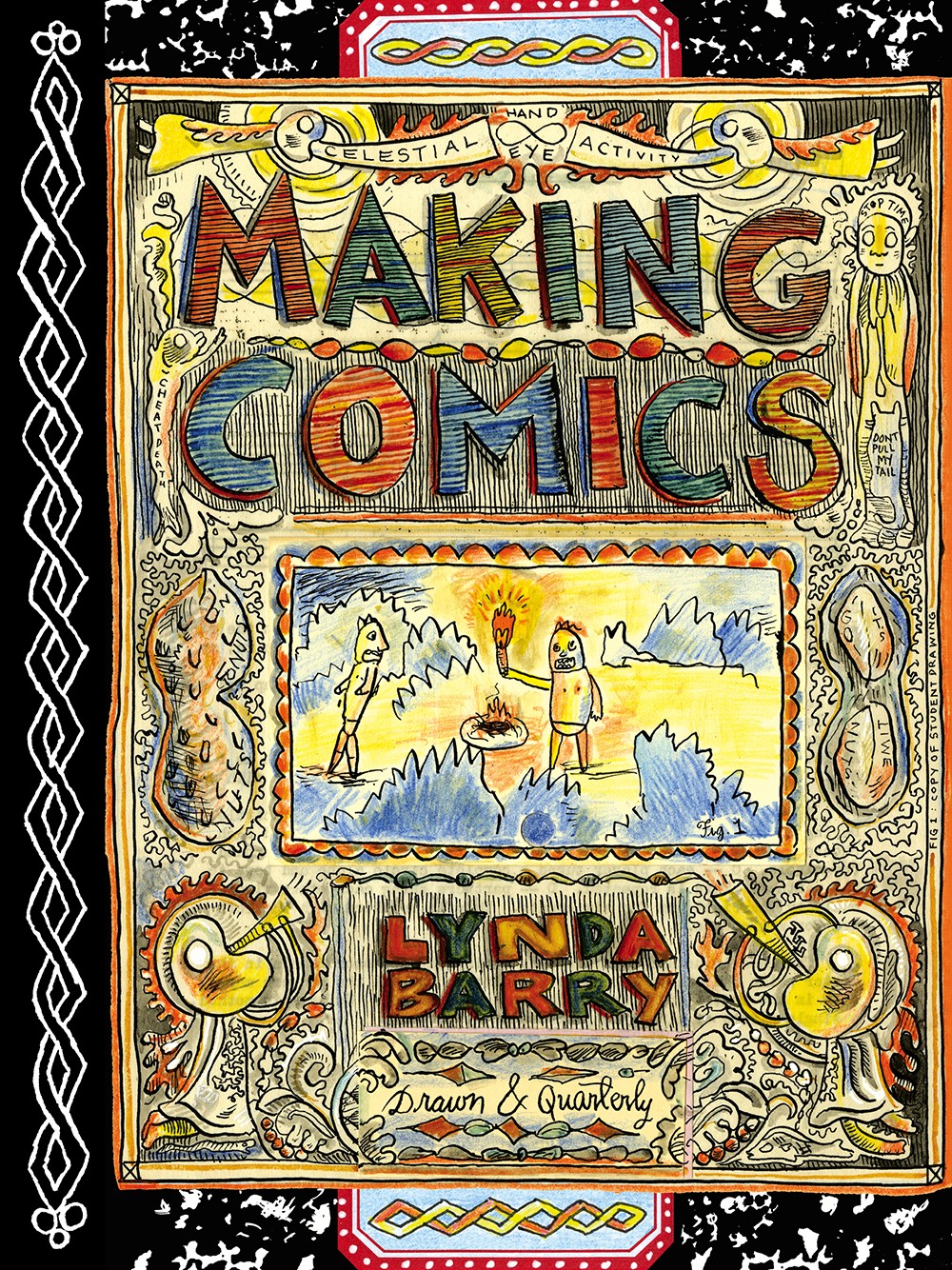
Lynda Barry Marking ComicsLynda Barry’s Making Comics is a how-to graphic novel guide for people who gave up on drawing. Lynda Barry says that everybody has an innate ability to draw, which most people abandon in their youth; comics are gestures of the human hand, and the act of writing is likened to the art of drawing. Making Comics explores the process of expanding the life of drawings, and fusing symbols for character building. A term is introduced for reimagining the happenings of one’s life: autobifictiontionalography.

Great interview with Lynda Barry by Michael Silverblatt on Bookworm KCRW.

More here: Lynda Barry’s New Book Offers a Master Class in Making Comics


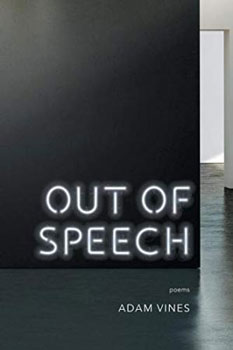
‘Out of Speech’ by Adam Vines

Out of Speech by Adam VinesGuest Post by Adrian Thomson

Adam Vines’s Out of Speech, a poetry collection comprised of ekphrastic poetry based upon famous paintings as well as personal experience, draws on Vines’s travels from southernmost Argentina to the Louvre. Each poem begins by naming the art piece it takes as a subject, then moves toward unpacking their visual elements often through fascinating uses of enjambment.

More than just describing the artwork, Vines peels away surfaces to encounter shavings of shocking humanity lying beneath. In “My View From Here,” a poem responding to Yves Tanguy’s Les Vues, Vines sees an abstract red vista of segmented alien pillars the cancer polyps hidden in a barstool acquaintance he meets by chance outside the gallery. “Holes and Folds,” based on the group portrait The Swing by Jean Honoré Fragonard, finds a narrator focused on the most innocent of the lounging young men in order to question his objectives as a hand slides up a woman’s dress.

Vines’s visual inspection of minutiae leaves his reader questioning the subjects presented in the paintings. Will the awoken businessman in Hopper’s Excursion Into Philosophy leave before his lover stirs? What has made his countenance so dour? What of the open book forgotten on the bed? Is his shoe slipping into, or out of the light? The reader feels unsure even after turning away, and Vines leaves them contemplating in silence.


Out of Speech by Adam Vines. LSU Press, March 2018.

About the reviewer: Adrian Thomson is a creative writing student at Utah State University.

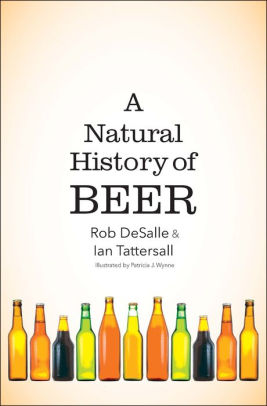
Divine Medicine: A Natural History of Beer

Natural-History-of-Beer.jpgIn the beginning was beer. Well, not quite at the beginning: there was no beer at the Big Bang. Curiously, though, as Rob DeSalle and Ian Tattersall point out in A Natural History of Beer, the main components of beer—ethanol and water—are found in the vast clouds swirling around the center of the Milky Way in sufficient quantity to produce 100 octillion liters of the stuff…

In America, where there was no such tradition, the movement was more heterogenous. It has found its public, though: by now there are 5,000 craft brewers in the United States producing 20,000 brands of beer. It is one of the bright spots in America’s otherwise dismal recent history.

Down Girl by Kate Manne Wins APA Book Prize

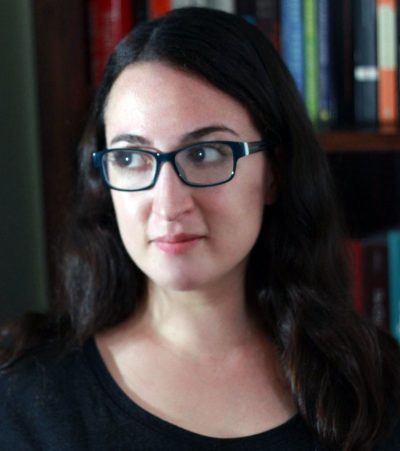
Author Kate Manne
Kate Manne

Kate Manne, associate professor of philosophy at Cornell University, has won the 2019 Book Prize from the American Philosophical Association (APA) for her Down Girl: The Logic of Misogyny.

In Down Girl, Kate Manne calls attention to an underappreciated question in the literature: how should we understand misogyny? She advances a new account of it to make sense of some of the most fundamental issues in feminist thought and political philosophy.

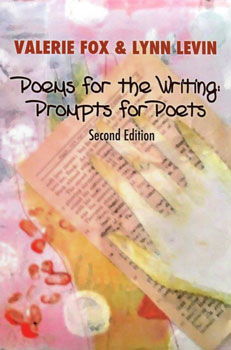
‘Poems for the Writing: Prompts for Poets’ by Valerie Fox and Lynn Levin

poems for writing prompts for poets fox levin 2ndedIn the second edition of Poems for the Writing: Prompts for Poets (Texture Press, 2019), authors Valerie Fox and Lynn Levin provide 18 entertaining and motivating prompts that range from the light-hearted to the serious and challenging. Drawing on both traditional forms and contemporary experiments, the authors encourage the use of found text, song titles, facts, and quotations. They propose scenarios and invite a poetic response. They even show how to “translate” the text of a poem written in a language you can’t read! Each prompt is followed by suggestions for getting started and sample poems written in response. What distinguishes Poems for the Writing from other poetry-prompt collections is that most of the sample poems are by undergraduates, community workshop participants, and some working poets. The responses are fresh, energetic, and unexpected.
This is an excellent book for poets and for teachers of poetry. The authors, both poets and teachers themselves, have selected prompts that work well in the classroom—for poets at any level and just about any age. They encourage emotional orientations, helping the students to plumb their personal experiences—and with just enough structure to help students struggling to organize and articulate emotional responses. But all of this comes with a touch of levity. Like Fox and Levin’s own approach to teaching, the book is friendly, open, and eclectic. The results are a testament to the extent to which prompts can trigger new and imaginative insights and jog one out of a routine approach to the blank page. Prompts are entry points—doors and doorknobs, as the authors put it—to new rooms, new emotional and intellectual spaces. The results are likely to be both surprising and satisfying.


Review by Antonia Clark
Antonia Clark has taught poetry and fiction writing and is co-administrator of an online poetry forum, The Waters. She is the author of a poetry chapbook, Smoke and Mirrors, and a full-length poetry collection, Chameleon Moon (2014, 2019), and the forthcoming Dance Craze. Her poems and short stories have appeared in numerous print and electronic journals, including The Cortland Review, Eclectica, The Pedestal Magazine, and Rattle, and she has reviewed poetry collections for The Rumpus, Literary Bohemian, Wild Goose Poetry Review, and IthacaLit. Toni lives in Vermont, loves French picnics, and plays French café music on a sparkly purple accordion.

‘The Stillness of Certain Valleys’ by David Salner

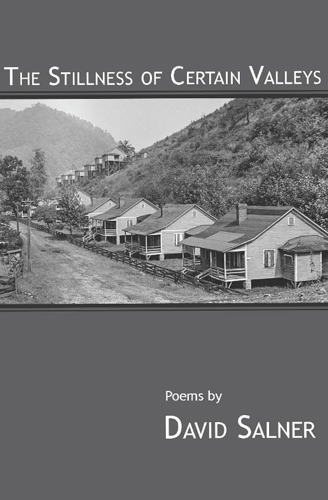
stillness of certain valleys salnerDavid Salner‘s The Stillness of Certain Valleys is impressively sustained. I could quote memorable lines from every poem. “Beer for Breakfast” is a pitch-perfect opening poem, and the subsequent sequence “A Dream of Quitting Time” is very strong.  Then comes the agonizing “Goodbye to My Big Toe.” Salner writes with gritty authority about many kinds of work, including a stint as a cab driver in “Like Silver,” as well as in steel mills and coal mines. Now that world is in a state of collapse, hence “water drips from a tipple / to wild strawberries sprouting from rail beds” in the title poem. I admire the moving way he evokes the dignity of a working man in “Horse Trailer with Beans”:  “nothing / but the dirt under his nails / and who he is.” This first section concludes with the understated “Steel Lunch Pail.”

The second section begins with a boy learning to be an artist, which could be the poet himself or Winslow Homer: “He creases uniforms, / inks the hollow of a gully.  With purple shadows / he molds the blunt, half-buried stones.”  Then come a series of poems about major American figures: Whitman during the Civil War, Melville brooding on human pain, Frederick Douglass working at the dry docks in Fells Point.

The third section features poems about his grandparents and growing up, before returning to the world of work, which Salner always depicts with convincing precision. Near the end in “The Lakefront Closes at 8 PM,” the poet notices as he walks to the parking lot how the weeds have “white flowers.” It’s that impressive eye for telling detail that make the whole collection a compelling and convincing read. Salner has been there, done that. As Whitman once said, “I am the man. I was there.”


Review by William Heath
William Heath has published three books of poetry, The Walking Man, Night Moves in Ohio, and Leaving Seville; three novels, The Children Bob Moses Led, Blacksnake’s Path, and Devil Dancer; a work of history, William Wells and the Struggle for the Old Northwest; and a collection of interviews, Conversations with Robert Stone


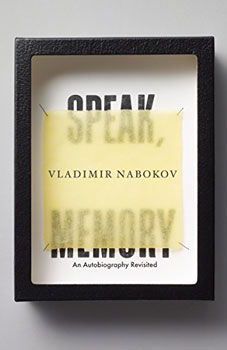
‘Speak, Memory’ by Vladimir Nabokov

speak memory nabokovAlthough published in 1951, any person serious about literature would do well to read or reread Nabokov’s captivating autobiography, if not for the rapture of his complicated life, then for the beauty of his syntactical architecture. A master of form devoted to meaning, Nabokov relays the truths of a man twice removed from his home country of Russia, once by revolution and again with the rise of the iron curtain. He renders through complex but clear sentence structure the pains of diaspora and the call to home which he can never truly answer. Within this beautiful prose he also provides insight into his master works Lolita, Despair, and The Gift. He dangles before the reader a maze of sentences each providing a decadent feast for those who value—above all—the meaning-making capacity of provoking syntax.
Even his first sentence tells the reader more about his lost home and life than many lesser writers could conjure in a length of chapters, “The cradle rocks above an abyss, and common sense tells us that our existence is but a brief crack of light between two eternities of darkness.” Although he plays at the duplicity of life and death, so does his opening sentence relay the pain of a man who can never truly return to the womb of his mother country nor escape its call through death. Nabokov rewards the keen reader. He displays the full power of a prose master and does so with all the beauty of a life richly lived.

For those readers who seek reward through art, no writer has ever provided as much in their autobiography as Vladimir Nabokov.


Review by Justyn Hardy

‘Relief by Execution: A Visit to Mauthausen’ by Gint Aras

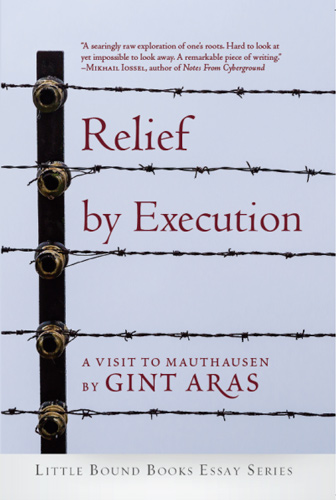
relief by execution arasA haunting meditation on the legacy of racism, violence, and abuse, Relief by Execution: A Visit to Mauthausen by Gint Aras is a gut-kick of a memoir in which Aras contemplates the far-reaching tentacles of anger and hate from the normalized cruelty of a boy’s childhood to the genocide of World War II. After a prolonged bout of PTSD following a violent attack, Aras visits the Mauthausen concentration camp in Lithuania and reflects on its horrors, acknowledging that as a descendant of Lithuanians, there exists within himself “the energy of the victim and the perpetrator.” 
While depictions of the Holocaust remind us of the enduring human capacity for dehumanization and extreme cruelty, Aras’s essay is at its strongest when recounting the socially accepted racism of his Lithuanian-American community in Chicago. Jesse Jackson’s 1984 Presidential run provides a backdrop for Aras’s father’s racist diatribes; the community’s anti-Semitism is equally virulent and ingrained in their language. Aras writes: “The Lithuanian word for Jew is žydas. My family used this word to mean snot, and for a time I knew no other word. Mother would see me picking my nose and scold me, Netrauk žydų, or Stop pulling out Jews.” Aras draws the connections between the family’s denialism and scapegoating of Lithuanian Jews as Soviet collaborators with their refusal to see the physical and emotional abuse perpetrated against him by his tyrannical father. As an adult, Aras confronts his father in a harrowing scene, yet a cathartic reckoning remains elusive. 

Aras reflects on whether he is imposing “the personal on the collective,” but most readers will recognize how hate, in its various manifestations, informs the cultural assumptions we carry. Aras’s willingness to confront this legacy is a useful reminder that we all bear the responsibility to do the same.


Review by Chuck Augello
Chuck Augello is the author of The Inexplicable Grey Space We Call Love (Duck Lake Books – April 2020).  His work has appeared in One Story, Literary Hub, The Vestal Review, The Coachella Review, and other fine journals. He’s a contributor to Cease Cows and publishes The Daily Vonnegut, a website exploring the life and art of Kurt Vonnegut.

‘Sea Above, Sun Below’ by George Salis

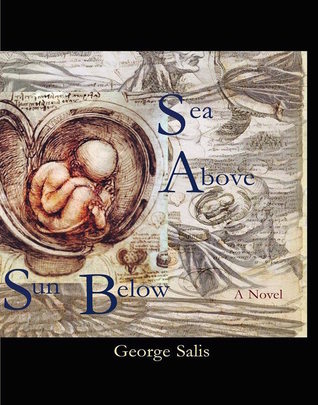
sea above sun below salisSea Above, Sun Below by George Salis is a rich and masterful novel. It is a balanced reading experience, told from differing perspectives, chockablock with symbolism and allusion and wordplay.

The descriptions of people, the universe, and abstract concepts are always lyrical and moving. The characters, though isolated in their narrative spheres from other characters, all relate in symbolic ways, interacting like entangled particles.

This is a tale about skydiving, the brave divers through the sky, and the diverse revelations they encounter on land and in the arms of God, up in the air, floating like angels, hovering above the ball and chain of their earth, which to some is an Eden, and to others, an egg, flush with history, pregnant with myth.

It is also about childhood and escape, tragedy, and the infinite potential of the future, told in convincing voices with heart and love and joy. I was enchanted by the realistic characters, the effortless flow of the evocative language, the precise word choice, effective dialogue, and seamless storytelling. The novel works on multiple levels at once, guiding the reader through layers of meaning. It does not engage in handholding, nor is it like wandering a labyrinth. Reading it is like falling—which is a metaphor the novel makes ample use of—into a magical realm. The picture widens as you proceed, and the sky behind you is full of Halley’s comets, decaying gods, and past memories discarded like ballast.

There are many brilliant moments of interstitial congruency, like the following quote: “With the advancement of technology, he knew the future, however distant, would reveal the reality of alchemy.”

Sea Above, Sun Below is literary alchemy. A magnificent novel.


Review by L.S. Popovich
L.S. Popovich is the author of Undertones and Echoes From Dust. They have always been a cat person (a person who like cats, not a cat human hybrid).

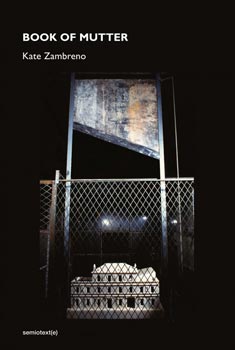
‘Book of Mutter’ by Kate Zambreno

book of mutter zambrenoExploring the complexities and absurdities of grief, Book of Mutter is a lyrical text that will leave readers returning to its textured fragments of memory and meditation again and again. And each time, those moments will reassemble into something new and incisive.
Kate Zambreno, whose previous book O Fallen Angel won the Undoing the Novel—First Book Contest, reflects on and interrogates her relationship with her dying mother in this 2017 publication. Her mother proved such an invasive force in her life that Zambreno couldn’t help but turn to writing as the only hope she had to “expel [her] from my body.” With some photographs, spent lipstick tubes, hoarded kitsch, and a gardening journal, Zambreno sorts through these “ruins” in search of both a connection to and deliverance from the long shadow of a troubled relationship.

Far from conclusive or definitive, Book of Mutter offers something tragically beautiful and genuinely vulnerable to the perennial struggle of grief. While every page is not filled by text, they are all complete with curious and inviting moments of anger, confusion, peace, and yes, absence.


Review by Mark Smeltzer

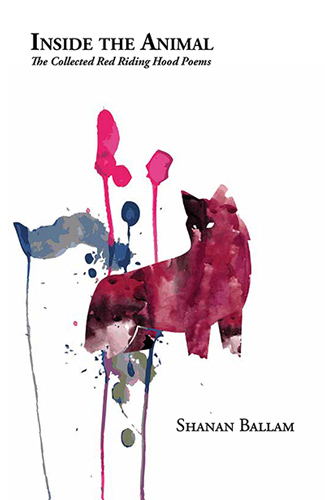
‘Inside the Animal: The Collected Red Riding Hood Papers’ by Shanan Ballam

inside animal ballamShanan Ballam’s newest book, Inside the Animal: The Collected Red Riding Hood Papers, published by Main Street Rag Publishing Company in 2019, pushes the persona poem to its most shimmering and starved limit. Blending her voice with the perspectives of a depraved wolf, a blossoming girl, and a wilting grandmother, Ballam continually smashes wide the familiar fairy tale and trades reader comfort for animalistic truth. What empathy can be had for the predator? Is there a love story folded into the sheets of Grandmother’s bed? Would Red Riding Hood slip into the wolf again? Continuing the work begun in her 2010 chapbook The Red Riding Hood Papers and furthered in her 2013 book Pretty Marrow, Ballam writes deeply into new velveteen layers of the aged cautionary tale.
Divided into six parts, the childhood world is rewritten for an adult understanding of intimacy and separation, ecstatic connection and pain. Through her passionate mastery of syntax and imagery, Ballam pulls readers deeper into a psychological landscape as sharp and mesmerizing as a kaleidoscope. The new Poet Laureate of Logan, Utah, as well as current faculty of Utah State University, Ballam writes with the bone-deep need to reclaim the story of monsters and naughty little girls into a truth more complicated and warm. Wholly driven and new, Ballam’s tangled reimagining of the condemning Red Riding Hood fable will mark up the mind.


Reviewed by Brittney Allen

‘Inheritance’ by Dani Shapiro

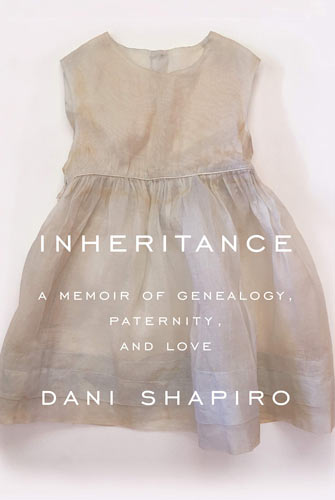
inheritance shapiroA psychoanalytic spin on the “unthought known” stream of one woman’s stumble upon the narrative of self, reflective of intuitive synchronicity, Inheritance: A Memoir of Genealogy, Paternity, and Love bursts the bubbles of vintage notions of the perfect family, or at least the façade of what the perfect family should have been.
In this memoir, Shapiro takes readers on a rocky ride through her personal genealogic discoveries; specifically, finding out after five decades that the man she knew as her father was not her biological father. Shapiro elaborates on how he was the only father she ever knew, and they shared an unbreakable bond until his passing when she was in her twenties. She tenderly recalls how he taught her about his Jewish heritage, which makes up a major part of the fabric of her self-narrative surrounding her paternity. She encounters rough waters throughout her quest, yet love remains the “unknown thought” she never gave up on.

Continue reading “‘Inheritance’ by Dani Shapiro”

Debut YA novel – Unpregnant

Unpregnant book coverUnpregnant Offers a Radical Normalization of Abortion and Reproductive Health. Currently, we’re in a terrifying moment in history for reproductive health in America, which makes abortion no laughing matter—and that’s exactly why Unpregnant, the debut YA novel by Jenni Hendricks and Ted Caplan, is such a breath of fresh air. Unpregnant tells the tale of an overachieving 17-year-old named Veronica Clarke who discovers that she is pregnant a month before her high-school graduation. Seeing her college education (she’s been accepted to Brown University) and future slipping away, she enlists her former best friend—and current school outcast—Bailey Butler to drive her to an abortion clinic that doesn’t require a parental signature. The only catch? The clinic is more than 900 miles away… Read full review at BitchMedia here.
 

‘How to Tell If You Are Human: Diagram Poems’ by Jessy Randall

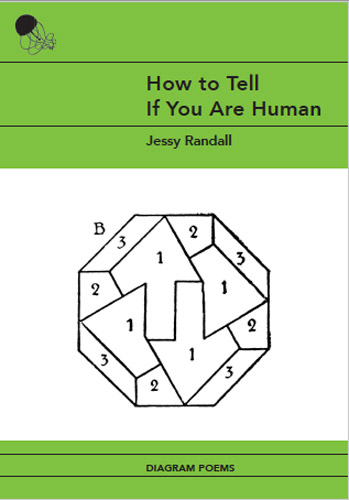
how to tell if you are human randallDo you ever find yourself feeling out of sorts, unable to tell if you’re still human? Jessy Randall has considered this feeling and helps readers handle it with an instructional manual of sorts in How to Tell If You Are Human: Diagram Poems, part of the Pleaides Press Visual Poetry Series.
Repurposing graphs and images to create visual poems, Randall’s works are minimal in style as they capture the complexity of human emotions. Although most of poems are just one sentence or phrase long, they manage to make connections with readers, leaving space to insert themselves as the speaker, to figure out whether or not they’re human.


Review by Katy Haas

‘Prey’ by Jeanann Verlee

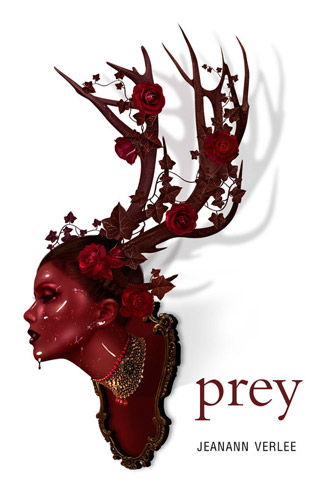
prey verleeJeanann Verlee digs into the culture of violence against women in Prey. Published last August, the collection of poems is broken into five parts. The speaker details her own story of an abusive ex-husband and the horrors he put her through, as well as a broader focus: “The New Crucible” speaks on the ways men have used religion to justify their violence against women, and multiple pieces called “His Version” are made of quotes from men like Brock Turner and the men involved in the Steubenville rape trial. The latter set of poems are presented without comment, without words from Verlee, speaking volumes on their own. Verlee writes with unflinching honesty, recording a history of violence that leaves one breathless and bent defensively over the pages.


Review by Katy Haas

September 2019 Award-Winning Books

september 2019 award winnersTake some time to check out award-winning books published this September.
Refugia by Kyce Bello brought home the inaugural Interim 2018 Test Site Poetry Series Winner. Bello’s debut poetry collection, a dedication to resilience, offers a bright and hopeful voice in the current conversation about climate change.

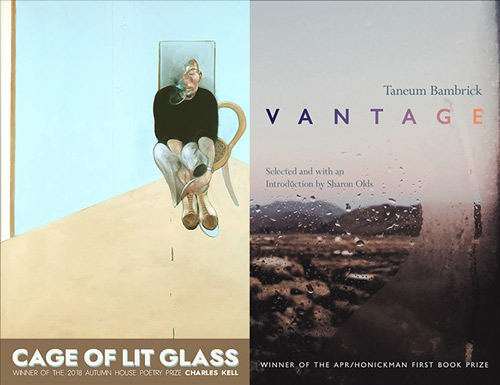
Winner of the 2018 Autumn House Poetry Prize, debut collection Cage of Lit Glass by Charles Kell engages themes of death, incarceration, and family—a tense and insightful read.

Al Ortolani’s Hansel and Gretel Get the Word on the Street, Rattle Chapbook Prize Winner, was shipped out to subscribers of Rattle literary magazine earlier in the month. The chapbook’s poems represent connections to others, sometimes dark, sometimes light, often quirky.

Sharon Olds selected Vantage by Taneum Bambrick as the winner of the 2019 American Poetry Review/Honickman First Book Award. A fictional account of Bambrick’s experience working as the only woman on a six-person garbage crew around the reservoirs of two dams, the poems document the violence she witnessed toward the people and the environment along the Columbia River.

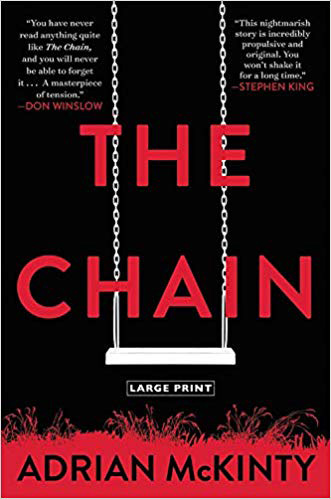
‘The Chain’ by Adrian McKinty

chain mckintyYou are now part of The Chain.

Adrian McKinty, originally from Belfast, Northern Ireland, now a New Yorker, is an award-winning crime novelist who has written a stunning work of twisted psychology, domination, and contest of wills. The plan in The Chain seems foolproof, insidious as it is. A child is kidnapped, the parent gets a phone call, and a ransom demand is made. The parent is told to select another child and kidnap the target in order to get his or her child returned. A two-step process. The horrifying aspect of the demand is that the parent gets 24 hours to pay the ransom and kidnap the next child. No such thing as planning, considering, discussing, contemplating, rationalizing, justifying.  The Chain makes an action demand, and the demand for fast action and tangible results. Or the kidnapped child is no more. The Chain has no tolerance for mistakes, for police involvement, for extensions of time to pay the ransom, for attempts to outwit. The entire process will be completed in 24 hours, or else.

Continue reading “‘The Chain’ by Adrian McKinty”

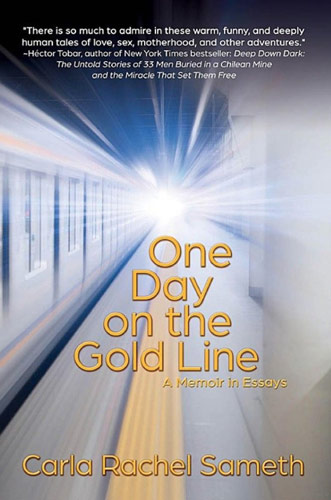
‘One Day on the Gold Line’ by Carla Rachel Sameth

one day on gold line samethCarla Rachel Sameth’s One Day on the Gold Line offers a gut-wrenching account of Sameth’s life from young adulthood through middle-age, spinning around maternal desire and loss, and probing the critical distinctions between an imaginary motherhood and the lived reality of mothering her son through young-adulthood. Structured through a series of twenty-nine short chapters that refuse easy chronology, the book is both thematically and formally interested in questions of time and identity.

Beginning with the essay “The Burning Boat,” the book charts Sameth’s insatiable desire to build a family, whether partnered or solo, and the obstacles that stand in her way. Conception comes easily to Sameth; carrying to term does not.  Only after undergoing experimental treatments for recurrent miscarriage does she give birth to her son, Raphael.  Significantly, Sameth chooses not to offer a developed account of gestation—the ground that most mother memoirs traverse; rather, there’s a temporal gap between the chapters that explore maternal desire and those that present difficulties of mothering, both single and as lesbian co-parent to her stepdaughter.  In this way, the book provocatively explores what it means to create and sustain family outside heterosexual marriage.

Rooted in the physical and social landscapes of California, the last third of the book takes up the difficulties that Sameth experiences as adolescent Raphael undergoes treatment for drug use.  Critically, the book offers addiction as a figure through which to understand all human desire. Sameth writes: “In my case, I desperately sought self-value; I thought that I could fix the hole by creating a family to love and nurture.” Writing against fantasies of ideal motherhood, Sameth’s book presents a brutally honest and much-needed account of family-building and parenting in the twenty-first century.


Review by Robin Silbergleid
Robin Silbergleid is a poet and nonfiction writer.  Her most recent publication is In the Cubiculum Nocturnum (Dancing Girl Press, 2019).  She currently directs the Creative Writing Program and teaches at Michigan State University.  You can also find her online at @rsilbergleid and robinsilbergleid.com.

‘Cyborg Detective’ by Jillian Weise

cyborg detective weiseJillian Weise’s bio at the back of her latest collection, Cyborg Detective, boasts an impressive professional history, from books published to awards won to disability rights activism to starring in the tongue-in-cheek web series “Tips for Writers by Tipsy Tullivan.” In Cyborg Detective, Weise continues to show off her skills while holding the mirror up to the literary community.

Poems such as “Cattulus Tells Me Not to Write the Rant Against Maggie Smith’s ‘Good Bones,’” “10 Postcards to Marie Howe,” and “The Phantom Limbs of the Poets” cover the topic of ableism in the writing community and the ableist language and ideation that many writers and artists keep using in their craft. Using this language might not seem like a huge deal to writers without disabilities, but poems like “Attack List” (which is continued on Weise’s Twitter as a transcription informs [braille included]) show the danger of these microaggressions by making us face full-on, violent aggressions. In her list, Weise rethinks Josef Kaplan’s Kill List and Steven Trull’s “Fuck List” with the headlines or summaries of murders and rapes of disabled women. The words we choose matter.

A favorite part of Cyborg Detective for me is “Cathedral by Raymond Carver,” in which Weise reimagines the three characters of “Cathedral,” the blind man actually given a background, a personality, sexuality, agency, all things Carver did not provide.

As a nondisabled reader and writer, I find Weise’s work revealing and informative, a reminder to check my own vocabulary for ableist language and my own thoughts for ableist ideas, and to put an end to them. Weise never resorts to handholding as she does all this, but points out the bullshit with biting wit, dark humor, and a punk rock, cyborg attitude.


Review by Katy Haas

Writing Prompts from Abrams Noterie

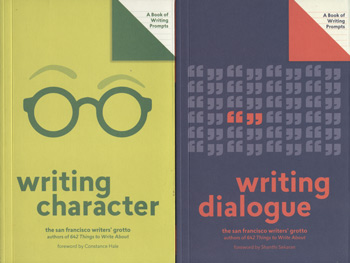
writing abrams blog postAbrams Noterie, imprint of ABRAMS Books, publishes stationary, artbooks, journals, and activity books, with a four-part collection on writing to be released this September.

Created by the San Francisco Writers’ Grotto, each book of the collection focuses on a different aspect of writing: Writing Action, Writing Character, Writing Dialogue, and Writing Humor. Prompts, writing exercises, and words of advice make up each volume, with plenty of space for writers to scribble down their ideas.

In Writing Action, writers are asked to describe what a scared teen feels during their first driving class, and on the opposite page they’re asked to write what a reckless teen might be feeling. In Writing Humor there are zany scenarios to explore, including “the silent type: You’ve fallen in love with your daughter’s Ken doll and have decided to tell your husband.” Page after page reveals a new and fun scenario to capture.

These four well-designed titles include around 100 pages of inspiration, a nice choice for writers looking for a little bit of guidance.

2019 Sealey Challenge Kicks Off

sealey challenge booksAugust is here and with it comes the third annual Sealey Challenge. Started by Nicole Sealey in 2017, the challenge is to read a poetry book or chapbook every day for the month of August.
I participated last year, and it felt like such a satisfying way to round out the summer months as I brushed off the cobwebs and dove into a new book each day.

I managed to end the 2018 challenge learning new things about myself, my reading habits, and my tastes in poetry. I practiced getting out of the house with a new book, the changes in setting feeling like a fresh new adventure. Where would I settle in to read that day, and where would the poet bring me after that?

After a few days, it became clear I simply wasn’t reading enough poetry throughout the other months of the year and there wasn’t a good excuse. If I could read thirty-one books in just as many days, I could carve out more time to read poetry the rest of the year. (Did I stick to this? Not as much as I’d like, but hey—baby steps!) This year, I’m stocked up on chapbooks for a more manageable approach to the challenge for myself. Somedays it is definitely difficult to make time, and chapbooks make the work load a little easier to handle.

Along with learning about my own reading habits, I was also introduced to new favorite poets and books, the magic my body becomes by Jess Rizkallah, Acadiana by Nancy Reddy, and WASP QUEEN by Claudia Cortese among these.

Give Nicole Sealey’s Twitter a scroll-through to learn more about the challenge and see what other readers are up to during the month. I’ll be back later this month with updates on how the challenge is treating me as I move through my picks, which you can see by clicking the “Read more” button below.

Continue reading “2019 Sealey Challenge Kicks Off”

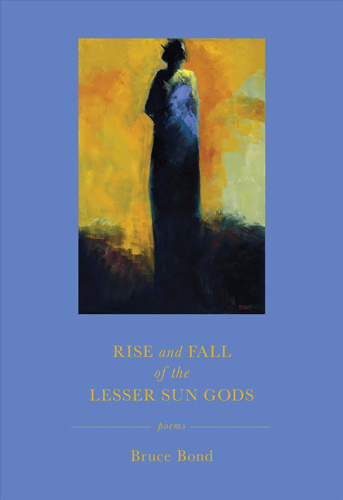
‘Rise and Fall of the Lesser Sun Gods’ by Bruce Bond

rise fall lesser sun gods bondPerhaps it is because this was written in January, and in my part of the world, the temperature was hovering around 0 degrees. Maybe it is the hours I had spent hibernating and devouring hours of classic movies from the 1940s and 50s aired on TCM. Or maybe it’s simply the idea of a ‘radio in the sand’ emitting static and faint music from another place in the universe—Hollywood.
Continue reading “‘Rise and Fall of the Lesser Sun Gods’ by Bruce Bond”

‘The Language of Bones’ by Elizabeth Spencer Spragins

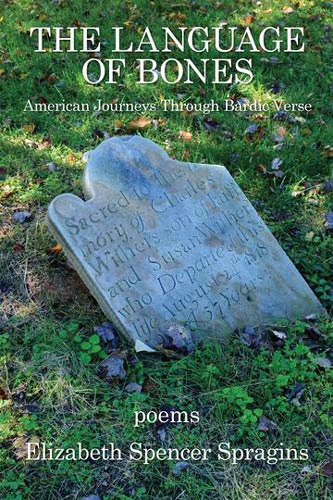
language of bones spraginsElizabeth Spencer Spragins’ passion for bardic verse in The Language of the Bones is irresistible. I can’t imagine a writer who, after reading this, wouldn’t try her hand at it or even use this as a class text to inspire students. Though Spragins does not provide ‘guidelines’ for the forms she utilizes – four Welsh (cywydd llosgyrnog, rhupunt, clogyrnach, cyhydedd hir) and one Gaelic (rannaigheacht ghairid) – a Google search offers plenty of resources (including an article by Spragins herself).
This “American Journeys in Bardic Verse” takes readers from Virginia to South and North Carolina, the deserts of the Southwest, the forests of the Northwest, and all the way to Alaska. Each poem is accompanied by endnotes to provide historical and cultural contexts. Because Spragins has specifically chosen to give “voice to the unspoken, the overlooked, and the forgotten,” these poems require prior knowledge for greatest appreciation, and each is a kind of history lesson. The “starving time” in colonial Jamestown; the forcible removal of the Cherokee Nation from their homeland; people, events, and landmarks of the American Civil War and the south are subjects Spragins educates her readers about through deftly crafted meter and rhyme which, she instructs, is traditionally read aloud.

Spragins also includes contemporary issues and does not shy away from controversy, as in her poem “At Standing Rock,” commenting on the treatment of Lakota Sioux. “Polar Night,” “Hunters,” and “Northern Lights” stand in witness to the devastations of climate change. And the book closes on a series of poems that return to places where nature and spirituality intersect, in “Sedona,” “The Garden of the Gods,” the Sangre de Cristo Mountains (“Sacred Songs”), and Muir Woods (“Spires”). A looking outward from who and where we are physically to something much greater and beyond.

Read more about Elizabeth Spencer Spragins and The Language of the Bones in an interview with Ceri Shaw on AmeriCymru.


Review by Denise Hill