Home » NewPages Blog » Page 255

NewPages Blog

At the NewPages Blog readers and writers can catch up with their favorite literary and alternative magazines, independent and university presses, creative writing programs, and writing and literary events. Find new books, new issue announcements, contest winners, and so much more!

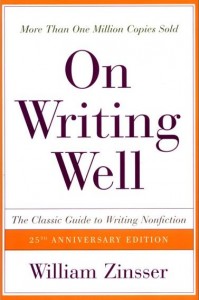
Zissner on On Writing Well

“Visions and Revisions” follows the 35-year history of multiple editions of William Zissner’s best-selling book On Writing Well. From its inception (“”You should write a book about how to write,’ my wife said in June of 1974 when I was complaining to her, as I often did, that I had run out of things to write about.”), Zissner discusses each of the subsequent editions and their changes:

“By 1990, however, America had changed considerably. On Writing Well was a child of the 1970s. I knew that its principles were still valid. But what about its references and its tone? Would it strike a new generation of readers as an old man’s book? I took a closer look and saw that my 14-year-old product was slowly slipping out of touch. Without a major overhaul it would wither and die.

“Most obviously, much of the nonfiction I now admired was written by women. Yet my excerpted passages were still mostly by men—the graybeards who had been models for my generation of journalists, now gray-bearded ourselves. The language was also lopsidedly male; he and him were still the prevailing pronouns, though women readers had chided me for referring to the reader as he, pointing out that they did much of the nation’s reading and resented having to picture themselves as men….”

Read the rest on American Scholar.
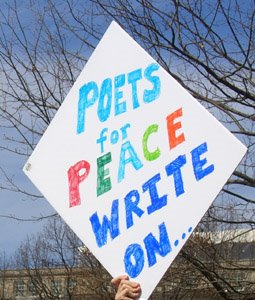
Just When You Thought Canada Was Better

Literary publishers protest cuts
Malahat Review among smaller periodicals facing loss of funding
By Randy Boswell, Canwest News Service
March 11, 2009

“The new Canada Periodical Fund, announced last month by Heritage Minister James Moore and still being designed by government officials, would deny certain federal grants to most publications with annual sales of fewer than 5,000 copies. ‘The government is improving the way it does business to meet the changing needs of Canadians,’ Moore said when the program was announced in February. ‘The way in which support to Canadian periodicals is delivered will be reformed to maximize value for money and to seize opportunities in today’s global, technological environment.'” [read the rest here]

New Literary Magazine Reviews

Visit NewPages Literary Magazine Reviews to read thoughtful commentaries on the following print publications and online publications – 20×20 :: Amarillo Bay :: Antigonish Review :: Boston Review :: Hudson Review :: Isotope :: Main Street Rag :: MiPOesias :: Ninth Letter :: The Normal School :: One Story :: Underground Voices :: Waccamaw :: Washington Square.

For information on having your publication considered for review, please visit the NewPages FAQ page.

CFP :: Split this Rock Poetry Festival

“Split This Rock Poetry Festival 2010 invites poets, writers, and activists to Washington, DC, for poetry, community building, and creative transformation as our country continues to grapple with a crippling economic crisis and other social and environmental ills. The festival will feature readings, workshops, panel discussions, youth programming, film, activism – opportunities to imagine a way forward, hone our activist skills, and celebrate the many ways that poetry can act as an agent for social change. We invite you to send proposals for panel discussions, group readings, roundtable discussions, workshops, and small-scale performances on a range of topics at the intersection of poetry and social change. Possibilities are endless. Challenge us.” The deadline is May 30, 2009.

2009 Poetry Contest Deadline Extended to March 23!
The deadline for the 2nd annual Split This Rock poetry contest, to be judged by poet and National Book Award finalist Patricia Smith, has been extended.

Pitch Black Makes Top Ten

I am happy to see Pitch Black by Youme Landowne and Anthony Horton (Cinco Puntos Press) made the 2009 Top Ten Graphic Novels for Teens named by the Young Adult Library Services Association. Landowne and Horton’s work, which at the start of reading I thought might be “too dark” for teens, is indeed dark, but in a realistically compelling manner of story, character, and style. It’s the kind of graphic story teens can read and be informed and educated in a way that they’ll feel is subversive to their 8-4 schoolwork, while being completely acceptable to adults who want teens to know “the truths” that exist in life.

Others on the top ten list (and visit the site for even more complete lists):

Life Sucks
Jessica Abel, Gabriel Soria and Warren Pleece
First Second, 2008

Sand Chronicles, v. 1 – 3
Hinako Ashihara
VIZ, 2008

Atomic Robo: Atomic Robo and the Fightin’ Scientists of Tesladyne
Brian Clevinger and Steve Wegener
Red Five Comics.

TakeReal, v. 1 & 2
hiko Inoue
VIZ

Uzumaki, v.1.
Junki Ito
VIZ

Japan Ai: A Tall Girl’s Adventures in Japan
Aimee Major Steinberger
Go Comi

Skim
Mariko Tamaki and Jilliam Tamaki
Groundwood Books

Umbrella Academy: Apocalypse Suite
Gerard Wayand Gabriel Ba
Dark Horse

Cairo
G. Willow Wilson and M. K. Perker
Vertigo

Detroit Poet Kim Hunter

Eating from the skull of the fallen angel
Music, myth and the spiritual in the poetry of Kim Hunter
Detroit Metro Times
By Norene Smith

Detroiter Kim Hunter’s new collection of poems, edge of the time zone, is a winding road lined with imagery, political thought and courageous dreaming. That beautiful stretch of imagination parallels a real-life journey. As much as it represents his own growth as a poet and an advocate of poetry, it charts changes and realities he’s observed in the world around him, especially in the realms of politics, media and race.

“I’m obsessed with the interplay between capitalism and media,” he says. “And the dehumanization that can happen when those two things cross.”

Read the rest.

20×20 – 2008

20×20 is a new London-based magazine of “visions” (black and white photographs and drawings), “words” (prose and poetry), and “blenders” (hybrid compositions of graphics and text). A note at the end of one contributor’s piece, “Deconstruction of a Failure,” sums up nicely the inaugural issue’s editorial slant. Kiril Bozhinov writes: Continue reading “20×20 – 2008”

Amarillo Bay – February 2009

With the presentation of this volume, Amarillo Bay is celebrating its eleventh year of existence, certainly a notable accomplishment, and welcomes the reader to browse its archives which contain over four hundred works. The latest edition has four short stories, one piece of nonfiction, and six poems to choose from. Continue reading “Amarillo Bay – February 2009”

The Antigonish Review – Autumn 2008

This issue includes the Great Blue Heron poetry and Sheldon Currie fiction first, second, and third prize contest winners, poems from an additional 20 poets, three short stories, short book reviews, a review essay, and what is classified as an “article,” an “academic” style analysis of poet Anne Compton’s award-winning poetry book Processional. Solid and satisfying reading from cover to cover. Continue reading “The Antigonish Review – Autumn 2008”

Boston Review – January/February 2009

Boston Review essays tend to follow a somewhat predictable pattern, and I couldn’t be happier about it. A serious, well-informed, literate, critical mind challenges the conventional wisdom about a controversial and highly politicized subject or issue of undeniable significance and urgency. Here are the two opposing views we commonly hear and debate, the writer begins, but there is something wrong with each of them, and I want to offer an alternative, he concludes. Subjects covered in the current issue of the Review include the “post-racial” in the Obama era (Stephen Ansolabehere and Charles Stewart III); free market regulation (Dean Baker, Robert Pollin); tax cuts (Jeff Madrick); Guantanamo (David Cole); Afghanistan (Barnett R. Rubin); Iran (Abbas Milani); and new (old?) philosophical approaches to God (Alex Byrne). Continue reading “Boston Review – January/February 2009”

The Hudson Review – Winter 2009

The “translation issue” begins with a tribute to the late Hayden Carruth (1921-2008) by poet David Mason, which concludes: “I wish to remember . . . an understanding of what is centrally important in life, what is truly marginal, and how poetry unites us more than it divides us, how language touches what we love, and how the love remains.” A beautiful tribute to a fine American poet, but also a fitting introduction for considering works in translation. Continue reading “The Hudson Review – Winter 2009”

Isotope – Fall/Winter 2008

Isotope (literary nature and science writing) has made some attractive changes. Perfect binding, expanded contents, recycled paper (for nature and science writing!), pleasing coated paper that really shows off the artwork. This issue’s art portfolio (and the cover art, too) is stunning: impeccable reproductions of paintings by Deborah Banerjee, “The Edge of Sight: The JPL Paintings.” JPL stands for Jet Propulsion Laboratory in Pasadena, California where the painter lives. The tension between Banerjee’s still life oils and the concept and imagined vision of propulsion, the spacecrafts’ raison d’être, is both restrained and explosive. The relationship of spacecraft to space (background) is fascinating and entirely unique from painting to painting. The painter’s explanation/description of what she has attempted to do is as beautifully composed, and as interesting, as her paintings. Continue reading “Isotope – Fall/Winter 2008”

Main Street Rag – Winter 2008/2009

I sit down to read and suddenly I have company. There are a few dozen people I’ve never met in my living room telling me how they do their work (interviews with Cathy Smith Bowers and Robert Boisvert); who they are; what they think; and entertaining me with stories. I even know where they are from (which is listed with their names at the top of the page). Their voices are casual, direct, unadorned. Some angry, some wistful, some yearning. It’s almost as if I can feel them tugging at my elbow for my attention. Continue reading “Main Street Rag – Winter 2008/2009”

MiPOesias – July 2008

A fun, quirky look. Editor and publisher Didi Menendez calls this issue “a carousel of poetry, short stories, and recipes.” The carousel image is an extension of the magazine’s cover, a full-bleed photograph of a woman clearly enjoying her ride on a beautiful merry-go-round. MiPOesias is as colorful and bold as a carousel with its full-color half and full page author photos; blue, teal, lime, evergreen, pink, brown, yellow, and tan page borders; large sans serif fonts and reverse type; and recipes, complete with color photos of pasta, muffins, Cuban meatloaf, and breaded catfish. If there is a relationship between the poems and stories and the recipes, it escapes me, although the recipes were provided by writers (though not by writers whose work appears in this issue of the magazine). Continue reading “MiPOesias – July 2008”

Ninth Letter – Fall/Winter 2009

Ninth Letter is part literary journal, part coffee-table book – the kind of coffee-table book you go back to again and again, admiring the gorgeous artwork and spectacularly designed pages each time with the same sense of awe, surprise, and delight. You’re proud to display it in your living room, you want to show it to everyone who visits. You find something new you’ve never seen before every time you look at it. It’s big, heavy, substantial, hard to hold, and harder to put down. Continue reading “Ninth Letter – Fall/Winter 2009”

The Normal School – 2008

Only one issue into its run, The Normal School has an enviable hit/miss ratio to go along with the ambition behind the magazine’s creation. The fiction, poetry and nonfiction between the covers inspire the reader to question “their own motives, sense of place, or quantum mechanics and the boundaries of art.” In more plebian terms: you’ll laugh, you’ll cry and you’ll remember the pieces long after you’re done. Continue reading “The Normal School – 2008”

One Story – 2009

One Story subscribers – there are more than 3,000 – receive one “great short story” in the mail every three weeks or so. The story (as object) is a handy size, small enough to fit in a handbag or briefcase or knapsack. It has a simple cover, just the author and title, and a brief bio note and magazine contact info at the back. A clean design. Easy to read. Easy to keep or share. The story is complemented on-line with a Q&A with the author and a link to the one-story blog (I notice people rarely comment on the stories, although they do respond to the editors’ literary and publishing news and opinions). Continue reading “One Story – 2009”

Underground Voices Magazine – February 2009

This literary magazine likes to publish “quality, hard-hitting, raw, dark fiction, flash fiction, short stories, prose and poetry.” The online version comes out monthly and there is a print edition that is published annually in December. Archival and recent material is often intermingled. Continue reading “Underground Voices Magazine – February 2009”

Waccamaw – Fall 2008

This is a fledgling literary journal published by Coastal Carolina University in Conway, South Carolina, named after a river that runs through it. The fall issue features fiction, nonfiction, poetry, and essays. The editor, Dan Albergotti, quotes Robert Frost’s observation, “There is nothing as mysterious as something clearly seen,” and says Waccamaw is looking for “work that is at once clear and mysterious.” Continue reading “Waccamaw – Fall 2008”

Washington Square – 2009

The Table of Contents had me pretty excited: poems from John Yau, Molly Peacock, and Paul Muldoon (among many others); fiction from Steve Almond; a “conversation” between Alice Quinn and Adam Zagajewski. And the issue lives up to these names’ promise, but I was just as excited by the work of those whose names I did not immediately recognize: Suzanne Buffam, whose translation of Paul Eluard’s poem “Pour Vivre Ici” matches the original’s deceptive simplicity syllable for syllable (“Like the dead I had but one element”); a sardonic epistolary short story by Rudolph Delson, “An Open Letter to John E. Potter, Postmaster General,” comparing his Van Brunt postal station to the far superior Park Slope station; an amazing portfolio of black and white drawings, so different from each other it’s hard to believe they were done by the same artist, Andres Guzman, a recent graduate of the Minneapolis College of Art and Design; and a lyric of taut little quatrains, “Sabina,” by Olivia Clark. Continue reading “Washington Square – 2009”

The Prose Poem Online

The Digital Commons @ Providence makes use of Institutional Repositories, which bring together all of a University’s research under one umbrella, with an aim to preserve and provide access to that research. “IRs are an excellent vehicle for working papers or copies of published articles and conference papers. Presentations, senior theses, and other works not published elsewhere can also be published in the IR.”

Currently available: The Prose Poem: An International Journal

Children’s Book Writers

The Society of Children’s Book Writers and Illustrators, formed in 1971 by a group of Los Angeles based writers for children, is the only international organization to offer a variety of services to people who write, illustrate, or share a vital interest in children’s literature. The SCBWI acts as a network for the exchange of knowledge between writers, illustrators, editors, publishers, agents, librarians, educators, booksellers and others involved with literature for young people. There are currently more than 19,000 members worldwide, in over 70 regions, making it the largest children’s writing organization in the world.

The SCBWI sponsors two annual International Conferences on Writing and Illustrating for Children as well as dozens of regional conferences and events throughout the world. It also publishes a bi-monthly newsletter, offers awards and grants for works in progress, and provides many informational publications on the art and business of writing and selling written, illustrated, and electronic material. The SCBWI also presents the annual Golden Kite Award for the best fiction and nonfiction books and the Sid Fleischman Humor Award.

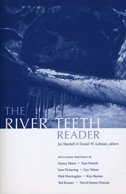
River Teeth Celebrates 10 in Quiet Style

Without the usual fanfare I’ve seen on lit mag covers and PR, River Teeth celebrates its 10th year of publication with a fabulously packed double issue. I was surprised at the size, which is what led me to the Editors’ Notes (mind you even seeing “Volume 10” didn’t set off any anniversary alarms). As quietly and as calmly as their publication has always presented itself (same gorgeous blue-tinted cover), Editors Joe Mackall and Daniel W. Lehman make no grand statements about a decade of publishing creative non-fiction. Instead, and as always, they defer to the efforts of their writer’s and to their ever-important readership:

“Ten years ago we penned the first editors’ notes to our readers. At this point ten years later, we should be writing at length about our humble beginnings and singing of the heights we’ve reached. Our words should reveal just the right amount of nostalgia, pride, and just a hint of self-congratulation. But there is no time for that; or rather, no space.

“We have to keep this note short. In the ten years River Teeth: A Journal of Nonfiction Narrative has been around, we have received over twenty thousand submissions, and we’ve published about three hundred of those twenty thousand. Most of what we reject is the work of fine writers. And now we’ve had to reject the work of writers whose work we’ve previously accepted. Worse than that – we’ve had to reject the very same pieces we once accepted! We had to choose the best forty or so pieces of the three hundred we’ve published. To make matters worse, we’ve had to divide the pieces up into four categories: Essay, Memoir, Literary Journalism, and Craft and Criticism. If there were no space concerns, we’d write a few sentences about how difficult it can be to say, for instance, where memoir ends and a kind of literary journalism begins, and how much we like pieces that flirt with those boundaries. If we had more space, we’d brag about our Pushcart Prize and our Best American Essays. We’d love to pat ourselves on the back and tell you how many Pulitzer Prize winners we’ve published — and with even more pride — shine a light on the people whose River Teeth publication was their first.

“Saying no to our own writers was the hardest thing we’ve had to do as editors. We hate to reject a piece we love because there’s simply no more space. So the best thing we can do right now is to shut up, and thank you for reading.”

Interview :: Jericho Brown

Abdel Shakur has some fun and funky, down home talk in his interview with poet Jericho Brown on his blog. Shakur is the former editor of Indiana Review (he did the Funk issue) and is now teaching high school in the Chicago Public schools. Brown’s newest book of poetry, Please, was published by New Issues Poetry & Prose (October 2008).

Warhol Foundation Arts Writers Grant Program

The Creative Capital / Warhol Foundation Arts Writers Grant Program will open for submissions on April 27, 2009. Designed to encourage and reward writing about contemporary art that is rigorous, passionate, eloquent and precise, as well as to create a broader audience for arts writing, the program aims to strengthen the field as a whole and to ensure that critical writing remains a valued mode of engaging the visual arts. The program’s renewal signals the continued commitment of Creative Capital and the Warhol Foundation to these goals.

Who’s a Sad Bastard?

Well now here’s something to take advantage of from Marginalia: “Nobody likes rejection, but every rejection gets you one step closer to publication—we mean it! For a limited time, Marginalia is offering a Sad Bastard discount: send us ANY 10 of your rejection slips and a dollar, and we’ll mail you an issue of Marginalia for your perusal. Read Marginalia, know Marginalia, get published by Marginalia.”

Classic Lit Studies? What For?

Earlier, I linked to an article re: the educational shift (perhaps) away from classics such as Milton. Now a recent article, New Curriculum Becomes A SpringBoard For Teacher Criticism, Marilyn Brown reports on one Tampa school district’s shift away from traditional language arts classes (world, American, and Brit lit) to themed studies, such as “Culture” (world lit = Shakespeare’s “Romeo and Juliet” and Soviet Nobel literature prize-winner Alexander Solzhenitsyn’s writings, “Cinderella” and clips from “I Love Lucy”), “The American Dream” (American Lit = Arthur Miller’s play about witchcraft, “The Crucible,” clips from the movie “Monty Python and the Holy Grail”), and “How Perception Changes Reality” (Brit Lit = media reports of the 1991 Waco massacre, the contemporary novel “My Sister’s Keeper,” and clips from “Forrest Gump”).

This new math and language arts curriculum in middle and high schools is called SpringBoard, and it has met with mixed reviews from educators, especially as it concerns college prep: “All classical literature is gone,” said Lee Rich, a Sickles High School language arts teacher in her 24th year. “They’re going to go to college with no classical literature and limited poetry instruction.”

Is this limitation, or shifting expectations?

Read more here.

Teaching Place via Elsewhere

In Volume 2 Issue 1 of Elsewhere, Editor J.D. Schraffenberger comments: “Very early on, we imagined Elsewhere as a journal that might also be used as a teaching tool and a forum for educators interested in exploring place as a theme in their classrooms.” Check out this incredible collection of essays on the theme “Teaching Place,” which can be found – wholly accessible via the publications online pdf format:

“Why Read for Place? Can Place Writing Matter?” by Casey Clabough
“Pastoral Science Fiction: The Landscape of Ray Bradbury’s Midwestern Stories” by Patricia Kennedy Bostian
“Teaching Sense of Place in Environmental Studies: From Cooperative Learning to Critical Thinking” by Keely Maxwell
“The Rhetorics of Place / Teaching Place as Text” by Matt Low
“Creation by Disruption: Regionalist Approaches to Contemporary Canadian and American Literature” by Julie W. O’Connor
“Using Houses to Teach Place” by Anastasia L. Pratt
“Literature and Journalism of the West: The Study of Regionalism in a Capstone Course” by Jan Whitt
“Taking Education to the Streets, Parks, and Malls: Field Study to Teach Place” by James Guignard
“Multi-modal Explorations of Place in an Interdisciplinary Course” by Mary Newell
“Writing the Place You Know” by James Engelhardt
“Open Letter to the SUNY Brockport College Community” by William Heyen
“Layers of Place” by SueEllen Campbell
“Academic Treatise or Personal Essay? Reflecting on Rival (?) Discursive Modes for Place and Nature” by Peter Hay

Comics as Lit

In addition to Gerry Canavan’s “Comics as Literature” summer course, there’s a whole list of cool special topics classes being offered through Duke this summer. (Gerry adds: “I’ve recently found out that UNC student can take for UNC tuition. Tell everyone.”)

Check out some of these others (seriously, where were cool classes like this when I was in school?):

Black Feminist Interventions and Black Women Writers
The New Middle Class in China
The Politics of Religion in the Twenty-first Century
Education through Film
Cyberpunk and Technofiction
Inquisition and Society in the Early Modern World
Nostalgia for the 1950s
Fashion, Literature and the Avant-Garde
Contemporary Detective Fiction: The Politics of Writing about “Crime”
Imagined Islands
Human Development in Literature
Mass Media and Mental Illness
Atheists, Libertines and Machiavels
The Extremes of Horror
The Ghost in the Machine: Approaches to Self-Control
Migrant Women

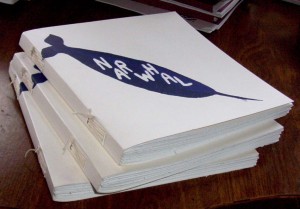
Catch a Narwhal

New from Cannibal Books: Narwhal, a compendium of seven chapbooks, 180 pages, hand-sewn in signatures, screen-printed cover, limited edition of 100 for $20.
Four Cities by Kazim Ali
Luminal Equation by Maureen Alsop
House by Sommer Browning
Into the Eyes of Lost Storms by Karla Kelsey
Sycorax’s Retinue by Laura Goode
You do damage by Kate Schapira
Yellowcake by Jared White

Lit Mag Covers Matter

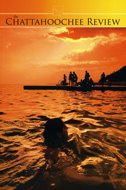
Can I just say how happy I am with the new Chattahoochee Review covers? Okay, I will. Not that traditionally-styled lit mag covers don’t have their place, but with the concern about lit mags being able to survive these days, and the more “image-driven” culture in which we live, it does become more important (perhaps critical) for publications to be able to “catch” new readers. Covers are the place we all begin, like it or not: we do judge our reading material by this to some degree. Funny enough, you can’t even find an image of CR‘s old cover on their website. Erased from memory. Perhaps they’ll end up as collector’s editions on ebay.

Happy 10k+ Birthday to I, Two, and Three

‘Oldest English words’ identified
BBC News

Medieval manuscripts give linguists clues about more recent changes
Some of the oldest words in English have been identified, scientists say.

Reading University researchers claim “I”, “we”, “two” and “three” are among the most ancient, dating back tens of thousands of years.

Their computer model analyses the rate of change of words in English and the languages that share a common heritage.

The team says it can predict which words are likely to become extinct – citing “squeeze”, “guts”, “stick” and “bad” as probable first casualties.

Queer Film Classics from Arsenel Pulp Press

Arsenal Pulp Press is pleased to introduce Queer Film Classics, a new series of books on classics of LGBT cinema from around the world written by leading LGBT film writers and scholars. Under the new imprint, edited by award-winning Arsenal authors Thomas Waugh (Out/Lines, Lust Unearthed) and Matthew Hays (The View from Here), there will be three new titles per year, beginning in the fall of 2009 with books on Paul Morrissey’s Trash, Pedro Almodovar’s Law of Desire, and Bill Condon’s Gods and Monsters.

Poetry Lesson Plans

Teachers: As we approach National Poetry Month, here are Curriculum and Lesson Plans from the Academy of American Poets. Those of you who have successful plans you use in the classroom, the Academy is looking to add to this resource.

“All the Curricula and Lesson Plans were created by secondary school teachers in New York and Colorado. Each teacher developed their unit over the course of an academic year and has tested his or her lesson plans in the classroom. Many of the units use visiting poets or writers-in-residence. You can see how to bring one to your classroom on our Writers in the Schools section in the Teachers Resource Center. Our hope is to expand this page frequently. We welcome you to share with us your own successful poetry units.” [e-mail address on site]

New Lit on the Block :: Fogged Clarity

From the combined efforts of Benjamin Evans, Ryan Daly, Lee Mcewen, Ian Kelly Davis, and Nick Lill: “By incorporating music and the visual arts and releasing a new issue monthly, Fogged Clarity aims to transcend the conventions of a typical literary journal. Our network is extensive and our scope is as broad as thought itself; we are, you are, unconstrained. With that spirit in mind Fogged Clarity will examine the work of authors, artists, scholars, and musicians, providing a home for art and thought that warrants exposure. All work selected to be displayed on our site will automatically be considered for our print journal. The first edition of our publication will debut in 2009, and will be a compendium of the most dynamic material from our first four monthly issues.”

March 2009 issue includes Fiction by Marcos Soriano, Kristen O’Toole, Braden Wiley; Poetry by Michael Tyrell, Barbara Barnard. Larry Sawyer, Donald Illich, Obododimma Oha, Sarah Sarai, James Sanders with Zac Denton; Visuals by Mollie Bryan, Patrice Tulai, Jamieson Michael Flynn; Polemics by Jascha Kessler, Joe Wagner; and Music by Strand of Oaks.

Birthdays of Poets Blog

Here’s another great way to celebrate National Poetry Month, as well as poetry year-round. This site is tirelessly maintained by Andrew Christ of the River Junction Poets, who welcomes you to copy their Poets Birthday Readings where you live:

“Since June 2005 the River Junction Poets have hosted free Poets Birthday Readings at the Barnes & Noble bookstore in Saginaw, Michigan to read and discuss life, poetry and the pursuit of happiness. We plan our events around the birthdays of poets; the bookstore mentions our events in its monthly in-store Newsletter. When we send a birthday card to the poet we celebrate, we include the Newsletter that mentions the event. We’ve received Thank You notes from several of these poets.

“The ongoing series of Poets Birthday Readings serves as a reminder that poetry comes from poets. By providing a friendly, non-threatening reading experience, poetry in general can become something for inexperienced readers to engage themselves in more. This blog features lists of poets and their birthdays, titles of their recent works and links to publishers and other pages with information about the poets.”

Read a great deal more about on the Birthday of Poets blog.

Graphic Novel :: Six Kinds of Sky

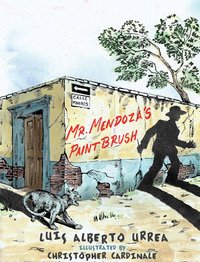
One of my favorite stories by Luis Alberto Urrea – and apparently a favorite of many – has been made into a graphic novel, published by Cinco Puntos Press, and available as of March 1: Mr. Mendoza’s Paintbrush. If you are not familiar with the story or the author, now would be a great time to discover both. The book is illustrated by Christopher Cardinale, “a muralist and artist with a social message. His large-scale murals against globalization and war can be seen in New York, Italy, Greece and Mexico. He is a regular contributor to the zine World War Three.” He also made a trip from Brooklyn down to visit Rosario, Sinaloa in Mexico, where Urrea’s story takes place.

Icon LIt

The following comes from “The Book of the Ground” by artist Xu Bing. It is a story told in icons that he has been collecting and organizing over the past several years. More than this is the computer program he has written that “translates” the typed message into icons. Visit his website to be even more fully amazed by his visionary art.

New Lit Online :: Linebreak Poetry Weekly

Edited by Ash Bowen, Johnathon Williams, Ashley McHugh, and Jennifer Jabaily, “Linebreak is an online journal with a bias for good poetry. We look for poems that we wish we had written and take us somewhere we didn’t even know we wanted to go.”

Linebreak is updated each Tuesday and features a single poem for the entire week. Published poems are archived indefinitely. Linebreak accepts only original, previously unpublished poetry. In addition to text, Linebreak publishes audio recordings of all poems. Each poet’s work is read and recorded by another working poet selected by the editors. To that end, Linebreak is always seeking volunteer readers.

Some of the 59 currently posted poems include such authors as Bob Hicok, Bruce Bond, Barry Ballard, D.A. Powell, Dorianne Laux, Zachary Schomburg, Daniel Nester, Carolyn Guinzio, Richard Siken, Anthony Robinson, C. Dale Young, Seth Abramson, Amanda Auchter, Lola Haskins, Quan Barry, Alison Stine, Heather Christle, David Graham, Sandra Beasley, Christina Davis, Ryan Courtwright, Paul Dickey, Jehanne Dubrow, Adam Clay, and many, many more.

Interview with Rachel Maddow

From the Mother Jones extended interview, January/February 2009 issue:

MJ: Olbermann renegotiated his contract for a reported $7.5 million a year. When do you get to renegotiate?

RM: For $7.5 million? Ha! It remains to be seen whether I’m a flash in the pan. I haven’t been on the air that long, and my initial ratings were great, but I’ve got a lot to prove.

I know I’ve seen enough of her to hope she’ll stick around!

“If you don’t know by now, Rachel Maddow is the world’s most unlikely cable news talk-show host. For one thing, she doesn’t watch TV. And she’s young (35), is a Rhodes scholar with a PhD from Oxford, and is openly gay—an industry first. (More than one friend has told me that her ascent is some consolation for the passage of California’s anti-gay-marriage Prop 8.) But her combination of lefty sensibilities, a hipster vibe, wicked smarts, and genuine good cheer has taken the entire country by storm. She’s made msnbc competitive against cnn’s Larry King for the first time. Existing in the space between Jim Lehrer’s NewsHour and Jon Stewart’s Daily Show, Maddow’s hour-long show privileges reporters and actual experts over pundits, real information over blather and fake fights, and comes with healthy sides of sass and sarcasm. It’s a mix she learned at the left-of-center radio network Air America, where she still broadcasts a live show each weekday. In her spare time, Maddow’s writing a book on the role of politics in the US military. In her other spare time, she’s an enthusiast of graphic novels and mixology.”

Nominations Accepted for Million Writers Award

The storySouth The Million Writers Award, which honors the best short stories published each year in online magazines and journals, is now open for nominations. The deadline for nominations is March 31, 2009.

Jason Sanford, founding editor of storySouth writes: “In previous years, the award had a $300 prize for the overall winner. Unfortunately, the economic downturn is affecting everyone and we no longer have a monetary sponsor. To compensate, I am putting up $50 of my own money as prize money, while storySouth’s new publisher, Spring Garden Press, is putting up another $50. However, we’d like to give the winner more, so I hope people will consider a donation to increase the amount of prize money.” Donations can be made using PayPal via the storySouth website.

New Lit on the Block :: Stone’s Throw Magazine

Stone’s Throw Magazine, edited by Russell Rowland, Tami Haaland, and Malia Burgess and based in Montana, publishes fiction, poetry, nonfiction, art, and “brief accounts of daily life from around the world.”

The inaugural issue includes Poetry by Melissa Kwasny, Alison Colgan, Adrian Potter, Cynthia Anderson, Jim Peterson, Francis Raven, Lisa Kemmerer, Shirley Steele, Jim Peterson; Fiction by Rick Maloy, Catherine Parnell, JS Breukelaar, Lesley C. Weston, Kris Saknussemm, Shelley Freese, Peggy Heckler, Sid Gustafson; Nonfiction by SuzAnne C. Cole, Julia Michaels, Peter Klingman; Photographs by Sharareh Malek Mohammadi.

T&W Felloship

Teachers & Writers Collaborative (T&W) announces the 2009-2010 T&W Fellowships, awarded to support early-career development for two emerging writers. Applicants for T&W Fellowships must:

Be age 35 or younger at the beginning of the Fellowship period;
Live in New York City or be able to plan an extended stay in the area (T&W cannot assist with finding housing for individuals who do not currently live in New York.);
Show exceptional artistic promise and a commitment to a writing career;
Demonstrate financial need.

The 2009-2010 T&W Fellowship period is September 14, 2009, to June 18, 2010. $20,000 stipend, office space and supplies, Opportunities to meet with experienced professionals. Deadline June 19, 2009.

Visiting Writer :: Bowling Green

Bowling Green State University English Department seeks strong applicants for the College of Arts & Sciences Distinguished Visiting Writer. The successful candidate will be in residence spring 2010; teach one workshop in the BFA program and one workshop in the MFA program; give a public reading and a lecture; and advise theses.

Qualifications: 1) MA, MFA, or PhD by time of employment; 2) At least one book of poetry and critical recognition consistent with a writer of national reputation; and 3) Evidence of outstanding undergraduate & graduate teaching.

Send letter, c.v., transcripts, three current letters of reference, writing sample (one book), a list of courses taught with brief descriptions of each, and 1-2 sample undergraduate and graduate syllabi to:

Kristine Blair, Chair
English Department
Bowling Green State University
Bowling Green, Ohio 43403-0191

The starting date of employment for this position is January 2010. Screening of applicants will begin March 16, 2009 and continue until the position is filled.

Writer Residency :: Lynchburg College

Lynchburg College Thornton Writer Residency, Spring 2010. A fourteen-week residency at Lynchburg College, including a stipend of $12,000, is awarded annually to a poet or creative nonfiction writer for the spring term. The residency also includes housing, some meals, and round trip travel expenses. The writer-in-residence will teach a weekly creative writing workshop, visit classes, and give a public reading.

Submit a copy of a previously published book of poetry or creative nonfiction, a c.v., a cover letter outlining evidence of successful teaching experience, and contact information for three references by March 16. There is no entry fee. These are the complete guidelines.

Lynchburg College
Thornton Writer Residency
School of Humanities & Social Sciences
1501 Lakeside Drive
Lynchburg, VA 24501

Joanna Turner
(434) 544-8690