Lyrical Examinations

Guest Post by Amber Caron

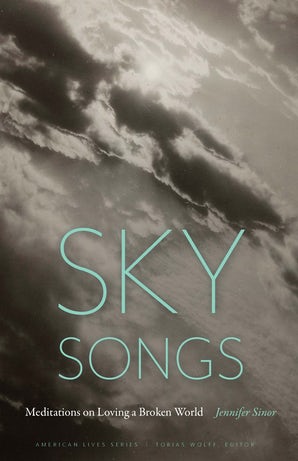
Like other readers, I had grand plans when the world went on lockdown. I would begin with War and Peace. I went as far as borrowing the book from a friend, left it on my shelf unopened, and instead turned to newly published nonfiction that grappled with the question of what it is to live a good life. The most recent addition to this stack of books is Jennifer Sinor’s Sky Songs. (Disclosure: Sinor and I teach at the same university.)

Both the title and cover image of Sinor’s essay collection are drawn from Alfred Stieglitz’s photographic study Songs of the Sky (later titled Equivalents), nearly four hundred abstract images captured when Stieglitz turned his camera to the clouds. “What is of greatest importance,” Stieglitz said, “is to hold a moment, to record something so completely that those who see it will relive an equivalent of what has been expressed.”

It was an emotional equivalence Stieglitz sought, and the same could be said of Sinor’s fifteen essays. Sky Songs meditates on the defining moments of a life—the tragic death of an uncle, a dissolving marriage, new love, the birth of a child, an encounter with wildlife, the loss of one religion and, years later, the unfolding of another. Read on their own, each essay offers a patient, lyrical examination of these moments. Together, the essays offer a profound reading experience, enriched by a layering of images, a deep sense of place, and the inescapable truth that although we are often haunted by our earliest tragedies, we are equally shaped by the beauty we find in the world around us. Ultimately, Sky Songs delivers what it promises, and what it promises is no small thing: the emotional equivalence of a life well lived.


Sky Songs: Meditations on Loving a Broken World by Jennifer Sinor. University of Nebraska Press, October 2020.

Reviewer bio: Amber Caron’s fiction and non-fiction can be found in The Threepenny Review, PEN America Best Debut Short Stories, Southwest Review, Longreads, and elsewhere.

Buy this book from our affiliate Bookshop.org.

This is Love

Guest Post by Courtney B. Jenkins

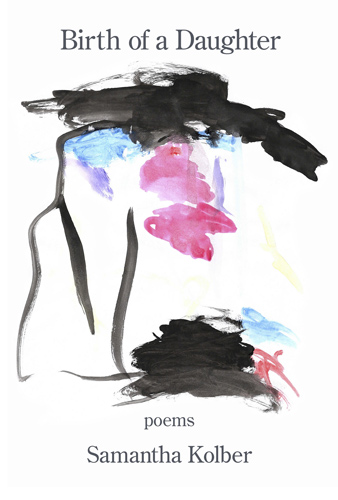
As I read Samantha Kolber’s poetry debut, I thought of all the mothers I know and hold dear—close friends, my sister, my own mother; I want to give them this book, share with them this gift of understanding.

I paused as I read to absorb moments of “Whoa,” as Kolber’s words reveal what it meant to her to become Mother. I re-read to assimilate every nuance before passing on to the next vignette. Each feeling evoked felt important. Kolber’s words are powerful draws into her world and, somehow, although I am not a mother—a birth-mother, anyhow—I know these feelings. I suddenly understand the patience I see in the mothers around me—browbeaten and screamed at by tiny versions of themselves—who are somehow able to smile in response and reply with patience and logic to the demands of their offspring. And, I realize, through this breadth of written, recorded emotion: this is love. My eyes teared with the fullness of it. And although I have no literal means of comparison in my own life, I understand. Continue reading “This is Love”

A Rewarding Challenge

Guest Post by Judith Pratt

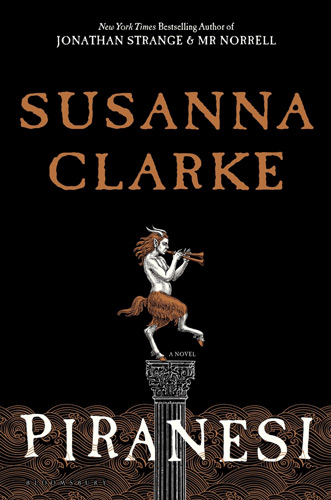
Susanna Clarke’s new novel is much shorter than her wonderful Jonathan Strange and Mr. Norrell, but even more challenging to read. It’s completely worth the trouble. Some novels I give away, but some are keepers. This is a keeper.

The man writing the story lives in a huge House of Halls, Vestibules, and Staircases. The House provides him with everything he needs—fish from the Tides that sweep the House, seaweed for food and fuel, and the Kindness of the many Statues that fill the House.

He writes daily journals in these capital letters, and creates directories of the entries. He feels blessed by the beauty of the House. The man knows only one human, whom he calls The Other. The Other has named him Piranesi, but the man knows that is not his name.

Once you have these basics, things begin to seem strange. Piranesi lives like an early tribal person, but analyzes things like a scholar. How would this Piranesi know that some statues are minotaurs? Why does he know what a crisp packet is? The book wasn’t making sense. For a chapter or two, I found that intriguing, but frustrating.

Don’t give up. The answers are more fantastical than the questions. And the answers create more questions. Would you rather be along in a world of mysterious beauty, or live an ordinary life with family and friends? How can we learn to see the beauty and magic in the world? What does it mean to be lost?

In retrospect, I’m glad that I knew nothing about this novel when I began to read it. I suggest you ignore the reviews—some of which are beautifully written—and go on the adventure as alone as Piranesi.


Piranesi by Susanna Clarke. Bloomsbury Publishing, September 2020.

Reviewer bio: Judith Pratt has acted, directed, and taught theatre. Her plays have been produced internationally. Her novel, Siljeea Magic, was published in 2019. She lives in Ithaca, NY with a husband and three cockatiels.

Buy this book at our affiliate Bookshop.org.

A Wonderful Read

Guest Post by Brooke Carpenter

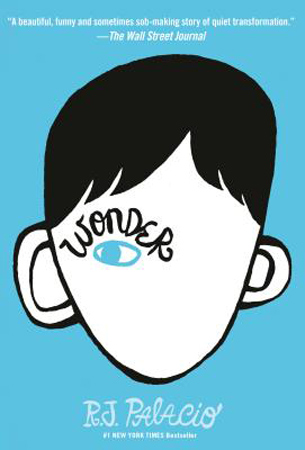
I don’t think I’ve ever laughed so hard or cried so much as in the book Wonder by R. J. Palacio. That’s saying something; I am one of the editors of the poetry section of the online journal Route 7 Review, which features the creativity of worldwide authors and artists. And Wonder is a stunning work of art. It is beautifully woven with introspect and paradigm-shifting opportunities. Palacio masterfully creates a soothing undertone of love and acceptance in a cruel world, while at the same time maintaining a lighthearted, hilarious overtone that digs at the very human essence. Palacio carefully crafts the perfect tones and perspectives for each character she delves into, creating a quick-paced, engaging read.

Wonder discusses the topics of kindness, forgiveness, and acceptance as it plunges headfirst into the world of August, a 5th grader going to public school for the first time. With 27 surgeries to his name and a severe facial deformity, August is highly aware that he attracts unwanted attention. Needless to say, he is terrified to become a public display as he starts school. The book not only follows August through the school year, through the ups and downs and fears and successes, but Palacio also cleverly weaves in the voices of the surrounding characters, adding a deeper level of interest to the novel.

As August’s story unfolds, it is impossible not to love the marvelous characters pushing and pulling against each other. Palacio’s beautiful writing delves into the far reaches of the soul to expose the hidden pieces. There is probably nothing more accurate to say than that Wonder is simply wonderful.


Wonder by R. J. Palacio. Knopf Books for Young Readers, 2012.

Reviewer bio: I am a Senior at Dixie State University and am an editor for the poetry section of DSU’s online journal, Route 7 Review. Submissions are open now until November 6.

Buy this book from our affiliate Bookshop.org.

Shape Your Fiction with Jerome Stern

Guest Post by James Gering

Here is a born creative writing teacher generously imparting dollops of warmth, humor, and wisdom in three sections that combine to resemble no other book in this crowded genre.

“The Shapes of Fiction” is the first section, where Stern vividly demonstrates his ideas in original and artful little storylines often featuring engaging dialogues. The first three shapes “show (you) how to handle thoughts, dialogue and action—techniques you’ll use over and over.” In “Iceberg,” a writer focuses on what characters choose to express or choose to keep in mind:


Brian thought, Oh God, here it comes. My Principal. The Pig That Walks Like a Man. “Hello, sir. What a fine day.”

Eiswold nodded. “What’s that on your tie, boy? Your lunch?”

“Oh, goodness,” Brian said, “I hadn’t noticed. Thank you, sir.”

A dynamic interplay between thought and speech unfolds, and it should be noted that fulsome conveyance of thought is where fiction triumphs over film.

Other shapes include “Bear at the Door,” “Onion,” “Visitation,” “Aha!,” and “Explosion,” the last of which advises you to blow the rest of the advice to smithereens and exclusively celebrate your own brilliance. The point: these are Stern’s insights (culled from decades of teaching at tertiary level), not cumbersome rules.

In the second section, “A Cautionary Interlude,” Stern points out common pitfalls on narrative journeys. Find out how to avoid “Population Explosions,” “The Banging-Shutter Story,” “The Hobos-in-Space Story,” and more.

The final section, is a comprehensive alphabetical rendering of writing terms, some universally known, others, like ‘intrigant,’ less so. The terms are deftly cross-referenced, making it a pleasure to follow related strands.

Befriend Jerome Stern! His wisdom and generosity will enrich your writing.


Making Shapely Fiction by Jerome Stern. W.W. Norton & Company, November 1991.

Reviewer bio: James Gering is a poet and short story writer from the Blue Mountains in Australia. He welcomes visitors at jamesgering.com.

Buy this book at our affiliate Bookshop.org.

Smith’s Final Season

Guest Post by James Penha

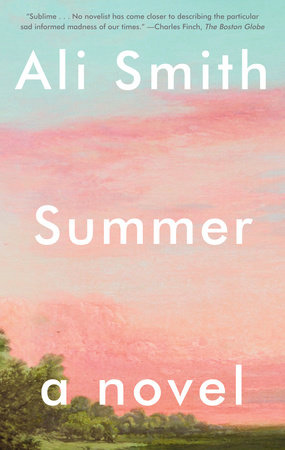
Summer is the fourth and final novel in Ali Smith’s seasonal quartet. I loved Autumn, Winter, and Spring. Summer is my favorite. It has what one expects from Smith: wonderfully idiosyncratic characters, interlocking story lines, humor, social and political themes. But the special shock of Summer is its timeliness—not just Summer; Summer 2020! Its present tense is our pandemic present. Ali Smith had planned for this novel from the time (2016) she published Autumn if not long before. How did Smith manage to integrate COVID-19 and lockdown so seamlessly into a novel already envisioned? I call it a miracle . . . and a great book.


Summer by Ali Smith. Pantheon, August 2020.

A native New Yorker, James Penha has lived for the past quarter-century in Indonesia. He edits The New Verse News, an online journal of current-events poetry.

Get in the Halloween Mood

Guest Post by Claudia Gollini

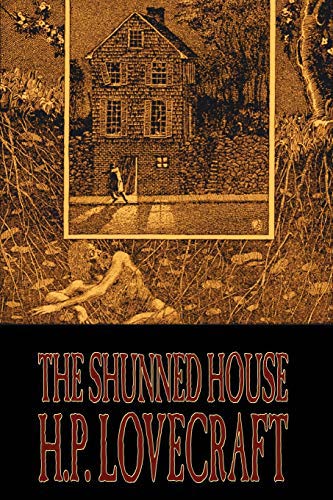
The Shunned House falls into the supernatural and folk genres. It is a horror fiction novelette by American author H. P. Lovecraft, written in October 1924 and first published in the October 1937 issue of Weird Tales.

Lovecraft links, at the story’s beginning, the tale to his idol Edgar Allan Poe. The unnamed narrator finds it ironic that during Edgar Allan Poe’s Providence sojourn, the master of the macabre many times passed a certain house on Benefit Street without recognizing the site of real horrors.

The Shunned House is a house on Benefit Street where a large number of people passed away. With the amount of fungus present in the house, it was declared to simply have “unhealthy” conditions. At worst, the house was deemed “unlucky.” No one suspected anything supernatural was going on.

However, the narrator’s uncle, physician and antiquarian Elihu Whipple, has a shivery fascination for the house. The house was built in 1763 by William Harris. Shortly after the Harrises moved in, his wife Rhoby delivered a stillborn son. For the next 150 years, no child would be born alive in the house. Once the narrator learns of his uncle’s suspicions, they decide to investigate the house.

The story’s narrator suspects that the family is connected to Jacques Roulet of Caude, who was condemned to death for lycanthropy in 1598 before being confined to an asylum.

Jacques Roulet was a real person, whom Lovecraft had read about in John Fiske’s Myths and Myth-Makers. “The family of Roulet had possessed an abnormal affinity for outer circles of entity—dark spheres which for normal folk hold only repulsion and terror.”

The Shunned House of the title is based on an actual house in Providence, Rhode Island, still standing at 135 Benefit Street and the novelette carries the perfect Halloween mood.


The Shunned House by H.P. Lovecraft.

Reviewer bio: Claudia Gollini is a makeup artist, fashion/beauty blogger and journalist, editor and writer, and body painter of events and TV shows.

New Kooser Gem

Guest Post by Guinotte Wise

I see where the bookmark is in the closed pages of Ted Kooser’s Red Stilts and realize I’ve been reading faster than I meant to; it’s a new Kooser book and I like to savor the first read. It’s like a dish of something especially good and you want it to last longer than it does. Each poem is a pleasure. Even the epigraph at the start is Kooserian, though it’s a Tolstoy quote from “Father Sergius”: “After he’d walked away, she stood in the yard in starlight, listening to dogs bark, each more faintly as he passed the farms along the road.”

I can see it, hear it, feel it. That’s a summation of Ted Kooser’s poetry. The cover of this newest gem from Copper Canyon Press is a rather entrancing painting of an alley by Don Williams, an oil titled Nebraska City Alley and it, too, echoes Kooser charm and clarity.

Once finished with this, I’ll never be finished; I’ll return to it often. I have a shelf of Ted Kooser poetry and whichever book I pull from it, it takes me quietly away from whatever dissonance the outside world is shoveling at me, and into a gently masterful poem that seems so simple, so connected to everyday things we miss in our confusion.

Thank you, Mr. and Mrs. Kooser, for this kid you had in 1939. And thank the world for carving his genius. Simply awesome.


Red Stilts by Ted Kooser. Copper Canyon Press, 2020.

Reviewer bio: 5-time Pushcart nominee and author of seven books, Guinotte Wise’s poetry and prose have appeared in numerous journals. Some work is at http://www.wisesculpture.com.

Buy this book from our affiliate Bookshop.org.
Avian Inspiration

Guest Post by Amber Thompson

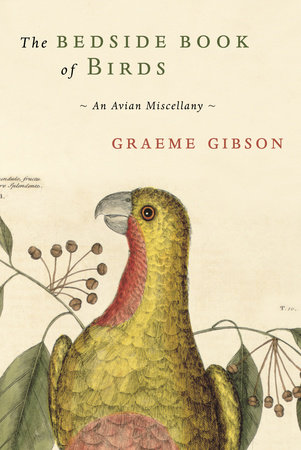
I discovered Graeme Gibson’s The Bedside Book of Birds while watching Margaret Atwood: A Word After a Word After a Word is Power. The day after I watched the documentary, my husband and I rescued a pair of near-fledgling doves. This, coupled with the fact that I found Atwood and Gibson’s relationship moving and relatable, convinced me I had to get this work for my husband, a lover of both books and birds.

Online it was selling for much more than the original list price, but at a bookstore a week and a half later, I watched my husband pick up a more reasonably priced copy. I told him a little about the book: that Atwood’s late husband had compiled it and that it was a collection of works on the relationship between birds and humans—in a sense, the awe the former has long inspired in the latter. I also told him I’d been hoping to get it for him and that if he liked the look of it, I still wanted to.

As we drove home, he cracked open the book. I peeked over to see the title of the first piece, a poem: “Night Crow” by Theodore Roethke. When he read it to me, I had the sudden realization that it was a poem I’d been searching for for years. These miraculous-feeling events coalesced into an experience of serendipity that we had not felt in a long time. When we curled into bed that night, he read more of the book aloud to me and we looked together at the beautifully included reproductions of sketches, paintings, and scientific drawings of birds. We rested quietly in the knowledge that we, through our friend Carol, the surviving fledgling, had been touched deeply by the avian world as well.


The Bedside Book of Birds: An Avian Miscellany by Graeme Gibson. Penguin Random House.

Reviewer bio: Amber Thompson is a Pushcart Prize nominee who recently published her debut poetry chapbook. She can be found at www.amberthompsonwrites.wordpress.com.

Read It Again

Guest Post by Preksha Bothra

“Never let anyone make you feel ordinary.”

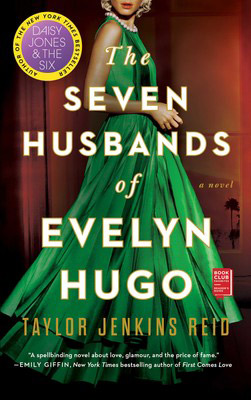
There were a lot of oh-I-wanna-read-this-again moments in Taylor Jenkins Reid’s The Seven Husbands of Evelyn Hugo. Nothing, literally nothing, in this book went the way I expected. A couple of times I was completely surprised with what happened. I didn’t even fully get it until I read the novel twice. Not many books have had that effect.

This book will definitely not bore you, because it’s never slow. The chapters skip from one husband to another quickly but without leaving any important details behind. The only one time that I didn’t like what I was reading was somewhere in the middle of the book, where I became a little tired with Evelyn and her marriages, but that is my only complaint. Highly recommended.


The Seven Husbands of Evelyn Hugo by Taylor Jenkins Reid. Washington Square Press, May 2018.

Reviewer bio: Find Preksha Bothra at on Instagram.

Buy this book from our affiliate Bookshop.org.
Remembering September 11 with Wisława Szymborska

Guest Post by Autumn Barraclough 

With September 11 close at hand, I’ve found my thoughts turning back to another time in American history in which our country suffered. I found myself reflecting back on September 11 and pictures.

In the poem “Photography from September 11,” Wisława Szymborska captures my thoughts as she describes the figures, forever frozen in history, as they jump from the twin towers. Her solemn respect and care for these souls resonates throughout the poem as she describes their flight, rather than their demise. This poem helps me to remember the tragedy of September 11 without the political connections—just understanding that humans were hurt and that I still have a country to love and care for that is full of people that care for each other in their own way.


Reviewer bio: Autumn Barraclough is a college student studying English. She is a Virginian at heart and loves to delve into the connections between France and Virginia, aspiring to create a written work that expresses that relationship.

A Moment of Quiet

Guest Post by Brittany Waite

The current pandemic has impacted many aspects of our lives, especially our ability to interact with one another. There are many on social media who publish humorous portrayals of extroverts suffering under these conditions. At the same time, I feel that many introverts, shy and quiet in nature, feel a guilty sense of relief for this opportunity to stay cooped up in the comfort of their home.

In Quiet: The Power of Introverts in a World That Can’t Stop Talking, Susan Cain takes it upon herself to uncover these reserved figures and dive deep into their consciousness, exploring the individuality of their inner-minds. Using examples from history, concrete anecdotes, and years of research, Cain promotes the importance that introverts have in society and writes with the intent to show them the power they are capable of. So, whether you’re an introvert or not, Quiet will broaden your understanding of these reserved individuals, who they are, and what they can do.


Quiet: The Power of Introverts in a World that Can’t Stop Talking by Susan Cain. Broadway Books, October 2019.

Reviewer bio: Brittany Waite is a college student born and raised in Hawaii. She enjoys writing flash fictions but hopes to expand into other genres.

Buy this book at our affiliate Bookshop.org.

Works to Enjoy & Cherish

Guest Post by Regina Shumway

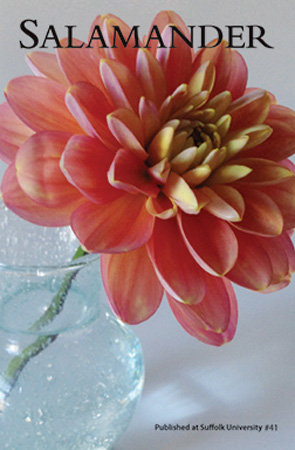
Salamander is a literary magazine that contains many works of poetry, fiction, and essays from a diverse collection of writers of varying backgrounds and writing styles. Issue 41 of this magazine is particularly spectacular. With themes ranging from the wonder found in the familiar to the indignity of a corpse, the works found in this issue provoke intense consideration for many different subjects and arguments.

Any type of reader is guaranteed to find a wide collection of works they will enjoy and cherish in Issue 41. A great deal of this magazine’s appeal is how each and every work requires the reader to delve deeper, often rereading the same lines over and over again to gain new, more profound meanings with each read through.  If you want to broaden your horizons in the writer’s world, Salamander is a magazine worthy of your time.


Reviewer bio: Regina Shumway is an eager writer, looking to improve her skills and experience. She is currently a student at Brigham Young University in Hawaii.

A Fallen Kingdom

Guest Post by Caleb Willis

“The Kingdom That Failed” is a piece of flash fiction by Japanese author Haruki Murakami, published by The New Yorker. The introduction grabs you with no hesitation, throwing you into a unique setting that prepares you for a grungy fantasy adventure written around a fallen kingdom. This lasts for a grand total of two paragraphs, at which point the story changes gears to a more modern setting, dealing with life and people, not swords and dragons. It is a change in direction that totally threw me off guard, opening me up to the rest of the narration.

The story continues with an in-depth description of this man named “Q,” or more the struggle to explain Q. He is a handsome man, five hundred and seventy times more handsome than our narrator, with a great personality, from a well-to-do home, yet he isn’t quite extraordinary in anything, yet good at everything. Q is a true kingdom, a character without flaws.

Inspired by the quote, “To see a splendid kingdom fade away, is far sadder than seeing a second-rate republic collapse,” this story quickly and briefly shows a glimpse into the future life of Q. It delivers the known-too-well feeling of failed potential. While we are content to see the narrator complacent with where he is at in life, it is striking yet subtle to see the fall of Q. It isn’t a grand fall of a literal kingdom, and it doesn’t have the imagery of crumbling stone bricks and thick black smoke. Instead, we see a defeated man covered in soda, stuck in a thankless career. “The Kingdom That Failed” is a reminder of the somber reality of humanity, one that trumps any attempts of fantasy.


Reviewer bio: Caleb Willis is a college student studying Biochemistry and Applied Mathematics. He likes to read in his fleeting spare time.

Words Change Lives

Guest Post by Haley Marks

Throughout these difficult times, we all attempt to find meaning in our lives. We search for something that reassures us that we will make it through the never-ending struggles we endure. More than that, we seek an escape from these struggles. For many of us, words provide the perfect escape.

Whether the words come through books or TED Talks, they can have such a beautiful impact on our lives. Words change us. Words heal us, if we let them. However, I have found that the most colorful way words can reach us is through poetry. A well-written poem embodies the art of writing. Poetry can hold more emotion with a hundred words than many books do with a hundred pages. Its messy, imperfect words can weave together to create a masterpiece. As humans, we embrace anything as beautifully chaotic as we are; we can find exactly what we need in the relatable words of a disheveled poem.

A favorite place of mine to find some of the best poems is Poetry Foundation, providing poetry with words that touch the hearts of people in all walks of life. It provides poems for children and adults. It includes collections of poems for those struggling in school or those trying to relieve stress. The Poetry Foundation has poems available for anyone. The poems I have found on Poetry Foundation have surely blessed me; I have found words that express my emotions in a way I am incapable of doing on my own. The beautifully written poems included on this website and they’re literary journal Poetry have surely impressed me.

Poetry Foundation, in addition to poems, includes audio and guides for various poems. It successfully provides tools and poetry for anyone looking for words that could change his/her life.


Reviewer bio: Haley Marks is a student at Brigham Young University-Hawaii where she studies creative writing.

A Guided Exploration of Vulnerability

Guest Post by Tom Biesinger 

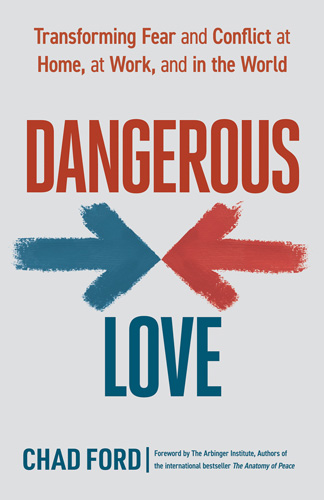
“Dangerous” and “love” may not be the first thing that comes to mind when thinking about great relationships, in fact most of us seek to keep “danger” and “love” as far apart as possible. Yet in a world where conflicts occur frequently and range from small disagreements over preference to relationship ending campaigns, it seems smart to invest in a little training to help keep the small things small and the big things in perspective.

Dangerous Love is an exploration of vulnerability and personal transformation through the relationships that challenge us most. Instead of posing as a typical self-help book with condescending statements of cliché “breakthrough,” Dangerous Love takes a softer line and uses questions and experiences collected over years of mediation practice to gently draw us to challenge areas of our own conflict styles.

Practical in its philosophy, this book aims to first bolster your understanding of conflict in all of its forms (avoidance, management, resolution, transformation, and reconciliation) then to give you tools to work fearlessly in your own pursuit of dangerous love.

Readers should expect to be challenged to improve their own conflict practices and love a little deeper. This book does well to mirror its own advice and guide us gently but firmly to a more positive and transformational view of conflict, love, and relationships.


Dangerous Love by Chad Ford. Berrett-Koehler Publishers, June 2020.

Reviewer bio: Tom lives in Hawaii and spends most of his time with his family or in the ocean. He also loves Motion Design.

Buy this book from our affiliate Bookshop.org.
Totally Gothic Chill

Guest Post by Hilary King

I’ve been on a reading tear lately, thanks to the pandemic plus a heat wave and wildfire smoke. So what is the best thing to read in what feels like an apocalypse? How about a spooky Gothic novel? As a reader, I’ll admit I have a sweet tooth. Mysteries are my book dessert, the reading I end the day with, and a Gothic novel with its hints of fantasy, magical realism, and menace is the ultimate decadent dessert.

Daisy Johnson’s new novel, Sisters, was a delightful way to spend a 108-degree day. Two teenage sisters, named July and September, escape to a crumbling cottage on the coast of England to recover from Events. What were those Events is the heart of the mystery.  Hints are dropped, the past is visited, nature is wild, and there’s even a mother who takes to her bed. What’s real and what’s not is always the question a Gothic novel asks, and never wants to answer.

What’s fresh about Sisters is how it feels timeless yet doesn’t fear the tacky conveniences of modern life. When is this happening, I wondered at the beginning of the book, so classic were the scenes and characters. But Daisy Johnson weaves in cell phones, the internet, and chat rooms, and gives them a twist. The sisters do some haunting of their own on the World Wide Web.

If you need to spend a day away but can’t get out, let Sisters take you away.


Sisters by Daisy Johnson. Riverhead Books, August 2020.

Reviewer bio: Hilary King is a poet living in the San Francisco Bay Area of California, where she is reading and writing out the pandemic and wildfires.

Buy this book from our affiliate Bookshop.org.
Janelle Monáe Plus Irenosen Okojie Times Grace Jones

Guest Post by Marvel Chukwudi Pephel

Should I say shame on me for not knowing about Grace Jones till this “Lockdown Year” when I read a February 3, 2020 article on The Cut where Janelle Monáe’s definition of Afrofuture was put forward by herself as: “It looks like an orgasm and the big bang happening while skydiving as Grace Jones smiles.”? The article was written by no other than the inimitable Roxane Gay. I remember rushing to do my homework on who Grace Jones is, and what her smile looked like.

I wouldn’t tell you that I enjoyed the task, but I wouldn’t also say it wasn’t worth the stress; maybe this was better reflected when Irenosen Okojie won the Caine Prize for African Writing, an award described by many as the African Booker. Her story was titled “Grace Jones” and she was announced the winner of the prize on July 27, 2020, almost six months after I first stumbled on the “original” Grace Jones. Irenosen Okojie’s winning story is about a Grace Jones impersonator who mourns the death of her family in a house fire.

Frankly speaking, the story is hugely experimental and may not appeal to readers of literary fiction. The story itself is as strange as a rainbow in the night sky can be. Here is a writer who isn’t scared to take risks, and for which the judges praised her thus: “risky, dazzling, imaginative and bold.” It is a story steeped in dark experimentation and yet offers a chance for entertainment. It is also worthy of note to know that the Nigerian-British author says the £10,000 award for African writing has given her confidence as a black and female experimental writer. This, to me, is a huge personal win; a win too for African speculative fiction.


Reviewer bio: Marvel Chukwudi Pephel is a prolific Nigerian writer who writes poems, short stories and other things besides.

Timely Critique & Uncluttered Horizons

Guest Post by Christine Wambui

Bird Song weaves mythology into our present reality, juxtaposing waves of mythic cerulean sea with a snowy winter’s day in the Windy City, where Thelsie lives with an alcoholic uncle. The fluency of her exit strategy in this opening scene carefully lands us on an Ali-Smith-esque beach, possibly in Heaven. But this novel satisfyingly dives into the other world, replete with untouched olive trees, cypress, oaks, alien looking plants and wildflowers.

Hearing a voice that reminds Thelsie of her mama’s choir singing, she wanders inland to meet the locals. An appreciation for the natural world pervades the island of past and future, rich in prickly grass, ferns, and ancient Greek speaking characters. If looks can kill, you can imagine what sounds can do. Sirens struggle to protect the environment from man, tied to the mast, and ship, dashed about on the rocks.

But that’s the joy of it, to see the metaphor of industry undone by its own gluttony and cursed pretension. This book gives me hope that humans can overcome their greed and protect the environment. Bird Song’s timely critique and uncluttered horizons liberate the mind: truly a pleasure to read.


Bird Song: A Novella by Clara Hume. Dragonfly Pub, November 2020.

Reviewer bio: Christine Wambui is a passionate freelance writer from Kenya, who covers socio-economic, environmental, fashion related, and women’s issues. Her writing draws on a wide variety of work and life experiences.

Four Steps to Save the Planet

Guest Post by Elizabeth Basok

In We are the Weather: Saving the Planet Begins at Breakfast, Jonathan Safran Foer argues that the science is in: we know that animal agriculture is destroying our planet. Rather convincingly, Foer makes an argument for a plant-based diet stating that this one small change in our lifestyle could positively impact the climate crisis. He is able to create concise, effective, and easy to understand arguments throughout the book, breaking up his points into bite sized pieces that can easily be regurgitated by everyday people that find themselves in a discussion about climate change or the environmental benefits of a plant-based diet. The author aims to drive home the most effective actions we can take against climate change, claiming four notable things we can do: eat a plant-based diet, avoid air travel, live car free, and have fewer children.

Part two of Foer’s book is packed with facts about “The Greatest Dying,” which is an extinction that is taking place right now. While there are many mass extinctions that have happened, Foer states that this extinction is the first to be the result of a climate crisis. He adds, “Humans are now adding greenhouse gases to the atmosphere ten times faster than the volcanoes did during the Great Dying” (one of the six mass extinctions).

Foer acknowledges that adjusting to a vegan diet can be challenging. He admits that, even though he has written now two books advocating for a plant-based diet, he has succumbed to eating a burger from time to time. Foer suggests eating vegan for breakfast and lunch, while eating vegetarian for dinner (if a full vegan lifestyle is out of the question), saying “Not eating animal products for breakfast and lunch has a smaller CO2e footprint than the average full-time vegetarian diet.”


We Are the Weather: Saving the Planet Begins at Breakfast by Jonathan Safran Foer. Farrar, Straus and Giroux, September 2019.

Reviewer bio: Elizabeth Basok is a lecturer at The Ohio State University. Her Instagram is @lizbasok.

Buy this book at our affiliate Bookshop.org.

The Meaning of Home

Guest Post by Christopher Woods

This year, perhaps like no year before, we are thinking about the concept of home. During the pandemic, most of us are spending much more time at home—in home offices, involved in remote teaching or learning, or simply in quarantine. Sadly, because of the economic collapse, many people are now homeless, and there will be more to follow. This year, more than ever, we are both consciously and subs-consciously considering the meaning and importance of home. We are thinking of safety and shelter. We have always been this way, but now it seems much more immediate and crucial, and even life-saving.

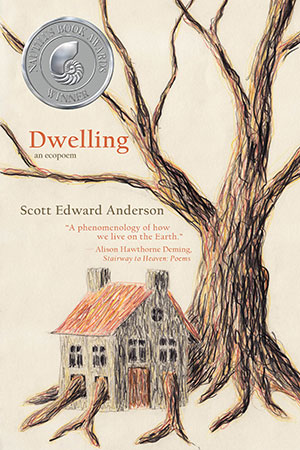
Dwelling by Scott Edward Anderson, delves deeply into this subject in the form of a book-length eco-poem. It began as a reaction to Martin Heidegger’s essay “Building Dwelling Thinking” and, in Anderson’s lyrical writing, took on a book-length life of its own. He asks questions such as “Do we carry home within?” Anderson’s poetic probing explores our place, not only inside a home, but in the larger world that is home to us all.

Ironically, many of us now have more time than ever to consider the concept of home, of refuge. Reading this book, I often stopped to look around the room, then out the window, considering the essential nature of everything. Readers might well find themselves doing the very same thing.


Dwelling: an ecopoem by Scott Edward Anderson. Shanti Arts Publishing, 2018.

Reviewer bio: Christopher Woods is a writer and photographer who lives in Texas. His photography book for writers, FROM VISION TO TEXT, is forthcoming from Propertius Press. https://www.instagram.com/dreamwood77019/

Buy this book from our affiliate Bookshop.org.
Friend or Foe, Good or Evil

Guest Post by Samantha Kolber

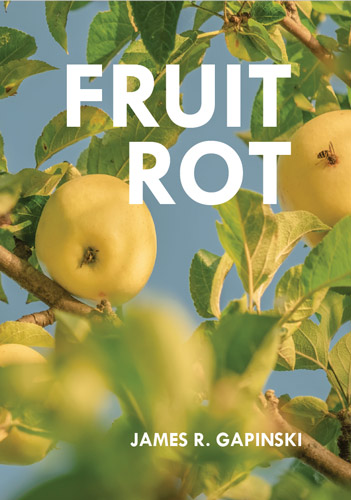
At its core, Fruit Rot by James R. Gapinski is a sweet story. Not sweet like saccharine, or Hallmark, but sweet like the meager couple in the book, with their ailments and traumas, artistic talents and impoverished lodgings; sweet like fairytales read aloud next to a hearth at bedtime; and sweet like love and the magic of imagination.

The story begins with a narrator, one half of a couple, telling the reader, “Lacey and I need money.” He tells us Lacey is depressed, with a history of abuse from her father, and since they can’t afford health insurance, she relies on St. John’s Wort from Walgreens. “It doesn’t work,” says our narrator. “She says she needs real drugs, but that takes real money.”

Gapinski is a sparse writer, yet spares no details. I love the bottle of herbs from Walgreens. I love how the narrator shuffles around the hole in the stairs. Though I don’t read comics, so may have missed some comic book references, I still love the descriptions of the narrator’s sketches and graphic artmaking endeavors. And I love the description of the mystery tree that pops up in their “barren dirt patch” of a front yard, written in the narrator’s characteristic, comic-obsessed voice:

This mystery tree is huge, and the bark is a perfect Silver Age green, like it jumped right off the Incredible Hulk #2 cover. The tree has sparkly leaves and golden fruit sprouting from its nuclear green arms. The fruit is round like an orange, but shiny like a ripe apple.

What would you do if a golden goose fell in your lap? Would you capitalize on it, even if your intentions were pure? Pure as healing the sick, mending the broken, making whole what once was? Would you play God? Would they call you a hero? Our narrator wrestles with this and so much more as the tree—their golden goose—and its magical powers permeate the couple’s lives in unimagined, unintended, and unwanted ways.

This story will stay with you for a long time, and the characters are so real—with that detailed writing—that you will think of them as friends—or foes, depending on where you sit on the good versus evil scale.


Fruit Rot by James R. Gapinski. Etchings Press, July 2020.

Reviewer bio: Samantha Kolber (samanthakolber.com) is a chapbook-loving poet and editor living in Montpelier, Vermont. Her own debut chapbook “Birth of a Daughter,” poems that reconcile an artistic self with motherhood, is out now with Kelsay Books.

The Thin Line Between Satire & Anxiety

Guest Post by Chana Kraus-Friedberg

The current political climate is difficult to write about because so much of it seems to be its own satire. Imagine the most child-like, ludicrous system of logic possible, apply it to world events, and you have government policy in the US. Yet real damage is being done to the United States and the world, and that is certainly not funny. In her recent chapbook, Flatman: and Other Poems of Protest in the Trump Era, Cheryl Caesar brilliantly negotiates the line between satire and anxiety or grief, painting a sinister picture of how childish tendencies become destructive when combined with very adult power.

In the title poem, Caesar starts by imagining the president as a truly flat man in a way that reminds me of the popular kids’ character, Flat Stanley.  She describes the physical consequences of this flatness the way a picture book might. The president’s hair, we are told, is “rolled out in weird shapes, like a child’s / misshapen gingerbread man.” His head is square: “He could set his Diet Coke on it.” Later in the book, a spoof on Kipling’s If describes what happens if one can “fake a 4-F due to “bone spurs,”[ . . . ]  /And never go to war and win your own spurs, /But boast of dodging STDs instead[.]” It’s witty and easy to laugh at, but the laughter is uncomfortable. You read in the way that I think a lot of us are currently living, carrying the knowledge that the underlying joke is dark and uncontrolled and future-consuming. In a real world context, even fantastical flatness has consequences, Caesar reminds us: “[The president] can never cross the dimensional border. / And so he hates us (hate being / the flattening emotion), hates us all. Hates the round world.”


Flatman: and Other Poems of Protest in the Trump Era by Cheryl Caesar. Thurston Howl Publications, 2020.

Reviewer’s Bio: Chana Kraus-Friedberg is the winner of the 2020 Ritzenhein Award for Emerging Poets. Her first chapbook, Grammars of Hope, will be published in February 2021 (Finishing Line Press). Instagram: @chanakf2020

Unknowingly Reading a Novel for the Times

Guest Post by Murali Kamma

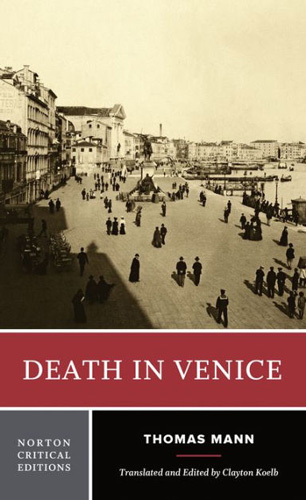
I haven’t picked up The Plague or A Journal of the Plague Year, let alone a contemporary dystopian novel. What I wanted in the Year of Covid was escapism. But having found comfort (and laughter) in the timeless fiction of the peerless P. G. Wodehouse, I was ready to move on. Thomas Mann’s Death in Venice caught my attention as I scanned my bookshelves.

All I knew about Mann’s Death in Venice—and Visconti’s film—was that a distinguished artist (Gustav Mahler?) is vacationing in Venice when he becomes infatuated with a boy visiting from another country. Soon I was swept away, and Michael Henry Heim’s brilliant English translation played no small role in providing another kind of escape from 2020. Not for long, though. I almost fell off my chair when I realized why the locals in early twentieth-century Venice don’t want to tell the protagonist (an author, not a composer) that their city is in trouble.

There’s an epidemic—a cholera epidemic, in fact, “emanating from the humid marshes of the Ganges Delta”—and though people are dying in Venice, officials are in denial. Even as the news spreads, causing increasing anxiety in the malodorous city, Venetians hide the facts from the tourists. It’s the oppressive heat, the sirocco—and there’s nothing to worry about, they say, their lies making the city as menacing as the disease threatening it. The author finally hears the truth from another foreigner, but it’s too late.

“The epidemic even seemed to be undergoing a revitalization; the tenacity and fertility of its pathogens appeared to have redoubled,” Mann writes.

More than a century has passed since Mann wrote this gripping novel. Sadly, we humans continue to make the same mistakes, and as this literary classic reminds us, some blind spots may never disappear.


Death in Venice by Thomas Mann. 1983.

Reviewer bio: Murali Kamma’s Not Native: Short Stories of Immigrant Life in an In-Between World won the 2020 Bronze Independent Publisher Book Award (IPPY) for multicultural fiction. 

Buy this book from our affiliate Bookshop.org.

‘Buried Seeds’ by Donna Meredith

Guest Post by Ed Davis

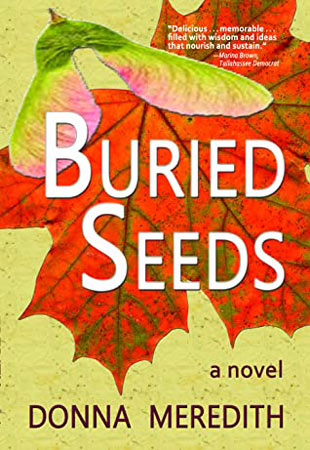
Donna Meredith’s new novel Buried Seeds is a timely novel of activism, about, among other things, the West Virginia teachers’ strike of 2018 that electrified the nation. Buried Seeds is actually two novels beneath one cover, alternating between Clarksburg, WV teacher Angie Fisher’s strike narrative and Angie’s great-great-grandmother Rosella Krause’s early twentieth century activism in the struggle for women’s right to vote.

Angie Fisher is an excellent Everyteacher, fiftyish, funny and self-deprecating. When Angie accepts leadership of the American Federation of Teachers in her district, she sets herself up for an agonizing dilemma: how can she lead a strike when her unemployed husband Dewey is applying for work with the local FBI, likely to frown on such law-breaking? After Angie and Dewey are forced to move in with her parents, daughter Trish and her new baby soon follow—and if the old farmhouse weren’t already over-crowded, sister MacKenzie winds up there, too, when she leaves her husband.

Alongside Angie’s anguished life, Meredith shoots us into the early 1900s, where we meet her great-great grandmother Rosella, who has endured similar suffering. Rosella, an artist, is now in San Francisco, along with her fourteen-year-old daughter. The girl’s diary describes her mother’s life as an activist tirelessly working for women to earn the right to vote in 1907. We also get Rosella’s first-person account of San Francisco’s great earthquake and fire of April 18, 1906, providing one of the novel’s most dramatic set pieces.

A seasoned writer of mysteries, Meredith doesn’t ignore the need for suspense to keep readers tantalized in this well-researched novel containing many shocks and surprises with great historical themes.


Buried Seeds by Donna Meredith. Wild Women Writers, March 2020.

Reviewer bio: Ed Davis’s Time of the Light, a poetry collection, was released by Main Street Rag Press in 2013. His latest novel, The Psalms of Israel Jones (West Virginia University Press 2014), won the Hackney Award for an unpublished novel in 2010.

Crying in Public with Holly Bourne

Guest Post by Chang Shih Yen

The Places I’ve Cried in Public is a young adult novel by British author Holly Bourne. This is not your typical young adult story about crushes and teenage angst. Teenage novels don’t usually come with a warning on the back cover, like this book does, that it contains material that some readers may find distressing.

In this book, Amelie fell in love with Reese, but now she can’t seem to get over him. So she’s going back to all the places where she cried in public to try and re-trace her steps, and see where her life went wrong. In the process, she’s learning about what love is not. This book is written in very British English and is set in places like London and Sheffield, but it deals with universal themes, like recognizing what is a healthy relationship, what is controlling behavior and abuse.

This book is powerful and intense. It is a work of fiction, but it deals with real issues. It is a tough read, in the sense that you need to mentally prepare to read until the end. You feel like you have been punched in the stomach after reading this book. But it is a good book; it deals with important issues. This book should be required reading for all young women.


The Places I’ve Cried in Public by Holly Bourne. Usborne Publishing Ltd., 2019.

Reviewer bio: Chang Shih Yen is a writer from Malaysia, seeing through the pandemic in New Zealand. She writes a blog at https://shihyenshoes.wordpress.com/.

What Happens at Night

Guest Post by Carla Sarett

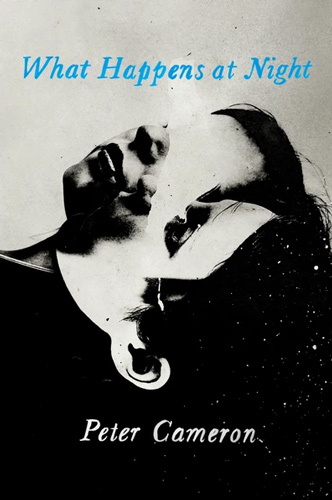
What with election hysterics and the COVID Blues, I was starved for a truly immersive read, and lo, Peter Cameron came to my rescue in What Happens at Night.

I’ve been a fan of Cameron’s elegant writing since, well, forever (if you have not read The City of Your Final Destination or Andorra, by all means, do so). Here, he takes Bowlesian themes (he does quote Jane Bowles, if there’s any doubt) but sprinkles them with kindness. Cameron’s mercifully free from the dour outlook on humanity that I’ve come to expect these days, and it makes this work enchanting in the best sense.

A not very happy New York couple wants to adopt a child, and in their quest, ends up in an icy “northern” foreign city, in a comically grand hotel (elaborately, but impractically, appointed). Nothing that happens from that point could possibly be predicted: the couple meets a faith healer, for one thing, and no, he’s not quite a fake. From there, the story by turns becomes surreal and funny and moving. The novel’s atmosphere is dark and cold, but its spirit is one of light, “a warm golden light.”

(I must also mention that the publisher has sprinkled the cover with a barely visible glitter. Perfect.)


What Happens at Night by Peter Cameron. Catapult, August 2020.

Reviewer bio: Carla Sarett’s recent work appears or is forthcoming in Third Wednesday, Prole, Halfway Down the Stairs, and elsewhere.  Her novel, A Closet Feminist, will be published in 2022.

Buy this book from our affiliate Bookshop.org.
Insights on Accidental Presidency

Guest Post by Eron Henry

Eight men became American presidents without being elected to the office. All acceded to the role after the incumbent was assassinated or succumbed to illness.

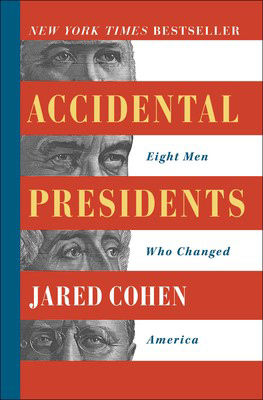
In Accidental Presidents: Eight Men Who Changed America, Jared Cohen provides historical details of their achievements and failings. Most were unprepared for the top office because they were uninterested, though a few coveted the presidency.

Theodore Roosevelt and Harry Truman were extraordinarily successful. The former succeeded William McKinley Jr. who was assassinated, and the latter Franklin Delano Roosevelt, who died of longstanding ailments. Except for the Vietnam War debacle, some believe Lyndon Johnson would be among the greatest presidents ever. He became president after the assassination of John Kennedy.

The most disastrous was Andrew Johnson, who became president after Abraham Lincoln was gunned down. The first to be impeached, Johnson reversed policies by Lincoln to help the nation heal after the bloody civil war. He set the stage for Jim Crow, initiating a century of intense discrimination against African Americans that boiled over into the Civil Rights Movement in the 1960s.

Cohen demonstrates the importance of presidents choosing able persons as their deputy.  Not all vice presidents were chosen for their ability but as a compromise candidate to appease interest groups or various constituencies in their party.

In the times we live, Cohen’s Accidental Presidents may prove especially insightful.


Accidental Presidents: Eight Men Who Changed Americav by Jared Cohen. Simon and Schuster, April 2019

Reviewer bio: Eron Henry is a communications consultant. He blogs at https://oletimesumting.com.

Buy this book at our affiliate Bookshop.org.

Take Me To Your Stutter

Guest Post by Susan Kay Anderson

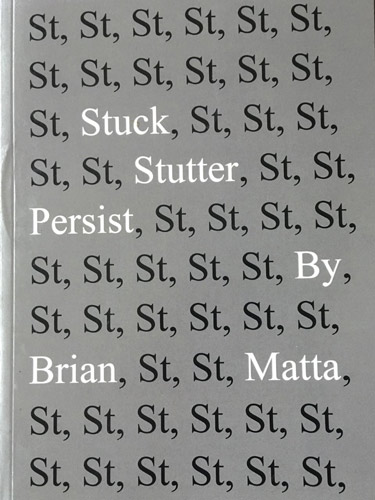
Brian Matta’s superbly inventive Stuck, Stutter, Persist is like stepping into a room only to have a secret door open, revealing an entity who will communicate with you, maybe bonding with you forever and ever. This entity is expressed as a stutter, but is the inexplicable making itself known. What is signified by a glitch, a pause, a repetition, or an echo is really something very different. But what?

In the poem, “Check out that breech” the main character is the stutter (sound) “—ch” and it is heard throughout in a list of material items; “chest . . . brunch . . . chapel” which seem ordinary and unsuspecting but invoke a stutter near the end of the poem. The stutter asserts itself here and in each poem in this marvelous and tantalizing book, not as “—ch” but as a different stutter sound in each poem.

These stutters (these poems) slowly become fodder for existential contemplation. Much like the world Gregor in Kafka’s novella, The Metamorphosis, experiences, we see that this world also needs no introduction once you start reading. The stutter does persist to draw out and slow down the experience of dramatic life events and serves to underscore and even lead the poems away from simple explanation.

When I first began reading Stuck, Stutter, Persist, I was intrigued because it seemed weird and a sort of strange homage to anger or patience or both. But it is much different because it is masterfully poetic in its unblinking regard of the parts of life which fly by so fast that only a stutter can catch bits of them before they are lost.


Stuck, Stutter, Persist by Brian Matta. Black Centipede Press, 2019.

Reviewer bio: Susan Kay Anderson’s first book of poems is Mezzanine. Anderson was the poetry editor of Big Talk, a free publication in the early 1980s featuring Pacific Northwest punk bands. She has a poem forthcoming in Sleet Magazine’s Winter Issue, “The Inside Edition II and Please Plant This Book Coast To Coast, Virginia Brautigan Aste’s memoir, will be published by Finishing Line Press in 2021. Her recent work can be found in Calibanonline, Gnashing Teeth, Lily Poetry Review, Mojave River Review, NewPages What Am I Reading?, Panoply, Tinderbox Poetry Journal, and Porter Gulch Review.

Buy this book from our affiliate Bookshop.org.
Re-reading ‘The New Jim Crow’ in the Era of Black Lives Matter

Guest Post by Laura Plummer

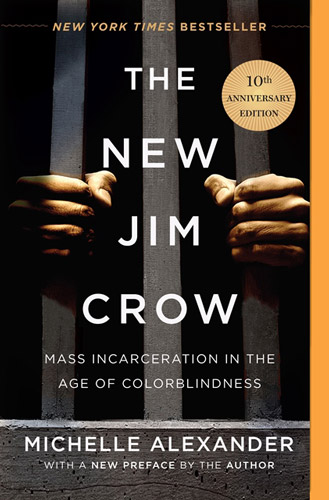
When I first read Michelle Alexander’s groundbreaking book The New Jim Crow: Mass Incarceration in the Age of Colorblindness in 2010, Obama was in the beginning of his first term as president. Many white Americans believed his election was a sign that our country was now post-racial, that equality had finally been achieved. But that was a myth, as Alexander explains in painstaking detail. Using the statistics of the day, she lays bare the racism embedded in our criminal justice system, which she likens to modern-day slavery.

This year, I decided it was a good time to dust off Alexander’s work, to see how its distressing statistics had improved over the past ten years. The answer was, tragically, not enough. Blacks still face more discrimination than other races in every phase of the criminal justice system—from stops and arrests to sentencing and parole. They are still the primary targets of the fictional “War on Drugs,” which was invented as a legal means to put large numbers of Black people behind bars. They are still locked in to what Alexander calls a “permanent undercaste.”

The New Jim Crow came out before the 2013 killing of Trayvon Martin birthed #BlackLivesMatter, before the 2014 killings of Michael Brown and Eric Garner. It was before the killing of George Floyd and other Black Americans sparked worldwide protests against racist policing, before Black Lives Matter became a global movement. While the discrimination against Black people in America is much the same as when the book was published, the public support for protecting and defending Black lives has grown exponentially. The ground is fertile for all Americans who value justice to demand a new reality. To quote Dr. King, no one is free until we are all free.


The New Jim Crow: Mass Incarceration in the Age of Colorblindness by Michelle Alexander. 2010.

Reviewer bio: Laura Plummer is an American freelance journalist and writer from Massachusetts. Read her work at lauraplummer.me.

Buy this book from our affiliate Bookshop.org.

Visit Cape Cod with Thoreau

Guest Post by Michael Stutz

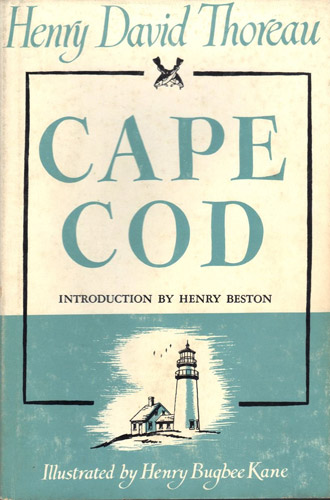
The surf might be the same on every shore, but its sound is different on Cape Cod than anywhere. And I miss it—it’s been a handful of years since I’ve been there, so in a mood of summer longing and nostalgia I turned to Thoreau’s Cape Cod, an 1883 edition that’s looked fine in my library for years but that I’d never touched.

It’s a good read. The chapters are like thick travel essays, of the kind I vaguely remember in those paper things they used to call magazines, back before the net age. Like the longreads that now sometimes fall into our phones.

Each chapter is on some subject or portion of the Cape. Thoreau explains that the book was the result of his own travels there, and right away in reading it, I see it turns out I’ve spent almost the exact amount of time there as he did: three distinct visits, totaling about three weeks.  I’ve written about Cape Cod before—much of it yet unpublished—but this reminds me that I’ve got more to write even if I never return.

My visits weren’t as gruesome as his—the book nearly begins with scores of dead bloated bodies tumbling in with the tides, and with Thoreau seeing headless bodies on the dry-sanded shore, and beaches lined with coffins and unrecognizable victims of mean shipwrecks. In my modern visits there was none of that. In fact, it seemed that everyone could live to be old and wrinkled as walnuts if our common plagues like cancer and car accidents were avoided.

Otherwise, the people he describes and the old haunted streets and the treeless shores are much like the Cape I know. Like him, I agree that October is the time to be there—the Cape is haunted, the shore moans with ghosts, and that’s the best time to catch them.


Cape Cod by Henry David Thoreau. 1865.

Reviewer bio: Michael Stutz is the author of Circuits of the Wind, the story of the net generation. His writing has appeared in many journals and magazines.

Buy this book at our affiliate Bookshop.org.
A Vivid Landscape of Sensual Experiences

Guest Post by Chuck Augello

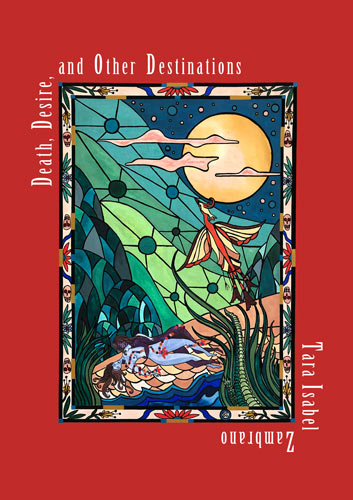
The stories in Death, Desire, and Other Destinations, a new collection by Tara Isabel Zambrano, depict a vivid landscape of sensual experiences ranging from a widowed mother’s kitchen to the surface of the moon. A desire for escape is a recurrent theme. In “Lunar Love,” a couple flies to the moon to exchange their vows. “We have been excited about doing something that everyone we know does these days since they find nothing exciting about the earth anymore,” the narrator says, and it’s a telling line. Daily life, with its expectations and social conventions, no longer excites. Zambrano’s characters seek their pleasures elsewhere, often in the body.

One of the strongest stories is “Up and Up,” in which a daughter interrupts her widowed mother during an intimate moment with another man. While the daughter is shaken, the mother is nonchalant and unapologetic. “It’s a blessing to be alive with no one to answer to,” the mother says, dismissing her daughter’s questions about the neighbors and the memory of the recently departed husband/father. The mother’s new lover, Santosh, soon reappears holding three mangoes, a perfect detail, the succulent fruit signaling the sensual tour-de-force to come. Santosh stands behind the narrator, and a scene that could have been uncomfortable or even creepy becomes a passionate delight, Zambrano surprising the reader with what happens between the characters, her language lush and evocative, the daughter’s “pores opening onto wonder, previous half-baked climaxes and affairs slipping out, my body poured into a new cast.” It’s a moment charged with desire, sexy and emotionally revealing.

The stories in Death, Desire, and Other Destinations are imaginative and unique, Zambrano’s collection the perfect destination for readers looking to escape the doldrums of quarantine and sheltering in place.


Death, Desire, and Other Destinations by Tara Isabel Zambrano. Okay Donkey, September 2020.

Reviewer bio: Chuck Augello is the author of the novel The Revolving Heart and the story collection The Inexplicable Grey Space We Call Love.

The Exploits of Nicole “Nick” Doughty

Guest Post by Lynn Levin

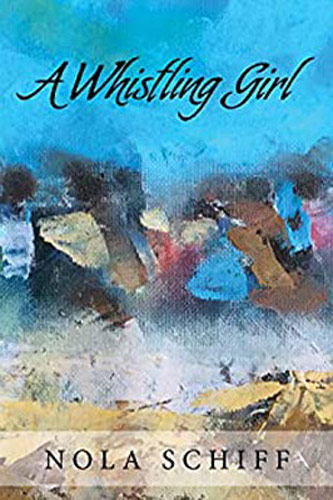
What a thrill it is to read Nola Schiff’s magical, vivid, fast-paced novel A Whistling Girl. Set in Southern Rhodesia in the early 1950s, the story follows the exploits and coming-of-age struggles of a young girl named Nicole “Nick” Doughty.

Smart, daring, and serious, Nick, who hates dresses, is the leader of her gang of kids and eggs them on to all sorts of misadventures. More than that, Nick dreams of befriending the intrepid journalist Sarah J. Bridgeworthy, then journeying through Africa on a dangerous mission to interview members of the Mau Mau. Nick follows S. J. through news reports and her own imaginings to the journalist’s final tragic end, which Nick takes harder than any trauma that befalls her, including being raped by the brother of one of her gang members.

Setting and society play key roles in this novel. Schiff weaves a tapestry rich with the flowers, trees, birds, and other wildlife of the region. Her young heroine never fails to notice the social inequality among the races, and her world intersects with those from many different walks of life and ethnic backgrounds. Young Nick is part Peter Pan, Huck Finn, and Tom Sawyer. I feared for her, but more than anything I cheered for her in this page-turner of a book.


A Whistling Girl by Nola Schiff. BookBaby, July 2020.

Reviewer bio: Lynn Levin’s most recent book is the poetry collection The Minor Virtues (Ragged Sky, 2020).

Life & Death in Sharp Focus

Guest Post by M.G. Noles

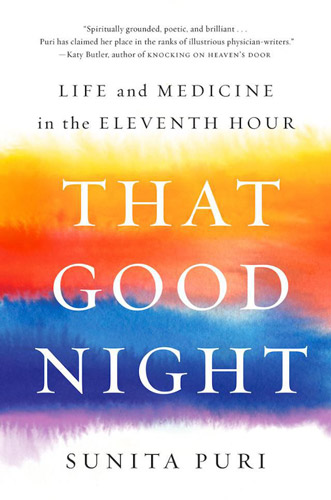
Sunita Puri’s memoir That Good Night: Life And Medicine in the Eleventh Hour is poetic, beautiful, and insightful.

The book traces Dr. Puri’s journey into the world of palliative care. Offering a collection of wisdom stories taken from her work with the dying, she gives us a view of death as a moment of dignity and grace.

Dr. Puri is the doctor whom hospitals call when a patient enters the terminal phase of illness. Some patients are antagonistic toward her presence and despise her, thinking she is encouraging them to give up. Yet, she is actually there to give dying patients and their loved ones the strength to know when it is time to let go. It is a fine distinction to make, but she does it beautifully.

In this memoir, Puri shares spiritual and philosophical insights into the dying process. She demystifies and unfolds the process of death as a journey we must all make. In so doing, she teaches lessons about the ways to embrace life until we must release it. And in that release can come great peace.

As she writes, “For we will each age and die, as my father told me years ago. We will lose the people we love. No matter our ethnicity, place of residence, income, religion, or skin color, our human lives are united by brevity and finitude, and the certainty of loss. Just as we strive for dignity and purpose throughout our lives, well before the light fades, we can bring this same dignity and purpose to our deaths, as we each journey into our own good night.”

As we all struggle to make sense of death and dying during this long and arduous road of the pandemic, Dr. Sunita Puri’s memoir shines a light in the darkness.


That Good Night: Life And Medicine in the Eleventh Hour by Sunita Puri. Penguin Random House, March 2020.

Reviewer bio: M.G. Noles is a freelance writer. whose work appears on Medium’s The Pine Wood Review (https://medium.com/@writinglife). She also reviews books for GoodReads.com (https://www.goodreads.com/user/show/118714169-mg-noles).

Buy this book at our affiliate Bookshop.org.
Tyranny from Good Intensions

Guest Post by Claudia Gollini

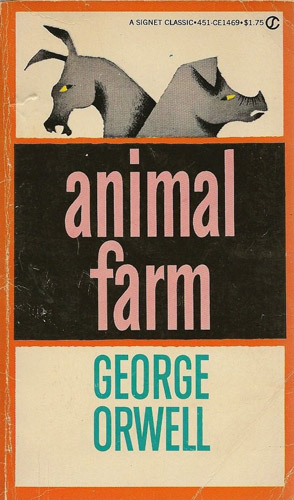
Animal Farm by George Orwell was first published in 1945 and will be celebrating its seventieth birthday next year.

One of Orwell’s finest works, it is a political fable based on the events of Russia’s Bolshevik revolution and the betrayal of the cause by Joseph Stalin.

Parents need to know that Animal Farm is a biting satire of totalitarianism, written in the wake of World War II and published amid the rise of Soviet Russia. Although it tells a fairly simple story of barnyard animals trying to manage themselves after rebelling against their masters, the novel demonstrates how easily good intentions can be subverted into tyranny.

The fable is alive with brilliant touches. At first the victorious pigs write out a set of revolutionary rules, the seventh and most important is of which is “All animals are equal.” It was a brilliant idea to have the clever pigs simplify this for the dimmer animals (the sheep, hens and ducks) into the motto “Four legs good, two legs bad.” But it was a real stroke of genius for Orwell to later have the pigs amending these rules, most notoriously amending rule seven to become “All animals are equal—but some are more equal than others.“ This says something so profound about human beings and our laws and rules that it can be applied anywhere where laws are corrupted and distorted by the powerful.

The book seems relatively simple on the first read but there are several layers of complexity to represent the Soviet government. The novel contains a fair amount of satire and humor, which personally is one of the main reasons why I recommend reading it.


Animal Farm by George Orwell. 1945.

Reviewer bio: Claudia Gollini is a makeup artist, fashion/beauty blogger and journalist, editor and writer, and body painter of events and TV show (Make-up Deborah-Gucci and Castrocaro TV talent show, body painter to Art gallery ‘Spazio l’altrove’ and TV show Sky 869 Village festival and another fairs & exhibition on Italy).

Escape from Reality with Classic Fantasy

Guest Post by Chang Shih Yen

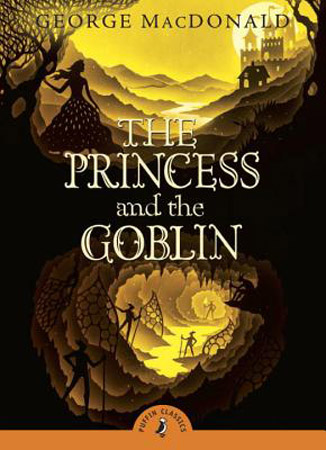
Perhaps you need a little bit of an escape from reality at the moment. This is a good book to do that. The Princess and the Goblin is a classic fantasy novel written by Scottish writer George MacDonald (1824-1905). It first appeared in 1871, before being published in book form in 1872.

The Princess and the Goblin tells the story of Princess Irene who is rescued from a goblin attack by a miner boy called Curdie. The book tells of a battle between goblins who live underground and humans. With her new friend Curdie and some magical help, Princess Irene must find a way to defeat the goblins and save her father’s kingdom.

Despite being written in the Victorian era, the language in this book is very easy to follow. You can’t tell that it was written almost 150 years ago. This was a very enjoyable book. It’s the type of book where illustrations are not necessary because it’s better to use your own imagination to picture all the goblins and other creatures. This classic fantasy novel inspired Tolkien’s Lord of the Rings and The Chronicles of Narnia by C.S. Lewis. George MacDonald wrote at least 50 books, but most of his work is not remembered now, which is a shame. George MacDonald deserves more recognition.


The Princess and the Goblin by George MacDonald. 1872.

Reviewer bio: Chang Shih Yen is a writer from Malaysia, seeing through the pandemic in New Zealand. She writes a blog at https://shihyenshoes.wordpress.com/.

Buy this book from our affiliate Bookshop.org.

A Dose of Fantastic

Guest Post by Christopher Linforth

In her debut collection Collective Gravities, Chloe N. Clark offers a dose of the fantastic into the ordinary, and sometimes humdrum, lives of her characters. Twenty-five aesthetically similar stories make up the book, which dilutes the power of the collection as a whole, but shows the range of Clark’s fascination with parallel universes, zombies, and the breakdown of relationships. The strongest stories reveal Clark’s gift as a storyteller and as a purveyor of the weird.

In the collection’s opener “Balancing Beams,” the astronaut narrator Ava struggles with an unknown, debilitating ailment in a futuristic America. In a beautifully written flash of insight, she tells us:

I couldn’t speak for a moment. The weight of words on my tongue. In the Out, there had been so many times I fumbled words, slurred them. They don’t tell you that zero-gravity even affects your tongue. Your mouth can feel so heavy when you try to say something.

Other stories seem to take their cues from B-movies and horror stories and the world of science fiction. Throughout the collection, Clark remakes these historically male-dominated forms to center her stories on women and the deleterious effects of culture on their bodies.

Clark’s debut is a mixed collection, yet it shines so brightly in spots that it’s clear she is destined to wow us with her next book.


Collective Gravities by Chloe N. Clark, Word West Press, 2020.

Reviewer bio: Christopher Linforth is the author of three story collections, The Distortions (Orison Books, 2021), winner of the 2020 Orison Books Fiction Prize, Directory (Otis Books/Seismicity Editions, 2020), and When You Find Us We Will Be Gone (Lamar University Press, 2014).

Buy this book at our affiliate Bookshop.org.

Narrative Pattern & Design

Guest Post by Anthony DiAntonio

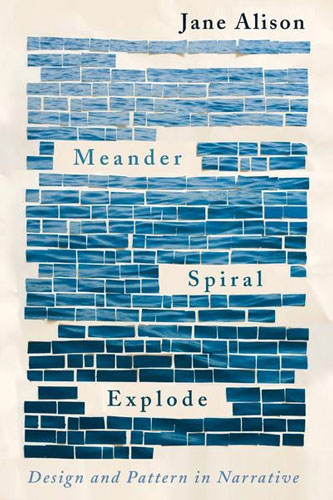
Jane Alison’s Mender, Spiral, Explode, is a nonfiction, creative writing guidebook for both writers and avid readers alike. Alison argues that there are multiple ways to craft a narrative, other than the Aristotelian “masculo-sexual arc” we have all come to know and love. Narratives can follow many patterns that we see in nature, like the spiral, the fractal, or even the meandering trail of snails. Alison provides examples from multiple contemporary works of fiction to prove her premise, including Murray Bail’s Eucalyptus, Marguerite Duras’ The Lover, and Sandra Cisneros’ The House on Mango Street. Starting each part with a personal reflection, Alison connects her own experience with these patterns to further validate their influence on human life. Through exquisite vocabulary that fuels a powerful, humorous, and direct work, Jane Alison’s Mender, Spiral, Explode is a must-read for those who admire pattern and design in any narrative.


Meander, Spiral, Explode: Design and Pattern in Narrative by Jane Alison. Catapult, April 2019.

Reviewer bio: Anthony DiAntonio is a high school English teacher at Cumberland County Technical Education Center in New Jersey. He is also currently studying for his Masters in Writing Arts at Rowan University. To achieve his Masters, he will be completing a novel focused on mindfulness, positivity, and moving forward from emotional trauma.

Buy this book from our affiliate Bookshop.org.
Witness. Vulnerable. Mystery.

Guest Post by Susan Kay Anderson

Witness.

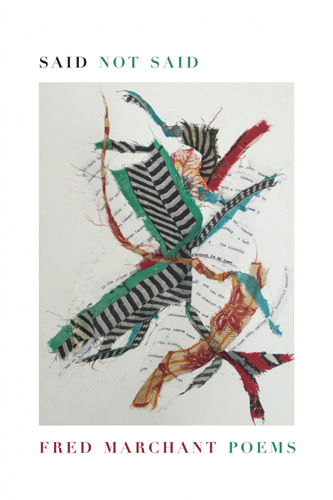
Fred Marchant views the inexplicable and gives us the air it breathed in his poems in Said Not Said. I have been looking at this book, reading it, studying with Marchant, and looking at it again for the past three years. Most of that time I worked as a graveyard-shift custodian cleaning university buildings. Now, I live at my parents’ and take care of the both of them during the days of the pandemic. What Marchant sees in his life is revealed in this book. He sees what is not fair. He sees reality but events he cannot control. Here we are in 2020: sitting ducks. Marchant’s poems get into the feeling of this but also access the profound stability of peace and understanding. In “Fennel” he writes:

At the end maybe you were thinking
of Whitman and his claim that dying
was luckier than we had supposed.
Or not. Or not. Here is the bee . . .

Marchant shows us that nature with a capital N intercedes, maybe not to change the course of events he witnesses, but to carry an event to another place, a different emotion. Continue reading “Witness. Vulnerable. Mystery.”

What Is Real?

Guest Post by Susan Kay Anderson

Rereading The Intangibles by Elaine Equi, during the pandemic, it suddenly reads like a meditation, yet it was published “before” in 2019. Well, it matches the feeling of ennui of the pandemic, police brutality, and the more overarching panic of the climate crisis. This is also true of a lot of poetry I read now, Because of my state of mind, and I am sure others would agree (desperate/bored/searching/hopeful/raw/terrorized), we are also mesmerized by poetry and what poets have to say.

What Equi has to say in The Intangibles is as straightforward as she’s always been. From her titular poem: “Prove you’re not a robot / Answer the question: / What color is the silver basket?”

Her poems are directed outwards but also fold endlessly in on themselves. They are playful in their sense of what it feels like to be confined, in quarantine, yes, and even before the quarantine period we are currently in even happened. From her poem “Faces” we see ourselves and others in a bleak, yet hopeful way: “I love to watch / the dough of faces / flower.”

This book slays with amazing titles. Here are some:  “Deep In The Rectangular Forest,” “Ode To Weird,” “Ghosts and Fashion,” “Home On The Range” (okay, not such a weird title, but a very exquisite and wonderful poem), “Granular Time/Granular Distance,” and “Looking Out The Window In A Novel.”

Each of these poems blossoms into a novel (and not a virus).


The Intangibles by Elaine Equi. Coffee House Press, 2019.

Reviewer bio: Susan Kay Anderson’s first book of poems is Mezzanine, from Finishing Line Press, 2019. She also has work forthcoming in Sleet, and another book from Finishing Line Press. She lives in Oregon.

Weaponized Information

Guest Post by Eron Henry

Information and news are increasingly weaponized. While not new, the weaponization of news and information has been set on steroids by the rise of social media. Facebook, Twitter, YouTube and their counterparts in other countries, such as in Russia and China, have become the main source of news for citizens.

It is in and through social media that propaganda, misinformation, and disinformation thrive. The first, propaganda, is a way to tell one’s own story and can be used for good or ill. Advertising, for instance, is a form of propaganda. The second, misinformation, is false and faulty news that need not be deliberately false but can be harmful. The last, disinformation, is the deliberate spreading of false and misleading news and information with the intention to create confusion and cause harm.

Because social media is now the most widely used source of news and information, persons become easily misled and fooled because social media is a fertile breeding ground for misinformation and disinformation.

In Information Wars: How We Lost the Global Battle Against Disinformation and What We Can Do About It, Richard Stengel tells how false and faulty news is now normalized. The former editor of Time Magazine, Stengel was recruited by the State Department during the Obama Administration to counter misinformation and disinformation, especially those put out by Russia and ISIS, the terrorist group.

It was a Byzantine experience. An admixture of outdated technology, ill-prepared and ill-informed government officials and workers, turf wars, career ambitions, ego, and more, got in the way of countering the coordinated and concerted attack on truth and facts, both within the United States and globally.


Information Wars: How We Lost the Global Battle Against Disinformation and What We Can Do About It by Richard Stengel. Atlantic Books, October 2019

Reviewer bio: Eron Henry is a communications consultant. He blogs at https://oletimesumting.com.

Buy this book at our affiliate Bookshop.org.
Eerie Reflections: Lacrimore

Guest Post by Laura Kincaid

Lacrimore by SJ Costello explores our relationship with grief and tragedy through a speculative lens. The gothic novel draws readers in with beautifully dark prose that builds a haunting world. While the story unfolds slowly, the flawed characters and mystery compel readers to turn the page.

The novel opens with Sivre Sen, a faithless medium journeying across a stormy lake to a small island. There sits Lacrimore, a crumbling labyrinth of a mansion shrouded by legends. During a vision, a ghost called her there to complete his funeral rites. In Costello’s Victorian-inspired world, mediums are revered and influential, especially after a recent epidemic. However, Sen has never before experienced visions of the dead. After arriving, she meets the dead man (who is still alive), a staff trapped by circumstances, and a dubious doctor in exile. As Sivre searches the house for answers and closure, she discovers dark secrets in its rotting walls. The book is like Lacrimore itself—a quiet, mysterious tale standing alone in a much larger world.

Though in development before the COVID-19, the novel was a poignant and refreshing take on pandemic literature. Instead of focusing on dystopian survival, the story centers on what happens after survival. How do we process our grief? How do we reflect on the societal failures that came to light? What change is required to be better? Lacrimore doesn’t claim to answers all these questions. It remains a spooky story that is fun to read, but opens the door for those who want to ponder its deeper themes.


Lacrimore by SJ Costello. June 2020.

Reviewer bio: Laura Kincaid is a writer, editor, and lover of the fantastical. Find her work in Twist in Time and at laurakincaidmusings.wordpress.com.

Literature that Rattles the Soul

Guest Post by Brian Phillip Whalen

I’m rereading Peter Orner’s collection of essays, Am I Alone Here?: Notes on Living to Read and Reading to Live. (What a title! I’m also rereading Jonathan Franzen’s How to Be Alone.) Orner’s essays are ideal stay-at-home reading—easy-to-digest, elegantly composed—and his sparing prose is second-to-none at conveying depths of feeling in few words. The result is a perfectly-paced, heartfelt, sad, funny, and breathtaking book.

Orner seamlessly blends craft analysis (examinations of Chekhov, Welty, Malamud, Hurston, Wideman, Kafka, and scores of other writers) with memoir (stories of fathers, children, love, loss, joys, regrets, the pleasures—and solitude—of reading). Each essay is inspired by an act of reading, prompting explorations into the ways in which the books we read inform, intersect with, and sometimes mirror our lives:

It gets me every time. The way a story about characters, nonexistent people, pushes us back to our own, the people who do exist, who do walk the earth.”

It’s Orner’s voice, however, that draws me in. Though I’ve never met him, the feeling I get reading his essays is akin to sharing stories of hurt and redemption with an old friend over a cold beer, sitting on lawn chairs in the yard at sunset.

We have all done things we wish we could erase, forever, from the record. No matter how we airbrush our histories, the hurt we have caused will, always, reach out for us—like for me today—out of the December rain.”

Orner’s objective was to write about literature that “rattles the soul,” and in so doing, he amassed a collection of essays that continues to rattle mine. This is my go-to recommendation for readers wanting bite-size, ruminative literary essays—and these days, for anyone looking, as the title beckons, for some company in isolation.


Am I Alone Here? by Peter Orner. Catapult, 2016.

Reviewer bio: Brian Phillip Whalen’s debut collection of fiction, Semiotic Love [Stories], will be released in 2021 (Awst Press). Find him here: www.brianphillipwhalen.com.

Buy this book from our affiliate Bookshop.org.
Vulnerability Is Strength

Guest Post by Joshua Lindenbaum

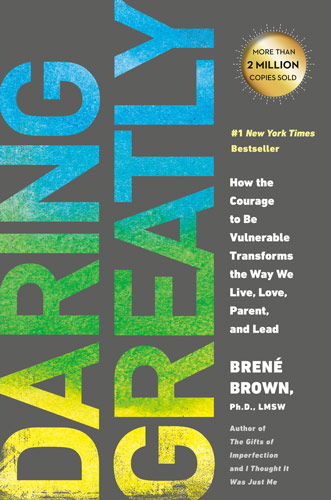
When one thinks of courage, they usually think about someone going into a burning building to save a person’s life; however, Dr. Brené Brown provides a unique, much-needed lens in which to view bravery in a broader sense in her book Daring Greatly: How the Courage to Be Vulnerable Transforms the Way We Live, Love, Parent, and Lead. The writing is a beautiful concert of personal anecdotes alongside empirically-based research. Furthermore, Dr. Brown reveals not-so-flattering details about herself, and therefore lives the practices in which she details in her book. It is a lovely trident of logos, pathos, and ethos designed to pierce into the stubbornness of convention and tradition, especially amongst men who have been taught to not show emotions.

This incredibly organized text uproots widely-held beliefs, such as “vulnerability is weakness.” On the contrary, in her previous book The Gifts of Imperfection, Dr. Brown declares, “vulnerability is our most accurate measurement of courage.” She defines ” . . .  vulnerability as uncertainty, risk, and emotional exposure,” which comprises everyday life, especially during this pandemic. That’s what I think many readers will appreciate about her work: Brown manages to quantify concepts like vulnerability, shame, and even joy. She includes accounts from her own qualitative research alongside a panoply of reliable sources. In addition to providing background, there are also practical steps in, for example, fostering trust. For instance, there’s a section on “the marble jar,” a metaphor used to help us in assessing whether an individual is trustworthy or not based upon specific criteria. This approach allows one the ability to express themselves while also creating boundaries against those that don’t deserve our trust.

I know what you’re thinking: this sounds like a corny self-help book. You are wrong. It is a humanity book. Step into its pages!


Daring Greatly: How the Courage to Be Vulnerable Transforms the Way We Live, Love, Parent, and Lead by Brené Brown. Avery/Penguin Random House, April 2015.

Reviewer bio: Joshua Lindenbaum’s poetry has appeared in Drunk Monkeys, Breadcrumbs, Yes Poetry, The Bangalore Review, Five:2:One, 3Elements ReviewTypishly, and elsewhere.

Buy this book from our affiliate Bookshop.org.
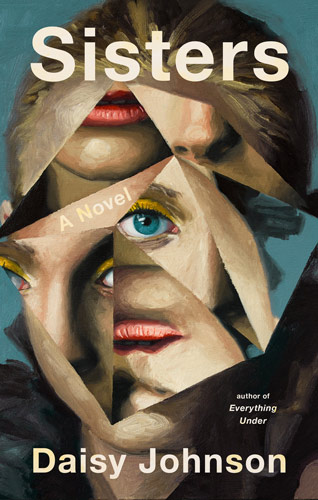
It’s Always the Person You Least Expect

Guest Post by Caroline V.D.

As a first timer being introduced into the world of Rizzoli and Isles’s grisly world, I found myself left exposed to the intensity and intricately woven plot in Tess Gerritsen’s addition.

In I Know a Secret, we are pushed straight into the unfortunate murder of Cassandra Coyle, an indie filmmaker and are soon greeted with Rizzoli and Isles. For those like me who are meeting the two strong women quite late into the series, Gerritsen does a wonderful job in establishing familiarity and understanding of their characters as the murder investigation goes on. The characters throughout the book all contribute to the tension and suspense in deducing the culprit’s motives and next actions, as the number of bodies pile up and pasts uncovered. There are no moments that are wasted and no conversations that do not provide a twist to the story, as Coyle’s colleague says “Horror 101 . . . it’s always the person you least expect.”

The symbolism and messages throughout the story are consistent and well placed by Tess Gerritsen who had impressively created an impression of a web laid out by a culprit who could not be traced yet by the end of the book; the web could be followed into a single string as the culprit’s motives are laid out to the reader. It is an amazing feat done by Gerritsen who I commend for roping in another reader into her series!


I Know a Secret: A Rizzoli & Isles Novel by Tess Gerritsen. Penguin Random House, April 2018.

Reviewer bio: Hey all, it’s Caroline, and I am an aspiring book reviewer. Currently I’m working on a personal project where you’ll be seeing me and a lot more books in the future. Check it out at: https://theladywithinkstainedhair.tumblr.com/.

Buy this book at our affiliate Bookshop.org.
Permission to Be Creative Granted

Guest Post by Jaimie Hanson

Creativity. Merriam-Webster defines creativity as “the ability to create.” In Called to Be Creative, author Mary Potter Kenyon not only writes about creativity, what it is, what it means, how it affects and benefits us mentally, physically, emotionally, and even spiritually, but she does so by graciously giving the reader a glimpse into her own life throughout the book. This book will grant the permission we often feel we need to be a little (or a lot) creative, and you will be inspired and encouraged, for yourself, and I dare say for others in your circle, as you read through the pages. The chapters, each with their own creative focus, are supported by research and resources throughout the book and the easy-to-do exercises at the end of each chapter allow for the very guidance and reference we seek. Write in the margins, underline the ah-ha moments that speak to you, and get your creative self active.

Called to Be Creative, whether read individually or with a group (yes, even a Zoom group), belongs in everyone’s hands. It’s a book club book, a girlfriends group book, a book for those who are single or married, it’s even a book for guys (and dare I say it would be a fun challenge to create a space and opportunity for that to happen!). It’s perfect for families, for creative minds and those who don’t see themselves that way. A teaching tool for young moms, homeschool moms, and moms looking for a way to cure summer boredom. Add this book to your reading list, discover or uncover the creativity within you, embrace the creative opportunities, and be ready to be amazed as you laugh and smile, enjoying the creative moments within your everyday journey.


Called to be Creative by Mary Potter Kenyon. Workman, August 2020.

Reviewer bio: Jaimie Hanson lives in the Midwest with her family. She enjoys writing and photography. You can find her sharing both on her blog at jelizabethhanson.com.

A Woman’s Experience in the Gold Rush

Guest Post by Christina Francine

Is making a living worth risking life and reputation? For Au Toy during the American Gold Rush, it was. There isn’t another way. When her abusive husband dies from consumption on the journey by ship from China in 1849, Au is left with her freedom, but without a way to support herself.

The price women pay for independence and safety historically is high. Many women used the only resource they had – their body. For Au Toy, her choices are even more limited due to her bound feet. Not wanting to subject herself to sex work, Au opens a “Lookee shop” instead. The San Francisco bay held unspeakable danger though, especially when Au is “fragile” and “dainty,” twenty years-old, and “varmints” and “ruffians” fill the streets. Her loyal servant, Chen, is big and strong, yet the two need safer accommodations. Mining camps spring up and more men than women roam the area. Au has to be careful with who she allows inside her shanty to look at, but not touch her naked body. When one of her observing customers is a policeman from New York assigned to protect the area, he unnerves her. Ever careful, she works to not encourage him or any of her clients. And yet, John Clark’s gentle nature and soft voice give her pause. He tells her “You are so very lovely, Mrs. Toy. Your skin is like alabaster, your hair like spun silk.” He agrees to pass by regularly on his round for her safety. John Clark warms Au and yet she’s not sure exposing her heart is a good idea. She may never recover.

Grossenbacher’s Madam in Silk is a suspenseful romance to be sure, but also a treat for those longing to travel through history. She captures the essence of people, time-period, setting, and historical events perfectly. Her dedicated research is obvious. She also captures the dangers and stigma women face in order to make a living no matter the time in history. Though a historical account, the situation unfortunately exists present day. Grossenbacher reminds readers of humankind’s ability for cruelty and evil, but also for kindness and love. A heartwarming novel intricately plotted with historical data. A valuable exploration too of how women, especially foreign women, fit into the larger scheme of Gold-Rush history.


Madam in Silk by Gini Grossenbacher. Jgks Press, July 2019.

Reviewer bio: Christina Francine is an enthusiastic author for all ages. She is the author of Special Memory (picture book) and the Mr. Inker series (leveled readers). Journal of Literary Innovation published her analysis on students’ writing across the nation Spring 2016. She believes individual learning style may solve world problems.

A Treat for Duras Fans

Guest Post by M.G. Noles

Published in English in 1993, Practicalities is a rare peek inside the mind of the elusive French author, Marguerite Duras. As the author of some of the greatest French novels of the twentieth century (The Lover, Hiroshima, Mon Amour), Duras’ work has a spellbinding effect on the reader. With a hypnotic prose style unlike any other, she is at once strikingly realistic and dreamily meditative. As a lifelong fan of Duras, I was trepidatious about what to expect from this lesser known work.

But now, after having spent the day reading Practicalities, I have to say that it is stunning! The book is in fact a brief series of transcribed discussions the author had with interviewer Jerome Beaujour, and these discussions were compiled into the present book and translated by Barbara Bray.

In free-form, avant-garde style, Duras discusses everything from her love affair with alcohol to her life in French Indochina. She speaks about her approach to writing and her hatred for being often misinterpreted by critics and “fans.” She talks brilliantly about everything from surviving the war to the details of housekeeping.

Practicalities is a real treat for Duras fans and for anyone who wants an incisive mind’s perspective on the art of writing.


Practicalities by Marguerite Duras. Grove Atlantic, August 1992.

Reviewer bio: M.G. Noles is a freelance writer and history buff.

Buy this book from our affiliate Bookshop.org.

Comic & Disturbing

Guest Post by Lynn Levin

Poet and writer Chris Bullard is blessed, or maybe tormented, with a brilliant and surrealistic muse. In his new chapbook Continued, Bullard graces us with a comedy of lost souls and a range of humorously morbid imaginings.

The poet delivers his meditations and perturbations in a range of quirky and hybridized forms perfectly paired to the content. The prose poem “Cartoon” satirizes a New Yorker-type cartoon of a person stranded on a desert island. And if being shipwrecked were not bad enough, the cartoonist draws himself a hole and plummets through it into the sea. In the flash fiction piece “Miracle,” a man runs over a herd of migrating abalones as he drives to a job interview. He hides this awful secret from his wife who is sympathetic to the mollusks and later turns into an abalone himself, much to his delight. Bullard’s humor is so desperate that it becomes hilarious. I laughed aloud at his crossword puzzle poem “Down,” the word “down” evoking both the direction of the crossword clues and the speaker’s mood. Sample clues include “4. A slipping away of consciousness” and “9. The phenomenon of chaos.”

The list form is one of Bullard’s favorites. “More Prompts for the Writer” is a send-up of workshop exercises, and each evokes the tormented mindset of the instructor. Number 13 invites the writers to “Imagine a car, a ship, a flying saucer, anything for chrissakes, taking you away from here forever.” Some of the pieces in Continued are more morbid, some more hilariously absurd. I often found myself laughing aloud at the author’s deconstructions of normalcy and the self. I could go on tantalizing you with snippets of Bullard’s work, but I think you should explore these comic and disturbing poems for yourself.


Continued by Chris Bullard. Grey Book Press, July 2020.

Reviewer bio: Lynn Levin’s most recent book is the poetry collection The Minor Virtues (Ragged Sky, 2020).

Revisiting Childhood Favorites

Guest Post by Chang Shih Yen

Lockdown gives you more free time to reread classics and revisit things you love as a child. The Little Prince is a book by French writer and aviator, Antoine de Saint-Exupéry. It was originally written in French and first published in 1943. Since then, it has been translated into hundreds of languages and has sold many millions of copies.

In The Little Prince, the narrator is a pilot who has crash landed in the Sahara Desert. In the middle of the desert, the pilot meets a little prince who comes from a different planet. The little prince has decided to travel and visit different planets, including Earth. The little prince asks the pilot many questions about the world. In this book, readers meet many characters like the little prince, his rose, his lamb in a box, and the fox. The book is also illustrated with charming illustrations by the author.

The Little Prince may be a children’s book, but it should be recommended reading for all ages. This book reveals the truths about life and the essential secret to understanding life. This book can be read at any stage in life, and each time that you read it, you will discover new truths and connect with your inner child.


The Little Prince by Antoine de Saint-Exupéry. Reynal & Hitchcock, 1943.

Reviewer bio: Chang Shih Yen is a writer from Malaysia, seeing through the pandemic in New Zealand. She writes a blog at https://shihyenshoes.wordpress.com/