Home » NewPages Blog » Page 245

NewPages Blog

At the NewPages Blog readers and writers can catch up with their favorite literary and alternative magazines, independent and university presses, creative writing programs, and writing and literary events. Find new books, new issue announcements, contest winners, and so much more!

New Lit on the Block :: The Collagist

Dzanc Books, who I think should receive an award for being the “most everywhere” new indie publisher, has yet another endeavor to entice readers and writers: The Collagist online literary journal.

The Collagist is edited by Matt Bell with Matthew Olzmann as Poetry Editor. The debut issue includes fiction by Chris Bachelder, Kevin Wilson, Kim Chinquee, Matthew Salesses, and Gordon Lish, plus an excerpt from Laird Hunt’s forthcoming novel Ray of the Star. Charles Jensen, Oliver de la Paz, and Christina Kallery each contribute several new poems, and Ander Monson and David McLendon offer unique takes on the personal essay. The Collagist‘s first book review section includes coverage of Terry Galloway’s Mean Little Deaf Queer, Michal Ajvaz’s The Other City, and Brian Evenson’s Fugue State, as well as a video review of Jonathan Baumbach’s You, or the Invention of Memory.

This issue will also extend onto a blog, which will feature interviews with contributors and audio and video readings of work found in the issue, all of which will also be available as a podcast through iTunes.

Really you guys, what’s next? Why am I envisioning something in outer space?

Calls for Submissions Updated

Hello August! NewPages Calls for Submissions has been updated. All new additions are at the top. Scroll down for previous posts; expired posts are removed. If you know of a CFS you’d like considered for listing – or one find one that needs to be removed – please drop me a line: denisehill-at-newpages-dot-com

Job :: PT Writing Specialist Western Conn State

Writing Specialist
Part Time – 19 hours per week

Western Connecticut State University is seeking an energetic and dynamic person to provide assistance to college students with disabilities. Candidate must demonstrate the ability to work effectively with students one-on-one with consecutive appointments.

Qualifications: Experience working as a teacher or tutor preferred. Bachelor’s degree required, Master’s or Master’s in progress preferred. Must possess strong editorial skills; a good command of grammar, punctuation, bibliography formats, outline development and components of research and creative writing assignments; and excellent interpersonal communication skills. Experience/commitment to working with students with disabilities is preferred as is a demonstrated understanding of best practices for teaching writing to students with learning disabilities. The ability to establish and maintain appropriate boundaries with students is required.

Application Process: Send letter of application, resume, and contact information of three professional references to: Ms. Deborah Cohen, AccessAbility Services Coordinator, Western Connecticut State University, 181 White St., Danbury, CT 06810, or via email: [email protected]. Review of applications begins immediately and continues until the position is filled. Western is an AA/EEO Educator/Employer.

Seneca Review Interviews

Seneca Review has an interview series with essayists on the subject of the essay form and on the essays of theirs that have run in the publication. The interviews are an online exclusive, not published in the print journal, and the essays from the print publication are included.

According to Seneca Review Editor David Weiss and Lyric Essay Editor John D’Agata: “Our aim is to create an archive of ideas about the essay and the working aesthetics and practice of writers we’re publishing, writers who are exploring the reaches of the essay form. We’d like, as well, to create an environment for discussion.”

So far, the website includes the following essayist interviews:

Volume 38, No. 2
An Interview with Aaron Kunin by Tom Fleischmann
An Interview with Stephen Kuusisto by Ryan Van Meter
An Interview with Brian Christian by Tom Fleischmann

Volume 38, No. 1
An Interview with Thalia Field by Ashley Butler, Tom Fleischmann, April Freeley and Riley Hanick

Free Childrens eBooks

Sylvan Dell Publishing just released its new next generation eBooks. They are offering all 45 titles in a free eBook trial until October 31. The eBooks feature Auto-Flip, Auto-Read, Flipviewer Technology and Selectable Language (English or Spanish with more language choices are on the way). Instructions for using the books are also provided on the site (instructions for using a book? now that sounds weird). The link above will automatically insert the code necessary to access the books (MSBL9J).

New Lit on the Block :: Diverse Voices Quarterly

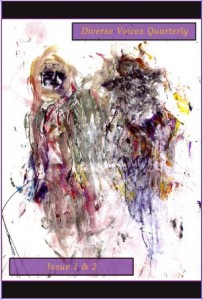
The Mission Statement of Diverse Voices Quarterly reads: “There are many fantastic literary journals out there, looking specifically for submissions from women, feminists, gays/lesbians, Jewish, Christian, African-American, et al. In creating this online literary journal, we’re providing an outlet for AND by everyone: every age, race, gender, sexual orientation, and religious background. This journal will, in essence, celebrate and unify diversity.”
Volume 1 Issues 1 & 2 is available online as a PDF and includes a truly diverse list of contributors: Andrew Abbott, Don Blankenship, Benjamin Dancer, Laury A. Egan, Gail Eisenhart, Anthony Frame, Laura Yates Fujita, Jonterri Gadson, F.I. Goldhaber, Cora Goss-Grubbs, Taylor Gould, Heather Haldeman, Tim Kahl, Oloye Karade, Deborah Kent, Martha Krystapon, Bob Marcacci, Mira Martin-Parker, Tiberiu Neacsu, Diane Parisella-Katris, Diana Park, Amy S. Peele, Rhodora V. Penaranda, Julia Phillips, Charlotte Seley, Wayne Scheer , Joseph Somoza , Elizabeth Kate Switaj, Jacob Uitti, Earl J. Wilcox, Ernest Williamson III.

DVQ is currently accepting submissions of poetry, short stories, essays/CNF and artwork for its next issue until Oct 31.

Graduate Student Spotlight Feature

The Honey Land Review has designed a spotlight feature to highlight the work of current graduate students. Their intention is “to maintain a forum where graduate students can showcase their work as well as provide some insight into the many wonderful creative writing programs available to writers today.”

If you are a current MA or MFA graduate poetry student at an accredited university and would like to be considered for our Graduate Student Spotlight Feature, simply indicate that in the body of the email containing your submission. The Honey Land Review will consider your work for both the Graduate Student Feature as well as the “open call.”

The Future of Fiction

The newest issue of American Book Review (July/August 2009) takes on the issue of Fiction’s Future, and includes a plethora of “Words, Sentences, Quotes” from three dozen or so writers on the issue – each its own starting point for further consideration.

Jeffrey R. Di Leo and Tom Williams, Focus Editors, start off their editorial with one of the greatest exchanges in all of film – from The Graduate, between Ben and Mr. McGuire (one word – plastics), and create their own exchange with their own “one word” (I’m not telling what it is – go read the editorial).

In relation to the future of fiction, Di Leo and Williams write: “While Ben didn’t ask Mr. McGuire about the future (Mr. McGuire volunteered it), we did ask over three hundred writers, critics, and scholars about the future of fiction. Responses varied from one word (James Whorton, Jr.’s “C-SPAN,” Stephen J. Burn’s “Neural,” and Vanessa Place’s “Conceptualism”), to a quote (Brian Evenson quotes Glenn Gould and Samuel Beckett, and Lance Olsen quotes Franz Kafka and Jerzy Kosinski), to a sentence—and sometimes many more (hey, just in case we’re paying by the word, right?).”

ABR also includes “Elaborations” on Fiction’s Future, as well as, of course, a slew of book reviews.

Hugo Awards 2009

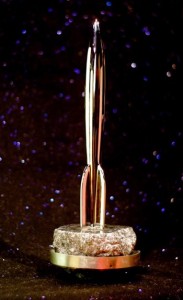
The Hugo Awards for excellence in the field of science fiction and fantasy, first awarded in 1953 and every year since 1955, are run by and voted on by fans and are awarded each year at the World Science Fiction Convention (Worldcon).
•Best Novel: The Graveyard Book, Neil Gaiman (HarperCollins; Bloomsbury UK)
•Best Novella: “The Erdmann Nexus”, Nancy Kress (Asimov’s Oct/Nov 2008)
•Best Novelette: “Shoggoths in Bloom”, Elizabeth Bear (Asimov’s Mar 2008)
•Best Short Story: “Exhalation”, Ted Chiang (Eclipse Two)
•Best Related Book: Your Hate Mail Will Be Graded: A Decade of Whatever, 1998-2008, John Scalzi (Subterranean Press)
•Best Graphic Story: Girl Genius, Volume 8: Agatha Heterodyne and the Chapel of Bones, Written by Kaja & Phil Foglio, art by Phil Foglio, colors by Cheyenne Wright (Airship Entertainment)
•Best Dramatic Presentation, Long Form: WALL-E Andrew Stanton & Pete Docter, story; Andrew Stanton & Jim Reardon, screenplay; Andrew Stanton, director (Pixar/Walt Disney)
•Best Dramatic Presentation, Short Form: Doctor Horrible’s Sing-Along Blog, Joss Whedon, & Zack Whedon, & Jed Whedon, & Maurissa Tancharoen, writers; Joss Whedon, director (Mutant Enemy)
•Best Editor Short Form: Ellen Datlow
•Best Editor Long Form: David G. Hartwell
•Best Professional Artist: Donato Giancola
•Best Semiprozine: Weird Tales, edited by Ann VanderMeer & Stephen H. Segal
•Best Fan Writer: Cheryl Morgan
•Best Fanzine: Electric Velocipede edited by John Klima
•Best Fan Artist: Frank Wu

And the John W. Campbell Award for Best New Writer (presented by Dell Magazines): David Anthony Durham

Bigger and Bigger and Bigger

Barnes & Noble, Inc.the world’s largest bookseller, today announced a definitive agreement to acquire privately held Barnes & Noble College Booksellers, Inc., a leading contract operator of college bookstores in the United States, in a transaction valued at $596 million, or approximately $460 million net of College’s cash on hand on the expected closing date.

College operates 624 college bookstores through multi-year management services contracts, serving nearly 4 million students and over 250,000 faculty members at colleges and universities across the United States. Founded in 1965, College has a diversified, predictable and growing revenue stream derived from the sale of textbooks and course-related materials, emblematic apparel and gifts, trade books, school and dorm supplies, and convenience and cafe items.

Full story here.

Interm Positions at Small Press Traffic

From Samantha Giles, Executive Director of Small Press Traffic:

At Small Press Traffic, we believe a culturally diverse avant-garde is key to a relevant American Literature. Small Press Traffic Literary Arts Center promotes and supports writers from all over the globe– particularly those who push the limits of how we speak and think about the world. Since 1974 SPT has been at the heart of the San Francisco Bay Area innovative writing scenes, bringing together independent readers, writers and presses through publications, conferences, talks, and our influential reading series. For more information, please check us out on the web at www.sptraffic.org

Interns will have the opportunity to meet nationally known writers, learn about how non-profit literary arts agencies work, and assist in the Friday/Saturday Night reading series and Saturday workshop/talks. Other benefits include exposure to a wide-range of writers and their work. (And free refreshments at the readings!)

We are looking for people who are flexible, reliable, and willing to take on all kinds of tasks, such as selling tickets at the door for readings, soliciting and collecting donations from local businesses, and visiting classrooms and helping to publicize SPT events. Please have interested students contact us at: smallpresstraffic_at_gmail_dot_com

2nd River Free Online Chapbooks

Free chapbooks are a great resource for readers and teachers! New at 2River is How the World Was Made, a new collection of prose poems by Christien Gholson and number 20 in the 2River Chapbook Series. The chapbook can be read online, or to make your own print copy, click Chap-A-Book to download a PDF, which you can then print double-sided, fold, and staple to have a personal copy of Gholson’s chapbook.

2nd River accepts submissions for their chapbook series. Submissions should consist of no more than 23 poems, and authors are asked to browse the series before submitting to be sure their work is a good match for 2nd River.

2nd River is also currently accepting submissions of unpublished poetry (June 1 – Aug 31) for their fall 2009 issue.

Tupelo & Crazyhorse ‘First Book’ Winner & Finalists

Tupelo Press is pleased to announce the results of this year’s 10th annual First Book Award. The editors of Tupelo Press and the literary journal Crazyhorse have selected the manuscript The Maturation of Man by Daniel Khalastchi of Milwaukee, Wisconsin. The annual contest will open again in early 2010.

Finalists for the award:

Ari Banias of Brooklyn, New York
Laurie Capps of Austin, Texas
Brett Foster of Wheaton, Illinois
Christina Hutchins of Albany, California
Tanya Larkin of Somerville, Massachusetts
Dawn Lonsinger of Salt Lake City, Utah
Jynne Martin of Brooklyn, New York
Kathy Nilsson of Cambridge, Massachusetts
Addie Palin of Chicago, Illinois
Juliet Rodeman of Columbia, Missouri
Amanda Rachelle Warren of Aiken, South Carolina

PEN Names New Director

PEN American Center, the largest branch of International PEN – the world’s oldest literary and human rights organization – announced the appointment of Steven L. Isenberg as Executive Director, effective immediately. For the past six years, Mr. Isenberg was a Visiting Professor of Humanities at the University of Texas (Austin). During his distinguished career, Mr. Isenberg has served in a variety of leadership roles in journalism, government, academia and law, including prior positions as interim President and Chairman of the Board of Adelphi University, Publisher of New York Newsday, Executive Vice President of the Los Angeles Times, and as Chief of Staff to New York City Mayor John V. Lindsay. (PR Release from PEN)

A Celebration of the Life of Harold Norse

Friends, colleagues and fans of Harold Norse, who died June 8, 2009, got together for a memorial celebration at the Cornelia Street Cafe in NY. The event was recorded and is available in three parts for listening/downloading on the Acoustic Levitation website.

Part One: Opening Remarks by Valery Oisteanu

Part Two: Valery Oisteanu, Angelo Verga, George Wallace, Ira Cohen

Part Three: Judith Malina, Max Blagg, Jeffrey Cyphers Wright, Steve Dalachinsky, Shelley Miller, Tom Walker

NativeWiki

NativeWiki is a free, open-to-the-public library of information about indigenous nations and peoples (past and present) of the world. NativeWiki feature major sections on Nations and Peoples, Documents and Materials, Geographic Regions and a Picture Gallery of selected images. Begun in April, 2007, NativeWiki currently has 1,305 content pages, 1,176 media files, and 2,106 registered contributors.

Collaborate through Create Culture

Posted previously, Create Culture has introduced a new section called “Collaborate!” for members to post and find calls for collaboration. Whether your are looking for a composer for your new choreography, seeking a partner for studio space or engaging others in online projects, “Collaborate!” is the space to post to connect with others.

New Lit on the Block :: The Cartier Street Review

The masthead of The Cartier Street Review is a testament to the opportunities online publications have opened for literary ventures: Founding Editor Bernard Alain hails from Ottawa, Canada, Principal Editor Joy Leftow and Assistant Editor “Dubblex” from New York, and staff member Thomas Hubbard from Puget Sound, Washington.

TCSR is a quarterly online publication of poetry and art. Currently, TCSR utilizes Issue for its online publishing, but is also now considering producing one print copy per year. TCSR accepts contemporary poetry, articles on contemporary poetry, short prose, poet interviews and poetry and book reviews. TCSR endeavors to be an international literary magazine and will publish in other languages alongside translation if desired.

TCSR is currently accepting submissions for their next issue, due out in October.

Panama Fever

This microscopic look at France’s attempt to join two different parts of the world through outside labor is done in an honest and unbiased way through the two very different characters of Thomas and Byron. W.B. Garvey, the author of this climatic and colorful novel, writes with a straightforward and no-games-played style that evokes as broad a spectrum of emotion as the music Garvey is famous for playing on his violin. In his novel, Panama Fever, Garvey details the beginning stages of what we now know as the Panama Canal, enriching the pages with truthful character and landscape settings. Continue reading “Panama Fever”

Where I Stay

Andrew Zornoza’s expansive, fragmentary Where I Stay is a piecemeal construction of text and image. An epigraph, penned in 1938 by Walker Evans, simultaneously urges the reader and the eye behind the camera to focus on “[t]hese anonymous people who come and go in the cities and who move on the land,” on “what is in their faces and in the windows and the streets beside and around them.” Fittingly, it is just those elements, particular to an individual’s specific moment, time and place, that capture the anonymous sense of the national spirit. Continue reading “Where I Stay”

Future Missionaries of America

Matthew Vollmer’s impressive debut collection grates its characters against their fate, pitting their desires and their beliefs against each other as these brightly rendered tales unfold. These are well constructed, richly polished stories that rely heavily on nuanced events to deliver powerful and precise emotion. Characters struggle with sexuality, social acceptance, and death – often times through the filter of non-mainstream Christian faith. The result is an odd and heightened sense of guilt and grief. Continue reading “Future Missionaries of America”

Beyond the Station Lies the Sea

What would you give up to pursue a dream? In this rich and wonderful novel for people of all ages, a 9-year-old boy named Niner is willing to sell his guardian angel in exchange for money so that he and his friend, a homeless man called Cosmos, can travel to the sea and open an “ice cold drinks” stand. But once Niner sells his guardian angel, a terrible thing happens: he is left without protection, vulnerable to any whim of fate, germ, or accident. The story’s plot hinges on this one question: will he be able to get his guardian angel back before he dies? Continue reading “Beyond the Station Lies the Sea”

Bestiary

Every poem in Paschen's Bestiary has been carefully groomed; each poem still stays a little feral, mostly concerning what strange things we do in our own familiar homes: A woman bears the chrysalis of her son in her wandering body, a mother nurses amid a welter of storybook patterns, the vagaries of gods and storms and men thunder in the background… Continue reading “Bestiary”

The ABCs of Enlightenment

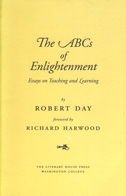
I can only imagine Robert Day must have been (still is even after retirement 2007?) some sort of fixture at Washington College, and how lucky both must have been. I got a hold of his book, The ABCs of Enlightenment: Essays on Teaching and Learning after having mentioned a piece of his in a review of World Literature Today. Robert wrote to me: “No good deed goes unpunished” and had the book sent along with a corresponding poster of the ABCs. More on that later.

The book itself is a slim volume, readable within a week’s worth of bus rides to campus. It’s simple but beautiful, having been produced by the Literary House Press of Washington College – part of the Rose O’Neill Literary House, both of which Robert is founder. The book is a collection of essays that had originally been commissioned by and appeared in print newspapers, and all are indeed expressions of enlightenment, as well as enlightening. It’s one of those kinds of books you read and feel your mind swirling off into another realm, the coming back down as the bus comes to your stop a bit unnerving, walking away still feeling a little floaty in thought.

The first essay, “Tales Out of School,” takes Day’s work with the press into perspective with his teaching. He recounts several different times and places, encounters that have stayed with him through these years, tales he tells interspersed with his work at the press with Mike Kaylor, then master printer. One of my favorite “tales” is an encounter he has with a young woman student who tells him she wants to be poet, but doesn’t “want to be influenced by poets.” She doesn’t read poetry, and doesn’t want to, but wants Day to read her poetry (in spiral bound notebooks). His advice to her ends with: “Go now. Write more poems. But show them to no one – not even me – lest I steal the purity of your vision. Be unique and stay by yourself. Very much by yourself.” It’s brilliantly funny, and bold, but is told to balance, or perhaps mask, a seemingly humiliating story he won’t tell, about the time he ‘badly advised’ Bob Shacochis. Each of the ‘tales’ is like this, a bit raw to read, but each a connection that can be made to those of us who have been in the teaching trenches and have those stories to tell, and those we won’t.

“Print It as It Stands – Beautifully,” is even more directly about Day’s work in the press and what it means to him both as a writer and a teacher. How different the press is vs. the computer screen. It was funny to read about how he works with students at the press, has them printing poetry broadsides which none of them then want to write on when they bring them to class to study and discuss the poetry. I felt exactly the same way in reading this volume, so many times wanting to pen notes in the margins, but something about the beauty of the pages stopped me every time. There is something fascinating and romantic about the workings of a letterpress, as Day explains: “The letterpress requires that you spend time with letters, with the type used to represent words, with the whole nine yards, as the students say. I wonder if it makes words worth more to the student who sets them in type than to the student who, like myself at this moment, flashes them onto a computer screen.”

Other essays in the collection include Day’s encounter with Allen Ginsberg who had come to Washington College to read: “Allen Ginsberg Levitates Chestertown” – in which Ginsberg leads a group of Ohm-chanting students and townspeople (complete with finger cymbals and guitar) to levitate the city jail. “Famous Education” considers the Sophie Kerr Prize – what happens to the “other half” of the money, and more over, whatever becomes of those who win – do they become famous?

The title essay, “The ABCs of Enlightenment” is an A-Z essay of commentary from Day’s decades of teaching. As he writes, if he were to give a talk to his opening freshman class that was “more of a general talk on how to get a generous education – not just from professors and classes, but from the college at large, and for yourself in particular,” it would be from his “alphabet of notes.” This particular essay was also reprinted in a poster form – from the Literary House Press. I was fortunate enough to receive this gorgeous work of art – and wish I could tell readers how to get a hold of one, but am not sure if they are still available. I’d say contact the press if you were interested. The alphabet is indeed enlightening as well as enjoyable to read, with plenty of cross referencing that is entertaining in itself. A couple letters to mention to give an idea of the scope of “advice”: Baseball, C (letter grade), Delphi, Emulation, French, “I don’t want to” (a message to young men), Nabokov, Phones, Strunk and White, X-ing, and Zeal. The book is worth seeking out just for this essay – not to mention the poster.

The book closes with “Parts of Their Night: An Elegy for Our Professors,” and is both profound and touching enough to have brought tears to my eyes at the close.

Whether through the book or by researching the original newspaper columns, these essays are very much worth seeking out and reading – for teachers, for writers, and just for those who enjoy thoughtful insight that enlightens without preaching – through honesty, humility, and humor.

Thank you Robert Day.

Treedom

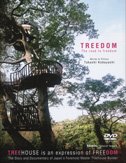
Treedom: The Road to Freedom is a collection of photographs and reflections by “Japan’s Foremost Master Treehouse Builder” Takashi Kobayashi. “Treedom” is more than just about Kobayashi, as it encompasses a whole community of like-minded and activist individual. Even the concept of tree house in Treedom is one developed a bit further than those platform structures we knew as children, but clearly related to those roots: “the term tree house refers simply to any structure built on the boughs and limbs of living trees. We who build these structures are not architects; our aim rather, through art and free expression, is to break down the feeling of separation that exists between humans and nature. For those who share our values and free spirit we have a name: ‘Tree house people.'” [from TreeHouse People]

The hardcover text is beautifully rendered in full-bleed images and text overlay throughout. It also includes a DVD documentary, some of which mirrors the content of the book, but also helps to give a greater sense of the scope and passion of Kobayashi’s work. He is unique in his commitment to trees and building artfully amazing structures sometimes hundred of feet above ground. And, as “fun” as it may sound, his is a story of struggle – against the norm, and to find a place for himself when he is not most at home in his tress, but among other people. Certainly a book, documentary, and life story to be admired by artists who have ever dreamed of living their work, and for the rest of us who simply appreciate the dream.

Mesostic Poetry

Participating in the Poetry Postcard Projects, I enjoy seeking out new forms of poetry and trying my very amatuer hand at them. I came across mesostic poetry for the first time in my memory (meaning I’m getting old enough to forget more). I certainly remember acrostic poetry, but not mesostic – and certainly not in its “true” form.
Developed by John Cage, with some pretty specific rules for the “true” form, it is a fun and challenging style to practice. To help with my understanding, I came across this site developed by Matthew McCabe, created “to fulfill the requirements of the graduate student final project for 20th Century Innovators: John Cage, a class taught by Dr. Elainie Lillios at Bowling Green State University.” The site includes a mesostic generator, in which you can enter the word you would like ‘mesostomized’ and the url of a site from which you would like the words for the poem chosen.

I had some fun with this, trying simple to complex words as well as names (it can handle both first and last names with a space between them). It’s interesting to see site code often selected and placed into the poem. At first I found this disappointing, but, in keeping with the nature of the poem, it does follow all the “rules” and is an twist on John Cage’s concept – bringing it into the language of computer-speak. Still, I enjoyed the true-word selections best. While random or chance poetry forms are controversial, I find them to be a delightful discovery – maybe not every time, but so it goes with any poetry.

Image from mesostic.com

Many Voices Common Text Project

While there are pros and cons to having common class texts, the English Department at Augsburg College in Minneapolis, MN has been able to integrate the use of a common reading text in a series of their courses, a project called Many Voices. While Augsburg touts the positive effects for students, I would also think there would be some cross benefits for instructors being able to share resources, work through common challenges, and offer support for one another in working with difficult topics related to the text with their students. Their common reading text for 2008-2009: Persepolis. Prior years’ selections are also listed on the site.

New Lit on the Block :: Consequence

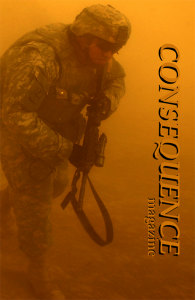
Consequence is a new literary magazine published annually, focusing on the culture of war in America in the 21st century.

Editor George Kovach has this to say about the publication, its purpose, and the philosophy behind it: “We believe that literature and art can advance the discourse a democracy needs to govern itself… Our subject is war and how it affects us at every level of society. In our culture, for well over two and a half millennia, war has compelled artistic expression ranging from personal catharsis to historical record, across a wide spectrum: actual combat, political agendas, moral decisions, the need to mourn, the pain of witnessing, the desire for peace. Art that addresses the consequences of war wants to make us see what we’d rather turn away from… Be prepared to question the way you think and feel about war.” Read more from Kovach’s introduction on the Consequence website.

Volume I contributors include Louis le Brocquy, John M. Anderson, Kevin Bowen, Drew Cameron, Robert Clawson, Jane Collins, Annie Finch, Annaliese Jakimides, Việt Lê, Jennifer Markell, Dorothy Shubow Nelson, Thomas O’Grady, Mark Pawlak, Barbara Perez, Kányádi Sándor, Paul Sohar, T. Michael Sullivan, Brian Turner, Alex Vernon, and Macdara Woods.

With editors Kovach and John M. Lewis, and graphic design by Megan E. Lewis, Consequence publish short fiction, poetry, non-fiction, interviews, and art primarily focused on the culture and consequences of war.Consequence welcomes unsolicited manuscripts between March 31st and October 1st.

Consequence Magazine has also recently announced The Consequence Prize in Poetry awarded in October, 2009 for the best poem addressing current war or armed conflict. Deadline Sept. 1; Judge Kevin Bowen.

PEN’s 2009 Prison Writing Awards

Every year, the PEN Prison Writing Program recognizes the work of writers imprisoned throughout the country. Exiled from our schools and society, inmates submit manuscripts in every form to one of the only forums of public expression for incarcerated writers. The uncensored writings from this year’s Prison Writing Contest winners can be read in full on the PEN Prison Writing Awards website.

Pamphlet Press Wins Publisher Award

Experimental UK publisher Oystercatcher Press won the £5,000 UK poetry pamphlet publisher award. “They’re very new – they started in 2008 – and they’re quite open about what they want to do: experimental, avant garde work. All the judges liked that sense of direction,” said Judge Richard Price. “They also have innovative ways of making the most of a shoestring operation – a scheme to subscribe to pamphlets rather than buy them one by one, for example – and they publish poets from the 70s as well as contemporary work.” Read more on Guardian UK.

Neustadt International Prize for Literature

The Neustadt International Prize for Literature is a biennial award sponsored by the University of Oklahoma and World Literature Today. The Prize consists of $50,000, a replica of an eagle feather cast in silver, and a certificate. A generous endowment from the Neustadt family of Ardmore, Oklahoma, and Dallas, Texas, ensures the award in perpetuity.

This year’s winner will be selected in October from the following candidates and their representative texts:

Ha Jin, War Trash
Ricardo Piglia, Artificial Respiration
Michael Ondaatje, Running in the Family / Divisadero
Haruki Murakami, The Elephant Vanishes
Margaret Atwood, The Blind Assassin
Duo Duo { poetry selections }
A. B. Yehoshua, A Woman in Jerusalem
Athol Fugard, My Children! My Africa! / The Island
Shahriar Mandanipour, Censoring an Iranian Love Story

For more information about the prize, visit World Literature Today.

Summer Deals on Absinthe & Bloggers Wanted

Absinthe: New European Writing is offering a summer sale now through August 31st. Purchase any back issue (except sold out issue #3) for only $5 (postage included; $10 outside the United States). This is a great opportunity to complete your Absinthe set. Additionally, until August 31st you can order a lifetime subscription to Absinthe for only $100(for international subscribers the lifetime rate is $200).

Absinthe is also looking for writers interested in contributing to their blog. If you’re interested, email the editor: dhayes_at_absinthenew.com

Residency: Soapstone

Soapstone is accepting applications until August 1, 2009 for residencies starting November 2009 to November 2010.

From the Soapstone website:

Soapstone provides women writers with a stretch of uninterrupted time for their work and the opportunity to live in semi-solitude close to the natural world.

In addition to that rare but essential commodity for a writer—a quiet space away from jobs, children, and other responsibilities—Soapstone provides something less tangible but also invaluable: the validation and encouragement necessary to embark upon or sustain a long or difficult writing project.

Located in Oregon’s Coast Range, nine miles from the ocean, the retreat stands on twenty-two acres of densely forested land along the banks of Soapstone Creek and is home to much wildlife. The writers in residence enjoy a unique opportunity to learn about the natural world and join us in conscious stewardship of the land.

Soapstone is set up for two writers at a time, each with her own writing studio. From an applicant pool of 400 to 500, approximately thirty-five writers each year are awarded residencies of one to four weeks.

Sweet Summer Sale: Dalkey Archive Paperbacks

Through Wednesday, July 29 every Dalkey Archive paperback edition is on sale, with free shipping within the United States (outside the U.S. email Melissa Kennedy directly at kennedy_at_dalkeyarchive.com for shipping costs). When you click on one of the offers, it will take you to a shopping cart page, then just list the titles you would like in the “comments” box that will appear prior to checkout. Shop before you drop!

And remember, if not for you – consider supporting your local public and school libraries by adding some great titles to their collections!

5 books for $35 w/free shipping
10 books for $65 w/free shipping
20 books $120 w/free shipping

PEN America Takes on the Surveillance Progam

This past week, PEN American Center has been in court challenging the U.S. government’s massive warrantless surveillance program. The hearing took place at 10:00 a.m.. in U.S. District Court in New York. It came amid new revelations that National Security Agency’s telephone and Internet surveillance program has been collecting the private communications of Americans in clear violation of longstanding legal limits on such domestic surveillance activity.

More information about their actions can be found on the PEN website, along with a sample letter interested readers/activists can send to their members of congress on the issue of warrantless surveillance.

Michigan Park & Read

Park & Read Program Offers Free Park Passes for Michigan Readers

Looking for ways to save some “green” while being “green”? Then visit your local library this summer! Michigan’s Department of Natural Resources has partnered with the Library of Michigan, Macy’s, and the Hammock Company to announce the “Park & Read” program.

Park & Read allows library-card holders the ability to “check-out” a one-day pass into any Michigan state park or recreation area in lieu of the resident daily motor vehicle permit. This is a $6 savings and free access to the more than 500 events taking place in local parks this summer.

Plus, many parks will have a hammock available for Park & Read participants to borrow while on-site for the day so they can fully enjoy a great book in Michigan’s great outdoors.

“We want everyone in Michigan to know what a fantastic resource their local park can be,” says Maia Stephens, Recreation Programmer for the DNR. “Because the program is free, everyone can now enjoy all the free activities available in Michigan State Parks and Recreation Areas. Besides, what’s more relaxing than a day at the beach with a good book?”

Passes are valid for seven days from check-out and can be used for one day at any one of Michigan’s state parks. Hammocks are subject to availability. This program runs through September 25.

July Lit Mag Reviews Online

Click on over to read the July lit mag reviews – a great selection of new, established, print, and online journals – NewPages Literary Magazine Reviews: A Cappella Zoo, Agriculture Reader, Bellingham Review, Beloit Poetry Journal, Chtenia, Exquisite Corpse, Field, Glimmer Train, Greensboro Review, Gulf Coast, Hayden’s Ferry Review, H.O.W. Journal, The Literary Review, LITnIMAGE, Meridian, Mizna, Monkeybicycle, New Ohio Review, the new renaissance, New York Quarterly, Potomac Review, Rattle, Red Rock Review.

Colorado Higher Ed in Trouble Too

Pikes Peak Community College President Tony Kinkel comments on the prospect of losing state funding entirely: “I don’t know that we could keep the doors open,” he says. At a minimum, he adds, the college would have to increase tuition by 50 percent, close its Falcon campus and use only adjunct faculty. (Colorado Springs Independent, “Death to Higher Ed“)

Ouch.

Glimmer Train New Writers Winners :: 2009

Glimmer Train has just chosen the winning stories for their May Short Story Award for New Writers competition. This competition is held quarterly and is open to any writer whose fiction hasn’t appeared in a print publication with a circulation greater than 5000. No theme restrictions. Word count range: 500-12,000. Their monthly submission calendar may be viewed here.

First place: Noa Jones of New York, NY, wins $1200 for “Brother Ron”. Her story will be published in the Fall 2010 issue of Glimmer Train Stories, out in August 2010.

Second place: Farley Urmston of Sherborn, MA, wins $500 for “Pretending”.
Third place: Benjamin Janse of Jamaica Plain, MA, wins $300 for “The Great Storm”.

A PDF of the Top 25 winners can be found here.

Deadline approaching!

Very Short Fiction Award: July 31

This competition is held twice a year and is open to all writers for stories with a word count range not exceeding 3000. No theme restrictions. Click here for complete guidelines.

Some Notes on Character

*NOTE: Reposting with links to Conclave full-text. Thanks Valya.*

I ran across a couple of great editorials in the most recent issues of American Short Fiction and Conclave. Both speak the the nature of character in writing as well as, for Conclave, in photography. Below are some excerpted portions which create a kind of conversation between them.

From Editor Stacey Swann of American Short Fiction (44, Summer 2009):

Like most writers, I grew up reading books—loving the characters and their stories. But I also loved learning about the world. While I understood that Narnia was not a real place or Tom Sawyer a real person, I still invested a great deal of authority in authors: the way they viewed the world was correct on a fundamental level. This explains why studying John Keats’s “Ode on a Grecian Urn” in high school remains a vivid memory for me. It was the first time I strongly disagreed with what an author was espousing. No matter what Keats thought, no matter what my English teacher echoed, I was certain that beauty was not truth and truth was not beauty. It wasn’t just that many fundamental truths about the world were ugly; beauty wasn’t important enough to equate with truth.

It turns out that I was not alone in my distrust of this ode. In one of his critical essays, T. S. Eliot wrote that those last two lines were “a serious blemish on a beautiful poem, and the reason must be either that I fail to understand it, or that it is a statement which is untrue.” Eliot continued: “And I suppose that Keats meant something by it, however remote his truth and his beauty may have been from these words in ordinary use.”

In high school, I equated beauty with nothing more than an excessive prettiness. Beauty was something to be applied to objects, not actions. I recently realized that I had readjusted my definition of beauty, and I might now understand Keats’s meaning a little better. As I get older I see beauty in so many unexpected things. And when I think about short stories, it seems to me that most depict moments of beauty. While novels generally are about characters and large portions of their lives, short stories must value something else due to their compactness. So often, they are illuminations of an action with inherent beauty. The beauty may be sad or painful or wasted, but it is nonetheless beautiful.

Conclave, a new lit on the block, focuses on “character-driven writing and photography.” Founding Editor Valya Dudycz Lupescu discusses the selection process for their inaugural issue:

As we reviewed and narrowed the pool, the editors discussed what made the pieces character-focused. There was no rubric or list of points. Beyond obvious assessment of craftsmanship, so much of this process is subjective. How can one quantify the literature that compels us to read it?

William Faulkner once said, “It begins with a character, usually, and once he stands up on his feet and begins to move, all I can do is trot along behind him with a paper and pencil trying to keep up Tong enough to put down what he says and does.”

In a good character-driven story, the reader should be swept up into the lives of the characters, willing to trot alongside them as they tell their stories. In an excellent character-driven story, the reader is compelled to follow the characters anywhere, outside his or her comfort zone, into alien territory, or into new emotional depths. We willingly suspend all disbelief to immerse ourselves in their reality. These unforgettable characters are timeless. They reveal something about human nature that is archetypical and personal at the same time. [Full text here.]

Conclave Managing Editor Scott Markwell adds these comments to the consideration of character:

As we observe character, we also see how it changes, how people grow, stay static, or regress. . . . Character reveals the brightest and darkest places of who we are. Characters come alive when they reveal a truth, when they hold a mirror up to each of us. . . . Character comes in other interesting forms. We personify. The inanimate become real, become human, express features we see in others. We find character in metaphor and in the literalness of life’s events. We see the wisdom and ravages of age. . . . Character will change, but we hope the truth of the human experience will not. [Full text here.]

Which echoes Swann’s closing line:

Finally, returning to Keats, if these stories are about moments of beauty, there is something inextricably true about them as well. It is their truth that makes them beautiful.

[Swann’s full editorial available here.]