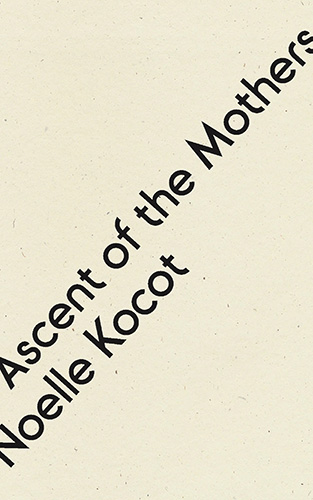
Ascent of the Mothers by Noelle Kocot Wave Books, November 2023
Ascent of the Mothers, Noelle Kocot’s ninth collection, is a sagacious testament to the ways in which poetry can shape personhood. “I am nothing” they write, “Or else I have made myself / Too big for words.” The scope of this book is marked by Kocot’s psychic journey punctuated by a near-fatal car crash, which elicited a new understanding of their spirituality and gender nonconforming identity. Generous, self-aware, and resilient, Ascent of the Mothers is a treasure to behold and be shared.
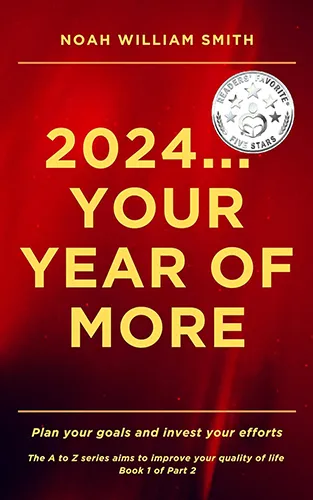
2024… Your Year of More is your go-to book to set goals and mindfully invest your efforts. It appeals to adults of all ages, nationalities, and backgrounds who wish to improve their lives. Its pages are packed with something special for everyone.
The pages contain practical ideas from A to Z, thought-provoking questions, and self-reflective exercises that inspire you to live your best life.
The book is an ideal companion during your moments of solitude. You can read it in the early morning before the rest of the world wakes up or during the evenings after a long day. You may also find it enjoyable while writing in your journal or taking a lunch break.
Enthusiastic indie author Noah William Smith knows the blessings and challenges of intelligence, creativity, high sensitivity and being a minority, underdog and outsider. While his books are based on his experiences, they offer valuable insights without being prescriptive or offering advice.
The book’s authenticity and invaluable insights make it a compelling read that will remain relevant for many years!
Are you considering investing in yourself or searching for the perfect gift for someone special? Enjoy this life-changing book that you cannot afford to miss!
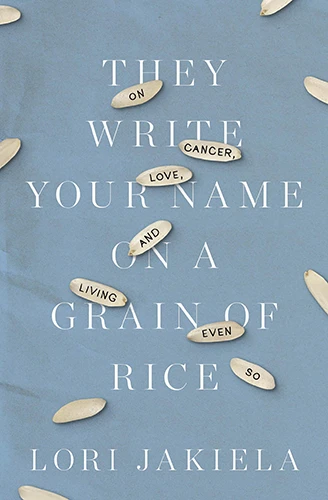
They Write Your Name on a Grain of Rice—the latest book from award-winning Pittsburgh author Lori Jakiela—is much more than a cancer memoir. It’s a pause between polarities. Cancer is almost an afterthought. Inspired by Amy Krouse Rosenthal’s Encyclopedia of an Ordinary Life, it celebrates the tiny moments that make up a time capsule of a life.
A weirdly funny book about mortality, Rice is also about family, genetics, nature vs. nurture, the Rust Belt, EPA clean-up zones, emotional support peacocks, box turtles, Emily Dickinson, Lynyrd Skynyrd, Andy Warhol(a), and so much more. A fresh voice aligned with the work of classic stream-of-consciousness writers like Richard Brautigan and Virginia Woolf, Jakiela explores the way a mind works—complete with leaps and spirals—while reflecting on a life thoroughly lived against a dire breast cancer diagnosis.
Half new and selected essays, half spiraling memoir, Rice is experimental in both voice and form, and offers a fresh approach to age-old questions about life, love, mortality, and the fine art of living, even so.
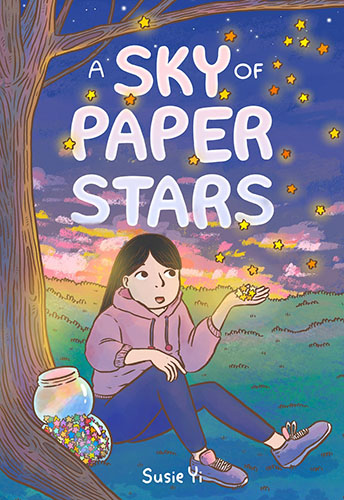
A Sky of Paper Stars by Susie Yi is both satisfyingly predictable and enticingly surprising. The story centers on middle-schooler Yuna and her attempt to detach from her Korean identity and fit in among her American schoolmates. Not finding the acceptance she craves, Yuna wishes to return to Korea, a place she left when she was just a baby and visited infrequently.
Memories of her halmoni (grandmother) and the stories her mother tells her about growing up there make Yuna believe she would be better off living in Korea. She makes the dreaded wish to return as she folds her 1000th tiny origami star and blames herself when news comes of her halmoni’s death. Burdened with the guilt that she has brought this untimely end, Yuna’s hand seems to turn to paper. Yuna travels to the funeral in Korea where she meets family she cannot even remember and who share memories of their halmoni that Yuna has no part in, causing her to feel even more isolated. As the shame over her wish grows, the transformation of her body to paper begins to creep up her arm. The only remedy, Yuna decides, is to complete an unfinished jar of paper stars her grandmother began folding. Once she reaches 1000, Yuna believes her wish will be reversed, and her halmoni will be restored.
Flashbacks in the novel shift from full-color images to blue or sepia tones, while the remaining present-day images throughout use deep, rich hues and dark brown rather than black linework to create a warmer overall tonality to the story. There are beautifully rendered full bleed pages to represent dream/surreal/imagination (I could envision a whole wordless book of these works by Yi). It’s these more fantastical elements of the story that help connect three generations of women and set the final emotional tone of the novel. The ending is heartwarming and surprising, enticing the reader to close the book and start all over again.
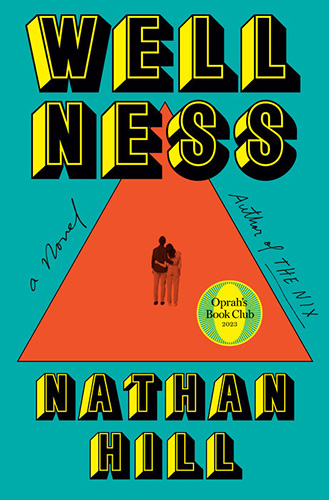
In Wellness, Nathan Hill has written a novel that is of its time, while still being timeless. In exploring the particularly American obsession with wellness and improvement, what he is really excavating is the power and peril of stories. His second novel follows Jack and Elizabeth, a couple who fell in love at first sight in 1993, and who are negotiating their marriage after just over two decades of being together. They tell themselves stories about their marriage, as well as their childhoods, hoping to make sense of their lives. Hill weaves minor characters’ stories in, as well: Jack’s father becomes obsessed with conspiracy theories; Elizabeth’s friend Brandie hosts a group that believes one can manifest happiness by speaking it into the universe; and Kate and Kyle, a couple who find meaning through polyamory and a critique of monogamy. While Hill satirizes each of these characters—and more, especially the postmodern cultural conversation in academia in the 1990s, one of the most humorous sections of the novel—he also understands why they (and we) need stories at all. When Elizabeth seems ready to turn to nihilism, wondering if anything is real, her mentor tells her, “Believe what you believe, my dear, but believe gently. Believe compassionately. Believe with curiosity. Believe with humility. And don’t trust the arrogance of certainty.” That’s good advice for our divided country and world, now and anytime anyone might pick up this novel.
Wellness by Nathan Hill. Alfred A. Knopf, September 2023.
Reviewer bio: Kevin Brown has published three books of poetry: Liturgical Calendar: Poems (Wipf and Stock); A Lexicon of Lost Words (winner of the Violet Reed Haas Prize for Poetry, Snake Nation Press); and Exit Lines (Plain View Press). He also has a memoir, Another Way: Finding Faith, Then Finding It Again, and a book of scholarship, They Love to Tell the Stories: Five Contemporary Novelists Take on the Gospels. Twitter @kevinbrownwrite or kevinbrownwrites.weebly.com/.
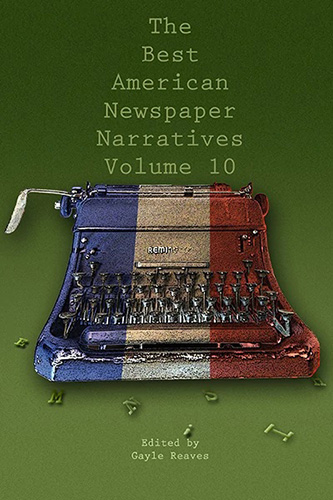
This anthology collects the ten winners of the 2022 Best American Newspaper Narrative Writing Contest at UNT’s Mayborn Literary Nonfiction Conference. First place winner: Jason Fagone, “The Jessica Simulation: Love and Loss in the Age of A.I.,” about one man’s attempt to still communicate with his dead fiancée (San Francisco Chronicle). Second place: Jenna Russell, Penelope Overton, and David Abel, “The Lobster Trap” (The Boston Globe and Portland Press Herald). Third place: Jada Yuan, “Discovering Dr. Wu” (The Washington Post). Runners-up include works by Lane DeGregory, Christopher Goffard, Evan Allen, Mark Johnson, Annie Gowen, Peter Jamison, and Douglas Perry.
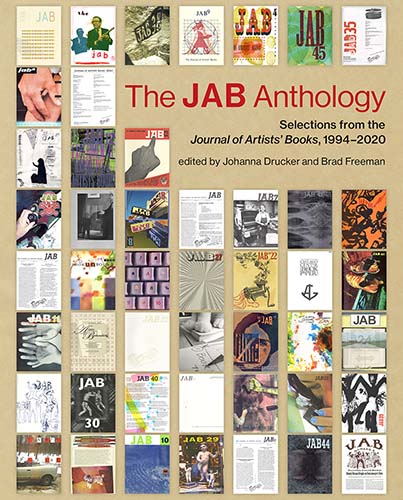
The JAB Anthology edited by Johanna Drucker & Brad Freeman University of Iowa Press, October 2023
The Journal of Artists’ Books: Selections from the Journal of Artists’ Books, 1994–2020 contains some of the best critical writing on artists’ books produced in the last quarter of a century. Driven by the editorial vision of artist Brad Freeman, JAB began as a provocative pamphlet and expanded to become a significant journal documenting artists’ books from multiple perspectives. The JAB Anthology contains contributions by many renowned figures in the field including Anne Moeglin-Delcroix, Janet Zweig, Monica Carroll, Adam Dickerson, Alisa Scudamore, Mary Jo Pauly, April Sheridan, Doro Boehme, Gerrit Jan de Rook, Océane Delleaux, Brandon Graham, Jérôme Dupeyrat, Ward Tietz, Paulo Silveira, Philip Cabau, Leszek Brogowski, Lyn Ashby, Tim Mosely, Debra Parr, Pedro Moura, Levi Sherman, Catarina Figueiredo Cardoso, Isabel Baraona, and the editors.
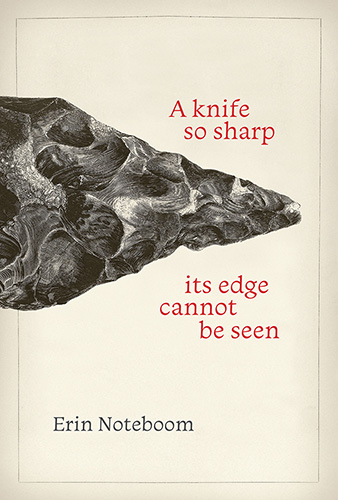
In A knife so sharp its edge cannot be seen, Erin Noteboom positions readers on the fine line between the “sting and sweetness” of “lives in depth and distance.” This is a poet interested in demarcations and definitions, where memory meets metaphor, perspective meets specifics, and recombination implies structure. The poet repeatedly flips a coin, showing readers one side, then the other, revealing the enigma where one concept begins and another ends. Within the poems, the mysteriously undefinable is proximal to the scientifically discoverable. Wilhelm Röntgen, who developed X-rays, and Marie Curie, who discovered radium and polonium, are among the scientists Noteboom’s poems present to readers. The poems, like these scientists, are focused on the interplay between light, shadow, and darkness that permits new, profound, and various forms of seeing, as “the eye is lighthouse.” Such a quest for “the sensation of light” and the “struggle for another label” inevitably has a cost. “For such a cost, there must be benefit / that is the equation of science,” writes Noteboom, who determines as a writer, “I want to use my life up / like a pencil. I want to eat stone and leave behind / the shell of a word I live inside, / something open.” Noteboom’s poetry examines “the cost / of the beauty. The beauty of the cost.” The poems mark readers with their exploration of science’s brilliance, life’s radiance, and what it is “to write at the end of the world.”
Reviewer bio: Jami Macarty is the author of The Minuses (Center for Literary Publishing, 2020), winner of the 2020 New Mexico/Arizona Book Award – Poetry Arizona, and three chapbooks, including Mind of Spring (Vallum, 2017), winner of the 2017 Vallum Chapbook Award. Jami’s writing has been honored by financial support from Arizona Commission on the Arts, British Columbia Arts Council, and by editors at magazines such as The Capilano Review, Concision Poetry Journal, Interim, Redivider, Vallum, and Volt, where Jami’s poems appear. More at https://jamimacarty.com/
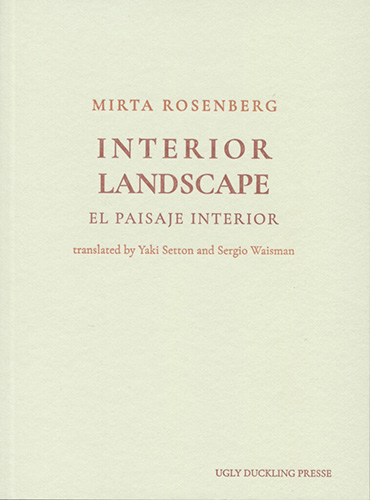
Interior Landscape by Mirta Rosenberg Translated by Yaki Setton and Sergio Waisman Ugly Duckling Presse, September 2023
Mirta Rosenberg (1951-2019) is a key poet of the ’80s generation in Argentina. In Interior Landscape, Rosenberg explores questions of life and death, of changes experienced in one’s body through time and the resulting changes in perspective. These poems contemplate the dislocation of the self, posing questions about the relationship between subjectivity, perception, the body, and memory. Rosenberg’s voice is at once autobiographical and critical, displaying the interior landscapes of its experience as well as the complex ways that language forms a fundamental part of that experience. Originally published in Spanish in Argentina in 2012, Interior Landscape is the first book-length translation of Rosenberg’s poetry to be published in English.
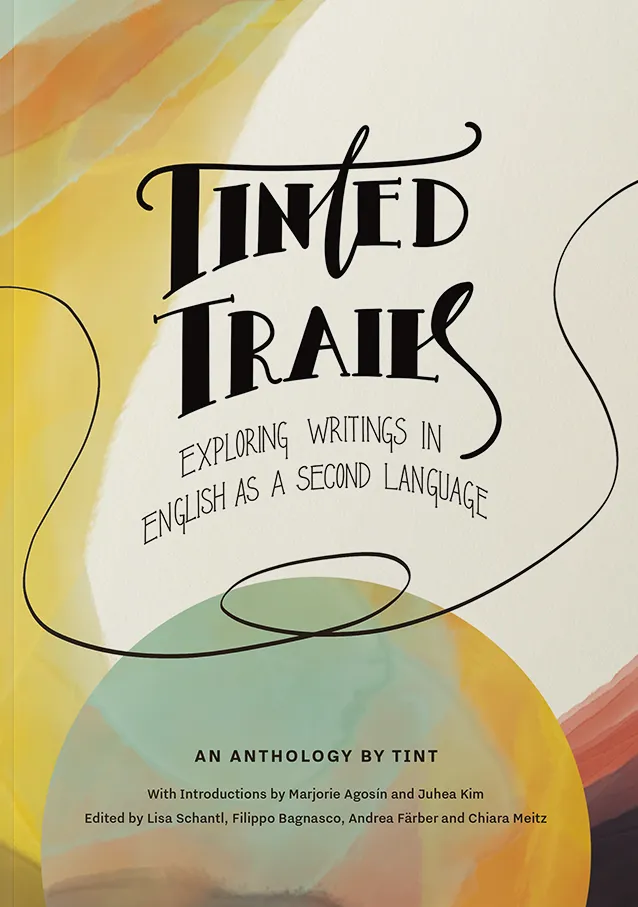
Tinted Trails: Exploring Writings in English as a Second Language edited by Lisa Schantl, Filippo Bagnasco, Andrea Farber, and Chiara Meitz Tint Journal, November 2023
Literary magazine Tint Journal celebrates its five-year anniversary with the release of Tinted Trails, the first ever printed anthology entirely dedicated to those who write in English as a second language (ESL). This collection offers both authors and readers the chance to meet via the medium of the English language, in a whirl of perspectives, sensibilities, and idiolects.
The book showcases fiction, nonfiction, and poetry previously published online on Tint Journal and a selection of so far unpublished texts from well-established translingual voices. The breadth and the possibilities of the English language are unlocked by the variety of cultural, geographical, and personal experiences of these writers, each adding a crucial contribution to the present and future development of multilingual literature. Topical introductions by Marjorie Agosín and Juhea Kim add weight and context to the collection, while the themed sections that bring together the various texts—Belonging, (lm)Migration, Upheaval, Identities—guide the reader through the peculiarities of this fundamental collection of ESL writings. A further layer is created through the artworks curated by Vanesa Erjavec and her own text illustrations.
With its origin in such a rich and diverse literary and cultural environment, Tinted Trails proudly joins the ever-growing landscape of global literature in English.
The anthology will be presented at a festival of the same name this November in Graz, Austria, and beyond where participants can experience the variety of ESL literature with authors from all over the globe, try translingual writing themselves at a workshop, and get involved in discussions about literature, art, and life in-between it all.
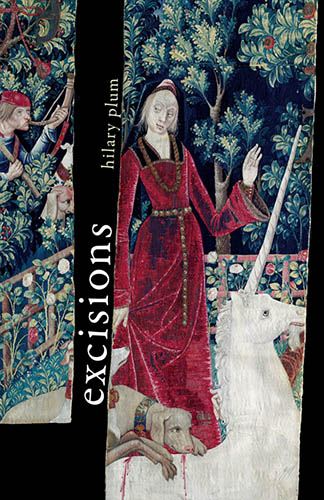
I’m attracted at once to the cover of Excisions by Hilary Plum. It is one of those famous tapestries from Medieval times, “The Unicorn Surrenders to a Maiden,” which is part of The Unicorn Tapestry series. That theme is theorized to represent Christ (with the unicorn being hunted) and the Crucifixion/Courtly Love. The titular long poem and section weaves in and out of the world of the Unicorn Tapestry and comes face-to-face with real-life situations and circumstances that Plum shows readers. The poet seems like the maiden, then like the wounded and dying unicorn, and then like the hound who has attacked the unicorn. Each line of Plum’s poems is precise and layers itself against the next line so that each creates a huge, whole image. These are such a mix of old and new, as in these lines from “If a gun disappears it reappears”:
…like heaving stones no archeologist schooled in empire declines…
The images Plum creates are intriguing and captivating. I don’t know what to do with so many of them but to go back again and again to meditate and dream.
Excisions by Hilary Plum. Black Lawrence Press, October 2022.
Reviewer bio: Susan Kay Anderson lives in southwestern Oregon’s Umpqua River Basin. Her long poem “Man’s West Once” was selected for Barrow Street Journal’s “4 X 2 Project” and is included in Mezzanine (2019). Anderson also published Virginia Brautigan Aste’s memoir, Please Plant This Book Coast To Coast (2021).
The Shining by Dorothea Lasky Wave Books, October 2023
As labyrinthine as its namesake, Dorothea Lasky’s The Shining is an ekphrastic horror lyric that shapes an entirely unique feminist psychological landscape. Lasky guides readers through the familiar rooms of the Overlook Hotel, both realized and imagined, inhabiting characters and spaces that have been somewhat flattened in Stephen King’s novel or Stanley Kubrick’s film adaptation. Ultimately, Lasky’s poems point to the ways in which language is always haunted—by past selves, poetic ancestors, and paradoxical histories.
Indie bookstores are cozy nooks to enjoy with the onset of fall, and NewPages Guide to Independent Bookstores in the U.S. and Canada is a great resource for finding local independent bookstores both in your own area and as you travel. There is no better way to get to know a city than to check in with their local indie bookstore(s). For authors and publishers, our list is a great resource for finding sales outlets and reading venues to promote your books.
NewPages.com currently lists only brick-and-mortar stores (no online-only, pop-up, mobile, comics-only shops, or shops with books as a side business). We offer free enhanced listings in our Guide to Independent Bookstores to help booksellers connect with book lovers, so you can find a lot of info for many of the stores.
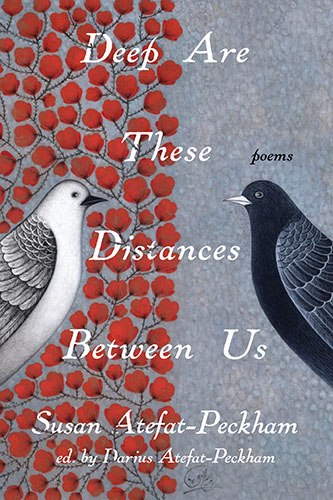
In an act of personal yearning, Editor Darius Atefat-Peckham offers readers his mother’s voice from beyond. In Deep Are These Distances Between Us, Iranian-American poet Susan Atefat-Peckham (1970–2004) tenders a “shining, shimmering / space” for poems prescient, prophetic, compassionate, forgiving, and ecstatic, “her hands cupped like a bowl / filled with sunlight and water and pleading.” Atefat-Peckham pleads for “words louder than the silence between them” to offer comfort to our wounded world. The poems trace “[s]hadows / we are bound by”—the Iranian state’s gender-based oppression, the Iran-Iraq War of the 1980s, Islamophobia in the aftermath of the September 11, 2001 terrorist attacks—“to speak of / and hold, to carry” and resolve, “knees snapped to the earth,” in a devotional conversation with Persian mystics.
Despite the fact that Susan Atefat-Peckham died in a car accident when her son was three years old, her mind, advocacy, heart, and soul remain “bright, burning, / and alive” in her poetry. On a day when Narges Mohammadi was awarded the Nobel Peace Prize while imprisoned for her advocacy of Iranian women’s rights and sixteen-year-old Armita Geravand was dragged unconscious from a train after being beaten for not wearing a hijab, Susan Atefat-Peckham’s poems remind us that “there is always an ear listening / in the silence.” The distances between Susan Atefat-Peckham and us may be great, yet hers is unmistakably a poetry for our perilous times. Susan Atefat-Peckham is “still / in the universe.” She lives on via her poetry, which provides readers with a “place of repeated / comfort where even scars will brighten.”
Reviewer bio: Jami Macarty is the author of The Minuses (Center for Literary Publishing, 2020), winner of the 2020 New Mexico/Arizona Book Award – Poetry Arizona, and three chapbooks, including Mind of Spring (Vallum, 2017), winner of the 2017 Vallum Chapbook Award. Jami’s writing has been honored by financial support from Arizona Commission on the Arts, British Columbia Arts Council, and by editors at magazines such as The Capilano Review, Concision Poetry Journal, Interim, Redivider, Vallum, and Volt, where Jami’s poems appear. More at https://jamimacarty.com/
Welcome to the end of October! Hard to believe it is here already, isn’t it? With the ending of October comes our monthly breakdown of all the wonderful new and forthcoming titles that NewPages has received during the month. You can view the full list here.
If you are a follower of our blog or a subscriber to our weekly newsletter, you can see several of the titles we received featured. For publishers or authors looking to be featured on our blog and social media, please visit our FAQ page.
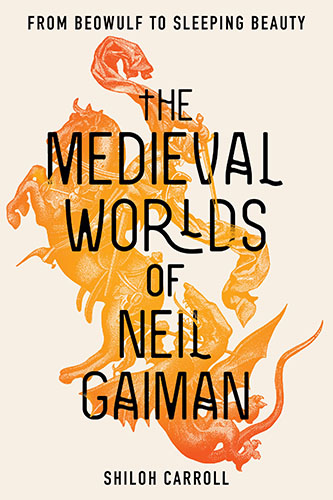
The Medieval Worlds of Neil Gaiman: From Beowulf to Sleeping Beauty by Shiloh Carroll University of Iowa Press, September 2023
Readers love to sink into Gaiman’s medieval worlds—but what makes them “medieval”? Shiloh Carroll offers an introduction to the idea of medievalism, how the literature and culture of the Middle Ages have been reinterpreted and repurposed over the centuries, and how the layers of interpretation have impacted Gaiman’s own use of medieval material. She examines influences from Norse mythology and Beowulf to medieval romances and fairy tales in order to expand readers’ understanding and appreciation of Gaiman’s work, as well as the rest of the medievalist films, TV shows, and books that are so popular today.
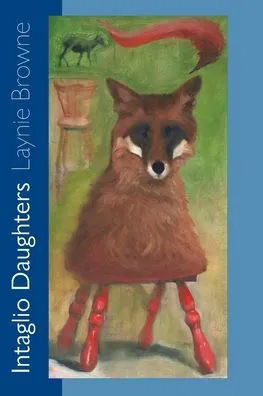
Okay, these are weird poems, weird-in-a-good-way weird because they excite the imagination. Browne has taken Lyn Hejinian’s [alert: L=A=N=G=U=A=G=E poetry] poems and added her own two cents to them. She has not embellished them but taken a title and then riffed on it. Each poem ends with the title (which are phrases, mostly) changed around. This adds to the meaning and feeling of what Hejinian has done. It stretches the sense of things, as in “Language is as blind as sheep”:
It begins with,
Imbroglio daughters, imbroglio mind…
concluding with,
…Language unkind and steep
This adds to what Hejinian has built, and while these poems can be seen as collaborative, they use the found material of titles and transform them into sparkling jewels of poems, turning them luxurious and dazzling.
I don’t mind combing through these with the weight of mystery that comes with the territory of oblique writing like Language Poets are famous for, and away from which many, many poets run. These are poems to run to, towards the playfully topsy-turvy.
Reviewer bio: Susan Kay Anderson lives in southwestern Oregon’s Umpqua River Basin. Her long poem “Man’s West Once” was selected for Barrow Street Journal’s “4 X 2 Project” and is included in Mezzanine (2019). Anderson also published Virginia Brautigan Aste’s memoir, Please Plant This Book Coast To Coast (2021).
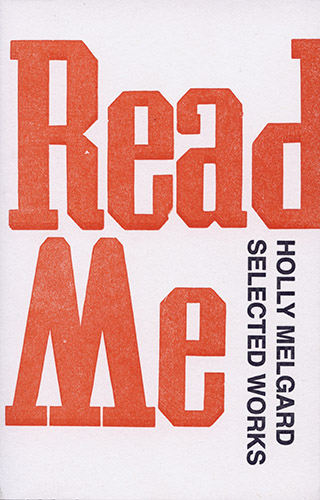
Holly Melgard’s Read Me gathers the tools necessary to make sense of contemporary problems so ubiquitous they seem too big to name. Spanning a multiplicity of genres, media, and tonal registers, this book surveys Holly Melgard’s formally experimental poetic works produced between 2008 and 2023, including sound poems, essays on poetics, and books that exploit print on demand to, for example, counterfeit money. In often wildly comic turns of thought, Melgard’s work cleaves personal agency from automated defaults by mapping trauma and technocracy from the inside out. From critical talks to fictional monologues, the poet translates into language the unremarkable torments of neoliberalization in the digital age.
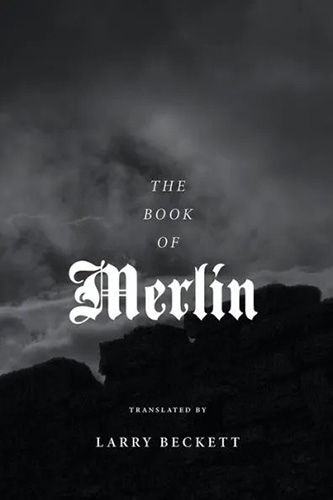
The Book of Merlin translated by Larry Beckett Livingston Press, October 2023
Larry Beckett’s The Book of Merlin is the first translation of Merlin of the Wild’s complete works. How can the writings of a 6th-century poet/prophet speak to us moderns? Page after page of battles and death answer that most succinctly. This is not the Merlin with a wand that you grew up with. Translator Larry Beckett’s poetry ranges from songs, Song to the Siren, to blank sonnets, Songs and Sonnets, to the epic American Cycle, including Paul Bunyan, Wyatt Earp, Amelia Earhart, and seven other book-length poems. His work Beat Poetry is a story of the poets and poetry of the fifties San Francisco renaissance. Beckett is currently working on a translation of Verlaine’s poetry.
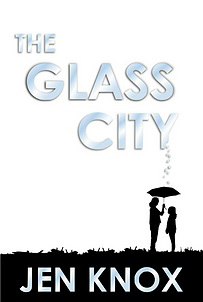
Originally published in 2017, Jen Knox’s revised edition of The Glass City is a brilliant collection of seventeen stories that fluidly combine seemingly unrelated themes together in unexpected ways. In this futuristic-yet-timely collection, Knox highlights society’s overwhelming sense of entitlement and narcissistic tendencies and their relationship to our changing climate. Each story is a mirror thrust in our faces, urging us to get over our love affair with ourselves, reminding us that “people didn’t need to further distinguish themselves from nature.” With buildings collapsing from exhaustion, virtual races run at home on treadmills, terrorist attacks, never-ending snowstorms, and characters with extra layers of toes from food contamination, Mother Nature acts as an omnipotent protagonist throughout, serving her primitive justice as a warning to society for the perils of continuing along the same trajectory. However, like the art of Kintsugi, Knox leaves us with the thought that what was once broken can indeed be salvaged and transformed into something beautiful.
Reviewer bio: Ashley Holloway teaches healthcare leadership at Bow Valley College in Calgary, AB. She writes in a variety of genres with work appearing across Canada and the US and has co-authored three books. Ashley is an editor for Unleash Press and her work has been nominated for the Pushcart Prize.
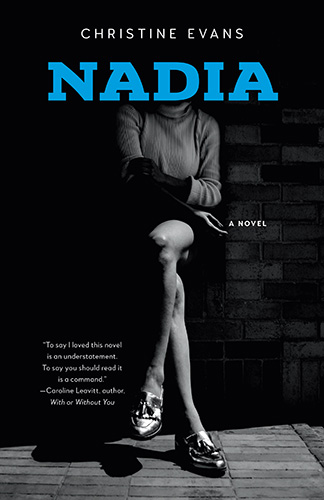
Nadia by Christine Evans moves between the competing perspectives of two survivors of the 1990s Balkan Wars who have escaped to London, only to discover that the war has followed them there. Nadia is a young refugee who just wants to forget the past—until Iggy starts temping at her London office. Afraid he may be a sniper from the war she fled, Nadia starts seeing threats everywhere, alongside unsettling visions of her lost girlfriend, Sanja. As her volatile connection with Iggy unravels, Nadia is forced to face the ethically shaky choices she made to escape the war, her survivor guilt, and her disavowed queer sexuality.
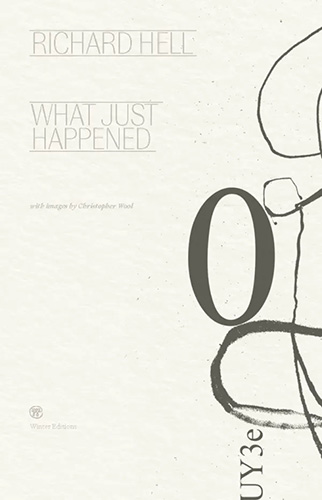
Really, what just happened when I read this book of poems, scribble scrabble drawings, photographs of crows, essays, and a memoir/list? Do I finally realize why my friend Robert Christie (who was a musician) was so enamored by Richard Hell? Probably. Coming across this writer reminds me of all the things I loved about Robert and his wife, Denise, what is direct and plainspoken, what is unusual and gifted.
Hell references Bill Knott in poems, and this can tickle the funny bone in a way that is curioser and curiouser. We do get a sublime glimpse into Hell’s music life and see that it cannot be separated from his writing. Even his essays are sprinkled with pure poetic reverie, “For instance, Roy Orbison hummed like chauffeured teal.” (“Falling Asleep”) My goodness! This is genius territory, beware!
My favorite poem is “Poets,” as I have just never read what poets do and what poetry is expressed so profoundly:
what poets hope to have their writing do is somehow trick into being all that time forgot
Forgetting you, we are certainly not, Richard Hell.
What Just Happened by Richard Hell with images by Christopher Wool. Winter Editions, June 2023.
Reviewer bio: Susan Kay Anderson lives in southwestern Oregon’s Umpqua River Basin. Her long poem “Man’s West Once” was selected for Barrow Street Journal’s “4 X 2 Project” and is included in Mezzanine (2019). Anderson also published Virginia Brautigan Aste’s memoir, Please Plant This Book Coast To Coast (2021).
Halloween 20% off Sale with Coupon. Scan the code to get a discount on select spooky titles when you order direct from the website. No Evil Is Wide was honored as a distinguished favorite in the 2022 Big Book Awards. We include both editions in this Halloween Bundle. Also see the new GRAPHIC NOVEL version. All our spooky books are literary in nature but written for a grown-up audience. They make great Halloween treats for the adult readers in your life. View flyer for more information.
Want early access to our eLitPak flyers? Subscribe to our weekly newsletter! You can also support NewPages with a paid subscription and get early access to the majority submission opportunities, upcoming events, and more before they are posted to our site.
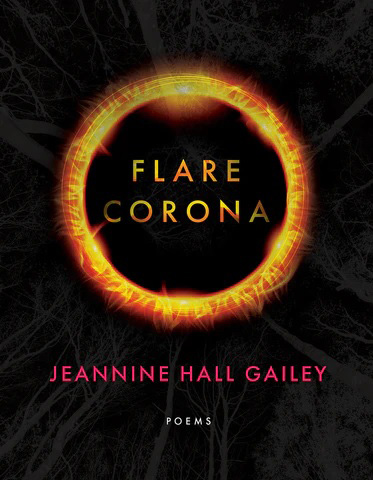
The coronae that flare in Flare, Corona, by Jeannine Hall Gailey, allude to solar explosions, coronavirus infections, cancer scare symptoms, and multiple sclerosis diagnosis. Put another way, the poems deal with exposure and contamination; after all, we “can only hold death at bay for so long.” Preoccupied with calamity, “downed planes, traffic accidents and plain old bad luck,” our narrator is “a person who looks for the dark side” and “can’t stop writing the apocalypse story over and over.” At least she has, and the poems benefit from, a sense of humor, dark though it may be. The collection reads like a survivor’s how-to manual for scenarios like a “zombie apocalypse” and “what to do when you get the diagnosis you may not survive.” Neither comedy nor gravity matter when the “truth is, there is no final secret, there is no formula to save us” from whatever “sudden instability” will cause our demise. Despite life’s supervillains and death’s close calls, Jeannine Hall Gailey is “dancing in the flames, arms raised high,” rejoicing in the “part of us radiant.”
Flare, Corona by Jeannine Hall Gailey. Boa Editions, Ltd., May 2023
Reviewer bio: Jami Macarty is the author of The Minuses (Center for Literary Publishing, 2020), winner of the 2020 New Mexico/Arizona Book Award – Poetry Arizona, and three chapbooks, including Mind of Spring (Vallum, 2017), winner of the 2017 Vallum Chapbook Award. Jami’s writing has been honored by financial support from Arizona Commission on the Arts, British Columbia Arts Council, and by editors at magazines such as The Capilano Review, Concision Poetry Journal, Interim, Redivider, Vallum, and Volt, where Jami’s poems appear. More at https://jamimacarty.com/
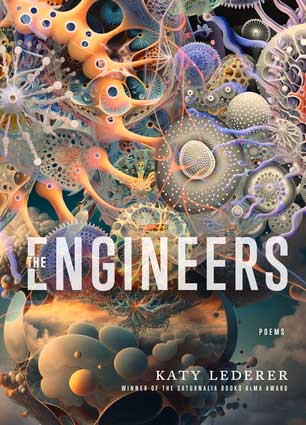
Peter Gizzi has said that “the elegy is a mode that can transform a broken heart in a fierce world into a fierce heart in a broken world.” For Gizzi, ferocity can be reimagined as vulnerability, bravery, and discovery, a braiding of emotional and otherworldly depth, “a holding open.” In Gizzi’s voice joy and sorrow make a complex ecosystem. In their quest for a lyric reality, these poems remind us that elegy is lament but also—as it has been for centuries—a work of love.
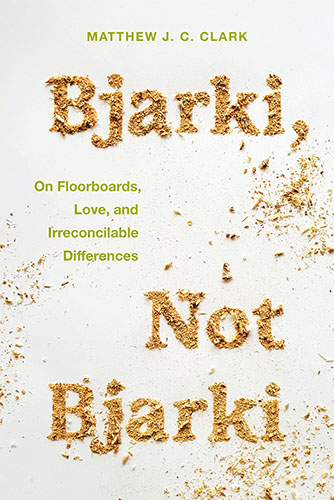
Bjarki, Not Bjarki: On Floorboards, Love, and Irreconcilable Differences by Matthew J. C. Clark University of Iowa Press, January 2024
In Bjarki, Not Bjarki, Clark wants nothing less than to understand everything, to make the world a better place, for you and him to love each other, and to be okay. He desires all of this sincerely, desperately even, and at the same time, he proceeds with a light heart, playfully, with humor and awe. As Clark reports on the people and processes that transform the forest into your floor, he also ruminates on gift cards, crab rangoon, and Jean Claude Van Damme. He considers North American colonization, masculinity, the definition of disgusting, his own uncertain certainty. When the boards beneath our feet are so unstable, always expanding and cupping and contracting, how can we make sense of the world? What does it mean to know another person and to connect with them, especially in an increasingly polarized America?
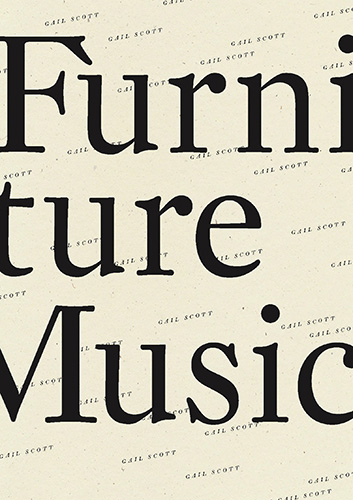
Furniture Music by Gail Scott Wave Books, October 2023
In Furniture Music, Montreal luminary Gail Scott chronicles her years in Lower Manhattan during the Obama era, in a community of poets at the junction between formally radical and political art. Immersing herself in a New York topography that includes St. Mark’s Poetry Project and the Bowery Poetry Club, Scott writes from a ‘Northern’ awareness that is both immediate and inquisitive, from Obama’s election to Occupy Wall Street and Hurricane Sandy. Here, readers are situated in conversations around citizenship, gender performance, class, race, feminism, and what it means to write now. Scott’s project is polyvocal, also resonating with the voices of a host of earlier writers and philosophers, notably, Gertrude Stein, Viktor Shklovsky, Walter Benjamin. The result is a staggering work of insight and hope during a critical time in American politics and art.
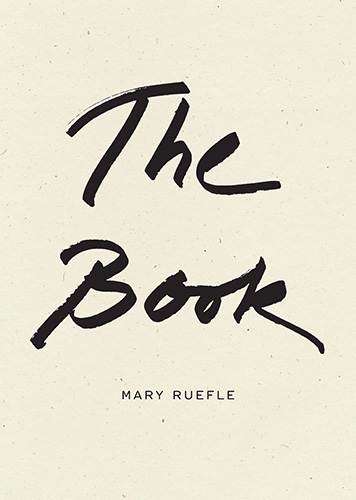
The Book by Mary Ruefle Wave Books, September 2023
Following the acclaimed Dunce, which was a finalist for the Pulitzer Prize, comes Mary Ruefle’s latest prose publication The Book. With the same curiosity found in Madness, Rack, and Honey and My Private Property, Ruefle’s prose here feels both omniscient and especially intimate. “It seems I believe in a bygone world though I no longer live there,” she writes. “Will I continue to read about all that is dusty?” In the spirit of friendship, Ruefle generously invites us to query ourselves as readers and thinkers in a world that will eventually endure without us.
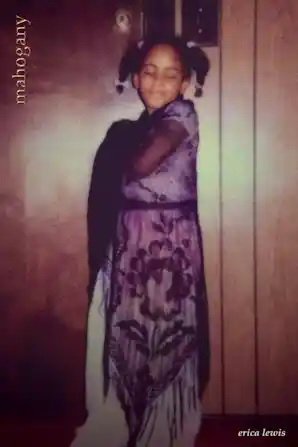
mahogany takes its name from the dark wood prized for its durability, workability, and elegant look, and from the Diana Ross movie, whose theme song asks if what lies ahead is what you really want. This book is the third in a trilogy, and like the first two books, it is steeped in pop music. Each poem here takes its title from a line of a Diana Ross and The Supremes song, as well as songs from Diana Ross’ solo career. Short lines flow down the page like postmodern psalms, connecting dailyness to timelessness, merging the historical and the beloved through reverence for family, music, and the life we actually live. mahogany is a lament for the passing of time and unimaginable loss, and at the same time, it models the daily search for joy and the deep shine that can arise from the darkest times.
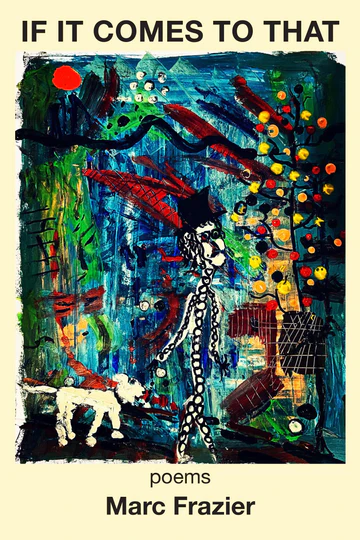
If It Comes to That is a collection that thoughtfully considers the human condition. The poet shares deep reflections on the creative spirit, on the archetypes that encapsulate our behaviors, and on our relationship with the natural world. One can’t help but see the connections that emerge while reading these poems—there are big questions of how we’re connected to the people who inspire us and the ways in which we’re tied to the past. However, these poems are also filled with the people who we touch simply and softly, hand to hand, finding a way through uncertain times. —Aaron Lelito, Founder, Editor-in-Chief, Wild Roof Journal
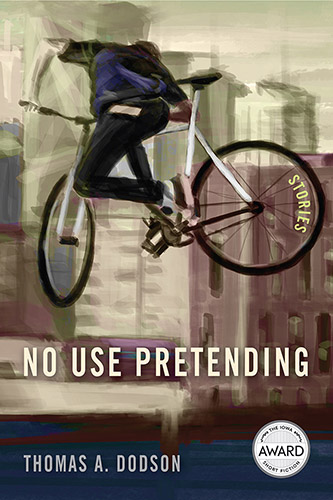
No Use Pretending: Stories by Thomas A. Dodson Iowa Short Fiction Award University of Iowa Press, October 2023
The stories in No Use Pretending by Thomas A. Dodson encompass diverse genres, from ecologically informed realism to a Kafkaesque fairy tale, from fabulist “weird fiction” to an episode from The Odyssey that becomes a meditation on what distinguishes human beings from animals. These stories invite the reader to reconsider moral and ideological certainties, to take a fresh look at such issues as fracking and drone warfare. In one story, a petroleum engineer discovers that one of his wastewater wells may be causing earthquakes, and in another, the pilot of an Air Force drone seeks to reconcile his conflicting roles as protector and executioner, husband and soldier. The scientist and the serviceman are both presented with problems that have no easy or obvious solutions, situations that force them to confront the messy, compromising complexity of being human.
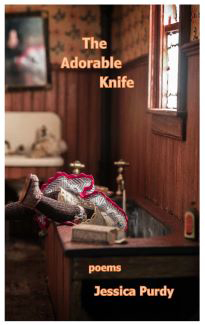
The Adorable Knife: Poems by Jessica Purdy Grey Book Press, August 2023
The Adorable Knife by Jessica Purdy is an intriguing poetry chapbook that explores the miniature crime scene creations of artist Frances Glessner Lee. In Purdy’s own words, “the poems are named after each ‘Nutshell,’ which are meticulously crafted crime scene dioramas meant to help police officers hone their observation skills. It is my intention to honor Frances Glessner Lee’s own attention to detail in crafting these, as well as to imagine possible ‘solutions’ by giving voice to the stories told in the crime scenes. In some of the poems, the speaker is the victim, and in some, the speaker could be the perpetrator. In still others, it is the poet’s voice speaking.” The chapbook, at the onset, quotes Frances Glessner Lee, “The investigator must bear in mind that he has a twofold responsibility—to clear the innocent as well as to expose the guilty. He is seeking only the facts—the Truth in a Nutshell.” (Contributed by Karen Poppy)
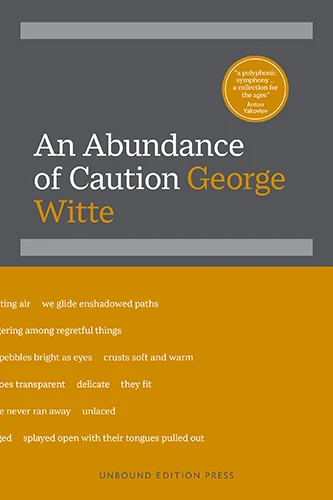
Distinguished by expert attention to image and phrase, line and sentence, rhythm and tone, George Witte’s An Abundance of Caution proves much more than a showcase of virtuoso technique. Witte’s formal skill lends voice and body to the crucial work of finding grace in a time marked by environmental crisis, global pandemic, and personal loss. His poems gain their depth and dimension from attentiveness to the lives of others, the details of the natural world, and the often-bewildering ways we live now. In lines both formal and free, these poems answer uncertainty with clarity, imagination, and compassion.
“The poet’s incredible attention to image, rhythm, and insistence upon the exact right word creates an incantatory sense of era-encapsulating collection of stylish, deftly composed poems.”–Kirkus Reviews
“These elegantly constructed poems about “each livid day” are definitely worth listening to.”–Ron Charles, The Washington Post Book Club Newsletter
“Visionary is what I would call the quality that enables these poems to know realities that exceed comprehension …”–H. L. Hix
“Witte’s poems find their way in, taking up residence in the mind and heart.”–David Yezzi
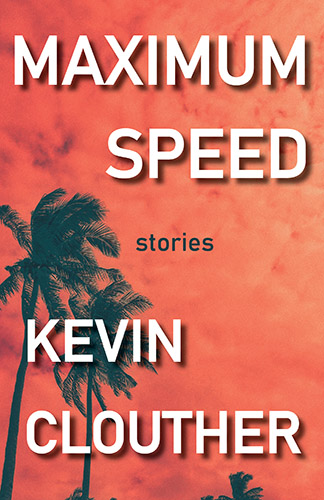
Maximum Speed: Stories by Kevin Clouther Cornerstone Press, November 2023
Like Jennifer Egan’s A Visit from the Goon Squad and Muriel Spark’s The Prime of Miss Jean Brodie, Kevin Clouther’s Maximum Speed moves across time and point of view to dramatize youth’s aftershocks. The unifying presence in the lives of three characters is Billy, an apprentice drug dealer in South Florida. His improbable appearance twenty years after his death reconnects Nick, Andrea, and Jim with each other and with the shared secret of their past.
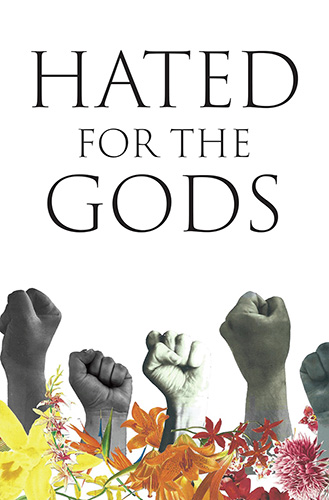
Hated for the Gods by Sean Patrick Mulroy Button Poetry, October 2023
Plaintive and joyous, sexy and ferocious—often all at once—Hated for the Gods is as much a call to action as it is a work of literature. Gorgeously rendered and skillfully constructed both to educate and inspire, Sean Patrick Mulroy’s poetry weaves together stories from his coming of age in the American South of the 1990s with the broader history of gay men in America. The result is a politically radical text that will leave you shocked with all you didn’t know about the history of queer people, and surprised by what you already knew but never could articulate. Winner of the 2020 Button Poetry Prize.
The Glass Fire in Napa Valley, 2020 seems to have been a turning point for the extremely prolific poet, editor, novelist, and activist writer Eileen R. Tabios. She and her husband experienced the fire and subsequent evacuation, which was successful, except that part of her life’s work was lost. She lost whole archive entries; material that belonged inside protected library buildings in official archives and not in an outbuilding that burned. This book makes real the fact that Tabios felt strongly compelled, passionate, and driven to collect some of her rescued writings and preserve them in book form. She tackles this project with love of what she finds among the remains of her work and is saying that love is the war she is raging against loss. While published archives can be boring to read because we don’t have the original pamphlet, magazine, or lecture to enjoy, Tabios’ inventive poems are delightful. More than half of the book is a compilation of “Uncollected Poetics Prose” that expand the meaning of archive, leading readers to dream along within them. What is so magical about this collection is that we are not left hanging and lost in the dense material of this ambitious project; we are shown abundance and astounding imagination in what remains. This project is love.
Reviewer bio: Susan Kay Anderson is a National Poetry Series finalist, Jovanovich Prize winner, and former Ragdale resident who lives in southwestern Oregon’s Umpqua River Basin. Her long poem “Man’s West Once” was selected for Barrow Street Journal’s “4 X 2 Project” and is included in her book of poems, Mezzanine (2019). Anderson also published Virginia Brautigan Aste’s memoir, Please Plant This Book Coast To Coast (2021). https://www.pw.org/directory/writers/susan_kay_anderson
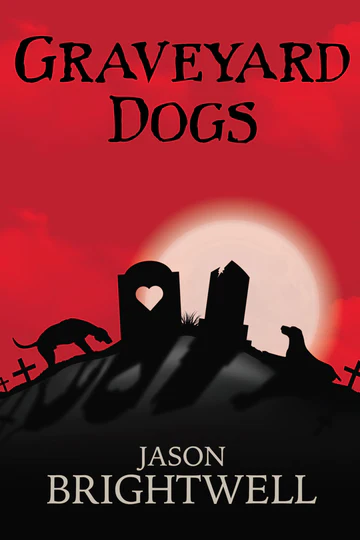
Graveyard Dogs is a graceful descent into the dimension of loss and grief. We witness life reduced to dirt and gravestones. We see love pushed into the shadows with nowhere to go. Jason Brightwell is a masterful shepherd whose poems guide us through the many facets of death. There is beauty and elegance in mourning and on every page in this book. He shows us that life prevails through tar, rust, and blood. We remain—the ones that are left behind—still of stars and still of purpose.
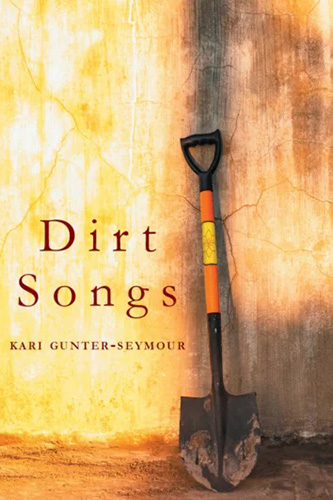
Dirt Songs by Kari Gunter-Seymour EastOver Press, February 2024
Ohio Poet Laureate Kari Gunter-Seymour’s poems in Dirt Songs are full-throated, raw, deceptively simple, and rippling with candor, providing readers an insider’s lens into the larger questions surrounding the many aspects of Appalachian culture, including identity, the impact of poverty, generational afflictions, and the brunt of mainstream America’s skewed regard for the region. Throughout the book there is an overarching determination to endure, to be the last truth teller left standing, arm raised in solidarity with the land and its people. Dirt Songs does what journalists and mainstream media have failed to do: provide a uniquely intimate look at landscape and family generated from within Appalachia, recognizing that one story cannot accurately represent a region or its people.
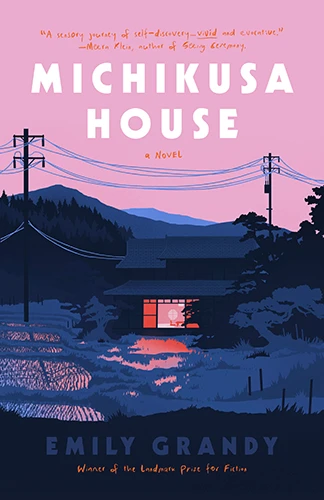
Winona Heeley spent the last year of recovery from eating disorders in rural Japan, at Michikusa House, alongside one other full-time resident: Jun Nakashima. Like Winona, Jun was a recovering addict and college dropout. While they bonded over rituals of growing their own food and preparing meals, they changed each other’s lives by reconstructing long-held beliefs about shame, identity, and renewal.
But after Winona returns to her Midwest hometown, Jun vanishes.
Two years pass and Winona, seeking revival through gardening, accepts a job as a groundskeeper at a local cemetery…and begins searching for Jun Nakashima once more.
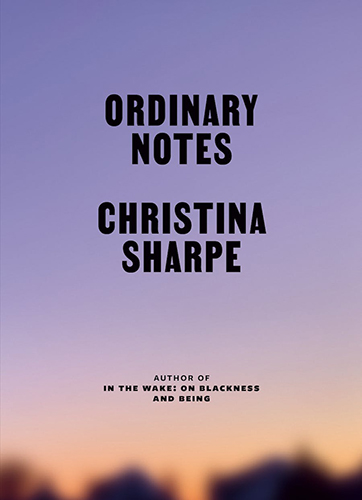
Christina Sharpe has written an incisive and insightful book about what it means to be Black in America today. Though the 248 notes that make up the book are brief, they dig deeply into the realities of white supremacy as a central tenant of American culture. Sharpe draws on a wide variety of contemporary and historical writers, artists, and thinkers, ranging from some most readers would be familiar with—such as Toni Morrison and Frederick Douglass—to a number who will be new to those same readers. Her 248 notes include 208 footnotes, in fact, as she steps into the long and deep river of Black thought and art. Sharpe structures her book around the various meanings of the word note, whether as a verb meaning to notice or a noun in the musical sense. She’s interested in definitions and words in general, as one of the longest sections of the book is what she refers to as “preliminary entries toward a dictionary of untranslatable blackness.” Given her investment in the tradition of Black thought, she calls on other thinkers to help her provide definitions for “unbuilding,” “spectacle,” “property,” and a number of other terms. All of her notes—like a piece of music—combine to create a composition that is more than its individual parts, one that celebrates Black culture and history, while reminding readers of the White supremacist reality that Black tradition has been and currently is being forged within and against.
Ordinary Notes by Christina Sharpe. Farrar, Straus and Giroux, 2023.
Reviewer bio: Kevin Brown has published three books of poetry: Liturgical Calendar: Poems (Wipf and Stock); A Lexicon of Lost Words (winner of the Violet Reed Haas Prize for Poetry, Snake Nation Press); and Exit Lines (Plain View Press). He also has a memoir, Another Way: Finding Faith, Then Finding It Again, and a book of scholarship, They Love to Tell the Stories: Five Contemporary Novelists Take on the Gospels. Twitter @kevinbrownwrite or kevinbrownwrites.weebly.com/.
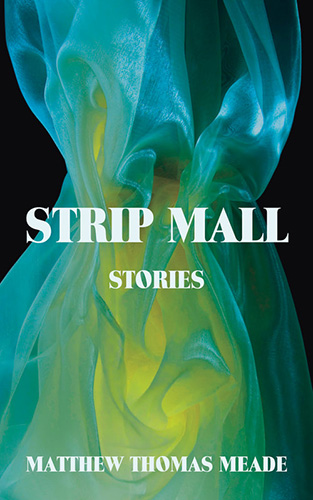
Strip Mall: Stories by Matthew Thomas Meade Tailwinds Press, November 2024
Matthew Thomas Meade’s stories in Strip Mall are about a surreal future as much as they are about our absurd present. A young lawyer moonlights as an ersatz psychic; a woman struggles with the caregiver burden caused by her boyfriend’s satanic possession; a suburban mother reckons with Kafka’s The Metamorphosis in mass-casualty form. Meade’s craft in this debut collection dissipates with shockingly deadpan ease into sensitive accounts of ordinary human relationships and resilience. With its heartfelt portraits of a magical world where late-stage capitalism has blurred the boundaries between the living and the dead, Strip Mall presents a strangely grace-filled vision of the dystopia already upon us.
To discover more great books from small, independent, and university presses, visit the NewPages Guide to Publishers as well as the New Books category on our blog. Subscribe to our weekly newsletter to stay up to date!
We receive many wonderful book titles each month to share with our readers. Visit New Books Received to discover new authors as well as new works by your favorites. This page is updated monthly, but subscribers to our newsletter have these featured titles and more of ‘what’s new’ at NewPages.com delivered weekly. For publishers or authors looking to be featured on our blog and social media, please visit our FAQ page.
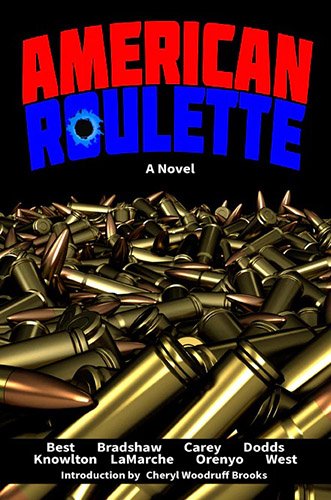
Like a page ripped from the headlines, the Sunbury Press release of American Roulette takes readers inside a mall where a mass shooting has taken place. It’s a grisly and up-close look at a wholly preventable, if common, occurrence.
The novel was written by eight authors, each of whom introduces readers to someone caught in the rampage. Two of the characters, Will Humphreys and Roger Elliot, are young, disgruntled white men who are eager to retaliate for years of familial and schoolhouse bullying, and provide a window into the minds of people driven to the edge and then given access to assault weapons.
Other characters include a minister struggling with medical debt; a young woman battling a depressive disorder; an elderly gun aficionado; a homeless mall security guard who has been living in her car; a local television personality; and a man hired by the mall’s owners to do damage control.
Two of the authors, Rev. Matthew Best and Pat LaMarche, spoke with Eleanor J. Bader in advance of the book’s October release:
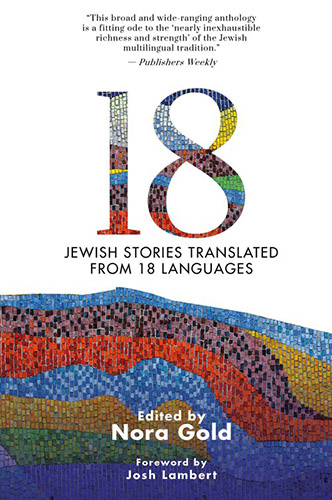
18: Jewish Stories Translated from 18 Languages edited by Nora Gold Academic Studies Press, October 2023
This anthology offers readers the first collection of translated multilingual Jewish fiction in twenty-five years: a collection of eighteen stories, each translated into English from a different language: Albanian, Croatian, Czech, Danish, French, German, Greek, Hebrew, Hungarian, Italian, Ladino, Polish, Portuguese, Romanian, Russian, Spanish, Turkish, and Yiddish. These compelling, humorous, and moving stories, written by eminent authors, reflect both the diversities and the commonalities within Jewish culture and are easily accessible and enjoyable not only for Jewish readers but for story-lovers of all backgrounds.
Authors in the order they appear in the book: Elie Wiesel, Varda Fiszbein, S. Y. Agnon, Gábor T. Szántó, Jasminka Domaš, Augusto Segre, Lili Berger, Peter Sichrovsky, Maciej Płaza, Entela Kasi, Norman Manea, Luize Valente, Eliya Karmona, Birte Kont, Michel Fais, Irena Dousková, Mario Levi, and Isaac Babel.
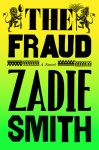
The title of Zadie Smith’s latest novel is misleading, as there is no singular fraud in this novel; instead, everybody seems to be a fraud. Smith bases her novel on the historical account of the “Tichborne Trial,” in which a man claims to be Sir Roger Tichborne, a claim that is so absurd to be laughable, given the evidence. However, people—primarily those of the lower- and growing middle-class—firmly support him, even when they know the claim is baseless. They attend his trial and rallies in support of him, denying any reality he or his trial calls into question. If readers are wondering if there are contemporary echoes, Smith sets them to rest with a song that serves as the epigraph for Volume Eight (her structure mirrors the Victorian novels she is channeling), in which each stanza ends with the word trump. While the trial is the underpinning of the novel, Smith largely follows Eliza Touchet, the housekeeper for William Ainsworth, a novelist who once outsold Dickens, but who is now largely forgotten. Eliza attends their literary gatherings, but even though she sees through the literary elite, she has no standing to critique, given the role of women in the 1800s. When she meets Andrew Bogle, a formerly enslaved Jamaican who serves as the faux Tichborne’s one consistent witness, she asks to hear his life story, wanting to understand a broader view of Britain and humanity. She ultimately has a moral choice to make to try to stay true to her beliefs, to avoid being a fraud herself, and she develops a different kind of voice by the end of the novel. While Smith spends much of the novel showing characters who doubt the very idea of a shared reality, she reminds readers that fiction can still convey truth, even when it rewrites history to do so.
Reviewer bio: Kevin Brown has published three books of poetry: Liturgical Calendar: Poems (Wipf and Stock); A Lexicon of Lost Words (winner of the Violet Reed Haas Prize for Poetry, Snake Nation Press); and Exit Lines (Plain View Press). He also has a memoir, Another Way: Finding Faith, Then Finding It Again, and a book of scholarship, They Love to Tell the Stories: Five Contemporary Novelists Take on the Gospels. Twitter @kevinbrownwrite or kevinbrownwrites.weebly.com/.
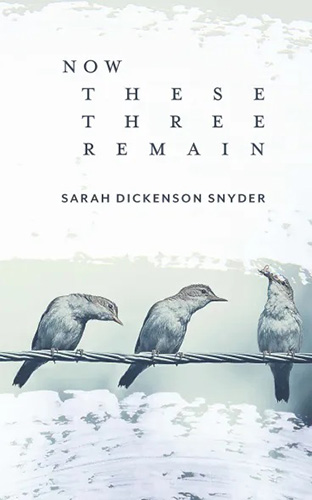
Sarah Dickenson Snyder’s latest collection, Now These Three Remain, strikes the delicate balance of faith and doubt. Like the master carver in “Industry,” Dickenson Snyder ponders,
Maybe I am practicing for some god’s commandments with chisel and mallet I tap across the smooth surface of slate to unveil letters, carve words I can touch.
Sarah Dickenson Snyder uses the slash like a chisel in her three sections, “Un/Faith,” “Un/Hope,” “Un/Love.” This gives these Biblical words facets, as if carved in stone. The poems exist in these oppositions, these dimensions.
In “Ginger Roots,” the speaker tells us, “Most good things grow in darkness— / seeds, roots, a fetus.” The speaker’s conflict is, at times, rooted in trauma and healing. Coming from a place of religious doubt, the collection is also an account of sexual assault and sexual autonomy. The speaker remembers her assault, “not-breathing, those seconds / falling inside me like a rock in a pond.” In “Without Regret,” the older speaker, “chose my life over what was beginning / to grow.”

Sarah Dickenson Snyder’s whisper “Heal us, heal us,” resonates throughout Now These Three Remain, where “we all just want to make something / close to sacred while we’re here.”
Reviewer Bio: Jennifer Martelli is the author of The Queen of Queens and My Tarantella, both named “Must Reads” by the Massachusetts Center for the Book. Her work has appeared in Poetry, Poem-a-Day, and elsewhere. Martelli has received grants from the Massachusetts Cultural Council. She is co-poetry editor for MER. www.jennmartelli.com
Forget I Told You This by Hilary Zaid is the winner of the Barbara DiBernard Prize in Fiction in which Amy Black, a queer single mother and an aspiring artist in love with calligraphy, dreams of a coveted artist’s residency at the world’s largest social media company, Q. One ink-black October night, when the power is out in the hills of Oakland, California, a stranger asks Amy to transcribe a love letter for him. When the stranger suddenly disappears, Amy’s search for the letter’s recipient leads her straight to Q and the most beautiful illuminated manuscript she has ever seen, the Codex Argentus, hidden away in Q’s Library of Books That Don’t Exist—and to a group of data privacy vigilantes who want her to burn Q to the ground.
To discover more great books from small, independent, and university presses, visit the NewPages Guide to Publishers as well as the New Books category on our blog. Subscribe to our weekly newsletter to stay up to date!
Alice Winn’s debut novel follows two British teenagers—Henry Gaunt and Sidney Ellwood—during their time at an elite boarding school and into their time as soldiers during World War I. Their time at school sounds idyllic, but there are conflicts that come from Ellwood’s openness about his sexuality. It quickly becomes clear that Gaunt is also gay, but he is unwilling to admit that to himself or to others, and he is in love with Ellwood. The war significantly changes them both and forces them to confront their love, but also reminds them of the reality of the world they live in. Winn clearly conveys the horrors of the war and the loss of almost an entire generation of men, both through Gaunt and Ellwood’s experiences, but also through those of their classmates and Gaunt’s sister, Maud. She is part of a generation of young women whom adults encourage to go to the colonies, given how few men are left for them to marry. Winn creates a world where the war devastates all, leaving a world full of broken people who will have to spend the rest of their lives putting that world and their lives back together. Building their lives back is even more complicated for those on the margins, given society’s lack of acceptance of who they are. Winn reminds readers that so many did, in fact, sacrifice so much for the peace that followed, but some had to sacrifice even more.
In Memoriam by Alice Winn. Alfred A. Knopf, March 2023.
Reviewer bio: Kevin Brown has published three books of poetry: Liturgical Calendar: Poems (Wipf and Stock); A Lexicon of Lost Words (winner of the Violet Reed Haas Prize for Poetry, Snake Nation Press); and Exit Lines (Plain View Press). He also has a memoir, Another Way: Finding Faith, Then Finding It Again, and a book of scholarship, They Love to Tell the Stories: Five Contemporary Novelists Take on the Gospels. Twitter @kevinbrownwrite or kevinbrownwrites.weebly.com/.
In this debut novel, Melinda Moustakis creates a couple who agree to marry each other a day after they first meet, based mainly on Lawrence’s claim to 150 acres. He and Marie have reasons for wanting land, a home, and a family, though she is more forthcoming about those reasons. On the one hand, then, this novel explores the challenges of clearing land and building a house in Alaska in the 1950s. It touches on the development of Alaska as a state and the land the federal government took away from the indigenous tribes who lived there for centuries. Moustakis, though, is more concerned about what it means to make a life with another person, as opposed to in a particular place; the isolation of the homestead simply heightens the conflicts Lawrence and Marie have. The idea of statehood echoes the trades one must make in a relationship, as some people oppose statehood because of the taxes the federal government will impose in exchange for services and the right to vote, while the takeover of native lands shows what happens when a relationship is one-sided. There are threats hanging over Marie and Lawrence’s relationship throughout the novel, whether that’s a grizzly bear attack or the secrets Lawrence keeps, leaving the reader wondering if what they have built can survive in the wild.
Homestead by Melinda Moustakis. Flatiron Books, February 2023.
Reviewer bio: Kevin Brown has published three books of poetry: Liturgical Calendar: Poems (Wipf and Stock); A Lexicon of Lost Words (winner of the Violet Reed Haas Prize for Poetry, Snake Nation Press); and Exit Lines (Plain View Press). He also has a memoir, Another Way: Finding Faith, Then Finding It Again, and a book of scholarship, They Love to Tell the Stories: Five Contemporary Novelists Take on the Gospels. Twitter @kevinbrownwrite or kevinbrownwrites.weebly.com/.
Discover our latest titles including Joshua Shaw’s All We Could Have Been, winner of the Tartt First Fiction Award. Releasing this fall: Kelly Ann Jacobson’s Weaver, Trish MacEnulty’s Cinnamon Girl, Robert McKean’s Mending What is Broken, and The Book of Merlin translated by Larry Beckett. Visit our website and view our flyer to learn more about these titles.
Want early access to our eLitPak flyers? Subscribe to our weekly newsletter! You can also support NewPages with a paid subscription and get early access to the majority submission opportunities, upcoming events, and more before they are posted to our site.