Home » NewPages Blog » Page 247

NewPages Blog

At the NewPages Blog readers and writers can catch up with their favorite literary and alternative magazines, independent and university presses, creative writing programs, and writing and literary events. Find new books, new issue announcements, contest winners, and so much more!

New Lit on the Block :: Labletter

The Labletter annual is rooted in the Oregon Lab, the name given to an annual (or near annual) gathering of artists who first met in 1994 at a ranch outside of Ashland, Oregon. Since then, the Lab has met in California, Maine, Georgia, Massachusetts, and Delaware. The vision of the Lab is to build a community of artists representing a variety of mediums where individual artists can learn, experiment, collaborate, and further their own work. People arrive prepared to lead a workshop, participate in workshops led by others, work on projects, and share some of what they do as artists.

First published in 1998 as a way of extending the Lab beyond the week when people were together, the inaugural edition of the Labletter was a collection of quotes, handwritten letters, samples of writing, and pages copied from outside sources submitted by people who had participated in the Lab. Over the next several years, the magazine would include poems, letters, excerpts from scripts, excerpts from novels in progress, stories, essays, photographs, paintings and prints, video shorts, music—all drawn from people who had participated in the Lab and people closely associated with them. Each year, about twenty-five copies of the magazine were produced.

This year, the decision was made to expand. A company was formed to publish the Labletter (Labletter LLC), and a goal was set to invite submissions from a larger group of people and distribute the magazine to a larger audience. In addition to the usual call for submissions, several people were invited to be either section editors or project editors.

Each section of this magazine represents the work of the editor who conceived the section and the contributors who contributed to it. The Gallery contains general submissions, or submissions solicited and received that fall outside the specific sections.

The magazine also includes an accompanying CD – Live: a collection of songs recorded at the Oregon Lab

Two Classics from Candlewick

Two recent acquisitions have proven wonderful “rereads” for me. Both are illustrated versions of favorite classics, making them appropriate and perhaps more attractive for young readers. The first, from the Candlewick Illustrated Classics, is The Wind in the Willows.
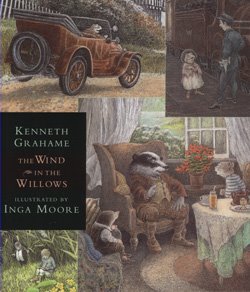
I would have thought the original story by Kenneth Grahame to be already written at enough of a young adult level, but this illustrated version does add to the enjoyment of this classic tale of friendship and (mis)adventure. Inga Moore, author and illustrator, has contributed the ink and pastel crayon images for this edition, and the story is generously illustrated, including full-page and two-page images as well as numerous inserts. The paintings are extremely well detailed, with full attention given to foreground as well as background, surrounding scenes, captured action, and sequences. At the same time, Moore’s style makes the images seem a bit soft-focus – perfect for the dream-like quality of the tale. They are exactly the types of images that add to, not detract from, the fantastical nature of the story and experience of reading.This compact edition is a sturdy paperback, with generous flaps on both the front and back cover to add stability, and heavier weight, semi-gloss paper throughout.

My only reservation in this edition is the abridged nature. I have never found Kenneth Gramhame’s story excessive in language or detail to such an extent that I feel it necessary to lop off bits. With the interest young readers have now in such extensive stories as the Harry Potter and Eragon series, this story – especially abridged – seems slight. The language and syntax itself in Grahame’s original is not yet so antiquated that a young reader of today would not be able to understand it or connect with it, so again, I’m not sure why the need to abridge by shortening sentences and leaving out serendiptious events. I fear with such a story as this, the abridged version will be all that a young reader might read – especially when it comes in such a pretty package – and they will never know the true original story. Given the opportunity to package it so enticingly, I wish the publisher would have hook-line-and-sinkered it to the full version.
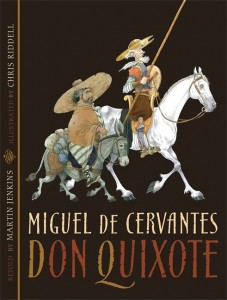
I would not say the same for the second illustrated classics, also from Candlewick Press: Don Quixote. Originally written by Miguel de Cervantes, this hardcover edition is retold by Martin Jenkins and also generously illustrated by Chris Riddell. Every page has at least a line drawing, if not an accompanying full color picture. Many of the line drawings extend full bleed across both pages, while only a few of the color images are allowed to do so. There are, however, dozens of framed, full-page color pictures throughout. To say that this edition is “lavishly illustrated” is an understatement, and yet, it is entirely suitable to the text.

The text itself is a retelling – and one that works well for this particular novel. There would be no doubt in my mind that young adult readers who encounter this version in their youth wouldn’t later seek out the complete version in their more adult years. The two are so very different in style, a curious or devoted reader would be more apt to want to know both. While the language and syntax may be more contemporary and simplified in this retelling, there is certainly no “cleaning up” of the content of the story, which is a relief. Don Quixote’s precarious mental state is as boldly portrayed in this version, as are his repeated beatings and public humiliations – all of which allow the reader to both find humor and deep sympathy for the character. The pace of the text is quick, and the serendipitous adventures kept neatly woven, including Don Quixote’s encounter with Cervantes, the author. For those who have never read this tale or may have forgotten it since high school/early college – it is a densely developed story of many intertwined threads. It is not in any way “light” reading for young adults, but could be categorized as a “smart read” that will entice as well as challenge imaginative young minds.

With the more accessible retelling and addition of magnificent illustrations, this is the kind of book in which young readers will utterly lose themselves – as will any adult, making it a perfect read aloud selection. I highly recommend it for readers who enjoy collecting editions as well as for gift giving; the hardcover, while more pricey, works well with this larger format with heavier paper stock. This is an edition that can remain in a family for generations, and will bring new readers to laugh out loud and shed a tear in their initiation as Don Quixote romantics.

Snowbound Winners Announced

Tupelo Press has announced Judge Aimee Nezhukumatathil’s selections for the Snowbound 2008-2009 Chapbook Contest:

If St. Augustine Were a Butcher Like My Grandfather
by Brandon Som.

The Rafters of David by Kimberly Burwick was runner-up.

Finalists: J. David Cummings, Jennifer Kwon Dobbs, Barbara Duffy, Eileen G’Sell, Susan Gubernaut, Steven Lautermilch, Mary Leader, Mary Molinary, John Surowiecki, Jonathan Weinert.

July is Open Submissions month at Tupelo.

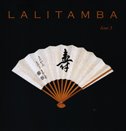
New Lit on the Block :: Lalitamba

Lalitamba is a journal of modern devotional literature. It includes writings from around the world that have been inspired by different ideas of Truth—Hinduism, Sufism, Judaism, Christianity, and Buddhism, to name a few.

Contributors have been included in the Best American series, written award-winning novels, and received NEA grants. We have also been known to discover new authors, and to publish the writings of people who are homeless or in prison. The writings included are fresh. They challenge the reader to expand, as well as to open to the beauty within. The journal includes fiction, poetry, essays, interviews, translation, and artwork.

The journal was inspired by time spent in India with Sri Mata Amritanandamayi Devi. The name Lalitamba comes from a devotional song. It means Divine Mother, or the power that sustains the universe. The journal is about knowing the truth of inner freedom and joy throughout all circumstance.

Busy Beaver Buttons

Need promo buttons? I got a great product at a very reasonable price from Busy Beaver Buttons, a small, indie company in Chicago. Busy Beaver makes custom buttons, badges, and pins, with some quantities as low as 50, and you can get free shipping. Busy Beaver also started the Button-O-Matic vending machines in 2002 to dispense limited-edition, artist designed buttons across the country. While this might sound like a paid ad – it’s not. I paid them for the work, but considering all the reasearch I had done, shopping around, etc. – I thought for anyone looking for a recommendation, here it is. I found their ad in Make Magazine – another good reason to support them!

BrainStorm Poetry 2009 Contest Winners

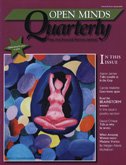
This Spring 2009 issue of Open Minds Quarterly includes the winners of the 7th Annual BrainStorm Poetry Contest for mental health consumers and survivors. Forty finalists were selected from 594 entrants, with the following results:

First Place – Jennifer Footman
Second Place – Tracy King
Third Place – Ky Perraum

Honorable mentions went to Tracy King, David O’Neal, Michael Conner, Diane Klammer, Benjamin Hawkes, and Ky Perraum.

Open Minds Quarterly is a publication of The Writer’s Circle, a project of NISA/Northern Initiative for Social Action (Ontario). “NISA is built on the premise that consumer/survivors of mental health services are intelligent, creative, and can makea valuable contribution to society if given the opportunity to do so.”

Audio :: Gore Vidal

A new audio recording of Gore Vidal in conversation with Jay Parini is now available in the online archives of the Key West Literary Seminar. On it, Vidal discuss his work as a historical novelist, his thoughts on the American educational system, and comments on a host of heroes and villains – from Franklin Delano Roosevelt and Tennessee Williams, to George W. Bush, Sarah Palin, and Bernard Madoff.

Cha Give Online Works Second Life

From Cha: An Asian Literary Journal: “We at CHA realise that, sadly, online journals often fold leaving countless works without a home. If you have lost a work in this way, CHA may be interested in republishing your work in our new regular section, ‘Lost Teas’. Please see submission guidelines for more details.”

CHA is the first and currently only Hong Kong-based online literary quarterly journal dedicated to publishing quality poetry, short stories, creative non-fiction, drama, and reviews written in English, as well as photography and art. It has a strong focus on Asian-themed creative work or work done by Asian writers and artists. It also publishes established and emerging writers/artists from around the world.

To Be Read Aloud

Footnotes for What is Happening Somewhere
JodiAnn Stevenson
Published May 23, 2009 in Abjective

1. Drink the drown summer. Someone’s babies dream of drinking drum. First it settles on you as nonsense, noise. As if words have been strung together aimlessly. And, maddeningly, regular syntax seems to be in use — it sounds like it should make sense. Shouldn’t that mean something?

2. And the sounds it makes are fine. Babies bring dreams to seams. Seams fit in a line. They are so fine that they are fun and even beautiful. Sometimes too beautiful to be confused. A long line of gold ribbon running from the butcher’s truck, a knife.

Read the rest on Abjective.

Professional Development Fund for Emerging Arts Leaders of Color

Americans for the Arts Announces Professional Development Fund for Emerging Arts Leaders of Color

Please post this announcement to your listservs and networks, and share with others in your community!

Americans for the Arts is pleased to announce that Chicago-based Joyce Foundation has renewed its support for Americans for the Arts’ Professional Development Fund for Emerging Arts Leaders of Color. A total of five Joyce Fellows from the Great Lakes region (Illinois, Indiana, Michigan, Minnesota, Ohio, and Wisconsin) will be selected to participate in this program in 2009.

Fellows will receive stipends of $3,000 to support their attendance at the 2009 National Arts Marketing Project Conference, Arts Advocacy Day 2010, and the 2010 Americans for the Arts Convention. In addition, fellows will have special opportunities to meet field leaders, work alongside mentors, and receive individualized career coaching. An additional five fellows will be selected in 2010.

The application deadline for this year is August 14, 2009. Download application materials and eligibility information at Americans for the Arts, or for more information contact Stephanie Evans at [email protected] or by phone at 202.371.2830.

Library Scholar-in-Residence (Oregon)

The Central Oregon Community College (COCC) Barber Library seeks applications for the fifth year of the Library Scholar-in-Residence Program. The appointment will continue the focus on creative writing with a Writer in Residence. The appointment begins September 1 and offers the selected scholar a shared office in the library, a computer and network use, and faculty level research access for up to one year. Deadline: July 31, 2009

Perugia Press Prize Winner

Jennifer K. Sweeney is the winner of the 2009 Perugia Press Prize: “Perugia Press publishes one collection of poetry each year, by a woman at the beginning of her publishing career. Our mission is to produce beautiful books that interest long-time readers of poetry and welcome those new to poetry. We also aim to celebrate and promote poetry whenever we can.”

Sweeney’s book, How to Live on Bread and Music, along with sample poems from the collection, is available on the Perugia Press website.

ABR & Readers on Teaching Creative Writing

American Book Review offers a focus on the question of teaching creative writing in its May/June 2009 issue, including their introduction: “Why Teach Creative Writing?” and responses from Lee K. Abbott, Angela Ball, Leslee Becker, Kelly Cherry, Bret Anthony Johnston, Anna Leahy, Lance Olsen, Julie Shigekuni, and Steve Tomasula.

There’s a great deal to be garnered from these thoughtfully concise responses, not only for writers, but for teachers, students, and all who call themselves readers.

Yes, readers: just because you’re not a “creative writing” teacher/student/writer doesn’t mean you have no stake in this issue. Much in the same way we concern ourselves with the ingredients in the foods we eat, reading about this issue of teaching creative writing has much to to with understanding the ingredients of what we consume when we read.

Gourmet Politics

From the “Great stories in places you might not expect them” file: Gourmet Magazine.
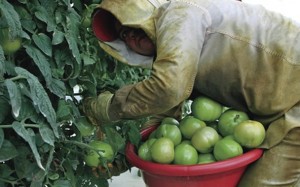
I picked up a couple of “free copies” of these left on a bench on campus last year (those of you who free recycle instead of throwing away your mags – love ya!). In one, I came across the feature “Food Politics” – “The Politics of the Plate: The Price of Tomatoes” – and it has forever changed my tomato buying habits (in addition to my trying to grow my own tomatoes this summer). Not only does Gourmet Magazine feature the political food essay in their print publication, but their website offers the essay along with related articles, reader commentary, and follow up. I never expected to find this kind of content in a magazine I picked up hoping for a few new recipes; now it’s the first feature I read when I pick up the latest issues of this publication.

What Words Describe You as a Reader?

A note from Paul Dry of Paul Dry Books that is worth reflection:

Dear Reader,

What words would you use to describe yourself as a reader? Recently I came across two that describe the kind of reader I’d like to be: Ingenuous and Discerning. Since they suggest opposing tendencies I think they describe a good reader. By putting each at the center of a trio, I hope you’ll see what I mean.

Place “Ingenuous” between “Gullible” and “Close-minded”:

Gullible———-Ingenuous———-Close-minded

And place “Discerning” between “Picky” and “Clueless”:

Picky————Discerning———Clueless

In each trio, the term to the left of the middle one is its degraded caricature, and the one to the right, its contrary.

The Ingenuous Reader reads without preconceptions of the author’s intentions or abilities. She’s ready to enjoy and learn from the writing. But there’s a risk to her openness: the Ingenuous Reader may be gullible. Discernment protects her from gullibility. On the other hand, a reader may come to an unknown book so leery of it that she is closed to its possibilities. At this end of the scale of judgment, discernment again guides the reader. To remain ingenuous, we need discernment.

The Discerning Reader makes distinctions, notices and evaluates style, and appreciates a writer’s rhetorical and dialectical abilities. Pickiness is this reader’s characteristic vice. He may have decided that his taste is impeccable and, hence, be unwilling to consider new styles and genres. But in avoiding pickiness, this reader doesn’t want to fall on the other side of discernment into what I’ll call cluelessness. Ingenuousness keeps The Discerning Reader open but not clueless.

The qualities of ingenuousness and discernment are twin pilots, each helping the other to hold the center. Ingenuousness alerts readers to good writing, wherever it comes from. Discernment allows the reader to praise (or criticize) a book, no matter what associations the book carries with it. These paired virtues lead to accurate enthusiasm.

I think we develop these qualities by reading a lot and thinking about what we’ve read and talking or writing about it-and then by reading more books. It’s a happy, and happily endless, cycle.

Sincerely,

Paul Dry
Paul Dry Books

Send Birthday Card to 102-year-old

From our local paper, The Bay City Times:

STERLING – The MediLodge of Sterling, a rehabilitative and skilled nursing facility, is asking area residents to send birthday cards for a resident who is turning 102 on July 11.

Eleanor Wenner has lived at the facility for two years and will be celebrating her 102nd birthday with her husband of 64 years, Al, on July 11.

Other than her husband, who resides in the facility with her, Wenner has no other family members to help her celebrate, said Jeri Harris, marketing director at MediLodge.

The cards will be opened at 2 p.m. July 14, during the birthday celebration with staff and residents fo mediLodge. The event is open to the public.

If you would like to send Wenner a card, mail them to Eleanor Wenner, c/o MediLodge of Sterling, 500 School Road, Sterling, MI 48659.

For more information, call Jeri Harris at the MediLodge of Sterling (989) 701-0071.

NewPages Updates :: July 02, 2009

New additions to NewPages guide to Lit Mags:
From East to West
Ink & Ashes
The Moose & Pussy
Able Muse
Think Journal
Coal Hill Review

New additions to NewPages guide to Alt Mags:
Science & Society
Edge – The Third Culture

New additions to NewPages guide to Publishers:
Tightrope Books (Canada)

New additions to NewPages guide to Conferences/Workshops/Etc:
Surrey International Writers’ Conference
John R. Milton Writers’ Conference
Writing the Midwest: A Symposium of Scholars and Writers
Wildbranch Writing Workshops
Blow-Out! Festival
Somerville News Writers Festival
Writer’s Edge Innovative Fiction Workshops

New additions to NewPages guide to Indie Bookstores:
Blue Sky Collective

From minds more creative…

Seems some Harvard guys got together for this behind-the-scenes remake of Marcel Proust’s Swann’s Way – remade in the zombie version, Swann’s Blood.

On the coattails – or should I say dragging entrails of – Seth Grahame-Smith’s zombiefied Pride and Prejudice, this making-of video is a nice jab at the remake (dare I say) genre.

James Leaf as Director William St. Forte introduces the work: “To me a great film tells you something about yourself, and often I find that something is: you’re a zombie.”

St. Forte later comments on working with the scriptwriter: “His first draft was very introspective. But I found if I just changed the word ‘memory’ to ‘bloodsplosion,’ well, everything worked out alright.”

Steven De Marco as BJ Hardon (really?) as Marcel Proust: “When did this happen? I have no bloodsplosion about it.”

Ten minutes of total literary fun.

Job :: Managing Editor, River Styx

River Styx independent literary magazine invites applications for the part-time position of Managing Editor. The areas of primary responsibility include general editorial, event coordination, volunteer management, grant writing, and data base management. Candidates must have a minimum of a BA, with experience in literary publishing and computer literacy in both MAC and PC environments. Attention to detail, creativity, self-initiative and a passion for literature are critical to success in this position. Experience with nonprofit management is highly desirable. Please send application letter, resume, and writing samples by July 6 to: Richard Newman, Editor, River Styx, 3547 Olive St., Suite 107, St. Louis, MO 63103 or email to richard.newman<-at->riverstyx<-dot->org

The Splinter Generation

In a previous post, I had a bad link to The Splinter Generation, so I hope to correct that here, and also make a quick note that they are looking for more fiction submissions. So, all you summer-time story writers, get those drafts polished up and sent in! Their new site is looking great!

***[previous post content]***

The Splinter Generation, a one-time-only publication received so much positive attention, the editors have decided to re-launch the journal as an ongoing publication featuring short fiction, poetry and nonfiction from writers born between 1973 and 1993. They’ve also given the site a new look, added some great new editors and are now accepting submissions.

The Splinter Generation
is looking for the best poetry, creative nonfiction and fiction. In particular, they’re looking for work that captures what it is to be a member of this generation. Submissions are accepted on a rolling basis, but the reading period will end on November 1.

Resources for Writers and Artists

If you’re looking for grants, fellowships, residencies, or other like resources for writers and artists, then get hip with Mira’s List: “Mira’s List is a free service for artists, writers, composers and others in the arts.Here you will find up-to-date information, resources and deadlines for grants, fellowships and international residencies. Money, time and a place to create.”

Exploring Ghana Through Obsidian

Yet another great literary publication through which global cultures and perspectives can be explored is Obsidian: Literature of the African Diasporas. The most recent issue (v8 i2 – don’t let the 2007 date throw you; it just came out) focuses on Ghana – “Honoring the Legacy and Literature of Independent Africa, 1957-2007.”

Editor Sheila Smith McKoy introduces the issue: “As the first sub-Saharan African country to gain its independence from its ‘colonizer,’ Ghana set the stage for the domino effect of freedom across the African continent…In this issue, Obsidian celebrates the legacies of Independent Africa, her literature, her cultures, and their impact across Africa, her Diaspora and our world.”

Poets in this issue include Kofie Anyidoho, Makuchi, Shane Book, and Sheila Smith McKoy – “all offer riffs on the issues that contextualize the experiences of African and Diasporan identity.” M. Genevieve West interviews Makuchi, several essays “provide diverse perspectives on Ghana and her legacy,” and Kim Coleman Foote contributes to the fiction.

to be hung from the ceiling by strings of varying length

Rick Reid’s full-length book of poetry, to be hung from the ceiling by strings of varying length, reads like a flip book in which lines have been inverted and language turned on its head. When read through quickly without too deep an analysis, the language evokes the impression of a fractured scene. Not only the imagery, but also the language is fragmented, the poet’s linguistic ear sometimes approximating that of an ESL speaker. Continue reading “to be hung from the ceiling by strings of varying length”

Translationin Practice

Motoko Rich in “Translation Is Foreign to U.S. Publishers,” in the New York Times last year, claimed that U.S. editors “are generally more likely to bid on other hyped American or British titles than to look for new literature in the international halls.” There are exceptions of course, like Graywolf Press and Archipelago Books, as well as university presses like Open Letter at the University of Rochester. And there’s Dalkey Archive Press, an avatar of publishing works-in-translation, boasting titles from many sorely underrepresented countries. And with their new book Translation in Practice: A Symposium, Dalkey is the trailblazer once again. Continue reading “Translationin Practice”

The Wonder Singer

In George Rabasa’s The Wonder Singer, traditional genre tropes break from convention and expectation, creating a lovely cliché-bending crime novel with the pacing and plot of Elmore Leonard and the heart and scope of Russell Banks. Rabasa opens his novel with the death of the wonder singer, the operatic diva Merce Casals. His simple-seeming characters wear their occupations as their identity in life, all stuck and starving for an unbridled happiness: the opera singer, the writer, the nurse, the wife, the agent – all searching for something greater. Continue reading “The Wonder Singer”

Belovedon the Earth

Beloved on the Earth is a timeless anthology, a meditation on “our capacity for wonder and for grief” (“Reconsidering the Enlightenment” by Donna J. Long). The Gratitude of the subtitle isn’t really necessary. This is an elegy, a mourning, a wail for the dying and the dead. Some poets are familiar, some aren’t. Some poems take pages, and some, like Larry Schug’s “Bearing,” barely seven lines: Continue reading “Belovedon the Earth”

12 x 12

In this interesting anthology of modern poetry the editors have chosen to emphasize the craft of poetry, as well as its creations. All too often, either out of a desire to demonstrate important developments or to present only the work that will be preserved for posterity on the part of editors, contemporary poetry anthologies are at least a generation behind. These anthologies seem interested only in “poetry [that] was poetry, not a poet writing. Shakespeare was poetry. Blake and Dickinson were poetry.” The regulating of poetry to the past tense has in a way marginalized working writers, whose craft it sometimes seems is only discussed seriously in MFA programs and literary journals. 12 x 12 changes that by bringing the discussion of craft into the foreground. To accomplish this, the editors had emerging poets speak with established ones who had influenced their writing. These conversations are bookended by selections from each of the contributors. Continue reading “12 x 12”

Take It

Joshua Beckman's fifth collection of poetry Take It, a title suggesting both offer and imperative, is the product of a big heart and a far-ranging imagination. Published without titles, the poems read like non-sequiturs, each one unfolding with peculiar associations of imagery and thought. The language can move from high-flowing rhetoric to obscenity in a matter of lines, and the personas are a varied cast of characters. This epistolary piece, for example, could be the satirical jottings of Vasco da Gama: Continue reading “Take It”

Narrative Winter Contest Winners

FIRST PLACE
White Space by Janet Burroway
“HIS WRIST IS furred in gold and banded with a, Jesus, Rolex. From the sidewalk it was any other clapboard student digs, but now I remember that he comes from bucks, does Goldenhair. Kenilworth Adamson Lowenthal. What kind of parents pick three dactyls for a name?”

SECOND PLACE
New Year’s Weekend on the Hand Surgery Ward, Old Pilgrims’ Hospital, Naples, Italy by Adam Atlas
“WHEN THE AMBULANCE guys finally came, they were put out and winded. They asked me if I had a plastic bag for the piece of thumb and they watched with their arms folded while I stumbled around and found them a plastic bag.”

THIRD PLACE
That Ain’t Jazz by David Bradley
“COUSIN BERNARD AGREES that I’m trouble, with a capital T. The family buzz is, I’m destined for college. If I don’t get with it now, he says, I’ll end up with some intellectual gig and be swallowed by the Negro Bourgeoisie.”

READ THE WINNING STORIES.

Upcoming Contests:

The FIRST ANNUAL POETRY CONTEST, with $3,300 in prizes.
Entry deadline: July 18.

The SPRING 2009 STORY CONTEST, with $6,500 in prizes.
Entry deadline: July 31.

Jobs :: Various

Loyola College seeks a full-time Affiliate Instructor in Writing to teach first-year core writing course and upper-level course(s) in area(s) of expertise. One year contract, with possibility of renewal.

The Savannah College of Art and Design is seeking candidates for a part-time faculty position in nonfiction writing, specifically creative nonfiction and/or magazine journalism.

Lebanon Valley College (PA) invites applications for a one-year, full-time position as a visiting assistant professor of English beginning fall 2009. July 1

Georgian Literature

No where can you find international issues more quickly anthologized through literature than in literary journals. Readers wanting to educate themselves on cultures and issues, and teachers wanting to engage students in global issues have instant access through numerous print and online publications. International Poetry Review* is one such journal, devoting its most recent issue to Georgia (v35n1). Guest Editor Dominik Irtenkauf introduces the issue with his comments, “Mythology in Georgia Today.” It begins:

“In global terms, Georgia has become more popular because of the Caucasus conflict. When it comes to attracting the attention of the media, all too often, only bad news is good news. However, the newspaper headlines aside, Georgia is a country whose rich cultural history repays our careful attention…Nowadays, Georgian writers, poets most of all, suffer from financial and cultural deprivations in their country. Nevertheless, literature is strong there because of its rich heritage and voluptuous poetic language.”

The issue includes the original poems, written in a Georgian alphabet Irtenkauf calls “all its own, not to be confused with the Cyrillic,” and Bela Tsipuria, PhD in Georgian Literature, Tbilisi State University, provides an introduction worthy of its own study for the value of Georgian history she provides readers.

This issue of IPR is an outstanding example of the importance of literature in developing a broadly informed view of world cultures.

*The IPR website it a bit outdated, but Editor Mark Smith-Soto assures me updates are in the near future.

Passings :: Sam Weller

From the Salt Lake Tribune:

Sam Weller, the venerable Salt Lake City bookseller known for his energetic personality and an uncanny ability to match a customer to the perfect book, died Tuesday. He was 88.

His death, attributed to causes of age, marks the passing of a literary era for Utah readers as well as for the nation’s dwindling community of independent booksellers.

“It’s a big ending,” said Linda Brummett, manager of the general book department at the Brigham Young University Bookstore . “Sam really became a mentor to me and many other booksellers. In one way or another, we can all trace our heritage as booksellers back to Sam.”