
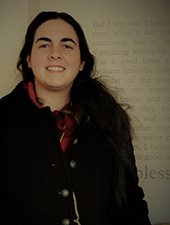
 An online journal “dedicated to short fiction,” Fiction Southeast features a monthly series of articles under the label of “Suggestions & Advice for Writers.” Recent essays include “On Writing” by Devin Matthews, “Death of the Short Story” by G. D. McFegridge, “I Denigrate Myself” by Evan Dunsky, “A Time for Fantasy” by Abagail Becastro [pictured], and “On The Artistic Temperament and a Writer’s Need for Privacy” by Pamelyn Casto.
Fiction Southeast essays/articles section also includes Writers Talking About Writing, which features author interviews, “The Story Behind the Story” and “Why I Write.” Other sections are Conference/Residency Spotlight, Developing a Writing Life, Editing/Publishing, Fiction & Culture, Reading Lists, Reviews, and the most unique essay grouping: Storytelling in Contemporary Video Games.
A lot going on for writers in this publication!

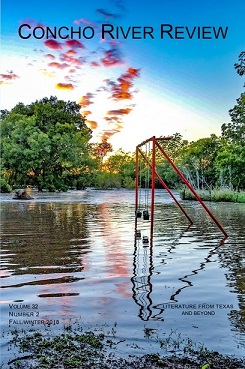
 Based on Editor Victor David Sandiego’s intro commentary, it sounds like the Winter 2018 issue of Subprimal will be its last: “. . . this is the final issue of Subprimal Poetry Art/Music, at least for a while. I have decided to take a hiatus from publishing Subprimal for 2019, and – with truth to be told – perhaps forever. It’s been a lot of fun during the last five years connecting with so many wonderful authors and artists, but I want to spend more time concentrating on my own work.”
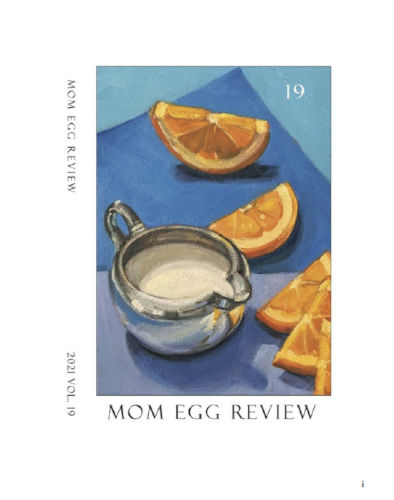 In addition to the print annual, Mom Egg Review, offering “the best literary writing about mothers and motherhood,” also offers readers MER VOX, an online quarterly of creative writing, interviews, craft essays and more that focus on “motherhood and on the life experiences of women.” The December 2018 installment, Silver Linings, is one I think we can all appreciate, as Editors Jennifer Martelli and Cindy Veach introduce it:
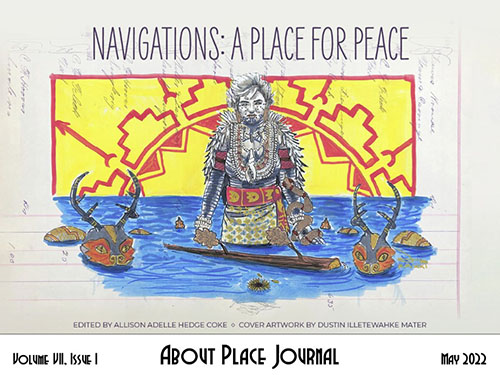 About Place Journal Editors Lauren Camp and Melissa Tuckey write in their introduction to the October 2018 issue themed “Root and Resistance”: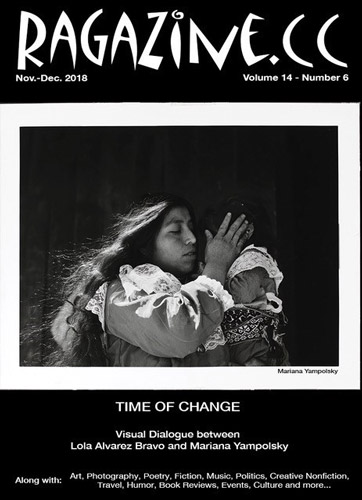
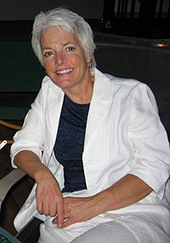 “Alabama for Beginners,” Jean Ryan’s featured essay in a recent issue of bioStories caught my attention; as the editor describes it, “a love letter to her new home and the unexpected welcome she has found there.”
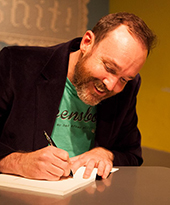 The Greensboro Review Editor Terry L. Kennedy writes in his introduction to issue #104 about trying to determine what makes “a good story” and the idea of creating a checklist for submissions:
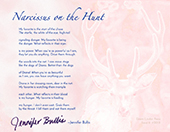 With each new issue of its online poetry journal, Under a Warm Green Linden issues one of the poems as their featured broadside, signed by the author, available for purchase.
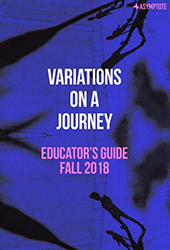 With each new quarterly issue, Asymptote online publication of poetry, fiction, drama, nonfiction, interviews, and translations offers “an educator’s guide for those wanting to teach pieces from that issue. Each guide offers a thematic breakdown of that issue’s content, relevant information about the context of various pieces, and possible discussion questions and exercises.”
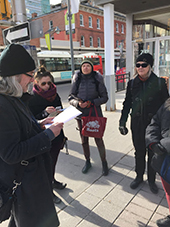 Approached by Canada’s Arc Poetry Magazine, with a grant from the Community Foundation, rob mclennan created four, hour-long literary walks – Arc Poetry Walks – that take participants on a tour of several Ottawa neighborhoods, each featuring poetry-related sites. Following each IRL event, mclennan posted the text from the walk on his blog along with photos and related links. Above/Ground Press created a broadside “poem handout” for each event. A great resource for those interested in learning more about Ottawa literary culture/history, and a helpful blueprint for others who might be interested in replicating this kind of event. [Photo by Chris Johnson]
 . . . I wonder if
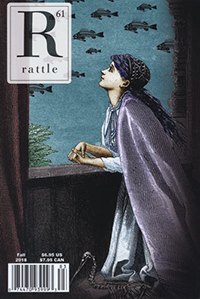
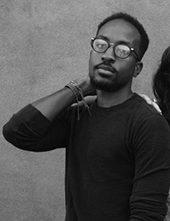 The December issue of Rattle features the winner of their 2018 Poetry Prize: “Turbulence” by Dave Harris [pictured].
 In her editorial to The Fiddlehead‘s Autumn 2018 issue, “Whatever We Need It To Be,” Creative Nonfiction Editor Alicia Elliott opens the publication’s first “all creative nonfiction issue” with a story about presenting on a panel with three other CNF writers. Asked the opening question: What is Creative Nonfiction?, “All four of us exchanged a look. I laughed nervously, as I tend to do when I’m not sure how to answer a question. The seconds passed.”
 In collaboration with Louisville Literary Arts, the Fall 2018 (#84) issue of The Louisville Review features the winner of the 2018 Writer’s Block Prize in Poetry: “Nine Minutes in June” by Carolyn Oliver.
 Issue 204 of The Malahat Review features the Far Horizons Award for Poetry winner “Venn diagrams” by Emily Osborne as selected by Carolyn Smart.
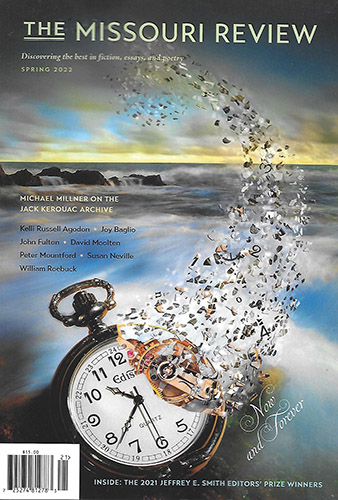 From Speer Morgan’s “Forward: Practical Living,” which opens the Fall 2018 (41.3) issue of The Missouri Review:
 The Fall 2018 issue of Carve Magazine features prize-winning entries from the 2018 Raymond Carver Short Story Contest selected by guest judge Susan Perabo.
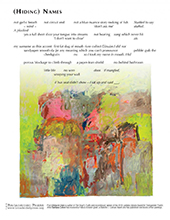 A Broadsided Press recent call for “Multilingual Writing” resulted in In Praise of Polyphony, 2018, a folio of six broadsides from writers and artists who “think/feel/see in English, Spanish, Finnish, Yiddish, Chinese, Italian, Polish, and Russian. In narrative, metaphor, sound, ink, photograph, shape, and color.”
 The Fall/Winter 2018 issue of Colorado Review features “Aisha and the Good for Nothing Cat” (also available to read online) by Shannon Sweetnam, winner of the 2018 Nelligan Prize for Short Fiction selected by Margot Livesey.
 Heading down its home stretch, Glimmer Train Bulletin continues to offer writers and readers the inside scoop from authors. December’s bulletin features “Go Small to Go Big” by Jane Delury [pictured], which advises writers who feel “overwhelmed with your novel or story draft” to set it aside and go back to basics: the sentence. And Matthew Vollmer’s essay, “The Literary Masquerade: Writing Stories Disguised As Other Forms of Writing,” encourages that “this interplay that results from a story and the particular form it appropriates can be exciting for both writer and reader.”
 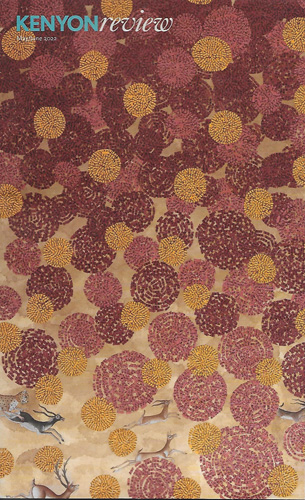 The November/December 2018 issue of Kenyon Review includes the winners of the Patricia Grodd Poetry Prize for Young Writers, as selected by Natalie Shapero:
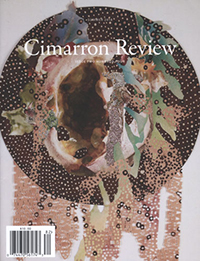 Mary A. Johnson’s “Staurozoanastic Cavity” (2017) is featured on the cover of the Summer 2018 Cimarron Review. This unique work is composed of Emperor rice dye, logwood/bloodwood dyed paper, aerosol paint, inkjet prints on rice paper, rhinestones, aluminum shavings, acrylic medium, and pen, on paper. See more of her work here.
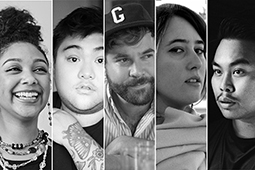 The December 2018 issue of Poetry Magazine features the 2018 Ruth Lilly and Dorothy Sargent Rosenberg Poetry Fellowship recipients: Safia Elhillo, Hieu Minh Nguyen, sam sax, Natalie Scenters-Zapico, and Paul Tran.
 Until November 29, The Common Foundation is holding its annual Author Postcard Auction: “Bid for a chance to win a postcard from your favorite author, handwritten for you or a person of your choice. A wonderful keepsake, just in time for the holidays. Author postcards make great gifts! All proceeds will go toward The Common’s programs. These include publishing emerging writers, mentoring students in our Literary Publishing Internship program, and connecting with students around the world through The Common in the Classroom.”
 Winner of the Poetry Award
 “Cadets are keen observers of social cues from their professors, retracting behind the protective formalities of rank at the first whiff of ‘agenda,’ regardless of its political stripe. It’s easy enough, and they have little social capital invested in the humanities. Nor do they know many people who do. . . . Unlike most of us, though, Cadets will flat-out ask in public how reading poems matters to future practitioners of their trade.
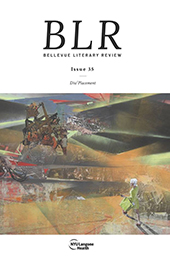 Bellevue Literary Review Editor-in-Chief Danielle Ofri welcome readers to the 35th issue with a newly redesigned journal, “a remarkable collaboration with students at the Parsons School of Design, under the direction of their teacher, the incomparable Minda Gralnek. The students were given free rein” to change the seventeen-year-old design that has been slowly morphing over the past few years: “. . . we moved from archival photos on the cover to contemporary art, in order to broaden our reach.”
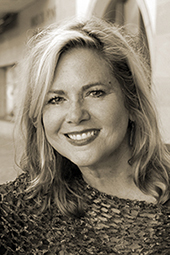 WINNER
 “The Literature, Arts and Medicine Database (LitMed) is a collection of literature, fine art, visual art and performing art annotations created as a dynamic, comprehensive resource for scholars, educators, students, patients, and others interested in medical humanities. It was created by faculty of the New York University School of Medicine in 1993. The annotations are written by an invited editorial board of scholars from all over North America. The site also includes a blog and resource section. Readers are also invited to join a LitMed list serve for those interested in posting resources related to the field.”
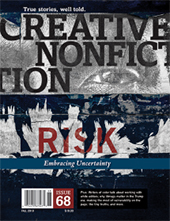 In his introduction the the Fall 2018 issue of Creative Nonfiction, Editor Lee Gutkind writes on the theme Risk as it relates to a writer’s life: “. . . although we may be safe from physical harm, all of us who write know that every hour we devote to our notepad or keyboard, every moment we stop and think and dwell on the thoughts and ideas that will, in one way or another, find life on a page or computer display, involves monumental risk.”
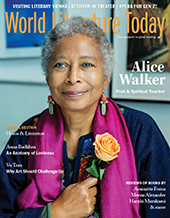 “And the question is why are people so numb? I think they are awakening, and I’m very happy about that. But awakening has been so slow. And that’s the dark age. People are having a hard time gaining knowledge and wisdom. The educational systems are completely unreliable and full of land mines for most people. So, yes, it is a dark age, and you can only hope people will come out of it, but they have to turn off gadgets and start to talk to people. And the time is very short.”
 Today is the day.
 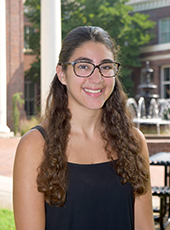 The Pablo Neruda Prize in Poetry
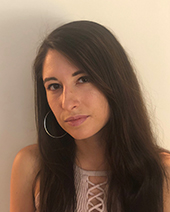 First place: Laura Roque [pictured] of Hialeah, Florida, wins $3000 for “Lady-Ghost Roles.” Her story will be published in Issue 105 of Glimmer Train Stories.
 1st place goes to Peter Sheehy, of Astoria, New York, who wins $2000 for “Things Frozen Then.” His story will be published in Issue 105 of Glimmer Train Stories. [Photo credit: Henry Porter]
 The English Department at Ohio Northern University has opened a new Single Poem Broadside contest for currently enrolled high school juniors and seniors.
 With its most recent edition, Black Warrior Review introduces the renaming of their online edition of the publication: Boyfriend Village.
 It’s all like a bad riddle, our widow friend
 Driftwood Press is kicking off their new Seminar Series with a five-week online Erasure Poetry Seminar lead by Jerrod Schwarz [pictured], instructor of creative writing at the University of Tampa. The seminar covers the history, practice, and importance of erasure poetry. The format is weekly video, writing prompts with feedback, a class-only Facebook group and YouTube channel. The course fee includes a copy of A Little White Shadow by Mary Ruefle. Students will contribute to a Showcase Booklet which will be made available for free on Driftwood’s website and via their social media outlets.
 What do you do if you’re a lit mag that has been successfully publishing poets at all stages of their careers for two decades? Well, you start a NEW publication, of course, with an entirely NEW mission! The 4×2 Project is exactly that.
  Writing Immigrant Stories by May-lee Chai [pictured]: “For American authors writing about a multicultural, globalized world, the issue of translation is unavoidable: what to put into English, what to leave in a mother tongue, and how to render the mixed-English that often is used in immigrant families.”
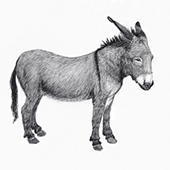 If the idea of snuggling up to a stack of submissions sounds like the most romantic way to spend your evening with the one you love, then you can pretty much imagine the lives of Genevieve Kersten and Eric Andrew Newman, editors of the newest online venue for poetry and flash fiction: Okay Donkey.
  “Literature is not efficient,” writes New England Review Editor Carolyn Kuebler in the Editor’s Note to V39 N3. “Reading it, writing it, and publishing it all require a seemingly unreasonable investment in time. Journals like ours take part in this economy of inefficiency by keeping our doors open to writing from everyone, everywhere.” She goes on to discuss the weight placed on editors to make selections from thousands of unsolicited submissions, which open publications with good reputations face.
 Winner
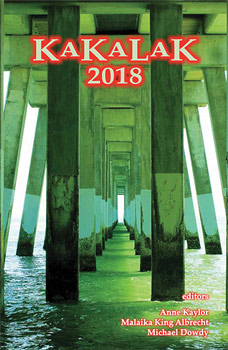 Main Street Rag accepts submissions to the Kakalak anthology each year, publishing poetry and art by or about the Carolinas. Submissions are selected through an annual contest, opening in January and running through May.
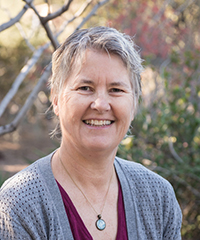 As always, Brevity’s craft essays cover a wide range of topics to interest any/every writer of “concise literary nonfiction,” and then some. The September 2018 installment features “Schizophrenia, Dandelions, Cookies, Floods and Scabs: Alternate Approaches” by Elizabeth Robinson; “Picturing the Hybrid Form” by Rebecca Fish Ewan [pictured], which offers readers “an illustrated crash course on graphic memoir”; and an exploration of “the interplay of language and visual arts” with Beth Kephart’s “Paynes Gray: When Watercolors Become Words.”