
 Words Without Borders promotes cultural understanding through the translation, publication, and promotion of the contemporary international literature. Words Without Borders Campus brings that literature to high school and college students, teachers, and professors. On their website, you’ll find fiction, poetry, and essays from around the world, along with resources for understanding it, ideas for teaching it, and suggestions for further exploration.
Most of the literature presented comes from the online magazine, Words without Borders. Words Without Borders Campus is asking for your help to reach more students and add new countries and literature to their site. With their collections of literature from Mexico, China, Egypt, and Japan, WWB Campus has already reached more than 1,500 high school and college students in the United States and throughout the world, with access to their site remaining completely free.
To take their program to the next level, WWB Campus is asking its supporters — readers, educators, and even students – for help with a new crowd-funding campaign and to spread awareness of WWB Campus. WWB Campus would like to double the number of students reached, adding new features to the website, and introducing literature from more countries (Russia, Iran, and West Africa are in the plans). For more information about how you can help, visit the WWB Campus website. You don’t have to donate money – using the site and spreading the word about it helps too – #InspireGlobalReaders!
 The Girl on the Bullard Overpass
 First place: Taiyaba Husain [pictured], of Mumbai, India, wins $3000 for “How You Respond in an Emergency.” Her story will be published in Issue 99 or 100 of Glimmer Train Stories. This is Taiyaba’s very first published story!
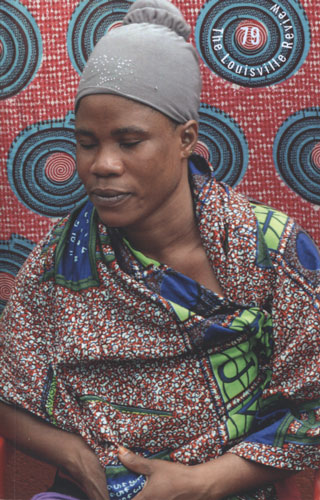 The Louisville Review accepts submissions from students in grades K-12 to feature in “The Children’s Corner” section of the journal. In the Spring 2016 issue, four young writers were published:
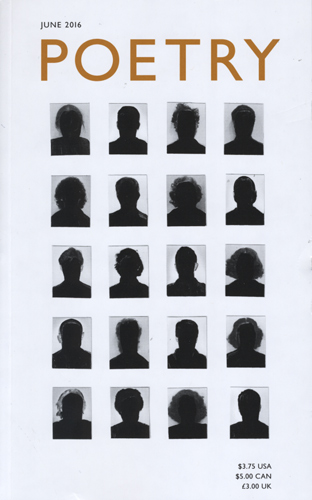 The June 2016 issue of Poetry features cover art by Anna Maria Maiolino. On Harriet: The Blog, Fred Sasaki provides more information about this artist who, it turns out, also creates visual and written poetry with all her works considered to be “poetic actions.”
 Among the blue-font decorated pages of the latest issue of Ninth Letter, readers will find an art feature and interview with Bert Stabler and Katie Fizdale, a look at Detroit by Caitlin McGuire in the “Where We’re At” section, and the 2015 Literary Award Runners-Up, listed below.
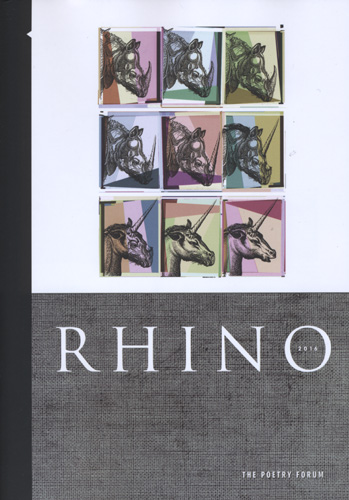 The 2016 issue of RHINO is out and includes the 2016 Editors’ Prize winners and the 2016 Founders’ Prize winners inside.
 The Spring/Summer 2016 issue of december features the winner and finalists of the Jeff Marks Memorial Poetry Prize (with submissions opening back up in autumn). This year, the magazine received over 1,200 contest entries, which were then narrowed down to 20 semi-finalists. From these selections, judge Marge Piercy selected the following for the winner, honorable mentions, and finalists.
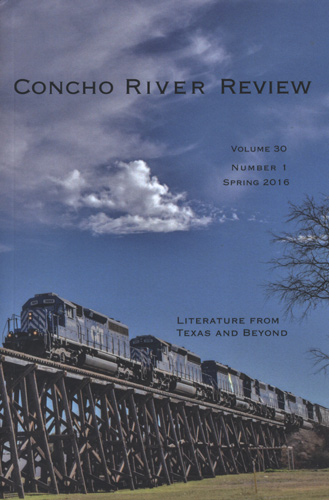 Concho River Review recently launched their Spring 2016 issue which marks the beginning of their 30th year of publication. With the first issue released in the spring of 1987, founder Terry Dalrymple expected the journal to last for only five years. Now, he estimates CRR has published around 7000 pages throughout the years with 250 pieces of fiction, 900 poems, 200 pieces of nonfiction, and 300 book reviews. Whew!
 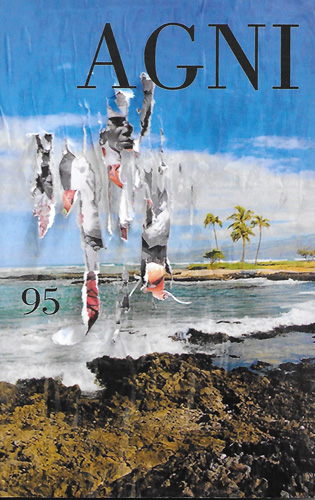 Agni Online offers free access to fiction, poetry and essays as an extension of their print publication. These contributions are offered exclusively online, and recent works include “Pinays” an essay by Ricco Villanueva Siasoco; “Seam Ripper” flash fiction by Kathryn Hill; “I Fell Asleep Among the Horses” poem by Kathryn Starbuck; “One Hundred Years of Solitude, or The Importance of a Story” an essay by Oksana Zabuzhko; “Sibboleth” an essay by Dan Beachy-Quick; “First Boyfriend” a poem by Chase Twichell; and “Jury Duty” a story by William Virgil Davis.
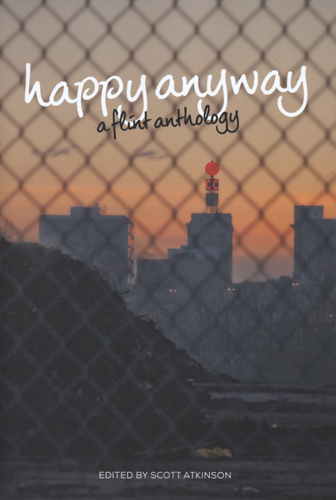 Belt Publishing, publisher of city-based anthologies written by and for Rust Belt communities, are releasing a new anthology in the first week of July: Happy Anyway: The Flint Anthology. Edited by Flint writer and Belt Magazine contributor Scott Atkinson, Happy Anyway reveals Flint “at its funniest, its weirdest, and its saddest.”
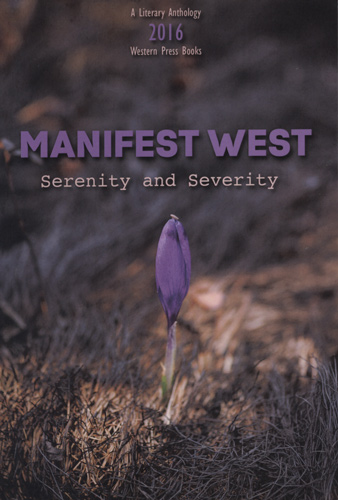 Forthcoming in July is the 2016 installment of the Western Press Books (University Press of Colorado) series, Manifest West. Published annually, the series produces one anthology focused on Western writing, and is edited and produced by students in the Certificate in Publishing program at Western State Colorado University.
 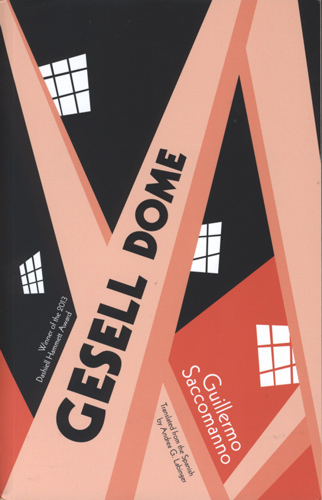 Open Letter has announced they will be publishing Gesell Dome by Guillermo Saccomanno this upcoming August. Translated from the Spanish by Andrea G. Labinger, the novel won the 2013 Dashiell Hammett Award (annually given to a book published in the field of crime-writing), and chronicles the passion, violence, crime, and corruption that take place during a winter in Villa Gesell. Recording the various voices in the town is Dante, the local newspaperman, resulting in a thrilling and captivating read.
  Issue number 11 of The Common is co-edited by Acker and prominent Jordanian author Hisham Bustani is titled “Tajdeed: Contemporary Arabic Fiction.” The publication features the work of 31 contributors from 15 Middle Eastern countries: Algeria, Bahrain, Egypt, Iraq, Jordan, Kuwait, Lebanon, Morocco, Oman, Palestine, Saudi Arabia, Syria, Tunisia, the United Arab Emirates, and Yemen all translated for contemporary English-speaking audiences.
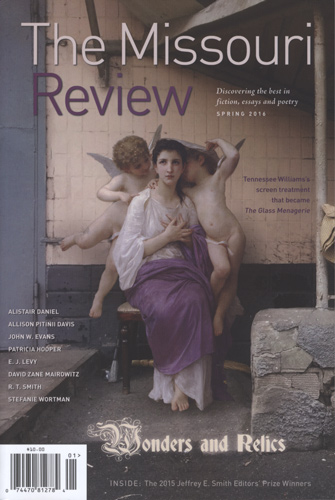 The Spring 2016 issue of The Missouri Review is titled “Wonders and Relics” and some of the wonders readers can find in the issue include the winners of the 2015 Jeffrey E. Smith Editor’s Prize.
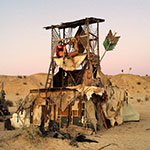 Monica Canilao’s art is featured on the cover of The Carlolina Quarterly Summer 2016 issue, and even though is only a section of a larger work, I was struck immediately by the image. Canilao is an artist who describes her work as “stitching, painting, printing, and breathing life into the refuse that dominates our time and place.” The Carolina Quarterly provides Canilao 16 full-color pages in addition to the artist’s introduction, in which she writes: “My art practice is a way to generate a personal and living history. My community and collaborators, my roots and their neraly lost traditions, my neighborhood and its trash piles are all integral, necessay parts of my life and art.” A quick internet search of Monica Canilao provides a wealth of images of her work, from the canvas to murals in city buildings, installations within building spaces, and into the desert. Originally from Califormia but spending time in Detroit, Michigan, I was pleased with this introduciton to her work; I hope to see more of it in the future – perhaps even in real life.
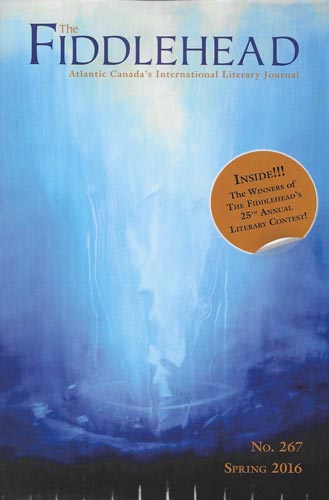 The Spring 2016 issue of The Fiddlehead features the winners of their 25th annual literary competition:
 In addition to the open poetry contributions, Rattle #52 features a tribute to 21 Los Angeles poets, and an interview with L.A. native-born poet Brendan Constantine, author of collections Letters to Guns (2009), Birthday Girl With Possum (2011), and Calamity Joe (2012).
 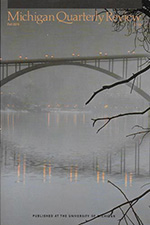 The Spring 2016 issue of Michigan Quarterly Review provides witness to the travesty of the water crisis in Flint, Michigan – only a stone’s throw from MQR’s home in Ann Arbor. Jonathan Freedman addresses the issue using Michigan’s state promotional campaign slogan “Pure Michigan” – aptly titling his editorial “Impure Michigan.”
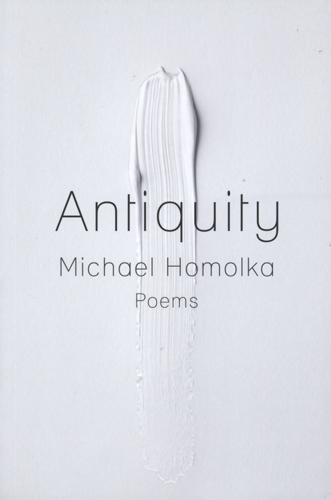 In July, readers can find copies of Michael Homolka’s debut poetry collection Antiquity on shelves. Homolka’s collection (with a cool, minimalist, textured cover) won the Sarabande Books Kathryn A. Morton Prize in Poetry in 2015 and was chosen by Mary Ruefle. Ruefle writes in her introduction, “The poems in Antiquity very much abandon themselves to language, to the collective poetic endeavor, and they do so in a rich, textured, and sustained voice . . . ”
  Crab Fat Magazine, the online literary magazine featuring feminist/queer work with a flair for the experimental, has made a few changes lately. Instead of publishing quarterly PDF issues, Crab Fat will now publish monthly online HTML issues (with the past PDF issues still archived and available online). Issue 8, published May 22, is the introduction to this new format. An annual “best of” print anthology will also be produced with the 2015 edition set to release later this month.
 Out now from BOA Editions, LTD. is Remarkable by Dinah Cox, winner of the BOA Short Fiction Prize. From the publisher’s website:
 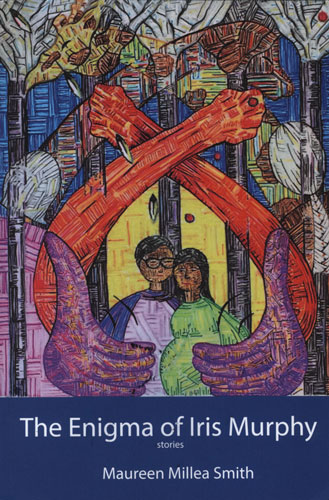 In July, look for Maureen Millea Smith’s The Enigma of Iris Murphy from The Livingston Press. Winner of the eleventh Tartts First Fiction Award, Smith’s short story collection looks at “A prison’s visitation room; a veterinarian who understands the thoughts of animals; an Omaha police sergeant; a banking executive who consoles her dying friend; a librarian who sleeps with giraffes—all linked by the life of Iris Murphy.”
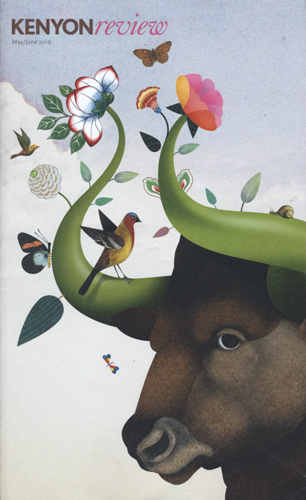 “Literature and the Anthropocene” is the title of The Kenyon Review Editor’s Notes in the May/June 2016 issue. The term ‘anthropocene, Editor David H. Lynn explains, is “a term coined by Paul Crutzen and Eugene Stoermer in 2000 to denote the current epoch, ‘in which many geologically significant conditions and processes are profoundly altered by human activities’ . . . As one response to these vast and accelerating changes we offer in this issue a special section of EcoPoetry, work that self-consciously addresses the relationship between the human and the natural world, gathered by our poetry editor David Baker. This is the second iteration—last year’s received wide acclaim—and my intention is that it will be an ongoing feature in our pages.”
 The spring/summer 2016 issue of Alaska Quarterly Review includes the special feature “Sparks: A Conversation in Poems and Paintings” with Poet Peggy Shumaker [pictured] and Artist Kes Woodward.
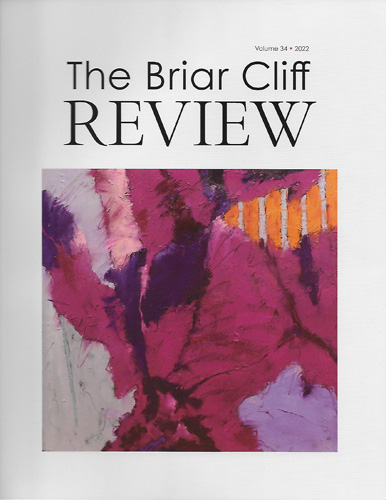 Volume 26 of The Briar Cliff Review includes the winning entries from their 2015 annual writing contest.
 You know you’ve got a great idea when you create something that makes others say, “IT’S ABOUT TIME SOMEONE DID THAT!”
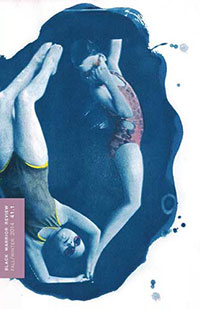 The Spring/Summer 2016 issue of Black Warrior Review features the winners of the publication’s 11th Annual Contest in Prose, Poetry, and Nonfiction. Each winner received $1,000 and publication; each runner-up received $100.
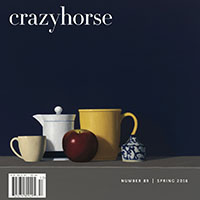 Still Life with Apple by David Harrison is a rich oil on canvas acquired for the Spring 2016 issue of Crazyhorse, which also includes the winners of their Crazy-shorts! Short-Short Fiction Contest.
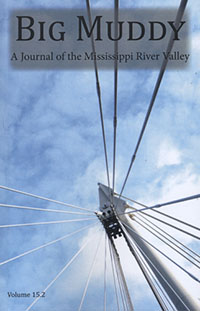 I liked this slightly dizzying photo on the cover of Big Muddy: A Journal of the Mississippi River Valley. Credit goes to German photographer Sarah Katharina Kayß, whose work provides unique perspectives on architecture.
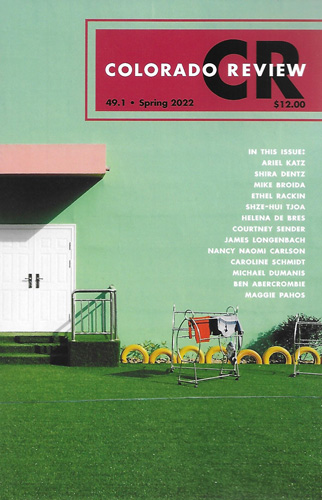 I want to believe it is the Blue Bird of Happiness that adorns the Spring 2016 cover of Colorado Review [no photo credit given].
 The Spring 2016 issue of The Bellingham Review features their 2015 literary contest winners.
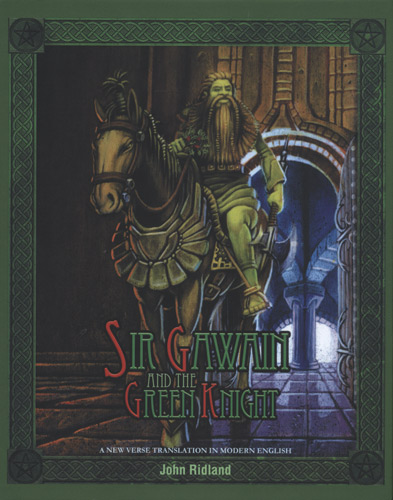 Forthcoming from Able Muse Press in August 2016 is Sir Gawain and the Green Knight, a new Modern English translation by John Ridland. Advance praise calls this edition one of the most readable and complete translations of the classic tale. Illustrations by Stephen Luke are found inside the pages, and provide the front and back cover art, the cover design similar to that of an old fairytale storybook.
 Winning entries for the 2106 Malahat Review Open Season Awards can be read in the newest issue (#194). Interviews with each of the winning authors can be found on The Malahat Review website.
 Glimmer Train has just chosen the winning stories for their 2016 January/February Short Story Award for New Writers. This competition is held three times a year and is open to all writers whose fiction has not appeared in a print publication with a circulation greater than 5000. The next Short Story Award competition is open now: Short Story Award for New Writers. Glimmer Train’s monthly submission calendar may be viewed here.
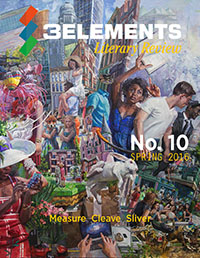 Benjamin Duke’s Home Again, Home Again fills the front and back covers of the Spring 2016 (#10) issue of 3 Elements Literary Review, an online publication that challenges writers and readers alike with issues themed with three elements. Spring’s elements are Measure, Cleave, and Sliver.
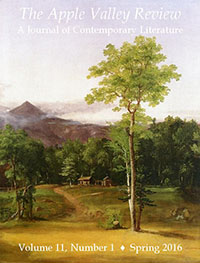 Taking the old and making it new again is this spring issue of the online Apple Valley Review, which features cover artwork: “Cabin in the Woods, North Conway, New Hampshire,” 1848, oil on canvas by Thomas Cole.
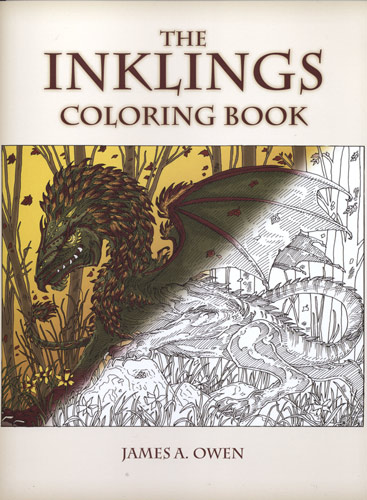 If you haven’t joined the adult coloring book bandwagon yet, now is a great time to hop on. Black Squirrel Books, an imprint of The Kent State University Press, released a new coloring book last month. The Inklings Coloring Book—with illustrations by fantasy illustrator James A. Owen—features 15 line drawings inspired by the works of Oxford’s famous Inklings.
  The Spring issue of Bellevue Literary Journal features the winners of their 2016 BLR prizes:
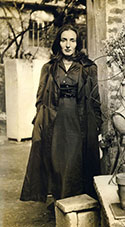 Poet Lore Spring/Summer 2016 features Jesse Lee Kercheval’s translation of Uruguay poet Idea Vilariño. In her introduction, Kercheval writes of Vilariño’s book-length work, Poem de amor, “her own Leave of Grass. . . stands as a testament to both the necessity and the impossibility of love in this world, especially for a passionate, independent woman determined to speak with her own voice.” Kercheval adds, “I believe it is important for English-speaking poets and poetry readers in general to have access to work, and am delighted to this selection of poems – in both Spanish and English – in Poet Lore. I hope all of Poemas de amor will soon be available in translation.” Several of the works are available in English on the Poet Lore website. A Guest begins:
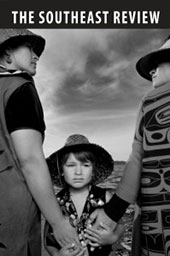 The Southeast Review spring issue (34.1) is chock-full of finalists and winning contest entries from their 2015 season.
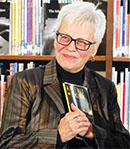 The 28th annual Publishing Triangle Awards were presented on April 21, 2016.
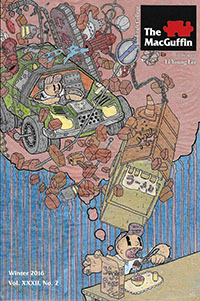 G. Davis Cathcart is the artist behind this sugar-crazed untitled work of a young man/boy enjoying his morning dose of Sugar Pops on the Winter 2016 cover of The MacGuffin.
 Another comic cover on Green Mountains Review (v29 n1) is an illustration by Tim Mayer from OldGuy: Superhero. Selections of both poetry and images from the illustrated chapbook by William Trowbridge are featured within the issue.
 Chinua Achebe fans: You’re going to want the newest issue of The Massachusetts Review (v.LVII, n.1; Spring 2016) “A Gathering in Honor of Chinua Achebe” on the front cover doesn’t quite convey the powerhouse of essays included within. The editor’s note gives more specific context: “In our Spring issue the Massachusetts Review is honored to feature the contributions to a recent symposium held at the University of Massachusetts Amherst on October 14 and 15, 2015. ‘Forty Years After: Chinua Achebe and Africa in the Global Imagination’ was hosted by the university’s Interdisciplinary Studies Institute . . .” and included physician-executive Dr. Chidi Achebe (third son of Chinua and Christie Achebe), Johnnetta Betsch Cole, Ekwueme Michael Thelwell, Denja Abdullahi, Jule Chametzky, Caryl Phillips, Okey Ndibe, Chika Unigwe, Chuma Nwokolo, Maaza Mengiste, and Achille Mbembe. Each of their contributions are included in this issue along with the originating essay, “An Image of Africa: Racism in Conrad’s Heart of Darkness” by Chinua Achebe.