Home » Newpages Blog » Book News

Book News :: Free YA Audio Books for Summer from Sync

AudiobookSYNC 2023 logo

AudiobookSYNC is a summer program of FREE audiobooks for teens 13+. Two thematically paired audiobooks are available each week through the Sora reading app from April 27 – August 2, 2023. Participants sign up for free and download the Sora student reading app. Anyone can actually sign up for the program, not just teens, but the titles are all geared toward teen readers 13+. The cool thing is that the books are “borrowed” and stay in the Sora app until you return them, with a loan time of 35,999 days. So, basically, the books are to keep unless someone purposefully returns them. The titles available each week are ONLY available to borrow for that week, so if you miss a week, then you miss out on those books. Visit SYNC via AudioFile and get started today – and spread the word to your teen readers and YA fans.

Book News :: Sync Free Audiobooks for Teens

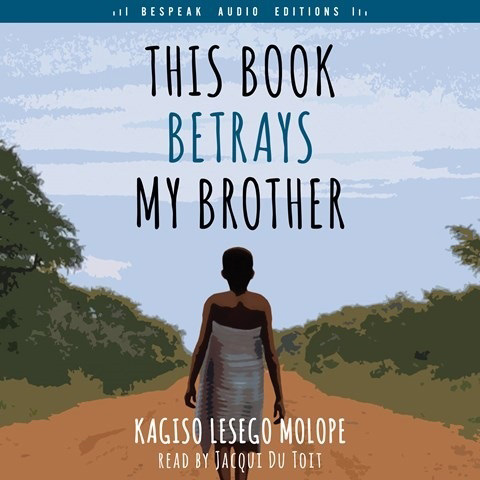
This Book Betrays My Brother by Kagiso Lesego Molope audiobook cover image

Every summer, SYNC gives participants two thematically paired audiobooks each week for sixteen weeks from May through August. Participants sign up for free and download the Sora student reading app. Anyone can actually sign up for the program, not just teens, but the titles are all geared toward teen readers 13+. The cool thing is that the books are “borrowed” and stay in the Sora app until you return them, with a loan time of 35,999 days. So, basically, the books are to keep unless someone purposefully returns them. The titles available each week are ONLY available to borrow for that week, so if you miss a week, then you miss out on those books. Right now, Week 6 is coming up, so there is still plenty of good audiobooking to be had. Visit SYNC via AudioFile and get started today – and spread the word to your teen readers and YA fans.

The Red Canoe: A Thrilling Ride

The Red Canoe book cover image

Guest Post by Cindy Fazzi

A canoe is no speedboat, but Wayne Johnson’s The Red Canoe is a thrill of a ride. At the center of the novel are Buck, a carpenter, and fifteen-year-old Lucy. They are both Ojibwe living on the border of Shakopee Mdewakanton Sioux Community reservation in Minnesota.

One afternoon, while Buck is building a boat in his garage, a girl in a dirty pink hoodie appears. Her name is Lucy, and she says: “I’d like to learn how to make boats.”

Continue reading “The Red Canoe: A Thrilling Ride”

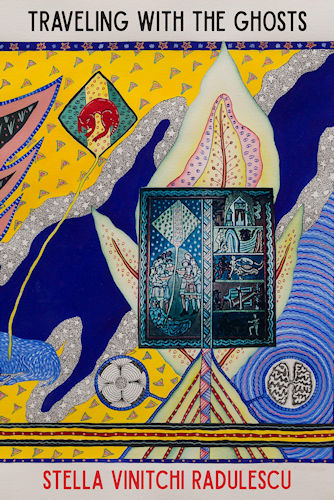
Traveling With the Ghosts

Poetry by Stella Vinitchi Radulescu
Orison Books, December 2021
ISBN-13: 978-1-949039-25-2
Paperback: 108pp; $16.00

In her latest collection of English-language poems, trilingual poet Stella Vinitchi Radulescu continues to explore the capabilities and limits of language itself as the nexus where thought and physicality meet. Gathering fragments of idea and image from a vast constellation of influences, Radulescu’s nimble, ever-surprising poems weave a tapestry that embodies what it feels like to be both intensely alive and knowingly transient.

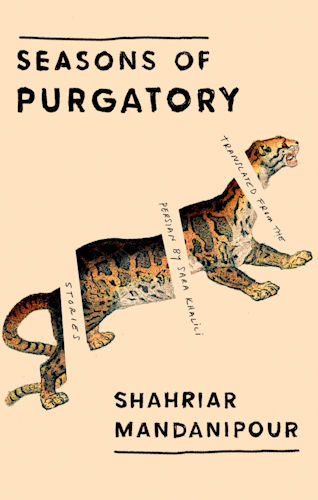
Seasons of Purgatory

Fiction by Shahriar Mandanipour
Bellevue Literary Press, January 2022
ISBN: 978-1-942658955
Paperback: 208pp; $16.99

In Seasons of Purgatory, the fantastical and the visceral merge in tales of tender desire and collective violence, the boredom and brutality of war, and the clash of modern urban life and rural traditions. Mandanipour, banned from publication in his native Iran, vividly renders the individual consciousness in extremis from a variety of perspectives: young and old, man and woman, conscript and prisoner. While delivering a ferocious social critique, these stories are steeped in the poetry and stark beauty of an ancient land and culture.

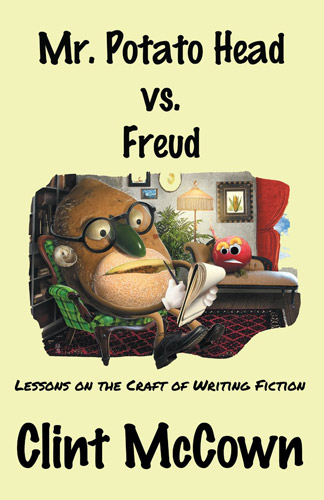
Mr. Potato Head vs. Freud

Lessons on the Craft of Writing Fiction
Nonfiction by Clint McCown
Press 53, December 2021
ISBN: 978-1-950413-39-3
Paperback: 162pp; $17.95

“As its title should suggest, it’s impossible to read Clint McCown’s Mr. Potato Head vs. Freud without laughing. McCown’s wit makes this the rarest of books on the craft of fiction: one that is as entertaining as it is instructive. And boy, is it instructive. It’s quite simply the wisest, most succinct, and most comprehensive overview of the ins and outs of writing fiction that I’ve ever read. How I wish it had existed when I first started writing; it could have saved me years of trial and (mostly) error.” —David Jauss

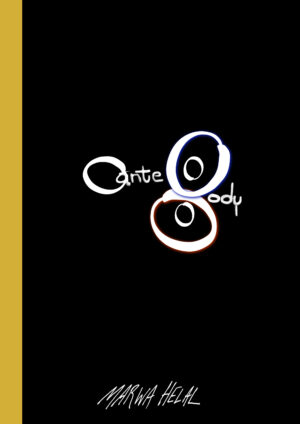
Ante Body

Ante Body by Marwa Helal cover

Poetry by Marwa Helal
Nightboat Books, May 2022
ISBN: 978-1-643621425
Paperback: 80pp; $16.95

Ante body is a poetics of [un]rest. A project that started as an exploration of how the psychological impacts of migration and complex traumas manifest as autoimmune disease and grew into a critique of the ongoing unjust conditions that brought on the global pandemic. Continuing her use of the invented poetic form, the Arabic, and integrating Fred Moten’s concept of “the ANTE,” Helal creates an elliptical reading experience in which content and form interrogate the inner workings of patriarchy, capitalism, nationalism, and globalism.

The Everyday Life of Cyclops

Guest Post by Kevin Brown.

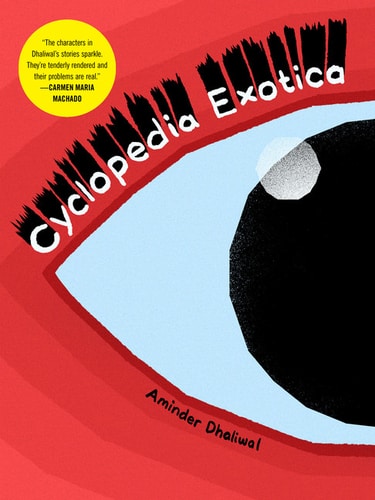
Cyclopedia Exotica, the latest graphic novel by Aminder Dhaliwal, begins as a series of encyclopedia entries explaining how cyclops (or cyclopes, spelled both ways throughout the work) and Two-Eyes have interacted over time. Dhaliwal imagines a world where cyclops not only exist, but their history has combined with those of the Two-Eyes, referencing mythological works, but planting this relationship directly in the contemporary world.

Continue reading “The Everyday Life of Cyclops”

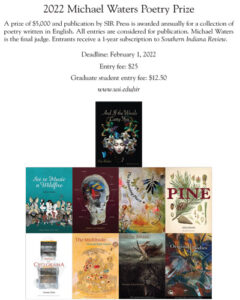
January 2022 eLitPak :: SIR Press

Screenshot of Southern Indiana Review Press' flier for the NewPages January 2022 eLitPak newsletter
click image to open PDF

2022 Michael Waters Poetry Prize

Deadline: February 1, 2022
A prize of $5,000 and publication by SIR Press is awarded annually for a collection of poetry written in English. All entries are considered for publication. Michael Waters is the final judge. Entrants receive a one-year subscription to Southern Indiana ReviewVisit website.

View full January 2022 eLitPak newsletter.

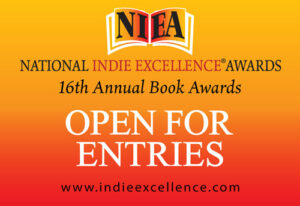
January 2022 eLitPak :: National Indie Excellence Awards

Screenshot of NIEA's flier for the NewPages December 2021 eLitPak Newsletter
click image to open PDF

Now Open for Entries

Deadline: March 31, 2022
The 16th Annual National Indie Excellence® Awards (NIEA) are open to all English language printed books available for sale, including small presses, mid-size independent publishers, university presses, and self-published authors. NIEA is proud to be a champion of self-publishing and small independent presses going the extra mile to produce books of excellence in every aspect. Visit website.

View full January 2022 eLitPak newsletter.

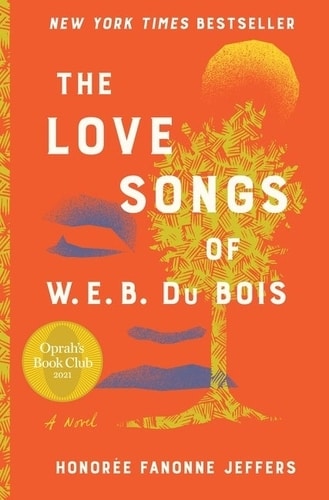
‘The Love Songs of W.E.B. DuBois’

Guest Post by Kevin Brown.

In her first novel, Jeffers covers a wide range of history, but focuses on one place called Chicasetta, moving from the Indigenous Creek to African Americans and whites as they move into or are brought into the area. The novel follows two strands of a story that ultimately intersect: one from the Native American viewpoint covering hundreds of years and one following Ailey Garfield from her childhood to graduate school in history in the early 2000s.

There are echoes of African American history and literature, ranging from the obvious references to DuBois—not only the title, but significant ideas in the novel—but also narratives by those who were enslaved (Jacobs and Douglass) and more contemporary writers, such as Alice Walker and Toni Morrison. While drawing on such sources, though, Jeffers makes this story her own by setting it so concretely in one place and following one family’s history.

My one criticism is that the novel covers so much time, even within the contemporary story, minor characters seem to come in to serve a particular role, then exit quickly. That’s especially true when Ailey is in college and graduate school, as those characters seem to represent some idea that needed covering.

However, Jeffers uses the historical sweep to explore questions of America and identity and race, knowing there are no answers, only questions, as Ailey says at the end of the novel: “I know the story will be over soon. That I will wake up with a question. And then another, but the question is what I have wanted. The question is the point. The question is my breath.” Jeffers’s novel shows us the power of questions: Who’s asking them? Who’s avoiding them? What’s left out?


The Love Songs of W.E.B. DuBois by Honorée Fanonne Jeffers. Harper, August 2021.

Reviewer bio: Kevin Brown has published three books of poetry: Liturgical Calendar: Poems (Wipf and Stock); A Lexicon of Lost Words (winner of the Violet Reed Haas Prize for Poetry, Snake Nation Press); and Exit Lines (Plain View Press).  He also has a memoir, Another Way: Finding Faith, Then Finding It Again, and a book of scholarship, They Love to Tell the Stories: Five Contemporary Novelists Take on the Gospels. You can find out more about him and his work on Twitter at @kevinbrownwrite or at http://kevinbrownwrites.weebly.com/.

A Tender New Year’s Resolution

Guest Post by Annie Eacy.

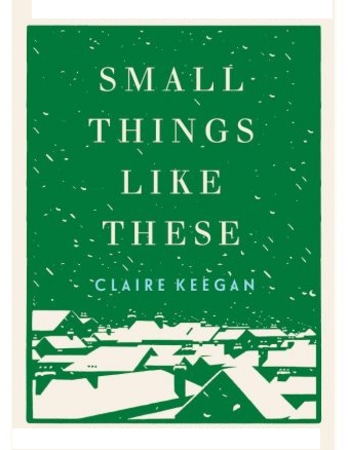
It’s New Year’s Eve as I write this, and I’m isolating in my childhood bedroom after testing positive for Covid-19 after nearly two years of masking, vaccinating, boosting, testing, and more. My whole body aches and all I would like to do is spiral in self pity. Instead, I pick up a green book on my bedside table: Small Things Like These by Claire Keegan.

Small town Ireland in the 1980s. A blue-collar man, reserved and hardworking, is married with five young daughters. He lives a measured and somewhat mundane life, not prone to much contemplation or self-reflection. That is, until one day not long before Christmas, he makes a discovery requiring an act of heroism that has the potential to change many lives and not all for the better.

This is a marvelous, unassuming novel filled with small, tender moments: helping his girls with the spelling in their Santa letters, filling hot water bottles for their beds, watching them sing in their church choir. “Aren’t we the lucky ones?” he says to his wife one night, and she agrees. However, his gratefulness is warped by the misfortune of others. How should they have so much and not share it? Keegan’s novel begs many questions about heroism and altruism, but the most compelling might be that while there can certainly be tenderness in heroism, can there also be heroism in tenderness?

I close the book, no longer wallowing in my self-pity. My mother knocks to offer me tea—her voice soothes, like honey for my sore throat. I hear her soft slippers on the stairs, the tapping of dog paws following, the click of the gas stove. Small, tender things. How much there is to be grateful for when you look or listen for it, and after reading Keegan’s novel, that’s what I’ll do.


Small Things Like These by Claire Keegan. Grove Atlantic, November 2021.

Reviewer bio: Annie Eacy is a writer living in the Finger Lakes. She writes poetry, fiction, and essays, and is currently working on a novel.

Call :: Still Time to Submit Manuscripts in All Genres to Atmosphere Press

atmosphere press logo

Deadline: Rolling
Atmosphere Press currently seeks book manuscripts from diverse voices. There’s no submission fee, and if your manuscript is selected, we’ll be the publisher you’ve always wanted: attentive, organized, on schedule, and professional. We use a model in which the author funds the publication of the book, but retains 100% rights, royalties, and artistic autonomy. This year Atmosphere authors have received featured reviews with Publishers Weekly, Kirkus, and Booklist, and have even appeared on a giant billboard in Times Square. Submit your book manuscript at atmospherepress.com.

Buckle Your Seatbelts, You’re in for Quite a Ride!

Guest Post by Cindy Dale.

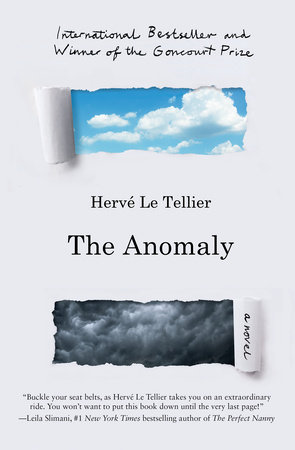
Air France 006, Paris to New York. The seatbelt sign comes on. The captain calmly announces, prepare for a little turbulence.  More than a little it turns out. If you’ve ever been on a flight where you questioned if the plane would successfully land, you know the feeling. I don’t profess to have completely unraveled (or made sense of) all the threads of this book, but I enjoyed the ride.  Part sci-fi, part political thriller, part philosophical treatise, The Anomaly by Hervé Le Tellier was a huge bestseller in France and won the Prix Goncourt.

It took a bit for the puzzle pieces to fall in place for me, but once the catalyst for these disparate stories was revealed the novel picked up speed. Apparently, the same flight with the same crew and the same passengers landed twice—four months apart.  Ultimately, we follow the fates of eleven passengers (and their clones)—from a contract killer to a film editor to the author of a novel called, you guessed it, The Anomaly. There are references to everything from Martin Guerre to Elton John to Nietzsche. Quotes from War and Peace, Romeo and Juliet, and Ecclesiastes. Sandwiched in there is the American government’s ham-fisted response to the mysterious second landing.

I confess to getting a little lost in some of the mathematical and astrophysics tangents, but the reader is drawn into the personal stories of the passengers (and their clones).  What would you say if confronted with an exact doppelgänger of you, right down to the same memories, the same secrets, the same neurosis? Definitely existential, but also humorous and with quite a few quotable lines. You may not be able to board a flight and go on an exotic adventure these days because of Covid, but you can take off on a wild ride from the comfort of home with The Anomaly.


The Anomaly by Hervé Le Tellier. Other Press, November 2021.

Reviewer bio: Cindy Dale has published over twenty short stories in literary journals and anthologies. She lives on a barrier beach off the coast of Long Island.

Expect the Unexpected

Guest Post by Julia Wilson.

Elizabeth McCracken is one of my favorite authors, primarily for her graceful blending of mundane realities with imaginative and unusual details, thus painting seemingly humdrum lives sparkling with the unexpected.

Bowlaway is no exception. Ostensibly a story about generations of an extended family living in a small town, McCracken’s odd characters are mixes of humorous, pathetic, lonely, yearning, creative, frail, damaged, liberated, secretive, selfish, and loving. They are mysterious and perplexing, not necessarily likeable but compelling. The book starts with a woman, Bertha Truitt, being found unconscious in a cemetery, without explanation. Thus begins the family saga of the Truitts, who own a bowling alley in the northeastern town of Salford.

But the real story in Bowlaway is the complexities of relationships, primarily marriages. In McCracken’s smooth sentences and use of an omniscient narrator, the reader is witness to weaknesses, loyalty, secrets, misunderstandings, and resignation. The partners in these relationships don’t have much eagerness in looking forward to the future yet have found a reality they can tolerate, containing both joy and heartache. There is tenderness between a woman and her mother-in-law, compassion of a wife in the face of her husband’s alcoholism, a recluse’s love for a mourning mother, and the relief of the few who escape the dreary life in Salford.

McCracken is at her best painting the facets of her characters so they come alive to the reader. They are flawed, self-interested, confused, and searching—as are we all.


Bowlaway by Elizabeth McCracken. Ecco, November 2019.

Reviewer bio: Julia Wilson is an MA in Writing student at Johns Hopkins University

A Darned Good Book About Vermont Humor

Guest Post by Alec W. Hastings.

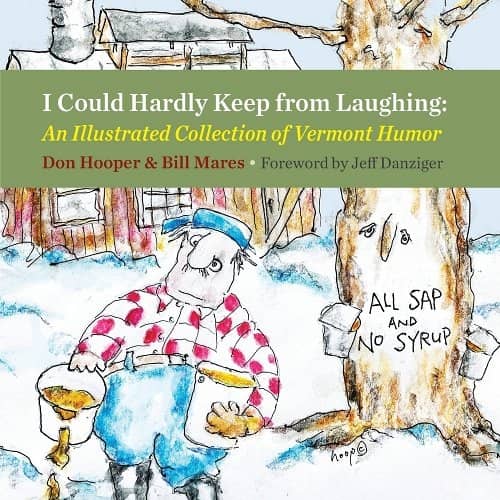
Bill Mares and Don Hooper put out a darned good book about Vermont humor. It’s called I Could Hardly Keep from Laughing. Even though I’ve grown up in Vermont—well, almost—I’ve always wondered what that is. Vermont humor, I mean. How would I know it if I met it walking down the street? I read eagerly and kept my eyes open for the answer.

The authors collected Vermont jokes and anecdotes by the truckload. I delighted in Hooper’s cartoon art, the bug-eyed but endearing folk of our Vermont hills. I could hardly keep from smiling at the humor of familiar Vermonters like Silent Cal, Francis Colburn, George Woodard, Al Boright, Fred Tuttle, and Rusty DeWees. Some of the Vermont humorists I met in these pages were new to me, and it tickled me to get acquainted with Robert C. Davis, David K. Smith, or Josie Leavitt.

Did Mares and Hooper entertain me and add to my understanding of Vermont humor? St. Peter on a pogo stick! You bet they did! Did they define Vermont humor like Webster? They’ve lived in Vermont long enough to know better. They did give a few hints to help us put classic Vermont humor up a tree. What did they say in chapter one? “Dry, wry, understated.” And when they unloaded their truck, the humor that tumbled out fizzed with playful wit, but I agree with Danziger. He says in the foreword it’s easier to tell what Vermont humor is than what it is not. In my mind’s eye there is always a hint of mischief in the eye of the Vermont humorist looking back at me. It bespeaks an urge to tease but never to be unkind.

For me, the best Vermont humorists have always put themselves in the same boat with their audience. Theirs is not so much the idea that “the joke is on you,” as it is that “the joke is on all of us.” But what do I know? As the fella said in chapter three, “Not a damn thing.” Vermont humor remains something of a mystery to me. Maybe that’s good. A butterfly pinned to a board is nowhere near as pretty as one fluttering by on the breeze.


I Could Hardly Keep from Laughing by Don Hooper & Bill Mares. Rootstock Publishing, December 2021.

Reviewer bio: Alec W. Hastings is the author of Cap Pistols, Cardboard Sleds & Seven Rusty Nails: A Vermont Boyhood in Happy Valley. He grew up in the hill country of Vermont when Jersey cows still grazed the pastures and men in denim boiled sap in wood-fired evaporators.

Buy this book from our affiliate Bookshop.org.

Try Your Hand at a Glosa with Page & Pappadà

Guest Post by Elda Pappadà.

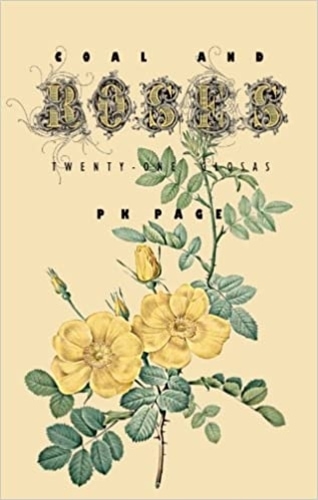
I discovered P.K. Page about two years ago, and since then this talented, prolific writer has become one of my favorite poets. I was determined to read all her poetry books when I came across: Coal and Roses: Twenty-One Glosas. Glosa (Glose) is a Spanish form of poetry where the author quotes a quatrain from an existing poet and writes four ten-line stanzas with the four lines acting as a refrain in the final line of each stanza. Therefore, the first line from the quatrain would be the final line in the first stanza, and etc.  The last word at the end of the sixth and ninth lines must also rhyme with the last word in the borrowed tenth line.

Coal & Roses was a captivating find. P. K. Page manages to keep the flow continuous and writes with such ease, originality, and skill. It is very interesting to see the final product. A Glosa can keep the same tone as the original quatrain or can take a whole new path and narrative. I tried my own hand at writing a Glosa and found it to be rather liberating with unlimited possibilities. The final product was unlike most poetry I have ever written.


Coal and Roses: Twenty-One Glosas by P. K. Page. The Porcupine’s Quill, 2009.

Reviewer bio: Elda Pappadà has self-published her first poetry book, Freedom – about love, loss, and understanding. Freedom is about finding meaning in the highs and lows of everyday life, to learn and even re-learn what we need to move forward.  It’s about defining life and giving weight to everything we do.

A Realistic Portrayal of Recovery

Guest Post by Lailey Robbins.

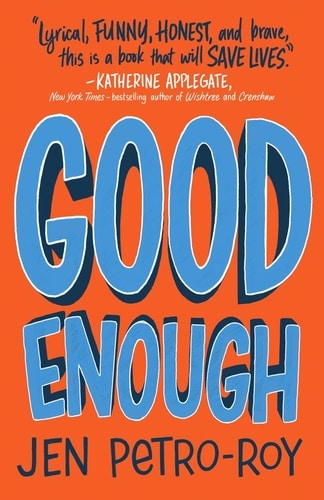
Good Enough, written by Jen Petro-Roy, is a piece of fiction that sits comfortably between middle reader and young adult. It is quite a realistic piece of fiction with a profoundly honest and vulnerable look into the life of Riley, who is hospitalized for her struggles with anorexia nervosa. Through the story, we see her heal, stumble, and navigate through a realistically and maturely portrayed journey of recovery.

This work is nothing short of phenomenal. With its accessible language and mature-yet-realistic handling of the sensitive topics that it delves into, it is a must have. Petro-Roy, being a survivor of an eating disorder herself, offers sensitive and helpful insight into the life of recovery and the many struggles that come with it. This, alongside her brilliant character development and the portrayal of relationships within the work, home in on her wonderful style. Not only does the audience watch Riley change, grow, and heal, they are also able to watch her juggle both the friendships that she has made within the facility while simultaneously trying to keep her pre-hospitalization friendships alive.

However, the downfall of this novel lies within its conclusion. The ending is unsatisfying, for lack of better words, as there is no definite answer for what comes next. As the novel draws nearer to Riley’s release from the facility, the book ends, leaving the reader with a sense of confusion as the character that they had been expecting to see make a full recovery is still struggling. Though it is realistic to not know what comes next, especially when in recovery, the ending of this novel seems to disregard its stakes entirely, leaving the reader completely lost.

However, if you are one for open endings, this novel has many redeeming qualities that allow it to be a wonderful read.


Good Enough by Jen Petro-Roy. Feiwel & Friends, February 2019.

Reviewer bio: Lailey Robbins is a creative writing student from Salem College, North Carolina. Currently, she is working on a short story and a novel, with hopes to be published in the future.

Shadow & Light in Samuel Martin’s Newest Novel

Guest Post by Elizabeth Genovise.

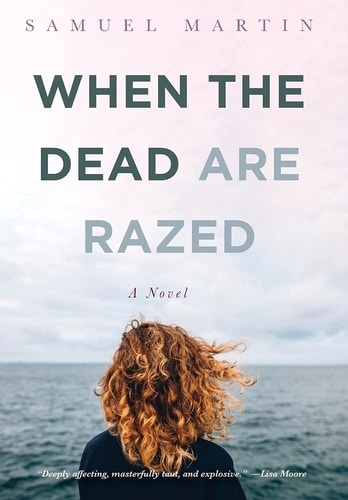
Samuel Thomas Martin, author of This Ramshackle Tabernacle and A Blessed Snarl, has produced a third work of high-caliber fiction: When the Dead are Razed, published by Slant Books. With the mesmerizing setting of urban Newfoundland as its backdrop, the novel follows the perilous adventures of Teffy Byrne, a woman determined not to raze the dead, but rather to seek justice on their behalf.

Long-interred mendacities, deeply troubled faith, and the constant threat of catastrophe keep the strings tight and ringing throughout the entire narrative as Teffy strives to solve the mystery of a young woman’s murder. There is both shadow and light in these characters and in the novel itself, with moments like these speaking to us from someplace raw and real and painfully recognizable:  “She hears a creak and spins, searches the tear-smudged room, but there’s no one there. Not a soul. Only her. Her and the goddamn wind. ‘And you!’ she turns on Christ. ‘Why is it that we ask and ask and ask and you do nothing? You do nothing! Not for me or Fin or Ger. Not for any of us! Who are you!?’ she screams. ‘Who are you to shuck off being God!'”

Martin’s novel is a wild ride, but its sensational plot does not undercut its exploration of critical ideas, specifically the necessity of memory, truth, and justice.


When the Dead are Razed by Samuel Thomas Martin. Slant Books, September 2021.

Reviewer bio: Elizabeth Genovise is an MFA graduate from McNeese State University and the author of three short story collections, the most recent being Posing Nude for the Saints from the Texas Review Press. https://www.elizabethgenovisefiction.org/

A Totally Fine Flash Collection

Book Review by Katy Haas.

Zac Smith wants you to know that everything is totally fine. Or maybe it’s totally fucked. Or maybe it’s totally normal. Or maybe it’s somehow all three at once. Forthcoming Everything Is Totally Fine is a collection of flash fiction presented in three sections: “Everything is Totally Fucked, “Everything is Totally Fine,” and “Everything is Normal Life.” The stories are a little zany, a little bit off-kilter, which makes every page fun and unexpected. But there is one thing a reader can come to expect after reading a few of these little stories: things are maybe not okay, despite the narrators’ wishes to repeat how totally fine it all is.

The narrator of “Kellogg’s Pop-Tarts Frosted S’mores Pastries 2ct” wants to “explore new ways of feeling like shit” and ends up “feeling like shit in the wrong way, or feeling like the wrong kind of shit.” The man in “Giving Up Requires Agency in a Way that Feels Like It Shouldn’t by Virtue of Being the Act of Giving Up,” leaves the piece feeling “miserable in a deep, ominous way.” Even the titular octopus of “The Octopus” “felt unhappy and didn’t know what would make it happy. It reasoned possibly nothing could.”

Maybe it’s the shorter, colder days, or the approach of year three of a global pandemic, or reflections on society and climate change and politics and on and on and on that makes these hopeless stories so enjoyable and relatable despite the pitiful and off-the-wall circumstances. Maybe it’s the mix of seriousness and silliness that is everyday, normal life, or the vague notion that none of it matters, not really. Whatever it is, Zac Smith’s figured it out in this fun, fucked, fine collection.


Everything is Totally Fine by Zac Smith. Muumuu House, January 2022.

A Homey Little Book

Guest Post by Petra Mucnjak.

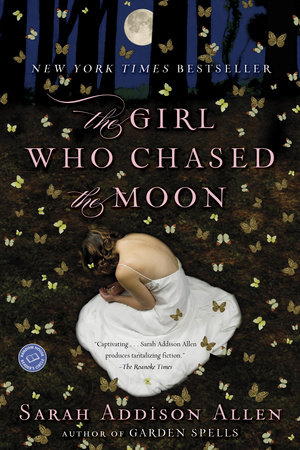
This novel begins with a young girl named Emily Benedict returning to the small town of Mullaby, where her mother had grown up and her grandfather still resides. Although her grandfather’s demeanor appears to be somewhat aloof, her grandfather welcomes Emily home, generously offering her the choice of picking one of his many empty spare rooms as her bedroom. Naturally, the girl chooses her mother’s former room and soon realizes that it possesses an extraordinary air to it. Then there is the issue of the mysterious lights which have the habit of appearing over the lake at night . . .

The Girl Who Chased The Moon is the first book I have read by Sarah Addison Allen and, expecting a syrupy family-reconciliation-romance novel, I was delightfully surprised upon encountering a humorous, warm, humane tale about family, friends, and how being haunted by the ghosts of the past doesn’t necessarily have to mean havoc. Miss Allen’s writing is very poetic, her words luring the reader into her small American town with no more or less than the charm of a siren. Sentences like “The air outside was tomato-sweet and hickory-smokey, all at once delicious and strange,” brought me into the center of this wonderful atmosphere, making my senses hum.

Continue reading “A Homey Little Book”

An Intimate Look at Being Human

Guest Post by Antonio Addessi.

In Anatomy of Want, Lee takes us deep into the intimacy between lovers, the memories they create, hold on to and try to forget but can’t. Through his talent for noticing the small details of everyday life, he arouses all of the senses, often on the same line or stanza.

In poems like “Compliments to the Cook” and “La Cocina,” Lee wafts the scents of fragrant food into our noses and holds up the spoon to our mouths to taste the poems coming off the pages. The longing to love and be loved is stitched tightly into each line as we’re carried through cityscapes with lively streets and dark bedrooms with empty beds all reminding us of lovers lost.

Anatomy of Want is an enticing and heartfelt ode to what it means to give part of yourself to the people you allow close to you. In it we see ourselves as the speaker, the holder of secrets and the teller of truths sometimes hard to swallow. The nostalgia exudes itself onto every page—evoked by memories of sorrow and loss, of growing up too fast and living in an often foreign feeling state that is strangely familiar. Its Americana places us deep in the heart of Manhattan’s subway systems and the long aisles of grocery stores filled with people that infinitely stay strangers. This book is definitely on the edge of what poetry is going to look and feel like for years to come. It is one that deserves to be read and reread for it’s intimate look at what being human truly is.


Anatomy of Want by Daniel W. K. Lee. Rebel Satori Press, 2019.

Reviewer bio: Antonio Addessi is a poet and writer living in New York City. He received his MFA from Columbia University (’20) and his debut book of poetry Sleeptalking, published by Rebel Satori Press, comes out April 2022.

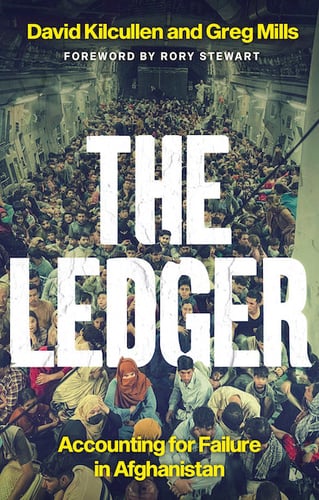
Taking Stock of America’s Two Decades in Afghanistan

Guest Post by Marc Martorell Junyent.

The border between current events and history is a blurry one. David Kilcullen and Greg Mills tread on both sides of this imaginary boundary in The Ledger: Accounting for Failure in Afghanistan. The co-authors have a long experience in Afghanistan working for the international military coalition in the country.

Throughout the book, they manifest their frustration for the chaotic evacuation of US citizens and Afghans that unfolded in August 2021. In their own words, “it would not have taken a rocket scientist to devise a better, more orderly, system.”

Their criticism extends to a much longer time period, however. According to the authors, the West never had a clear strategy in Afghanistan. By focusing on short-term goals, the troops and economic aid deployed to the country did not help build solid structures, but only delayed the collapse of a system based on clientelism, corruption, and the inclusion of former warlords.

Kilcullen and Mills argue that not inviting the Taliban to sit at the negotiation table in the 2001 Bonn Conference, convened right after their overthrow from power, was a key missed opportunity. The US ended up negotiating with the Taliban in the 2020 Doha Agreement from a much weaker position.

The Ledger is particularly strong in the anecdotical evidence it presents, based on the authors’ wide range of contacts among Afghan elites and Western officials. On the contrary, the reader would probably have welcomed a more consistent book structure. The continuous chronological and thematical shifts are often confusing and lead to redundancies.

When it comes to the immediate future of Afghanistan, Kilcullen and Mills defend the idea that the restoration of aid flows to the country is needed for both humanitarian reasons and maintaining a certain influence with the Taliban.


The Ledger: Accounting for Failure in Afghanistan by David Kilcullen and Greg Mills. Hurst, January 2022.

Reviewer bio: Marc Martorell Junyent graduated in International Relations and currently studies a joint Master in Comparative Middle East Politics and Society at the Eberhard Karls University of Tübingen and the American University in Cairo. His main interests are the politics and history of the Middle East (particularly Iran, Turkey and Yemen). He has studied and worked in Ankara, Istanbul and Tunis. He tweets at @MarcMartorell3.

A Journey of Self Discovery

Guest Post by Mille King.

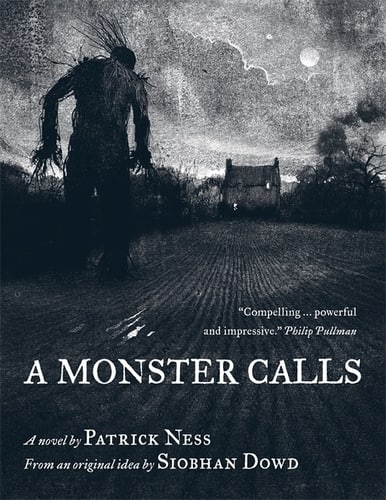
Patrick Ness’s A Monster Calls represents the term ‘tear-jerker’; it explores themes of pain, loss, and guilt in a real and relatable way. It is clear that Conor, the protagonist, sees himself as a monster for wanting the pain he is going through to be over, even if this means losing his mother. This guilt manifests in a physical monster who he believes visits him but no one else can see. The monster helps Conor through his pain and helps him discover emotions even Conor didn’t know he had.

Ness shows how guilt comes from deep down and we often can’t acknowledge it because we cover it with lies and believe what we want to believe, even when we don’t actually fully believe it. This is a beautiful journey of self discovery and I loved every moment of it.


A Monster Calls by Patrick Ness. Walker Books / Candlewick Press, May 2011.

Reviewer bio: My name is Millie King, I am an English literature major and read not only for school, but for fun too! I always struggled with dyslexia so reading was hard for me but I have overcome those obstacles and am an avid book reader!

Buy this book from our affiliate Bookshop.org.

‘The Midnight Lie’

Guest Post by Shaelynn Long.

Marie Rutkoski’s The Midnight Lie is a riveting combination of a society rooted in socioeconomic and hierarchical issues and a young woman who believes the life of crime she has chosen was, in fact, her choice. When the main character, Nirrim, discovers that the rules that were seemingly in place to keep her safe are doing more than that, she partners up with a gorgeous traveler, Sid, to find out more about the magic within the places she’s been kept from.

The story has it all: excitement, a love interest, magic, and mystery. It would also be remiss not to mention the LGBTQ nature of the romantic plotline, which is told beautifully. Overall, the story is worth the read, especially if you’re seeking something rooted in the fantastical that still discusses the problematic nature of the relationships between those who have and those who do not.


The Midnight Lie by Marie Rutkoski. Farrar, Straus and Giroux, March 2020.

Reviewer bio: Shaelynn Long is a Michigan-based author who spends the majority of her free time consuming all the books she can, often while surrounded by her three dogs. She is the author of Blur, Work In Progress, and Dirt Road Kid. You can find more about Shaelynn at her website.

Buy this book from our affiliate Bookshop.org.

Discovering Not New Fiction

Guest Post by Raymond Abbott.

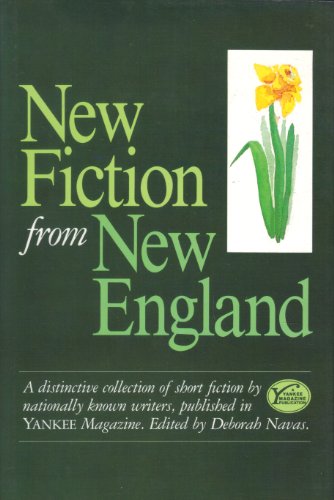
This book is not new, so what you get is not new fiction as the title suggests. New Fiction from New England was published in 1986 by Yankee Books in Dublin, New Hampshire. Twenty-nine stories and not a clunker in the bunch. All were originally published in Yankee Magazine back when Yankee published stories (fiction). It no longer does, and it is lesser in my opinion as a magazine for no longer doing so. The editor then was Deborah Navas, a skillful writer in her own right.

If you’re looking for variety, and solid storytelling, you will get it here, in abundance, that is if you can find a copy. But do try!


New Fiction From New England edited by Deborah Navas. Yankee Books, 1986.

Reviewer bio: Raymond Abbott lives in Louisville, Kentucky.

Finding the Childlike Magic Within

Guest Post by Haydyn Wallender.

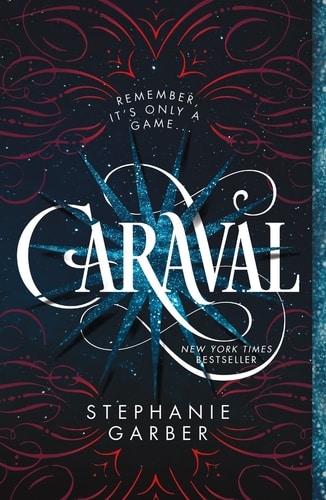
For as long as she can remember, Scarlett Dragna has dreamed of Caraval: a magical show where fantasy and reality collide. Legend, the mastermind behind the show, has declined to return any of Scarlett’s letters of urgency to see his magic—until now.

Swept off of her island by a mysterious sailor, Scarlett and her sister Tella aren’t just players of the show—they are the main attractions. Whisked into a world where nothing is as it seems, and with countless warnings to not believe what her eyes tell her, Scarlett learns that following her heart is the only way to find the truth—and her sister—before it’s too late.

Garber’s language and characters make the magic of her story come to life. Creating a strong bond between her readers and her characters using childlike wonder, hope infuses the pages with every turn, despite all the tension, confusion, and panic that is a common theme throughout this novel.

This book marvelously captures what it’s like to be caught in between a child and a young adult, where themes of love, sisterhood, and courage fill the pages. Garber’s ease of writing a story so full of twists using these themes is evident in her style and the composition of her work; each chapter seems to build up to something larger, as if Legend himself is creating the storyline. It is a wonderful novel for all who are grasping for that little bit of child—and magic—still left in oneself.

“Magic will find those with pure hearts, even when all seems lost.” ―Morgan Rhodes


Caraval by Stephanie Garber. Flatiron Books, May 2018.

Reviewer bio: Haydyn Wallender is an insatiable reader, writer and reviewer. Her experience with written work(s) extends back through her undergraduate, where she earned a Bachelor of Arts in English at Washington State University. Her writing style and English-based experiences can be found at her website: (haydynwallendershowcase.com).

Buy this book from our affiliate Bookshop.org.

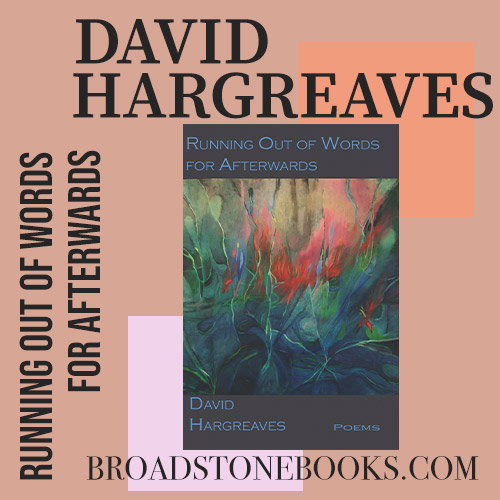
New Title :: Broadstone Books Presents New Poetry from David Hargreaves

Broadstone Books Classified Banner for Running Out of Words for AfterwardsLush and allusive, tuned to a background in translating Nepal Bhasa poetry, Running Out of Words for Afterwards gives voice to cycles of desire, loss, and renewal. Like the many rivers that flow through this book, David Hargreaves’ poems, in various turns, can be urgent, expansive, unpredictable, or calm, conveying the reader through landscapes both mystical and mundane, through illusions of selfhood, and the struggles of language to accept its own limitations. “A truly exquisite book of poems.”—Charlotte Pence

One Fierce Follow-up

Guest Post by Carla Sarett.

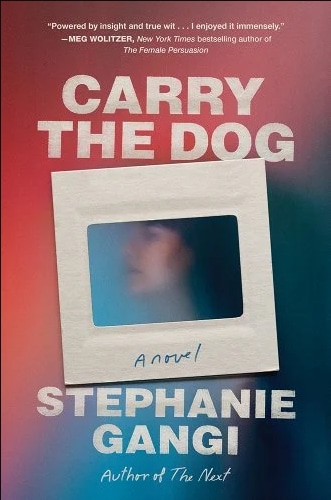
A long weekend, and no page-turner in sight. Luckily, Carry The Dog by Stephanie Gangi arrived in my mailbox. Gangi’s debut novel, The Next, was fiercely funny; while this one’s not a comedy, it is every bit as fierce.

At almost 60, Manhattanite Bea Marx lives with an icy legacy: her mother, Miriam, took erotic pictures of her kids (the “Marx Nudes) and then killed herself after the death of Bea’s teenaged brother. Now, Bea’s life seems on hold: she’s even married the same philandering man twice. She’s obsessed with how things look (like wrinkles and Balenciaga bags) but she fails to see people realistically; she’s locked herself out. When Hollywood and MOMA come knocking for Miriam’s story, Bea starts to confront childhood truths. She finds layers and layers to unwrap, each progressively darker. But Gangi’s not after the darkness: this is a story of possibilities.

I disagreed, on many levels, with Bea’s final decision. But I am still thinking about it. That is a lot for one book to accomplish.


Carry the Dog by Stephanie Gangi. Algonquin Books, November 2021.

Reviewer bio: Carla Sarett’s novella about maverick female artists, The Looking Glass, was published by Propertius Press in October, 2021.

Buy this book from our affiliate Bookshop.org.

Event :: Able Muse November 2021 Book Launch Reading

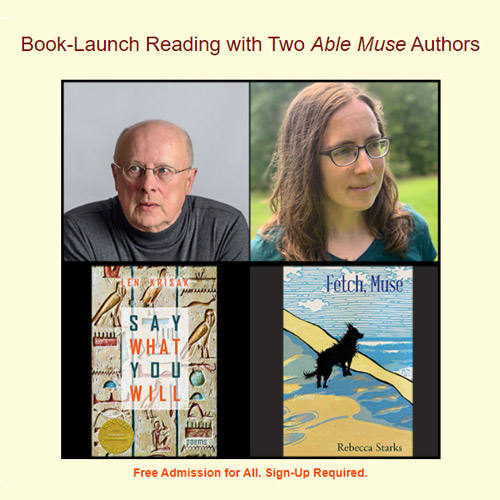
Mark your calendars and don’t forget to register! Able Muse Press’ next Book Launch and Reading will take place on November 13, 2021 from 3-4 PM EDT. Registration is required, but no worries it’s free!

The event will be hosted by Deirdre O’Conner and will feature a reading and Q&A with authors Len Krisak and Rebecca Starks.

Len Krisak, winner of the 2020 Able Muse Book Award, will be reading from his winning book just released on November 1, Say What You Will. Rebecca Starks will be reading from her forthcoming title Fetch, Muse (due out on November 26, but available for pre-order).

Besides the reading and Q&A, Able Muse Press has announced the publication of Brian Culhane’s Remembering Lethe. The book is available for pre-order and will be published on December 17. Culhane was a finalist for the 2020 Able Muse Book Award.

2022 Press 53 Award for Poetry Winner

Congratulations to the winner and finalists of the Press 53 Award for Poetry.

Winner
The Italian Professor’s Wife by Ann Pedone

Finalists
We Are Children by Bill Ayres
Watts UpRise by Ron Dowell
The Bones Beneath by Sheila Smith McKoy
Splendor of Ignition by Robert Miltner
Passaic by Paula Neves
The Past Tense of Green by Alison Prine
The Ice Beneath the Earth by Brian Ascalon Roley

Tom Lombardo served as the only reader and judge for this contest, and Pedone’s manuscript was chosen from more than 380 entries. The Italian Professor’s Wife will be published by Press 53 in April 2022.

A Magnetic Read

Guest Post by Julia Wilson.

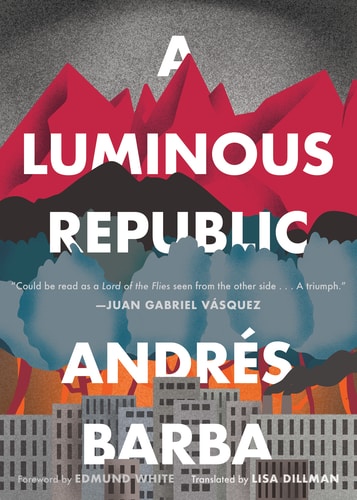
There is something magnetic about a story that centers on feral children, unfettered by adults, who live by their own rules and justice. A Luminous Republic does just that, evoking memories of the Salem witch trials and Lord of the Flies.

The hordes of unchaperoned children in this novel arrive to the city mysteriously, and it’s uncertain whether their purpose is to wreak havoc or they only seem that way because the society they’ve set up runs contrary to rules most adults abide by. The narrator, who himself is guilty of transgressions and lack of empathy, struggles with his feelings about this mob of mysterious children who disappear every night into a secret civilization.

“They’re just children . . . children we’ve treated like criminals.” But what if their own children are inspired by these untamed children? Then how do the adults feel about the innocence of this ragged group?

Barba uses foreshadowing to allow the reader glimpses of grim events to come, keeping tension and foreboding strong. The reader knows from the outset that the situation deteriorates tragically for many involved, but not how, when, or why. Through this narrative technique, Barba also allows the narrator time to lay blame and normalize behaviors which cross into forbidden territory.

This is a gripping and beautifully written book which questions the ease in which members of a ruling society can excuse behaviors that cast out those who differ, believing that incorporating these nonconformists will weaken the bonds of their carefully molded world.


A Luminous Republic by Andrés Barba. Mariner Books, April 2020.

Reviewer bio: Julia Wilson is pursuing a Masters in Writing at Johns Hopkins University.

Buy this book from our affiliate Bookshop.org.

The Color of Grief is Wolf

Guest Post by Susan Kay Anderson.

From Bock’s poem, “My Father’s Paintbox” grief could bite, then, could devour, even with the greys and mixed silvers of a wolf pelt, its coat.

The color of grief is wolf

There is a lot of snow and ice and coldness in this book, too, though, so the title could refer to something smooth and frozen, liquid which was once flowing and now locked. Tears?

The color of grief is wolf

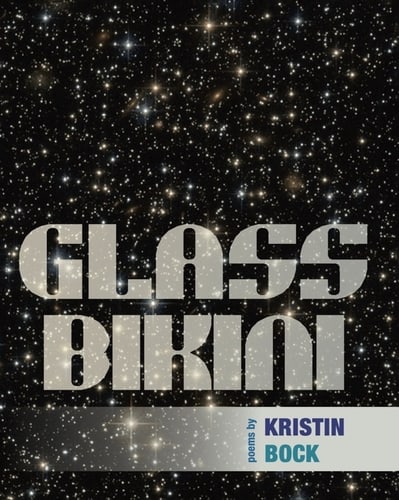
A small, squarish book that fits well in the hand. Yes, the title caught my eye, too, fairytale talk but larger, with a cover depicting the night sky, so instantly we are transported to the realm of Star Trek and other space ports, like Duncan Jones’ Moon movie. Plus, I love prose poems and these make up most of Glass Bikini. I also love sadness and sad writing. Endlessly interesting and endless like space (we think).

Never, ever, fall in love
with a bird. I’ve come to know the difference

between sadness and grief. Sadness
is the knell of a bell on a buoy at night
                (from “The Island Of Zerrissenheit”)

This poem could definitely rip you in two. This whole book could but it is glassed over; it is smooth in appearance because of the prose poems and a few poems which are in lines. Things are smooth until something comes out and grabs you because

The color of grief is wolf

In “Field Trip To The White House,” a school excursion turns nightmarish as the Gingerbread Man hides in “dim corridors” waiting to catch children with its “dripping red mouth.”

It is hard to stay away from this book. I know I should . . . yet . . . maybe the horrific breaks up the sadness? This could be.


Glass Bikini by Kristin Bock. Tupelo Press, December 2021.

Reviewer bio: Susan Kay Anderson’s books are Mezzanine and Please Plant This Book Coast To Coast. Her poems are in recent issues of Heron Tree and forthcoming in Barrow Street, Interim, and Wild Roof Journal.

A Historical Love Story

Guest Post by Joyce Bou Charaa.

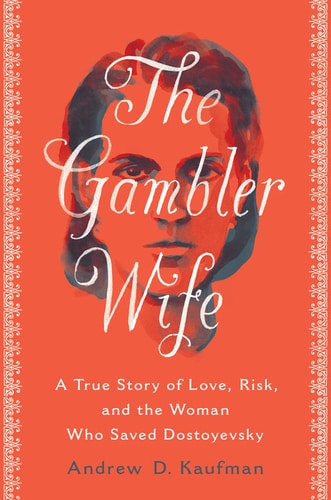
Usually, reading a biographical book is not as enjoyable and exciting as this impressive one by Andrew D. Kaufman. The Gambler Wife is the life story of a brilliant woman who played a huge role in her husband’s writing career, their love story marking the Russian literary history of the 19th century. The interesting life of Anna Snitkina, a successful Russian feminist, and her husband Fyodor Dostoyevsky, the famous writer of all time, will be remembered for many decades.

In this book, Kaufman traces the life of Anna Snitkina, from her childhood as an educated and ambitious young girl who likes reading and storytelling, until she met her most favorite writer, Fyodor Dostoyevsky, and worked with him as a stenographer. Continue reading “A Historical Love Story”

Driftwood Press Novella Prize Winner Announced!

Driftwood Press has officially announced the results of their Novella Reading Period. Kevin Litchty’s The Circle That Fits is the winner. “The novella explores the fraught relationships between two parents and their son as they live in a travelling carnival.” The Circle That Fits will be released in 2022.

Due to a generous donation from Sarah “Hollis Queen,” the award for Litchty’s novella was increased from $400 to $1,000.

Driftwood Press is currently accepting novella manuscripts once more. There is a $20 fee. Future novellas selected will receive $400, publication, and 10 copies of their printed novella.

YA Representation from Chloe Gong

Guest Post by Skylar Edwards.

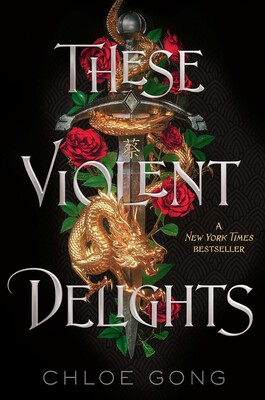
Shakespeare meets Shanghai in this Romeo and Juliet retelling with a monstrous twist. Chloe Gong modernizes a familiar, yet different, plot sequence, with relevant characters and battles against colonialism, while honoring classical themes: love, hate, and loyalty. Roma and Juliette align to fight a monster, while navigating the dangers of a blood feud, gangster-run Shanghai, and foreign powers. As heirs to the competing gangs, Roma and Juliette have the most to lose and the stakes have never been higher.

Juliette returns from America to find that the life she once knew has changed and she struggles to redefine herself within Shanghai. Her loyalty to the Scarlet Gang is tested against the disputing territories quickly rising to power: rival gangs, communists, and colonizers. Tensions rise as she is forced to collaborate with her former lover, Roma of the White Flowers.

Gong paves the way for YA representation and creates authenticity by normalizing diverse characters, each with a unique perspective. In the story’s web, intertwined with queer and cultural identities, readers discover the Scarlet Gang are Chinese, while The White Flowers are primarily Russian. Sparks emerge between same-sex characters and readers discover that one gang member identifies as transgender.

Readers assume the antagonist is the monster who has released a plague of madness on Shanghai. However, Gong uses the monster-hunt trope to highlight who the real enemy is: each other. Two lovers and liars must put aside their differences, and convince others to do the same, before it is too late. Readers are left with a disastrous ending, where competing territories turn on each other and release the real monsters into Shanghai.

“Men are sometimes masters of their own fates.” —Shakespeare


These Violent Delights by Chloe Gong. Margaret K. McElderry Books, November 2020.

Reviewer bio: Primarily a bookish fanatic working with nonprofits, Skylar is also a micro-influencer on BookTok; follow TwiceReadTales for more!

Buy this book from our affiliate Bookshop.org.

Exploring the Depths of the Voice

Guest Post by Brooke M. Smith.

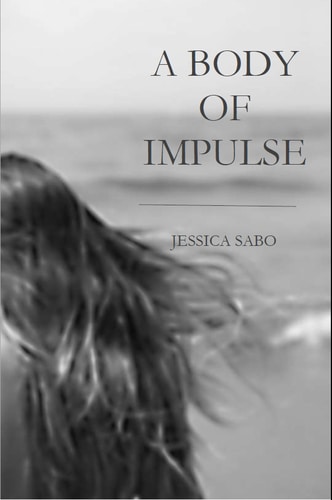
Poet and essayist Jessica Sabo explores the depths of the voice within her collection of poems. A Body of Impulse offers a magnifying lens into a woman’s life reflections. An Adelaide Literary Award in Poetry finalist (2020), Sabo lays bare a rawness leaving the reader to feel commiseration with her protagonist.

In “What I Should Have Said Instead of ‘Nothing,'” Sabo’s use of metaphors and imagery detail the pain and process of wanting to be understood:

It is a cancer, mom
eating me alive from the inside like a plague
and I am so raw I can’t feel the pain anymore. I can’t feel anymore. I can’t anymore. This hollowing is the only time I feel whole
and I know–I know! I could fight back if I really tried
and if I really wanted it
but I don’t want it, mom. I get so tired of being the outsider. Tired of living in this body that has
never been a home. I am homesick, mom. I am sick, mom.

Reading these last stanzas of her poem provoked a question most humans ask in life: Who am I? Am I happy with who I am . . . who I’ve become?  Self-acceptance is a process, and a painful one at times. The ending of her poem “Requital spotlights our imperfections as women and being human.  Acceptance of our choices, learning to accept ourselves as whole and worthy, no matter the condition we are in.

Now, it is my naked body in front of a mirror
a road map of
razor scars and stretch marks, faded tattoos
piercings that refuse to close. It is here I am
learning how to say mine without stutter
refusing to apologize for taking up (too               much) sidewalk. Learning to fill the space
reserved for all my apologies.

Jessica Sabo’s beautifully threaded lines leave readers pondering these questions in her three-part poetry collection.


A Body of Impulse by Jessica Sabo. Dancing Girl Press & Studio, 2021.

Reviewer bio: Brooke M. Smith is a librarian who loves cats, coffee, cozy mysteries, camping, and many other things that don’t begin with the letter C.  She also is a poetry editor for 805 Lit + Art Magazine.

A Journey through Food & Culture

Guest Post by Kristina Pudlewski.

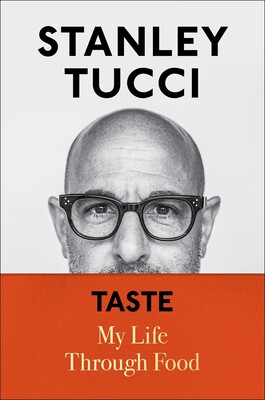
Stanley Tucci’s latest book, Taste: My Life Through Food, is wonderful. It takes readers on a journey through food and culture in the early 60’s to present day, 2021.

In the early chapters it talks about Tucci’s family life and what he grew up eating and experiencing in New York. Growing up in an Italian household means fun stories and delicious meals daily. Tucci describes both of these gracefully. His details about the food he grew up eating leaves your mouth watering and it’s extremely helpful that he also includes recipes so you can make the meals he grew up loving, at home with your own families.

I love to eat, but my pockets don’t enjoy the price that some meals cost these days. Taste: My Life Through Food gives insights into ways you can cook amazing meals on a budget and where to go in the United States and abroad to get a good, cheap, filling meal.
I highly recommend this book to anyone who enjoys a love for cooking and travel. This book talks about both and it shows just how great life can be when surrounded by good food and good company.

Taste: My Life Through Food by Stanley Tucci. Gallery Books, October 2021.

Reviewer bio: I am a Freelance Writer from Illinois. I love to write fiction novels, short stories and poetry. I am currently writing my first novel.

Buy this book from our affiliate Bookshop.org.

Extremes of Pleasure and Passion

Guest Post by Vikash Goyal.

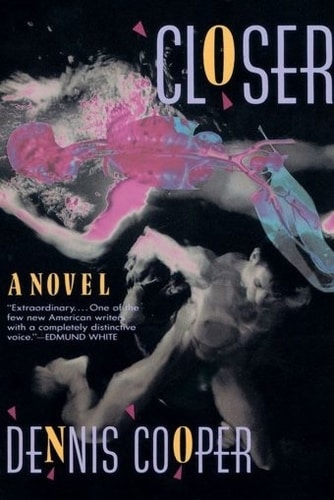
George Milles is the mind of the 21st century teen. He is beautiful. He is a boy with no ambitions—unless you count wanting to live in Disneyland as one. He doesn’t know the pathways of his life and is consequently lost midway. He is passive and has a dormant attitude. His beauty is unparalleled and draws boys to him like flies to turds. But with so much attention in his life, it is still lifeless.

Cooper’s semi-autobiographical five book series is inspired by the writings of de Sade, which is quite evident while reading. Closer is the first in the series, perfectly introducing the protagonist George. The book, at times, reads like a pirated version of de Sade’s The 120 Days Of Sodom although nowhere near the majesty of it.

The teens who form the center of the book are disturbed, confused, and fake. They move around like a body without a belly button. Their only solace is in drugs and sex. They know no human bonds and let their death bound lives pass them by embroiled in perpetual flimsy relationships.

The writing is in teen lingo, but reads well enough. The book doesn’t hold on to a proper plot and is written in more of a documentary style. There is a dissection of the mind of the coming-of-age youth, spelling out the conditioning of priority-devoid teens. The book is refreshing in its matter of fact portrayal of homosexuality without the unnecessary drawing of the microscope over their sexuality or struggle.

George, the protagonist, is the thread in the book that binds the different unique characters, who at some point, share a liaison with him. Not one character in the book is sure and positive about his life, including a couple of characters in their forties. The book tries to encapsulate the extremes of pleasure and passion through episodes of gross torture and sexual acts, and, in a couple of cases, even death.

The book can seem to move in circles now and then, ending up becoming a few pages too many. For those that like to experiment.


Closer by Dennis Cooper. Grove, 1990.

Reviewer bio: Vikash Goyal is a writer of prose and poetry, best known for his blog “Kashivology” on WordPress, that chronicles the defining moments in the life of its protagonist, Kashiv, through a series of surrealistic, existential and philosophical prosaic poetry. He also reviews books on Instagram @Kashivology.

Buy this book from our affiliate Bookshop.org.

‘Peculiar Heritage’

Guest Post by Chloe Yelena Miller.

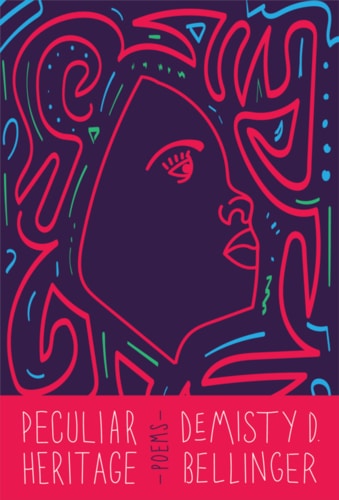
DeMisty D. Bellinger’s Peculiar Heritage opens with the title poem. She invites us—at times challenges us—to look with that first line of the title poem, “if you look at her eyes.” The collective heritage of poems moves through slavery, different regions of the US, the African diaspora in Paris, as well as more contemporary violence in America.

The collection is divided into four parts, including a break in part three with protest poems. This almost aside of protest poems, as Part III continues again with a page break, draws attention to the fact that many, if not all of these poems, are already protest poems. Continue reading “‘Peculiar Heritage’”

Experiencing One’s Self

Guest Post by Diana De Jesus.

Nietzsche once remarked, “In the end, one experiences only one’s self.”

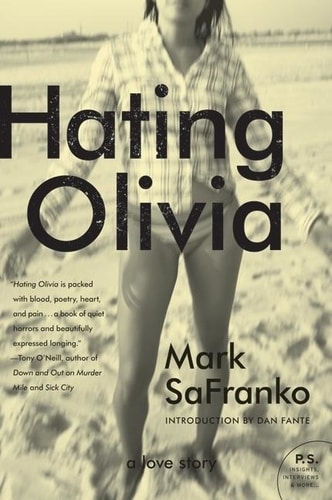
The novel Hating Olivia: A Love Story by Mark SaFranko truly emphasizes this notion through the eyes of our main protagonist Max Zajack, a struggling artist and wannabe writer who lives in a rundown apartment in New Jersey. To support himself, Zajack takes on a low-paying job loading trucks for a living and playing gigs in nightclubs and bars. During one of his gigs, he meets Olivia Aphrodite, a literature student who changes his life in more ways than one. Continue reading “Experiencing One’s Self”

Stories of Endurance

Guest Post by Ann Graham.

Eleven short stories mostly first published in well-known literary journals delve into the sinewy reality of our being human animals. The first story explores the emotionally precarious time for female teens. In the second story, “Feast,” Rayna’s miscarriage causes her to experience hallucinations. “I saw the first baby part in a bouquet of marigolds. . . .”

In “Tongues” Zeyah thinks for herself and endures the anger of their pastor and her parents. Gloria is dying of cancer in” The Loss of Heaven,” and Fred doesn’t understand her refusal of more treatments: “He wanted to shake her, grip hard into those bird-boned shoulders until [ . . . ] only a monster would treat a dying person like that.”

In “The Hearts of Enemies” complex mother daughter relationships are derailed with each one’s own private emotions.  In “Outside the Raft” the guilt after a near drowning, “I didn’t know how to apologize for wanting to save my own life.” “Exotics” is the shortest story and, for me, absolutely accusatory of our animalistic capacity for cruelty.

Despite some of the subject matter, the stories are uplifting in that we learn about endurance. Moniz exposes truths about our animal-ness that nobody wants to admit or accept as reality and shows us how we might survive anyway. Dantiel W. Moniz is an author unafraid to poke our corporality and the way it blends with our psyches.


Milk Blood Heat by Dantiel W. Moniz. Grove, February 2021.

Reviewer bio: While trying to remain hopeful that democracy will survive, Ann Graham reads and writes in Texas. Once in a while, she comments about a short story on her blog: www.ann-graham.com.

Buy this book from our affiliate Bookshop.org.

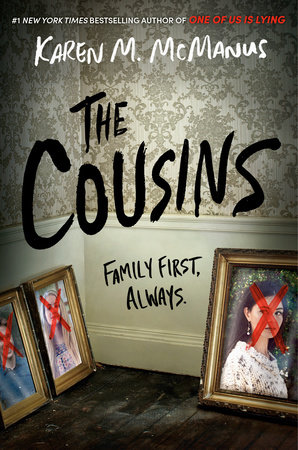
‘The Cousins’

Guest Post by Jiya Ahuja.

This novel revolves around the Story family residing in gull cove island: a grandmother who owns the entire island, and parents who were disinherited by a mysterious “You know what you did” letter.

Jonah, Aubrey, and Milly are cousins who hardly know each other and have never met their grandmother. So when they receive a letter from their long-lost grandmother inviting them to the island, they aren’t particularly thrilled to go but, their parents see this as a golden opportunity to get back in their mother’s good graces. When they arrive on the island, the cousins realize their grandmother has different plans for them. Here they uncover secrets that lead them to their family’s dark and mysterious past. The entire family has secrets that they wish remained buried.

The story is told from three main points of view and is filled with a lot of twists and turns that keep readers hooked until the very last line. Although some parts felt a little slow-paced, this is still satisfying and entertaining enough. The Cousins is a highly recommended young adult mystery to readers of age 13 and above.


The Cousins by Karen M. McManus. Delacorte Press, December 2020..

Reviewer bio: Reach Jiya Ahuja here.

Buy this book from our affiliate Bookshop.org.

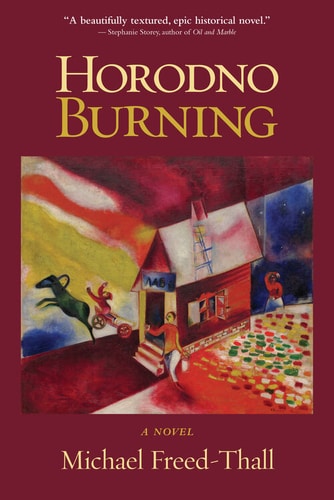
‘Horodno Burning’

Guest Post by Julie Christine Johnson.

Jews were attacked in a series of pogroms and subjected to systematic oppression during the late nineteenth and early 20th century, scapegoated as the cause of political and economic upheaval. These pogroms and the long history of limiting Jewish movement in Eastern Europe foreshadowed the Holocaust. These awful conditions intensified as nationalist movements and state-sanctioned violence grew.

Textbooks can present us with facts, but literature allows us to feel the stories history hopes we will hear. In his absorbing and graceful debut novel, Horodno Burning, author Michael Freed-Thall brings us into the heart of a family forever transformed by persecution. Continue reading “‘Horodno Burning’”

Board the Bus with Van Horn

Book Review by Katy Haas.

Sometimes it’s important to slow down and not only enjoy the ride, but take in the details and really sit with them. Erica Van Horn does this in her collection of short essays, By Bus.

In By Bus, we’re transported to the bus transporting Van Horn as she describes what she sees from where she sits. “Horse” is just one paragraph long and explains an interaction between two passengers. In “Stuck in Inchicore,” we’re privy to one half of a phone conversation, the caller’s dialogue making up a majority of the essay. “A Never-Married” describes a “Ring-A-Link” bus, basically a phone-ordered bus ride which can take you “fairly straight into town” or “you ride along in the bus as it meanders through the countryside [ . . . ]. It can take as long as one hour to get to town.” We hear about it through Van Horn’s friend of a friend, Carmel, who sometimes takes this bus to meet a man—a man who is stuck on a bus for an hour with nowhere else to go. There is a variety in what the essays cover that keeps the short collection fresh throughout.

By Bus is a book for those of us who take out an earbud at the coffeeshop to eavesdrop on the gossip unfolding at a nearby table of strangers. Every interaction is a tiny glimpse into the window of a stranger’s life. Van Horn’s observations are clear and simple. She sits, she watches, she shares, and then moves onto the next one, never pausing to criticize or question. This is the perfect Sunday read, a reminder to slow down and sit with the changing landscapes and passengers of our own lives with the same gentleness Van Horn does.


By Bus by Erica Van Horn. Ugly Duckling Presse, March 2021.

Buy this book from our affiliate Bookshop.org.